Compare commits
15 Commits
test/add_c
...
qgallouede
| Author | SHA1 | Date | |
|---|---|---|---|

|
0a33a414fb | ||
|
|
cd76980d50 | ||
|
|
1ffc0e0d94 | ||
|
|
fda092d5bf | ||
|
|
2a9ea01d5a | ||
|
|
0bca982fca | ||
|
|
dae901f556 | ||
|
|
7626b9a4a3 | ||
|
|
6d56bcb5de | ||
|
|
0ec28bf71a | ||
|
|
bc96284ca0 | ||
|
|
343579368b | ||
|
|
72751b7cf6 | ||
|
|
0660f71556 | ||
|
|
42ed7bb670 |
@@ -1,68 +0,0 @@
|
||||
{
|
||||
"homing_offset": [
|
||||
2048,
|
||||
3072,
|
||||
3072,
|
||||
-1024,
|
||||
-1024,
|
||||
2048,
|
||||
-2048,
|
||||
2048,
|
||||
-2048
|
||||
],
|
||||
"drive_mode": [
|
||||
1,
|
||||
1,
|
||||
1,
|
||||
0,
|
||||
0,
|
||||
1,
|
||||
0,
|
||||
1,
|
||||
0
|
||||
],
|
||||
"start_pos": [
|
||||
2015,
|
||||
3058,
|
||||
3061,
|
||||
1071,
|
||||
1071,
|
||||
2035,
|
||||
2152,
|
||||
2029,
|
||||
2499
|
||||
],
|
||||
"end_pos": [
|
||||
-1008,
|
||||
-1963,
|
||||
-1966,
|
||||
2141,
|
||||
2143,
|
||||
-971,
|
||||
3043,
|
||||
-1077,
|
||||
3144
|
||||
],
|
||||
"calib_mode": [
|
||||
"DEGREE",
|
||||
"DEGREE",
|
||||
"DEGREE",
|
||||
"DEGREE",
|
||||
"DEGREE",
|
||||
"DEGREE",
|
||||
"DEGREE",
|
||||
"DEGREE",
|
||||
"LINEAR"
|
||||
],
|
||||
"motor_names": [
|
||||
"waist",
|
||||
"shoulder",
|
||||
"shoulder_shadow",
|
||||
"elbow",
|
||||
"elbow_shadow",
|
||||
"forearm_roll",
|
||||
"wrist_angle",
|
||||
"wrist_rotate",
|
||||
"gripper"
|
||||
]
|
||||
}
|
||||
@@ -1,68 +0,0 @@
|
||||
{
|
||||
"homing_offset": [
|
||||
2048,
|
||||
3072,
|
||||
3072,
|
||||
-1024,
|
||||
-1024,
|
||||
2048,
|
||||
-2048,
|
||||
2048,
|
||||
-1024
|
||||
],
|
||||
"drive_mode": [
|
||||
1,
|
||||
1,
|
||||
1,
|
||||
0,
|
||||
0,
|
||||
1,
|
||||
0,
|
||||
1,
|
||||
0
|
||||
],
|
||||
"start_pos": [
|
||||
2035,
|
||||
3024,
|
||||
3019,
|
||||
979,
|
||||
981,
|
||||
1982,
|
||||
2166,
|
||||
2124,
|
||||
1968
|
||||
],
|
||||
"end_pos": [
|
||||
-990,
|
||||
-2017,
|
||||
-2015,
|
||||
2078,
|
||||
2076,
|
||||
-1030,
|
||||
3117,
|
||||
-1016,
|
||||
2556
|
||||
],
|
||||
"calib_mode": [
|
||||
"DEGREE",
|
||||
"DEGREE",
|
||||
"DEGREE",
|
||||
"DEGREE",
|
||||
"DEGREE",
|
||||
"DEGREE",
|
||||
"DEGREE",
|
||||
"DEGREE",
|
||||
"LINEAR"
|
||||
],
|
||||
"motor_names": [
|
||||
"waist",
|
||||
"shoulder",
|
||||
"shoulder_shadow",
|
||||
"elbow",
|
||||
"elbow_shadow",
|
||||
"forearm_roll",
|
||||
"wrist_angle",
|
||||
"wrist_rotate",
|
||||
"gripper"
|
||||
]
|
||||
}
|
||||
@@ -1,68 +0,0 @@
|
||||
{
|
||||
"homing_offset": [
|
||||
2048,
|
||||
3072,
|
||||
3072,
|
||||
-1024,
|
||||
-1024,
|
||||
2048,
|
||||
-2048,
|
||||
2048,
|
||||
-2048
|
||||
],
|
||||
"drive_mode": [
|
||||
1,
|
||||
1,
|
||||
1,
|
||||
0,
|
||||
0,
|
||||
1,
|
||||
0,
|
||||
1,
|
||||
0
|
||||
],
|
||||
"start_pos": [
|
||||
2056,
|
||||
2895,
|
||||
2896,
|
||||
1191,
|
||||
1190,
|
||||
2018,
|
||||
2051,
|
||||
2056,
|
||||
2509
|
||||
],
|
||||
"end_pos": [
|
||||
-1040,
|
||||
-2004,
|
||||
-2006,
|
||||
2126,
|
||||
2127,
|
||||
-1010,
|
||||
3050,
|
||||
-1117,
|
||||
3143
|
||||
],
|
||||
"calib_mode": [
|
||||
"DEGREE",
|
||||
"DEGREE",
|
||||
"DEGREE",
|
||||
"DEGREE",
|
||||
"DEGREE",
|
||||
"DEGREE",
|
||||
"DEGREE",
|
||||
"DEGREE",
|
||||
"LINEAR"
|
||||
],
|
||||
"motor_names": [
|
||||
"waist",
|
||||
"shoulder",
|
||||
"shoulder_shadow",
|
||||
"elbow",
|
||||
"elbow_shadow",
|
||||
"forearm_roll",
|
||||
"wrist_angle",
|
||||
"wrist_rotate",
|
||||
"gripper"
|
||||
]
|
||||
}
|
||||
@@ -1,68 +0,0 @@
|
||||
{
|
||||
"homing_offset": [
|
||||
2048,
|
||||
3072,
|
||||
3072,
|
||||
-1024,
|
||||
-1024,
|
||||
2048,
|
||||
-2048,
|
||||
2048,
|
||||
-2048
|
||||
],
|
||||
"drive_mode": [
|
||||
1,
|
||||
1,
|
||||
1,
|
||||
0,
|
||||
0,
|
||||
1,
|
||||
0,
|
||||
1,
|
||||
0
|
||||
],
|
||||
"start_pos": [
|
||||
2068,
|
||||
3034,
|
||||
3030,
|
||||
1038,
|
||||
1041,
|
||||
1991,
|
||||
1948,
|
||||
2090,
|
||||
1985
|
||||
],
|
||||
"end_pos": [
|
||||
-1025,
|
||||
-2014,
|
||||
-2015,
|
||||
2058,
|
||||
2060,
|
||||
-955,
|
||||
3091,
|
||||
-940,
|
||||
2576
|
||||
],
|
||||
"calib_mode": [
|
||||
"DEGREE",
|
||||
"DEGREE",
|
||||
"DEGREE",
|
||||
"DEGREE",
|
||||
"DEGREE",
|
||||
"DEGREE",
|
||||
"DEGREE",
|
||||
"DEGREE",
|
||||
"LINEAR"
|
||||
],
|
||||
"motor_names": [
|
||||
"waist",
|
||||
"shoulder",
|
||||
"shoulder_shadow",
|
||||
"elbow",
|
||||
"elbow_shadow",
|
||||
"forearm_roll",
|
||||
"wrist_angle",
|
||||
"wrist_rotate",
|
||||
"gripper"
|
||||
]
|
||||
}
|
||||
160
.dockerignore
160
.dockerignore
@@ -1,160 +0,0 @@
|
||||
# Copyright 2024 The HuggingFace Inc. team. All rights reserved.
|
||||
#
|
||||
# Licensed under the Apache License, Version 2.0 (the "License");
|
||||
# you may not use this file except in compliance with the License.
|
||||
# You may obtain a copy of the License at
|
||||
#
|
||||
# http://www.apache.org/licenses/LICENSE-2.0
|
||||
#
|
||||
# Unless required by applicable law or agreed to in writing, software
|
||||
# distributed under the License is distributed on an "AS IS" BASIS,
|
||||
# WITHOUT WARRANTIES OR CONDITIONS OF ANY KIND, either express or implied.
|
||||
# See the License for the specific language governing permissions and
|
||||
# limitations under the License.
|
||||
|
||||
# Misc
|
||||
.git
|
||||
tmp
|
||||
wandb
|
||||
data
|
||||
outputs
|
||||
.vscode
|
||||
rl
|
||||
media
|
||||
|
||||
|
||||
# Logging
|
||||
logs
|
||||
|
||||
# HPC
|
||||
nautilus/*.yaml
|
||||
*.key
|
||||
|
||||
# Slurm
|
||||
sbatch*.sh
|
||||
|
||||
# Byte-compiled / optimized / DLL files
|
||||
__pycache__/
|
||||
*.py[cod]
|
||||
*$py.class
|
||||
|
||||
# C extensions
|
||||
*.so
|
||||
|
||||
# Distribution / packaging
|
||||
.Python
|
||||
build/
|
||||
develop-eggs/
|
||||
dist/
|
||||
downloads/
|
||||
eggs/
|
||||
.eggs/
|
||||
lib/
|
||||
lib64/
|
||||
parts/
|
||||
sdist/
|
||||
var/
|
||||
wheels/
|
||||
pip-wheel-metadata/
|
||||
share/python-wheels/
|
||||
*.egg-info/
|
||||
.installed.cfg
|
||||
*.egg
|
||||
MANIFEST
|
||||
|
||||
# PyInstaller
|
||||
# Usually these files are written by a python script from a template
|
||||
# before PyInstaller builds the exe, so as to inject date/other infos into it.
|
||||
*.manifest
|
||||
*.spec
|
||||
|
||||
# Installer logs
|
||||
pip-log.txt
|
||||
pip-delete-this-directory.txt
|
||||
|
||||
# Unit test / coverage reports
|
||||
!tests/artifacts
|
||||
htmlcov/
|
||||
.tox/
|
||||
.nox/
|
||||
.coverage
|
||||
.coverage.*
|
||||
nosetests.xml
|
||||
coverage.xml
|
||||
*.cover
|
||||
*.py,cover
|
||||
.hypothesis/
|
||||
.pytest_cache/
|
||||
|
||||
# Ignore .cache except calibration
|
||||
.cache/*
|
||||
!.cache/calibration/
|
||||
!.cache/calibration/**
|
||||
|
||||
# Translations
|
||||
*.mo
|
||||
*.pot
|
||||
|
||||
# Django stuff:
|
||||
*.log
|
||||
local_settings.py
|
||||
db.sqlite3
|
||||
db.sqlite3-journal
|
||||
|
||||
# Flask stuff:
|
||||
instance/
|
||||
.webassets-cache
|
||||
|
||||
# Scrapy stuff:
|
||||
.scrapy
|
||||
|
||||
# Sphinx documentation
|
||||
docs/_build/
|
||||
|
||||
# PyBuilder
|
||||
target/
|
||||
|
||||
# Jupyter Notebook
|
||||
.ipynb_checkpoints
|
||||
|
||||
# IPython
|
||||
profile_default/
|
||||
ipython_config.py
|
||||
|
||||
# pyenv
|
||||
.python-version
|
||||
|
||||
# pipenv
|
||||
# According to pypa/pipenv#598, it is recommended to include Pipfile.lock in version control.
|
||||
# However, in case of collaboration, if having platform-specific dependencies or dependencies
|
||||
# having no cross-platform support, pipenv may install dependencies that don't work, or not
|
||||
# install all needed dependencies.
|
||||
#Pipfile.lock
|
||||
|
||||
# PEP 582; used by e.g. github.com/David-OConnor/pyflow
|
||||
__pypackages__/
|
||||
|
||||
# Celery stuff
|
||||
celerybeat-schedule
|
||||
celerybeat.pid
|
||||
|
||||
# SageMath parsed files
|
||||
*.sage.py
|
||||
|
||||
# Spyder project settings
|
||||
.spyderproject
|
||||
.spyproject
|
||||
|
||||
# Rope project settings
|
||||
.ropeproject
|
||||
|
||||
# mkdocs documentation
|
||||
/site
|
||||
|
||||
# mypy
|
||||
.mypy_cache/
|
||||
.dmypy.json
|
||||
dmypy.json
|
||||
|
||||
# Pyre type checker
|
||||
.pyre/
|
||||
18
.gitattributes
vendored
18
.gitattributes
vendored
@@ -1,20 +1,2 @@
|
||||
# Copyright 2024 The HuggingFace Inc. team. All rights reserved.
|
||||
#
|
||||
# Licensed under the Apache License, Version 2.0 (the "License");
|
||||
# you may not use this file except in compliance with the License.
|
||||
# You may obtain a copy of the License at
|
||||
#
|
||||
# http://www.apache.org/licenses/LICENSE-2.0
|
||||
#
|
||||
# Unless required by applicable law or agreed to in writing, software
|
||||
# distributed under the License is distributed on an "AS IS" BASIS,
|
||||
# WITHOUT WARRANTIES OR CONDITIONS OF ANY KIND, either express or implied.
|
||||
# See the License for the specific language governing permissions and
|
||||
# limitations under the License.
|
||||
|
||||
*.memmap filter=lfs diff=lfs merge=lfs -text
|
||||
*.stl filter=lfs diff=lfs merge=lfs -text
|
||||
*.safetensors filter=lfs diff=lfs merge=lfs -text
|
||||
*.mp4 filter=lfs diff=lfs merge=lfs -text
|
||||
*.arrow filter=lfs diff=lfs merge=lfs -text
|
||||
*.json !text !filter !merge !diff
|
||||
|
||||
14
.github/ISSUE_TEMPLATE/bug-report.yml
vendored
14
.github/ISSUE_TEMPLATE/bug-report.yml
vendored
@@ -1,17 +1,3 @@
|
||||
# Copyright 2024 The HuggingFace Inc. team. All rights reserved.
|
||||
#
|
||||
# Licensed under the Apache License, Version 2.0 (the "License");
|
||||
# you may not use this file except in compliance with the License.
|
||||
# You may obtain a copy of the License at
|
||||
#
|
||||
# http://www.apache.org/licenses/LICENSE-2.0
|
||||
#
|
||||
# Unless required by applicable law or agreed to in writing, software
|
||||
# distributed under the License is distributed on an "AS IS" BASIS,
|
||||
# WITHOUT WARRANTIES OR CONDITIONS OF ANY KIND, either express or implied.
|
||||
# See the License for the specific language governing permissions and
|
||||
# limitations under the License.
|
||||
|
||||
name: "\U0001F41B Bug Report"
|
||||
description: Submit a bug report to help us improve LeRobot
|
||||
body:
|
||||
|
||||
35
.github/PULL_REQUEST_TEMPLATE.md
vendored
35
.github/PULL_REQUEST_TEMPLATE.md
vendored
@@ -1,34 +1,15 @@
|
||||
## What this does
|
||||
Explain what this PR does. Feel free to tag your PR with the appropriate label(s).
|
||||
# What does this PR do?
|
||||
|
||||
Examples:
|
||||
| Title | Label |
|
||||
|----------------------|-----------------|
|
||||
| Fixes #[issue] | (🐛 Bug) |
|
||||
| Adds new dataset | (🗃️ Dataset) |
|
||||
| Optimizes something | (⚡️ Performance) |
|
||||
Example: Fixes # (issue)
|
||||
|
||||
## How it was tested
|
||||
Explain/show how you tested your changes.
|
||||
|
||||
Examples:
|
||||
- Added `test_something` in `tests/test_stuff.py`.
|
||||
- Added `new_feature` and checked that training converges with policy X on dataset/environment Y.
|
||||
- Optimized `some_function`, it now runs X times faster than previously.
|
||||
## Before submitting
|
||||
- Read the [contributor guideline](https://github.com/huggingface/lerobot/blob/main/CONTRIBUTING.md#submitting-a-pull-request-pr).
|
||||
- Provide a minimal code example for the reviewer to checkout & try.
|
||||
- Explain how you tested your changes.
|
||||
|
||||
## How to checkout & try? (for the reviewer)
|
||||
Provide a simple way for the reviewer to try out your changes.
|
||||
|
||||
Examples:
|
||||
```bash
|
||||
pytest -sx tests/test_stuff.py::test_something
|
||||
```
|
||||
```bash
|
||||
python lerobot/scripts/train.py --some.option=true
|
||||
```
|
||||
## Who can review?
|
||||
|
||||
## SECTION TO REMOVE BEFORE SUBMITTING YOUR PR
|
||||
**Note**: Anyone in the community is free to review the PR once the tests have passed. Feel free to tag
|
||||
Anyone in the community is free to review the PR once the tests have passed. Feel free to tag
|
||||
members/contributors who may be interested in your PR. Try to avoid tagging more than 3 people.
|
||||
|
||||
**Note**: Before submitting this PR, please read the [contributor guideline](https://github.com/huggingface/lerobot/blob/main/CONTRIBUTING.md#submitting-a-pull-request-pr).
|
||||
|
||||
3917
.github/poetry/cpu/poetry.lock
generated
vendored
Normal file
3917
.github/poetry/cpu/poetry.lock
generated
vendored
Normal file
File diff suppressed because it is too large
Load Diff
107
.github/poetry/cpu/pyproject.toml
vendored
Normal file
107
.github/poetry/cpu/pyproject.toml
vendored
Normal file
@@ -0,0 +1,107 @@
|
||||
[tool.poetry]
|
||||
name = "lerobot"
|
||||
version = "0.1.0"
|
||||
description = "🤗 LeRobot: State-of-the-art Machine Learning for Real-World Robotics in Pytorch"
|
||||
authors = [
|
||||
"Rémi Cadène <re.cadene@gmail.com>",
|
||||
"Alexander Soare <alexander.soare159@gmail.com>",
|
||||
"Quentin Gallouédec <quentin.gallouedec@ec-lyon.fr>",
|
||||
"Simon Alibert <alibert.sim@gmail.com>",
|
||||
"Thomas Wolf <thomaswolfcontact@gmail.com>",
|
||||
]
|
||||
repository = "https://github.com/huggingface/lerobot"
|
||||
readme = "README.md"
|
||||
license = "Apache-2.0"
|
||||
classifiers=[
|
||||
"Development Status :: 3 - Alpha",
|
||||
"Intended Audience :: Developers",
|
||||
"Intended Audience :: Education",
|
||||
"Intended Audience :: Science/Research",
|
||||
"Topic :: Software Development :: Build Tools",
|
||||
"Topic :: Scientific/Engineering :: Artificial Intelligence",
|
||||
"License :: OSI Approved :: Apache Software License",
|
||||
"Programming Language :: Python :: 3.10",
|
||||
]
|
||||
packages = [{include = "lerobot"}]
|
||||
|
||||
|
||||
[tool.poetry.dependencies]
|
||||
python = "^3.10"
|
||||
termcolor = "^2.4.0"
|
||||
omegaconf = "^2.3.0"
|
||||
wandb = "^0.16.3"
|
||||
imageio = {extras = ["ffmpeg"], version = "^2.34.0"}
|
||||
gdown = "^5.1.0"
|
||||
hydra-core = "^1.3.2"
|
||||
einops = "^0.7.0"
|
||||
pymunk = "^6.6.0"
|
||||
zarr = "^2.17.0"
|
||||
numba = "^0.59.0"
|
||||
torch = {version = "^2.2.1", source = "torch-cpu"}
|
||||
opencv-python = "^4.9.0.80"
|
||||
diffusers = "^0.26.3"
|
||||
torchvision = {version = "^0.17.1", source = "torch-cpu"}
|
||||
h5py = "^3.10.0"
|
||||
huggingface-hub = "^0.21.4"
|
||||
robomimic = "0.2.0"
|
||||
gymnasium = "^0.29.1"
|
||||
cmake = "^3.29.0.1"
|
||||
gym-pusht = { git = "git@github.com:huggingface/gym-pusht.git", optional = true}
|
||||
gym-xarm = { git = "git@github.com:huggingface/gym-xarm.git", optional = true}
|
||||
gym-aloha = { git = "git@github.com:huggingface/gym-aloha.git", optional = true}
|
||||
pre-commit = {version = "^3.7.0", optional = true}
|
||||
debugpy = {version = "^1.8.1", optional = true}
|
||||
pytest = {version = "^8.1.0", optional = true}
|
||||
pytest-cov = {version = "^5.0.0", optional = true}
|
||||
datasets = "^2.19.0"
|
||||
|
||||
|
||||
[tool.poetry.extras]
|
||||
pusht = ["gym-pusht"]
|
||||
xarm = ["gym-xarm"]
|
||||
aloha = ["gym-aloha"]
|
||||
dev = ["pre-commit", "debugpy"]
|
||||
test = ["pytest", "pytest-cov"]
|
||||
|
||||
|
||||
[[tool.poetry.source]]
|
||||
name = "torch-cpu"
|
||||
url = "https://download.pytorch.org/whl/cpu"
|
||||
priority = "supplemental"
|
||||
|
||||
|
||||
[tool.ruff]
|
||||
line-length = 110
|
||||
target-version = "py310"
|
||||
exclude = [
|
||||
".bzr",
|
||||
".direnv",
|
||||
".eggs",
|
||||
".git",
|
||||
".git-rewrite",
|
||||
".hg",
|
||||
".mypy_cache",
|
||||
".nox",
|
||||
".pants.d",
|
||||
".pytype",
|
||||
".ruff_cache",
|
||||
".svn",
|
||||
".tox",
|
||||
".venv",
|
||||
"__pypackages__",
|
||||
"_build",
|
||||
"buck-out",
|
||||
"build",
|
||||
"dist",
|
||||
"node_modules",
|
||||
"venv",
|
||||
]
|
||||
|
||||
|
||||
[tool.ruff.lint]
|
||||
select = ["E4", "E7", "E9", "F", "I", "N", "B", "C4", "SIM"]
|
||||
|
||||
|
||||
[build-system]
|
||||
requires = ["poetry-core>=1.5.0"]
|
||||
build-backend = "poetry.core.masonry.api"
|
||||
135
.github/workflows/build-docker-images.yml
vendored
135
.github/workflows/build-docker-images.yml
vendored
@@ -1,135 +0,0 @@
|
||||
# Copyright 2024 The HuggingFace Inc. team. All rights reserved.
|
||||
#
|
||||
# Licensed under the Apache License, Version 2.0 (the "License");
|
||||
# you may not use this file except in compliance with the License.
|
||||
# You may obtain a copy of the License at
|
||||
#
|
||||
# http://www.apache.org/licenses/LICENSE-2.0
|
||||
#
|
||||
# Unless required by applicable law or agreed to in writing, software
|
||||
# distributed under the License is distributed on an "AS IS" BASIS,
|
||||
# WITHOUT WARRANTIES OR CONDITIONS OF ANY KIND, either express or implied.
|
||||
# See the License for the specific language governing permissions and
|
||||
# limitations under the License.
|
||||
|
||||
# Inspired by
|
||||
# https://github.com/huggingface/peft/blob/main/.github/workflows/build_docker_images.yml
|
||||
name: Builds
|
||||
|
||||
on:
|
||||
workflow_dispatch:
|
||||
workflow_call:
|
||||
schedule:
|
||||
- cron: "0 1 * * *"
|
||||
|
||||
permissions: {}
|
||||
|
||||
env:
|
||||
PYTHON_VERSION: "3.10"
|
||||
|
||||
jobs:
|
||||
latest-cpu:
|
||||
name: CPU
|
||||
runs-on:
|
||||
group: aws-general-8-plus
|
||||
steps:
|
||||
- name: Install Git LFS
|
||||
run: |
|
||||
sudo apt-get update
|
||||
sudo apt-get install git-lfs
|
||||
git lfs install
|
||||
|
||||
- name: Set up Docker Buildx
|
||||
uses: docker/setup-buildx-action@v3
|
||||
with:
|
||||
cache-binary: false
|
||||
|
||||
- name: Check out code
|
||||
uses: actions/checkout@v4
|
||||
with:
|
||||
lfs: true
|
||||
persist-credentials: false
|
||||
|
||||
- name: Login to DockerHub
|
||||
uses: docker/login-action@v3
|
||||
with:
|
||||
username: ${{ secrets.DOCKERHUB_USERNAME }}
|
||||
password: ${{ secrets.DOCKERHUB_PASSWORD }}
|
||||
|
||||
- name: Build and Push CPU
|
||||
uses: docker/build-push-action@v5
|
||||
with:
|
||||
context: .
|
||||
file: ./docker/lerobot-cpu/Dockerfile
|
||||
push: true
|
||||
tags: huggingface/lerobot-cpu
|
||||
build-args: PYTHON_VERSION=${{ env.PYTHON_VERSION }}
|
||||
|
||||
|
||||
latest-cuda:
|
||||
name: GPU
|
||||
runs-on:
|
||||
group: aws-general-8-plus
|
||||
steps:
|
||||
- name: Install Git LFS
|
||||
run: |
|
||||
sudo apt-get update
|
||||
sudo apt-get install git-lfs
|
||||
git lfs install
|
||||
|
||||
- name: Set up Docker Buildx
|
||||
uses: docker/setup-buildx-action@v3
|
||||
with:
|
||||
cache-binary: false
|
||||
|
||||
- name: Check out code
|
||||
uses: actions/checkout@v4
|
||||
with:
|
||||
lfs: true
|
||||
persist-credentials: false
|
||||
|
||||
- name: Login to DockerHub
|
||||
uses: docker/login-action@v3
|
||||
with:
|
||||
username: ${{ secrets.DOCKERHUB_USERNAME }}
|
||||
password: ${{ secrets.DOCKERHUB_PASSWORD }}
|
||||
|
||||
- name: Build and Push GPU
|
||||
uses: docker/build-push-action@v5
|
||||
with:
|
||||
context: .
|
||||
file: ./docker/lerobot-gpu/Dockerfile
|
||||
push: true
|
||||
tags: huggingface/lerobot-gpu
|
||||
build-args: PYTHON_VERSION=${{ env.PYTHON_VERSION }}
|
||||
|
||||
|
||||
latest-cuda-dev:
|
||||
name: GPU Dev
|
||||
runs-on:
|
||||
group: aws-general-8-plus
|
||||
steps:
|
||||
- name: Set up Docker Buildx
|
||||
uses: docker/setup-buildx-action@v3
|
||||
with:
|
||||
cache-binary: false
|
||||
|
||||
- name: Check out code
|
||||
uses: actions/checkout@v4
|
||||
with:
|
||||
persist-credentials: false
|
||||
|
||||
- name: Login to DockerHub
|
||||
uses: docker/login-action@v3
|
||||
with:
|
||||
username: ${{ secrets.DOCKERHUB_USERNAME }}
|
||||
password: ${{ secrets.DOCKERHUB_PASSWORD }}
|
||||
|
||||
- name: Build and Push GPU dev
|
||||
uses: docker/build-push-action@v5
|
||||
with:
|
||||
context: .
|
||||
file: ./docker/lerobot-gpu-dev/Dockerfile
|
||||
push: true
|
||||
tags: huggingface/lerobot-gpu:dev
|
||||
build-args: PYTHON_VERSION=${{ env.PYTHON_VERSION }}
|
||||
93
.github/workflows/nightly-tests.yml
vendored
93
.github/workflows/nightly-tests.yml
vendored
@@ -1,93 +0,0 @@
|
||||
# Copyright 2024 The HuggingFace Inc. team. All rights reserved.
|
||||
#
|
||||
# Licensed under the Apache License, Version 2.0 (the "License");
|
||||
# you may not use this file except in compliance with the License.
|
||||
# You may obtain a copy of the License at
|
||||
#
|
||||
# http://www.apache.org/licenses/LICENSE-2.0
|
||||
#
|
||||
# Unless required by applicable law or agreed to in writing, software
|
||||
# distributed under the License is distributed on an "AS IS" BASIS,
|
||||
# WITHOUT WARRANTIES OR CONDITIONS OF ANY KIND, either express or implied.
|
||||
# See the License for the specific language governing permissions and
|
||||
# limitations under the License.
|
||||
|
||||
# Inspired by
|
||||
# https://github.com/huggingface/peft/blob/main/.github/workflows/nightly.yml
|
||||
name: Nightly
|
||||
|
||||
on:
|
||||
workflow_dispatch:
|
||||
schedule:
|
||||
- cron: "0 2 * * *"
|
||||
|
||||
permissions: {}
|
||||
|
||||
# env:
|
||||
# SLACK_API_TOKEN: ${{ secrets.SLACK_API_TOKEN }}
|
||||
jobs:
|
||||
run_all_tests_cpu:
|
||||
name: CPU
|
||||
strategy:
|
||||
fail-fast: false
|
||||
runs-on:
|
||||
group: aws-general-8-plus
|
||||
container:
|
||||
image: huggingface/lerobot-cpu:latest
|
||||
options: --shm-size "16gb"
|
||||
credentials:
|
||||
username: ${{ secrets.DOCKERHUB_USERNAME }}
|
||||
password: ${{ secrets.DOCKERHUB_PASSWORD }}
|
||||
defaults:
|
||||
run:
|
||||
shell: bash
|
||||
working-directory: /lerobot
|
||||
steps:
|
||||
- name: Tests
|
||||
run: pytest -v --cov=./lerobot --disable-warnings tests
|
||||
|
||||
- name: Tests end-to-end
|
||||
run: make test-end-to-end
|
||||
|
||||
|
||||
run_all_tests_single_gpu:
|
||||
name: GPU
|
||||
strategy:
|
||||
fail-fast: false
|
||||
runs-on:
|
||||
group: aws-g6-4xlarge-plus
|
||||
env:
|
||||
CUDA_VISIBLE_DEVICES: "0"
|
||||
TEST_TYPE: "single_gpu"
|
||||
container:
|
||||
image: huggingface/lerobot-gpu:latest
|
||||
options: --gpus all --shm-size "16gb"
|
||||
credentials:
|
||||
username: ${{ secrets.DOCKERHUB_USERNAME }}
|
||||
password: ${{ secrets.DOCKERHUB_PASSWORD }}
|
||||
defaults:
|
||||
run:
|
||||
shell: bash
|
||||
working-directory: /lerobot
|
||||
steps:
|
||||
- name: Nvidia-smi
|
||||
run: nvidia-smi
|
||||
|
||||
- name: Test
|
||||
run: pytest -v --cov=./lerobot --cov-report=xml --disable-warnings tests
|
||||
# TODO(aliberts): Link with HF Codecov account
|
||||
# - name: Upload coverage reports to Codecov with GitHub Action
|
||||
# uses: codecov/codecov-action@v4
|
||||
# with:
|
||||
# files: ./coverage.xml
|
||||
# verbose: true
|
||||
- name: Tests end-to-end
|
||||
env:
|
||||
DEVICE: cuda
|
||||
run: make test-end-to-end
|
||||
|
||||
# - name: Generate Report
|
||||
# if: always()
|
||||
# run: |
|
||||
# pip install slack_sdk tabulate
|
||||
# python scripts/log_reports.py >> $GITHUB_STEP_SUMMARY
|
||||
72
.github/workflows/quality.yml
vendored
72
.github/workflows/quality.yml
vendored
@@ -1,72 +0,0 @@
|
||||
# Copyright 2024 The HuggingFace Inc. team. All rights reserved.
|
||||
#
|
||||
# Licensed under the Apache License, Version 2.0 (the "License");
|
||||
# you may not use this file except in compliance with the License.
|
||||
# You may obtain a copy of the License at
|
||||
#
|
||||
# http://www.apache.org/licenses/LICENSE-2.0
|
||||
#
|
||||
# Unless required by applicable law or agreed to in writing, software
|
||||
# distributed under the License is distributed on an "AS IS" BASIS,
|
||||
# WITHOUT WARRANTIES OR CONDITIONS OF ANY KIND, either express or implied.
|
||||
# See the License for the specific language governing permissions and
|
||||
# limitations under the License.
|
||||
|
||||
name: Quality
|
||||
|
||||
on:
|
||||
workflow_dispatch:
|
||||
workflow_call:
|
||||
pull_request:
|
||||
push:
|
||||
branches:
|
||||
- main
|
||||
|
||||
permissions: {}
|
||||
|
||||
env:
|
||||
PYTHON_VERSION: "3.10"
|
||||
|
||||
jobs:
|
||||
style:
|
||||
name: Style
|
||||
runs-on: ubuntu-latest
|
||||
steps:
|
||||
- name: Checkout Repository
|
||||
uses: actions/checkout@v4
|
||||
with:
|
||||
persist-credentials: false
|
||||
|
||||
- name: Set up Python
|
||||
uses: actions/setup-python@v4
|
||||
with:
|
||||
python-version: ${{ env.PYTHON_VERSION }}
|
||||
|
||||
- name: Get Ruff Version from pre-commit-config.yaml
|
||||
id: get-ruff-version
|
||||
run: |
|
||||
RUFF_VERSION=$(awk '/repo: https:\/\/github.com\/astral-sh\/ruff-pre-commit/{flag=1;next}/rev:/{if(flag){print $2;exit}}' .pre-commit-config.yaml)
|
||||
echo "ruff_version=${RUFF_VERSION}" >> $GITHUB_OUTPUT
|
||||
|
||||
- name: Install Ruff
|
||||
env:
|
||||
RUFF_VERSION: ${{ steps.get-ruff-version.outputs.ruff_version }}
|
||||
run: python -m pip install "ruff==${RUFF_VERSION}"
|
||||
|
||||
- name: Ruff check
|
||||
run: ruff check --output-format=github
|
||||
|
||||
- name: Ruff format
|
||||
run: ruff format --diff
|
||||
|
||||
typos:
|
||||
name: Typos
|
||||
runs-on: ubuntu-latest
|
||||
steps:
|
||||
- name: Checkout Repository
|
||||
uses: actions/checkout@v4
|
||||
with:
|
||||
persist-credentials: false
|
||||
|
||||
- name: typos-action
|
||||
uses: crate-ci/typos@v1.29.10
|
||||
82
.github/workflows/test-docker-build.yml
vendored
82
.github/workflows/test-docker-build.yml
vendored
@@ -1,82 +0,0 @@
|
||||
# Copyright 2024 The HuggingFace Inc. team. All rights reserved.
|
||||
#
|
||||
# Licensed under the Apache License, Version 2.0 (the "License");
|
||||
# you may not use this file except in compliance with the License.
|
||||
# You may obtain a copy of the License at
|
||||
#
|
||||
# http://www.apache.org/licenses/LICENSE-2.0
|
||||
#
|
||||
# Unless required by applicable law or agreed to in writing, software
|
||||
# distributed under the License is distributed on an "AS IS" BASIS,
|
||||
# WITHOUT WARRANTIES OR CONDITIONS OF ANY KIND, either express or implied.
|
||||
# See the License for the specific language governing permissions and
|
||||
# limitations under the License.
|
||||
|
||||
# Inspired by
|
||||
# https://github.com/huggingface/peft/blob/main/.github/workflows/test-docker-build.yml
|
||||
name: Test Dockerfiles
|
||||
|
||||
on:
|
||||
pull_request:
|
||||
paths:
|
||||
# Run only when DockerFile files are modified
|
||||
- "docker/**"
|
||||
|
||||
permissions: {}
|
||||
|
||||
env:
|
||||
PYTHON_VERSION: "3.10"
|
||||
|
||||
jobs:
|
||||
get_changed_files:
|
||||
name: Detect modified Dockerfiles
|
||||
runs-on: ubuntu-latest
|
||||
outputs:
|
||||
matrix: ${{ steps.set-matrix.outputs.matrix }}
|
||||
steps:
|
||||
- name: Check out code
|
||||
uses: actions/checkout@v4
|
||||
with:
|
||||
persist-credentials: false
|
||||
|
||||
- name: Get changed files
|
||||
id: changed-files
|
||||
uses: tj-actions/changed-files@3f54ebb830831fc121d3263c1857cfbdc310cdb9 #v42
|
||||
with:
|
||||
files: docker/**
|
||||
json: "true"
|
||||
|
||||
- name: Run step if only the files listed above change # zizmor: ignore[template-injection]
|
||||
if: steps.changed-files.outputs.any_changed == 'true'
|
||||
id: set-matrix
|
||||
run: |
|
||||
echo "matrix=${{ steps.changed-files.outputs.all_changed_files}}" >> $GITHUB_OUTPUT
|
||||
|
||||
build_modified_dockerfiles:
|
||||
name: Build modified Docker images
|
||||
needs: get_changed_files
|
||||
runs-on:
|
||||
group: aws-general-8-plus
|
||||
if: needs.get_changed_files.outputs.matrix != ''
|
||||
strategy:
|
||||
fail-fast: false
|
||||
matrix:
|
||||
docker-file: ${{ fromJson(needs.get_changed_files.outputs.matrix) }}
|
||||
steps:
|
||||
- name: Set up Docker Buildx
|
||||
uses: docker/setup-buildx-action@v3
|
||||
with:
|
||||
cache-binary: false
|
||||
|
||||
- name: Check out code
|
||||
uses: actions/checkout@v4
|
||||
with:
|
||||
persist-credentials: false
|
||||
|
||||
- name: Build Docker image
|
||||
uses: docker/build-push-action@v5
|
||||
with:
|
||||
file: ${{ matrix.docker-file }}
|
||||
context: .
|
||||
push: False
|
||||
build-args: PYTHON_VERSION=${{ env.PYTHON_VERSION }}
|
||||
307
.github/workflows/test.yml
vendored
307
.github/workflows/test.yml
vendored
@@ -1,150 +1,213 @@
|
||||
# Copyright 2024 The HuggingFace Inc. team. All rights reserved.
|
||||
#
|
||||
# Licensed under the Apache License, Version 2.0 (the "License");
|
||||
# you may not use this file except in compliance with the License.
|
||||
# You may obtain a copy of the License at
|
||||
#
|
||||
# http://www.apache.org/licenses/LICENSE-2.0
|
||||
#
|
||||
# Unless required by applicable law or agreed to in writing, software
|
||||
# distributed under the License is distributed on an "AS IS" BASIS,
|
||||
# WITHOUT WARRANTIES OR CONDITIONS OF ANY KIND, either express or implied.
|
||||
# See the License for the specific language governing permissions and
|
||||
# limitations under the License.
|
||||
|
||||
name: Tests
|
||||
|
||||
on:
|
||||
pull_request:
|
||||
paths:
|
||||
- "lerobot/**"
|
||||
- "tests/**"
|
||||
- "examples/**"
|
||||
- ".github/**"
|
||||
- "pyproject.toml"
|
||||
- ".pre-commit-config.yaml"
|
||||
- "Makefile"
|
||||
- ".cache/**"
|
||||
branches:
|
||||
- main
|
||||
types: [opened, synchronize, reopened, labeled]
|
||||
push:
|
||||
branches:
|
||||
- main
|
||||
paths:
|
||||
- "lerobot/**"
|
||||
- "tests/**"
|
||||
- "examples/**"
|
||||
- ".github/**"
|
||||
- "pyproject.toml"
|
||||
- ".pre-commit-config.yaml"
|
||||
- "Makefile"
|
||||
- ".cache/**"
|
||||
|
||||
permissions: {}
|
||||
|
||||
env:
|
||||
UV_VERSION: "0.6.0"
|
||||
|
||||
jobs:
|
||||
pytest:
|
||||
name: Pytest
|
||||
tests:
|
||||
if: |
|
||||
${{ github.event_name == 'pull_request' && contains(github.event.pull_request.labels.*.name, 'CI') }} ||
|
||||
${{ github.event_name == 'push' }}
|
||||
runs-on: ubuntu-latest
|
||||
env:
|
||||
POETRY_VERSION: 1.8.2
|
||||
DATA_DIR: tests/data
|
||||
MUJOCO_GL: egl
|
||||
steps:
|
||||
- uses: actions/checkout@v4
|
||||
#----------------------------------------------
|
||||
# check-out repo and set-up python
|
||||
#----------------------------------------------
|
||||
- name: Check out repository
|
||||
uses: actions/checkout@v4
|
||||
with:
|
||||
lfs: true # Ensure LFS files are pulled
|
||||
persist-credentials: false
|
||||
lfs: true
|
||||
|
||||
- name: Install apt dependencies
|
||||
# portaudio19-dev is needed to install pyaudio
|
||||
run: |
|
||||
sudo apt-get update && \
|
||||
sudo apt-get install -y libegl1-mesa-dev ffmpeg portaudio19-dev
|
||||
|
||||
- name: Install uv and python
|
||||
uses: astral-sh/setup-uv@v5
|
||||
- name: Set up python
|
||||
id: setup-python
|
||||
uses: actions/setup-python@v5
|
||||
with:
|
||||
enable-cache: true
|
||||
version: ${{ env.UV_VERSION }}
|
||||
python-version: "3.10"
|
||||
python-version: '3.10'
|
||||
|
||||
- name: Install lerobot (all extras)
|
||||
run: uv sync --all-extras
|
||||
|
||||
- name: Test with pytest
|
||||
run: |
|
||||
uv run pytest tests -v --cov=./lerobot --durations=0 \
|
||||
-W ignore::DeprecationWarning:imageio_ffmpeg._utils:7 \
|
||||
-W ignore::UserWarning:torch.utils.data.dataloader:558 \
|
||||
-W ignore::UserWarning:gymnasium.utils.env_checker:247 \
|
||||
&& rm -rf tests/outputs outputs
|
||||
|
||||
pytest-minimal:
|
||||
name: Pytest (minimal install)
|
||||
runs-on: ubuntu-latest
|
||||
env:
|
||||
MUJOCO_GL: egl
|
||||
steps:
|
||||
- uses: actions/checkout@v4
|
||||
- name: Add SSH key for installing envs
|
||||
uses: webfactory/ssh-agent@v0.9.0
|
||||
with:
|
||||
lfs: true # Ensure LFS files are pulled
|
||||
persist-credentials: false
|
||||
ssh-private-key: ${{ secrets.SSH_PRIVATE_KEY }}
|
||||
|
||||
- name: Install apt dependencies
|
||||
run: sudo apt-get update && sudo apt-get install -y ffmpeg
|
||||
|
||||
- name: Install uv and python
|
||||
uses: astral-sh/setup-uv@v5
|
||||
#----------------------------------------------
|
||||
# install & configure poetry
|
||||
#----------------------------------------------
|
||||
- name: Load cached Poetry installation
|
||||
id: restore-poetry-cache
|
||||
uses: actions/cache/restore@v3
|
||||
with:
|
||||
enable-cache: true
|
||||
version: ${{ env.UV_VERSION }}
|
||||
python-version: "3.10"
|
||||
path: ~/.local
|
||||
key: poetry-${{ env.POETRY_VERSION }}
|
||||
|
||||
- name: Install lerobot
|
||||
run: uv sync --extra "test"
|
||||
|
||||
- name: Test with pytest
|
||||
run: |
|
||||
uv run pytest tests -v --cov=./lerobot --durations=0 \
|
||||
-W ignore::DeprecationWarning:imageio_ffmpeg._utils:7 \
|
||||
-W ignore::UserWarning:torch.utils.data.dataloader:558 \
|
||||
-W ignore::UserWarning:gymnasium.utils.env_checker:247 \
|
||||
&& rm -rf tests/outputs outputs
|
||||
|
||||
end-to-end:
|
||||
name: End-to-end
|
||||
runs-on: ubuntu-latest
|
||||
env:
|
||||
MUJOCO_GL: egl
|
||||
steps:
|
||||
- uses: actions/checkout@v4
|
||||
- name: Install Poetry
|
||||
if: steps.restore-poetry-cache.outputs.cache-hit != 'true'
|
||||
uses: snok/install-poetry@v1
|
||||
with:
|
||||
lfs: true # Ensure LFS files are pulled
|
||||
persist-credentials: false
|
||||
version: ${{ env.POETRY_VERSION }}
|
||||
virtualenvs-create: true
|
||||
installer-parallel: true
|
||||
|
||||
- name: Install apt dependencies
|
||||
# portaudio19-dev is needed to install pyaudio
|
||||
run: |
|
||||
sudo apt-get update && \
|
||||
sudo apt-get install -y libegl1-mesa-dev ffmpeg portaudio19-dev
|
||||
|
||||
- name: Install uv and python
|
||||
uses: astral-sh/setup-uv@v5
|
||||
- name: Save cached Poetry installation
|
||||
if: |
|
||||
steps.restore-poetry-cache.outputs.cache-hit != 'true' &&
|
||||
github.ref_name == 'main'
|
||||
id: save-poetry-cache
|
||||
uses: actions/cache/save@v3
|
||||
with:
|
||||
enable-cache: true
|
||||
version: ${{ env.UV_VERSION }}
|
||||
python-version: "3.10"
|
||||
path: ~/.local
|
||||
key: poetry-${{ env.POETRY_VERSION }}
|
||||
|
||||
- name: Install lerobot (all extras)
|
||||
run: |
|
||||
uv venv
|
||||
uv sync --all-extras
|
||||
- name: Configure Poetry
|
||||
run: poetry config virtualenvs.in-project true
|
||||
|
||||
- name: venv
|
||||
run: |
|
||||
echo "PYTHON_PATH=${{ github.workspace }}/.venv/bin/python" >> $GITHUB_ENV
|
||||
#----------------------------------------------
|
||||
# install dependencies
|
||||
#----------------------------------------------
|
||||
# TODO(aliberts): move to gpu runners
|
||||
- name: Select cpu dependencies # HACK
|
||||
run: cp -t . .github/poetry/cpu/pyproject.toml .github/poetry/cpu/poetry.lock
|
||||
|
||||
- name: Test end-to-end
|
||||
- name: Load cached venv
|
||||
id: restore-dependencies-cache
|
||||
uses: actions/cache/restore@v3
|
||||
with:
|
||||
path: .venv
|
||||
key: venv-${{ steps.setup-python.outputs.python-version }}-${{ env.POETRY_VERSION }}-${{ hashFiles('**/poetry.lock') }}
|
||||
|
||||
- name: Install dependencies
|
||||
if: steps.restore-dependencies-cache.outputs.cache-hit != 'true'
|
||||
env:
|
||||
TMPDIR: ~/tmp
|
||||
TEMP: ~/tmp
|
||||
TMP: ~/tmp
|
||||
run: |
|
||||
make test-end-to-end \
|
||||
&& rm -rf outputs
|
||||
mkdir ~/tmp
|
||||
poetry install --no-interaction --no-root --all-extras
|
||||
|
||||
- name: Save cached venv
|
||||
if: |
|
||||
steps.restore-dependencies-cache.outputs.cache-hit != 'true' &&
|
||||
github.ref_name == 'main'
|
||||
id: save-dependencies-cache
|
||||
uses: actions/cache/save@v3
|
||||
with:
|
||||
path: .venv
|
||||
key: venv-${{ steps.setup-python.outputs.python-version }}-${{ env.POETRY_VERSION }}-${{ hashFiles('**/poetry.lock') }}
|
||||
|
||||
- name: Install libegl1-mesa-dev (to use MUJOCO_GL=egl)
|
||||
run: sudo apt-get update && sudo apt-get install -y libegl1-mesa-dev
|
||||
|
||||
#----------------------------------------------
|
||||
# install project
|
||||
#----------------------------------------------
|
||||
- name: Install project
|
||||
run: poetry install --no-interaction --all-extras
|
||||
|
||||
#----------------------------------------------
|
||||
# run tests & coverage
|
||||
#----------------------------------------------
|
||||
- name: Run tests
|
||||
run: |
|
||||
source .venv/bin/activate
|
||||
pytest -v --cov=./lerobot --cov-report=xml tests
|
||||
|
||||
# TODO(aliberts): Link with HF Codecov account
|
||||
# - name: Upload coverage reports to Codecov with GitHub Action
|
||||
# uses: codecov/codecov-action@v4
|
||||
# with:
|
||||
# files: ./coverage.xml
|
||||
# verbose: true
|
||||
|
||||
#----------------------------------------------
|
||||
# run end-to-end tests
|
||||
#----------------------------------------------
|
||||
- name: Test train ACT on ALOHA end-to-end
|
||||
run: |
|
||||
source .venv/bin/activate
|
||||
python lerobot/scripts/train.py \
|
||||
policy=act \
|
||||
env=aloha \
|
||||
wandb.enable=False \
|
||||
offline_steps=2 \
|
||||
online_steps=0 \
|
||||
eval_episodes=1 \
|
||||
device=cpu \
|
||||
save_model=true \
|
||||
save_freq=2 \
|
||||
policy.n_action_steps=20 \
|
||||
policy.chunk_size=20 \
|
||||
policy.batch_size=2 \
|
||||
hydra.run.dir=tests/outputs/act/
|
||||
|
||||
- name: Test eval ACT on ALOHA end-to-end
|
||||
run: |
|
||||
source .venv/bin/activate
|
||||
python lerobot/scripts/eval.py \
|
||||
--config tests/outputs/act/.hydra/config.yaml \
|
||||
eval_episodes=1 \
|
||||
env.episode_length=8 \
|
||||
device=cpu \
|
||||
policy.pretrained_model_path=tests/outputs/act/models/2.pt
|
||||
|
||||
- name: Test train Diffusion on PushT end-to-end
|
||||
run: |
|
||||
source .venv/bin/activate
|
||||
python lerobot/scripts/train.py \
|
||||
policy=diffusion \
|
||||
env=pusht \
|
||||
wandb.enable=False \
|
||||
offline_steps=2 \
|
||||
online_steps=0 \
|
||||
eval_episodes=1 \
|
||||
device=cpu \
|
||||
save_model=true \
|
||||
save_freq=2 \
|
||||
policy.batch_size=2 \
|
||||
hydra.run.dir=tests/outputs/diffusion/
|
||||
|
||||
- name: Test eval Diffusion on PushT end-to-end
|
||||
run: |
|
||||
source .venv/bin/activate
|
||||
python lerobot/scripts/eval.py \
|
||||
--config tests/outputs/diffusion/.hydra/config.yaml \
|
||||
eval_episodes=1 \
|
||||
env.episode_length=8 \
|
||||
device=cpu \
|
||||
policy.pretrained_model_path=tests/outputs/diffusion/models/2.pt
|
||||
|
||||
- name: Test train TDMPC on Simxarm end-to-end
|
||||
run: |
|
||||
source .venv/bin/activate
|
||||
python lerobot/scripts/train.py \
|
||||
policy=tdmpc \
|
||||
env=xarm \
|
||||
wandb.enable=False \
|
||||
offline_steps=1 \
|
||||
online_steps=2 \
|
||||
eval_episodes=1 \
|
||||
env.episode_length=2 \
|
||||
device=cpu \
|
||||
save_model=true \
|
||||
save_freq=2 \
|
||||
policy.batch_size=2 \
|
||||
hydra.run.dir=tests/outputs/tdmpc/
|
||||
|
||||
- name: Test eval TDMPC on Simxarm end-to-end
|
||||
run: |
|
||||
source .venv/bin/activate
|
||||
python lerobot/scripts/eval.py \
|
||||
--config tests/outputs/tdmpc/.hydra/config.yaml \
|
||||
eval_episodes=1 \
|
||||
env.episode_length=8 \
|
||||
device=cpu \
|
||||
policy.pretrained_model_path=tests/outputs/tdmpc/models/2.pt
|
||||
|
||||
35
.github/workflows/trufflehog.yml
vendored
35
.github/workflows/trufflehog.yml
vendored
@@ -1,35 +0,0 @@
|
||||
# Copyright 2024 The HuggingFace Inc. team. All rights reserved.
|
||||
#
|
||||
# Licensed under the Apache License, Version 2.0 (the "License");
|
||||
# you may not use this file except in compliance with the License.
|
||||
# You may obtain a copy of the License at
|
||||
#
|
||||
# http://www.apache.org/licenses/LICENSE-2.0
|
||||
#
|
||||
# Unless required by applicable law or agreed to in writing, software
|
||||
# distributed under the License is distributed on an "AS IS" BASIS,
|
||||
# WITHOUT WARRANTIES OR CONDITIONS OF ANY KIND, either express or implied.
|
||||
# See the License for the specific language governing permissions and
|
||||
# limitations under the License.
|
||||
|
||||
on:
|
||||
push:
|
||||
|
||||
name: Secret Leaks
|
||||
|
||||
permissions: {}
|
||||
|
||||
jobs:
|
||||
trufflehog:
|
||||
runs-on: ubuntu-latest
|
||||
steps:
|
||||
- name: Checkout code
|
||||
uses: actions/checkout@v4
|
||||
with:
|
||||
fetch-depth: 0
|
||||
persist-credentials: false
|
||||
|
||||
- name: Secret Scanning
|
||||
uses: trufflesecurity/trufflehog@main
|
||||
with:
|
||||
extra_args: --only-verified
|
||||
57
.gitignore
vendored
57
.gitignore
vendored
@@ -1,31 +1,12 @@
|
||||
# Copyright 2024 The HuggingFace Inc. team. All rights reserved.
|
||||
#
|
||||
# Licensed under the Apache License, Version 2.0 (the "License");
|
||||
# you may not use this file except in compliance with the License.
|
||||
# You may obtain a copy of the License at
|
||||
#
|
||||
# http://www.apache.org/licenses/LICENSE-2.0
|
||||
#
|
||||
# Unless required by applicable law or agreed to in writing, software
|
||||
# distributed under the License is distributed on an "AS IS" BASIS,
|
||||
# WITHOUT WARRANTIES OR CONDITIONS OF ANY KIND, either express or implied.
|
||||
# See the License for the specific language governing permissions and
|
||||
# limitations under the License.
|
||||
.dev
|
||||
# Logging
|
||||
logs
|
||||
tmp
|
||||
wandb
|
||||
|
||||
# Data
|
||||
data
|
||||
outputs
|
||||
|
||||
# Apple
|
||||
.DS_Store
|
||||
|
||||
# VS Code
|
||||
.vscode
|
||||
rl
|
||||
.DS_Store
|
||||
|
||||
# HPC
|
||||
nautilus/*.yaml
|
||||
@@ -63,10 +44,6 @@ share/python-wheels/
|
||||
*.egg
|
||||
MANIFEST
|
||||
|
||||
# uv/poetry lock files
|
||||
poetry.lock
|
||||
uv.lock
|
||||
|
||||
# PyInstaller
|
||||
# Usually these files are written by a python script from a template
|
||||
# before PyInstaller builds the exe, so as to inject date/other infos into it.
|
||||
@@ -78,12 +55,13 @@ pip-log.txt
|
||||
pip-delete-this-directory.txt
|
||||
|
||||
# Unit test / coverage reports
|
||||
!tests/artifacts
|
||||
!tests/data
|
||||
htmlcov/
|
||||
.tox/
|
||||
.nox/
|
||||
.coverage
|
||||
.coverage.*
|
||||
.cache
|
||||
nosetests.xml
|
||||
coverage.xml
|
||||
*.cover
|
||||
@@ -91,11 +69,6 @@ coverage.xml
|
||||
.hypothesis/
|
||||
.pytest_cache/
|
||||
|
||||
# Ignore .cache except calibration
|
||||
.cache/*
|
||||
!.cache/calibration/
|
||||
!.cache/calibration/**
|
||||
|
||||
# Translations
|
||||
*.mo
|
||||
*.pot
|
||||
@@ -117,7 +90,6 @@ instance/
|
||||
docs/_build/
|
||||
|
||||
# PyBuilder
|
||||
.pybuilder/
|
||||
target/
|
||||
|
||||
# Jupyter Notebook
|
||||
@@ -130,6 +102,13 @@ ipython_config.py
|
||||
# pyenv
|
||||
.python-version
|
||||
|
||||
# pipenv
|
||||
# According to pypa/pipenv#598, it is recommended to include Pipfile.lock in version control.
|
||||
# However, in case of collaboration, if having platform-specific dependencies or dependencies
|
||||
# having no cross-platform support, pipenv may install dependencies that don't work, or not
|
||||
# install all needed dependencies.
|
||||
#Pipfile.lock
|
||||
|
||||
# PEP 582; used by e.g. github.com/David-OConnor/pyflow
|
||||
__pypackages__/
|
||||
|
||||
@@ -140,14 +119,6 @@ celerybeat.pid
|
||||
# SageMath parsed files
|
||||
*.sage.py
|
||||
|
||||
# Environments
|
||||
.env
|
||||
.venv
|
||||
env/
|
||||
venv/
|
||||
env.bak/
|
||||
venv.bak/
|
||||
|
||||
# Spyder project settings
|
||||
.spyderproject
|
||||
.spyproject
|
||||
@@ -165,9 +136,3 @@ dmypy.json
|
||||
|
||||
# Pyre type checker
|
||||
.pyre/
|
||||
|
||||
# pytype static type analyzer
|
||||
.pytype/
|
||||
|
||||
# Cython debug symbols
|
||||
cython_debug/
|
||||
|
||||
@@ -1,31 +1,9 @@
|
||||
# Copyright 2024 The HuggingFace Inc. team. All rights reserved.
|
||||
#
|
||||
# Licensed under the Apache License, Version 2.0 (the "License");
|
||||
# you may not use this file except in compliance with the License.
|
||||
# You may obtain a copy of the License at
|
||||
#
|
||||
# http://www.apache.org/licenses/LICENSE-2.0
|
||||
#
|
||||
# Unless required by applicable law or agreed to in writing, software
|
||||
# distributed under the License is distributed on an "AS IS" BASIS,
|
||||
# WITHOUT WARRANTIES OR CONDITIONS OF ANY KIND, either express or implied.
|
||||
# See the License for the specific language governing permissions and
|
||||
# limitations under the License.
|
||||
|
||||
exclude: "tests/artifacts/.*\\.safetensors$"
|
||||
exclude: ^(data/|tests/data)
|
||||
default_language_version:
|
||||
python: python3.10
|
||||
repos:
|
||||
##### Meta #####
|
||||
- repo: meta
|
||||
hooks:
|
||||
- id: check-useless-excludes
|
||||
- id: check-hooks-apply
|
||||
|
||||
|
||||
##### Style / Misc. #####
|
||||
- repo: https://github.com/pre-commit/pre-commit-hooks
|
||||
rev: v5.0.0
|
||||
rev: v4.6.0
|
||||
hooks:
|
||||
- id: check-added-large-files
|
||||
- id: debug-statements
|
||||
@@ -35,40 +13,21 @@ repos:
|
||||
- id: check-toml
|
||||
- id: end-of-file-fixer
|
||||
- id: trailing-whitespace
|
||||
|
||||
- repo: https://github.com/adhtruong/mirrors-typos
|
||||
rev: v1.31.1
|
||||
hooks:
|
||||
- id: typos
|
||||
args: [--force-exclude]
|
||||
|
||||
- repo: https://github.com/asottile/pyupgrade
|
||||
rev: v3.19.1
|
||||
rev: v3.15.2
|
||||
hooks:
|
||||
- id: pyupgrade
|
||||
|
||||
- repo: https://github.com/astral-sh/ruff-pre-commit
|
||||
rev: v0.11.4
|
||||
rev: v0.3.7
|
||||
hooks:
|
||||
- id: ruff
|
||||
args: [--fix]
|
||||
- id: ruff-format
|
||||
|
||||
|
||||
##### Security #####
|
||||
- repo: https://github.com/gitleaks/gitleaks
|
||||
rev: v8.24.2
|
||||
- repo: https://github.com/python-poetry/poetry
|
||||
rev: 1.8.0
|
||||
hooks:
|
||||
- id: gitleaks
|
||||
|
||||
- repo: https://github.com/woodruffw/zizmor-pre-commit
|
||||
rev: v1.5.2
|
||||
hooks:
|
||||
- id: zizmor
|
||||
|
||||
- repo: https://github.com/PyCQA/bandit
|
||||
rev: 1.8.3
|
||||
hooks:
|
||||
- id: bandit
|
||||
args: ["-c", "pyproject.toml"]
|
||||
additional_dependencies: ["bandit[toml]"]
|
||||
- id: poetry-check
|
||||
- id: poetry-lock
|
||||
args:
|
||||
- "--check"
|
||||
- "--no-update"
|
||||
|
||||
@@ -20,7 +20,7 @@ Some of the ways you can contribute to 🤗 LeRobot:
|
||||
* Contributing to the examples or to the documentation.
|
||||
* Submitting issues related to bugs or desired new features.
|
||||
|
||||
Following the guides below, feel free to open issues and PRs and to coordinate your efforts with the community on our [Discord Channel](https://discord.gg/VjFz58wn3R). For specific inquiries, reach out to [Remi Cadene](mailto:remi.cadene@huggingface.co).
|
||||
Following the guides below, feel free to open issues and PRs and to coordinate your efforts with the community on our [Discord Channel](https://discord.gg/VjFz58wn3R). For specific inquiries, reach out to [Remi Cadene](remi.cadene@huggingface.co).
|
||||
|
||||
If you are not sure how to contribute or want to know the next features we working on, look on this project page: [LeRobot TODO](https://github.com/orgs/huggingface/projects/46)
|
||||
|
||||
@@ -129,71 +129,41 @@ Follow these steps to start contributing:
|
||||
|
||||
🚨 **Do not** work on the `main` branch.
|
||||
|
||||
4. for development, we advise to use a tool like `poetry` or `uv` instead of just `pip` to easily track our dependencies.
|
||||
Follow the instructions to [install poetry](https://python-poetry.org/docs/#installation) (use a version >=2.1.0) or to [install uv](https://docs.astral.sh/uv/getting-started/installation/#installation-methods) if you don't have one of them already.
|
||||
|
||||
Set up a development environment with conda or miniconda:
|
||||
4. Instead of using `pip` directly, we use `poetry` for development purposes to easily track our dependencies.
|
||||
If you don't have it already, follow the [instructions](https://python-poetry.org/docs/#installation) to install it.
|
||||
Set up a development environment by running the following command in a conda or a virtual environment you've created for working on this library:
|
||||
Install the project with dev dependencies and all environments:
|
||||
```bash
|
||||
conda create -y -n lerobot-dev python=3.10 && conda activate lerobot-dev
|
||||
poetry install --sync --with dev --all-extras
|
||||
```
|
||||
This command should be run when pulling code with and updated version of `pyproject.toml` and `poetry.lock` in order to synchronize your virtual environment with the dependencies.
|
||||
|
||||
If you're using `uv`, it can manage python versions so you can instead do:
|
||||
To selectively install environments (for example aloha and pusht) use:
|
||||
```bash
|
||||
uv venv --python 3.10 && source .venv/bin/activate
|
||||
poetry install --sync --with dev --extras "aloha pusht"
|
||||
```
|
||||
|
||||
To develop on 🤗 LeRobot, you will at least need to install the `dev` and `test` extras dependencies along with the core library:
|
||||
|
||||
using `poetry`
|
||||
```bash
|
||||
poetry sync --extras "dev test"
|
||||
```
|
||||
|
||||
using `uv`
|
||||
```bash
|
||||
uv sync --extra dev --extra test
|
||||
```
|
||||
|
||||
You can also install the project with all its dependencies (including environments):
|
||||
|
||||
using `poetry`
|
||||
```bash
|
||||
poetry sync --all-extras
|
||||
```
|
||||
|
||||
using `uv`
|
||||
```bash
|
||||
uv sync --all-extras
|
||||
```
|
||||
|
||||
> **Note:** If you don't install simulation environments with `--all-extras`, the tests that require them will be skipped when running the pytest suite locally. However, they *will* be tested in the CI. In general, we advise you to install everything and test locally before pushing.
|
||||
|
||||
Whichever command you chose to install the project (e.g. `poetry sync --all-extras`), you should run it again when pulling code with an updated version of `pyproject.toml` and `poetry.lock` in order to synchronize your virtual environment with the new dependencies.
|
||||
|
||||
The equivalent of `pip install some-package`, would just be:
|
||||
|
||||
using `poetry`
|
||||
```bash
|
||||
poetry add some-package
|
||||
```
|
||||
|
||||
using `uv`
|
||||
When changes are made to the poetry sections of the `pyproject.toml`, you should run the following command to lock dependencies.
|
||||
```bash
|
||||
uv add some-package
|
||||
poetry lock --no-update
|
||||
```
|
||||
|
||||
When making changes to the poetry sections of the `pyproject.toml`, you should run the following command to lock dependencies.
|
||||
using `poetry`
|
||||
**NOTE:** Currently, to ensure the CI works properly, any new package must also be added in the CPU-only environment dedicated to the CI. To do this, you should create a separate environment and add the new package there as well. For example:
|
||||
```bash
|
||||
poetry lock
|
||||
# Add the new package to your main poetry env
|
||||
poetry add some-package
|
||||
# Add the same package to the CPU-only env dedicated to CI
|
||||
conda create -y -n lerobot-ci python=3.10
|
||||
conda activate lerobot-ci
|
||||
cd .github/poetry/cpu
|
||||
poetry add some-package
|
||||
```
|
||||
|
||||
using `uv`
|
||||
```bash
|
||||
uv lock
|
||||
```
|
||||
|
||||
|
||||
5. Develop the features on your branch.
|
||||
|
||||
As you work on the features, you should make sure that the test suite
|
||||
@@ -228,11 +198,6 @@ Follow these steps to start contributing:
|
||||
git commit
|
||||
```
|
||||
|
||||
Note, if you already committed some changes that have a wrong formatting, you can use:
|
||||
```bash
|
||||
pre-commit run --all-files
|
||||
```
|
||||
|
||||
Please write [good commit messages](https://chris.beams.io/posts/git-commit/).
|
||||
|
||||
It is a good idea to sync your copy of the code with the original
|
||||
@@ -291,7 +256,7 @@ sudo apt-get install git-lfs
|
||||
git lfs install
|
||||
```
|
||||
|
||||
Pull artifacts if they're not in [tests/artifacts](tests/artifacts)
|
||||
Pull artifacts if they're not in [tests/data](tests/data)
|
||||
```bash
|
||||
git lfs pull
|
||||
```
|
||||
@@ -300,7 +265,7 @@ We use `pytest` in order to run the tests. From the root of the
|
||||
repository, here's how to run tests with `pytest` for the library:
|
||||
|
||||
```bash
|
||||
python -m pytest -sv ./tests
|
||||
DATA_DIR="tests/data" python -m pytest -sv ./tests
|
||||
```
|
||||
|
||||
|
||||
|
||||
142
Makefile
142
Makefile
@@ -1,142 +0,0 @@
|
||||
# Copyright 2024 The HuggingFace Inc. team. All rights reserved.
|
||||
#
|
||||
# Licensed under the Apache License, Version 2.0 (the "License");
|
||||
# you may not use this file except in compliance with the License.
|
||||
# You may obtain a copy of the License at
|
||||
#
|
||||
# http://www.apache.org/licenses/LICENSE-2.0
|
||||
#
|
||||
# Unless required by applicable law or agreed to in writing, software
|
||||
# distributed under the License is distributed on an "AS IS" BASIS,
|
||||
# WITHOUT WARRANTIES OR CONDITIONS OF ANY KIND, either express or implied.
|
||||
# See the License for the specific language governing permissions and
|
||||
# limitations under the License.
|
||||
|
||||
.PHONY: tests
|
||||
|
||||
PYTHON_PATH := $(shell which python)
|
||||
|
||||
# If uv is installed and a virtual environment exists, use it
|
||||
UV_CHECK := $(shell command -v uv)
|
||||
ifneq ($(UV_CHECK),)
|
||||
PYTHON_PATH := $(shell .venv/bin/python)
|
||||
endif
|
||||
|
||||
export PATH := $(dir $(PYTHON_PATH)):$(PATH)
|
||||
|
||||
DEVICE ?= cpu
|
||||
|
||||
build-cpu:
|
||||
docker build -t lerobot:latest -f docker/lerobot-cpu/Dockerfile .
|
||||
|
||||
build-gpu:
|
||||
docker build -t lerobot:latest -f docker/lerobot-gpu/Dockerfile .
|
||||
|
||||
test-end-to-end:
|
||||
${MAKE} DEVICE=$(DEVICE) test-act-ete-train
|
||||
${MAKE} DEVICE=$(DEVICE) test-act-ete-train-resume
|
||||
${MAKE} DEVICE=$(DEVICE) test-act-ete-eval
|
||||
${MAKE} DEVICE=$(DEVICE) test-diffusion-ete-train
|
||||
${MAKE} DEVICE=$(DEVICE) test-diffusion-ete-eval
|
||||
${MAKE} DEVICE=$(DEVICE) test-tdmpc-ete-train
|
||||
${MAKE} DEVICE=$(DEVICE) test-tdmpc-ete-eval
|
||||
|
||||
test-act-ete-train:
|
||||
python lerobot/scripts/train.py \
|
||||
--policy.type=act \
|
||||
--policy.dim_model=64 \
|
||||
--policy.n_action_steps=20 \
|
||||
--policy.chunk_size=20 \
|
||||
--policy.device=$(DEVICE) \
|
||||
--env.type=aloha \
|
||||
--env.episode_length=5 \
|
||||
--dataset.repo_id=lerobot/aloha_sim_transfer_cube_human \
|
||||
--dataset.image_transforms.enable=true \
|
||||
--dataset.episodes="[0]" \
|
||||
--batch_size=2 \
|
||||
--steps=4 \
|
||||
--eval_freq=2 \
|
||||
--eval.n_episodes=1 \
|
||||
--eval.batch_size=1 \
|
||||
--save_freq=2 \
|
||||
--save_checkpoint=true \
|
||||
--log_freq=1 \
|
||||
--wandb.enable=false \
|
||||
--output_dir=tests/outputs/act/
|
||||
|
||||
test-act-ete-train-resume:
|
||||
python lerobot/scripts/train.py \
|
||||
--config_path=tests/outputs/act/checkpoints/000002/pretrained_model/train_config.json \
|
||||
--resume=true
|
||||
|
||||
test-act-ete-eval:
|
||||
python lerobot/scripts/eval.py \
|
||||
--policy.path=tests/outputs/act/checkpoints/000004/pretrained_model \
|
||||
--policy.device=$(DEVICE) \
|
||||
--env.type=aloha \
|
||||
--env.episode_length=5 \
|
||||
--eval.n_episodes=1 \
|
||||
--eval.batch_size=1
|
||||
|
||||
test-diffusion-ete-train:
|
||||
python lerobot/scripts/train.py \
|
||||
--policy.type=diffusion \
|
||||
--policy.down_dims='[64,128,256]' \
|
||||
--policy.diffusion_step_embed_dim=32 \
|
||||
--policy.num_inference_steps=10 \
|
||||
--policy.device=$(DEVICE) \
|
||||
--env.type=pusht \
|
||||
--env.episode_length=5 \
|
||||
--dataset.repo_id=lerobot/pusht \
|
||||
--dataset.image_transforms.enable=true \
|
||||
--dataset.episodes="[0]" \
|
||||
--batch_size=2 \
|
||||
--steps=2 \
|
||||
--eval_freq=2 \
|
||||
--eval.n_episodes=1 \
|
||||
--eval.batch_size=1 \
|
||||
--save_checkpoint=true \
|
||||
--save_freq=2 \
|
||||
--log_freq=1 \
|
||||
--wandb.enable=false \
|
||||
--output_dir=tests/outputs/diffusion/
|
||||
|
||||
test-diffusion-ete-eval:
|
||||
python lerobot/scripts/eval.py \
|
||||
--policy.path=tests/outputs/diffusion/checkpoints/000002/pretrained_model \
|
||||
--policy.device=$(DEVICE) \
|
||||
--env.type=pusht \
|
||||
--env.episode_length=5 \
|
||||
--eval.n_episodes=1 \
|
||||
--eval.batch_size=1
|
||||
|
||||
test-tdmpc-ete-train:
|
||||
python lerobot/scripts/train.py \
|
||||
--policy.type=tdmpc \
|
||||
--policy.device=$(DEVICE) \
|
||||
--env.type=xarm \
|
||||
--env.task=XarmLift-v0 \
|
||||
--env.episode_length=5 \
|
||||
--dataset.repo_id=lerobot/xarm_lift_medium \
|
||||
--dataset.image_transforms.enable=true \
|
||||
--dataset.episodes="[0]" \
|
||||
--batch_size=2 \
|
||||
--steps=2 \
|
||||
--eval_freq=2 \
|
||||
--eval.n_episodes=1 \
|
||||
--eval.batch_size=1 \
|
||||
--save_checkpoint=true \
|
||||
--save_freq=2 \
|
||||
--log_freq=1 \
|
||||
--wandb.enable=false \
|
||||
--output_dir=tests/outputs/tdmpc/
|
||||
|
||||
test-tdmpc-ete-eval:
|
||||
python lerobot/scripts/eval.py \
|
||||
--policy.path=tests/outputs/tdmpc/checkpoints/000002/pretrained_model \
|
||||
--policy.device=$(DEVICE) \
|
||||
--env.type=xarm \
|
||||
--env.episode_length=5 \
|
||||
--env.task=XarmLift-v0 \
|
||||
--eval.n_episodes=1 \
|
||||
--eval.batch_size=1
|
||||
383
README.md
383
README.md
@@ -10,7 +10,7 @@
|
||||
|
||||
<div align="center">
|
||||
|
||||
[](https://github.com/huggingface/lerobot/actions/workflows/nightly-tests.yml?query=branch%3Amain)
|
||||
[](https://github.com/huggingface/lerobot/actions/workflows/test.yml?query=branch%3Amain)
|
||||
[](https://codecov.io/gh/huggingface/lerobot)
|
||||
[](https://www.python.org/downloads/)
|
||||
[](https://github.com/huggingface/lerobot/blob/main/LICENSE)
|
||||
@@ -22,51 +22,28 @@
|
||||
|
||||
</div>
|
||||
|
||||
<h2 align="center">
|
||||
<p><a href="https://github.com/huggingface/lerobot/blob/main/examples/10_use_so100.md">
|
||||
Build Your Own SO-100 Robot!</a></p>
|
||||
</h2>
|
||||
|
||||
<div align="center">
|
||||
<img src="media/so100/leader_follower.webp?raw=true" alt="SO-100 leader and follower arms" title="SO-100 leader and follower arms" width="50%">
|
||||
|
||||
<p><strong>Meet the SO-100 – Just $110 per arm!</strong></p>
|
||||
<p>Train it in minutes with a few simple moves on your laptop.</p>
|
||||
<p>Then sit back and watch your creation act autonomously! 🤯</p>
|
||||
|
||||
<p><a href="https://github.com/huggingface/lerobot/blob/main/examples/10_use_so100.md">
|
||||
Get the full SO-100 tutorial here.</a></p>
|
||||
|
||||
<p>Want to take it to the next level? Make your SO-100 mobile by building LeKiwi!</p>
|
||||
<p>Check out the <a href="https://github.com/huggingface/lerobot/blob/main/examples/11_use_lekiwi.md">LeKiwi tutorial</a> and bring your robot to life on wheels.</p>
|
||||
|
||||
<img src="media/lekiwi/kiwi.webp?raw=true" alt="LeKiwi mobile robot" title="LeKiwi mobile robot" width="50%">
|
||||
</div>
|
||||
|
||||
<br/>
|
||||
|
||||
<h3 align="center">
|
||||
<p>LeRobot: State-of-the-art AI for real-world robotics</p>
|
||||
<p>State-of-the-art Machine Learning for real-world robotics</p>
|
||||
</h3>
|
||||
|
||||
---
|
||||
|
||||
|
||||
🤗 LeRobot aims to provide models, datasets, and tools for real-world robotics in PyTorch. The goal is to lower the barrier to entry to robotics so that everyone can contribute and benefit from sharing datasets and pretrained models.
|
||||
🤗 LeRobot aims to provide models, datasets, and tools for real-world robotics in PyTorch. The goal is to lower the barrier for entry to robotics so that everyone can contribute and benefit from sharing datasets and pretrained models.
|
||||
|
||||
🤗 LeRobot contains state-of-the-art approaches that have been shown to transfer to the real-world with a focus on imitation learning and reinforcement learning.
|
||||
|
||||
🤗 LeRobot already provides a set of pretrained models, datasets with human collected demonstrations, and simulation environments to get started without assembling a robot. In the coming weeks, the plan is to add more and more support for real-world robotics on the most affordable and capable robots out there.
|
||||
🤗 LeRobot already provides a set of pretrained models, datasets with human collected demonstrations, and simulated environments so that everyone can get started. In the coming weeks, the plan is to add more and more support for real-world robotics on the most affordable and capable robots out there.
|
||||
|
||||
🤗 LeRobot hosts pretrained models and datasets on this Hugging Face community page: [huggingface.co/lerobot](https://huggingface.co/lerobot)
|
||||
🤗 LeRobot hosts pretrained models and datasets on this HuggingFace community page: [huggingface.co/lerobot](https://huggingface.co/lerobot)
|
||||
|
||||
#### Examples of pretrained models on simulation environments
|
||||
#### Examples of pretrained models and environments
|
||||
|
||||
<table>
|
||||
<tr>
|
||||
<td><img src="media/gym/aloha_act.gif" width="100%" alt="ACT policy on ALOHA env"/></td>
|
||||
<td><img src="media/gym/simxarm_tdmpc.gif" width="100%" alt="TDMPC policy on SimXArm env"/></td>
|
||||
<td><img src="media/gym/pusht_diffusion.gif" width="100%" alt="Diffusion policy on PushT env"/></td>
|
||||
<td><img src="http://remicadene.com/assets/gif/aloha_act.gif" width="100%" alt="ACT policy on ALOHA env"/></td>
|
||||
<td><img src="http://remicadene.com/assets/gif/simxarm_tdmpc.gif" width="100%" alt="TDMPC policy on SimXArm env"/></td>
|
||||
<td><img src="http://remicadene.com/assets/gif/pusht_diffusion.gif" width="100%" alt="Diffusion policy on PushT env"/></td>
|
||||
</tr>
|
||||
<tr>
|
||||
<td align="center">ACT policy on ALOHA env</td>
|
||||
@@ -77,40 +54,28 @@
|
||||
|
||||
### Acknowledgment
|
||||
|
||||
- Thanks to Tony Zhao, Zipeng Fu and colleagues for open sourcing ACT policy, ALOHA environments and datasets. Ours are adapted from [ALOHA](https://tonyzhaozh.github.io/aloha) and [Mobile ALOHA](https://mobile-aloha.github.io).
|
||||
- Thanks to Cheng Chi, Zhenjia Xu and colleagues for open sourcing Diffusion policy, Pusht environment and datasets, as well as UMI datasets. Ours are adapted from [Diffusion Policy](https://diffusion-policy.cs.columbia.edu) and [UMI Gripper](https://umi-gripper.github.io).
|
||||
- Thanks to Nicklas Hansen, Yunhai Feng and colleagues for open sourcing TDMPC policy, Simxarm environments and datasets. Ours are adapted from [TDMPC](https://github.com/nicklashansen/tdmpc) and [FOWM](https://www.yunhaifeng.com/FOWM).
|
||||
- Thanks to Antonio Loquercio and Ashish Kumar for their early support.
|
||||
- Thanks to [Seungjae (Jay) Lee](https://sjlee.cc/), [Mahi Shafiullah](https://mahis.life/) and colleagues for open sourcing [VQ-BeT](https://sjlee.cc/vq-bet/) policy and helping us adapt the codebase to our repository. The policy is adapted from [VQ-BeT repo](https://github.com/jayLEE0301/vq_bet_official).
|
||||
|
||||
- ACT policy and ALOHA environment are adapted from [ALOHA](https://tonyzhaozh.github.io/aloha/)
|
||||
- Diffusion policy and Pusht environment are adapted from [Diffusion Policy](https://diffusion-policy.cs.columbia.edu/)
|
||||
- TDMPC policy and Simxarm environment are adapted from [FOWM](https://www.yunhaifeng.com/FOWM/)
|
||||
- Abstractions and utilities for Reinforcement Learning come from [TorchRL](https://github.com/pytorch/rl)
|
||||
|
||||
## Installation
|
||||
|
||||
Download our source code:
|
||||
```bash
|
||||
git clone https://github.com/huggingface/lerobot.git
|
||||
cd lerobot
|
||||
git clone https://github.com/huggingface/lerobot.git && cd lerobot
|
||||
```
|
||||
|
||||
Create a virtual environment with Python 3.10 and activate it, e.g. with [`miniconda`](https://docs.anaconda.com/free/miniconda/index.html):
|
||||
```bash
|
||||
conda create -y -n lerobot python=3.10
|
||||
conda activate lerobot
|
||||
```
|
||||
|
||||
When using `miniconda`, install `ffmpeg` in your environment:
|
||||
```bash
|
||||
conda install ffmpeg -c conda-forge
|
||||
conda create -y -n lerobot python=3.10 && conda activate lerobot
|
||||
```
|
||||
|
||||
Install 🤗 LeRobot:
|
||||
```bash
|
||||
pip install -e .
|
||||
python -m pip install .
|
||||
```
|
||||
|
||||
> **NOTE:** If you encounter build errors, you may need to install additional dependencies (`cmake`, `build-essential`, and `ffmpeg libs`). On Linux, run:
|
||||
`sudo apt-get install cmake build-essential python-dev pkg-config libavformat-dev libavcodec-dev libavdevice-dev libavutil-dev libswscale-dev libswresample-dev libavfilter-dev pkg-config`. For other systems, see: [Compiling PyAV](https://pyav.org/docs/develop/overview/installation.html#bring-your-own-ffmpeg)
|
||||
|
||||
For simulations, 🤗 LeRobot comes with gymnasium environments that can be installed as extras:
|
||||
- [aloha](https://github.com/huggingface/gym-aloha)
|
||||
- [xarm](https://github.com/huggingface/gym-xarm)
|
||||
@@ -118,197 +83,195 @@ For simulations, 🤗 LeRobot comes with gymnasium environments that can be inst
|
||||
|
||||
For instance, to install 🤗 LeRobot with aloha and pusht, use:
|
||||
```bash
|
||||
pip install -e ".[aloha, pusht]"
|
||||
python -m pip install ".[aloha, pusht]"
|
||||
```
|
||||
|
||||
To use [Weights and Biases](https://docs.wandb.ai/quickstart) for experiment tracking, log in with
|
||||
To use [Weights and Biases](https://docs.wandb.ai/quickstart) for experiments tracking, log in with
|
||||
```bash
|
||||
wandb login
|
||||
```
|
||||
|
||||
(note: you will also need to enable WandB in the configuration. See below.)
|
||||
|
||||
## Walkthrough
|
||||
|
||||
```
|
||||
.
|
||||
├── examples # contains demonstration examples, start here to learn about LeRobot
|
||||
| └── advanced # contains even more examples for those who have mastered the basics
|
||||
├── lerobot
|
||||
| ├── configs # contains config classes with all options that you can override in the command line
|
||||
| ├── configs # contains hydra yaml files with all options that you can override in the command line
|
||||
| | ├── default.yaml # selected by default, it loads pusht environment and diffusion policy
|
||||
| | ├── env # various sim environments and their datasets: aloha.yaml, pusht.yaml, xarm.yaml
|
||||
| | └── policy # various policies: act.yaml, diffusion.yaml, tdmpc.yaml
|
||||
| ├── common # contains classes and utilities
|
||||
| | ├── datasets # various datasets of human demonstrations: aloha, pusht, xarm
|
||||
| | ├── envs # various sim environments: aloha, pusht, xarm
|
||||
| | ├── policies # various policies: act, diffusion, tdmpc
|
||||
| | ├── robot_devices # various real devices: dynamixel motors, opencv cameras, koch robots
|
||||
| | └── utils # various utilities
|
||||
| └── scripts # contains functions to execute via command line
|
||||
| ├── eval.py # load policy and evaluate it on an environment
|
||||
| ├── train.py # train a policy via imitation learning and/or reinforcement learning
|
||||
| ├── control_robot.py # teleoperate a real robot, record data, run a policy
|
||||
| ├── push_dataset_to_hub.py # convert your dataset into LeRobot dataset format and upload it to the Hugging Face hub
|
||||
| └── visualize_dataset.py # load a dataset and render its demonstrations
|
||||
| | └── policies # various policies: act, diffusion, tdmpc
|
||||
| └── scripts # contains functions to execute via command line
|
||||
| ├── visualize_dataset.py # load a dataset and render its demonstrations
|
||||
| ├── eval.py # load policy and evaluate it on an environment
|
||||
| └── train.py # train a policy via imitation learning and/or reinforcement learning
|
||||
├── outputs # contains results of scripts execution: logs, videos, model checkpoints
|
||||
├── .github
|
||||
| └── workflows
|
||||
| └── test.yml # defines install settings for continuous integration and specifies end-to-end tests
|
||||
└── tests # contains pytest utilities for continuous integration
|
||||
|
||||
```
|
||||
|
||||
### Visualize datasets
|
||||
|
||||
Check out [example 1](./examples/1_load_lerobot_dataset.py) that illustrates how to use our dataset class which automatically downloads data from the Hugging Face hub.
|
||||
Check out [examples](./examples) to see how you can import our dataset class, download the data from the HuggingFace hub and use our rendering utilities.
|
||||
|
||||
You can also locally visualize episodes from a dataset on the hub by executing our script from the command line:
|
||||
Or you can achieve the same result by executing our script from the command line:
|
||||
```bash
|
||||
python lerobot/scripts/visualize_dataset.py \
|
||||
--repo-id lerobot/pusht \
|
||||
--episode-index 0
|
||||
env=pusht \
|
||||
hydra.run.dir=outputs/visualize_dataset/example
|
||||
# >>> ['outputs/visualize_dataset/example/episode_0.mp4']
|
||||
```
|
||||
|
||||
or from a dataset in a local folder with the `root` option and the `--local-files-only` (in the following case the dataset will be searched for in `./my_local_data_dir/lerobot/pusht`)
|
||||
```bash
|
||||
python lerobot/scripts/visualize_dataset.py \
|
||||
--repo-id lerobot/pusht \
|
||||
--root ./my_local_data_dir \
|
||||
--local-files-only 1 \
|
||||
--episode-index 0
|
||||
```
|
||||
|
||||
|
||||
It will open `rerun.io` and display the camera streams, robot states and actions, like this:
|
||||
|
||||
https://github-production-user-asset-6210df.s3.amazonaws.com/4681518/328035972-fd46b787-b532-47e2-bb6f-fd536a55a7ed.mov?X-Amz-Algorithm=AWS4-HMAC-SHA256&X-Amz-Credential=AKIAVCODYLSA53PQK4ZA%2F20240505%2Fus-east-1%2Fs3%2Faws4_request&X-Amz-Date=20240505T172924Z&X-Amz-Expires=300&X-Amz-Signature=d680b26c532eeaf80740f08af3320d22ad0b8a4e4da1bcc4f33142c15b509eda&X-Amz-SignedHeaders=host&actor_id=24889239&key_id=0&repo_id=748713144
|
||||
|
||||
|
||||
Our script can also visualize datasets stored on a distant server. See `python lerobot/scripts/visualize_dataset.py --help` for more instructions.
|
||||
|
||||
### The `LeRobotDataset` format
|
||||
|
||||
A dataset in `LeRobotDataset` format is very simple to use. It can be loaded from a repository on the Hugging Face hub or a local folder simply with e.g. `dataset = LeRobotDataset("lerobot/aloha_static_coffee")` and can be indexed into like any Hugging Face and PyTorch dataset. For instance `dataset[0]` will retrieve a single temporal frame from the dataset containing observation(s) and an action as PyTorch tensors ready to be fed to a model.
|
||||
|
||||
A specificity of `LeRobotDataset` is that, rather than retrieving a single frame by its index, we can retrieve several frames based on their temporal relationship with the indexed frame, by setting `delta_timestamps` to a list of relative times with respect to the indexed frame. For example, with `delta_timestamps = {"observation.image": [-1, -0.5, -0.2, 0]}` one can retrieve, for a given index, 4 frames: 3 "previous" frames 1 second, 0.5 seconds, and 0.2 seconds before the indexed frame, and the indexed frame itself (corresponding to the 0 entry). See example [1_load_lerobot_dataset.py](examples/1_load_lerobot_dataset.py) for more details on `delta_timestamps`.
|
||||
|
||||
Under the hood, the `LeRobotDataset` format makes use of several ways to serialize data which can be useful to understand if you plan to work more closely with this format. We tried to make a flexible yet simple dataset format that would cover most type of features and specificities present in reinforcement learning and robotics, in simulation and in real-world, with a focus on cameras and robot states but easily extended to other types of sensory inputs as long as they can be represented by a tensor.
|
||||
|
||||
Here are the important details and internal structure organization of a typical `LeRobotDataset` instantiated with `dataset = LeRobotDataset("lerobot/aloha_static_coffee")`. The exact features will change from dataset to dataset but not the main aspects:
|
||||
|
||||
```
|
||||
dataset attributes:
|
||||
├ hf_dataset: a Hugging Face dataset (backed by Arrow/parquet). Typical features example:
|
||||
│ ├ observation.images.cam_high (VideoFrame):
|
||||
│ │ VideoFrame = {'path': path to a mp4 video, 'timestamp' (float32): timestamp in the video}
|
||||
│ ├ observation.state (list of float32): position of an arm joints (for instance)
|
||||
│ ... (more observations)
|
||||
│ ├ action (list of float32): goal position of an arm joints (for instance)
|
||||
│ ├ episode_index (int64): index of the episode for this sample
|
||||
│ ├ frame_index (int64): index of the frame for this sample in the episode ; starts at 0 for each episode
|
||||
│ ├ timestamp (float32): timestamp in the episode
|
||||
│ ├ next.done (bool): indicates the end of en episode ; True for the last frame in each episode
|
||||
│ └ index (int64): general index in the whole dataset
|
||||
├ episode_data_index: contains 2 tensors with the start and end indices of each episode
|
||||
│ ├ from (1D int64 tensor): first frame index for each episode — shape (num episodes,) starts with 0
|
||||
│ └ to: (1D int64 tensor): last frame index for each episode — shape (num episodes,)
|
||||
├ stats: a dictionary of statistics (max, mean, min, std) for each feature in the dataset, for instance
|
||||
│ ├ observation.images.cam_high: {'max': tensor with same number of dimensions (e.g. `(c, 1, 1)` for images, `(c,)` for states), etc.}
|
||||
│ ...
|
||||
├ info: a dictionary of metadata on the dataset
|
||||
│ ├ codebase_version (str): this is to keep track of the codebase version the dataset was created with
|
||||
│ ├ fps (float): frame per second the dataset is recorded/synchronized to
|
||||
│ ├ video (bool): indicates if frames are encoded in mp4 video files to save space or stored as png files
|
||||
│ └ encoding (dict): if video, this documents the main options that were used with ffmpeg to encode the videos
|
||||
├ videos_dir (Path): where the mp4 videos or png images are stored/accessed
|
||||
└ camera_keys (list of string): the keys to access camera features in the item returned by the dataset (e.g. `["observation.images.cam_high", ...]`)
|
||||
```
|
||||
|
||||
A `LeRobotDataset` is serialised using several widespread file formats for each of its parts, namely:
|
||||
- hf_dataset stored using Hugging Face datasets library serialization to parquet
|
||||
- videos are stored in mp4 format to save space
|
||||
- metadata are stored in plain json/jsonl files
|
||||
|
||||
Dataset can be uploaded/downloaded from the HuggingFace hub seamlessly. To work on a local dataset, you can specify its location with the `root` argument if it's not in the default `~/.cache/huggingface/lerobot` location.
|
||||
|
||||
### Evaluate a pretrained policy
|
||||
|
||||
Check out [example 2](./examples/2_evaluate_pretrained_policy.py) that illustrates how to download a pretrained policy from Hugging Face hub, and run an evaluation on its corresponding environment.
|
||||
Check out [examples](./examples) to see how you can load a pretrained policy from HuggingFace hub, load up the corresponding environment and model, and run an evaluation.
|
||||
|
||||
We also provide a more capable script to parallelize the evaluation over multiple environments during the same rollout. Here is an example with a pretrained model hosted on [lerobot/diffusion_pusht](https://huggingface.co/lerobot/diffusion_pusht):
|
||||
Or you can achieve the same result by executing our script from the command line:
|
||||
```bash
|
||||
python lerobot/scripts/eval.py \
|
||||
--policy.path=lerobot/diffusion_pusht \
|
||||
--env.type=pusht \
|
||||
--eval.batch_size=10 \
|
||||
--eval.n_episodes=10 \
|
||||
--policy.use_amp=false \
|
||||
--policy.device=cuda
|
||||
--hub-id lerobot/diffusion_policy_pusht_image \
|
||||
eval_episodes=10 \
|
||||
hydra.run.dir=outputs/eval/example_hub
|
||||
```
|
||||
|
||||
Note: After training your own policy, you can re-evaluate the checkpoints with:
|
||||
|
||||
After training your own policy, you can also re-evaluate the checkpoints with:
|
||||
```bash
|
||||
python lerobot/scripts/eval.py --policy.path={OUTPUT_DIR}/checkpoints/last/pretrained_model
|
||||
python lerobot/scripts/eval.py \
|
||||
--config PATH/TO/FOLDER/config.yaml \
|
||||
policy.pretrained_model_path=PATH/TO/FOLDER/weights.pth \
|
||||
eval_episodes=10 \
|
||||
hydra.run.dir=outputs/eval/example_dir
|
||||
```
|
||||
|
||||
See `python lerobot/scripts/eval.py --help` for more instructions.
|
||||
|
||||
### Train your own policy
|
||||
|
||||
Check out [example 3](./examples/3_train_policy.py) that illustrate how to train a model using our core library in python, and [example 4](./examples/4_train_policy_with_script.md) that shows how to use our training script from command line.
|
||||
Checkout [examples](./examples) to see how tou can start training a model on a dataset, which will be automatically downloaded if needed.
|
||||
|
||||
To use wandb for logging training and evaluation curves, make sure you've run `wandb login` as a one-time setup step. Then, when running the training command above, enable WandB in the configuration by adding `--wandb.enable=true`.
|
||||
|
||||
A link to the wandb logs for the run will also show up in yellow in your terminal. Here is an example of what they look like in your browser. Please also check [here](./examples/4_train_policy_with_script.md#typical-logs-and-metrics) for the explanation of some commonly used metrics in logs.
|
||||
|
||||

|
||||
|
||||
Note: For efficiency, during training every checkpoint is evaluated on a low number of episodes. You may use `--eval.n_episodes=500` to evaluate on more episodes than the default. Or, after training, you may want to re-evaluate your best checkpoints on more episodes or change the evaluation settings. See `python lerobot/scripts/eval.py --help` for more instructions.
|
||||
|
||||
#### Reproduce state-of-the-art (SOTA)
|
||||
|
||||
We provide some pretrained policies on our [hub page](https://huggingface.co/lerobot) that can achieve state-of-the-art performances.
|
||||
You can reproduce their training by loading the config from their run. Simply running:
|
||||
In general, you can use our training script to easily train any policy on any environment:
|
||||
```bash
|
||||
python lerobot/scripts/train.py --config_path=lerobot/diffusion_pusht
|
||||
python lerobot/scripts/train.py \
|
||||
env=aloha \
|
||||
task=sim_insertion \
|
||||
repo_id=lerobot/aloha_sim_insertion_scripted \
|
||||
policy=act \
|
||||
hydra.run.dir=outputs/train/aloha_act
|
||||
```
|
||||
reproduces SOTA results for Diffusion Policy on the PushT task.
|
||||
|
||||
After training, you may want to revisit model evaluation to change the evaluation settings. In fact, during training every checkpoints are already evaluated but on a low number of episodes for efficiency. Checkout [example](./examples) to evaluate any model checkpoint on more episodes to increase statistical significance.
|
||||
|
||||
## Contribute
|
||||
|
||||
If you would like to contribute to 🤗 LeRobot, please check out our [contribution guide](https://github.com/huggingface/lerobot/blob/main/CONTRIBUTING.md).
|
||||
|
||||
<!-- ### Add a new dataset
|
||||
### Add a new dataset
|
||||
|
||||
To add a dataset to the hub, you need to login using a write-access token, which can be generated from the [Hugging Face settings](https://huggingface.co/settings/tokens):
|
||||
```python
|
||||
# TODO(rcadene, AdilZouitine): rewrite this section
|
||||
```
|
||||
|
||||
To add a dataset to the hub, first login and use a token generated from [huggingface settings](https://huggingface.co/settings/tokens) with write access:
|
||||
```bash
|
||||
huggingface-cli login --token ${HUGGINGFACE_TOKEN} --add-to-git-credential
|
||||
```
|
||||
|
||||
Then point to your raw dataset folder (e.g. `data/aloha_static_pingpong_test_raw`), and push your dataset to the hub with:
|
||||
Then you can upload it to the hub with:
|
||||
```bash
|
||||
python lerobot/scripts/push_dataset_to_hub.py \
|
||||
--raw-dir data/aloha_static_pingpong_test_raw \
|
||||
--out-dir data \
|
||||
--repo-id lerobot/aloha_static_pingpong_test \
|
||||
--raw-format aloha_hdf5
|
||||
HF_HUB_ENABLE_HF_TRANSFER=1 huggingface-cli upload $HF_USER/$DATASET data/$DATASET \
|
||||
--repo-type dataset \
|
||||
--revision v1.0
|
||||
```
|
||||
|
||||
See `python lerobot/scripts/push_dataset_to_hub.py --help` for more instructions.
|
||||
You will need to set the corresponding version as a default argument in your dataset class:
|
||||
```python
|
||||
version: str | None = "v1.1",
|
||||
```
|
||||
See: [`lerobot/common/datasets/pusht.py`](https://github.com/Cadene/lerobot/blob/main/lerobot/common/datasets/pusht.py)
|
||||
|
||||
If your dataset format is not supported, implement your own in `lerobot/common/datasets/push_dataset_to_hub/${raw_format}_format.py` by copying examples like [pusht_zarr](https://github.com/huggingface/lerobot/blob/main/lerobot/common/datasets/push_dataset_to_hub/pusht_zarr_format.py), [umi_zarr](https://github.com/huggingface/lerobot/blob/main/lerobot/common/datasets/push_dataset_to_hub/umi_zarr_format.py), [aloha_hdf5](https://github.com/huggingface/lerobot/blob/main/lerobot/common/datasets/push_dataset_to_hub/aloha_hdf5_format.py), or [xarm_pkl](https://github.com/huggingface/lerobot/blob/main/lerobot/common/datasets/push_dataset_to_hub/xarm_pkl_format.py). -->
|
||||
For instance, for [lerobot/pusht](https://huggingface.co/datasets/lerobot/pusht), we used:
|
||||
```bash
|
||||
HF_USER=lerobot
|
||||
DATASET=pusht
|
||||
```
|
||||
|
||||
If you want to improve an existing dataset, you can download it locally with:
|
||||
```bash
|
||||
mkdir -p data/$DATASET
|
||||
HF_HUB_ENABLE_HF_TRANSFER=1 huggingface-cli download ${HF_USER}/$DATASET \
|
||||
--repo-type dataset \
|
||||
--local-dir data/$DATASET \
|
||||
--local-dir-use-symlinks=False \
|
||||
--revision v1.0
|
||||
```
|
||||
|
||||
Iterate on your code and dataset with:
|
||||
```bash
|
||||
DATA_DIR=data python train.py
|
||||
```
|
||||
|
||||
Upload a new version (v2.0 or v1.1 if the changes are respectively more or less significant):
|
||||
```bash
|
||||
HF_HUB_ENABLE_HF_TRANSFER=1 huggingface-cli upload $HF_USER/$DATASET data/$DATASET \
|
||||
--repo-type dataset \
|
||||
--revision v1.1 \
|
||||
--delete "*"
|
||||
```
|
||||
|
||||
Then you will need to set the corresponding version as a default argument in your dataset class:
|
||||
```python
|
||||
version: str | None = "v1.1",
|
||||
```
|
||||
See: [`lerobot/common/datasets/pusht.py`](https://github.com/Cadene/lerobot/blob/main/lerobot/common/datasets/pusht.py)
|
||||
|
||||
|
||||
Finally, you might want to mock the dataset if you need to update the unit tests as well:
|
||||
```bash
|
||||
python tests/scripts/mock_dataset.py --in-data-dir data/$DATASET --out-data-dir tests/data/$DATASET
|
||||
```
|
||||
|
||||
### Add a pretrained policy
|
||||
|
||||
Once you have trained a policy you may upload it to the Hugging Face hub using a hub id that looks like `${hf_user}/${repo_name}` (e.g. [lerobot/diffusion_pusht](https://huggingface.co/lerobot/diffusion_pusht)).
|
||||
|
||||
You first need to find the checkpoint folder located inside your experiment directory (e.g. `outputs/train/2024-05-05/20-21-12_aloha_act_default/checkpoints/002500`). Within that there is a `pretrained_model` directory which should contain:
|
||||
- `config.json`: A serialized version of the policy configuration (following the policy's dataclass config).
|
||||
- `model.safetensors`: A set of `torch.nn.Module` parameters, saved in [Hugging Face Safetensors](https://huggingface.co/docs/safetensors/index) format.
|
||||
- `train_config.json`: A consolidated configuration containing all parameter userd for training. The policy configuration should match `config.json` exactly. Thisis useful for anyone who wants to evaluate your policy or for reproducibility.
|
||||
|
||||
To upload these to the hub, run the following:
|
||||
```bash
|
||||
huggingface-cli upload ${hf_user}/${repo_name} path/to/pretrained_model
|
||||
```python
|
||||
# TODO(rcadene, alexander-soare): rewrite this section
|
||||
```
|
||||
|
||||
See [eval.py](https://github.com/huggingface/lerobot/blob/main/lerobot/scripts/eval.py) for an example of how other people may use your policy.
|
||||
Once you have trained a policy you may upload it to the HuggingFace hub.
|
||||
|
||||
Firstly, make sure you have a model repository set up on the hub. The hub ID looks like HF_USER/REPO_NAME.
|
||||
|
||||
Secondly, assuming you have trained a policy, you need:
|
||||
|
||||
- `config.yaml` which you can get from the `.hydra` directory of your training output folder.
|
||||
- `model.pt` which should be one of the saved models in the `models` directory of your training output folder (they won't be named `model.pt` but you will need to choose one).
|
||||
|
||||
To upload these to the hub, prepare a folder with the following structure (you can use symlinks rather than copying):
|
||||
|
||||
```
|
||||
to_upload
|
||||
├── config.yaml
|
||||
└── model.pt
|
||||
```
|
||||
|
||||
With the folder prepared, run the following with a desired revision ID.
|
||||
|
||||
```bash
|
||||
huggingface-cli upload $HUB_ID to_upload --revision $REVISION_ID
|
||||
```
|
||||
|
||||
If you want this to be the default revision also run the following (don't worry, it won't upload the files again; it will just adjust the file pointers):
|
||||
|
||||
```bash
|
||||
huggingface-cli upload $HUB_ID to_upload
|
||||
```
|
||||
|
||||
See `eval.py` for an example of how a user may use your policy.
|
||||
|
||||
|
||||
### Improve your code with profiling
|
||||
@@ -335,59 +298,9 @@ with profile(
|
||||
# insert code to profile, potentially whole body of eval_policy function
|
||||
```
|
||||
|
||||
## Citation
|
||||
|
||||
If you want, you can cite this work with:
|
||||
```bibtex
|
||||
@misc{cadene2024lerobot,
|
||||
author = {Cadene, Remi and Alibert, Simon and Soare, Alexander and Gallouedec, Quentin and Zouitine, Adil and Wolf, Thomas},
|
||||
title = {LeRobot: State-of-the-art Machine Learning for Real-World Robotics in Pytorch},
|
||||
howpublished = "\url{https://github.com/huggingface/lerobot}",
|
||||
year = {2024}
|
||||
}
|
||||
```bash
|
||||
python lerobot/scripts/eval.py \
|
||||
--config outputs/pusht/.hydra/config.yaml \
|
||||
pretrained_model_path=outputs/pusht/model.pt \
|
||||
eval_episodes=7
|
||||
```
|
||||
|
||||
Additionally, if you are using any of the particular policy architecture, pretrained models, or datasets, it is recommended to cite the original authors of the work as they appear below:
|
||||
|
||||
- [Diffusion Policy](https://diffusion-policy.cs.columbia.edu)
|
||||
```bibtex
|
||||
@article{chi2024diffusionpolicy,
|
||||
author = {Cheng Chi and Zhenjia Xu and Siyuan Feng and Eric Cousineau and Yilun Du and Benjamin Burchfiel and Russ Tedrake and Shuran Song},
|
||||
title ={Diffusion Policy: Visuomotor Policy Learning via Action Diffusion},
|
||||
journal = {The International Journal of Robotics Research},
|
||||
year = {2024},
|
||||
}
|
||||
```
|
||||
- [ACT or ALOHA](https://tonyzhaozh.github.io/aloha)
|
||||
```bibtex
|
||||
@article{zhao2023learning,
|
||||
title={Learning fine-grained bimanual manipulation with low-cost hardware},
|
||||
author={Zhao, Tony Z and Kumar, Vikash and Levine, Sergey and Finn, Chelsea},
|
||||
journal={arXiv preprint arXiv:2304.13705},
|
||||
year={2023}
|
||||
}
|
||||
```
|
||||
|
||||
- [TDMPC](https://www.nicklashansen.com/td-mpc/)
|
||||
|
||||
```bibtex
|
||||
@inproceedings{Hansen2022tdmpc,
|
||||
title={Temporal Difference Learning for Model Predictive Control},
|
||||
author={Nicklas Hansen and Xiaolong Wang and Hao Su},
|
||||
booktitle={ICML},
|
||||
year={2022}
|
||||
}
|
||||
```
|
||||
|
||||
- [VQ-BeT](https://sjlee.cc/vq-bet/)
|
||||
```bibtex
|
||||
@article{lee2024behavior,
|
||||
title={Behavior generation with latent actions},
|
||||
author={Lee, Seungjae and Wang, Yibin and Etukuru, Haritheja and Kim, H Jin and Shafiullah, Nur Muhammad Mahi and Pinto, Lerrel},
|
||||
journal={arXiv preprint arXiv:2403.03181},
|
||||
year={2024}
|
||||
}
|
||||
```
|
||||
## Star History
|
||||
|
||||
[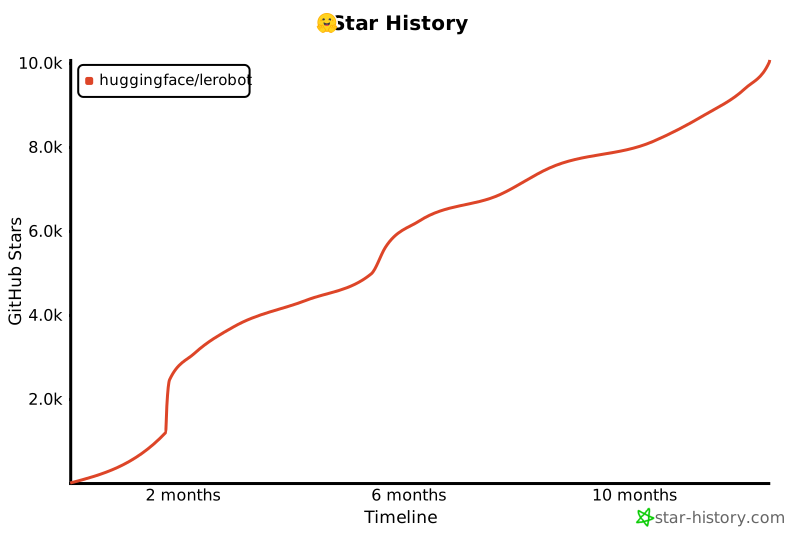](https://star-history.com/#huggingface/lerobot&Timeline)
|
||||
|
||||
@@ -1,271 +0,0 @@
|
||||
# Video benchmark
|
||||
|
||||
|
||||
## Questions
|
||||
What is the optimal trade-off between:
|
||||
- maximizing loading time with random access,
|
||||
- minimizing memory space on disk,
|
||||
- maximizing success rate of policies,
|
||||
- compatibility across devices/platforms for decoding videos (e.g. video players, web browsers).
|
||||
|
||||
How to encode videos?
|
||||
- Which video codec (`-vcodec`) to use? h264, h265, AV1?
|
||||
- What pixel format to use (`-pix_fmt`)? `yuv444p` or `yuv420p`?
|
||||
- How much compression (`-crf`)? No compression with `0`, intermediate compression with `25` or extreme with `50+`?
|
||||
- Which frequency to chose for key frames (`-g`)? A key frame every `10` frames?
|
||||
|
||||
How to decode videos?
|
||||
- Which `decoder`? `torchvision`, `torchaudio`, `ffmpegio`, `decord`, or `nvc`?
|
||||
- What scenarios to use for the requesting timestamps during benchmark? (`timestamps_mode`)
|
||||
|
||||
|
||||
## Variables
|
||||
**Image content & size**
|
||||
We don't expect the same optimal settings for a dataset of images from a simulation, or from real-world in an apartment, or in a factory, or outdoor, or with lots of moving objects in the scene, etc. Similarly, loading times might not vary linearly with the image size (resolution).
|
||||
For these reasons, we run this benchmark on four representative datasets:
|
||||
- `lerobot/pusht_image`: (96 x 96 pixels) simulation with simple geometric shapes, fixed camera.
|
||||
- `aliberts/aloha_mobile_shrimp_image`: (480 x 640 pixels) real-world indoor, moving camera.
|
||||
- `aliberts/paris_street`: (720 x 1280 pixels) real-world outdoor, moving camera.
|
||||
- `aliberts/kitchen`: (1080 x 1920 pixels) real-world indoor, fixed camera.
|
||||
|
||||
Note: The datasets used for this benchmark need to be image datasets, not video datasets.
|
||||
|
||||
**Data augmentations**
|
||||
We might revisit this benchmark and find better settings if we train our policies with various data augmentations to make them more robust (e.g. robust to color changes, compression, etc.).
|
||||
|
||||
### Encoding parameters
|
||||
| parameter | values |
|
||||
|-------------|--------------------------------------------------------------|
|
||||
| **vcodec** | `libx264`, `libx265`, `libsvtav1` |
|
||||
| **pix_fmt** | `yuv444p`, `yuv420p` |
|
||||
| **g** | `1`, `2`, `3`, `4`, `5`, `6`, `10`, `15`, `20`, `40`, `None` |
|
||||
| **crf** | `0`, `5`, `10`, `15`, `20`, `25`, `30`, `40`, `50`, `None` |
|
||||
|
||||
Note that `crf` value might be interpreted differently by various video codecs. In other words, the same value used with one codec doesn't necessarily translate into the same compression level with another codec. In fact, the default value (`None`) isn't the same amongst the different video codecs. Importantly, it is also the case for many other ffmpeg arguments like `g` which specifies the frequency of the key frames.
|
||||
|
||||
For a comprehensive list and documentation of these parameters, see the ffmpeg documentation depending on the video codec used:
|
||||
- h264: https://trac.ffmpeg.org/wiki/Encode/H.264
|
||||
- h265: https://trac.ffmpeg.org/wiki/Encode/H.265
|
||||
- AV1: https://trac.ffmpeg.org/wiki/Encode/AV1
|
||||
|
||||
### Decoding parameters
|
||||
**Decoder**
|
||||
We tested two video decoding backends from torchvision:
|
||||
- `pyav`
|
||||
- `video_reader` (requires to build torchvision from source)
|
||||
|
||||
**Requested timestamps**
|
||||
Given the way video decoding works, once a keyframe has been loaded, the decoding of subsequent frames is fast.
|
||||
This of course is affected by the `-g` parameter during encoding, which specifies the frequency of the keyframes. Given our typical use cases in robotics policies which might request a few timestamps in different random places, we want to replicate these use cases with the following scenarios:
|
||||
- `1_frame`: 1 frame,
|
||||
- `2_frames`: 2 consecutive frames (e.g. `[t, t + 1 / fps]`),
|
||||
- `6_frames`: 6 consecutive frames (e.g. `[t + i / fps for i in range(6)]`)
|
||||
|
||||
Note that this differs significantly from a typical use case like watching a movie, in which every frame is loaded sequentially from the beginning to the end and it's acceptable to have big values for `-g`.
|
||||
|
||||
Additionally, because some policies might request single timestamps that are a few frames apart, we also have the following scenario:
|
||||
- `2_frames_4_space`: 2 frames with 4 consecutive frames of spacing in between (e.g `[t, t + 5 / fps]`),
|
||||
|
||||
However, due to how video decoding is implemented with `pyav`, we don't have access to an accurate seek so in practice this scenario is essentially the same as `6_frames` since all 6 frames between `t` and `t + 5 / fps` will be decoded.
|
||||
|
||||
|
||||
## Metrics
|
||||
**Data compression ratio (lower is better)**
|
||||
`video_images_size_ratio` is the ratio of the memory space on disk taken by the encoded video over the memory space taken by the original images. For instance, `video_images_size_ratio=25%` means that the video takes 4 times less memory space on disk compared to the original images.
|
||||
|
||||
**Loading time ratio (lower is better)**
|
||||
`video_images_load_time_ratio` is the ratio of the time it takes to decode frames from the video at a given timestamps over the time it takes to load the exact same original images. Lower is better. For instance, `video_images_load_time_ratio=200%` means that decoding from video is 2 times slower than loading the original images.
|
||||
|
||||
**Average Mean Square Error (lower is better)**
|
||||
`avg_mse` is the average mean square error between each decoded frame and its corresponding original image over all requested timestamps, and also divided by the number of pixels in the image to be comparable when switching to different image sizes.
|
||||
|
||||
**Average Peak Signal to Noise Ratio (higher is better)**
|
||||
`avg_psnr` measures the ratio between the maximum possible power of a signal and the power of corrupting noise that affects the fidelity of its representation. Higher PSNR indicates better quality.
|
||||
|
||||
**Average Structural Similarity Index Measure (higher is better)**
|
||||
`avg_ssim` evaluates the perceived quality of images by comparing luminance, contrast, and structure. SSIM values range from -1 to 1, where 1 indicates perfect similarity.
|
||||
|
||||
One aspect that can't be measured here with those metrics is the compatibility of the encoding across platforms, in particular on web browser, for visualization purposes.
|
||||
h264, h265 and AV1 are all commonly used codecs and should not pose an issue. However, the chroma subsampling (`pix_fmt`) format might affect compatibility:
|
||||
- `yuv420p` is more widely supported across various platforms, including web browsers.
|
||||
- `yuv444p` offers higher color fidelity but might not be supported as broadly.
|
||||
|
||||
|
||||
<!-- **Loss of a pretrained policy (higher is better)** (not available)
|
||||
`loss_pretrained` is the result of evaluating with the selected encoding/decoding settings a policy pretrained on original images. It is easier to understand than `avg_l2_error`.
|
||||
|
||||
**Success rate after retraining (higher is better)** (not available)
|
||||
`success_rate` is the result of training and evaluating a policy with the selected encoding/decoding settings. It is the most difficult metric to get but also the very best. -->
|
||||
|
||||
|
||||
## How the benchmark works
|
||||
The benchmark evaluates both encoding and decoding of video frames on the first episode of each dataset.
|
||||
|
||||
**Encoding:** for each `vcodec` and `pix_fmt` pair, we use a default value for `g` and `crf` upon which we change a single value (either `g` or `crf`) to one of the specified values (we don't test every combination of those as this would be computationally too heavy).
|
||||
This gives a unique set of encoding parameters which is used to encode the episode.
|
||||
|
||||
**Decoding:** Then, for each of those unique encodings, we iterate through every combination of the decoding parameters `backend` and `timestamps_mode`. For each of them, we record the metrics of a number of samples (given by `--num-samples`). This is parallelized for efficiency and the number of processes can be controlled with `--num-workers`. Ideally, it's best to have a `--num-samples` that is divisible by `--num-workers`.
|
||||
|
||||
Intermediate results saved for each `vcodec` and `pix_fmt` combination in csv tables.
|
||||
These are then all concatenated to a single table ready for analysis.
|
||||
|
||||
## Caveats
|
||||
We tried to measure the most impactful parameters for both encoding and decoding. However, for computational reasons we can't test out every combination.
|
||||
|
||||
Additional encoding parameters exist that are not included in this benchmark. In particular:
|
||||
- `-preset` which allows for selecting encoding presets. This represents a collection of options that will provide a certain encoding speed to compression ratio. By leaving this parameter unspecified, it is considered to be `medium` for libx264 and libx265 and `8` for libsvtav1.
|
||||
- `-tune` which allows to optimize the encoding for certain aspects (e.g. film quality, fast decoding, etc.).
|
||||
|
||||
See the documentation mentioned above for more detailed info on these settings and for a more comprehensive list of other parameters.
|
||||
|
||||
Similarly on the decoding side, other decoders exist but are not implemented in our current benchmark. To name a few:
|
||||
- `torchaudio`
|
||||
- `ffmpegio`
|
||||
- `decord`
|
||||
- `nvc`
|
||||
|
||||
Note as well that since we are mostly interested in the performance at decoding time (also because encoding is done only once before uploading a dataset), we did not measure encoding times nor have any metrics regarding encoding.
|
||||
However, besides the necessity to build ffmpeg from source, encoding did not pose any issue and it didn't take a significant amount of time during this benchmark.
|
||||
|
||||
|
||||
## Install
|
||||
Building ffmpeg from source is required to include libx265 and libaom/libsvtav1 (av1) video codecs ([compilation guide](https://trac.ffmpeg.org/wiki/CompilationGuide/Ubuntu)).
|
||||
|
||||
**Note:** While you still need to build torchvision with a conda-installed `ffmpeg<4.3` to use the `video_reader` decoder (as described in [#220](https://github.com/huggingface/lerobot/pull/220)), you also need another version which is custom-built with all the video codecs for encoding. For the script to then use that version, you can prepend the command above with `PATH="$HOME/bin:$PATH"`, which is where ffmpeg should be built.
|
||||
|
||||
|
||||
## Adding a video decoder
|
||||
Right now, we're only benchmarking the two video decoder available with torchvision: `pyav` and `video_reader`.
|
||||
You can easily add a new decoder to benchmark by adding it to this function in the script:
|
||||
```diff
|
||||
def decode_video_frames(
|
||||
video_path: str,
|
||||
timestamps: list[float],
|
||||
tolerance_s: float,
|
||||
backend: str,
|
||||
) -> torch.Tensor:
|
||||
if backend in ["pyav", "video_reader"]:
|
||||
return decode_video_frames_torchvision(
|
||||
video_path, timestamps, tolerance_s, backend
|
||||
)
|
||||
+ elif backend == ["your_decoder"]:
|
||||
+ return your_decoder_function(
|
||||
+ video_path, timestamps, tolerance_s, backend
|
||||
+ )
|
||||
else:
|
||||
raise NotImplementedError(backend)
|
||||
```
|
||||
|
||||
|
||||
## Example
|
||||
For a quick run, you can try these parameters:
|
||||
```bash
|
||||
python benchmark/video/run_video_benchmark.py \
|
||||
--output-dir outputs/video_benchmark \
|
||||
--repo-ids \
|
||||
lerobot/pusht_image \
|
||||
aliberts/aloha_mobile_shrimp_image \
|
||||
--vcodec libx264 libx265 \
|
||||
--pix-fmt yuv444p yuv420p \
|
||||
--g 2 20 None \
|
||||
--crf 10 40 None \
|
||||
--timestamps-modes 1_frame 2_frames \
|
||||
--backends pyav video_reader \
|
||||
--num-samples 5 \
|
||||
--num-workers 5 \
|
||||
--save-frames 0
|
||||
```
|
||||
|
||||
|
||||
## Results
|
||||
|
||||
### Reproduce
|
||||
We ran the benchmark with the following parameters:
|
||||
```bash
|
||||
# h264 and h265 encodings
|
||||
python benchmark/video/run_video_benchmark.py \
|
||||
--output-dir outputs/video_benchmark \
|
||||
--repo-ids \
|
||||
lerobot/pusht_image \
|
||||
aliberts/aloha_mobile_shrimp_image \
|
||||
aliberts/paris_street \
|
||||
aliberts/kitchen \
|
||||
--vcodec libx264 libx265 \
|
||||
--pix-fmt yuv444p yuv420p \
|
||||
--g 1 2 3 4 5 6 10 15 20 40 None \
|
||||
--crf 0 5 10 15 20 25 30 40 50 None \
|
||||
--timestamps-modes 1_frame 2_frames 6_frames \
|
||||
--backends pyav video_reader \
|
||||
--num-samples 50 \
|
||||
--num-workers 5 \
|
||||
--save-frames 1
|
||||
|
||||
# av1 encoding (only compatible with yuv420p and pyav decoder)
|
||||
python benchmark/video/run_video_benchmark.py \
|
||||
--output-dir outputs/video_benchmark \
|
||||
--repo-ids \
|
||||
lerobot/pusht_image \
|
||||
aliberts/aloha_mobile_shrimp_image \
|
||||
aliberts/paris_street \
|
||||
aliberts/kitchen \
|
||||
--vcodec libsvtav1 \
|
||||
--pix-fmt yuv420p \
|
||||
--g 1 2 3 4 5 6 10 15 20 40 None \
|
||||
--crf 0 5 10 15 20 25 30 40 50 None \
|
||||
--timestamps-modes 1_frame 2_frames 6_frames \
|
||||
--backends pyav \
|
||||
--num-samples 50 \
|
||||
--num-workers 5 \
|
||||
--save-frames 1
|
||||
```
|
||||
|
||||
The full results are available [here](https://docs.google.com/spreadsheets/d/1OYJB43Qu8fC26k_OyoMFgGBBKfQRCi4BIuYitQnq3sw/edit?usp=sharing)
|
||||
|
||||
|
||||
### Parameters selected for LeRobotDataset
|
||||
Considering these results, we chose what we think is the best set of encoding parameter:
|
||||
- vcodec: `libsvtav1`
|
||||
- pix-fmt: `yuv420p`
|
||||
- g: `2`
|
||||
- crf: `30`
|
||||
|
||||
Since we're using av1 encoding, we're choosing the `pyav` decoder as `video_reader` does not support it (and `pyav` doesn't require a custom build of `torchvision`).
|
||||
|
||||
### Summary
|
||||
|
||||
These tables show the results for `g=2` and `crf=30`, using `timestamps-modes=6_frames` and `backend=pyav`
|
||||
|
||||
| video_images_size_ratio | vcodec | pix_fmt | | | |
|
||||
|------------------------------------|------------|---------|-----------|-----------|-----------|
|
||||
| | libx264 | | libx265 | | libsvtav1 |
|
||||
| repo_id | yuv420p | yuv444p | yuv420p | yuv444p | yuv420p |
|
||||
| lerobot/pusht_image | **16.97%** | 17.58% | 18.57% | 18.86% | 22.06% |
|
||||
| aliberts/aloha_mobile_shrimp_image | 2.14% | 2.11% | 1.38% | **1.37%** | 5.59% |
|
||||
| aliberts/paris_street | 2.12% | 2.13% | **1.54%** | **1.54%** | 4.43% |
|
||||
| aliberts/kitchen | 1.40% | 1.39% | **1.00%** | **1.00%** | 2.52% |
|
||||
|
||||
| video_images_load_time_ratio | vcodec | pix_fmt | | | |
|
||||
|------------------------------------|---------|---------|----------|---------|-----------|
|
||||
| | libx264 | | libx265 | | libsvtav1 |
|
||||
| repo_id | yuv420p | yuv444p | yuv420p | yuv444p | yuv420p |
|
||||
| lerobot/pusht_image | 6.45 | 5.19 | **1.90** | 2.12 | 2.47 |
|
||||
| aliberts/aloha_mobile_shrimp_image | 11.80 | 7.92 | 0.71 | 0.85 | **0.48** |
|
||||
| aliberts/paris_street | 2.21 | 2.05 | 0.36 | 0.49 | **0.30** |
|
||||
| aliberts/kitchen | 1.46 | 1.46 | 0.28 | 0.51 | **0.26** |
|
||||
|
||||
| | | vcodec | pix_fmt | | | |
|
||||
|------------------------------------|----------|----------|--------------|----------|-----------|--------------|
|
||||
| | | libx264 | | libx265 | | libsvtav1 |
|
||||
| repo_id | metric | yuv420p | yuv444p | yuv420p | yuv444p | yuv420p |
|
||||
| lerobot/pusht_image | avg_mse | 2.90E-04 | **2.03E-04** | 3.13E-04 | 2.29E-04 | 2.19E-04 |
|
||||
| | avg_psnr | 35.44 | 37.07 | 35.49 | **37.30** | 37.20 |
|
||||
| | avg_ssim | 98.28% | **98.85%** | 98.31% | 98.84% | 98.72% |
|
||||
| aliberts/aloha_mobile_shrimp_image | avg_mse | 2.76E-04 | 2.59E-04 | 3.17E-04 | 3.06E-04 | **1.30E-04** |
|
||||
| | avg_psnr | 35.91 | 36.21 | 35.88 | 36.09 | **40.17** |
|
||||
| | avg_ssim | 95.19% | 95.18% | 95.00% | 95.05% | **97.73%** |
|
||||
| aliberts/paris_street | avg_mse | 6.89E-04 | 6.70E-04 | 4.03E-03 | 4.02E-03 | **3.09E-04** |
|
||||
| | avg_psnr | 33.48 | 33.68 | 32.05 | 32.15 | **35.40** |
|
||||
| | avg_ssim | 93.76% | 93.75% | 89.46% | 89.46% | **95.46%** |
|
||||
| aliberts/kitchen | avg_mse | 2.50E-04 | 2.24E-04 | 4.28E-04 | 4.18E-04 | **1.53E-04** |
|
||||
| | avg_psnr | 36.73 | 37.33 | 36.56 | 36.75 | **39.12** |
|
||||
| | avg_ssim | 95.47% | 95.58% | 95.52% | 95.53% | **96.82%** |
|
||||
@@ -1,102 +0,0 @@
|
||||
#!/usr/bin/env python
|
||||
|
||||
# Copyright 2024 The HuggingFace Inc. team. All rights reserved.
|
||||
#
|
||||
# Licensed under the Apache License, Version 2.0 (the "License");
|
||||
# you may not use this file except in compliance with the License.
|
||||
# You may obtain a copy of the License at
|
||||
#
|
||||
# http://www.apache.org/licenses/LICENSE-2.0
|
||||
#
|
||||
# Unless required by applicable law or agreed to in writing, software
|
||||
# distributed under the License is distributed on an "AS IS" BASIS,
|
||||
# WITHOUT WARRANTIES OR CONDITIONS OF ANY KIND, either express or implied.
|
||||
# See the License for the specific language governing permissions and
|
||||
# limitations under the License.
|
||||
"""Capture video feed from a camera as raw images."""
|
||||
|
||||
import argparse
|
||||
import datetime as dt
|
||||
import os
|
||||
import time
|
||||
from pathlib import Path
|
||||
|
||||
import cv2
|
||||
import rerun as rr
|
||||
|
||||
# see https://rerun.io/docs/howto/visualization/limit-ram
|
||||
RERUN_MEMORY_LIMIT = os.getenv("LEROBOT_RERUN_MEMORY_LIMIT", "5%")
|
||||
|
||||
|
||||
def display_and_save_video_stream(output_dir: Path, fps: int, width: int, height: int, duration: int):
|
||||
rr.init("lerobot_capture_camera_feed")
|
||||
rr.spawn(memory_limit=RERUN_MEMORY_LIMIT)
|
||||
|
||||
now = dt.datetime.now()
|
||||
capture_dir = output_dir / f"{now:%Y-%m-%d}" / f"{now:%H-%M-%S}"
|
||||
if not capture_dir.exists():
|
||||
capture_dir.mkdir(parents=True, exist_ok=True)
|
||||
|
||||
# Opens the default webcam
|
||||
cap = cv2.VideoCapture(0)
|
||||
if not cap.isOpened():
|
||||
print("Error: Could not open video stream.")
|
||||
return
|
||||
|
||||
cap.set(cv2.CAP_PROP_FPS, fps)
|
||||
cap.set(cv2.CAP_PROP_FRAME_WIDTH, width)
|
||||
cap.set(cv2.CAP_PROP_FRAME_HEIGHT, height)
|
||||
|
||||
frame_index = 0
|
||||
start_time = time.time()
|
||||
while time.time() - start_time < duration:
|
||||
ret, frame = cap.read()
|
||||
|
||||
if not ret:
|
||||
print("Error: Could not read frame.")
|
||||
break
|
||||
rr.log("video/stream", rr.Image(frame.numpy()), static=True)
|
||||
cv2.imwrite(str(capture_dir / f"frame_{frame_index:06d}.png"), frame)
|
||||
frame_index += 1
|
||||
|
||||
# Release the capture
|
||||
cap.release()
|
||||
|
||||
# TODO(Steven): Add a graceful shutdown via a close() method for the Viewer context, though not currently supported in the Rerun API.
|
||||
|
||||
|
||||
if __name__ == "__main__":
|
||||
parser = argparse.ArgumentParser()
|
||||
|
||||
parser.add_argument(
|
||||
"--output-dir",
|
||||
type=Path,
|
||||
default=Path("outputs/cam_capture/"),
|
||||
help="Directory where the capture images are written. A subfolder named with the current date & time will be created inside it for each capture.",
|
||||
)
|
||||
parser.add_argument(
|
||||
"--fps",
|
||||
type=int,
|
||||
default=30,
|
||||
help="Frames Per Second of the capture.",
|
||||
)
|
||||
parser.add_argument(
|
||||
"--width",
|
||||
type=int,
|
||||
default=1280,
|
||||
help="Width of the captured images.",
|
||||
)
|
||||
parser.add_argument(
|
||||
"--height",
|
||||
type=int,
|
||||
default=720,
|
||||
help="Height of the captured images.",
|
||||
)
|
||||
parser.add_argument(
|
||||
"--duration",
|
||||
type=int,
|
||||
default=20,
|
||||
help="Duration in seconds for which the video stream should be captured.",
|
||||
)
|
||||
args = parser.parse_args()
|
||||
display_and_save_video_stream(**vars(args))
|
||||
@@ -1,490 +0,0 @@
|
||||
#!/usr/bin/env python
|
||||
|
||||
# Copyright 2024 The HuggingFace Inc. team. All rights reserved.
|
||||
#
|
||||
# Licensed under the Apache License, Version 2.0 (the "License");
|
||||
# you may not use this file except in compliance with the License.
|
||||
# You may obtain a copy of the License at
|
||||
#
|
||||
# http://www.apache.org/licenses/LICENSE-2.0
|
||||
#
|
||||
# Unless required by applicable law or agreed to in writing, software
|
||||
# distributed under the License is distributed on an "AS IS" BASIS,
|
||||
# WITHOUT WARRANTIES OR CONDITIONS OF ANY KIND, either express or implied.
|
||||
# See the License for the specific language governing permissions and
|
||||
# limitations under the License.
|
||||
"""Assess the performance of video decoding in various configurations.
|
||||
|
||||
This script will benchmark different video encoding and decoding parameters.
|
||||
See the provided README.md or run `python benchmark/video/run_video_benchmark.py --help` for usage info.
|
||||
"""
|
||||
|
||||
import argparse
|
||||
import datetime as dt
|
||||
import random
|
||||
import shutil
|
||||
from collections import OrderedDict
|
||||
from concurrent.futures import ThreadPoolExecutor, as_completed
|
||||
from pathlib import Path
|
||||
|
||||
import einops
|
||||
import numpy as np
|
||||
import pandas as pd
|
||||
import PIL
|
||||
import torch
|
||||
from skimage.metrics import mean_squared_error, peak_signal_noise_ratio, structural_similarity
|
||||
from tqdm import tqdm
|
||||
|
||||
from lerobot.common.datasets.lerobot_dataset import LeRobotDataset
|
||||
from lerobot.common.datasets.video_utils import (
|
||||
decode_video_frames_torchvision,
|
||||
encode_video_frames,
|
||||
)
|
||||
from lerobot.common.utils.benchmark import TimeBenchmark
|
||||
|
||||
BASE_ENCODING = OrderedDict(
|
||||
[
|
||||
("vcodec", "libx264"),
|
||||
("pix_fmt", "yuv444p"),
|
||||
("g", 2),
|
||||
("crf", None),
|
||||
# TODO(aliberts): Add fastdecode
|
||||
# ("fastdecode", 0),
|
||||
]
|
||||
)
|
||||
|
||||
|
||||
# TODO(rcadene, aliberts): move to `utils.py` folder when we want to refactor
|
||||
def parse_int_or_none(value) -> int | None:
|
||||
if value.lower() == "none":
|
||||
return None
|
||||
try:
|
||||
return int(value)
|
||||
except ValueError as e:
|
||||
raise argparse.ArgumentTypeError(f"Invalid int or None: {value}") from e
|
||||
|
||||
|
||||
def check_datasets_formats(repo_ids: list) -> None:
|
||||
for repo_id in repo_ids:
|
||||
dataset = LeRobotDataset(repo_id)
|
||||
if len(dataset.meta.video_keys) > 0:
|
||||
raise ValueError(
|
||||
f"Use only image dataset for running this benchmark. Video dataset provided: {repo_id}"
|
||||
)
|
||||
|
||||
|
||||
def get_directory_size(directory: Path) -> int:
|
||||
total_size = 0
|
||||
for item in directory.rglob("*"):
|
||||
if item.is_file():
|
||||
total_size += item.stat().st_size
|
||||
return total_size
|
||||
|
||||
|
||||
def load_original_frames(imgs_dir: Path, timestamps: list[float], fps: int) -> torch.Tensor:
|
||||
frames = []
|
||||
for ts in timestamps:
|
||||
idx = int(ts * fps)
|
||||
frame = PIL.Image.open(imgs_dir / f"frame_{idx:06d}.png")
|
||||
frame = torch.from_numpy(np.array(frame))
|
||||
frame = frame.type(torch.float32) / 255
|
||||
frame = einops.rearrange(frame, "h w c -> c h w")
|
||||
frames.append(frame)
|
||||
return torch.stack(frames)
|
||||
|
||||
|
||||
def save_decoded_frames(
|
||||
imgs_dir: Path, save_dir: Path, frames: torch.Tensor, timestamps: list[float], fps: int
|
||||
) -> None:
|
||||
if save_dir.exists() and len(list(save_dir.glob("frame_*.png"))) == len(timestamps):
|
||||
return
|
||||
|
||||
save_dir.mkdir(parents=True, exist_ok=True)
|
||||
for i, ts in enumerate(timestamps):
|
||||
idx = int(ts * fps)
|
||||
frame_hwc = (frames[i].permute((1, 2, 0)) * 255).type(torch.uint8).cpu().numpy()
|
||||
PIL.Image.fromarray(frame_hwc).save(save_dir / f"frame_{idx:06d}_decoded.png")
|
||||
shutil.copyfile(imgs_dir / f"frame_{idx:06d}.png", save_dir / f"frame_{idx:06d}_original.png")
|
||||
|
||||
|
||||
def save_first_episode(imgs_dir: Path, dataset: LeRobotDataset) -> None:
|
||||
ep_num_images = dataset.episode_data_index["to"][0].item()
|
||||
if imgs_dir.exists() and len(list(imgs_dir.glob("frame_*.png"))) == ep_num_images:
|
||||
return
|
||||
|
||||
imgs_dir.mkdir(parents=True, exist_ok=True)
|
||||
hf_dataset = dataset.hf_dataset.with_format(None)
|
||||
|
||||
# We only save images from the first camera
|
||||
img_keys = [key for key in hf_dataset.features if key.startswith("observation.image")]
|
||||
imgs_dataset = hf_dataset.select_columns(img_keys[0])
|
||||
|
||||
for i, item in enumerate(
|
||||
tqdm(imgs_dataset, desc=f"saving {dataset.repo_id} first episode images", leave=False)
|
||||
):
|
||||
img = item[img_keys[0]]
|
||||
img.save(str(imgs_dir / f"frame_{i:06d}.png"), quality=100)
|
||||
|
||||
if i >= ep_num_images - 1:
|
||||
break
|
||||
|
||||
|
||||
def sample_timestamps(timestamps_mode: str, ep_num_images: int, fps: int) -> list[float]:
|
||||
# Start at 5 to allow for 2_frames_4_space and 6_frames
|
||||
idx = random.randint(5, ep_num_images - 1)
|
||||
match timestamps_mode:
|
||||
case "1_frame":
|
||||
frame_indexes = [idx]
|
||||
case "2_frames":
|
||||
frame_indexes = [idx - 1, idx]
|
||||
case "2_frames_4_space":
|
||||
frame_indexes = [idx - 5, idx]
|
||||
case "6_frames":
|
||||
frame_indexes = [idx - i for i in range(6)][::-1]
|
||||
case _:
|
||||
raise ValueError(timestamps_mode)
|
||||
|
||||
return [idx / fps for idx in frame_indexes]
|
||||
|
||||
|
||||
def decode_video_frames(
|
||||
video_path: str,
|
||||
timestamps: list[float],
|
||||
tolerance_s: float,
|
||||
backend: str,
|
||||
) -> torch.Tensor:
|
||||
if backend in ["pyav", "video_reader"]:
|
||||
return decode_video_frames_torchvision(video_path, timestamps, tolerance_s, backend)
|
||||
else:
|
||||
raise NotImplementedError(backend)
|
||||
|
||||
|
||||
def benchmark_decoding(
|
||||
imgs_dir: Path,
|
||||
video_path: Path,
|
||||
timestamps_mode: str,
|
||||
backend: str,
|
||||
ep_num_images: int,
|
||||
fps: int,
|
||||
num_samples: int = 50,
|
||||
num_workers: int = 4,
|
||||
save_frames: bool = False,
|
||||
) -> dict:
|
||||
def process_sample(sample: int):
|
||||
time_benchmark = TimeBenchmark()
|
||||
timestamps = sample_timestamps(timestamps_mode, ep_num_images, fps)
|
||||
num_frames = len(timestamps)
|
||||
result = {
|
||||
"psnr_values": [],
|
||||
"ssim_values": [],
|
||||
"mse_values": [],
|
||||
}
|
||||
|
||||
with time_benchmark:
|
||||
frames = decode_video_frames(video_path, timestamps=timestamps, tolerance_s=5e-1, backend=backend)
|
||||
result["load_time_video_ms"] = time_benchmark.result_ms / num_frames
|
||||
|
||||
with time_benchmark:
|
||||
original_frames = load_original_frames(imgs_dir, timestamps, fps)
|
||||
result["load_time_images_ms"] = time_benchmark.result_ms / num_frames
|
||||
|
||||
frames_np, original_frames_np = frames.numpy(), original_frames.numpy()
|
||||
for i in range(num_frames):
|
||||
result["mse_values"].append(mean_squared_error(original_frames_np[i], frames_np[i]))
|
||||
result["psnr_values"].append(
|
||||
peak_signal_noise_ratio(original_frames_np[i], frames_np[i], data_range=1.0)
|
||||
)
|
||||
result["ssim_values"].append(
|
||||
structural_similarity(original_frames_np[i], frames_np[i], data_range=1.0, channel_axis=0)
|
||||
)
|
||||
|
||||
if save_frames and sample == 0:
|
||||
save_dir = video_path.with_suffix("") / f"{timestamps_mode}_{backend}"
|
||||
save_decoded_frames(imgs_dir, save_dir, frames, timestamps, fps)
|
||||
|
||||
return result
|
||||
|
||||
load_times_video_ms = []
|
||||
load_times_images_ms = []
|
||||
mse_values = []
|
||||
psnr_values = []
|
||||
ssim_values = []
|
||||
|
||||
# A sample is a single set of decoded frames specified by timestamps_mode (e.g. a single frame, 2 frames, etc.).
|
||||
# For each sample, we record metrics (loading time and quality metrics) which are then averaged over all samples.
|
||||
# As these samples are independent, we run them in parallel threads to speed up the benchmark.
|
||||
with ThreadPoolExecutor(max_workers=num_workers) as executor:
|
||||
futures = [executor.submit(process_sample, i) for i in range(num_samples)]
|
||||
for future in tqdm(as_completed(futures), total=num_samples, desc="samples", leave=False):
|
||||
result = future.result()
|
||||
load_times_video_ms.append(result["load_time_video_ms"])
|
||||
load_times_images_ms.append(result["load_time_images_ms"])
|
||||
psnr_values.extend(result["psnr_values"])
|
||||
ssim_values.extend(result["ssim_values"])
|
||||
mse_values.extend(result["mse_values"])
|
||||
|
||||
avg_load_time_video_ms = float(np.array(load_times_video_ms).mean())
|
||||
avg_load_time_images_ms = float(np.array(load_times_images_ms).mean())
|
||||
video_images_load_time_ratio = avg_load_time_video_ms / avg_load_time_images_ms
|
||||
|
||||
return {
|
||||
"avg_load_time_video_ms": avg_load_time_video_ms,
|
||||
"avg_load_time_images_ms": avg_load_time_images_ms,
|
||||
"video_images_load_time_ratio": video_images_load_time_ratio,
|
||||
"avg_mse": float(np.mean(mse_values)),
|
||||
"avg_psnr": float(np.mean(psnr_values)),
|
||||
"avg_ssim": float(np.mean(ssim_values)),
|
||||
}
|
||||
|
||||
|
||||
def benchmark_encoding_decoding(
|
||||
dataset: LeRobotDataset,
|
||||
video_path: Path,
|
||||
imgs_dir: Path,
|
||||
encoding_cfg: dict,
|
||||
decoding_cfg: dict,
|
||||
num_samples: int,
|
||||
num_workers: int,
|
||||
save_frames: bool,
|
||||
overwrite: bool = False,
|
||||
seed: int = 1337,
|
||||
) -> list[dict]:
|
||||
fps = dataset.fps
|
||||
|
||||
if overwrite or not video_path.is_file():
|
||||
tqdm.write(f"encoding {video_path}")
|
||||
encode_video_frames(
|
||||
imgs_dir=imgs_dir,
|
||||
video_path=video_path,
|
||||
fps=fps,
|
||||
vcodec=encoding_cfg["vcodec"],
|
||||
pix_fmt=encoding_cfg["pix_fmt"],
|
||||
g=encoding_cfg.get("g"),
|
||||
crf=encoding_cfg.get("crf"),
|
||||
# fast_decode=encoding_cfg.get("fastdecode"),
|
||||
overwrite=True,
|
||||
)
|
||||
|
||||
ep_num_images = dataset.episode_data_index["to"][0].item()
|
||||
width, height = tuple(dataset[0][dataset.meta.camera_keys[0]].shape[-2:])
|
||||
num_pixels = width * height
|
||||
video_size_bytes = video_path.stat().st_size
|
||||
images_size_bytes = get_directory_size(imgs_dir)
|
||||
video_images_size_ratio = video_size_bytes / images_size_bytes
|
||||
|
||||
random.seed(seed)
|
||||
benchmark_table = []
|
||||
for timestamps_mode in tqdm(
|
||||
decoding_cfg["timestamps_modes"], desc="decodings (timestamps_modes)", leave=False
|
||||
):
|
||||
for backend in tqdm(decoding_cfg["backends"], desc="decodings (backends)", leave=False):
|
||||
benchmark_row = benchmark_decoding(
|
||||
imgs_dir,
|
||||
video_path,
|
||||
timestamps_mode,
|
||||
backend,
|
||||
ep_num_images,
|
||||
fps,
|
||||
num_samples,
|
||||
num_workers,
|
||||
save_frames,
|
||||
)
|
||||
benchmark_row.update(
|
||||
**{
|
||||
"repo_id": dataset.repo_id,
|
||||
"resolution": f"{width} x {height}",
|
||||
"num_pixels": num_pixels,
|
||||
"video_size_bytes": video_size_bytes,
|
||||
"images_size_bytes": images_size_bytes,
|
||||
"video_images_size_ratio": video_images_size_ratio,
|
||||
"timestamps_mode": timestamps_mode,
|
||||
"backend": backend,
|
||||
},
|
||||
**encoding_cfg,
|
||||
)
|
||||
benchmark_table.append(benchmark_row)
|
||||
|
||||
return benchmark_table
|
||||
|
||||
|
||||
def main(
|
||||
output_dir: Path,
|
||||
repo_ids: list[str],
|
||||
vcodec: list[str],
|
||||
pix_fmt: list[str],
|
||||
g: list[int],
|
||||
crf: list[int],
|
||||
# fastdecode: list[int],
|
||||
timestamps_modes: list[str],
|
||||
backends: list[str],
|
||||
num_samples: int,
|
||||
num_workers: int,
|
||||
save_frames: bool,
|
||||
):
|
||||
check_datasets_formats(repo_ids)
|
||||
encoding_benchmarks = {
|
||||
"g": g,
|
||||
"crf": crf,
|
||||
# "fastdecode": fastdecode,
|
||||
}
|
||||
decoding_benchmarks = {
|
||||
"timestamps_modes": timestamps_modes,
|
||||
"backends": backends,
|
||||
}
|
||||
headers = ["repo_id", "resolution", "num_pixels"]
|
||||
headers += list(BASE_ENCODING.keys())
|
||||
headers += [
|
||||
"timestamps_mode",
|
||||
"backend",
|
||||
"video_size_bytes",
|
||||
"images_size_bytes",
|
||||
"video_images_size_ratio",
|
||||
"avg_load_time_video_ms",
|
||||
"avg_load_time_images_ms",
|
||||
"video_images_load_time_ratio",
|
||||
"avg_mse",
|
||||
"avg_psnr",
|
||||
"avg_ssim",
|
||||
]
|
||||
file_paths = []
|
||||
for video_codec in tqdm(vcodec, desc="encodings (vcodec)"):
|
||||
for pixel_format in tqdm(pix_fmt, desc="encodings (pix_fmt)", leave=False):
|
||||
benchmark_table = []
|
||||
for repo_id in tqdm(repo_ids, desc="encodings (datasets)", leave=False):
|
||||
dataset = LeRobotDataset(repo_id)
|
||||
imgs_dir = output_dir / "images" / dataset.repo_id.replace("/", "_")
|
||||
# We only use the first episode
|
||||
save_first_episode(imgs_dir, dataset)
|
||||
for key, values in tqdm(encoding_benchmarks.items(), desc="encodings (g, crf)", leave=False):
|
||||
for value in tqdm(values, desc=f"encodings ({key})", leave=False):
|
||||
encoding_cfg = BASE_ENCODING.copy()
|
||||
encoding_cfg["vcodec"] = video_codec
|
||||
encoding_cfg["pix_fmt"] = pixel_format
|
||||
encoding_cfg[key] = value
|
||||
args_path = Path("_".join(str(value) for value in encoding_cfg.values()))
|
||||
video_path = output_dir / "videos" / args_path / f"{repo_id.replace('/', '_')}.mp4"
|
||||
benchmark_table += benchmark_encoding_decoding(
|
||||
dataset,
|
||||
video_path,
|
||||
imgs_dir,
|
||||
encoding_cfg,
|
||||
decoding_benchmarks,
|
||||
num_samples,
|
||||
num_workers,
|
||||
save_frames,
|
||||
)
|
||||
|
||||
# Save intermediate results
|
||||
benchmark_df = pd.DataFrame(benchmark_table, columns=headers)
|
||||
now = dt.datetime.now()
|
||||
csv_path = (
|
||||
output_dir
|
||||
/ f"{now:%Y-%m-%d}_{now:%H-%M-%S}_{video_codec}_{pixel_format}_{num_samples}-samples.csv"
|
||||
)
|
||||
benchmark_df.to_csv(csv_path, header=True, index=False)
|
||||
file_paths.append(csv_path)
|
||||
del benchmark_df
|
||||
|
||||
# Concatenate all results
|
||||
df_list = [pd.read_csv(csv_path) for csv_path in file_paths]
|
||||
concatenated_df = pd.concat(df_list, ignore_index=True)
|
||||
concatenated_path = output_dir / f"{now:%Y-%m-%d}_{now:%H-%M-%S}_all_{num_samples}-samples.csv"
|
||||
concatenated_df.to_csv(concatenated_path, header=True, index=False)
|
||||
|
||||
|
||||
if __name__ == "__main__":
|
||||
parser = argparse.ArgumentParser()
|
||||
parser.add_argument(
|
||||
"--output-dir",
|
||||
type=Path,
|
||||
default=Path("outputs/video_benchmark"),
|
||||
help="Directory where the video benchmark outputs are written.",
|
||||
)
|
||||
parser.add_argument(
|
||||
"--repo-ids",
|
||||
type=str,
|
||||
nargs="*",
|
||||
default=[
|
||||
"lerobot/pusht_image",
|
||||
"aliberts/aloha_mobile_shrimp_image",
|
||||
"aliberts/paris_street",
|
||||
"aliberts/kitchen",
|
||||
],
|
||||
help="Datasets repo-ids to test against. First episodes only are used. Must be images.",
|
||||
)
|
||||
parser.add_argument(
|
||||
"--vcodec",
|
||||
type=str,
|
||||
nargs="*",
|
||||
default=["libx264", "libx265", "libsvtav1"],
|
||||
help="Video codecs to be tested",
|
||||
)
|
||||
parser.add_argument(
|
||||
"--pix-fmt",
|
||||
type=str,
|
||||
nargs="*",
|
||||
default=["yuv444p", "yuv420p"],
|
||||
help="Pixel formats (chroma subsampling) to be tested",
|
||||
)
|
||||
parser.add_argument(
|
||||
"--g",
|
||||
type=parse_int_or_none,
|
||||
nargs="*",
|
||||
default=[1, 2, 3, 4, 5, 6, 10, 15, 20, 40, 100, None],
|
||||
help="Group of pictures sizes to be tested.",
|
||||
)
|
||||
parser.add_argument(
|
||||
"--crf",
|
||||
type=parse_int_or_none,
|
||||
nargs="*",
|
||||
default=[0, 5, 10, 15, 20, 25, 30, 40, 50, None],
|
||||
help="Constant rate factors to be tested.",
|
||||
)
|
||||
# parser.add_argument(
|
||||
# "--fastdecode",
|
||||
# type=int,
|
||||
# nargs="*",
|
||||
# default=[0, 1],
|
||||
# help="Use the fastdecode tuning option. 0 disables it. "
|
||||
# "For libx264 and libx265, only 1 is possible. "
|
||||
# "For libsvtav1, 1, 2 or 3 are possible values with a higher number meaning a faster decoding optimization",
|
||||
# )
|
||||
parser.add_argument(
|
||||
"--timestamps-modes",
|
||||
type=str,
|
||||
nargs="*",
|
||||
default=[
|
||||
"1_frame",
|
||||
"2_frames",
|
||||
"2_frames_4_space",
|
||||
"6_frames",
|
||||
],
|
||||
help="Timestamps scenarios to be tested.",
|
||||
)
|
||||
parser.add_argument(
|
||||
"--backends",
|
||||
type=str,
|
||||
nargs="*",
|
||||
default=["pyav", "video_reader"],
|
||||
help="Torchvision decoding backend to be tested.",
|
||||
)
|
||||
parser.add_argument(
|
||||
"--num-samples",
|
||||
type=int,
|
||||
default=50,
|
||||
help="Number of samples for each encoding x decoding config.",
|
||||
)
|
||||
parser.add_argument(
|
||||
"--num-workers",
|
||||
type=int,
|
||||
default=10,
|
||||
help="Number of processes for parallelized sample processing.",
|
||||
)
|
||||
parser.add_argument(
|
||||
"--save-frames",
|
||||
type=int,
|
||||
default=0,
|
||||
help="Whether to save decoded frames or not. Enter a non-zero number for true.",
|
||||
)
|
||||
args = parser.parse_args()
|
||||
main(**vars(args))
|
||||
@@ -1,29 +0,0 @@
|
||||
# Configure image
|
||||
ARG PYTHON_VERSION=3.10
|
||||
FROM python:${PYTHON_VERSION}-slim
|
||||
|
||||
# Configure environment variables
|
||||
ARG PYTHON_VERSION
|
||||
ENV DEBIAN_FRONTEND=noninteractive
|
||||
ENV MUJOCO_GL="egl"
|
||||
ENV PATH="/opt/venv/bin:$PATH"
|
||||
|
||||
# Install dependencies and set up Python in a single layer
|
||||
RUN apt-get update && apt-get install -y --no-install-recommends \
|
||||
build-essential cmake git \
|
||||
libglib2.0-0 libgl1-mesa-glx libegl1-mesa ffmpeg \
|
||||
speech-dispatcher libgeos-dev \
|
||||
&& ln -s /usr/bin/python${PYTHON_VERSION} /usr/bin/python \
|
||||
&& python -m venv /opt/venv \
|
||||
&& apt-get clean && rm -rf /var/lib/apt/lists/* \
|
||||
&& echo "source /opt/venv/bin/activate" >> /root/.bashrc
|
||||
|
||||
# Clone repository and install LeRobot in a single layer
|
||||
COPY . /lerobot
|
||||
WORKDIR /lerobot
|
||||
RUN /opt/venv/bin/pip install --upgrade --no-cache-dir pip \
|
||||
&& /opt/venv/bin/pip install --no-cache-dir ".[test, aloha, xarm, pusht, dynamixel]" \
|
||||
--extra-index-url https://download.pytorch.org/whl/cpu
|
||||
|
||||
# Execute in bash shell rather than python
|
||||
CMD ["/bin/bash"]
|
||||
@@ -1,68 +0,0 @@
|
||||
FROM nvidia/cuda:12.2.2-devel-ubuntu22.04
|
||||
|
||||
# Configure image
|
||||
ARG PYTHON_VERSION=3.10
|
||||
ARG DEBIAN_FRONTEND=noninteractive
|
||||
|
||||
# Install apt dependencies
|
||||
RUN apt-get update && apt-get install -y --no-install-recommends \
|
||||
build-essential cmake \
|
||||
git git-lfs openssh-client \
|
||||
nano vim less util-linux tree \
|
||||
htop atop nvtop \
|
||||
sed gawk grep curl wget zip unzip \
|
||||
tcpdump sysstat screen tmux \
|
||||
libglib2.0-0 libgl1-mesa-glx libegl1-mesa \
|
||||
speech-dispatcher portaudio19-dev libgeos-dev \
|
||||
python${PYTHON_VERSION} python${PYTHON_VERSION}-venv \
|
||||
&& apt-get clean && rm -rf /var/lib/apt/lists/*
|
||||
|
||||
# Install ffmpeg build dependencies. See:
|
||||
# https://trac.ffmpeg.org/wiki/CompilationGuide/Ubuntu
|
||||
# TODO(aliberts): create image to build dependencies from source instead
|
||||
RUN apt-get update && apt-get install -y --no-install-recommends \
|
||||
autoconf automake yasm \
|
||||
libass-dev \
|
||||
libfreetype6-dev \
|
||||
libgnutls28-dev \
|
||||
libunistring-dev \
|
||||
libmp3lame-dev \
|
||||
libtool \
|
||||
libvorbis-dev \
|
||||
meson \
|
||||
ninja-build \
|
||||
pkg-config \
|
||||
texinfo \
|
||||
yasm \
|
||||
zlib1g-dev \
|
||||
nasm \
|
||||
libx264-dev \
|
||||
libx265-dev libnuma-dev \
|
||||
libvpx-dev \
|
||||
libfdk-aac-dev \
|
||||
libopus-dev \
|
||||
libsvtav1-dev libsvtav1enc-dev libsvtav1dec-dev \
|
||||
libdav1d-dev
|
||||
|
||||
# Install gh cli tool
|
||||
RUN (type -p wget >/dev/null || (apt update && apt-get install wget -y)) \
|
||||
&& mkdir -p -m 755 /etc/apt/keyrings \
|
||||
&& wget -qO- https://cli.github.com/packages/githubcli-archive-keyring.gpg | tee /etc/apt/keyrings/githubcli-archive-keyring.gpg > /dev/null \
|
||||
&& chmod go+r /etc/apt/keyrings/githubcli-archive-keyring.gpg \
|
||||
&& echo "deb [arch=$(dpkg --print-architecture) signed-by=/etc/apt/keyrings/githubcli-archive-keyring.gpg] https://cli.github.com/packages stable main" | tee /etc/apt/sources.list.d/github-cli.list > /dev/null \
|
||||
&& apt update \
|
||||
&& apt install gh -y \
|
||||
&& apt clean && rm -rf /var/lib/apt/lists/*
|
||||
|
||||
# Setup `python`
|
||||
RUN ln -s /usr/bin/python3 /usr/bin/python
|
||||
|
||||
# Install poetry
|
||||
RUN curl -sSL https://install.python-poetry.org | python -
|
||||
ENV PATH="/root/.local/bin:$PATH"
|
||||
RUN echo 'if [ "$HOME" != "/root" ]; then ln -sf /root/.local/bin/poetry $HOME/.local/bin/poetry; fi' >> /root/.bashrc
|
||||
RUN poetry config virtualenvs.create false
|
||||
RUN poetry config virtualenvs.in-project true
|
||||
|
||||
# Set EGL as the rendering backend for MuJoCo
|
||||
ENV MUJOCO_GL="egl"
|
||||
@@ -1,24 +0,0 @@
|
||||
FROM nvidia/cuda:12.4.1-base-ubuntu22.04
|
||||
|
||||
# Configure environment variables
|
||||
ARG PYTHON_VERSION=3.10
|
||||
ENV DEBIAN_FRONTEND=noninteractive
|
||||
ENV MUJOCO_GL="egl"
|
||||
ENV PATH="/opt/venv/bin:$PATH"
|
||||
|
||||
# Install dependencies and set up Python in a single layer
|
||||
RUN apt-get update && apt-get install -y --no-install-recommends \
|
||||
build-essential cmake git \
|
||||
libglib2.0-0 libgl1-mesa-glx libegl1-mesa ffmpeg \
|
||||
speech-dispatcher libgeos-dev \
|
||||
python${PYTHON_VERSION}-dev python${PYTHON_VERSION}-venv \
|
||||
&& ln -s /usr/bin/python${PYTHON_VERSION} /usr/bin/python \
|
||||
&& python -m venv /opt/venv \
|
||||
&& apt-get clean && rm -rf /var/lib/apt/lists/* \
|
||||
&& echo "source /opt/venv/bin/activate" >> /root/.bashrc
|
||||
|
||||
# Clone repository and install LeRobot in a single layer
|
||||
COPY . /lerobot
|
||||
WORKDIR /lerobot
|
||||
RUN /opt/venv/bin/pip install --upgrade --no-cache-dir pip \
|
||||
&& /opt/venv/bin/pip install --no-cache-dir ".[test, aloha, xarm, pusht, dynamixel]"
|
||||
550
download_and_upload_dataset.py
Normal file
550
download_and_upload_dataset.py
Normal file
@@ -0,0 +1,550 @@
|
||||
"""
|
||||
This file contains all obsolete download scripts. They are centralized here to not have to load
|
||||
useless dependencies when using datasets.
|
||||
"""
|
||||
|
||||
import io
|
||||
import json
|
||||
import pickle
|
||||
import shutil
|
||||
from pathlib import Path
|
||||
|
||||
import einops
|
||||
import h5py
|
||||
import numpy as np
|
||||
import torch
|
||||
import tqdm
|
||||
from datasets import Dataset, Features, Image, Sequence, Value
|
||||
from huggingface_hub import HfApi
|
||||
from PIL import Image as PILImage
|
||||
from safetensors.torch import save_file
|
||||
|
||||
from lerobot.common.datasets.utils import compute_stats, flatten_dict, hf_transform_to_torch
|
||||
|
||||
|
||||
def download_and_upload(root, revision, dataset_id):
|
||||
# TODO(rcadene, adilzouitine): add community_id/user_id (e.g. "lerobot", "cadene") or repo_id (e.g. "lerobot/pusht")
|
||||
if "pusht" in dataset_id:
|
||||
download_and_upload_pusht(root, revision, dataset_id)
|
||||
elif "xarm" in dataset_id:
|
||||
download_and_upload_xarm(root, revision, dataset_id)
|
||||
elif "aloha" in dataset_id:
|
||||
download_and_upload_aloha(root, revision, dataset_id)
|
||||
else:
|
||||
raise ValueError(dataset_id)
|
||||
|
||||
|
||||
def download_and_extract_zip(url: str, destination_folder: Path) -> bool:
|
||||
import zipfile
|
||||
|
||||
import requests
|
||||
|
||||
print(f"downloading from {url}")
|
||||
response = requests.get(url, stream=True)
|
||||
if response.status_code == 200:
|
||||
total_size = int(response.headers.get("content-length", 0))
|
||||
progress_bar = tqdm.tqdm(total=total_size, unit="B", unit_scale=True)
|
||||
|
||||
zip_file = io.BytesIO()
|
||||
for chunk in response.iter_content(chunk_size=1024):
|
||||
if chunk:
|
||||
zip_file.write(chunk)
|
||||
progress_bar.update(len(chunk))
|
||||
|
||||
progress_bar.close()
|
||||
|
||||
zip_file.seek(0)
|
||||
|
||||
with zipfile.ZipFile(zip_file, "r") as zip_ref:
|
||||
zip_ref.extractall(destination_folder)
|
||||
return True
|
||||
else:
|
||||
return False
|
||||
|
||||
|
||||
def concatenate_episodes(ep_dicts):
|
||||
data_dict = {}
|
||||
|
||||
keys = ep_dicts[0].keys()
|
||||
for key in keys:
|
||||
if torch.is_tensor(ep_dicts[0][key][0]):
|
||||
data_dict[key] = torch.cat([ep_dict[key] for ep_dict in ep_dicts])
|
||||
else:
|
||||
if key not in data_dict:
|
||||
data_dict[key] = []
|
||||
for ep_dict in ep_dicts:
|
||||
for x in ep_dict[key]:
|
||||
data_dict[key].append(x)
|
||||
|
||||
total_frames = data_dict["frame_index"].shape[0]
|
||||
data_dict["index"] = torch.arange(0, total_frames, 1)
|
||||
return data_dict
|
||||
|
||||
|
||||
def push_to_hub(hf_dataset, episode_data_index, info, stats, root, revision, dataset_id):
|
||||
# push to main to indicate latest version
|
||||
hf_dataset.push_to_hub(f"lerobot/{dataset_id}", token=True)
|
||||
|
||||
# push to version branch
|
||||
hf_dataset.push_to_hub(f"lerobot/{dataset_id}", token=True, revision=revision)
|
||||
|
||||
# create and store meta_data
|
||||
meta_data_dir = root / dataset_id / "meta_data"
|
||||
meta_data_dir.mkdir(parents=True, exist_ok=True)
|
||||
|
||||
api = HfApi()
|
||||
|
||||
# info
|
||||
info_path = meta_data_dir / "info.json"
|
||||
with open(str(info_path), "w") as f:
|
||||
json.dump(info, f, indent=4)
|
||||
api.upload_file(
|
||||
path_or_fileobj=info_path,
|
||||
path_in_repo=str(info_path).replace(f"{root}/{dataset_id}", ""),
|
||||
repo_id=f"lerobot/{dataset_id}",
|
||||
repo_type="dataset",
|
||||
)
|
||||
api.upload_file(
|
||||
path_or_fileobj=info_path,
|
||||
path_in_repo=str(info_path).replace(f"{root}/{dataset_id}", ""),
|
||||
repo_id=f"lerobot/{dataset_id}",
|
||||
repo_type="dataset",
|
||||
revision=revision,
|
||||
)
|
||||
|
||||
# stats
|
||||
stats_path = meta_data_dir / "stats.safetensors"
|
||||
save_file(flatten_dict(stats), stats_path)
|
||||
api.upload_file(
|
||||
path_or_fileobj=stats_path,
|
||||
path_in_repo=str(stats_path).replace(f"{root}/{dataset_id}", ""),
|
||||
repo_id=f"lerobot/{dataset_id}",
|
||||
repo_type="dataset",
|
||||
)
|
||||
api.upload_file(
|
||||
path_or_fileobj=stats_path,
|
||||
path_in_repo=str(stats_path).replace(f"{root}/{dataset_id}", ""),
|
||||
repo_id=f"lerobot/{dataset_id}",
|
||||
repo_type="dataset",
|
||||
revision=revision,
|
||||
)
|
||||
|
||||
# episode_data_index
|
||||
episode_data_index = {key: torch.tensor(episode_data_index[key]) for key in episode_data_index}
|
||||
ep_data_idx_path = meta_data_dir / "episode_data_index.safetensors"
|
||||
save_file(episode_data_index, ep_data_idx_path)
|
||||
api.upload_file(
|
||||
path_or_fileobj=ep_data_idx_path,
|
||||
path_in_repo=str(ep_data_idx_path).replace(f"{root}/{dataset_id}", ""),
|
||||
repo_id=f"lerobot/{dataset_id}",
|
||||
repo_type="dataset",
|
||||
)
|
||||
api.upload_file(
|
||||
path_or_fileobj=ep_data_idx_path,
|
||||
path_in_repo=str(ep_data_idx_path).replace(f"{root}/{dataset_id}", ""),
|
||||
repo_id=f"lerobot/{dataset_id}",
|
||||
repo_type="dataset",
|
||||
revision=revision,
|
||||
)
|
||||
|
||||
# copy in tests folder, the first episode and the meta_data directory
|
||||
num_items_first_ep = episode_data_index["to"][0] - episode_data_index["from"][0]
|
||||
hf_dataset.select(range(num_items_first_ep)).with_format("torch").save_to_disk(
|
||||
f"tests/data/lerobot/{dataset_id}/train"
|
||||
)
|
||||
if Path(f"tests/data/lerobot/{dataset_id}/meta_data").exists():
|
||||
shutil.rmtree(f"tests/data/lerobot/{dataset_id}/meta_data")
|
||||
shutil.copytree(meta_data_dir, f"tests/data/lerobot/{dataset_id}/meta_data")
|
||||
|
||||
|
||||
def download_and_upload_pusht(root, revision, dataset_id="pusht", fps=10):
|
||||
try:
|
||||
import pymunk
|
||||
from gym_pusht.envs.pusht import PushTEnv, pymunk_to_shapely
|
||||
|
||||
from lerobot.common.datasets._diffusion_policy_replay_buffer import (
|
||||
ReplayBuffer as DiffusionPolicyReplayBuffer,
|
||||
)
|
||||
except ModuleNotFoundError as e:
|
||||
print("`gym_pusht` is not installed. Please install it with `pip install 'lerobot[gym_pusht]'`")
|
||||
raise e
|
||||
|
||||
# as define in env
|
||||
success_threshold = 0.95 # 95% coverage,
|
||||
|
||||
pusht_url = "https://diffusion-policy.cs.columbia.edu/data/training/pusht.zip"
|
||||
pusht_zarr = Path("pusht/pusht_cchi_v7_replay.zarr")
|
||||
|
||||
root = Path(root)
|
||||
raw_dir = root / f"{dataset_id}_raw"
|
||||
zarr_path = (raw_dir / pusht_zarr).resolve()
|
||||
if not zarr_path.is_dir():
|
||||
raw_dir.mkdir(parents=True, exist_ok=True)
|
||||
download_and_extract_zip(pusht_url, raw_dir)
|
||||
|
||||
# load
|
||||
dataset_dict = DiffusionPolicyReplayBuffer.copy_from_path(zarr_path) # , keys=['img', 'state', 'action'])
|
||||
|
||||
episode_ids = torch.from_numpy(dataset_dict.get_episode_idxs())
|
||||
num_episodes = dataset_dict.meta["episode_ends"].shape[0]
|
||||
assert len(
|
||||
{dataset_dict[key].shape[0] for key in dataset_dict.keys()} # noqa: SIM118
|
||||
), "Some data type dont have the same number of total frames."
|
||||
|
||||
# TODO: verify that goal pose is expected to be fixed
|
||||
goal_pos_angle = np.array([256, 256, np.pi / 4]) # x, y, theta (in radians)
|
||||
goal_body = PushTEnv.get_goal_pose_body(goal_pos_angle)
|
||||
|
||||
imgs = torch.from_numpy(dataset_dict["img"]) # b h w c
|
||||
states = torch.from_numpy(dataset_dict["state"])
|
||||
actions = torch.from_numpy(dataset_dict["action"])
|
||||
|
||||
ep_dicts = []
|
||||
episode_data_index = {"from": [], "to": []}
|
||||
|
||||
id_from = 0
|
||||
for episode_id in tqdm.tqdm(range(num_episodes)):
|
||||
id_to = dataset_dict.meta["episode_ends"][episode_id]
|
||||
|
||||
num_frames = id_to - id_from
|
||||
|
||||
assert (episode_ids[id_from:id_to] == episode_id).all()
|
||||
|
||||
image = imgs[id_from:id_to]
|
||||
assert image.min() >= 0.0
|
||||
assert image.max() <= 255.0
|
||||
image = image.type(torch.uint8)
|
||||
|
||||
state = states[id_from:id_to]
|
||||
agent_pos = state[:, :2]
|
||||
block_pos = state[:, 2:4]
|
||||
block_angle = state[:, 4]
|
||||
|
||||
reward = torch.zeros(num_frames)
|
||||
success = torch.zeros(num_frames, dtype=torch.bool)
|
||||
done = torch.zeros(num_frames, dtype=torch.bool)
|
||||
for i in range(num_frames):
|
||||
space = pymunk.Space()
|
||||
space.gravity = 0, 0
|
||||
space.damping = 0
|
||||
|
||||
# Add walls.
|
||||
walls = [
|
||||
PushTEnv.add_segment(space, (5, 506), (5, 5), 2),
|
||||
PushTEnv.add_segment(space, (5, 5), (506, 5), 2),
|
||||
PushTEnv.add_segment(space, (506, 5), (506, 506), 2),
|
||||
PushTEnv.add_segment(space, (5, 506), (506, 506), 2),
|
||||
]
|
||||
space.add(*walls)
|
||||
|
||||
block_body = PushTEnv.add_tee(space, block_pos[i].tolist(), block_angle[i].item())
|
||||
goal_geom = pymunk_to_shapely(goal_body, block_body.shapes)
|
||||
block_geom = pymunk_to_shapely(block_body, block_body.shapes)
|
||||
intersection_area = goal_geom.intersection(block_geom).area
|
||||
goal_area = goal_geom.area
|
||||
coverage = intersection_area / goal_area
|
||||
reward[i] = np.clip(coverage / success_threshold, 0, 1)
|
||||
success[i] = coverage > success_threshold
|
||||
|
||||
# last step of demonstration is considered done
|
||||
done[-1] = True
|
||||
|
||||
ep_dict = {
|
||||
"observation.image": [PILImage.fromarray(x.numpy()) for x in image],
|
||||
"observation.state": agent_pos,
|
||||
"action": actions[id_from:id_to],
|
||||
"episode_index": torch.tensor([episode_id] * num_frames, dtype=torch.int),
|
||||
"frame_index": torch.arange(0, num_frames, 1),
|
||||
"timestamp": torch.arange(0, num_frames, 1) / fps,
|
||||
# "next.observation.image": image[1:],
|
||||
# "next.observation.state": agent_pos[1:],
|
||||
# TODO(rcadene): verify that reward and done are aligned with image and agent_pos
|
||||
"next.reward": torch.cat([reward[1:], reward[[-1]]]),
|
||||
"next.done": torch.cat([done[1:], done[[-1]]]),
|
||||
"next.success": torch.cat([success[1:], success[[-1]]]),
|
||||
}
|
||||
ep_dicts.append(ep_dict)
|
||||
|
||||
episode_data_index["from"].append(id_from)
|
||||
episode_data_index["to"].append(id_from + num_frames)
|
||||
|
||||
id_from += num_frames
|
||||
|
||||
data_dict = concatenate_episodes(ep_dicts)
|
||||
|
||||
features = {
|
||||
"observation.image": Image(),
|
||||
"observation.state": Sequence(
|
||||
length=data_dict["observation.state"].shape[1], feature=Value(dtype="float32", id=None)
|
||||
),
|
||||
"action": Sequence(length=data_dict["action"].shape[1], feature=Value(dtype="float32", id=None)),
|
||||
"episode_index": Value(dtype="int64", id=None),
|
||||
"frame_index": Value(dtype="int64", id=None),
|
||||
"timestamp": Value(dtype="float32", id=None),
|
||||
"next.reward": Value(dtype="float32", id=None),
|
||||
"next.done": Value(dtype="bool", id=None),
|
||||
"next.success": Value(dtype="bool", id=None),
|
||||
"index": Value(dtype="int64", id=None),
|
||||
}
|
||||
features = Features(features)
|
||||
hf_dataset = Dataset.from_dict(data_dict, features=features)
|
||||
hf_dataset.set_transform(hf_transform_to_torch)
|
||||
|
||||
info = {
|
||||
"fps": fps,
|
||||
}
|
||||
stats = compute_stats(hf_dataset)
|
||||
push_to_hub(hf_dataset, episode_data_index, info, stats, root, revision, dataset_id)
|
||||
|
||||
|
||||
def download_and_upload_xarm(root, revision, dataset_id, fps=15):
|
||||
root = Path(root)
|
||||
raw_dir = root / "xarm_datasets_raw"
|
||||
if not raw_dir.exists():
|
||||
import zipfile
|
||||
|
||||
import gdown
|
||||
|
||||
raw_dir.mkdir(parents=True, exist_ok=True)
|
||||
# from https://github.com/fyhMer/fowm/blob/main/scripts/download_datasets.py
|
||||
url = "https://drive.google.com/uc?id=1nhxpykGtPDhmQKm-_B8zBSywVRdgeVya"
|
||||
zip_path = raw_dir / "data.zip"
|
||||
gdown.download(url, str(zip_path), quiet=False)
|
||||
print("Extracting...")
|
||||
with zipfile.ZipFile(str(zip_path), "r") as zip_f:
|
||||
for member in zip_f.namelist():
|
||||
if member.startswith("data/xarm") and member.endswith(".pkl"):
|
||||
print(member)
|
||||
zip_f.extract(member=member)
|
||||
zip_path.unlink()
|
||||
|
||||
dataset_path = root / f"{dataset_id}" / "buffer.pkl"
|
||||
print(f"Using offline dataset '{dataset_path}'")
|
||||
with open(dataset_path, "rb") as f:
|
||||
dataset_dict = pickle.load(f)
|
||||
|
||||
ep_dicts = []
|
||||
episode_data_index = {"from": [], "to": []}
|
||||
|
||||
id_from = 0
|
||||
id_to = 0
|
||||
episode_id = 0
|
||||
total_frames = dataset_dict["actions"].shape[0]
|
||||
for i in tqdm.tqdm(range(total_frames)):
|
||||
id_to += 1
|
||||
|
||||
if not dataset_dict["dones"][i]:
|
||||
continue
|
||||
|
||||
num_frames = id_to - id_from
|
||||
|
||||
image = torch.tensor(dataset_dict["observations"]["rgb"][id_from:id_to])
|
||||
image = einops.rearrange(image, "b c h w -> b h w c")
|
||||
state = torch.tensor(dataset_dict["observations"]["state"][id_from:id_to])
|
||||
action = torch.tensor(dataset_dict["actions"][id_from:id_to])
|
||||
# TODO(rcadene): we have a missing last frame which is the observation when the env is done
|
||||
# it is critical to have this frame for tdmpc to predict a "done observation/state"
|
||||
# next_image = torch.tensor(dataset_dict["next_observations"]["rgb"][id_from:id_to])
|
||||
# next_state = torch.tensor(dataset_dict["next_observations"]["state"][id_from:id_to])
|
||||
next_reward = torch.tensor(dataset_dict["rewards"][id_from:id_to])
|
||||
next_done = torch.tensor(dataset_dict["dones"][id_from:id_to])
|
||||
|
||||
ep_dict = {
|
||||
"observation.image": [PILImage.fromarray(x.numpy()) for x in image],
|
||||
"observation.state": state,
|
||||
"action": action,
|
||||
"episode_index": torch.tensor([episode_id] * num_frames, dtype=torch.int),
|
||||
"frame_index": torch.arange(0, num_frames, 1),
|
||||
"timestamp": torch.arange(0, num_frames, 1) / fps,
|
||||
# "next.observation.image": next_image,
|
||||
# "next.observation.state": next_state,
|
||||
"next.reward": next_reward,
|
||||
"next.done": next_done,
|
||||
}
|
||||
ep_dicts.append(ep_dict)
|
||||
|
||||
episode_data_index["from"].append(id_from)
|
||||
episode_data_index["to"].append(id_from + num_frames)
|
||||
|
||||
id_from = id_to
|
||||
episode_id += 1
|
||||
|
||||
data_dict = concatenate_episodes(ep_dicts)
|
||||
|
||||
features = {
|
||||
"observation.image": Image(),
|
||||
"observation.state": Sequence(
|
||||
length=data_dict["observation.state"].shape[1], feature=Value(dtype="float32", id=None)
|
||||
),
|
||||
"action": Sequence(length=data_dict["action"].shape[1], feature=Value(dtype="float32", id=None)),
|
||||
"episode_index": Value(dtype="int64", id=None),
|
||||
"frame_index": Value(dtype="int64", id=None),
|
||||
"timestamp": Value(dtype="float32", id=None),
|
||||
"next.reward": Value(dtype="float32", id=None),
|
||||
"next.done": Value(dtype="bool", id=None),
|
||||
#'next.success': Value(dtype='bool', id=None),
|
||||
"index": Value(dtype="int64", id=None),
|
||||
}
|
||||
features = Features(features)
|
||||
hf_dataset = Dataset.from_dict(data_dict, features=features)
|
||||
hf_dataset.set_transform(hf_transform_to_torch)
|
||||
|
||||
info = {
|
||||
"fps": fps,
|
||||
}
|
||||
stats = compute_stats(hf_dataset)
|
||||
push_to_hub(hf_dataset, episode_data_index, info, stats, root, revision, dataset_id)
|
||||
|
||||
|
||||
def download_and_upload_aloha(root, revision, dataset_id, fps=50):
|
||||
folder_urls = {
|
||||
"aloha_sim_insertion_human": "https://drive.google.com/drive/folders/1RgyD0JgTX30H4IM5XZn8I3zSV_mr8pyF",
|
||||
"aloha_sim_insertion_scripted": "https://drive.google.com/drive/folders/1TsojQQSXtHEoGnqgJ3gmpPQR2DPLtS2N",
|
||||
"aloha_sim_transfer_cube_human": "https://drive.google.com/drive/folders/1sc-E4QYW7A0o23m1u2VWNGVq5smAsfCo",
|
||||
"aloha_sim_transfer_cube_scripted": "https://drive.google.com/drive/folders/1aRyoOhQwxhyt1J8XgEig4s6kzaw__LXj",
|
||||
}
|
||||
|
||||
ep48_urls = {
|
||||
"aloha_sim_insertion_human": "https://drive.google.com/file/d/18Cudl6nikDtgRolea7je8iF_gGKzynOP/view?usp=drive_link",
|
||||
"aloha_sim_insertion_scripted": "https://drive.google.com/file/d/1wfMSZ24oOh5KR_0aaP3Cnu_c4ZCveduB/view?usp=drive_link",
|
||||
"aloha_sim_transfer_cube_human": "https://drive.google.com/file/d/18smMymtr8tIxaNUQ61gW6dG50pt3MvGq/view?usp=drive_link",
|
||||
"aloha_sim_transfer_cube_scripted": "https://drive.google.com/file/d/1pnGIOd-E4-rhz2P3VxpknMKRZCoKt6eI/view?usp=drive_link",
|
||||
}
|
||||
|
||||
ep49_urls = {
|
||||
"aloha_sim_insertion_human": "https://drive.google.com/file/d/1C1kZYyROzs-PrLc0SkDgUgMi4-L3lauE/view?usp=drive_link",
|
||||
"aloha_sim_insertion_scripted": "https://drive.google.com/file/d/17EuCUWS6uCCr6yyNzpXdcdE-_TTNCKtf/view?usp=drive_link",
|
||||
"aloha_sim_transfer_cube_human": "https://drive.google.com/file/d/1Nk7l53d9sJoGDBKAOnNrExX5nLacATc6/view?usp=drive_link",
|
||||
"aloha_sim_transfer_cube_scripted": "https://drive.google.com/file/d/1GKReZHrXU73NMiC5zKCq_UtqPVtYq8eo/view?usp=drive_link",
|
||||
}
|
||||
|
||||
num_episodes = {
|
||||
"aloha_sim_insertion_human": 50,
|
||||
"aloha_sim_insertion_scripted": 50,
|
||||
"aloha_sim_transfer_cube_human": 50,
|
||||
"aloha_sim_transfer_cube_scripted": 50,
|
||||
}
|
||||
|
||||
episode_len = {
|
||||
"aloha_sim_insertion_human": 500,
|
||||
"aloha_sim_insertion_scripted": 400,
|
||||
"aloha_sim_transfer_cube_human": 400,
|
||||
"aloha_sim_transfer_cube_scripted": 400,
|
||||
}
|
||||
|
||||
cameras = {
|
||||
"aloha_sim_insertion_human": ["top"],
|
||||
"aloha_sim_insertion_scripted": ["top"],
|
||||
"aloha_sim_transfer_cube_human": ["top"],
|
||||
"aloha_sim_transfer_cube_scripted": ["top"],
|
||||
}
|
||||
|
||||
root = Path(root)
|
||||
raw_dir = root / f"{dataset_id}_raw"
|
||||
if not raw_dir.is_dir():
|
||||
import gdown
|
||||
|
||||
assert dataset_id in folder_urls
|
||||
assert dataset_id in ep48_urls
|
||||
assert dataset_id in ep49_urls
|
||||
|
||||
raw_dir.mkdir(parents=True, exist_ok=True)
|
||||
|
||||
gdown.download_folder(folder_urls[dataset_id], output=str(raw_dir))
|
||||
|
||||
# because of the 50 files limit per directory, two files episode 48 and 49 were missing
|
||||
gdown.download(ep48_urls[dataset_id], output=str(raw_dir / "episode_48.hdf5"), fuzzy=True)
|
||||
gdown.download(ep49_urls[dataset_id], output=str(raw_dir / "episode_49.hdf5"), fuzzy=True)
|
||||
|
||||
ep_dicts = []
|
||||
episode_data_index = {"from": [], "to": []}
|
||||
|
||||
id_from = 0
|
||||
for ep_id in tqdm.tqdm(range(num_episodes[dataset_id])):
|
||||
ep_path = raw_dir / f"episode_{ep_id}.hdf5"
|
||||
with h5py.File(ep_path, "r") as ep:
|
||||
num_frames = ep["/action"].shape[0]
|
||||
assert episode_len[dataset_id] == num_frames
|
||||
|
||||
# last step of demonstration is considered done
|
||||
done = torch.zeros(num_frames, dtype=torch.bool)
|
||||
done[-1] = True
|
||||
|
||||
state = torch.from_numpy(ep["/observations/qpos"][:])
|
||||
action = torch.from_numpy(ep["/action"][:])
|
||||
|
||||
ep_dict = {}
|
||||
|
||||
for cam in cameras[dataset_id]:
|
||||
image = torch.from_numpy(ep[f"/observations/images/{cam}"][:]) # b h w c
|
||||
# image = einops.rearrange(image, "b h w c -> b c h w").contiguous()
|
||||
ep_dict[f"observation.images.{cam}"] = [PILImage.fromarray(x.numpy()) for x in image]
|
||||
# ep_dict[f"next.observation.images.{cam}"] = image
|
||||
|
||||
ep_dict.update(
|
||||
{
|
||||
"observation.state": state,
|
||||
"action": action,
|
||||
"episode_index": torch.tensor([ep_id] * num_frames),
|
||||
"frame_index": torch.arange(0, num_frames, 1),
|
||||
"timestamp": torch.arange(0, num_frames, 1) / fps,
|
||||
# "next.observation.state": state,
|
||||
# TODO(rcadene): compute reward and success
|
||||
# "next.reward": reward,
|
||||
"next.done": done,
|
||||
# "next.success": success,
|
||||
}
|
||||
)
|
||||
|
||||
assert isinstance(ep_id, int)
|
||||
ep_dicts.append(ep_dict)
|
||||
|
||||
episode_data_index["from"].append(id_from)
|
||||
episode_data_index["to"].append(id_from + num_frames)
|
||||
|
||||
id_from += num_frames
|
||||
|
||||
data_dict = concatenate_episodes(ep_dicts)
|
||||
|
||||
features = {
|
||||
"observation.images.top": Image(),
|
||||
"observation.state": Sequence(
|
||||
length=data_dict["observation.state"].shape[1], feature=Value(dtype="float32", id=None)
|
||||
),
|
||||
"action": Sequence(length=data_dict["action"].shape[1], feature=Value(dtype="float32", id=None)),
|
||||
"episode_index": Value(dtype="int64", id=None),
|
||||
"frame_index": Value(dtype="int64", id=None),
|
||||
"timestamp": Value(dtype="float32", id=None),
|
||||
#'next.reward': Value(dtype='float32', id=None),
|
||||
"next.done": Value(dtype="bool", id=None),
|
||||
#'next.success': Value(dtype='bool', id=None),
|
||||
"index": Value(dtype="int64", id=None),
|
||||
}
|
||||
features = Features(features)
|
||||
hf_dataset = Dataset.from_dict(data_dict, features=features)
|
||||
hf_dataset.set_transform(hf_transform_to_torch)
|
||||
|
||||
info = {
|
||||
"fps": fps,
|
||||
}
|
||||
stats = compute_stats(hf_dataset)
|
||||
push_to_hub(hf_dataset, episode_data_index, info, stats, root, revision, dataset_id)
|
||||
|
||||
|
||||
if __name__ == "__main__":
|
||||
root = "data"
|
||||
revision = "v1.1"
|
||||
|
||||
dataset_ids = [
|
||||
"pusht",
|
||||
"xarm_lift_medium",
|
||||
"xarm_lift_medium_replay",
|
||||
"xarm_push_medium",
|
||||
"xarm_push_medium_replay",
|
||||
"aloha_sim_insertion_human",
|
||||
"aloha_sim_insertion_scripted",
|
||||
"aloha_sim_transfer_cube_human",
|
||||
"aloha_sim_transfer_cube_scripted",
|
||||
]
|
||||
for dataset_id in dataset_ids:
|
||||
download_and_upload(root, revision, dataset_id)
|
||||
69
examples/1_load_hugging_face_dataset.py
Normal file
69
examples/1_load_hugging_face_dataset.py
Normal file
@@ -0,0 +1,69 @@
|
||||
"""
|
||||
This script demonstrates the visualization of various robotic datasets from Hugging Face hub.
|
||||
It covers the steps from loading the datasets, filtering specific episodes, and converting the frame data to MP4 videos.
|
||||
Importantly, the dataset format is agnostic to any deep learning library and doesn't require using `lerobot` functions.
|
||||
It is compatible with pytorch, jax, numpy, etc.
|
||||
|
||||
As an example, this script saves frames of episode number 5 of the PushT dataset to a mp4 video and saves the result here:
|
||||
`outputs/examples/1_visualize_hugging_face_datasets/episode_5.mp4`
|
||||
|
||||
This script supports several Hugging Face datasets, among which:
|
||||
1. [Pusht](https://huggingface.co/datasets/lerobot/pusht)
|
||||
2. [Xarm Lift Medium](https://huggingface.co/datasets/lerobot/xarm_lift_medium)
|
||||
3. [Xarm Lift Medium Replay](https://huggingface.co/datasets/lerobot/xarm_lift_medium_replay)
|
||||
4. [Xarm Push Medium](https://huggingface.co/datasets/lerobot/xarm_push_medium)
|
||||
5. [Xarm Push Medium Replay](https://huggingface.co/datasets/lerobot/xarm_push_medium_replay)
|
||||
6. [Aloha Sim Insertion Human](https://huggingface.co/datasets/lerobot/aloha_sim_insertion_human)
|
||||
7. [Aloha Sim Insertion Scripted](https://huggingface.co/datasets/lerobot/aloha_sim_insertion_scripted)
|
||||
8. [Aloha Sim Transfer Cube Human](https://huggingface.co/datasets/lerobot/aloha_sim_transfer_cube_human)
|
||||
9. [Aloha Sim Transfer Cube Scripted](https://huggingface.co/datasets/lerobot/aloha_sim_transfer_cube_scripted)
|
||||
|
||||
To try a different Hugging Face dataset, you can replace this line:
|
||||
```python
|
||||
hf_dataset, fps = load_dataset("lerobot/pusht", split="train"), 10
|
||||
```
|
||||
by one of these:
|
||||
```python
|
||||
hf_dataset, fps = load_dataset("lerobot/xarm_lift_medium", split="train"), 15
|
||||
hf_dataset, fps = load_dataset("lerobot/xarm_lift_medium_replay", split="train"), 15
|
||||
hf_dataset, fps = load_dataset("lerobot/xarm_push_medium", split="train"), 15
|
||||
hf_dataset, fps = load_dataset("lerobot/xarm_push_medium_replay", split="train"), 15
|
||||
hf_dataset, fps = load_dataset("lerobot/aloha_sim_insertion_human", split="train"), 50
|
||||
hf_dataset, fps = load_dataset("lerobot/aloha_sim_insertion_scripted", split="train"), 50
|
||||
hf_dataset, fps = load_dataset("lerobot/aloha_sim_transfer_cube_human", split="train"), 50
|
||||
hf_dataset, fps = load_dataset("lerobot/aloha_sim_transfer_cube_scripted", split="train"), 50
|
||||
```
|
||||
"""
|
||||
# TODO(rcadene): remove this example file of using hf_dataset
|
||||
|
||||
from pathlib import Path
|
||||
|
||||
import imageio
|
||||
from datasets import load_dataset
|
||||
|
||||
# TODO(rcadene): list available datasets on lerobot page using `datasets`
|
||||
|
||||
# download/load hugging face dataset in pyarrow format
|
||||
hf_dataset, fps = load_dataset("lerobot/pusht", split="train", revision="v1.1"), 10
|
||||
|
||||
# display name of dataset and its features
|
||||
# TODO(rcadene): update to make the print pretty
|
||||
print(f"{hf_dataset=}")
|
||||
print(f"{hf_dataset.features=}")
|
||||
|
||||
# display useful statistics about frames and episodes, which are sequences of frames from the same video
|
||||
print(f"number of frames: {len(hf_dataset)=}")
|
||||
print(f"number of episodes: {len(hf_dataset.unique('episode_index'))=}")
|
||||
print(
|
||||
f"average number of frames per episode: {len(hf_dataset) / len(hf_dataset.unique('episode_index')):.3f}"
|
||||
)
|
||||
|
||||
# select the frames belonging to episode number 5
|
||||
hf_dataset = hf_dataset.filter(lambda frame: frame["episode_index"] == 5)
|
||||
|
||||
# load all frames of episode 5 in RAM in PIL format
|
||||
frames = hf_dataset["observation.image"]
|
||||
|
||||
# save episode frames to a mp4 video
|
||||
Path("outputs/examples/1_load_hugging_face_dataset").mkdir(parents=True, exist_ok=True)
|
||||
imageio.mimsave("outputs/examples/1_load_hugging_face_dataset/episode_5.mp4", frames, fps=fps)
|
||||
@@ -1,148 +0,0 @@
|
||||
# Copyright 2024 The HuggingFace Inc. team. All rights reserved.
|
||||
#
|
||||
# Licensed under the Apache License, Version 2.0 (the "License");
|
||||
# you may not use this file except in compliance with the License.
|
||||
# You may obtain a copy of the License at
|
||||
#
|
||||
# http://www.apache.org/licenses/LICENSE-2.0
|
||||
#
|
||||
# Unless required by applicable law or agreed to in writing, software
|
||||
# distributed under the License is distributed on an "AS IS" BASIS,
|
||||
# WITHOUT WARRANTIES OR CONDITIONS OF ANY KIND, either express or implied.
|
||||
# See the License for the specific language governing permissions and
|
||||
# limitations under the License.
|
||||
|
||||
"""
|
||||
This script demonstrates the use of `LeRobotDataset` class for handling and processing robotic datasets from Hugging Face.
|
||||
It illustrates how to load datasets, manipulate them, and apply transformations suitable for machine learning tasks in PyTorch.
|
||||
|
||||
Features included in this script:
|
||||
- Viewing a dataset's metadata and exploring its properties.
|
||||
- Loading an existing dataset from the hub or a subset of it.
|
||||
- Accessing frames by episode number.
|
||||
- Using advanced dataset features like timestamp-based frame selection.
|
||||
- Demonstrating compatibility with PyTorch DataLoader for batch processing.
|
||||
|
||||
The script ends with examples of how to batch process data using PyTorch's DataLoader.
|
||||
"""
|
||||
|
||||
from pprint import pprint
|
||||
|
||||
import torch
|
||||
from huggingface_hub import HfApi
|
||||
|
||||
import lerobot
|
||||
from lerobot.common.datasets.lerobot_dataset import LeRobotDataset, LeRobotDatasetMetadata
|
||||
|
||||
# We ported a number of existing datasets ourselves, use this to see the list:
|
||||
print("List of available datasets:")
|
||||
pprint(lerobot.available_datasets)
|
||||
|
||||
# You can also browse through the datasets created/ported by the community on the hub using the hub api:
|
||||
hub_api = HfApi()
|
||||
repo_ids = [info.id for info in hub_api.list_datasets(task_categories="robotics", tags=["LeRobot"])]
|
||||
pprint(repo_ids)
|
||||
|
||||
# Or simply explore them in your web browser directly at:
|
||||
# https://huggingface.co/datasets?other=LeRobot
|
||||
|
||||
# Let's take this one for this example
|
||||
repo_id = "lerobot/aloha_mobile_cabinet"
|
||||
# We can have a look and fetch its metadata to know more about it:
|
||||
ds_meta = LeRobotDatasetMetadata(repo_id)
|
||||
|
||||
# By instantiating just this class, you can quickly access useful information about the content and the
|
||||
# structure of the dataset without downloading the actual data yet (only metadata files — which are
|
||||
# lightweight).
|
||||
print(f"Total number of episodes: {ds_meta.total_episodes}")
|
||||
print(f"Average number of frames per episode: {ds_meta.total_frames / ds_meta.total_episodes:.3f}")
|
||||
print(f"Frames per second used during data collection: {ds_meta.fps}")
|
||||
print(f"Robot type: {ds_meta.robot_type}")
|
||||
print(f"keys to access images from cameras: {ds_meta.camera_keys=}\n")
|
||||
|
||||
print("Tasks:")
|
||||
print(ds_meta.tasks)
|
||||
print("Features:")
|
||||
pprint(ds_meta.features)
|
||||
|
||||
# You can also get a short summary by simply printing the object:
|
||||
print(ds_meta)
|
||||
|
||||
# You can then load the actual dataset from the hub.
|
||||
# Either load any subset of episodes:
|
||||
dataset = LeRobotDataset(repo_id, episodes=[0, 10, 11, 23])
|
||||
|
||||
# And see how many frames you have:
|
||||
print(f"Selected episodes: {dataset.episodes}")
|
||||
print(f"Number of episodes selected: {dataset.num_episodes}")
|
||||
print(f"Number of frames selected: {dataset.num_frames}")
|
||||
|
||||
# Or simply load the entire dataset:
|
||||
dataset = LeRobotDataset(repo_id)
|
||||
print(f"Number of episodes selected: {dataset.num_episodes}")
|
||||
print(f"Number of frames selected: {dataset.num_frames}")
|
||||
|
||||
# The previous metadata class is contained in the 'meta' attribute of the dataset:
|
||||
print(dataset.meta)
|
||||
|
||||
# LeRobotDataset actually wraps an underlying Hugging Face dataset
|
||||
# (see https://huggingface.co/docs/datasets for more information).
|
||||
print(dataset.hf_dataset)
|
||||
|
||||
# LeRobot datasets also subclasses PyTorch datasets so you can do everything you know and love from working
|
||||
# with the latter, like iterating through the dataset.
|
||||
# The __getitem__ iterates over the frames of the dataset. Since our datasets are also structured by
|
||||
# episodes, you can access the frame indices of any episode using the episode_data_index. Here, we access
|
||||
# frame indices associated to the first episode:
|
||||
episode_index = 0
|
||||
from_idx = dataset.episode_data_index["from"][episode_index].item()
|
||||
to_idx = dataset.episode_data_index["to"][episode_index].item()
|
||||
|
||||
# Then we grab all the image frames from the first camera:
|
||||
camera_key = dataset.meta.camera_keys[0]
|
||||
frames = [dataset[idx][camera_key] for idx in range(from_idx, to_idx)]
|
||||
|
||||
# The objects returned by the dataset are all torch.Tensors
|
||||
print(type(frames[0]))
|
||||
print(frames[0].shape)
|
||||
|
||||
# Since we're using pytorch, the shape is in pytorch, channel-first convention (c, h, w).
|
||||
# We can compare this shape with the information available for that feature
|
||||
pprint(dataset.features[camera_key])
|
||||
# In particular:
|
||||
print(dataset.features[camera_key]["shape"])
|
||||
# The shape is in (h, w, c) which is a more universal format.
|
||||
|
||||
# For many machine learning applications we need to load the history of past observations or trajectories of
|
||||
# future actions. Our datasets can load previous and future frames for each key/modality, using timestamps
|
||||
# differences with the current loaded frame. For instance:
|
||||
delta_timestamps = {
|
||||
# loads 4 images: 1 second before current frame, 500 ms before, 200 ms before, and current frame
|
||||
camera_key: [-1, -0.5, -0.20, 0],
|
||||
# loads 6 state vectors: 1.5 seconds before, 1 second before, ... 200 ms, 100 ms, and current frame
|
||||
"observation.state": [-1.5, -1, -0.5, -0.20, -0.10, 0],
|
||||
# loads 64 action vectors: current frame, 1 frame in the future, 2 frames, ... 63 frames in the future
|
||||
"action": [t / dataset.fps for t in range(64)],
|
||||
}
|
||||
# Note that in any case, these delta_timestamps values need to be multiples of (1/fps) so that added to any
|
||||
# timestamp, you still get a valid timestamp.
|
||||
|
||||
dataset = LeRobotDataset(repo_id, delta_timestamps=delta_timestamps)
|
||||
print(f"\n{dataset[0][camera_key].shape=}") # (4, c, h, w)
|
||||
print(f"{dataset[0]['observation.state'].shape=}") # (6, c)
|
||||
print(f"{dataset[0]['action'].shape=}\n") # (64, c)
|
||||
|
||||
# Finally, our datasets are fully compatible with PyTorch dataloaders and samplers because they are just
|
||||
# PyTorch datasets.
|
||||
dataloader = torch.utils.data.DataLoader(
|
||||
dataset,
|
||||
num_workers=0,
|
||||
batch_size=32,
|
||||
shuffle=True,
|
||||
)
|
||||
|
||||
for batch in dataloader:
|
||||
print(f"{batch[camera_key].shape=}") # (32, 4, c, h, w)
|
||||
print(f"{batch['observation.state'].shape=}") # (32, 6, c)
|
||||
print(f"{batch['action'].shape=}") # (32, 64, c)
|
||||
break
|
||||
@@ -1,139 +0,0 @@
|
||||
# Copyright 2024 The HuggingFace Inc. team. All rights reserved.
|
||||
#
|
||||
# Licensed under the Apache License, Version 2.0 (the "License");
|
||||
# you may not use this file except in compliance with the License.
|
||||
# You may obtain a copy of the License at
|
||||
#
|
||||
# http://www.apache.org/licenses/LICENSE-2.0
|
||||
#
|
||||
# Unless required by applicable law or agreed to in writing, software
|
||||
# distributed under the License is distributed on an "AS IS" BASIS,
|
||||
# WITHOUT WARRANTIES OR CONDITIONS OF ANY KIND, either express or implied.
|
||||
# See the License for the specific language governing permissions and
|
||||
# limitations under the License.
|
||||
|
||||
"""
|
||||
This scripts demonstrates how to evaluate a pretrained policy from the HuggingFace Hub or from your local
|
||||
training outputs directory. In the latter case, you might want to run examples/3_train_policy.py first.
|
||||
|
||||
It requires the installation of the 'gym_pusht' simulation environment. Install it by running:
|
||||
```bash
|
||||
pip install -e ".[pusht]"
|
||||
```
|
||||
"""
|
||||
|
||||
from pathlib import Path
|
||||
|
||||
import gym_pusht # noqa: F401
|
||||
import gymnasium as gym
|
||||
import imageio
|
||||
import numpy
|
||||
import torch
|
||||
|
||||
from lerobot.common.policies.diffusion.modeling_diffusion import DiffusionPolicy
|
||||
|
||||
# Create a directory to store the video of the evaluation
|
||||
output_directory = Path("outputs/eval/example_pusht_diffusion")
|
||||
output_directory.mkdir(parents=True, exist_ok=True)
|
||||
|
||||
# Select your device
|
||||
device = "cuda"
|
||||
|
||||
# Provide the [hugging face repo id](https://huggingface.co/lerobot/diffusion_pusht):
|
||||
pretrained_policy_path = "lerobot/diffusion_pusht"
|
||||
# OR a path to a local outputs/train folder.
|
||||
# pretrained_policy_path = Path("outputs/train/example_pusht_diffusion")
|
||||
|
||||
policy = DiffusionPolicy.from_pretrained(pretrained_policy_path)
|
||||
|
||||
# Initialize evaluation environment to render two observation types:
|
||||
# an image of the scene and state/position of the agent. The environment
|
||||
# also automatically stops running after 300 interactions/steps.
|
||||
env = gym.make(
|
||||
"gym_pusht/PushT-v0",
|
||||
obs_type="pixels_agent_pos",
|
||||
max_episode_steps=300,
|
||||
)
|
||||
|
||||
# We can verify that the shapes of the features expected by the policy match the ones from the observations
|
||||
# produced by the environment
|
||||
print(policy.config.input_features)
|
||||
print(env.observation_space)
|
||||
|
||||
# Similarly, we can check that the actions produced by the policy will match the actions expected by the
|
||||
# environment
|
||||
print(policy.config.output_features)
|
||||
print(env.action_space)
|
||||
|
||||
# Reset the policy and environments to prepare for rollout
|
||||
policy.reset()
|
||||
numpy_observation, info = env.reset(seed=42)
|
||||
|
||||
# Prepare to collect every rewards and all the frames of the episode,
|
||||
# from initial state to final state.
|
||||
rewards = []
|
||||
frames = []
|
||||
|
||||
# Render frame of the initial state
|
||||
frames.append(env.render())
|
||||
|
||||
step = 0
|
||||
done = False
|
||||
while not done:
|
||||
# Prepare observation for the policy running in Pytorch
|
||||
state = torch.from_numpy(numpy_observation["agent_pos"])
|
||||
image = torch.from_numpy(numpy_observation["pixels"])
|
||||
|
||||
# Convert to float32 with image from channel first in [0,255]
|
||||
# to channel last in [0,1]
|
||||
state = state.to(torch.float32)
|
||||
image = image.to(torch.float32) / 255
|
||||
image = image.permute(2, 0, 1)
|
||||
|
||||
# Send data tensors from CPU to GPU
|
||||
state = state.to(device, non_blocking=True)
|
||||
image = image.to(device, non_blocking=True)
|
||||
|
||||
# Add extra (empty) batch dimension, required to forward the policy
|
||||
state = state.unsqueeze(0)
|
||||
image = image.unsqueeze(0)
|
||||
|
||||
# Create the policy input dictionary
|
||||
observation = {
|
||||
"observation.state": state,
|
||||
"observation.image": image,
|
||||
}
|
||||
|
||||
# Predict the next action with respect to the current observation
|
||||
with torch.inference_mode():
|
||||
action = policy.select_action(observation)
|
||||
|
||||
# Prepare the action for the environment
|
||||
numpy_action = action.squeeze(0).to("cpu").numpy()
|
||||
|
||||
# Step through the environment and receive a new observation
|
||||
numpy_observation, reward, terminated, truncated, info = env.step(numpy_action)
|
||||
print(f"{step=} {reward=} {terminated=}")
|
||||
|
||||
# Keep track of all the rewards and frames
|
||||
rewards.append(reward)
|
||||
frames.append(env.render())
|
||||
|
||||
# The rollout is considered done when the success state is reach (i.e. terminated is True),
|
||||
# or the maximum number of iterations is reached (i.e. truncated is True)
|
||||
done = terminated | truncated | done
|
||||
step += 1
|
||||
|
||||
if terminated:
|
||||
print("Success!")
|
||||
else:
|
||||
print("Failure!")
|
||||
|
||||
# Get the speed of environment (i.e. its number of frames per second).
|
||||
fps = env.metadata["render_fps"]
|
||||
|
||||
# Encode all frames into a mp4 video.
|
||||
video_path = output_directory / "rollout.mp4"
|
||||
imageio.mimsave(str(video_path), numpy.stack(frames), fps=fps)
|
||||
|
||||
print(f"Video of the evaluation is available in '{video_path}'.")
|
||||
91
examples/2_load_lerobot_dataset.py
Normal file
91
examples/2_load_lerobot_dataset.py
Normal file
@@ -0,0 +1,91 @@
|
||||
"""
|
||||
This script demonstrates the use of `LeRobotDataset` class for handling and processing robotic datasets from Hugging Face.
|
||||
It illustrates how to load datasets, manipulate them, and apply transformations suitable for machine learning tasks in PyTorch.
|
||||
|
||||
Features included in this script:
|
||||
- Loading a dataset and accessing its properties.
|
||||
- Filtering data by episode number.
|
||||
- Converting tensor data for visualization.
|
||||
- Saving video files from dataset frames.
|
||||
- Using advanced dataset features like timestamp-based frame selection.
|
||||
- Demonstrating compatibility with PyTorch DataLoader for batch processing.
|
||||
|
||||
The script ends with examples of how to batch process data using PyTorch's DataLoader.
|
||||
"""
|
||||
|
||||
from pathlib import Path
|
||||
|
||||
import imageio
|
||||
import torch
|
||||
|
||||
import lerobot
|
||||
from lerobot.common.datasets.lerobot_dataset import LeRobotDataset
|
||||
|
||||
print("List of available datasets", lerobot.available_datasets)
|
||||
# # >>> ['lerobot/aloha_sim_insertion_human', 'lerobot/aloha_sim_insertion_scripted',
|
||||
# # 'lerobot/aloha_sim_transfer_cube_human', 'lerobot/aloha_sim_transfer_cube_scripted',
|
||||
# # 'lerobot/pusht', 'lerobot/xarm_lift_medium']
|
||||
|
||||
repo_id = "lerobot/pusht"
|
||||
|
||||
# You can easily load a dataset from a Hugging Face repositery
|
||||
dataset = LeRobotDataset(repo_id)
|
||||
|
||||
# LeRobotDataset is actually a thin wrapper around an underlying Hugging Face dataset (see https://huggingface.co/docs/datasets/index for more information).
|
||||
# TODO(rcadene): update to make the print pretty
|
||||
print(f"{dataset=}")
|
||||
print(f"{dataset.hf_dataset=}")
|
||||
|
||||
# and provides additional utilities for robotics and compatibility with pytorch
|
||||
print(f"number of samples/frames: {dataset.num_samples=}")
|
||||
print(f"number of episodes: {dataset.num_episodes=}")
|
||||
print(f"average number of frames per episode: {dataset.num_samples / dataset.num_episodes:.3f}")
|
||||
print(f"frames per second used during data collection: {dataset.fps=}")
|
||||
print(f"keys to access images from cameras: {dataset.image_keys=}")
|
||||
|
||||
# While the LeRobotDataset adds helpers for working within our library, we still expose the underling Hugging Face dataset.
|
||||
# It may be freely replaced or modified in place. Here we use the filtering to keep only frames from episode 5.
|
||||
# TODO(rcadene): remove this example of accessing hf_dataset
|
||||
dataset.hf_dataset = dataset.hf_dataset.filter(lambda frame: frame["episode_index"] == 5)
|
||||
|
||||
# LeRobot datsets actually subclass PyTorch datasets. So you can do everything you know and love from working with the latter, for example: iterating through the dataset. Here we grab all the image frames.
|
||||
frames = [sample["observation.image"] for sample in dataset]
|
||||
|
||||
# but frames are now float32 range [0,1] channel first (c,h,w) to follow pytorch convention,
|
||||
# to view them, we convert to uint8 range [0,255]
|
||||
frames = [(frame * 255).type(torch.uint8) for frame in frames]
|
||||
# and to channel last (h,w,c)
|
||||
frames = [frame.permute((1, 2, 0)).numpy() for frame in frames]
|
||||
|
||||
# and finally save them to a mp4 video
|
||||
Path("outputs/examples/2_load_lerobot_dataset").mkdir(parents=True, exist_ok=True)
|
||||
imageio.mimsave("outputs/examples/2_load_lerobot_dataset/episode_5.mp4", frames, fps=dataset.fps)
|
||||
|
||||
# For many machine learning applications we need to load histories of past observations, or trajectorys of future actions. Our datasets can load previous and future frames for each key/modality,
|
||||
# using timestamps differences with the current loaded frame. For instance:
|
||||
delta_timestamps = {
|
||||
# loads 4 images: 1 second before current frame, 500 ms before, 200 ms before, and current frame
|
||||
"observation.image": [-1, -0.5, -0.20, 0],
|
||||
# loads 8 state vectors: 1.5 seconds before, 1 second before, ... 20 ms, 10 ms, and current frame
|
||||
"observation.state": [-1.5, -1, -0.5, -0.20, -0.10, -0.02, -0.01, 0],
|
||||
# loads 64 action vectors: current frame, 1 frame in the future, 2 frames, ... 63 frames in the future
|
||||
"action": [t / dataset.fps for t in range(64)],
|
||||
}
|
||||
dataset = LeRobotDataset(repo_id, delta_timestamps=delta_timestamps)
|
||||
print(f"{dataset[0]['observation.image'].shape=}") # (4,c,h,w)
|
||||
print(f"{dataset[0]['observation.state'].shape=}") # (8,c)
|
||||
print(f"{dataset[0]['action'].shape=}") # (64,c)
|
||||
|
||||
# Finally, our datasets are fully compatible with PyTorch dataloaders and samplers
|
||||
# because they are just PyTorch datasets.
|
||||
dataloader = torch.utils.data.DataLoader(
|
||||
dataset,
|
||||
num_workers=0,
|
||||
batch_size=32,
|
||||
shuffle=True,
|
||||
)
|
||||
for batch in dataloader:
|
||||
print(f"{batch['observation.image'].shape=}") # (32,4,c,h,w)
|
||||
print(f"{batch['observation.state'].shape=}") # (32,8,c)
|
||||
print(f"{batch['action'].shape=}") # (32,64,c)
|
||||
break
|
||||
38
examples/3_evaluate_pretrained_policy.py
Normal file
38
examples/3_evaluate_pretrained_policy.py
Normal file
@@ -0,0 +1,38 @@
|
||||
"""
|
||||
This scripts demonstrates how to evaluate a pretrained policy from the HuggingFace Hub or from your local
|
||||
training outputs directory. In the latter case, you might want to run examples/3_train_policy.py first.
|
||||
"""
|
||||
|
||||
from pathlib import Path
|
||||
|
||||
from huggingface_hub import snapshot_download
|
||||
|
||||
from lerobot.common.utils.utils import init_hydra_config
|
||||
from lerobot.scripts.eval import eval
|
||||
|
||||
# Get a pretrained policy from the hub.
|
||||
# TODO(alexander-soare): This no longer works until we upload a new model that uses the current configs.
|
||||
hub_id = "lerobot/diffusion_policy_pusht_image"
|
||||
folder = Path(snapshot_download(hub_id))
|
||||
# OR uncomment the following to evaluate a policy from the local outputs/train folder.
|
||||
# folder = Path("outputs/train/example_pusht_diffusion")
|
||||
|
||||
config_path = folder / "config.yaml"
|
||||
weights_path = folder / "model.pt"
|
||||
|
||||
# Override some config parameters to do with evaluation.
|
||||
overrides = [
|
||||
f"policy.pretrained_model_path={weights_path}",
|
||||
"eval_episodes=10",
|
||||
"rollout_batch_size=10",
|
||||
"device=cuda",
|
||||
]
|
||||
|
||||
# Create a Hydra config.
|
||||
cfg = init_hydra_config(config_path, overrides)
|
||||
|
||||
# Evaluate the policy and save the outputs including metrics and videos.
|
||||
eval(
|
||||
cfg,
|
||||
out_dir=f"outputs/eval/example_{cfg.env.name}_{cfg.policy.name}",
|
||||
)
|
||||
@@ -1,120 +0,0 @@
|
||||
# Copyright 2024 The HuggingFace Inc. team. All rights reserved.
|
||||
#
|
||||
# Licensed under the Apache License, Version 2.0 (the "License");
|
||||
# you may not use this file except in compliance with the License.
|
||||
# You may obtain a copy of the License at
|
||||
#
|
||||
# http://www.apache.org/licenses/LICENSE-2.0
|
||||
#
|
||||
# Unless required by applicable law or agreed to in writing, software
|
||||
# distributed under the License is distributed on an "AS IS" BASIS,
|
||||
# WITHOUT WARRANTIES OR CONDITIONS OF ANY KIND, either express or implied.
|
||||
# See the License for the specific language governing permissions and
|
||||
# limitations under the License.
|
||||
|
||||
"""This scripts demonstrates how to train Diffusion Policy on the PushT environment.
|
||||
|
||||
Once you have trained a model with this script, you can try to evaluate it on
|
||||
examples/2_evaluate_pretrained_policy.py
|
||||
"""
|
||||
|
||||
from pathlib import Path
|
||||
|
||||
import torch
|
||||
|
||||
from lerobot.common.datasets.lerobot_dataset import LeRobotDataset, LeRobotDatasetMetadata
|
||||
from lerobot.common.datasets.utils import dataset_to_policy_features
|
||||
from lerobot.common.policies.diffusion.configuration_diffusion import DiffusionConfig
|
||||
from lerobot.common.policies.diffusion.modeling_diffusion import DiffusionPolicy
|
||||
from lerobot.configs.types import FeatureType
|
||||
|
||||
|
||||
def main():
|
||||
# Create a directory to store the training checkpoint.
|
||||
output_directory = Path("outputs/train/example_pusht_diffusion")
|
||||
output_directory.mkdir(parents=True, exist_ok=True)
|
||||
|
||||
# # Select your device
|
||||
device = torch.device("cuda")
|
||||
|
||||
# Number of offline training steps (we'll only do offline training for this example.)
|
||||
# Adjust as you prefer. 5000 steps are needed to get something worth evaluating.
|
||||
training_steps = 5000
|
||||
log_freq = 1
|
||||
|
||||
# When starting from scratch (i.e. not from a pretrained policy), we need to specify 2 things before
|
||||
# creating the policy:
|
||||
# - input/output shapes: to properly size the policy
|
||||
# - dataset stats: for normalization and denormalization of input/outputs
|
||||
dataset_metadata = LeRobotDatasetMetadata("lerobot/pusht")
|
||||
features = dataset_to_policy_features(dataset_metadata.features)
|
||||
output_features = {key: ft for key, ft in features.items() if ft.type is FeatureType.ACTION}
|
||||
input_features = {key: ft for key, ft in features.items() if key not in output_features}
|
||||
|
||||
# Policies are initialized with a configuration class, in this case `DiffusionConfig`. For this example,
|
||||
# we'll just use the defaults and so no arguments other than input/output features need to be passed.
|
||||
cfg = DiffusionConfig(input_features=input_features, output_features=output_features)
|
||||
|
||||
# We can now instantiate our policy with this config and the dataset stats.
|
||||
policy = DiffusionPolicy(cfg, dataset_stats=dataset_metadata.stats)
|
||||
policy.train()
|
||||
policy.to(device)
|
||||
|
||||
# Another policy-dataset interaction is with the delta_timestamps. Each policy expects a given number frames
|
||||
# which can differ for inputs, outputs and rewards (if there are some).
|
||||
delta_timestamps = {
|
||||
"observation.image": [i / dataset_metadata.fps for i in cfg.observation_delta_indices],
|
||||
"observation.state": [i / dataset_metadata.fps for i in cfg.observation_delta_indices],
|
||||
"action": [i / dataset_metadata.fps for i in cfg.action_delta_indices],
|
||||
}
|
||||
|
||||
# In this case with the standard configuration for Diffusion Policy, it is equivalent to this:
|
||||
delta_timestamps = {
|
||||
# Load the previous image and state at -0.1 seconds before current frame,
|
||||
# then load current image and state corresponding to 0.0 second.
|
||||
"observation.image": [-0.1, 0.0],
|
||||
"observation.state": [-0.1, 0.0],
|
||||
# Load the previous action (-0.1), the next action to be executed (0.0),
|
||||
# and 14 future actions with a 0.1 seconds spacing. All these actions will be
|
||||
# used to supervise the policy.
|
||||
"action": [-0.1, 0.0, 0.1, 0.2, 0.3, 0.4, 0.5, 0.6, 0.7, 0.8, 0.9, 1.0, 1.1, 1.2, 1.3, 1.4],
|
||||
}
|
||||
|
||||
# We can then instantiate the dataset with these delta_timestamps configuration.
|
||||
dataset = LeRobotDataset("lerobot/pusht", delta_timestamps=delta_timestamps)
|
||||
|
||||
# Then we create our optimizer and dataloader for offline training.
|
||||
optimizer = torch.optim.Adam(policy.parameters(), lr=1e-4)
|
||||
dataloader = torch.utils.data.DataLoader(
|
||||
dataset,
|
||||
num_workers=4,
|
||||
batch_size=64,
|
||||
shuffle=True,
|
||||
pin_memory=device.type != "cpu",
|
||||
drop_last=True,
|
||||
)
|
||||
|
||||
# Run training loop.
|
||||
step = 0
|
||||
done = False
|
||||
while not done:
|
||||
for batch in dataloader:
|
||||
batch = {k: (v.to(device) if isinstance(v, torch.Tensor) else v) for k, v in batch.items()}
|
||||
loss, _ = policy.forward(batch)
|
||||
loss.backward()
|
||||
optimizer.step()
|
||||
optimizer.zero_grad()
|
||||
|
||||
if step % log_freq == 0:
|
||||
print(f"step: {step} loss: {loss.item():.3f}")
|
||||
step += 1
|
||||
if step >= training_steps:
|
||||
done = True
|
||||
break
|
||||
|
||||
# Save a policy checkpoint.
|
||||
policy.save_pretrained(output_directory)
|
||||
|
||||
|
||||
if __name__ == "__main__":
|
||||
main()
|
||||
67
examples/4_train_policy.py
Normal file
67
examples/4_train_policy.py
Normal file
@@ -0,0 +1,67 @@
|
||||
"""This scripts demonstrates how to train Diffusion Policy on the PushT environment.
|
||||
|
||||
Once you have trained a model with this script, you can try to evaluate it on
|
||||
examples/2_evaluate_pretrained_policy.py
|
||||
"""
|
||||
|
||||
import os
|
||||
from pathlib import Path
|
||||
|
||||
import torch
|
||||
from omegaconf import OmegaConf
|
||||
|
||||
from lerobot.common.datasets.factory import make_dataset
|
||||
from lerobot.common.policies.diffusion.configuration_diffusion import DiffusionConfig
|
||||
from lerobot.common.policies.diffusion.modeling_diffusion import DiffusionPolicy
|
||||
from lerobot.common.utils.utils import init_hydra_config
|
||||
|
||||
output_directory = Path("outputs/train/example_pusht_diffusion")
|
||||
os.makedirs(output_directory, exist_ok=True)
|
||||
|
||||
# Number of offline training steps (we'll only do offline training for this example.
|
||||
# Adjust as you prefer. 5000 steps are needed to get something worth evaluating.
|
||||
training_steps = 5000
|
||||
device = torch.device("cuda")
|
||||
log_freq = 250
|
||||
|
||||
# Set up the dataset.
|
||||
hydra_cfg = init_hydra_config("lerobot/configs/default.yaml", overrides=["env=pusht"])
|
||||
dataset = make_dataset(hydra_cfg)
|
||||
|
||||
# Set up the the policy.
|
||||
# Policies are initialized with a configuration class, in this case `DiffusionConfig`.
|
||||
# For this example, no arguments need to be passed because the defaults are set up for PushT.
|
||||
# If you're doing something different, you will likely need to change at least some of the defaults.
|
||||
cfg = DiffusionConfig()
|
||||
# TODO(alexander-soare): Remove LR scheduler from the policy.
|
||||
policy = DiffusionPolicy(cfg, lr_scheduler_num_training_steps=training_steps, dataset_stats=dataset.stats)
|
||||
policy.train()
|
||||
policy.to(device)
|
||||
|
||||
# Create dataloader for offline training.
|
||||
dataloader = torch.utils.data.DataLoader(
|
||||
dataset,
|
||||
num_workers=4,
|
||||
batch_size=cfg.batch_size,
|
||||
shuffle=True,
|
||||
pin_memory=device != torch.device("cpu"),
|
||||
drop_last=True,
|
||||
)
|
||||
|
||||
# Run training loop.
|
||||
step = 0
|
||||
done = False
|
||||
while not done:
|
||||
for batch in dataloader:
|
||||
batch = {k: v.to(device, non_blocking=True) for k, v in batch.items()}
|
||||
info = policy.update(batch)
|
||||
if step % log_freq == 0:
|
||||
print(f"step: {step} loss: {info['loss']:.3f} update_time: {info['update_s']:.3f} (seconds)")
|
||||
step += 1
|
||||
if step >= training_steps:
|
||||
done = True
|
||||
break
|
||||
|
||||
# Save the policy and configuration for later use.
|
||||
policy.save(output_directory / "model.pt")
|
||||
OmegaConf.save(hydra_cfg, output_directory / "config.yaml")
|
||||
@@ -1,274 +0,0 @@
|
||||
This tutorial will explain the training script, how to use it, and particularly how to configure everything needed for the training run.
|
||||
> **Note:** The following assume you're running these commands on a machine equipped with a cuda GPU. If you don't have one (or if you're using a Mac), you can add `--policy.device=cpu` (`--policy.device=mps` respectively). However, be advised that the code executes much slower on cpu.
|
||||
|
||||
|
||||
## The training script
|
||||
|
||||
LeRobot offers a training script at [`lerobot/scripts/train.py`](../../lerobot/scripts/train.py). At a high level it does the following:
|
||||
|
||||
- Initialize/load a configuration for the following steps using.
|
||||
- Instantiates a dataset.
|
||||
- (Optional) Instantiates a simulation environment corresponding to that dataset.
|
||||
- Instantiates a policy.
|
||||
- Runs a standard training loop with forward pass, backward pass, optimization step, and occasional logging, evaluation (of the policy on the environment), and checkpointing.
|
||||
|
||||
## Overview of the configuration system
|
||||
|
||||
In the training script, the main function `train` expects a `TrainPipelineConfig` object:
|
||||
```python
|
||||
# train.py
|
||||
@parser.wrap()
|
||||
def train(cfg: TrainPipelineConfig):
|
||||
```
|
||||
|
||||
You can inspect the `TrainPipelineConfig` defined in [`lerobot/configs/train.py`](../../lerobot/configs/train.py) (which is heavily commented and meant to be a reference to understand any option)
|
||||
|
||||
When running the script, inputs for the command line are parsed thanks to the `@parser.wrap()` decorator and an instance of this class is automatically generated. Under the hood, this is done with [Draccus](https://github.com/dlwh/draccus) which is a tool dedicated for this purpose. If you're familiar with Hydra, Draccus can similarly load configurations from config files (.json, .yaml) and also override their values through command line inputs. Unlike Hydra, these configurations are pre-defined in the code through dataclasses rather than being defined entirely in config files. This allows for more rigorous serialization/deserialization, typing, and to manipulate configuration as objects directly in the code and not as dictionaries or namespaces (which enables nice features in an IDE such as autocomplete, jump-to-def, etc.)
|
||||
|
||||
Let's have a look at a simplified example. Amongst other attributes, the training config has the following attributes:
|
||||
```python
|
||||
@dataclass
|
||||
class TrainPipelineConfig:
|
||||
dataset: DatasetConfig
|
||||
env: envs.EnvConfig | None = None
|
||||
policy: PreTrainedConfig | None = None
|
||||
```
|
||||
in which `DatasetConfig` for example is defined as such:
|
||||
```python
|
||||
@dataclass
|
||||
class DatasetConfig:
|
||||
repo_id: str
|
||||
episodes: list[int] | None = None
|
||||
video_backend: str = "pyav"
|
||||
```
|
||||
|
||||
This creates a hierarchical relationship where, for example assuming we have a `cfg` instance of `TrainPipelineConfig`, we can access the `repo_id` value with `cfg.dataset.repo_id`.
|
||||
From the command line, we can specify this value with using a very similar syntax `--dataset.repo_id=repo/id`.
|
||||
|
||||
By default, every field takes its default value specified in the dataclass. If a field doesn't have a default value, it needs to be specified either from the command line or from a config file – which path is also given in the command line (more in this below). In the example above, the `dataset` field doesn't have a default value which means it must be specified.
|
||||
|
||||
|
||||
## Specifying values from the CLI
|
||||
|
||||
Let's say that we want to train [Diffusion Policy](../../lerobot/common/policies/diffusion) on the [pusht](https://huggingface.co/datasets/lerobot/pusht) dataset, using the [gym_pusht](https://github.com/huggingface/gym-pusht) environment for evaluation. The command to do so would look like this:
|
||||
```bash
|
||||
python lerobot/scripts/train.py \
|
||||
--dataset.repo_id=lerobot/pusht \
|
||||
--policy.type=diffusion \
|
||||
--env.type=pusht
|
||||
```
|
||||
|
||||
Let's break this down:
|
||||
- To specify the dataset, we just need to specify its `repo_id` on the hub which is the only required argument in the `DatasetConfig`. The rest of the fields have default values and in this case we are fine with those so we can just add the option `--dataset.repo_id=lerobot/pusht`.
|
||||
- To specify the policy, we can just select diffusion policy using `--policy` appended with `.type`. Here, `.type` is a special argument which allows us to select config classes inheriting from `draccus.ChoiceRegistry` and that have been decorated with the `register_subclass()` method. To have a better explanation of this feature, have a look at this [Draccus demo](https://github.com/dlwh/draccus?tab=readme-ov-file#more-flexible-configuration-with-choice-types). In our code, we use this mechanism mainly to select policies, environments, robots, and some other components like optimizers. The policies available to select are located in [lerobot/common/policies](../../lerobot/common/policies)
|
||||
- Similarly, we select the environment with `--env.type=pusht`. The different environment configs are available in [`lerobot/common/envs/configs.py`](../../lerobot/common/envs/configs.py)
|
||||
|
||||
Let's see another example. Let's say you've been training [ACT](../../lerobot/common/policies/act) on [lerobot/aloha_sim_insertion_human](https://huggingface.co/datasets/lerobot/aloha_sim_insertion_human) using the [gym-aloha](https://github.com/huggingface/gym-aloha) environment for evaluation with:
|
||||
```bash
|
||||
python lerobot/scripts/train.py \
|
||||
--policy.type=act \
|
||||
--dataset.repo_id=lerobot/aloha_sim_insertion_human \
|
||||
--env.type=aloha \
|
||||
--output_dir=outputs/train/act_aloha_insertion
|
||||
```
|
||||
> Notice we added `--output_dir` to explicitly tell where to write outputs from this run (checkpoints, training state, configs etc.). This is not mandatory and if you don't specify it, a default directory will be created from the current date and time, env.type and policy.type. This will typically look like `outputs/train/2025-01-24/16-10-05_aloha_act`.
|
||||
|
||||
We now want to train a different policy for aloha on another task. We'll change the dataset and use [lerobot/aloha_sim_transfer_cube_human](https://huggingface.co/datasets/lerobot/aloha_sim_transfer_cube_human) instead. Of course, we also need to change the task of the environment as well to match this other task.
|
||||
Looking at the [`AlohaEnv`](../../lerobot/common/envs/configs.py) config, the task is `"AlohaInsertion-v0"` by default, which corresponds to the task we trained on in the command above. The [gym-aloha](https://github.com/huggingface/gym-aloha?tab=readme-ov-file#description) environment also has the `AlohaTransferCube-v0` task which corresponds to this other task we want to train on. Putting this together, we can train this new policy on this different task using:
|
||||
```bash
|
||||
python lerobot/scripts/train.py \
|
||||
--policy.type=act \
|
||||
--dataset.repo_id=lerobot/aloha_sim_transfer_cube_human \
|
||||
--env.type=aloha \
|
||||
--env.task=AlohaTransferCube-v0 \
|
||||
--output_dir=outputs/train/act_aloha_transfer
|
||||
```
|
||||
|
||||
## Loading from a config file
|
||||
|
||||
Now, let's assume that we want to reproduce the run just above. That run has produced a `train_config.json` file in its checkpoints, which serializes the `TrainPipelineConfig` instance it used:
|
||||
```json
|
||||
{
|
||||
"dataset": {
|
||||
"repo_id": "lerobot/aloha_sim_transfer_cube_human",
|
||||
"episodes": null,
|
||||
...
|
||||
},
|
||||
"env": {
|
||||
"type": "aloha",
|
||||
"task": "AlohaTransferCube-v0",
|
||||
"fps": 50,
|
||||
...
|
||||
},
|
||||
"policy": {
|
||||
"type": "act",
|
||||
"n_obs_steps": 1,
|
||||
...
|
||||
},
|
||||
...
|
||||
}
|
||||
```
|
||||
|
||||
We can then simply load the config values from this file using:
|
||||
```bash
|
||||
python lerobot/scripts/train.py \
|
||||
--config_path=outputs/train/act_aloha_transfer/checkpoints/last/pretrained_model/ \
|
||||
--output_dir=outputs/train/act_aloha_transfer_2
|
||||
```
|
||||
`--config_path` is also a special argument which allows to initialize the config from a local config file. It can point to a directory that contains `train_config.json` or to the config file itself directly.
|
||||
|
||||
Similarly to Hydra, we can still override some parameters in the CLI if we want to, e.g.:
|
||||
```bash
|
||||
python lerobot/scripts/train.py \
|
||||
--config_path=outputs/train/act_aloha_transfer/checkpoints/last/pretrained_model/ \
|
||||
--output_dir=outputs/train/act_aloha_transfer_2
|
||||
--policy.n_action_steps=80
|
||||
```
|
||||
> Note: While `--output_dir` is not required in general, in this case we need to specify it since it will otherwise take the value from the `train_config.json` (which is `outputs/train/act_aloha_transfer`). In order to prevent accidental deletion of previous run checkpoints, we raise an error if you're trying to write in an existing directory. This is not the case when resuming a run, which is what you'll learn next.
|
||||
|
||||
`--config_path` can also accept the repo_id of a repo on the hub that contains a `train_config.json` file, e.g. running:
|
||||
```bash
|
||||
python lerobot/scripts/train.py --config_path=lerobot/diffusion_pusht
|
||||
```
|
||||
will start a training run with the same configuration used for training [lerobot/diffusion_pusht](https://huggingface.co/lerobot/diffusion_pusht)
|
||||
|
||||
|
||||
## Resume training
|
||||
|
||||
Being able to resume a training run is important in case it crashed or aborted for any reason. We'll demonstrate how to that here.
|
||||
|
||||
Let's reuse the command from the previous run and add a few more options:
|
||||
```bash
|
||||
python lerobot/scripts/train.py \
|
||||
--policy.type=act \
|
||||
--dataset.repo_id=lerobot/aloha_sim_transfer_cube_human \
|
||||
--env.type=aloha \
|
||||
--env.task=AlohaTransferCube-v0 \
|
||||
--log_freq=25 \
|
||||
--save_freq=100 \
|
||||
--output_dir=outputs/train/run_resumption
|
||||
```
|
||||
|
||||
Here we've taken care to set up the log frequency and checkpointing frequency to low numbers so we can showcase resumption. You should be able to see some logging and have a first checkpoint within 1 minute (depending on hardware). Wait for the first checkpoint to happen, you should see a line that looks like this in your terminal:
|
||||
```
|
||||
INFO 2025-01-24 16:10:56 ts/train.py:263 Checkpoint policy after step 100
|
||||
```
|
||||
Now let's simulate a crash by killing the process (hit `ctrl`+`c`). We can then simply resume this run from the last checkpoint available with:
|
||||
```bash
|
||||
python lerobot/scripts/train.py \
|
||||
--config_path=outputs/train/run_resumption/checkpoints/last/pretrained_model/ \
|
||||
--resume=true
|
||||
```
|
||||
You should see from the logging that your training picks up from where it left off.
|
||||
|
||||
Another reason for which you might want to resume a run is simply to extend training and add more training steps. The number of training steps is set by the option `--steps`, which is 100 000 by default.
|
||||
You could double the number of steps of the previous run with:
|
||||
```bash
|
||||
python lerobot/scripts/train.py \
|
||||
--config_path=outputs/train/run_resumption/checkpoints/last/pretrained_model/ \
|
||||
--resume=true \
|
||||
--steps=200000
|
||||
```
|
||||
|
||||
## Outputs of a run
|
||||
In the output directory, there will be a folder called `checkpoints` with the following structure:
|
||||
```bash
|
||||
outputs/train/run_resumption/checkpoints
|
||||
├── 000100 # checkpoint_dir for training step 100
|
||||
│ ├── pretrained_model/
|
||||
│ │ ├── config.json # policy config
|
||||
│ │ ├── model.safetensors # policy weights
|
||||
│ │ └── train_config.json # train config
|
||||
│ └── training_state/
|
||||
│ ├── optimizer_param_groups.json # optimizer param groups
|
||||
│ ├── optimizer_state.safetensors # optimizer state
|
||||
│ ├── rng_state.safetensors # rng states
|
||||
│ ├── scheduler_state.json # scheduler state
|
||||
│ └── training_step.json # training step
|
||||
├── 000200
|
||||
└── last -> 000200 # symlink to the last available checkpoint
|
||||
```
|
||||
|
||||
## Fine-tuning a pre-trained policy
|
||||
|
||||
In addition to the features currently in Draccus, we've added a special `.path` argument for the policy, which allows to load a policy as you would with `PreTrainedPolicy.from_pretrained()`. In that case, `path` can be a local directory that contains a checkpoint or a repo_id pointing to a pretrained policy on the hub.
|
||||
|
||||
For example, we could fine-tune a [policy pre-trained on the aloha transfer task](https://huggingface.co/lerobot/act_aloha_sim_transfer_cube_human) on the aloha insertion task. We can achieve this with:
|
||||
```bash
|
||||
python lerobot/scripts/train.py \
|
||||
--policy.path=lerobot/act_aloha_sim_transfer_cube_human \
|
||||
--dataset.repo_id=lerobot/aloha_sim_insertion_human \
|
||||
--env.type=aloha \
|
||||
--env.task=AlohaInsertion-v0
|
||||
```
|
||||
|
||||
When doing so, keep in mind that the features of the fine-tuning dataset would have to match the input/output features of the pretrained policy.
|
||||
|
||||
## Typical logs and metrics
|
||||
|
||||
When you start the training process, you will first see your full configuration being printed in the terminal. You can check it to make sure that you configured your run correctly. The final configuration will also be saved with the checkpoint.
|
||||
|
||||
After that, you will see training log like this one:
|
||||
```
|
||||
INFO 2024-08-14 13:35:12 ts/train.py:192 step:0 smpl:64 ep:1 epch:0.00 loss:1.112 grdn:15.387 lr:2.0e-07 updt_s:1.738 data_s:4.774
|
||||
```
|
||||
or evaluation log:
|
||||
```
|
||||
INFO 2024-08-14 13:38:45 ts/train.py:226 step:100 smpl:6K ep:52 epch:0.25 ∑rwrd:20.693 success:0.0% eval_s:120.266
|
||||
```
|
||||
|
||||
These logs will also be saved in wandb if `wandb.enable` is set to `true`. Here are the meaning of some abbreviations:
|
||||
- `smpl`: number of samples seen during training.
|
||||
- `ep`: number of episodes seen during training. An episode contains multiple samples in a complete manipulation task.
|
||||
- `epch`: number of time all unique samples are seen (epoch).
|
||||
- `grdn`: gradient norm.
|
||||
- `∑rwrd`: compute the sum of rewards in every evaluation episode and then take an average of them.
|
||||
- `success`: average success rate of eval episodes. Reward and success are usually different except for the sparsing reward setting, where reward=1 only when the task is completed successfully.
|
||||
- `eval_s`: time to evaluate the policy in the environment, in second.
|
||||
- `updt_s`: time to update the network parameters, in second.
|
||||
- `data_s`: time to load a batch of data, in second.
|
||||
|
||||
Some metrics are useful for initial performance profiling. For example, if you find the current GPU utilization is low via the `nvidia-smi` command and `data_s` sometimes is too high, you may need to modify batch size or number of dataloading workers to accelerate dataloading. We also recommend [pytorch profiler](https://github.com/huggingface/lerobot?tab=readme-ov-file#improve-your-code-with-profiling) for detailed performance probing.
|
||||
|
||||
## In short
|
||||
|
||||
We'll summarize here the main use cases to remember from this tutorial.
|
||||
|
||||
#### Train a policy from scratch – CLI
|
||||
```bash
|
||||
python lerobot/scripts/train.py \
|
||||
--policy.type=act \ # <- select 'act' policy
|
||||
--env.type=pusht \ # <- select 'pusht' environment
|
||||
--dataset.repo_id=lerobot/pusht # <- train on this dataset
|
||||
```
|
||||
|
||||
#### Train a policy from scratch - config file + CLI
|
||||
```bash
|
||||
python lerobot/scripts/train.py \
|
||||
--config_path=path/to/pretrained_model \ # <- can also be a repo_id
|
||||
--policy.n_action_steps=80 # <- you may still override values
|
||||
```
|
||||
|
||||
#### Resume/continue a training run
|
||||
```bash
|
||||
python lerobot/scripts/train.py \
|
||||
--config_path=checkpoint/pretrained_model/ \
|
||||
--resume=true \
|
||||
--steps=200000 # <- you can change some training parameters
|
||||
```
|
||||
|
||||
#### Fine-tuning
|
||||
```bash
|
||||
python lerobot/scripts/train.py \
|
||||
--policy.path=lerobot/act_aloha_sim_transfer_cube_human \ # <- can also be a local path to a checkpoint
|
||||
--dataset.repo_id=lerobot/aloha_sim_insertion_human \
|
||||
--env.type=aloha \
|
||||
--env.task=AlohaInsertion-v0
|
||||
```
|
||||
|
||||
---
|
||||
|
||||
Now that you know the basics of how to train a policy, you might want to know how to apply this knowledge to actual robots, or how to record your own datasets and train policies on your specific task?
|
||||
If that's the case, head over to the next tutorial [`7_get_started_with_real_robot.md`](./7_get_started_with_real_robot.md).
|
||||
|
||||
Or in the meantime, happy training! 🤗
|
||||
File diff suppressed because it is too large
Load Diff
@@ -1,67 +0,0 @@
|
||||
# Copyright 2024 The HuggingFace Inc. team. All rights reserved.
|
||||
#
|
||||
# Licensed under the Apache License, Version 2.0 (the "License");
|
||||
# you may not use this file except in compliance with the License.
|
||||
# You may obtain a copy of the License at
|
||||
#
|
||||
# http://www.apache.org/licenses/LICENSE-2.0
|
||||
#
|
||||
# Unless required by applicable law or agreed to in writing, software
|
||||
# distributed under the License is distributed on an "AS IS" BASIS,
|
||||
# WITHOUT WARRANTIES OR CONDITIONS OF ANY KIND, either express or implied.
|
||||
# See the License for the specific language governing permissions and
|
||||
# limitations under the License.
|
||||
|
||||
"""
|
||||
This script demonstrates how to use torchvision's image transformation with LeRobotDataset for data
|
||||
augmentation purposes. The transformations are passed to the dataset as an argument upon creation, and
|
||||
transforms are applied to the observation images before they are returned in the dataset's __getitem__.
|
||||
"""
|
||||
|
||||
from pathlib import Path
|
||||
|
||||
from torchvision.transforms import ToPILImage, v2
|
||||
|
||||
from lerobot.common.datasets.lerobot_dataset import LeRobotDataset
|
||||
|
||||
dataset_repo_id = "lerobot/aloha_static_screw_driver"
|
||||
|
||||
# Create a LeRobotDataset with no transformations
|
||||
dataset = LeRobotDataset(dataset_repo_id, episodes=[0])
|
||||
# This is equivalent to `dataset = LeRobotDataset(dataset_repo_id, image_transforms=None)`
|
||||
|
||||
# Get the index of the first observation in the first episode
|
||||
first_idx = dataset.episode_data_index["from"][0].item()
|
||||
|
||||
# Get the frame corresponding to the first camera
|
||||
frame = dataset[first_idx][dataset.meta.camera_keys[0]]
|
||||
|
||||
|
||||
# Define the transformations
|
||||
transforms = v2.Compose(
|
||||
[
|
||||
v2.ColorJitter(brightness=(0.5, 1.5)),
|
||||
v2.ColorJitter(contrast=(0.5, 1.5)),
|
||||
v2.ColorJitter(hue=(-0.1, 0.1)),
|
||||
v2.RandomAdjustSharpness(sharpness_factor=2, p=1),
|
||||
]
|
||||
)
|
||||
|
||||
# Create another LeRobotDataset with the defined transformations
|
||||
transformed_dataset = LeRobotDataset(dataset_repo_id, episodes=[0], image_transforms=transforms)
|
||||
|
||||
# Get a frame from the transformed dataset
|
||||
transformed_frame = transformed_dataset[first_idx][transformed_dataset.meta.camera_keys[0]]
|
||||
|
||||
# Create a directory to store output images
|
||||
output_dir = Path("outputs/image_transforms")
|
||||
output_dir.mkdir(parents=True, exist_ok=True)
|
||||
|
||||
# Save the original frame
|
||||
to_pil = ToPILImage()
|
||||
to_pil(frame).save(output_dir / "original_frame.png", quality=100)
|
||||
print(f"Original frame saved to {output_dir / 'original_frame.png'}.")
|
||||
|
||||
# Save the transformed frame
|
||||
to_pil(transformed_frame).save(output_dir / "transformed_frame.png", quality=100)
|
||||
print(f"Transformed frame saved to {output_dir / 'transformed_frame.png'}.")
|
||||
@@ -1,104 +0,0 @@
|
||||
# Copyright 2024 The HuggingFace Inc. team. All rights reserved.
|
||||
#
|
||||
# Licensed under the Apache License, Version 2.0 (the "License");
|
||||
# you may not use this file except in compliance with the License.
|
||||
# You may obtain a copy of the License at
|
||||
#
|
||||
# http://www.apache.org/licenses/LICENSE-2.0
|
||||
#
|
||||
# Unless required by applicable law or agreed to in writing, software
|
||||
# distributed under the License is distributed on an "AS IS" BASIS,
|
||||
# WITHOUT WARRANTIES OR CONDITIONS OF ANY KIND, either express or implied.
|
||||
# See the License for the specific language governing permissions and
|
||||
# limitations under the License.
|
||||
|
||||
"""This script demonstrates how to slice a dataset and calculate the loss on a subset of the data.
|
||||
|
||||
This technique can be useful for debugging and testing purposes, as well as identifying whether a policy
|
||||
is learning effectively.
|
||||
|
||||
Furthermore, relying on validation loss to evaluate performance is generally not considered a good practice,
|
||||
especially in the context of imitation learning. The most reliable approach is to evaluate the policy directly
|
||||
on the target environment, whether that be in simulation or the real world.
|
||||
"""
|
||||
|
||||
import math
|
||||
|
||||
import torch
|
||||
|
||||
from lerobot.common.datasets.lerobot_dataset import LeRobotDataset, LeRobotDatasetMetadata
|
||||
from lerobot.common.policies.diffusion.modeling_diffusion import DiffusionPolicy
|
||||
|
||||
|
||||
def main():
|
||||
device = torch.device("cuda")
|
||||
|
||||
# Download the diffusion policy for pusht environment
|
||||
pretrained_policy_path = "lerobot/diffusion_pusht"
|
||||
# OR uncomment the following to evaluate a policy from the local outputs/train folder.
|
||||
# pretrained_policy_path = Path("outputs/train/example_pusht_diffusion")
|
||||
|
||||
policy = DiffusionPolicy.from_pretrained(pretrained_policy_path)
|
||||
policy.eval()
|
||||
policy.to(device)
|
||||
|
||||
# Set up the dataset.
|
||||
delta_timestamps = {
|
||||
# Load the previous image and state at -0.1 seconds before current frame,
|
||||
# then load current image and state corresponding to 0.0 second.
|
||||
"observation.image": [-0.1, 0.0],
|
||||
"observation.state": [-0.1, 0.0],
|
||||
# Load the previous action (-0.1), the next action to be executed (0.0),
|
||||
# and 14 future actions with a 0.1 seconds spacing. All these actions will be
|
||||
# used to calculate the loss.
|
||||
"action": [-0.1, 0.0, 0.1, 0.2, 0.3, 0.4, 0.5, 0.6, 0.7, 0.8, 0.9, 1.0, 1.1, 1.2, 1.3, 1.4],
|
||||
}
|
||||
|
||||
# Load the last 10% of episodes of the dataset as a validation set.
|
||||
# - Load dataset metadata
|
||||
dataset_metadata = LeRobotDatasetMetadata("lerobot/pusht")
|
||||
# - Calculate train and val episodes
|
||||
total_episodes = dataset_metadata.total_episodes
|
||||
episodes = list(range(dataset_metadata.total_episodes))
|
||||
num_train_episodes = math.floor(total_episodes * 90 / 100)
|
||||
train_episodes = episodes[:num_train_episodes]
|
||||
val_episodes = episodes[num_train_episodes:]
|
||||
print(f"Number of episodes in full dataset: {total_episodes}")
|
||||
print(f"Number of episodes in training dataset (90% subset): {len(train_episodes)}")
|
||||
print(f"Number of episodes in validation dataset (10% subset): {len(val_episodes)}")
|
||||
# - Load train an val datasets
|
||||
train_dataset = LeRobotDataset(
|
||||
"lerobot/pusht", episodes=train_episodes, delta_timestamps=delta_timestamps
|
||||
)
|
||||
val_dataset = LeRobotDataset("lerobot/pusht", episodes=val_episodes, delta_timestamps=delta_timestamps)
|
||||
print(f"Number of frames in training dataset (90% subset): {len(train_dataset)}")
|
||||
print(f"Number of frames in validation dataset (10% subset): {len(val_dataset)}")
|
||||
|
||||
# Create dataloader for evaluation.
|
||||
val_dataloader = torch.utils.data.DataLoader(
|
||||
val_dataset,
|
||||
num_workers=4,
|
||||
batch_size=64,
|
||||
shuffle=False,
|
||||
pin_memory=device != torch.device("cpu"),
|
||||
drop_last=False,
|
||||
)
|
||||
|
||||
# Run validation loop.
|
||||
loss_cumsum = 0
|
||||
n_examples_evaluated = 0
|
||||
for batch in val_dataloader:
|
||||
batch = {k: v.to(device, non_blocking=True) for k, v in batch.items()}
|
||||
loss, _ = policy.forward(batch)
|
||||
|
||||
loss_cumsum += loss.item()
|
||||
n_examples_evaluated += batch["index"].shape[0]
|
||||
|
||||
# Calculate the average loss over the validation set.
|
||||
average_loss = loss_cumsum / n_examples_evaluated
|
||||
|
||||
print(f"Average loss on validation set: {average_loss:.4f}")
|
||||
|
||||
|
||||
if __name__ == "__main__":
|
||||
main()
|
||||
@@ -1,18 +1,3 @@
|
||||
#!/usr/bin/env python
|
||||
|
||||
# Copyright 2024 The HuggingFace Inc. team. All rights reserved.
|
||||
#
|
||||
# Licensed under the Apache License, Version 2.0 (the "License");
|
||||
# you may not use this file except in compliance with the License.
|
||||
# You may obtain a copy of the License at
|
||||
#
|
||||
# http://www.apache.org/licenses/LICENSE-2.0
|
||||
#
|
||||
# Unless required by applicable law or agreed to in writing, software
|
||||
# distributed under the License is distributed on an "AS IS" BASIS,
|
||||
# WITHOUT WARRANTIES OR CONDITIONS OF ANY KIND, either express or implied.
|
||||
# See the License for the specific language governing permissions and
|
||||
# limitations under the License.
|
||||
"""
|
||||
This file contains lists of available environments, dataset and policies to reflect the current state of LeRobot library.
|
||||
We do not want to import all the dependencies, but instead we keep it lightweight to ensure fast access to these variables.
|
||||
@@ -24,12 +9,8 @@ Example:
|
||||
print(lerobot.available_tasks_per_env)
|
||||
print(lerobot.available_datasets)
|
||||
print(lerobot.available_datasets_per_env)
|
||||
print(lerobot.available_real_world_datasets)
|
||||
print(lerobot.available_policies)
|
||||
print(lerobot.available_policies_per_env)
|
||||
print(lerobot.available_robots)
|
||||
print(lerobot.available_cameras)
|
||||
print(lerobot.available_motors)
|
||||
```
|
||||
|
||||
When implementing a new dataset loadable with LeRobotDataset follow these steps:
|
||||
@@ -44,13 +25,8 @@ When implementing a new policy class (e.g. `DiffusionPolicy`) follow these steps
|
||||
- Update variables in `tests/test_available.py` by importing your new Policy class
|
||||
"""
|
||||
|
||||
import itertools
|
||||
|
||||
from lerobot.__version__ import __version__ # noqa: F401
|
||||
|
||||
# TODO(rcadene): Improve policies and envs. As of now, an item in `available_policies`
|
||||
# refers to a yaml file AND a modeling name. Same for `available_envs` which refers to
|
||||
# a yaml file AND a environment name. The difference should be more obvious.
|
||||
available_tasks_per_env = {
|
||||
"aloha": [
|
||||
"AlohaInsertion-v0",
|
||||
@@ -67,142 +43,27 @@ available_datasets_per_env = {
|
||||
"lerobot/aloha_sim_insertion_scripted",
|
||||
"lerobot/aloha_sim_transfer_cube_human",
|
||||
"lerobot/aloha_sim_transfer_cube_scripted",
|
||||
"lerobot/aloha_sim_insertion_human_image",
|
||||
"lerobot/aloha_sim_insertion_scripted_image",
|
||||
"lerobot/aloha_sim_transfer_cube_human_image",
|
||||
"lerobot/aloha_sim_transfer_cube_scripted_image",
|
||||
],
|
||||
# TODO(alexander-soare): Add "lerobot/pusht_keypoints". Right now we can't because this is too tightly
|
||||
# coupled with tests.
|
||||
"pusht": ["lerobot/pusht", "lerobot/pusht_image"],
|
||||
"pusht": ["lerobot/pusht"],
|
||||
"xarm": [
|
||||
"lerobot/xarm_lift_medium",
|
||||
"lerobot/xarm_lift_medium_replay",
|
||||
"lerobot/xarm_push_medium",
|
||||
"lerobot/xarm_push_medium_replay",
|
||||
"lerobot/xarm_lift_medium_image",
|
||||
"lerobot/xarm_lift_medium_replay_image",
|
||||
"lerobot/xarm_push_medium_image",
|
||||
"lerobot/xarm_push_medium_replay_image",
|
||||
],
|
||||
}
|
||||
available_datasets = [dataset for datasets in available_datasets_per_env.values() for dataset in datasets]
|
||||
|
||||
available_real_world_datasets = [
|
||||
"lerobot/aloha_mobile_cabinet",
|
||||
"lerobot/aloha_mobile_chair",
|
||||
"lerobot/aloha_mobile_elevator",
|
||||
"lerobot/aloha_mobile_shrimp",
|
||||
"lerobot/aloha_mobile_wash_pan",
|
||||
"lerobot/aloha_mobile_wipe_wine",
|
||||
"lerobot/aloha_static_battery",
|
||||
"lerobot/aloha_static_candy",
|
||||
"lerobot/aloha_static_coffee",
|
||||
"lerobot/aloha_static_coffee_new",
|
||||
"lerobot/aloha_static_cups_open",
|
||||
"lerobot/aloha_static_fork_pick_up",
|
||||
"lerobot/aloha_static_pingpong_test",
|
||||
"lerobot/aloha_static_pro_pencil",
|
||||
"lerobot/aloha_static_screw_driver",
|
||||
"lerobot/aloha_static_tape",
|
||||
"lerobot/aloha_static_thread_velcro",
|
||||
"lerobot/aloha_static_towel",
|
||||
"lerobot/aloha_static_vinh_cup",
|
||||
"lerobot/aloha_static_vinh_cup_left",
|
||||
"lerobot/aloha_static_ziploc_slide",
|
||||
"lerobot/umi_cup_in_the_wild",
|
||||
"lerobot/unitreeh1_fold_clothes",
|
||||
"lerobot/unitreeh1_rearrange_objects",
|
||||
"lerobot/unitreeh1_two_robot_greeting",
|
||||
"lerobot/unitreeh1_warehouse",
|
||||
"lerobot/nyu_rot_dataset",
|
||||
"lerobot/utokyo_saytap",
|
||||
"lerobot/imperialcollege_sawyer_wrist_cam",
|
||||
"lerobot/utokyo_xarm_bimanual",
|
||||
"lerobot/tokyo_u_lsmo",
|
||||
"lerobot/utokyo_pr2_opening_fridge",
|
||||
"lerobot/cmu_franka_exploration_dataset",
|
||||
"lerobot/cmu_stretch",
|
||||
"lerobot/asu_table_top",
|
||||
"lerobot/utokyo_pr2_tabletop_manipulation",
|
||||
"lerobot/utokyo_xarm_pick_and_place",
|
||||
"lerobot/ucsd_kitchen_dataset",
|
||||
"lerobot/austin_buds_dataset",
|
||||
"lerobot/dlr_sara_grid_clamp",
|
||||
"lerobot/conq_hose_manipulation",
|
||||
"lerobot/columbia_cairlab_pusht_real",
|
||||
"lerobot/dlr_sara_pour",
|
||||
"lerobot/dlr_edan_shared_control",
|
||||
"lerobot/ucsd_pick_and_place_dataset",
|
||||
"lerobot/berkeley_cable_routing",
|
||||
"lerobot/nyu_franka_play_dataset",
|
||||
"lerobot/austin_sirius_dataset",
|
||||
"lerobot/cmu_play_fusion",
|
||||
"lerobot/berkeley_gnm_sac_son",
|
||||
"lerobot/nyu_door_opening_surprising_effectiveness",
|
||||
"lerobot/berkeley_fanuc_manipulation",
|
||||
"lerobot/jaco_play",
|
||||
"lerobot/viola",
|
||||
"lerobot/kaist_nonprehensile",
|
||||
"lerobot/berkeley_mvp",
|
||||
"lerobot/uiuc_d3field",
|
||||
"lerobot/berkeley_gnm_recon",
|
||||
"lerobot/austin_sailor_dataset",
|
||||
"lerobot/utaustin_mutex",
|
||||
"lerobot/roboturk",
|
||||
"lerobot/stanford_hydra_dataset",
|
||||
"lerobot/berkeley_autolab_ur5",
|
||||
"lerobot/stanford_robocook",
|
||||
"lerobot/toto",
|
||||
"lerobot/fmb",
|
||||
"lerobot/droid_100",
|
||||
"lerobot/berkeley_rpt",
|
||||
"lerobot/stanford_kuka_multimodal_dataset",
|
||||
"lerobot/iamlab_cmu_pickup_insert",
|
||||
"lerobot/taco_play",
|
||||
"lerobot/berkeley_gnm_cory_hall",
|
||||
"lerobot/usc_cloth_sim",
|
||||
]
|
||||
|
||||
available_datasets = sorted(
|
||||
set(itertools.chain(*available_datasets_per_env.values(), available_real_world_datasets))
|
||||
)
|
||||
|
||||
# lists all available policies from `lerobot/common/policies`
|
||||
available_policies = [
|
||||
"act",
|
||||
"diffusion",
|
||||
"tdmpc",
|
||||
"vqbet",
|
||||
]
|
||||
|
||||
# lists all available robots from `lerobot/common/robot_devices/robots`
|
||||
available_robots = [
|
||||
"koch",
|
||||
"koch_bimanual",
|
||||
"aloha",
|
||||
"so100",
|
||||
"moss",
|
||||
]
|
||||
|
||||
# lists all available cameras from `lerobot/common/robot_devices/cameras`
|
||||
available_cameras = [
|
||||
"opencv",
|
||||
"intelrealsense",
|
||||
]
|
||||
|
||||
# lists all available motors from `lerobot/common/robot_devices/motors`
|
||||
available_motors = [
|
||||
"dynamixel",
|
||||
"feetech",
|
||||
]
|
||||
|
||||
# keys and values refer to yaml files
|
||||
available_policies_per_env = {
|
||||
"aloha": ["act"],
|
||||
"pusht": ["diffusion", "vqbet"],
|
||||
"pusht": ["diffusion"],
|
||||
"xarm": ["tdmpc"],
|
||||
"koch_real": ["act_koch_real"],
|
||||
"aloha_real": ["act_aloha_real"],
|
||||
}
|
||||
|
||||
env_task_pairs = [(env, task) for env, tasks in available_tasks_per_env.items() for task in tasks]
|
||||
|
||||
@@ -1,18 +1,3 @@
|
||||
#!/usr/bin/env python
|
||||
|
||||
# Copyright 2024 The HuggingFace Inc. team. All rights reserved.
|
||||
#
|
||||
# Licensed under the Apache License, Version 2.0 (the "License");
|
||||
# you may not use this file except in compliance with the License.
|
||||
# You may obtain a copy of the License at
|
||||
#
|
||||
# http://www.apache.org/licenses/LICENSE-2.0
|
||||
#
|
||||
# Unless required by applicable law or agreed to in writing, software
|
||||
# distributed under the License is distributed on an "AS IS" BASIS,
|
||||
# WITHOUT WARRANTIES OR CONDITIONS OF ANY KIND, either express or implied.
|
||||
# See the License for the specific language governing permissions and
|
||||
# limitations under the License.
|
||||
"""To enable `lerobot.__version__`"""
|
||||
|
||||
from importlib.metadata import PackageNotFoundError, version
|
||||
|
||||
@@ -1,4 +0,0 @@
|
||||
from .camera import Camera
|
||||
from .configs import CameraConfig
|
||||
|
||||
__all__ = ["Camera", "CameraConfig"]
|
||||
@@ -1,25 +0,0 @@
|
||||
import abc
|
||||
|
||||
import numpy as np
|
||||
|
||||
|
||||
class Camera(abc.ABC):
|
||||
@abc.abstractmethod
|
||||
def connect(self):
|
||||
pass
|
||||
|
||||
@abc.abstractmethod
|
||||
def read(self, temporary_color_mode: str | None = None) -> np.ndarray:
|
||||
pass
|
||||
|
||||
@abc.abstractmethod
|
||||
def async_read(self) -> np.ndarray:
|
||||
pass
|
||||
|
||||
@abc.abstractmethod
|
||||
def disconnect(self):
|
||||
pass
|
||||
|
||||
def __del__(self):
|
||||
if getattr(self, "is_connected", False):
|
||||
self.disconnect()
|
||||
@@ -1,11 +0,0 @@
|
||||
import abc
|
||||
from dataclasses import dataclass
|
||||
|
||||
import draccus
|
||||
|
||||
|
||||
@dataclass
|
||||
class CameraConfig(draccus.ChoiceRegistry, abc.ABC):
|
||||
@property
|
||||
def type(self) -> str:
|
||||
return self.get_choice_name(self.__class__)
|
||||
@@ -1,4 +0,0 @@
|
||||
from .camera_realsense import RealSenseCamera
|
||||
from .configuration_realsense import RealSenseCameraConfig
|
||||
|
||||
__all__ = ["RealSenseCamera", "RealSenseCameraConfig"]
|
||||
@@ -1,535 +0,0 @@
|
||||
# Copyright 2024 The HuggingFace Inc. team. All rights reserved.
|
||||
#
|
||||
# Licensed under the Apache License, Version 2.0 (the "License");
|
||||
# you may not use this file except in compliance with the License.
|
||||
# You may obtain a copy of the License at
|
||||
#
|
||||
# http://www.apache.org/licenses/LICENSE-2.0
|
||||
#
|
||||
# Unless required by applicable law or agreed to in writing, software
|
||||
# distributed under the License is distributed on an "AS IS" BASIS,
|
||||
# WITHOUT WARRANTIES OR CONDITIONS OF ANY KIND, either express or implied.
|
||||
# See the License for the specific language governing permissions and
|
||||
# limitations under the License.
|
||||
|
||||
"""
|
||||
This file contains utilities for recording frames from Intel Realsense cameras.
|
||||
"""
|
||||
|
||||
import argparse
|
||||
import concurrent.futures
|
||||
import logging
|
||||
import math
|
||||
import shutil
|
||||
import threading
|
||||
import time
|
||||
import traceback
|
||||
from collections import Counter
|
||||
from pathlib import Path
|
||||
from threading import Thread
|
||||
|
||||
import numpy as np
|
||||
from PIL import Image
|
||||
|
||||
from lerobot.common.errors import DeviceAlreadyConnectedError, DeviceNotConnectedError
|
||||
from lerobot.common.utils.robot_utils import (
|
||||
busy_wait,
|
||||
)
|
||||
from lerobot.common.utils.utils import capture_timestamp_utc
|
||||
|
||||
from ..camera import Camera
|
||||
from .configuration_realsense import RealSenseCameraConfig
|
||||
|
||||
SERIAL_NUMBER_INDEX = 1
|
||||
|
||||
|
||||
def find_cameras(raise_when_empty=True, mock=False) -> list[dict]:
|
||||
"""
|
||||
Find the names and the serial numbers of the Intel RealSense cameras
|
||||
connected to the computer.
|
||||
"""
|
||||
if mock:
|
||||
import tests.cameras.mock_pyrealsense2 as rs
|
||||
else:
|
||||
import pyrealsense2 as rs
|
||||
|
||||
cameras = []
|
||||
for device in rs.context().query_devices():
|
||||
serial_number = int(device.get_info(rs.camera_info(SERIAL_NUMBER_INDEX)))
|
||||
name = device.get_info(rs.camera_info.name)
|
||||
cameras.append(
|
||||
{
|
||||
"serial_number": serial_number,
|
||||
"name": name,
|
||||
}
|
||||
)
|
||||
|
||||
if raise_when_empty and len(cameras) == 0:
|
||||
raise OSError(
|
||||
"Not a single camera was detected. Try re-plugging, or re-installing `librealsense` and its python wrapper `pyrealsense2`, or updating the firmware."
|
||||
)
|
||||
|
||||
return cameras
|
||||
|
||||
|
||||
def save_image(img_array, serial_number, frame_index, images_dir):
|
||||
try:
|
||||
img = Image.fromarray(img_array)
|
||||
path = images_dir / f"camera_{serial_number}_frame_{frame_index:06d}.png"
|
||||
path.parent.mkdir(parents=True, exist_ok=True)
|
||||
img.save(str(path), quality=100)
|
||||
logging.info(f"Saved image: {path}")
|
||||
except Exception as e:
|
||||
logging.error(f"Failed to save image for camera {serial_number} frame {frame_index}: {e}")
|
||||
|
||||
|
||||
def save_images_from_cameras(
|
||||
images_dir: Path,
|
||||
serial_numbers: list[int] | None = None,
|
||||
fps=None,
|
||||
width=None,
|
||||
height=None,
|
||||
record_time_s=2,
|
||||
mock=False,
|
||||
):
|
||||
"""
|
||||
Initializes all the cameras and saves images to the directory. Useful to visually identify the camera
|
||||
associated to a given serial number.
|
||||
"""
|
||||
if serial_numbers is None or len(serial_numbers) == 0:
|
||||
camera_infos = find_cameras(mock=mock)
|
||||
serial_numbers = [cam["serial_number"] for cam in camera_infos]
|
||||
|
||||
if mock:
|
||||
import tests.cameras.mock_cv2 as cv2
|
||||
else:
|
||||
import cv2
|
||||
|
||||
print("Connecting cameras")
|
||||
cameras = []
|
||||
for cam_sn in serial_numbers:
|
||||
print(f"{cam_sn=}")
|
||||
config = RealSenseCameraConfig(serial_number=cam_sn, fps=fps, width=width, height=height, mock=mock)
|
||||
camera = RealSenseCamera(config)
|
||||
camera.connect()
|
||||
print(
|
||||
f"RealSenseCamera({camera.serial_number}, fps={camera.fps}, width={camera.capture_width}, height={camera.capture_height}, color_mode={camera.color_mode})"
|
||||
)
|
||||
cameras.append(camera)
|
||||
|
||||
images_dir = Path(images_dir)
|
||||
if images_dir.exists():
|
||||
shutil.rmtree(
|
||||
images_dir,
|
||||
)
|
||||
images_dir.mkdir(parents=True, exist_ok=True)
|
||||
|
||||
print(f"Saving images to {images_dir}")
|
||||
frame_index = 0
|
||||
start_time = time.perf_counter()
|
||||
try:
|
||||
with concurrent.futures.ThreadPoolExecutor(max_workers=1) as executor:
|
||||
while True:
|
||||
now = time.perf_counter()
|
||||
|
||||
for camera in cameras:
|
||||
# If we use async_read when fps is None, the loop will go full speed, and we will end up
|
||||
# saving the same images from the cameras multiple times until the RAM/disk is full.
|
||||
image = camera.read() if fps is None else camera.async_read()
|
||||
if image is None:
|
||||
print("No Frame")
|
||||
|
||||
bgr_converted_image = cv2.cvtColor(image, cv2.COLOR_RGB2BGR)
|
||||
|
||||
executor.submit(
|
||||
save_image,
|
||||
bgr_converted_image,
|
||||
camera.serial_number,
|
||||
frame_index,
|
||||
images_dir,
|
||||
)
|
||||
|
||||
if fps is not None:
|
||||
dt_s = time.perf_counter() - now
|
||||
busy_wait(1 / fps - dt_s)
|
||||
|
||||
if time.perf_counter() - start_time > record_time_s:
|
||||
break
|
||||
|
||||
print(f"Frame: {frame_index:04d}\tLatency (ms): {(time.perf_counter() - now) * 1000:.2f}")
|
||||
|
||||
frame_index += 1
|
||||
finally:
|
||||
print(f"Images have been saved to {images_dir}")
|
||||
for camera in cameras:
|
||||
camera.disconnect()
|
||||
|
||||
|
||||
class RealSenseCamera(Camera):
|
||||
"""
|
||||
The RealSenseCamera class is similar to OpenCVCamera class but adds additional features for Intel Real Sense cameras:
|
||||
- is instantiated with the serial number of the camera - won't randomly change as it can be the case of OpenCVCamera for Linux,
|
||||
- can also be instantiated with the camera's name — if it's unique — using RealSenseCamera.init_from_name(),
|
||||
- depth map can be returned.
|
||||
|
||||
To find the camera indices of your cameras, you can run our utility script that will save a few frames for each camera:
|
||||
```bash
|
||||
python lerobot/common/robot_devices/cameras/intelrealsense.py --images-dir outputs/images_from_intelrealsense_cameras
|
||||
```
|
||||
|
||||
When an RealSenseCamera is instantiated, if no specific config is provided, the default fps, width, height and color_mode
|
||||
of the given camera will be used.
|
||||
|
||||
Example of instantiating with a serial number:
|
||||
```python
|
||||
from lerobot.common.robot_devices.cameras.configs import RealSenseCameraConfig
|
||||
|
||||
config = RealSenseCameraConfig(serial_number=128422271347)
|
||||
camera = RealSenseCamera(config)
|
||||
camera.connect()
|
||||
color_image = camera.read()
|
||||
# when done using the camera, consider disconnecting
|
||||
camera.disconnect()
|
||||
```
|
||||
|
||||
Example of instantiating with a name if it's unique:
|
||||
```
|
||||
config = RealSenseCameraConfig(name="Intel RealSense D405")
|
||||
```
|
||||
|
||||
Example of changing default fps, width, height and color_mode:
|
||||
```python
|
||||
config = RealSenseCameraConfig(serial_number=128422271347, fps=30, width=1280, height=720)
|
||||
config = RealSenseCameraConfig(serial_number=128422271347, fps=90, width=640, height=480)
|
||||
config = RealSenseCameraConfig(serial_number=128422271347, fps=90, width=640, height=480, color_mode="bgr")
|
||||
# Note: might error out upon `camera.connect()` if these settings are not compatible with the camera
|
||||
```
|
||||
|
||||
Example of returning depth:
|
||||
```python
|
||||
config = RealSenseCameraConfig(serial_number=128422271347, use_depth=True)
|
||||
camera = RealSenseCamera(config)
|
||||
camera.connect()
|
||||
color_image, depth_map = camera.read()
|
||||
```
|
||||
"""
|
||||
|
||||
def __init__(
|
||||
self,
|
||||
config: RealSenseCameraConfig,
|
||||
):
|
||||
self.config = config
|
||||
if config.name is not None:
|
||||
self.serial_number = self.find_serial_number_from_name(config.name)
|
||||
else:
|
||||
self.serial_number = config.serial_number
|
||||
|
||||
# Store the raw (capture) resolution from the config.
|
||||
self.capture_width = config.width
|
||||
self.capture_height = config.height
|
||||
|
||||
# If rotated by ±90, swap width and height.
|
||||
if config.rotation in [-90, 90]:
|
||||
self.width = config.height
|
||||
self.height = config.width
|
||||
else:
|
||||
self.width = config.width
|
||||
self.height = config.height
|
||||
|
||||
self.fps = config.fps
|
||||
self.channels = config.channels
|
||||
self.color_mode = config.color_mode
|
||||
self.use_depth = config.use_depth
|
||||
self.force_hardware_reset = config.force_hardware_reset
|
||||
self.mock = config.mock
|
||||
|
||||
self.camera = None
|
||||
self.is_connected = False
|
||||
self.thread = None
|
||||
self.stop_event = None
|
||||
self.color_image = None
|
||||
self.depth_map = None
|
||||
self.logs = {}
|
||||
|
||||
if self.mock:
|
||||
import tests.cameras.mock_cv2 as cv2
|
||||
else:
|
||||
import cv2
|
||||
|
||||
self.rotation = None
|
||||
if config.rotation == -90:
|
||||
self.rotation = cv2.ROTATE_90_COUNTERCLOCKWISE
|
||||
elif config.rotation == 90:
|
||||
self.rotation = cv2.ROTATE_90_CLOCKWISE
|
||||
elif config.rotation == 180:
|
||||
self.rotation = cv2.ROTATE_180
|
||||
|
||||
def find_serial_number_from_name(self, name):
|
||||
camera_infos = find_cameras()
|
||||
camera_names = [cam["name"] for cam in camera_infos]
|
||||
this_name_count = Counter(camera_names)[name]
|
||||
if this_name_count > 1:
|
||||
# TODO(aliberts): Test this with multiple identical cameras (Aloha)
|
||||
raise ValueError(
|
||||
f"Multiple {name} cameras have been detected. Please use their serial number to instantiate them."
|
||||
)
|
||||
|
||||
name_to_serial_dict = {cam["name"]: cam["serial_number"] for cam in camera_infos}
|
||||
cam_sn = name_to_serial_dict[name]
|
||||
|
||||
return cam_sn
|
||||
|
||||
def connect(self):
|
||||
if self.is_connected:
|
||||
raise DeviceAlreadyConnectedError(f"RealSenseCamera({self.serial_number}) is already connected.")
|
||||
|
||||
if self.mock:
|
||||
import tests.cameras.mock_pyrealsense2 as rs
|
||||
else:
|
||||
import pyrealsense2 as rs
|
||||
|
||||
config = rs.config()
|
||||
config.enable_device(str(self.serial_number))
|
||||
|
||||
if self.fps and self.capture_width and self.capture_height:
|
||||
# TODO(rcadene): can we set rgb8 directly?
|
||||
config.enable_stream(
|
||||
rs.stream.color, self.capture_width, self.capture_height, rs.format.rgb8, self.fps
|
||||
)
|
||||
else:
|
||||
config.enable_stream(rs.stream.color)
|
||||
|
||||
if self.use_depth:
|
||||
if self.fps and self.capture_width and self.capture_height:
|
||||
config.enable_stream(
|
||||
rs.stream.depth, self.capture_width, self.capture_height, rs.format.z16, self.fps
|
||||
)
|
||||
else:
|
||||
config.enable_stream(rs.stream.depth)
|
||||
|
||||
self.camera = rs.pipeline()
|
||||
try:
|
||||
profile = self.camera.start(config)
|
||||
is_camera_open = True
|
||||
except RuntimeError:
|
||||
is_camera_open = False
|
||||
traceback.print_exc()
|
||||
|
||||
# If the camera doesn't work, display the camera indices corresponding to
|
||||
# valid cameras.
|
||||
if not is_camera_open:
|
||||
# Verify that the provided `serial_number` is valid before printing the traceback
|
||||
camera_infos = find_cameras()
|
||||
serial_numbers = [cam["serial_number"] for cam in camera_infos]
|
||||
if self.serial_number not in serial_numbers:
|
||||
raise ValueError(
|
||||
f"`serial_number` is expected to be one of these available cameras {serial_numbers}, but {self.serial_number} is provided instead. "
|
||||
"To find the serial number you should use, run `python lerobot/common/robot_devices/cameras/intelrealsense.py`."
|
||||
)
|
||||
|
||||
raise OSError(f"Can't access RealSenseCamera({self.serial_number}).")
|
||||
|
||||
color_stream = profile.get_stream(rs.stream.color)
|
||||
color_profile = color_stream.as_video_stream_profile()
|
||||
actual_fps = color_profile.fps()
|
||||
actual_width = color_profile.width()
|
||||
actual_height = color_profile.height()
|
||||
|
||||
# Using `math.isclose` since actual fps can be a float (e.g. 29.9 instead of 30)
|
||||
if self.fps is not None and not math.isclose(self.fps, actual_fps, rel_tol=1e-3):
|
||||
# Using `OSError` since it's a broad that encompasses issues related to device communication
|
||||
raise OSError(
|
||||
f"Can't set {self.fps=} for RealSenseCamera({self.serial_number}). Actual value is {actual_fps}."
|
||||
)
|
||||
if self.capture_width is not None and self.capture_width != actual_width:
|
||||
raise OSError(
|
||||
f"Can't set {self.capture_width=} for RealSenseCamera({self.serial_number}). Actual value is {actual_width}."
|
||||
)
|
||||
if self.capture_height is not None and self.capture_height != actual_height:
|
||||
raise OSError(
|
||||
f"Can't set {self.capture_height=} for RealSenseCamera({self.serial_number}). Actual value is {actual_height}."
|
||||
)
|
||||
|
||||
self.fps = round(actual_fps)
|
||||
self.capture_width = round(actual_width)
|
||||
self.capture_height = round(actual_height)
|
||||
|
||||
self.is_connected = True
|
||||
|
||||
def read(self, temporary_color: str | None = None) -> np.ndarray | tuple[np.ndarray, np.ndarray]:
|
||||
"""Read a frame from the camera returned in the format height x width x channels (e.g. 480 x 640 x 3)
|
||||
of type `np.uint8`, contrarily to the pytorch format which is float channel first.
|
||||
|
||||
When `use_depth=True`, returns a tuple `(color_image, depth_map)` with a depth map in the format
|
||||
height x width (e.g. 480 x 640) of type np.uint16.
|
||||
|
||||
Note: Reading a frame is done every `camera.fps` times per second, and it is blocking.
|
||||
If you are reading data from other sensors, we advise to use `camera.async_read()` which is non blocking version of `camera.read()`.
|
||||
"""
|
||||
if not self.is_connected:
|
||||
raise DeviceNotConnectedError(
|
||||
f"RealSenseCamera({self.serial_number}) is not connected. Try running `camera.connect()` first."
|
||||
)
|
||||
|
||||
if self.mock:
|
||||
import tests.cameras.mock_cv2 as cv2
|
||||
else:
|
||||
import cv2
|
||||
|
||||
start_time = time.perf_counter()
|
||||
|
||||
frame = self.camera.wait_for_frames(timeout_ms=5000)
|
||||
|
||||
color_frame = frame.get_color_frame()
|
||||
|
||||
if not color_frame:
|
||||
raise OSError(f"Can't capture color image from RealSenseCamera({self.serial_number}).")
|
||||
|
||||
color_image = np.asanyarray(color_frame.get_data())
|
||||
|
||||
requested_color_mode = self.color_mode if temporary_color is None else temporary_color
|
||||
if requested_color_mode not in ["rgb", "bgr"]:
|
||||
raise ValueError(
|
||||
f"Expected color values are 'rgb' or 'bgr', but {requested_color_mode} is provided."
|
||||
)
|
||||
|
||||
# IntelRealSense uses RGB format as default (red, green, blue).
|
||||
if requested_color_mode == "bgr":
|
||||
color_image = cv2.cvtColor(color_image, cv2.COLOR_RGB2BGR)
|
||||
|
||||
h, w, _ = color_image.shape
|
||||
if h != self.capture_height or w != self.capture_width:
|
||||
raise OSError(
|
||||
f"Can't capture color image with expected height and width ({self.height} x {self.width}). ({h} x {w}) returned instead."
|
||||
)
|
||||
|
||||
if self.rotation is not None:
|
||||
color_image = cv2.rotate(color_image, self.rotation)
|
||||
|
||||
# log the number of seconds it took to read the image
|
||||
self.logs["delta_timestamp_s"] = time.perf_counter() - start_time
|
||||
|
||||
# log the utc time at which the image was received
|
||||
self.logs["timestamp_utc"] = capture_timestamp_utc()
|
||||
|
||||
if self.use_depth:
|
||||
depth_frame = frame.get_depth_frame()
|
||||
if not depth_frame:
|
||||
raise OSError(f"Can't capture depth image from RealSenseCamera({self.serial_number}).")
|
||||
|
||||
depth_map = np.asanyarray(depth_frame.get_data())
|
||||
|
||||
h, w = depth_map.shape
|
||||
if h != self.capture_height or w != self.capture_width:
|
||||
raise OSError(
|
||||
f"Can't capture depth map with expected height and width ({self.height} x {self.width}). ({h} x {w}) returned instead."
|
||||
)
|
||||
|
||||
if self.rotation is not None:
|
||||
depth_map = cv2.rotate(depth_map, self.rotation)
|
||||
|
||||
return color_image, depth_map
|
||||
else:
|
||||
return color_image
|
||||
|
||||
def read_loop(self):
|
||||
while not self.stop_event.is_set():
|
||||
if self.use_depth:
|
||||
self.color_image, self.depth_map = self.read()
|
||||
else:
|
||||
self.color_image = self.read()
|
||||
|
||||
def async_read(self):
|
||||
"""Access the latest color image"""
|
||||
if not self.is_connected:
|
||||
raise DeviceNotConnectedError(
|
||||
f"RealSenseCamera({self.serial_number}) is not connected. Try running `camera.connect()` first."
|
||||
)
|
||||
|
||||
if self.thread is None:
|
||||
self.stop_event = threading.Event()
|
||||
self.thread = Thread(target=self.read_loop, args=())
|
||||
self.thread.daemon = True
|
||||
self.thread.start()
|
||||
|
||||
num_tries = 0
|
||||
while self.color_image is None:
|
||||
# TODO(rcadene, aliberts): intelrealsense has diverged compared to opencv over here
|
||||
num_tries += 1
|
||||
time.sleep(1 / self.fps)
|
||||
if num_tries > self.fps and (self.thread.ident is None or not self.thread.is_alive()):
|
||||
raise Exception(
|
||||
"The thread responsible for `self.async_read()` took too much time to start. There might be an issue. Verify that `self.thread.start()` has been called."
|
||||
)
|
||||
|
||||
if self.use_depth:
|
||||
return self.color_image, self.depth_map
|
||||
else:
|
||||
return self.color_image
|
||||
|
||||
def disconnect(self):
|
||||
if not self.is_connected:
|
||||
raise DeviceNotConnectedError(
|
||||
f"RealSenseCamera({self.serial_number}) is not connected. Try running `camera.connect()` first."
|
||||
)
|
||||
|
||||
if self.thread is not None and self.thread.is_alive():
|
||||
# wait for the thread to finish
|
||||
self.stop_event.set()
|
||||
self.thread.join()
|
||||
self.thread = None
|
||||
self.stop_event = None
|
||||
|
||||
self.camera.stop()
|
||||
self.camera = None
|
||||
|
||||
self.is_connected = False
|
||||
|
||||
def __del__(self):
|
||||
if getattr(self, "is_connected", False):
|
||||
self.disconnect()
|
||||
|
||||
|
||||
if __name__ == "__main__":
|
||||
parser = argparse.ArgumentParser(
|
||||
description="Save a few frames using `RealSenseCamera` for all cameras connected to the computer, or a selected subset."
|
||||
)
|
||||
parser.add_argument(
|
||||
"--serial-numbers",
|
||||
type=int,
|
||||
nargs="*",
|
||||
default=None,
|
||||
help="List of serial numbers used to instantiate the `RealSenseCamera`. If not provided, find and use all available camera indices.",
|
||||
)
|
||||
parser.add_argument(
|
||||
"--fps",
|
||||
type=int,
|
||||
default=30,
|
||||
help="Set the number of frames recorded per seconds for all cameras. If not provided, use the default fps of each camera.",
|
||||
)
|
||||
parser.add_argument(
|
||||
"--width",
|
||||
type=str,
|
||||
default=640,
|
||||
help="Set the width for all cameras. If not provided, use the default width of each camera.",
|
||||
)
|
||||
parser.add_argument(
|
||||
"--height",
|
||||
type=str,
|
||||
default=480,
|
||||
help="Set the height for all cameras. If not provided, use the default height of each camera.",
|
||||
)
|
||||
parser.add_argument(
|
||||
"--images-dir",
|
||||
type=Path,
|
||||
default="outputs/images_from_intelrealsense_cameras",
|
||||
help="Set directory to save a few frames for each camera.",
|
||||
)
|
||||
parser.add_argument(
|
||||
"--record-time-s",
|
||||
type=float,
|
||||
default=2.0,
|
||||
help="Set the number of seconds used to record the frames. By default, 2 seconds.",
|
||||
)
|
||||
args = parser.parse_args()
|
||||
save_images_from_cameras(**vars(args))
|
||||
@@ -1,71 +0,0 @@
|
||||
# Copyright 2024 The HuggingFace Inc. team. All rights reserved.
|
||||
#
|
||||
# Licensed under the Apache License, Version 2.0 (the "License");
|
||||
# you may not use this file except in compliance with the License.
|
||||
# You may obtain a copy of the License at
|
||||
#
|
||||
# http://www.apache.org/licenses/LICENSE-2.0
|
||||
#
|
||||
# Unless required by applicable law or agreed to in writing, software
|
||||
# distributed under the License is distributed on an "AS IS" BASIS,
|
||||
# WITHOUT WARRANTIES OR CONDITIONS OF ANY KIND, either express or implied.
|
||||
# See the License for the specific language governing permissions and
|
||||
# limitations under the License.
|
||||
|
||||
from dataclasses import dataclass
|
||||
|
||||
from ..configs import CameraConfig
|
||||
|
||||
|
||||
@CameraConfig.register_subclass("intelrealsense")
|
||||
@dataclass
|
||||
class RealSenseCameraConfig(CameraConfig):
|
||||
"""
|
||||
Example of tested options for Intel Real Sense D405:
|
||||
|
||||
```python
|
||||
RealSenseCameraConfig(128422271347, 30, 640, 480)
|
||||
RealSenseCameraConfig(128422271347, 60, 640, 480)
|
||||
RealSenseCameraConfig(128422271347, 90, 640, 480)
|
||||
RealSenseCameraConfig(128422271347, 30, 1280, 720)
|
||||
RealSenseCameraConfig(128422271347, 30, 640, 480, use_depth=True)
|
||||
RealSenseCameraConfig(128422271347, 30, 640, 480, rotation=90)
|
||||
```
|
||||
"""
|
||||
|
||||
name: str | None = None
|
||||
serial_number: int | None = None
|
||||
fps: int | None = None
|
||||
width: int | None = None
|
||||
height: int | None = None
|
||||
color_mode: str = "rgb"
|
||||
channels: int | None = None
|
||||
use_depth: bool = False
|
||||
force_hardware_reset: bool = True
|
||||
rotation: int | None = None
|
||||
mock: bool = False
|
||||
|
||||
def __post_init__(self):
|
||||
# bool is stronger than is None, since it works with empty strings
|
||||
if bool(self.name) and bool(self.serial_number):
|
||||
raise ValueError(
|
||||
f"One of them must be set: name or serial_number, but {self.name=} and {self.serial_number=} provided."
|
||||
)
|
||||
|
||||
if self.color_mode not in ["rgb", "bgr"]:
|
||||
raise ValueError(
|
||||
f"`color_mode` is expected to be 'rgb' or 'bgr', but {self.color_mode} is provided."
|
||||
)
|
||||
|
||||
self.channels = 3
|
||||
|
||||
at_least_one_is_not_none = self.fps is not None or self.width is not None or self.height is not None
|
||||
at_least_one_is_none = self.fps is None or self.width is None or self.height is None
|
||||
if at_least_one_is_not_none and at_least_one_is_none:
|
||||
raise ValueError(
|
||||
"For `fps`, `width` and `height`, either all of them need to be set, or none of them, "
|
||||
f"but {self.fps=}, {self.width=}, {self.height=} were provided."
|
||||
)
|
||||
|
||||
if self.rotation not in [-90, None, 90, 180]:
|
||||
raise ValueError(f"`rotation` must be in [-90, None, 90, 180] (got {self.rotation})")
|
||||
@@ -1,4 +0,0 @@
|
||||
from .camera_opencv import OpenCVCamera
|
||||
from .configuration_opencv import OpenCVCameraConfig
|
||||
|
||||
__all__ = ["OpenCVCamera", "OpenCVCameraConfig"]
|
||||
@@ -1,495 +0,0 @@
|
||||
# Copyright 2024 The HuggingFace Inc. team. All rights reserved.
|
||||
#
|
||||
# Licensed under the Apache License, Version 2.0 (the "License");
|
||||
# you may not use this file except in compliance with the License.
|
||||
# You may obtain a copy of the License at
|
||||
#
|
||||
# http://www.apache.org/licenses/LICENSE-2.0
|
||||
#
|
||||
# Unless required by applicable law or agreed to in writing, software
|
||||
# distributed under the License is distributed on an "AS IS" BASIS,
|
||||
# WITHOUT WARRANTIES OR CONDITIONS OF ANY KIND, either express or implied.
|
||||
# See the License for the specific language governing permissions and
|
||||
# limitations under the License.
|
||||
|
||||
"""
|
||||
This file contains utilities for recording frames from cameras. For more info look at `OpenCVCamera` docstring.
|
||||
"""
|
||||
|
||||
import argparse
|
||||
import concurrent.futures
|
||||
import math
|
||||
import platform
|
||||
import shutil
|
||||
import threading
|
||||
import time
|
||||
from pathlib import Path
|
||||
|
||||
import cv2
|
||||
import numpy as np
|
||||
from PIL import Image
|
||||
|
||||
from lerobot.common.errors import DeviceAlreadyConnectedError, DeviceNotConnectedError
|
||||
from lerobot.common.utils.robot_utils import (
|
||||
busy_wait,
|
||||
)
|
||||
from lerobot.common.utils.utils import capture_timestamp_utc
|
||||
|
||||
from ..camera import Camera
|
||||
from .configuration_opencv import OpenCVCameraConfig
|
||||
|
||||
# The maximum opencv device index depends on your operating system. For instance,
|
||||
# if you have 3 cameras, they should be associated to index 0, 1, and 2. This is the case
|
||||
# on MacOS. However, on Ubuntu, the indices are different like 6, 16, 23.
|
||||
# When you change the USB port or reboot the computer, the operating system might
|
||||
# treat the same cameras as new devices. Thus we select a higher bound to search indices.
|
||||
MAX_OPENCV_INDEX = 60
|
||||
|
||||
|
||||
def find_cameras(raise_when_empty=False, max_index_search_range=MAX_OPENCV_INDEX) -> list[dict]:
|
||||
cameras = []
|
||||
if platform.system() == "Linux":
|
||||
print("Linux detected. Finding available camera indices through scanning '/dev/video*' ports")
|
||||
possible_ports = [str(port) for port in Path("/dev").glob("video*")]
|
||||
ports = _find_cameras(possible_ports)
|
||||
for port in ports:
|
||||
cameras.append(
|
||||
{
|
||||
"port": port,
|
||||
"index": int(port.removeprefix("/dev/video")),
|
||||
}
|
||||
)
|
||||
else:
|
||||
print(
|
||||
"Mac or Windows detected. Finding available camera indices through "
|
||||
f"scanning all indices from 0 to {MAX_OPENCV_INDEX}"
|
||||
)
|
||||
possible_indices = range(max_index_search_range)
|
||||
indices = _find_cameras(possible_indices)
|
||||
for index in indices:
|
||||
cameras.append(
|
||||
{
|
||||
"port": None,
|
||||
"index": index,
|
||||
}
|
||||
)
|
||||
|
||||
return cameras
|
||||
|
||||
|
||||
def _find_cameras(possible_camera_ids: list[int | str], raise_when_empty=False) -> list[int | str]:
|
||||
camera_ids = []
|
||||
for camera_idx in possible_camera_ids:
|
||||
camera = cv2.VideoCapture(camera_idx)
|
||||
is_open = camera.isOpened()
|
||||
camera.release()
|
||||
|
||||
if is_open:
|
||||
print(f"Camera found at index {camera_idx}")
|
||||
camera_ids.append(camera_idx)
|
||||
|
||||
if raise_when_empty and len(camera_ids) == 0:
|
||||
raise OSError(
|
||||
"Not a single camera was detected. Try re-plugging, or re-installing `opencv2`, "
|
||||
"or your camera driver, or make sure your camera is compatible with opencv2."
|
||||
)
|
||||
|
||||
return camera_ids
|
||||
|
||||
|
||||
def is_valid_unix_path(path: str) -> bool:
|
||||
"""Note: if 'path' points to a symlink, this will return True only if the target exists"""
|
||||
p = Path(path)
|
||||
return p.is_absolute() and p.exists()
|
||||
|
||||
|
||||
def get_camera_index_from_unix_port(port: Path) -> int:
|
||||
return int(str(port.resolve()).removeprefix("/dev/video"))
|
||||
|
||||
|
||||
def save_image(img_array, camera_index, frame_index, images_dir):
|
||||
img = Image.fromarray(img_array)
|
||||
path = images_dir / f"camera_{camera_index:02d}_frame_{frame_index:06d}.png"
|
||||
path.parent.mkdir(parents=True, exist_ok=True)
|
||||
img.save(str(path), quality=100)
|
||||
|
||||
|
||||
def save_images_from_cameras(
|
||||
images_dir: Path,
|
||||
camera_ids: list | None = None,
|
||||
fps=None,
|
||||
width=None,
|
||||
height=None,
|
||||
record_time_s=2,
|
||||
):
|
||||
"""
|
||||
Initializes all the cameras and saves images to the directory. Useful to visually identify the camera
|
||||
associated to a given camera index.
|
||||
"""
|
||||
if camera_ids is None or len(camera_ids) == 0:
|
||||
camera_infos = find_cameras()
|
||||
camera_ids = [cam["index"] for cam in camera_infos]
|
||||
|
||||
print("Connecting cameras")
|
||||
cameras = []
|
||||
for cam_idx in camera_ids:
|
||||
config = OpenCVCameraConfig(camera_index=cam_idx, fps=fps, width=width, height=height)
|
||||
camera = OpenCVCamera(config)
|
||||
camera.connect()
|
||||
print(
|
||||
f"OpenCVCamera({camera.camera_index}, fps={camera.fps}, width={camera.capture_width}, "
|
||||
f"height={camera.capture_height}, color_mode={camera.color_mode})"
|
||||
)
|
||||
cameras.append(camera)
|
||||
|
||||
images_dir = Path(images_dir)
|
||||
if images_dir.exists():
|
||||
shutil.rmtree(
|
||||
images_dir,
|
||||
)
|
||||
images_dir.mkdir(parents=True, exist_ok=True)
|
||||
|
||||
print(f"Saving images to {images_dir}")
|
||||
frame_index = 0
|
||||
start_time = time.perf_counter()
|
||||
with concurrent.futures.ThreadPoolExecutor(max_workers=1) as executor:
|
||||
while True:
|
||||
now = time.perf_counter()
|
||||
|
||||
for camera in cameras:
|
||||
# If we use async_read when fps is None, the loop will go full speed, and we will endup
|
||||
# saving the same images from the cameras multiple times until the RAM/disk is full.
|
||||
image = camera.read() if fps is None else camera.async_read()
|
||||
|
||||
executor.submit(
|
||||
save_image,
|
||||
image,
|
||||
camera.camera_index,
|
||||
frame_index,
|
||||
images_dir,
|
||||
)
|
||||
|
||||
if fps is not None:
|
||||
dt_s = time.perf_counter() - now
|
||||
busy_wait(1 / fps - dt_s)
|
||||
|
||||
print(f"Frame: {frame_index:04d}\tLatency (ms): {(time.perf_counter() - now) * 1000:.2f}")
|
||||
|
||||
if time.perf_counter() - start_time > record_time_s:
|
||||
break
|
||||
|
||||
frame_index += 1
|
||||
|
||||
print(f"Images have been saved to {images_dir}")
|
||||
|
||||
|
||||
class OpenCVCamera(Camera):
|
||||
"""
|
||||
The OpenCVCamera class allows to efficiently record images from cameras. It relies on opencv2 to communicate
|
||||
with the cameras. Most cameras are compatible. For more info, see the [Video I/O with OpenCV Overview](https://docs.opencv.org/4.x/d0/da7/videoio_overview.html).
|
||||
|
||||
An OpenCVCamera instance requires a camera index (e.g. `OpenCVCamera(camera_index=0)`). When you only have one camera
|
||||
like a webcam of a laptop, the camera index is expected to be 0, but it might also be very different, and the camera index
|
||||
might change if you reboot your computer or re-plug your camera. This behavior depends on your operation system.
|
||||
|
||||
To find the camera indices of your cameras, you can run our utility script that will be save a few frames for each camera:
|
||||
```bash
|
||||
python lerobot/common/robot_devices/cameras/opencv.py --images-dir outputs/images_from_opencv_cameras
|
||||
```
|
||||
|
||||
When an OpenCVCamera is instantiated, if no specific config is provided, the default fps, width, height and color_mode
|
||||
of the given camera will be used.
|
||||
|
||||
Example of usage:
|
||||
```python
|
||||
from lerobot.common.robot_devices.cameras.configs import OpenCVCameraConfig
|
||||
|
||||
config = OpenCVCameraConfig(camera_index=0)
|
||||
camera = OpenCVCamera(config)
|
||||
camera.connect()
|
||||
color_image = camera.read()
|
||||
# when done using the camera, consider disconnecting
|
||||
camera.disconnect()
|
||||
```
|
||||
|
||||
Example of changing default fps, width, height and color_mode:
|
||||
```python
|
||||
config = OpenCVCameraConfig(camera_index=0, fps=30, width=1280, height=720)
|
||||
config = OpenCVCameraConfig(camera_index=0, fps=90, width=640, height=480)
|
||||
config = OpenCVCameraConfig(camera_index=0, fps=90, width=640, height=480, color_mode="bgr")
|
||||
# Note: might error out open `camera.connect()` if these settings are not compatible with the camera
|
||||
```
|
||||
"""
|
||||
|
||||
def __init__(self, config: OpenCVCameraConfig):
|
||||
self.config = config
|
||||
self.camera_index = config.camera_index
|
||||
self.port = None
|
||||
|
||||
# Linux uses ports for connecting to cameras
|
||||
if platform.system() == "Linux":
|
||||
if isinstance(self.camera_index, int):
|
||||
self.port = Path(f"/dev/video{self.camera_index}")
|
||||
elif isinstance(self.camera_index, str) and is_valid_unix_path(self.camera_index):
|
||||
self.port = Path(self.camera_index)
|
||||
# Retrieve the camera index from a potentially symlinked path
|
||||
self.camera_index = get_camera_index_from_unix_port(self.port)
|
||||
else:
|
||||
raise ValueError(f"Please check the provided camera_index: {self.camera_index}")
|
||||
|
||||
# Store the raw (capture) resolution from the config.
|
||||
self.capture_width = config.width
|
||||
self.capture_height = config.height
|
||||
|
||||
# If rotated by ±90, swap width and height.
|
||||
if config.rotation in [-90, 90]:
|
||||
self.width = config.height
|
||||
self.height = config.width
|
||||
else:
|
||||
self.width = config.width
|
||||
self.height = config.height
|
||||
|
||||
self.fps = config.fps
|
||||
self.channels = config.channels
|
||||
self.color_mode = config.color_mode
|
||||
|
||||
self.camera = None
|
||||
self.is_connected = False
|
||||
self.thread = None
|
||||
self.stop_event = None
|
||||
self.color_image = None
|
||||
self.logs = {}
|
||||
|
||||
self.rotation = None
|
||||
if config.rotation == -90:
|
||||
self.rotation = cv2.ROTATE_90_COUNTERCLOCKWISE
|
||||
elif config.rotation == 90:
|
||||
self.rotation = cv2.ROTATE_90_CLOCKWISE
|
||||
elif config.rotation == 180:
|
||||
self.rotation = cv2.ROTATE_180
|
||||
|
||||
def connect(self):
|
||||
if self.is_connected:
|
||||
raise DeviceAlreadyConnectedError(f"OpenCVCamera({self.camera_index}) is already connected.")
|
||||
|
||||
# Use 1 thread to avoid blocking the main thread. Especially useful during data collection
|
||||
# when other threads are used to save the images.
|
||||
cv2.setNumThreads(1)
|
||||
|
||||
backend = (
|
||||
cv2.CAP_V4L2
|
||||
if platform.system() == "Linux"
|
||||
else cv2.CAP_DSHOW
|
||||
if platform.system() == "Windows"
|
||||
else cv2.CAP_AVFOUNDATION
|
||||
if platform.system() == "Darwin"
|
||||
else cv2.CAP_ANY
|
||||
)
|
||||
|
||||
camera_idx = f"/dev/video{self.camera_index}" if platform.system() == "Linux" else self.camera_index
|
||||
# First create a temporary camera trying to access `camera_index`,
|
||||
# and verify it is a valid camera by calling `isOpened`.
|
||||
tmp_camera = cv2.VideoCapture(camera_idx, backend)
|
||||
is_camera_open = tmp_camera.isOpened()
|
||||
# Release camera to make it accessible for `find_camera_indices`
|
||||
tmp_camera.release()
|
||||
del tmp_camera
|
||||
|
||||
# If the camera doesn't work, display the camera indices corresponding to
|
||||
# valid cameras.
|
||||
if not is_camera_open:
|
||||
# Verify that the provided `camera_index` is valid before printing the traceback
|
||||
cameras_info = find_cameras()
|
||||
available_cam_ids = [cam["index"] for cam in cameras_info]
|
||||
if self.camera_index not in available_cam_ids:
|
||||
raise ValueError(
|
||||
f"`camera_index` is expected to be one of these available cameras {available_cam_ids}, but {self.camera_index} is provided instead. "
|
||||
"To find the camera index you should use, run `python lerobot/common/robot_devices/cameras/opencv.py`."
|
||||
)
|
||||
|
||||
raise OSError(f"Can't access OpenCVCamera({camera_idx}).")
|
||||
|
||||
# Secondly, create the camera that will be used downstream.
|
||||
# Note: For some unknown reason, calling `isOpened` blocks the camera which then
|
||||
# needs to be re-created.
|
||||
self.camera = cv2.VideoCapture(camera_idx, backend)
|
||||
|
||||
if self.fps is not None:
|
||||
self.camera.set(cv2.CAP_PROP_FPS, self.fps)
|
||||
if self.capture_width is not None:
|
||||
self.camera.set(cv2.CAP_PROP_FRAME_WIDTH, self.capture_width)
|
||||
if self.capture_height is not None:
|
||||
self.camera.set(cv2.CAP_PROP_FRAME_HEIGHT, self.capture_height)
|
||||
|
||||
actual_fps = self.camera.get(cv2.CAP_PROP_FPS)
|
||||
actual_width = self.camera.get(cv2.CAP_PROP_FRAME_WIDTH)
|
||||
actual_height = self.camera.get(cv2.CAP_PROP_FRAME_HEIGHT)
|
||||
|
||||
# Using `math.isclose` since actual fps can be a float (e.g. 29.9 instead of 30)
|
||||
if self.fps is not None and not math.isclose(self.fps, actual_fps, rel_tol=1e-3):
|
||||
# Using `OSError` since it's a broad that encompasses issues related to device communication
|
||||
raise OSError(
|
||||
f"Can't set {self.fps=} for OpenCVCamera({self.camera_index}). Actual value is {actual_fps}."
|
||||
)
|
||||
if self.capture_width is not None and not math.isclose(
|
||||
self.capture_width, actual_width, rel_tol=1e-3
|
||||
):
|
||||
raise OSError(
|
||||
f"Can't set {self.capture_width=} for OpenCVCamera({self.camera_index}). Actual value is {actual_width}."
|
||||
)
|
||||
if self.capture_height is not None and not math.isclose(
|
||||
self.capture_height, actual_height, rel_tol=1e-3
|
||||
):
|
||||
raise OSError(
|
||||
f"Can't set {self.capture_height=} for OpenCVCamera({self.camera_index}). Actual value is {actual_height}."
|
||||
)
|
||||
|
||||
self.fps = round(actual_fps)
|
||||
self.capture_width = round(actual_width)
|
||||
self.capture_height = round(actual_height)
|
||||
self.is_connected = True
|
||||
|
||||
def read(self, temporary_color_mode: str | None = None) -> np.ndarray:
|
||||
"""Read a frame from the camera returned in the format (height, width, channels)
|
||||
(e.g. 480 x 640 x 3), contrarily to the pytorch format which is channel first.
|
||||
|
||||
Note: Reading a frame is done every `camera.fps` times per second, and it is blocking.
|
||||
If you are reading data from other sensors, we advise to use `camera.async_read()` which is non blocking version of `camera.read()`.
|
||||
"""
|
||||
if not self.is_connected:
|
||||
raise DeviceNotConnectedError(
|
||||
f"OpenCVCamera({self.camera_index}) is not connected. Try running `camera.connect()` first."
|
||||
)
|
||||
|
||||
start_time = time.perf_counter()
|
||||
|
||||
ret, color_image = self.camera.read()
|
||||
|
||||
if not ret:
|
||||
raise OSError(f"Can't capture color image from camera {self.camera_index}.")
|
||||
|
||||
requested_color_mode = self.color_mode if temporary_color_mode is None else temporary_color_mode
|
||||
|
||||
if requested_color_mode not in ["rgb", "bgr"]:
|
||||
raise ValueError(
|
||||
f"Expected color values are 'rgb' or 'bgr', but {requested_color_mode} is provided."
|
||||
)
|
||||
|
||||
# OpenCV uses BGR format as default (blue, green, red) for all operations, including displaying images.
|
||||
# However, Deep Learning framework such as LeRobot uses RGB format as default to train neural networks,
|
||||
# so we convert the image color from BGR to RGB.
|
||||
if requested_color_mode == "rgb":
|
||||
color_image = cv2.cvtColor(color_image, cv2.COLOR_BGR2RGB)
|
||||
|
||||
h, w, _ = color_image.shape
|
||||
if h != self.capture_height or w != self.capture_width:
|
||||
raise OSError(
|
||||
f"Can't capture color image with expected height and width ({self.height} x {self.width}). ({h} x {w}) returned instead."
|
||||
)
|
||||
|
||||
if self.rotation is not None:
|
||||
color_image = cv2.rotate(color_image, self.rotation)
|
||||
|
||||
# log the number of seconds it took to read the image
|
||||
self.logs["delta_timestamp_s"] = time.perf_counter() - start_time
|
||||
|
||||
# log the utc time at which the image was received
|
||||
self.logs["timestamp_utc"] = capture_timestamp_utc()
|
||||
|
||||
self.color_image = color_image
|
||||
|
||||
return color_image
|
||||
|
||||
def read_loop(self):
|
||||
while not self.stop_event.is_set():
|
||||
try:
|
||||
self.color_image = self.read()
|
||||
except Exception as e:
|
||||
print(f"Error reading in thread: {e}")
|
||||
|
||||
def async_read(self):
|
||||
if not self.is_connected:
|
||||
raise DeviceNotConnectedError(
|
||||
f"OpenCVCamera({self.camera_index}) is not connected. Try running `camera.connect()` first."
|
||||
)
|
||||
|
||||
if self.thread is None:
|
||||
self.stop_event = threading.Event()
|
||||
self.thread = threading.Thread(target=self.read_loop, args=())
|
||||
self.thread.daemon = True
|
||||
self.thread.start()
|
||||
|
||||
num_tries = 0
|
||||
while True:
|
||||
if self.color_image is not None:
|
||||
return self.color_image
|
||||
|
||||
time.sleep(1 / self.fps)
|
||||
num_tries += 1
|
||||
if num_tries > self.fps * 2:
|
||||
raise TimeoutError("Timed out waiting for async_read() to start.")
|
||||
|
||||
def disconnect(self):
|
||||
if not self.is_connected:
|
||||
raise DeviceNotConnectedError(
|
||||
f"OpenCVCamera({self.camera_index}) is not connected. Try running `camera.connect()` first."
|
||||
)
|
||||
|
||||
if self.thread is not None:
|
||||
self.stop_event.set()
|
||||
self.thread.join() # wait for the thread to finish
|
||||
self.thread = None
|
||||
self.stop_event = None
|
||||
|
||||
self.camera.release()
|
||||
self.camera = None
|
||||
self.is_connected = False
|
||||
|
||||
def __del__(self):
|
||||
if getattr(self, "is_connected", False):
|
||||
self.disconnect()
|
||||
|
||||
|
||||
if __name__ == "__main__":
|
||||
parser = argparse.ArgumentParser(
|
||||
description="Save a few frames using `OpenCVCamera` for all cameras connected to the computer, or a selected subset."
|
||||
)
|
||||
parser.add_argument(
|
||||
"--camera-ids",
|
||||
type=int,
|
||||
nargs="*",
|
||||
default=None,
|
||||
help="List of camera indices used to instantiate the `OpenCVCamera`. If not provided, find and use all available camera indices.",
|
||||
)
|
||||
parser.add_argument(
|
||||
"--fps",
|
||||
type=int,
|
||||
default=None,
|
||||
help="Set the number of frames recorded per seconds for all cameras. If not provided, use the default fps of each camera.",
|
||||
)
|
||||
parser.add_argument(
|
||||
"--width",
|
||||
type=str,
|
||||
default=None,
|
||||
help="Set the width for all cameras. If not provided, use the default width of each camera.",
|
||||
)
|
||||
parser.add_argument(
|
||||
"--height",
|
||||
type=str,
|
||||
default=None,
|
||||
help="Set the height for all cameras. If not provided, use the default height of each camera.",
|
||||
)
|
||||
parser.add_argument(
|
||||
"--images-dir",
|
||||
type=Path,
|
||||
default="outputs/images_from_opencv_cameras",
|
||||
help="Set directory to save a few frames for each camera.",
|
||||
)
|
||||
parser.add_argument(
|
||||
"--record-time-s",
|
||||
type=float,
|
||||
default=4.0,
|
||||
help="Set the number of seconds used to record the frames. By default, 2 seconds.",
|
||||
)
|
||||
args = parser.parse_args()
|
||||
save_images_from_cameras(**vars(args))
|
||||
@@ -1,37 +0,0 @@
|
||||
from dataclasses import dataclass
|
||||
|
||||
from ..configs import CameraConfig
|
||||
|
||||
|
||||
@CameraConfig.register_subclass("opencv")
|
||||
@dataclass
|
||||
class OpenCVCameraConfig(CameraConfig):
|
||||
"""
|
||||
Example of tested options for Intel Real Sense D405:
|
||||
|
||||
```python
|
||||
OpenCVCameraConfig(0, 30, 640, 480)
|
||||
OpenCVCameraConfig(0, 60, 640, 480)
|
||||
OpenCVCameraConfig(0, 90, 640, 480)
|
||||
OpenCVCameraConfig(0, 30, 1280, 720)
|
||||
```
|
||||
"""
|
||||
|
||||
camera_index: int
|
||||
fps: int | None = None
|
||||
width: int | None = None
|
||||
height: int | None = None
|
||||
color_mode: str = "rgb"
|
||||
channels: int | None = None
|
||||
rotation: int | None = None
|
||||
|
||||
def __post_init__(self):
|
||||
if self.color_mode not in ["rgb", "bgr"]:
|
||||
raise ValueError(
|
||||
f"`color_mode` is expected to be 'rgb' or 'bgr', but {self.color_mode} is provided."
|
||||
)
|
||||
|
||||
self.channels = 3
|
||||
|
||||
if self.rotation not in [-90, None, 90, 180]:
|
||||
raise ValueError(f"`rotation` must be in [-90, None, 90, 180] (got {self.rotation})")
|
||||
@@ -1,21 +0,0 @@
|
||||
from .camera import Camera
|
||||
from .configs import CameraConfig
|
||||
|
||||
|
||||
def make_cameras_from_configs(camera_configs: dict[str, CameraConfig]) -> dict[str, Camera]:
|
||||
cameras = {}
|
||||
|
||||
for key, cfg in camera_configs.items():
|
||||
if cfg.type == "opencv":
|
||||
from .opencv import OpenCVCamera
|
||||
|
||||
cameras[key] = OpenCVCamera(cfg)
|
||||
|
||||
elif cfg.type == "intelrealsense":
|
||||
from .intel.camera_realsense import RealSenseCamera
|
||||
|
||||
cameras[key] = RealSenseCamera(cfg)
|
||||
else:
|
||||
raise ValueError(f"The motor type '{cfg.type}' is not valid.")
|
||||
|
||||
return cameras
|
||||
@@ -1,52 +0,0 @@
|
||||
# Copyright 2024 The HuggingFace Inc. team. All rights reserved.
|
||||
#
|
||||
# Licensed under the Apache License, Version 2.0 (the "License");
|
||||
# you may not use this file except in compliance with the License.
|
||||
# You may obtain a copy of the License at
|
||||
#
|
||||
# http://www.apache.org/licenses/LICENSE-2.0
|
||||
#
|
||||
# Unless required by applicable law or agreed to in writing, software
|
||||
# distributed under the License is distributed on an "AS IS" BASIS,
|
||||
# WITHOUT WARRANTIES OR CONDITIONS OF ANY KIND, either express or implied.
|
||||
# See the License for the specific language governing permissions and
|
||||
# limitations under the License.
|
||||
# keys
|
||||
import os
|
||||
from pathlib import Path
|
||||
|
||||
from huggingface_hub.constants import HF_HOME
|
||||
|
||||
OBS_ENV_STATE = "observation.environment_state"
|
||||
OBS_STATE = "observation.state"
|
||||
OBS_IMAGE = "observation.image"
|
||||
OBS_IMAGES = "observation.images"
|
||||
ACTION = "action"
|
||||
|
||||
ROBOTS = "robots"
|
||||
TELEOPERATORS = "teleoperators"
|
||||
|
||||
# files & directories
|
||||
CHECKPOINTS_DIR = "checkpoints"
|
||||
LAST_CHECKPOINT_LINK = "last"
|
||||
PRETRAINED_MODEL_DIR = "pretrained_model"
|
||||
TRAINING_STATE_DIR = "training_state"
|
||||
RNG_STATE = "rng_state.safetensors"
|
||||
TRAINING_STEP = "training_step.json"
|
||||
OPTIMIZER_STATE = "optimizer_state.safetensors"
|
||||
OPTIMIZER_PARAM_GROUPS = "optimizer_param_groups.json"
|
||||
SCHEDULER_STATE = "scheduler_state.json"
|
||||
|
||||
if "LEROBOT_HOME" in os.environ:
|
||||
raise ValueError(
|
||||
f"You have a 'LEROBOT_HOME' environment variable set to '{os.getenv('LEROBOT_HOME')}'.\n"
|
||||
"'LEROBOT_HOME' is deprecated, please use 'HF_LEROBOT_HOME' instead."
|
||||
)
|
||||
|
||||
# cache dir
|
||||
default_cache_path = Path(HF_HOME) / "lerobot"
|
||||
HF_LEROBOT_HOME = Path(os.getenv("HF_LEROBOT_HOME", default_cache_path)).expanduser()
|
||||
|
||||
# calibration dir
|
||||
default_calibration_path = HF_LEROBOT_HOME / ".calibration"
|
||||
HF_LEROBOT_CALIBRATION = Path(os.getenv("HF_LEROBOT_CALIBRATION", default_calibration_path)).expanduser()
|
||||
619
lerobot/common/datasets/_diffusion_policy_replay_buffer.py
Normal file
619
lerobot/common/datasets/_diffusion_policy_replay_buffer.py
Normal file
@@ -0,0 +1,619 @@
|
||||
"""Helper code for loading PushT dataset from Diffusion Policy (https://diffusion-policy.cs.columbia.edu/)
|
||||
|
||||
Copied from the original Diffusion Policy repository and used in our `download_and_upload_dataset.py` script.
|
||||
"""
|
||||
|
||||
from __future__ import annotations
|
||||
|
||||
import math
|
||||
import numbers
|
||||
import os
|
||||
from functools import cached_property
|
||||
|
||||
import numcodecs
|
||||
import numpy as np
|
||||
import zarr
|
||||
|
||||
|
||||
def check_chunks_compatible(chunks: tuple, shape: tuple):
|
||||
assert len(shape) == len(chunks)
|
||||
for c in chunks:
|
||||
assert isinstance(c, numbers.Integral)
|
||||
assert c > 0
|
||||
|
||||
|
||||
def rechunk_recompress_array(group, name, chunks=None, chunk_length=None, compressor=None, tmp_key="_temp"):
|
||||
old_arr = group[name]
|
||||
if chunks is None:
|
||||
chunks = (chunk_length,) + old_arr.chunks[1:] if chunk_length is not None else old_arr.chunks
|
||||
check_chunks_compatible(chunks, old_arr.shape)
|
||||
|
||||
if compressor is None:
|
||||
compressor = old_arr.compressor
|
||||
|
||||
if (chunks == old_arr.chunks) and (compressor == old_arr.compressor):
|
||||
# no change
|
||||
return old_arr
|
||||
|
||||
# rechunk recompress
|
||||
group.move(name, tmp_key)
|
||||
old_arr = group[tmp_key]
|
||||
n_copied, n_skipped, n_bytes_copied = zarr.copy(
|
||||
source=old_arr,
|
||||
dest=group,
|
||||
name=name,
|
||||
chunks=chunks,
|
||||
compressor=compressor,
|
||||
)
|
||||
del group[tmp_key]
|
||||
arr = group[name]
|
||||
return arr
|
||||
|
||||
|
||||
def get_optimal_chunks(shape, dtype, target_chunk_bytes=2e6, max_chunk_length=None):
|
||||
"""
|
||||
Common shapes
|
||||
T,D
|
||||
T,N,D
|
||||
T,H,W,C
|
||||
T,N,H,W,C
|
||||
"""
|
||||
itemsize = np.dtype(dtype).itemsize
|
||||
# reversed
|
||||
rshape = list(shape[::-1])
|
||||
if max_chunk_length is not None:
|
||||
rshape[-1] = int(max_chunk_length)
|
||||
split_idx = len(shape) - 1
|
||||
for i in range(len(shape) - 1):
|
||||
this_chunk_bytes = itemsize * np.prod(rshape[:i])
|
||||
next_chunk_bytes = itemsize * np.prod(rshape[: i + 1])
|
||||
if this_chunk_bytes <= target_chunk_bytes and next_chunk_bytes > target_chunk_bytes:
|
||||
split_idx = i
|
||||
|
||||
rchunks = rshape[:split_idx]
|
||||
item_chunk_bytes = itemsize * np.prod(rshape[:split_idx])
|
||||
this_max_chunk_length = rshape[split_idx]
|
||||
next_chunk_length = min(this_max_chunk_length, math.ceil(target_chunk_bytes / item_chunk_bytes))
|
||||
rchunks.append(next_chunk_length)
|
||||
len_diff = len(shape) - len(rchunks)
|
||||
rchunks.extend([1] * len_diff)
|
||||
chunks = tuple(rchunks[::-1])
|
||||
# print(np.prod(chunks) * itemsize / target_chunk_bytes)
|
||||
return chunks
|
||||
|
||||
|
||||
class ReplayBuffer:
|
||||
"""
|
||||
Zarr-based temporal datastructure.
|
||||
Assumes first dimension to be time. Only chunk in time dimension.
|
||||
"""
|
||||
|
||||
def __init__(self, root: zarr.Group | dict[str, dict]):
|
||||
"""
|
||||
Dummy constructor. Use copy_from* and create_from* class methods instead.
|
||||
"""
|
||||
assert "data" in root
|
||||
assert "meta" in root
|
||||
assert "episode_ends" in root["meta"]
|
||||
for value in root["data"].values():
|
||||
assert value.shape[0] == root["meta"]["episode_ends"][-1]
|
||||
self.root = root
|
||||
|
||||
# ============= create constructors ===============
|
||||
@classmethod
|
||||
def create_empty_zarr(cls, storage=None, root=None):
|
||||
if root is None:
|
||||
if storage is None:
|
||||
storage = zarr.MemoryStore()
|
||||
root = zarr.group(store=storage)
|
||||
root.require_group("data", overwrite=False)
|
||||
meta = root.require_group("meta", overwrite=False)
|
||||
if "episode_ends" not in meta:
|
||||
meta.zeros("episode_ends", shape=(0,), dtype=np.int64, compressor=None, overwrite=False)
|
||||
return cls(root=root)
|
||||
|
||||
@classmethod
|
||||
def create_empty_numpy(cls):
|
||||
root = {"data": {}, "meta": {"episode_ends": np.zeros((0,), dtype=np.int64)}}
|
||||
return cls(root=root)
|
||||
|
||||
@classmethod
|
||||
def create_from_group(cls, group, **kwargs):
|
||||
if "data" not in group:
|
||||
# create from stratch
|
||||
buffer = cls.create_empty_zarr(root=group, **kwargs)
|
||||
else:
|
||||
# already exist
|
||||
buffer = cls(root=group, **kwargs)
|
||||
return buffer
|
||||
|
||||
@classmethod
|
||||
def create_from_path(cls, zarr_path, mode="r", **kwargs):
|
||||
"""
|
||||
Open a on-disk zarr directly (for dataset larger than memory).
|
||||
Slower.
|
||||
"""
|
||||
group = zarr.open(os.path.expanduser(zarr_path), mode)
|
||||
return cls.create_from_group(group, **kwargs)
|
||||
|
||||
# ============= copy constructors ===============
|
||||
@classmethod
|
||||
def copy_from_store(
|
||||
cls,
|
||||
src_store,
|
||||
store=None,
|
||||
keys=None,
|
||||
chunks: dict[str, tuple] | None = None,
|
||||
compressors: dict | str | numcodecs.abc.Codec | None = None,
|
||||
if_exists="replace",
|
||||
**kwargs,
|
||||
):
|
||||
"""
|
||||
Load to memory.
|
||||
"""
|
||||
src_root = zarr.group(src_store)
|
||||
if chunks is None:
|
||||
chunks = {}
|
||||
if compressors is None:
|
||||
compressors = {}
|
||||
root = None
|
||||
if store is None:
|
||||
# numpy backend
|
||||
meta = {}
|
||||
for key, value in src_root["meta"].items():
|
||||
if len(value.shape) == 0:
|
||||
meta[key] = np.array(value)
|
||||
else:
|
||||
meta[key] = value[:]
|
||||
|
||||
if keys is None:
|
||||
keys = src_root["data"].keys()
|
||||
data = {}
|
||||
for key in keys:
|
||||
arr = src_root["data"][key]
|
||||
data[key] = arr[:]
|
||||
|
||||
root = {"meta": meta, "data": data}
|
||||
else:
|
||||
root = zarr.group(store=store)
|
||||
# copy without recompression
|
||||
n_copied, n_skipped, n_bytes_copied = zarr.copy_store(
|
||||
source=src_store, dest=store, source_path="/meta", dest_path="/meta", if_exists=if_exists
|
||||
)
|
||||
data_group = root.create_group("data", overwrite=True)
|
||||
if keys is None:
|
||||
keys = src_root["data"].keys()
|
||||
for key in keys:
|
||||
value = src_root["data"][key]
|
||||
cks = cls._resolve_array_chunks(chunks=chunks, key=key, array=value)
|
||||
cpr = cls._resolve_array_compressor(compressors=compressors, key=key, array=value)
|
||||
if cks == value.chunks and cpr == value.compressor:
|
||||
# copy without recompression
|
||||
this_path = "/data/" + key
|
||||
n_copied, n_skipped, n_bytes_copied = zarr.copy_store(
|
||||
source=src_store,
|
||||
dest=store,
|
||||
source_path=this_path,
|
||||
dest_path=this_path,
|
||||
if_exists=if_exists,
|
||||
)
|
||||
else:
|
||||
# copy with recompression
|
||||
n_copied, n_skipped, n_bytes_copied = zarr.copy(
|
||||
source=value,
|
||||
dest=data_group,
|
||||
name=key,
|
||||
chunks=cks,
|
||||
compressor=cpr,
|
||||
if_exists=if_exists,
|
||||
)
|
||||
buffer = cls(root=root)
|
||||
return buffer
|
||||
|
||||
@classmethod
|
||||
def copy_from_path(
|
||||
cls,
|
||||
zarr_path,
|
||||
backend=None,
|
||||
store=None,
|
||||
keys=None,
|
||||
chunks: dict[str, tuple] | None = None,
|
||||
compressors: dict | str | numcodecs.abc.Codec | None = None,
|
||||
if_exists="replace",
|
||||
**kwargs,
|
||||
):
|
||||
"""
|
||||
Copy a on-disk zarr to in-memory compressed.
|
||||
Recommended
|
||||
"""
|
||||
if chunks is None:
|
||||
chunks = {}
|
||||
if compressors is None:
|
||||
compressors = {}
|
||||
if backend == "numpy":
|
||||
print("backend argument is deprecated!")
|
||||
store = None
|
||||
group = zarr.open(os.path.expanduser(zarr_path), "r")
|
||||
return cls.copy_from_store(
|
||||
src_store=group.store,
|
||||
store=store,
|
||||
keys=keys,
|
||||
chunks=chunks,
|
||||
compressors=compressors,
|
||||
if_exists=if_exists,
|
||||
**kwargs,
|
||||
)
|
||||
|
||||
# ============= save methods ===============
|
||||
def save_to_store(
|
||||
self,
|
||||
store,
|
||||
chunks: dict[str, tuple] | None = None,
|
||||
compressors: str | numcodecs.abc.Codec | dict | None = None,
|
||||
if_exists="replace",
|
||||
**kwargs,
|
||||
):
|
||||
root = zarr.group(store)
|
||||
if chunks is None:
|
||||
chunks = {}
|
||||
if compressors is None:
|
||||
compressors = {}
|
||||
if self.backend == "zarr":
|
||||
# recompression free copy
|
||||
n_copied, n_skipped, n_bytes_copied = zarr.copy_store(
|
||||
source=self.root.store,
|
||||
dest=store,
|
||||
source_path="/meta",
|
||||
dest_path="/meta",
|
||||
if_exists=if_exists,
|
||||
)
|
||||
else:
|
||||
meta_group = root.create_group("meta", overwrite=True)
|
||||
# save meta, no chunking
|
||||
for key, value in self.root["meta"].items():
|
||||
_ = meta_group.array(name=key, data=value, shape=value.shape, chunks=value.shape)
|
||||
|
||||
# save data, chunk
|
||||
data_group = root.create_group("data", overwrite=True)
|
||||
for key, value in self.root["data"].items():
|
||||
cks = self._resolve_array_chunks(chunks=chunks, key=key, array=value)
|
||||
cpr = self._resolve_array_compressor(compressors=compressors, key=key, array=value)
|
||||
if isinstance(value, zarr.Array):
|
||||
if cks == value.chunks and cpr == value.compressor:
|
||||
# copy without recompression
|
||||
this_path = "/data/" + key
|
||||
n_copied, n_skipped, n_bytes_copied = zarr.copy_store(
|
||||
source=self.root.store,
|
||||
dest=store,
|
||||
source_path=this_path,
|
||||
dest_path=this_path,
|
||||
if_exists=if_exists,
|
||||
)
|
||||
else:
|
||||
# copy with recompression
|
||||
n_copied, n_skipped, n_bytes_copied = zarr.copy(
|
||||
source=value,
|
||||
dest=data_group,
|
||||
name=key,
|
||||
chunks=cks,
|
||||
compressor=cpr,
|
||||
if_exists=if_exists,
|
||||
)
|
||||
else:
|
||||
# numpy
|
||||
_ = data_group.array(name=key, data=value, chunks=cks, compressor=cpr)
|
||||
return store
|
||||
|
||||
def save_to_path(
|
||||
self,
|
||||
zarr_path,
|
||||
chunks: dict[str, tuple] | None = None,
|
||||
compressors: str | numcodecs.abc.Codec | dict | None = None,
|
||||
if_exists="replace",
|
||||
**kwargs,
|
||||
):
|
||||
if chunks is None:
|
||||
chunks = {}
|
||||
if compressors is None:
|
||||
compressors = {}
|
||||
store = zarr.DirectoryStore(os.path.expanduser(zarr_path))
|
||||
return self.save_to_store(
|
||||
store, chunks=chunks, compressors=compressors, if_exists=if_exists, **kwargs
|
||||
)
|
||||
|
||||
@staticmethod
|
||||
def resolve_compressor(compressor="default"):
|
||||
if compressor == "default":
|
||||
compressor = numcodecs.Blosc(cname="lz4", clevel=5, shuffle=numcodecs.Blosc.NOSHUFFLE)
|
||||
elif compressor == "disk":
|
||||
compressor = numcodecs.Blosc("zstd", clevel=5, shuffle=numcodecs.Blosc.BITSHUFFLE)
|
||||
return compressor
|
||||
|
||||
@classmethod
|
||||
def _resolve_array_compressor(cls, compressors: dict | str | numcodecs.abc.Codec, key, array):
|
||||
# allows compressor to be explicitly set to None
|
||||
cpr = "nil"
|
||||
if isinstance(compressors, dict):
|
||||
if key in compressors:
|
||||
cpr = cls.resolve_compressor(compressors[key])
|
||||
elif isinstance(array, zarr.Array):
|
||||
cpr = array.compressor
|
||||
else:
|
||||
cpr = cls.resolve_compressor(compressors)
|
||||
# backup default
|
||||
if cpr == "nil":
|
||||
cpr = cls.resolve_compressor("default")
|
||||
return cpr
|
||||
|
||||
@classmethod
|
||||
def _resolve_array_chunks(cls, chunks: dict | tuple, key, array):
|
||||
cks = None
|
||||
if isinstance(chunks, dict):
|
||||
if key in chunks:
|
||||
cks = chunks[key]
|
||||
elif isinstance(array, zarr.Array):
|
||||
cks = array.chunks
|
||||
elif isinstance(chunks, tuple):
|
||||
cks = chunks
|
||||
else:
|
||||
raise TypeError(f"Unsupported chunks type {type(chunks)}")
|
||||
# backup default
|
||||
if cks is None:
|
||||
cks = get_optimal_chunks(shape=array.shape, dtype=array.dtype)
|
||||
# check
|
||||
check_chunks_compatible(chunks=cks, shape=array.shape)
|
||||
return cks
|
||||
|
||||
# ============= properties =================
|
||||
@cached_property
|
||||
def data(self):
|
||||
return self.root["data"]
|
||||
|
||||
@cached_property
|
||||
def meta(self):
|
||||
return self.root["meta"]
|
||||
|
||||
def update_meta(self, data):
|
||||
# sanitize data
|
||||
np_data = {}
|
||||
for key, value in data.items():
|
||||
if isinstance(value, np.ndarray):
|
||||
np_data[key] = value
|
||||
else:
|
||||
arr = np.array(value)
|
||||
if arr.dtype == object:
|
||||
raise TypeError(f"Invalid value type {type(value)}")
|
||||
np_data[key] = arr
|
||||
|
||||
meta_group = self.meta
|
||||
if self.backend == "zarr":
|
||||
for key, value in np_data.items():
|
||||
_ = meta_group.array(
|
||||
name=key, data=value, shape=value.shape, chunks=value.shape, overwrite=True
|
||||
)
|
||||
else:
|
||||
meta_group.update(np_data)
|
||||
|
||||
return meta_group
|
||||
|
||||
@property
|
||||
def episode_ends(self):
|
||||
return self.meta["episode_ends"]
|
||||
|
||||
def get_episode_idxs(self):
|
||||
import numba
|
||||
|
||||
numba.jit(nopython=True)
|
||||
|
||||
def _get_episode_idxs(episode_ends):
|
||||
result = np.zeros((episode_ends[-1],), dtype=np.int64)
|
||||
for i in range(len(episode_ends)):
|
||||
start = 0
|
||||
if i > 0:
|
||||
start = episode_ends[i - 1]
|
||||
end = episode_ends[i]
|
||||
for idx in range(start, end):
|
||||
result[idx] = i
|
||||
return result
|
||||
|
||||
return _get_episode_idxs(self.episode_ends)
|
||||
|
||||
@property
|
||||
def backend(self):
|
||||
backend = "numpy"
|
||||
if isinstance(self.root, zarr.Group):
|
||||
backend = "zarr"
|
||||
return backend
|
||||
|
||||
# =========== dict-like API ==============
|
||||
def __repr__(self) -> str:
|
||||
if self.backend == "zarr":
|
||||
return str(self.root.tree())
|
||||
else:
|
||||
return super().__repr__()
|
||||
|
||||
def keys(self):
|
||||
return self.data.keys()
|
||||
|
||||
def values(self):
|
||||
return self.data.values()
|
||||
|
||||
def items(self):
|
||||
return self.data.items()
|
||||
|
||||
def __getitem__(self, key):
|
||||
return self.data[key]
|
||||
|
||||
def __contains__(self, key):
|
||||
return key in self.data
|
||||
|
||||
# =========== our API ==============
|
||||
@property
|
||||
def n_steps(self):
|
||||
if len(self.episode_ends) == 0:
|
||||
return 0
|
||||
return self.episode_ends[-1]
|
||||
|
||||
@property
|
||||
def n_episodes(self):
|
||||
return len(self.episode_ends)
|
||||
|
||||
@property
|
||||
def chunk_size(self):
|
||||
if self.backend == "zarr":
|
||||
return next(iter(self.data.arrays()))[-1].chunks[0]
|
||||
return None
|
||||
|
||||
@property
|
||||
def episode_lengths(self):
|
||||
ends = self.episode_ends[:]
|
||||
ends = np.insert(ends, 0, 0)
|
||||
lengths = np.diff(ends)
|
||||
return lengths
|
||||
|
||||
def add_episode(
|
||||
self,
|
||||
data: dict[str, np.ndarray],
|
||||
chunks: dict[str, tuple] | None = None,
|
||||
compressors: str | numcodecs.abc.Codec | dict | None = None,
|
||||
):
|
||||
if chunks is None:
|
||||
chunks = {}
|
||||
if compressors is None:
|
||||
compressors = {}
|
||||
assert len(data) > 0
|
||||
is_zarr = self.backend == "zarr"
|
||||
|
||||
curr_len = self.n_steps
|
||||
episode_length = None
|
||||
for value in data.values():
|
||||
assert len(value.shape) >= 1
|
||||
if episode_length is None:
|
||||
episode_length = len(value)
|
||||
else:
|
||||
assert episode_length == len(value)
|
||||
new_len = curr_len + episode_length
|
||||
|
||||
for key, value in data.items():
|
||||
new_shape = (new_len,) + value.shape[1:]
|
||||
# create array
|
||||
if key not in self.data:
|
||||
if is_zarr:
|
||||
cks = self._resolve_array_chunks(chunks=chunks, key=key, array=value)
|
||||
cpr = self._resolve_array_compressor(compressors=compressors, key=key, array=value)
|
||||
arr = self.data.zeros(
|
||||
name=key, shape=new_shape, chunks=cks, dtype=value.dtype, compressor=cpr
|
||||
)
|
||||
else:
|
||||
# copy data to prevent modify
|
||||
arr = np.zeros(shape=new_shape, dtype=value.dtype)
|
||||
self.data[key] = arr
|
||||
else:
|
||||
arr = self.data[key]
|
||||
assert value.shape[1:] == arr.shape[1:]
|
||||
# same method for both zarr and numpy
|
||||
if is_zarr:
|
||||
arr.resize(new_shape)
|
||||
else:
|
||||
arr.resize(new_shape, refcheck=False)
|
||||
# copy data
|
||||
arr[-value.shape[0] :] = value
|
||||
|
||||
# append to episode ends
|
||||
episode_ends = self.episode_ends
|
||||
if is_zarr:
|
||||
episode_ends.resize(episode_ends.shape[0] + 1)
|
||||
else:
|
||||
episode_ends.resize(episode_ends.shape[0] + 1, refcheck=False)
|
||||
episode_ends[-1] = new_len
|
||||
|
||||
# rechunk
|
||||
if is_zarr and episode_ends.chunks[0] < episode_ends.shape[0]:
|
||||
rechunk_recompress_array(self.meta, "episode_ends", chunk_length=int(episode_ends.shape[0] * 1.5))
|
||||
|
||||
def drop_episode(self):
|
||||
is_zarr = self.backend == "zarr"
|
||||
episode_ends = self.episode_ends[:].copy()
|
||||
assert len(episode_ends) > 0
|
||||
start_idx = 0
|
||||
if len(episode_ends) > 1:
|
||||
start_idx = episode_ends[-2]
|
||||
for value in self.data.values():
|
||||
new_shape = (start_idx,) + value.shape[1:]
|
||||
if is_zarr:
|
||||
value.resize(new_shape)
|
||||
else:
|
||||
value.resize(new_shape, refcheck=False)
|
||||
if is_zarr:
|
||||
self.episode_ends.resize(len(episode_ends) - 1)
|
||||
else:
|
||||
self.episode_ends.resize(len(episode_ends) - 1, refcheck=False)
|
||||
|
||||
def pop_episode(self):
|
||||
assert self.n_episodes > 0
|
||||
episode = self.get_episode(self.n_episodes - 1, copy=True)
|
||||
self.drop_episode()
|
||||
return episode
|
||||
|
||||
def extend(self, data):
|
||||
self.add_episode(data)
|
||||
|
||||
def get_episode(self, idx, copy=False):
|
||||
idx = list(range(len(self.episode_ends)))[idx]
|
||||
start_idx = 0
|
||||
if idx > 0:
|
||||
start_idx = self.episode_ends[idx - 1]
|
||||
end_idx = self.episode_ends[idx]
|
||||
result = self.get_steps_slice(start_idx, end_idx, copy=copy)
|
||||
return result
|
||||
|
||||
def get_episode_slice(self, idx):
|
||||
start_idx = 0
|
||||
if idx > 0:
|
||||
start_idx = self.episode_ends[idx - 1]
|
||||
end_idx = self.episode_ends[idx]
|
||||
return slice(start_idx, end_idx)
|
||||
|
||||
def get_steps_slice(self, start, stop, step=None, copy=False):
|
||||
_slice = slice(start, stop, step)
|
||||
|
||||
result = {}
|
||||
for key, value in self.data.items():
|
||||
x = value[_slice]
|
||||
if copy and isinstance(value, np.ndarray):
|
||||
x = x.copy()
|
||||
result[key] = x
|
||||
return result
|
||||
|
||||
# =========== chunking =============
|
||||
def get_chunks(self) -> dict:
|
||||
assert self.backend == "zarr"
|
||||
chunks = {}
|
||||
for key, value in self.data.items():
|
||||
chunks[key] = value.chunks
|
||||
return chunks
|
||||
|
||||
def set_chunks(self, chunks: dict):
|
||||
assert self.backend == "zarr"
|
||||
for key, value in chunks.items():
|
||||
if key in self.data:
|
||||
arr = self.data[key]
|
||||
if value != arr.chunks:
|
||||
check_chunks_compatible(chunks=value, shape=arr.shape)
|
||||
rechunk_recompress_array(self.data, key, chunks=value)
|
||||
|
||||
def get_compressors(self) -> dict:
|
||||
assert self.backend == "zarr"
|
||||
compressors = {}
|
||||
for key, value in self.data.items():
|
||||
compressors[key] = value.compressor
|
||||
return compressors
|
||||
|
||||
def set_compressors(self, compressors: dict):
|
||||
assert self.backend == "zarr"
|
||||
for key, value in compressors.items():
|
||||
if key in self.data:
|
||||
arr = self.data[key]
|
||||
compressor = self.resolve_compressor(value)
|
||||
if compressor != arr.compressor:
|
||||
rechunk_recompress_array(self.data, key, compressor=compressor)
|
||||
@@ -1,68 +0,0 @@
|
||||
# Copyright 2024 The HuggingFace Inc. team. All rights reserved.
|
||||
#
|
||||
# Licensed under the Apache License, Version 2.0 (the "License");
|
||||
# you may not use this file except in compliance with the License.
|
||||
# You may obtain a copy of the License at
|
||||
#
|
||||
# http://www.apache.org/licenses/LICENSE-2.0
|
||||
#
|
||||
# Unless required by applicable law or agreed to in writing, software
|
||||
# distributed under the License is distributed on an "AS IS" BASIS,
|
||||
# WITHOUT WARRANTIES OR CONDITIONS OF ANY KIND, either express or implied.
|
||||
# See the License for the specific language governing permissions and
|
||||
# limitations under the License.
|
||||
|
||||
import packaging.version
|
||||
|
||||
V2_MESSAGE = """
|
||||
The dataset you requested ({repo_id}) is in {version} format.
|
||||
|
||||
We introduced a new format since v2.0 which is not backward compatible with v1.x.
|
||||
Please, use our conversion script. Modify the following command with your own task description:
|
||||
```
|
||||
python lerobot/common/datasets/v2/convert_dataset_v1_to_v2.py \\
|
||||
--repo-id {repo_id} \\
|
||||
--single-task "TASK DESCRIPTION." # <---- /!\\ Replace TASK DESCRIPTION /!\\
|
||||
```
|
||||
|
||||
A few examples to replace TASK DESCRIPTION: "Pick up the blue cube and place it into the bin.", "Insert the
|
||||
peg into the socket.", "Slide open the ziploc bag.", "Take the elevator to the 1st floor.", "Open the top
|
||||
cabinet, store the pot inside it then close the cabinet.", "Push the T-shaped block onto the T-shaped
|
||||
target.", "Grab the spray paint on the shelf and place it in the bin on top of the robot dog.", "Fold the
|
||||
sweatshirt.", ...
|
||||
|
||||
If you encounter a problem, contact LeRobot maintainers on [Discord](https://discord.com/invite/s3KuuzsPFb)
|
||||
or open an [issue on GitHub](https://github.com/huggingface/lerobot/issues/new/choose).
|
||||
"""
|
||||
|
||||
V21_MESSAGE = """
|
||||
The dataset you requested ({repo_id}) is in {version} format.
|
||||
While current version of LeRobot is backward-compatible with it, the version of your dataset still uses global
|
||||
stats instead of per-episode stats. Update your dataset stats to the new format using this command:
|
||||
```
|
||||
python lerobot/common/datasets/v21/convert_dataset_v20_to_v21.py --repo-id={repo_id}
|
||||
```
|
||||
|
||||
If you encounter a problem, contact LeRobot maintainers on [Discord](https://discord.com/invite/s3KuuzsPFb)
|
||||
or open an [issue on GitHub](https://github.com/huggingface/lerobot/issues/new/choose).
|
||||
"""
|
||||
|
||||
FUTURE_MESSAGE = """
|
||||
The dataset you requested ({repo_id}) is only available in {version} format.
|
||||
As we cannot ensure forward compatibility with it, please update your current version of lerobot.
|
||||
"""
|
||||
|
||||
|
||||
class CompatibilityError(Exception): ...
|
||||
|
||||
|
||||
class BackwardCompatibilityError(CompatibilityError):
|
||||
def __init__(self, repo_id: str, version: packaging.version.Version):
|
||||
message = V2_MESSAGE.format(repo_id=repo_id, version=version)
|
||||
super().__init__(message)
|
||||
|
||||
|
||||
class ForwardCompatibilityError(CompatibilityError):
|
||||
def __init__(self, repo_id: str, version: packaging.version.Version):
|
||||
message = FUTURE_MESSAGE.format(repo_id=repo_id, version=version)
|
||||
super().__init__(message)
|
||||
@@ -1,27 +0,0 @@
|
||||
---
|
||||
# For reference on dataset card metadata, see the spec: https://github.com/huggingface/hub-docs/blob/main/datasetcard.md?plain=1
|
||||
# Doc / guide: https://huggingface.co/docs/hub/datasets-cards
|
||||
{{ card_data }}
|
||||
---
|
||||
|
||||
This dataset was created using [LeRobot](https://github.com/huggingface/lerobot).
|
||||
|
||||
## Dataset Description
|
||||
|
||||
{{ dataset_description | default("", true) }}
|
||||
|
||||
- **Homepage:** {{ url | default("[More Information Needed]", true)}}
|
||||
- **Paper:** {{ paper | default("[More Information Needed]", true)}}
|
||||
- **License:** {{ license | default("[More Information Needed]", true)}}
|
||||
|
||||
## Dataset Structure
|
||||
|
||||
{{ dataset_structure | default("[More Information Needed]", true)}}
|
||||
|
||||
## Citation
|
||||
|
||||
**BibTeX:**
|
||||
|
||||
```bibtex
|
||||
{{ citation_bibtex | default("[More Information Needed]", true)}}
|
||||
```
|
||||
@@ -1,176 +0,0 @@
|
||||
#!/usr/bin/env python
|
||||
|
||||
# Copyright 2024 The HuggingFace Inc. team. All rights reserved.
|
||||
#
|
||||
# Licensed under the Apache License, Version 2.0 (the "License");
|
||||
# you may not use this file except in compliance with the License.
|
||||
# You may obtain a copy of the License at
|
||||
#
|
||||
# http://www.apache.org/licenses/LICENSE-2.0
|
||||
#
|
||||
# Unless required by applicable law or agreed to in writing, software
|
||||
# distributed under the License is distributed on an "AS IS" BASIS,
|
||||
# WITHOUT WARRANTIES OR CONDITIONS OF ANY KIND, either express or implied.
|
||||
# See the License for the specific language governing permissions and
|
||||
# limitations under the License.
|
||||
import numpy as np
|
||||
|
||||
from lerobot.common.datasets.utils import load_image_as_numpy
|
||||
|
||||
|
||||
def estimate_num_samples(
|
||||
dataset_len: int, min_num_samples: int = 100, max_num_samples: int = 10_000, power: float = 0.75
|
||||
) -> int:
|
||||
"""Heuristic to estimate the number of samples based on dataset size.
|
||||
The power controls the sample growth relative to dataset size.
|
||||
Lower the power for less number of samples.
|
||||
|
||||
For default arguments, we have:
|
||||
- from 1 to ~500, num_samples=100
|
||||
- at 1000, num_samples=177
|
||||
- at 2000, num_samples=299
|
||||
- at 5000, num_samples=594
|
||||
- at 10000, num_samples=1000
|
||||
- at 20000, num_samples=1681
|
||||
"""
|
||||
if dataset_len < min_num_samples:
|
||||
min_num_samples = dataset_len
|
||||
return max(min_num_samples, min(int(dataset_len**power), max_num_samples))
|
||||
|
||||
|
||||
def sample_indices(data_len: int) -> list[int]:
|
||||
num_samples = estimate_num_samples(data_len)
|
||||
return np.round(np.linspace(0, data_len - 1, num_samples)).astype(int).tolist()
|
||||
|
||||
|
||||
def auto_downsample_height_width(img: np.ndarray, target_size: int = 150, max_size_threshold: int = 300):
|
||||
_, height, width = img.shape
|
||||
|
||||
if max(width, height) < max_size_threshold:
|
||||
# no downsampling needed
|
||||
return img
|
||||
|
||||
downsample_factor = int(width / target_size) if width > height else int(height / target_size)
|
||||
return img[:, ::downsample_factor, ::downsample_factor]
|
||||
|
||||
|
||||
def sample_images(image_paths: list[str]) -> np.ndarray:
|
||||
sampled_indices = sample_indices(len(image_paths))
|
||||
|
||||
images = None
|
||||
for i, idx in enumerate(sampled_indices):
|
||||
path = image_paths[idx]
|
||||
# we load as uint8 to reduce memory usage
|
||||
img = load_image_as_numpy(path, dtype=np.uint8, channel_first=True)
|
||||
img = auto_downsample_height_width(img)
|
||||
|
||||
if images is None:
|
||||
images = np.empty((len(sampled_indices), *img.shape), dtype=np.uint8)
|
||||
|
||||
images[i] = img
|
||||
|
||||
return images
|
||||
|
||||
|
||||
def get_feature_stats(array: np.ndarray, axis: tuple, keepdims: bool) -> dict[str, np.ndarray]:
|
||||
return {
|
||||
"min": np.min(array, axis=axis, keepdims=keepdims),
|
||||
"max": np.max(array, axis=axis, keepdims=keepdims),
|
||||
"mean": np.mean(array, axis=axis, keepdims=keepdims),
|
||||
"std": np.std(array, axis=axis, keepdims=keepdims),
|
||||
"count": np.array([len(array)]),
|
||||
}
|
||||
|
||||
|
||||
def compute_episode_stats(episode_data: dict[str, list[str] | np.ndarray], features: dict) -> dict:
|
||||
ep_stats = {}
|
||||
for key, data in episode_data.items():
|
||||
if features[key]["dtype"] == "string":
|
||||
continue # HACK: we should receive np.arrays of strings
|
||||
elif features[key]["dtype"] in ["image", "video"]:
|
||||
ep_ft_array = sample_images(data) # data is a list of image paths
|
||||
axes_to_reduce = (0, 2, 3) # keep channel dim
|
||||
keepdims = True
|
||||
else:
|
||||
ep_ft_array = data # data is already a np.ndarray
|
||||
axes_to_reduce = 0 # compute stats over the first axis
|
||||
keepdims = data.ndim == 1 # keep as np.array
|
||||
|
||||
ep_stats[key] = get_feature_stats(ep_ft_array, axis=axes_to_reduce, keepdims=keepdims)
|
||||
|
||||
# finally, we normalize and remove batch dim for images
|
||||
if features[key]["dtype"] in ["image", "video"]:
|
||||
ep_stats[key] = {
|
||||
k: v if k == "count" else np.squeeze(v / 255.0, axis=0) for k, v in ep_stats[key].items()
|
||||
}
|
||||
|
||||
return ep_stats
|
||||
|
||||
|
||||
def _assert_type_and_shape(stats_list: list[dict[str, dict]]):
|
||||
for i in range(len(stats_list)):
|
||||
for fkey in stats_list[i]:
|
||||
for k, v in stats_list[i][fkey].items():
|
||||
if not isinstance(v, np.ndarray):
|
||||
raise ValueError(
|
||||
f"Stats must be composed of numpy array, but key '{k}' of feature '{fkey}' is of type '{type(v)}' instead."
|
||||
)
|
||||
if v.ndim == 0:
|
||||
raise ValueError("Number of dimensions must be at least 1, and is 0 instead.")
|
||||
if k == "count" and v.shape != (1,):
|
||||
raise ValueError(f"Shape of 'count' must be (1), but is {v.shape} instead.")
|
||||
if "image" in fkey and k != "count" and v.shape != (3, 1, 1):
|
||||
raise ValueError(f"Shape of '{k}' must be (3,1,1), but is {v.shape} instead.")
|
||||
|
||||
|
||||
def aggregate_feature_stats(stats_ft_list: list[dict[str, dict]]) -> dict[str, dict[str, np.ndarray]]:
|
||||
"""Aggregates stats for a single feature."""
|
||||
means = np.stack([s["mean"] for s in stats_ft_list])
|
||||
variances = np.stack([s["std"] ** 2 for s in stats_ft_list])
|
||||
counts = np.stack([s["count"] for s in stats_ft_list])
|
||||
total_count = counts.sum(axis=0)
|
||||
|
||||
# Prepare weighted mean by matching number of dimensions
|
||||
while counts.ndim < means.ndim:
|
||||
counts = np.expand_dims(counts, axis=-1)
|
||||
|
||||
# Compute the weighted mean
|
||||
weighted_means = means * counts
|
||||
total_mean = weighted_means.sum(axis=0) / total_count
|
||||
|
||||
# Compute the variance using the parallel algorithm
|
||||
delta_means = means - total_mean
|
||||
weighted_variances = (variances + delta_means**2) * counts
|
||||
total_variance = weighted_variances.sum(axis=0) / total_count
|
||||
|
||||
return {
|
||||
"min": np.min(np.stack([s["min"] for s in stats_ft_list]), axis=0),
|
||||
"max": np.max(np.stack([s["max"] for s in stats_ft_list]), axis=0),
|
||||
"mean": total_mean,
|
||||
"std": np.sqrt(total_variance),
|
||||
"count": total_count,
|
||||
}
|
||||
|
||||
|
||||
def aggregate_stats(stats_list: list[dict[str, dict]]) -> dict[str, dict[str, np.ndarray]]:
|
||||
"""Aggregate stats from multiple compute_stats outputs into a single set of stats.
|
||||
|
||||
The final stats will have the union of all data keys from each of the stats dicts.
|
||||
|
||||
For instance:
|
||||
- new_min = min(min_dataset_0, min_dataset_1, ...)
|
||||
- new_max = max(max_dataset_0, max_dataset_1, ...)
|
||||
- new_mean = (mean of all data, weighted by counts)
|
||||
- new_std = (std of all data)
|
||||
"""
|
||||
|
||||
_assert_type_and_shape(stats_list)
|
||||
|
||||
data_keys = {key for stats in stats_list for key in stats}
|
||||
aggregated_stats = {key: {} for key in data_keys}
|
||||
|
||||
for key in data_keys:
|
||||
stats_with_key = [stats[key] for stats in stats_list if key in stats]
|
||||
aggregated_stats[key] = aggregate_feature_stats(stats_with_key)
|
||||
|
||||
return aggregated_stats
|
||||
@@ -1,118 +1,44 @@
|
||||
#!/usr/bin/env python
|
||||
|
||||
# Copyright 2024 The HuggingFace Inc. team. All rights reserved.
|
||||
#
|
||||
# Licensed under the Apache License, Version 2.0 (the "License");
|
||||
# you may not use this file except in compliance with the License.
|
||||
# You may obtain a copy of the License at
|
||||
#
|
||||
# http://www.apache.org/licenses/LICENSE-2.0
|
||||
#
|
||||
# Unless required by applicable law or agreed to in writing, software
|
||||
# distributed under the License is distributed on an "AS IS" BASIS,
|
||||
# WITHOUT WARRANTIES OR CONDITIONS OF ANY KIND, either express or implied.
|
||||
# See the License for the specific language governing permissions and
|
||||
# limitations under the License.
|
||||
import logging
|
||||
from pprint import pformat
|
||||
import os
|
||||
from pathlib import Path
|
||||
|
||||
import torch
|
||||
from omegaconf import OmegaConf
|
||||
|
||||
from lerobot.common.datasets.lerobot_dataset import (
|
||||
LeRobotDataset,
|
||||
LeRobotDatasetMetadata,
|
||||
MultiLeRobotDataset,
|
||||
)
|
||||
from lerobot.common.datasets.transforms import ImageTransforms
|
||||
from lerobot.configs.policies import PreTrainedConfig
|
||||
from lerobot.configs.train import TrainPipelineConfig
|
||||
from lerobot.common.datasets.lerobot_dataset import LeRobotDataset
|
||||
|
||||
IMAGENET_STATS = {
|
||||
"mean": [[[0.485]], [[0.456]], [[0.406]]], # (c,1,1)
|
||||
"std": [[[0.229]], [[0.224]], [[0.225]]], # (c,1,1)
|
||||
}
|
||||
DATA_DIR = Path(os.environ["DATA_DIR"]) if "DATA_DIR" in os.environ else None
|
||||
|
||||
|
||||
def resolve_delta_timestamps(
|
||||
cfg: PreTrainedConfig, ds_meta: LeRobotDatasetMetadata
|
||||
) -> dict[str, list] | None:
|
||||
"""Resolves delta_timestamps by reading from the 'delta_indices' properties of the PreTrainedConfig.
|
||||
def make_dataset(
|
||||
cfg,
|
||||
split="train",
|
||||
):
|
||||
if cfg.env.name not in cfg.dataset.repo_id:
|
||||
logging.warning(
|
||||
f"There might be a mismatch between your training dataset ({cfg.dataset.repo_id=}) and your environment ({cfg.env.name=})."
|
||||
)
|
||||
|
||||
Args:
|
||||
cfg (PreTrainedConfig): The PreTrainedConfig to read delta_indices from.
|
||||
ds_meta (LeRobotDatasetMetadata): The dataset from which features and fps are used to build
|
||||
delta_timestamps against.
|
||||
delta_timestamps = cfg.policy.get("delta_timestamps")
|
||||
if delta_timestamps is not None:
|
||||
for key in delta_timestamps:
|
||||
if isinstance(delta_timestamps[key], str):
|
||||
delta_timestamps[key] = eval(delta_timestamps[key])
|
||||
|
||||
Returns:
|
||||
dict[str, list] | None: A dictionary of delta_timestamps, e.g.:
|
||||
{
|
||||
"observation.state": [-0.04, -0.02, 0]
|
||||
"observation.action": [-0.02, 0, 0.02]
|
||||
}
|
||||
returns `None` if the the resulting dict is empty.
|
||||
"""
|
||||
delta_timestamps = {}
|
||||
for key in ds_meta.features:
|
||||
if key == "next.reward" and cfg.reward_delta_indices is not None:
|
||||
delta_timestamps[key] = [i / ds_meta.fps for i in cfg.reward_delta_indices]
|
||||
if key == "action" and cfg.action_delta_indices is not None:
|
||||
delta_timestamps[key] = [i / ds_meta.fps for i in cfg.action_delta_indices]
|
||||
if key.startswith("observation.") and cfg.observation_delta_indices is not None:
|
||||
delta_timestamps[key] = [i / ds_meta.fps for i in cfg.observation_delta_indices]
|
||||
# TODO(rcadene): add data augmentations
|
||||
|
||||
if len(delta_timestamps) == 0:
|
||||
delta_timestamps = None
|
||||
|
||||
return delta_timestamps
|
||||
|
||||
|
||||
def make_dataset(cfg: TrainPipelineConfig) -> LeRobotDataset | MultiLeRobotDataset:
|
||||
"""Handles the logic of setting up delta timestamps and image transforms before creating a dataset.
|
||||
|
||||
Args:
|
||||
cfg (TrainPipelineConfig): A TrainPipelineConfig config which contains a DatasetConfig and a PreTrainedConfig.
|
||||
|
||||
Raises:
|
||||
NotImplementedError: The MultiLeRobotDataset is currently deactivated.
|
||||
|
||||
Returns:
|
||||
LeRobotDataset | MultiLeRobotDataset
|
||||
"""
|
||||
image_transforms = (
|
||||
ImageTransforms(cfg.dataset.image_transforms) if cfg.dataset.image_transforms.enable else None
|
||||
dataset = LeRobotDataset(
|
||||
cfg.dataset.repo_id,
|
||||
split=split,
|
||||
root=DATA_DIR,
|
||||
delta_timestamps=delta_timestamps,
|
||||
)
|
||||
|
||||
if isinstance(cfg.dataset.repo_id, str):
|
||||
ds_meta = LeRobotDatasetMetadata(
|
||||
cfg.dataset.repo_id, root=cfg.dataset.root, revision=cfg.dataset.revision
|
||||
)
|
||||
delta_timestamps = resolve_delta_timestamps(cfg.policy, ds_meta)
|
||||
dataset = LeRobotDataset(
|
||||
cfg.dataset.repo_id,
|
||||
root=cfg.dataset.root,
|
||||
episodes=cfg.dataset.episodes,
|
||||
delta_timestamps=delta_timestamps,
|
||||
image_transforms=image_transforms,
|
||||
revision=cfg.dataset.revision,
|
||||
video_backend=cfg.dataset.video_backend,
|
||||
)
|
||||
else:
|
||||
raise NotImplementedError("The MultiLeRobotDataset isn't supported for now.")
|
||||
dataset = MultiLeRobotDataset(
|
||||
cfg.dataset.repo_id,
|
||||
# TODO(aliberts): add proper support for multi dataset
|
||||
# delta_timestamps=delta_timestamps,
|
||||
image_transforms=image_transforms,
|
||||
video_backend=cfg.dataset.video_backend,
|
||||
)
|
||||
logging.info(
|
||||
"Multiple datasets were provided. Applied the following index mapping to the provided datasets: "
|
||||
f"{pformat(dataset.repo_id_to_index, indent=2)}"
|
||||
)
|
||||
|
||||
if cfg.dataset.use_imagenet_stats:
|
||||
for key in dataset.meta.camera_keys:
|
||||
for stats_type, stats in IMAGENET_STATS.items():
|
||||
dataset.meta.stats[key][stats_type] = torch.tensor(stats, dtype=torch.float32)
|
||||
if cfg.get("override_dataset_stats"):
|
||||
for key, stats_dict in cfg.override_dataset_stats.items():
|
||||
for stats_type, listconfig in stats_dict.items():
|
||||
# example of stats_type: min, max, mean, std
|
||||
stats = OmegaConf.to_container(listconfig, resolve=True)
|
||||
dataset.stats[key][stats_type] = torch.tensor(stats, dtype=torch.float32)
|
||||
|
||||
return dataset
|
||||
|
||||
@@ -1,178 +0,0 @@
|
||||
#!/usr/bin/env python
|
||||
|
||||
# Copyright 2024 The HuggingFace Inc. team. All rights reserved.
|
||||
#
|
||||
# Licensed under the Apache License, Version 2.0 (the "License");
|
||||
# you may not use this file except in compliance with the License.
|
||||
# You may obtain a copy of the License at
|
||||
#
|
||||
# http://www.apache.org/licenses/LICENSE-2.0
|
||||
#
|
||||
# Unless required by applicable law or agreed to in writing, software
|
||||
# distributed under the License is distributed on an "AS IS" BASIS,
|
||||
# WITHOUT WARRANTIES OR CONDITIONS OF ANY KIND, either express or implied.
|
||||
# See the License for the specific language governing permissions and
|
||||
# limitations under the License.
|
||||
import multiprocessing
|
||||
import queue
|
||||
import threading
|
||||
from pathlib import Path
|
||||
|
||||
import numpy as np
|
||||
import PIL.Image
|
||||
import torch
|
||||
|
||||
|
||||
def safe_stop_image_writer(func):
|
||||
def wrapper(*args, **kwargs):
|
||||
try:
|
||||
return func(*args, **kwargs)
|
||||
except Exception as e:
|
||||
dataset = kwargs.get("dataset")
|
||||
image_writer = getattr(dataset, "image_writer", None) if dataset else None
|
||||
if image_writer is not None:
|
||||
print("Waiting for image writer to terminate...")
|
||||
image_writer.stop()
|
||||
raise e
|
||||
|
||||
return wrapper
|
||||
|
||||
|
||||
def image_array_to_pil_image(image_array: np.ndarray, range_check: bool = True) -> PIL.Image.Image:
|
||||
# TODO(aliberts): handle 1 channel and 4 for depth images
|
||||
if image_array.ndim != 3:
|
||||
raise ValueError(f"The array has {image_array.ndim} dimensions, but 3 is expected for an image.")
|
||||
|
||||
if image_array.shape[0] == 3:
|
||||
# Transpose from pytorch convention (C, H, W) to (H, W, C)
|
||||
image_array = image_array.transpose(1, 2, 0)
|
||||
|
||||
elif image_array.shape[-1] != 3:
|
||||
raise NotImplementedError(
|
||||
f"The image has {image_array.shape[-1]} channels, but 3 is required for now."
|
||||
)
|
||||
|
||||
if image_array.dtype != np.uint8:
|
||||
if range_check:
|
||||
max_ = image_array.max().item()
|
||||
min_ = image_array.min().item()
|
||||
if max_ > 1.0 or min_ < 0.0:
|
||||
raise ValueError(
|
||||
"The image data type is float, which requires values in the range [0.0, 1.0]. "
|
||||
f"However, the provided range is [{min_}, {max_}]. Please adjust the range or "
|
||||
"provide a uint8 image with values in the range [0, 255]."
|
||||
)
|
||||
|
||||
image_array = (image_array * 255).astype(np.uint8)
|
||||
|
||||
return PIL.Image.fromarray(image_array)
|
||||
|
||||
|
||||
def write_image(image: np.ndarray | PIL.Image.Image, fpath: Path):
|
||||
try:
|
||||
if isinstance(image, np.ndarray):
|
||||
img = image_array_to_pil_image(image)
|
||||
elif isinstance(image, PIL.Image.Image):
|
||||
img = image
|
||||
else:
|
||||
raise TypeError(f"Unsupported image type: {type(image)}")
|
||||
img.save(fpath)
|
||||
except Exception as e:
|
||||
print(f"Error writing image {fpath}: {e}")
|
||||
|
||||
|
||||
def worker_thread_loop(queue: queue.Queue):
|
||||
while True:
|
||||
item = queue.get()
|
||||
if item is None:
|
||||
queue.task_done()
|
||||
break
|
||||
image_array, fpath = item
|
||||
write_image(image_array, fpath)
|
||||
queue.task_done()
|
||||
|
||||
|
||||
def worker_process(queue: queue.Queue, num_threads: int):
|
||||
threads = []
|
||||
for _ in range(num_threads):
|
||||
t = threading.Thread(target=worker_thread_loop, args=(queue,))
|
||||
t.daemon = True
|
||||
t.start()
|
||||
threads.append(t)
|
||||
for t in threads:
|
||||
t.join()
|
||||
|
||||
|
||||
class AsyncImageWriter:
|
||||
"""
|
||||
This class abstract away the initialisation of processes or/and threads to
|
||||
save images on disk asynchrounously, which is critical to control a robot and record data
|
||||
at a high frame rate.
|
||||
|
||||
When `num_processes=0`, it creates a threads pool of size `num_threads`.
|
||||
When `num_processes>0`, it creates processes pool of size `num_processes`, where each subprocess starts
|
||||
their own threads pool of size `num_threads`.
|
||||
|
||||
The optimal number of processes and threads depends on your computer capabilities.
|
||||
We advise to use 4 threads per camera with 0 processes. If the fps is not stable, try to increase or lower
|
||||
the number of threads. If it is still not stable, try to use 1 subprocess, or more.
|
||||
"""
|
||||
|
||||
def __init__(self, num_processes: int = 0, num_threads: int = 1):
|
||||
self.num_processes = num_processes
|
||||
self.num_threads = num_threads
|
||||
self.queue = None
|
||||
self.threads = []
|
||||
self.processes = []
|
||||
self._stopped = False
|
||||
|
||||
if num_threads <= 0 and num_processes <= 0:
|
||||
raise ValueError("Number of threads and processes must be greater than zero.")
|
||||
|
||||
if self.num_processes == 0:
|
||||
# Use threading
|
||||
self.queue = queue.Queue()
|
||||
for _ in range(self.num_threads):
|
||||
t = threading.Thread(target=worker_thread_loop, args=(self.queue,))
|
||||
t.daemon = True
|
||||
t.start()
|
||||
self.threads.append(t)
|
||||
else:
|
||||
# Use multiprocessing
|
||||
self.queue = multiprocessing.JoinableQueue()
|
||||
for _ in range(self.num_processes):
|
||||
p = multiprocessing.Process(target=worker_process, args=(self.queue, self.num_threads))
|
||||
p.daemon = True
|
||||
p.start()
|
||||
self.processes.append(p)
|
||||
|
||||
def save_image(self, image: torch.Tensor | np.ndarray | PIL.Image.Image, fpath: Path):
|
||||
if isinstance(image, torch.Tensor):
|
||||
# Convert tensor to numpy array to minimize main process time
|
||||
image = image.cpu().numpy()
|
||||
self.queue.put((image, fpath))
|
||||
|
||||
def wait_until_done(self):
|
||||
self.queue.join()
|
||||
|
||||
def stop(self):
|
||||
if self._stopped:
|
||||
return
|
||||
|
||||
if self.num_processes == 0:
|
||||
for _ in self.threads:
|
||||
self.queue.put(None)
|
||||
for t in self.threads:
|
||||
t.join()
|
||||
else:
|
||||
num_nones = self.num_processes * self.num_threads
|
||||
for _ in range(num_nones):
|
||||
self.queue.put(None)
|
||||
for p in self.processes:
|
||||
p.join()
|
||||
if p.is_alive():
|
||||
p.terminate()
|
||||
self.queue.close()
|
||||
self.queue.join_thread()
|
||||
|
||||
self._stopped = True
|
||||
File diff suppressed because it is too large
Load Diff
@@ -1,384 +0,0 @@
|
||||
#!/usr/bin/env python
|
||||
|
||||
# Copyright 2024 The HuggingFace Inc. team. All rights reserved.
|
||||
#
|
||||
# Licensed under the Apache License, Version 2.0 (the "License");
|
||||
# you may not use this file except in compliance with the License.
|
||||
# You may obtain a copy of the License at
|
||||
#
|
||||
# http://www.apache.org/licenses/LICENSE-2.0
|
||||
#
|
||||
# Unless required by applicable law or agreed to in writing, software
|
||||
# distributed under the License is distributed on an "AS IS" BASIS,
|
||||
# WITHOUT WARRANTIES OR CONDITIONS OF ANY KIND, either express or implied.
|
||||
# See the License for the specific language governing permissions and
|
||||
# limitations under the License.
|
||||
"""An online buffer for the online training loop in train.py
|
||||
|
||||
Note to maintainers: This duplicates some logic from LeRobotDataset and EpisodeAwareSampler. We should
|
||||
consider converging to one approach. Here we have opted to use numpy.memmap to back the data buffer. It's much
|
||||
faster than using HuggingFace Datasets as there's no conversion to an intermediate non-python object. Also it
|
||||
supports in-place slicing and mutation which is very handy for a dynamic buffer.
|
||||
"""
|
||||
|
||||
import os
|
||||
from pathlib import Path
|
||||
from typing import Any
|
||||
|
||||
import numpy as np
|
||||
import torch
|
||||
|
||||
from lerobot.common.datasets.lerobot_dataset import LeRobotDataset
|
||||
|
||||
|
||||
def _make_memmap_safe(**kwargs) -> np.memmap:
|
||||
"""Make a numpy memmap with checks on available disk space first.
|
||||
|
||||
Expected kwargs are: "filename", "dtype" (must by np.dtype), "mode" and "shape"
|
||||
|
||||
For information on dtypes:
|
||||
https://numpy.org/doc/stable/reference/arrays.dtypes.html#arrays-dtypes-constructing
|
||||
"""
|
||||
if kwargs["mode"].startswith("w"):
|
||||
required_space = kwargs["dtype"].itemsize * np.prod(kwargs["shape"]) # bytes
|
||||
stats = os.statvfs(Path(kwargs["filename"]).parent)
|
||||
available_space = stats.f_bavail * stats.f_frsize # bytes
|
||||
if required_space >= available_space * 0.8:
|
||||
raise RuntimeError(
|
||||
f"You're about to take up {required_space} of {available_space} bytes available."
|
||||
)
|
||||
return np.memmap(**kwargs)
|
||||
|
||||
|
||||
class OnlineBuffer(torch.utils.data.Dataset):
|
||||
"""FIFO data buffer for the online training loop in train.py.
|
||||
|
||||
Follows the protocol of LeRobotDataset as much as is required to have it be used by the online training
|
||||
loop in the same way that a LeRobotDataset would be used.
|
||||
|
||||
The underlying data structure will have data inserted in a circular fashion. Always insert after the
|
||||
last index, and when you reach the end, wrap around to the start.
|
||||
|
||||
The data is stored in a numpy memmap.
|
||||
"""
|
||||
|
||||
NEXT_INDEX_KEY = "_next_index"
|
||||
OCCUPANCY_MASK_KEY = "_occupancy_mask"
|
||||
INDEX_KEY = "index"
|
||||
FRAME_INDEX_KEY = "frame_index"
|
||||
EPISODE_INDEX_KEY = "episode_index"
|
||||
TIMESTAMP_KEY = "timestamp"
|
||||
IS_PAD_POSTFIX = "_is_pad"
|
||||
|
||||
def __init__(
|
||||
self,
|
||||
write_dir: str | Path,
|
||||
data_spec: dict[str, Any] | None,
|
||||
buffer_capacity: int | None,
|
||||
fps: float | None = None,
|
||||
delta_timestamps: dict[str, list[float]] | dict[str, np.ndarray] | None = None,
|
||||
):
|
||||
"""
|
||||
The online buffer can be provided from scratch or you can load an existing online buffer by passing
|
||||
a `write_dir` associated with an existing buffer.
|
||||
|
||||
Args:
|
||||
write_dir: Where to keep the numpy memmap files. One memmap file will be stored for each data key.
|
||||
Note that if the files already exist, they are opened in read-write mode (used for training
|
||||
resumption.)
|
||||
data_spec: A mapping from data key to data specification, like {data_key: {"shape": tuple[int],
|
||||
"dtype": np.dtype}}. This should include all the data that you wish to record into the buffer,
|
||||
but note that "index", "frame_index" and "episode_index" are already accounted for by this
|
||||
class, so you don't need to include them.
|
||||
buffer_capacity: How many frames should be stored in the buffer as a maximum. Be aware of your
|
||||
system's available disk space when choosing this.
|
||||
fps: Same as the fps concept in LeRobot dataset. Here it needs to be provided for the
|
||||
delta_timestamps logic. You can pass None if you are not using delta_timestamps.
|
||||
delta_timestamps: Same as the delta_timestamps concept in LeRobotDataset. This is internally
|
||||
converted to dict[str, np.ndarray] for optimization purposes.
|
||||
|
||||
"""
|
||||
self.set_delta_timestamps(delta_timestamps)
|
||||
self._fps = fps
|
||||
# Tolerance in seconds used to discard loaded frames when their timestamps are not close enough from
|
||||
# the requested frames. It is only used when `delta_timestamps` is provided.
|
||||
# minus 1e-4 to account for possible numerical error
|
||||
self.tolerance_s = 1 / self.fps - 1e-4 if fps is not None else None
|
||||
self._buffer_capacity = buffer_capacity
|
||||
data_spec = self._make_data_spec(data_spec, buffer_capacity)
|
||||
Path(write_dir).mkdir(parents=True, exist_ok=True)
|
||||
self._data = {}
|
||||
for k, v in data_spec.items():
|
||||
self._data[k] = _make_memmap_safe(
|
||||
filename=Path(write_dir) / k,
|
||||
dtype=v["dtype"] if v is not None else None,
|
||||
mode="r+" if (Path(write_dir) / k).exists() else "w+",
|
||||
shape=tuple(v["shape"]) if v is not None else None,
|
||||
)
|
||||
|
||||
@property
|
||||
def delta_timestamps(self) -> dict[str, np.ndarray] | None:
|
||||
return self._delta_timestamps
|
||||
|
||||
def set_delta_timestamps(self, value: dict[str, list[float]] | None):
|
||||
"""Set delta_timestamps converting the values to numpy arrays.
|
||||
|
||||
The conversion is for an optimization in the __getitem__. The loop is much slower if the arrays
|
||||
need to be converted into numpy arrays.
|
||||
"""
|
||||
if value is not None:
|
||||
self._delta_timestamps = {k: np.array(v) for k, v in value.items()}
|
||||
else:
|
||||
self._delta_timestamps = None
|
||||
|
||||
def _make_data_spec(self, data_spec: dict[str, Any], buffer_capacity: int) -> dict[str, dict[str, Any]]:
|
||||
"""Makes the data spec for np.memmap."""
|
||||
if any(k.startswith("_") for k in data_spec):
|
||||
raise ValueError(
|
||||
"data_spec keys should not start with '_'. This prefix is reserved for internal logic."
|
||||
)
|
||||
preset_keys = {
|
||||
OnlineBuffer.INDEX_KEY,
|
||||
OnlineBuffer.FRAME_INDEX_KEY,
|
||||
OnlineBuffer.EPISODE_INDEX_KEY,
|
||||
OnlineBuffer.TIMESTAMP_KEY,
|
||||
}
|
||||
if len(intersection := set(data_spec).intersection(preset_keys)) > 0:
|
||||
raise ValueError(
|
||||
f"data_spec should not contain any of {preset_keys} as these are handled internally. "
|
||||
f"The provided data_spec has {intersection}."
|
||||
)
|
||||
complete_data_spec = {
|
||||
# _next_index will be a pointer to the next index that we should start filling from when we add
|
||||
# more data.
|
||||
OnlineBuffer.NEXT_INDEX_KEY: {"dtype": np.dtype("int64"), "shape": ()},
|
||||
# Since the memmap is initialized with all-zeros, this keeps track of which indices are occupied
|
||||
# with real data rather than the dummy initialization.
|
||||
OnlineBuffer.OCCUPANCY_MASK_KEY: {"dtype": np.dtype("?"), "shape": (buffer_capacity,)},
|
||||
OnlineBuffer.INDEX_KEY: {"dtype": np.dtype("int64"), "shape": (buffer_capacity,)},
|
||||
OnlineBuffer.FRAME_INDEX_KEY: {"dtype": np.dtype("int64"), "shape": (buffer_capacity,)},
|
||||
OnlineBuffer.EPISODE_INDEX_KEY: {"dtype": np.dtype("int64"), "shape": (buffer_capacity,)},
|
||||
OnlineBuffer.TIMESTAMP_KEY: {"dtype": np.dtype("float64"), "shape": (buffer_capacity,)},
|
||||
}
|
||||
for k, v in data_spec.items():
|
||||
complete_data_spec[k] = {"dtype": v["dtype"], "shape": (buffer_capacity, *v["shape"])}
|
||||
return complete_data_spec
|
||||
|
||||
def add_data(self, data: dict[str, np.ndarray]):
|
||||
"""Add new data to the buffer, which could potentially mean shifting old data out.
|
||||
|
||||
The new data should contain all the frames (in order) of any number of episodes. The indices should
|
||||
start from 0 (note to the developer: this can easily be generalized). See the `rollout` and
|
||||
`eval_policy` functions in `eval.py` for more information on how the data is constructed.
|
||||
|
||||
Shift the incoming data index and episode_index to continue on from the last frame. Note that this
|
||||
will be done in place!
|
||||
"""
|
||||
if len(missing_keys := (set(self.data_keys).difference(set(data)))) > 0:
|
||||
raise ValueError(f"Missing data keys: {missing_keys}")
|
||||
new_data_length = len(data[self.data_keys[0]])
|
||||
if not all(len(data[k]) == new_data_length for k in self.data_keys):
|
||||
raise ValueError("All data items should have the same length")
|
||||
|
||||
next_index = self._data[OnlineBuffer.NEXT_INDEX_KEY]
|
||||
|
||||
# Sanity check to make sure that the new data indices start from 0.
|
||||
assert data[OnlineBuffer.EPISODE_INDEX_KEY][0].item() == 0
|
||||
assert data[OnlineBuffer.INDEX_KEY][0].item() == 0
|
||||
|
||||
# Shift the incoming indices if necessary.
|
||||
if self.num_frames > 0:
|
||||
last_episode_index = self._data[OnlineBuffer.EPISODE_INDEX_KEY][next_index - 1]
|
||||
last_data_index = self._data[OnlineBuffer.INDEX_KEY][next_index - 1]
|
||||
data[OnlineBuffer.EPISODE_INDEX_KEY] += last_episode_index + 1
|
||||
data[OnlineBuffer.INDEX_KEY] += last_data_index + 1
|
||||
|
||||
# Insert the new data starting from next_index. It may be necessary to wrap around to the start.
|
||||
n_surplus = max(0, new_data_length - (self._buffer_capacity - next_index))
|
||||
for k in self.data_keys:
|
||||
if n_surplus == 0:
|
||||
slc = slice(next_index, next_index + new_data_length)
|
||||
self._data[k][slc] = data[k]
|
||||
self._data[OnlineBuffer.OCCUPANCY_MASK_KEY][slc] = True
|
||||
else:
|
||||
self._data[k][next_index:] = data[k][:-n_surplus]
|
||||
self._data[OnlineBuffer.OCCUPANCY_MASK_KEY][next_index:] = True
|
||||
self._data[k][:n_surplus] = data[k][-n_surplus:]
|
||||
if n_surplus == 0:
|
||||
self._data[OnlineBuffer.NEXT_INDEX_KEY] = next_index + new_data_length
|
||||
else:
|
||||
self._data[OnlineBuffer.NEXT_INDEX_KEY] = n_surplus
|
||||
|
||||
@property
|
||||
def data_keys(self) -> list[str]:
|
||||
keys = set(self._data)
|
||||
keys.remove(OnlineBuffer.OCCUPANCY_MASK_KEY)
|
||||
keys.remove(OnlineBuffer.NEXT_INDEX_KEY)
|
||||
return sorted(keys)
|
||||
|
||||
@property
|
||||
def fps(self) -> float | None:
|
||||
return self._fps
|
||||
|
||||
@property
|
||||
def num_episodes(self) -> int:
|
||||
return len(
|
||||
np.unique(self._data[OnlineBuffer.EPISODE_INDEX_KEY][self._data[OnlineBuffer.OCCUPANCY_MASK_KEY]])
|
||||
)
|
||||
|
||||
@property
|
||||
def num_frames(self) -> int:
|
||||
return np.count_nonzero(self._data[OnlineBuffer.OCCUPANCY_MASK_KEY])
|
||||
|
||||
def __len__(self):
|
||||
return self.num_frames
|
||||
|
||||
def _item_to_tensors(self, item: dict) -> dict:
|
||||
item_ = {}
|
||||
for k, v in item.items():
|
||||
if isinstance(v, torch.Tensor):
|
||||
item_[k] = v
|
||||
elif isinstance(v, np.ndarray):
|
||||
item_[k] = torch.from_numpy(v)
|
||||
else:
|
||||
item_[k] = torch.tensor(v)
|
||||
return item_
|
||||
|
||||
def __getitem__(self, idx: int) -> dict[str, torch.Tensor]:
|
||||
if idx >= len(self) or idx < -len(self):
|
||||
raise IndexError
|
||||
|
||||
item = {k: v[idx] for k, v in self._data.items() if not k.startswith("_")}
|
||||
|
||||
if self.delta_timestamps is None:
|
||||
return self._item_to_tensors(item)
|
||||
|
||||
episode_index = item[OnlineBuffer.EPISODE_INDEX_KEY]
|
||||
current_ts = item[OnlineBuffer.TIMESTAMP_KEY]
|
||||
episode_data_indices = np.where(
|
||||
np.bitwise_and(
|
||||
self._data[OnlineBuffer.EPISODE_INDEX_KEY] == episode_index,
|
||||
self._data[OnlineBuffer.OCCUPANCY_MASK_KEY],
|
||||
)
|
||||
)[0]
|
||||
episode_timestamps = self._data[OnlineBuffer.TIMESTAMP_KEY][episode_data_indices]
|
||||
|
||||
for data_key in self.delta_timestamps:
|
||||
# Note: The logic in this loop is copied from `load_previous_and_future_frames`.
|
||||
# Get timestamps used as query to retrieve data of previous/future frames.
|
||||
query_ts = current_ts + self.delta_timestamps[data_key]
|
||||
|
||||
# Compute distances between each query timestamp and all timestamps of all the frames belonging to
|
||||
# the episode.
|
||||
dist = np.abs(query_ts[:, None] - episode_timestamps[None, :])
|
||||
argmin_ = np.argmin(dist, axis=1)
|
||||
min_ = dist[np.arange(dist.shape[0]), argmin_]
|
||||
|
||||
is_pad = min_ > self.tolerance_s
|
||||
|
||||
# Check violated query timestamps are all outside the episode range.
|
||||
assert (
|
||||
(query_ts[is_pad] < episode_timestamps[0]) | (episode_timestamps[-1] < query_ts[is_pad])
|
||||
).all(), (
|
||||
f"One or several timestamps unexpectedly violate the tolerance ({min_} > {self.tolerance_s=}"
|
||||
") inside the episode range."
|
||||
)
|
||||
|
||||
# Load frames for this data key.
|
||||
item[data_key] = self._data[data_key][episode_data_indices[argmin_]]
|
||||
|
||||
item[f"{data_key}{OnlineBuffer.IS_PAD_POSTFIX}"] = is_pad
|
||||
|
||||
return self._item_to_tensors(item)
|
||||
|
||||
def get_data_by_key(self, key: str) -> torch.Tensor:
|
||||
"""Returns all data for a given data key as a Tensor."""
|
||||
return torch.from_numpy(self._data[key][self._data[OnlineBuffer.OCCUPANCY_MASK_KEY]])
|
||||
|
||||
|
||||
def compute_sampler_weights(
|
||||
offline_dataset: LeRobotDataset,
|
||||
offline_drop_n_last_frames: int = 0,
|
||||
online_dataset: OnlineBuffer | None = None,
|
||||
online_sampling_ratio: float | None = None,
|
||||
online_drop_n_last_frames: int = 0,
|
||||
) -> torch.Tensor:
|
||||
"""Compute the sampling weights for the online training dataloader in train.py.
|
||||
|
||||
Args:
|
||||
offline_dataset: The LeRobotDataset used for offline pre-training.
|
||||
online_drop_n_last_frames: Number of frames to drop from the end of each offline dataset episode.
|
||||
online_dataset: The OnlineBuffer used in online training.
|
||||
online_sampling_ratio: The proportion of data that should be sampled from the online dataset. If an
|
||||
online dataset is provided, this value must also be provided.
|
||||
online_drop_n_first_frames: See `offline_drop_n_last_frames`. This is the same, but for the online
|
||||
dataset.
|
||||
Returns:
|
||||
Tensor of weights for [offline_dataset; online_dataset], normalized to 1.
|
||||
|
||||
Notes to maintainers:
|
||||
- This duplicates some logic from EpisodeAwareSampler. We should consider converging to one approach.
|
||||
- When used with `torch.utils.data.WeightedRandomSampler`, it could completely replace
|
||||
`EpisodeAwareSampler` as the online dataset related arguments are optional. The only missing feature
|
||||
is the ability to turn shuffling off.
|
||||
- Options `drop_first_n_frames` and `episode_indices_to_use` can be added easily. They were not
|
||||
included here to avoid adding complexity.
|
||||
"""
|
||||
if len(offline_dataset) == 0 and (online_dataset is None or len(online_dataset) == 0):
|
||||
raise ValueError("At least one of `offline_dataset` or `online_dataset` should be contain data.")
|
||||
if (online_dataset is None) ^ (online_sampling_ratio is None):
|
||||
raise ValueError(
|
||||
"`online_dataset` and `online_sampling_ratio` must be provided together or not at all."
|
||||
)
|
||||
offline_sampling_ratio = 0 if online_sampling_ratio is None else 1 - online_sampling_ratio
|
||||
|
||||
weights = []
|
||||
|
||||
if len(offline_dataset) > 0:
|
||||
offline_data_mask_indices = []
|
||||
for start_index, end_index in zip(
|
||||
offline_dataset.episode_data_index["from"],
|
||||
offline_dataset.episode_data_index["to"],
|
||||
strict=True,
|
||||
):
|
||||
offline_data_mask_indices.extend(
|
||||
range(start_index.item(), end_index.item() - offline_drop_n_last_frames)
|
||||
)
|
||||
offline_data_mask = torch.zeros(len(offline_dataset), dtype=torch.bool)
|
||||
offline_data_mask[torch.tensor(offline_data_mask_indices)] = True
|
||||
weights.append(
|
||||
torch.full(
|
||||
size=(len(offline_dataset),),
|
||||
fill_value=offline_sampling_ratio / offline_data_mask.sum(),
|
||||
)
|
||||
* offline_data_mask
|
||||
)
|
||||
|
||||
if online_dataset is not None and len(online_dataset) > 0:
|
||||
online_data_mask_indices = []
|
||||
episode_indices = online_dataset.get_data_by_key("episode_index")
|
||||
for episode_idx in torch.unique(episode_indices):
|
||||
where_episode = torch.where(episode_indices == episode_idx)
|
||||
start_index = where_episode[0][0]
|
||||
end_index = where_episode[0][-1] + 1
|
||||
online_data_mask_indices.extend(
|
||||
range(start_index.item(), end_index.item() - online_drop_n_last_frames)
|
||||
)
|
||||
online_data_mask = torch.zeros(len(online_dataset), dtype=torch.bool)
|
||||
online_data_mask[torch.tensor(online_data_mask_indices)] = True
|
||||
weights.append(
|
||||
torch.full(
|
||||
size=(len(online_dataset),),
|
||||
fill_value=online_sampling_ratio / online_data_mask.sum(),
|
||||
)
|
||||
* online_data_mask
|
||||
)
|
||||
|
||||
weights = torch.cat(weights)
|
||||
|
||||
if weights.sum() == 0:
|
||||
weights += 1 / len(weights)
|
||||
else:
|
||||
weights /= weights.sum()
|
||||
|
||||
return weights
|
||||
@@ -1,131 +0,0 @@
|
||||
#!/usr/bin/env python
|
||||
|
||||
# Copyright 2024 The HuggingFace Inc. team. All rights reserved.
|
||||
#
|
||||
# Licensed under the Apache License, Version 2.0 (the "License");
|
||||
# you may not use this file except in compliance with the License.
|
||||
# You may obtain a copy of the License at
|
||||
#
|
||||
# http://www.apache.org/licenses/LICENSE-2.0
|
||||
#
|
||||
# Unless required by applicable law or agreed to in writing, software
|
||||
# distributed under the License is distributed on an "AS IS" BASIS,
|
||||
# WITHOUT WARRANTIES OR CONDITIONS OF ANY KIND, either express or implied.
|
||||
# See the License for the specific language governing permissions and
|
||||
# limitations under the License.
|
||||
import inspect
|
||||
from concurrent.futures import ThreadPoolExecutor
|
||||
from pathlib import Path
|
||||
from typing import Dict
|
||||
|
||||
import datasets
|
||||
import numpy
|
||||
import PIL
|
||||
import torch
|
||||
|
||||
from lerobot.common.datasets.video_utils import encode_video_frames
|
||||
|
||||
|
||||
def concatenate_episodes(ep_dicts):
|
||||
data_dict = {}
|
||||
|
||||
keys = ep_dicts[0].keys()
|
||||
for key in keys:
|
||||
if torch.is_tensor(ep_dicts[0][key][0]):
|
||||
data_dict[key] = torch.cat([ep_dict[key] for ep_dict in ep_dicts])
|
||||
else:
|
||||
if key not in data_dict:
|
||||
data_dict[key] = []
|
||||
for ep_dict in ep_dicts:
|
||||
for x in ep_dict[key]:
|
||||
data_dict[key].append(x)
|
||||
|
||||
total_frames = data_dict["frame_index"].shape[0]
|
||||
data_dict["index"] = torch.arange(0, total_frames, 1)
|
||||
return data_dict
|
||||
|
||||
|
||||
def save_images_concurrently(imgs_array: numpy.array, out_dir: Path, max_workers: int = 4):
|
||||
out_dir = Path(out_dir)
|
||||
out_dir.mkdir(parents=True, exist_ok=True)
|
||||
|
||||
def save_image(img_array, i, out_dir):
|
||||
img = PIL.Image.fromarray(img_array)
|
||||
img.save(str(out_dir / f"frame_{i:06d}.png"), quality=100)
|
||||
|
||||
num_images = len(imgs_array)
|
||||
with ThreadPoolExecutor(max_workers=max_workers) as executor:
|
||||
[executor.submit(save_image, imgs_array[i], i, out_dir) for i in range(num_images)]
|
||||
|
||||
|
||||
def get_default_encoding() -> dict:
|
||||
"""Returns the default ffmpeg encoding parameters used by `encode_video_frames`."""
|
||||
signature = inspect.signature(encode_video_frames)
|
||||
return {
|
||||
k: v.default
|
||||
for k, v in signature.parameters.items()
|
||||
if v.default is not inspect.Parameter.empty and k in ["vcodec", "pix_fmt", "g", "crf"]
|
||||
}
|
||||
|
||||
|
||||
def check_repo_id(repo_id: str) -> None:
|
||||
if len(repo_id.split("/")) != 2:
|
||||
raise ValueError(
|
||||
f"""`repo_id` is expected to contain a community or user id `/` the name of the dataset
|
||||
(e.g. 'lerobot/pusht'), but contains '{repo_id}'."""
|
||||
)
|
||||
|
||||
|
||||
# TODO(aliberts): remove
|
||||
def calculate_episode_data_index(hf_dataset: datasets.Dataset) -> Dict[str, torch.Tensor]:
|
||||
"""
|
||||
Calculate episode data index for the provided HuggingFace Dataset. Relies on episode_index column of hf_dataset.
|
||||
|
||||
Parameters:
|
||||
- hf_dataset (datasets.Dataset): A HuggingFace dataset containing the episode index.
|
||||
|
||||
Returns:
|
||||
- episode_data_index: A dictionary containing the data index for each episode. The dictionary has two keys:
|
||||
- "from": A tensor containing the starting index of each episode.
|
||||
- "to": A tensor containing the ending index of each episode.
|
||||
"""
|
||||
episode_data_index = {"from": [], "to": []}
|
||||
|
||||
current_episode = None
|
||||
"""
|
||||
The episode_index is a list of integers, each representing the episode index of the corresponding example.
|
||||
For instance, the following is a valid episode_index:
|
||||
[0, 0, 0, 1, 1, 1, 1, 2, 2, 2, 2, 2]
|
||||
|
||||
Below, we iterate through the episode_index and populate the episode_data_index dictionary with the starting and
|
||||
ending index of each episode. For the episode_index above, the episode_data_index dictionary will look like this:
|
||||
{
|
||||
"from": [0, 3, 7],
|
||||
"to": [3, 7, 12]
|
||||
}
|
||||
"""
|
||||
if len(hf_dataset) == 0:
|
||||
episode_data_index = {
|
||||
"from": torch.tensor([]),
|
||||
"to": torch.tensor([]),
|
||||
}
|
||||
return episode_data_index
|
||||
for idx, episode_idx in enumerate(hf_dataset["episode_index"]):
|
||||
if episode_idx != current_episode:
|
||||
# We encountered a new episode, so we append its starting location to the "from" list
|
||||
episode_data_index["from"].append(idx)
|
||||
# If this is not the first episode, we append the ending location of the previous episode to the "to" list
|
||||
if current_episode is not None:
|
||||
episode_data_index["to"].append(idx)
|
||||
# Let's keep track of the current episode index
|
||||
current_episode = episode_idx
|
||||
else:
|
||||
# We are still in the same episode, so there is nothing for us to do here
|
||||
pass
|
||||
# We have reached the end of the dataset, so we append the ending location of the last episode to the "to" list
|
||||
episode_data_index["to"].append(idx + 1)
|
||||
|
||||
for k in ["from", "to"]:
|
||||
episode_data_index[k] = torch.tensor(episode_data_index[k])
|
||||
|
||||
return episode_data_index
|
||||
@@ -1,61 +0,0 @@
|
||||
#!/usr/bin/env python
|
||||
|
||||
# Copyright 2024 The HuggingFace Inc. team. All rights reserved.
|
||||
#
|
||||
# Licensed under the Apache License, Version 2.0 (the "License");
|
||||
# you may not use this file except in compliance with the License.
|
||||
# You may obtain a copy of the License at
|
||||
#
|
||||
# http://www.apache.org/licenses/LICENSE-2.0
|
||||
#
|
||||
# Unless required by applicable law or agreed to in writing, software
|
||||
# distributed under the License is distributed on an "AS IS" BASIS,
|
||||
# WITHOUT WARRANTIES OR CONDITIONS OF ANY KIND, either express or implied.
|
||||
# See the License for the specific language governing permissions and
|
||||
# limitations under the License.
|
||||
from typing import Iterator, Union
|
||||
|
||||
import torch
|
||||
|
||||
|
||||
class EpisodeAwareSampler:
|
||||
def __init__(
|
||||
self,
|
||||
episode_data_index: dict,
|
||||
episode_indices_to_use: Union[list, None] = None,
|
||||
drop_n_first_frames: int = 0,
|
||||
drop_n_last_frames: int = 0,
|
||||
shuffle: bool = False,
|
||||
):
|
||||
"""Sampler that optionally incorporates episode boundary information.
|
||||
|
||||
Args:
|
||||
episode_data_index: Dictionary with keys 'from' and 'to' containing the start and end indices of each episode.
|
||||
episode_indices_to_use: List of episode indices to use. If None, all episodes are used.
|
||||
Assumes that episodes are indexed from 0 to N-1.
|
||||
drop_n_first_frames: Number of frames to drop from the start of each episode.
|
||||
drop_n_last_frames: Number of frames to drop from the end of each episode.
|
||||
shuffle: Whether to shuffle the indices.
|
||||
"""
|
||||
indices = []
|
||||
for episode_idx, (start_index, end_index) in enumerate(
|
||||
zip(episode_data_index["from"], episode_data_index["to"], strict=True)
|
||||
):
|
||||
if episode_indices_to_use is None or episode_idx in episode_indices_to_use:
|
||||
indices.extend(
|
||||
range(start_index.item() + drop_n_first_frames, end_index.item() - drop_n_last_frames)
|
||||
)
|
||||
|
||||
self.indices = indices
|
||||
self.shuffle = shuffle
|
||||
|
||||
def __iter__(self) -> Iterator[int]:
|
||||
if self.shuffle:
|
||||
for i in torch.randperm(len(self.indices)):
|
||||
yield self.indices[i]
|
||||
else:
|
||||
for i in self.indices:
|
||||
yield i
|
||||
|
||||
def __len__(self) -> int:
|
||||
return len(self.indices)
|
||||
@@ -1,249 +0,0 @@
|
||||
#!/usr/bin/env python
|
||||
|
||||
# Copyright 2024 The HuggingFace Inc. team. All rights reserved.
|
||||
#
|
||||
# Licensed under the Apache License, Version 2.0 (the "License");
|
||||
# you may not use this file except in compliance with the License.
|
||||
# You may obtain a copy of the License at
|
||||
#
|
||||
# http://www.apache.org/licenses/LICENSE-2.0
|
||||
#
|
||||
# Unless required by applicable law or agreed to in writing, software
|
||||
# distributed under the License is distributed on an "AS IS" BASIS,
|
||||
# WITHOUT WARRANTIES OR CONDITIONS OF ANY KIND, either express or implied.
|
||||
# See the License for the specific language governing permissions and
|
||||
# limitations under the License.
|
||||
import collections
|
||||
from dataclasses import dataclass, field
|
||||
from typing import Any, Callable, Sequence
|
||||
|
||||
import torch
|
||||
from torchvision.transforms import v2
|
||||
from torchvision.transforms.v2 import Transform
|
||||
from torchvision.transforms.v2 import functional as F # noqa: N812
|
||||
|
||||
|
||||
class RandomSubsetApply(Transform):
|
||||
"""Apply a random subset of N transformations from a list of transformations.
|
||||
|
||||
Args:
|
||||
transforms: list of transformations.
|
||||
p: represents the multinomial probabilities (with no replacement) used for sampling the transform.
|
||||
If the sum of the weights is not 1, they will be normalized. If ``None`` (default), all transforms
|
||||
have the same probability.
|
||||
n_subset: number of transformations to apply. If ``None``, all transforms are applied.
|
||||
Must be in [1, len(transforms)].
|
||||
random_order: apply transformations in a random order.
|
||||
"""
|
||||
|
||||
def __init__(
|
||||
self,
|
||||
transforms: Sequence[Callable],
|
||||
p: list[float] | None = None,
|
||||
n_subset: int | None = None,
|
||||
random_order: bool = False,
|
||||
) -> None:
|
||||
super().__init__()
|
||||
if not isinstance(transforms, Sequence):
|
||||
raise TypeError("Argument transforms should be a sequence of callables")
|
||||
if p is None:
|
||||
p = [1] * len(transforms)
|
||||
elif len(p) != len(transforms):
|
||||
raise ValueError(
|
||||
f"Length of p doesn't match the number of transforms: {len(p)} != {len(transforms)}"
|
||||
)
|
||||
|
||||
if n_subset is None:
|
||||
n_subset = len(transforms)
|
||||
elif not isinstance(n_subset, int):
|
||||
raise TypeError("n_subset should be an int or None")
|
||||
elif not (1 <= n_subset <= len(transforms)):
|
||||
raise ValueError(f"n_subset should be in the interval [1, {len(transforms)}]")
|
||||
|
||||
self.transforms = transforms
|
||||
total = sum(p)
|
||||
self.p = [prob / total for prob in p]
|
||||
self.n_subset = n_subset
|
||||
self.random_order = random_order
|
||||
|
||||
self.selected_transforms = None
|
||||
|
||||
def forward(self, *inputs: Any) -> Any:
|
||||
needs_unpacking = len(inputs) > 1
|
||||
|
||||
selected_indices = torch.multinomial(torch.tensor(self.p), self.n_subset)
|
||||
if not self.random_order:
|
||||
selected_indices = selected_indices.sort().values
|
||||
|
||||
self.selected_transforms = [self.transforms[i] for i in selected_indices]
|
||||
|
||||
for transform in self.selected_transforms:
|
||||
outputs = transform(*inputs)
|
||||
inputs = outputs if needs_unpacking else (outputs,)
|
||||
|
||||
return outputs
|
||||
|
||||
def extra_repr(self) -> str:
|
||||
return (
|
||||
f"transforms={self.transforms}, "
|
||||
f"p={self.p}, "
|
||||
f"n_subset={self.n_subset}, "
|
||||
f"random_order={self.random_order}"
|
||||
)
|
||||
|
||||
|
||||
class SharpnessJitter(Transform):
|
||||
"""Randomly change the sharpness of an image or video.
|
||||
|
||||
Similar to a v2.RandomAdjustSharpness with p=1 and a sharpness_factor sampled randomly.
|
||||
While v2.RandomAdjustSharpness applies — with a given probability — a fixed sharpness_factor to an image,
|
||||
SharpnessJitter applies a random sharpness_factor each time. This is to have a more diverse set of
|
||||
augmentations as a result.
|
||||
|
||||
A sharpness_factor of 0 gives a blurred image, 1 gives the original image while 2 increases the sharpness
|
||||
by a factor of 2.
|
||||
|
||||
If the input is a :class:`torch.Tensor`,
|
||||
it is expected to have [..., 1 or 3, H, W] shape, where ... means an arbitrary number of leading dimensions.
|
||||
|
||||
Args:
|
||||
sharpness: How much to jitter sharpness. sharpness_factor is chosen uniformly from
|
||||
[max(0, 1 - sharpness), 1 + sharpness] or the given
|
||||
[min, max]. Should be non negative numbers.
|
||||
"""
|
||||
|
||||
def __init__(self, sharpness: float | Sequence[float]) -> None:
|
||||
super().__init__()
|
||||
self.sharpness = self._check_input(sharpness)
|
||||
|
||||
def _check_input(self, sharpness):
|
||||
if isinstance(sharpness, (int, float)):
|
||||
if sharpness < 0:
|
||||
raise ValueError("If sharpness is a single number, it must be non negative.")
|
||||
sharpness = [1.0 - sharpness, 1.0 + sharpness]
|
||||
sharpness[0] = max(sharpness[0], 0.0)
|
||||
elif isinstance(sharpness, collections.abc.Sequence) and len(sharpness) == 2:
|
||||
sharpness = [float(v) for v in sharpness]
|
||||
else:
|
||||
raise TypeError(f"{sharpness=} should be a single number or a sequence with length 2.")
|
||||
|
||||
if not 0.0 <= sharpness[0] <= sharpness[1]:
|
||||
raise ValueError(f"sharpnesss values should be between (0., inf), but got {sharpness}.")
|
||||
|
||||
return float(sharpness[0]), float(sharpness[1])
|
||||
|
||||
def make_params(self, flat_inputs: list[Any]) -> dict[str, Any]:
|
||||
sharpness_factor = torch.empty(1).uniform_(self.sharpness[0], self.sharpness[1]).item()
|
||||
return {"sharpness_factor": sharpness_factor}
|
||||
|
||||
def transform(self, inpt: Any, params: dict[str, Any]) -> Any:
|
||||
sharpness_factor = params["sharpness_factor"]
|
||||
return self._call_kernel(F.adjust_sharpness, inpt, sharpness_factor=sharpness_factor)
|
||||
|
||||
|
||||
@dataclass
|
||||
class ImageTransformConfig:
|
||||
"""
|
||||
For each transform, the following parameters are available:
|
||||
weight: This represents the multinomial probability (with no replacement)
|
||||
used for sampling the transform. If the sum of the weights is not 1,
|
||||
they will be normalized.
|
||||
type: The name of the class used. This is either a class available under torchvision.transforms.v2 or a
|
||||
custom transform defined here.
|
||||
kwargs: Lower & upper bound respectively used for sampling the transform's parameter
|
||||
(following uniform distribution) when it's applied.
|
||||
"""
|
||||
|
||||
weight: float = 1.0
|
||||
type: str = "Identity"
|
||||
kwargs: dict[str, Any] = field(default_factory=dict)
|
||||
|
||||
|
||||
@dataclass
|
||||
class ImageTransformsConfig:
|
||||
"""
|
||||
These transforms are all using standard torchvision.transforms.v2
|
||||
You can find out how these transformations affect images here:
|
||||
https://pytorch.org/vision/0.18/auto_examples/transforms/plot_transforms_illustrations.html
|
||||
We use a custom RandomSubsetApply container to sample them.
|
||||
"""
|
||||
|
||||
# Set this flag to `true` to enable transforms during training
|
||||
enable: bool = False
|
||||
# This is the maximum number of transforms (sampled from these below) that will be applied to each frame.
|
||||
# It's an integer in the interval [1, number_of_available_transforms].
|
||||
max_num_transforms: int = 3
|
||||
# By default, transforms are applied in Torchvision's suggested order (shown below).
|
||||
# Set this to True to apply them in a random order.
|
||||
random_order: bool = False
|
||||
tfs: dict[str, ImageTransformConfig] = field(
|
||||
default_factory=lambda: {
|
||||
"brightness": ImageTransformConfig(
|
||||
weight=1.0,
|
||||
type="ColorJitter",
|
||||
kwargs={"brightness": (0.8, 1.2)},
|
||||
),
|
||||
"contrast": ImageTransformConfig(
|
||||
weight=1.0,
|
||||
type="ColorJitter",
|
||||
kwargs={"contrast": (0.8, 1.2)},
|
||||
),
|
||||
"saturation": ImageTransformConfig(
|
||||
weight=1.0,
|
||||
type="ColorJitter",
|
||||
kwargs={"saturation": (0.5, 1.5)},
|
||||
),
|
||||
"hue": ImageTransformConfig(
|
||||
weight=1.0,
|
||||
type="ColorJitter",
|
||||
kwargs={"hue": (-0.05, 0.05)},
|
||||
),
|
||||
"sharpness": ImageTransformConfig(
|
||||
weight=1.0,
|
||||
type="SharpnessJitter",
|
||||
kwargs={"sharpness": (0.5, 1.5)},
|
||||
),
|
||||
}
|
||||
)
|
||||
|
||||
|
||||
def make_transform_from_config(cfg: ImageTransformConfig):
|
||||
if cfg.type == "Identity":
|
||||
return v2.Identity(**cfg.kwargs)
|
||||
elif cfg.type == "ColorJitter":
|
||||
return v2.ColorJitter(**cfg.kwargs)
|
||||
elif cfg.type == "SharpnessJitter":
|
||||
return SharpnessJitter(**cfg.kwargs)
|
||||
else:
|
||||
raise ValueError(f"Transform '{cfg.type}' is not valid.")
|
||||
|
||||
|
||||
class ImageTransforms(Transform):
|
||||
"""A class to compose image transforms based on configuration."""
|
||||
|
||||
def __init__(self, cfg: ImageTransformsConfig) -> None:
|
||||
super().__init__()
|
||||
self._cfg = cfg
|
||||
|
||||
self.weights = []
|
||||
self.transforms = {}
|
||||
for tf_name, tf_cfg in cfg.tfs.items():
|
||||
if tf_cfg.weight <= 0.0:
|
||||
continue
|
||||
|
||||
self.transforms[tf_name] = make_transform_from_config(tf_cfg)
|
||||
self.weights.append(tf_cfg.weight)
|
||||
|
||||
n_subset = min(len(self.transforms), cfg.max_num_transforms)
|
||||
if n_subset == 0 or not cfg.enable:
|
||||
self.tf = v2.Identity()
|
||||
else:
|
||||
self.tf = RandomSubsetApply(
|
||||
transforms=list(self.transforms.values()),
|
||||
p=self.weights,
|
||||
n_subset=n_subset,
|
||||
random_order=cfg.random_order,
|
||||
)
|
||||
|
||||
def forward(self, *inputs: Any) -> Any:
|
||||
return self.tf(*inputs)
|
||||
File diff suppressed because it is too large
Load Diff
@@ -1,884 +0,0 @@
|
||||
#!/usr/bin/env python
|
||||
|
||||
# Copyright 2024 The HuggingFace Inc. team. All rights reserved.
|
||||
#
|
||||
# Licensed under the Apache License, Version 2.0 (the "License");
|
||||
# you may not use this file except in compliance with the License.
|
||||
# You may obtain a copy of the License at
|
||||
#
|
||||
# http://www.apache.org/licenses/LICENSE-2.0
|
||||
#
|
||||
# Unless required by applicable law or agreed to in writing, software
|
||||
# distributed under the License is distributed on an "AS IS" BASIS,
|
||||
# WITHOUT WARRANTIES OR CONDITIONS OF ANY KIND, either express or implied.
|
||||
# See the License for the specific language governing permissions and
|
||||
# limitations under the License.
|
||||
|
||||
"""
|
||||
This script is for internal use to convert all datasets under the 'lerobot' hub user account to v2.
|
||||
|
||||
Note: Since the original Aloha datasets don't use shadow motors, you need to comment those out in
|
||||
lerobot/configs/robot/aloha.yaml before running this script.
|
||||
"""
|
||||
|
||||
import traceback
|
||||
from pathlib import Path
|
||||
from textwrap import dedent
|
||||
|
||||
from lerobot import available_datasets
|
||||
from lerobot.common.datasets.v2.convert_dataset_v1_to_v2 import convert_dataset
|
||||
from lerobot.common.robots.aloha.configuration_aloha import AlohaRobotConfig
|
||||
|
||||
LOCAL_DIR = Path("data/")
|
||||
|
||||
# spellchecker:off
|
||||
ALOHA_MOBILE_INFO = {
|
||||
"robot_config": AlohaRobotConfig(),
|
||||
"license": "mit",
|
||||
"url": "https://mobile-aloha.github.io/",
|
||||
"paper": "https://arxiv.org/abs/2401.02117",
|
||||
"citation_bibtex": dedent(r"""
|
||||
@inproceedings{fu2024mobile,
|
||||
author = {Fu, Zipeng and Zhao, Tony Z. and Finn, Chelsea},
|
||||
title = {Mobile ALOHA: Learning Bimanual Mobile Manipulation with Low-Cost Whole-Body Teleoperation},
|
||||
booktitle = {arXiv},
|
||||
year = {2024},
|
||||
}""").lstrip(),
|
||||
}
|
||||
ALOHA_STATIC_INFO = {
|
||||
"robot_config": AlohaRobotConfig(),
|
||||
"license": "mit",
|
||||
"url": "https://tonyzhaozh.github.io/aloha/",
|
||||
"paper": "https://arxiv.org/abs/2304.13705",
|
||||
"citation_bibtex": dedent(r"""
|
||||
@article{Zhao2023LearningFB,
|
||||
title={Learning Fine-Grained Bimanual Manipulation with Low-Cost Hardware},
|
||||
author={Tony Zhao and Vikash Kumar and Sergey Levine and Chelsea Finn},
|
||||
journal={RSS},
|
||||
year={2023},
|
||||
volume={abs/2304.13705},
|
||||
url={https://arxiv.org/abs/2304.13705}
|
||||
}""").lstrip(),
|
||||
}
|
||||
PUSHT_INFO = {
|
||||
"license": "mit",
|
||||
"url": "https://diffusion-policy.cs.columbia.edu/",
|
||||
"paper": "https://arxiv.org/abs/2303.04137v5",
|
||||
"citation_bibtex": dedent(r"""
|
||||
@article{chi2024diffusionpolicy,
|
||||
author = {Cheng Chi and Zhenjia Xu and Siyuan Feng and Eric Cousineau and Yilun Du and Benjamin Burchfiel and Russ Tedrake and Shuran Song},
|
||||
title ={Diffusion Policy: Visuomotor Policy Learning via Action Diffusion},
|
||||
journal = {The International Journal of Robotics Research},
|
||||
year = {2024},
|
||||
}""").lstrip(),
|
||||
}
|
||||
XARM_INFO = {
|
||||
"license": "mit",
|
||||
"url": "https://www.nicklashansen.com/td-mpc/",
|
||||
"paper": "https://arxiv.org/abs/2203.04955",
|
||||
"citation_bibtex": dedent(r"""
|
||||
@inproceedings{Hansen2022tdmpc,
|
||||
title={Temporal Difference Learning for Model Predictive Control},
|
||||
author={Nicklas Hansen and Xiaolong Wang and Hao Su},
|
||||
booktitle={ICML},
|
||||
year={2022}
|
||||
}
|
||||
"""),
|
||||
}
|
||||
UNITREEH_INFO = {
|
||||
"license": "apache-2.0",
|
||||
}
|
||||
|
||||
DATASETS = {
|
||||
"aloha_mobile_cabinet": {
|
||||
"single_task": "Open the top cabinet, store the pot inside it then close the cabinet.",
|
||||
**ALOHA_MOBILE_INFO,
|
||||
},
|
||||
"aloha_mobile_chair": {
|
||||
"single_task": "Push the chairs in front of the desk to place them against it.",
|
||||
**ALOHA_MOBILE_INFO,
|
||||
},
|
||||
"aloha_mobile_elevator": {
|
||||
"single_task": "Take the elevator to the 1st floor.",
|
||||
**ALOHA_MOBILE_INFO,
|
||||
},
|
||||
"aloha_mobile_shrimp": {
|
||||
"single_task": "Sauté the raw shrimp on both sides, then serve it in the bowl.",
|
||||
**ALOHA_MOBILE_INFO,
|
||||
},
|
||||
"aloha_mobile_wash_pan": {
|
||||
"single_task": "Pick up the pan, rinse it in the sink and then place it in the drying rack.",
|
||||
**ALOHA_MOBILE_INFO,
|
||||
},
|
||||
"aloha_mobile_wipe_wine": {
|
||||
"single_task": "Pick up the wet cloth on the faucet and use it to clean the spilled wine on the table and underneath the glass.",
|
||||
**ALOHA_MOBILE_INFO,
|
||||
},
|
||||
"aloha_static_battery": {
|
||||
"single_task": "Place the battery into the slot of the remote controller.",
|
||||
**ALOHA_STATIC_INFO,
|
||||
},
|
||||
"aloha_static_candy": {"single_task": "Pick up the candy and unwrap it.", **ALOHA_STATIC_INFO},
|
||||
"aloha_static_coffee": {
|
||||
"single_task": "Place the coffee capsule inside the capsule container, then place the cup onto the center of the cup tray, then push the 'Hot Water' and 'Travel Mug' buttons.",
|
||||
**ALOHA_STATIC_INFO,
|
||||
},
|
||||
"aloha_static_coffee_new": {
|
||||
"single_task": "Place the coffee capsule inside the capsule container, then place the cup onto the center of the cup tray.",
|
||||
**ALOHA_STATIC_INFO,
|
||||
},
|
||||
"aloha_static_cups_open": {
|
||||
"single_task": "Pick up the plastic cup and open its lid.",
|
||||
**ALOHA_STATIC_INFO,
|
||||
},
|
||||
"aloha_static_fork_pick_up": {
|
||||
"single_task": "Pick up the fork and place it on the plate.",
|
||||
**ALOHA_STATIC_INFO,
|
||||
},
|
||||
"aloha_static_pingpong_test": {
|
||||
"single_task": "Transfer one of the two balls in the right glass into the left glass, then transfer it back to the right glass.",
|
||||
**ALOHA_STATIC_INFO,
|
||||
},
|
||||
"aloha_static_pro_pencil": {
|
||||
"single_task": "Pick up the pencil with the right arm, hand it over to the left arm then place it back onto the table.",
|
||||
**ALOHA_STATIC_INFO,
|
||||
},
|
||||
"aloha_static_screw_driver": {
|
||||
"single_task": "Pick up the screwdriver with the right arm, hand it over to the left arm then place it into the cup.",
|
||||
**ALOHA_STATIC_INFO,
|
||||
},
|
||||
"aloha_static_tape": {
|
||||
"single_task": "Cut a small piece of tape from the tape dispenser then place it on the cardboard box's edge.",
|
||||
**ALOHA_STATIC_INFO,
|
||||
},
|
||||
"aloha_static_thread_velcro": {
|
||||
"single_task": "Pick up the velcro cable tie with the left arm, then insert the end of the velcro tie into the other end's loop with the right arm.",
|
||||
**ALOHA_STATIC_INFO,
|
||||
},
|
||||
"aloha_static_towel": {
|
||||
"single_task": "Pick up a piece of paper towel and place it on the spilled liquid.",
|
||||
**ALOHA_STATIC_INFO,
|
||||
},
|
||||
"aloha_static_vinh_cup": {
|
||||
"single_task": "Pick up the plastic cup with the right arm, then pop its lid open with the left arm.",
|
||||
**ALOHA_STATIC_INFO,
|
||||
},
|
||||
"aloha_static_vinh_cup_left": {
|
||||
"single_task": "Pick up the plastic cup with the left arm, then pop its lid open with the right arm.",
|
||||
**ALOHA_STATIC_INFO,
|
||||
},
|
||||
"aloha_static_ziploc_slide": {"single_task": "Slide open the ziploc bag.", **ALOHA_STATIC_INFO},
|
||||
"aloha_sim_insertion_scripted": {"single_task": "Insert the peg into the socket.", **ALOHA_STATIC_INFO},
|
||||
"aloha_sim_insertion_scripted_image": {
|
||||
"single_task": "Insert the peg into the socket.",
|
||||
**ALOHA_STATIC_INFO,
|
||||
},
|
||||
"aloha_sim_insertion_human": {"single_task": "Insert the peg into the socket.", **ALOHA_STATIC_INFO},
|
||||
"aloha_sim_insertion_human_image": {
|
||||
"single_task": "Insert the peg into the socket.",
|
||||
**ALOHA_STATIC_INFO,
|
||||
},
|
||||
"aloha_sim_transfer_cube_scripted": {
|
||||
"single_task": "Pick up the cube with the right arm and transfer it to the left arm.",
|
||||
**ALOHA_STATIC_INFO,
|
||||
},
|
||||
"aloha_sim_transfer_cube_scripted_image": {
|
||||
"single_task": "Pick up the cube with the right arm and transfer it to the left arm.",
|
||||
**ALOHA_STATIC_INFO,
|
||||
},
|
||||
"aloha_sim_transfer_cube_human": {
|
||||
"single_task": "Pick up the cube with the right arm and transfer it to the left arm.",
|
||||
**ALOHA_STATIC_INFO,
|
||||
},
|
||||
"aloha_sim_transfer_cube_human_image": {
|
||||
"single_task": "Pick up the cube with the right arm and transfer it to the left arm.",
|
||||
**ALOHA_STATIC_INFO,
|
||||
},
|
||||
"pusht": {"single_task": "Push the T-shaped block onto the T-shaped target.", **PUSHT_INFO},
|
||||
"pusht_image": {"single_task": "Push the T-shaped block onto the T-shaped target.", **PUSHT_INFO},
|
||||
"unitreeh1_fold_clothes": {"single_task": "Fold the sweatshirt.", **UNITREEH_INFO},
|
||||
"unitreeh1_rearrange_objects": {"single_task": "Put the object into the bin.", **UNITREEH_INFO},
|
||||
"unitreeh1_two_robot_greeting": {
|
||||
"single_task": "Greet the other robot with a high five.",
|
||||
**UNITREEH_INFO,
|
||||
},
|
||||
"unitreeh1_warehouse": {
|
||||
"single_task": "Grab the spray paint on the shelf and place it in the bin on top of the robot dog.",
|
||||
**UNITREEH_INFO,
|
||||
},
|
||||
"xarm_lift_medium": {"single_task": "Pick up the cube and lift it.", **XARM_INFO},
|
||||
"xarm_lift_medium_image": {"single_task": "Pick up the cube and lift it.", **XARM_INFO},
|
||||
"xarm_lift_medium_replay": {"single_task": "Pick up the cube and lift it.", **XARM_INFO},
|
||||
"xarm_lift_medium_replay_image": {"single_task": "Pick up the cube and lift it.", **XARM_INFO},
|
||||
"xarm_push_medium": {"single_task": "Push the cube onto the target.", **XARM_INFO},
|
||||
"xarm_push_medium_image": {"single_task": "Push the cube onto the target.", **XARM_INFO},
|
||||
"xarm_push_medium_replay": {"single_task": "Push the cube onto the target.", **XARM_INFO},
|
||||
"xarm_push_medium_replay_image": {"single_task": "Push the cube onto the target.", **XARM_INFO},
|
||||
"umi_cup_in_the_wild": {
|
||||
"single_task": "Put the cup on the plate.",
|
||||
"license": "apache-2.0",
|
||||
},
|
||||
"asu_table_top": {
|
||||
"tasks_col": "language_instruction",
|
||||
"license": "mit",
|
||||
"paper": "https://link.springer.com/article/10.1007/s10514-023-10129-1",
|
||||
"citation_bibtex": dedent(r"""
|
||||
@inproceedings{zhou2023modularity,
|
||||
title={Modularity through Attention: Efficient Training and Transfer of Language-Conditioned Policies for Robot Manipulation},
|
||||
author={Zhou, Yifan and Sonawani, Shubham and Phielipp, Mariano and Stepputtis, Simon and Amor, Heni},
|
||||
booktitle={Conference on Robot Learning},
|
||||
pages={1684--1695},
|
||||
year={2023},
|
||||
organization={PMLR}
|
||||
}
|
||||
@article{zhou2023learning,
|
||||
title={Learning modular language-conditioned robot policies through attention},
|
||||
author={Zhou, Yifan and Sonawani, Shubham and Phielipp, Mariano and Ben Amor, Heni and Stepputtis, Simon},
|
||||
journal={Autonomous Robots},
|
||||
pages={1--21},
|
||||
year={2023},
|
||||
publisher={Springer}
|
||||
}""").lstrip(),
|
||||
},
|
||||
"austin_buds_dataset": {
|
||||
"tasks_col": "language_instruction",
|
||||
"license": "mit",
|
||||
"url": "https://ut-austin-rpl.github.io/BUDS-website/",
|
||||
"paper": "https://arxiv.org/abs/2109.13841",
|
||||
"citation_bibtex": dedent(r"""
|
||||
@article{zhu2022bottom,
|
||||
title={Bottom-Up Skill Discovery From Unsegmented Demonstrations for Long-Horizon Robot Manipulation},
|
||||
author={Zhu, Yifeng and Stone, Peter and Zhu, Yuke},
|
||||
journal={IEEE Robotics and Automation Letters},
|
||||
volume={7},
|
||||
number={2},
|
||||
pages={4126--4133},
|
||||
year={2022},
|
||||
publisher={IEEE}
|
||||
}""").lstrip(),
|
||||
},
|
||||
"austin_sailor_dataset": {
|
||||
"tasks_col": "language_instruction",
|
||||
"license": "mit",
|
||||
"url": "https://ut-austin-rpl.github.io/sailor/",
|
||||
"paper": "https://arxiv.org/abs/2210.11435",
|
||||
"citation_bibtex": dedent(r"""
|
||||
@inproceedings{nasiriany2022sailor,
|
||||
title={Learning and Retrieval from Prior Data for Skill-based Imitation Learning},
|
||||
author={Soroush Nasiriany and Tian Gao and Ajay Mandlekar and Yuke Zhu},
|
||||
booktitle={Conference on Robot Learning (CoRL)},
|
||||
year={2022}
|
||||
}""").lstrip(),
|
||||
},
|
||||
"austin_sirius_dataset": {
|
||||
"tasks_col": "language_instruction",
|
||||
"license": "mit",
|
||||
"url": "https://ut-austin-rpl.github.io/sirius/",
|
||||
"paper": "https://arxiv.org/abs/2211.08416",
|
||||
"citation_bibtex": dedent(r"""
|
||||
@inproceedings{liu2022robot,
|
||||
title = {Robot Learning on the Job: Human-in-the-Loop Autonomy and Learning During Deployment},
|
||||
author = {Huihan Liu and Soroush Nasiriany and Lance Zhang and Zhiyao Bao and Yuke Zhu},
|
||||
booktitle = {Robotics: Science and Systems (RSS)},
|
||||
year = {2023}
|
||||
}""").lstrip(),
|
||||
},
|
||||
"berkeley_autolab_ur5": {
|
||||
"tasks_col": "language_instruction",
|
||||
"license": "cc-by-4.0",
|
||||
"url": "https://sites.google.com/view/berkeley-ur5/home",
|
||||
"citation_bibtex": dedent(r"""
|
||||
@misc{BerkeleyUR5Website,
|
||||
title = {Berkeley {UR5} Demonstration Dataset},
|
||||
author = {Lawrence Yunliang Chen and Simeon Adebola and Ken Goldberg},
|
||||
howpublished = {https://sites.google.com/view/berkeley-ur5/home},
|
||||
}""").lstrip(),
|
||||
},
|
||||
"berkeley_cable_routing": {
|
||||
"tasks_col": "language_instruction",
|
||||
"license": "cc-by-4.0",
|
||||
"url": "https://sites.google.com/view/cablerouting/home",
|
||||
"paper": "https://arxiv.org/abs/2307.08927",
|
||||
"citation_bibtex": dedent(r"""
|
||||
@article{luo2023multistage,
|
||||
author = {Jianlan Luo and Charles Xu and Xinyang Geng and Gilbert Feng and Kuan Fang and Liam Tan and Stefan Schaal and Sergey Levine},
|
||||
title = {Multi-Stage Cable Routing through Hierarchical Imitation Learning},
|
||||
journal = {arXiv pre-print},
|
||||
year = {2023},
|
||||
url = {https://arxiv.org/abs/2307.08927},
|
||||
}""").lstrip(),
|
||||
},
|
||||
"berkeley_fanuc_manipulation": {
|
||||
"tasks_col": "language_instruction",
|
||||
"license": "mit",
|
||||
"url": "https://sites.google.com/berkeley.edu/fanuc-manipulation",
|
||||
"citation_bibtex": dedent(r"""
|
||||
@article{fanuc_manipulation2023,
|
||||
title={Fanuc Manipulation: A Dataset for Learning-based Manipulation with FANUC Mate 200iD Robot},
|
||||
author={Zhu, Xinghao and Tian, Ran and Xu, Chenfeng and Ding, Mingyu and Zhan, Wei and Tomizuka, Masayoshi},
|
||||
year={2023},
|
||||
}""").lstrip(),
|
||||
},
|
||||
"berkeley_gnm_cory_hall": {
|
||||
"tasks_col": "language_instruction",
|
||||
"license": "mit",
|
||||
"paper": "https://arxiv.org/abs/1709.10489",
|
||||
"citation_bibtex": dedent(r"""
|
||||
@inproceedings{kahn2018self,
|
||||
title={Self-supervised deep reinforcement learning with generalized computation graphs for robot navigation},
|
||||
author={Kahn, Gregory and Villaflor, Adam and Ding, Bosen and Abbeel, Pieter and Levine, Sergey},
|
||||
booktitle={2018 IEEE international conference on robotics and automation (ICRA)},
|
||||
pages={5129--5136},
|
||||
year={2018},
|
||||
organization={IEEE}
|
||||
}""").lstrip(),
|
||||
},
|
||||
"berkeley_gnm_recon": {
|
||||
"tasks_col": "language_instruction",
|
||||
"license": "mit",
|
||||
"url": "https://sites.google.com/view/recon-robot",
|
||||
"paper": "https://arxiv.org/abs/2104.05859",
|
||||
"citation_bibtex": dedent(r"""
|
||||
@inproceedings{shah2021rapid,
|
||||
title={Rapid Exploration for Open-World Navigation with Latent Goal Models},
|
||||
author={Dhruv Shah and Benjamin Eysenbach and Nicholas Rhinehart and Sergey Levine},
|
||||
booktitle={5th Annual Conference on Robot Learning },
|
||||
year={2021},
|
||||
url={https://openreview.net/forum?id=d_SWJhyKfVw}
|
||||
}""").lstrip(),
|
||||
},
|
||||
"berkeley_gnm_sac_son": {
|
||||
"tasks_col": "language_instruction",
|
||||
"license": "mit",
|
||||
"url": "https://sites.google.com/view/SACSoN-review",
|
||||
"paper": "https://arxiv.org/abs/2306.01874",
|
||||
"citation_bibtex": dedent(r"""
|
||||
@article{hirose2023sacson,
|
||||
title={SACSoN: Scalable Autonomous Data Collection for Social Navigation},
|
||||
author={Hirose, Noriaki and Shah, Dhruv and Sridhar, Ajay and Levine, Sergey},
|
||||
journal={arXiv preprint arXiv:2306.01874},
|
||||
year={2023}
|
||||
}""").lstrip(),
|
||||
},
|
||||
"berkeley_mvp": {
|
||||
"tasks_col": "language_instruction",
|
||||
"license": "mit",
|
||||
"paper": "https://arxiv.org/abs/2203.06173",
|
||||
"citation_bibtex": dedent(r"""
|
||||
@InProceedings{Radosavovic2022,
|
||||
title = {Real-World Robot Learning with Masked Visual Pre-training},
|
||||
author = {Ilija Radosavovic and Tete Xiao and Stephen James and Pieter Abbeel and Jitendra Malik and Trevor Darrell},
|
||||
booktitle = {CoRL},
|
||||
year = {2022}
|
||||
}""").lstrip(),
|
||||
},
|
||||
"berkeley_rpt": {
|
||||
"tasks_col": "language_instruction",
|
||||
"license": "mit",
|
||||
"paper": "https://arxiv.org/abs/2306.10007",
|
||||
"citation_bibtex": dedent(r"""
|
||||
@article{Radosavovic2023,
|
||||
title={Robot Learning with Sensorimotor Pre-training},
|
||||
author={Ilija Radosavovic and Baifeng Shi and Letian Fu and Ken Goldberg and Trevor Darrell and Jitendra Malik},
|
||||
year={2023},
|
||||
journal={arXiv:2306.10007}
|
||||
}""").lstrip(),
|
||||
},
|
||||
"cmu_franka_exploration_dataset": {
|
||||
"tasks_col": "language_instruction",
|
||||
"license": "mit",
|
||||
"url": "https://human-world-model.github.io/",
|
||||
"paper": "https://arxiv.org/abs/2308.10901",
|
||||
"citation_bibtex": dedent(r"""
|
||||
@inproceedings{mendonca2023structured,
|
||||
title={Structured World Models from Human Videos},
|
||||
author={Mendonca, Russell and Bahl, Shikhar and Pathak, Deepak},
|
||||
journal={RSS},
|
||||
year={2023}
|
||||
}""").lstrip(),
|
||||
},
|
||||
"cmu_play_fusion": {
|
||||
"tasks_col": "language_instruction",
|
||||
"license": "mit",
|
||||
"url": "https://play-fusion.github.io/",
|
||||
"paper": "https://arxiv.org/abs/2312.04549",
|
||||
"citation_bibtex": dedent(r"""
|
||||
@inproceedings{chen2023playfusion,
|
||||
title={PlayFusion: Skill Acquisition via Diffusion from Language-Annotated Play},
|
||||
author={Chen, Lili and Bahl, Shikhar and Pathak, Deepak},
|
||||
booktitle={CoRL},
|
||||
year={2023}
|
||||
}""").lstrip(),
|
||||
},
|
||||
"cmu_stretch": {
|
||||
"tasks_col": "language_instruction",
|
||||
"license": "mit",
|
||||
"url": "https://robo-affordances.github.io/",
|
||||
"paper": "https://arxiv.org/abs/2304.08488",
|
||||
"citation_bibtex": dedent(r"""
|
||||
@inproceedings{bahl2023affordances,
|
||||
title={Affordances from Human Videos as a Versatile Representation for Robotics},
|
||||
author={Bahl, Shikhar and Mendonca, Russell and Chen, Lili and Jain, Unnat and Pathak, Deepak},
|
||||
booktitle={CVPR},
|
||||
year={2023}
|
||||
}
|
||||
@article{mendonca2023structured,
|
||||
title={Structured World Models from Human Videos},
|
||||
author={Mendonca, Russell and Bahl, Shikhar and Pathak, Deepak},
|
||||
journal={CoRL},
|
||||
year={2023}
|
||||
}""").lstrip(),
|
||||
},
|
||||
"columbia_cairlab_pusht_real": {
|
||||
"tasks_col": "language_instruction",
|
||||
"license": "mit",
|
||||
"url": "https://diffusion-policy.cs.columbia.edu/",
|
||||
"paper": "https://arxiv.org/abs/2303.04137v5",
|
||||
"citation_bibtex": dedent(r"""
|
||||
@inproceedings{chi2023diffusionpolicy,
|
||||
title={Diffusion Policy: Visuomotor Policy Learning via Action Diffusion},
|
||||
author={Chi, Cheng and Feng, Siyuan and Du, Yilun and Xu, Zhenjia and Cousineau, Eric and Burchfiel, Benjamin and Song, Shuran},
|
||||
booktitle={Proceedings of Robotics: Science and Systems (RSS)},
|
||||
year={2023}
|
||||
}""").lstrip(),
|
||||
},
|
||||
"conq_hose_manipulation": {
|
||||
"tasks_col": "language_instruction",
|
||||
"license": "mit",
|
||||
"url": "https://sites.google.com/view/conq-hose-manipulation-dataset/home",
|
||||
"citation_bibtex": dedent(r"""
|
||||
@misc{ConqHoseManipData,
|
||||
author={Peter Mitrano and Dmitry Berenson},
|
||||
title={Conq Hose Manipulation Dataset, v1.15.0},
|
||||
year={2024},
|
||||
howpublished={https://sites.google.com/view/conq-hose-manipulation-dataset}
|
||||
}""").lstrip(),
|
||||
},
|
||||
"dlr_edan_shared_control": {
|
||||
"tasks_col": "language_instruction",
|
||||
"license": "mit",
|
||||
"paper": "https://ieeexplore.ieee.org/document/9341156",
|
||||
"citation_bibtex": dedent(r"""
|
||||
@inproceedings{vogel_edan_2020,
|
||||
title = {EDAN - an EMG-Controlled Daily Assistant to Help People with Physical Disabilities},
|
||||
language = {en},
|
||||
booktitle = {2020 {IEEE}/{RSJ} {International} {Conference} on {Intelligent} {Robots} and {Systems} ({IROS})},
|
||||
author = {Vogel, Jörn and Hagengruber, Annette and Iskandar, Maged and Quere, Gabriel and Leipscher, Ulrike and Bustamante, Samuel and Dietrich, Alexander and Hoeppner, Hannes and Leidner, Daniel and Albu-Schäffer, Alin},
|
||||
year = {2020}
|
||||
}
|
||||
@inproceedings{quere_shared_2020,
|
||||
address = {Paris, France},
|
||||
title = {Shared {Control} {Templates} for {Assistive} {Robotics}},
|
||||
language = {en},
|
||||
booktitle = {2020 {IEEE} {International} {Conference} on {Robotics} and {Automation} ({ICRA})},
|
||||
author = {Quere, Gabriel and Hagengruber, Annette and Iskandar, Maged and Bustamante, Samuel and Leidner, Daniel and Stulp, Freek and Vogel, Joern},
|
||||
year = {2020},
|
||||
pages = {7},
|
||||
}""").lstrip(),
|
||||
},
|
||||
"dlr_sara_grid_clamp": {
|
||||
"tasks_col": "language_instruction",
|
||||
"license": "mit",
|
||||
"paper": "https://www.researchsquare.com/article/rs-3289569/v1",
|
||||
"citation_bibtex": dedent(r"""
|
||||
@article{padalkar2023guided,
|
||||
title={A guided reinforcement learning approach using shared control templates for learning manipulation skills in the real world},
|
||||
author={Padalkar, Abhishek and Quere, Gabriel and Raffin, Antonin and Silv{\'e}rio, Jo{\~a}o and Stulp, Freek},
|
||||
journal={Research square preprint rs-3289569/v1},
|
||||
year={2023}
|
||||
}""").lstrip(),
|
||||
},
|
||||
"dlr_sara_pour": {
|
||||
"tasks_col": "language_instruction",
|
||||
"license": "mit",
|
||||
"paper": "https://elib.dlr.de/193739/1/padalkar2023rlsct.pdf",
|
||||
"citation_bibtex": dedent(r"""
|
||||
@inproceedings{padalkar2023guiding,
|
||||
title={Guiding Reinforcement Learning with Shared Control Templates},
|
||||
author={Padalkar, Abhishek and Quere, Gabriel and Steinmetz, Franz and Raffin, Antonin and Nieuwenhuisen, Matthias and Silv{\'e}rio, Jo{\~a}o and Stulp, Freek},
|
||||
booktitle={40th IEEE International Conference on Robotics and Automation, ICRA 2023},
|
||||
year={2023},
|
||||
organization={IEEE}
|
||||
}""").lstrip(),
|
||||
},
|
||||
"droid_100": {
|
||||
"tasks_col": "language_instruction",
|
||||
"license": "mit",
|
||||
"url": "https://droid-dataset.github.io/",
|
||||
"paper": "https://arxiv.org/abs/2403.12945",
|
||||
"citation_bibtex": dedent(r"""
|
||||
@article{khazatsky2024droid,
|
||||
title = {DROID: A Large-Scale In-The-Wild Robot Manipulation Dataset},
|
||||
author = {Alexander Khazatsky and Karl Pertsch and Suraj Nair and Ashwin Balakrishna and Sudeep Dasari and Siddharth Karamcheti and Soroush Nasiriany and Mohan Kumar Srirama and Lawrence Yunliang Chen and Kirsty Ellis and Peter David Fagan and Joey Hejna and Masha Itkina and Marion Lepert and Yecheng Jason Ma and Patrick Tree Miller and Jimmy Wu and Suneel Belkhale and Shivin Dass and Huy Ha and Arhan Jain and Abraham Lee and Youngwoon Lee and Marius Memmel and Sungjae Park and Ilija Radosavovic and Kaiyuan Wang and Albert Zhan and Kevin Black and Cheng Chi and Kyle Beltran Hatch and Shan Lin and Jingpei Lu and Jean Mercat and Abdul Rehman and Pannag R Sanketi and Archit Sharma and Cody Simpson and Quan Vuong and Homer Rich Walke and Blake Wulfe and Ted Xiao and Jonathan Heewon Yang and Arefeh Yavary and Tony Z. Zhao and Christopher Agia and Rohan Baijal and Mateo Guaman Castro and Daphne Chen and Qiuyu Chen and Trinity Chung and Jaimyn Drake and Ethan Paul Foster and Jensen Gao and David Antonio Herrera and Minho Heo and Kyle Hsu and Jiaheng Hu and Donovon Jackson and Charlotte Le and Yunshuang Li and Kevin Lin and Roy Lin and Zehan Ma and Abhiram Maddukuri and Suvir Mirchandani and Daniel Morton and Tony Nguyen and Abigail O'Neill and Rosario Scalise and Derick Seale and Victor Son and Stephen Tian and Emi Tran and Andrew E. Wang and Yilin Wu and Annie Xie and Jingyun Yang and Patrick Yin and Yunchu Zhang and Osbert Bastani and Glen Berseth and Jeannette Bohg and Ken Goldberg and Abhinav Gupta and Abhishek Gupta and Dinesh Jayaraman and Joseph J Lim and Jitendra Malik and Roberto Martín-Martín and Subramanian Ramamoorthy and Dorsa Sadigh and Shuran Song and Jiajun Wu and Michael C. Yip and Yuke Zhu and Thomas Kollar and Sergey Levine and Chelsea Finn},
|
||||
year = {2024},
|
||||
}""").lstrip(),
|
||||
},
|
||||
"fmb": {
|
||||
"tasks_col": "language_instruction",
|
||||
"license": "cc-by-4.0",
|
||||
"url": "https://functional-manipulation-benchmark.github.io/",
|
||||
"paper": "https://arxiv.org/abs/2401.08553",
|
||||
"citation_bibtex": dedent(r"""
|
||||
@article{luo2024fmb,
|
||||
title={FMB: a Functional Manipulation Benchmark for Generalizable Robotic Learning},
|
||||
author={Luo, Jianlan and Xu, Charles and Liu, Fangchen and Tan, Liam and Lin, Zipeng and Wu, Jeffrey and Abbeel, Pieter and Levine, Sergey},
|
||||
journal={arXiv preprint arXiv:2401.08553},
|
||||
year={2024}
|
||||
}""").lstrip(),
|
||||
},
|
||||
"iamlab_cmu_pickup_insert": {
|
||||
"tasks_col": "language_instruction",
|
||||
"license": "mit",
|
||||
"url": "https://openreview.net/forum?id=WuBv9-IGDUA",
|
||||
"paper": "https://arxiv.org/abs/2401.14502",
|
||||
"citation_bibtex": dedent(r"""
|
||||
@inproceedings{saxena2023multiresolution,
|
||||
title={Multi-Resolution Sensing for Real-Time Control with Vision-Language Models},
|
||||
author={Saumya Saxena and Mohit Sharma and Oliver Kroemer},
|
||||
booktitle={7th Annual Conference on Robot Learning},
|
||||
year={2023},
|
||||
url={https://openreview.net/forum?id=WuBv9-IGDUA}
|
||||
}""").lstrip(),
|
||||
},
|
||||
"imperialcollege_sawyer_wrist_cam": {
|
||||
"tasks_col": "language_instruction",
|
||||
"license": "mit",
|
||||
},
|
||||
"jaco_play": {
|
||||
"tasks_col": "language_instruction",
|
||||
"license": "cc-by-4.0",
|
||||
"url": "https://github.com/clvrai/clvr_jaco_play_dataset",
|
||||
"citation_bibtex": dedent(r"""
|
||||
@software{dass2023jacoplay,
|
||||
author = {Dass, Shivin and Yapeter, Jullian and Zhang, Jesse and Zhang, Jiahui
|
||||
and Pertsch, Karl and Nikolaidis, Stefanos and Lim, Joseph J.},
|
||||
title = {CLVR Jaco Play Dataset},
|
||||
url = {https://github.com/clvrai/clvr_jaco_play_dataset},
|
||||
version = {1.0.0},
|
||||
year = {2023}
|
||||
}""").lstrip(),
|
||||
},
|
||||
"kaist_nonprehensile": {
|
||||
"tasks_col": "language_instruction",
|
||||
"license": "cc-by-4.0",
|
||||
"url": "https://github.com/JaeHyung-Kim/rlds_dataset_builder",
|
||||
"citation_bibtex": dedent(r"""
|
||||
@article{kimpre,
|
||||
title={Pre-and post-contact policy decomposition for non-prehensile manipulation with zero-shot sim-to-real transfer},
|
||||
author={Kim, Minchan and Han, Junhyek and Kim, Jaehyung and Kim, Beomjoon},
|
||||
booktitle={2023 IEEE/RSJ International Conference on Intelligent Robots and Systems (IROS)},
|
||||
year={2023},
|
||||
organization={IEEE}
|
||||
}""").lstrip(),
|
||||
},
|
||||
"nyu_door_opening_surprising_effectiveness": {
|
||||
"tasks_col": "language_instruction",
|
||||
"license": "mit",
|
||||
"url": "https://jyopari.github.io/VINN/",
|
||||
"paper": "https://arxiv.org/abs/2112.01511",
|
||||
"citation_bibtex": dedent(r"""
|
||||
@misc{pari2021surprising,
|
||||
title={The Surprising Effectiveness of Representation Learning for Visual Imitation},
|
||||
author={Jyothish Pari and Nur Muhammad Shafiullah and Sridhar Pandian Arunachalam and Lerrel Pinto},
|
||||
year={2021},
|
||||
eprint={2112.01511},
|
||||
archivePrefix={arXiv},
|
||||
primaryClass={cs.RO}
|
||||
}""").lstrip(),
|
||||
},
|
||||
"nyu_franka_play_dataset": {
|
||||
"tasks_col": "language_instruction",
|
||||
"license": "mit",
|
||||
"url": "https://play-to-policy.github.io/",
|
||||
"paper": "https://arxiv.org/abs/2210.10047",
|
||||
"citation_bibtex": dedent(r"""
|
||||
@article{cui2022play,
|
||||
title = {From Play to Policy: Conditional Behavior Generation from Uncurated Robot Data},
|
||||
author = {Cui, Zichen Jeff and Wang, Yibin and Shafiullah, Nur Muhammad Mahi and Pinto, Lerrel},
|
||||
journal = {arXiv preprint arXiv:2210.10047},
|
||||
year = {2022}
|
||||
}""").lstrip(),
|
||||
},
|
||||
"nyu_rot_dataset": {
|
||||
"tasks_col": "language_instruction",
|
||||
"license": "mit",
|
||||
"url": "https://rot-robot.github.io/",
|
||||
"paper": "https://arxiv.org/abs/2206.15469",
|
||||
"citation_bibtex": dedent(r"""
|
||||
@inproceedings{haldar2023watch,
|
||||
title={Watch and match: Supercharging imitation with regularized optimal transport},
|
||||
author={Haldar, Siddhant and Mathur, Vaibhav and Yarats, Denis and Pinto, Lerrel},
|
||||
booktitle={Conference on Robot Learning},
|
||||
pages={32--43},
|
||||
year={2023},
|
||||
organization={PMLR}
|
||||
}""").lstrip(),
|
||||
},
|
||||
"roboturk": {
|
||||
"tasks_col": "language_instruction",
|
||||
"license": "mit",
|
||||
"url": "https://roboturk.stanford.edu/dataset_real.html",
|
||||
"paper": "PAPER",
|
||||
"citation_bibtex": dedent(r"""
|
||||
@inproceedings{mandlekar2019scaling,
|
||||
title={Scaling robot supervision to hundreds of hours with roboturk: Robotic manipulation dataset through human reasoning and dexterity},
|
||||
author={Mandlekar, Ajay and Booher, Jonathan and Spero, Max and Tung, Albert and Gupta, Anchit and Zhu, Yuke and Garg, Animesh and Savarese, Silvio and Fei-Fei, Li},
|
||||
booktitle={2019 IEEE/RSJ International Conference on Intelligent Robots and Systems (IROS)},
|
||||
pages={1048--1055},
|
||||
year={2019},
|
||||
organization={IEEE}
|
||||
}""").lstrip(),
|
||||
},
|
||||
"stanford_hydra_dataset": {
|
||||
"tasks_col": "language_instruction",
|
||||
"license": "mit",
|
||||
"url": "https://sites.google.com/view/hydra-il-2023",
|
||||
"paper": "https://arxiv.org/abs/2306.17237",
|
||||
"citation_bibtex": dedent(r"""
|
||||
@article{belkhale2023hydra,
|
||||
title={HYDRA: Hybrid Robot Actions for Imitation Learning},
|
||||
author={Belkhale, Suneel and Cui, Yuchen and Sadigh, Dorsa},
|
||||
journal={arxiv},
|
||||
year={2023}
|
||||
}""").lstrip(),
|
||||
},
|
||||
"stanford_kuka_multimodal_dataset": {
|
||||
"tasks_col": "language_instruction",
|
||||
"license": "mit",
|
||||
"url": "https://sites.google.com/view/visionandtouch",
|
||||
"paper": "https://arxiv.org/abs/1810.10191",
|
||||
"citation_bibtex": dedent(r"""
|
||||
@inproceedings{lee2019icra,
|
||||
title={Making sense of vision and touch: Self-supervised learning of multimodal representations for contact-rich tasks},
|
||||
author={Lee, Michelle A and Zhu, Yuke and Srinivasan, Krishnan and Shah, Parth and Savarese, Silvio and Fei-Fei, Li and Garg, Animesh and Bohg, Jeannette},
|
||||
booktitle={2019 IEEE International Conference on Robotics and Automation (ICRA)},
|
||||
year={2019},
|
||||
url={https://arxiv.org/abs/1810.10191}
|
||||
}""").lstrip(),
|
||||
},
|
||||
"stanford_robocook": {
|
||||
"tasks_col": "language_instruction",
|
||||
"license": "mit",
|
||||
"url": "https://hshi74.github.io/robocook/",
|
||||
"paper": "https://arxiv.org/abs/2306.14447",
|
||||
"citation_bibtex": dedent(r"""
|
||||
@article{shi2023robocook,
|
||||
title={RoboCook: Long-Horizon Elasto-Plastic Object Manipulation with Diverse Tools},
|
||||
author={Shi, Haochen and Xu, Huazhe and Clarke, Samuel and Li, Yunzhu and Wu, Jiajun},
|
||||
journal={arXiv preprint arXiv:2306.14447},
|
||||
year={2023}
|
||||
}""").lstrip(),
|
||||
},
|
||||
"taco_play": {
|
||||
"tasks_col": "language_instruction",
|
||||
"license": "cc-by-4.0",
|
||||
"url": "https://www.kaggle.com/datasets/oiermees/taco-robot",
|
||||
"paper": "https://arxiv.org/abs/2209.08959, https://arxiv.org/abs/2210.01911",
|
||||
"citation_bibtex": dedent(r"""
|
||||
@inproceedings{rosete2022tacorl,
|
||||
author = {Erick Rosete-Beas and Oier Mees and Gabriel Kalweit and Joschka Boedecker and Wolfram Burgard},
|
||||
title = {Latent Plans for Task Agnostic Offline Reinforcement Learning},
|
||||
journal = {Proceedings of the 6th Conference on Robot Learning (CoRL)},
|
||||
year = {2022}
|
||||
}
|
||||
@inproceedings{mees23hulc2,
|
||||
title={Grounding Language with Visual Affordances over Unstructured Data},
|
||||
author={Oier Mees and Jessica Borja-Diaz and Wolfram Burgard},
|
||||
booktitle = {Proceedings of the IEEE International Conference on Robotics and Automation (ICRA)},
|
||||
year={2023},
|
||||
address = {London, UK}
|
||||
}""").lstrip(),
|
||||
},
|
||||
"tokyo_u_lsmo": {
|
||||
"tasks_col": "language_instruction",
|
||||
"license": "mit",
|
||||
"url": "URL",
|
||||
"paper": "https://arxiv.org/abs/2107.05842",
|
||||
"citation_bibtex": dedent(r"""
|
||||
@Article{Osa22,
|
||||
author = {Takayuki Osa},
|
||||
journal = {The International Journal of Robotics Research},
|
||||
title = {Motion Planning by Learning the Solution Manifold in Trajectory Optimization},
|
||||
year = {2022},
|
||||
number = {3},
|
||||
pages = {291--311},
|
||||
volume = {41},
|
||||
}""").lstrip(),
|
||||
},
|
||||
"toto": {
|
||||
"tasks_col": "language_instruction",
|
||||
"license": "mit",
|
||||
"url": "https://toto-benchmark.org/",
|
||||
"paper": "https://arxiv.org/abs/2306.00942",
|
||||
"citation_bibtex": dedent(r"""
|
||||
@inproceedings{zhou2023train,
|
||||
author={Zhou, Gaoyue and Dean, Victoria and Srirama, Mohan Kumar and Rajeswaran, Aravind and Pari, Jyothish and Hatch, Kyle and Jain, Aryan and Yu, Tianhe and Abbeel, Pieter and Pinto, Lerrel and Finn, Chelsea and Gupta, Abhinav},
|
||||
booktitle={2023 IEEE International Conference on Robotics and Automation (ICRA)},
|
||||
title={Train Offline, Test Online: A Real Robot Learning Benchmark},
|
||||
year={2023},
|
||||
}""").lstrip(),
|
||||
},
|
||||
"ucsd_kitchen_dataset": {
|
||||
"tasks_col": "language_instruction",
|
||||
"license": "mit",
|
||||
"citation_bibtex": dedent(r"""
|
||||
@ARTICLE{ucsd_kitchens,
|
||||
author = {Ge Yan, Kris Wu, and Xiaolong Wang},
|
||||
title = {{ucsd kitchens Dataset}},
|
||||
year = {2023},
|
||||
month = {August}
|
||||
}""").lstrip(),
|
||||
},
|
||||
"ucsd_pick_and_place_dataset": {
|
||||
"tasks_col": "language_instruction",
|
||||
"license": "mit",
|
||||
"url": "https://owmcorl.github.io/#",
|
||||
"paper": "https://arxiv.org/abs/2310.16029",
|
||||
"citation_bibtex": dedent(r"""
|
||||
@preprint{Feng2023Finetuning,
|
||||
title={Finetuning Offline World Models in the Real World},
|
||||
author={Yunhai Feng, Nicklas Hansen, Ziyan Xiong, Chandramouli Rajagopalan, Xiaolong Wang},
|
||||
year={2023}
|
||||
}""").lstrip(),
|
||||
},
|
||||
"uiuc_d3field": {
|
||||
"tasks_col": "language_instruction",
|
||||
"license": "mit",
|
||||
"url": "https://robopil.github.io/d3fields/",
|
||||
"paper": "https://arxiv.org/abs/2309.16118",
|
||||
"citation_bibtex": dedent(r"""
|
||||
@article{wang2023d3field,
|
||||
title={D^3Field: Dynamic 3D Descriptor Fields for Generalizable Robotic Manipulation},
|
||||
author={Wang, Yixuan and Li, Zhuoran and Zhang, Mingtong and Driggs-Campbell, Katherine and Wu, Jiajun and Fei-Fei, Li and Li, Yunzhu},
|
||||
journal={arXiv preprint arXiv:},
|
||||
year={2023},
|
||||
}""").lstrip(),
|
||||
},
|
||||
"usc_cloth_sim": {
|
||||
"tasks_col": "language_instruction",
|
||||
"license": "mit",
|
||||
"url": "https://uscresl.github.io/dmfd/",
|
||||
"paper": "https://arxiv.org/abs/2207.10148",
|
||||
"citation_bibtex": dedent(r"""
|
||||
@article{salhotra2022dmfd,
|
||||
author={Salhotra, Gautam and Liu, I-Chun Arthur and Dominguez-Kuhne, Marcus and Sukhatme, Gaurav S.},
|
||||
journal={IEEE Robotics and Automation Letters},
|
||||
title={Learning Deformable Object Manipulation From Expert Demonstrations},
|
||||
year={2022},
|
||||
volume={7},
|
||||
number={4},
|
||||
pages={8775-8782},
|
||||
doi={10.1109/LRA.2022.3187843}
|
||||
}""").lstrip(),
|
||||
},
|
||||
"utaustin_mutex": {
|
||||
"tasks_col": "language_instruction",
|
||||
"license": "mit",
|
||||
"url": "https://ut-austin-rpl.github.io/MUTEX/",
|
||||
"paper": "https://arxiv.org/abs/2309.14320",
|
||||
"citation_bibtex": dedent(r"""
|
||||
@inproceedings{shah2023mutex,
|
||||
title={{MUTEX}: Learning Unified Policies from Multimodal Task Specifications},
|
||||
author={Rutav Shah and Roberto Mart{\'\i}n-Mart{\'\i}n and Yuke Zhu},
|
||||
booktitle={7th Annual Conference on Robot Learning},
|
||||
year={2023},
|
||||
url={https://openreview.net/forum?id=PwqiqaaEzJ}
|
||||
}""").lstrip(),
|
||||
},
|
||||
"utokyo_pr2_opening_fridge": {
|
||||
"tasks_col": "language_instruction",
|
||||
"license": "mit",
|
||||
"citation_bibtex": dedent(r"""
|
||||
@misc{oh2023pr2utokyodatasets,
|
||||
author={Jihoon Oh and Naoaki Kanazawa and Kento Kawaharazuka},
|
||||
title={X-Embodiment U-Tokyo PR2 Datasets},
|
||||
year={2023},
|
||||
url={https://github.com/ojh6404/rlds_dataset_builder},
|
||||
}""").lstrip(),
|
||||
},
|
||||
"utokyo_pr2_tabletop_manipulation": {
|
||||
"tasks_col": "language_instruction",
|
||||
"license": "mit",
|
||||
"citation_bibtex": dedent(r"""
|
||||
@misc{oh2023pr2utokyodatasets,
|
||||
author={Jihoon Oh and Naoaki Kanazawa and Kento Kawaharazuka},
|
||||
title={X-Embodiment U-Tokyo PR2 Datasets},
|
||||
year={2023},
|
||||
url={https://github.com/ojh6404/rlds_dataset_builder},
|
||||
}""").lstrip(),
|
||||
},
|
||||
"utokyo_saytap": {
|
||||
"tasks_col": "language_instruction",
|
||||
"license": "mit",
|
||||
"url": "https://saytap.github.io/",
|
||||
"paper": "https://arxiv.org/abs/2306.07580",
|
||||
"citation_bibtex": dedent(r"""
|
||||
@article{saytap2023,
|
||||
author = {Yujin Tang and Wenhao Yu and Jie Tan and Heiga Zen and Aleksandra Faust and
|
||||
Tatsuya Harada},
|
||||
title = {SayTap: Language to Quadrupedal Locomotion},
|
||||
eprint = {arXiv:2306.07580},
|
||||
url = {https://saytap.github.io},
|
||||
note = {https://saytap.github.io},
|
||||
year = {2023}
|
||||
}""").lstrip(),
|
||||
},
|
||||
"utokyo_xarm_bimanual": {
|
||||
"tasks_col": "language_instruction",
|
||||
"license": "cc-by-4.0",
|
||||
"citation_bibtex": dedent(r"""
|
||||
@misc{matsushima2023weblab,
|
||||
title={Weblab xArm Dataset},
|
||||
author={Tatsuya Matsushima and Hiroki Furuta and Yusuke Iwasawa and Yutaka Matsuo},
|
||||
year={2023},
|
||||
}""").lstrip(),
|
||||
},
|
||||
"utokyo_xarm_pick_and_place": {
|
||||
"tasks_col": "language_instruction",
|
||||
"license": "cc-by-4.0",
|
||||
"citation_bibtex": dedent(r"""
|
||||
@misc{matsushima2023weblab,
|
||||
title={Weblab xArm Dataset},
|
||||
author={Tatsuya Matsushima and Hiroki Furuta and Yusuke Iwasawa and Yutaka Matsuo},
|
||||
year={2023},
|
||||
}""").lstrip(),
|
||||
},
|
||||
"viola": {
|
||||
"tasks_col": "language_instruction",
|
||||
"license": "mit",
|
||||
"url": "https://ut-austin-rpl.github.io/VIOLA/",
|
||||
"paper": "https://arxiv.org/abs/2210.11339",
|
||||
"citation_bibtex": dedent(r"""
|
||||
@article{zhu2022viola,
|
||||
title={VIOLA: Imitation Learning for Vision-Based Manipulation with Object Proposal Priors},
|
||||
author={Zhu, Yifeng and Joshi, Abhishek and Stone, Peter and Zhu, Yuke},
|
||||
journal={6th Annual Conference on Robot Learning (CoRL)},
|
||||
year={2022}
|
||||
}""").lstrip(),
|
||||
},
|
||||
}
|
||||
# spellchecker:on
|
||||
|
||||
|
||||
def batch_convert():
|
||||
status = {}
|
||||
logfile = LOCAL_DIR / "conversion_log.txt"
|
||||
assert set(DATASETS) == {id_.split("/")[1] for id_ in available_datasets}
|
||||
for num, (name, kwargs) in enumerate(DATASETS.items()):
|
||||
repo_id = f"lerobot/{name}"
|
||||
print(f"\nConverting {repo_id} ({num}/{len(DATASETS)})")
|
||||
print("---------------------------------------------------------")
|
||||
try:
|
||||
convert_dataset(repo_id, LOCAL_DIR, **kwargs)
|
||||
status = f"{repo_id}: success."
|
||||
with open(logfile, "a") as file:
|
||||
file.write(status + "\n")
|
||||
except Exception:
|
||||
status = f"{repo_id}: failed\n {traceback.format_exc()}"
|
||||
with open(logfile, "a") as file:
|
||||
file.write(status + "\n")
|
||||
continue
|
||||
|
||||
|
||||
if __name__ == "__main__":
|
||||
batch_convert()
|
||||
@@ -1,664 +0,0 @@
|
||||
#!/usr/bin/env python
|
||||
|
||||
# Copyright 2024 The HuggingFace Inc. team. All rights reserved.
|
||||
#
|
||||
# Licensed under the Apache License, Version 2.0 (the "License");
|
||||
# you may not use this file except in compliance with the License.
|
||||
# You may obtain a copy of the License at
|
||||
#
|
||||
# http://www.apache.org/licenses/LICENSE-2.0
|
||||
#
|
||||
# Unless required by applicable law or agreed to in writing, software
|
||||
# distributed under the License is distributed on an "AS IS" BASIS,
|
||||
# WITHOUT WARRANTIES OR CONDITIONS OF ANY KIND, either express or implied.
|
||||
# See the License for the specific language governing permissions and
|
||||
# limitations under the License.
|
||||
|
||||
"""
|
||||
This script will help you convert any LeRobot dataset already pushed to the hub from codebase version 1.6 to
|
||||
2.0. You will be required to provide the 'tasks', which is a short but accurate description in plain English
|
||||
for each of the task performed in the dataset. This will allow to easily train models with task-conditioning.
|
||||
|
||||
We support 3 different scenarios for these tasks (see instructions below):
|
||||
1. Single task dataset: all episodes of your dataset have the same single task.
|
||||
2. Single task episodes: the episodes of your dataset each contain a single task but they can differ from
|
||||
one episode to the next.
|
||||
3. Multi task episodes: episodes of your dataset may each contain several different tasks.
|
||||
|
||||
|
||||
Can you can also provide a robot config .yaml file (not mandatory) to this script via the option
|
||||
'--robot-config' so that it writes information about the robot (robot type, motors names) this dataset was
|
||||
recorded with. For now, only Aloha/Koch type robots are supported with this option.
|
||||
|
||||
|
||||
# 1. Single task dataset
|
||||
If your dataset contains a single task, you can simply provide it directly via the CLI with the
|
||||
'--single-task' option.
|
||||
|
||||
Examples:
|
||||
|
||||
```bash
|
||||
python lerobot/common/datasets/v2/convert_dataset_v1_to_v2.py \
|
||||
--repo-id lerobot/aloha_sim_insertion_human_image \
|
||||
--single-task "Insert the peg into the socket." \
|
||||
--robot-config lerobot/configs/robot/aloha.yaml \
|
||||
--local-dir data
|
||||
```
|
||||
|
||||
```bash
|
||||
python lerobot/common/datasets/v2/convert_dataset_v1_to_v2.py \
|
||||
--repo-id aliberts/koch_tutorial \
|
||||
--single-task "Pick the Lego block and drop it in the box on the right." \
|
||||
--robot-config lerobot/configs/robot/koch.yaml \
|
||||
--local-dir data
|
||||
```
|
||||
|
||||
|
||||
# 2. Single task episodes
|
||||
If your dataset is a multi-task dataset, you have two options to provide the tasks to this script:
|
||||
|
||||
- If your dataset already contains a language instruction column in its parquet file, you can simply provide
|
||||
this column's name with the '--tasks-col' arg.
|
||||
|
||||
Example:
|
||||
|
||||
```bash
|
||||
python lerobot/common/datasets/v2/convert_dataset_v1_to_v2.py \
|
||||
--repo-id lerobot/stanford_kuka_multimodal_dataset \
|
||||
--tasks-col "language_instruction" \
|
||||
--local-dir data
|
||||
```
|
||||
|
||||
- If your dataset doesn't contain a language instruction, you should provide the path to a .json file with the
|
||||
'--tasks-path' arg. This file should have the following structure where keys correspond to each
|
||||
episode_index in the dataset, and values are the language instruction for that episode.
|
||||
|
||||
Example:
|
||||
|
||||
```json
|
||||
{
|
||||
"0": "Do something",
|
||||
"1": "Do something else",
|
||||
"2": "Do something",
|
||||
"3": "Go there",
|
||||
...
|
||||
}
|
||||
```
|
||||
|
||||
# 3. Multi task episodes
|
||||
If you have multiple tasks per episodes, your dataset should contain a language instruction column in its
|
||||
parquet file, and you must provide this column's name with the '--tasks-col' arg.
|
||||
|
||||
Example:
|
||||
|
||||
```bash
|
||||
python lerobot/common/datasets/v2/convert_dataset_v1_to_v2.py \
|
||||
--repo-id lerobot/stanford_kuka_multimodal_dataset \
|
||||
--tasks-col "language_instruction" \
|
||||
--local-dir data
|
||||
```
|
||||
"""
|
||||
|
||||
import argparse
|
||||
import contextlib
|
||||
import filecmp
|
||||
import json
|
||||
import logging
|
||||
import math
|
||||
import shutil
|
||||
import subprocess
|
||||
import tempfile
|
||||
from pathlib import Path
|
||||
|
||||
import datasets
|
||||
import pyarrow.compute as pc
|
||||
import pyarrow.parquet as pq
|
||||
import torch
|
||||
from datasets import Dataset
|
||||
from huggingface_hub import HfApi
|
||||
from huggingface_hub.errors import EntryNotFoundError, HfHubHTTPError
|
||||
from safetensors.torch import load_file
|
||||
|
||||
from lerobot.common.datasets.utils import (
|
||||
DEFAULT_CHUNK_SIZE,
|
||||
DEFAULT_PARQUET_PATH,
|
||||
DEFAULT_VIDEO_PATH,
|
||||
EPISODES_PATH,
|
||||
INFO_PATH,
|
||||
STATS_PATH,
|
||||
TASKS_PATH,
|
||||
create_branch,
|
||||
create_lerobot_dataset_card,
|
||||
flatten_dict,
|
||||
get_safe_version,
|
||||
load_json,
|
||||
unflatten_dict,
|
||||
write_json,
|
||||
write_jsonlines,
|
||||
)
|
||||
from lerobot.common.datasets.video_utils import (
|
||||
VideoFrame, # noqa: F401
|
||||
get_image_pixel_channels,
|
||||
get_video_info,
|
||||
)
|
||||
from lerobot.common.robots import RobotConfig
|
||||
from lerobot.common.robots.utils import make_robot_config
|
||||
|
||||
V16 = "v1.6"
|
||||
V20 = "v2.0"
|
||||
|
||||
GITATTRIBUTES_REF = "aliberts/gitattributes_reference"
|
||||
V1_VIDEO_FILE = "{video_key}_episode_{episode_index:06d}.mp4"
|
||||
V1_INFO_PATH = "meta_data/info.json"
|
||||
V1_STATS_PATH = "meta_data/stats.safetensors"
|
||||
|
||||
|
||||
def parse_robot_config(robot_cfg: RobotConfig) -> tuple[str, dict]:
|
||||
if robot_cfg.type in ["aloha", "koch"]:
|
||||
state_names = [
|
||||
f"{arm}_{motor}" if len(robot_cfg.follower_arms) > 1 else motor
|
||||
for arm in robot_cfg.follower_arms
|
||||
for motor in robot_cfg.follower_arms[arm].motors
|
||||
]
|
||||
action_names = [
|
||||
# f"{arm}_{motor}" for arm in ["left", "right"] for motor in robot_cfg["leader_arms"][arm]["motors"]
|
||||
f"{arm}_{motor}" if len(robot_cfg.leader_arms) > 1 else motor
|
||||
for arm in robot_cfg.leader_arms
|
||||
for motor in robot_cfg.leader_arms[arm].motors
|
||||
]
|
||||
# elif robot_cfg["robot_type"] == "stretch3": TODO
|
||||
else:
|
||||
raise NotImplementedError(
|
||||
"Please provide robot_config={'robot_type': ..., 'names': ...} directly to convert_dataset()."
|
||||
)
|
||||
|
||||
return {
|
||||
"robot_type": robot_cfg.type,
|
||||
"names": {
|
||||
"observation.state": state_names,
|
||||
"observation.effort": state_names,
|
||||
"action": action_names,
|
||||
},
|
||||
}
|
||||
|
||||
|
||||
def convert_stats_to_json(v1_dir: Path, v2_dir: Path) -> None:
|
||||
safetensor_path = v1_dir / V1_STATS_PATH
|
||||
stats = load_file(safetensor_path)
|
||||
serialized_stats = {key: value.tolist() for key, value in stats.items()}
|
||||
serialized_stats = unflatten_dict(serialized_stats)
|
||||
|
||||
json_path = v2_dir / STATS_PATH
|
||||
json_path.parent.mkdir(exist_ok=True, parents=True)
|
||||
with open(json_path, "w") as f:
|
||||
json.dump(serialized_stats, f, indent=4)
|
||||
|
||||
# Sanity check
|
||||
with open(json_path) as f:
|
||||
stats_json = json.load(f)
|
||||
|
||||
stats_json = flatten_dict(stats_json)
|
||||
stats_json = {key: torch.tensor(value) for key, value in stats_json.items()}
|
||||
for key in stats:
|
||||
torch.testing.assert_close(stats_json[key], stats[key])
|
||||
|
||||
|
||||
def get_features_from_hf_dataset(
|
||||
dataset: Dataset, robot_config: RobotConfig | None = None
|
||||
) -> dict[str, list]:
|
||||
robot_config = parse_robot_config(robot_config)
|
||||
features = {}
|
||||
for key, ft in dataset.features.items():
|
||||
if isinstance(ft, datasets.Value):
|
||||
dtype = ft.dtype
|
||||
shape = (1,)
|
||||
names = None
|
||||
if isinstance(ft, datasets.Sequence):
|
||||
assert isinstance(ft.feature, datasets.Value)
|
||||
dtype = ft.feature.dtype
|
||||
shape = (ft.length,)
|
||||
motor_names = (
|
||||
robot_config["names"][key] if robot_config else [f"motor_{i}" for i in range(ft.length)]
|
||||
)
|
||||
assert len(motor_names) == shape[0]
|
||||
names = {"motors": motor_names}
|
||||
elif isinstance(ft, datasets.Image):
|
||||
dtype = "image"
|
||||
image = dataset[0][key] # Assuming first row
|
||||
channels = get_image_pixel_channels(image)
|
||||
shape = (image.height, image.width, channels)
|
||||
names = ["height", "width", "channels"]
|
||||
elif ft._type == "VideoFrame":
|
||||
dtype = "video"
|
||||
shape = None # Add shape later
|
||||
names = ["height", "width", "channels"]
|
||||
|
||||
features[key] = {
|
||||
"dtype": dtype,
|
||||
"shape": shape,
|
||||
"names": names,
|
||||
}
|
||||
|
||||
return features
|
||||
|
||||
|
||||
def add_task_index_by_episodes(dataset: Dataset, tasks_by_episodes: dict) -> tuple[Dataset, list[str]]:
|
||||
df = dataset.to_pandas()
|
||||
tasks = list(set(tasks_by_episodes.values()))
|
||||
tasks_to_task_index = {task: task_idx for task_idx, task in enumerate(tasks)}
|
||||
episodes_to_task_index = {ep_idx: tasks_to_task_index[task] for ep_idx, task in tasks_by_episodes.items()}
|
||||
df["task_index"] = df["episode_index"].map(episodes_to_task_index).astype(int)
|
||||
|
||||
features = dataset.features
|
||||
features["task_index"] = datasets.Value(dtype="int64")
|
||||
dataset = Dataset.from_pandas(df, features=features, split="train")
|
||||
return dataset, tasks
|
||||
|
||||
|
||||
def add_task_index_from_tasks_col(
|
||||
dataset: Dataset, tasks_col: str
|
||||
) -> tuple[Dataset, dict[str, list[str]], list[str]]:
|
||||
df = dataset.to_pandas()
|
||||
|
||||
# HACK: This is to clean some of the instructions in our version of Open X datasets
|
||||
prefix_to_clean = "tf.Tensor(b'"
|
||||
suffix_to_clean = "', shape=(), dtype=string)"
|
||||
df[tasks_col] = df[tasks_col].str.removeprefix(prefix_to_clean).str.removesuffix(suffix_to_clean)
|
||||
|
||||
# Create task_index col
|
||||
tasks_by_episode = df.groupby("episode_index")[tasks_col].unique().apply(lambda x: x.tolist()).to_dict()
|
||||
tasks = df[tasks_col].unique().tolist()
|
||||
tasks_to_task_index = {task: idx for idx, task in enumerate(tasks)}
|
||||
df["task_index"] = df[tasks_col].map(tasks_to_task_index).astype(int)
|
||||
|
||||
# Build the dataset back from df
|
||||
features = dataset.features
|
||||
features["task_index"] = datasets.Value(dtype="int64")
|
||||
dataset = Dataset.from_pandas(df, features=features, split="train")
|
||||
dataset = dataset.remove_columns(tasks_col)
|
||||
|
||||
return dataset, tasks, tasks_by_episode
|
||||
|
||||
|
||||
def split_parquet_by_episodes(
|
||||
dataset: Dataset,
|
||||
total_episodes: int,
|
||||
total_chunks: int,
|
||||
output_dir: Path,
|
||||
) -> list:
|
||||
table = dataset.data.table
|
||||
episode_lengths = []
|
||||
for ep_chunk in range(total_chunks):
|
||||
ep_chunk_start = DEFAULT_CHUNK_SIZE * ep_chunk
|
||||
ep_chunk_end = min(DEFAULT_CHUNK_SIZE * (ep_chunk + 1), total_episodes)
|
||||
chunk_dir = "/".join(DEFAULT_PARQUET_PATH.split("/")[:-1]).format(episode_chunk=ep_chunk)
|
||||
(output_dir / chunk_dir).mkdir(parents=True, exist_ok=True)
|
||||
for ep_idx in range(ep_chunk_start, ep_chunk_end):
|
||||
ep_table = table.filter(pc.equal(table["episode_index"], ep_idx))
|
||||
episode_lengths.insert(ep_idx, len(ep_table))
|
||||
output_file = output_dir / DEFAULT_PARQUET_PATH.format(
|
||||
episode_chunk=ep_chunk, episode_index=ep_idx
|
||||
)
|
||||
pq.write_table(ep_table, output_file)
|
||||
|
||||
return episode_lengths
|
||||
|
||||
|
||||
def move_videos(
|
||||
repo_id: str,
|
||||
video_keys: list[str],
|
||||
total_episodes: int,
|
||||
total_chunks: int,
|
||||
work_dir: Path,
|
||||
clean_gittatributes: Path,
|
||||
branch: str = "main",
|
||||
) -> None:
|
||||
"""
|
||||
HACK: Since HfApi() doesn't provide a way to move files directly in a repo, this function will run git
|
||||
commands to fetch git lfs video files references to move them into subdirectories without having to
|
||||
actually download them.
|
||||
"""
|
||||
_lfs_clone(repo_id, work_dir, branch)
|
||||
|
||||
videos_moved = False
|
||||
video_files = [str(f.relative_to(work_dir)) for f in work_dir.glob("videos*/*.mp4")]
|
||||
if len(video_files) == 0:
|
||||
video_files = [str(f.relative_to(work_dir)) for f in work_dir.glob("videos*/*/*/*.mp4")]
|
||||
videos_moved = True # Videos have already been moved
|
||||
|
||||
assert len(video_files) == total_episodes * len(video_keys)
|
||||
|
||||
lfs_untracked_videos = _get_lfs_untracked_videos(work_dir, video_files)
|
||||
|
||||
current_gittatributes = work_dir / ".gitattributes"
|
||||
if not filecmp.cmp(current_gittatributes, clean_gittatributes, shallow=False):
|
||||
fix_gitattributes(work_dir, current_gittatributes, clean_gittatributes)
|
||||
|
||||
if lfs_untracked_videos:
|
||||
fix_lfs_video_files_tracking(work_dir, video_files)
|
||||
|
||||
if videos_moved:
|
||||
return
|
||||
|
||||
video_dirs = sorted(work_dir.glob("videos*/"))
|
||||
for ep_chunk in range(total_chunks):
|
||||
ep_chunk_start = DEFAULT_CHUNK_SIZE * ep_chunk
|
||||
ep_chunk_end = min(DEFAULT_CHUNK_SIZE * (ep_chunk + 1), total_episodes)
|
||||
for vid_key in video_keys:
|
||||
chunk_dir = "/".join(DEFAULT_VIDEO_PATH.split("/")[:-1]).format(
|
||||
episode_chunk=ep_chunk, video_key=vid_key
|
||||
)
|
||||
(work_dir / chunk_dir).mkdir(parents=True, exist_ok=True)
|
||||
|
||||
for ep_idx in range(ep_chunk_start, ep_chunk_end):
|
||||
target_path = DEFAULT_VIDEO_PATH.format(
|
||||
episode_chunk=ep_chunk, video_key=vid_key, episode_index=ep_idx
|
||||
)
|
||||
video_file = V1_VIDEO_FILE.format(video_key=vid_key, episode_index=ep_idx)
|
||||
if len(video_dirs) == 1:
|
||||
video_path = video_dirs[0] / video_file
|
||||
else:
|
||||
for dir in video_dirs:
|
||||
if (dir / video_file).is_file():
|
||||
video_path = dir / video_file
|
||||
break
|
||||
|
||||
video_path.rename(work_dir / target_path)
|
||||
|
||||
commit_message = "Move video files into chunk subdirectories"
|
||||
subprocess.run(["git", "add", "."], cwd=work_dir, check=True)
|
||||
subprocess.run(["git", "commit", "-m", commit_message], cwd=work_dir, check=True)
|
||||
subprocess.run(["git", "push"], cwd=work_dir, check=True)
|
||||
|
||||
|
||||
def fix_lfs_video_files_tracking(work_dir: Path, lfs_untracked_videos: list[str]) -> None:
|
||||
"""
|
||||
HACK: This function fixes the tracking by git lfs which was not properly set on some repos. In that case,
|
||||
there's no other option than to download the actual files and reupload them with lfs tracking.
|
||||
"""
|
||||
for i in range(0, len(lfs_untracked_videos), 100):
|
||||
files = lfs_untracked_videos[i : i + 100]
|
||||
try:
|
||||
subprocess.run(["git", "rm", "--cached", *files], cwd=work_dir, capture_output=True, check=True)
|
||||
except subprocess.CalledProcessError as e:
|
||||
print("git rm --cached ERROR:")
|
||||
print(e.stderr)
|
||||
subprocess.run(["git", "add", *files], cwd=work_dir, check=True)
|
||||
|
||||
commit_message = "Track video files with git lfs"
|
||||
subprocess.run(["git", "commit", "-m", commit_message], cwd=work_dir, check=True)
|
||||
subprocess.run(["git", "push"], cwd=work_dir, check=True)
|
||||
|
||||
|
||||
def fix_gitattributes(work_dir: Path, current_gittatributes: Path, clean_gittatributes: Path) -> None:
|
||||
shutil.copyfile(clean_gittatributes, current_gittatributes)
|
||||
subprocess.run(["git", "add", ".gitattributes"], cwd=work_dir, check=True)
|
||||
subprocess.run(["git", "commit", "-m", "Fix .gitattributes"], cwd=work_dir, check=True)
|
||||
subprocess.run(["git", "push"], cwd=work_dir, check=True)
|
||||
|
||||
|
||||
def _lfs_clone(repo_id: str, work_dir: Path, branch: str) -> None:
|
||||
subprocess.run(["git", "lfs", "install"], cwd=work_dir, check=True)
|
||||
repo_url = f"https://huggingface.co/datasets/{repo_id}"
|
||||
env = {"GIT_LFS_SKIP_SMUDGE": "1"} # Prevent downloading LFS files
|
||||
subprocess.run(
|
||||
["git", "clone", "--branch", branch, "--single-branch", "--depth", "1", repo_url, str(work_dir)],
|
||||
check=True,
|
||||
env=env,
|
||||
)
|
||||
|
||||
|
||||
def _get_lfs_untracked_videos(work_dir: Path, video_files: list[str]) -> list[str]:
|
||||
lfs_tracked_files = subprocess.run(
|
||||
["git", "lfs", "ls-files", "-n"], cwd=work_dir, capture_output=True, text=True, check=True
|
||||
)
|
||||
lfs_tracked_files = set(lfs_tracked_files.stdout.splitlines())
|
||||
return [f for f in video_files if f not in lfs_tracked_files]
|
||||
|
||||
|
||||
def get_videos_info(repo_id: str, local_dir: Path, video_keys: list[str], branch: str) -> dict:
|
||||
# Assumes first episode
|
||||
video_files = [
|
||||
DEFAULT_VIDEO_PATH.format(episode_chunk=0, video_key=vid_key, episode_index=0)
|
||||
for vid_key in video_keys
|
||||
]
|
||||
hub_api = HfApi()
|
||||
hub_api.snapshot_download(
|
||||
repo_id=repo_id, repo_type="dataset", local_dir=local_dir, revision=branch, allow_patterns=video_files
|
||||
)
|
||||
videos_info_dict = {}
|
||||
for vid_key, vid_path in zip(video_keys, video_files, strict=True):
|
||||
videos_info_dict[vid_key] = get_video_info(local_dir / vid_path)
|
||||
|
||||
return videos_info_dict
|
||||
|
||||
|
||||
def convert_dataset(
|
||||
repo_id: str,
|
||||
local_dir: Path,
|
||||
single_task: str | None = None,
|
||||
tasks_path: Path | None = None,
|
||||
tasks_col: Path | None = None,
|
||||
robot_config: RobotConfig | None = None,
|
||||
test_branch: str | None = None,
|
||||
**card_kwargs,
|
||||
):
|
||||
v1 = get_safe_version(repo_id, V16)
|
||||
v1x_dir = local_dir / V16 / repo_id
|
||||
v20_dir = local_dir / V20 / repo_id
|
||||
v1x_dir.mkdir(parents=True, exist_ok=True)
|
||||
v20_dir.mkdir(parents=True, exist_ok=True)
|
||||
|
||||
hub_api = HfApi()
|
||||
hub_api.snapshot_download(
|
||||
repo_id=repo_id, repo_type="dataset", revision=v1, local_dir=v1x_dir, ignore_patterns="videos*/"
|
||||
)
|
||||
branch = "main"
|
||||
if test_branch:
|
||||
branch = test_branch
|
||||
create_branch(repo_id=repo_id, branch=test_branch, repo_type="dataset")
|
||||
|
||||
metadata_v1 = load_json(v1x_dir / V1_INFO_PATH)
|
||||
dataset = datasets.load_dataset("parquet", data_dir=v1x_dir / "data", split="train")
|
||||
features = get_features_from_hf_dataset(dataset, robot_config)
|
||||
video_keys = [key for key, ft in features.items() if ft["dtype"] == "video"]
|
||||
|
||||
if single_task and "language_instruction" in dataset.column_names:
|
||||
logging.warning(
|
||||
"'single_task' provided but 'language_instruction' tasks_col found. Using 'language_instruction'.",
|
||||
)
|
||||
single_task = None
|
||||
tasks_col = "language_instruction"
|
||||
|
||||
# Episodes & chunks
|
||||
episode_indices = sorted(dataset.unique("episode_index"))
|
||||
total_episodes = len(episode_indices)
|
||||
assert episode_indices == list(range(total_episodes))
|
||||
total_videos = total_episodes * len(video_keys)
|
||||
total_chunks = total_episodes // DEFAULT_CHUNK_SIZE
|
||||
if total_episodes % DEFAULT_CHUNK_SIZE != 0:
|
||||
total_chunks += 1
|
||||
|
||||
# Tasks
|
||||
if single_task:
|
||||
tasks_by_episodes = dict.fromkeys(episode_indices, single_task)
|
||||
dataset, tasks = add_task_index_by_episodes(dataset, tasks_by_episodes)
|
||||
tasks_by_episodes = {ep_idx: [task] for ep_idx, task in tasks_by_episodes.items()}
|
||||
elif tasks_path:
|
||||
tasks_by_episodes = load_json(tasks_path)
|
||||
tasks_by_episodes = {int(ep_idx): task for ep_idx, task in tasks_by_episodes.items()}
|
||||
dataset, tasks = add_task_index_by_episodes(dataset, tasks_by_episodes)
|
||||
tasks_by_episodes = {ep_idx: [task] for ep_idx, task in tasks_by_episodes.items()}
|
||||
elif tasks_col:
|
||||
dataset, tasks, tasks_by_episodes = add_task_index_from_tasks_col(dataset, tasks_col)
|
||||
else:
|
||||
raise ValueError
|
||||
|
||||
assert set(tasks) == {task for ep_tasks in tasks_by_episodes.values() for task in ep_tasks}
|
||||
tasks = [{"task_index": task_idx, "task": task} for task_idx, task in enumerate(tasks)]
|
||||
write_jsonlines(tasks, v20_dir / TASKS_PATH)
|
||||
features["task_index"] = {
|
||||
"dtype": "int64",
|
||||
"shape": (1,),
|
||||
"names": None,
|
||||
}
|
||||
|
||||
# Videos
|
||||
if video_keys:
|
||||
assert metadata_v1.get("video", False)
|
||||
dataset = dataset.remove_columns(video_keys)
|
||||
clean_gitattr = Path(
|
||||
hub_api.hf_hub_download(
|
||||
repo_id=GITATTRIBUTES_REF, repo_type="dataset", local_dir=local_dir, filename=".gitattributes"
|
||||
)
|
||||
).absolute()
|
||||
with tempfile.TemporaryDirectory() as tmp_video_dir:
|
||||
move_videos(
|
||||
repo_id, video_keys, total_episodes, total_chunks, Path(tmp_video_dir), clean_gitattr, branch
|
||||
)
|
||||
videos_info = get_videos_info(repo_id, v1x_dir, video_keys=video_keys, branch=branch)
|
||||
for key in video_keys:
|
||||
features[key]["shape"] = (
|
||||
videos_info[key].pop("video.height"),
|
||||
videos_info[key].pop("video.width"),
|
||||
videos_info[key].pop("video.channels"),
|
||||
)
|
||||
features[key]["video_info"] = videos_info[key]
|
||||
assert math.isclose(videos_info[key]["video.fps"], metadata_v1["fps"], rel_tol=1e-3)
|
||||
if "encoding" in metadata_v1:
|
||||
assert videos_info[key]["video.pix_fmt"] == metadata_v1["encoding"]["pix_fmt"]
|
||||
else:
|
||||
assert metadata_v1.get("video", 0) == 0
|
||||
videos_info = None
|
||||
|
||||
# Split data into 1 parquet file by episode
|
||||
episode_lengths = split_parquet_by_episodes(dataset, total_episodes, total_chunks, v20_dir)
|
||||
|
||||
if robot_config is not None:
|
||||
robot_type = robot_config.type
|
||||
repo_tags = [robot_type]
|
||||
else:
|
||||
robot_type = "unknown"
|
||||
repo_tags = None
|
||||
|
||||
# Episodes
|
||||
episodes = [
|
||||
{"episode_index": ep_idx, "tasks": tasks_by_episodes[ep_idx], "length": episode_lengths[ep_idx]}
|
||||
for ep_idx in episode_indices
|
||||
]
|
||||
write_jsonlines(episodes, v20_dir / EPISODES_PATH)
|
||||
|
||||
# Assemble metadata v2.0
|
||||
metadata_v2_0 = {
|
||||
"codebase_version": V20,
|
||||
"robot_type": robot_type,
|
||||
"total_episodes": total_episodes,
|
||||
"total_frames": len(dataset),
|
||||
"total_tasks": len(tasks),
|
||||
"total_videos": total_videos,
|
||||
"total_chunks": total_chunks,
|
||||
"chunks_size": DEFAULT_CHUNK_SIZE,
|
||||
"fps": metadata_v1["fps"],
|
||||
"splits": {"train": f"0:{total_episodes}"},
|
||||
"data_path": DEFAULT_PARQUET_PATH,
|
||||
"video_path": DEFAULT_VIDEO_PATH if video_keys else None,
|
||||
"features": features,
|
||||
}
|
||||
write_json(metadata_v2_0, v20_dir / INFO_PATH)
|
||||
convert_stats_to_json(v1x_dir, v20_dir)
|
||||
card = create_lerobot_dataset_card(tags=repo_tags, dataset_info=metadata_v2_0, **card_kwargs)
|
||||
|
||||
with contextlib.suppress(EntryNotFoundError, HfHubHTTPError):
|
||||
hub_api.delete_folder(repo_id=repo_id, path_in_repo="data", repo_type="dataset", revision=branch)
|
||||
|
||||
with contextlib.suppress(EntryNotFoundError, HfHubHTTPError):
|
||||
hub_api.delete_folder(repo_id=repo_id, path_in_repo="meta_data", repo_type="dataset", revision=branch)
|
||||
|
||||
with contextlib.suppress(EntryNotFoundError, HfHubHTTPError):
|
||||
hub_api.delete_folder(repo_id=repo_id, path_in_repo="meta", repo_type="dataset", revision=branch)
|
||||
|
||||
hub_api.upload_folder(
|
||||
repo_id=repo_id,
|
||||
path_in_repo="data",
|
||||
folder_path=v20_dir / "data",
|
||||
repo_type="dataset",
|
||||
revision=branch,
|
||||
)
|
||||
hub_api.upload_folder(
|
||||
repo_id=repo_id,
|
||||
path_in_repo="meta",
|
||||
folder_path=v20_dir / "meta",
|
||||
repo_type="dataset",
|
||||
revision=branch,
|
||||
)
|
||||
|
||||
card.push_to_hub(repo_id=repo_id, repo_type="dataset", revision=branch)
|
||||
|
||||
if not test_branch:
|
||||
create_branch(repo_id=repo_id, branch=V20, repo_type="dataset")
|
||||
|
||||
|
||||
def main():
|
||||
parser = argparse.ArgumentParser()
|
||||
task_args = parser.add_mutually_exclusive_group(required=True)
|
||||
|
||||
parser.add_argument(
|
||||
"--repo-id",
|
||||
type=str,
|
||||
required=True,
|
||||
help="Repository identifier on Hugging Face: a community or a user name `/` the name of the dataset (e.g. `lerobot/pusht`, `cadene/aloha_sim_insertion_human`).",
|
||||
)
|
||||
task_args.add_argument(
|
||||
"--single-task",
|
||||
type=str,
|
||||
help="A short but accurate description of the single task performed in the dataset.",
|
||||
)
|
||||
task_args.add_argument(
|
||||
"--tasks-col",
|
||||
type=str,
|
||||
help="The name of the column containing language instructions",
|
||||
)
|
||||
task_args.add_argument(
|
||||
"--tasks-path",
|
||||
type=Path,
|
||||
help="The path to a .json file containing one language instruction for each episode_index",
|
||||
)
|
||||
parser.add_argument(
|
||||
"--robot",
|
||||
type=str,
|
||||
default=None,
|
||||
help="Robot config used for the dataset during conversion (e.g. 'koch', 'aloha', 'so100', etc.)",
|
||||
)
|
||||
parser.add_argument(
|
||||
"--local-dir",
|
||||
type=Path,
|
||||
default=None,
|
||||
help="Local directory to store the dataset during conversion. Defaults to /tmp/lerobot_dataset_v2",
|
||||
)
|
||||
parser.add_argument(
|
||||
"--license",
|
||||
type=str,
|
||||
default="apache-2.0",
|
||||
help="Repo license. Must be one of https://huggingface.co/docs/hub/repositories-licenses. Defaults to mit.",
|
||||
)
|
||||
parser.add_argument(
|
||||
"--test-branch",
|
||||
type=str,
|
||||
default=None,
|
||||
help="Repo branch to test your conversion first (e.g. 'v2.0.test')",
|
||||
)
|
||||
|
||||
args = parser.parse_args()
|
||||
if not args.local_dir:
|
||||
args.local_dir = Path("/tmp/lerobot_dataset_v2")
|
||||
|
||||
if args.robot is not None:
|
||||
robot_config = make_robot_config(args.robot)
|
||||
|
||||
del args.robot
|
||||
|
||||
convert_dataset(**vars(args), robot_config=robot_config)
|
||||
|
||||
|
||||
if __name__ == "__main__":
|
||||
main()
|
||||
@@ -1,87 +0,0 @@
|
||||
# Copyright 2024 The HuggingFace Inc. team. All rights reserved.
|
||||
#
|
||||
# Licensed under the Apache License, Version 2.0 (the "License");
|
||||
# you may not use this file except in compliance with the License.
|
||||
# You may obtain a copy of the License at
|
||||
#
|
||||
# http://www.apache.org/licenses/LICENSE-2.0
|
||||
#
|
||||
# Unless required by applicable law or agreed to in writing, software
|
||||
# distributed under the License is distributed on an "AS IS" BASIS,
|
||||
# WITHOUT WARRANTIES OR CONDITIONS OF ANY KIND, either express or implied.
|
||||
# See the License for the specific language governing permissions and
|
||||
# limitations under the License.
|
||||
|
||||
import logging
|
||||
import traceback
|
||||
from pathlib import Path
|
||||
|
||||
from datasets import get_dataset_config_info
|
||||
from huggingface_hub import HfApi
|
||||
|
||||
from lerobot import available_datasets
|
||||
from lerobot.common.datasets.lerobot_dataset import LeRobotDatasetMetadata
|
||||
from lerobot.common.datasets.utils import INFO_PATH, write_info
|
||||
from lerobot.common.datasets.v21.convert_dataset_v20_to_v21 import V20, SuppressWarnings
|
||||
|
||||
LOCAL_DIR = Path("data/")
|
||||
|
||||
hub_api = HfApi()
|
||||
|
||||
|
||||
def fix_dataset(repo_id: str) -> str:
|
||||
if not hub_api.revision_exists(repo_id, V20, repo_type="dataset"):
|
||||
return f"{repo_id}: skipped (not in {V20})."
|
||||
|
||||
dataset_info = get_dataset_config_info(repo_id, "default")
|
||||
with SuppressWarnings():
|
||||
lerobot_metadata = LeRobotDatasetMetadata(repo_id, revision=V20, force_cache_sync=True)
|
||||
|
||||
meta_features = {key for key, ft in lerobot_metadata.features.items() if ft["dtype"] != "video"}
|
||||
parquet_features = set(dataset_info.features)
|
||||
|
||||
diff_parquet_meta = parquet_features - meta_features
|
||||
diff_meta_parquet = meta_features - parquet_features
|
||||
|
||||
if diff_parquet_meta:
|
||||
raise ValueError(f"In parquet not in info.json: {parquet_features - meta_features}")
|
||||
|
||||
if not diff_meta_parquet:
|
||||
return f"{repo_id}: skipped (no diff)"
|
||||
|
||||
if diff_meta_parquet:
|
||||
logging.warning(f"In info.json not in parquet: {meta_features - parquet_features}")
|
||||
assert diff_meta_parquet == {"language_instruction"}
|
||||
lerobot_metadata.features.pop("language_instruction")
|
||||
write_info(lerobot_metadata.info, lerobot_metadata.root)
|
||||
commit_info = hub_api.upload_file(
|
||||
path_or_fileobj=lerobot_metadata.root / INFO_PATH,
|
||||
path_in_repo=INFO_PATH,
|
||||
repo_id=repo_id,
|
||||
repo_type="dataset",
|
||||
revision=V20,
|
||||
commit_message="Remove 'language_instruction'",
|
||||
create_pr=True,
|
||||
)
|
||||
return f"{repo_id}: success - PR: {commit_info.pr_url}"
|
||||
|
||||
|
||||
def batch_fix():
|
||||
status = {}
|
||||
LOCAL_DIR.mkdir(parents=True, exist_ok=True)
|
||||
logfile = LOCAL_DIR / "fix_features_v20.txt"
|
||||
for num, repo_id in enumerate(available_datasets):
|
||||
print(f"\nConverting {repo_id} ({num}/{len(available_datasets)})")
|
||||
print("---------------------------------------------------------")
|
||||
try:
|
||||
status = fix_dataset(repo_id)
|
||||
except Exception:
|
||||
status = f"{repo_id}: failed\n {traceback.format_exc()}"
|
||||
|
||||
logging.info(status)
|
||||
with open(logfile, "a") as file:
|
||||
file.write(status + "\n")
|
||||
|
||||
|
||||
if __name__ == "__main__":
|
||||
batch_fix()
|
||||
@@ -1,54 +0,0 @@
|
||||
#!/usr/bin/env python
|
||||
|
||||
# Copyright 2024 The HuggingFace Inc. team. All rights reserved.
|
||||
#
|
||||
# Licensed under the Apache License, Version 2.0 (the "License");
|
||||
# you may not use this file except in compliance with the License.
|
||||
# You may obtain a copy of the License at
|
||||
#
|
||||
# http://www.apache.org/licenses/LICENSE-2.0
|
||||
#
|
||||
# Unless required by applicable law or agreed to in writing, software
|
||||
# distributed under the License is distributed on an "AS IS" BASIS,
|
||||
# WITHOUT WARRANTIES OR CONDITIONS OF ANY KIND, either express or implied.
|
||||
# See the License for the specific language governing permissions and
|
||||
# limitations under the License.
|
||||
|
||||
"""
|
||||
This script is for internal use to convert all datasets under the 'lerobot' hub user account to v2.1.
|
||||
"""
|
||||
|
||||
import traceback
|
||||
from pathlib import Path
|
||||
|
||||
from huggingface_hub import HfApi
|
||||
|
||||
from lerobot import available_datasets
|
||||
from lerobot.common.datasets.v21.convert_dataset_v20_to_v21 import V21, convert_dataset
|
||||
|
||||
LOCAL_DIR = Path("data/")
|
||||
|
||||
|
||||
def batch_convert():
|
||||
status = {}
|
||||
LOCAL_DIR.mkdir(parents=True, exist_ok=True)
|
||||
logfile = LOCAL_DIR / "conversion_log_v21.txt"
|
||||
hub_api = HfApi()
|
||||
for num, repo_id in enumerate(available_datasets):
|
||||
print(f"\nConverting {repo_id} ({num}/{len(available_datasets)})")
|
||||
print("---------------------------------------------------------")
|
||||
try:
|
||||
if hub_api.revision_exists(repo_id, V21, repo_type="dataset"):
|
||||
status = f"{repo_id}: success (already in {V21})."
|
||||
else:
|
||||
convert_dataset(repo_id)
|
||||
status = f"{repo_id}: success."
|
||||
except Exception:
|
||||
status = f"{repo_id}: failed\n {traceback.format_exc()}"
|
||||
|
||||
with open(logfile, "a") as file:
|
||||
file.write(status + "\n")
|
||||
|
||||
|
||||
if __name__ == "__main__":
|
||||
batch_convert()
|
||||
@@ -1,114 +0,0 @@
|
||||
# Copyright 2024 The HuggingFace Inc. team. All rights reserved.
|
||||
#
|
||||
# Licensed under the Apache License, Version 2.0 (the "License");
|
||||
# you may not use this file except in compliance with the License.
|
||||
# You may obtain a copy of the License at
|
||||
#
|
||||
# http://www.apache.org/licenses/LICENSE-2.0
|
||||
#
|
||||
# Unless required by applicable law or agreed to in writing, software
|
||||
# distributed under the License is distributed on an "AS IS" BASIS,
|
||||
# WITHOUT WARRANTIES OR CONDITIONS OF ANY KIND, either express or implied.
|
||||
# See the License for the specific language governing permissions and
|
||||
# limitations under the License.
|
||||
|
||||
"""
|
||||
This script will help you convert any LeRobot dataset already pushed to the hub from codebase version 2.0 to
|
||||
2.1. It will:
|
||||
|
||||
- Generate per-episodes stats and writes them in `episodes_stats.jsonl`
|
||||
- Check consistency between these new stats and the old ones.
|
||||
- Remove the deprecated `stats.json`.
|
||||
- Update codebase_version in `info.json`.
|
||||
- Push this new version to the hub on the 'main' branch and tags it with "v2.1".
|
||||
|
||||
Usage:
|
||||
|
||||
```bash
|
||||
python lerobot/common/datasets/v21/convert_dataset_v20_to_v21.py \
|
||||
--repo-id=aliberts/koch_tutorial
|
||||
```
|
||||
|
||||
"""
|
||||
|
||||
import argparse
|
||||
import logging
|
||||
|
||||
from huggingface_hub import HfApi
|
||||
|
||||
from lerobot.common.datasets.lerobot_dataset import CODEBASE_VERSION, LeRobotDataset
|
||||
from lerobot.common.datasets.utils import EPISODES_STATS_PATH, STATS_PATH, load_stats, write_info
|
||||
from lerobot.common.datasets.v21.convert_stats import check_aggregate_stats, convert_stats
|
||||
|
||||
V20 = "v2.0"
|
||||
V21 = "v2.1"
|
||||
|
||||
|
||||
class SuppressWarnings:
|
||||
def __enter__(self):
|
||||
self.previous_level = logging.getLogger().getEffectiveLevel()
|
||||
logging.getLogger().setLevel(logging.ERROR)
|
||||
|
||||
def __exit__(self, exc_type, exc_val, exc_tb):
|
||||
logging.getLogger().setLevel(self.previous_level)
|
||||
|
||||
|
||||
def convert_dataset(
|
||||
repo_id: str,
|
||||
branch: str | None = None,
|
||||
num_workers: int = 4,
|
||||
):
|
||||
with SuppressWarnings():
|
||||
dataset = LeRobotDataset(repo_id, revision=V20, force_cache_sync=True)
|
||||
|
||||
if (dataset.root / EPISODES_STATS_PATH).is_file():
|
||||
(dataset.root / EPISODES_STATS_PATH).unlink()
|
||||
|
||||
convert_stats(dataset, num_workers=num_workers)
|
||||
ref_stats = load_stats(dataset.root)
|
||||
check_aggregate_stats(dataset, ref_stats)
|
||||
|
||||
dataset.meta.info["codebase_version"] = CODEBASE_VERSION
|
||||
write_info(dataset.meta.info, dataset.root)
|
||||
|
||||
dataset.push_to_hub(branch=branch, tag_version=False, allow_patterns="meta/")
|
||||
|
||||
# delete old stats.json file
|
||||
if (dataset.root / STATS_PATH).is_file:
|
||||
(dataset.root / STATS_PATH).unlink()
|
||||
|
||||
hub_api = HfApi()
|
||||
if hub_api.file_exists(
|
||||
repo_id=dataset.repo_id, filename=STATS_PATH, revision=branch, repo_type="dataset"
|
||||
):
|
||||
hub_api.delete_file(
|
||||
path_in_repo=STATS_PATH, repo_id=dataset.repo_id, revision=branch, repo_type="dataset"
|
||||
)
|
||||
|
||||
hub_api.create_tag(repo_id, tag=CODEBASE_VERSION, revision=branch, repo_type="dataset")
|
||||
|
||||
|
||||
if __name__ == "__main__":
|
||||
parser = argparse.ArgumentParser()
|
||||
parser.add_argument(
|
||||
"--repo-id",
|
||||
type=str,
|
||||
required=True,
|
||||
help="Repository identifier on Hugging Face: a community or a user name `/` the name of the dataset "
|
||||
"(e.g. `lerobot/pusht`, `cadene/aloha_sim_insertion_human`).",
|
||||
)
|
||||
parser.add_argument(
|
||||
"--branch",
|
||||
type=str,
|
||||
default=None,
|
||||
help="Repo branch to push your dataset. Defaults to the main branch.",
|
||||
)
|
||||
parser.add_argument(
|
||||
"--num-workers",
|
||||
type=int,
|
||||
default=4,
|
||||
help="Number of workers for parallelizing stats compute. Defaults to 4.",
|
||||
)
|
||||
|
||||
args = parser.parse_args()
|
||||
convert_dataset(**vars(args))
|
||||
@@ -1,99 +0,0 @@
|
||||
# Copyright 2024 The HuggingFace Inc. team. All rights reserved.
|
||||
#
|
||||
# Licensed under the Apache License, Version 2.0 (the "License");
|
||||
# you may not use this file except in compliance with the License.
|
||||
# You may obtain a copy of the License at
|
||||
#
|
||||
# http://www.apache.org/licenses/LICENSE-2.0
|
||||
#
|
||||
# Unless required by applicable law or agreed to in writing, software
|
||||
# distributed under the License is distributed on an "AS IS" BASIS,
|
||||
# WITHOUT WARRANTIES OR CONDITIONS OF ANY KIND, either express or implied.
|
||||
# See the License for the specific language governing permissions and
|
||||
# limitations under the License.
|
||||
|
||||
from concurrent.futures import ThreadPoolExecutor, as_completed
|
||||
|
||||
import numpy as np
|
||||
from tqdm import tqdm
|
||||
|
||||
from lerobot.common.datasets.compute_stats import aggregate_stats, get_feature_stats, sample_indices
|
||||
from lerobot.common.datasets.lerobot_dataset import LeRobotDataset
|
||||
from lerobot.common.datasets.utils import write_episode_stats
|
||||
|
||||
|
||||
def sample_episode_video_frames(dataset: LeRobotDataset, episode_index: int, ft_key: str) -> np.ndarray:
|
||||
ep_len = dataset.meta.episodes[episode_index]["length"]
|
||||
sampled_indices = sample_indices(ep_len)
|
||||
query_timestamps = dataset._get_query_timestamps(0.0, {ft_key: sampled_indices})
|
||||
video_frames = dataset._query_videos(query_timestamps, episode_index)
|
||||
return video_frames[ft_key].numpy()
|
||||
|
||||
|
||||
def convert_episode_stats(dataset: LeRobotDataset, ep_idx: int):
|
||||
ep_start_idx = dataset.episode_data_index["from"][ep_idx]
|
||||
ep_end_idx = dataset.episode_data_index["to"][ep_idx]
|
||||
ep_data = dataset.hf_dataset.select(range(ep_start_idx, ep_end_idx))
|
||||
|
||||
ep_stats = {}
|
||||
for key, ft in dataset.features.items():
|
||||
if ft["dtype"] == "video":
|
||||
# We sample only for videos
|
||||
ep_ft_data = sample_episode_video_frames(dataset, ep_idx, key)
|
||||
else:
|
||||
ep_ft_data = np.array(ep_data[key])
|
||||
|
||||
axes_to_reduce = (0, 2, 3) if ft["dtype"] in ["image", "video"] else 0
|
||||
keepdims = True if ft["dtype"] in ["image", "video"] else ep_ft_data.ndim == 1
|
||||
ep_stats[key] = get_feature_stats(ep_ft_data, axis=axes_to_reduce, keepdims=keepdims)
|
||||
|
||||
if ft["dtype"] in ["image", "video"]: # remove batch dim
|
||||
ep_stats[key] = {
|
||||
k: v if k == "count" else np.squeeze(v, axis=0) for k, v in ep_stats[key].items()
|
||||
}
|
||||
|
||||
dataset.meta.episodes_stats[ep_idx] = ep_stats
|
||||
|
||||
|
||||
def convert_stats(dataset: LeRobotDataset, num_workers: int = 0):
|
||||
assert dataset.episodes is None
|
||||
print("Computing episodes stats")
|
||||
total_episodes = dataset.meta.total_episodes
|
||||
if num_workers > 0:
|
||||
with ThreadPoolExecutor(max_workers=num_workers) as executor:
|
||||
futures = {
|
||||
executor.submit(convert_episode_stats, dataset, ep_idx): ep_idx
|
||||
for ep_idx in range(total_episodes)
|
||||
}
|
||||
for future in tqdm(as_completed(futures), total=total_episodes):
|
||||
future.result()
|
||||
else:
|
||||
for ep_idx in tqdm(range(total_episodes)):
|
||||
convert_episode_stats(dataset, ep_idx)
|
||||
|
||||
for ep_idx in tqdm(range(total_episodes)):
|
||||
write_episode_stats(ep_idx, dataset.meta.episodes_stats[ep_idx], dataset.root)
|
||||
|
||||
|
||||
def check_aggregate_stats(
|
||||
dataset: LeRobotDataset,
|
||||
reference_stats: dict[str, dict[str, np.ndarray]],
|
||||
video_rtol_atol: tuple[float] = (1e-2, 1e-2),
|
||||
default_rtol_atol: tuple[float] = (5e-6, 6e-5),
|
||||
):
|
||||
"""Verifies that the aggregated stats from episodes_stats are close to reference stats."""
|
||||
agg_stats = aggregate_stats(list(dataset.meta.episodes_stats.values()))
|
||||
for key, ft in dataset.features.items():
|
||||
# These values might need some fine-tuning
|
||||
if ft["dtype"] == "video":
|
||||
# to account for image sub-sampling
|
||||
rtol, atol = video_rtol_atol
|
||||
else:
|
||||
rtol, atol = default_rtol_atol
|
||||
|
||||
for stat, val in agg_stats[key].items():
|
||||
if key in reference_stats and stat in reference_stats[key]:
|
||||
err_msg = f"feature='{key}' stats='{stat}'"
|
||||
np.testing.assert_allclose(
|
||||
val, reference_stats[key][stat], rtol=rtol, atol=atol, err_msg=err_msg
|
||||
)
|
||||
@@ -1,432 +0,0 @@
|
||||
#!/usr/bin/env python
|
||||
|
||||
# Copyright 2024 The HuggingFace Inc. team. All rights reserved.
|
||||
#
|
||||
# Licensed under the Apache License, Version 2.0 (the "License");
|
||||
# you may not use this file except in compliance with the License.
|
||||
# You may obtain a copy of the License at
|
||||
#
|
||||
# http://www.apache.org/licenses/LICENSE-2.0
|
||||
#
|
||||
# Unless required by applicable law or agreed to in writing, software
|
||||
# distributed under the License is distributed on an "AS IS" BASIS,
|
||||
# WITHOUT WARRANTIES OR CONDITIONS OF ANY KIND, either express or implied.
|
||||
# See the License for the specific language governing permissions and
|
||||
# limitations under the License.
|
||||
import importlib
|
||||
import json
|
||||
import logging
|
||||
import subprocess
|
||||
import warnings
|
||||
from collections import OrderedDict
|
||||
from dataclasses import dataclass, field
|
||||
from pathlib import Path
|
||||
from typing import Any, ClassVar
|
||||
|
||||
import pyarrow as pa
|
||||
import torch
|
||||
import torchvision
|
||||
from datasets.features.features import register_feature
|
||||
from PIL import Image
|
||||
|
||||
|
||||
def get_safe_default_codec():
|
||||
if importlib.util.find_spec("torchcodec"):
|
||||
return "torchcodec"
|
||||
else:
|
||||
logging.warning(
|
||||
"'torchcodec' is not available in your platform, falling back to 'pyav' as a default decoder"
|
||||
)
|
||||
return "pyav"
|
||||
|
||||
|
||||
def decode_video_frames(
|
||||
video_path: Path | str,
|
||||
timestamps: list[float],
|
||||
tolerance_s: float,
|
||||
backend: str | None = None,
|
||||
) -> torch.Tensor:
|
||||
"""
|
||||
Decodes video frames using the specified backend.
|
||||
|
||||
Args:
|
||||
video_path (Path): Path to the video file.
|
||||
timestamps (list[float]): List of timestamps to extract frames.
|
||||
tolerance_s (float): Allowed deviation in seconds for frame retrieval.
|
||||
backend (str, optional): Backend to use for decoding. Defaults to "torchcodec" when available in the platform; otherwise, defaults to "pyav"..
|
||||
|
||||
Returns:
|
||||
torch.Tensor: Decoded frames.
|
||||
|
||||
Currently supports torchcodec on cpu and pyav.
|
||||
"""
|
||||
if backend is None:
|
||||
backend = get_safe_default_codec()
|
||||
if backend == "torchcodec":
|
||||
return decode_video_frames_torchcodec(video_path, timestamps, tolerance_s)
|
||||
elif backend in ["pyav", "video_reader"]:
|
||||
return decode_video_frames_torchvision(video_path, timestamps, tolerance_s, backend)
|
||||
else:
|
||||
raise ValueError(f"Unsupported video backend: {backend}")
|
||||
|
||||
|
||||
def decode_video_frames_torchvision(
|
||||
video_path: Path | str,
|
||||
timestamps: list[float],
|
||||
tolerance_s: float,
|
||||
backend: str = "pyav",
|
||||
log_loaded_timestamps: bool = False,
|
||||
) -> torch.Tensor:
|
||||
"""Loads frames associated to the requested timestamps of a video
|
||||
|
||||
The backend can be either "pyav" (default) or "video_reader".
|
||||
"video_reader" requires installing torchvision from source, see:
|
||||
https://github.com/pytorch/vision/blob/main/torchvision/csrc/io/decoder/gpu/README.rst
|
||||
(note that you need to compile against ffmpeg<4.3)
|
||||
|
||||
While both use cpu, "video_reader" is supposedly faster than "pyav" but requires additional setup.
|
||||
For more info on video decoding, see `benchmark/video/README.md`
|
||||
|
||||
See torchvision doc for more info on these two backends:
|
||||
https://pytorch.org/vision/0.18/index.html?highlight=backend#torchvision.set_video_backend
|
||||
|
||||
Note: Video benefits from inter-frame compression. Instead of storing every frame individually,
|
||||
the encoder stores a reference frame (or a key frame) and subsequent frames as differences relative to
|
||||
that key frame. As a consequence, to access a requested frame, we need to load the preceding key frame,
|
||||
and all subsequent frames until reaching the requested frame. The number of key frames in a video
|
||||
can be adjusted during encoding to take into account decoding time and video size in bytes.
|
||||
"""
|
||||
video_path = str(video_path)
|
||||
|
||||
# set backend
|
||||
keyframes_only = False
|
||||
torchvision.set_video_backend(backend)
|
||||
if backend == "pyav":
|
||||
keyframes_only = True # pyav doesnt support accuracte seek
|
||||
|
||||
# set a video stream reader
|
||||
# TODO(rcadene): also load audio stream at the same time
|
||||
reader = torchvision.io.VideoReader(video_path, "video")
|
||||
|
||||
# set the first and last requested timestamps
|
||||
# Note: previous timestamps are usually loaded, since we need to access the previous key frame
|
||||
first_ts = min(timestamps)
|
||||
last_ts = max(timestamps)
|
||||
|
||||
# access closest key frame of the first requested frame
|
||||
# Note: closest key frame timestamp is usually smaller than `first_ts` (e.g. key frame can be the first frame of the video)
|
||||
# for details on what `seek` is doing see: https://pyav.basswood-io.com/docs/stable/api/container.html?highlight=inputcontainer#av.container.InputContainer.seek
|
||||
reader.seek(first_ts, keyframes_only=keyframes_only)
|
||||
|
||||
# load all frames until last requested frame
|
||||
loaded_frames = []
|
||||
loaded_ts = []
|
||||
for frame in reader:
|
||||
current_ts = frame["pts"]
|
||||
if log_loaded_timestamps:
|
||||
logging.info(f"frame loaded at timestamp={current_ts:.4f}")
|
||||
loaded_frames.append(frame["data"])
|
||||
loaded_ts.append(current_ts)
|
||||
if current_ts >= last_ts:
|
||||
break
|
||||
|
||||
if backend == "pyav":
|
||||
reader.container.close()
|
||||
|
||||
reader = None
|
||||
|
||||
query_ts = torch.tensor(timestamps)
|
||||
loaded_ts = torch.tensor(loaded_ts)
|
||||
|
||||
# compute distances between each query timestamp and timestamps of all loaded frames
|
||||
dist = torch.cdist(query_ts[:, None], loaded_ts[:, None], p=1)
|
||||
min_, argmin_ = dist.min(1)
|
||||
|
||||
is_within_tol = min_ < tolerance_s
|
||||
assert is_within_tol.all(), (
|
||||
f"One or several query timestamps unexpectedly violate the tolerance ({min_[~is_within_tol]} > {tolerance_s=})."
|
||||
"It means that the closest frame that can be loaded from the video is too far away in time."
|
||||
"This might be due to synchronization issues with timestamps during data collection."
|
||||
"To be safe, we advise to ignore this item during training."
|
||||
f"\nqueried timestamps: {query_ts}"
|
||||
f"\nloaded timestamps: {loaded_ts}"
|
||||
f"\nvideo: {video_path}"
|
||||
f"\nbackend: {backend}"
|
||||
)
|
||||
|
||||
# get closest frames to the query timestamps
|
||||
closest_frames = torch.stack([loaded_frames[idx] for idx in argmin_])
|
||||
closest_ts = loaded_ts[argmin_]
|
||||
|
||||
if log_loaded_timestamps:
|
||||
logging.info(f"{closest_ts=}")
|
||||
|
||||
# convert to the pytorch format which is float32 in [0,1] range (and channel first)
|
||||
closest_frames = closest_frames.type(torch.float32) / 255
|
||||
|
||||
assert len(timestamps) == len(closest_frames)
|
||||
return closest_frames
|
||||
|
||||
|
||||
def decode_video_frames_torchcodec(
|
||||
video_path: Path | str,
|
||||
timestamps: list[float],
|
||||
tolerance_s: float,
|
||||
device: str = "cpu",
|
||||
log_loaded_timestamps: bool = False,
|
||||
) -> torch.Tensor:
|
||||
"""Loads frames associated with the requested timestamps of a video using torchcodec.
|
||||
|
||||
Note: Setting device="cuda" outside the main process, e.g. in data loader workers, will lead to CUDA initialization errors.
|
||||
|
||||
Note: Video benefits from inter-frame compression. Instead of storing every frame individually,
|
||||
the encoder stores a reference frame (or a key frame) and subsequent frames as differences relative to
|
||||
that key frame. As a consequence, to access a requested frame, we need to load the preceding key frame,
|
||||
and all subsequent frames until reaching the requested frame. The number of key frames in a video
|
||||
can be adjusted during encoding to take into account decoding time and video size in bytes.
|
||||
"""
|
||||
|
||||
if importlib.util.find_spec("torchcodec"):
|
||||
from torchcodec.decoders import VideoDecoder
|
||||
else:
|
||||
raise ImportError("torchcodec is required but not available.")
|
||||
|
||||
# initialize video decoder
|
||||
decoder = VideoDecoder(video_path, device=device, seek_mode="approximate")
|
||||
loaded_frames = []
|
||||
loaded_ts = []
|
||||
# get metadata for frame information
|
||||
metadata = decoder.metadata
|
||||
average_fps = metadata.average_fps
|
||||
|
||||
# convert timestamps to frame indices
|
||||
frame_indices = [round(ts * average_fps) for ts in timestamps]
|
||||
|
||||
# retrieve frames based on indices
|
||||
frames_batch = decoder.get_frames_at(indices=frame_indices)
|
||||
|
||||
for frame, pts in zip(frames_batch.data, frames_batch.pts_seconds, strict=False):
|
||||
loaded_frames.append(frame)
|
||||
loaded_ts.append(pts.item())
|
||||
if log_loaded_timestamps:
|
||||
logging.info(f"Frame loaded at timestamp={pts:.4f}")
|
||||
|
||||
query_ts = torch.tensor(timestamps)
|
||||
loaded_ts = torch.tensor(loaded_ts)
|
||||
|
||||
# compute distances between each query timestamp and loaded timestamps
|
||||
dist = torch.cdist(query_ts[:, None], loaded_ts[:, None], p=1)
|
||||
min_, argmin_ = dist.min(1)
|
||||
|
||||
is_within_tol = min_ < tolerance_s
|
||||
assert is_within_tol.all(), (
|
||||
f"One or several query timestamps unexpectedly violate the tolerance ({min_[~is_within_tol]} > {tolerance_s=})."
|
||||
"It means that the closest frame that can be loaded from the video is too far away in time."
|
||||
"This might be due to synchronization issues with timestamps during data collection."
|
||||
"To be safe, we advise to ignore this item during training."
|
||||
f"\nqueried timestamps: {query_ts}"
|
||||
f"\nloaded timestamps: {loaded_ts}"
|
||||
f"\nvideo: {video_path}"
|
||||
)
|
||||
|
||||
# get closest frames to the query timestamps
|
||||
closest_frames = torch.stack([loaded_frames[idx] for idx in argmin_])
|
||||
closest_ts = loaded_ts[argmin_]
|
||||
|
||||
if log_loaded_timestamps:
|
||||
logging.info(f"{closest_ts=}")
|
||||
|
||||
# convert to float32 in [0,1] range (channel first)
|
||||
closest_frames = closest_frames.type(torch.float32) / 255
|
||||
|
||||
assert len(timestamps) == len(closest_frames)
|
||||
return closest_frames
|
||||
|
||||
|
||||
def encode_video_frames(
|
||||
imgs_dir: Path | str,
|
||||
video_path: Path | str,
|
||||
fps: int,
|
||||
vcodec: str = "libsvtav1",
|
||||
pix_fmt: str = "yuv420p",
|
||||
g: int | None = 2,
|
||||
crf: int | None = 30,
|
||||
fast_decode: int = 0,
|
||||
log_level: str | None = "error",
|
||||
overwrite: bool = False,
|
||||
) -> None:
|
||||
"""More info on ffmpeg arguments tuning on `benchmark/video/README.md`"""
|
||||
video_path = Path(video_path)
|
||||
imgs_dir = Path(imgs_dir)
|
||||
video_path.parent.mkdir(parents=True, exist_ok=True)
|
||||
|
||||
ffmpeg_args = OrderedDict(
|
||||
[
|
||||
("-f", "image2"),
|
||||
("-r", str(fps)),
|
||||
("-i", str(imgs_dir / "frame_%06d.png")),
|
||||
("-vcodec", vcodec),
|
||||
("-pix_fmt", pix_fmt),
|
||||
]
|
||||
)
|
||||
|
||||
if g is not None:
|
||||
ffmpeg_args["-g"] = str(g)
|
||||
|
||||
if crf is not None:
|
||||
ffmpeg_args["-crf"] = str(crf)
|
||||
|
||||
if fast_decode:
|
||||
key = "-svtav1-params" if vcodec == "libsvtav1" else "-tune"
|
||||
value = f"fast-decode={fast_decode}" if vcodec == "libsvtav1" else "fastdecode"
|
||||
ffmpeg_args[key] = value
|
||||
|
||||
if log_level is not None:
|
||||
ffmpeg_args["-loglevel"] = str(log_level)
|
||||
|
||||
ffmpeg_args = [item for pair in ffmpeg_args.items() for item in pair]
|
||||
if overwrite:
|
||||
ffmpeg_args.append("-y")
|
||||
|
||||
ffmpeg_cmd = ["ffmpeg"] + ffmpeg_args + [str(video_path)]
|
||||
# redirect stdin to subprocess.DEVNULL to prevent reading random keyboard inputs from terminal
|
||||
subprocess.run(ffmpeg_cmd, check=True, stdin=subprocess.DEVNULL)
|
||||
|
||||
if not video_path.exists():
|
||||
raise OSError(
|
||||
f"Video encoding did not work. File not found: {video_path}. "
|
||||
f"Try running the command manually to debug: `{''.join(ffmpeg_cmd)}`"
|
||||
)
|
||||
|
||||
|
||||
@dataclass
|
||||
class VideoFrame:
|
||||
# TODO(rcadene, lhoestq): move to Hugging Face `datasets` repo
|
||||
"""
|
||||
Provides a type for a dataset containing video frames.
|
||||
|
||||
Example:
|
||||
|
||||
```python
|
||||
data_dict = [{"image": {"path": "videos/episode_0.mp4", "timestamp": 0.3}}]
|
||||
features = {"image": VideoFrame()}
|
||||
Dataset.from_dict(data_dict, features=Features(features))
|
||||
```
|
||||
"""
|
||||
|
||||
pa_type: ClassVar[Any] = pa.struct({"path": pa.string(), "timestamp": pa.float32()})
|
||||
_type: str = field(default="VideoFrame", init=False, repr=False)
|
||||
|
||||
def __call__(self):
|
||||
return self.pa_type
|
||||
|
||||
|
||||
with warnings.catch_warnings():
|
||||
warnings.filterwarnings(
|
||||
"ignore",
|
||||
"'register_feature' is experimental and might be subject to breaking changes in the future.",
|
||||
category=UserWarning,
|
||||
)
|
||||
# to make VideoFrame available in HuggingFace `datasets`
|
||||
register_feature(VideoFrame, "VideoFrame")
|
||||
|
||||
|
||||
def get_audio_info(video_path: Path | str) -> dict:
|
||||
ffprobe_audio_cmd = [
|
||||
"ffprobe",
|
||||
"-v",
|
||||
"error",
|
||||
"-select_streams",
|
||||
"a:0",
|
||||
"-show_entries",
|
||||
"stream=channels,codec_name,bit_rate,sample_rate,bit_depth,channel_layout,duration",
|
||||
"-of",
|
||||
"json",
|
||||
str(video_path),
|
||||
]
|
||||
result = subprocess.run(ffprobe_audio_cmd, stdout=subprocess.PIPE, stderr=subprocess.PIPE, text=True)
|
||||
if result.returncode != 0:
|
||||
raise RuntimeError(f"Error running ffprobe: {result.stderr}")
|
||||
|
||||
info = json.loads(result.stdout)
|
||||
audio_stream_info = info["streams"][0] if info.get("streams") else None
|
||||
if audio_stream_info is None:
|
||||
return {"has_audio": False}
|
||||
|
||||
# Return the information, defaulting to None if no audio stream is present
|
||||
return {
|
||||
"has_audio": True,
|
||||
"audio.channels": audio_stream_info.get("channels", None),
|
||||
"audio.codec": audio_stream_info.get("codec_name", None),
|
||||
"audio.bit_rate": int(audio_stream_info["bit_rate"]) if audio_stream_info.get("bit_rate") else None,
|
||||
"audio.sample_rate": int(audio_stream_info["sample_rate"])
|
||||
if audio_stream_info.get("sample_rate")
|
||||
else None,
|
||||
"audio.bit_depth": audio_stream_info.get("bit_depth", None),
|
||||
"audio.channel_layout": audio_stream_info.get("channel_layout", None),
|
||||
}
|
||||
|
||||
|
||||
def get_video_info(video_path: Path | str) -> dict:
|
||||
ffprobe_video_cmd = [
|
||||
"ffprobe",
|
||||
"-v",
|
||||
"error",
|
||||
"-select_streams",
|
||||
"v:0",
|
||||
"-show_entries",
|
||||
"stream=r_frame_rate,width,height,codec_name,nb_frames,duration,pix_fmt",
|
||||
"-of",
|
||||
"json",
|
||||
str(video_path),
|
||||
]
|
||||
result = subprocess.run(ffprobe_video_cmd, stdout=subprocess.PIPE, stderr=subprocess.PIPE, text=True)
|
||||
if result.returncode != 0:
|
||||
raise RuntimeError(f"Error running ffprobe: {result.stderr}")
|
||||
|
||||
info = json.loads(result.stdout)
|
||||
video_stream_info = info["streams"][0]
|
||||
|
||||
# Calculate fps from r_frame_rate
|
||||
r_frame_rate = video_stream_info["r_frame_rate"]
|
||||
num, denom = map(int, r_frame_rate.split("/"))
|
||||
fps = num / denom
|
||||
|
||||
pixel_channels = get_video_pixel_channels(video_stream_info["pix_fmt"])
|
||||
|
||||
video_info = {
|
||||
"video.fps": fps,
|
||||
"video.height": video_stream_info["height"],
|
||||
"video.width": video_stream_info["width"],
|
||||
"video.channels": pixel_channels,
|
||||
"video.codec": video_stream_info["codec_name"],
|
||||
"video.pix_fmt": video_stream_info["pix_fmt"],
|
||||
"video.is_depth_map": False,
|
||||
**get_audio_info(video_path),
|
||||
}
|
||||
|
||||
return video_info
|
||||
|
||||
|
||||
def get_video_pixel_channels(pix_fmt: str) -> int:
|
||||
if "gray" in pix_fmt or "depth" in pix_fmt or "monochrome" in pix_fmt:
|
||||
return 1
|
||||
elif "rgba" in pix_fmt or "yuva" in pix_fmt:
|
||||
return 4
|
||||
elif "rgb" in pix_fmt or "yuv" in pix_fmt:
|
||||
return 3
|
||||
else:
|
||||
raise ValueError("Unknown format")
|
||||
|
||||
|
||||
def get_image_pixel_channels(image: Image):
|
||||
if image.mode == "L":
|
||||
return 1 # Grayscale
|
||||
elif image.mode == "LA":
|
||||
return 2 # Grayscale + Alpha
|
||||
elif image.mode == "RGB":
|
||||
return 3 # RGB
|
||||
elif image.mode == "RGBA":
|
||||
return 4 # RGBA
|
||||
else:
|
||||
raise ValueError("Unknown format")
|
||||
@@ -1,15 +0,0 @@
|
||||
# Copyright 2024 The HuggingFace Inc. team. All rights reserved.
|
||||
#
|
||||
# Licensed under the Apache License, Version 2.0 (the "License");
|
||||
# you may not use this file except in compliance with the License.
|
||||
# You may obtain a copy of the License at
|
||||
#
|
||||
# http://www.apache.org/licenses/LICENSE-2.0
|
||||
#
|
||||
# Unless required by applicable law or agreed to in writing, software
|
||||
# distributed under the License is distributed on an "AS IS" BASIS,
|
||||
# WITHOUT WARRANTIES OR CONDITIONS OF ANY KIND, either express or implied.
|
||||
# See the License for the specific language governing permissions and
|
||||
# limitations under the License.
|
||||
|
||||
from .configs import AlohaEnv, EnvConfig, PushtEnv, XarmEnv # noqa: F401
|
||||
@@ -1,156 +0,0 @@
|
||||
# Copyright 2024 The HuggingFace Inc. team. All rights reserved.
|
||||
#
|
||||
# Licensed under the Apache License, Version 2.0 (the "License");
|
||||
# you may not use this file except in compliance with the License.
|
||||
# You may obtain a copy of the License at
|
||||
#
|
||||
# http://www.apache.org/licenses/LICENSE-2.0
|
||||
#
|
||||
# Unless required by applicable law or agreed to in writing, software
|
||||
# distributed under the License is distributed on an "AS IS" BASIS,
|
||||
# WITHOUT WARRANTIES OR CONDITIONS OF ANY KIND, either express or implied.
|
||||
# See the License for the specific language governing permissions and
|
||||
# limitations under the License.
|
||||
|
||||
import abc
|
||||
from dataclasses import dataclass, field
|
||||
|
||||
import draccus
|
||||
|
||||
from lerobot.common.constants import ACTION, OBS_ENV_STATE, OBS_IMAGE, OBS_IMAGES, OBS_STATE
|
||||
from lerobot.configs.types import FeatureType, PolicyFeature
|
||||
|
||||
|
||||
@dataclass
|
||||
class EnvConfig(draccus.ChoiceRegistry, abc.ABC):
|
||||
task: str | None = None
|
||||
fps: int = 30
|
||||
features: dict[str, PolicyFeature] = field(default_factory=dict)
|
||||
features_map: dict[str, str] = field(default_factory=dict)
|
||||
|
||||
@property
|
||||
def type(self) -> str:
|
||||
return self.get_choice_name(self.__class__)
|
||||
|
||||
@abc.abstractproperty
|
||||
def gym_kwargs(self) -> dict:
|
||||
raise NotImplementedError()
|
||||
|
||||
|
||||
@EnvConfig.register_subclass("aloha")
|
||||
@dataclass
|
||||
class AlohaEnv(EnvConfig):
|
||||
task: str = "AlohaInsertion-v0"
|
||||
fps: int = 50
|
||||
episode_length: int = 400
|
||||
obs_type: str = "pixels_agent_pos"
|
||||
render_mode: str = "rgb_array"
|
||||
features: dict[str, PolicyFeature] = field(
|
||||
default_factory=lambda: {
|
||||
"action": PolicyFeature(type=FeatureType.ACTION, shape=(14,)),
|
||||
}
|
||||
)
|
||||
features_map: dict[str, str] = field(
|
||||
default_factory=lambda: {
|
||||
"action": ACTION,
|
||||
"agent_pos": OBS_STATE,
|
||||
"top": f"{OBS_IMAGE}.top",
|
||||
"pixels/top": f"{OBS_IMAGES}.top",
|
||||
}
|
||||
)
|
||||
|
||||
def __post_init__(self):
|
||||
if self.obs_type == "pixels":
|
||||
self.features["top"] = PolicyFeature(type=FeatureType.VISUAL, shape=(480, 640, 3))
|
||||
elif self.obs_type == "pixels_agent_pos":
|
||||
self.features["agent_pos"] = PolicyFeature(type=FeatureType.STATE, shape=(14,))
|
||||
self.features["pixels/top"] = PolicyFeature(type=FeatureType.VISUAL, shape=(480, 640, 3))
|
||||
|
||||
@property
|
||||
def gym_kwargs(self) -> dict:
|
||||
return {
|
||||
"obs_type": self.obs_type,
|
||||
"render_mode": self.render_mode,
|
||||
"max_episode_steps": self.episode_length,
|
||||
}
|
||||
|
||||
|
||||
@EnvConfig.register_subclass("pusht")
|
||||
@dataclass
|
||||
class PushtEnv(EnvConfig):
|
||||
task: str = "PushT-v0"
|
||||
fps: int = 10
|
||||
episode_length: int = 300
|
||||
obs_type: str = "pixels_agent_pos"
|
||||
render_mode: str = "rgb_array"
|
||||
visualization_width: int = 384
|
||||
visualization_height: int = 384
|
||||
features: dict[str, PolicyFeature] = field(
|
||||
default_factory=lambda: {
|
||||
"action": PolicyFeature(type=FeatureType.ACTION, shape=(2,)),
|
||||
"agent_pos": PolicyFeature(type=FeatureType.STATE, shape=(2,)),
|
||||
}
|
||||
)
|
||||
features_map: dict[str, str] = field(
|
||||
default_factory=lambda: {
|
||||
"action": ACTION,
|
||||
"agent_pos": OBS_STATE,
|
||||
"environment_state": OBS_ENV_STATE,
|
||||
"pixels": OBS_IMAGE,
|
||||
}
|
||||
)
|
||||
|
||||
def __post_init__(self):
|
||||
if self.obs_type == "pixels_agent_pos":
|
||||
self.features["pixels"] = PolicyFeature(type=FeatureType.VISUAL, shape=(384, 384, 3))
|
||||
elif self.obs_type == "environment_state_agent_pos":
|
||||
self.features["environment_state"] = PolicyFeature(type=FeatureType.ENV, shape=(16,))
|
||||
|
||||
@property
|
||||
def gym_kwargs(self) -> dict:
|
||||
return {
|
||||
"obs_type": self.obs_type,
|
||||
"render_mode": self.render_mode,
|
||||
"visualization_width": self.visualization_width,
|
||||
"visualization_height": self.visualization_height,
|
||||
"max_episode_steps": self.episode_length,
|
||||
}
|
||||
|
||||
|
||||
@EnvConfig.register_subclass("xarm")
|
||||
@dataclass
|
||||
class XarmEnv(EnvConfig):
|
||||
task: str = "XarmLift-v0"
|
||||
fps: int = 15
|
||||
episode_length: int = 200
|
||||
obs_type: str = "pixels_agent_pos"
|
||||
render_mode: str = "rgb_array"
|
||||
visualization_width: int = 384
|
||||
visualization_height: int = 384
|
||||
features: dict[str, PolicyFeature] = field(
|
||||
default_factory=lambda: {
|
||||
"action": PolicyFeature(type=FeatureType.ACTION, shape=(4,)),
|
||||
"pixels": PolicyFeature(type=FeatureType.VISUAL, shape=(84, 84, 3)),
|
||||
}
|
||||
)
|
||||
features_map: dict[str, str] = field(
|
||||
default_factory=lambda: {
|
||||
"action": ACTION,
|
||||
"agent_pos": OBS_STATE,
|
||||
"pixels": OBS_IMAGE,
|
||||
}
|
||||
)
|
||||
|
||||
def __post_init__(self):
|
||||
if self.obs_type == "pixels_agent_pos":
|
||||
self.features["agent_pos"] = PolicyFeature(type=FeatureType.STATE, shape=(4,))
|
||||
|
||||
@property
|
||||
def gym_kwargs(self) -> dict:
|
||||
return {
|
||||
"obs_type": self.obs_type,
|
||||
"render_mode": self.render_mode,
|
||||
"visualization_width": self.visualization_width,
|
||||
"visualization_height": self.visualization_height,
|
||||
"max_episode_steps": self.episode_length,
|
||||
}
|
||||
@@ -1,69 +1,43 @@
|
||||
#!/usr/bin/env python
|
||||
|
||||
# Copyright 2024 The HuggingFace Inc. team. All rights reserved.
|
||||
#
|
||||
# Licensed under the Apache License, Version 2.0 (the "License");
|
||||
# you may not use this file except in compliance with the License.
|
||||
# You may obtain a copy of the License at
|
||||
#
|
||||
# http://www.apache.org/licenses/LICENSE-2.0
|
||||
#
|
||||
# Unless required by applicable law or agreed to in writing, software
|
||||
# distributed under the License is distributed on an "AS IS" BASIS,
|
||||
# WITHOUT WARRANTIES OR CONDITIONS OF ANY KIND, either express or implied.
|
||||
# See the License for the specific language governing permissions and
|
||||
# limitations under the License.
|
||||
import importlib
|
||||
|
||||
import gymnasium as gym
|
||||
|
||||
from lerobot.common.envs.configs import AlohaEnv, EnvConfig, PushtEnv, XarmEnv
|
||||
|
||||
|
||||
def make_env_config(env_type: str, **kwargs) -> EnvConfig:
|
||||
if env_type == "aloha":
|
||||
return AlohaEnv(**kwargs)
|
||||
elif env_type == "pusht":
|
||||
return PushtEnv(**kwargs)
|
||||
elif env_type == "xarm":
|
||||
return XarmEnv(**kwargs)
|
||||
else:
|
||||
raise ValueError(f"Policy type '{env_type}' is not available.")
|
||||
|
||||
|
||||
def make_env(cfg: EnvConfig, n_envs: int = 1, use_async_envs: bool = False) -> gym.vector.VectorEnv | None:
|
||||
"""Makes a gym vector environment according to the config.
|
||||
|
||||
Args:
|
||||
cfg (EnvConfig): the config of the environment to instantiate.
|
||||
n_envs (int, optional): The number of parallelized env to return. Defaults to 1.
|
||||
use_async_envs (bool, optional): Whether to return an AsyncVectorEnv or a SyncVectorEnv. Defaults to
|
||||
False.
|
||||
|
||||
Raises:
|
||||
ValueError: if n_envs < 1
|
||||
ModuleNotFoundError: If the requested env package is not installed
|
||||
|
||||
Returns:
|
||||
gym.vector.VectorEnv: The parallelized gym.env instance.
|
||||
def make_env(cfg, num_parallel_envs=0) -> gym.Env | gym.vector.SyncVectorEnv:
|
||||
"""
|
||||
if n_envs < 1:
|
||||
raise ValueError("`n_envs must be at least 1")
|
||||
Note: When `num_parallel_envs > 0`, this function returns a `SyncVectorEnv` which takes batched action as input and
|
||||
returns batched observation, reward, terminated, truncated of `num_parallel_envs` items.
|
||||
"""
|
||||
kwargs = {
|
||||
"obs_type": "pixels_agent_pos",
|
||||
"render_mode": "rgb_array",
|
||||
"max_episode_steps": cfg.env.episode_length,
|
||||
"visualization_width": 384,
|
||||
"visualization_height": 384,
|
||||
}
|
||||
|
||||
package_name = f"gym_{cfg.type}"
|
||||
package_name = f"gym_{cfg.env.name}"
|
||||
|
||||
try:
|
||||
importlib.import_module(package_name)
|
||||
except ModuleNotFoundError as e:
|
||||
print(f"{package_name} is not installed. Please install it with `pip install 'lerobot[{cfg.type}]'`")
|
||||
print(
|
||||
f"{package_name} is not installed. Please install it with `pip install 'lerobot[{cfg.env.name}]'`"
|
||||
)
|
||||
raise e
|
||||
|
||||
gym_handle = f"{package_name}/{cfg.task}"
|
||||
gym_handle = f"{package_name}/{cfg.env.task}"
|
||||
|
||||
# batched version of the env that returns an observation of shape (b, c)
|
||||
env_cls = gym.vector.AsyncVectorEnv if use_async_envs else gym.vector.SyncVectorEnv
|
||||
env = env_cls(
|
||||
[lambda: gym.make(gym_handle, disable_env_checker=True, **cfg.gym_kwargs) for _ in range(n_envs)]
|
||||
)
|
||||
if num_parallel_envs == 0:
|
||||
# non-batched version of the env that returns an observation of shape (c)
|
||||
env = gym.make(gym_handle, disable_env_checker=True, **kwargs)
|
||||
else:
|
||||
# batched version of the env that returns an observation of shape (b, c)
|
||||
env = gym.vector.SyncVectorEnv(
|
||||
[
|
||||
lambda: gym.make(gym_handle, disable_env_checker=True, **kwargs)
|
||||
for _ in range(num_parallel_envs)
|
||||
]
|
||||
)
|
||||
|
||||
return env
|
||||
|
||||
@@ -1,127 +1,42 @@
|
||||
#!/usr/bin/env python
|
||||
|
||||
# Copyright 2024 The HuggingFace Inc. team. All rights reserved.
|
||||
#
|
||||
# Licensed under the Apache License, Version 2.0 (the "License");
|
||||
# you may not use this file except in compliance with the License.
|
||||
# You may obtain a copy of the License at
|
||||
#
|
||||
# http://www.apache.org/licenses/LICENSE-2.0
|
||||
#
|
||||
# Unless required by applicable law or agreed to in writing, software
|
||||
# distributed under the License is distributed on an "AS IS" BASIS,
|
||||
# WITHOUT WARRANTIES OR CONDITIONS OF ANY KIND, either express or implied.
|
||||
# See the License for the specific language governing permissions and
|
||||
# limitations under the License.
|
||||
import warnings
|
||||
from typing import Any
|
||||
|
||||
import einops
|
||||
import gymnasium as gym
|
||||
import numpy as np
|
||||
import torch
|
||||
from torch import Tensor
|
||||
|
||||
from lerobot.common.envs.configs import EnvConfig
|
||||
from lerobot.common.utils.utils import get_channel_first_image_shape
|
||||
from lerobot.configs.types import FeatureType, PolicyFeature
|
||||
|
||||
|
||||
def preprocess_observation(observations: dict[str, np.ndarray]) -> dict[str, Tensor]:
|
||||
# TODO(aliberts, rcadene): refactor this to use features from the environment (no hardcoding)
|
||||
"""Convert environment observation to LeRobot format observation.
|
||||
Args:
|
||||
observation: Dictionary of observation batches from a Gym vector environment.
|
||||
Returns:
|
||||
Dictionary of observation batches with keys renamed to LeRobot format and values as tensors.
|
||||
"""
|
||||
def preprocess_observation(observation):
|
||||
# map to expected inputs for the policy
|
||||
return_observations = {}
|
||||
if "pixels" in observations:
|
||||
if isinstance(observations["pixels"], dict):
|
||||
imgs = {f"observation.images.{key}": img for key, img in observations["pixels"].items()}
|
||||
else:
|
||||
imgs = {"observation.image": observations["pixels"]}
|
||||
obs = {}
|
||||
|
||||
for imgkey, img in imgs.items():
|
||||
# TODO(aliberts, rcadene): use transforms.ToTensor()?
|
||||
img = torch.from_numpy(img)
|
||||
if isinstance(observation["pixels"], dict):
|
||||
imgs = {f"observation.images.{key}": img for key, img in observation["pixels"].items()}
|
||||
else:
|
||||
imgs = {"observation.image": observation["pixels"]}
|
||||
|
||||
# sanity check that images are channel last
|
||||
_, h, w, c = img.shape
|
||||
assert c < h and c < w, f"expect channel last images, but instead got {img.shape=}"
|
||||
for imgkey, img in imgs.items():
|
||||
img = torch.from_numpy(img)
|
||||
|
||||
# sanity check that images are uint8
|
||||
assert img.dtype == torch.uint8, f"expect torch.uint8, but instead {img.dtype=}"
|
||||
# sanity check that images are channel last
|
||||
_, h, w, c = img.shape
|
||||
assert c < h and c < w, f"expect channel first images, but instead {img.shape}"
|
||||
|
||||
# convert to channel first of type float32 in range [0,1]
|
||||
img = einops.rearrange(img, "b h w c -> b c h w").contiguous()
|
||||
img = img.type(torch.float32)
|
||||
img /= 255
|
||||
# sanity check that images are uint8
|
||||
assert img.dtype == torch.uint8, f"expect torch.uint8, but instead {img.dtype=}"
|
||||
|
||||
return_observations[imgkey] = img
|
||||
# convert to channel first of type float32 in range [0,1]
|
||||
img = einops.rearrange(img, "b h w c -> b c h w").contiguous()
|
||||
img = img.type(torch.float32)
|
||||
img /= 255
|
||||
|
||||
if "environment_state" in observations:
|
||||
return_observations["observation.environment_state"] = torch.from_numpy(
|
||||
observations["environment_state"]
|
||||
).float()
|
||||
obs[imgkey] = img
|
||||
|
||||
# TODO(rcadene): enable pixels only baseline with `obs_type="pixels"` in environment by removing
|
||||
# requirement for "agent_pos"
|
||||
return_observations["observation.state"] = torch.from_numpy(observations["agent_pos"]).float()
|
||||
return return_observations
|
||||
# TODO(rcadene): enable pixels only baseline with `obs_type="pixels"` in environment by removing requirement for "agent_pos"
|
||||
obs["observation.state"] = torch.from_numpy(observation["agent_pos"]).float()
|
||||
|
||||
return obs
|
||||
|
||||
|
||||
def env_to_policy_features(env_cfg: EnvConfig) -> dict[str, PolicyFeature]:
|
||||
# TODO(aliberts, rcadene): remove this hardcoding of keys and just use the nested keys as is
|
||||
# (need to also refactor preprocess_observation and externalize normalization from policies)
|
||||
policy_features = {}
|
||||
for key, ft in env_cfg.features.items():
|
||||
if ft.type is FeatureType.VISUAL:
|
||||
if len(ft.shape) != 3:
|
||||
raise ValueError(f"Number of dimensions of {key} != 3 (shape={ft.shape})")
|
||||
|
||||
shape = get_channel_first_image_shape(ft.shape)
|
||||
feature = PolicyFeature(type=ft.type, shape=shape)
|
||||
else:
|
||||
feature = ft
|
||||
|
||||
policy_key = env_cfg.features_map[key]
|
||||
policy_features[policy_key] = feature
|
||||
|
||||
return policy_features
|
||||
|
||||
|
||||
def are_all_envs_same_type(env: gym.vector.VectorEnv) -> bool:
|
||||
first_type = type(env.envs[0]) # Get type of first env
|
||||
return all(type(e) is first_type for e in env.envs) # Fast type check
|
||||
|
||||
|
||||
def check_env_attributes_and_types(env: gym.vector.VectorEnv) -> None:
|
||||
with warnings.catch_warnings():
|
||||
warnings.simplefilter("once", UserWarning) # Apply filter only in this function
|
||||
|
||||
if not (hasattr(env.envs[0], "task_description") and hasattr(env.envs[0], "task")):
|
||||
warnings.warn(
|
||||
"The environment does not have 'task_description' and 'task'. Some policies require these features.",
|
||||
UserWarning,
|
||||
stacklevel=2,
|
||||
)
|
||||
if not are_all_envs_same_type(env):
|
||||
warnings.warn(
|
||||
"The environments have different types. Make sure you infer the right task from each environment. Empty task will be passed instead.",
|
||||
UserWarning,
|
||||
stacklevel=2,
|
||||
)
|
||||
|
||||
|
||||
def add_envs_task(env: gym.vector.VectorEnv, observation: dict[str, Any]) -> dict[str, Any]:
|
||||
"""Adds task feature to the observation dict with respect to the first environment attribute."""
|
||||
if hasattr(env.envs[0], "task_description"):
|
||||
observation["task"] = env.call("task_description")
|
||||
elif hasattr(env.envs[0], "task"):
|
||||
observation["task"] = env.call("task")
|
||||
else: # For envs without language instructions, e.g. aloha transfer cube and etc.
|
||||
num_envs = observation[list(observation.keys())[0]].shape[0]
|
||||
observation["task"] = ["" for _ in range(num_envs)]
|
||||
return observation
|
||||
def postprocess_action(action):
|
||||
action = action.to("cpu").numpy()
|
||||
assert (
|
||||
action.ndim == 2
|
||||
), "we assume dimensions are respectively the number of parallel envs, action dimensions"
|
||||
return action
|
||||
|
||||
@@ -1,17 +0,0 @@
|
||||
class DeviceNotConnectedError(ConnectionError):
|
||||
"""Exception raised when the device is not connected."""
|
||||
|
||||
def __init__(self, message="This device is not connected. Try calling `connect()` first."):
|
||||
self.message = message
|
||||
super().__init__(self.message)
|
||||
|
||||
|
||||
class DeviceAlreadyConnectedError(ConnectionError):
|
||||
"""Exception raised when the device is already connected."""
|
||||
|
||||
def __init__(
|
||||
self,
|
||||
message="This device is already connected. Try not calling `connect()` twice.",
|
||||
):
|
||||
self.message = message
|
||||
super().__init__(self.message)
|
||||
113
lerobot/common/logger.py
Normal file
113
lerobot/common/logger.py
Normal file
@@ -0,0 +1,113 @@
|
||||
import logging
|
||||
import os
|
||||
from pathlib import Path
|
||||
|
||||
from omegaconf import OmegaConf
|
||||
from termcolor import colored
|
||||
|
||||
|
||||
def log_output_dir(out_dir):
|
||||
logging.info(colored("Output dir:", "yellow", attrs=["bold"]) + f" {out_dir}")
|
||||
|
||||
|
||||
def cfg_to_group(cfg, return_list=False):
|
||||
"""Return a wandb-safe group name for logging. Optionally returns group name as list."""
|
||||
# lst = [cfg.task, cfg.modality, re.sub("[^0-9a-zA-Z]+", "-", cfg.exp_name)]
|
||||
lst = [
|
||||
f"env:{cfg.env.name}",
|
||||
f"seed:{cfg.seed}",
|
||||
]
|
||||
return lst if return_list else "-".join(lst)
|
||||
|
||||
|
||||
class Logger:
|
||||
"""Primary logger object. Logs either locally or using wandb."""
|
||||
|
||||
def __init__(self, log_dir, job_name, cfg):
|
||||
self._log_dir = Path(log_dir)
|
||||
self._log_dir.mkdir(parents=True, exist_ok=True)
|
||||
self._job_name = job_name
|
||||
self._model_dir = self._log_dir / "models"
|
||||
self._buffer_dir = self._log_dir / "buffers"
|
||||
self._save_model = cfg.save_model
|
||||
self._disable_wandb_artifact = cfg.wandb.disable_artifact
|
||||
self._save_buffer = cfg.save_buffer
|
||||
self._group = cfg_to_group(cfg)
|
||||
self._seed = cfg.seed
|
||||
self._cfg = cfg
|
||||
self._eval = []
|
||||
project = cfg.get("wandb", {}).get("project")
|
||||
entity = cfg.get("wandb", {}).get("entity")
|
||||
enable_wandb = cfg.get("wandb", {}).get("enable", False)
|
||||
run_offline = not enable_wandb or not project
|
||||
if run_offline:
|
||||
logging.info(colored("Logs will be saved locally.", "yellow", attrs=["bold"]))
|
||||
self._wandb = None
|
||||
else:
|
||||
os.environ["WANDB_SILENT"] = "true"
|
||||
import wandb
|
||||
|
||||
wandb.init(
|
||||
project=project,
|
||||
entity=entity,
|
||||
name=job_name,
|
||||
notes=cfg.get("wandb", {}).get("notes"),
|
||||
# group=self._group,
|
||||
tags=cfg_to_group(cfg, return_list=True),
|
||||
dir=self._log_dir,
|
||||
config=OmegaConf.to_container(cfg, resolve=True),
|
||||
# TODO(rcadene): try set to True
|
||||
save_code=False,
|
||||
# TODO(rcadene): split train and eval, and run async eval with job_type="eval"
|
||||
job_type="train_eval",
|
||||
# TODO(rcadene): add resume option
|
||||
resume=None,
|
||||
)
|
||||
print(colored("Logs will be synced with wandb.", "blue", attrs=["bold"]))
|
||||
logging.info(f"Track this run --> {colored(wandb.run.get_url(), 'yellow', attrs=['bold'])}")
|
||||
self._wandb = wandb
|
||||
|
||||
def save_model(self, policy, identifier):
|
||||
if self._save_model:
|
||||
self._model_dir.mkdir(parents=True, exist_ok=True)
|
||||
fp = self._model_dir / f"{str(identifier)}.pt"
|
||||
policy.save(fp)
|
||||
if self._wandb and not self._disable_wandb_artifact:
|
||||
# note wandb artifact does not accept ":" in its name
|
||||
artifact = self._wandb.Artifact(
|
||||
self._group.replace(":", "_") + "-" + str(self._seed) + "-" + str(identifier),
|
||||
type="model",
|
||||
)
|
||||
artifact.add_file(fp)
|
||||
self._wandb.log_artifact(artifact)
|
||||
|
||||
def save_buffer(self, buffer, identifier):
|
||||
self._buffer_dir.mkdir(parents=True, exist_ok=True)
|
||||
fp = self._buffer_dir / f"{str(identifier)}.pkl"
|
||||
buffer.save(fp)
|
||||
if self._wandb:
|
||||
artifact = self._wandb.Artifact(
|
||||
self._group + "-" + str(self._seed) + "-" + str(identifier),
|
||||
type="buffer",
|
||||
)
|
||||
artifact.add_file(fp)
|
||||
self._wandb.log_artifact(artifact)
|
||||
|
||||
def finish(self, agent, buffer):
|
||||
if self._save_model:
|
||||
self.save_model(agent, identifier="final")
|
||||
if self._save_buffer:
|
||||
self.save_buffer(buffer, identifier="buffer")
|
||||
if self._wandb:
|
||||
self._wandb.finish()
|
||||
|
||||
def log_dict(self, d, step, mode="train"):
|
||||
assert mode in {"train", "eval"}
|
||||
if self._wandb is not None:
|
||||
for k, v in d.items():
|
||||
self._wandb.log({f"{mode}/{k}": v}, step=step)
|
||||
|
||||
def log_video(self, video, step, mode="train"):
|
||||
assert mode in {"train", "eval"}
|
||||
wandb_video = self._wandb.Video(video, fps=self._cfg.fps, format="mp4")
|
||||
self._wandb.log({f"{mode}/video": wandb_video}, step=step)
|
||||
@@ -1 +0,0 @@
|
||||
from .motors_bus import Motor, MotorCalibration, MotorNormMode, MotorsBus
|
||||
@@ -1,41 +0,0 @@
|
||||
# Copyright 2024 The HuggingFace Inc. team. All rights reserved.
|
||||
#
|
||||
# Licensed under the Apache License, Version 2.0 (the "License");
|
||||
# you may not use this file except in compliance with the License.
|
||||
# You may obtain a copy of the License at
|
||||
#
|
||||
# http://www.apache.org/licenses/LICENSE-2.0
|
||||
#
|
||||
# Unless required by applicable law or agreed to in writing, software
|
||||
# distributed under the License is distributed on an "AS IS" BASIS,
|
||||
# WITHOUT WARRANTIES OR CONDITIONS OF ANY KIND, either express or implied.
|
||||
# See the License for the specific language governing permissions and
|
||||
# limitations under the License.
|
||||
|
||||
import abc
|
||||
from dataclasses import dataclass
|
||||
|
||||
import draccus
|
||||
|
||||
|
||||
@dataclass
|
||||
class MotorsBusConfig(draccus.ChoiceRegistry, abc.ABC):
|
||||
@property
|
||||
def type(self) -> str:
|
||||
return self.get_choice_name(self.__class__)
|
||||
|
||||
|
||||
@MotorsBusConfig.register_subclass("dynamixel")
|
||||
@dataclass
|
||||
class DynamixelMotorsBusConfig(MotorsBusConfig):
|
||||
port: str
|
||||
motors: dict[str, tuple[int, str]]
|
||||
mock: bool = False
|
||||
|
||||
|
||||
@MotorsBusConfig.register_subclass("feetech")
|
||||
@dataclass
|
||||
class FeetechMotorsBusConfig(MotorsBusConfig):
|
||||
port: str
|
||||
motors: dict[str, tuple[int, str]]
|
||||
mock: bool = False
|
||||
@@ -1,3 +0,0 @@
|
||||
from .dynamixel import DriveMode, DynamixelMotorsBus, OperatingMode, TorqueMode
|
||||
from .dynamixel_calibration import run_arm_calibration
|
||||
from .tables import *
|
||||
@@ -1,206 +0,0 @@
|
||||
# Copyright 2024 The HuggingFace Inc. team. All rights reserved.
|
||||
#
|
||||
# Licensed under the Apache License, Version 2.0 (the "License");
|
||||
# you may not use this file except in compliance with the License.
|
||||
# You may obtain a copy of the License at
|
||||
#
|
||||
# http://www.apache.org/licenses/LICENSE-2.0
|
||||
#
|
||||
# Unless required by applicable law or agreed to in writing, software
|
||||
# distributed under the License is distributed on an "AS IS" BASIS,
|
||||
# WITHOUT WARRANTIES OR CONDITIONS OF ANY KIND, either express or implied.
|
||||
# See the License for the specific language governing permissions and
|
||||
# limitations under the License.
|
||||
|
||||
# TODO(aliberts): Should we implement FastSyncRead/Write?
|
||||
# https://github.com/ROBOTIS-GIT/DynamixelSDK/pull/643
|
||||
# https://github.com/ROBOTIS-GIT/DynamixelSDK/releases/tag/3.8.2
|
||||
# https://emanual.robotis.com/docs/en/dxl/protocol2/#fast-sync-read-0x8a
|
||||
# -> Need to check compatibility across models
|
||||
|
||||
import logging
|
||||
from copy import deepcopy
|
||||
from enum import Enum
|
||||
|
||||
from lerobot.common.utils.encoding_utils import decode_twos_complement, encode_twos_complement
|
||||
|
||||
from ..motors_bus import Motor, MotorCalibration, MotorsBus, NameOrID, Value
|
||||
from .tables import (
|
||||
AVAILABLE_BAUDRATES,
|
||||
MODEL_BAUDRATE_TABLE,
|
||||
MODEL_CONTROL_TABLE,
|
||||
MODEL_ENCODING_TABLE,
|
||||
MODEL_NUMBER_TABLE,
|
||||
MODEL_RESOLUTION,
|
||||
)
|
||||
|
||||
PROTOCOL_VERSION = 2.0
|
||||
BAUDRATE = 1_000_000
|
||||
DEFAULT_TIMEOUT_MS = 1000
|
||||
|
||||
NORMALIZED_DATA = ["Goal_Position", "Present_Position"]
|
||||
CONVERT_UINT32_TO_INT32_REQUIRED = ["Goal_Position", "Present_Position"]
|
||||
|
||||
logger = logging.getLogger(__name__)
|
||||
|
||||
|
||||
class OperatingMode(Enum):
|
||||
# DYNAMIXEL only controls current(torque) regardless of speed and position. This mode is ideal for a
|
||||
# gripper or a system that only uses current(torque) control or a system that has additional
|
||||
# velocity/position controllers.
|
||||
CURRENT = 0
|
||||
|
||||
# This mode controls velocity. This mode is identical to the Wheel Mode(endless) from existing DYNAMIXEL.
|
||||
# This mode is ideal for wheel-type robots.
|
||||
VELOCITY = 1
|
||||
|
||||
# This mode controls position. This mode is identical to the Joint Mode from existing DYNAMIXEL. Operating
|
||||
# position range is limited by the Max Position Limit(48) and the Min Position Limit(52). This mode is
|
||||
# ideal for articulated robots that each joint rotates less than 360 degrees.
|
||||
POSITION = 3
|
||||
|
||||
# This mode controls position. This mode is identical to the Multi-turn Position Control from existing
|
||||
# DYNAMIXEL. 512 turns are supported(-256[rev] ~ 256[rev]). This mode is ideal for multi-turn wrists or
|
||||
# conveyer systems or a system that requires an additional reduction gear. Note that Max Position
|
||||
# Limit(48), Min Position Limit(52) are not used on Extended Position Control Mode.
|
||||
EXTENDED_POSITION = 4
|
||||
|
||||
# This mode controls both position and current(torque). Up to 512 turns are supported (-256[rev] ~
|
||||
# 256[rev]). This mode is ideal for a system that requires both position and current control such as
|
||||
# articulated robots or grippers.
|
||||
CURRENT_POSITION = 5
|
||||
|
||||
# This mode directly controls PWM output. (Voltage Control Mode)
|
||||
PWM = 16
|
||||
|
||||
|
||||
class DriveMode(Enum):
|
||||
NON_INVERTED = 0
|
||||
INVERTED = 1
|
||||
|
||||
|
||||
class TorqueMode(Enum):
|
||||
ENABLED = 1
|
||||
DISABLED = 0
|
||||
|
||||
|
||||
def _split_into_byte_chunks(value: int, length: int) -> list[int]:
|
||||
import dynamixel_sdk as dxl
|
||||
|
||||
if length == 1:
|
||||
data = [value]
|
||||
elif length == 2:
|
||||
data = [dxl.DXL_LOBYTE(value), dxl.DXL_HIBYTE(value)]
|
||||
elif length == 4:
|
||||
data = [
|
||||
dxl.DXL_LOBYTE(dxl.DXL_LOWORD(value)),
|
||||
dxl.DXL_HIBYTE(dxl.DXL_LOWORD(value)),
|
||||
dxl.DXL_LOBYTE(dxl.DXL_HIWORD(value)),
|
||||
dxl.DXL_HIBYTE(dxl.DXL_HIWORD(value)),
|
||||
]
|
||||
return data
|
||||
|
||||
|
||||
class DynamixelMotorsBus(MotorsBus):
|
||||
"""
|
||||
The Dynamixel implementation for a MotorsBus. It relies on the python dynamixel sdk to communicate with
|
||||
the motors. For more info, see the Dynamixel SDK Documentation:
|
||||
https://emanual.robotis.com/docs/en/software/dynamixel/dynamixel_sdk/sample_code/python_read_write_protocol_2_0/#python-read-write-protocol-20
|
||||
"""
|
||||
|
||||
available_baudrates = deepcopy(AVAILABLE_BAUDRATES)
|
||||
default_timeout = DEFAULT_TIMEOUT_MS
|
||||
model_baudrate_table = deepcopy(MODEL_BAUDRATE_TABLE)
|
||||
model_ctrl_table = deepcopy(MODEL_CONTROL_TABLE)
|
||||
model_encoding_table = deepcopy(MODEL_ENCODING_TABLE)
|
||||
model_number_table = deepcopy(MODEL_NUMBER_TABLE)
|
||||
model_resolution_table = deepcopy(MODEL_RESOLUTION)
|
||||
normalized_data = deepcopy(NORMALIZED_DATA)
|
||||
|
||||
def __init__(
|
||||
self,
|
||||
port: str,
|
||||
motors: dict[str, Motor],
|
||||
calibration: dict[str, MotorCalibration] | None = None,
|
||||
):
|
||||
super().__init__(port, motors, calibration)
|
||||
import dynamixel_sdk as dxl
|
||||
|
||||
self.port_handler = dxl.PortHandler(self.port)
|
||||
self.packet_handler = dxl.PacketHandler(PROTOCOL_VERSION)
|
||||
self.sync_reader = dxl.GroupSyncRead(self.port_handler, self.packet_handler, 0, 0)
|
||||
self.sync_writer = dxl.GroupSyncWrite(self.port_handler, self.packet_handler, 0, 0)
|
||||
self._comm_success = dxl.COMM_SUCCESS
|
||||
self._no_error = 0x00
|
||||
|
||||
def _assert_protocol_is_compatible(self, instruction_name: str) -> None:
|
||||
pass
|
||||
|
||||
def _handshake(self) -> None:
|
||||
self._assert_motors_exist()
|
||||
|
||||
def configure_motors(self) -> None:
|
||||
# By default, Dynamixel motors have a 500µs delay response time (corresponding to a value of 250 on
|
||||
# the 'Return_Delay_Time' address). We ensure this is reduced to the minimum of 2µs (value of 0).
|
||||
for motor in self.motors:
|
||||
self.write("Return_Delay_Time", motor, 0)
|
||||
|
||||
def disable_torque(self, motors: str | list[str] | None = None, num_retry: int = 0) -> None:
|
||||
for name in self._get_motors_list(motors):
|
||||
self.write("Torque_Enable", name, TorqueMode.DISABLED.value, num_retry=num_retry)
|
||||
|
||||
def enable_torque(self, motors: str | list[str] | None = None, num_retry: int = 0) -> None:
|
||||
for name in self._get_motors_list(motors):
|
||||
self.write("Torque_Enable", name, TorqueMode.ENABLED.value, num_retry=num_retry)
|
||||
|
||||
def _encode_sign(self, data_name: str, ids_values: dict[int, int]) -> dict[int, int]:
|
||||
for id_ in ids_values:
|
||||
model = self._id_to_model(id_)
|
||||
encoding_table = self.model_encoding_table.get(model)
|
||||
if encoding_table and data_name in encoding_table:
|
||||
n_bytes = encoding_table[data_name]
|
||||
ids_values[id_] = encode_twos_complement(ids_values[id_], n_bytes)
|
||||
|
||||
return ids_values
|
||||
|
||||
def _decode_sign(self, data_name: str, ids_values: dict[int, int]) -> dict[int, int]:
|
||||
for id_ in ids_values:
|
||||
model = self._id_to_model(id_)
|
||||
encoding_table = self.model_encoding_table.get(model)
|
||||
if encoding_table and data_name in encoding_table:
|
||||
n_bytes = encoding_table[data_name]
|
||||
ids_values[id_] = decode_twos_complement(ids_values[id_], n_bytes)
|
||||
|
||||
return ids_values
|
||||
|
||||
def _get_half_turn_homings(self, positions: dict[NameOrID, Value]) -> dict[NameOrID, Value]:
|
||||
"""
|
||||
On Dynamixel Motors:
|
||||
Present_Position = Actual_Position + Homing_Offset
|
||||
"""
|
||||
half_turn_homings = {}
|
||||
for motor, pos in positions.items():
|
||||
model = self._get_motor_model(motor)
|
||||
max_res = self.model_resolution_table[model] - 1
|
||||
half_turn_homings[motor] = int(max_res / 2) - pos
|
||||
|
||||
return half_turn_homings
|
||||
|
||||
def _split_into_byte_chunks(self, value: int, length: int) -> list[int]:
|
||||
return _split_into_byte_chunks(value, length)
|
||||
|
||||
def broadcast_ping(self, num_retry: int = 0, raise_on_error: bool = False) -> dict[int, int] | None:
|
||||
for n_try in range(1 + num_retry):
|
||||
data_list, comm = self.packet_handler.broadcastPing(self.port_handler)
|
||||
if self._is_comm_success(comm):
|
||||
break
|
||||
logger.debug(f"Broadcast ping failed on port '{self.port}' ({n_try=})")
|
||||
logger.debug(self.packet_handler.getTxRxResult(comm))
|
||||
|
||||
if not self._is_comm_success(comm):
|
||||
if raise_on_error:
|
||||
raise ConnectionError(self.packet_handler.getTxRxResult(comm))
|
||||
|
||||
return
|
||||
|
||||
return {id_: data[0] for id_, data in data_list.items()}
|
||||
@@ -1,152 +0,0 @@
|
||||
# Copyright 2024 The HuggingFace Inc. team. All rights reserved.
|
||||
#
|
||||
# Licensed under the Apache License, Version 2.0 (the "License");
|
||||
# you may not use this file except in compliance with the License.
|
||||
# You may obtain a copy of the License at
|
||||
#
|
||||
# http://www.apache.org/licenses/LICENSE-2.0
|
||||
#
|
||||
# Unless required by applicable law or agreed to in writing, software
|
||||
# distributed under the License is distributed on an "AS IS" BASIS,
|
||||
# WITHOUT WARRANTIES OR CONDITIONS OF ANY KIND, either express or implied.
|
||||
# See the License for the specific language governing permissions and
|
||||
# limitations under the License.
|
||||
|
||||
"""Logic to calibrate a robot arm built with dynamixel motors"""
|
||||
# TODO(rcadene, aliberts): move this logic into the robot code when refactoring
|
||||
|
||||
import numpy as np
|
||||
|
||||
from ..motors_bus import MotorNormMode, MotorsBus
|
||||
from .dynamixel import TorqueMode
|
||||
from .tables import MODEL_RESOLUTION
|
||||
|
||||
URL_TEMPLATE = (
|
||||
"https://raw.githubusercontent.com/huggingface/lerobot/main/media/{robot}/{arm}_{position}.webp"
|
||||
)
|
||||
|
||||
# The following positions are provided in nominal degree range ]-180, +180[
|
||||
# For more info on these constants, see comments in the code where they get used.
|
||||
ZERO_POSITION_DEGREE = 0
|
||||
ROTATED_POSITION_DEGREE = 90
|
||||
|
||||
|
||||
def assert_drive_mode(drive_mode):
|
||||
# `drive_mode` is in [0,1] with 0 means original rotation direction for the motor, and 1 means inverted.
|
||||
if not np.all(np.isin(drive_mode, [0, 1])):
|
||||
raise ValueError(f"`drive_mode` contains values other than 0 or 1: ({drive_mode})")
|
||||
|
||||
|
||||
def apply_drive_mode(position, drive_mode):
|
||||
assert_drive_mode(drive_mode)
|
||||
# Convert `drive_mode` from [0, 1] with 0 indicates original rotation direction and 1 inverted,
|
||||
# to [-1, 1] with 1 indicates original rotation direction and -1 inverted.
|
||||
signed_drive_mode = -(drive_mode * 2 - 1)
|
||||
position *= signed_drive_mode
|
||||
return position
|
||||
|
||||
|
||||
def convert_degrees_to_steps(degrees: float | np.ndarray, models: str | list[str]) -> np.ndarray:
|
||||
"""This function converts the degree range to the step range for indicating motors rotation.
|
||||
It assumes a motor achieves a full rotation by going from -180 degree position to +180.
|
||||
The motor resolution (e.g. 4096) corresponds to the number of steps needed to achieve a full rotation.
|
||||
"""
|
||||
resolutions = [MODEL_RESOLUTION[model] for model in models]
|
||||
steps = degrees / 180 * np.array(resolutions) / 2
|
||||
steps = steps.astype(int)
|
||||
return steps
|
||||
|
||||
|
||||
def compute_nearest_rounded_position(position, models):
|
||||
delta_turn = convert_degrees_to_steps(ROTATED_POSITION_DEGREE, models)
|
||||
nearest_pos = np.round(position.astype(float) / delta_turn) * delta_turn
|
||||
return nearest_pos.astype(position.dtype)
|
||||
|
||||
|
||||
def run_arm_calibration(arm: MotorsBus, robot_type: str, arm_name: str, arm_type: str):
|
||||
"""This function ensures that a neural network trained on data collected on a given robot
|
||||
can work on another robot. For instance before calibration, setting a same goal position
|
||||
for each motor of two different robots will get two very different positions. But after calibration,
|
||||
the two robots will move to the same position.To this end, this function computes the homing offset
|
||||
and the drive mode for each motor of a given robot.
|
||||
|
||||
Homing offset is used to shift the motor position to a ]-2048, +2048[ nominal range (when the motor uses 2048 steps
|
||||
to complete a half a turn). This range is set around an arbitrary "zero position" corresponding to all motor positions
|
||||
being 0. During the calibration process, you will need to manually move the robot to this "zero position".
|
||||
|
||||
Drive mode is used to invert the rotation direction of the motor. This is useful when some motors have been assembled
|
||||
in the opposite orientation for some robots. During the calibration process, you will need to manually move the robot
|
||||
to the "rotated position".
|
||||
|
||||
After calibration, the homing offsets and drive modes are stored in a cache.
|
||||
|
||||
Example of usage:
|
||||
```python
|
||||
run_arm_calibration(arm, "koch", "left", "follower")
|
||||
```
|
||||
"""
|
||||
if (arm.read("Torque_Enable") != TorqueMode.DISABLED.value).any():
|
||||
raise ValueError("To run calibration, the torque must be disabled on all motors.")
|
||||
|
||||
print(f"\nRunning calibration of {robot_type} {arm_name} {arm_type}...")
|
||||
|
||||
print("\nMove arm to zero position")
|
||||
print("See: " + URL_TEMPLATE.format(robot=robot_type, arm=arm_type, position="zero"))
|
||||
input("Press Enter to continue...")
|
||||
|
||||
# We arbitrarily chose our zero target position to be a straight horizontal position with gripper upwards and closed.
|
||||
# It is easy to identify and all motors are in a "quarter turn" position. Once calibration is done, this position will
|
||||
# correspond to every motor angle being 0. If you set all 0 as Goal Position, the arm will move in this position.
|
||||
zero_target_pos = convert_degrees_to_steps(ZERO_POSITION_DEGREE, arm.models)
|
||||
|
||||
# Compute homing offset so that `present_position + homing_offset ~= target_position`.
|
||||
zero_pos = arm.read("Present_Position")
|
||||
zero_nearest_pos = compute_nearest_rounded_position(zero_pos, arm.models)
|
||||
homing_offset = zero_target_pos - zero_nearest_pos
|
||||
|
||||
# The rotated target position corresponds to a rotation of a quarter turn from the zero position.
|
||||
# This allows to identify the rotation direction of each motor.
|
||||
# For instance, if the motor rotates 90 degree, and its value is -90 after applying the homing offset, then we know its rotation direction
|
||||
# is inverted. However, for the calibration being successful, we need everyone to follow the same target position.
|
||||
# Sometimes, there is only one possible rotation direction. For instance, if the gripper is closed, there is only one direction which
|
||||
# corresponds to opening the gripper. When the rotation direction is ambiguous, we arbitrarily rotate clockwise from the point of view
|
||||
# of the previous motor in the kinetic chain.
|
||||
print("\nMove arm to rotated target position")
|
||||
print("See: " + URL_TEMPLATE.format(robot=robot_type, arm=arm_type, position="rotated"))
|
||||
input("Press Enter to continue...")
|
||||
|
||||
rotated_target_pos = convert_degrees_to_steps(ROTATED_POSITION_DEGREE, arm.models)
|
||||
|
||||
# Find drive mode by rotating each motor by a quarter of a turn.
|
||||
# Drive mode indicates if the motor rotation direction should be inverted (=1) or not (=0).
|
||||
rotated_pos = arm.read("Present_Position")
|
||||
drive_mode = (rotated_pos < zero_pos).astype(np.int32)
|
||||
|
||||
# Re-compute homing offset to take into account drive mode
|
||||
rotated_drived_pos = apply_drive_mode(rotated_pos, drive_mode)
|
||||
rotated_nearest_pos = compute_nearest_rounded_position(rotated_drived_pos, arm.models)
|
||||
homing_offset = rotated_target_pos - rotated_nearest_pos
|
||||
|
||||
print("\nMove arm to rest position")
|
||||
print("See: " + URL_TEMPLATE.format(robot=robot_type, arm=arm_type, position="rest"))
|
||||
input("Press Enter to continue...")
|
||||
print()
|
||||
|
||||
# Joints with rotational motions are expressed in degrees in nominal range of [-180, 180]
|
||||
calib_mode = [MotorNormMode.DEGREE.name] * len(arm.names)
|
||||
|
||||
# TODO(rcadene): make type of joints (DEGREE or LINEAR) configurable from yaml?
|
||||
if robot_type in ["aloha"] and "gripper" in arm.names:
|
||||
# Joints with linear motions (like gripper of Aloha) are expressed in nominal range of [0, 100]
|
||||
calib_idx = arm.names.index("gripper")
|
||||
calib_mode[calib_idx] = MotorNormMode.LINEAR.name
|
||||
|
||||
calib_data = {
|
||||
"homing_offset": homing_offset.tolist(),
|
||||
"drive_mode": drive_mode.tolist(),
|
||||
"start_pos": zero_pos.tolist(),
|
||||
"end_pos": rotated_pos.tolist(),
|
||||
"calib_mode": calib_mode,
|
||||
"motor_names": arm.names,
|
||||
}
|
||||
return calib_data
|
||||
@@ -1,162 +0,0 @@
|
||||
# {data_name: (address, size_byte)}
|
||||
# https://emanual.robotis.com/docs/en/dxl/x/{MODEL}/#control-table
|
||||
X_SERIES_CONTROL_TABLE = {
|
||||
"Model_Number": (0, 2),
|
||||
"Model_Information": (2, 4),
|
||||
"Firmware_Version": (6, 1),
|
||||
"ID": (7, 1),
|
||||
"Baud_Rate": (8, 1),
|
||||
"Return_Delay_Time": (9, 1),
|
||||
"Drive_Mode": (10, 1),
|
||||
"Operating_Mode": (11, 1),
|
||||
"Secondary_ID": (12, 1),
|
||||
"Protocol_Type": (13, 1),
|
||||
"Homing_Offset": (20, 4),
|
||||
"Moving_Threshold": (24, 4),
|
||||
"Temperature_Limit": (31, 1),
|
||||
"Max_Voltage_Limit": (32, 2),
|
||||
"Min_Voltage_Limit": (34, 2),
|
||||
"PWM_Limit": (36, 2),
|
||||
"Current_Limit": (38, 2),
|
||||
"Acceleration_Limit": (40, 4),
|
||||
"Velocity_Limit": (44, 4),
|
||||
"Max_Position_Limit": (48, 4),
|
||||
"Min_Position_Limit": (52, 4),
|
||||
"Shutdown": (63, 1),
|
||||
"Torque_Enable": (64, 1),
|
||||
"LED": (65, 1),
|
||||
"Status_Return_Level": (68, 1),
|
||||
"Registered_Instruction": (69, 1),
|
||||
"Hardware_Error_Status": (70, 1),
|
||||
"Velocity_I_Gain": (76, 2),
|
||||
"Velocity_P_Gain": (78, 2),
|
||||
"Position_D_Gain": (80, 2),
|
||||
"Position_I_Gain": (82, 2),
|
||||
"Position_P_Gain": (84, 2),
|
||||
"Feedforward_2nd_Gain": (88, 2),
|
||||
"Feedforward_1st_Gain": (90, 2),
|
||||
"Bus_Watchdog": (98, 1),
|
||||
"Goal_PWM": (100, 2),
|
||||
"Goal_Current": (102, 2),
|
||||
"Goal_Velocity": (104, 4),
|
||||
"Profile_Acceleration": (108, 4),
|
||||
"Profile_Velocity": (112, 4),
|
||||
"Goal_Position": (116, 4),
|
||||
"Realtime_Tick": (120, 2),
|
||||
"Moving": (122, 1),
|
||||
"Moving_Status": (123, 1),
|
||||
"Present_PWM": (124, 2),
|
||||
"Present_Current": (126, 2),
|
||||
"Present_Velocity": (128, 4),
|
||||
"Present_Position": (132, 4),
|
||||
"Velocity_Trajectory": (136, 4),
|
||||
"Position_Trajectory": (140, 4),
|
||||
"Present_Input_Voltage": (144, 2),
|
||||
"Present_Temperature": (146, 1),
|
||||
}
|
||||
|
||||
# https://emanual.robotis.com/docs/en/dxl/x/{MODEL}/#baud-rate8
|
||||
X_SERIES_BAUDRATE_TABLE = {
|
||||
0: 9_600,
|
||||
1: 57_600,
|
||||
2: 115_200,
|
||||
3: 1_000_000,
|
||||
4: 2_000_000,
|
||||
5: 3_000_000,
|
||||
6: 4_000_000,
|
||||
}
|
||||
|
||||
# {data_name: size_byte}
|
||||
X_SERIES_ENCODINGS_TABLE = {
|
||||
"Homing_Offset": X_SERIES_CONTROL_TABLE["Homing_Offset"][1],
|
||||
"Goal_PWM": X_SERIES_CONTROL_TABLE["Goal_PWM"][1],
|
||||
"Goal_Current": X_SERIES_CONTROL_TABLE["Goal_Current"][1],
|
||||
"Goal_Velocity": X_SERIES_CONTROL_TABLE["Goal_Velocity"][1],
|
||||
"Present_PWM": X_SERIES_CONTROL_TABLE["Present_PWM"][1],
|
||||
"Present_Current": X_SERIES_CONTROL_TABLE["Present_Current"][1],
|
||||
"Present_Velocity": X_SERIES_CONTROL_TABLE["Present_Velocity"][1],
|
||||
}
|
||||
|
||||
MODEL_ENCODING_TABLE = {
|
||||
"x_series": X_SERIES_ENCODINGS_TABLE,
|
||||
"xl330-m077": X_SERIES_ENCODINGS_TABLE,
|
||||
"xl330-m288": X_SERIES_ENCODINGS_TABLE,
|
||||
"xl430-w250": X_SERIES_ENCODINGS_TABLE,
|
||||
"xm430-w350": X_SERIES_ENCODINGS_TABLE,
|
||||
"xm540-w270": X_SERIES_ENCODINGS_TABLE,
|
||||
"xc430-w150": X_SERIES_ENCODINGS_TABLE,
|
||||
}
|
||||
|
||||
# {model: model_resolution}
|
||||
# https://emanual.robotis.com/docs/en/dxl/x/{MODEL}/#specifications
|
||||
MODEL_RESOLUTION = {
|
||||
"x_series": 4096,
|
||||
"xl330-m077": 4096,
|
||||
"xl330-m288": 4096,
|
||||
"xl430-w250": 4096,
|
||||
"xm430-w350": 4096,
|
||||
"xm540-w270": 4096,
|
||||
"xc430-w150": 4096,
|
||||
}
|
||||
|
||||
# {model: model_number}
|
||||
# https://emanual.robotis.com/docs/en/dxl/x/{MODEL}/#control-table-of-eeprom-area
|
||||
MODEL_NUMBER_TABLE = {
|
||||
"xl330-m077": 1190,
|
||||
"xl330-m288": 1200,
|
||||
"xl430-w250": 1060,
|
||||
"xm430-w350": 1020,
|
||||
"xm540-w270": 1120,
|
||||
"xc430-w150": 1070,
|
||||
}
|
||||
|
||||
# {model: available_operating_modes}
|
||||
# https://emanual.robotis.com/docs/en/dxl/x/{MODEL}/#operating-mode11
|
||||
MODEL_OPERATING_MODES = {
|
||||
"xl330-m077": [0, 1, 3, 4, 5, 16],
|
||||
"xl330-m288": [0, 1, 3, 4, 5, 16],
|
||||
"xl430-w250": [1, 3, 4, 16],
|
||||
"xm430-w350": [0, 1, 3, 4, 5, 16],
|
||||
"xm540-w270": [0, 1, 3, 4, 5, 16],
|
||||
"xc430-w150": [1, 3, 4, 16],
|
||||
}
|
||||
|
||||
MODEL_CONTROL_TABLE = {
|
||||
"x_series": X_SERIES_CONTROL_TABLE,
|
||||
"xl330-m077": X_SERIES_CONTROL_TABLE,
|
||||
"xl330-m288": X_SERIES_CONTROL_TABLE,
|
||||
"xl430-w250": X_SERIES_CONTROL_TABLE,
|
||||
"xm430-w350": X_SERIES_CONTROL_TABLE,
|
||||
"xm540-w270": X_SERIES_CONTROL_TABLE,
|
||||
"xc430-w150": X_SERIES_CONTROL_TABLE,
|
||||
}
|
||||
|
||||
MODEL_BAUDRATE_TABLE = {
|
||||
"x_series": X_SERIES_BAUDRATE_TABLE,
|
||||
"xl330-m077": X_SERIES_BAUDRATE_TABLE,
|
||||
"xl330-m288": X_SERIES_BAUDRATE_TABLE,
|
||||
"xl430-w250": X_SERIES_BAUDRATE_TABLE,
|
||||
"xm430-w350": X_SERIES_BAUDRATE_TABLE,
|
||||
"xm540-w270": X_SERIES_BAUDRATE_TABLE,
|
||||
"xc430-w150": X_SERIES_BAUDRATE_TABLE,
|
||||
}
|
||||
|
||||
AVAILABLE_BAUDRATES = [
|
||||
9_600,
|
||||
19_200,
|
||||
38_400,
|
||||
57_600,
|
||||
115_200,
|
||||
230_400,
|
||||
460_800,
|
||||
500_000,
|
||||
576_000,
|
||||
921_600,
|
||||
1_000_000,
|
||||
1_152_000,
|
||||
2_000_000,
|
||||
2_500_000,
|
||||
3_000_000,
|
||||
3_500_000,
|
||||
4_000_000,
|
||||
]
|
||||
@@ -1,2 +0,0 @@
|
||||
from .feetech import DriveMode, FeetechMotorsBus, OperatingMode, TorqueMode
|
||||
from .tables import *
|
||||
@@ -1,367 +0,0 @@
|
||||
# Copyright 2024 The HuggingFace Inc. team. All rights reserved.
|
||||
#
|
||||
# Licensed under the Apache License, Version 2.0 (the "License");
|
||||
# you may not use this file except in compliance with the License.
|
||||
# You may obtain a copy of the License at
|
||||
#
|
||||
# http://www.apache.org/licenses/LICENSE-2.0
|
||||
#
|
||||
# Unless required by applicable law or agreed to in writing, software
|
||||
# distributed under the License is distributed on an "AS IS" BASIS,
|
||||
# WITHOUT WARRANTIES OR CONDITIONS OF ANY KIND, either express or implied.
|
||||
# See the License for the specific language governing permissions and
|
||||
# limitations under the License.
|
||||
|
||||
import logging
|
||||
from copy import deepcopy
|
||||
from enum import Enum
|
||||
from pprint import pformat
|
||||
|
||||
from lerobot.common.utils.encoding_utils import decode_sign_magnitude, encode_sign_magnitude
|
||||
|
||||
from ..motors_bus import Motor, MotorCalibration, MotorsBus, NameOrID, Value
|
||||
from .tables import (
|
||||
FIRMWARE_MAJOR_VERSION,
|
||||
FIRMWARE_MINOR_VERSION,
|
||||
MODEL_BAUDRATE_TABLE,
|
||||
MODEL_CONTROL_TABLE,
|
||||
MODEL_ENCODING_TABLE,
|
||||
MODEL_NUMBER,
|
||||
MODEL_NUMBER_TABLE,
|
||||
MODEL_PROTOCOL,
|
||||
MODEL_RESOLUTION,
|
||||
SCAN_BAUDRATES,
|
||||
)
|
||||
|
||||
DEFAULT_PROTOCOL_VERSION = 0
|
||||
BAUDRATE = 1_000_000
|
||||
DEFAULT_TIMEOUT_MS = 1000
|
||||
|
||||
NORMALIZED_DATA = ["Goal_Position", "Present_Position"]
|
||||
|
||||
logger = logging.getLogger(__name__)
|
||||
|
||||
|
||||
class OperatingMode(Enum):
|
||||
# position servo mode
|
||||
POSITION = 0
|
||||
# The motor is in constant speed mode, which is controlled by parameter 0x2e, and the highest bit 15 is
|
||||
# the direction bit
|
||||
VELOCITY = 1
|
||||
# PWM open-loop speed regulation mode, with parameter 0x2c running time parameter control, bit11 as
|
||||
# direction bit
|
||||
PWM = 2
|
||||
# In step servo mode, the number of step progress is represented by parameter 0x2a, and the highest bit 15
|
||||
# is the direction bit
|
||||
STEP = 3
|
||||
|
||||
|
||||
class DriveMode(Enum):
|
||||
NON_INVERTED = 0
|
||||
INVERTED = 1
|
||||
|
||||
|
||||
class TorqueMode(Enum):
|
||||
ENABLED = 1
|
||||
DISABLED = 0
|
||||
|
||||
|
||||
def _split_into_byte_chunks(value: int, length: int) -> list[int]:
|
||||
import scservo_sdk as scs
|
||||
|
||||
if length == 1:
|
||||
data = [value]
|
||||
elif length == 2:
|
||||
data = [scs.SCS_LOBYTE(value), scs.SCS_HIBYTE(value)]
|
||||
elif length == 4:
|
||||
data = [
|
||||
scs.SCS_LOBYTE(scs.SCS_LOWORD(value)),
|
||||
scs.SCS_HIBYTE(scs.SCS_LOWORD(value)),
|
||||
scs.SCS_LOBYTE(scs.SCS_HIWORD(value)),
|
||||
scs.SCS_HIBYTE(scs.SCS_HIWORD(value)),
|
||||
]
|
||||
return data
|
||||
|
||||
|
||||
def patch_setPacketTimeout(self, packet_length): # noqa: N802
|
||||
"""
|
||||
HACK: This patches the PortHandler behavior to set the correct packet timeouts.
|
||||
|
||||
It fixes https://gitee.com/ftservo/SCServoSDK/issues/IBY2S6
|
||||
The bug is fixed on the official Feetech SDK repo (https://gitee.com/ftservo/FTServo_Python)
|
||||
but because that version is not published on PyPI, we rely on the (unofficial) on that is, which needs
|
||||
patching.
|
||||
"""
|
||||
self.packet_start_time = self.getCurrentTime()
|
||||
self.packet_timeout = (self.tx_time_per_byte * packet_length) + (self.tx_time_per_byte * 3.0) + 50
|
||||
|
||||
|
||||
class FeetechMotorsBus(MotorsBus):
|
||||
"""
|
||||
The FeetechMotorsBus class allows to efficiently read and write to the attached motors. It relies on the
|
||||
python feetech sdk to communicate with the motors, which is itself based on the dynamixel sdk.
|
||||
"""
|
||||
|
||||
available_baudrates = deepcopy(SCAN_BAUDRATES)
|
||||
default_timeout = DEFAULT_TIMEOUT_MS
|
||||
model_baudrate_table = deepcopy(MODEL_BAUDRATE_TABLE)
|
||||
model_ctrl_table = deepcopy(MODEL_CONTROL_TABLE)
|
||||
model_encoding_table = deepcopy(MODEL_ENCODING_TABLE)
|
||||
model_number_table = deepcopy(MODEL_NUMBER_TABLE)
|
||||
model_resolution_table = deepcopy(MODEL_RESOLUTION)
|
||||
normalized_data = deepcopy(NORMALIZED_DATA)
|
||||
|
||||
def __init__(
|
||||
self,
|
||||
port: str,
|
||||
motors: dict[str, Motor],
|
||||
calibration: dict[str, MotorCalibration] | None = None,
|
||||
protocol_version: int = DEFAULT_PROTOCOL_VERSION,
|
||||
):
|
||||
super().__init__(port, motors, calibration)
|
||||
self.protocol_version = protocol_version
|
||||
self._assert_same_protocol()
|
||||
import scservo_sdk as scs
|
||||
|
||||
self.port_handler = scs.PortHandler(self.port)
|
||||
# HACK: monkeypatch
|
||||
self.port_handler.setPacketTimeout = patch_setPacketTimeout.__get__(
|
||||
self.port_handler, scs.PortHandler
|
||||
)
|
||||
self.packet_handler = scs.PacketHandler(protocol_version)
|
||||
self.sync_reader = scs.GroupSyncRead(self.port_handler, self.packet_handler, 0, 0)
|
||||
self.sync_writer = scs.GroupSyncWrite(self.port_handler, self.packet_handler, 0, 0)
|
||||
self._comm_success = scs.COMM_SUCCESS
|
||||
self._no_error = 0x00
|
||||
|
||||
if any(MODEL_PROTOCOL[model] != self.protocol_version for model in self.models):
|
||||
raise ValueError(f"Some motors are incompatible with protocol_version={self.protocol_version}")
|
||||
|
||||
def _assert_same_protocol(self) -> None:
|
||||
if any(MODEL_PROTOCOL[model] != self.protocol_version for model in self.models):
|
||||
raise RuntimeError("Some motors use an incompatible protocol.")
|
||||
|
||||
def _assert_protocol_is_compatible(self, instruction_name: str) -> None:
|
||||
if instruction_name == "sync_read" and self.protocol_version == 1:
|
||||
raise NotImplementedError(
|
||||
"'Sync Read' is not available with Feetech motors using Protocol 1. Use 'Read' sequentially instead."
|
||||
)
|
||||
if instruction_name == "broadcast_ping" and self.protocol_version == 1:
|
||||
raise NotImplementedError(
|
||||
"'Broadcast Ping' is not available with Feetech motors using Protocol 1. Use 'Ping' sequentially instead."
|
||||
)
|
||||
|
||||
def _assert_same_firmware(self) -> None:
|
||||
firmware_versions = self._read_firmware_version(self.ids)
|
||||
if len(set(firmware_versions.values())) != 1:
|
||||
raise RuntimeError(
|
||||
"Some Motors use different firmware versions. Update their firmware first using Feetech's software. "
|
||||
"Visit https://www.feetechrc.com/software."
|
||||
)
|
||||
|
||||
def _handshake(self) -> None:
|
||||
self._assert_motors_exist()
|
||||
self._assert_same_firmware()
|
||||
|
||||
def configure_motors(self) -> None:
|
||||
for motor in self.motors:
|
||||
# By default, Feetech motors have a 500µs delay response time (corresponding to a value of 250 on
|
||||
# the 'Return_Delay_Time' address). We ensure this is reduced to the minimum of 2µs (value of 0).
|
||||
self.write("Return_Delay_Time", motor, 0)
|
||||
# Set 'Maximum_Acceleration' to 254 to speedup acceleration and deceleration of the motors.
|
||||
# Note: this address is not in the official STS3215 Memory Table
|
||||
self.write("Maximum_Acceleration", motor, 254)
|
||||
self.write("Acceleration", motor, 254)
|
||||
|
||||
def _get_half_turn_homings(self, positions: dict[NameOrID, Value]) -> dict[NameOrID, Value]:
|
||||
"""
|
||||
On Feetech Motors:
|
||||
Present_Position = Actual_Position - Homing_Offset
|
||||
"""
|
||||
half_turn_homings = {}
|
||||
for motor, pos in positions.items():
|
||||
model = self._get_motor_model(motor)
|
||||
max_res = self.model_resolution_table[model] - 1
|
||||
half_turn_homings[motor] = pos - int(max_res / 2)
|
||||
|
||||
return half_turn_homings
|
||||
|
||||
def disable_torque(self, motors: str | list[str] | None = None, num_retry: int = 0) -> None:
|
||||
for name in self._get_motors_list(motors):
|
||||
self.write("Torque_Enable", name, TorqueMode.DISABLED.value, num_retry=num_retry)
|
||||
self.write("Lock", name, 0, num_retry=num_retry)
|
||||
|
||||
def enable_torque(self, motors: str | list[str] | None = None, num_retry: int = 0) -> None:
|
||||
for name in self._get_motors_list(motors):
|
||||
self.write("Torque_Enable", name, TorqueMode.ENABLED.value, num_retry=num_retry)
|
||||
self.write("Lock", name, 1, num_retry=num_retry)
|
||||
|
||||
def _encode_sign(self, data_name: str, ids_values: dict[int, int]) -> dict[int, int]:
|
||||
for id_ in ids_values:
|
||||
model = self._id_to_model(id_)
|
||||
encoding_table = self.model_encoding_table.get(model)
|
||||
if encoding_table and data_name in encoding_table:
|
||||
sign_bit = encoding_table[data_name]
|
||||
ids_values[id_] = encode_sign_magnitude(ids_values[id_], sign_bit)
|
||||
|
||||
return ids_values
|
||||
|
||||
def _decode_sign(self, data_name: str, ids_values: dict[int, int]) -> dict[int, int]:
|
||||
for id_ in ids_values:
|
||||
model = self._id_to_model(id_)
|
||||
encoding_table = self.model_encoding_table.get(model)
|
||||
if encoding_table and data_name in encoding_table:
|
||||
sign_bit = encoding_table[data_name]
|
||||
ids_values[id_] = decode_sign_magnitude(ids_values[id_], sign_bit)
|
||||
|
||||
return ids_values
|
||||
|
||||
def _split_into_byte_chunks(self, value: int, length: int) -> list[int]:
|
||||
return _split_into_byte_chunks(value, length)
|
||||
|
||||
def _broadcast_ping_p1(
|
||||
self, known_motors_only: bool = True, n_motors: int | None = None, num_retry: int = 0
|
||||
) -> dict[int, int]:
|
||||
if known_motors_only:
|
||||
ids = self.ids
|
||||
else:
|
||||
import scservo_sdk as scs
|
||||
|
||||
ids = range(scs.MAX_ID + 1)
|
||||
|
||||
ids_models = {}
|
||||
motors_found = 0
|
||||
for id_ in ids:
|
||||
model_number = self.ping(id_, num_retry)
|
||||
if model_number is not None:
|
||||
ids_models[id_] = model_number
|
||||
motors_found += 1
|
||||
if motors_found >= n_motors:
|
||||
break
|
||||
|
||||
return ids_models
|
||||
|
||||
def _broadcast_ping_p0(self) -> tuple[dict[int, int], int]:
|
||||
import scservo_sdk as scs
|
||||
|
||||
data_list = {}
|
||||
|
||||
status_length = 6
|
||||
|
||||
rx_length = 0
|
||||
wait_length = status_length * scs.MAX_ID
|
||||
|
||||
txpacket = [0] * 6
|
||||
|
||||
tx_time_per_byte = (1000.0 / self.port_handler.getBaudRate()) * 10.0
|
||||
|
||||
txpacket[scs.PKT_ID] = scs.BROADCAST_ID
|
||||
txpacket[scs.PKT_LENGTH] = 2
|
||||
txpacket[scs.PKT_INSTRUCTION] = scs.INST_PING
|
||||
|
||||
result = self.packet_handler.txPacket(self.port_handler, txpacket)
|
||||
if result != scs.COMM_SUCCESS:
|
||||
self.port_handler.is_using = False
|
||||
return data_list, result
|
||||
|
||||
# set rx timeout
|
||||
self.port_handler.setPacketTimeoutMillis((wait_length * tx_time_per_byte) + (3.0 * scs.MAX_ID) + 16.0)
|
||||
|
||||
rxpacket = []
|
||||
while True:
|
||||
rxpacket += self.port_handler.readPort(wait_length - rx_length)
|
||||
rx_length = len(rxpacket)
|
||||
|
||||
if self.port_handler.isPacketTimeout(): # or rx_length >= wait_length
|
||||
break
|
||||
|
||||
self.port_handler.is_using = False
|
||||
|
||||
if rx_length == 0:
|
||||
return data_list, scs.COMM_RX_TIMEOUT
|
||||
|
||||
while True:
|
||||
if rx_length < status_length:
|
||||
return data_list, scs.COMM_RX_CORRUPT
|
||||
|
||||
# find packet header
|
||||
for idx in range(0, (rx_length - 1)):
|
||||
if (rxpacket[idx] == 0xFF) and (rxpacket[idx + 1] == 0xFF):
|
||||
break
|
||||
|
||||
if idx == 0: # found at the beginning of the packet
|
||||
# calculate checksum
|
||||
checksum = 0
|
||||
for idx in range(2, status_length - 1): # except header & checksum
|
||||
checksum += rxpacket[idx]
|
||||
|
||||
checksum = ~checksum & 0xFF
|
||||
if rxpacket[status_length - 1] == checksum:
|
||||
result = scs.COMM_SUCCESS
|
||||
data_list[rxpacket[scs.PKT_ID]] = rxpacket[scs.PKT_ERROR]
|
||||
|
||||
del rxpacket[0:status_length]
|
||||
rx_length = rx_length - status_length
|
||||
|
||||
if rx_length == 0:
|
||||
return data_list, result
|
||||
else:
|
||||
result = scs.COMM_RX_CORRUPT
|
||||
# remove header (0xFF 0xFF)
|
||||
del rxpacket[0:2]
|
||||
rx_length = rx_length - 2
|
||||
else:
|
||||
# remove unnecessary packets
|
||||
del rxpacket[0:idx]
|
||||
rx_length = rx_length - idx
|
||||
|
||||
def broadcast_ping(self, num_retry: int = 0, raise_on_error: bool = False) -> dict[int, int] | None:
|
||||
self._assert_protocol_is_compatible("broadcast_ping")
|
||||
for n_try in range(1 + num_retry):
|
||||
ids_status, comm = self._broadcast_ping_p0()
|
||||
if self._is_comm_success(comm):
|
||||
break
|
||||
logger.debug(f"Broadcast ping failed on port '{self.port}' ({n_try=})")
|
||||
logger.debug(self.packet_handler.getTxRxResult(comm))
|
||||
|
||||
if not self._is_comm_success(comm):
|
||||
if raise_on_error:
|
||||
raise ConnectionError(self.packet_handler.getTxRxResult(comm))
|
||||
return
|
||||
|
||||
ids_errors = {id_: status for id_, status in ids_status.items() if self._is_error(status)}
|
||||
if ids_errors:
|
||||
display_dict = {id_: self.packet_handler.getRxPacketError(err) for id_, err in ids_errors.items()}
|
||||
logger.error(f"Some motors found returned an error status:\n{pformat(display_dict, indent=4)}")
|
||||
|
||||
return self._read_model_number(list(ids_status), raise_on_error)
|
||||
|
||||
def _read_firmware_version(self, motor_ids: list[int], raise_on_error: bool = False) -> dict[int, str]:
|
||||
firmware_versions = {}
|
||||
for id_ in motor_ids:
|
||||
firm_ver_major, comm, error = self._read(
|
||||
*FIRMWARE_MAJOR_VERSION, id_, raise_on_error=raise_on_error
|
||||
)
|
||||
if not self._is_comm_success(comm) or self._is_error(error):
|
||||
return
|
||||
|
||||
firm_ver_minor, comm, error = self._read(
|
||||
*FIRMWARE_MINOR_VERSION, id_, raise_on_error=raise_on_error
|
||||
)
|
||||
if not self._is_comm_success(comm) or self._is_error(error):
|
||||
return
|
||||
|
||||
firmware_versions[id_] = f"{firm_ver_major}.{firm_ver_minor}"
|
||||
|
||||
return firmware_versions
|
||||
|
||||
def _read_model_number(self, motor_ids: list[int], raise_on_error: bool = False) -> dict[int, int]:
|
||||
model_numbers = {}
|
||||
for id_ in motor_ids:
|
||||
model_nb, comm, error = self._read(*MODEL_NUMBER, id_, raise_on_error=raise_on_error)
|
||||
if not self._is_comm_success(comm) or self._is_error(error):
|
||||
return
|
||||
|
||||
model_numbers[id_] = model_nb
|
||||
|
||||
return model_numbers
|
||||
@@ -1,202 +0,0 @@
|
||||
FIRMWARE_MAJOR_VERSION = (0, 1)
|
||||
FIRMWARE_MINOR_VERSION = (1, 1)
|
||||
MODEL_NUMBER = (3, 2)
|
||||
|
||||
# See this link for STS3215 Memory Table:
|
||||
# https://docs.google.com/spreadsheets/d/1GVs7W1VS1PqdhA1nW-abeyAHhTUxKUdR/edit?usp=sharing&ouid=116566590112741600240&rtpof=true&sd=true
|
||||
# data_name: (address, size_byte)
|
||||
STS_SMS_SERIES_CONTROL_TABLE = {
|
||||
# EPROM
|
||||
"Firmware_Major_Version": FIRMWARE_MAJOR_VERSION, # read-only
|
||||
"Firmware_Minor_Version": FIRMWARE_MINOR_VERSION, # read-only
|
||||
"Model_Number": MODEL_NUMBER, # read-only
|
||||
"ID": (5, 1),
|
||||
"Baud_Rate": (6, 1),
|
||||
"Return_Delay_Time": (7, 1),
|
||||
"Response_Status_Level": (8, 1),
|
||||
"Min_Position_Limit": (9, 2),
|
||||
"Max_Position_Limit": (11, 2),
|
||||
"Max_Temperature_Limit": (13, 1),
|
||||
"Max_Voltage_Limit": (14, 1),
|
||||
"Min_Voltage_Limit": (15, 1),
|
||||
"Max_Torque_Limit": (16, 2),
|
||||
"Phase": (18, 1),
|
||||
"Unloading_Condition": (19, 1),
|
||||
"LED_Alarm_Condition": (20, 1),
|
||||
"P_Coefficient": (21, 1),
|
||||
"D_Coefficient": (22, 1),
|
||||
"I_Coefficient": (23, 1),
|
||||
"Minimum_Startup_Force": (24, 2),
|
||||
"CW_Dead_Zone": (26, 1),
|
||||
"CCW_Dead_Zone": (27, 1),
|
||||
"Protection_Current": (28, 2),
|
||||
"Angular_Resolution": (30, 1),
|
||||
"Homing_Offset": (31, 2),
|
||||
"Operating_Mode": (33, 1),
|
||||
"Protective_Torque": (34, 1),
|
||||
"Protection_Time": (35, 1),
|
||||
"Overload_Torque": (36, 1),
|
||||
"Speed_closed_loop_P_proportional_coefficient": (37, 1),
|
||||
"Over_Current_Protection_Time": (38, 1),
|
||||
"Velocity_closed_loop_I_integral_coefficient": (39, 1),
|
||||
# SRAM
|
||||
"Torque_Enable": (40, 1),
|
||||
"Acceleration": (41, 1),
|
||||
"Goal_Position": (42, 2),
|
||||
"Goal_Time": (44, 2),
|
||||
"Goal_Speed": (46, 2),
|
||||
"Torque_Limit": (48, 2),
|
||||
"Lock": (55, 1),
|
||||
"Present_Position": (56, 2), # read-only
|
||||
"Present_Speed": (58, 2), # read-only
|
||||
"Present_Load": (60, 2), # read-only
|
||||
"Present_Voltage": (62, 1), # read-only
|
||||
"Present_Temperature": (63, 1), # read-only
|
||||
"Status": (65, 1), # read-only
|
||||
"Moving": (66, 1), # read-only
|
||||
"Present_Current": (69, 2), # read-only
|
||||
# Not in the Memory Table
|
||||
"Maximum_Acceleration": (85, 2),
|
||||
}
|
||||
|
||||
SCS_SERIES_CONTROL_TABLE = {
|
||||
# EPROM
|
||||
"Firmware_Major_Version": FIRMWARE_MAJOR_VERSION, # read-only
|
||||
"Firmware_Minor_Version": FIRMWARE_MINOR_VERSION, # read-only
|
||||
"Model_Number": MODEL_NUMBER, # read-only
|
||||
"ID": (5, 1),
|
||||
"Baud_Rate": (6, 1),
|
||||
"Return_Delay": (7, 1),
|
||||
"Response_Status_Level": (8, 1),
|
||||
"Min_Position_Limit": (9, 2),
|
||||
"Max_Position_Limit": (11, 2),
|
||||
"Max_Temperature_Limit": (13, 1),
|
||||
"Max_Voltage_Limit": (14, 1),
|
||||
"Min_Voltage_Limit": (15, 1),
|
||||
"Max_Torque_Limit": (16, 2),
|
||||
"Phase": (18, 1),
|
||||
"Unloading_Condition": (19, 1),
|
||||
"LED_Alarm_Condition": (20, 1),
|
||||
"P_Coefficient": (21, 1),
|
||||
"D_Coefficient": (22, 1),
|
||||
"I_Coefficient": (23, 1),
|
||||
"Minimum_Startup_Force": (24, 2),
|
||||
"CW_Dead_Zone": (26, 1),
|
||||
"CCW_Dead_Zone": (27, 1),
|
||||
"Protective_Torque": (37, 1),
|
||||
"Protection_Time": (38, 1),
|
||||
# SRAM
|
||||
"Torque_Enable": (40, 1),
|
||||
"Acceleration": (41, 1),
|
||||
"Goal_Position": (42, 2),
|
||||
"Running_Time": (44, 2),
|
||||
"Goal_Speed": (46, 2),
|
||||
"Lock": (48, 1),
|
||||
"Present_Position": (56, 2), # read-only
|
||||
"Present_Speed": (58, 2), # read-only
|
||||
"Present_Load": (60, 2), # read-only
|
||||
"Present_Voltage": (62, 1), # read-only
|
||||
"Present_Temperature": (63, 1), # read-only
|
||||
"Sync_Write_Flag": (64, 1), # read-only
|
||||
"Status": (65, 1), # read-only
|
||||
"Moving": (66, 1), # read-only
|
||||
}
|
||||
|
||||
STS_SMS_SERIES_BAUDRATE_TABLE = {
|
||||
0: 1_000_000,
|
||||
1: 500_000,
|
||||
2: 250_000,
|
||||
3: 128_000,
|
||||
4: 115_200,
|
||||
5: 57_600,
|
||||
6: 38_400,
|
||||
7: 19_200,
|
||||
}
|
||||
|
||||
SCS_SERIES_BAUDRATE_TABLE = {
|
||||
0: 1_000_000,
|
||||
1: 500_000,
|
||||
2: 250_000,
|
||||
3: 128_000,
|
||||
4: 115_200,
|
||||
5: 57_600,
|
||||
6: 38_400,
|
||||
7: 19_200,
|
||||
}
|
||||
|
||||
MODEL_CONTROL_TABLE = {
|
||||
"sts_series": STS_SMS_SERIES_CONTROL_TABLE,
|
||||
"scs_series": SCS_SERIES_CONTROL_TABLE,
|
||||
"sms_series": STS_SMS_SERIES_CONTROL_TABLE,
|
||||
"sts3215": STS_SMS_SERIES_CONTROL_TABLE,
|
||||
"sts3250": STS_SMS_SERIES_CONTROL_TABLE,
|
||||
"scs0009": SCS_SERIES_CONTROL_TABLE,
|
||||
"sm8512bl": STS_SMS_SERIES_CONTROL_TABLE,
|
||||
}
|
||||
|
||||
MODEL_RESOLUTION = {
|
||||
"sts_series": 4096,
|
||||
"sms_series": 4096,
|
||||
"scs_series": 1024,
|
||||
"sts3215": 4096,
|
||||
"sts3250": 4096,
|
||||
"sm8512bl": 65536,
|
||||
"scs0009": 1024,
|
||||
}
|
||||
|
||||
MODEL_BAUDRATE_TABLE = {
|
||||
"sts_series": STS_SMS_SERIES_BAUDRATE_TABLE,
|
||||
"sms_series": STS_SMS_SERIES_BAUDRATE_TABLE,
|
||||
"scs_series": SCS_SERIES_BAUDRATE_TABLE,
|
||||
"sm8512bl": STS_SMS_SERIES_BAUDRATE_TABLE,
|
||||
"sts3215": STS_SMS_SERIES_BAUDRATE_TABLE,
|
||||
"sts3250": STS_SMS_SERIES_BAUDRATE_TABLE,
|
||||
"scs0009": SCS_SERIES_BAUDRATE_TABLE,
|
||||
}
|
||||
|
||||
# Sign-Magnitude encoding bits
|
||||
STS_SMS_SERIES_ENCODINGS_TABLE = {
|
||||
"Homing_Offset": 11,
|
||||
"Goal_Speed": 15,
|
||||
}
|
||||
|
||||
MODEL_ENCODING_TABLE = {
|
||||
"sts_series": STS_SMS_SERIES_ENCODINGS_TABLE,
|
||||
"sms_series": STS_SMS_SERIES_ENCODINGS_TABLE,
|
||||
"scs_series": {},
|
||||
"sts3215": STS_SMS_SERIES_ENCODINGS_TABLE,
|
||||
"sts3250": STS_SMS_SERIES_ENCODINGS_TABLE,
|
||||
"sm8512bl": STS_SMS_SERIES_ENCODINGS_TABLE,
|
||||
"scs0009": {},
|
||||
}
|
||||
|
||||
SCAN_BAUDRATES = [
|
||||
4_800,
|
||||
9_600,
|
||||
14_400,
|
||||
19_200,
|
||||
38_400,
|
||||
57_600,
|
||||
115_200,
|
||||
128_000,
|
||||
250_000,
|
||||
500_000,
|
||||
1_000_000,
|
||||
]
|
||||
|
||||
MODEL_NUMBER_TABLE = {
|
||||
"sts3215": 777,
|
||||
"sts3250": 2825,
|
||||
"sm8512bl": 11272,
|
||||
"scs0009": 1284,
|
||||
}
|
||||
|
||||
MODEL_PROTOCOL = {
|
||||
"sts_series": 0,
|
||||
"sms_series": 0,
|
||||
"scs_series": 1,
|
||||
"sts3215": 0,
|
||||
"sts3250": 0,
|
||||
"sm8512bl": 0,
|
||||
"scs0009": 1,
|
||||
}
|
||||
@@ -1,987 +0,0 @@
|
||||
#!/usr/bin/env python
|
||||
|
||||
# Copyright 2024 The HuggingFace Inc. team. All rights reserved.
|
||||
#
|
||||
# Licensed under the Apache License, Version 2.0 (the "License");
|
||||
# you may not use this file except in compliance with the License.
|
||||
# You may obtain a copy of the License at
|
||||
#
|
||||
# http://www.apache.org/licenses/LICENSE-2.0
|
||||
#
|
||||
# Unless required by applicable law or agreed to in writing, software
|
||||
# distributed under the License is distributed on an "AS IS" BASIS,
|
||||
# WITHOUT WARRANTIES OR CONDITIONS OF ANY KIND, either express or implied.
|
||||
# See the License for the specific language governing permissions and
|
||||
# limitations under the License.
|
||||
|
||||
# ruff: noqa: N802
|
||||
# This noqa is for the Protocols classes: PortHandler, PacketHandler GroupSyncRead/Write
|
||||
# TODO(aliberts): Add block noqa when feature below is available
|
||||
# https://github.com/astral-sh/ruff/issues/3711
|
||||
|
||||
import abc
|
||||
import logging
|
||||
from contextlib import contextmanager
|
||||
from dataclasses import dataclass
|
||||
from enum import Enum
|
||||
from functools import cached_property
|
||||
from pprint import pformat
|
||||
from typing import Protocol, TypeAlias
|
||||
|
||||
import serial
|
||||
from deepdiff import DeepDiff
|
||||
from tqdm import tqdm
|
||||
|
||||
from lerobot.common.errors import DeviceAlreadyConnectedError, DeviceNotConnectedError
|
||||
from lerobot.common.utils.utils import enter_pressed, move_cursor_up
|
||||
|
||||
NameOrID: TypeAlias = str | int
|
||||
Value: TypeAlias = int | float
|
||||
|
||||
MAX_ID_RANGE = 252
|
||||
|
||||
logger = logging.getLogger(__name__)
|
||||
|
||||
|
||||
def get_ctrl_table(model_ctrl_table: dict[str, dict], model: str) -> dict[str, tuple[int, int]]:
|
||||
ctrl_table = model_ctrl_table.get(model)
|
||||
if ctrl_table is None:
|
||||
raise KeyError(f"Control table for {model=} not found.")
|
||||
return ctrl_table
|
||||
|
||||
|
||||
def get_address(model_ctrl_table: dict[str, dict], model: str, data_name: str) -> tuple[int, int]:
|
||||
ctrl_table = get_ctrl_table(model_ctrl_table, model)
|
||||
addr_bytes = ctrl_table.get(data_name)
|
||||
if addr_bytes is None:
|
||||
raise KeyError(f"Address for '{data_name}' not found in {model} control table.")
|
||||
return addr_bytes
|
||||
|
||||
|
||||
def assert_same_address(model_ctrl_table: dict[str, dict], motor_models: list[str], data_name: str) -> None:
|
||||
all_addr = []
|
||||
all_bytes = []
|
||||
for model in motor_models:
|
||||
addr, bytes = get_address(model_ctrl_table, model, data_name)
|
||||
all_addr.append(addr)
|
||||
all_bytes.append(bytes)
|
||||
|
||||
if len(set(all_addr)) != 1:
|
||||
raise NotImplementedError(
|
||||
f"At least two motor models use a different address for `data_name`='{data_name}'"
|
||||
f"({list(zip(motor_models, all_addr, strict=False))})."
|
||||
)
|
||||
|
||||
if len(set(all_bytes)) != 1:
|
||||
raise NotImplementedError(
|
||||
f"At least two motor models use a different bytes representation for `data_name`='{data_name}'"
|
||||
f"({list(zip(motor_models, all_bytes, strict=False))})."
|
||||
)
|
||||
|
||||
|
||||
class MotorNormMode(Enum):
|
||||
DEGREE = 0
|
||||
RANGE_0_100 = 1
|
||||
RANGE_M100_100 = 2
|
||||
VELOCITY = 3
|
||||
|
||||
|
||||
@dataclass
|
||||
class MotorCalibration:
|
||||
id: int
|
||||
drive_mode: int
|
||||
homing_offset: int
|
||||
range_min: int
|
||||
range_max: int
|
||||
|
||||
|
||||
@dataclass
|
||||
class Motor:
|
||||
id: int
|
||||
model: str
|
||||
norm_mode: MotorNormMode
|
||||
|
||||
|
||||
class JointOutOfRangeError(Exception):
|
||||
def __init__(self, message="Joint is out of range"):
|
||||
self.message = message
|
||||
super().__init__(self.message)
|
||||
|
||||
|
||||
class PortHandler(Protocol):
|
||||
def __init__(self, port_name):
|
||||
self.is_open: bool
|
||||
self.baudrate: int
|
||||
self.packet_start_time: float
|
||||
self.packet_timeout: float
|
||||
self.tx_time_per_byte: float
|
||||
self.is_using: bool
|
||||
self.port_name: str
|
||||
self.ser: serial.Serial
|
||||
|
||||
def openPort(self): ...
|
||||
def closePort(self): ...
|
||||
def clearPort(self): ...
|
||||
def setPortName(self, port_name): ...
|
||||
def getPortName(self): ...
|
||||
def setBaudRate(self, baudrate): ...
|
||||
def getBaudRate(self): ...
|
||||
def getBytesAvailable(self): ...
|
||||
def readPort(self, length): ...
|
||||
def writePort(self, packet): ...
|
||||
def setPacketTimeout(self, packet_length): ...
|
||||
def setPacketTimeoutMillis(self, msec): ...
|
||||
def isPacketTimeout(self): ...
|
||||
def getCurrentTime(self): ...
|
||||
def getTimeSinceStart(self): ...
|
||||
def setupPort(self, cflag_baud): ...
|
||||
def getCFlagBaud(self, baudrate): ...
|
||||
|
||||
|
||||
class PacketHandler(Protocol):
|
||||
def getTxRxResult(self, result): ...
|
||||
def getRxPacketError(self, error): ...
|
||||
def txPacket(self, port, txpacket): ...
|
||||
def rxPacket(self, port): ...
|
||||
def txRxPacket(self, port, txpacket): ...
|
||||
def ping(self, port, id): ...
|
||||
def action(self, port, id): ...
|
||||
def readTx(self, port, id, address, length): ...
|
||||
def readRx(self, port, id, length): ...
|
||||
def readTxRx(self, port, id, address, length): ...
|
||||
def read1ByteTx(self, port, id, address): ...
|
||||
def read1ByteRx(self, port, id): ...
|
||||
def read1ByteTxRx(self, port, id, address): ...
|
||||
def read2ByteTx(self, port, id, address): ...
|
||||
def read2ByteRx(self, port, id): ...
|
||||
def read2ByteTxRx(self, port, id, address): ...
|
||||
def read4ByteTx(self, port, id, address): ...
|
||||
def read4ByteRx(self, port, id): ...
|
||||
def read4ByteTxRx(self, port, id, address): ...
|
||||
def writeTxOnly(self, port, id, address, length, data): ...
|
||||
def writeTxRx(self, port, id, address, length, data): ...
|
||||
def write1ByteTxOnly(self, port, id, address, data): ...
|
||||
def write1ByteTxRx(self, port, id, address, data): ...
|
||||
def write2ByteTxOnly(self, port, id, address, data): ...
|
||||
def write2ByteTxRx(self, port, id, address, data): ...
|
||||
def write4ByteTxOnly(self, port, id, address, data): ...
|
||||
def write4ByteTxRx(self, port, id, address, data): ...
|
||||
def regWriteTxOnly(self, port, id, address, length, data): ...
|
||||
def regWriteTxRx(self, port, id, address, length, data): ...
|
||||
def syncReadTx(self, port, start_address, data_length, param, param_length): ...
|
||||
def syncWriteTxOnly(self, port, start_address, data_length, param, param_length): ...
|
||||
|
||||
|
||||
class GroupSyncRead(Protocol):
|
||||
def __init__(self, port, ph, start_address, data_length):
|
||||
self.port: str
|
||||
self.ph: PortHandler
|
||||
self.start_address: int
|
||||
self.data_length: int
|
||||
self.last_result: bool
|
||||
self.is_param_changed: bool
|
||||
self.param: list
|
||||
self.data_dict: dict
|
||||
|
||||
def makeParam(self): ...
|
||||
def addParam(self, id): ...
|
||||
def removeParam(self, id): ...
|
||||
def clearParam(self): ...
|
||||
def txPacket(self): ...
|
||||
def rxPacket(self): ...
|
||||
def txRxPacket(self): ...
|
||||
def isAvailable(self, id, address, data_length): ...
|
||||
def getData(self, id, address, data_length): ...
|
||||
|
||||
|
||||
class GroupSyncWrite(Protocol):
|
||||
def __init__(self, port, ph, start_address, data_length):
|
||||
self.port: str
|
||||
self.ph: PortHandler
|
||||
self.start_address: int
|
||||
self.data_length: int
|
||||
self.is_param_changed: bool
|
||||
self.param: list
|
||||
self.data_dict: dict
|
||||
|
||||
def makeParam(self): ...
|
||||
def addParam(self, id, data): ...
|
||||
def removeParam(self, id): ...
|
||||
def changeParam(self, id, data): ...
|
||||
def clearParam(self): ...
|
||||
def txPacket(self): ...
|
||||
|
||||
|
||||
class MotorsBus(abc.ABC):
|
||||
"""The main LeRobot class for implementing motors buses.
|
||||
|
||||
There are currently two implementations of this abstract class:
|
||||
- DynamixelMotorsBus
|
||||
- FeetechMotorsBus
|
||||
|
||||
Note: This class may evolve in the future should we add support for other manufacturers SDKs.
|
||||
|
||||
A MotorsBus allows to efficiently read and write to the attached motors.
|
||||
It represents several motors daisy-chained together and connected through a serial port.
|
||||
|
||||
A MotorsBus subclass instance requires a port (e.g. `FeetechMotorsBus(port="/dev/tty.usbmodem575E0031751"`)).
|
||||
To find the port, you can run our utility script:
|
||||
```bash
|
||||
python lerobot/scripts/find_motors_bus_port.py
|
||||
>>> Finding all available ports for the MotorsBus.
|
||||
>>> ['/dev/tty.usbmodem575E0032081', '/dev/tty.usbmodem575E0031751']
|
||||
>>> Remove the usb cable from your MotorsBus and press Enter when done.
|
||||
>>> The port of this MotorsBus is /dev/tty.usbmodem575E0031751.
|
||||
>>> Reconnect the usb cable.
|
||||
```
|
||||
|
||||
Example of usage for 1 Feetech sts3215 motor connected to the bus:
|
||||
```python
|
||||
motors_bus = FeetechMotorsBus(
|
||||
port="/dev/tty.usbmodem575E0031751",
|
||||
motors={"gripper": (6, "sts3215")},
|
||||
)
|
||||
motors_bus.connect()
|
||||
|
||||
position = motors_bus.read("Present_Position")
|
||||
|
||||
# Move from a few motor steps as an example
|
||||
few_steps = 30
|
||||
motors_bus.write("Goal_Position", position + few_steps)
|
||||
|
||||
# When done, properly disconnect the port using
|
||||
motors_bus.disconnect()
|
||||
```
|
||||
"""
|
||||
|
||||
available_baudrates: list[int]
|
||||
default_timeout: int
|
||||
model_baudrate_table: dict[str, dict]
|
||||
model_ctrl_table: dict[str, dict]
|
||||
model_encoding_table: dict[str, dict]
|
||||
model_number_table: dict[str, int]
|
||||
model_resolution_table: dict[str, int]
|
||||
normalized_data: list[str]
|
||||
|
||||
def __init__(
|
||||
self,
|
||||
port: str,
|
||||
motors: dict[str, Motor],
|
||||
calibration: dict[str, MotorCalibration] | None = None,
|
||||
):
|
||||
self.port = port
|
||||
self.motors = motors
|
||||
self.calibration = calibration if calibration else {}
|
||||
|
||||
self.port_handler: PortHandler
|
||||
self.packet_handler: PacketHandler
|
||||
self.sync_reader: GroupSyncRead
|
||||
self.sync_writer: GroupSyncWrite
|
||||
self._comm_success: int
|
||||
self._no_error: int
|
||||
|
||||
self._id_to_model_dict = {m.id: m.model for m in self.motors.values()}
|
||||
self._id_to_name_dict = {m.id: name for name, m in self.motors.items()}
|
||||
self._model_nb_to_model_dict = {v: k for k, v in self.model_number_table.items()}
|
||||
|
||||
self._validate_motors()
|
||||
|
||||
def __len__(self):
|
||||
return len(self.motors)
|
||||
|
||||
def __repr__(self):
|
||||
return (
|
||||
f"{self.__class__.__name__}(\n"
|
||||
f" Port: '{self.port}',\n"
|
||||
f" Motors: \n{pformat(self.motors, indent=8, sort_dicts=False)},\n"
|
||||
")',\n"
|
||||
)
|
||||
|
||||
@cached_property
|
||||
def _has_different_ctrl_tables(self) -> bool:
|
||||
if len(self.models) < 2:
|
||||
return False
|
||||
|
||||
first_table = self.model_ctrl_table[self.models[0]]
|
||||
return any(
|
||||
DeepDiff(first_table, get_ctrl_table(self.model_ctrl_table, model)) for model in self.models[1:]
|
||||
)
|
||||
|
||||
@cached_property
|
||||
def names(self) -> list[str]:
|
||||
return list(self.motors)
|
||||
|
||||
@cached_property
|
||||
def models(self) -> list[str]:
|
||||
return [m.model for m in self.motors.values()]
|
||||
|
||||
@cached_property
|
||||
def ids(self) -> list[int]:
|
||||
return [m.id for m in self.motors.values()]
|
||||
|
||||
def _model_nb_to_model(self, motor_nb: int) -> str:
|
||||
return self._model_nb_to_model_dict[motor_nb]
|
||||
|
||||
def _id_to_model(self, motor_id: int) -> str:
|
||||
return self._id_to_model_dict[motor_id]
|
||||
|
||||
def _id_to_name(self, motor_id: int) -> str:
|
||||
return self._id_to_name_dict[motor_id]
|
||||
|
||||
def _get_motor_id(self, motor: NameOrID) -> int:
|
||||
if isinstance(motor, str):
|
||||
return self.motors[motor].id
|
||||
elif isinstance(motor, int):
|
||||
return motor
|
||||
else:
|
||||
raise TypeError(f"'{motor}' should be int, str.")
|
||||
|
||||
def _get_motor_model(self, motor: NameOrID) -> int:
|
||||
if isinstance(motor, str):
|
||||
return self.motors[motor].model
|
||||
elif isinstance(motor, int):
|
||||
return self._id_to_model_dict[motor]
|
||||
else:
|
||||
raise TypeError(f"'{motor}' should be int, str.")
|
||||
|
||||
def _get_motors_list(self, motors: str | list[str] | None) -> list[str]:
|
||||
if motors is None:
|
||||
return self.names
|
||||
elif isinstance(motors, str):
|
||||
return [motors]
|
||||
elif isinstance(motors, list):
|
||||
return motors.copy()
|
||||
else:
|
||||
raise TypeError(motors)
|
||||
|
||||
def _get_ids_values_dict(self, values: Value | dict[str, Value] | None) -> list[str]:
|
||||
if isinstance(values, (int, float)):
|
||||
return dict.fromkeys(self.ids, values)
|
||||
elif isinstance(values, dict):
|
||||
return {self.motors[motor].id: val for motor, val in values.items()}
|
||||
else:
|
||||
raise TypeError(f"'values' is expected to be a single value or a dict. Got {values}")
|
||||
|
||||
def _validate_motors(self) -> None:
|
||||
if len(self.ids) != len(set(self.ids)):
|
||||
raise ValueError(f"Some motors have the same id!\n{self}")
|
||||
|
||||
# Ensure ctrl table available for all models
|
||||
for model in self.models:
|
||||
get_ctrl_table(self.model_ctrl_table, model)
|
||||
|
||||
def _is_comm_success(self, comm: int) -> bool:
|
||||
return comm == self._comm_success
|
||||
|
||||
def _is_error(self, error: int) -> bool:
|
||||
return error != self._no_error
|
||||
|
||||
def _assert_motors_exist(self) -> None:
|
||||
# TODO(aliberts): collect all wrong ids/models and display them at once
|
||||
found_models = {}
|
||||
for id_ in self.ids:
|
||||
model_nb = self.ping(id_)
|
||||
if model_nb is not None:
|
||||
found_models[id_] = model_nb
|
||||
expected_models = {m.id: self.model_number_table[m.model] for m in self.motors.values()}
|
||||
if set(found_models) != set(self.ids):
|
||||
raise RuntimeError(
|
||||
f"{self.__class__.__name__} is supposed to have these motors: ({{id: model_nb}})"
|
||||
f"\n{pformat(expected_models, indent=4, sort_dicts=False)}\n"
|
||||
f"But it found these motors on port '{self.port}':"
|
||||
f"\n{pformat(found_models, indent=4, sort_dicts=False)}\n"
|
||||
)
|
||||
|
||||
for id_, model in expected_models.items():
|
||||
if found_models[id_] != model:
|
||||
raise RuntimeError(
|
||||
f"Motor '{self._id_to_name(id_)}' (id={id_}) is supposed to be of model_number={model} "
|
||||
f"('{self._id_to_model(id_)}') but a model_number={found_models[id_]} "
|
||||
"was found instead for that id."
|
||||
)
|
||||
|
||||
@abc.abstractmethod
|
||||
def _assert_protocol_is_compatible(self, instruction_name: str) -> None:
|
||||
pass
|
||||
|
||||
@property
|
||||
def is_connected(self) -> bool:
|
||||
return self.port_handler.is_open
|
||||
|
||||
def connect(self, handshake: bool = True) -> None:
|
||||
if self.is_connected:
|
||||
raise DeviceAlreadyConnectedError(
|
||||
f"{self.__class__.__name__}('{self.port}') is already connected. Do not call `{self.__class__.__name__}.connect()` twice."
|
||||
)
|
||||
|
||||
try:
|
||||
if not self.port_handler.openPort():
|
||||
raise OSError(f"Failed to open port '{self.port}'.")
|
||||
elif handshake:
|
||||
self._handshake()
|
||||
except (FileNotFoundError, OSError, serial.SerialException) as e:
|
||||
raise ConnectionError(
|
||||
f"\nCould not connect on port '{self.port}'. Make sure you are using the correct port."
|
||||
"\nTry running `python lerobot/scripts/find_motors_bus_port.py`\n"
|
||||
) from e
|
||||
|
||||
self.set_timeout()
|
||||
logger.debug(f"{self.__class__.__name__} connected.")
|
||||
|
||||
@abc.abstractmethod
|
||||
def _handshake(self) -> None:
|
||||
pass
|
||||
|
||||
@classmethod
|
||||
def scan_port(cls, port: str, *args, **kwargs) -> dict[int, list[int]]:
|
||||
bus = cls(port, {}, *args, **kwargs)
|
||||
try:
|
||||
bus.port_handler.openPort()
|
||||
except (FileNotFoundError, OSError, serial.SerialException) as e:
|
||||
raise ConnectionError(
|
||||
f"Could not connect to port '{port}'. Make sure you are using the correct port."
|
||||
"\nTry running `python lerobot/scripts/find_motors_bus_port.py`\n"
|
||||
) from e
|
||||
baudrate_ids = {}
|
||||
for baudrate in tqdm(bus.available_baudrates, desc="Scanning port"):
|
||||
bus.set_baudrate(baudrate)
|
||||
ids_models = bus.broadcast_ping()
|
||||
if ids_models:
|
||||
tqdm.write(f"Motors found for {baudrate=}: {pformat(ids_models, indent=4)}")
|
||||
baudrate_ids[baudrate] = list(ids_models)
|
||||
|
||||
return baudrate_ids
|
||||
|
||||
@abc.abstractmethod
|
||||
def configure_motors(self) -> None:
|
||||
pass
|
||||
|
||||
@abc.abstractmethod
|
||||
def disable_torque(self, motors: str | list[str] | None = None, num_retry: int = 0) -> None:
|
||||
pass
|
||||
|
||||
@abc.abstractmethod
|
||||
def enable_torque(self, motors: str | list[str] | None = None, num_retry: int = 0) -> None:
|
||||
pass
|
||||
|
||||
@contextmanager
|
||||
def torque_disabled(self):
|
||||
self.disable_torque()
|
||||
try:
|
||||
yield
|
||||
finally:
|
||||
self.enable_torque()
|
||||
|
||||
def set_timeout(self, timeout_ms: int | None = None):
|
||||
timeout_ms = timeout_ms if timeout_ms is not None else self.default_timeout
|
||||
self.port_handler.setPacketTimeoutMillis(timeout_ms)
|
||||
|
||||
def get_baudrate(self) -> int:
|
||||
return self.port_handler.getBaudRate()
|
||||
|
||||
def set_baudrate(self, baudrate: int) -> None:
|
||||
present_bus_baudrate = self.port_handler.getBaudRate()
|
||||
if present_bus_baudrate != baudrate:
|
||||
logger.info(f"Setting bus baud rate to {baudrate}. Previously {present_bus_baudrate}.")
|
||||
self.port_handler.setBaudRate(baudrate)
|
||||
|
||||
if self.port_handler.getBaudRate() != baudrate:
|
||||
raise OSError("Failed to write bus baud rate.")
|
||||
|
||||
@property
|
||||
def is_calibrated(self) -> bool:
|
||||
return self.calibration == self.read_calibration()
|
||||
|
||||
def read_calibration(self) -> dict[str, MotorCalibration]:
|
||||
offsets = self.sync_read("Homing_Offset", normalize=False)
|
||||
mins = self.sync_read("Min_Position_Limit", normalize=False)
|
||||
maxes = self.sync_read("Max_Position_Limit", normalize=False)
|
||||
|
||||
try:
|
||||
drive_modes = self.sync_read("Drive_Mode", normalize=False)
|
||||
except KeyError:
|
||||
drive_modes = dict.fromkeys(self.names, 0)
|
||||
|
||||
calibration = {}
|
||||
for name, motor in self.motors.items():
|
||||
calibration[name] = MotorCalibration(
|
||||
id=motor.id,
|
||||
drive_mode=drive_modes[name],
|
||||
homing_offset=offsets[name],
|
||||
range_min=mins[name],
|
||||
range_max=maxes[name],
|
||||
)
|
||||
|
||||
return calibration
|
||||
|
||||
def write_calibration(self, calibration_dict: dict[str, MotorCalibration]) -> None:
|
||||
for motor, calibration in calibration_dict.items():
|
||||
self.write("Homing_Offset", motor, calibration.homing_offset)
|
||||
self.write("Min_Position_Limit", motor, calibration.range_min)
|
||||
self.write("Max_Position_Limit", motor, calibration.range_max)
|
||||
|
||||
self.calibration = calibration_dict
|
||||
|
||||
def reset_calibration(self, motors: NameOrID | list[NameOrID] | None = None) -> None:
|
||||
if motors is None:
|
||||
motors = self.names
|
||||
elif isinstance(motors, (str, int)):
|
||||
motors = [motors]
|
||||
elif not isinstance(motors, list):
|
||||
raise TypeError(motors)
|
||||
|
||||
for motor in motors:
|
||||
model = self._get_motor_model(motor)
|
||||
max_res = self.model_resolution_table[model] - 1
|
||||
self.write("Homing_Offset", motor, 0, normalize=False)
|
||||
self.write("Min_Position_Limit", motor, 0, normalize=False)
|
||||
self.write("Max_Position_Limit", motor, max_res, normalize=False)
|
||||
|
||||
self.calibration = {}
|
||||
|
||||
def set_half_turn_homings(self, motors: NameOrID | list[NameOrID] | None = None) -> dict[NameOrID, Value]:
|
||||
"""
|
||||
This assumes motors present positions are roughly in the middle of their desired range
|
||||
|
||||
Step 1: Set homing and min max to 0
|
||||
|
||||
Step 2: Read Present_Position which will be Actual_Position since
|
||||
Present_Position = Actual_Position ± Homing_Offset (1)
|
||||
and Homing_Offset = 0 from step 1
|
||||
|
||||
Step 3: We want to set the Homing_Offset such that the current Present_Position to be half range of 1
|
||||
revolution. For instance, if 1 revolution corresponds to 4095 (4096 steps), this means we want the
|
||||
current Present_Position to be 2047.
|
||||
|
||||
In that example:
|
||||
Present_Position = 2047 (2)
|
||||
Actual_Position = X (read in step 2)
|
||||
from (1) and (2):
|
||||
=> Homing_Offset = ±(X - 2048)
|
||||
"""
|
||||
if motors is None:
|
||||
motors = self.names
|
||||
elif isinstance(motors, (str, int)):
|
||||
motors = [motors]
|
||||
else:
|
||||
raise TypeError(motors)
|
||||
|
||||
self.reset_calibration(motors)
|
||||
actual_positions = self.sync_read("Present_Position", motors, normalize=False)
|
||||
homing_offsets = self._get_half_turn_homings(actual_positions)
|
||||
for motor, offset in homing_offsets.items():
|
||||
self.write("Homing_Offset", motor, offset)
|
||||
|
||||
return homing_offsets
|
||||
|
||||
@abc.abstractmethod
|
||||
def _get_half_turn_homings(self, positions: dict[NameOrID, Value]) -> dict[NameOrID, Value]:
|
||||
pass
|
||||
|
||||
def record_ranges_of_motion(
|
||||
self, motors: NameOrID | list[NameOrID] | None = None, display_values: bool = True
|
||||
) -> tuple[dict[NameOrID, Value], dict[NameOrID, Value]]:
|
||||
"""
|
||||
This assumes that the homing offsets have been set such that all possible values in the range of
|
||||
motion are positive and that the zero is not crossed. To that end, `set_half_turn_homings` should
|
||||
typically be called prior to this.
|
||||
"""
|
||||
if motors is None:
|
||||
motors = self.names
|
||||
elif isinstance(motors, (str, int)):
|
||||
motors = [motors]
|
||||
elif not isinstance(motors, list):
|
||||
raise TypeError(motors)
|
||||
|
||||
start_positions = self.sync_read("Present_Position", motors, normalize=False)
|
||||
mins = start_positions.copy()
|
||||
maxes = start_positions.copy()
|
||||
while True:
|
||||
positions = self.sync_read("Present_Position", motors, normalize=False)
|
||||
mins = {motor: min(positions[motor], min_) for motor, min_ in mins.items()}
|
||||
maxes = {motor: max(positions[motor], max_) for motor, max_ in maxes.items()}
|
||||
|
||||
if display_values:
|
||||
print("\n-------------------------------------------")
|
||||
print(f"{'NAME':<15} | {'MIN':>6} | {'POS':>6} | {'MAX':>6}")
|
||||
for name in motors:
|
||||
print(f"{name:<15} | {mins[name]:>6} | {positions[name]:>6} | {maxes[name]:>6}")
|
||||
|
||||
if enter_pressed():
|
||||
break
|
||||
|
||||
if display_values:
|
||||
# Move cursor up to overwrite the previous output
|
||||
move_cursor_up(len(motors) + 3)
|
||||
|
||||
return mins, maxes
|
||||
|
||||
def _normalize(self, data_name: str, ids_values: dict[int, int]) -> dict[int, float]:
|
||||
if not self.calibration:
|
||||
raise RuntimeError(f"{self} has no calibration registered.")
|
||||
|
||||
normalized_values = {}
|
||||
for id_, val in ids_values.items():
|
||||
name = self._id_to_name(id_)
|
||||
min_ = self.calibration[name].range_min
|
||||
max_ = self.calibration[name].range_max
|
||||
bounded_val = min(max_, max(min_, val))
|
||||
if self.motors[name].norm_mode is MotorNormMode.RANGE_M100_100:
|
||||
normalized_values[id_] = (((bounded_val - min_) / (max_ - min_)) * 200) - 100
|
||||
elif self.motors[name].norm_mode is MotorNormMode.RANGE_0_100:
|
||||
normalized_values[id_] = ((bounded_val - min_) / (max_ - min_)) * 100
|
||||
else:
|
||||
# TODO(alibers): velocity and degree modes
|
||||
raise NotImplementedError
|
||||
|
||||
return normalized_values
|
||||
|
||||
def _unnormalize(self, data_name: str, ids_values: dict[int, float]) -> dict[int, int]:
|
||||
if not self.calibration:
|
||||
raise RuntimeError(f"{self} has no calibration registered.")
|
||||
|
||||
unnormalized_values = {}
|
||||
for id_, val in ids_values.items():
|
||||
name = self._id_to_name(id_)
|
||||
min_ = self.calibration[name].range_min
|
||||
max_ = self.calibration[name].range_max
|
||||
if self.motors[name].norm_mode is MotorNormMode.RANGE_M100_100:
|
||||
bounded_val = min(100.0, max(-100.0, val))
|
||||
unnormalized_values[id_] = int(((bounded_val + 100) / 200) * (max_ - min_) + min_)
|
||||
elif self.motors[name].norm_mode is MotorNormMode.RANGE_0_100:
|
||||
bounded_val = min(100.0, max(0.0, val))
|
||||
unnormalized_values[id_] = int((bounded_val / 100) * (max_ - min_) + min_)
|
||||
else:
|
||||
# TODO(alibers): velocity and degree modes
|
||||
raise NotImplementedError
|
||||
|
||||
return unnormalized_values
|
||||
|
||||
@abc.abstractmethod
|
||||
def _encode_sign(self, data_name: str, ids_values: dict[int, int]) -> dict[int, int]:
|
||||
pass
|
||||
|
||||
@abc.abstractmethod
|
||||
def _decode_sign(self, data_name: str, ids_values: dict[int, int]) -> dict[int, int]:
|
||||
pass
|
||||
|
||||
def _serialize_data(self, value: int, length: int) -> list[int]:
|
||||
"""
|
||||
Converts an unsigned integer value into a list of byte-sized integers to be sent via a communication
|
||||
protocol. Depending on the protocol, split values can be in big-endian or little-endian order.
|
||||
|
||||
Supported data length for both Feetech and Dynamixel:
|
||||
- 1 (for values 0 to 255)
|
||||
- 2 (for values 0 to 65,535)
|
||||
- 4 (for values 0 to 4,294,967,295)
|
||||
"""
|
||||
if value < 0:
|
||||
raise ValueError(f"Negative values are not allowed: {value}")
|
||||
|
||||
max_value = {1: 0xFF, 2: 0xFFFF, 4: 0xFFFFFFFF}.get(length)
|
||||
if max_value is None:
|
||||
raise NotImplementedError(f"Unsupported byte size: {length}. Expected [1, 2, 4].")
|
||||
|
||||
if value > max_value:
|
||||
raise ValueError(f"Value {value} exceeds the maximum for {length} bytes ({max_value}).")
|
||||
|
||||
return self._split_into_byte_chunks(value, length)
|
||||
|
||||
@abc.abstractmethod
|
||||
def _split_into_byte_chunks(self, value: int, length: int) -> list[int]:
|
||||
"""Convert an integer into a list of byte-sized integers."""
|
||||
pass
|
||||
|
||||
def ping(self, motor: NameOrID, num_retry: int = 0, raise_on_error: bool = False) -> int | None:
|
||||
id_ = self._get_motor_id(motor)
|
||||
for n_try in range(1 + num_retry):
|
||||
model_number, comm, error = self.packet_handler.ping(self.port_handler, id_)
|
||||
if self._is_comm_success(comm):
|
||||
break
|
||||
logger.debug(f"ping failed for {id_=}: {n_try=} got {comm=} {error=}")
|
||||
|
||||
if not self._is_comm_success(comm):
|
||||
if raise_on_error:
|
||||
raise ConnectionError(self.packet_handler.getTxRxResult(comm))
|
||||
else:
|
||||
return
|
||||
if self._is_error(error):
|
||||
if raise_on_error:
|
||||
raise RuntimeError(self.packet_handler.getRxPacketError(error))
|
||||
else:
|
||||
return
|
||||
|
||||
return model_number
|
||||
|
||||
@abc.abstractmethod
|
||||
def broadcast_ping(self, num_retry: int = 0, raise_on_error: bool = False) -> dict[int, int] | None:
|
||||
pass
|
||||
|
||||
def read(
|
||||
self,
|
||||
data_name: str,
|
||||
motor: str,
|
||||
*,
|
||||
normalize: bool = True,
|
||||
num_retry: int = 0,
|
||||
) -> Value:
|
||||
if not self.is_connected:
|
||||
raise DeviceNotConnectedError(
|
||||
f"{self.__class__.__name__}('{self.port}') is not connected. You need to run `{self.__class__.__name__}.connect()`."
|
||||
)
|
||||
|
||||
id_ = self.motors[motor].id
|
||||
model = self.motors[motor].model
|
||||
addr, length = get_address(self.model_ctrl_table, model, data_name)
|
||||
|
||||
err_msg = f"Failed to read '{data_name}' on {id_=} after {num_retry + 1} tries."
|
||||
value, _, _ = self._read(addr, length, id_, num_retry=num_retry, raise_on_error=True, err_msg=err_msg)
|
||||
|
||||
id_value = self._decode_sign(data_name, {id_: value})
|
||||
|
||||
if normalize and data_name in self.normalized_data:
|
||||
id_value = self._normalize(data_name, id_value)
|
||||
|
||||
return id_value[id_]
|
||||
|
||||
def _read(
|
||||
self,
|
||||
address: int,
|
||||
length: int,
|
||||
motor_id: int,
|
||||
*,
|
||||
num_retry: int = 0,
|
||||
raise_on_error: bool = True,
|
||||
err_msg: str = "",
|
||||
) -> tuple[int, int]:
|
||||
if length == 1:
|
||||
read_fn = self.packet_handler.read1ByteTxRx
|
||||
elif length == 2:
|
||||
read_fn = self.packet_handler.read2ByteTxRx
|
||||
elif length == 4:
|
||||
read_fn = self.packet_handler.read4ByteTxRx
|
||||
else:
|
||||
raise ValueError(length)
|
||||
|
||||
for n_try in range(1 + num_retry):
|
||||
value, comm, error = read_fn(self.port_handler, motor_id, address)
|
||||
if self._is_comm_success(comm):
|
||||
break
|
||||
logger.debug(
|
||||
f"Failed to read @{address=} ({length=}) on {motor_id=} ({n_try=}): "
|
||||
+ self.packet_handler.getTxRxResult(comm)
|
||||
)
|
||||
|
||||
if not self._is_comm_success(comm) and raise_on_error:
|
||||
raise ConnectionError(f"{err_msg} {self.packet_handler.getTxRxResult(comm)}")
|
||||
elif self._is_error(error) and raise_on_error:
|
||||
raise RuntimeError(f"{err_msg} {self.packet_handler.getRxPacketError(error)}")
|
||||
|
||||
return value, comm, error
|
||||
|
||||
def write(
|
||||
self, data_name: str, motor: str, value: Value, *, normalize: bool = True, num_retry: int = 0
|
||||
) -> None:
|
||||
if not self.is_connected:
|
||||
raise DeviceNotConnectedError(
|
||||
f"{self.__class__.__name__}('{self.port}') is not connected. You need to run `{self.__class__.__name__}.connect()`."
|
||||
)
|
||||
|
||||
id_ = self.motors[motor].id
|
||||
model = self.motors[motor].model
|
||||
addr, length = get_address(self.model_ctrl_table, model, data_name)
|
||||
|
||||
if normalize and data_name in self.normalized_data:
|
||||
value = self._unnormalize(data_name, {id_: value})[id_]
|
||||
|
||||
value = self._encode_sign(data_name, {id_: value})[id_]
|
||||
|
||||
err_msg = f"Failed to write '{data_name}' on {id_=} with '{value}' after {num_retry + 1} tries."
|
||||
self._write(addr, length, id_, value, num_retry=num_retry, raise_on_error=True, err_msg=err_msg)
|
||||
|
||||
def _write(
|
||||
self,
|
||||
addr: int,
|
||||
length: int,
|
||||
motor_id: int,
|
||||
value: int,
|
||||
*,
|
||||
num_retry: int = 0,
|
||||
raise_on_error: bool = True,
|
||||
err_msg: str = "",
|
||||
) -> tuple[int, int]:
|
||||
data = self._serialize_data(value, length)
|
||||
for n_try in range(1 + num_retry):
|
||||
comm, error = self.packet_handler.writeTxRx(self.port_handler, motor_id, addr, length, data)
|
||||
if self._is_comm_success(comm):
|
||||
break
|
||||
logger.debug(
|
||||
f"Failed to sync write @{addr=} ({length=}) on id={motor_id} with {value=} ({n_try=}): "
|
||||
+ self.packet_handler.getTxRxResult(comm)
|
||||
)
|
||||
|
||||
if not self._is_comm_success(comm) and raise_on_error:
|
||||
raise ConnectionError(f"{err_msg} {self.packet_handler.getTxRxResult(comm)}")
|
||||
elif self._is_error(error) and raise_on_error:
|
||||
raise RuntimeError(f"{err_msg} {self.packet_handler.getRxPacketError(error)}")
|
||||
|
||||
return comm, error
|
||||
|
||||
def sync_read(
|
||||
self,
|
||||
data_name: str,
|
||||
motors: str | list[str] | None = None,
|
||||
*,
|
||||
normalize: bool = True,
|
||||
num_retry: int = 0,
|
||||
) -> dict[str, Value]:
|
||||
if not self.is_connected:
|
||||
raise DeviceNotConnectedError(
|
||||
f"{self.__class__.__name__}('{self.port}') is not connected. You need to run `{self.__class__.__name__}.connect()`."
|
||||
)
|
||||
|
||||
self._assert_protocol_is_compatible("sync_read")
|
||||
|
||||
names = self._get_motors_list(motors)
|
||||
ids = [self.motors[name].id for name in names]
|
||||
models = [self.motors[name].model for name in names]
|
||||
|
||||
if self._has_different_ctrl_tables:
|
||||
assert_same_address(self.model_ctrl_table, models, data_name)
|
||||
|
||||
model = next(iter(models))
|
||||
addr, length = get_address(self.model_ctrl_table, model, data_name)
|
||||
|
||||
err_msg = f"Failed to sync read '{data_name}' on {ids=} after {num_retry + 1} tries."
|
||||
ids_values, _ = self._sync_read(
|
||||
addr, length, ids, num_retry=num_retry, raise_on_error=True, err_msg=err_msg
|
||||
)
|
||||
|
||||
ids_values = self._decode_sign(data_name, ids_values)
|
||||
|
||||
if normalize and data_name in self.normalized_data:
|
||||
ids_values = self._normalize(data_name, ids_values)
|
||||
|
||||
return {self._id_to_name(id_): value for id_, value in ids_values.items()}
|
||||
|
||||
def _sync_read(
|
||||
self,
|
||||
addr: int,
|
||||
length: int,
|
||||
motor_ids: list[int],
|
||||
*,
|
||||
num_retry: int = 0,
|
||||
raise_on_error: bool = True,
|
||||
err_msg: str = "",
|
||||
) -> tuple[dict[int, int], int]:
|
||||
self._setup_sync_reader(motor_ids, addr, length)
|
||||
for n_try in range(1 + num_retry):
|
||||
comm = self.sync_reader.txRxPacket()
|
||||
if self._is_comm_success(comm):
|
||||
break
|
||||
logger.debug(
|
||||
f"Failed to sync read @{addr=} ({length=}) on {motor_ids=} ({n_try=}): "
|
||||
+ self.packet_handler.getTxRxResult(comm)
|
||||
)
|
||||
|
||||
if not self._is_comm_success(comm) and raise_on_error:
|
||||
raise ConnectionError(f"{err_msg} {self.packet_handler.getTxRxResult(comm)}")
|
||||
|
||||
values = {id_: self.sync_reader.getData(id_, addr, length) for id_ in motor_ids}
|
||||
return values, comm
|
||||
|
||||
def _setup_sync_reader(self, motor_ids: list[int], addr: int, length: int) -> None:
|
||||
self.sync_reader.clearParam()
|
||||
self.sync_reader.start_address = addr
|
||||
self.sync_reader.data_length = length
|
||||
for id_ in motor_ids:
|
||||
self.sync_reader.addParam(id_)
|
||||
|
||||
# TODO(aliberts, pkooij): Implementing something like this could get even much faster read times if need be.
|
||||
# Would have to handle the logic of checking if a packet has been sent previously though but doable.
|
||||
# This could be at the cost of increase latency between the moment the data is produced by the motors and
|
||||
# the moment it is used by a policy.
|
||||
# def _async_read(self, motor_ids: list[int], address: int, length: int):
|
||||
# if self.sync_reader.start_address != address or self.sync_reader.data_length != length or ...:
|
||||
# self._setup_sync_reader(motor_ids, address, length)
|
||||
# else:
|
||||
# self.sync_reader.rxPacket()
|
||||
# self.sync_reader.txPacket()
|
||||
|
||||
# for id_ in motor_ids:
|
||||
# value = self.sync_reader.getData(id_, address, length)
|
||||
|
||||
def sync_write(
|
||||
self,
|
||||
data_name: str,
|
||||
values: Value | dict[str, Value],
|
||||
*,
|
||||
normalize: bool = True,
|
||||
num_retry: int = 0,
|
||||
) -> None:
|
||||
if not self.is_connected:
|
||||
raise DeviceNotConnectedError(
|
||||
f"{self.__class__.__name__}('{self.port}') is not connected. You need to run `{self.__class__.__name__}.connect()`."
|
||||
)
|
||||
|
||||
ids_values = self._get_ids_values_dict(values)
|
||||
models = [self._id_to_model(id_) for id_ in ids_values]
|
||||
if self._has_different_ctrl_tables:
|
||||
assert_same_address(self.model_ctrl_table, models, data_name)
|
||||
|
||||
model = next(iter(models))
|
||||
addr, length = get_address(self.model_ctrl_table, model, data_name)
|
||||
|
||||
if normalize and data_name in self.normalized_data:
|
||||
ids_values = self._unnormalize(data_name, ids_values)
|
||||
|
||||
ids_values = self._encode_sign(data_name, ids_values)
|
||||
|
||||
err_msg = f"Failed to sync write '{data_name}' with {ids_values=} after {num_retry + 1} tries."
|
||||
self._sync_write(addr, length, ids_values, num_retry=num_retry, raise_on_error=True, err_msg=err_msg)
|
||||
|
||||
def _sync_write(
|
||||
self,
|
||||
addr: int,
|
||||
length: int,
|
||||
ids_values: dict[int, int],
|
||||
num_retry: int = 0,
|
||||
raise_on_error: bool = True,
|
||||
err_msg: str = "",
|
||||
) -> int:
|
||||
self._setup_sync_writer(ids_values, addr, length)
|
||||
for n_try in range(1 + num_retry):
|
||||
comm = self.sync_writer.txPacket()
|
||||
if self._is_comm_success(comm):
|
||||
break
|
||||
logger.debug(
|
||||
f"Failed to sync write @{addr=} ({length=}) with {ids_values=} ({n_try=}): "
|
||||
+ self.packet_handler.getTxRxResult(comm)
|
||||
)
|
||||
|
||||
if not self._is_comm_success(comm) and raise_on_error:
|
||||
raise ConnectionError(f"{err_msg} {self.packet_handler.getTxRxResult(comm)}")
|
||||
|
||||
return comm
|
||||
|
||||
def _setup_sync_writer(self, ids_values: dict[int, int], addr: int, length: int) -> None:
|
||||
self.sync_writer.clearParam()
|
||||
self.sync_writer.start_address = addr
|
||||
self.sync_writer.data_length = length
|
||||
for id_, value in ids_values.items():
|
||||
data = self._serialize_data(value, length)
|
||||
self.sync_writer.addParam(id_, data)
|
||||
|
||||
def disconnect(self, disable_torque: bool = True) -> None:
|
||||
if not self.is_connected:
|
||||
raise DeviceNotConnectedError(
|
||||
f"{self.__class__.__name__}('{self.port}') is not connected. Try running `{self.__class__.__name__}.connect()` first."
|
||||
)
|
||||
|
||||
if disable_torque:
|
||||
self.port_handler.clearPort()
|
||||
self.port_handler.is_using = False
|
||||
self.disable_torque(num_retry=5)
|
||||
|
||||
self.port_handler.closePort()
|
||||
logger.debug(f"{self.__class__.__name__} disconnected.")
|
||||
@@ -1,56 +0,0 @@
|
||||
# Copyright 2024 The HuggingFace Inc. team. All rights reserved.
|
||||
#
|
||||
# Licensed under the Apache License, Version 2.0 (the "License");
|
||||
# you may not use this file except in compliance with the License.
|
||||
# You may obtain a copy of the License at
|
||||
#
|
||||
# http://www.apache.org/licenses/LICENSE-2.0
|
||||
#
|
||||
# Unless required by applicable law or agreed to in writing, software
|
||||
# distributed under the License is distributed on an "AS IS" BASIS,
|
||||
# WITHOUT WARRANTIES OR CONDITIONS OF ANY KIND, either express or implied.
|
||||
# See the License for the specific language governing permissions and
|
||||
# limitations under the License.
|
||||
|
||||
from .configs import MotorsBusConfig
|
||||
from .motors_bus import MotorsBus
|
||||
|
||||
|
||||
def make_motors_buses_from_configs(motors_bus_configs: dict[str, MotorsBusConfig]) -> list[MotorsBus]:
|
||||
motors_buses = {}
|
||||
|
||||
for key, cfg in motors_bus_configs.items():
|
||||
if cfg.type == "dynamixel":
|
||||
from .dynamixel import DynamixelMotorsBus
|
||||
|
||||
motors_buses[key] = DynamixelMotorsBus(cfg)
|
||||
|
||||
elif cfg.type == "feetech":
|
||||
from lerobot.common.motors.feetech.feetech import FeetechMotorsBus
|
||||
|
||||
motors_buses[key] = FeetechMotorsBus(cfg)
|
||||
|
||||
else:
|
||||
raise ValueError(f"The motor type '{cfg.type}' is not valid.")
|
||||
|
||||
return motors_buses
|
||||
|
||||
|
||||
def make_motors_bus(motor_type: str, **kwargs) -> MotorsBus:
|
||||
if motor_type == "dynamixel":
|
||||
from .configs import DynamixelMotorsBusConfig
|
||||
from .dynamixel import DynamixelMotorsBus
|
||||
|
||||
config = DynamixelMotorsBusConfig(**kwargs)
|
||||
return DynamixelMotorsBus(config)
|
||||
|
||||
elif motor_type == "feetech":
|
||||
from feetech import FeetechMotorsBus
|
||||
|
||||
from .configs import FeetechMotorsBusConfig
|
||||
|
||||
config = FeetechMotorsBusConfig(**kwargs)
|
||||
return FeetechMotorsBus(config)
|
||||
|
||||
else:
|
||||
raise ValueError(f"The motor type '{motor_type}' is not valid.")
|
||||
@@ -1,15 +0,0 @@
|
||||
# Copyright 2024 The HuggingFace Inc. team. All rights reserved.
|
||||
#
|
||||
# Licensed under the Apache License, Version 2.0 (the "License");
|
||||
# you may not use this file except in compliance with the License.
|
||||
# You may obtain a copy of the License at
|
||||
#
|
||||
# http://www.apache.org/licenses/LICENSE-2.0
|
||||
#
|
||||
# Unless required by applicable law or agreed to in writing, software
|
||||
# distributed under the License is distributed on an "AS IS" BASIS,
|
||||
# WITHOUT WARRANTIES OR CONDITIONS OF ANY KIND, either express or implied.
|
||||
# See the License for the specific language governing permissions and
|
||||
# limitations under the License.
|
||||
|
||||
from .optimizers import OptimizerConfig as OptimizerConfig
|
||||
@@ -1,40 +0,0 @@
|
||||
#!/usr/bin/env python
|
||||
|
||||
# Copyright 2024 The HuggingFace Inc. team. All rights reserved.
|
||||
#
|
||||
# Licensed under the Apache License, Version 2.0 (the "License");
|
||||
# you may not use this file except in compliance with the License.
|
||||
# You may obtain a copy of the License at
|
||||
#
|
||||
# http://www.apache.org/licenses/LICENSE-2.0
|
||||
#
|
||||
# Unless required by applicable law or agreed to in writing, software
|
||||
# distributed under the License is distributed on an "AS IS" BASIS,
|
||||
# WITHOUT WARRANTIES OR CONDITIONS OF ANY KIND, either express or implied.
|
||||
# See the License for the specific language governing permissions and
|
||||
# limitations under the License.
|
||||
|
||||
|
||||
from torch.optim import Optimizer
|
||||
from torch.optim.lr_scheduler import LRScheduler
|
||||
|
||||
from lerobot.common.policies.pretrained import PreTrainedPolicy
|
||||
from lerobot.configs.train import TrainPipelineConfig
|
||||
|
||||
|
||||
def make_optimizer_and_scheduler(
|
||||
cfg: TrainPipelineConfig, policy: PreTrainedPolicy
|
||||
) -> tuple[Optimizer, LRScheduler | None]:
|
||||
"""Generates the optimizer and scheduler based on configs.
|
||||
|
||||
Args:
|
||||
cfg (TrainPipelineConfig): The training config that contains optimizer and scheduler configs
|
||||
policy (PreTrainedPolicy): The policy config from which parameters and presets must be taken from.
|
||||
|
||||
Returns:
|
||||
tuple[Optimizer, LRScheduler | None]: The couple (Optimizer, Scheduler). Scheduler can be `None`.
|
||||
"""
|
||||
params = policy.get_optim_params() if cfg.use_policy_training_preset else policy.parameters()
|
||||
optimizer = cfg.optimizer.build(params)
|
||||
lr_scheduler = cfg.scheduler.build(optimizer, cfg.steps) if cfg.scheduler is not None else None
|
||||
return optimizer, lr_scheduler
|
||||
@@ -1,118 +0,0 @@
|
||||
#!/usr/bin/env python
|
||||
|
||||
# Copyright 2024 The HuggingFace Inc. team. All rights reserved.
|
||||
#
|
||||
# Licensed under the Apache License, Version 2.0 (the "License");
|
||||
# you may not use this file except in compliance with the License.
|
||||
# You may obtain a copy of the License at
|
||||
#
|
||||
# http://www.apache.org/licenses/LICENSE-2.0
|
||||
#
|
||||
# Unless required by applicable law or agreed to in writing, software
|
||||
# distributed under the License is distributed on an "AS IS" BASIS,
|
||||
# WITHOUT WARRANTIES OR CONDITIONS OF ANY KIND, either express or implied.
|
||||
# See the License for the specific language governing permissions and
|
||||
# limitations under the License.
|
||||
import abc
|
||||
from dataclasses import asdict, dataclass
|
||||
from pathlib import Path
|
||||
|
||||
import draccus
|
||||
import torch
|
||||
from safetensors.torch import load_file, save_file
|
||||
|
||||
from lerobot.common.constants import (
|
||||
OPTIMIZER_PARAM_GROUPS,
|
||||
OPTIMIZER_STATE,
|
||||
)
|
||||
from lerobot.common.datasets.utils import flatten_dict, unflatten_dict, write_json
|
||||
from lerobot.common.utils.io_utils import deserialize_json_into_object
|
||||
|
||||
|
||||
@dataclass
|
||||
class OptimizerConfig(draccus.ChoiceRegistry, abc.ABC):
|
||||
lr: float
|
||||
weight_decay: float
|
||||
grad_clip_norm: float
|
||||
|
||||
@property
|
||||
def type(self) -> str:
|
||||
return self.get_choice_name(self.__class__)
|
||||
|
||||
@classmethod
|
||||
def default_choice_name(cls) -> str | None:
|
||||
return "adam"
|
||||
|
||||
@abc.abstractmethod
|
||||
def build(self) -> torch.optim.Optimizer:
|
||||
raise NotImplementedError
|
||||
|
||||
|
||||
@OptimizerConfig.register_subclass("adam")
|
||||
@dataclass
|
||||
class AdamConfig(OptimizerConfig):
|
||||
lr: float = 1e-3
|
||||
betas: tuple[float, float] = (0.9, 0.999)
|
||||
eps: float = 1e-8
|
||||
weight_decay: float = 0.0
|
||||
grad_clip_norm: float = 10.0
|
||||
|
||||
def build(self, params: dict) -> torch.optim.Optimizer:
|
||||
kwargs = asdict(self)
|
||||
kwargs.pop("grad_clip_norm")
|
||||
return torch.optim.Adam(params, **kwargs)
|
||||
|
||||
|
||||
@OptimizerConfig.register_subclass("adamw")
|
||||
@dataclass
|
||||
class AdamWConfig(OptimizerConfig):
|
||||
lr: float = 1e-3
|
||||
betas: tuple[float, float] = (0.9, 0.999)
|
||||
eps: float = 1e-8
|
||||
weight_decay: float = 1e-2
|
||||
grad_clip_norm: float = 10.0
|
||||
|
||||
def build(self, params: dict) -> torch.optim.Optimizer:
|
||||
kwargs = asdict(self)
|
||||
kwargs.pop("grad_clip_norm")
|
||||
return torch.optim.AdamW(params, **kwargs)
|
||||
|
||||
|
||||
@OptimizerConfig.register_subclass("sgd")
|
||||
@dataclass
|
||||
class SGDConfig(OptimizerConfig):
|
||||
lr: float = 1e-3
|
||||
momentum: float = 0.0
|
||||
dampening: float = 0.0
|
||||
nesterov: bool = False
|
||||
weight_decay: float = 0.0
|
||||
grad_clip_norm: float = 10.0
|
||||
|
||||
def build(self, params: dict) -> torch.optim.Optimizer:
|
||||
kwargs = asdict(self)
|
||||
kwargs.pop("grad_clip_norm")
|
||||
return torch.optim.SGD(params, **kwargs)
|
||||
|
||||
|
||||
def save_optimizer_state(optimizer: torch.optim.Optimizer, save_dir: Path) -> None:
|
||||
state = optimizer.state_dict()
|
||||
param_groups = state.pop("param_groups")
|
||||
flat_state = flatten_dict(state)
|
||||
save_file(flat_state, save_dir / OPTIMIZER_STATE)
|
||||
write_json(param_groups, save_dir / OPTIMIZER_PARAM_GROUPS)
|
||||
|
||||
|
||||
def load_optimizer_state(optimizer: torch.optim.Optimizer, save_dir: Path) -> torch.optim.Optimizer:
|
||||
current_state_dict = optimizer.state_dict()
|
||||
flat_state = load_file(save_dir / OPTIMIZER_STATE)
|
||||
state = unflatten_dict(flat_state)
|
||||
loaded_state_dict = {"state": {int(k): v for k, v in state["state"].items()}}
|
||||
|
||||
if "param_groups" in current_state_dict:
|
||||
param_groups = deserialize_json_into_object(
|
||||
save_dir / OPTIMIZER_PARAM_GROUPS, current_state_dict["param_groups"]
|
||||
)
|
||||
loaded_state_dict["param_groups"] = param_groups
|
||||
|
||||
optimizer.load_state_dict(loaded_state_dict)
|
||||
return optimizer
|
||||
@@ -1,122 +0,0 @@
|
||||
#!/usr/bin/env python
|
||||
|
||||
# Copyright 2024 The HuggingFace Inc. team. All rights reserved.
|
||||
#
|
||||
# Licensed under the Apache License, Version 2.0 (the "License");
|
||||
# you may not use this file except in compliance with the License.
|
||||
# You may obtain a copy of the License at
|
||||
#
|
||||
# http://www.apache.org/licenses/LICENSE-2.0
|
||||
#
|
||||
# Unless required by applicable law or agreed to in writing, software
|
||||
# distributed under the License is distributed on an "AS IS" BASIS,
|
||||
# WITHOUT WARRANTIES OR CONDITIONS OF ANY KIND, either express or implied.
|
||||
# See the License for the specific language governing permissions and
|
||||
# limitations under the License.
|
||||
import abc
|
||||
import math
|
||||
from dataclasses import asdict, dataclass
|
||||
from pathlib import Path
|
||||
|
||||
import draccus
|
||||
from torch.optim import Optimizer
|
||||
from torch.optim.lr_scheduler import LambdaLR, LRScheduler
|
||||
|
||||
from lerobot.common.constants import SCHEDULER_STATE
|
||||
from lerobot.common.datasets.utils import write_json
|
||||
from lerobot.common.utils.io_utils import deserialize_json_into_object
|
||||
|
||||
|
||||
@dataclass
|
||||
class LRSchedulerConfig(draccus.ChoiceRegistry, abc.ABC):
|
||||
num_warmup_steps: int
|
||||
|
||||
@property
|
||||
def type(self) -> str:
|
||||
return self.get_choice_name(self.__class__)
|
||||
|
||||
@abc.abstractmethod
|
||||
def build(self, optimizer: Optimizer, num_training_steps: int) -> LRScheduler | None:
|
||||
raise NotImplementedError
|
||||
|
||||
|
||||
@LRSchedulerConfig.register_subclass("diffuser")
|
||||
@dataclass
|
||||
class DiffuserSchedulerConfig(LRSchedulerConfig):
|
||||
name: str = "cosine"
|
||||
num_warmup_steps: int | None = None
|
||||
|
||||
def build(self, optimizer: Optimizer, num_training_steps: int) -> LambdaLR:
|
||||
from diffusers.optimization import get_scheduler
|
||||
|
||||
kwargs = {**asdict(self), "num_training_steps": num_training_steps, "optimizer": optimizer}
|
||||
return get_scheduler(**kwargs)
|
||||
|
||||
|
||||
@LRSchedulerConfig.register_subclass("vqbet")
|
||||
@dataclass
|
||||
class VQBeTSchedulerConfig(LRSchedulerConfig):
|
||||
num_warmup_steps: int
|
||||
num_vqvae_training_steps: int
|
||||
num_cycles: float = 0.5
|
||||
|
||||
def build(self, optimizer: Optimizer, num_training_steps: int) -> LambdaLR:
|
||||
def lr_lambda(current_step):
|
||||
if current_step < self.num_vqvae_training_steps:
|
||||
return float(1)
|
||||
else:
|
||||
adjusted_step = current_step - self.num_vqvae_training_steps
|
||||
if adjusted_step < self.num_warmup_steps:
|
||||
return float(adjusted_step) / float(max(1, self.num_warmup_steps))
|
||||
progress = float(adjusted_step - self.num_warmup_steps) / float(
|
||||
max(1, num_training_steps - self.num_warmup_steps)
|
||||
)
|
||||
return max(0.0, 0.5 * (1.0 + math.cos(math.pi * float(self.num_cycles) * 2.0 * progress)))
|
||||
|
||||
return LambdaLR(optimizer, lr_lambda, -1)
|
||||
|
||||
|
||||
@LRSchedulerConfig.register_subclass("cosine_decay_with_warmup")
|
||||
@dataclass
|
||||
class CosineDecayWithWarmupSchedulerConfig(LRSchedulerConfig):
|
||||
"""Used by Physical Intelligence to train Pi0"""
|
||||
|
||||
num_warmup_steps: int
|
||||
num_decay_steps: int
|
||||
peak_lr: float
|
||||
decay_lr: float
|
||||
|
||||
def build(self, optimizer: Optimizer, num_training_steps: int) -> LambdaLR:
|
||||
del num_training_steps
|
||||
|
||||
def lr_lambda(current_step):
|
||||
def linear_warmup_schedule(current_step):
|
||||
if current_step <= 0:
|
||||
return 1 / (self.num_warmup_steps + 1)
|
||||
frac = 1 - current_step / self.num_warmup_steps
|
||||
return (1 / (self.num_warmup_steps + 1) - 1) * frac + 1
|
||||
|
||||
def cosine_decay_schedule(current_step):
|
||||
step = min(current_step, self.num_decay_steps)
|
||||
cosine_decay = 0.5 * (1 + math.cos(math.pi * step / self.num_decay_steps))
|
||||
alpha = self.decay_lr / self.peak_lr
|
||||
decayed = (1 - alpha) * cosine_decay + alpha
|
||||
return decayed
|
||||
|
||||
if current_step < self.num_warmup_steps:
|
||||
return linear_warmup_schedule(current_step)
|
||||
|
||||
return cosine_decay_schedule(current_step)
|
||||
|
||||
return LambdaLR(optimizer, lr_lambda, -1)
|
||||
|
||||
|
||||
def save_scheduler_state(scheduler: LRScheduler, save_dir: Path) -> None:
|
||||
state_dict = scheduler.state_dict()
|
||||
write_json(state_dict, save_dir / SCHEDULER_STATE)
|
||||
|
||||
|
||||
def load_scheduler_state(scheduler: LRScheduler, save_dir: Path) -> LRScheduler:
|
||||
state_dict = deserialize_json_into_object(save_dir / SCHEDULER_STATE, scheduler.state_dict())
|
||||
scheduler.load_state_dict(state_dict)
|
||||
return scheduler
|
||||
@@ -1,19 +0,0 @@
|
||||
# Copyright 2024 The HuggingFace Inc. team. All rights reserved.
|
||||
#
|
||||
# Licensed under the Apache License, Version 2.0 (the "License");
|
||||
# you may not use this file except in compliance with the License.
|
||||
# You may obtain a copy of the License at
|
||||
#
|
||||
# http://www.apache.org/licenses/LICENSE-2.0
|
||||
#
|
||||
# Unless required by applicable law or agreed to in writing, software
|
||||
# distributed under the License is distributed on an "AS IS" BASIS,
|
||||
# WITHOUT WARRANTIES OR CONDITIONS OF ANY KIND, either express or implied.
|
||||
# See the License for the specific language governing permissions and
|
||||
# limitations under the License.
|
||||
|
||||
from .act.configuration_act import ACTConfig as ACTConfig
|
||||
from .diffusion.configuration_diffusion import DiffusionConfig as DiffusionConfig
|
||||
from .pi0.configuration_pi0 import PI0Config as PI0Config
|
||||
from .tdmpc.configuration_tdmpc import TDMPCConfig as TDMPCConfig
|
||||
from .vqbet.configuration_vqbet import VQBeTConfig as VQBeTConfig
|
||||
@@ -1,75 +1,47 @@
|
||||
#!/usr/bin/env python
|
||||
|
||||
# Copyright 2024 Tony Z. Zhao and The HuggingFace Inc. team. All rights reserved.
|
||||
#
|
||||
# Licensed under the Apache License, Version 2.0 (the "License");
|
||||
# you may not use this file except in compliance with the License.
|
||||
# You may obtain a copy of the License at
|
||||
#
|
||||
# http://www.apache.org/licenses/LICENSE-2.0
|
||||
#
|
||||
# Unless required by applicable law or agreed to in writing, software
|
||||
# distributed under the License is distributed on an "AS IS" BASIS,
|
||||
# WITHOUT WARRANTIES OR CONDITIONS OF ANY KIND, either express or implied.
|
||||
# See the License for the specific language governing permissions and
|
||||
# limitations under the License.
|
||||
from dataclasses import dataclass, field
|
||||
|
||||
from lerobot.common.optim.optimizers import AdamWConfig
|
||||
from lerobot.configs.policies import PreTrainedConfig
|
||||
from lerobot.configs.types import NormalizationMode
|
||||
|
||||
|
||||
@PreTrainedConfig.register_subclass("act")
|
||||
@dataclass
|
||||
class ACTConfig(PreTrainedConfig):
|
||||
class ActionChunkingTransformerConfig:
|
||||
"""Configuration class for the Action Chunking Transformers policy.
|
||||
|
||||
Defaults are configured for training on bimanual Aloha tasks like "insertion" or "transfer".
|
||||
|
||||
The parameters you will most likely need to change are the ones which depend on the environment / sensors.
|
||||
Those are: `input_shapes` and 'output_shapes`.
|
||||
|
||||
Notes on the inputs and outputs:
|
||||
- Either:
|
||||
- At least one key starting with "observation.image is required as an input.
|
||||
AND/OR
|
||||
- The key "observation.environment_state" is required as input.
|
||||
- If there are multiple keys beginning with "observation.images." they are treated as multiple camera
|
||||
views. Right now we only support all images having the same shape.
|
||||
- May optionally work without an "observation.state" key for the proprioceptive robot state.
|
||||
- "action" is required as an output key.
|
||||
Those are: `state_dim`, `action_dim` and `camera_names`.
|
||||
|
||||
Args:
|
||||
state_dim: Dimensionality of the observation state space (excluding images).
|
||||
action_dim: Dimensionality of the action space.
|
||||
n_obs_steps: Number of environment steps worth of observations to pass to the policy (takes the
|
||||
current step and additional steps going back).
|
||||
camera_names: The (unique) set of names for the cameras.
|
||||
chunk_size: The size of the action prediction "chunks" in units of environment steps.
|
||||
n_action_steps: The number of action steps to run in the environment for one invocation of the policy.
|
||||
This should be no greater than the chunk size. For example, if the chunk size size 100, you may
|
||||
set this to 50. This would mean that the model predicts 100 steps worth of actions, runs 50 in the
|
||||
environment, and throws the other 50 out.
|
||||
input_shapes: A dictionary defining the shapes of the input data for the policy. The key represents
|
||||
the input data name, and the value is a list indicating the dimensions of the corresponding data.
|
||||
For example, "observation.image" refers to an input from a camera with dimensions [3, 96, 96],
|
||||
indicating it has three color channels and 96x96 resolution. Importantly, `input_shapes` doesn't
|
||||
include batch dimension or temporal dimension.
|
||||
output_shapes: A dictionary defining the shapes of the output data for the policy. The key represents
|
||||
the output data name, and the value is a list indicating the dimensions of the corresponding data.
|
||||
For example, "action" refers to an output shape of [14], indicating 14-dimensional actions.
|
||||
Importantly, `output_shapes` doesn't include batch dimension or temporal dimension.
|
||||
input_normalization_modes: A dictionary with key representing the modality (e.g. "observation.state"),
|
||||
and the value specifies the normalization mode to apply. The two available modes are "mean_std"
|
||||
which subtracts the mean and divides by the standard deviation and "min_max" which rescale in a
|
||||
[-1, 1] range.
|
||||
output_normalization_modes: Similar dictionary as `normalize_input_modes`, but to unnormalize to the
|
||||
original scale. Note that this is also used for normalizing the training targets.
|
||||
input_shapes: A dictionary defining the shapes of the input data for the policy.
|
||||
The key represents the input data name, and the value is a list indicating the dimensions
|
||||
of the corresponding data. For example, "observation.images.top" refers to an input from the
|
||||
"top" camera with dimensions [3, 96, 96], indicating it has three color channels and 96x96 resolution.
|
||||
Importantly, shapes doesnt include batch dimension or temporal dimension.
|
||||
output_shapes: A dictionary defining the shapes of the output data for the policy.
|
||||
The key represents the output data name, and the value is a list indicating the dimensions
|
||||
of the corresponding data. For example, "action" refers to an output shape of [14], indicating
|
||||
14-dimensional actions. Importantly, shapes doesnt include batch dimension or temporal dimension.
|
||||
normalize_input_modes: A dictionary with key represents the modality (e.g. "observation.state"),
|
||||
and the value specifies the normalization mode to apply. The two availables
|
||||
modes are "mean_std" which substracts the mean and divide by the standard
|
||||
deviation and "min_max" which rescale in a [-1, 1] range.
|
||||
unnormalize_output_modes: Similar dictionary as `normalize_input_modes`, but to unormalize in original scale.
|
||||
vision_backbone: Name of the torchvision resnet backbone to use for encoding images.
|
||||
pretrained_backbone_weights: Pretrained weights from torchvision to initialize the backbone.
|
||||
`None` means no pretrained weights.
|
||||
use_pretrained_backbone: Whether the backbone should be initialized with pretrained weights from
|
||||
torchvision.
|
||||
replace_final_stride_with_dilation: Whether to replace the ResNet's final 2x2 stride with a dilated
|
||||
convolution.
|
||||
pre_norm: Whether to use "pre-norm" in the transformer blocks.
|
||||
dim_model: The transformer blocks' main hidden dimension.
|
||||
d_model: The transformer blocks' main hidden dimension.
|
||||
n_heads: The number of heads to use in the transformer blocks' multi-head attention.
|
||||
dim_feedforward: The dimension to expand the transformer's hidden dimension to in the feed-forward
|
||||
layers.
|
||||
@@ -81,43 +53,61 @@ class ACTConfig(PreTrainedConfig):
|
||||
documentation in the policy class).
|
||||
latent_dim: The VAE's latent dimension.
|
||||
n_vae_encoder_layers: The number of transformer layers to use for the VAE's encoder.
|
||||
temporal_ensemble_coeff: Coefficient for the exponential weighting scheme to apply for temporal
|
||||
ensembling. Defaults to None which means temporal ensembling is not used. `n_action_steps` must be
|
||||
1 when using this feature, as inference needs to happen at every step to form an ensemble. For
|
||||
more information on how ensembling works, please see `ACTTemporalEnsembler`.
|
||||
use_temporal_aggregation: Whether to blend the actions of multiple policy invocations for any given
|
||||
environment step.
|
||||
dropout: Dropout to use in the transformer layers (see code for details).
|
||||
kl_weight: The weight to use for the KL-divergence component of the loss if the variational objective
|
||||
is enabled. Loss is then calculated as: `reconstruction_loss + kl_weight * kld_loss`.
|
||||
"""
|
||||
|
||||
# Input / output structure.
|
||||
# Environment.
|
||||
# TODO(rcadene, alexander-soare): remove these as they are defined in input_shapes, output_shapes
|
||||
state_dim: int = 14
|
||||
action_dim: int = 14
|
||||
|
||||
# Inputs / output structure.
|
||||
n_obs_steps: int = 1
|
||||
camera_names: tuple[str] = ("top",)
|
||||
chunk_size: int = 100
|
||||
n_action_steps: int = 100
|
||||
|
||||
normalization_mapping: dict[str, NormalizationMode] = field(
|
||||
input_shapes: dict[str, list[str]] = field(
|
||||
default_factory=lambda: {
|
||||
"VISUAL": NormalizationMode.MEAN_STD,
|
||||
"STATE": NormalizationMode.MEAN_STD,
|
||||
"ACTION": NormalizationMode.MEAN_STD,
|
||||
"observation.images.top": [3, 480, 640],
|
||||
"observation.state": [14],
|
||||
}
|
||||
)
|
||||
output_shapes: dict[str, list[str]] = field(
|
||||
default_factory=lambda: {
|
||||
"action": [14],
|
||||
}
|
||||
)
|
||||
|
||||
# Normalization / Unnormalization
|
||||
normalize_input_modes: dict[str, str] = field(
|
||||
default_factory=lambda: {
|
||||
"observation.image": "mean_std",
|
||||
"observation.state": "mean_std",
|
||||
}
|
||||
)
|
||||
unnormalize_output_modes: dict[str, str] = field(
|
||||
default_factory=lambda: {
|
||||
"action": "mean_std",
|
||||
}
|
||||
)
|
||||
|
||||
# Architecture.
|
||||
# Vision backbone.
|
||||
vision_backbone: str = "resnet18"
|
||||
pretrained_backbone_weights: str | None = "ResNet18_Weights.IMAGENET1K_V1"
|
||||
use_pretrained_backbone: bool = True
|
||||
replace_final_stride_with_dilation: int = False
|
||||
# Transformer layers.
|
||||
pre_norm: bool = False
|
||||
dim_model: int = 512
|
||||
d_model: int = 512
|
||||
n_heads: int = 8
|
||||
dim_feedforward: int = 3200
|
||||
feedforward_activation: str = "relu"
|
||||
n_encoder_layers: int = 4
|
||||
# Note: Although the original ACT implementation has 7 for `n_decoder_layers`, there is a bug in the code
|
||||
# that means only the first layer is used. Here we match the original implementation by setting this to 1.
|
||||
# See this issue https://github.com/tonyzhaozh/act/issues/25#issue-2258740521.
|
||||
n_decoder_layers: int = 1
|
||||
# VAE.
|
||||
use_vae: bool = True
|
||||
@@ -125,31 +115,29 @@ class ACTConfig(PreTrainedConfig):
|
||||
n_vae_encoder_layers: int = 4
|
||||
|
||||
# Inference.
|
||||
# Note: the value used in ACT when temporal ensembling is enabled is 0.01.
|
||||
temporal_ensemble_coeff: float | None = None
|
||||
use_temporal_aggregation: bool = False
|
||||
|
||||
# Training and loss computation.
|
||||
dropout: float = 0.1
|
||||
kl_weight: float = 10.0
|
||||
|
||||
# Training preset
|
||||
optimizer_lr: float = 1e-5
|
||||
optimizer_weight_decay: float = 1e-4
|
||||
optimizer_lr_backbone: float = 1e-5
|
||||
# ---
|
||||
# TODO(alexander-soare): Remove these from the policy config.
|
||||
batch_size: int = 8
|
||||
lr: float = 1e-5
|
||||
lr_backbone: float = 1e-5
|
||||
weight_decay: float = 1e-4
|
||||
grad_clip_norm: float = 10
|
||||
utd: int = 1
|
||||
|
||||
def __post_init__(self):
|
||||
super().__post_init__()
|
||||
|
||||
"""Input validation (not exhaustive)."""
|
||||
if not self.vision_backbone.startswith("resnet"):
|
||||
raise ValueError(
|
||||
f"`vision_backbone` must be one of the ResNet variants. Got {self.vision_backbone}."
|
||||
)
|
||||
if self.temporal_ensemble_coeff is not None and self.n_action_steps > 1:
|
||||
raise NotImplementedError(
|
||||
"`n_action_steps` must be 1 when using temporal ensembling. This is "
|
||||
"because the policy needs to be queried every step to compute the ensembled action."
|
||||
)
|
||||
if self.use_temporal_aggregation:
|
||||
raise NotImplementedError("Temporal aggregation is not yet implemented.")
|
||||
if self.n_action_steps > self.chunk_size:
|
||||
raise ValueError(
|
||||
f"The chunk size is the upper bound for the number of action steps per model invocation. Got "
|
||||
@@ -159,28 +147,7 @@ class ACTConfig(PreTrainedConfig):
|
||||
raise ValueError(
|
||||
f"Multiple observation steps not handled yet. Got `nobs_steps={self.n_obs_steps}`"
|
||||
)
|
||||
|
||||
def get_optimizer_preset(self) -> AdamWConfig:
|
||||
return AdamWConfig(
|
||||
lr=self.optimizer_lr,
|
||||
weight_decay=self.optimizer_weight_decay,
|
||||
)
|
||||
|
||||
def get_scheduler_preset(self) -> None:
|
||||
return None
|
||||
|
||||
def validate_features(self) -> None:
|
||||
if not self.image_features and not self.env_state_feature:
|
||||
raise ValueError("You must provide at least one image or the environment state among the inputs.")
|
||||
|
||||
@property
|
||||
def observation_delta_indices(self) -> None:
|
||||
return None
|
||||
|
||||
@property
|
||||
def action_delta_indices(self) -> list:
|
||||
return list(range(self.chunk_size))
|
||||
|
||||
@property
|
||||
def reward_delta_indices(self) -> None:
|
||||
return None
|
||||
if self.camera_names != ["top"]:
|
||||
raise ValueError(f"For now, `camera_names` can only be ['top']. Got {self.camera_names}.")
|
||||
if len(set(self.camera_names)) != len(self.camera_names):
|
||||
raise ValueError(f"`camera_names` should not have any repeated entries. Got {self.camera_names}.")
|
||||
|
||||
@@ -1,18 +1,3 @@
|
||||
#!/usr/bin/env python
|
||||
|
||||
# Copyright 2024 Tony Z. Zhao and The HuggingFace Inc. team. All rights reserved.
|
||||
#
|
||||
# Licensed under the Apache License, Version 2.0 (the "License");
|
||||
# you may not use this file except in compliance with the License.
|
||||
# You may obtain a copy of the License at
|
||||
#
|
||||
# http://www.apache.org/licenses/LICENSE-2.0
|
||||
#
|
||||
# Unless required by applicable law or agreed to in writing, software
|
||||
# distributed under the License is distributed on an "AS IS" BASIS,
|
||||
# WITHOUT WARRANTIES OR CONDITIONS OF ANY KIND, either express or implied.
|
||||
# See the License for the specific language governing permissions and
|
||||
# limitations under the License.
|
||||
"""Action Chunking Transformer Policy
|
||||
|
||||
As per Learning Fine-Grained Bimanual Manipulation with Low-Cost Hardware (https://arxiv.org/abs/2304.13705).
|
||||
@@ -33,239 +18,14 @@ from torch import Tensor, nn
|
||||
from torchvision.models._utils import IntermediateLayerGetter
|
||||
from torchvision.ops.misc import FrozenBatchNorm2d
|
||||
|
||||
from lerobot.common.policies.act.configuration_act import ACTConfig
|
||||
from lerobot.common.policies.act.configuration_act import ActionChunkingTransformerConfig
|
||||
from lerobot.common.policies.normalize import Normalize, Unnormalize
|
||||
from lerobot.common.policies.pretrained import PreTrainedPolicy
|
||||
|
||||
|
||||
class ACTPolicy(PreTrainedPolicy):
|
||||
class ActionChunkingTransformerPolicy(nn.Module):
|
||||
"""
|
||||
Action Chunking Transformer Policy as per Learning Fine-Grained Bimanual Manipulation with Low-Cost
|
||||
Hardware (paper: https://arxiv.org/abs/2304.13705, code: https://github.com/tonyzhaozh/act)
|
||||
"""
|
||||
|
||||
config_class = ACTConfig
|
||||
name = "act"
|
||||
|
||||
def __init__(
|
||||
self,
|
||||
config: ACTConfig,
|
||||
dataset_stats: dict[str, dict[str, Tensor]] | None = None,
|
||||
):
|
||||
"""
|
||||
Args:
|
||||
config: Policy configuration class instance or None, in which case the default instantiation of
|
||||
the configuration class is used.
|
||||
dataset_stats: Dataset statistics to be used for normalization. If not passed here, it is expected
|
||||
that they will be passed with a call to `load_state_dict` before the policy is used.
|
||||
"""
|
||||
super().__init__(config)
|
||||
config.validate_features()
|
||||
self.config = config
|
||||
|
||||
self.normalize_inputs = Normalize(config.input_features, config.normalization_mapping, dataset_stats)
|
||||
self.normalize_targets = Normalize(
|
||||
config.output_features, config.normalization_mapping, dataset_stats
|
||||
)
|
||||
self.unnormalize_outputs = Unnormalize(
|
||||
config.output_features, config.normalization_mapping, dataset_stats
|
||||
)
|
||||
|
||||
self.model = ACT(config)
|
||||
|
||||
if config.temporal_ensemble_coeff is not None:
|
||||
self.temporal_ensembler = ACTTemporalEnsembler(config.temporal_ensemble_coeff, config.chunk_size)
|
||||
|
||||
self.reset()
|
||||
|
||||
def get_optim_params(self) -> dict:
|
||||
# TODO(aliberts, rcadene): As of now, lr_backbone == lr
|
||||
# Should we remove this and just `return self.parameters()`?
|
||||
return [
|
||||
{
|
||||
"params": [
|
||||
p
|
||||
for n, p in self.named_parameters()
|
||||
if not n.startswith("model.backbone") and p.requires_grad
|
||||
]
|
||||
},
|
||||
{
|
||||
"params": [
|
||||
p
|
||||
for n, p in self.named_parameters()
|
||||
if n.startswith("model.backbone") and p.requires_grad
|
||||
],
|
||||
"lr": self.config.optimizer_lr_backbone,
|
||||
},
|
||||
]
|
||||
|
||||
def reset(self):
|
||||
"""This should be called whenever the environment is reset."""
|
||||
if self.config.temporal_ensemble_coeff is not None:
|
||||
self.temporal_ensembler.reset()
|
||||
else:
|
||||
self._action_queue = deque([], maxlen=self.config.n_action_steps)
|
||||
|
||||
@torch.no_grad
|
||||
def select_action(self, batch: dict[str, Tensor]) -> Tensor:
|
||||
"""Select a single action given environment observations.
|
||||
|
||||
This method wraps `select_actions` in order to return one action at a time for execution in the
|
||||
environment. It works by managing the actions in a queue and only calling `select_actions` when the
|
||||
queue is empty.
|
||||
"""
|
||||
self.eval()
|
||||
|
||||
batch = self.normalize_inputs(batch)
|
||||
if self.config.image_features:
|
||||
batch = dict(batch) # shallow copy so that adding a key doesn't modify the original
|
||||
batch["observation.images"] = [batch[key] for key in self.config.image_features]
|
||||
|
||||
# If we are doing temporal ensembling, do online updates where we keep track of the number of actions
|
||||
# we are ensembling over.
|
||||
if self.config.temporal_ensemble_coeff is not None:
|
||||
actions = self.model(batch)[0] # (batch_size, chunk_size, action_dim)
|
||||
actions = self.unnormalize_outputs({"action": actions})["action"]
|
||||
action = self.temporal_ensembler.update(actions)
|
||||
return action
|
||||
|
||||
# Action queue logic for n_action_steps > 1. When the action_queue is depleted, populate it by
|
||||
# querying the policy.
|
||||
if len(self._action_queue) == 0:
|
||||
actions = self.model(batch)[0][:, : self.config.n_action_steps]
|
||||
|
||||
# TODO(rcadene): make _forward return output dictionary?
|
||||
actions = self.unnormalize_outputs({"action": actions})["action"]
|
||||
|
||||
# `self.model.forward` returns a (batch_size, n_action_steps, action_dim) tensor, but the queue
|
||||
# effectively has shape (n_action_steps, batch_size, *), hence the transpose.
|
||||
self._action_queue.extend(actions.transpose(0, 1))
|
||||
return self._action_queue.popleft()
|
||||
|
||||
def forward(self, batch: dict[str, Tensor]) -> tuple[Tensor, dict]:
|
||||
"""Run the batch through the model and compute the loss for training or validation."""
|
||||
batch = self.normalize_inputs(batch)
|
||||
if self.config.image_features:
|
||||
batch = dict(batch) # shallow copy so that adding a key doesn't modify the original
|
||||
batch["observation.images"] = [batch[key] for key in self.config.image_features]
|
||||
|
||||
batch = self.normalize_targets(batch)
|
||||
actions_hat, (mu_hat, log_sigma_x2_hat) = self.model(batch)
|
||||
|
||||
l1_loss = (
|
||||
F.l1_loss(batch["action"], actions_hat, reduction="none") * ~batch["action_is_pad"].unsqueeze(-1)
|
||||
).mean()
|
||||
|
||||
loss_dict = {"l1_loss": l1_loss.item()}
|
||||
if self.config.use_vae:
|
||||
# Calculate Dₖₗ(latent_pdf || standard_normal). Note: After computing the KL-divergence for
|
||||
# each dimension independently, we sum over the latent dimension to get the total
|
||||
# KL-divergence per batch element, then take the mean over the batch.
|
||||
# (See App. B of https://arxiv.org/abs/1312.6114 for more details).
|
||||
mean_kld = (
|
||||
(-0.5 * (1 + log_sigma_x2_hat - mu_hat.pow(2) - (log_sigma_x2_hat).exp())).sum(-1).mean()
|
||||
)
|
||||
loss_dict["kld_loss"] = mean_kld.item()
|
||||
loss = l1_loss + mean_kld * self.config.kl_weight
|
||||
else:
|
||||
loss = l1_loss
|
||||
|
||||
return loss, loss_dict
|
||||
|
||||
|
||||
class ACTTemporalEnsembler:
|
||||
def __init__(self, temporal_ensemble_coeff: float, chunk_size: int) -> None:
|
||||
"""Temporal ensembling as described in Algorithm 2 of https://arxiv.org/abs/2304.13705.
|
||||
|
||||
The weights are calculated as wᵢ = exp(-temporal_ensemble_coeff * i) where w₀ is the oldest action.
|
||||
They are then normalized to sum to 1 by dividing by Σwᵢ. Here's some intuition around how the
|
||||
coefficient works:
|
||||
- Setting it to 0 uniformly weighs all actions.
|
||||
- Setting it positive gives more weight to older actions.
|
||||
- Setting it negative gives more weight to newer actions.
|
||||
NOTE: The default value for `temporal_ensemble_coeff` used by the original ACT work is 0.01. This
|
||||
results in older actions being weighed more highly than newer actions (the experiments documented in
|
||||
https://github.com/huggingface/lerobot/pull/319 hint at why highly weighing new actions might be
|
||||
detrimental: doing so aggressively may diminish the benefits of action chunking).
|
||||
|
||||
Here we use an online method for computing the average rather than caching a history of actions in
|
||||
order to compute the average offline. For a simple 1D sequence it looks something like:
|
||||
|
||||
```
|
||||
import torch
|
||||
|
||||
seq = torch.linspace(8, 8.5, 100)
|
||||
print(seq)
|
||||
|
||||
m = 0.01
|
||||
exp_weights = torch.exp(-m * torch.arange(len(seq)))
|
||||
print(exp_weights)
|
||||
|
||||
# Calculate offline
|
||||
avg = (exp_weights * seq).sum() / exp_weights.sum()
|
||||
print("offline", avg)
|
||||
|
||||
# Calculate online
|
||||
for i, item in enumerate(seq):
|
||||
if i == 0:
|
||||
avg = item
|
||||
continue
|
||||
avg *= exp_weights[:i].sum()
|
||||
avg += item * exp_weights[i]
|
||||
avg /= exp_weights[:i+1].sum()
|
||||
print("online", avg)
|
||||
```
|
||||
"""
|
||||
self.chunk_size = chunk_size
|
||||
self.ensemble_weights = torch.exp(-temporal_ensemble_coeff * torch.arange(chunk_size))
|
||||
self.ensemble_weights_cumsum = torch.cumsum(self.ensemble_weights, dim=0)
|
||||
self.reset()
|
||||
|
||||
def reset(self):
|
||||
"""Resets the online computation variables."""
|
||||
self.ensembled_actions = None
|
||||
# (chunk_size,) count of how many actions are in the ensemble for each time step in the sequence.
|
||||
self.ensembled_actions_count = None
|
||||
|
||||
def update(self, actions: Tensor) -> Tensor:
|
||||
"""
|
||||
Takes a (batch, chunk_size, action_dim) sequence of actions, update the temporal ensemble for all
|
||||
time steps, and pop/return the next batch of actions in the sequence.
|
||||
"""
|
||||
self.ensemble_weights = self.ensemble_weights.to(device=actions.device)
|
||||
self.ensemble_weights_cumsum = self.ensemble_weights_cumsum.to(device=actions.device)
|
||||
if self.ensembled_actions is None:
|
||||
# Initializes `self._ensembled_action` to the sequence of actions predicted during the first
|
||||
# time step of the episode.
|
||||
self.ensembled_actions = actions.clone()
|
||||
# Note: The last dimension is unsqueeze to make sure we can broadcast properly for tensor
|
||||
# operations later.
|
||||
self.ensembled_actions_count = torch.ones(
|
||||
(self.chunk_size, 1), dtype=torch.long, device=self.ensembled_actions.device
|
||||
)
|
||||
else:
|
||||
# self.ensembled_actions will have shape (batch_size, chunk_size - 1, action_dim). Compute
|
||||
# the online update for those entries.
|
||||
self.ensembled_actions *= self.ensemble_weights_cumsum[self.ensembled_actions_count - 1]
|
||||
self.ensembled_actions += actions[:, :-1] * self.ensemble_weights[self.ensembled_actions_count]
|
||||
self.ensembled_actions /= self.ensemble_weights_cumsum[self.ensembled_actions_count]
|
||||
self.ensembled_actions_count = torch.clamp(self.ensembled_actions_count + 1, max=self.chunk_size)
|
||||
# The last action, which has no prior online average, needs to get concatenated onto the end.
|
||||
self.ensembled_actions = torch.cat([self.ensembled_actions, actions[:, -1:]], dim=1)
|
||||
self.ensembled_actions_count = torch.cat(
|
||||
[self.ensembled_actions_count, torch.ones_like(self.ensembled_actions_count[-1:])]
|
||||
)
|
||||
# "Consume" the first action.
|
||||
action, self.ensembled_actions, self.ensembled_actions_count = (
|
||||
self.ensembled_actions[:, 0],
|
||||
self.ensembled_actions[:, 1:],
|
||||
self.ensembled_actions_count[1:],
|
||||
)
|
||||
return action
|
||||
|
||||
|
||||
class ACT(nn.Module):
|
||||
"""Action Chunking Transformer: The underlying neural network for ACTPolicy.
|
||||
|
||||
Note: In this code we use the terms `vae_encoder`, 'encoder', `decoder`. The meanings are as follows.
|
||||
- The `vae_encoder` is, as per the literature around variational auto-encoders (VAE), the part of the
|
||||
@@ -292,91 +52,79 @@ class ACT(nn.Module):
|
||||
│ encoder │ │ │ │Transf.│ │
|
||||
│ │ │ │ │encoder│ │
|
||||
└───▲─────┘ │ │ │ │ │
|
||||
│ │ │ └▲──▲─▲─┘ │
|
||||
│ │ │ │ │ │ │
|
||||
inputs └─────┼──┘ │ image emb. │
|
||||
│ state emb. │
|
||||
│ │ │ └───▲───┘ │
|
||||
│ │ │ │ │
|
||||
inputs └─────┼─────┘ │
|
||||
│ │
|
||||
└───────────────────────┘
|
||||
"""
|
||||
|
||||
def __init__(self, config: ACTConfig):
|
||||
# BERT style VAE encoder with input tokens [cls, robot_state, *action_sequence].
|
||||
# The cls token forms parameters of the latent's distribution (like this [*means, *log_variances]).
|
||||
super().__init__()
|
||||
self.config = config
|
||||
name = "act"
|
||||
|
||||
if self.config.use_vae:
|
||||
self.vae_encoder = ACTEncoder(config, is_vae_encoder=True)
|
||||
self.vae_encoder_cls_embed = nn.Embedding(1, config.dim_model)
|
||||
def __init__(self, cfg: ActionChunkingTransformerConfig | None = None, dataset_stats=None):
|
||||
"""
|
||||
Args:
|
||||
cfg: Policy configuration class instance or None, in which case the default instantiation of the
|
||||
configuration class is used.
|
||||
"""
|
||||
super().__init__()
|
||||
if cfg is None:
|
||||
cfg = ActionChunkingTransformerConfig()
|
||||
self.cfg = cfg
|
||||
self.normalize_inputs = Normalize(cfg.input_shapes, cfg.normalize_input_modes, dataset_stats)
|
||||
self.unnormalize_outputs = Unnormalize(cfg.output_shapes, cfg.unnormalize_output_modes, dataset_stats)
|
||||
|
||||
# BERT style VAE encoder with input [cls, *joint_space_configuration, *action_sequence].
|
||||
# The cls token forms parameters of the latent's distribution (like this [*means, *log_variances]).
|
||||
if self.cfg.use_vae:
|
||||
self.vae_encoder = _TransformerEncoder(cfg)
|
||||
self.vae_encoder_cls_embed = nn.Embedding(1, cfg.d_model)
|
||||
# Projection layer for joint-space configuration to hidden dimension.
|
||||
if self.config.robot_state_feature:
|
||||
self.vae_encoder_robot_state_input_proj = nn.Linear(
|
||||
self.config.robot_state_feature.shape[0], config.dim_model
|
||||
)
|
||||
self.vae_encoder_robot_state_input_proj = nn.Linear(cfg.state_dim, cfg.d_model)
|
||||
# Projection layer for action (joint-space target) to hidden dimension.
|
||||
self.vae_encoder_action_input_proj = nn.Linear(
|
||||
self.config.action_feature.shape[0],
|
||||
config.dim_model,
|
||||
)
|
||||
self.vae_encoder_action_input_proj = nn.Linear(cfg.state_dim, cfg.d_model)
|
||||
self.latent_dim = cfg.latent_dim
|
||||
# Projection layer from the VAE encoder's output to the latent distribution's parameter space.
|
||||
self.vae_encoder_latent_output_proj = nn.Linear(config.dim_model, config.latent_dim * 2)
|
||||
# Fixed sinusoidal positional embedding for the input to the VAE encoder. Unsqueeze for batch
|
||||
self.vae_encoder_latent_output_proj = nn.Linear(cfg.d_model, self.latent_dim * 2)
|
||||
# Fixed sinusoidal positional embedding the whole input to the VAE encoder. Unsqueeze for batch
|
||||
# dimension.
|
||||
num_input_token_encoder = 1 + config.chunk_size
|
||||
if self.config.robot_state_feature:
|
||||
num_input_token_encoder += 1
|
||||
self.register_buffer(
|
||||
"vae_encoder_pos_enc",
|
||||
create_sinusoidal_pos_embedding(num_input_token_encoder, config.dim_model).unsqueeze(0),
|
||||
_create_sinusoidal_position_embedding(1 + 1 + cfg.chunk_size, cfg.d_model).unsqueeze(0),
|
||||
)
|
||||
|
||||
# Backbone for image feature extraction.
|
||||
if self.config.image_features:
|
||||
backbone_model = getattr(torchvision.models, config.vision_backbone)(
|
||||
replace_stride_with_dilation=[False, False, config.replace_final_stride_with_dilation],
|
||||
weights=config.pretrained_backbone_weights,
|
||||
norm_layer=FrozenBatchNorm2d,
|
||||
)
|
||||
# Note: The assumption here is that we are using a ResNet model (and hence layer4 is the final
|
||||
# feature map).
|
||||
# Note: The forward method of this returns a dict: {"feature_map": output}.
|
||||
self.backbone = IntermediateLayerGetter(backbone_model, return_layers={"layer4": "feature_map"})
|
||||
backbone_model = getattr(torchvision.models, cfg.vision_backbone)(
|
||||
replace_stride_with_dilation=[False, False, cfg.replace_final_stride_with_dilation],
|
||||
pretrained=cfg.use_pretrained_backbone,
|
||||
norm_layer=FrozenBatchNorm2d,
|
||||
)
|
||||
# Note: The assumption here is that we are using a ResNet model (and hence layer4 is the final feature
|
||||
# map).
|
||||
# Note: The forward method of this returns a dict: {"feature_map": output}.
|
||||
self.backbone = IntermediateLayerGetter(backbone_model, return_layers={"layer4": "feature_map"})
|
||||
|
||||
# Transformer (acts as VAE decoder when training with the variational objective).
|
||||
self.encoder = ACTEncoder(config)
|
||||
self.decoder = ACTDecoder(config)
|
||||
self.encoder = _TransformerEncoder(cfg)
|
||||
self.decoder = _TransformerDecoder(cfg)
|
||||
|
||||
# Transformer encoder input projections. The tokens will be structured like
|
||||
# [latent, (robot_state), (env_state), (image_feature_map_pixels)].
|
||||
if self.config.robot_state_feature:
|
||||
self.encoder_robot_state_input_proj = nn.Linear(
|
||||
self.config.robot_state_feature.shape[0], config.dim_model
|
||||
)
|
||||
if self.config.env_state_feature:
|
||||
self.encoder_env_state_input_proj = nn.Linear(
|
||||
self.config.env_state_feature.shape[0], config.dim_model
|
||||
)
|
||||
self.encoder_latent_input_proj = nn.Linear(config.latent_dim, config.dim_model)
|
||||
if self.config.image_features:
|
||||
self.encoder_img_feat_input_proj = nn.Conv2d(
|
||||
backbone_model.fc.in_features, config.dim_model, kernel_size=1
|
||||
)
|
||||
# [latent, robot_state, image_feature_map_pixels].
|
||||
self.encoder_robot_state_input_proj = nn.Linear(cfg.state_dim, cfg.d_model)
|
||||
self.encoder_latent_input_proj = nn.Linear(self.latent_dim, cfg.d_model)
|
||||
self.encoder_img_feat_input_proj = nn.Conv2d(
|
||||
backbone_model.fc.in_features, cfg.d_model, kernel_size=1
|
||||
)
|
||||
# Transformer encoder positional embeddings.
|
||||
n_1d_tokens = 1 # for the latent
|
||||
if self.config.robot_state_feature:
|
||||
n_1d_tokens += 1
|
||||
if self.config.env_state_feature:
|
||||
n_1d_tokens += 1
|
||||
self.encoder_1d_feature_pos_embed = nn.Embedding(n_1d_tokens, config.dim_model)
|
||||
if self.config.image_features:
|
||||
self.encoder_cam_feat_pos_embed = ACTSinusoidalPositionEmbedding2d(config.dim_model // 2)
|
||||
self.encoder_robot_and_latent_pos_embed = nn.Embedding(2, cfg.d_model)
|
||||
self.encoder_cam_feat_pos_embed = _SinusoidalPositionEmbedding2D(cfg.d_model // 2)
|
||||
|
||||
# Transformer decoder.
|
||||
# Learnable positional embedding for the transformer's decoder (in the style of DETR object queries).
|
||||
self.decoder_pos_embed = nn.Embedding(config.chunk_size, config.dim_model)
|
||||
self.decoder_pos_embed = nn.Embedding(cfg.chunk_size, cfg.d_model)
|
||||
|
||||
# Final action regression head on the output of the transformer's decoder.
|
||||
self.action_head = nn.Linear(config.dim_model, self.config.action_feature.shape[0])
|
||||
self.action_head = nn.Linear(cfg.d_model, cfg.action_dim)
|
||||
|
||||
self._reset_parameters()
|
||||
|
||||
@@ -386,18 +134,91 @@ class ACT(nn.Module):
|
||||
if p.dim() > 1:
|
||||
nn.init.xavier_uniform_(p)
|
||||
|
||||
def forward(self, batch: dict[str, Tensor]) -> tuple[Tensor, tuple[Tensor, Tensor] | tuple[None, None]]:
|
||||
def reset(self):
|
||||
"""This should be called whenever the environment is reset."""
|
||||
if self.cfg.n_action_steps is not None:
|
||||
self._action_queue = deque([], maxlen=self.cfg.n_action_steps)
|
||||
|
||||
@torch.no_grad
|
||||
def select_action(self, batch: dict[str, Tensor], **_) -> Tensor:
|
||||
"""Select a single action given environment observations.
|
||||
|
||||
This method wraps `select_actions` in order to return one action at a time for execution in the
|
||||
environment. It works by managing the actions in a queue and only calling `select_actions` when the
|
||||
queue is empty.
|
||||
"""
|
||||
self.eval()
|
||||
|
||||
batch = self.normalize_inputs(batch)
|
||||
|
||||
if len(self._action_queue) == 0:
|
||||
# `_forward` returns a (batch_size, n_action_steps, action_dim) tensor, but the queue effectively
|
||||
# has shape (n_action_steps, batch_size, *), hence the transpose.
|
||||
actions = self._forward(batch)[0][: self.cfg.n_action_steps]
|
||||
|
||||
# TODO(rcadene): make _forward return output dictionary?
|
||||
actions = self.unnormalize_outputs({"action": actions})["action"]
|
||||
|
||||
self._action_queue.extend(actions.transpose(0, 1))
|
||||
return self._action_queue.popleft()
|
||||
|
||||
def forward(self, batch, **_) -> dict[str, Tensor]:
|
||||
"""Run the batch through the model and compute the loss for training or validation."""
|
||||
actions_hat, (mu_hat, log_sigma_x2_hat) = self._forward(batch)
|
||||
|
||||
l1_loss = (
|
||||
F.l1_loss(batch["action"], actions_hat, reduction="none") * ~batch["action_is_pad"].unsqueeze(-1)
|
||||
).mean()
|
||||
|
||||
loss_dict = {"l1_loss": l1_loss}
|
||||
if self.cfg.use_vae:
|
||||
# Calculate Dₖₗ(latent_pdf || standard_normal). Note: After computing the KL-divergence for
|
||||
# each dimension independently, we sum over the latent dimension to get the total
|
||||
# KL-divergence per batch element, then take the mean over the batch.
|
||||
# (See App. B of https://arxiv.org/abs/1312.6114 for more details).
|
||||
mean_kld = (
|
||||
(-0.5 * (1 + log_sigma_x2_hat - mu_hat.pow(2) - (log_sigma_x2_hat).exp())).sum(-1).mean()
|
||||
)
|
||||
loss_dict["kld_loss"] = mean_kld
|
||||
loss_dict["loss"] = l1_loss + mean_kld * self.cfg.kl_weight
|
||||
else:
|
||||
loss_dict["loss"] = l1_loss
|
||||
|
||||
return loss_dict
|
||||
|
||||
|
||||
def _stack_images(self, batch: dict[str, Tensor]) -> dict[str, Tensor]:
|
||||
"""Stacks all the images in a batch and puts them in a new key: "observation.images".
|
||||
|
||||
This function expects `batch` to have (at least):
|
||||
{
|
||||
"observation.state": (B, state_dim) batch of robot states.
|
||||
"observation.images.{name}": (B, C, H, W) tensor of images.
|
||||
}
|
||||
"""
|
||||
# Check that there is only one image.
|
||||
# TODO(alexander-soare): generalize this to multiple images.
|
||||
provided_cameras = {k.rsplit(".", 1)[-1] for k in batch if k.startswith("observation.images.")}
|
||||
if len(missing := set(self.cfg.camera_names).difference(provided_cameras)) > 0:
|
||||
raise ValueError(
|
||||
f"The following camera images are missing from the provided batch: {missing}. Check the "
|
||||
"configuration parameter: `camera_names`."
|
||||
)
|
||||
# Stack images in the order dictated by the camera names.
|
||||
batch["observation.images"] = torch.stack(
|
||||
[batch[f"observation.images.{name}"] for name in self.cfg.camera_names],
|
||||
dim=-4,
|
||||
)
|
||||
|
||||
def _forward(self, batch: dict[str, Tensor]) -> tuple[Tensor, tuple[Tensor, Tensor] | tuple[None, None]]:
|
||||
"""A forward pass through the Action Chunking Transformer (with optional VAE encoder).
|
||||
|
||||
`batch` should have the following structure:
|
||||
|
||||
{
|
||||
[robot_state_feature] (optional): (B, state_dim) batch of robot states.
|
||||
|
||||
[image_features]: (B, n_cameras, C, H, W) batch of images.
|
||||
AND/OR
|
||||
[env_state_feature]: (B, env_dim) batch of environment states.
|
||||
|
||||
[action_feature] (optional, only if training with VAE): (B, chunk_size, action dim) batch of actions.
|
||||
"observation.state": (B, state_dim) batch of robot states.
|
||||
"observation.images": (B, n_cameras, C, H, W) batch of images.
|
||||
"action" (optional, only if training with VAE): (B, chunk_size, action dim) batch of actions.
|
||||
}
|
||||
|
||||
Returns:
|
||||
@@ -405,119 +226,94 @@ class ACT(nn.Module):
|
||||
Tuple containing the latent PDF's parameters (mean, log(σ²)) both as (B, L) tensors where L is the
|
||||
latent dimension.
|
||||
"""
|
||||
if self.config.use_vae and self.training:
|
||||
assert "action" in batch, (
|
||||
"actions must be provided when using the variational objective in training mode."
|
||||
)
|
||||
if self.cfg.use_vae and self.training:
|
||||
assert (
|
||||
"action" in batch
|
||||
), "actions must be provided when using the variational objective in training mode."
|
||||
|
||||
if "observation.images" in batch:
|
||||
batch_size = batch["observation.images"][0].shape[0]
|
||||
else:
|
||||
batch_size = batch["observation.environment_state"].shape[0]
|
||||
self._stack_images(batch)
|
||||
|
||||
batch_size = batch["observation.state"].shape[0]
|
||||
|
||||
# Prepare the latent for input to the transformer encoder.
|
||||
if self.config.use_vae and "action" in batch:
|
||||
if self.cfg.use_vae and "action" in batch:
|
||||
# Prepare the input to the VAE encoder: [cls, *joint_space_configuration, *action_sequence].
|
||||
cls_embed = einops.repeat(
|
||||
self.vae_encoder_cls_embed.weight, "1 d -> b 1 d", b=batch_size
|
||||
) # (B, 1, D)
|
||||
if self.config.robot_state_feature:
|
||||
robot_state_embed = self.vae_encoder_robot_state_input_proj(batch["observation.state"])
|
||||
robot_state_embed = robot_state_embed.unsqueeze(1) # (B, 1, D)
|
||||
robot_state_embed = self.vae_encoder_robot_state_input_proj(batch["observation.state"]).unsqueeze(
|
||||
1
|
||||
) # (B, 1, D)
|
||||
action_embed = self.vae_encoder_action_input_proj(batch["action"]) # (B, S, D)
|
||||
|
||||
if self.config.robot_state_feature:
|
||||
vae_encoder_input = [cls_embed, robot_state_embed, action_embed] # (B, S+2, D)
|
||||
else:
|
||||
vae_encoder_input = [cls_embed, action_embed]
|
||||
vae_encoder_input = torch.cat(vae_encoder_input, axis=1)
|
||||
vae_encoder_input = torch.cat([cls_embed, robot_state_embed, action_embed], axis=1) # (B, S+2, D)
|
||||
|
||||
# Prepare fixed positional embedding.
|
||||
# Note: detach() shouldn't be necessary but leaving it the same as the original code just in case.
|
||||
pos_embed = self.vae_encoder_pos_enc.clone().detach() # (1, S+2, D)
|
||||
|
||||
# Prepare key padding mask for the transformer encoder. We have 1 or 2 extra tokens at the start of the
|
||||
# sequence depending whether we use the input states or not (cls and robot state)
|
||||
# False means not a padding token.
|
||||
cls_joint_is_pad = torch.full(
|
||||
(batch_size, 2 if self.config.robot_state_feature else 1),
|
||||
False,
|
||||
device=batch["observation.state"].device,
|
||||
)
|
||||
key_padding_mask = torch.cat(
|
||||
[cls_joint_is_pad, batch["action_is_pad"]], axis=1
|
||||
) # (bs, seq+1 or 2)
|
||||
|
||||
# Forward pass through VAE encoder to get the latent PDF parameters.
|
||||
cls_token_out = self.vae_encoder(
|
||||
vae_encoder_input.permute(1, 0, 2),
|
||||
pos_embed=pos_embed.permute(1, 0, 2),
|
||||
key_padding_mask=key_padding_mask,
|
||||
vae_encoder_input.permute(1, 0, 2), pos_embed=pos_embed.permute(1, 0, 2)
|
||||
)[0] # select the class token, with shape (B, D)
|
||||
latent_pdf_params = self.vae_encoder_latent_output_proj(cls_token_out)
|
||||
mu = latent_pdf_params[:, : self.config.latent_dim]
|
||||
mu = latent_pdf_params[:, : self.latent_dim]
|
||||
# This is 2log(sigma). Done this way to match the original implementation.
|
||||
log_sigma_x2 = latent_pdf_params[:, self.config.latent_dim :]
|
||||
log_sigma_x2 = latent_pdf_params[:, self.latent_dim :]
|
||||
|
||||
# Sample the latent with the reparameterization trick.
|
||||
latent_sample = mu + log_sigma_x2.div(2).exp() * torch.randn_like(mu)
|
||||
else:
|
||||
# When not using the VAE encoder, we set the latent to be all zeros.
|
||||
mu = log_sigma_x2 = None
|
||||
# TODO(rcadene, alexander-soare): remove call to `.to` to speedup forward ; precompute and use buffer
|
||||
latent_sample = torch.zeros([batch_size, self.config.latent_dim], dtype=torch.float32).to(
|
||||
latent_sample = torch.zeros([batch_size, self.latent_dim], dtype=torch.float32).to(
|
||||
batch["observation.state"].device
|
||||
)
|
||||
|
||||
# Prepare transformer encoder inputs.
|
||||
encoder_in_tokens = [self.encoder_latent_input_proj(latent_sample)]
|
||||
encoder_in_pos_embed = list(self.encoder_1d_feature_pos_embed.weight.unsqueeze(1))
|
||||
# Robot state token.
|
||||
if self.config.robot_state_feature:
|
||||
encoder_in_tokens.append(self.encoder_robot_state_input_proj(batch["observation.state"]))
|
||||
# Environment state token.
|
||||
if self.config.env_state_feature:
|
||||
encoder_in_tokens.append(
|
||||
self.encoder_env_state_input_proj(batch["observation.environment_state"])
|
||||
)
|
||||
|
||||
# Prepare all other transformer encoder inputs.
|
||||
# Camera observation features and positional embeddings.
|
||||
if self.config.image_features:
|
||||
all_cam_features = []
|
||||
all_cam_pos_embeds = []
|
||||
all_cam_features = []
|
||||
all_cam_pos_embeds = []
|
||||
images = batch["observation.images"]
|
||||
for cam_index in range(len(self.cfg.camera_names)):
|
||||
cam_features = self.backbone(images[:, cam_index])["feature_map"]
|
||||
cam_pos_embed = self.encoder_cam_feat_pos_embed(cam_features).to(dtype=cam_features.dtype)
|
||||
cam_features = self.encoder_img_feat_input_proj(cam_features) # (B, C, h, w)
|
||||
all_cam_features.append(cam_features)
|
||||
all_cam_pos_embeds.append(cam_pos_embed)
|
||||
# Concatenate camera observation feature maps and positional embeddings along the width dimension.
|
||||
encoder_in = torch.cat(all_cam_features, axis=3)
|
||||
cam_pos_embed = torch.cat(all_cam_pos_embeds, axis=3)
|
||||
|
||||
# For a list of images, the H and W may vary but H*W is constant.
|
||||
for img in batch["observation.images"]:
|
||||
cam_features = self.backbone(img)["feature_map"]
|
||||
cam_pos_embed = self.encoder_cam_feat_pos_embed(cam_features).to(dtype=cam_features.dtype)
|
||||
cam_features = self.encoder_img_feat_input_proj(cam_features)
|
||||
# Get positional embeddings for robot state and latent.
|
||||
robot_state_embed = self.encoder_robot_state_input_proj(batch["observation.state"])
|
||||
latent_embed = self.encoder_latent_input_proj(latent_sample)
|
||||
|
||||
# Rearrange features to (sequence, batch, dim).
|
||||
cam_features = einops.rearrange(cam_features, "b c h w -> (h w) b c")
|
||||
cam_pos_embed = einops.rearrange(cam_pos_embed, "b c h w -> (h w) b c")
|
||||
|
||||
all_cam_features.append(cam_features)
|
||||
all_cam_pos_embeds.append(cam_pos_embed)
|
||||
|
||||
encoder_in_tokens.extend(torch.cat(all_cam_features, axis=0))
|
||||
encoder_in_pos_embed.extend(torch.cat(all_cam_pos_embeds, axis=0))
|
||||
|
||||
# Stack all tokens along the sequence dimension.
|
||||
encoder_in_tokens = torch.stack(encoder_in_tokens, axis=0)
|
||||
encoder_in_pos_embed = torch.stack(encoder_in_pos_embed, axis=0)
|
||||
# Stack encoder input and positional embeddings moving to (S, B, C).
|
||||
encoder_in = torch.cat(
|
||||
[
|
||||
torch.stack([latent_embed, robot_state_embed], axis=0),
|
||||
encoder_in.flatten(2).permute(2, 0, 1),
|
||||
]
|
||||
)
|
||||
pos_embed = torch.cat(
|
||||
[
|
||||
self.encoder_robot_and_latent_pos_embed.weight.unsqueeze(1),
|
||||
cam_pos_embed.flatten(2).permute(2, 0, 1),
|
||||
],
|
||||
axis=0,
|
||||
)
|
||||
|
||||
# Forward pass through the transformer modules.
|
||||
encoder_out = self.encoder(encoder_in_tokens, pos_embed=encoder_in_pos_embed)
|
||||
# TODO(rcadene, alexander-soare): remove call to `device` ; precompute and use buffer
|
||||
encoder_out = self.encoder(encoder_in, pos_embed=pos_embed)
|
||||
decoder_in = torch.zeros(
|
||||
(self.config.chunk_size, batch_size, self.config.dim_model),
|
||||
dtype=encoder_in_pos_embed.dtype,
|
||||
device=encoder_in_pos_embed.device,
|
||||
(self.cfg.chunk_size, batch_size, self.cfg.d_model),
|
||||
dtype=pos_embed.dtype,
|
||||
device=pos_embed.device,
|
||||
)
|
||||
decoder_out = self.decoder(
|
||||
decoder_in,
|
||||
encoder_out,
|
||||
encoder_pos_embed=encoder_in_pos_embed,
|
||||
encoder_pos_embed=pos_embed,
|
||||
decoder_pos_embed=self.decoder_pos_embed.weight.unsqueeze(1),
|
||||
)
|
||||
|
||||
@@ -528,51 +324,53 @@ class ACT(nn.Module):
|
||||
|
||||
return actions, (mu, log_sigma_x2)
|
||||
|
||||
def save(self, fp):
|
||||
torch.save(self.state_dict(), fp)
|
||||
|
||||
class ACTEncoder(nn.Module):
|
||||
def load(self, fp):
|
||||
d = torch.load(fp)
|
||||
self.load_state_dict(d)
|
||||
|
||||
|
||||
class _TransformerEncoder(nn.Module):
|
||||
"""Convenience module for running multiple encoder layers, maybe followed by normalization."""
|
||||
|
||||
def __init__(self, config: ACTConfig, is_vae_encoder: bool = False):
|
||||
def __init__(self, cfg: ActionChunkingTransformerConfig):
|
||||
super().__init__()
|
||||
self.is_vae_encoder = is_vae_encoder
|
||||
num_layers = config.n_vae_encoder_layers if self.is_vae_encoder else config.n_encoder_layers
|
||||
self.layers = nn.ModuleList([ACTEncoderLayer(config) for _ in range(num_layers)])
|
||||
self.norm = nn.LayerNorm(config.dim_model) if config.pre_norm else nn.Identity()
|
||||
self.layers = nn.ModuleList([_TransformerEncoderLayer(cfg) for _ in range(cfg.n_encoder_layers)])
|
||||
self.norm = nn.LayerNorm(cfg.d_model) if cfg.pre_norm else nn.Identity()
|
||||
|
||||
def forward(
|
||||
self, x: Tensor, pos_embed: Tensor | None = None, key_padding_mask: Tensor | None = None
|
||||
) -> Tensor:
|
||||
def forward(self, x: Tensor, pos_embed: Tensor | None = None) -> Tensor:
|
||||
for layer in self.layers:
|
||||
x = layer(x, pos_embed=pos_embed, key_padding_mask=key_padding_mask)
|
||||
x = layer(x, pos_embed=pos_embed)
|
||||
x = self.norm(x)
|
||||
return x
|
||||
|
||||
|
||||
class ACTEncoderLayer(nn.Module):
|
||||
def __init__(self, config: ACTConfig):
|
||||
class _TransformerEncoderLayer(nn.Module):
|
||||
def __init__(self, cfg: ActionChunkingTransformerConfig):
|
||||
super().__init__()
|
||||
self.self_attn = nn.MultiheadAttention(config.dim_model, config.n_heads, dropout=config.dropout)
|
||||
self.self_attn = nn.MultiheadAttention(cfg.d_model, cfg.n_heads, dropout=cfg.dropout)
|
||||
|
||||
# Feed forward layers.
|
||||
self.linear1 = nn.Linear(config.dim_model, config.dim_feedforward)
|
||||
self.dropout = nn.Dropout(config.dropout)
|
||||
self.linear2 = nn.Linear(config.dim_feedforward, config.dim_model)
|
||||
self.linear1 = nn.Linear(cfg.d_model, cfg.dim_feedforward)
|
||||
self.dropout = nn.Dropout(cfg.dropout)
|
||||
self.linear2 = nn.Linear(cfg.dim_feedforward, cfg.d_model)
|
||||
|
||||
self.norm1 = nn.LayerNorm(config.dim_model)
|
||||
self.norm2 = nn.LayerNorm(config.dim_model)
|
||||
self.dropout1 = nn.Dropout(config.dropout)
|
||||
self.dropout2 = nn.Dropout(config.dropout)
|
||||
self.norm1 = nn.LayerNorm(cfg.d_model)
|
||||
self.norm2 = nn.LayerNorm(cfg.d_model)
|
||||
self.dropout1 = nn.Dropout(cfg.dropout)
|
||||
self.dropout2 = nn.Dropout(cfg.dropout)
|
||||
|
||||
self.activation = get_activation_fn(config.feedforward_activation)
|
||||
self.pre_norm = config.pre_norm
|
||||
self.activation = _get_activation_fn(cfg.feedforward_activation)
|
||||
self.pre_norm = cfg.pre_norm
|
||||
|
||||
def forward(self, x, pos_embed: Tensor | None = None, key_padding_mask: Tensor | None = None) -> Tensor:
|
||||
def forward(self, x, pos_embed: Tensor | None = None) -> Tensor:
|
||||
skip = x
|
||||
if self.pre_norm:
|
||||
x = self.norm1(x)
|
||||
q = k = x if pos_embed is None else x + pos_embed
|
||||
x = self.self_attn(q, k, value=x, key_padding_mask=key_padding_mask)
|
||||
x = x[0] # note: [0] to select just the output, not the attention weights
|
||||
x = self.self_attn(q, k, value=x)[0] # select just the output, not the attention weights
|
||||
x = skip + self.dropout1(x)
|
||||
if self.pre_norm:
|
||||
skip = x
|
||||
@@ -587,12 +385,12 @@ class ACTEncoderLayer(nn.Module):
|
||||
return x
|
||||
|
||||
|
||||
class ACTDecoder(nn.Module):
|
||||
def __init__(self, config: ACTConfig):
|
||||
class _TransformerDecoder(nn.Module):
|
||||
def __init__(self, cfg: ActionChunkingTransformerConfig):
|
||||
"""Convenience module for running multiple decoder layers followed by normalization."""
|
||||
super().__init__()
|
||||
self.layers = nn.ModuleList([ACTDecoderLayer(config) for _ in range(config.n_decoder_layers)])
|
||||
self.norm = nn.LayerNorm(config.dim_model)
|
||||
self.layers = nn.ModuleList([_TransformerDecoderLayer(cfg) for _ in range(cfg.n_decoder_layers)])
|
||||
self.norm = nn.LayerNorm(cfg.d_model)
|
||||
|
||||
def forward(
|
||||
self,
|
||||
@@ -610,26 +408,26 @@ class ACTDecoder(nn.Module):
|
||||
return x
|
||||
|
||||
|
||||
class ACTDecoderLayer(nn.Module):
|
||||
def __init__(self, config: ACTConfig):
|
||||
class _TransformerDecoderLayer(nn.Module):
|
||||
def __init__(self, cfg: ActionChunkingTransformerConfig):
|
||||
super().__init__()
|
||||
self.self_attn = nn.MultiheadAttention(config.dim_model, config.n_heads, dropout=config.dropout)
|
||||
self.multihead_attn = nn.MultiheadAttention(config.dim_model, config.n_heads, dropout=config.dropout)
|
||||
self.self_attn = nn.MultiheadAttention(cfg.d_model, cfg.n_heads, dropout=cfg.dropout)
|
||||
self.multihead_attn = nn.MultiheadAttention(cfg.d_model, cfg.n_heads, dropout=cfg.dropout)
|
||||
|
||||
# Feed forward layers.
|
||||
self.linear1 = nn.Linear(config.dim_model, config.dim_feedforward)
|
||||
self.dropout = nn.Dropout(config.dropout)
|
||||
self.linear2 = nn.Linear(config.dim_feedforward, config.dim_model)
|
||||
self.linear1 = nn.Linear(cfg.d_model, cfg.dim_feedforward)
|
||||
self.dropout = nn.Dropout(cfg.dropout)
|
||||
self.linear2 = nn.Linear(cfg.dim_feedforward, cfg.d_model)
|
||||
|
||||
self.norm1 = nn.LayerNorm(config.dim_model)
|
||||
self.norm2 = nn.LayerNorm(config.dim_model)
|
||||
self.norm3 = nn.LayerNorm(config.dim_model)
|
||||
self.dropout1 = nn.Dropout(config.dropout)
|
||||
self.dropout2 = nn.Dropout(config.dropout)
|
||||
self.dropout3 = nn.Dropout(config.dropout)
|
||||
self.norm1 = nn.LayerNorm(cfg.d_model)
|
||||
self.norm2 = nn.LayerNorm(cfg.d_model)
|
||||
self.norm3 = nn.LayerNorm(cfg.d_model)
|
||||
self.dropout1 = nn.Dropout(cfg.dropout)
|
||||
self.dropout2 = nn.Dropout(cfg.dropout)
|
||||
self.dropout3 = nn.Dropout(cfg.dropout)
|
||||
|
||||
self.activation = get_activation_fn(config.feedforward_activation)
|
||||
self.pre_norm = config.pre_norm
|
||||
self.activation = _get_activation_fn(cfg.feedforward_activation)
|
||||
self.pre_norm = cfg.pre_norm
|
||||
|
||||
def maybe_add_pos_embed(self, tensor: Tensor, pos_embed: Tensor | None) -> Tensor:
|
||||
return tensor if pos_embed is None else tensor + pos_embed
|
||||
@@ -682,7 +480,7 @@ class ACTDecoderLayer(nn.Module):
|
||||
return x
|
||||
|
||||
|
||||
def create_sinusoidal_pos_embedding(num_positions: int, dimension: int) -> Tensor:
|
||||
def _create_sinusoidal_position_embedding(num_positions: int, dimension: int) -> Tensor:
|
||||
"""1D sinusoidal positional embeddings as in Attention is All You Need.
|
||||
|
||||
Args:
|
||||
@@ -700,7 +498,7 @@ def create_sinusoidal_pos_embedding(num_positions: int, dimension: int) -> Tenso
|
||||
return torch.from_numpy(sinusoid_table).float()
|
||||
|
||||
|
||||
class ACTSinusoidalPositionEmbedding2d(nn.Module):
|
||||
class _SinusoidalPositionEmbedding2D(nn.Module):
|
||||
"""2D sinusoidal positional embeddings similar to what's presented in Attention Is All You Need.
|
||||
|
||||
The variation is that the position indices are normalized in [0, 2π] (not quite: the lower bound is 1/H
|
||||
@@ -754,7 +552,7 @@ class ACTSinusoidalPositionEmbedding2d(nn.Module):
|
||||
return pos_embed
|
||||
|
||||
|
||||
def get_activation_fn(activation: str) -> Callable:
|
||||
def _get_activation_fn(activation: str) -> Callable:
|
||||
"""Return an activation function given a string."""
|
||||
if activation == "relu":
|
||||
return F.relu
|
||||
|
||||
@@ -1,79 +1,48 @@
|
||||
#!/usr/bin/env python
|
||||
|
||||
# Copyright 2024 Columbia Artificial Intelligence, Robotics Lab,
|
||||
# and The HuggingFace Inc. team. All rights reserved.
|
||||
#
|
||||
# Licensed under the Apache License, Version 2.0 (the "License");
|
||||
# you may not use this file except in compliance with the License.
|
||||
# You may obtain a copy of the License at
|
||||
#
|
||||
# http://www.apache.org/licenses/LICENSE-2.0
|
||||
#
|
||||
# Unless required by applicable law or agreed to in writing, software
|
||||
# distributed under the License is distributed on an "AS IS" BASIS,
|
||||
# WITHOUT WARRANTIES OR CONDITIONS OF ANY KIND, either express or implied.
|
||||
# See the License for the specific language governing permissions and
|
||||
# limitations under the License.
|
||||
from dataclasses import dataclass, field
|
||||
|
||||
from lerobot.common.optim.optimizers import AdamConfig
|
||||
from lerobot.common.optim.schedulers import DiffuserSchedulerConfig
|
||||
from lerobot.configs.policies import PreTrainedConfig
|
||||
from lerobot.configs.types import NormalizationMode
|
||||
|
||||
|
||||
@PreTrainedConfig.register_subclass("diffusion")
|
||||
@dataclass
|
||||
class DiffusionConfig(PreTrainedConfig):
|
||||
"""Configuration class for DiffusionPolicy.
|
||||
class DiffusionConfig:
|
||||
"""Configuration class for Diffusion Policy.
|
||||
|
||||
Defaults are configured for training with PushT providing proprioceptive and single camera observations.
|
||||
|
||||
The parameters you will most likely need to change are the ones which depend on the environment / sensors.
|
||||
Those are: `input_shapes` and `output_shapes`.
|
||||
|
||||
Notes on the inputs and outputs:
|
||||
- "observation.state" is required as an input key.
|
||||
- Either:
|
||||
- At least one key starting with "observation.image is required as an input.
|
||||
AND/OR
|
||||
- The key "observation.environment_state" is required as input.
|
||||
- If there are multiple keys beginning with "observation.image" they are treated as multiple camera
|
||||
views. Right now we only support all images having the same shape.
|
||||
- "action" is required as an output key.
|
||||
Those are: `state_dim`, `action_dim` and `image_size`.
|
||||
|
||||
Args:
|
||||
state_dim: Dimensionality of the observation state space (excluding images).
|
||||
action_dim: Dimensionality of the action space.
|
||||
image_size: (H, W) size of the input images.
|
||||
n_obs_steps: Number of environment steps worth of observations to pass to the policy (takes the
|
||||
current step and additional steps going back).
|
||||
horizon: Diffusion model action prediction size as detailed in `DiffusionPolicy.select_action`.
|
||||
n_action_steps: The number of action steps to run in the environment for one invocation of the policy.
|
||||
See `DiffusionPolicy.select_action` for more details.
|
||||
input_shapes: A dictionary defining the shapes of the input data for the policy. The key represents
|
||||
the input data name, and the value is a list indicating the dimensions of the corresponding data.
|
||||
For example, "observation.image" refers to an input from a camera with dimensions [3, 96, 96],
|
||||
indicating it has three color channels and 96x96 resolution. Importantly, `input_shapes` doesn't
|
||||
include batch dimension or temporal dimension.
|
||||
output_shapes: A dictionary defining the shapes of the output data for the policy. The key represents
|
||||
the output data name, and the value is a list indicating the dimensions of the corresponding data.
|
||||
For example, "action" refers to an output shape of [14], indicating 14-dimensional actions.
|
||||
Importantly, `output_shapes` doesn't include batch dimension or temporal dimension.
|
||||
input_normalization_modes: A dictionary with key representing the modality (e.g. "observation.state"),
|
||||
and the value specifies the normalization mode to apply. The two available modes are "mean_std"
|
||||
which subtracts the mean and divides by the standard deviation and "min_max" which rescale in a
|
||||
[-1, 1] range.
|
||||
output_normalization_modes: Similar dictionary as `normalize_input_modes`, but to unnormalize to the
|
||||
original scale. Note that this is also used for normalizing the training targets.
|
||||
input_shapes: A dictionary defining the shapes of the input data for the policy.
|
||||
The key represents the input data name, and the value is a list indicating the dimensions
|
||||
of the corresponding data. For example, "observation.image" refers to an input from
|
||||
a camera with dimensions [3, 96, 96], indicating it has three color channels and 96x96 resolution.
|
||||
Importantly, shapes doesnt include batch dimension or temporal dimension.
|
||||
output_shapes: A dictionary defining the shapes of the output data for the policy.
|
||||
The key represents the output data name, and the value is a list indicating the dimensions
|
||||
of the corresponding data. For example, "action" refers to an output shape of [14], indicating
|
||||
14-dimensional actions. Importantly, shapes doesnt include batch dimension or temporal dimension.
|
||||
normalize_input_modes: A dictionary with key represents the modality (e.g. "observation.state"),
|
||||
and the value specifies the normalization mode to apply. The two availables
|
||||
modes are "mean_std" which substracts the mean and divide by the standard
|
||||
deviation and "min_max" which rescale in a [-1, 1] range.
|
||||
unnormalize_output_modes: Similar dictionary as `normalize_input_modes`, but to unormalize in original scale.
|
||||
vision_backbone: Name of the torchvision resnet backbone to use for encoding images.
|
||||
crop_shape: (H, W) shape to crop images to as a preprocessing step for the vision backbone. Must fit
|
||||
within the image size. If None, no cropping is done.
|
||||
crop_is_random: Whether the crop should be random at training time (it's always a center crop in eval
|
||||
mode).
|
||||
pretrained_backbone_weights: Pretrained weights from torchvision to initialize the backbone.
|
||||
`None` means no pretrained weights.
|
||||
use_pretrained_backbone: Whether the backbone should be initialized with pretrained weights from
|
||||
torchvision.
|
||||
use_group_norm: Whether to replace batch normalization with group normalization in the backbone.
|
||||
The group sizes are set to be about 16 (to be precise, feature_dim // 16).
|
||||
spatial_softmax_num_keypoints: Number of keypoints for SpatialSoftmax.
|
||||
use_separate_rgb_encoders_per_camera: Whether to use a separate RGB encoder for each camera view.
|
||||
down_dims: Feature dimension for each stage of temporal downsampling in the diffusion modeling Unet.
|
||||
You may provide a variable number of dimensions, therefore also controlling the degree of
|
||||
downsampling.
|
||||
@@ -84,7 +53,6 @@ class DiffusionConfig(PreTrainedConfig):
|
||||
use_film_scale_modulation: FiLM (https://arxiv.org/abs/1709.07871) is used for the Unet conditioning.
|
||||
Bias modulation is used be default, while this parameter indicates whether to also use scale
|
||||
modulation.
|
||||
noise_scheduler_type: Name of the noise scheduler to use. Supported options: ["DDPM", "DDIM"].
|
||||
num_train_timesteps: Number of diffusion steps for the forward diffusion schedule.
|
||||
beta_schedule: Name of the diffusion beta schedule as per DDPMScheduler from Hugging Face diffusers.
|
||||
beta_start: Beta value for the first forward-diffusion step.
|
||||
@@ -98,37 +66,53 @@ class DiffusionConfig(PreTrainedConfig):
|
||||
clip_sample_range: The magnitude of the clipping range as described above.
|
||||
num_inference_steps: Number of reverse diffusion steps to use at inference time (steps are evenly
|
||||
spaced). If not provided, this defaults to be the same as `num_train_timesteps`.
|
||||
do_mask_loss_for_padding: Whether to mask the loss when there are copy-padded actions. See
|
||||
`LeRobotDataset` and `load_previous_and_future_frames` for more information. Note, this defaults
|
||||
to False as the original Diffusion Policy implementation does the same.
|
||||
"""
|
||||
|
||||
# Environment.
|
||||
# Inherit these from the environment config.
|
||||
# TODO(rcadene, alexander-soare): remove these as they are defined in input_shapes, output_shapes
|
||||
state_dim: int = 2
|
||||
action_dim: int = 2
|
||||
image_size: tuple[int, int] = (96, 96)
|
||||
|
||||
# Inputs / output structure.
|
||||
n_obs_steps: int = 2
|
||||
horizon: int = 16
|
||||
n_action_steps: int = 8
|
||||
|
||||
normalization_mapping: dict[str, NormalizationMode] = field(
|
||||
input_shapes: dict[str, list[str]] = field(
|
||||
default_factory=lambda: {
|
||||
"VISUAL": NormalizationMode.MEAN_STD,
|
||||
"STATE": NormalizationMode.MIN_MAX,
|
||||
"ACTION": NormalizationMode.MIN_MAX,
|
||||
"observation.image": [3, 96, 96],
|
||||
"observation.state": [2],
|
||||
}
|
||||
)
|
||||
output_shapes: dict[str, list[str]] = field(
|
||||
default_factory=lambda: {
|
||||
"action": [2],
|
||||
}
|
||||
)
|
||||
|
||||
# The original implementation doesn't sample frames for the last 7 steps,
|
||||
# which avoids excessive padding and leads to improved training results.
|
||||
drop_n_last_frames: int = 7 # horizon - n_action_steps - n_obs_steps + 1
|
||||
# Normalization / Unnormalization
|
||||
normalize_input_modes: dict[str, str] = field(
|
||||
default_factory=lambda: {
|
||||
"observation.image": "mean_std",
|
||||
"observation.state": "min_max",
|
||||
}
|
||||
)
|
||||
unnormalize_output_modes: dict[str, str] = field(
|
||||
default_factory=lambda: {
|
||||
"action": "min_max",
|
||||
}
|
||||
)
|
||||
|
||||
# Architecture / modeling.
|
||||
# Vision backbone.
|
||||
vision_backbone: str = "resnet18"
|
||||
crop_shape: tuple[int, int] | None = (84, 84)
|
||||
crop_is_random: bool = True
|
||||
pretrained_backbone_weights: str | None = None
|
||||
use_pretrained_backbone: bool = False
|
||||
use_group_norm: bool = True
|
||||
spatial_softmax_num_keypoints: int = 32
|
||||
use_separate_rgb_encoder_per_camera: bool = False
|
||||
# Unet.
|
||||
down_dims: tuple[int, ...] = (512, 1024, 2048)
|
||||
kernel_size: int = 5
|
||||
@@ -136,7 +120,6 @@ class DiffusionConfig(PreTrainedConfig):
|
||||
diffusion_step_embed_dim: int = 128
|
||||
use_film_scale_modulation: bool = True
|
||||
# Noise scheduler.
|
||||
noise_scheduler_type: str = "DDPM"
|
||||
num_train_timesteps: int = 100
|
||||
beta_schedule: str = "squaredcos_cap_v2"
|
||||
beta_start: float = 0.0001
|
||||
@@ -148,90 +131,37 @@ class DiffusionConfig(PreTrainedConfig):
|
||||
# Inference
|
||||
num_inference_steps: int | None = None
|
||||
|
||||
# Loss computation
|
||||
do_mask_loss_for_padding: bool = False
|
||||
|
||||
# Training presets
|
||||
optimizer_lr: float = 1e-4
|
||||
optimizer_betas: tuple = (0.95, 0.999)
|
||||
optimizer_eps: float = 1e-8
|
||||
optimizer_weight_decay: float = 1e-6
|
||||
scheduler_name: str = "cosine"
|
||||
scheduler_warmup_steps: int = 500
|
||||
# ---
|
||||
# TODO(alexander-soare): Remove these from the policy config.
|
||||
batch_size: int = 64
|
||||
grad_clip_norm: int = 10
|
||||
lr: float = 1.0e-4
|
||||
lr_scheduler: str = "cosine"
|
||||
lr_warmup_steps: int = 500
|
||||
adam_betas: tuple[float, float] = (0.95, 0.999)
|
||||
adam_eps: float = 1.0e-8
|
||||
adam_weight_decay: float = 1.0e-6
|
||||
utd: int = 1
|
||||
use_ema: bool = True
|
||||
ema_update_after_step: int = 0
|
||||
ema_min_alpha: float = 0.0
|
||||
ema_max_alpha: float = 0.9999
|
||||
ema_inv_gamma: float = 1.0
|
||||
ema_power: float = 0.75
|
||||
|
||||
def __post_init__(self):
|
||||
super().__post_init__()
|
||||
|
||||
"""Input validation (not exhaustive)."""
|
||||
if not self.vision_backbone.startswith("resnet"):
|
||||
raise ValueError(
|
||||
f"`vision_backbone` must be one of the ResNet variants. Got {self.vision_backbone}."
|
||||
)
|
||||
|
||||
if self.crop_shape[0] > self.image_size[0] or self.crop_shape[1] > self.image_size[1]:
|
||||
raise ValueError(
|
||||
f"`crop_shape` should fit within `image_size`. Got {self.crop_shape} for `crop_shape` and "
|
||||
f"{self.image_size} for `image_size`."
|
||||
)
|
||||
supported_prediction_types = ["epsilon", "sample"]
|
||||
if self.prediction_type not in supported_prediction_types:
|
||||
raise ValueError(
|
||||
f"`prediction_type` must be one of {supported_prediction_types}. Got {self.prediction_type}."
|
||||
)
|
||||
supported_noise_schedulers = ["DDPM", "DDIM"]
|
||||
if self.noise_scheduler_type not in supported_noise_schedulers:
|
||||
raise ValueError(
|
||||
f"`noise_scheduler_type` must be one of {supported_noise_schedulers}. "
|
||||
f"Got {self.noise_scheduler_type}."
|
||||
)
|
||||
|
||||
# Check that the horizon size and U-Net downsampling is compatible.
|
||||
# U-Net downsamples by 2 with each stage.
|
||||
downsampling_factor = 2 ** len(self.down_dims)
|
||||
if self.horizon % downsampling_factor != 0:
|
||||
raise ValueError(
|
||||
"The horizon should be an integer multiple of the downsampling factor (which is determined "
|
||||
f"by `len(down_dims)`). Got {self.horizon=} and {self.down_dims=}"
|
||||
)
|
||||
|
||||
def get_optimizer_preset(self) -> AdamConfig:
|
||||
return AdamConfig(
|
||||
lr=self.optimizer_lr,
|
||||
betas=self.optimizer_betas,
|
||||
eps=self.optimizer_eps,
|
||||
weight_decay=self.optimizer_weight_decay,
|
||||
)
|
||||
|
||||
def get_scheduler_preset(self) -> DiffuserSchedulerConfig:
|
||||
return DiffuserSchedulerConfig(
|
||||
name=self.scheduler_name,
|
||||
num_warmup_steps=self.scheduler_warmup_steps,
|
||||
)
|
||||
|
||||
def validate_features(self) -> None:
|
||||
if len(self.image_features) == 0 and self.env_state_feature is None:
|
||||
raise ValueError("You must provide at least one image or the environment state among the inputs.")
|
||||
|
||||
if self.crop_shape is not None:
|
||||
for key, image_ft in self.image_features.items():
|
||||
if self.crop_shape[0] > image_ft.shape[1] or self.crop_shape[1] > image_ft.shape[2]:
|
||||
raise ValueError(
|
||||
f"`crop_shape` should fit within the images shapes. Got {self.crop_shape} "
|
||||
f"for `crop_shape` and {image_ft.shape} for "
|
||||
f"`{key}`."
|
||||
)
|
||||
|
||||
# Check that all input images have the same shape.
|
||||
first_image_key, first_image_ft = next(iter(self.image_features.items()))
|
||||
for key, image_ft in self.image_features.items():
|
||||
if image_ft.shape != first_image_ft.shape:
|
||||
raise ValueError(
|
||||
f"`{key}` does not match `{first_image_key}`, but we expect all image shapes to match."
|
||||
)
|
||||
|
||||
@property
|
||||
def observation_delta_indices(self) -> list:
|
||||
return list(range(1 - self.n_obs_steps, 1))
|
||||
|
||||
@property
|
||||
def action_delta_indices(self) -> list:
|
||||
return list(range(1 - self.n_obs_steps, 1 - self.n_obs_steps + self.horizon))
|
||||
|
||||
@property
|
||||
def reward_delta_indices(self) -> None:
|
||||
return None
|
||||
|
||||
@@ -1,106 +1,88 @@
|
||||
#!/usr/bin/env python
|
||||
|
||||
# Copyright 2024 Columbia Artificial Intelligence, Robotics Lab,
|
||||
# and The HuggingFace Inc. team. All rights reserved.
|
||||
#
|
||||
# Licensed under the Apache License, Version 2.0 (the "License");
|
||||
# you may not use this file except in compliance with the License.
|
||||
# You may obtain a copy of the License at
|
||||
#
|
||||
# http://www.apache.org/licenses/LICENSE-2.0
|
||||
#
|
||||
# Unless required by applicable law or agreed to in writing, software
|
||||
# distributed under the License is distributed on an "AS IS" BASIS,
|
||||
# WITHOUT WARRANTIES OR CONDITIONS OF ANY KIND, either express or implied.
|
||||
# See the License for the specific language governing permissions and
|
||||
# limitations under the License.
|
||||
"""Diffusion Policy as per "Diffusion Policy: Visuomotor Policy Learning via Action Diffusion"
|
||||
|
||||
TODO(alexander-soare):
|
||||
- Remove reliance on Robomimic for SpatialSoftmax.
|
||||
- Remove reliance on diffusers for DDPMScheduler and LR scheduler.
|
||||
- Move EMA out of policy.
|
||||
- Consolidate _DiffusionUnetImagePolicy into DiffusionPolicy.
|
||||
- One more pass on comments and documentation.
|
||||
"""
|
||||
|
||||
import copy
|
||||
import logging
|
||||
import math
|
||||
from collections import deque
|
||||
from typing import Callable
|
||||
|
||||
import einops
|
||||
import numpy as np
|
||||
import torch
|
||||
import torch.nn.functional as F # noqa: N812
|
||||
import torchvision
|
||||
from diffusers.schedulers.scheduling_ddim import DDIMScheduler
|
||||
from diffusers.schedulers.scheduling_ddpm import DDPMScheduler
|
||||
from robomimic.models.base_nets import SpatialSoftmax
|
||||
from torch import Tensor, nn
|
||||
from torch.nn.modules.batchnorm import _BatchNorm
|
||||
|
||||
from lerobot.common.constants import OBS_ENV_STATE, OBS_STATE
|
||||
from lerobot.common.policies.diffusion.configuration_diffusion import DiffusionConfig
|
||||
from lerobot.common.policies.normalize import Normalize, Unnormalize
|
||||
from lerobot.common.policies.pretrained import PreTrainedPolicy
|
||||
from lerobot.common.policies.utils import (
|
||||
get_device_from_parameters,
|
||||
get_dtype_from_parameters,
|
||||
get_output_shape,
|
||||
populate_queues,
|
||||
)
|
||||
|
||||
|
||||
class DiffusionPolicy(PreTrainedPolicy):
|
||||
class DiffusionPolicy(nn.Module):
|
||||
"""
|
||||
Diffusion Policy as per "Diffusion Policy: Visuomotor Policy Learning via Action Diffusion"
|
||||
(paper: https://arxiv.org/abs/2303.04137, code: https://github.com/real-stanford/diffusion_policy).
|
||||
"""
|
||||
|
||||
config_class = DiffusionConfig
|
||||
name = "diffusion"
|
||||
|
||||
def __init__(
|
||||
self,
|
||||
config: DiffusionConfig,
|
||||
dataset_stats: dict[str, dict[str, Tensor]] | None = None,
|
||||
self, cfg: DiffusionConfig | None, lr_scheduler_num_training_steps: int = 0, dataset_stats=None
|
||||
):
|
||||
"""
|
||||
Args:
|
||||
config: Policy configuration class instance or None, in which case the default instantiation of
|
||||
the configuration class is used.
|
||||
dataset_stats: Dataset statistics to be used for normalization. If not passed here, it is expected
|
||||
that they will be passed with a call to `load_state_dict` before the policy is used.
|
||||
cfg: Policy configuration class instance or None, in which case the default instantiation of the
|
||||
configuration class is used.
|
||||
"""
|
||||
super().__init__(config)
|
||||
config.validate_features()
|
||||
self.config = config
|
||||
|
||||
self.normalize_inputs = Normalize(config.input_features, config.normalization_mapping, dataset_stats)
|
||||
self.normalize_targets = Normalize(
|
||||
config.output_features, config.normalization_mapping, dataset_stats
|
||||
)
|
||||
self.unnormalize_outputs = Unnormalize(
|
||||
config.output_features, config.normalization_mapping, dataset_stats
|
||||
)
|
||||
super().__init__()
|
||||
# TODO(alexander-soare): LR scheduler will be removed.
|
||||
assert lr_scheduler_num_training_steps > 0
|
||||
if cfg is None:
|
||||
cfg = DiffusionConfig()
|
||||
self.cfg = cfg
|
||||
self.normalize_inputs = Normalize(cfg.input_shapes, cfg.normalize_input_modes, dataset_stats)
|
||||
self.unnormalize_outputs = Unnormalize(cfg.output_shapes, cfg.unnormalize_output_modes, dataset_stats)
|
||||
|
||||
# queues are populated during rollout of the policy, they contain the n latest observations and actions
|
||||
self._queues = None
|
||||
|
||||
self.diffusion = DiffusionModel(config)
|
||||
self.diffusion = _DiffusionUnetImagePolicy(cfg)
|
||||
|
||||
# TODO(alexander-soare): This should probably be managed outside of the policy class.
|
||||
self.ema_diffusion = None
|
||||
self.ema = None
|
||||
if self.cfg.use_ema:
|
||||
self.ema_diffusion = copy.deepcopy(self.diffusion)
|
||||
self.ema = _EMA(cfg, model=self.ema_diffusion)
|
||||
|
||||
self.reset()
|
||||
|
||||
def get_optim_params(self) -> dict:
|
||||
return self.diffusion.parameters()
|
||||
|
||||
def reset(self):
|
||||
"""Clear observation and action queues. Should be called on `env.reset()`"""
|
||||
"""
|
||||
Clear observation and action queues. Should be called on `env.reset()`
|
||||
"""
|
||||
self._queues = {
|
||||
"observation.state": deque(maxlen=self.config.n_obs_steps),
|
||||
"action": deque(maxlen=self.config.n_action_steps),
|
||||
"observation.image": deque(maxlen=self.cfg.n_obs_steps),
|
||||
"observation.state": deque(maxlen=self.cfg.n_obs_steps),
|
||||
"action": deque(maxlen=self.cfg.n_action_steps),
|
||||
}
|
||||
if self.config.image_features:
|
||||
self._queues["observation.images"] = deque(maxlen=self.config.n_obs_steps)
|
||||
if self.config.env_state_feature:
|
||||
self._queues["observation.environment_state"] = deque(maxlen=self.config.n_obs_steps)
|
||||
|
||||
@torch.no_grad
|
||||
def select_action(self, batch: dict[str, Tensor]) -> Tensor:
|
||||
def select_action(self, batch: dict[str, Tensor], **_) -> Tensor:
|
||||
"""Select a single action given environment observations.
|
||||
|
||||
This method handles caching a history of observations and an action trajectory generated by the
|
||||
@@ -112,28 +94,33 @@ class DiffusionPolicy(PreTrainedPolicy):
|
||||
Schematically this looks like:
|
||||
----------------------------------------------------------------------------------------------
|
||||
(legend: o = n_obs_steps, h = horizon, a = n_action_steps)
|
||||
|timestep | n-o+1 | n-o+2 | ..... | n | ..... | n+a-1 | n+a | ..... | n-o+h |
|
||||
|observation is used | YES | YES | YES | YES | NO | NO | NO | NO | NO |
|
||||
|timestep | n-o+1 | n-o+2 | ..... | n | ..... | n+a-1 | n+a | ..... |n-o+1+h|
|
||||
|observation is used | YES | YES | YES | NO | NO | NO | NO | NO | NO |
|
||||
|action is generated | YES | YES | YES | YES | YES | YES | YES | YES | YES |
|
||||
|action is used | NO | NO | NO | YES | YES | YES | NO | NO | NO |
|
||||
----------------------------------------------------------------------------------------------
|
||||
Note that this means we require: `n_action_steps <= horizon - n_obs_steps + 1`. Also, note that
|
||||
Note that this means we require: `n_action_steps < horizon - n_obs_steps + 1`. Also, note that
|
||||
"horizon" may not the best name to describe what the variable actually means, because this period is
|
||||
actually measured from the first observation which (if `n_obs_steps` > 1) happened in the past.
|
||||
|
||||
Note: this method uses the ema model weights if self.training == False, otherwise the non-ema model
|
||||
weights.
|
||||
"""
|
||||
assert "observation.image" in batch
|
||||
assert "observation.state" in batch
|
||||
assert len(batch) == 2
|
||||
|
||||
batch = self.normalize_inputs(batch)
|
||||
if self.config.image_features:
|
||||
batch = dict(batch) # shallow copy so that adding a key doesn't modify the original
|
||||
batch["observation.images"] = torch.stack(
|
||||
[batch[key] for key in self.config.image_features], dim=-4
|
||||
)
|
||||
# Note: It's important that this happens after stacking the images into a single key.
|
||||
|
||||
self._queues = populate_queues(self._queues, batch)
|
||||
|
||||
if len(self._queues["action"]) == 0:
|
||||
# stack n latest observations from the queue
|
||||
batch = {k: torch.stack(list(self._queues[k]), dim=1) for k in batch if k in self._queues}
|
||||
actions = self.diffusion.generate_actions(batch)
|
||||
batch = {key: torch.stack(list(self._queues[key]), dim=1) for key in batch}
|
||||
if not self.training and self.ema_diffusion is not None:
|
||||
actions = self.ema_diffusion.generate_actions(batch)
|
||||
else:
|
||||
actions = self.diffusion.generate_actions(batch)
|
||||
|
||||
# TODO(rcadene): make above methods return output dictionary?
|
||||
actions = self.unnormalize_outputs({"action": actions})["action"]
|
||||
@@ -143,69 +130,50 @@ class DiffusionPolicy(PreTrainedPolicy):
|
||||
action = self._queues["action"].popleft()
|
||||
return action
|
||||
|
||||
def forward(self, batch: dict[str, Tensor]) -> tuple[Tensor, None]:
|
||||
def forward(self, batch: dict[str, Tensor], **_) -> dict[str, Tensor]:
|
||||
"""Run the batch through the model and compute the loss for training or validation."""
|
||||
batch = self.normalize_inputs(batch)
|
||||
if self.config.image_features:
|
||||
batch = dict(batch) # shallow copy so that adding a key doesn't modify the original
|
||||
batch["observation.images"] = torch.stack(
|
||||
[batch[key] for key in self.config.image_features], dim=-4
|
||||
)
|
||||
batch = self.normalize_targets(batch)
|
||||
loss = self.diffusion.compute_loss(batch)
|
||||
# no output_dict so returning None
|
||||
return loss, None
|
||||
return {"loss": loss}
|
||||
|
||||
def save(self, fp):
|
||||
torch.save(self.state_dict(), fp)
|
||||
|
||||
def load(self, fp):
|
||||
d = torch.load(fp)
|
||||
missing_keys, unexpected_keys = self.load_state_dict(d, strict=False)
|
||||
if len(missing_keys) > 0:
|
||||
assert all(k.startswith("ema_diffusion.") for k in missing_keys)
|
||||
logging.warning(
|
||||
"DiffusionPolicy.load expected ema parameters in loaded state dict but none were found."
|
||||
)
|
||||
assert len(unexpected_keys) == 0
|
||||
|
||||
|
||||
def _make_noise_scheduler(name: str, **kwargs: dict) -> DDPMScheduler | DDIMScheduler:
|
||||
"""
|
||||
Factory for noise scheduler instances of the requested type. All kwargs are passed
|
||||
to the scheduler.
|
||||
"""
|
||||
if name == "DDPM":
|
||||
return DDPMScheduler(**kwargs)
|
||||
elif name == "DDIM":
|
||||
return DDIMScheduler(**kwargs)
|
||||
else:
|
||||
raise ValueError(f"Unsupported noise scheduler type {name}")
|
||||
|
||||
|
||||
class DiffusionModel(nn.Module):
|
||||
def __init__(self, config: DiffusionConfig):
|
||||
class _DiffusionUnetImagePolicy(nn.Module):
|
||||
def __init__(self, cfg: DiffusionConfig):
|
||||
super().__init__()
|
||||
self.config = config
|
||||
self.cfg = cfg
|
||||
|
||||
# Build observation encoders (depending on which observations are provided).
|
||||
global_cond_dim = self.config.robot_state_feature.shape[0]
|
||||
if self.config.image_features:
|
||||
num_images = len(self.config.image_features)
|
||||
if self.config.use_separate_rgb_encoder_per_camera:
|
||||
encoders = [DiffusionRgbEncoder(config) for _ in range(num_images)]
|
||||
self.rgb_encoder = nn.ModuleList(encoders)
|
||||
global_cond_dim += encoders[0].feature_dim * num_images
|
||||
else:
|
||||
self.rgb_encoder = DiffusionRgbEncoder(config)
|
||||
global_cond_dim += self.rgb_encoder.feature_dim * num_images
|
||||
if self.config.env_state_feature:
|
||||
global_cond_dim += self.config.env_state_feature.shape[0]
|
||||
|
||||
self.unet = DiffusionConditionalUnet1d(config, global_cond_dim=global_cond_dim * config.n_obs_steps)
|
||||
|
||||
self.noise_scheduler = _make_noise_scheduler(
|
||||
config.noise_scheduler_type,
|
||||
num_train_timesteps=config.num_train_timesteps,
|
||||
beta_start=config.beta_start,
|
||||
beta_end=config.beta_end,
|
||||
beta_schedule=config.beta_schedule,
|
||||
clip_sample=config.clip_sample,
|
||||
clip_sample_range=config.clip_sample_range,
|
||||
prediction_type=config.prediction_type,
|
||||
self.rgb_encoder = _RgbEncoder(cfg)
|
||||
self.unet = _ConditionalUnet1D(
|
||||
cfg, global_cond_dim=(cfg.action_dim + self.rgb_encoder.feature_dim) * cfg.n_obs_steps
|
||||
)
|
||||
|
||||
if config.num_inference_steps is None:
|
||||
self.noise_scheduler = DDPMScheduler(
|
||||
num_train_timesteps=cfg.num_train_timesteps,
|
||||
beta_start=cfg.beta_start,
|
||||
beta_end=cfg.beta_end,
|
||||
beta_schedule=cfg.beta_schedule,
|
||||
variance_type="fixed_small",
|
||||
clip_sample=cfg.clip_sample,
|
||||
clip_sample_range=cfg.clip_sample_range,
|
||||
prediction_type=cfg.prediction_type,
|
||||
)
|
||||
|
||||
if cfg.num_inference_steps is None:
|
||||
self.num_inference_steps = self.noise_scheduler.config.num_train_timesteps
|
||||
else:
|
||||
self.num_inference_steps = config.num_inference_steps
|
||||
self.num_inference_steps = cfg.num_inference_steps
|
||||
|
||||
# ========= inference ============
|
||||
def conditional_sample(
|
||||
@@ -216,7 +184,7 @@ class DiffusionModel(nn.Module):
|
||||
|
||||
# Sample prior.
|
||||
sample = torch.randn(
|
||||
size=(batch_size, self.config.horizon, self.config.action_feature.shape[0]),
|
||||
size=(batch_size, self.cfg.horizon, self.cfg.action_dim),
|
||||
dtype=dtype,
|
||||
device=device,
|
||||
generator=generator,
|
||||
@@ -236,67 +204,33 @@ class DiffusionModel(nn.Module):
|
||||
|
||||
return sample
|
||||
|
||||
def _prepare_global_conditioning(self, batch: dict[str, Tensor]) -> Tensor:
|
||||
"""Encode image features and concatenate them all together along with the state vector."""
|
||||
batch_size, n_obs_steps = batch[OBS_STATE].shape[:2]
|
||||
global_cond_feats = [batch[OBS_STATE]]
|
||||
# Extract image features.
|
||||
if self.config.image_features:
|
||||
if self.config.use_separate_rgb_encoder_per_camera:
|
||||
# Combine batch and sequence dims while rearranging to make the camera index dimension first.
|
||||
images_per_camera = einops.rearrange(batch["observation.images"], "b s n ... -> n (b s) ...")
|
||||
img_features_list = torch.cat(
|
||||
[
|
||||
encoder(images)
|
||||
for encoder, images in zip(self.rgb_encoder, images_per_camera, strict=True)
|
||||
]
|
||||
)
|
||||
# Separate batch and sequence dims back out. The camera index dim gets absorbed into the
|
||||
# feature dim (effectively concatenating the camera features).
|
||||
img_features = einops.rearrange(
|
||||
img_features_list, "(n b s) ... -> b s (n ...)", b=batch_size, s=n_obs_steps
|
||||
)
|
||||
else:
|
||||
# Combine batch, sequence, and "which camera" dims before passing to shared encoder.
|
||||
img_features = self.rgb_encoder(
|
||||
einops.rearrange(batch["observation.images"], "b s n ... -> (b s n) ...")
|
||||
)
|
||||
# Separate batch dim and sequence dim back out. The camera index dim gets absorbed into the
|
||||
# feature dim (effectively concatenating the camera features).
|
||||
img_features = einops.rearrange(
|
||||
img_features, "(b s n) ... -> b s (n ...)", b=batch_size, s=n_obs_steps
|
||||
)
|
||||
global_cond_feats.append(img_features)
|
||||
|
||||
if self.config.env_state_feature:
|
||||
global_cond_feats.append(batch[OBS_ENV_STATE])
|
||||
|
||||
# Concatenate features then flatten to (B, global_cond_dim).
|
||||
return torch.cat(global_cond_feats, dim=-1).flatten(start_dim=1)
|
||||
|
||||
def generate_actions(self, batch: dict[str, Tensor]) -> Tensor:
|
||||
"""
|
||||
This function expects `batch` to have:
|
||||
This function expects `batch` to have (at least):
|
||||
{
|
||||
"observation.state": (B, n_obs_steps, state_dim)
|
||||
|
||||
"observation.images": (B, n_obs_steps, num_cameras, C, H, W)
|
||||
AND/OR
|
||||
"observation.environment_state": (B, environment_dim)
|
||||
"observation.image": (B, n_obs_steps, C, H, W)
|
||||
}
|
||||
"""
|
||||
assert set(batch).issuperset({"observation.state", "observation.image"})
|
||||
batch_size, n_obs_steps = batch["observation.state"].shape[:2]
|
||||
assert n_obs_steps == self.config.n_obs_steps
|
||||
assert n_obs_steps == self.cfg.n_obs_steps
|
||||
|
||||
# Encode image features and concatenate them all together along with the state vector.
|
||||
global_cond = self._prepare_global_conditioning(batch) # (B, global_cond_dim)
|
||||
# Extract image feature (first combine batch and sequence dims).
|
||||
img_features = self.rgb_encoder(einops.rearrange(batch["observation.image"], "b n ... -> (b n) ..."))
|
||||
# Separate batch and sequence dims.
|
||||
img_features = einops.rearrange(img_features, "(b n) ... -> b n ...", b=batch_size)
|
||||
# Concatenate state and image features then flatten to (B, global_cond_dim).
|
||||
global_cond = torch.cat([batch["observation.state"], img_features], dim=-1).flatten(start_dim=1)
|
||||
|
||||
# run sampling
|
||||
actions = self.conditional_sample(batch_size, global_cond=global_cond)
|
||||
sample = self.conditional_sample(batch_size, global_cond=global_cond)
|
||||
|
||||
# `horizon` steps worth of actions (from the first observation).
|
||||
actions = sample[..., : self.cfg.action_dim]
|
||||
# Extract `n_action_steps` steps worth of actions (from the current observation).
|
||||
start = n_obs_steps - 1
|
||||
end = start + self.config.n_action_steps
|
||||
end = start + self.cfg.n_action_steps
|
||||
actions = actions[:, start:end]
|
||||
|
||||
return actions
|
||||
@@ -306,28 +240,28 @@ class DiffusionModel(nn.Module):
|
||||
This function expects `batch` to have (at least):
|
||||
{
|
||||
"observation.state": (B, n_obs_steps, state_dim)
|
||||
|
||||
"observation.images": (B, n_obs_steps, num_cameras, C, H, W)
|
||||
AND/OR
|
||||
"observation.environment_state": (B, environment_dim)
|
||||
|
||||
"observation.image": (B, n_obs_steps, C, H, W)
|
||||
"action": (B, horizon, action_dim)
|
||||
"action_is_pad": (B, horizon)
|
||||
}
|
||||
"""
|
||||
# Input validation.
|
||||
assert set(batch).issuperset({"observation.state", "action", "action_is_pad"})
|
||||
assert "observation.images" in batch or "observation.environment_state" in batch
|
||||
n_obs_steps = batch["observation.state"].shape[1]
|
||||
assert set(batch).issuperset({"observation.state", "observation.image", "action", "action_is_pad"})
|
||||
batch_size, n_obs_steps = batch["observation.state"].shape[:2]
|
||||
horizon = batch["action"].shape[1]
|
||||
assert horizon == self.config.horizon
|
||||
assert n_obs_steps == self.config.n_obs_steps
|
||||
assert horizon == self.cfg.horizon
|
||||
assert n_obs_steps == self.cfg.n_obs_steps
|
||||
|
||||
# Encode image features and concatenate them all together along with the state vector.
|
||||
global_cond = self._prepare_global_conditioning(batch) # (B, global_cond_dim)
|
||||
# Extract image feature (first combine batch and sequence dims).
|
||||
img_features = self.rgb_encoder(einops.rearrange(batch["observation.image"], "b n ... -> (b n) ..."))
|
||||
# Separate batch and sequence dims.
|
||||
img_features = einops.rearrange(img_features, "(b n) ... -> b n ...", b=batch_size)
|
||||
# Concatenate state and image features then flatten to (B, global_cond_dim).
|
||||
global_cond = torch.cat([batch["observation.state"], img_features], dim=-1).flatten(start_dim=1)
|
||||
|
||||
trajectory = batch["action"]
|
||||
|
||||
# Forward diffusion.
|
||||
trajectory = batch["action"]
|
||||
# Sample noise to add to the trajectory.
|
||||
eps = torch.randn(trajectory.shape, device=trajectory.device)
|
||||
# Sample a random noising timestep for each item in the batch.
|
||||
@@ -345,128 +279,52 @@ class DiffusionModel(nn.Module):
|
||||
|
||||
# Compute the loss.
|
||||
# The target is either the original trajectory, or the noise.
|
||||
if self.config.prediction_type == "epsilon":
|
||||
if self.cfg.prediction_type == "epsilon":
|
||||
target = eps
|
||||
elif self.config.prediction_type == "sample":
|
||||
elif self.cfg.prediction_type == "sample":
|
||||
target = batch["action"]
|
||||
else:
|
||||
raise ValueError(f"Unsupported prediction type {self.config.prediction_type}")
|
||||
raise ValueError(f"Unsupported prediction type {self.cfg.prediction_type}")
|
||||
|
||||
loss = F.mse_loss(pred, target, reduction="none")
|
||||
|
||||
# Mask loss wherever the action is padded with copies (edges of the dataset trajectory).
|
||||
if self.config.do_mask_loss_for_padding:
|
||||
if "action_is_pad" not in batch:
|
||||
raise ValueError(
|
||||
"You need to provide 'action_is_pad' in the batch when "
|
||||
f"{self.config.do_mask_loss_for_padding=}."
|
||||
)
|
||||
if "action_is_pad" in batch:
|
||||
in_episode_bound = ~batch["action_is_pad"]
|
||||
loss = loss * in_episode_bound.unsqueeze(-1)
|
||||
|
||||
return loss.mean()
|
||||
|
||||
|
||||
class SpatialSoftmax(nn.Module):
|
||||
"""
|
||||
Spatial Soft Argmax operation described in "Deep Spatial Autoencoders for Visuomotor Learning" by Finn et al.
|
||||
(https://arxiv.org/pdf/1509.06113). A minimal port of the robomimic implementation.
|
||||
|
||||
At a high level, this takes 2D feature maps (from a convnet/ViT) and returns the "center of mass"
|
||||
of activations of each channel, i.e., keypoints in the image space for the policy to focus on.
|
||||
|
||||
Example: take feature maps of size (512x10x12). We generate a grid of normalized coordinates (10x12x2):
|
||||
-----------------------------------------------------
|
||||
| (-1., -1.) | (-0.82, -1.) | ... | (1., -1.) |
|
||||
| (-1., -0.78) | (-0.82, -0.78) | ... | (1., -0.78) |
|
||||
| ... | ... | ... | ... |
|
||||
| (-1., 1.) | (-0.82, 1.) | ... | (1., 1.) |
|
||||
-----------------------------------------------------
|
||||
This is achieved by applying channel-wise softmax over the activations (512x120) and computing the dot
|
||||
product with the coordinates (120x2) to get expected points of maximal activation (512x2).
|
||||
|
||||
The example above results in 512 keypoints (corresponding to the 512 input channels). We can optionally
|
||||
provide num_kp != None to control the number of keypoints. This is achieved by a first applying a learnable
|
||||
linear mapping (in_channels, H, W) -> (num_kp, H, W).
|
||||
"""
|
||||
|
||||
def __init__(self, input_shape, num_kp=None):
|
||||
"""
|
||||
Args:
|
||||
input_shape (list): (C, H, W) input feature map shape.
|
||||
num_kp (int): number of keypoints in output. If None, output will have the same number of channels as input.
|
||||
"""
|
||||
super().__init__()
|
||||
|
||||
assert len(input_shape) == 3
|
||||
self._in_c, self._in_h, self._in_w = input_shape
|
||||
|
||||
if num_kp is not None:
|
||||
self.nets = torch.nn.Conv2d(self._in_c, num_kp, kernel_size=1)
|
||||
self._out_c = num_kp
|
||||
else:
|
||||
self.nets = None
|
||||
self._out_c = self._in_c
|
||||
|
||||
# we could use torch.linspace directly but that seems to behave slightly differently than numpy
|
||||
# and causes a small degradation in pc_success of pre-trained models.
|
||||
pos_x, pos_y = np.meshgrid(np.linspace(-1.0, 1.0, self._in_w), np.linspace(-1.0, 1.0, self._in_h))
|
||||
pos_x = torch.from_numpy(pos_x.reshape(self._in_h * self._in_w, 1)).float()
|
||||
pos_y = torch.from_numpy(pos_y.reshape(self._in_h * self._in_w, 1)).float()
|
||||
# register as buffer so it's moved to the correct device.
|
||||
self.register_buffer("pos_grid", torch.cat([pos_x, pos_y], dim=1))
|
||||
|
||||
def forward(self, features: Tensor) -> Tensor:
|
||||
"""
|
||||
Args:
|
||||
features: (B, C, H, W) input feature maps.
|
||||
Returns:
|
||||
(B, K, 2) image-space coordinates of keypoints.
|
||||
"""
|
||||
if self.nets is not None:
|
||||
features = self.nets(features)
|
||||
|
||||
# [B, K, H, W] -> [B * K, H * W] where K is number of keypoints
|
||||
features = features.reshape(-1, self._in_h * self._in_w)
|
||||
# 2d softmax normalization
|
||||
attention = F.softmax(features, dim=-1)
|
||||
# [B * K, H * W] x [H * W, 2] -> [B * K, 2] for spatial coordinate mean in x and y dimensions
|
||||
expected_xy = attention @ self.pos_grid
|
||||
# reshape to [B, K, 2]
|
||||
feature_keypoints = expected_xy.view(-1, self._out_c, 2)
|
||||
|
||||
return feature_keypoints
|
||||
|
||||
|
||||
class DiffusionRgbEncoder(nn.Module):
|
||||
"""Encodes an RGB image into a 1D feature vector.
|
||||
class _RgbEncoder(nn.Module):
|
||||
"""Encoder an RGB image into a 1D feature vector.
|
||||
|
||||
Includes the ability to normalize and crop the image first.
|
||||
"""
|
||||
|
||||
def __init__(self, config: DiffusionConfig):
|
||||
def __init__(self, cfg: DiffusionConfig):
|
||||
super().__init__()
|
||||
# Set up optional preprocessing.
|
||||
if config.crop_shape is not None:
|
||||
if cfg.crop_shape is not None:
|
||||
self.do_crop = True
|
||||
# Always use center crop for eval
|
||||
self.center_crop = torchvision.transforms.CenterCrop(config.crop_shape)
|
||||
if config.crop_is_random:
|
||||
self.maybe_random_crop = torchvision.transforms.RandomCrop(config.crop_shape)
|
||||
self.center_crop = torchvision.transforms.CenterCrop(cfg.crop_shape)
|
||||
if cfg.crop_is_random:
|
||||
self.maybe_random_crop = torchvision.transforms.RandomCrop(cfg.crop_shape)
|
||||
else:
|
||||
self.maybe_random_crop = self.center_crop
|
||||
else:
|
||||
self.do_crop = False
|
||||
|
||||
# Set up backbone.
|
||||
backbone_model = getattr(torchvision.models, config.vision_backbone)(
|
||||
weights=config.pretrained_backbone_weights
|
||||
backbone_model = getattr(torchvision.models, cfg.vision_backbone)(
|
||||
pretrained=cfg.use_pretrained_backbone
|
||||
)
|
||||
# Note: This assumes that the layer4 feature map is children()[-3]
|
||||
# TODO(alexander-soare): Use a safer alternative.
|
||||
self.backbone = nn.Sequential(*(list(backbone_model.children())[:-2]))
|
||||
if config.use_group_norm:
|
||||
if config.pretrained_backbone_weights:
|
||||
if cfg.use_group_norm:
|
||||
if cfg.use_pretrained_backbone:
|
||||
raise ValueError(
|
||||
"You can't replace BatchNorm in a pretrained model without ruining the weights!"
|
||||
)
|
||||
@@ -478,19 +336,11 @@ class DiffusionRgbEncoder(nn.Module):
|
||||
|
||||
# Set up pooling and final layers.
|
||||
# Use a dry run to get the feature map shape.
|
||||
# The dummy input should take the number of image channels from `config.image_features` and it should
|
||||
# use the height and width from `config.crop_shape` if it is provided, otherwise it should use the
|
||||
# height and width from `config.image_features`.
|
||||
|
||||
# Note: we have a check in the config class to make sure all images have the same shape.
|
||||
images_shape = next(iter(config.image_features.values())).shape
|
||||
dummy_shape_h_w = config.crop_shape if config.crop_shape is not None else images_shape[1:]
|
||||
dummy_shape = (1, images_shape[0], *dummy_shape_h_w)
|
||||
feature_map_shape = get_output_shape(self.backbone, dummy_shape)[1:]
|
||||
|
||||
self.pool = SpatialSoftmax(feature_map_shape, num_kp=config.spatial_softmax_num_keypoints)
|
||||
self.feature_dim = config.spatial_softmax_num_keypoints * 2
|
||||
self.out = nn.Linear(config.spatial_softmax_num_keypoints * 2, self.feature_dim)
|
||||
with torch.inference_mode():
|
||||
feat_map_shape = tuple(self.backbone(torch.zeros(size=(1, 3, *cfg.image_size))).shape[1:])
|
||||
self.pool = SpatialSoftmax(feat_map_shape, num_kp=cfg.spatial_softmax_num_keypoints)
|
||||
self.feature_dim = cfg.spatial_softmax_num_keypoints * 2
|
||||
self.out = nn.Linear(cfg.spatial_softmax_num_keypoints * 2, self.feature_dim)
|
||||
self.relu = nn.ReLU()
|
||||
|
||||
def forward(self, x: Tensor) -> Tensor:
|
||||
@@ -547,7 +397,7 @@ def _replace_submodules(
|
||||
return root_module
|
||||
|
||||
|
||||
class DiffusionSinusoidalPosEmb(nn.Module):
|
||||
class _SinusoidalPosEmb(nn.Module):
|
||||
"""1D sinusoidal positional embeddings as in Attention is All You Need."""
|
||||
|
||||
def __init__(self, dim: int):
|
||||
@@ -564,7 +414,7 @@ class DiffusionSinusoidalPosEmb(nn.Module):
|
||||
return emb
|
||||
|
||||
|
||||
class DiffusionConv1dBlock(nn.Module):
|
||||
class _Conv1dBlock(nn.Module):
|
||||
"""Conv1d --> GroupNorm --> Mish"""
|
||||
|
||||
def __init__(self, inp_channels, out_channels, kernel_size, n_groups=8):
|
||||
@@ -580,40 +430,40 @@ class DiffusionConv1dBlock(nn.Module):
|
||||
return self.block(x)
|
||||
|
||||
|
||||
class DiffusionConditionalUnet1d(nn.Module):
|
||||
class _ConditionalUnet1D(nn.Module):
|
||||
"""A 1D convolutional UNet with FiLM modulation for conditioning.
|
||||
|
||||
Note: this removes local conditioning as compared to the original diffusion policy code.
|
||||
"""
|
||||
|
||||
def __init__(self, config: DiffusionConfig, global_cond_dim: int):
|
||||
def __init__(self, cfg: DiffusionConfig, global_cond_dim: int):
|
||||
super().__init__()
|
||||
|
||||
self.config = config
|
||||
self.cfg = cfg
|
||||
|
||||
# Encoder for the diffusion timestep.
|
||||
self.diffusion_step_encoder = nn.Sequential(
|
||||
DiffusionSinusoidalPosEmb(config.diffusion_step_embed_dim),
|
||||
nn.Linear(config.diffusion_step_embed_dim, config.diffusion_step_embed_dim * 4),
|
||||
_SinusoidalPosEmb(cfg.diffusion_step_embed_dim),
|
||||
nn.Linear(cfg.diffusion_step_embed_dim, cfg.diffusion_step_embed_dim * 4),
|
||||
nn.Mish(),
|
||||
nn.Linear(config.diffusion_step_embed_dim * 4, config.diffusion_step_embed_dim),
|
||||
nn.Linear(cfg.diffusion_step_embed_dim * 4, cfg.diffusion_step_embed_dim),
|
||||
)
|
||||
|
||||
# The FiLM conditioning dimension.
|
||||
cond_dim = config.diffusion_step_embed_dim + global_cond_dim
|
||||
cond_dim = cfg.diffusion_step_embed_dim + global_cond_dim
|
||||
|
||||
# In channels / out channels for each downsampling block in the Unet's encoder. For the decoder, we
|
||||
# just reverse these.
|
||||
in_out = [(config.action_feature.shape[0], config.down_dims[0])] + list(
|
||||
zip(config.down_dims[:-1], config.down_dims[1:], strict=True)
|
||||
in_out = [(cfg.action_dim, cfg.down_dims[0])] + list(
|
||||
zip(cfg.down_dims[:-1], cfg.down_dims[1:], strict=True)
|
||||
)
|
||||
|
||||
# Unet encoder.
|
||||
common_res_block_kwargs = {
|
||||
"cond_dim": cond_dim,
|
||||
"kernel_size": config.kernel_size,
|
||||
"n_groups": config.n_groups,
|
||||
"use_film_scale_modulation": config.use_film_scale_modulation,
|
||||
"kernel_size": cfg.kernel_size,
|
||||
"n_groups": cfg.n_groups,
|
||||
"use_film_scale_modulation": cfg.use_film_scale_modulation,
|
||||
}
|
||||
self.down_modules = nn.ModuleList([])
|
||||
for ind, (dim_in, dim_out) in enumerate(in_out):
|
||||
@@ -621,8 +471,8 @@ class DiffusionConditionalUnet1d(nn.Module):
|
||||
self.down_modules.append(
|
||||
nn.ModuleList(
|
||||
[
|
||||
DiffusionConditionalResidualBlock1d(dim_in, dim_out, **common_res_block_kwargs),
|
||||
DiffusionConditionalResidualBlock1d(dim_out, dim_out, **common_res_block_kwargs),
|
||||
_ConditionalResidualBlock1D(dim_in, dim_out, **common_res_block_kwargs),
|
||||
_ConditionalResidualBlock1D(dim_out, dim_out, **common_res_block_kwargs),
|
||||
# Downsample as long as it is not the last block.
|
||||
nn.Conv1d(dim_out, dim_out, 3, 2, 1) if not is_last else nn.Identity(),
|
||||
]
|
||||
@@ -632,12 +482,8 @@ class DiffusionConditionalUnet1d(nn.Module):
|
||||
# Processing in the middle of the auto-encoder.
|
||||
self.mid_modules = nn.ModuleList(
|
||||
[
|
||||
DiffusionConditionalResidualBlock1d(
|
||||
config.down_dims[-1], config.down_dims[-1], **common_res_block_kwargs
|
||||
),
|
||||
DiffusionConditionalResidualBlock1d(
|
||||
config.down_dims[-1], config.down_dims[-1], **common_res_block_kwargs
|
||||
),
|
||||
_ConditionalResidualBlock1D(cfg.down_dims[-1], cfg.down_dims[-1], **common_res_block_kwargs),
|
||||
_ConditionalResidualBlock1D(cfg.down_dims[-1], cfg.down_dims[-1], **common_res_block_kwargs),
|
||||
]
|
||||
)
|
||||
|
||||
@@ -649,8 +495,8 @@ class DiffusionConditionalUnet1d(nn.Module):
|
||||
nn.ModuleList(
|
||||
[
|
||||
# dim_in * 2, because it takes the encoder's skip connection as well
|
||||
DiffusionConditionalResidualBlock1d(dim_in * 2, dim_out, **common_res_block_kwargs),
|
||||
DiffusionConditionalResidualBlock1d(dim_out, dim_out, **common_res_block_kwargs),
|
||||
_ConditionalResidualBlock1D(dim_in * 2, dim_out, **common_res_block_kwargs),
|
||||
_ConditionalResidualBlock1D(dim_out, dim_out, **common_res_block_kwargs),
|
||||
# Upsample as long as it is not the last block.
|
||||
nn.ConvTranspose1d(dim_out, dim_out, 4, 2, 1) if not is_last else nn.Identity(),
|
||||
]
|
||||
@@ -658,8 +504,8 @@ class DiffusionConditionalUnet1d(nn.Module):
|
||||
)
|
||||
|
||||
self.final_conv = nn.Sequential(
|
||||
DiffusionConv1dBlock(config.down_dims[0], config.down_dims[0], kernel_size=config.kernel_size),
|
||||
nn.Conv1d(config.down_dims[0], config.action_feature.shape[0], 1),
|
||||
_Conv1dBlock(cfg.down_dims[0], cfg.down_dims[0], kernel_size=cfg.kernel_size),
|
||||
nn.Conv1d(cfg.down_dims[0], cfg.action_dim, 1),
|
||||
)
|
||||
|
||||
def forward(self, x: Tensor, timestep: Tensor | int, global_cond=None) -> Tensor:
|
||||
@@ -707,7 +553,7 @@ class DiffusionConditionalUnet1d(nn.Module):
|
||||
return x
|
||||
|
||||
|
||||
class DiffusionConditionalResidualBlock1d(nn.Module):
|
||||
class _ConditionalResidualBlock1D(nn.Module):
|
||||
"""ResNet style 1D convolutional block with FiLM modulation for conditioning."""
|
||||
|
||||
def __init__(
|
||||
@@ -726,13 +572,13 @@ class DiffusionConditionalResidualBlock1d(nn.Module):
|
||||
self.use_film_scale_modulation = use_film_scale_modulation
|
||||
self.out_channels = out_channels
|
||||
|
||||
self.conv1 = DiffusionConv1dBlock(in_channels, out_channels, kernel_size, n_groups=n_groups)
|
||||
self.conv1 = _Conv1dBlock(in_channels, out_channels, kernel_size, n_groups=n_groups)
|
||||
|
||||
# FiLM modulation (https://arxiv.org/abs/1709.07871) outputs per-channel bias and (maybe) scale.
|
||||
cond_channels = out_channels * 2 if use_film_scale_modulation else out_channels
|
||||
self.cond_encoder = nn.Sequential(nn.Mish(), nn.Linear(cond_dim, cond_channels))
|
||||
|
||||
self.conv2 = DiffusionConv1dBlock(out_channels, out_channels, kernel_size, n_groups=n_groups)
|
||||
self.conv2 = _Conv1dBlock(out_channels, out_channels, kernel_size, n_groups=n_groups)
|
||||
|
||||
# A final convolution for dimension matching the residual (if needed).
|
||||
self.residual_conv = (
|
||||
@@ -763,3 +609,67 @@ class DiffusionConditionalResidualBlock1d(nn.Module):
|
||||
out = self.conv2(out)
|
||||
out = out + self.residual_conv(x)
|
||||
return out
|
||||
|
||||
|
||||
class _EMA:
|
||||
"""
|
||||
Exponential Moving Average of models weights
|
||||
"""
|
||||
|
||||
def __init__(self, cfg: DiffusionConfig, model: nn.Module):
|
||||
"""
|
||||
@crowsonkb's notes on EMA Warmup:
|
||||
If gamma=1 and power=1, implements a simple average. gamma=1, power=2/3 are good values for models you plan
|
||||
to train for a million or more steps (reaches decay factor 0.999 at 31.6K steps, 0.9999 at 1M steps),
|
||||
gamma=1, power=3/4 for models you plan to train for less (reaches decay factor 0.999 at 10K steps, 0.9999
|
||||
at 215.4k steps).
|
||||
Args:
|
||||
inv_gamma (float): Inverse multiplicative factor of EMA warmup. Default: 1.
|
||||
power (float): Exponential factor of EMA warmup. Default: 2/3.
|
||||
min_alpha (float): The minimum EMA decay rate. Default: 0.
|
||||
"""
|
||||
|
||||
self.averaged_model = model
|
||||
self.averaged_model.eval()
|
||||
self.averaged_model.requires_grad_(False)
|
||||
|
||||
self.update_after_step = cfg.ema_update_after_step
|
||||
self.inv_gamma = cfg.ema_inv_gamma
|
||||
self.power = cfg.ema_power
|
||||
self.min_alpha = cfg.ema_min_alpha
|
||||
self.max_alpha = cfg.ema_max_alpha
|
||||
|
||||
self.alpha = 0.0
|
||||
self.optimization_step = 0
|
||||
|
||||
def get_decay(self, optimization_step):
|
||||
"""
|
||||
Compute the decay factor for the exponential moving average.
|
||||
"""
|
||||
step = max(0, optimization_step - self.update_after_step - 1)
|
||||
value = 1 - (1 + step / self.inv_gamma) ** -self.power
|
||||
|
||||
if step <= 0:
|
||||
return 0.0
|
||||
|
||||
return max(self.min_alpha, min(value, self.max_alpha))
|
||||
|
||||
@torch.no_grad()
|
||||
def step(self, new_model):
|
||||
self.alpha = self.get_decay(self.optimization_step)
|
||||
|
||||
for module, ema_module in zip(new_model.modules(), self.averaged_model.modules(), strict=True):
|
||||
# Iterate over immediate parameters only.
|
||||
for param, ema_param in zip(
|
||||
module.parameters(recurse=False), ema_module.parameters(recurse=False), strict=True
|
||||
):
|
||||
if isinstance(param, dict):
|
||||
raise RuntimeError("Dict parameter not supported")
|
||||
if isinstance(module, _BatchNorm) or not param.requires_grad:
|
||||
# Copy BatchNorm parameters, and non-trainable parameters directly.
|
||||
ema_param.copy_(param.to(dtype=ema_param.dtype).data)
|
||||
else:
|
||||
ema_param.mul_(self.alpha)
|
||||
ema_param.add_(param.data.to(dtype=ema_param.dtype), alpha=1 - self.alpha)
|
||||
|
||||
self.optimization_step += 1
|
||||
|
||||
@@ -1,157 +1,61 @@
|
||||
#!/usr/bin/env python
|
||||
import inspect
|
||||
|
||||
# Copyright 2024 The HuggingFace Inc. team. All rights reserved.
|
||||
#
|
||||
# Licensed under the Apache License, Version 2.0 (the "License");
|
||||
# you may not use this file except in compliance with the License.
|
||||
# You may obtain a copy of the License at
|
||||
#
|
||||
# http://www.apache.org/licenses/LICENSE-2.0
|
||||
#
|
||||
# Unless required by applicable law or agreed to in writing, software
|
||||
# distributed under the License is distributed on an "AS IS" BASIS,
|
||||
# WITHOUT WARRANTIES OR CONDITIONS OF ANY KIND, either express or implied.
|
||||
# See the License for the specific language governing permissions and
|
||||
# limitations under the License.
|
||||
from omegaconf import DictConfig, OmegaConf
|
||||
|
||||
import logging
|
||||
|
||||
from torch import nn
|
||||
|
||||
from lerobot.common.datasets.lerobot_dataset import LeRobotDatasetMetadata
|
||||
from lerobot.common.datasets.utils import dataset_to_policy_features
|
||||
from lerobot.common.envs.configs import EnvConfig
|
||||
from lerobot.common.envs.utils import env_to_policy_features
|
||||
from lerobot.common.policies.act.configuration_act import ACTConfig
|
||||
from lerobot.common.policies.diffusion.configuration_diffusion import DiffusionConfig
|
||||
from lerobot.common.policies.pi0.configuration_pi0 import PI0Config
|
||||
from lerobot.common.policies.pi0fast.configuration_pi0fast import PI0FASTConfig
|
||||
from lerobot.common.policies.pretrained import PreTrainedPolicy
|
||||
from lerobot.common.policies.tdmpc.configuration_tdmpc import TDMPCConfig
|
||||
from lerobot.common.policies.vqbet.configuration_vqbet import VQBeTConfig
|
||||
from lerobot.configs.policies import PreTrainedConfig
|
||||
from lerobot.configs.types import FeatureType
|
||||
from lerobot.common.utils.utils import get_safe_torch_device
|
||||
|
||||
|
||||
def get_policy_class(name: str) -> PreTrainedPolicy:
|
||||
"""Get the policy's class and config class given a name (matching the policy class' `name` attribute)."""
|
||||
if name == "tdmpc":
|
||||
from lerobot.common.policies.tdmpc.modeling_tdmpc import TDMPCPolicy
|
||||
def _policy_cfg_from_hydra_cfg(policy_cfg_class, hydra_cfg):
|
||||
expected_kwargs = set(inspect.signature(policy_cfg_class).parameters)
|
||||
assert set(hydra_cfg.policy).issuperset(
|
||||
expected_kwargs
|
||||
), f"Hydra config is missing arguments: {set(expected_kwargs).difference(hydra_cfg.policy)}"
|
||||
policy_cfg = policy_cfg_class(
|
||||
**{
|
||||
k: v
|
||||
for k, v in OmegaConf.to_container(hydra_cfg.policy, resolve=True).items()
|
||||
if k in expected_kwargs
|
||||
}
|
||||
)
|
||||
return policy_cfg
|
||||
|
||||
return TDMPCPolicy
|
||||
elif name == "diffusion":
|
||||
|
||||
def make_policy(hydra_cfg: DictConfig, dataset_stats=None):
|
||||
if hydra_cfg.policy.name == "tdmpc":
|
||||
from lerobot.common.policies.tdmpc.policy import TDMPCPolicy
|
||||
|
||||
policy = TDMPCPolicy(
|
||||
hydra_cfg.policy,
|
||||
n_obs_steps=hydra_cfg.n_obs_steps,
|
||||
n_action_steps=hydra_cfg.n_action_steps,
|
||||
device=hydra_cfg.device,
|
||||
)
|
||||
elif hydra_cfg.policy.name == "diffusion":
|
||||
from lerobot.common.policies.diffusion.configuration_diffusion import DiffusionConfig
|
||||
from lerobot.common.policies.diffusion.modeling_diffusion import DiffusionPolicy
|
||||
|
||||
return DiffusionPolicy
|
||||
elif name == "act":
|
||||
from lerobot.common.policies.act.modeling_act import ACTPolicy
|
||||
policy_cfg = _policy_cfg_from_hydra_cfg(DiffusionConfig, hydra_cfg)
|
||||
policy = DiffusionPolicy(policy_cfg, hydra_cfg.offline_steps, dataset_stats)
|
||||
policy.to(get_safe_torch_device(hydra_cfg.device))
|
||||
elif hydra_cfg.policy.name == "act":
|
||||
from lerobot.common.policies.act.configuration_act import ActionChunkingTransformerConfig
|
||||
from lerobot.common.policies.act.modeling_act import ActionChunkingTransformerPolicy
|
||||
|
||||
return ACTPolicy
|
||||
elif name == "vqbet":
|
||||
from lerobot.common.policies.vqbet.modeling_vqbet import VQBeTPolicy
|
||||
|
||||
return VQBeTPolicy
|
||||
elif name == "pi0":
|
||||
from lerobot.common.policies.pi0.modeling_pi0 import PI0Policy
|
||||
|
||||
return PI0Policy
|
||||
elif name == "pi0fast":
|
||||
from lerobot.common.policies.pi0fast.modeling_pi0fast import PI0FASTPolicy
|
||||
|
||||
return PI0FASTPolicy
|
||||
policy_cfg = _policy_cfg_from_hydra_cfg(ActionChunkingTransformerConfig, hydra_cfg)
|
||||
policy = ActionChunkingTransformerPolicy(policy_cfg, dataset_stats)
|
||||
policy.to(get_safe_torch_device(hydra_cfg.device))
|
||||
else:
|
||||
raise NotImplementedError(f"Policy with name {name} is not implemented.")
|
||||
raise ValueError(hydra_cfg.policy.name)
|
||||
|
||||
|
||||
def make_policy_config(policy_type: str, **kwargs) -> PreTrainedConfig:
|
||||
if policy_type == "tdmpc":
|
||||
return TDMPCConfig(**kwargs)
|
||||
elif policy_type == "diffusion":
|
||||
return DiffusionConfig(**kwargs)
|
||||
elif policy_type == "act":
|
||||
return ACTConfig(**kwargs)
|
||||
elif policy_type == "vqbet":
|
||||
return VQBeTConfig(**kwargs)
|
||||
elif policy_type == "pi0":
|
||||
return PI0Config(**kwargs)
|
||||
elif policy_type == "pi0fast":
|
||||
return PI0FASTConfig(**kwargs)
|
||||
else:
|
||||
raise ValueError(f"Policy type '{policy_type}' is not available.")
|
||||
|
||||
|
||||
def make_policy(
|
||||
cfg: PreTrainedConfig,
|
||||
ds_meta: LeRobotDatasetMetadata | None = None,
|
||||
env_cfg: EnvConfig | None = None,
|
||||
) -> PreTrainedPolicy:
|
||||
"""Make an instance of a policy class.
|
||||
|
||||
This function exists because (for now) we need to parse features from either a dataset or an environment
|
||||
in order to properly dimension and instantiate a policy for that dataset or environment.
|
||||
|
||||
Args:
|
||||
cfg (PreTrainedConfig): The config of the policy to make. If `pretrained_path` is set, the policy will
|
||||
be loaded with the weights from that path.
|
||||
ds_meta (LeRobotDatasetMetadata | None, optional): Dataset metadata to take input/output shapes and
|
||||
statistics to use for (un)normalization of inputs/outputs in the policy. Defaults to None.
|
||||
env_cfg (EnvConfig | None, optional): The config of a gym environment to parse features from. Must be
|
||||
provided if ds_meta is not. Defaults to None.
|
||||
|
||||
Raises:
|
||||
ValueError: Either ds_meta or env and env_cfg must be provided.
|
||||
NotImplementedError: if the policy.type is 'vqbet' and the policy device 'mps' (due to an incompatibility)
|
||||
|
||||
Returns:
|
||||
PreTrainedPolicy: _description_
|
||||
"""
|
||||
if bool(ds_meta) == bool(env_cfg):
|
||||
raise ValueError("Either one of a dataset metadata or a sim env must be provided.")
|
||||
|
||||
# NOTE: Currently, if you try to run vqbet with mps backend, you'll get this error.
|
||||
# TODO(aliberts, rcadene): Implement a check_backend_compatibility in policies?
|
||||
# NotImplementedError: The operator 'aten::unique_dim' is not currently implemented for the MPS device. If
|
||||
# you want this op to be added in priority during the prototype phase of this feature, please comment on
|
||||
# https://github.com/pytorch/pytorch/issues/77764. As a temporary fix, you can set the environment
|
||||
# variable `PYTORCH_ENABLE_MPS_FALLBACK=1` to use the CPU as a fallback for this op. WARNING: this will be
|
||||
# slower than running natively on MPS.
|
||||
if cfg.type == "vqbet" and cfg.device == "mps":
|
||||
raise NotImplementedError(
|
||||
"Current implementation of VQBeT does not support `mps` backend. "
|
||||
"Please use `cpu` or `cuda` backend."
|
||||
)
|
||||
|
||||
policy_cls = get_policy_class(cfg.type)
|
||||
|
||||
kwargs = {}
|
||||
if ds_meta is not None:
|
||||
features = dataset_to_policy_features(ds_meta.features)
|
||||
kwargs["dataset_stats"] = ds_meta.stats
|
||||
else:
|
||||
if not cfg.pretrained_path:
|
||||
logging.warning(
|
||||
"You are instantiating a policy from scratch and its features are parsed from an environment "
|
||||
"rather than a dataset. Normalization modules inside the policy will have infinite values "
|
||||
"by default without stats from a dataset."
|
||||
)
|
||||
features = env_to_policy_features(env_cfg)
|
||||
|
||||
cfg.output_features = {key: ft for key, ft in features.items() if ft.type is FeatureType.ACTION}
|
||||
cfg.input_features = {key: ft for key, ft in features.items() if key not in cfg.output_features}
|
||||
kwargs["config"] = cfg
|
||||
|
||||
if cfg.pretrained_path:
|
||||
# Load a pretrained policy and override the config if needed (for example, if there are inference-time
|
||||
# hyperparameters that we want to vary).
|
||||
kwargs["pretrained_name_or_path"] = cfg.pretrained_path
|
||||
policy = policy_cls.from_pretrained(**kwargs)
|
||||
else:
|
||||
# Make a fresh policy.
|
||||
policy = policy_cls(**kwargs)
|
||||
|
||||
policy.to(cfg.device)
|
||||
assert isinstance(policy, nn.Module)
|
||||
|
||||
# policy = torch.compile(policy, mode="reduce-overhead")
|
||||
if hydra_cfg.policy.pretrained_model_path:
|
||||
# TODO(rcadene): hack for old pretrained models from fowm
|
||||
if hydra_cfg.policy.name == "tdmpc" and "fowm" in hydra_cfg.policy.pretrained_model_path:
|
||||
if "offline" in hydra_cfg.policy.pretrained_model_path:
|
||||
policy.step[0] = 25000
|
||||
elif "final" in hydra_cfg.policy.pretrained_model_path:
|
||||
policy.step[0] = 100000
|
||||
else:
|
||||
raise NotImplementedError()
|
||||
policy.load(hydra_cfg.policy.pretrained_model_path)
|
||||
|
||||
return policy
|
||||
|
||||
@@ -1,52 +1,36 @@
|
||||
#!/usr/bin/env python
|
||||
|
||||
# Copyright 2024 The HuggingFace Inc. team. All rights reserved.
|
||||
#
|
||||
# Licensed under the Apache License, Version 2.0 (the "License");
|
||||
# you may not use this file except in compliance with the License.
|
||||
# You may obtain a copy of the License at
|
||||
#
|
||||
# http://www.apache.org/licenses/LICENSE-2.0
|
||||
#
|
||||
# Unless required by applicable law or agreed to in writing, software
|
||||
# distributed under the License is distributed on an "AS IS" BASIS,
|
||||
# WITHOUT WARRANTIES OR CONDITIONS OF ANY KIND, either express or implied.
|
||||
# See the License for the specific language governing permissions and
|
||||
# limitations under the License.
|
||||
import numpy as np
|
||||
import torch
|
||||
from torch import Tensor, nn
|
||||
|
||||
from lerobot.configs.types import FeatureType, NormalizationMode, PolicyFeature
|
||||
from torch import nn
|
||||
|
||||
|
||||
def create_stats_buffers(
|
||||
features: dict[str, PolicyFeature],
|
||||
norm_map: dict[str, NormalizationMode],
|
||||
stats: dict[str, dict[str, Tensor]] | None = None,
|
||||
) -> dict[str, dict[str, nn.ParameterDict]]:
|
||||
def create_stats_buffers(shapes, modes, stats=None):
|
||||
"""
|
||||
Create buffers per modality (e.g. "observation.image", "action") containing their mean, std, min, max
|
||||
statistics.
|
||||
Create buffers per modality (e.g. "observation.image", "action") containing their mean, std, min, max statistics.
|
||||
|
||||
Args: (see Normalize and Unnormalize)
|
||||
Parameters:
|
||||
shapes (dict): A dictionary where keys are input modalities (e.g. "observation.image") and values are their shapes (e.g. `[3,96,96]`]).
|
||||
These shapes are used to create the tensor buffer containing mean, std, min, max statistics. If the provided `shapes` contain keys related to images, the shape is adjusted to be invariant to height
|
||||
and width, assuming a channel-first (c, h, w) format.
|
||||
modes (dict): A dictionary where keys are output modalities (e.g. "observation.image") and values are their normalization modes among:
|
||||
- "mean_std": substract the mean and divide by standard deviation.
|
||||
- "min_max": map to [-1, 1] range.
|
||||
stats (dict, optional): A dictionary where keys are output modalities (e.g. "observation.image") and values are dictionaries of statistic types and their values
|
||||
(e.g. `{"mean": torch.randn(3,1,1)}, "std": torch.randn(3,1,1)}`). If provided, as expected for training the model for the first time,
|
||||
these statistics will overwrite the default buffers. If not provided, as expected for finetuning or evaluation, the default buffers should to be
|
||||
be overwritten by a call to `policy.load_state_dict(state_dict)`. That way, initializing the dataset is not needed to get the stats, since
|
||||
they are already in the policy state_dict.
|
||||
|
||||
Returns:
|
||||
dict: A dictionary where keys are modalities and values are `nn.ParameterDict` containing
|
||||
`nn.Parameters` set to `requires_grad=False`, suitable to not be updated during backpropagation.
|
||||
dict: A dictionary where keys are modalities and values are `nn.ParameterDict` containing `nn.Parameters` set to
|
||||
`requires_grad=False`, suitable to not be updated during backpropagation.
|
||||
"""
|
||||
stats_buffers = {}
|
||||
|
||||
for key, ft in features.items():
|
||||
norm_mode = norm_map.get(ft.type, NormalizationMode.IDENTITY)
|
||||
if norm_mode is NormalizationMode.IDENTITY:
|
||||
continue
|
||||
for key, mode in modes.items():
|
||||
assert mode in ["mean_std", "min_max"]
|
||||
|
||||
assert isinstance(norm_mode, NormalizationMode)
|
||||
shape = tuple(shapes[key])
|
||||
|
||||
shape = tuple(ft.shape)
|
||||
|
||||
if ft.type is FeatureType.VISUAL:
|
||||
if "image" in key:
|
||||
# sanity checks
|
||||
assert len(shape) == 3, f"number of dimensions of {key} != 3 ({shape=}"
|
||||
c, h, w = shape
|
||||
@@ -59,7 +43,7 @@ def create_stats_buffers(
|
||||
# we assert they are not infinity anymore.
|
||||
|
||||
buffer = {}
|
||||
if norm_mode is NormalizationMode.MEAN_STD:
|
||||
if mode == "mean_std":
|
||||
mean = torch.ones(shape, dtype=torch.float32) * torch.inf
|
||||
std = torch.ones(shape, dtype=torch.float32) * torch.inf
|
||||
buffer = nn.ParameterDict(
|
||||
@@ -68,7 +52,7 @@ def create_stats_buffers(
|
||||
"std": nn.Parameter(std, requires_grad=False),
|
||||
}
|
||||
)
|
||||
elif norm_mode is NormalizationMode.MIN_MAX:
|
||||
elif mode == "min_max":
|
||||
min = torch.ones(shape, dtype=torch.float32) * torch.inf
|
||||
max = torch.ones(shape, dtype=torch.float32) * torch.inf
|
||||
buffer = nn.ParameterDict(
|
||||
@@ -78,177 +62,135 @@ def create_stats_buffers(
|
||||
}
|
||||
)
|
||||
|
||||
# TODO(aliberts, rcadene): harmonize this to only use one framework (np or torch)
|
||||
if stats:
|
||||
if isinstance(stats[key]["mean"], np.ndarray):
|
||||
if norm_mode is NormalizationMode.MEAN_STD:
|
||||
buffer["mean"].data = torch.from_numpy(stats[key]["mean"]).to(dtype=torch.float32)
|
||||
buffer["std"].data = torch.from_numpy(stats[key]["std"]).to(dtype=torch.float32)
|
||||
elif norm_mode is NormalizationMode.MIN_MAX:
|
||||
buffer["min"].data = torch.from_numpy(stats[key]["min"]).to(dtype=torch.float32)
|
||||
buffer["max"].data = torch.from_numpy(stats[key]["max"]).to(dtype=torch.float32)
|
||||
elif isinstance(stats[key]["mean"], torch.Tensor):
|
||||
# Note: The clone is needed to make sure that the logic in save_pretrained doesn't see duplicated
|
||||
# tensors anywhere (for example, when we use the same stats for normalization and
|
||||
# unnormalization). See the logic here
|
||||
# https://github.com/huggingface/safetensors/blob/079781fd0dc455ba0fe851e2b4507c33d0c0d407/bindings/python/py_src/safetensors/torch.py#L97.
|
||||
if norm_mode is NormalizationMode.MEAN_STD:
|
||||
buffer["mean"].data = stats[key]["mean"].clone().to(dtype=torch.float32)
|
||||
buffer["std"].data = stats[key]["std"].clone().to(dtype=torch.float32)
|
||||
elif norm_mode is NormalizationMode.MIN_MAX:
|
||||
buffer["min"].data = stats[key]["min"].clone().to(dtype=torch.float32)
|
||||
buffer["max"].data = stats[key]["max"].clone().to(dtype=torch.float32)
|
||||
else:
|
||||
type_ = type(stats[key]["mean"])
|
||||
raise ValueError(f"np.ndarray or torch.Tensor expected, but type is '{type_}' instead.")
|
||||
if stats is not None:
|
||||
if mode == "mean_std":
|
||||
buffer["mean"].data = stats[key]["mean"]
|
||||
buffer["std"].data = stats[key]["std"]
|
||||
elif mode == "min_max":
|
||||
buffer["min"].data = stats[key]["min"]
|
||||
buffer["max"].data = stats[key]["max"]
|
||||
|
||||
stats_buffers[key] = buffer
|
||||
return stats_buffers
|
||||
|
||||
|
||||
def _no_stats_error_str(name: str) -> str:
|
||||
return (
|
||||
f"`{name}` is infinity. You should either initialize with `stats` as an argument, or use a "
|
||||
"pretrained model."
|
||||
)
|
||||
|
||||
|
||||
class Normalize(nn.Module):
|
||||
"""Normalizes data (e.g. "observation.image") for more stable and faster convergence during training."""
|
||||
"""
|
||||
Normalizes the input data (e.g. "observation.image") for more stable and faster convergence during training.
|
||||
|
||||
def __init__(
|
||||
self,
|
||||
features: dict[str, PolicyFeature],
|
||||
norm_map: dict[str, NormalizationMode],
|
||||
stats: dict[str, dict[str, Tensor]] | None = None,
|
||||
):
|
||||
"""
|
||||
Args:
|
||||
shapes (dict): A dictionary where keys are input modalities (e.g. "observation.image") and values
|
||||
are their shapes (e.g. `[3,96,96]`]). These shapes are used to create the tensor buffer containing
|
||||
mean, std, min, max statistics. If the provided `shapes` contain keys related to images, the shape
|
||||
is adjusted to be invariant to height and width, assuming a channel-first (c, h, w) format.
|
||||
modes (dict): A dictionary where keys are output modalities (e.g. "observation.image") and values
|
||||
are their normalization modes among:
|
||||
- "mean_std": subtract the mean and divide by standard deviation.
|
||||
- "min_max": map to [-1, 1] range.
|
||||
stats (dict, optional): A dictionary where keys are output modalities (e.g. "observation.image")
|
||||
and values are dictionaries of statistic types and their values (e.g.
|
||||
`{"mean": torch.randn(3,1,1)}, "std": torch.randn(3,1,1)}`). If provided, as expected for
|
||||
training the model for the first time, these statistics will overwrite the default buffers. If
|
||||
not provided, as expected for finetuning or evaluation, the default buffers should to be
|
||||
overwritten by a call to `policy.load_state_dict(state_dict)`. That way, initializing the
|
||||
dataset is not needed to get the stats, since they are already in the policy state_dict.
|
||||
"""
|
||||
Parameters:
|
||||
shapes (dict): A dictionary where keys are input modalities (e.g. "observation.image") and values are their shapes (e.g. `[3,96,96]`]).
|
||||
These shapes are used to create the tensor buffer containing mean, std, min, max statistics. If the provided `shapes` contain keys related to images, the shape is adjusted to be invariant to height
|
||||
and width, assuming a channel-first (c, h, w) format.
|
||||
modes (dict): A dictionary where keys are output modalities (e.g. "observation.image") and values are their normalization modes among:
|
||||
- "mean_std": substract the mean and divide by standard deviation.
|
||||
- "min_max": map to [-1, 1] range.
|
||||
stats (dict, optional): A dictionary where keys are output modalities (e.g. "observation.image") and values are dictionaries of statistic types and their values
|
||||
(e.g. `{"mean": torch.randn(3,1,1)}, "std": torch.randn(3,1,1)}`). If provided, as expected for training the model for the first time,
|
||||
these statistics will overwrite the default buffers. If not provided, as expected for finetuning or evaluation, the default buffers should to be
|
||||
be overwritten by a call to `policy.load_state_dict(state_dict)`. That way, initializing the dataset is not needed to get the stats, since
|
||||
they are already in the policy state_dict.
|
||||
"""
|
||||
|
||||
def __init__(self, shapes, modes, stats=None):
|
||||
super().__init__()
|
||||
self.features = features
|
||||
self.norm_map = norm_map
|
||||
self.shapes = shapes
|
||||
self.modes = modes
|
||||
self.stats = stats
|
||||
stats_buffers = create_stats_buffers(features, norm_map, stats)
|
||||
# `self.buffer_observation_state["mean"]` contains `torch.tensor(state_dim)`
|
||||
stats_buffers = create_stats_buffers(shapes, modes, stats)
|
||||
for key, buffer in stats_buffers.items():
|
||||
setattr(self, "buffer_" + key.replace(".", "_"), buffer)
|
||||
|
||||
# TODO(rcadene): should we remove torch.no_grad?
|
||||
@torch.no_grad
|
||||
def forward(self, batch: dict[str, Tensor]) -> dict[str, Tensor]:
|
||||
batch = dict(batch) # shallow copy avoids mutating the input batch
|
||||
for key, ft in self.features.items():
|
||||
if key not in batch:
|
||||
# FIXME(aliberts, rcadene): This might lead to silent fail!
|
||||
continue
|
||||
|
||||
norm_mode = self.norm_map.get(ft.type, NormalizationMode.IDENTITY)
|
||||
if norm_mode is NormalizationMode.IDENTITY:
|
||||
continue
|
||||
|
||||
def forward(self, batch):
|
||||
for key, mode in self.modes.items():
|
||||
buffer = getattr(self, "buffer_" + key.replace(".", "_"))
|
||||
|
||||
if norm_mode is NormalizationMode.MEAN_STD:
|
||||
if mode == "mean_std":
|
||||
mean = buffer["mean"]
|
||||
std = buffer["std"]
|
||||
assert not torch.isinf(mean).any(), _no_stats_error_str("mean")
|
||||
assert not torch.isinf(std).any(), _no_stats_error_str("std")
|
||||
assert not torch.isinf(
|
||||
mean
|
||||
).any(), "`mean` is infinity. You forgot to initialize with `stats` as argument, or called `policy.load_state_dict`."
|
||||
assert not torch.isinf(
|
||||
std
|
||||
).any(), "`std` is infinity. You forgot to initialize with `stats` as argument, or called `policy.load_state_dict`."
|
||||
batch[key] = (batch[key] - mean) / (std + 1e-8)
|
||||
elif norm_mode is NormalizationMode.MIN_MAX:
|
||||
elif mode == "min_max":
|
||||
min = buffer["min"]
|
||||
max = buffer["max"]
|
||||
assert not torch.isinf(min).any(), _no_stats_error_str("min")
|
||||
assert not torch.isinf(max).any(), _no_stats_error_str("max")
|
||||
assert not torch.isinf(
|
||||
min
|
||||
).any(), "`min` is infinity. You forgot to initialize with `stats` as argument, or called `policy.load_state_dict`."
|
||||
assert not torch.isinf(
|
||||
max
|
||||
).any(), "`max` is infinity. You forgot to initialize with `stats` as argument, or called `policy.load_state_dict`."
|
||||
# normalize to [0,1]
|
||||
batch[key] = (batch[key] - min) / (max - min + 1e-8)
|
||||
batch[key] = (batch[key] - min) / (max - min)
|
||||
# normalize to [-1, 1]
|
||||
batch[key] = batch[key] * 2 - 1
|
||||
else:
|
||||
raise ValueError(norm_mode)
|
||||
raise ValueError(mode)
|
||||
return batch
|
||||
|
||||
|
||||
class Unnormalize(nn.Module):
|
||||
"""
|
||||
Similar to `Normalize` but unnormalizes output data (e.g. `{"action": torch.randn(b,c)}`) in their
|
||||
original range used by the environment.
|
||||
Similar to `Normalize` but unnormalizes output data (e.g. `{"action": torch.randn(b,c)}`) in their original range used by the environment.
|
||||
|
||||
Parameters:
|
||||
shapes (dict): A dictionary where keys are output modalities (e.g. "action") and values are their shapes (e.g. [10]).
|
||||
These shapes are used to create the tensor buffer containing mean, std, min, max statistics. If the provided `shapes` contain keys related to images, the shape is adjusted to be invariant to height
|
||||
and width, assuming a channel-first (c, h, w) format.
|
||||
modes (dict): A dictionary where keys are output modalities (e.g. "action") and values are their unnormalization modes among:
|
||||
- "mean_std": multiply by standard deviation and add mean
|
||||
- "min_max": go from [-1, 1] range to original range.
|
||||
stats (dict, optional): A dictionary where keys are output modalities (e.g. "action") and values are dictionaries of statistic types and their values
|
||||
(e.g. `{"max": torch.tensor(1)}, "min": torch.tensor(0)}`). If provided, as expected for training the model for the first time,
|
||||
these statistics will overwrite the default buffers. If not provided, as expected for finetuning or evaluation, the default buffers should to be
|
||||
be overwritten by a call to `policy.load_state_dict(state_dict)`. That way, initializing the dataset is not needed to get the stats, since
|
||||
they are already in the policy state_dict.
|
||||
"""
|
||||
|
||||
def __init__(
|
||||
self,
|
||||
features: dict[str, PolicyFeature],
|
||||
norm_map: dict[str, NormalizationMode],
|
||||
stats: dict[str, dict[str, Tensor]] | None = None,
|
||||
):
|
||||
"""
|
||||
Args:
|
||||
shapes (dict): A dictionary where keys are input modalities (e.g. "observation.image") and values
|
||||
are their shapes (e.g. `[3,96,96]`]). These shapes are used to create the tensor buffer containing
|
||||
mean, std, min, max statistics. If the provided `shapes` contain keys related to images, the shape
|
||||
is adjusted to be invariant to height and width, assuming a channel-first (c, h, w) format.
|
||||
modes (dict): A dictionary where keys are output modalities (e.g. "observation.image") and values
|
||||
are their normalization modes among:
|
||||
- "mean_std": subtract the mean and divide by standard deviation.
|
||||
- "min_max": map to [-1, 1] range.
|
||||
stats (dict, optional): A dictionary where keys are output modalities (e.g. "observation.image")
|
||||
and values are dictionaries of statistic types and their values (e.g.
|
||||
`{"mean": torch.randn(3,1,1)}, "std": torch.randn(3,1,1)}`). If provided, as expected for
|
||||
training the model for the first time, these statistics will overwrite the default buffers. If
|
||||
not provided, as expected for finetuning or evaluation, the default buffers should to be
|
||||
overwritten by a call to `policy.load_state_dict(state_dict)`. That way, initializing the
|
||||
dataset is not needed to get the stats, since they are already in the policy state_dict.
|
||||
"""
|
||||
def __init__(self, shapes, modes, stats=None):
|
||||
super().__init__()
|
||||
self.features = features
|
||||
self.norm_map = norm_map
|
||||
self.shapes = shapes
|
||||
self.modes = modes
|
||||
self.stats = stats
|
||||
# `self.buffer_observation_state["mean"]` contains `torch.tensor(state_dim)`
|
||||
stats_buffers = create_stats_buffers(features, norm_map, stats)
|
||||
stats_buffers = create_stats_buffers(shapes, modes, stats)
|
||||
for key, buffer in stats_buffers.items():
|
||||
setattr(self, "buffer_" + key.replace(".", "_"), buffer)
|
||||
|
||||
# TODO(rcadene): should we remove torch.no_grad?
|
||||
@torch.no_grad
|
||||
def forward(self, batch: dict[str, Tensor]) -> dict[str, Tensor]:
|
||||
batch = dict(batch) # shallow copy avoids mutating the input batch
|
||||
for key, ft in self.features.items():
|
||||
if key not in batch:
|
||||
continue
|
||||
|
||||
norm_mode = self.norm_map.get(ft.type, NormalizationMode.IDENTITY)
|
||||
if norm_mode is NormalizationMode.IDENTITY:
|
||||
continue
|
||||
|
||||
def forward(self, batch):
|
||||
for key, mode in self.modes.items():
|
||||
buffer = getattr(self, "buffer_" + key.replace(".", "_"))
|
||||
|
||||
if norm_mode is NormalizationMode.MEAN_STD:
|
||||
if mode == "mean_std":
|
||||
mean = buffer["mean"]
|
||||
std = buffer["std"]
|
||||
assert not torch.isinf(mean).any(), _no_stats_error_str("mean")
|
||||
assert not torch.isinf(std).any(), _no_stats_error_str("std")
|
||||
assert not torch.isinf(
|
||||
mean
|
||||
).any(), "`mean` is infinity. You forgot to initialize with `stats` as argument, or called `policy.load_state_dict`."
|
||||
assert not torch.isinf(
|
||||
std
|
||||
).any(), "`std` is infinity. You forgot to initialize with `stats` as argument, or called `policy.load_state_dict`."
|
||||
batch[key] = batch[key] * std + mean
|
||||
elif norm_mode is NormalizationMode.MIN_MAX:
|
||||
elif mode == "min_max":
|
||||
min = buffer["min"]
|
||||
max = buffer["max"]
|
||||
assert not torch.isinf(min).any(), _no_stats_error_str("min")
|
||||
assert not torch.isinf(max).any(), _no_stats_error_str("max")
|
||||
assert not torch.isinf(
|
||||
min
|
||||
).any(), "`min` is infinity. You forgot to initialize with `stats` as argument, or called `policy.load_state_dict`."
|
||||
assert not torch.isinf(
|
||||
max
|
||||
).any(), "`max` is infinity. You forgot to initialize with `stats` as argument, or called `policy.load_state_dict`."
|
||||
batch[key] = (batch[key] + 1) / 2
|
||||
batch[key] = batch[key] * (max - min) + min
|
||||
else:
|
||||
raise ValueError(norm_mode)
|
||||
raise ValueError(mode)
|
||||
return batch
|
||||
|
||||
@@ -1,149 +0,0 @@
|
||||
# Copyright 2024 The HuggingFace Inc. team. All rights reserved.
|
||||
#
|
||||
# Licensed under the Apache License, Version 2.0 (the "License");
|
||||
# you may not use this file except in compliance with the License.
|
||||
# You may obtain a copy of the License at
|
||||
#
|
||||
# http://www.apache.org/licenses/LICENSE-2.0
|
||||
#
|
||||
# Unless required by applicable law or agreed to in writing, software
|
||||
# distributed under the License is distributed on an "AS IS" BASIS,
|
||||
# WITHOUT WARRANTIES OR CONDITIONS OF ANY KIND, either express or implied.
|
||||
# See the License for the specific language governing permissions and
|
||||
# limitations under the License.
|
||||
|
||||
from dataclasses import dataclass, field
|
||||
|
||||
from lerobot.common.optim.optimizers import AdamWConfig
|
||||
from lerobot.common.optim.schedulers import (
|
||||
CosineDecayWithWarmupSchedulerConfig,
|
||||
)
|
||||
from lerobot.configs.policies import PreTrainedConfig
|
||||
from lerobot.configs.types import FeatureType, NormalizationMode, PolicyFeature
|
||||
|
||||
|
||||
@PreTrainedConfig.register_subclass("pi0")
|
||||
@dataclass
|
||||
class PI0Config(PreTrainedConfig):
|
||||
# Input / output structure.
|
||||
n_obs_steps: int = 1
|
||||
chunk_size: int = 50
|
||||
n_action_steps: int = 50
|
||||
|
||||
normalization_mapping: dict[str, NormalizationMode] = field(
|
||||
default_factory=lambda: {
|
||||
"VISUAL": NormalizationMode.IDENTITY,
|
||||
"STATE": NormalizationMode.MEAN_STD,
|
||||
"ACTION": NormalizationMode.MEAN_STD,
|
||||
}
|
||||
)
|
||||
|
||||
# Shorter state and action vectors will be padded
|
||||
max_state_dim: int = 32
|
||||
max_action_dim: int = 32
|
||||
|
||||
# Image preprocessing
|
||||
resize_imgs_with_padding: tuple[int, int] = (224, 224)
|
||||
|
||||
# Add empty images. Used by pi0_aloha_sim which adds the empty
|
||||
# left and right wrist cameras in addition to the top camera.
|
||||
empty_cameras: int = 0
|
||||
|
||||
# Converts the joint and gripper values from the standard Aloha space to
|
||||
# the space used by the pi internal runtime which was used to train the base model.
|
||||
adapt_to_pi_aloha: bool = False
|
||||
|
||||
# Converts joint dimensions to deltas with respect to the current state before passing to the model.
|
||||
# Gripper dimensions will remain in absolute values.
|
||||
use_delta_joint_actions_aloha: bool = False
|
||||
|
||||
# Tokenizer
|
||||
tokenizer_max_length: int = 48
|
||||
|
||||
# Projector
|
||||
proj_width: int = 1024
|
||||
|
||||
# Decoding
|
||||
num_steps: int = 10
|
||||
|
||||
# Attention utils
|
||||
use_cache: bool = True
|
||||
attention_implementation: str = "eager" # or fa2, flex
|
||||
|
||||
# Finetuning settings
|
||||
freeze_vision_encoder: bool = True
|
||||
train_expert_only: bool = False
|
||||
train_state_proj: bool = True
|
||||
|
||||
# Training presets
|
||||
optimizer_lr: float = 2.5e-5
|
||||
optimizer_betas: tuple[float, float] = (0.9, 0.95)
|
||||
optimizer_eps: float = 1e-8
|
||||
optimizer_weight_decay: float = 1e-10
|
||||
|
||||
scheduler_warmup_steps: int = 1_000
|
||||
scheduler_decay_steps: int = 30_000
|
||||
scheduler_decay_lr: float = 2.5e-6
|
||||
|
||||
# TODO: Add EMA
|
||||
|
||||
def __post_init__(self):
|
||||
super().__post_init__()
|
||||
|
||||
# TODO(Steven): Validate device and amp? in all policy configs?
|
||||
"""Input validation (not exhaustive)."""
|
||||
if self.n_action_steps > self.chunk_size:
|
||||
raise ValueError(
|
||||
f"The chunk size is the upper bound for the number of action steps per model invocation. Got "
|
||||
f"{self.n_action_steps} for `n_action_steps` and {self.chunk_size} for `chunk_size`."
|
||||
)
|
||||
if self.n_obs_steps != 1:
|
||||
raise ValueError(
|
||||
f"Multiple observation steps not handled yet. Got `nobs_steps={self.n_obs_steps}`"
|
||||
)
|
||||
|
||||
if self.use_delta_joint_actions_aloha:
|
||||
raise NotImplementedError(
|
||||
"`use_delta_joint_actions_aloha` is used by pi0 for aloha real models. It is not ported yet in LeRobot."
|
||||
)
|
||||
|
||||
def validate_features(self) -> None:
|
||||
# TODO: implement value error
|
||||
# if not self.image_features and not self.env_state_feature:
|
||||
# raise ValueError("You must provide at least one image or the environment state among the inputs.")
|
||||
|
||||
for i in range(self.empty_cameras):
|
||||
key = f"observation.images.empty_camera_{i}"
|
||||
empty_camera = PolicyFeature(
|
||||
type=FeatureType.VISUAL,
|
||||
shape=(3, 480, 640),
|
||||
)
|
||||
self.input_features[key] = empty_camera
|
||||
|
||||
def get_optimizer_preset(self) -> AdamWConfig:
|
||||
return AdamWConfig(
|
||||
lr=self.optimizer_lr,
|
||||
betas=self.optimizer_betas,
|
||||
eps=self.optimizer_eps,
|
||||
weight_decay=self.optimizer_weight_decay,
|
||||
)
|
||||
|
||||
def get_scheduler_preset(self):
|
||||
return CosineDecayWithWarmupSchedulerConfig(
|
||||
peak_lr=self.optimizer_lr,
|
||||
decay_lr=self.scheduler_decay_lr,
|
||||
num_warmup_steps=self.scheduler_warmup_steps,
|
||||
num_decay_steps=self.scheduler_decay_steps,
|
||||
)
|
||||
|
||||
@property
|
||||
def observation_delta_indices(self) -> None:
|
||||
return None
|
||||
|
||||
@property
|
||||
def action_delta_indices(self) -> list:
|
||||
return list(range(self.chunk_size))
|
||||
|
||||
@property
|
||||
def reward_delta_indices(self) -> None:
|
||||
return None
|
||||
Some files were not shown because too many files have changed in this diff Show More
Reference in New Issue
Block a user