Compare commits
118 Commits
user/rcade
...
depth
| Author | SHA1 | Date | |
|---|---|---|---|
| c28e774234 | |||
| 80b1a97e4c | |||
| f4fec8f51c | |||
| f4f82c916f | |||
| ecbe154709 | |||
| d00c154db9 | |||
| 55f284b306 | |||
| cf8df17d3a | |||
| e079566597 | |||
| 83d6419d70 | |||
| a0ec9e1cb1 | |||
| 3eede4447d | |||
| 9c6a7d9701 | |||
| 7b201773f3 | |||

|
bfd26eef5a | ||
|
|
1537d0ab90 | ||
|
|
2be7f3a3ff | ||
|
|
0cf864870c | ||
|
|
1786916a16 | ||
|
|
0507ad4f68 | ||
|
|
bed90e3a41 | ||
|
|
6163daaaa4 | ||
|
|
8e2a394442 | ||
|
|
a445d9c9da | ||
|
|
f24030d4d8 | ||
|
|
7598aeaad7 | ||
|
|
4485cc0b5b | ||
|
|
8cfab38824 | ||
|
|
ee5525fea1 | ||
|
|
a1daeaf0c4 | ||
|
|
6d723c45a9 | ||
|
|
674e784aa9 | ||
|
|
42bf1e8b9d | ||
|
|
a75d00970f | ||
|
|
4df18de636 | ||
|
|
8dc69c6126 | ||
|
|
7d481e6048 | ||
|
|
b43ece8934 | ||
|
|
c10c5a0e64 | ||
|
|
a8db91c40e | ||
|
|
0f5f7ac780 | ||
|
|
768e36660d | ||
|
|
790d6740ba | ||
|
|
5322417c03 | ||
|
|
4041f57943 | ||
|
|
2c86fea78a | ||
|
|
437fc29e12 | ||
|
|
aee86b4b18 | ||
|
|
1c873df5c0 | ||
|
|
145fe4cd17 | ||
|
|
e004247ed4 | ||
|
|
b568de35ad | ||
|
|
ae9c81ac39 | ||
|
|
78fd1a1e04 | ||
|
|
90533e6b9f | ||
|
|
2c22f7d76d | ||
|
|
a774af2eab | ||
|
|
725b446ad6 | ||
|
|
a6015a55f9 | ||
|
|
f39652707c | ||
|
|
712d5dae4f | ||
|
|
952e892fe5 | ||
|
|
e8159997c7 | ||
|
|
1c15bab70f | ||
|
|
9f0a8a49d0 | ||
|
|
a3cd18eda9 | ||
|
|
7dc9ffe4c9 | ||
|
|
0e98c6ee96 | ||
|
|
974028bd28 | ||
|
|
a36ed39487 | ||
|
|
c37b1d45b6 | ||
|
|
f994febca4 | ||
|
|
12f52632ed | ||
|
|
8a64d8268b | ||
|
|
84565c7c2e | ||
|
|
05b54733da | ||
|
|
513b008bcc | ||
|
|
32fffd4bbb | ||
|
|
03c7cf8a63 | ||
|
|
074f0ac8fe | ||
|
|
25c63ccf63 | ||
|
|
5e9473806c | ||
|
|
10706ed753 | ||
|
|
0b8205a8a0 | ||
|
|
57ae509823 | ||
|
|
5d24ce3160 | ||
|
|
d694ea1d38 | ||
|
|
a00936686f | ||
|
|
2feb5edc65 | ||
|
|
b80e55ca44 | ||
|
|
e8ce388109 | ||
|
|
a4c1da25de | ||
|
|
a003e7c081 | ||
|
|
a27411022d | ||
|
|
3827974b58 | ||
|
|
b299cfea8a | ||
|
|
bf6f89a5b5 | ||
|
|
8861546ad8 | ||
|
|
9c1a893ee3 | ||
|
|
e81c36cf74 | ||
|
|
ed83cbd4f2 | ||
|
|
2a33b9ad87 | ||
|
|
6e85aa13ec | ||
|
|
af05a1725c | ||
|
|
800c4a847f | ||
|
|
bba8c4c0d4 | ||
|
|
68b369e321 | ||
|
|
8d60ac3ffc | ||
|
|
659ec4434d | ||
|
|
da265ca920 | ||
|
|
a1809ad3de | ||
|
|
8699a28be0 | ||
|
|
65db5afe1c | ||
|
|
75d5fa4604 | ||
|
|
e64fad2224 | ||
|
|
eecf32e77a | ||
|
|
3354d919fc | ||
|
|
aca464ca72 |

@@ -1,3 +1,17 @@
|
||||
# Copyright 2024 The HuggingFace Inc. team. All rights reserved.
|
||||
#
|
||||
# Licensed under the Apache License, Version 2.0 (the "License");
|
||||
# you may not use this file except in compliance with the License.
|
||||
# You may obtain a copy of the License at
|
||||
#
|
||||
# http://www.apache.org/licenses/LICENSE-2.0
|
||||
#
|
||||
# Unless required by applicable law or agreed to in writing, software
|
||||
# distributed under the License is distributed on an "AS IS" BASIS,
|
||||
# WITHOUT WARRANTIES OR CONDITIONS OF ANY KIND, either express or implied.
|
||||
# See the License for the specific language governing permissions and
|
||||
# limitations under the License.
|
||||
|
||||
# Misc
|
||||
.git
|
||||
tmp
|
||||
@@ -59,7 +73,7 @@ pip-log.txt
|
||||
pip-delete-this-directory.txt
|
||||
|
||||
# Unit test / coverage reports
|
||||
!tests/data
|
||||
!tests/artifacts
|
||||
htmlcov/
|
||||
.tox/
|
||||
.nox/
|
||||
|
||||
14
.gitattributes
vendored
14
.gitattributes
vendored
@@ -1,3 +1,17 @@
|
||||
# Copyright 2024 The HuggingFace Inc. team. All rights reserved.
|
||||
#
|
||||
# Licensed under the Apache License, Version 2.0 (the "License");
|
||||
# you may not use this file except in compliance with the License.
|
||||
# You may obtain a copy of the License at
|
||||
#
|
||||
# http://www.apache.org/licenses/LICENSE-2.0
|
||||
#
|
||||
# Unless required by applicable law or agreed to in writing, software
|
||||
# distributed under the License is distributed on an "AS IS" BASIS,
|
||||
# WITHOUT WARRANTIES OR CONDITIONS OF ANY KIND, either express or implied.
|
||||
# See the License for the specific language governing permissions and
|
||||
# limitations under the License.
|
||||
|
||||
*.memmap filter=lfs diff=lfs merge=lfs -text
|
||||
*.stl filter=lfs diff=lfs merge=lfs -text
|
||||
*.safetensors filter=lfs diff=lfs merge=lfs -text
|
||||
|
||||
14
.github/ISSUE_TEMPLATE/bug-report.yml
vendored
14
.github/ISSUE_TEMPLATE/bug-report.yml
vendored
@@ -1,3 +1,17 @@
|
||||
# Copyright 2024 The HuggingFace Inc. team. All rights reserved.
|
||||
#
|
||||
# Licensed under the Apache License, Version 2.0 (the "License");
|
||||
# you may not use this file except in compliance with the License.
|
||||
# You may obtain a copy of the License at
|
||||
#
|
||||
# http://www.apache.org/licenses/LICENSE-2.0
|
||||
#
|
||||
# Unless required by applicable law or agreed to in writing, software
|
||||
# distributed under the License is distributed on an "AS IS" BASIS,
|
||||
# WITHOUT WARRANTIES OR CONDITIONS OF ANY KIND, either express or implied.
|
||||
# See the License for the specific language governing permissions and
|
||||
# limitations under the License.
|
||||
|
||||
name: "\U0001F41B Bug Report"
|
||||
description: Submit a bug report to help us improve LeRobot
|
||||
body:
|
||||
|
||||
38
.github/workflows/build-docker-images.yml
vendored
38
.github/workflows/build-docker-images.yml
vendored
@@ -1,3 +1,17 @@
|
||||
# Copyright 2024 The HuggingFace Inc. team. All rights reserved.
|
||||
#
|
||||
# Licensed under the Apache License, Version 2.0 (the "License");
|
||||
# you may not use this file except in compliance with the License.
|
||||
# You may obtain a copy of the License at
|
||||
#
|
||||
# http://www.apache.org/licenses/LICENSE-2.0
|
||||
#
|
||||
# Unless required by applicable law or agreed to in writing, software
|
||||
# distributed under the License is distributed on an "AS IS" BASIS,
|
||||
# WITHOUT WARRANTIES OR CONDITIONS OF ANY KIND, either express or implied.
|
||||
# See the License for the specific language governing permissions and
|
||||
# limitations under the License.
|
||||
|
||||
# Inspired by
|
||||
# https://github.com/huggingface/peft/blob/main/.github/workflows/build_docker_images.yml
|
||||
name: Builds
|
||||
@@ -26,24 +40,24 @@ jobs:
|
||||
git lfs install
|
||||
|
||||
- name: Set up Docker Buildx
|
||||
uses: docker/setup-buildx-action@v3
|
||||
uses: docker/setup-buildx-action@b5ca514318bd6ebac0fb2aedd5d36ec1b5c232a2 # v3.10.0
|
||||
with:
|
||||
cache-binary: false
|
||||
|
||||
- name: Check out code
|
||||
uses: actions/checkout@v4
|
||||
uses: actions/checkout@11bd71901bbe5b1630ceea73d27597364c9af683 # v4.2.2
|
||||
with:
|
||||
lfs: true
|
||||
persist-credentials: false
|
||||
|
||||
- name: Login to DockerHub
|
||||
uses: docker/login-action@v3
|
||||
uses: docker/login-action@74a5d142397b4f367a81961eba4e8cd7edddf772 # v3.4.0
|
||||
with:
|
||||
username: ${{ secrets.DOCKERHUB_USERNAME }}
|
||||
password: ${{ secrets.DOCKERHUB_PASSWORD }}
|
||||
|
||||
- name: Build and Push CPU
|
||||
uses: docker/build-push-action@v5
|
||||
uses: docker/build-push-action@ca052bb54ab0790a636c9b5f226502c73d547a25 # v5.4.0
|
||||
with:
|
||||
context: .
|
||||
file: ./docker/lerobot-cpu/Dockerfile
|
||||
@@ -64,24 +78,24 @@ jobs:
|
||||
git lfs install
|
||||
|
||||
- name: Set up Docker Buildx
|
||||
uses: docker/setup-buildx-action@v3
|
||||
uses: docker/setup-buildx-action@b5ca514318bd6ebac0fb2aedd5d36ec1b5c232a2 # v3.10.0
|
||||
with:
|
||||
cache-binary: false
|
||||
|
||||
- name: Check out code
|
||||
uses: actions/checkout@v4
|
||||
uses: actions/checkout@11bd71901bbe5b1630ceea73d27597364c9af683 # v4.2.2
|
||||
with:
|
||||
lfs: true
|
||||
persist-credentials: false
|
||||
|
||||
- name: Login to DockerHub
|
||||
uses: docker/login-action@v3
|
||||
uses: docker/login-action@74a5d142397b4f367a81961eba4e8cd7edddf772 # v3.4.0
|
||||
with:
|
||||
username: ${{ secrets.DOCKERHUB_USERNAME }}
|
||||
password: ${{ secrets.DOCKERHUB_PASSWORD }}
|
||||
|
||||
- name: Build and Push GPU
|
||||
uses: docker/build-push-action@v5
|
||||
uses: docker/build-push-action@ca052bb54ab0790a636c9b5f226502c73d547a25 # v5.4.0
|
||||
with:
|
||||
context: .
|
||||
file: ./docker/lerobot-gpu/Dockerfile
|
||||
@@ -96,23 +110,23 @@ jobs:
|
||||
group: aws-general-8-plus
|
||||
steps:
|
||||
- name: Set up Docker Buildx
|
||||
uses: docker/setup-buildx-action@v3
|
||||
uses: docker/setup-buildx-action@b5ca514318bd6ebac0fb2aedd5d36ec1b5c232a2 # v3.10.0
|
||||
with:
|
||||
cache-binary: false
|
||||
|
||||
- name: Check out code
|
||||
uses: actions/checkout@v4
|
||||
uses: actions/checkout@11bd71901bbe5b1630ceea73d27597364c9af683 # v4.2.2
|
||||
with:
|
||||
persist-credentials: false
|
||||
|
||||
- name: Login to DockerHub
|
||||
uses: docker/login-action@v3
|
||||
uses: docker/login-action@74a5d142397b4f367a81961eba4e8cd7edddf772 # v3.4.0
|
||||
with:
|
||||
username: ${{ secrets.DOCKERHUB_USERNAME }}
|
||||
password: ${{ secrets.DOCKERHUB_PASSWORD }}
|
||||
|
||||
- name: Build and Push GPU dev
|
||||
uses: docker/build-push-action@v5
|
||||
uses: docker/build-push-action@ca052bb54ab0790a636c9b5f226502c73d547a25 # v5.4.0
|
||||
with:
|
||||
context: .
|
||||
file: ./docker/lerobot-gpu-dev/Dockerfile
|
||||
|
||||
23
.github/workflows/build_documentation.yml
vendored
Normal file
23
.github/workflows/build_documentation.yml
vendored
Normal file
@@ -0,0 +1,23 @@
|
||||
name: Build documentation
|
||||
|
||||
on:
|
||||
workflow_dispatch:
|
||||
push:
|
||||
paths:
|
||||
- "docs/**"
|
||||
branches:
|
||||
- main
|
||||
- doc-builder*
|
||||
- v*-release
|
||||
|
||||
|
||||
jobs:
|
||||
build: # zizmor: ignore[excessive-permissions] We follow the same pattern as in Transformers
|
||||
uses: huggingface/doc-builder/.github/workflows/build_main_documentation.yml@main
|
||||
with:
|
||||
commit_sha: ${{ github.sha }}
|
||||
package: lerobot
|
||||
additional_args: --not_python_module
|
||||
secrets:
|
||||
token: ${{ secrets.HUGGINGFACE_PUSH }}
|
||||
hf_token: ${{ secrets.HF_DOC_BUILD_PUSH }}
|
||||
19
.github/workflows/build_pr_documentation.yml
vendored
Normal file
19
.github/workflows/build_pr_documentation.yml
vendored
Normal file
@@ -0,0 +1,19 @@
|
||||
name: Build PR Documentation
|
||||
|
||||
on:
|
||||
pull_request:
|
||||
paths:
|
||||
- "docs/**"
|
||||
|
||||
concurrency:
|
||||
group: ${{ github.workflow }}-${{ github.head_ref || github.run_id }}
|
||||
cancel-in-progress: true
|
||||
|
||||
jobs:
|
||||
build: # zizmor: ignore[excessive-permissions] We follow the same pattern as in Transformers
|
||||
uses: huggingface/doc-builder/.github/workflows/build_pr_documentation.yml@main
|
||||
with:
|
||||
commit_sha: ${{ github.event.pull_request.head.sha }}
|
||||
pr_number: ${{ github.event.number }}
|
||||
package: lerobot
|
||||
additional_args: --not_python_module
|
||||
18
.github/workflows/nightly-tests.yml
vendored
18
.github/workflows/nightly-tests.yml
vendored
@@ -1,3 +1,17 @@
|
||||
# Copyright 2024 The HuggingFace Inc. team. All rights reserved.
|
||||
#
|
||||
# Licensed under the Apache License, Version 2.0 (the "License");
|
||||
# you may not use this file except in compliance with the License.
|
||||
# You may obtain a copy of the License at
|
||||
#
|
||||
# http://www.apache.org/licenses/LICENSE-2.0
|
||||
#
|
||||
# Unless required by applicable law or agreed to in writing, software
|
||||
# distributed under the License is distributed on an "AS IS" BASIS,
|
||||
# WITHOUT WARRANTIES OR CONDITIONS OF ANY KIND, either express or implied.
|
||||
# See the License for the specific language governing permissions and
|
||||
# limitations under the License.
|
||||
|
||||
# Inspired by
|
||||
# https://github.com/huggingface/peft/blob/main/.github/workflows/nightly.yml
|
||||
name: Nightly
|
||||
@@ -19,7 +33,7 @@ jobs:
|
||||
runs-on:
|
||||
group: aws-general-8-plus
|
||||
container:
|
||||
image: huggingface/lerobot-cpu:latest
|
||||
image: huggingface/lerobot-cpu:latest # zizmor: ignore[unpinned-images]
|
||||
options: --shm-size "16gb"
|
||||
credentials:
|
||||
username: ${{ secrets.DOCKERHUB_USERNAME }}
|
||||
@@ -46,7 +60,7 @@ jobs:
|
||||
CUDA_VISIBLE_DEVICES: "0"
|
||||
TEST_TYPE: "single_gpu"
|
||||
container:
|
||||
image: huggingface/lerobot-gpu:latest
|
||||
image: huggingface/lerobot-gpu:latest # zizmor: ignore[unpinned-images]
|
||||
options: --gpus all --shm-size "16gb"
|
||||
credentials:
|
||||
username: ${{ secrets.DOCKERHUB_USERNAME }}
|
||||
|
||||
36
.github/workflows/quality.yml
vendored
36
.github/workflows/quality.yml
vendored
@@ -1,3 +1,17 @@
|
||||
# Copyright 2024 The HuggingFace Inc. team. All rights reserved.
|
||||
#
|
||||
# Licensed under the Apache License, Version 2.0 (the "License");
|
||||
# you may not use this file except in compliance with the License.
|
||||
# You may obtain a copy of the License at
|
||||
#
|
||||
# http://www.apache.org/licenses/LICENSE-2.0
|
||||
#
|
||||
# Unless required by applicable law or agreed to in writing, software
|
||||
# distributed under the License is distributed on an "AS IS" BASIS,
|
||||
# WITHOUT WARRANTIES OR CONDITIONS OF ANY KIND, either express or implied.
|
||||
# See the License for the specific language governing permissions and
|
||||
# limitations under the License.
|
||||
|
||||
name: Quality
|
||||
|
||||
on:
|
||||
@@ -19,12 +33,12 @@ jobs:
|
||||
runs-on: ubuntu-latest
|
||||
steps:
|
||||
- name: Checkout Repository
|
||||
uses: actions/checkout@v4
|
||||
uses: actions/checkout@11bd71901bbe5b1630ceea73d27597364c9af683 # v4.2.2
|
||||
with:
|
||||
persist-credentials: false
|
||||
|
||||
- name: Set up Python
|
||||
uses: actions/setup-python@v4
|
||||
uses: actions/setup-python@7f4fc3e22c37d6ff65e88745f38bd3157c663f7c # v4.9.1
|
||||
with:
|
||||
python-version: ${{ env.PYTHON_VERSION }}
|
||||
|
||||
@@ -32,13 +46,27 @@ jobs:
|
||||
id: get-ruff-version
|
||||
run: |
|
||||
RUFF_VERSION=$(awk '/repo: https:\/\/github.com\/astral-sh\/ruff-pre-commit/{flag=1;next}/rev:/{if(flag){print $2;exit}}' .pre-commit-config.yaml)
|
||||
echo "RUFF_VERSION=${RUFF_VERSION}" >> $GITHUB_ENV
|
||||
echo "ruff_version=${RUFF_VERSION}" >> $GITHUB_OUTPUT
|
||||
|
||||
- name: Install Ruff
|
||||
run: python -m pip install "ruff==${{ env.RUFF_VERSION }}"
|
||||
env:
|
||||
RUFF_VERSION: ${{ steps.get-ruff-version.outputs.ruff_version }}
|
||||
run: python -m pip install "ruff==${RUFF_VERSION}"
|
||||
|
||||
- name: Ruff check
|
||||
run: ruff check --output-format=github
|
||||
|
||||
- name: Ruff format
|
||||
run: ruff format --diff
|
||||
|
||||
typos:
|
||||
name: Typos
|
||||
runs-on: ubuntu-latest
|
||||
steps:
|
||||
- name: Checkout Repository
|
||||
uses: actions/checkout@11bd71901bbe5b1630ceea73d27597364c9af683 # v4.2.2
|
||||
with:
|
||||
persist-credentials: false
|
||||
|
||||
- name: typos-action
|
||||
uses: crate-ci/typos@db35ee91e80fbb447f33b0e5fbddb24d2a1a884f # v1.29.10
|
||||
|
||||
26
.github/workflows/test-docker-build.yml
vendored
26
.github/workflows/test-docker-build.yml
vendored
@@ -1,3 +1,17 @@
|
||||
# Copyright 2024 The HuggingFace Inc. team. All rights reserved.
|
||||
#
|
||||
# Licensed under the Apache License, Version 2.0 (the "License");
|
||||
# you may not use this file except in compliance with the License.
|
||||
# You may obtain a copy of the License at
|
||||
#
|
||||
# http://www.apache.org/licenses/LICENSE-2.0
|
||||
#
|
||||
# Unless required by applicable law or agreed to in writing, software
|
||||
# distributed under the License is distributed on an "AS IS" BASIS,
|
||||
# WITHOUT WARRANTIES OR CONDITIONS OF ANY KIND, either express or implied.
|
||||
# See the License for the specific language governing permissions and
|
||||
# limitations under the License.
|
||||
|
||||
# Inspired by
|
||||
# https://github.com/huggingface/peft/blob/main/.github/workflows/test-docker-build.yml
|
||||
name: Test Dockerfiles
|
||||
@@ -21,13 +35,13 @@ jobs:
|
||||
matrix: ${{ steps.set-matrix.outputs.matrix }}
|
||||
steps:
|
||||
- name: Check out code
|
||||
uses: actions/checkout@v4
|
||||
uses: actions/checkout@11bd71901bbe5b1630ceea73d27597364c9af683 # v4.2.2
|
||||
with:
|
||||
persist-credentials: false
|
||||
|
||||
- name: Get changed files
|
||||
id: changed-files
|
||||
uses: tj-actions/changed-files@v44
|
||||
uses: tj-actions/changed-files@3f54ebb830831fc121d3263c1857cfbdc310cdb9 #v42
|
||||
with:
|
||||
files: docker/**
|
||||
json: "true"
|
||||
@@ -43,24 +57,24 @@ jobs:
|
||||
needs: get_changed_files
|
||||
runs-on:
|
||||
group: aws-general-8-plus
|
||||
if: ${{ needs.get_changed_files.outputs.matrix }} != ''
|
||||
if: needs.get_changed_files.outputs.matrix != ''
|
||||
strategy:
|
||||
fail-fast: false
|
||||
matrix:
|
||||
docker-file: ${{ fromJson(needs.get_changed_files.outputs.matrix) }}
|
||||
steps:
|
||||
- name: Set up Docker Buildx
|
||||
uses: docker/setup-buildx-action@v3
|
||||
uses: docker/setup-buildx-action@b5ca514318bd6ebac0fb2aedd5d36ec1b5c232a2 # v3.10.0
|
||||
with:
|
||||
cache-binary: false
|
||||
|
||||
- name: Check out code
|
||||
uses: actions/checkout@v4
|
||||
uses: actions/checkout@11bd71901bbe5b1630ceea73d27597364c9af683 # v4.2.2
|
||||
with:
|
||||
persist-credentials: false
|
||||
|
||||
- name: Build Docker image
|
||||
uses: docker/build-push-action@v5
|
||||
uses: docker/build-push-action@ca052bb54ab0790a636c9b5f226502c73d547a25 # v5.4.0
|
||||
with:
|
||||
file: ${{ matrix.docker-file }}
|
||||
context: .
|
||||
|
||||
28
.github/workflows/test.yml
vendored
28
.github/workflows/test.yml
vendored
@@ -1,3 +1,17 @@
|
||||
# Copyright 2024 The HuggingFace Inc. team. All rights reserved.
|
||||
#
|
||||
# Licensed under the Apache License, Version 2.0 (the "License");
|
||||
# you may not use this file except in compliance with the License.
|
||||
# You may obtain a copy of the License at
|
||||
#
|
||||
# http://www.apache.org/licenses/LICENSE-2.0
|
||||
#
|
||||
# Unless required by applicable law or agreed to in writing, software
|
||||
# distributed under the License is distributed on an "AS IS" BASIS,
|
||||
# WITHOUT WARRANTIES OR CONDITIONS OF ANY KIND, either express or implied.
|
||||
# See the License for the specific language governing permissions and
|
||||
# limitations under the License.
|
||||
|
||||
name: Tests
|
||||
|
||||
on:
|
||||
@@ -36,7 +50,7 @@ jobs:
|
||||
env:
|
||||
MUJOCO_GL: egl
|
||||
steps:
|
||||
- uses: actions/checkout@v4
|
||||
- uses: actions/checkout@11bd71901bbe5b1630ceea73d27597364c9af683 # v4.2.2
|
||||
with:
|
||||
lfs: true # Ensure LFS files are pulled
|
||||
persist-credentials: false
|
||||
@@ -48,7 +62,7 @@ jobs:
|
||||
sudo apt-get install -y libegl1-mesa-dev ffmpeg portaudio19-dev
|
||||
|
||||
- name: Install uv and python
|
||||
uses: astral-sh/setup-uv@v5
|
||||
uses: astral-sh/setup-uv@d4b2f3b6ecc6e67c4457f6d3e41ec42d3d0fcb86 # v5.4.2
|
||||
with:
|
||||
enable-cache: true
|
||||
version: ${{ env.UV_VERSION }}
|
||||
@@ -71,7 +85,7 @@ jobs:
|
||||
env:
|
||||
MUJOCO_GL: egl
|
||||
steps:
|
||||
- uses: actions/checkout@v4
|
||||
- uses: actions/checkout@11bd71901bbe5b1630ceea73d27597364c9af683 # v4.2.2
|
||||
with:
|
||||
lfs: true # Ensure LFS files are pulled
|
||||
persist-credentials: false
|
||||
@@ -80,7 +94,7 @@ jobs:
|
||||
run: sudo apt-get update && sudo apt-get install -y ffmpeg
|
||||
|
||||
- name: Install uv and python
|
||||
uses: astral-sh/setup-uv@v5
|
||||
uses: astral-sh/setup-uv@d4b2f3b6ecc6e67c4457f6d3e41ec42d3d0fcb86 # v5.4.2
|
||||
with:
|
||||
enable-cache: true
|
||||
version: ${{ env.UV_VERSION }}
|
||||
@@ -103,7 +117,7 @@ jobs:
|
||||
env:
|
||||
MUJOCO_GL: egl
|
||||
steps:
|
||||
- uses: actions/checkout@v4
|
||||
- uses: actions/checkout@11bd71901bbe5b1630ceea73d27597364c9af683 # v4.2.2
|
||||
with:
|
||||
lfs: true # Ensure LFS files are pulled
|
||||
persist-credentials: false
|
||||
@@ -112,10 +126,10 @@ jobs:
|
||||
# portaudio19-dev is needed to install pyaudio
|
||||
run: |
|
||||
sudo apt-get update && \
|
||||
sudo apt-get install -y libegl1-mesa-dev portaudio19-dev
|
||||
sudo apt-get install -y libegl1-mesa-dev ffmpeg portaudio19-dev
|
||||
|
||||
- name: Install uv and python
|
||||
uses: astral-sh/setup-uv@v5
|
||||
uses: astral-sh/setup-uv@d4b2f3b6ecc6e67c4457f6d3e41ec42d3d0fcb86 # v5.4.2
|
||||
with:
|
||||
enable-cache: true
|
||||
version: ${{ env.UV_VERSION }}
|
||||
|
||||
18
.github/workflows/trufflehog.yml
vendored
18
.github/workflows/trufflehog.yml
vendored
@@ -1,3 +1,17 @@
|
||||
# Copyright 2024 The HuggingFace Inc. team. All rights reserved.
|
||||
#
|
||||
# Licensed under the Apache License, Version 2.0 (the "License");
|
||||
# you may not use this file except in compliance with the License.
|
||||
# You may obtain a copy of the License at
|
||||
#
|
||||
# http://www.apache.org/licenses/LICENSE-2.0
|
||||
#
|
||||
# Unless required by applicable law or agreed to in writing, software
|
||||
# distributed under the License is distributed on an "AS IS" BASIS,
|
||||
# WITHOUT WARRANTIES OR CONDITIONS OF ANY KIND, either express or implied.
|
||||
# See the License for the specific language governing permissions and
|
||||
# limitations under the License.
|
||||
|
||||
on:
|
||||
push:
|
||||
|
||||
@@ -10,12 +24,12 @@ jobs:
|
||||
runs-on: ubuntu-latest
|
||||
steps:
|
||||
- name: Checkout code
|
||||
uses: actions/checkout@v4
|
||||
uses: actions/checkout@11bd71901bbe5b1630ceea73d27597364c9af683 # v4.2.2
|
||||
with:
|
||||
fetch-depth: 0
|
||||
persist-credentials: false
|
||||
|
||||
- name: Secret Scanning
|
||||
uses: trufflesecurity/trufflehog@main
|
||||
uses: trufflesecurity/trufflehog@90694bf9af66e7536abc5824e7a87246dbf933cb # v3.88.35
|
||||
with:
|
||||
extra_args: --only-verified
|
||||
|
||||
16
.github/workflows/upload_pr_documentation.yml
vendored
Normal file
16
.github/workflows/upload_pr_documentation.yml
vendored
Normal file
@@ -0,0 +1,16 @@
|
||||
name: Upload PR Documentation
|
||||
|
||||
on: # zizmor: ignore[dangerous-triggers] We follow the same pattern as in Transformers
|
||||
workflow_run:
|
||||
workflows: [ "Build PR Documentation" ]
|
||||
types:
|
||||
- completed
|
||||
|
||||
jobs:
|
||||
build: # zizmor: ignore[excessive-permissions] We follow the same pattern as in Transformers
|
||||
uses: huggingface/doc-builder/.github/workflows/upload_pr_documentation.yml@main
|
||||
with:
|
||||
package_name: lerobot
|
||||
secrets:
|
||||
hf_token: ${{ secrets.HF_DOC_BUILD_PUSH }}
|
||||
comment_bot_token: ${{ secrets.COMMENT_BOT_TOKEN }}
|
||||
16
.gitignore
vendored
16
.gitignore
vendored
@@ -1,3 +1,17 @@
|
||||
# Copyright 2024 The HuggingFace Inc. team. All rights reserved.
|
||||
#
|
||||
# Licensed under the Apache License, Version 2.0 (the "License");
|
||||
# you may not use this file except in compliance with the License.
|
||||
# You may obtain a copy of the License at
|
||||
#
|
||||
# http://www.apache.org/licenses/LICENSE-2.0
|
||||
#
|
||||
# Unless required by applicable law or agreed to in writing, software
|
||||
# distributed under the License is distributed on an "AS IS" BASIS,
|
||||
# WITHOUT WARRANTIES OR CONDITIONS OF ANY KIND, either express or implied.
|
||||
# See the License for the specific language governing permissions and
|
||||
# limitations under the License.
|
||||
|
||||
# Logging
|
||||
logs
|
||||
tmp
|
||||
@@ -64,7 +78,7 @@ pip-log.txt
|
||||
pip-delete-this-directory.txt
|
||||
|
||||
# Unit test / coverage reports
|
||||
!tests/data
|
||||
!tests/artifacts
|
||||
htmlcov/
|
||||
.tox/
|
||||
.nox/
|
||||
|
||||
@@ -1,7 +1,29 @@
|
||||
exclude: ^(tests/data)
|
||||
# Copyright 2024 The HuggingFace Inc. team. All rights reserved.
|
||||
#
|
||||
# Licensed under the Apache License, Version 2.0 (the "License");
|
||||
# you may not use this file except in compliance with the License.
|
||||
# You may obtain a copy of the License at
|
||||
#
|
||||
# http://www.apache.org/licenses/LICENSE-2.0
|
||||
#
|
||||
# Unless required by applicable law or agreed to in writing, software
|
||||
# distributed under the License is distributed on an "AS IS" BASIS,
|
||||
# WITHOUT WARRANTIES OR CONDITIONS OF ANY KIND, either express or implied.
|
||||
# See the License for the specific language governing permissions and
|
||||
# limitations under the License.
|
||||
|
||||
exclude: "tests/artifacts/.*\\.safetensors$"
|
||||
default_language_version:
|
||||
python: python3.10
|
||||
repos:
|
||||
##### Meta #####
|
||||
- repo: meta
|
||||
hooks:
|
||||
- id: check-useless-excludes
|
||||
- id: check-hooks-apply
|
||||
|
||||
|
||||
##### Style / Misc. #####
|
||||
- repo: https://github.com/pre-commit/pre-commit-hooks
|
||||
rev: v5.0.0
|
||||
hooks:
|
||||
@@ -13,21 +35,40 @@ repos:
|
||||
- id: check-toml
|
||||
- id: end-of-file-fixer
|
||||
- id: trailing-whitespace
|
||||
|
||||
- repo: https://github.com/adhtruong/mirrors-typos
|
||||
rev: v1.32.0
|
||||
hooks:
|
||||
- id: typos
|
||||
args: [--force-exclude]
|
||||
|
||||
- repo: https://github.com/asottile/pyupgrade
|
||||
rev: v3.19.1
|
||||
rev: v3.20.0
|
||||
hooks:
|
||||
- id: pyupgrade
|
||||
|
||||
- repo: https://github.com/astral-sh/ruff-pre-commit
|
||||
rev: v0.9.6
|
||||
rev: v0.11.11
|
||||
hooks:
|
||||
- id: ruff
|
||||
args: [--fix]
|
||||
- id: ruff-format
|
||||
|
||||
|
||||
##### Security #####
|
||||
- repo: https://github.com/gitleaks/gitleaks
|
||||
rev: v8.23.3
|
||||
rev: v8.26.0
|
||||
hooks:
|
||||
- id: gitleaks
|
||||
|
||||
- repo: https://github.com/woodruffw/zizmor-pre-commit
|
||||
rev: v1.3.1
|
||||
rev: v1.8.0
|
||||
hooks:
|
||||
- id: zizmor
|
||||
|
||||
- repo: https://github.com/PyCQA/bandit
|
||||
rev: 1.8.3
|
||||
hooks:
|
||||
- id: bandit
|
||||
args: ["-c", "pyproject.toml"]
|
||||
additional_dependencies: ["bandit[toml]"]
|
||||
|
||||
@@ -228,7 +228,7 @@ Follow these steps to start contributing:
|
||||
git commit
|
||||
```
|
||||
|
||||
Note, if you already commited some changes that have a wrong formatting, you can use:
|
||||
Note, if you already committed some changes that have a wrong formatting, you can use:
|
||||
```bash
|
||||
pre-commit run --all-files
|
||||
```
|
||||
@@ -291,7 +291,7 @@ sudo apt-get install git-lfs
|
||||
git lfs install
|
||||
```
|
||||
|
||||
Pull artifacts if they're not in [tests/data](tests/data)
|
||||
Pull artifacts if they're not in [tests/artifacts](tests/artifacts)
|
||||
```bash
|
||||
git lfs pull
|
||||
```
|
||||
|
||||
32
Makefile
32
Makefile
@@ -1,3 +1,17 @@
|
||||
# Copyright 2024 The HuggingFace Inc. team. All rights reserved.
|
||||
#
|
||||
# Licensed under the Apache License, Version 2.0 (the "License");
|
||||
# you may not use this file except in compliance with the License.
|
||||
# You may obtain a copy of the License at
|
||||
#
|
||||
# http://www.apache.org/licenses/LICENSE-2.0
|
||||
#
|
||||
# Unless required by applicable law or agreed to in writing, software
|
||||
# distributed under the License is distributed on an "AS IS" BASIS,
|
||||
# WITHOUT WARRANTIES OR CONDITIONS OF ANY KIND, either express or implied.
|
||||
# See the License for the specific language governing permissions and
|
||||
# limitations under the License.
|
||||
|
||||
.PHONY: tests
|
||||
|
||||
PYTHON_PATH := $(shell which python)
|
||||
@@ -33,6 +47,7 @@ test-act-ete-train:
|
||||
--policy.dim_model=64 \
|
||||
--policy.n_action_steps=20 \
|
||||
--policy.chunk_size=20 \
|
||||
--policy.device=$(DEVICE) \
|
||||
--env.type=aloha \
|
||||
--env.episode_length=5 \
|
||||
--dataset.repo_id=lerobot/aloha_sim_transfer_cube_human \
|
||||
@@ -47,7 +62,6 @@ test-act-ete-train:
|
||||
--save_checkpoint=true \
|
||||
--log_freq=1 \
|
||||
--wandb.enable=false \
|
||||
--device=$(DEVICE) \
|
||||
--output_dir=tests/outputs/act/
|
||||
|
||||
test-act-ete-train-resume:
|
||||
@@ -58,11 +72,11 @@ test-act-ete-train-resume:
|
||||
test-act-ete-eval:
|
||||
python lerobot/scripts/eval.py \
|
||||
--policy.path=tests/outputs/act/checkpoints/000004/pretrained_model \
|
||||
--policy.device=$(DEVICE) \
|
||||
--env.type=aloha \
|
||||
--env.episode_length=5 \
|
||||
--eval.n_episodes=1 \
|
||||
--eval.batch_size=1 \
|
||||
--device=$(DEVICE)
|
||||
--eval.batch_size=1
|
||||
|
||||
test-diffusion-ete-train:
|
||||
python lerobot/scripts/train.py \
|
||||
@@ -70,6 +84,7 @@ test-diffusion-ete-train:
|
||||
--policy.down_dims='[64,128,256]' \
|
||||
--policy.diffusion_step_embed_dim=32 \
|
||||
--policy.num_inference_steps=10 \
|
||||
--policy.device=$(DEVICE) \
|
||||
--env.type=pusht \
|
||||
--env.episode_length=5 \
|
||||
--dataset.repo_id=lerobot/pusht \
|
||||
@@ -84,21 +99,21 @@ test-diffusion-ete-train:
|
||||
--save_freq=2 \
|
||||
--log_freq=1 \
|
||||
--wandb.enable=false \
|
||||
--device=$(DEVICE) \
|
||||
--output_dir=tests/outputs/diffusion/
|
||||
|
||||
test-diffusion-ete-eval:
|
||||
python lerobot/scripts/eval.py \
|
||||
--policy.path=tests/outputs/diffusion/checkpoints/000002/pretrained_model \
|
||||
--policy.device=$(DEVICE) \
|
||||
--env.type=pusht \
|
||||
--env.episode_length=5 \
|
||||
--eval.n_episodes=1 \
|
||||
--eval.batch_size=1 \
|
||||
--device=$(DEVICE)
|
||||
--eval.batch_size=1
|
||||
|
||||
test-tdmpc-ete-train:
|
||||
python lerobot/scripts/train.py \
|
||||
--policy.type=tdmpc \
|
||||
--policy.device=$(DEVICE) \
|
||||
--env.type=xarm \
|
||||
--env.task=XarmLift-v0 \
|
||||
--env.episode_length=5 \
|
||||
@@ -114,15 +129,14 @@ test-tdmpc-ete-train:
|
||||
--save_freq=2 \
|
||||
--log_freq=1 \
|
||||
--wandb.enable=false \
|
||||
--device=$(DEVICE) \
|
||||
--output_dir=tests/outputs/tdmpc/
|
||||
|
||||
test-tdmpc-ete-eval:
|
||||
python lerobot/scripts/eval.py \
|
||||
--policy.path=tests/outputs/tdmpc/checkpoints/000002/pretrained_model \
|
||||
--policy.device=$(DEVICE) \
|
||||
--env.type=xarm \
|
||||
--env.episode_length=5 \
|
||||
--env.task=XarmLift-v0 \
|
||||
--eval.n_episodes=1 \
|
||||
--eval.batch_size=1 \
|
||||
--device=$(DEVICE)
|
||||
--eval.batch_size=1
|
||||
|
||||
70
README.md
70
README.md
@@ -23,15 +23,38 @@
|
||||
</div>
|
||||
|
||||
<h2 align="center">
|
||||
<p><a href="https://github.com/huggingface/lerobot/blob/main/examples/10_use_so100.md">New robot in town: SO-100</a></p>
|
||||
<p><a href="https://github.com/huggingface/lerobot/blob/main/examples/12_use_so101.md">
|
||||
Build Your Own SO-101 Robot!</a></p>
|
||||
</h2>
|
||||
|
||||
<div align="center">
|
||||
<img src="media/so100/leader_follower.webp?raw=true" alt="SO-100 leader and follower arms" title="SO-100 leader and follower arms" width="50%">
|
||||
<p>We just added a new tutorial on how to build a more affordable robot, at the price of $110 per arm!</p>
|
||||
<p>Teach it new skills by showing it a few moves with just a laptop.</p>
|
||||
<p>Then watch your homemade robot act autonomously 🤯</p>
|
||||
<p>Follow the link to the <a href="https://github.com/huggingface/lerobot/blob/main/examples/10_use_so100.md">full tutorial for SO-100</a>.</p>
|
||||
<div style="display: flex; gap: 1rem; justify-content: center; align-items: center;" >
|
||||
<img
|
||||
src="media/so101/so101.webp?raw=true"
|
||||
alt="SO-101 follower arm"
|
||||
title="SO-101 follower arm"
|
||||
style="width: 40%;"
|
||||
/>
|
||||
<img
|
||||
src="media/so101/so101-leader.webp?raw=true"
|
||||
alt="SO-101 leader arm"
|
||||
title="SO-101 leader arm"
|
||||
style="width: 40%;"
|
||||
/>
|
||||
</div>
|
||||
|
||||
|
||||
<p><strong>Meet the updated SO100, the SO-101 – Just €114 per arm!</strong></p>
|
||||
<p>Train it in minutes with a few simple moves on your laptop.</p>
|
||||
<p>Then sit back and watch your creation act autonomously! 🤯</p>
|
||||
|
||||
<p><a href="https://github.com/huggingface/lerobot/blob/main/examples/12_use_so101.md">
|
||||
See the full SO-101 tutorial here.</a></p>
|
||||
|
||||
<p>Want to take it to the next level? Make your SO-101 mobile by building LeKiwi!</p>
|
||||
<p>Check out the <a href="https://github.com/huggingface/lerobot/blob/main/examples/11_use_lekiwi.md">LeKiwi tutorial</a> and bring your robot to life on wheels.</p>
|
||||
|
||||
<img src="media/lekiwi/kiwi.webp?raw=true" alt="LeKiwi mobile robot" title="LeKiwi mobile robot" width="50%">
|
||||
</div>
|
||||
|
||||
<br/>
|
||||
@@ -42,7 +65,6 @@
|
||||
|
||||
---
|
||||
|
||||
|
||||
🤗 LeRobot aims to provide models, datasets, and tools for real-world robotics in PyTorch. The goal is to lower the barrier to entry to robotics so that everyone can contribute and benefit from sharing datasets and pretrained models.
|
||||
|
||||
🤗 LeRobot contains state-of-the-art approaches that have been shown to transfer to the real-world with a focus on imitation learning and reinforcement learning.
|
||||
@@ -89,14 +111,25 @@ conda create -y -n lerobot python=3.10
|
||||
conda activate lerobot
|
||||
```
|
||||
|
||||
When using `miniconda`, install `ffmpeg` in your environment:
|
||||
```bash
|
||||
conda install ffmpeg -c conda-forge
|
||||
```
|
||||
|
||||
> **NOTE:** This usually installs `ffmpeg 7.X` for your platform compiled with the `libsvtav1` encoder. If `libsvtav1` is not supported (check supported encoders with `ffmpeg -encoders`), you can:
|
||||
> - _[On any platform]_ Explicitly install `ffmpeg 7.X` using:
|
||||
> ```bash
|
||||
> conda install ffmpeg=7.1.1 -c conda-forge
|
||||
> ```
|
||||
> - _[On Linux only]_ Install [ffmpeg build dependencies](https://trac.ffmpeg.org/wiki/CompilationGuide/Ubuntu#GettheDependencies) and [compile ffmpeg from source with libsvtav1](https://trac.ffmpeg.org/wiki/CompilationGuide/Ubuntu#libsvtav1), and make sure you use the corresponding ffmpeg binary to your install with `which ffmpeg`.
|
||||
|
||||
Install 🤗 LeRobot:
|
||||
```bash
|
||||
pip install -e .
|
||||
```
|
||||
|
||||
> **NOTE:** Depending on your platform, If you encounter any build errors during this step
|
||||
you may need to install `cmake` and `build-essential` for building some of our dependencies.
|
||||
On linux: `sudo apt-get install cmake build-essential`
|
||||
> **NOTE:** If you encounter build errors, you may need to install additional dependencies (`cmake`, `build-essential`, and `ffmpeg libs`). On Linux, run:
|
||||
`sudo apt-get install cmake build-essential python3-dev pkg-config libavformat-dev libavcodec-dev libavdevice-dev libavutil-dev libswscale-dev libswresample-dev libavfilter-dev pkg-config`. For other systems, see: [Compiling PyAV](https://pyav.org/docs/develop/overview/installation.html#bring-your-own-ffmpeg)
|
||||
|
||||
For simulations, 🤗 LeRobot comes with gymnasium environments that can be installed as extras:
|
||||
- [aloha](https://github.com/huggingface/gym-aloha)
|
||||
@@ -188,7 +221,7 @@ dataset attributes:
|
||||
│ ├ episode_index (int64): index of the episode for this sample
|
||||
│ ├ frame_index (int64): index of the frame for this sample in the episode ; starts at 0 for each episode
|
||||
│ ├ timestamp (float32): timestamp in the episode
|
||||
│ ├ next.done (bool): indicates the end of en episode ; True for the last frame in each episode
|
||||
│ ├ next.done (bool): indicates the end of an episode ; True for the last frame in each episode
|
||||
│ └ index (int64): general index in the whole dataset
|
||||
├ episode_data_index: contains 2 tensors with the start and end indices of each episode
|
||||
│ ├ from (1D int64 tensor): first frame index for each episode — shape (num episodes,) starts with 0
|
||||
@@ -210,7 +243,7 @@ A `LeRobotDataset` is serialised using several widespread file formats for each
|
||||
- videos are stored in mp4 format to save space
|
||||
- metadata are stored in plain json/jsonl files
|
||||
|
||||
Dataset can be uploaded/downloaded from the HuggingFace hub seamlessly. To work on a local dataset, you can use the `local_files_only` argument and specify its location with the `root` argument if it's not in the default `~/.cache/huggingface/lerobot` location.
|
||||
Dataset can be uploaded/downloaded from the HuggingFace hub seamlessly. To work on a local dataset, you can specify its location with the `root` argument if it's not in the default `~/.cache/huggingface/lerobot` location.
|
||||
|
||||
### Evaluate a pretrained policy
|
||||
|
||||
@@ -223,8 +256,8 @@ python lerobot/scripts/eval.py \
|
||||
--env.type=pusht \
|
||||
--eval.batch_size=10 \
|
||||
--eval.n_episodes=10 \
|
||||
--use_amp=false \
|
||||
--device=cuda
|
||||
--policy.use_amp=false \
|
||||
--policy.device=cuda
|
||||
```
|
||||
|
||||
Note: After training your own policy, you can re-evaluate the checkpoints with:
|
||||
@@ -237,7 +270,7 @@ See `python lerobot/scripts/eval.py --help` for more instructions.
|
||||
|
||||
### Train your own policy
|
||||
|
||||
Check out [example 3](./examples/3_train_policy.py) that illustrate how to train a model using our core library in python, and [example 4](./examples/4_train_policy_with_script.md) that shows how to use our training script from command line.
|
||||
Check out [example 3](./examples/3_train_policy.py) that illustrates how to train a model using our core library in python, and [example 4](./examples/4_train_policy_with_script.md) that shows how to use our training script from command line.
|
||||
|
||||
To use wandb for logging training and evaluation curves, make sure you've run `wandb login` as a one-time setup step. Then, when running the training command above, enable WandB in the configuration by adding `--wandb.enable=true`.
|
||||
|
||||
@@ -288,7 +321,7 @@ Once you have trained a policy you may upload it to the Hugging Face hub using a
|
||||
You first need to find the checkpoint folder located inside your experiment directory (e.g. `outputs/train/2024-05-05/20-21-12_aloha_act_default/checkpoints/002500`). Within that there is a `pretrained_model` directory which should contain:
|
||||
- `config.json`: A serialized version of the policy configuration (following the policy's dataclass config).
|
||||
- `model.safetensors`: A set of `torch.nn.Module` parameters, saved in [Hugging Face Safetensors](https://huggingface.co/docs/safetensors/index) format.
|
||||
- `train_config.json`: A consolidated configuration containing all parameter userd for training. The policy configuration should match `config.json` exactly. Thisis useful for anyone who wants to evaluate your policy or for reproducibility.
|
||||
- `train_config.json`: A consolidated configuration containing all parameters used for training. The policy configuration should match `config.json` exactly. This is useful for anyone who wants to evaluate your policy or for reproducibility.
|
||||
|
||||
To upload these to the hub, run the following:
|
||||
```bash
|
||||
@@ -327,7 +360,7 @@ with profile(
|
||||
If you want, you can cite this work with:
|
||||
```bibtex
|
||||
@misc{cadene2024lerobot,
|
||||
author = {Cadene, Remi and Alibert, Simon and Soare, Alexander and Gallouedec, Quentin and Zouitine, Adil and Wolf, Thomas},
|
||||
author = {Cadene, Remi and Alibert, Simon and Soare, Alexander and Gallouedec, Quentin and Zouitine, Adil and Palma, Steven and Kooijmans, Pepijn and Aractingi, Michel and Shukor, Mustafa and Aubakirova, Dana and Russi, Martino and Capuano, Francesco and Pascale, Caroline and Choghari, Jade and Moss, Jess and Wolf, Thomas},
|
||||
title = {LeRobot: State-of-the-art Machine Learning for Real-World Robotics in Pytorch},
|
||||
howpublished = "\url{https://github.com/huggingface/lerobot}",
|
||||
year = {2024}
|
||||
@@ -375,3 +408,6 @@ Additionally, if you are using any of the particular policy architecture, pretra
|
||||
year={2024}
|
||||
}
|
||||
```
|
||||
## Star History
|
||||
|
||||
[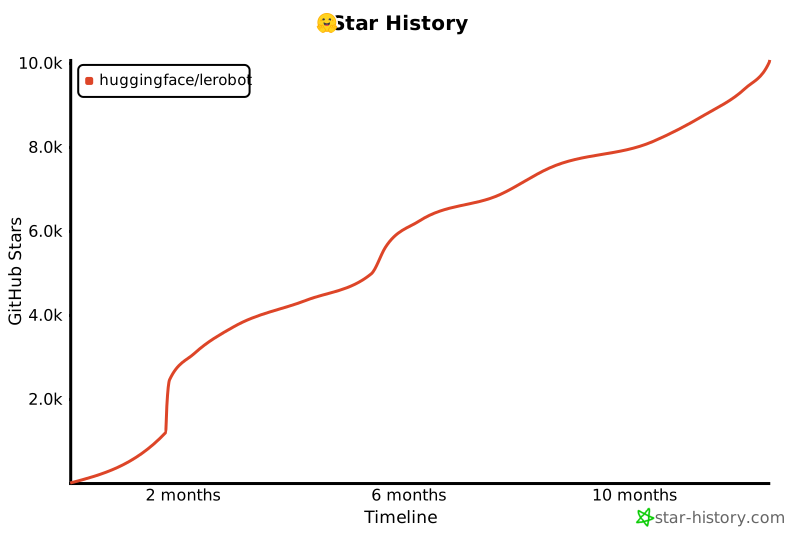](https://star-history.com/#huggingface/lerobot&Timeline)
|
||||
|
||||
@@ -51,7 +51,7 @@ For a comprehensive list and documentation of these parameters, see the ffmpeg d
|
||||
### Decoding parameters
|
||||
**Decoder**
|
||||
We tested two video decoding backends from torchvision:
|
||||
- `pyav` (default)
|
||||
- `pyav`
|
||||
- `video_reader` (requires to build torchvision from source)
|
||||
|
||||
**Requested timestamps**
|
||||
@@ -114,7 +114,7 @@ We tried to measure the most impactful parameters for both encoding and decoding
|
||||
|
||||
Additional encoding parameters exist that are not included in this benchmark. In particular:
|
||||
- `-preset` which allows for selecting encoding presets. This represents a collection of options that will provide a certain encoding speed to compression ratio. By leaving this parameter unspecified, it is considered to be `medium` for libx264 and libx265 and `8` for libsvtav1.
|
||||
- `-tune` which allows to optimize the encoding for certains aspects (e.g. film quality, fast decoding, etc.).
|
||||
- `-tune` which allows to optimize the encoding for certain aspects (e.g. film quality, fast decoding, etc.).
|
||||
|
||||
See the documentation mentioned above for more detailed info on these settings and for a more comprehensive list of other parameters.
|
||||
|
||||
|
||||
@@ -17,12 +17,21 @@
|
||||
|
||||
import argparse
|
||||
import datetime as dt
|
||||
import os
|
||||
import time
|
||||
from pathlib import Path
|
||||
|
||||
import cv2
|
||||
import rerun as rr
|
||||
|
||||
# see https://rerun.io/docs/howto/visualization/limit-ram
|
||||
RERUN_MEMORY_LIMIT = os.getenv("LEROBOT_RERUN_MEMORY_LIMIT", "5%")
|
||||
|
||||
|
||||
def display_and_save_video_stream(output_dir: Path, fps: int, width: int, height: int):
|
||||
def display_and_save_video_stream(output_dir: Path, fps: int, width: int, height: int, duration: int):
|
||||
rr.init("lerobot_capture_camera_feed")
|
||||
rr.spawn(memory_limit=RERUN_MEMORY_LIMIT)
|
||||
|
||||
now = dt.datetime.now()
|
||||
capture_dir = output_dir / f"{now:%Y-%m-%d}" / f"{now:%H-%M-%S}"
|
||||
if not capture_dir.exists():
|
||||
@@ -39,24 +48,21 @@ def display_and_save_video_stream(output_dir: Path, fps: int, width: int, height
|
||||
cap.set(cv2.CAP_PROP_FRAME_HEIGHT, height)
|
||||
|
||||
frame_index = 0
|
||||
while True:
|
||||
start_time = time.time()
|
||||
while time.time() - start_time < duration:
|
||||
ret, frame = cap.read()
|
||||
|
||||
if not ret:
|
||||
print("Error: Could not read frame.")
|
||||
break
|
||||
|
||||
cv2.imshow("Video Stream", frame)
|
||||
rr.log("video/stream", rr.Image(frame.numpy()), static=True)
|
||||
cv2.imwrite(str(capture_dir / f"frame_{frame_index:06d}.png"), frame)
|
||||
frame_index += 1
|
||||
|
||||
# Break the loop on 'q' key press
|
||||
if cv2.waitKey(1) & 0xFF == ord("q"):
|
||||
break
|
||||
|
||||
# Release the capture and destroy all windows
|
||||
# Release the capture
|
||||
cap.release()
|
||||
cv2.destroyAllWindows()
|
||||
|
||||
# TODO(Steven): Add a graceful shutdown via a close() method for the Viewer context, though not currently supported in the Rerun API.
|
||||
|
||||
|
||||
if __name__ == "__main__":
|
||||
@@ -86,5 +92,11 @@ if __name__ == "__main__":
|
||||
default=720,
|
||||
help="Height of the captured images.",
|
||||
)
|
||||
parser.add_argument(
|
||||
"--duration",
|
||||
type=int,
|
||||
default=20,
|
||||
help="Duration in seconds for which the video stream should be captured.",
|
||||
)
|
||||
args = parser.parse_args()
|
||||
display_and_save_video_stream(**vars(args))
|
||||
|
||||
@@ -67,7 +67,7 @@ def parse_int_or_none(value) -> int | None:
|
||||
def check_datasets_formats(repo_ids: list) -> None:
|
||||
for repo_id in repo_ids:
|
||||
dataset = LeRobotDataset(repo_id)
|
||||
if dataset.video:
|
||||
if len(dataset.meta.video_keys) > 0:
|
||||
raise ValueError(
|
||||
f"Use only image dataset for running this benchmark. Video dataset provided: {repo_id}"
|
||||
)
|
||||
@@ -416,7 +416,7 @@ if __name__ == "__main__":
|
||||
"--vcodec",
|
||||
type=str,
|
||||
nargs="*",
|
||||
default=["libx264", "libx265", "libsvtav1"],
|
||||
default=["libx264", "hevc", "libsvtav1"],
|
||||
help="Video codecs to be tested",
|
||||
)
|
||||
parser.add_argument(
|
||||
@@ -446,7 +446,7 @@ if __name__ == "__main__":
|
||||
# nargs="*",
|
||||
# default=[0, 1],
|
||||
# help="Use the fastdecode tuning option. 0 disables it. "
|
||||
# "For libx264 and libx265, only 1 is possible. "
|
||||
# "For libx264 and libx265/hevc, only 1 is possible. "
|
||||
# "For libsvtav1, 1, 2 or 3 are possible values with a higher number meaning a faster decoding optimization",
|
||||
# )
|
||||
parser.add_argument(
|
||||
|
||||
@@ -1,33 +1,29 @@
|
||||
# Configure image
|
||||
ARG PYTHON_VERSION=3.10
|
||||
|
||||
FROM python:${PYTHON_VERSION}-slim
|
||||
ARG PYTHON_VERSION
|
||||
ARG DEBIAN_FRONTEND=noninteractive
|
||||
|
||||
# Install apt dependencies
|
||||
# Configure environment variables
|
||||
ARG PYTHON_VERSION
|
||||
ENV DEBIAN_FRONTEND=noninteractive
|
||||
ENV MUJOCO_GL="egl"
|
||||
ENV PATH="/opt/venv/bin:$PATH"
|
||||
|
||||
# Install dependencies and set up Python in a single layer
|
||||
RUN apt-get update && apt-get install -y --no-install-recommends \
|
||||
build-essential cmake git git-lfs \
|
||||
build-essential cmake git \
|
||||
libglib2.0-0 libgl1-mesa-glx libegl1-mesa ffmpeg \
|
||||
speech-dispatcher libgeos-dev \
|
||||
&& apt-get clean && rm -rf /var/lib/apt/lists/*
|
||||
&& ln -s /usr/bin/python${PYTHON_VERSION} /usr/bin/python \
|
||||
&& python -m venv /opt/venv \
|
||||
&& apt-get clean && rm -rf /var/lib/apt/lists/* \
|
||||
&& echo "source /opt/venv/bin/activate" >> /root/.bashrc
|
||||
|
||||
# Create virtual environment
|
||||
RUN ln -s /usr/bin/python${PYTHON_VERSION} /usr/bin/python
|
||||
RUN python -m venv /opt/venv
|
||||
ENV PATH="/opt/venv/bin:$PATH"
|
||||
RUN echo "source /opt/venv/bin/activate" >> /root/.bashrc
|
||||
|
||||
# Install LeRobot
|
||||
RUN git lfs install
|
||||
RUN git clone https://github.com/huggingface/lerobot.git /lerobot
|
||||
# Clone repository and install LeRobot in a single layer
|
||||
COPY . /lerobot
|
||||
WORKDIR /lerobot
|
||||
RUN pip install --upgrade --no-cache-dir pip
|
||||
RUN pip install --no-cache-dir ".[test, aloha, xarm, pusht, dynamixel]" \
|
||||
--extra-index-url https://download.pytorch.org/whl/cpu
|
||||
|
||||
# Set EGL as the rendering backend for MuJoCo
|
||||
ENV MUJOCO_GL="egl"
|
||||
RUN /opt/venv/bin/pip install --upgrade --no-cache-dir pip \
|
||||
&& /opt/venv/bin/pip install --no-cache-dir ".[test, aloha, xarm, pusht, dynamixel]" \
|
||||
--extra-index-url https://download.pytorch.org/whl/cpu
|
||||
|
||||
# Execute in bash shell rather than python
|
||||
CMD ["/bin/bash"]
|
||||
|
||||
@@ -14,7 +14,7 @@ RUN apt-get update && apt-get install -y --no-install-recommends \
|
||||
tcpdump sysstat screen tmux \
|
||||
libglib2.0-0 libgl1-mesa-glx libegl1-mesa \
|
||||
speech-dispatcher portaudio19-dev libgeos-dev \
|
||||
python${PYTHON_VERSION} python${PYTHON_VERSION}-venv \
|
||||
python${PYTHON_VERSION} python${PYTHON_VERSION}-venv python${PYTHON_VERSION}-dev \
|
||||
&& apt-get clean && rm -rf /var/lib/apt/lists/*
|
||||
|
||||
# Install ffmpeg build dependencies. See:
|
||||
|
||||
@@ -1,31 +1,24 @@
|
||||
FROM nvidia/cuda:12.4.1-base-ubuntu22.04
|
||||
|
||||
# Configure image
|
||||
# Configure environment variables
|
||||
ARG PYTHON_VERSION=3.10
|
||||
ARG DEBIAN_FRONTEND=noninteractive
|
||||
ENV DEBIAN_FRONTEND=noninteractive
|
||||
ENV MUJOCO_GL="egl"
|
||||
ENV PATH="/opt/venv/bin:$PATH"
|
||||
|
||||
|
||||
# Install apt dependencies
|
||||
# Install dependencies and set up Python in a single layer
|
||||
RUN apt-get update && apt-get install -y --no-install-recommends \
|
||||
build-essential cmake git git-lfs \
|
||||
build-essential cmake git \
|
||||
libglib2.0-0 libgl1-mesa-glx libegl1-mesa ffmpeg \
|
||||
speech-dispatcher libgeos-dev \
|
||||
python${PYTHON_VERSION}-dev python${PYTHON_VERSION}-venv \
|
||||
&& apt-get clean && rm -rf /var/lib/apt/lists/*
|
||||
&& ln -s /usr/bin/python${PYTHON_VERSION} /usr/bin/python \
|
||||
&& python -m venv /opt/venv \
|
||||
&& apt-get clean && rm -rf /var/lib/apt/lists/* \
|
||||
&& echo "source /opt/venv/bin/activate" >> /root/.bashrc
|
||||
|
||||
|
||||
# Create virtual environment
|
||||
RUN ln -s /usr/bin/python${PYTHON_VERSION} /usr/bin/python
|
||||
RUN python -m venv /opt/venv
|
||||
ENV PATH="/opt/venv/bin:$PATH"
|
||||
RUN echo "source /opt/venv/bin/activate" >> /root/.bashrc
|
||||
|
||||
# Install LeRobot
|
||||
RUN git lfs install
|
||||
RUN git clone https://github.com/huggingface/lerobot.git /lerobot
|
||||
# Clone repository and install LeRobot in a single layer
|
||||
COPY . /lerobot
|
||||
WORKDIR /lerobot
|
||||
RUN pip install --upgrade --no-cache-dir pip
|
||||
RUN pip install --no-cache-dir ".[test, aloha, xarm, pusht, dynamixel]"
|
||||
|
||||
# Set EGL as the rendering backend for MuJoCo
|
||||
ENV MUJOCO_GL="egl"
|
||||
RUN /opt/venv/bin/pip install --upgrade --no-cache-dir pip \
|
||||
&& /opt/venv/bin/pip install --no-cache-dir ".[test, aloha, xarm, pusht, dynamixel]"
|
||||
|
||||
137
docs/README.md
Normal file
137
docs/README.md
Normal file
@@ -0,0 +1,137 @@
|
||||
<!---
|
||||
Copyright 2020 The HuggingFace Team. All rights reserved.
|
||||
|
||||
Licensed under the Apache License, Version 2.0 (the "License");
|
||||
you may not use this file except in compliance with the License.
|
||||
You may obtain a copy of the License at
|
||||
|
||||
http://www.apache.org/licenses/LICENSE-2.0
|
||||
|
||||
Unless required by applicable law or agreed to in writing, software
|
||||
distributed under the License is distributed on an "AS IS" BASIS,
|
||||
WITHOUT WARRANTIES OR CONDITIONS OF ANY KIND, either express or implied.
|
||||
See the License for the specific language governing permissions and
|
||||
limitations under the License.
|
||||
-->
|
||||
|
||||
# Generating the documentation
|
||||
|
||||
To generate the documentation, you first have to build it. Several packages are necessary to build the doc,
|
||||
you can install them with the following command, at the root of the code repository:
|
||||
|
||||
```bash
|
||||
pip install -e ".[docs]"
|
||||
```
|
||||
|
||||
You will also need `nodejs`. Please refer to their [installation page](https://nodejs.org/en/download)
|
||||
|
||||
---
|
||||
**NOTE**
|
||||
|
||||
You only need to generate the documentation to inspect it locally (if you're planning changes and want to
|
||||
check how they look before committing for instance). You don't have to `git commit` the built documentation.
|
||||
|
||||
---
|
||||
|
||||
## Building the documentation
|
||||
|
||||
Once you have setup the `doc-builder` and additional packages, you can generate the documentation by
|
||||
typing the following command:
|
||||
|
||||
```bash
|
||||
doc-builder build lerobot docs/source/ --build_dir ~/tmp/test-build
|
||||
```
|
||||
|
||||
You can adapt the `--build_dir` to set any temporary folder that you prefer. This command will create it and generate
|
||||
the MDX files that will be rendered as the documentation on the main website. You can inspect them in your favorite
|
||||
Markdown editor.
|
||||
|
||||
## Previewing the documentation
|
||||
|
||||
To preview the docs, first install the `watchdog` module with:
|
||||
|
||||
```bash
|
||||
pip install watchdog
|
||||
```
|
||||
|
||||
Then run the following command:
|
||||
|
||||
```bash
|
||||
doc-builder preview lerobot docs/source/
|
||||
```
|
||||
|
||||
The docs will be viewable at [http://localhost:3000](http://localhost:3000). You can also preview the docs once you have opened a PR. You will see a bot add a comment to a link where the documentation with your changes lives.
|
||||
|
||||
---
|
||||
**NOTE**
|
||||
|
||||
The `preview` command only works with existing doc files. When you add a completely new file, you need to update `_toctree.yml` & restart `preview` command (`ctrl-c` to stop it & call `doc-builder preview ...` again).
|
||||
|
||||
---
|
||||
|
||||
## Adding a new element to the navigation bar
|
||||
|
||||
Accepted files are Markdown (.md).
|
||||
|
||||
Create a file with its extension and put it in the source directory. You can then link it to the toc-tree by putting
|
||||
the filename without the extension in the [`_toctree.yml`](https://github.com/huggingface/lerobot/blob/main/docs/source/_toctree.yml) file.
|
||||
|
||||
## Renaming section headers and moving sections
|
||||
|
||||
It helps to keep the old links working when renaming the section header and/or moving sections from one document to another. This is because the old links are likely to be used in Issues, Forums, and Social media and it'd make for a much more superior user experience if users reading those months later could still easily navigate to the originally intended information.
|
||||
|
||||
Therefore, we simply keep a little map of moved sections at the end of the document where the original section was. The key is to preserve the original anchor.
|
||||
|
||||
So if you renamed a section from: "Section A" to "Section B", then you can add at the end of the file:
|
||||
|
||||
```
|
||||
Sections that were moved:
|
||||
|
||||
[ <a href="#section-b">Section A</a><a id="section-a"></a> ]
|
||||
```
|
||||
and of course, if you moved it to another file, then:
|
||||
|
||||
```
|
||||
Sections that were moved:
|
||||
|
||||
[ <a href="../new-file#section-b">Section A</a><a id="section-a"></a> ]
|
||||
```
|
||||
|
||||
Use the relative style to link to the new file so that the versioned docs continue to work.
|
||||
|
||||
For an example of a rich moved sections set please see the very end of [the transformers Trainer doc](https://github.com/huggingface/transformers/blob/main/docs/source/en/main_classes/trainer.md).
|
||||
|
||||
### Adding a new tutorial
|
||||
|
||||
Adding a new tutorial or section is done in two steps:
|
||||
|
||||
- Add a new file under `./source`. This file can either be ReStructuredText (.rst) or Markdown (.md).
|
||||
- Link that file in `./source/_toctree.yml` on the correct toc-tree.
|
||||
|
||||
Make sure to put your new file under the proper section. If you have a doubt, feel free to ask in a Github Issue or PR.
|
||||
|
||||
### Writing source documentation
|
||||
|
||||
Values that should be put in `code` should either be surrounded by backticks: \`like so\`. Note that argument names
|
||||
and objects like True, None or any strings should usually be put in `code`.
|
||||
|
||||
#### Writing a multi-line code block
|
||||
|
||||
Multi-line code blocks can be useful for displaying examples. They are done between two lines of three backticks as usual in Markdown:
|
||||
|
||||
|
||||
````
|
||||
```
|
||||
# first line of code
|
||||
# second line
|
||||
# etc
|
||||
```
|
||||
````
|
||||
|
||||
#### Adding an image
|
||||
|
||||
Due to the rapidly growing repository, it is important to make sure that no files that would significantly weigh down the repository are added. This includes images, videos, and other non-text files. We prefer to leverage a hf.co hosted `dataset` like
|
||||
the ones hosted on [`hf-internal-testing`](https://huggingface.co/hf-internal-testing) in which to place these files and reference
|
||||
them by URL. We recommend putting them in the following dataset: [huggingface/documentation-images](https://huggingface.co/datasets/huggingface/documentation-images).
|
||||
If an external contribution, feel free to add the images to your PR and ask a Hugging Face member to migrate your images
|
||||
to this dataset.
|
||||
12
docs/source/_toctree.yml
Normal file
12
docs/source/_toctree.yml
Normal file
@@ -0,0 +1,12 @@
|
||||
- sections:
|
||||
- local: index
|
||||
title: LeRobot
|
||||
- local: installation
|
||||
title: Installation
|
||||
title: Get started
|
||||
- sections:
|
||||
- local: assemble_so101
|
||||
title: Assemble SO-101
|
||||
- local: getting_started_real_world_robot
|
||||
title: Getting Started with Real-World Robots
|
||||
title: "Tutorials"
|
||||
348
docs/source/assemble_so101.mdx
Normal file
348
docs/source/assemble_so101.mdx
Normal file
@@ -0,0 +1,348 @@
|
||||
# Assemble SO-101
|
||||
|
||||
In the steps below we explain how to assemble our flagship robot, the SO-101.
|
||||
|
||||
## Source the parts
|
||||
|
||||
Follow this [README](https://github.com/TheRobotStudio/SO-ARM100). It contains the bill of materials, with a link to source the parts, as well as the instructions to 3D print the parts,
|
||||
and advice if it's your first time printing or if you don't own a 3D printer.
|
||||
|
||||
Before assembling, you will first need to configure your motors. To this end, we provide a nice script, so let's first install LeRobot. After configuration, we will also guide you through assembly.
|
||||
|
||||
## Install LeRobot
|
||||
|
||||
To install LeRobot follow our [Installation Guide](./installation)
|
||||
|
||||
## Configure motors
|
||||
|
||||
To configure the motors designate one bus servo adapter and 6 motors for your leader arm, and similarly the other bus servo adapter and 6 motors for the follower arm. It's convenient to label them and write on each motor if it's for the follower `F` or for the leader `L` and it's ID from 1 to 6.
|
||||
|
||||
You now should plug the 5V or 12V power supply to the motor bus. 5V for the STS3215 7.4V motors and 12V for the STS3215 12V motors. Note that the leader arm always uses the 7.4V motors, so watch out that you plug in the right power supply if you have 12V and 7.4V motors, otherwise you might burn your motors! Now, connect the motor bus to your computer via USB. Note that the USB doesn't provide any power, and both the power supply and USB have to be plugged in.
|
||||
|
||||
### Find the USB ports associated to each arm
|
||||
|
||||
To find the port for each bus servo adapter, run this script:
|
||||
```bash
|
||||
python lerobot/scripts/find_motors_bus_port.py
|
||||
```
|
||||
##### Example outputs of script
|
||||
|
||||
<hfoptions id="example">
|
||||
<hfoption id="Mac">
|
||||
|
||||
Example output leader arm's port: `/dev/tty.usbmodem575E0031751`
|
||||
|
||||
```bash
|
||||
Finding all available ports for the MotorBus.
|
||||
['/dev/tty.usbmodem575E0032081', '/dev/tty.usbmodem575E0031751']
|
||||
Remove the usb cable from your MotorsBus and press Enter when done.
|
||||
|
||||
[...Disconnect leader arm and press Enter...]
|
||||
|
||||
The port of this MotorsBus is /dev/tty.usbmodem575E0031751
|
||||
Reconnect the usb cable.
|
||||
```
|
||||
|
||||
Example output follower arm port: `/dev/tty.usbmodem575E0032081`
|
||||
|
||||
```
|
||||
Finding all available ports for the MotorBus.
|
||||
['/dev/tty.usbmodem575E0032081', '/dev/tty.usbmodem575E0031751']
|
||||
Remove the usb cable from your MotorsBus and press Enter when done.
|
||||
|
||||
[...Disconnect follower arm and press Enter...]
|
||||
|
||||
The port of this MotorsBus is /dev/tty.usbmodem575E0032081
|
||||
Reconnect the usb cable.
|
||||
```
|
||||
|
||||
</hfoption>
|
||||
<hfoption id="Linux">
|
||||
|
||||
On Linux, you might need to give access to the USB ports by running:
|
||||
```bash
|
||||
sudo chmod 666 /dev/ttyACM0
|
||||
sudo chmod 666 /dev/ttyACM1
|
||||
```
|
||||
|
||||
Example output leader arm port: `/dev/ttyACM0`
|
||||
|
||||
```bash
|
||||
Finding all available ports for the MotorBus.
|
||||
['/dev/ttyACM0', '/dev/ttyACM1']
|
||||
Remove the usb cable from your MotorsBus and press Enter when done.
|
||||
|
||||
[...Disconnect leader arm and press Enter...]
|
||||
|
||||
The port of this MotorsBus is /dev/ttyACM0
|
||||
Reconnect the usb cable.
|
||||
```
|
||||
|
||||
Example output follower arm port: `/dev/ttyACM1`
|
||||
|
||||
```
|
||||
Finding all available ports for the MotorBus.
|
||||
['/dev/ttyACM0', '/dev/ttyACM1']
|
||||
Remove the usb cable from your MotorsBus and press Enter when done.
|
||||
|
||||
[...Disconnect follower arm and press Enter...]
|
||||
|
||||
The port of this MotorsBus is /dev/ttyACM1
|
||||
Reconnect the usb cable.
|
||||
```
|
||||
</hfoption>
|
||||
</hfoptions>
|
||||
|
||||
#### Update config file
|
||||
|
||||
Now that you have your ports, update the **port** default values of [`SO101RobotConfig`](https://github.com/huggingface/lerobot/blob/main/lerobot/common/robot_devices/robots/configs.py).
|
||||
You will find a class called `so101` where you can update the `port` values with your actual motor ports:
|
||||
```diff
|
||||
@RobotConfig.register_subclass("so101")
|
||||
@dataclass
|
||||
class So101RobotConfig(ManipulatorRobotConfig):
|
||||
calibration_dir: str = ".cache/calibration/so101"
|
||||
# `max_relative_target` limits the magnitude of the relative positional target vector for safety purposes.
|
||||
# Set this to a positive scalar to have the same value for all motors, or a list that is the same length as
|
||||
# the number of motors in your follower arms.
|
||||
max_relative_target: int | None = None
|
||||
|
||||
leader_arms: dict[str, MotorsBusConfig] = field(
|
||||
default_factory=lambda: {
|
||||
"main": FeetechMotorsBusConfig(
|
||||
- port="/dev/tty.usbmodem58760431091",
|
||||
+ port="{ADD YOUR LEADER PORT}",
|
||||
motors={
|
||||
# name: (index, model)
|
||||
"shoulder_pan": [1, "sts3215"],
|
||||
"shoulder_lift": [2, "sts3215"],
|
||||
"elbow_flex": [3, "sts3215"],
|
||||
"wrist_flex": [4, "sts3215"],
|
||||
"wrist_roll": [5, "sts3215"],
|
||||
"gripper": [6, "sts3215"],
|
||||
},
|
||||
),
|
||||
}
|
||||
)
|
||||
|
||||
follower_arms: dict[str, MotorsBusConfig] = field(
|
||||
default_factory=lambda: {
|
||||
"main": FeetechMotorsBusConfig(
|
||||
- port="/dev/tty.usbmodem585A0076891",
|
||||
+ port="{ADD YOUR FOLLOWER PORT}",
|
||||
motors={
|
||||
# name: (index, model)
|
||||
"shoulder_pan": [1, "sts3215"],
|
||||
"shoulder_lift": [2, "sts3215"],
|
||||
"elbow_flex": [3, "sts3215"],
|
||||
"wrist_flex": [4, "sts3215"],
|
||||
"wrist_roll": [5, "sts3215"],
|
||||
"gripper": [6, "sts3215"],
|
||||
},
|
||||
),
|
||||
}
|
||||
)
|
||||
```
|
||||
|
||||
Here is a video of the process:
|
||||
<div class="video-container">
|
||||
<video controls width="600">
|
||||
<source src="https://huggingface.co/datasets/huggingface/documentation-images/resolve/main/lerobot/lerobot-find-motorbus.mp4" type="video/mp4" />
|
||||
</video>
|
||||
</div>
|
||||
|
||||
## Step-by-Step Assembly Instructions
|
||||
|
||||
The follower arm uses 6x STS3215 motors with 1/345 gearing. The leader however uses three differently geared motors to make sure it can both sustain its own weight and it can be moved without requiring much force. Which motor is needed for which joint is shown in table below.
|
||||
|
||||
| Leader-Arm Axis | Motor | Gear Ratio |
|
||||
|-----------------|:-------:|:----------:|
|
||||
| Base / Shoulder Yaw | 1 | 1 / 191 |
|
||||
| Shoulder Pitch | 2 | 1 / 345 |
|
||||
| Elbow | 3 | 1 / 191 |
|
||||
| Wrist Roll | 4 | 1 / 147 |
|
||||
| Wrist Pitch | 5 | 1 / 147 |
|
||||
| Gripper | 6 | 1 / 147 |
|
||||
|
||||
### Set motor IDs
|
||||
|
||||
Plug your motor in one of the two ports of the motor bus and run this script to set its ID to 1. Replace the text after --port to the corresponding control board port.
|
||||
```bash
|
||||
python lerobot/scripts/configure_motor.py \
|
||||
--port /dev/tty.usbmodem58760432961 \
|
||||
--brand feetech \
|
||||
--model sts3215 \
|
||||
--baudrate 1000000 \
|
||||
--ID 1
|
||||
```
|
||||
|
||||
Then unplug your motor and plug the second motor and set its ID to 2.
|
||||
```bash
|
||||
python lerobot/scripts/configure_motor.py \
|
||||
--port /dev/tty.usbmodem58760432961 \
|
||||
--brand feetech \
|
||||
--model sts3215 \
|
||||
--baudrate 1000000 \
|
||||
--ID 2
|
||||
```
|
||||
|
||||
Redo this process for all your motors until ID 6. Do the same for the 6 motors of the leader arm, but make sure to change the power supply if you use motors with different voltage and make sure you give the right ID to the right motor according to the table above.
|
||||
|
||||
Here is a video of the process:
|
||||
<div class="video-container">
|
||||
<video controls width="600">
|
||||
<source src="https://huggingface.co/datasets/huggingface/documentation-images/resolve/main/lerobot/lerobot-configure-motor.mp4" type="video/mp4" />
|
||||
</video>
|
||||
</div>
|
||||
|
||||
### Clean Parts
|
||||
Remove all support material from the 3D-printed parts, the easiest way to do this is using a small screwdriver to get underneath the support material.
|
||||
|
||||
### Joint 1
|
||||
|
||||
- Place the first motor into the base.
|
||||
- Fasten the motor with 4 M2x6mm screws (smallest screws). Two from the top and two from bottom.
|
||||
- Slide over the first motor holder and fasten it using two M2x6mm screws (one on each side).
|
||||
- Install both motor horns, securing the top horn with a M3x6mm screw.
|
||||
- Attach the shoulder part.
|
||||
- Tighten the shoulder part with 4 M3x6mm screws on top and 4 M3x6mm screws on the bottom
|
||||
- Add the shoulder motor holder.
|
||||
|
||||
<div class="video-container">
|
||||
<video controls width="600">
|
||||
<source src="https://huggingface.co/datasets/huggingface/documentation-images/resolve/main/lerobot/Joint1_v2.mp4" type="video/mp4" />
|
||||
</video>
|
||||
</div>
|
||||
|
||||
### Joint 2
|
||||
|
||||
- Slide the second motor in from the top.
|
||||
- Fasten the second motor with 4 M2x6mm screws.
|
||||
- Attach both motor horns to motor 2, again use the M3x6mm horn screw.
|
||||
- Attach the upper arm with 4 M3x6mm screws on each side.
|
||||
|
||||
<div class="video-container">
|
||||
<video controls width="600">
|
||||
<source src="https://huggingface.co/datasets/huggingface/documentation-images/resolve/main/lerobot/Joint2_v2.mp4" type="video/mp4" />
|
||||
</video>
|
||||
</div>
|
||||
|
||||
### Joint 3
|
||||
|
||||
- Insert motor 3 and fasten using 4 M2x6mm screws
|
||||
- Attach both motor horns to motor 3 and secure one again with a M3x6mm horn screw.
|
||||
- Connect the forearm to motor 3 using 4 M3x6mm screws on each side.
|
||||
|
||||
<div class="video-container">
|
||||
<video controls width="600">
|
||||
<source src="https://huggingface.co/datasets/huggingface/documentation-images/resolve/main/lerobot/Joint3_v2.mp4" type="video/mp4" />
|
||||
</video>
|
||||
</div>
|
||||
|
||||
### Joint 4
|
||||
|
||||
- Slide over motor holder 4.
|
||||
- Slide in motor 4.
|
||||
- Fasten motor 4 with 4 M2x6mm screws and attach its motor horns, use a M3x6mm horn screw.
|
||||
|
||||
<div class="video-container">
|
||||
<video controls width="600">
|
||||
<source src="https://huggingface.co/datasets/huggingface/documentation-images/resolve/main/lerobot/Joint4_v2.mp4" type="video/mp4" />
|
||||
</video>
|
||||
</div>
|
||||
|
||||
### Joint 5
|
||||
|
||||
- Insert motor 5 into the wrist holder and secure it with 2 M2x6mm front screws.
|
||||
- Install only one motor horn on the wrist motor and secure it with a M3x6mm horn screw.
|
||||
- Secure the wrist to motor 4 using 4 M3x6mm screws on both sides.
|
||||
|
||||
<div class="video-container">
|
||||
<video controls width="600">
|
||||
<source src="https://huggingface.co/datasets/huggingface/documentation-images/resolve/main/lerobot/Joint5_v2.mp4" type="video/mp4" />
|
||||
</video>
|
||||
</div>
|
||||
|
||||
### Gripper / Handle
|
||||
|
||||
<hfoptions id="assembly">
|
||||
<hfoption id="Follower">
|
||||
|
||||
- Attach the gripper to motor 5, attach it to the motor horn on the wrist using 4 M3x6mm screws.
|
||||
- Insert the gripper motor and secure it with 2 M2x6mm screws on each side.
|
||||
- Attach the motor horns and again use a M3x6mm horn screw.
|
||||
- Install the gripper claw and secure it with 4 M3x6mm screws on both sides.
|
||||
|
||||
<div class="video-container">
|
||||
<video controls width="600">
|
||||
<source src="https://huggingface.co/datasets/huggingface/documentation-images/resolve/main/lerobot/Gripper_v2.mp4" type="video/mp4" />
|
||||
</video>
|
||||
</div>
|
||||
|
||||
</hfoption>
|
||||
<hfoption id="Leader">
|
||||
|
||||
- Mount the leader holder onto the wrist and secure it with 4 M3x6mm screws.
|
||||
- Attach the handle to motor 5 using 1 M2x6mm screw.
|
||||
- Insert the gripper motor, secure it with 2 M2x6mm screws on each side, attach a motor horn using a M3x6mm horn screw.
|
||||
- Attach the follower trigger with 4 M3x6mm screws.
|
||||
|
||||
<div class="video-container">
|
||||
<video controls width="600">
|
||||
<source src="https://huggingface.co/datasets/huggingface/documentation-images/resolve/main/lerobot/Leader_v2.mp4" type="video/mp4" />
|
||||
</video>
|
||||
</div>
|
||||
|
||||
</hfoption>
|
||||
</hfoptions>
|
||||
|
||||
##### Wiring
|
||||
|
||||
- Attach the motor controller on the back.
|
||||
- Then insert all wires, use the wire guides everywhere to make sure the wires don't unplug themselves and stay in place.
|
||||
|
||||
<div class="video-container">
|
||||
<video controls width="600">
|
||||
<source src="https://huggingface.co/datasets/huggingface/documentation-images/resolve/main/lerobot/Wiring_v2.mp4" type="video/mp4" />
|
||||
</video>
|
||||
</div>
|
||||
|
||||
## Calibrate
|
||||
|
||||
Next, you'll need to calibrate your SO-101 robot to ensure that the leader and follower arms have the same position values when they are in the same physical position.
|
||||
The calibration process is very important because it allows a neural network trained on one SO-101 robot to work on another.
|
||||
|
||||
#### Manual calibration of follower arm
|
||||
|
||||
You will need to move the follower arm to these positions sequentially, note that the rotated position is on the right side of the robot and you have to open the gripper fully.
|
||||
|
||||
| 1. Middle position | 2. Zero position | 3. Rotated position | 4. Rest position |
|
||||
| ------------ |------------------------------------------------------------------------------------------------------------------------------------------------------ | --------------------------------------------------------------------------------------------------------------------------------------------------------------- | ------------------------------------------------------------------------------------------------------------------------------------------------------ |
|
||||
| <img src="https://huggingface.co/datasets/huggingface/documentation-images/resolve/main/lerobot/follower_middle.webp?raw=true" alt="SO-101 leader arm middle position" title="SO-101 leader arm middle position" style="width:100%;"> | <img src="https://huggingface.co/datasets/huggingface/documentation-images/resolve/main/lerobot/follower_zero.webp?raw=true" alt="SO-101 leader arm zero position" title="SO-101 leader arm zero position" style="width:100%;"> | <img src="https://huggingface.co/datasets/huggingface/documentation-images/resolve/main/lerobot/follower_rotated.webp?raw=true" alt="SO-101 leader arm rotated position" title="SO-101 leader arm rotated position" style="width:100%;"> | <img src="https://huggingface.co/datasets/huggingface/documentation-images/resolve/main/lerobot/follower_rest.webp?raw=true" alt="SO-101 leader arm rest position" title="SO-101 leader arm rest position" style="width:100%;"> |
|
||||
|
||||
Make sure both arms are connected and run this script to launch manual calibration:
|
||||
```bash
|
||||
python lerobot/scripts/control_robot.py \
|
||||
--robot.type=so101 \
|
||||
--robot.cameras='{}' \
|
||||
--control.type=calibrate \
|
||||
--control.arms='["main_follower"]'
|
||||
```
|
||||
|
||||
#### Manual calibration of leader arm
|
||||
You will also need to move the leader arm to these positions sequentially:
|
||||
|
||||
| 1. Middle position | 2. Zero position | 3. Rotated position | 4. Rest position |
|
||||
| ------------ |------------------------------------------------------------------------------------------------------------------------------------------------------ | --------------------------------------------------------------------------------------------------------------------------------------------------------------- | ------------------------------------------------------------------------------------------------------------------------------------------------------ |
|
||||
| <img src="https://huggingface.co/datasets/huggingface/documentation-images/resolve/main/lerobot/leader_middle.webp?raw=true" alt="SO-101 leader arm middle position" title="SO-101 leader arm middle position" style="width:100%;"> | <img src="https://huggingface.co/datasets/huggingface/documentation-images/resolve/main/lerobot/leader_zero.webp?raw=true" alt="SO-101 leader arm zero position" title="SO-101 leader arm zero position" style="width:100%;"> | <img src="https://huggingface.co/datasets/huggingface/documentation-images/resolve/main/lerobot/leader_rotated.webp?raw=true" alt="SO-101 leader arm rotated position" title="SO-101 leader arm rotated position" style="width:100%;"> | <img src="https://huggingface.co/datasets/huggingface/documentation-images/resolve/main/lerobot/leader_rest.webp?raw=true" alt="SO-101 leader arm rest position" title="SO-101 leader arm rest position" style="width:100%;"> |
|
||||
|
||||
Run this script to launch manual calibration:
|
||||
```bash
|
||||
python lerobot/scripts/control_robot.py \
|
||||
--robot.type=so101 \
|
||||
--robot.cameras='{}' \
|
||||
--control.type=calibrate \
|
||||
--control.arms='["main_leader"]'
|
||||
```
|
||||
|
||||
Congrats 🎉, your robot is all set to learn a task on its own. Start training it by following this tutorial: [Getting started with real-world robots](./getting_started_real_world_robot)
|
||||
370
docs/source/getting_started_real_world_robot.mdx
Normal file
370
docs/source/getting_started_real_world_robot.mdx
Normal file
@@ -0,0 +1,370 @@
|
||||
# Getting Started with Real-World Robots
|
||||
|
||||
This tutorial will explain you how to train a neural network to autonomously control a real robot.
|
||||
|
||||
**You'll learn:**
|
||||
1. How to record and visualize your dataset.
|
||||
2. How to train a policy using your data and prepare it for evaluation.
|
||||
3. How to evaluate your policy and visualize the results.
|
||||
|
||||
By following these steps, you'll be able to replicate tasks like picking up a Lego block and placing it in a bin with a high success rate, as demonstrated in [this video](https://x.com/RemiCadene/status/1814680760592572934).
|
||||
|
||||
This tutorial is specifically made for the affordable [SO-101](https://github.com/TheRobotStudio/SO-ARM100) robot, but it contains additional information to be easily adapted to various types of robots like [Aloha bimanual robot](https://aloha-2.github.io) by changing some configurations. The SO-101 consists of a leader arm and a follower arm, each with 6 motors. It can work with one or several cameras to record the scene, which serve as visual sensors for the robot.
|
||||
|
||||
During the data collection phase, you will control the follower arm by moving the leader arm. This process is known as "teleoperation." This technique is used to collect robot trajectories. Afterward, you'll train a neural network to imitate these trajectories and deploy the network to enable your robot to operate autonomously.
|
||||
|
||||
If you encounter any issues at any step of the tutorial, feel free to seek help on [Discord](https://discord.com/invite/s3KuuzsPFb) or don't hesitate to iterate with us on the tutorial by creating issues or pull requests.
|
||||
|
||||
## Setup and Calibrate
|
||||
|
||||
If you haven't yet setup and calibrate the SO-101 follow these steps:
|
||||
1. [Find ports and update config file](./assemble_so101#find-the-usb-ports-associated-to-each-arm)
|
||||
2. [Calibrate](./assemble_so101#calibrate)
|
||||
|
||||
## Teleoperate
|
||||
|
||||
Run this simple script to teleoperate your robot (it won't connect and display the cameras):
|
||||
```bash
|
||||
python lerobot/scripts/control_robot.py \
|
||||
--robot.type=so101 \
|
||||
--robot.cameras='{}' \
|
||||
--control.type=teleoperate
|
||||
```
|
||||
|
||||
The teleoperate command will automatically:
|
||||
1. Identify any missing calibrations and initiate the calibration procedure.
|
||||
2. Connect the robot and start teleoperation.
|
||||
|
||||
## Setup Cameras
|
||||
|
||||
To connect a camera you have three options:
|
||||
1. OpenCVCamera which allows us to use any camera: usb, realsense, laptop webcam
|
||||
2. iPhone camera with MacOS
|
||||
3. Phone camera on Linux
|
||||
|
||||
### Use OpenCVCamera
|
||||
|
||||
The [`OpenCVCamera`](../lerobot/common/robot_devices/cameras/opencv.py) class allows you to efficiently record frames from most cameras using the [`opencv2`](https://docs.opencv.org) library. For more details on compatibility, see [Video I/O with OpenCV Overview](https://docs.opencv.org/4.x/d0/da7/videoio_overview.html).
|
||||
|
||||
To instantiate an [`OpenCVCamera`](../lerobot/common/robot_devices/cameras/opencv.py), you need a camera index (e.g. `OpenCVCamera(camera_index=0)`). When you only have one camera like a webcam of a laptop, the camera index is usually `0` but it might differ, and the camera index might change if you reboot your computer or re-plug your camera. This behavior depends on your operating system.
|
||||
|
||||
To find the camera indices, run the following utility script, which will save a few frames from each detected camera:
|
||||
```bash
|
||||
python lerobot/common/robot_devices/cameras/opencv.py \
|
||||
--images-dir outputs/images_from_opencv_cameras
|
||||
```
|
||||
|
||||
The output will look something like this if you have two cameras connected:
|
||||
```
|
||||
Mac or Windows detected. Finding available camera indices through scanning all indices from 0 to 60
|
||||
[...]
|
||||
Camera found at index 0
|
||||
Camera found at index 1
|
||||
[...]
|
||||
Connecting cameras
|
||||
OpenCVCamera(0, fps=30.0, width=1920.0, height=1080.0, color_mode=rgb)
|
||||
OpenCVCamera(1, fps=24.0, width=1920.0, height=1080.0, color_mode=rgb)
|
||||
Saving images to outputs/images_from_opencv_cameras
|
||||
Frame: 0000 Latency (ms): 39.52
|
||||
[...]
|
||||
Frame: 0046 Latency (ms): 40.07
|
||||
Images have been saved to outputs/images_from_opencv_cameras
|
||||
```
|
||||
|
||||
Check the saved images in `outputs/images_from_opencv_cameras` to identify which camera index corresponds to which physical camera (e.g. `0` for `camera_00` or `1` for `camera_01`):
|
||||
```
|
||||
camera_00_frame_000000.png
|
||||
[...]
|
||||
camera_00_frame_000047.png
|
||||
camera_01_frame_000000.png
|
||||
[...]
|
||||
camera_01_frame_000047.png
|
||||
```
|
||||
|
||||
Note: Some cameras may take a few seconds to warm up, and the first frame might be black or green.
|
||||
|
||||
Now that you have the camera indexes, you should specify the camera's in the config.
|
||||
|
||||
### Use your phone
|
||||
<hfoptions id="use phone">
|
||||
<hfoption id="Mac">
|
||||
|
||||
To use your iPhone as a camera on macOS, enable the Continuity Camera feature:
|
||||
- Ensure your Mac is running macOS 13 or later, and your iPhone is on iOS 16 or later.
|
||||
- Sign in both devices with the same Apple ID.
|
||||
- Connect your devices with a USB cable or turn on Wi-Fi and Bluetooth for a wireless connection.
|
||||
|
||||
For more details, visit [Apple support](https://support.apple.com/en-gb/guide/mac-help/mchl77879b8a/mac).
|
||||
|
||||
Your iPhone should be detected automatically when running the camera setup script in the next section.
|
||||
|
||||
</hfoption>
|
||||
<hfoption id="Linux">
|
||||
|
||||
If you want to use your phone as a camera on Linux, follow these steps to set up a virtual camera
|
||||
|
||||
1. *Install `v4l2loopback-dkms` and `v4l-utils`*. Those packages are required to create virtual camera devices (`v4l2loopback`) and verify their settings with the `v4l2-ctl` utility from `v4l-utils`. Install them using:
|
||||
```python
|
||||
sudo apt install v4l2loopback-dkms v4l-utils
|
||||
```
|
||||
2. *Install [DroidCam](https://droidcam.app) on your phone*. This app is available for both iOS and Android.
|
||||
3. *Install [OBS Studio](https://obsproject.com)*. This software will help you manage the camera feed. Install it using [Flatpak](https://flatpak.org):
|
||||
```python
|
||||
flatpak install flathub com.obsproject.Studio
|
||||
```
|
||||
4. *Install the DroidCam OBS plugin*. This plugin integrates DroidCam with OBS Studio. Install it with:
|
||||
```python
|
||||
flatpak install flathub com.obsproject.Studio.Plugin.DroidCam
|
||||
```
|
||||
5. *Start OBS Studio*. Launch with:
|
||||
```python
|
||||
flatpak run com.obsproject.Studio
|
||||
```
|
||||
6. *Add your phone as a source*. Follow the instructions [here](https://droidcam.app/obs/usage). Be sure to set the resolution to `640x480`.
|
||||
7. *Adjust resolution settings*. In OBS Studio, go to `File > Settings > Video`. Change the `Base(Canvas) Resolution` and the `Output(Scaled) Resolution` to `640x480` by manually typing it in.
|
||||
8. *Start virtual camera*. In OBS Studio, follow the instructions [here](https://obsproject.com/kb/virtual-camera-guide).
|
||||
9. *Verify the virtual camera setup*. Use `v4l2-ctl` to list the devices:
|
||||
```python
|
||||
v4l2-ctl --list-devices
|
||||
```
|
||||
You should see an entry like:
|
||||
```
|
||||
VirtualCam (platform:v4l2loopback-000):
|
||||
/dev/video1
|
||||
```
|
||||
10. *Check the camera resolution*. Use `v4l2-ctl` to ensure that the virtual camera output resolution is `640x480`. Change `/dev/video1` to the port of your virtual camera from the output of `v4l2-ctl --list-devices`.
|
||||
```python
|
||||
v4l2-ctl -d /dev/video1 --get-fmt-video
|
||||
```
|
||||
You should see an entry like:
|
||||
```
|
||||
>>> Format Video Capture:
|
||||
>>> Width/Height : 640/480
|
||||
>>> Pixel Format : 'YUYV' (YUYV 4:2:2)
|
||||
```
|
||||
|
||||
Troubleshooting: If the resolution is not correct you will have to delete the Virtual Camera port and try again as it cannot be changed.
|
||||
|
||||
If everything is set up correctly, you can proceed with the rest of the tutorial.
|
||||
|
||||
</hfoption>
|
||||
</hfoptions>
|
||||
|
||||
## Teleoperate with cameras
|
||||
|
||||
We can now teleoperate again while at the same time visualizing the cameras and joint positions with `rerun`.
|
||||
|
||||
```bash
|
||||
python lerobot/scripts/control_robot.py \
|
||||
--robot.type=so101 \
|
||||
--control.type=teleoperate
|
||||
--control.display_data=true
|
||||
```
|
||||
|
||||
## Record a dataset
|
||||
|
||||
Once you're familiar with teleoperation, you can record your first dataset with SO-101.
|
||||
|
||||
We use the Hugging Face hub features for uploading your dataset. If you haven't previously used the Hub, make sure you can login via the cli using a write-access token, this token can be generated from the [Hugging Face settings](https://huggingface.co/settings/tokens).
|
||||
|
||||
Add your token to the cli by running this command:
|
||||
```bash
|
||||
huggingface-cli login --token ${HUGGINGFACE_TOKEN} --add-to-git-credential
|
||||
```
|
||||
|
||||
Then store your Hugging Face repository name in a variable:
|
||||
```bash
|
||||
HF_USER=$(huggingface-cli whoami | head -n 1)
|
||||
echo $HF_USER
|
||||
```
|
||||
|
||||
Now you can record a dataset, to record 2 episodes and upload your dataset to the hub execute this command:
|
||||
```bash
|
||||
python lerobot/scripts/control_robot.py \
|
||||
--robot.type=so101 \
|
||||
--control.type=record \
|
||||
--control.fps=30 \
|
||||
--control.single_task="Grasp a lego block and put it in the bin." \
|
||||
--control.repo_id=${HF_USER}/so101_test \
|
||||
--control.tags='["so101","tutorial"]' \
|
||||
--control.warmup_time_s=5 \
|
||||
--control.episode_time_s=30 \
|
||||
--control.reset_time_s=30 \
|
||||
--control.num_episodes=2 \
|
||||
--control.push_to_hub=true
|
||||
```
|
||||
|
||||
You will see a lot of lines appearing like this one:
|
||||
```
|
||||
INFO 2024-08-10 15:02:58 ol_robot.py:219 dt:33.34 (30.0hz) dtRlead: 5.06 (197.5hz) dtWfoll: 0.25 (3963.7hz) dtRfoll: 6.22 (160.7hz) dtRlaptop: 32.57 (30.7hz) dtRphone: 33.84 (29.5hz)
|
||||
```
|
||||
|
||||
| Field | Meaning |
|
||||
|:---|:---|
|
||||
| `2024-08-10 15:02:58` | Timestamp when `print` was called. |
|
||||
| `ol_robot.py:219` | Source file and line number of the `print` call (`lerobot/scripts/control_robot.py` at line `219`). |
|
||||
| `dt: 33.34 (30.0 Hz)` | Delta time (ms) between teleop steps (target: 30.0 Hz, `--fps 30`). Yellow if step is too slow. |
|
||||
| `dtRlead: 5.06 (197.5 Hz)` | Delta time (ms) for reading present position from the **leader arm**. |
|
||||
| `dtWfoll: 0.25 (3963.7 Hz)` | Delta time (ms) for writing goal position to the **follower arm** (asynchronous). |
|
||||
| `dtRfoll: 6.22 (160.7 Hz)` | Delta time (ms) for reading present position from the **follower arm**. |
|
||||
| `dtRlaptop: 32.57 (30.7 Hz)` | Delta time (ms) for capturing an image from the **laptop camera** (async thread). |
|
||||
| `dtRphone: 33.84 (29.5 Hz)` | Delta time (ms) for capturing an image from the **phone camera** (async thread). |
|
||||
|
||||
|
||||
#### Dataset upload
|
||||
Locally your dataset is stored in this folder: `~/.cache/huggingface/lerobot/{repo-id}` (e.g. `data/cadene/so101_test`). At the end of data recording, your dataset will be uploaded on your Hugging Face page (e.g. https://huggingface.co/datasets/cadene/so101_test) that you can obtain by running:
|
||||
```bash
|
||||
echo https://huggingface.co/datasets/${HF_USER}/so101_test
|
||||
```
|
||||
Your dataset will be automatically tagged with `LeRobot` for the community to find it easily, and you can also add custom tags (in this case `tutorial` for example).
|
||||
|
||||
You can look for other LeRobot datasets on the hub by searching for `LeRobot` [tags](https://huggingface.co/datasets?other=LeRobot).
|
||||
|
||||
#### Record function
|
||||
|
||||
The `record` function provides a suite of tools for capturing and managing data during robot operation:
|
||||
|
||||
##### 1. Frame Capture and Video Encoding
|
||||
- Frames from cameras are saved to disk during recording.
|
||||
- At the end of each episode, frames are encoded into video files.
|
||||
|
||||
##### 2. Data Storage
|
||||
- Data is stored using the `LeRobotDataset` format.
|
||||
- By default, the dataset is pushed to your Hugging Face page.
|
||||
- To disable uploading, use `--control.push_to_hub=false`.
|
||||
|
||||
##### 3. Checkpointing and Resuming
|
||||
- Checkpoints are automatically created during recording.
|
||||
- If an issue occurs, you can resume by re-running the same command with `--control.resume=true`.
|
||||
- To start recording from scratch, **manually delete** the dataset directory.
|
||||
|
||||
##### 4. Recording Parameters
|
||||
Set the flow of data recording using command-line arguments:
|
||||
- `--control.warmup_time_s=10`
|
||||
Number of seconds before starting data collection (default: **10 seconds**).
|
||||
Allows devices to warm up and synchronize.
|
||||
- `--control.episode_time_s=60`
|
||||
Duration of each data recording episode (default: **60 seconds**).
|
||||
- `--control.reset_time_s=60`
|
||||
Duration for resetting the environment after each episode (default: **60 seconds**).
|
||||
- `--control.num_episodes=50`
|
||||
Total number of episodes to record (default: **50**).
|
||||
|
||||
##### 5. Keyboard Controls During Recording
|
||||
Control the data recording flow using keyboard shortcuts:
|
||||
- Press **Right Arrow (`→`)**: Early stop the current episode or reset time and move to the next.
|
||||
- Press **Left Arrow (`←`)**: Cancel the current episode and re-record it.
|
||||
- Press **Escape (`ESC`)**: Immediately stop the session, encode videos, and upload the dataset.
|
||||
|
||||
#### Tips for gathering data
|
||||
|
||||
Once you're comfortable with data recording, you can create a larger dataset for training. A good starting task is grasping an object at different locations and placing it in a bin. We suggest recording at least 50 episodes, with 10 episodes per location. Keep the cameras fixed and maintain consistent grasping behavior throughout the recordings. Also make sure the object you are manipulating is visible on the camera's. A good rule of thumb is you should be able to do the task yourself by only looking at the camera images.
|
||||
|
||||
In the following sections, you’ll train your neural network. After achieving reliable grasping performance, you can start introducing more variations during data collection, such as additional grasp locations, different grasping techniques, and altering camera positions.
|
||||
|
||||
Avoid adding too much variation too quickly, as it may hinder your results.
|
||||
|
||||
|
||||
#### Troubleshooting:
|
||||
- On Linux, if the left and right arrow keys and escape key don't have any effect during data recording, make sure you've set the `$DISPLAY` environment variable. See [pynput limitations](https://pynput.readthedocs.io/en/latest/limitations.html#linux).
|
||||
|
||||
## Visualize a dataset
|
||||
|
||||
If you uploaded your dataset to the hub with `--control.push_to_hub=true`, you can [visualize your dataset online](https://huggingface.co/spaces/lerobot/visualize_dataset) by copy pasting your repo id given by:
|
||||
```bash
|
||||
echo ${HF_USER}/so101_test
|
||||
```
|
||||
|
||||
If you didn't upload with `--control.push_to_hub=false`, you can visualize it locally with (via a window in the browser `http://127.0.0.1:9090` with the visualization tool):
|
||||
```bash
|
||||
python lerobot/scripts/visualize_dataset_html.py \
|
||||
--repo-id ${HF_USER}/so101_test \
|
||||
--local-files-only 1
|
||||
```
|
||||
|
||||
This will launch a local web server that looks like this:
|
||||
<div style="text-align:center;">
|
||||
<img src="https://huggingface.co/datasets/huggingface/documentation-images/resolve/main/lerobot/visualize_dataset_html.webp?raw=true" alt="Koch v1.1 leader and follower arms" title="Koch v1.1 leader and follower arms" width="100%"></img>
|
||||
</div>
|
||||
|
||||
## Replay an episode
|
||||
|
||||
A useful feature is the `replay` function, which allows to replay on your robot any episode that you've recorded or episodes from any dataset out there. This function helps you test the repeatability of your robot's actions and assess transferability across robots of the same model.
|
||||
|
||||
You can replay the first episode on your robot with:
|
||||
```bash
|
||||
python lerobot/scripts/control_robot.py \
|
||||
--robot.type=so101 \
|
||||
--control.type=replay \
|
||||
--control.fps=30 \
|
||||
--control.repo_id=${HF_USER}/so101_test \
|
||||
--control.episode=0
|
||||
```
|
||||
|
||||
Your robot should replicate movements similar to those you recorded. For example, check out [this video](https://x.com/RemiCadene/status/1793654950905680090) where we use `replay` on a Aloha robot from [Trossen Robotics](https://www.trossenrobotics.com).
|
||||
|
||||
## Train a policy
|
||||
|
||||
To train a policy to control your robot, use the [`python lerobot/scripts/train.py`](../lerobot/scripts/train.py) script. A few arguments are required. Here is an example command:
|
||||
```bash
|
||||
python lerobot/scripts/train.py \
|
||||
--dataset.repo_id=${HF_USER}/so101_test \
|
||||
--policy.type=act \
|
||||
--output_dir=outputs/train/act_so101_test \
|
||||
--job_name=act_so101_test \
|
||||
--policy.device=cuda \
|
||||
--wandb.enable=true
|
||||
```
|
||||
|
||||
Let's explain the command:
|
||||
1. We provided the dataset as argument with `--dataset.repo_id=${HF_USER}/so101_test`.
|
||||
2. We provided the policy with `policy.type=act`. This loads configurations from [`configuration_act.py`](../lerobot/common/policies/act/configuration_act.py). Importantly, this policy will automatically adapt to the number of motor states, motor actions and cameras of your robot (e.g. `laptop` and `phone`) which have been saved in your dataset.
|
||||
4. We provided `policy.device=cuda` since we are training on a Nvidia GPU, but you could use `policy.device=mps` to train on Apple silicon.
|
||||
5. We provided `wandb.enable=true` to use [Weights and Biases](https://docs.wandb.ai/quickstart) for visualizing training plots. This is optional but if you use it, make sure you are logged in by running `wandb login`.
|
||||
|
||||
Training should take several hours. You will find checkpoints in `outputs/train/act_so101_test/checkpoints`.
|
||||
|
||||
To resume training from a checkpoint, below is an example command to resume from `last` checkpoint of the `act_so101_test` policy:
|
||||
```bash
|
||||
python lerobot/scripts/train.py \
|
||||
--config_path=outputs/train/act_so101_test/checkpoints/last/pretrained_model/train_config.json \
|
||||
--resume=true
|
||||
```
|
||||
|
||||
#### Upload policy checkpoints
|
||||
|
||||
Once training is done, upload the latest checkpoint with:
|
||||
```bash
|
||||
huggingface-cli upload ${HF_USER}/act_so101_test \
|
||||
outputs/train/act_so101_test/checkpoints/last/pretrained_model
|
||||
```
|
||||
|
||||
You can also upload intermediate checkpoints with:
|
||||
```bash
|
||||
CKPT=010000
|
||||
huggingface-cli upload ${HF_USER}/act_so101_test${CKPT} \
|
||||
outputs/train/act_so101_test/checkpoints/${CKPT}/pretrained_model
|
||||
```
|
||||
|
||||
## Evaluate your policy
|
||||
|
||||
You can use the `record` function from [`lerobot/scripts/control_robot.py`](../lerobot/scripts/control_robot.py) but with a policy checkpoint as input. For instance, run this command to record 10 evaluation episodes:
|
||||
```bash
|
||||
python lerobot/scripts/control_robot.py \
|
||||
--robot.type=so101 \
|
||||
--control.type=record \
|
||||
--control.fps=30 \
|
||||
--control.single_task="Grasp a lego block and put it in the bin." \
|
||||
--control.repo_id=${HF_USER}/eval_act_so101_test \
|
||||
--control.tags='["tutorial"]' \
|
||||
--control.warmup_time_s=5 \
|
||||
--control.episode_time_s=30 \
|
||||
--control.reset_time_s=30 \
|
||||
--control.num_episodes=10 \
|
||||
--control.push_to_hub=true \
|
||||
--control.policy.path=outputs/train/act_so101_test/checkpoints/last/pretrained_model
|
||||
```
|
||||
|
||||
As you can see, it's almost the same command as previously used to record your training dataset. Two things changed:
|
||||
1. There is an additional `--control.policy.path` argument which indicates the path to your policy checkpoint with (e.g. `outputs/train/eval_act_so101_test/checkpoints/last/pretrained_model`). You can also use the model repository if you uploaded a model checkpoint to the hub (e.g. `${HF_USER}/act_so101_test`).
|
||||
2. The name of dataset begins by `eval` to reflect that you are running inference (e.g. `${HF_USER}/eval_act_so101_test`).
|
||||
19
docs/source/index.mdx
Normal file
19
docs/source/index.mdx
Normal file
@@ -0,0 +1,19 @@
|
||||
<div class="flex justify-center">
|
||||
<a target="_blank" href="https://huggingface.co/lerobot">
|
||||
<img alt="HuggingFace Expert Acceleration Program" src="https://huggingface.co/datasets/huggingface/documentation-images/resolve/main/lerobot/lerobot-logo-thumbnail.png" style="width: 100%"></img>
|
||||
</a>
|
||||
</div>
|
||||
|
||||
# LeRobot
|
||||
|
||||
**State-of-the-art machine learning for real-world robotics**
|
||||
|
||||
🤗 LeRobot aims to provide models, datasets, and tools for real-world robotics in PyTorch. The goal is to lower the barrier for entry to robotics so that everyone can contribute and benefit from sharing datasets and pretrained models.
|
||||
|
||||
🤗 LeRobot contains state-of-the-art approaches that have been shown to transfer to the real-world with a focus on imitation learning and reinforcement learning.
|
||||
|
||||
🤗 LeRobot already provides a set of pretrained models, datasets with human collected demonstrations, and simulated environments so that everyone can get started.
|
||||
|
||||
🤗 LeRobot hosts pretrained models and datasets on the LeRobot HuggingFace page.
|
||||
|
||||
Join the LeRobot community on [Discord](https://discord.gg/s3KuuzsPFb)
|
||||
84
docs/source/installation.mdx
Normal file
84
docs/source/installation.mdx
Normal file
@@ -0,0 +1,84 @@
|
||||
# Installation
|
||||
|
||||
## Install LeRobot
|
||||
|
||||
Download our source code:
|
||||
```bash
|
||||
git clone https://github.com/huggingface/lerobot.git
|
||||
cd lerobot
|
||||
```
|
||||
|
||||
Create a virtual environment with Python 3.10, using [`Miniconda`](https://docs.anaconda.com/miniconda/install/#quick-command-line-install)
|
||||
```bash
|
||||
conda create -y -n lerobot python=3.10
|
||||
```
|
||||
|
||||
Now restart the shell by running:
|
||||
<hfoptions id="shell_restart">
|
||||
<hfoption id="Windows">
|
||||
|
||||
```bash
|
||||
source ~/.bashrc
|
||||
```
|
||||
</hfoption>
|
||||
<hfoption id="Mac">
|
||||
|
||||
```bash
|
||||
source ~/.bash_profile
|
||||
```
|
||||
</hfoption>
|
||||
<hfoption id="zshell">
|
||||
|
||||
```bash
|
||||
source ~/.zshrc
|
||||
```
|
||||
</hfoption>
|
||||
</hfoptions>
|
||||
|
||||
Then activate your conda environment, you have to do this each time you open a shell to use lerobot:
|
||||
```bash
|
||||
conda activate lerobot
|
||||
```
|
||||
|
||||
When using `miniconda`, install `ffmpeg` in your environment:
|
||||
```bash
|
||||
conda install ffmpeg -c conda-forge
|
||||
```
|
||||
|
||||
> [!TIP]
|
||||
> This usually installs `ffmpeg 7.X` for your platform compiled with the `libsvtav1` encoder. If `libsvtav1` is not supported (check supported encoders with `ffmpeg -encoders`), you can:
|
||||
> - _[On any platform]_ Explicitly install `ffmpeg 7.X` using:
|
||||
> ```bash
|
||||
> conda install ffmpeg=7.1.1 -c conda-forge
|
||||
> ```
|
||||
> - _[On Linux only]_ Install [ffmpeg build dependencies](https://trac.ffmpeg.org/wiki/CompilationGuide/Ubuntu#GettheDependencies) and [compile ffmpeg from source with libsvtav1](https://trac.ffmpeg.org/wiki/CompilationGuide/Ubuntu#libsvtav1), and make sure you use the corresponding ffmpeg binary to your install with `which ffmpeg`.
|
||||
|
||||
Install 🤗 LeRobot:
|
||||
```bash
|
||||
cd lerobot && pip install -e ".[feetech]"
|
||||
```
|
||||
|
||||
## Troubleshooting
|
||||
If you encounter build errors, you may need to install additional dependencies: `cmake`, `build-essential`, and `ffmpeg libs`.
|
||||
To install these for linux run:
|
||||
```bash
|
||||
sudo apt-get install cmake build-essential python-dev pkg-config libavformat-dev libavcodec-dev libavdevice-dev libavutil-dev libswscale-dev libswresample-dev libavfilter-dev pkg-config
|
||||
```
|
||||
For other systems, see: [Compiling PyAV](https://pyav.org/docs/develop/overview/installation.html#bring-your-own-ffmpeg)
|
||||
|
||||
## Sim
|
||||
For simulations, 🤗 LeRobot comes with gymnasium environments that can be installed as extras:
|
||||
- [aloha](https://github.com/huggingface/gym-aloha)
|
||||
- [xarm](https://github.com/huggingface/gym-xarm)
|
||||
- [pusht](https://github.com/huggingface/gym-pusht)
|
||||
|
||||
For instance, to install 🤗 LeRobot with aloha and pusht, use:
|
||||
```bash
|
||||
pip install -e ".[aloha, pusht]"
|
||||
```
|
||||
|
||||
## W&B
|
||||
To use [Weights and Biases](https://docs.wandb.ai/quickstart) for experiment tracking, log in with
|
||||
```bash
|
||||
wandb login
|
||||
```
|
||||
@@ -4,8 +4,8 @@
|
||||
|
||||
- [A. Source the parts](#a-source-the-parts)
|
||||
- [B. Install LeRobot](#b-install-lerobot)
|
||||
- [C. Configure the motors](#c-configure-the-motors)
|
||||
- [D. Assemble the arms](#d-assemble-the-arms)
|
||||
- [C. Configure the Motors](#c-configure-the-motors)
|
||||
- [D. Step-by-Step Assembly Instructions](#d-step-by-step-assembly-instructions)
|
||||
- [E. Calibrate](#e-calibrate)
|
||||
- [F. Teleoperate](#f-teleoperate)
|
||||
- [G. Record a dataset](#g-record-a-dataset)
|
||||
@@ -57,19 +57,20 @@ conda activate lerobot
|
||||
git clone https://github.com/huggingface/lerobot.git ~/lerobot
|
||||
```
|
||||
|
||||
#### 5. Install LeRobot with dependencies for the feetech motors:
|
||||
#### 5. Install ffmpeg in your environment:
|
||||
When using `miniconda`, install `ffmpeg` in your environment:
|
||||
```bash
|
||||
conda install ffmpeg -c conda-forge
|
||||
```
|
||||
|
||||
#### 6. Install LeRobot with dependencies for the feetech motors:
|
||||
```bash
|
||||
cd ~/lerobot && pip install -e ".[feetech]"
|
||||
```
|
||||
|
||||
*EXTRA: For Linux only (not Mac)*: install extra dependencies for recording datasets:
|
||||
```bash
|
||||
conda install -y -c conda-forge ffmpeg
|
||||
pip uninstall -y opencv-python
|
||||
conda install -y -c conda-forge "opencv>=4.10.0"
|
||||
```
|
||||
Great :hugs:! You are now done installing LeRobot and we can begin assembling the SO100 arms :robot:.
|
||||
Every time you now want to use LeRobot you can go to the `~/lerobot` folder where we installed LeRobot and run one of the commands.
|
||||
|
||||
## C. Configure the motors
|
||||
|
||||
> [!NOTE]
|
||||
@@ -98,22 +99,22 @@ Example output when identifying the leader arm's port (e.g., `/dev/tty.usbmodem5
|
||||
```
|
||||
Finding all available ports for the MotorBus.
|
||||
['/dev/tty.usbmodem575E0032081', '/dev/tty.usbmodem575E0031751']
|
||||
Remove the usb cable from your DynamixelMotorsBus and press Enter when done.
|
||||
Remove the usb cable from your MotorsBus and press Enter when done.
|
||||
|
||||
[...Disconnect leader arm and press Enter...]
|
||||
|
||||
The port of this DynamixelMotorsBus is /dev/tty.usbmodem575E0031751
|
||||
The port of this MotorsBus is /dev/tty.usbmodem575E0031751
|
||||
Reconnect the usb cable.
|
||||
```
|
||||
Example output when identifying the follower arm's port (e.g., `/dev/tty.usbmodem575E0032081`, or possibly `/dev/ttyACM1` on Linux):
|
||||
```
|
||||
Finding all available ports for the MotorBus.
|
||||
['/dev/tty.usbmodem575E0032081', '/dev/tty.usbmodem575E0031751']
|
||||
Remove the usb cable from your DynamixelMotorsBus and press Enter when done.
|
||||
Remove the usb cable from your MotorsBus and press Enter when done.
|
||||
|
||||
[...Disconnect follower arm and press Enter...]
|
||||
|
||||
The port of this DynamixelMotorsBus is /dev/tty.usbmodem575E0032081
|
||||
The port of this MotorsBus is /dev/tty.usbmodem575E0032081
|
||||
Reconnect the usb cable.
|
||||
```
|
||||
|
||||
@@ -127,7 +128,7 @@ sudo chmod 666 /dev/ttyACM1
|
||||
#### d. Update config file
|
||||
|
||||
IMPORTANTLY: Now that you have your ports, update the **port** default values of [`SO100RobotConfig`](../lerobot/common/robot_devices/robots/configs.py). You will find something like:
|
||||
```python
|
||||
```diff
|
||||
@RobotConfig.register_subclass("so100")
|
||||
@dataclass
|
||||
class So100RobotConfig(ManipulatorRobotConfig):
|
||||
@@ -140,7 +141,8 @@ class So100RobotConfig(ManipulatorRobotConfig):
|
||||
leader_arms: dict[str, MotorsBusConfig] = field(
|
||||
default_factory=lambda: {
|
||||
"main": FeetechMotorsBusConfig(
|
||||
port="/dev/tty.usbmodem58760431091", <-- UPDATE HERE
|
||||
- port="/dev/tty.usbmodem58760431091",
|
||||
+ port="{ADD YOUR LEADER PORT}",
|
||||
motors={
|
||||
# name: (index, model)
|
||||
"shoulder_pan": [1, "sts3215"],
|
||||
@@ -157,7 +159,8 @@ class So100RobotConfig(ManipulatorRobotConfig):
|
||||
follower_arms: dict[str, MotorsBusConfig] = field(
|
||||
default_factory=lambda: {
|
||||
"main": FeetechMotorsBusConfig(
|
||||
port="/dev/tty.usbmodem585A0076891", <-- UPDATE HERE
|
||||
- port="/dev/tty.usbmodem585A0076891",
|
||||
+ port="{ADD YOUR FOLLOWER PORT}",
|
||||
motors={
|
||||
# name: (index, model)
|
||||
"shoulder_pan": [1, "sts3215"],
|
||||
@@ -221,19 +224,13 @@ Redo the process for all your motors until ID 6. Do the same for the 6 motors of
|
||||
|
||||
Follow the video for removing gears. You need to remove the gear for the motors of the leader arm. As a result, you will only use the position encoding of the motor and reduce friction to more easily operate the leader arm.
|
||||
|
||||
#### c. Add motor horn to all 12 motors
|
||||
## D. Step-by-Step Assembly Instructions
|
||||
|
||||
<details>
|
||||
<summary><strong>Video adding motor horn</strong></summary>
|
||||
**Step 1: Clean Parts**
|
||||
- Remove all support material from the 3D-printed parts.
|
||||
---
|
||||
|
||||
<video src="https://github.com/user-attachments/assets/ef3391a4-ad05-4100-b2bd-1699bf86c969"></video>
|
||||
|
||||
</details>
|
||||
|
||||
Follow the video for adding the motor horn. For SO-100, you need to align the holes on the motor horn to the motor spline to be approximately 1:30, 4:30, 7:30 and 10:30.
|
||||
Try to avoid rotating the motor while doing so to keep position 2048 set during configuration. It is especially tricky for the leader motors as it is more sensible without the gears, but it's ok if it's a bit rotated.
|
||||
|
||||
## D. Assemble the arms
|
||||
### Additional Guidance
|
||||
|
||||
<details>
|
||||
<summary><strong>Video assembling arms</strong></summary>
|
||||
@@ -242,22 +239,224 @@ Try to avoid rotating the motor while doing so to keep position 2048 set during
|
||||
|
||||
</details>
|
||||
|
||||
Follow the video for assembling the arms. It is important to insert the cables into the motor that is being assembled before you assemble the motor into the arm! Inserting the cables beforehand is much easier than doing this afterward. The first arm should take a bit more than 1 hour to assemble, but once you get used to it, you can do it under 1 hour for the second arm.
|
||||
**Note:**
|
||||
This video provides visual guidance for assembling the arms, but it doesn't specify when or how to do the wiring. Inserting the cables beforehand is much easier than doing it afterward. The first arm may take a bit more than 1 hour to assemble, but once you get used to it, you can assemble the second arm in under 1 hour.
|
||||
|
||||
---
|
||||
|
||||
### First Motor
|
||||
|
||||
**Step 2: Insert Wires**
|
||||
- Insert two wires into the first motor.
|
||||
|
||||
<img src="../media/tutorial/img1.jpg" style="height:300px;">
|
||||
|
||||
**Step 3: Install in Base**
|
||||
- Place the first motor into the base.
|
||||
|
||||
<img src="../media/tutorial/img2.jpg" style="height:300px;">
|
||||
|
||||
**Step 4: Secure Motor**
|
||||
- Fasten the motor with 4 screws. Two from the bottom and two from top.
|
||||
|
||||
**Step 5: Attach Motor Holder**
|
||||
- Slide over the first motor holder and fasten it using two screws (one on each side).
|
||||
|
||||
<img src="../media/tutorial/img4.jpg" style="height:300px;">
|
||||
|
||||
**Step 6: Attach Motor Horns**
|
||||
- Install both motor horns, securing the top horn with a screw. Try not to move the motor position when attaching the motor horn, especially for the leader arms, where we removed the gears.
|
||||
|
||||
<img src="../media/tutorial/img5.jpg" style="height:300px;">
|
||||
<details>
|
||||
<summary><strong>Video adding motor horn</strong></summary>
|
||||
<video src="https://github.com/user-attachments/assets/ef3391a4-ad05-4100-b2bd-1699bf86c969"></video>
|
||||
</details>
|
||||
|
||||
**Step 7: Attach Shoulder Part**
|
||||
- Route one wire to the back of the robot and the other to the left or in photo towards you (see photo).
|
||||
- Attach the shoulder part.
|
||||
|
||||
<img src="../media/tutorial/img6.jpg" style="height:300px;">
|
||||
|
||||
**Step 8: Secure Shoulder**
|
||||
- Tighten the shoulder part with 4 screws on top and 4 on the bottom
|
||||
*(access bottom holes by turning the shoulder).*
|
||||
|
||||
---
|
||||
|
||||
### Second Motor Assembly
|
||||
|
||||
**Step 9: Install Motor 2**
|
||||
- Slide the second motor in from the top and link the wire from motor 1 to motor 2.
|
||||
|
||||
<img src="../media/tutorial/img8.jpg" style="height:300px;">
|
||||
|
||||
**Step 10: Attach Shoulder Holder**
|
||||
- Add the shoulder motor holder.
|
||||
- Ensure the wire from motor 1 to motor 2 goes behind the holder while the other wire is routed upward (see photo).
|
||||
- This part can be tight to assemble, you can use a workbench like the image or a similar setup to push the part around the motor.
|
||||
|
||||
<div style="display: flex;">
|
||||
<img src="../media/tutorial/img9.jpg" style="height:250px;">
|
||||
<img src="../media/tutorial/img10.jpg" style="height:250px;">
|
||||
<img src="../media/tutorial/img12.jpg" style="height:250px;">
|
||||
</div>
|
||||
|
||||
**Step 11: Secure Motor 2**
|
||||
- Fasten the second motor with 4 screws.
|
||||
|
||||
**Step 12: Attach Motor Horn**
|
||||
- Attach both motor horns to motor 2, again use the horn screw.
|
||||
|
||||
**Step 13: Attach Base**
|
||||
- Install the base attachment using 2 screws.
|
||||
|
||||
<img src="../media/tutorial/img11.jpg" style="height:300px;">
|
||||
|
||||
**Step 14: Attach Upper Arm**
|
||||
- Attach the upper arm with 4 screws on each side.
|
||||
|
||||
<img src="../media/tutorial/img13.jpg" style="height:300px;">
|
||||
|
||||
---
|
||||
|
||||
### Third Motor Assembly
|
||||
|
||||
**Step 15: Install Motor 3**
|
||||
- Route the motor cable from motor 2 through the cable holder to motor 3, then secure motor 3 with 4 screws.
|
||||
|
||||
**Step 16: Attach Motor Horn**
|
||||
- Attach both motor horns to motor 3 and secure one again with a horn screw.
|
||||
|
||||
<img src="../media/tutorial/img14.jpg" style="height:300px;">
|
||||
|
||||
**Step 17: Attach Forearm**
|
||||
- Connect the forearm to motor 3 using 4 screws on each side.
|
||||
|
||||
<img src="../media/tutorial/img15.jpg" style="height:300px;">
|
||||
|
||||
---
|
||||
|
||||
### Fourth Motor Assembly
|
||||
|
||||
**Step 18: Install Motor 4**
|
||||
- Slide in motor 4, attach the cable from motor 3, and secure the cable in its holder with a screw.
|
||||
|
||||
<div style="display: flex;">
|
||||
<img src="../media/tutorial/img16.jpg" style="height:300px;">
|
||||
<img src="../media/tutorial/img19.jpg" style="height:300px;">
|
||||
</div>
|
||||
|
||||
**Step 19: Attach Motor Holder 4**
|
||||
- Install the fourth motor holder (a tight fit). Ensure one wire is routed upward and the wire from motor 3 is routed downward (see photo).
|
||||
|
||||
<img src="../media/tutorial/img17.jpg" style="height:300px;">
|
||||
|
||||
**Step 20: Secure Motor 4 & Attach Horn**
|
||||
- Fasten motor 4 with 4 screws and attach its motor horns, use for one a horn screw.
|
||||
|
||||
<img src="../media/tutorial/img18.jpg" style="height:300px;">
|
||||
|
||||
---
|
||||
|
||||
### Wrist Assembly
|
||||
|
||||
**Step 21: Install Motor 5**
|
||||
- Insert motor 5 into the wrist holder and secure it with 2 front screws.
|
||||
|
||||
<img src="../media/tutorial/img20.jpg" style="height:300px;">
|
||||
|
||||
**Step 22: Attach Wrist**
|
||||
- Connect the wire from motor 4 to motor 5. And already insert the other wire for the gripper.
|
||||
- Secure the wrist to motor 4 using 4 screws on both sides.
|
||||
|
||||
<img src="../media/tutorial/img22.jpg" style="height:300px;">
|
||||
|
||||
**Step 23: Attach Wrist Horn**
|
||||
- Install only one motor horn on the wrist motor and secure it with a horn screw.
|
||||
|
||||
<img src="../media/tutorial/img23.jpg" style="height:300px;">
|
||||
|
||||
---
|
||||
|
||||
### Follower Configuration
|
||||
|
||||
**Step 24: Attach Gripper**
|
||||
- Attach the gripper to motor 5.
|
||||
|
||||
<img src="../media/tutorial/img24.jpg" style="height:300px;">
|
||||
|
||||
**Step 25: Install Gripper Motor**
|
||||
- Insert the gripper motor, connect the motor wire from motor 5 to motor 6, and secure it with 3 screws on each side.
|
||||
|
||||
<img src="../media/tutorial/img25.jpg" style="height:300px;">
|
||||
|
||||
**Step 26: Attach Gripper Horn & Claw**
|
||||
- Attach the motor horns and again use a horn screw.
|
||||
- Install the gripper claw and secure it with 4 screws on both sides.
|
||||
|
||||
<img src="../media/tutorial/img26.jpg" style="height:300px;">
|
||||
|
||||
**Step 27: Mount Controller**
|
||||
- Attach the motor controller on the back.
|
||||
|
||||
<div style="display: flex;">
|
||||
<img src="../media/tutorial/img27.jpg" style="height:300px;">
|
||||
<img src="../media/tutorial/img28.jpg" style="height:300px;">
|
||||
</div>
|
||||
|
||||
*Assembly complete – proceed to Leader arm assembly.*
|
||||
|
||||
---
|
||||
|
||||
### Leader Configuration
|
||||
|
||||
For the leader configuration, perform **Steps 1–23**. Make sure that you removed the motor gears from the motors.
|
||||
|
||||
**Step 24: Attach Leader Holder**
|
||||
- Mount the leader holder onto the wrist and secure it with a screw.
|
||||
|
||||
<img src="../media/tutorial/img29.jpg" style="height:300px;">
|
||||
|
||||
**Step 25: Attach Handle**
|
||||
- Attach the handle to motor 5 using 4 screws.
|
||||
|
||||
<img src="../media/tutorial/img30.jpg" style="height:300px;">
|
||||
|
||||
**Step 26: Install Gripper Motor**
|
||||
- Insert the gripper motor, secure it with 3 screws on each side, attach a motor horn using a horn screw, and connect the motor wire.
|
||||
|
||||
<img src="../media/tutorial/img31.jpg" style="height:300px;">
|
||||
|
||||
**Step 27: Attach Trigger**
|
||||
- Attach the follower trigger with 4 screws.
|
||||
|
||||
<img src="../media/tutorial/img32.jpg" style="height:300px;">
|
||||
|
||||
**Step 28: Mount Controller**
|
||||
- Attach the motor controller on the back.
|
||||
|
||||
<div style="display: flex;">
|
||||
<img src="../media/tutorial/img27.jpg" style="height:300px;">
|
||||
<img src="../media/tutorial/img28.jpg" style="height:300px;">
|
||||
</div>
|
||||
|
||||
*Assembly complete – proceed to calibration.*
|
||||
|
||||
|
||||
## E. Calibrate
|
||||
|
||||
Next, you'll need to calibrate your SO-100 robot to ensure that the leader and follower arms have the same position values when they are in the same physical position. This calibration is essential because it allows a neural network trained on one SO-100 robot to work on another.
|
||||
Next, you'll need to calibrate your SO-100 robot to ensure that the leader and follower arms have the same position values when they are in the same physical position.
|
||||
The calibration process is very important because it allows a neural network trained on one SO-100 robot to work on another.
|
||||
|
||||
#### a. Manual calibration of follower arm
|
||||
#### Manual calibration of follower arm
|
||||
|
||||
> [!IMPORTANT]
|
||||
> Contrarily to step 6 of the [assembly video](https://youtu.be/FioA2oeFZ5I?t=724) which illustrates the auto calibration, we will actually do manual calibration of follower for now.
|
||||
You will need to move the follower arm to these positions sequentially, note that the rotated position is on the right side of the robot and you have to open the gripper fully.
|
||||
|
||||
You will need to move the follower arm to these positions sequentially:
|
||||
|
||||
| 1. Zero position | 2. Rotated position | 3. Rest position |
|
||||
|---|---|---|
|
||||
| <img src="../media/so100/follower_zero.webp?raw=true" alt="SO-100 follower arm zero position" title="SO-100 follower arm zero position" style="width:100%;"> | <img src="../media/so100/follower_rotated.webp?raw=true" alt="SO-100 follower arm rotated position" title="SO-100 follower arm rotated position" style="width:100%;"> | <img src="../media/so100/follower_rest.webp?raw=true" alt="SO-100 follower arm rest position" title="SO-100 follower arm rest position" style="width:100%;"> |
|
||||
| 1. Middle position | 2. Zero position | 3. Rotated position | 4. Rest position |
|
||||
| ------------ |------------------------------------------------------------------------------------------------------------------------------------------------------ | --------------------------------------------------------------------------------------------------------------------------------------------------------------- | ------------------------------------------------------------------------------------------------------------------------------------------------------ |
|
||||
| <img src="../media/so101/follower_middle.webp?raw=true" alt="SO-101 leader arm middle position" title="SO-101 leader arm middle position" style="width:100%;"> | <img src="../media/so101/follower_zero.webp?raw=true" alt="SO-101 leader arm zero position" title="SO-101 leader arm zero position" style="width:100%;"> | <img src="../media/so101/follower_rotated.webp?raw=true" alt="SO-101 leader arm rotated position" title="SO-101 leader arm rotated position" style="width:100%;"> | <img src="../media/so101/follower_rest.webp?raw=true" alt="SO-101 leader arm rest position" title="SO-101 leader arm rest position" style="width:100%;"> |
|
||||
|
||||
Make sure both arms are connected and run this script to launch manual calibration:
|
||||
```bash
|
||||
@@ -268,12 +467,12 @@ python lerobot/scripts/control_robot.py \
|
||||
--control.arms='["main_follower"]'
|
||||
```
|
||||
|
||||
#### b. Manual calibration of leader arm
|
||||
Follow step 6 of the [assembly video](https://youtu.be/FioA2oeFZ5I?t=724) which illustrates the manual calibration. You will need to move the leader arm to these positions sequentially:
|
||||
#### Manual calibration of leader arm
|
||||
You will also need to move the leader arm to these positions sequentially:
|
||||
|
||||
| 1. Zero position | 2. Rotated position | 3. Rest position |
|
||||
|---|---|---|
|
||||
| <img src="../media/so100/leader_zero.webp?raw=true" alt="SO-100 leader arm zero position" title="SO-100 leader arm zero position" style="width:100%;"> | <img src="../media/so100/leader_rotated.webp?raw=true" alt="SO-100 leader arm rotated position" title="SO-100 leader arm rotated position" style="width:100%;"> | <img src="../media/so100/leader_rest.webp?raw=true" alt="SO-100 leader arm rest position" title="SO-100 leader arm rest position" style="width:100%;"> |
|
||||
| 1. Middle position | 2. Zero position | 3. Rotated position | 4. Rest position |
|
||||
| ------------ |------------------------------------------------------------------------------------------------------------------------------------------------------ | --------------------------------------------------------------------------------------------------------------------------------------------------------------- | ------------------------------------------------------------------------------------------------------------------------------------------------------ |
|
||||
| <img src="../media/so101/leader_middle.webp?raw=true" alt="SO-100 leader arm middle position" title="SO-100 leader arm middle position" style="width:100%;"> | <img src="../media/so101/leader_zero.webp?raw=true" alt="SO-100 leader arm zero position" title="SO-100 leader arm zero position" style="width:100%;"> | <img src="../media/so101/leader_rotated.webp?raw=true" alt="SO-100 leader arm rotated position" title="SO-100 leader arm rotated position" style="width:100%;"> | <img src="../media/so101/leader_rest.webp?raw=true" alt="SO-100 leader arm rest position" title="SO-100 leader arm rest position" style="width:100%;"> |
|
||||
|
||||
Run this script to launch manual calibration:
|
||||
```bash
|
||||
@@ -298,6 +497,9 @@ python lerobot/scripts/control_robot.py \
|
||||
|
||||
#### a. Teleop with displaying cameras
|
||||
Follow [this guide to setup your cameras](https://github.com/huggingface/lerobot/blob/main/examples/7_get_started_with_real_robot.md#c-add-your-cameras-with-opencvcamera). Then you will be able to display the cameras on your computer while you are teleoperating by running the following code. This is useful to prepare your setup before recording your first dataset.
|
||||
|
||||
> **NOTE:** To visualize the data, enable `--control.display_data=true`. This streams the data using `rerun`.
|
||||
|
||||
```bash
|
||||
python lerobot/scripts/control_robot.py \
|
||||
--robot.type=so100 \
|
||||
@@ -335,7 +537,7 @@ python lerobot/scripts/control_robot.py \
|
||||
--control.push_to_hub=true
|
||||
```
|
||||
|
||||
Note: You can resume recording by adding `--control.resume=true`. Also if you didn't push your dataset yet, add `--control.local_files_only=true`.
|
||||
Note: You can resume recording by adding `--control.resume=true`.
|
||||
|
||||
## H. Visualize a dataset
|
||||
|
||||
@@ -344,7 +546,7 @@ If you uploaded your dataset to the hub with `--control.push_to_hub=true`, you c
|
||||
echo ${HF_USER}/so100_test
|
||||
```
|
||||
|
||||
If you didn't upload with `--control.push_to_hub=false`, you can also visualize it locally with:
|
||||
If you didn't upload with `--control.push_to_hub=false`, you can also visualize it locally with (a window can be opened in the browser `http://127.0.0.1:9090` with the visualization tool):
|
||||
```bash
|
||||
python lerobot/scripts/visualize_dataset_html.py \
|
||||
--repo-id ${HF_USER}/so100_test \
|
||||
@@ -363,8 +565,6 @@ python lerobot/scripts/control_robot.py \
|
||||
--control.episode=0
|
||||
```
|
||||
|
||||
Note: If you didn't push your dataset yet, add `--control.local_files_only=true`.
|
||||
|
||||
## J. Train a policy
|
||||
|
||||
To train a policy to control your robot, use the [`python lerobot/scripts/train.py`](../lerobot/scripts/train.py) script. A few arguments are required. Here is an example command:
|
||||
@@ -374,20 +574,25 @@ python lerobot/scripts/train.py \
|
||||
--policy.type=act \
|
||||
--output_dir=outputs/train/act_so100_test \
|
||||
--job_name=act_so100_test \
|
||||
--device=cuda \
|
||||
--policy.device=cuda \
|
||||
--wandb.enable=true
|
||||
```
|
||||
|
||||
Note: If you didn't push your dataset yet, add `--control.local_files_only=true`.
|
||||
|
||||
Let's explain it:
|
||||
1. We provided the dataset as argument with `--dataset.repo_id=${HF_USER}/so100_test`.
|
||||
2. We provided the policy with `policy.type=act`. This loads configurations from [`configuration_act.py`](../lerobot/common/policies/act/configuration_act.py). Importantly, this policy will automatically adapt to the number of motor sates, motor actions and cameras of your robot (e.g. `laptop` and `phone`) which have been saved in your dataset.
|
||||
4. We provided `device=cuda` since we are training on a Nvidia GPU, but you could use `device=mps` to train on Apple silicon.
|
||||
2. We provided the policy with `policy.type=act`. This loads configurations from [`configuration_act.py`](../lerobot/common/policies/act/configuration_act.py). Importantly, this policy will automatically adapt to the number of motor states, motor actions and cameras of your robot (e.g. `laptop` and `phone`) which have been saved in your dataset.
|
||||
4. We provided `policy.device=cuda` since we are training on a Nvidia GPU, but you could use `policy.device=mps` to train on Apple silicon.
|
||||
5. We provided `wandb.enable=true` to use [Weights and Biases](https://docs.wandb.ai/quickstart) for visualizing training plots. This is optional but if you use it, make sure you are logged in by running `wandb login`.
|
||||
|
||||
Training should take several hours. You will find checkpoints in `outputs/train/act_so100_test/checkpoints`.
|
||||
|
||||
To resume training from a checkpoint, below is an example command to resume from `last` checkpoint of the `act_so100_test` policy:
|
||||
```bash
|
||||
python lerobot/scripts/train.py \
|
||||
--config_path=outputs/train/act_so100_test/checkpoints/last/pretrained_model/train_config.json \
|
||||
--resume=true
|
||||
```
|
||||
|
||||
## K. Evaluate your policy
|
||||
|
||||
You can use the `record` function from [`lerobot/scripts/control_robot.py`](../lerobot/scripts/control_robot.py) but with a policy checkpoint as input. For instance, run this command to record 10 evaluation episodes:
|
||||
@@ -416,4 +621,4 @@ As you can see, it's almost the same command as previously used to record your t
|
||||
Follow this [previous tutorial](https://github.com/huggingface/lerobot/blob/main/examples/7_get_started_with_real_robot.md#4-train-a-policy-on-your-data) for a more in-depth tutorial on controlling real robots with LeRobot.
|
||||
|
||||
> [!TIP]
|
||||
> If you have any questions or need help, please reach out on Discord in the channel [`#so100-arm`](https://discord.com/channels/1216765309076115607/1237741463832363039).
|
||||
> If you have any questions or need help, please reach out on [Discord](https://discord.com/invite/s3KuuzsPFb) in the channel [`#so100-arm`](https://discord.com/channels/1216765309076115607/1237741463832363039).
|
||||
|
||||
597
examples/11_use_lekiwi.md
Normal file
597
examples/11_use_lekiwi.md
Normal file
@@ -0,0 +1,597 @@
|
||||
# Using the [LeKiwi](https://github.com/SIGRobotics-UIUC/LeKiwi) Robot with LeRobot
|
||||
|
||||
## Table of Contents
|
||||
|
||||
- [A. Source the parts](#a-source-the-parts)
|
||||
- [B. Install software Pi](#b-install-software-on-pi)
|
||||
- [C. Setup LeRobot laptop/pc](#c-install-lerobot-on-laptop)
|
||||
- [D. Assemble the arms](#d-assembly)
|
||||
- [E. Calibrate](#e-calibration)
|
||||
- [F. Teleoperate](#f-teleoperate)
|
||||
- [G. Record a dataset](#g-record-a-dataset)
|
||||
- [H. Visualize a dataset](#h-visualize-a-dataset)
|
||||
- [I. Replay an episode](#i-replay-an-episode)
|
||||
- [J. Train a policy](#j-train-a-policy)
|
||||
- [K. Evaluate your policy](#k-evaluate-your-policy)
|
||||
|
||||
> [!TIP]
|
||||
> If you have any questions or need help, please reach out on [Discord](https://discord.com/invite/s3KuuzsPFb) in the channel [`#mobile-so-100-arm`](https://discord.com/channels/1216765309076115607/1318390825528332371).
|
||||
|
||||
## A. Source the parts
|
||||
|
||||
Follow this [README](https://github.com/SIGRobotics-UIUC/LeKiwi). It contains the bill of materials, with a link to source the parts, as well as the instructions to 3D print the parts, and advice if it's your first time printing or if you don't own a 3D printer.
|
||||
|
||||
Before assembling, you will first need to configure your motors. To this end, we provide a nice script, so let's first install LeRobot. After configuration, we will also guide you through assembly.
|
||||
|
||||
### Wired version
|
||||
If you have the **wired** LeKiwi version you can skip the installation of the Raspberry Pi and setting up SSH. You can also run all commands directly on your PC for both the LeKiwi scripts and the leader arm scripts for teleoperating.
|
||||
|
||||
## B. Install software on Pi
|
||||
Now we have to setup the remote PC that will run on the LeKiwi Robot. This is normally a Raspberry Pi, but can be any PC that can run on 5V and has enough usb ports (2 or more) for the cameras and motor control board.
|
||||
|
||||
### Install OS
|
||||
For setting up the Raspberry Pi and its SD-card see: [Setup PI](https://www.raspberrypi.com/documentation/computers/getting-started.html). Here is explained how to download the [Imager](https://www.raspberrypi.com/software/) to install Raspberry Pi OS or Ubuntu.
|
||||
|
||||
### Setup SSH
|
||||
After setting up your Pi, you should enable and setup [SSH](https://www.raspberrypi.com/news/coding-on-raspberry-pi-remotely-with-visual-studio-code/) (Secure Shell Protocol) so you can login into the Pi from your laptop without requiring a screen, keyboard and mouse in the Pi. A great tutorial on how to do this can be found [here](https://www.raspberrypi.com/documentation/computers/remote-access.html#ssh). Logging into your Pi can be done in your Command Prompt (cmd) or if you use VSCode you can use [this](https://marketplace.visualstudio.com/items?itemName=ms-vscode-remote.remote-ssh) extension.
|
||||
|
||||
### Install LeRobot
|
||||
|
||||
On your Raspberry Pi:
|
||||
|
||||
#### 1. [Install Miniconda](https://docs.anaconda.com/miniconda/install/#quick-command-line-install):
|
||||
|
||||
#### 2. Restart shell
|
||||
Copy paste in your shell: `source ~/.bashrc` or for Mac: `source ~/.bash_profile` or `source ~/.zshrc` if you're using zshell
|
||||
|
||||
#### 3. Create and activate a fresh conda environment for lerobot
|
||||
|
||||
<details>
|
||||
<summary><strong>Video install instructions</strong></summary>
|
||||
|
||||
<video src="https://github.com/user-attachments/assets/17172d3b-3b64-4b80-9cf1-b2b7c5cbd236"></video>
|
||||
|
||||
</details>
|
||||
|
||||
```bash
|
||||
conda create -y -n lerobot python=3.10
|
||||
```
|
||||
|
||||
Then activate your conda environment (do this each time you open a shell to use lerobot!):
|
||||
```bash
|
||||
conda activate lerobot
|
||||
```
|
||||
|
||||
#### 4. Clone LeRobot:
|
||||
```bash
|
||||
git clone https://github.com/huggingface/lerobot.git ~/lerobot
|
||||
```
|
||||
|
||||
#### 5. Install ffmpeg in your environment:
|
||||
When using `miniconda`, install `ffmpeg` in your environment:
|
||||
```bash
|
||||
conda install ffmpeg -c conda-forge
|
||||
```
|
||||
|
||||
#### 6. Install LeRobot with dependencies for the feetech motors:
|
||||
```bash
|
||||
cd ~/lerobot && pip install -e ".[feetech]"
|
||||
```
|
||||
|
||||
## C. Install LeRobot on laptop
|
||||
If you already have install LeRobot on your laptop you can skip this step, otherwise please follow along as we do the same steps we did on the Pi.
|
||||
|
||||
> [!TIP]
|
||||
> We use the Command Prompt (cmd) quite a lot. If you are not comfortable using the cmd or want to brush up using the command line you can have a look here: [Command line crash course](https://developer.mozilla.org/en-US/docs/Learn_web_development/Getting_started/Environment_setup/Command_line)
|
||||
|
||||
On your computer:
|
||||
|
||||
#### 1. [Install Miniconda](https://docs.anaconda.com/miniconda/install/#quick-command-line-install):
|
||||
|
||||
#### 2. Restart shell
|
||||
Copy paste in your shell: `source ~/.bashrc` or for Mac: `source ~/.bash_profile` or `source ~/.zshrc` if you're using zshell
|
||||
|
||||
#### 3. Create and activate a fresh conda environment for lerobot
|
||||
|
||||
<details>
|
||||
<summary><strong>Video install instructions</strong></summary>
|
||||
|
||||
<video src="https://github.com/user-attachments/assets/17172d3b-3b64-4b80-9cf1-b2b7c5cbd236"></video>
|
||||
|
||||
</details>
|
||||
|
||||
```bash
|
||||
conda create -y -n lerobot python=3.10
|
||||
```
|
||||
|
||||
Then activate your conda environment (do this each time you open a shell to use lerobot!):
|
||||
```bash
|
||||
conda activate lerobot
|
||||
```
|
||||
|
||||
#### 4. Clone LeRobot:
|
||||
```bash
|
||||
git clone https://github.com/huggingface/lerobot.git ~/lerobot
|
||||
```
|
||||
|
||||
#### 5. Install ffmpeg in your environment:
|
||||
When using `miniconda`, install `ffmpeg` in your environment:
|
||||
```bash
|
||||
conda install ffmpeg -c conda-forge
|
||||
```
|
||||
|
||||
#### 6. Install LeRobot with dependencies for the feetech motors:
|
||||
```bash
|
||||
cd ~/lerobot && pip install -e ".[feetech]"
|
||||
```
|
||||
|
||||
Great :hugs:! You are now done installing LeRobot and we can begin assembling the SO100 arms and Mobile base :robot:.
|
||||
Every time you now want to use LeRobot you can go to the `~/lerobot` folder where we installed LeRobot and run one of the commands.
|
||||
|
||||
# D. Assembly
|
||||
|
||||
First we will assemble the two SO100 arms. One to attach to the mobile base and one for teleoperation. Then we will assemble the mobile base.
|
||||
|
||||
## SO100 Arms
|
||||
### Configure motors
|
||||
The instructions for configuring the motors can be found [Here](https://github.com/huggingface/lerobot/blob/main/examples/10_use_so100.md#c-configure-the-motors) in step C of the SO100 tutorial. Besides the ID's for the arm motors we also need to set the motor ID's for the mobile base. These need to be in a specific order to work. Below an image of the motor ID's and motor mounting positions for the mobile base. Note that we only use one Motor Control board on LeKiwi. This means the motor ID's for the wheels are 7, 8 and 9.
|
||||
|
||||
<img src="../media/lekiwi/motor_ids.webp?raw=true" alt="Motor ID's for mobile robot" title="Motor ID's for mobile robot" width="60%">
|
||||
|
||||
### Assemble arms
|
||||
[Assemble arms instruction](https://github.com/huggingface/lerobot/blob/main/examples/10_use_so100.md#d-assemble-the-arms)
|
||||
|
||||
## Mobile base (LeKiwi)
|
||||
[Assemble LeKiwi](https://github.com/SIGRobotics-UIUC/LeKiwi)
|
||||
|
||||
### Update config
|
||||
Both config files on the LeKiwi LeRobot and on the laptop should be the same. First we should find the Ip address of the Raspberry Pi of the mobile manipulator. This is the same Ip address used in SSH. We also need the usb port of the control board of the leader arm on the laptop and the port of the control board on LeKiwi. We can find these ports with the following script.
|
||||
|
||||
#### a. Run the script to find port
|
||||
|
||||
<details>
|
||||
<summary><strong>Video finding port</strong></summary>
|
||||
<video src="https://github.com/user-attachments/assets/4a21a14d-2046-4805-93c4-ee97a30ba33f"></video>
|
||||
<video src="https://github.com/user-attachments/assets/1cc3aecf-c16d-4ff9-aec7-8c175afbbce2"></video>
|
||||
</details>
|
||||
|
||||
To find the port for each bus servo adapter, run the utility script:
|
||||
```bash
|
||||
python lerobot/scripts/find_motors_bus_port.py
|
||||
```
|
||||
|
||||
#### b. Example outputs
|
||||
|
||||
Example output when identifying the leader arm's port (e.g., `/dev/tty.usbmodem575E0031751` on Mac, or possibly `/dev/ttyACM0` on Linux):
|
||||
```
|
||||
Finding all available ports for the MotorBus.
|
||||
['/dev/tty.usbmodem575E0032081', '/dev/tty.usbmodem575E0031751']
|
||||
Remove the usb cable from your DynamixelMotorsBus and press Enter when done.
|
||||
|
||||
[...Disconnect leader arm and press Enter...]
|
||||
|
||||
The port of this DynamixelMotorsBus is /dev/tty.usbmodem575E0031751
|
||||
Reconnect the usb cable.
|
||||
```
|
||||
Example output when identifying the follower arm's port (e.g., `/dev/tty.usbmodem575E0032081`, or possibly `/dev/ttyACM1` on Linux):
|
||||
```
|
||||
Finding all available ports for the MotorBus.
|
||||
['/dev/tty.usbmodem575E0032081', '/dev/tty.usbmodem575E0031751']
|
||||
Remove the usb cable from your DynamixelMotorsBus and press Enter when done.
|
||||
|
||||
[...Disconnect follower arm and press Enter...]
|
||||
|
||||
The port of this DynamixelMotorsBus is /dev/tty.usbmodem575E0032081
|
||||
Reconnect the usb cable.
|
||||
```
|
||||
|
||||
#### c. Troubleshooting
|
||||
On Linux, you might need to give access to the USB ports by running:
|
||||
```bash
|
||||
sudo chmod 666 /dev/ttyACM0
|
||||
sudo chmod 666 /dev/ttyACM1
|
||||
```
|
||||
|
||||
#### d. Update config file
|
||||
|
||||
IMPORTANTLY: Now that you have your ports of leader and follower arm and ip address of the mobile-so100, update the **ip** in Network configuration, **port** in leader_arms and **port** in lekiwi. In the [`LeKiwiRobotConfig`](../lerobot/common/robot_devices/robots/configs.py) file. Where you will find something like:
|
||||
```python
|
||||
@RobotConfig.register_subclass("lekiwi")
|
||||
@dataclass
|
||||
class LeKiwiRobotConfig(RobotConfig):
|
||||
# `max_relative_target` limits the magnitude of the relative positional target vector for safety purposes.
|
||||
# Set this to a positive scalar to have the same value for all motors, or a list that is the same length as
|
||||
# the number of motors in your follower arms.
|
||||
max_relative_target: int | None = None
|
||||
|
||||
# Network Configuration
|
||||
ip: str = "172.17.133.91"
|
||||
port: int = 5555
|
||||
video_port: int = 5556
|
||||
|
||||
cameras: dict[str, CameraConfig] = field(
|
||||
default_factory=lambda: {
|
||||
"mobile": OpenCVCameraConfig(camera_index="/dev/video0", fps=30, width=640, height=480),
|
||||
"mobile2": OpenCVCameraConfig(camera_index="/dev/video2", fps=30, width=640, height=480),
|
||||
}
|
||||
)
|
||||
|
||||
calibration_dir: str = ".cache/calibration/lekiwi"
|
||||
|
||||
leader_arms: dict[str, MotorsBusConfig] = field(
|
||||
default_factory=lambda: {
|
||||
"main": FeetechMotorsBusConfig(
|
||||
port="/dev/tty.usbmodem585A0077581",
|
||||
motors={
|
||||
# name: (index, model)
|
||||
"shoulder_pan": [1, "sts3215"],
|
||||
"shoulder_lift": [2, "sts3215"],
|
||||
"elbow_flex": [3, "sts3215"],
|
||||
"wrist_flex": [4, "sts3215"],
|
||||
"wrist_roll": [5, "sts3215"],
|
||||
"gripper": [6, "sts3215"],
|
||||
},
|
||||
),
|
||||
}
|
||||
)
|
||||
|
||||
follower_arms: dict[str, MotorsBusConfig] = field(
|
||||
default_factory=lambda: {
|
||||
"main": FeetechMotorsBusConfig(
|
||||
port="/dev/ttyACM0",
|
||||
motors={
|
||||
# name: (index, model)
|
||||
"shoulder_pan": [1, "sts3215"],
|
||||
"shoulder_lift": [2, "sts3215"],
|
||||
"elbow_flex": [3, "sts3215"],
|
||||
"wrist_flex": [4, "sts3215"],
|
||||
"wrist_roll": [5, "sts3215"],
|
||||
"gripper": [6, "sts3215"],
|
||||
"left_wheel": (7, "sts3215"),
|
||||
"back_wheel": (8, "sts3215"),
|
||||
"right_wheel": (9, "sts3215"),
|
||||
},
|
||||
),
|
||||
}
|
||||
)
|
||||
|
||||
teleop_keys: dict[str, str] = field(
|
||||
default_factory=lambda: {
|
||||
# Movement
|
||||
"forward": "w",
|
||||
"backward": "s",
|
||||
"left": "a",
|
||||
"right": "d",
|
||||
"rotate_left": "z",
|
||||
"rotate_right": "x",
|
||||
# Speed control
|
||||
"speed_up": "r",
|
||||
"speed_down": "f",
|
||||
# quit teleop
|
||||
"quit": "q",
|
||||
}
|
||||
)
|
||||
|
||||
mock: bool = False
|
||||
```
|
||||
|
||||
## Wired version
|
||||
|
||||
For the wired LeKiwi version your configured IP address should refer to your own laptop (127.0.0.1), because leader arm and LeKiwi are in this case connected to own laptop. Below and example configuration for this wired setup:
|
||||
```python
|
||||
@RobotConfig.register_subclass("lekiwi")
|
||||
@dataclass
|
||||
class LeKiwiRobotConfig(RobotConfig):
|
||||
# `max_relative_target` limits the magnitude of the relative positional target vector for safety purposes.
|
||||
# Set this to a positive scalar to have the same value for all motors, or a list that is the same length as
|
||||
# the number of motors in your follower arms.
|
||||
max_relative_target: int | None = None
|
||||
|
||||
# Network Configuration
|
||||
ip: str = "127.0.0.1"
|
||||
port: int = 5555
|
||||
video_port: int = 5556
|
||||
|
||||
cameras: dict[str, CameraConfig] = field(
|
||||
default_factory=lambda: {
|
||||
"front": OpenCVCameraConfig(
|
||||
camera_index=0, fps=30, width=640, height=480, rotation=90
|
||||
),
|
||||
"wrist": OpenCVCameraConfig(
|
||||
camera_index=1, fps=30, width=640, height=480, rotation=180
|
||||
),
|
||||
}
|
||||
)
|
||||
|
||||
calibration_dir: str = ".cache/calibration/lekiwi"
|
||||
|
||||
leader_arms: dict[str, MotorsBusConfig] = field(
|
||||
default_factory=lambda: {
|
||||
"main": FeetechMotorsBusConfig(
|
||||
port="/dev/tty.usbmodem585A0077581",
|
||||
motors={
|
||||
# name: (index, model)
|
||||
"shoulder_pan": [1, "sts3215"],
|
||||
"shoulder_lift": [2, "sts3215"],
|
||||
"elbow_flex": [3, "sts3215"],
|
||||
"wrist_flex": [4, "sts3215"],
|
||||
"wrist_roll": [5, "sts3215"],
|
||||
"gripper": [6, "sts3215"],
|
||||
},
|
||||
),
|
||||
}
|
||||
)
|
||||
|
||||
follower_arms: dict[str, MotorsBusConfig] = field(
|
||||
default_factory=lambda: {
|
||||
"main": FeetechMotorsBusConfig(
|
||||
port="/dev/tty.usbmodem58760431061",
|
||||
motors={
|
||||
# name: (index, model)
|
||||
"shoulder_pan": [1, "sts3215"],
|
||||
"shoulder_lift": [2, "sts3215"],
|
||||
"elbow_flex": [3, "sts3215"],
|
||||
"wrist_flex": [4, "sts3215"],
|
||||
"wrist_roll": [5, "sts3215"],
|
||||
"gripper": [6, "sts3215"],
|
||||
"left_wheel": (7, "sts3215"),
|
||||
"back_wheel": (8, "sts3215"),
|
||||
"right_wheel": (9, "sts3215"),
|
||||
},
|
||||
),
|
||||
}
|
||||
)
|
||||
|
||||
teleop_keys: dict[str, str] = field(
|
||||
default_factory=lambda: {
|
||||
# Movement
|
||||
"forward": "w",
|
||||
"backward": "s",
|
||||
"left": "a",
|
||||
"right": "d",
|
||||
"rotate_left": "z",
|
||||
"rotate_right": "x",
|
||||
# Speed control
|
||||
"speed_up": "r",
|
||||
"speed_down": "f",
|
||||
# quit teleop
|
||||
"quit": "q",
|
||||
}
|
||||
)
|
||||
|
||||
mock: bool = False
|
||||
```
|
||||
|
||||
# E. Calibration
|
||||
Now we have to calibrate the leader arm and the follower arm. The wheel motors don't have to be calibrated.
|
||||
|
||||
|
||||
### Calibrate follower arm (on mobile base)
|
||||
> [!IMPORTANT]
|
||||
> Contrarily to step 6 of the [assembly video](https://youtu.be/FioA2oeFZ5I?t=724) which illustrates the auto calibration, we will actually do manual calibration of follower for now.
|
||||
|
||||
You will need to move the follower arm to these positions sequentially:
|
||||
|
||||
| 1. Zero position | 2. Rotated position | 3. Rest position |
|
||||
| ----------------------------------------------------------------------------------------------------------------------------------------------------------------- | -------------------------------------------------------------------------------------------------------------------------------------------------------------------------- | ----------------------------------------------------------------------------------------------------------------------------------------------------------------- |
|
||||
| <img src="../media/lekiwi/mobile_calib_zero.webp?raw=true" alt="SO-100 follower arm zero position" title="SO-100 follower arm zero position" style="width:100%;"> | <img src="../media/lekiwi/mobile_calib_rotated.webp?raw=true" alt="SO-100 follower arm rotated position" title="SO-100 follower arm rotated position" style="width:100%;"> | <img src="../media/lekiwi/mobile_calib_rest.webp?raw=true" alt="SO-100 follower arm rest position" title="SO-100 follower arm rest position" style="width:100%;"> |
|
||||
|
||||
Make sure the arm is connected to the Raspberry Pi and run this script (on the Raspberry Pi) to launch manual calibration:
|
||||
```bash
|
||||
python lerobot/scripts/control_robot.py \
|
||||
--robot.type=lekiwi \
|
||||
--robot.cameras='{}' \
|
||||
--control.type=calibrate \
|
||||
--control.arms='["main_follower"]'
|
||||
```
|
||||
|
||||
### Wired version
|
||||
If you have the **wired** LeKiwi version please run all commands including this calibration command on your laptop.
|
||||
|
||||
### Calibrate leader arm
|
||||
Then to calibrate the leader arm (which is attached to the laptop/pc). You will need to move the leader arm to these positions sequentially:
|
||||
|
||||
| 1. Zero position | 2. Rotated position | 3. Rest position |
|
||||
| ------------------------------------------------------------------------------------------------------------------------------------------------------ | --------------------------------------------------------------------------------------------------------------------------------------------------------------- | ------------------------------------------------------------------------------------------------------------------------------------------------------ |
|
||||
| <img src="../media/so100/leader_zero.webp?raw=true" alt="SO-100 leader arm zero position" title="SO-100 leader arm zero position" style="width:100%;"> | <img src="../media/so100/leader_rotated.webp?raw=true" alt="SO-100 leader arm rotated position" title="SO-100 leader arm rotated position" style="width:100%;"> | <img src="../media/so100/leader_rest.webp?raw=true" alt="SO-100 leader arm rest position" title="SO-100 leader arm rest position" style="width:100%;"> |
|
||||
|
||||
Run this script (on your laptop/pc) to launch manual calibration:
|
||||
```bash
|
||||
python lerobot/scripts/control_robot.py \
|
||||
--robot.type=lekiwi \
|
||||
--robot.cameras='{}' \
|
||||
--control.type=calibrate \
|
||||
--control.arms='["main_leader"]'
|
||||
```
|
||||
|
||||
# F. Teleoperate
|
||||
|
||||
> [!TIP]
|
||||
> If you're using a Mac, you might need to give Terminal permission to access your keyboard. Go to System Preferences > Security & Privacy > Input Monitoring and check the box for Terminal.
|
||||
|
||||
To teleoperate SSH into your Raspberry Pi, and run `conda activate lerobot` and this script:
|
||||
```bash
|
||||
python lerobot/scripts/control_robot.py \
|
||||
--robot.type=lekiwi \
|
||||
--control.type=remote_robot
|
||||
```
|
||||
|
||||
Then on your laptop, also run `conda activate lerobot` and this script:
|
||||
```bash
|
||||
python lerobot/scripts/control_robot.py \
|
||||
--robot.type=lekiwi \
|
||||
--control.type=teleoperate \
|
||||
--control.fps=30
|
||||
```
|
||||
|
||||
> **NOTE:** To visualize the data, enable `--control.display_data=true`. This streams the data using `rerun`. For the `--control.type=remote_robot` you will also need to set `--control.viewer_ip` and `--control.viewer_port`
|
||||
|
||||
You should see on your laptop something like this: ```[INFO] Connected to remote robot at tcp://172.17.133.91:5555 and video stream at tcp://172.17.133.91:5556.``` Now you can move the leader arm and use the keyboard (w,a,s,d) to drive forward, left, backwards, right. And use (z,x) to turn left or turn right. You can use (r,f) to increase and decrease the speed of the mobile robot. There are three speed modes, see the table below:
|
||||
| Speed Mode | Linear Speed (m/s) | Rotation Speed (deg/s) |
|
||||
| ---------- | ------------------ | ---------------------- |
|
||||
| Fast | 0.4 | 90 |
|
||||
| Medium | 0.25 | 60 |
|
||||
| Slow | 0.1 | 30 |
|
||||
|
||||
|
||||
| Key | Action |
|
||||
| --- | -------------- |
|
||||
| W | Move forward |
|
||||
| A | Move left |
|
||||
| S | Move backward |
|
||||
| D | Move right |
|
||||
| Z | Turn left |
|
||||
| X | Turn right |
|
||||
| R | Increase speed |
|
||||
| F | Decrease speed |
|
||||
|
||||
> [!TIP]
|
||||
> If you use a different keyboard you can change the keys for each command in the [`LeKiwiRobotConfig`](../lerobot/common/robot_devices/robots/configs.py).
|
||||
|
||||
### Wired version
|
||||
If you have the **wired** LeKiwi version please run all commands including both these teleoperation commands on your laptop.
|
||||
|
||||
## Troubleshoot communication
|
||||
|
||||
If you are having trouble connecting to the Mobile SO100, follow these steps to diagnose and resolve the issue.
|
||||
|
||||
### 1. Verify IP Address Configuration
|
||||
Make sure that the correct ip for the Pi is set in the configuration file. To check the Raspberry Pi's IP address, run (on the Pi command line):
|
||||
```bash
|
||||
hostname -I
|
||||
```
|
||||
|
||||
### 2. Check if Pi is reachable from laptop/pc
|
||||
Try pinging the Raspberry Pi from your laptop:
|
||||
```bach
|
||||
ping <your_pi_ip_address>
|
||||
```
|
||||
|
||||
If the ping fails:
|
||||
- Ensure the Pi is powered on and connected to the same network.
|
||||
- Check if SSH is enabled on the Pi.
|
||||
|
||||
### 3. Try SSH connection
|
||||
If you can't SSH into the Pi, it might not be properly connected. Use:
|
||||
```bash
|
||||
ssh <your_pi_user_name>@<your_pi_ip_address>
|
||||
```
|
||||
If you get a connection error:
|
||||
- Ensure SSH is enabled on the Pi by running:
|
||||
```bash
|
||||
sudo raspi-config
|
||||
```
|
||||
Then navigate to: **Interfacing Options -> SSH** and enable it.
|
||||
|
||||
### 4. Same config file
|
||||
Make sure the configuration file on both your laptop/pc and the Raspberry Pi is the same.
|
||||
|
||||
# G. Record a dataset
|
||||
Once you're familiar with teleoperation, you can record your first dataset with LeKiwi.
|
||||
|
||||
To start the program on LeKiwi, SSH into your Raspberry Pi, and run `conda activate lerobot` and this script:
|
||||
```bash
|
||||
python lerobot/scripts/control_robot.py \
|
||||
--robot.type=lekiwi \
|
||||
--control.type=remote_robot
|
||||
```
|
||||
|
||||
If you want to use the Hugging Face hub features for uploading your dataset and you haven't previously done it, make sure you've logged in using a write-access token, which can be generated from the [Hugging Face settings](https://huggingface.co/settings/tokens):
|
||||
```bash
|
||||
huggingface-cli login --token ${HUGGINGFACE_TOKEN} --add-to-git-credential
|
||||
```
|
||||
|
||||
Store your Hugging Face repository name in a variable to run these commands:
|
||||
```bash
|
||||
HF_USER=$(huggingface-cli whoami | head -n 1)
|
||||
echo $HF_USER
|
||||
```
|
||||
On your laptop then run this command to record 2 episodes and upload your dataset to the hub:
|
||||
```bash
|
||||
python lerobot/scripts/control_robot.py \
|
||||
--robot.type=lekiwi \
|
||||
--control.type=record \
|
||||
--control.fps=30 \
|
||||
--control.single_task="Grasp a lego block and put it in the bin." \
|
||||
--control.repo_id=${HF_USER}/lekiwi_test \
|
||||
--control.tags='["tutorial"]' \
|
||||
--control.warmup_time_s=5 \
|
||||
--control.episode_time_s=30 \
|
||||
--control.reset_time_s=30 \
|
||||
--control.num_episodes=2 \
|
||||
--control.push_to_hub=true
|
||||
```
|
||||
|
||||
Note: You can resume recording by adding `--control.resume=true`.
|
||||
|
||||
### Wired version
|
||||
If you have the **wired** LeKiwi version please run all commands including both these record dataset commands on your laptop.
|
||||
|
||||
# H. Visualize a dataset
|
||||
|
||||
If you uploaded your dataset to the hub with `--control.push_to_hub=true`, you can [visualize your dataset online](https://huggingface.co/spaces/lerobot/visualize_dataset) by copy pasting your repo id given by:
|
||||
```bash
|
||||
echo ${HF_USER}/lekiwi_test
|
||||
```
|
||||
|
||||
If you didn't upload with `--control.push_to_hub=false`, you can also visualize it locally with (a window can be opened in the browser `http://127.0.0.1:9090` with the visualization tool):
|
||||
```bash
|
||||
python lerobot/scripts/visualize_dataset_html.py \
|
||||
--repo-id ${HF_USER}/lekiwi_test \
|
||||
--local-files-only 1
|
||||
```
|
||||
|
||||
# I. Replay an episode
|
||||
Now try to replay the first episode on your robot:
|
||||
```bash
|
||||
python lerobot/scripts/control_robot.py \
|
||||
--robot.type=lekiwi \
|
||||
--control.type=replay \
|
||||
--control.fps=30 \
|
||||
--control.repo_id=${HF_USER}/lekiwi_test \
|
||||
--control.episode=0
|
||||
```
|
||||
|
||||
## J. Train a policy
|
||||
|
||||
To train a policy to control your robot, use the [`python lerobot/scripts/train.py`](../lerobot/scripts/train.py) script. A few arguments are required. Here is an example command:
|
||||
```bash
|
||||
python lerobot/scripts/train.py \
|
||||
--dataset.repo_id=${HF_USER}/lekiwi_test \
|
||||
--policy.type=act \
|
||||
--output_dir=outputs/train/act_lekiwi_test \
|
||||
--job_name=act_lekiwi_test \
|
||||
--policy.device=cuda \
|
||||
--wandb.enable=true
|
||||
```
|
||||
|
||||
Let's explain it:
|
||||
1. We provided the dataset as argument with `--dataset.repo_id=${HF_USER}/lekiwi_test`.
|
||||
2. We provided the policy with `policy.type=act`. This loads configurations from [`configuration_act.py`](../lerobot/common/policies/act/configuration_act.py). Importantly, this policy will automatically adapt to the number of motor states, motor actions and cameras of your robot (e.g. `laptop` and `phone`) which have been saved in your dataset.
|
||||
4. We provided `policy.device=cuda` since we are training on a Nvidia GPU, but you could use `policy.device=mps` to train on Apple silicon.
|
||||
5. We provided `wandb.enable=true` to use [Weights and Biases](https://docs.wandb.ai/quickstart) for visualizing training plots. This is optional but if you use it, make sure you are logged in by running `wandb login`.
|
||||
|
||||
Training should take several hours. You will find checkpoints in `outputs/train/act_lekiwi_test/checkpoints`.
|
||||
|
||||
## K. Evaluate your policy
|
||||
|
||||
You can use the `record` function from [`lerobot/scripts/control_robot.py`](../lerobot/scripts/control_robot.py) but with a policy checkpoint as input. For instance, run this command to record 10 evaluation episodes:
|
||||
```bash
|
||||
python lerobot/scripts/control_robot.py \
|
||||
--robot.type=lekiwi \
|
||||
--control.type=record \
|
||||
--control.fps=30 \
|
||||
--control.single_task="Drive to the red block and pick it up" \
|
||||
--control.repo_id=${HF_USER}/eval_act_lekiwi_test \
|
||||
--control.tags='["tutorial"]' \
|
||||
--control.warmup_time_s=5 \
|
||||
--control.episode_time_s=30 \
|
||||
--control.reset_time_s=30 \
|
||||
--control.num_episodes=10 \
|
||||
--control.push_to_hub=true \
|
||||
--control.policy.path=outputs/train/act_lekiwi_test/checkpoints/last/pretrained_model
|
||||
```
|
||||
|
||||
As you can see, it's almost the same command as previously used to record your training dataset. Two things changed:
|
||||
1. There is an additional `--control.policy.path` argument which indicates the path to your policy checkpoint with (e.g. `outputs/train/eval_act_lekiwi_test/checkpoints/last/pretrained_model`). You can also use the model repository if you uploaded a model checkpoint to the hub (e.g. `${HF_USER}/act_lekiwi_test`).
|
||||
2. The name of dataset begins by `eval` to reflect that you are running inference (e.g. `${HF_USER}/eval_act_lekiwi_test`).
|
||||
@@ -2,7 +2,7 @@ This tutorial explains how to use [Moss v1](https://github.com/jess-moss/moss-ro
|
||||
|
||||
## Source the parts
|
||||
|
||||
Follow this [README](https://github.com/jess-moss/moss-robot-arms). It contains the bill of materials, with link to source the parts, as well as the instructions to 3D print the parts, and advices if it's your first time printing or if you don't own a 3D printer already.
|
||||
Follow this [README](https://github.com/jess-moss/moss-robot-arms). It contains the bill of materials with link to source the parts, as well as the instructions to 3D print the parts and advice if it's your first time printing or if you don't own a 3D printer already.
|
||||
|
||||
**Important**: Before assembling, you will first need to configure your motors. To this end, we provide a nice script, so let's first install LeRobot. After configuration, we will also guide you through assembly.
|
||||
|
||||
@@ -31,21 +31,20 @@ conda create -y -n lerobot python=3.10 && conda activate lerobot
|
||||
git clone https://github.com/huggingface/lerobot.git ~/lerobot
|
||||
```
|
||||
|
||||
5. Install LeRobot with dependencies for the feetech motors:
|
||||
5. Install ffmpeg in your environment:
|
||||
When using `miniconda`, install `ffmpeg` in your environment:
|
||||
```bash
|
||||
conda install ffmpeg -c conda-forge
|
||||
```
|
||||
|
||||
6. Install LeRobot with dependencies for the feetech motors:
|
||||
```bash
|
||||
cd ~/lerobot && pip install -e ".[feetech]"
|
||||
```
|
||||
|
||||
For Linux only (not Mac), install extra dependencies for recording datasets:
|
||||
```bash
|
||||
conda install -y -c conda-forge ffmpeg
|
||||
pip uninstall -y opencv-python
|
||||
conda install -y -c conda-forge "opencv>=4.10.0"
|
||||
```
|
||||
|
||||
## Configure the motors
|
||||
|
||||
Follow steps 1 of the [assembly video](https://www.youtube.com/watch?v=DA91NJOtMic) which illustrates the use of our scripts below.
|
||||
Follow step 1 of the [assembly video](https://www.youtube.com/watch?v=DA91NJOtMic) which illustrates the use of our scripts below.
|
||||
|
||||
**Find USB ports associated to your arms**
|
||||
To find the correct ports for each arm, run the utility script twice:
|
||||
@@ -142,7 +141,7 @@ python lerobot/scripts/configure_motor.py \
|
||||
--ID 1
|
||||
```
|
||||
|
||||
Note: These motors are currently limitated. They can take values between 0 and 4096 only, which corresponds to a full turn. They can't turn more than that. 2048 is at the middle of this range, so we can take -2048 steps (180 degrees anticlockwise) and reach the maximum range, or take +2048 steps (180 degrees clockwise) and reach the maximum range. The configuration step also sets the homing offset to 0, so that if you misassembled the arm, you can always update the homing offset to account for a shift up to ± 2048 steps (± 180 degrees).
|
||||
Note: These motors are currently limited. They can take values between 0 and 4096 only, which corresponds to a full turn. They can't turn more than that. 2048 is at the middle of this range, so we can take -2048 steps (180 degrees anticlockwise) and reach the maximum range, or take +2048 steps (180 degrees clockwise) and reach the maximum range. The configuration step also sets the homing offset to 0, so that if you misassembled the arm, you can always update the homing offset to account for a shift up to ± 2048 steps (± 180 degrees).
|
||||
|
||||
Then unplug your motor and plug the second motor and set its ID to 2.
|
||||
```bash
|
||||
@@ -165,7 +164,7 @@ Try to avoid rotating the motor while doing so to keep position 2048 set during
|
||||
|
||||
## Assemble the arms
|
||||
|
||||
Follow step 4 of the [assembly video](https://www.youtube.com/watch?v=DA91NJOtMic). The first arm should take a bit more than 1 hour to assemble, but once you get use to it, you can do it under 1 hour for the second arm.
|
||||
Follow step 4 of the [assembly video](https://www.youtube.com/watch?v=DA91NJOtMic). The first arm should take a bit more than 1 hour to assemble, but once you get used to it, you can do it under 1 hour for the second arm.
|
||||
|
||||
## Calibrate
|
||||
|
||||
@@ -176,8 +175,8 @@ Next, you'll need to calibrate your Moss v1 robot to ensure that the leader and
|
||||
|
||||
You will need to move the follower arm to these positions sequentially:
|
||||
|
||||
| 1. Zero position | 2. Rotated position | 3. Rest position |
|
||||
|---|---|---|
|
||||
| 1. Zero position | 2. Rotated position | 3. Rest position |
|
||||
| ------------------------------------------------------------------------------------------------------------------------------------------------------------- | ---------------------------------------------------------------------------------------------------------------------------------------------------------------------- | ------------------------------------------------------------------------------------------------------------------------------------------------------------- |
|
||||
| <img src="../media/moss/follower_zero.webp?raw=true" alt="Moss v1 follower arm zero position" title="Moss v1 follower arm zero position" style="width:100%;"> | <img src="../media/moss/follower_rotated.webp?raw=true" alt="Moss v1 follower arm rotated position" title="Moss v1 follower arm rotated position" style="width:100%;"> | <img src="../media/moss/follower_rest.webp?raw=true" alt="Moss v1 follower arm rest position" title="Moss v1 follower arm rest position" style="width:100%;"> |
|
||||
|
||||
Make sure both arms are connected and run this script to launch manual calibration:
|
||||
@@ -192,8 +191,8 @@ python lerobot/scripts/control_robot.py \
|
||||
**Manual calibration of leader arm**
|
||||
Follow step 6 of the [assembly video](https://www.youtube.com/watch?v=DA91NJOtMic) which illustrates the manual calibration. You will need to move the leader arm to these positions sequentially:
|
||||
|
||||
| 1. Zero position | 2. Rotated position | 3. Rest position |
|
||||
|---|---|---|
|
||||
| 1. Zero position | 2. Rotated position | 3. Rest position |
|
||||
| ------------------------------------------------------------------------------------------------------------------------------------------------------- | ---------------------------------------------------------------------------------------------------------------------------------------------------------------- | ------------------------------------------------------------------------------------------------------------------------------------------------------- |
|
||||
| <img src="../media/moss/leader_zero.webp?raw=true" alt="Moss v1 leader arm zero position" title="Moss v1 leader arm zero position" style="width:100%;"> | <img src="../media/moss/leader_rotated.webp?raw=true" alt="Moss v1 leader arm rotated position" title="Moss v1 leader arm rotated position" style="width:100%;"> | <img src="../media/moss/leader_rest.webp?raw=true" alt="Moss v1 leader arm rest position" title="Moss v1 leader arm rest position" style="width:100%;"> |
|
||||
|
||||
Run this script to launch manual calibration:
|
||||
@@ -219,6 +218,9 @@ python lerobot/scripts/control_robot.py \
|
||||
|
||||
**Teleop with displaying cameras**
|
||||
Follow [this guide to setup your cameras](https://github.com/huggingface/lerobot/blob/main/examples/7_get_started_with_real_robot.md#c-add-your-cameras-with-opencvcamera). Then you will be able to display the cameras on your computer while you are teleoperating by running the following code. This is useful to prepare your setup before recording your first dataset.
|
||||
|
||||
> **NOTE:** To visualize the data, enable `--control.display_data=true`. This streams the data using `rerun`.
|
||||
|
||||
```bash
|
||||
python lerobot/scripts/control_robot.py \
|
||||
--robot.type=moss \
|
||||
@@ -256,7 +258,7 @@ python lerobot/scripts/control_robot.py \
|
||||
--control.push_to_hub=true
|
||||
```
|
||||
|
||||
Note: You can resume recording by adding `--control.resume=true`. Also if you didn't push your dataset yet, add `--control.local_files_only=true`.
|
||||
Note: You can resume recording by adding `--control.resume=true`.
|
||||
|
||||
## Visualize a dataset
|
||||
|
||||
@@ -284,8 +286,6 @@ python lerobot/scripts/control_robot.py \
|
||||
--control.episode=0
|
||||
```
|
||||
|
||||
Note: If you didn't push your dataset yet, add `--control.local_files_only=true`.
|
||||
|
||||
## Train a policy
|
||||
|
||||
To train a policy to control your robot, use the [`python lerobot/scripts/train.py`](../lerobot/scripts/train.py) script. A few arguments are required. Here is an example command:
|
||||
@@ -295,16 +295,14 @@ python lerobot/scripts/train.py \
|
||||
--policy.type=act \
|
||||
--output_dir=outputs/train/act_moss_test \
|
||||
--job_name=act_moss_test \
|
||||
--device=cuda \
|
||||
--policy.device=cuda \
|
||||
--wandb.enable=true
|
||||
```
|
||||
|
||||
Note: If you didn't push your dataset yet, add `--control.local_files_only=true`.
|
||||
|
||||
Let's explain it:
|
||||
1. We provided the dataset as argument with `--dataset.repo_id=${HF_USER}/moss_test`.
|
||||
2. We provided the policy with `policy.type=act`. This loads configurations from [`configuration_act.py`](../lerobot/common/policies/act/configuration_act.py). Importantly, this policy will automatically adapt to the number of motor sates, motor actions and cameras of your robot (e.g. `laptop` and `phone`) which have been saved in your dataset.
|
||||
4. We provided `device=cuda` since we are training on a Nvidia GPU, but you could use `device=mps` to train on Apple silicon.
|
||||
2. We provided the policy with `policy.type=act`. This loads configurations from [`configuration_act.py`](../lerobot/common/policies/act/configuration_act.py). Importantly, this policy will automatically adapt to the number of motor states, motor actions and cameras of your robot (e.g. `laptop` and `phone`) which have been saved in your dataset.
|
||||
4. We provided `policy.device=cuda` since we are training on a Nvidia GPU, but you could use `policy.device=mps` to train on Apple silicon.
|
||||
5. We provided `wandb.enable=true` to use [Weights and Biases](https://docs.wandb.ai/quickstart) for visualizing training plots. This is optional but if you use it, make sure you are logged in by running `wandb login`.
|
||||
|
||||
Training should take several hours. You will find checkpoints in `outputs/train/act_moss_test/checkpoints`.
|
||||
|
||||
711
examples/12_use_so101.md
Normal file
711
examples/12_use_so101.md
Normal file
@@ -0,0 +1,711 @@
|
||||
# Assemble and use SO-101
|
||||
|
||||
In the steps below we explain how to assemble and use our flagship robot, the SO-101 with LeRobot 🤗.
|
||||
|
||||
## Source the parts
|
||||
|
||||
Follow this [README](https://github.com/TheRobotStudio/SO-ARM100). It contains the bill of materials, with a link to source the parts, as well as the instructions to 3D print the parts,
|
||||
and advice if it's your first time printing or if you don't own a 3D printer.
|
||||
|
||||
Before assembling, you will first need to configure your motors. To this end, we provide a nice script, so let's first install LeRobot. After configuration, we will also guide you through assembly.
|
||||
|
||||
## Install LeRobot
|
||||
|
||||
> [!TIP]
|
||||
> We use the Command Prompt (cmd) quite a lot. If you are not comfortable using the cmd or want to brush up using the command line you can have a look here: [Command line crash course](https://developer.mozilla.org/en-US/docs/Learn_web_development/Getting_started/Environment_setup/Command_line)
|
||||
|
||||
Download our source code:
|
||||
```bash
|
||||
git clone https://github.com/huggingface/lerobot.git
|
||||
cd lerobot
|
||||
```
|
||||
|
||||
Create a virtual environment with Python 3.10 and activate it, e.g. with [`miniconda`](https://docs.anaconda.com/miniconda/install/#quick-command-line-install):
|
||||
```bash
|
||||
conda create -y -n lerobot python=3.10
|
||||
```
|
||||
Now restart the shell by running:
|
||||
|
||||
##### Windows:
|
||||
```bash
|
||||
`source ~/.bashrc`
|
||||
```
|
||||
|
||||
##### Mac:
|
||||
```bash
|
||||
`source ~/.bash_profile`
|
||||
```
|
||||
|
||||
##### zshell:
|
||||
```bash
|
||||
`source ~/.zshrc`
|
||||
```
|
||||
|
||||
Then activate your conda environment, you have to do this each time you open a shell to use lerobot:
|
||||
```bash
|
||||
conda activate lerobot
|
||||
```
|
||||
|
||||
When using `miniconda`, install `ffmpeg` in your environment:
|
||||
```bash
|
||||
conda install ffmpeg -c conda-forge
|
||||
```
|
||||
|
||||
> [!NOTE]
|
||||
> This usually installs `ffmpeg 7.X` for your platform compiled with the `libsvtav1` encoder. If `libsvtav1` is not supported (check supported encoders with `ffmpeg -encoders`), you can:
|
||||
> - _[On any platform]_ Explicitly install `ffmpeg 7.X` using:
|
||||
> ```bash
|
||||
> conda install ffmpeg=7.1.1 -c conda-forge
|
||||
> ```
|
||||
> - _[On Linux only]_ Install [ffmpeg build dependencies](https://trac.ffmpeg.org/wiki/CompilationGuide/Ubuntu#GettheDependencies) and [compile ffmpeg from source with libsvtav1](https://trac.ffmpeg.org/wiki/CompilationGuide/Ubuntu#libsvtav1), and make sure you use the corresponding ffmpeg binary to your install with `which ffmpeg`.
|
||||
|
||||
Install 🤗 LeRobot:
|
||||
```bash
|
||||
cd lerobot && pip install -e ".[feetech]"
|
||||
```
|
||||
|
||||
> [!NOTE]
|
||||
> If you encounter build errors, you may need to install additional dependencies (`cmake`, `build-essential`, and `ffmpeg libs`). On Linux, run: `sudo apt-get install cmake build-essential python3-dev pkg-config libavformat-dev libavcodec-dev libavdevice-dev libavutil-dev libswscale-dev libswresample-dev libavfilter-dev pkg-config`. For other systems, see: [Compiling PyAV](https://pyav.org/docs/develop/overview/installation.html#bring-your-own-ffmpeg)
|
||||
|
||||
|
||||
## Configure motors
|
||||
|
||||
To configure the motors designate one bus servo adapter and 6 motors for your leader arm, and similarly the other bus servo adapter and 6 motors for the follower arm. It's convenient to label them and write on each motor if it's for the follower `F` or for the leader `L` and it's ID from 1 to 6.
|
||||
|
||||
You now should plug the 5V or 12V power supply to the motor bus. 5V for the STS3215 7.4V motors and 12V for the STS3215 12V motors. Note that the leader arm always uses the 7.4V motors, so watch out that you plug in the right power supply if you have 12V and 7.4V motors, otherwise you might burn your motors! Now, connect the motor bus to your computer via USB. Note that the USB doesn't provide any power, and both the power supply and USB have to be plugged in.
|
||||
|
||||
### Find the USB ports associated to each arm
|
||||
|
||||
To find the port for each bus servo adapter, run this script:
|
||||
```bash
|
||||
python lerobot/scripts/find_motors_bus_port.py
|
||||
```
|
||||
#### Example outputs of script
|
||||
|
||||
##### Mac:
|
||||
Example output leader arm's port: `/dev/tty.usbmodem575E0031751`
|
||||
|
||||
```bash
|
||||
Finding all available ports for the MotorBus.
|
||||
['/dev/tty.usbmodem575E0032081', '/dev/tty.usbmodem575E0031751']
|
||||
Remove the usb cable from your MotorsBus and press Enter when done.
|
||||
|
||||
[...Disconnect leader arm and press Enter...]
|
||||
|
||||
The port of this MotorsBus is /dev/tty.usbmodem575E0031751
|
||||
Reconnect the usb cable.
|
||||
```
|
||||
|
||||
Example output follower arm port: `/dev/tty.usbmodem575E0032081`
|
||||
|
||||
```
|
||||
Finding all available ports for the MotorBus.
|
||||
['/dev/tty.usbmodem575E0032081', '/dev/tty.usbmodem575E0031751']
|
||||
Remove the usb cable from your MotorsBus and press Enter when done.
|
||||
|
||||
[...Disconnect follower arm and press Enter...]
|
||||
|
||||
The port of this MotorsBus is /dev/tty.usbmodem575E0032081
|
||||
Reconnect the usb cable.
|
||||
```
|
||||
|
||||
##### Linux:
|
||||
On Linux, you might need to give access to the USB ports by running:
|
||||
```bash
|
||||
sudo chmod 666 /dev/ttyACM0
|
||||
sudo chmod 666 /dev/ttyACM1
|
||||
```
|
||||
|
||||
Example output leader arm port: `/dev/ttyACM0`
|
||||
|
||||
```bash
|
||||
Finding all available ports for the MotorBus.
|
||||
['/dev/ttyACM0', '/dev/ttyACM1']
|
||||
Remove the usb cable from your MotorsBus and press Enter when done.
|
||||
|
||||
[...Disconnect leader arm and press Enter...]
|
||||
|
||||
The port of this MotorsBus is /dev/ttyACM0
|
||||
Reconnect the usb cable.
|
||||
```
|
||||
|
||||
Example output follower arm port: `/dev/ttyACM1`
|
||||
|
||||
```
|
||||
Finding all available ports for the MotorBus.
|
||||
['/dev/ttyACM0', '/dev/ttyACM1']
|
||||
Remove the usb cable from your MotorsBus and press Enter when done.
|
||||
|
||||
[...Disconnect follower arm and press Enter...]
|
||||
|
||||
The port of this MotorsBus is /dev/ttyACM1
|
||||
Reconnect the usb cable.
|
||||
```
|
||||
|
||||
#### Update config file
|
||||
|
||||
Now that you have your ports, update the **port** default values of [`SO101RobotConfig`](https://github.com/huggingface/lerobot/blob/main/lerobot/common/robot_devices/robots/configs.py).
|
||||
You will find a class called `so101` where you can update the `port` values with your actual motor ports:
|
||||
```diff
|
||||
@RobotConfig.register_subclass("so101")
|
||||
@dataclass
|
||||
class So101RobotConfig(ManipulatorRobotConfig):
|
||||
calibration_dir: str = ".cache/calibration/so101"
|
||||
# `max_relative_target` limits the magnitude of the relative positional target vector for safety purposes.
|
||||
# Set this to a positive scalar to have the same value for all motors, or a list that is the same length as
|
||||
# the number of motors in your follower arms.
|
||||
max_relative_target: int | None = None
|
||||
|
||||
leader_arms: dict[str, MotorsBusConfig] = field(
|
||||
default_factory=lambda: {
|
||||
"main": FeetechMotorsBusConfig(
|
||||
- port="/dev/tty.usbmodem58760431091",
|
||||
+ port="{ADD YOUR LEADER PORT}",
|
||||
motors={
|
||||
# name: (index, model)
|
||||
"shoulder_pan": [1, "sts3215"],
|
||||
"shoulder_lift": [2, "sts3215"],
|
||||
"elbow_flex": [3, "sts3215"],
|
||||
"wrist_flex": [4, "sts3215"],
|
||||
"wrist_roll": [5, "sts3215"],
|
||||
"gripper": [6, "sts3215"],
|
||||
},
|
||||
),
|
||||
}
|
||||
)
|
||||
|
||||
follower_arms: dict[str, MotorsBusConfig] = field(
|
||||
default_factory=lambda: {
|
||||
"main": FeetechMotorsBusConfig(
|
||||
- port="/dev/tty.usbmodem585A0076891",
|
||||
+ port="{ADD YOUR FOLLOWER PORT}",
|
||||
motors={
|
||||
# name: (index, model)
|
||||
"shoulder_pan": [1, "sts3215"],
|
||||
"shoulder_lift": [2, "sts3215"],
|
||||
"elbow_flex": [3, "sts3215"],
|
||||
"wrist_flex": [4, "sts3215"],
|
||||
"wrist_roll": [5, "sts3215"],
|
||||
"gripper": [6, "sts3215"],
|
||||
},
|
||||
),
|
||||
}
|
||||
)
|
||||
```
|
||||
|
||||
Here is a video of the process:
|
||||
|
||||
<video controls width="640" src="https://github.com/user-attachments/assets/fc45d756-31bb-4a61-b973-a87d633d08a7" type="video/mp4"></video>
|
||||
|
||||
### Set motor IDs
|
||||
|
||||
Now we need to set the motor ID for each motor. Plug your motor in only one of the two ports of the motor bus and run this script to set its ID to 1. Replace the text after --port to the corresponding control board port.
|
||||
```bash
|
||||
python lerobot/scripts/configure_motor.py \
|
||||
--port /dev/tty.usbmodem58760432961 \
|
||||
--brand feetech \
|
||||
--model sts3215 \
|
||||
--baudrate 1000000 \
|
||||
--ID 1
|
||||
```
|
||||
|
||||
Then unplug your motor and plug the second motor and set its ID to 2.
|
||||
```bash
|
||||
python lerobot/scripts/configure_motor.py \
|
||||
--port /dev/tty.usbmodem58760432961 \
|
||||
--brand feetech \
|
||||
--model sts3215 \
|
||||
--baudrate 1000000 \
|
||||
--ID 2
|
||||
```
|
||||
|
||||
Redo this process for all your motors until ID 6. Do the same for the 6 motors of the leader arm, but make sure to change the power supply if you use motors with different voltage.
|
||||
|
||||
Here is a video of the process:
|
||||
|
||||
<video controls width="640" src="https://github.com/user-attachments/assets/b31c115f-e706-4dcd-b7f1-4535da62416d" type="video/mp4"></video>
|
||||
|
||||
## Step-by-Step Assembly Instructions
|
||||
|
||||
The follower arm uses 6x STS3215 motors with 1/345 gearing. The leader however uses three differently geared motors to make sure it can both sustain its own weight and it can be moved without requiring much force. Which motor is needed for which joint is shown in table below.
|
||||
|
||||
| Leader-Arm Axis | Motor | Gear Ratio |
|
||||
|-----------------|:-------:|:----------:|
|
||||
| Base / Shoulder Yaw | 1 | 1 / 191 |
|
||||
| Shoulder Pitch | 2 | 1 / 345 |
|
||||
| Elbow | 3 | 1 / 191 |
|
||||
| Wrist Roll | 4 | 1 / 147 |
|
||||
| Wrist Pitch | 5 | 1 / 147 |
|
||||
| Gripper | 6 | 1 / 147 |
|
||||
|
||||
|
||||
### Clean Parts
|
||||
Remove all support material from the 3D-printed parts.
|
||||
|
||||
### Joint 1
|
||||
|
||||
- Place the first motor into the base.
|
||||
- Fasten the motor with 4 M2x6mm screws (smallest screws). Two from the top and two from bottom.
|
||||
- Slide over the first motor holder and fasten it using two M2x6mm screws (one on each side).
|
||||
- Install both motor horns, securing the top horn with a M3x6mm screw.
|
||||
- Attach the shoulder part.
|
||||
- Tighten the shoulder part with 4 M3x6mm screws on top and 4 M3x6mm screws on the bottom
|
||||
- Add the shoulder motor holder.
|
||||
|
||||
<video controls width="640" src="https://github.com/user-attachments/assets/b0ee9dee-a2d0-445b-8489-02ebecb3d639" type="video/mp4"></video>
|
||||
|
||||
### Joint 2
|
||||
|
||||
- Slide the second motor in from the top.
|
||||
- Fasten the second motor with 4 M2x6mm screws.
|
||||
- Attach both motor horns to motor 2, again use the M3x6mm horn screw.
|
||||
- Attach the upper arm with 4 M3x6mm screws on each side.
|
||||
|
||||
<video controls width="640" src="https://github.com/user-attachments/assets/32453dc2-5006-4140-9f56-f0d78eae5155" type="video/mp4"></video>
|
||||
|
||||
### Joint 3
|
||||
|
||||
- Insert motor 3 and fasten using 4 M2x6mm screws
|
||||
- Attach both motor horns to motor 3 and secure one again with a M3x6mm horn screw.
|
||||
- Connect the forearm to motor 3 using 4 M3x6mm screws on each side.
|
||||
|
||||
<video controls width="640" src="https://github.com/user-attachments/assets/7384b9a7-a946-440c-b292-91391bcc4d6b" type="video/mp4"></video>
|
||||
|
||||
### Joint 4
|
||||
|
||||
- Slide over motor holder 4.
|
||||
- Slide in motor 4.
|
||||
- Fasten motor 4 with 4 M2x6mm screws and attach its motor horns, use a M3x6mm horn screw.
|
||||
|
||||
<video controls width="640" src="https://github.com/user-attachments/assets/dca78ad0-7c36-4bdf-8162-c9ac42a1506f" type="video/mp4"></video>
|
||||
|
||||
### Joint 5
|
||||
|
||||
- Insert motor 5 into the wrist holder and secure it with 2 M2x6mm front screws.
|
||||
- Install only one motor horn on the wrist motor and secure it with a M3x6mm horn screw.
|
||||
- Secure the wrist to motor 4 using 4 M3x6mm screws on both sides.
|
||||
|
||||
<video controls width="640" src="https://github.com/user-attachments/assets/55f5d245-976d-49ff-8b4a-59843c441b12" type="video/mp4"></video>
|
||||
|
||||
### Gripper / Handle
|
||||
|
||||
#### Follower:
|
||||
|
||||
- Attach the gripper to motor 5, attach it to the motor horn on the wrist using 4 M3x6mm screws.
|
||||
- Insert the gripper motor and secure it with 2 M2x6mm screws on each side.
|
||||
- Attach the motor horns and again use a M3x6mm horn screw.
|
||||
- Install the gripper claw and secure it with 4 M3x6mm screws on both sides.
|
||||
|
||||
<video controls width="640" src="https://github.com/user-attachments/assets/6f766aa9-cfae-4388-89e7-0247f198c086" type="video/mp4"></video>
|
||||
|
||||
#### Leader:
|
||||
|
||||
- Mount the leader holder onto the wrist and secure it with 4 M3x6mm screws.
|
||||
- Attach the handle to motor 5 using 1 M2x6mm screw.
|
||||
- Insert the gripper motor, secure it with 2 M2x6mm screws on each side, attach a motor horn using a M3x6mm horn screw.
|
||||
- Attach the follower trigger with 4 M3x6mm screws.
|
||||
|
||||
<video controls width="640" src="https://github.com/user-attachments/assets/1308c93d-2ef1-4560-8e93-a3812568a202" type="video/mp4"></video>
|
||||
|
||||
##### Wiring
|
||||
|
||||
- Attach the motor controller on the back.
|
||||
- Then insert all wires, use the wire guides everywhere to make sure the wires don't unplug themselves and stay in place.
|
||||
|
||||
<video controls width="640" src="https://github.com/user-attachments/assets/4c2cacfd-9276-4ee4-8bf2-ba2492667b78" type="video/mp4"></video>
|
||||
|
||||
## Calibrate
|
||||
|
||||
Next, you'll need to calibrate your SO-101 robot to ensure that the leader and follower arms have the same position values when they are in the same physical position.
|
||||
The calibration process is very important because it allows a neural network trained on one SO-101 robot to work on another.
|
||||
|
||||
#### Manual calibration of follower arm
|
||||
|
||||
You will need to move the follower arm to these positions sequentially, note that the rotated position is on the right side of the robot and you have to open the gripper fully.
|
||||
|
||||
| 1. Middle position | 2. Zero position | 3. Rotated position | 4. Rest position |
|
||||
| ------------ |------------------------------------------------------------------------------------------------------------------------------------------------------ | --------------------------------------------------------------------------------------------------------------------------------------------------------------- | ------------------------------------------------------------------------------------------------------------------------------------------------------ |
|
||||
| <img src="../media/so101/follower_middle.webp?raw=true" alt="SO-101 leader arm middle position" title="SO-101 leader arm middle position" style="width:100%;"> | <img src="../media/so101/follower_zero.webp?raw=true" alt="SO-101 leader arm zero position" title="SO-101 leader arm zero position" style="width:100%;"> | <img src="../media/so101/follower_rotated.webp?raw=true" alt="SO-101 leader arm rotated position" title="SO-101 leader arm rotated position" style="width:100%;"> | <img src="../media/so101/follower_rest.webp?raw=true" alt="SO-101 leader arm rest position" title="SO-101 leader arm rest position" style="width:100%;"> |
|
||||
|
||||
Make sure both arms are connected and run this script to launch manual calibration:
|
||||
```bash
|
||||
python lerobot/scripts/control_robot.py \
|
||||
--robot.type=so101 \
|
||||
--robot.cameras='{}' \
|
||||
--control.type=calibrate \
|
||||
--control.arms='["main_follower"]'
|
||||
```
|
||||
|
||||
#### Manual calibration of leader arm
|
||||
You will also need to move the leader arm to these positions sequentially:
|
||||
|
||||
| 1. Middle position | 2. Zero position | 3. Rotated position | 4. Rest position |
|
||||
| ------------ |------------------------------------------------------------------------------------------------------------------------------------------------------ | --------------------------------------------------------------------------------------------------------------------------------------------------------------- | ------------------------------------------------------------------------------------------------------------------------------------------------------ |
|
||||
| <img src="../media/so101/leader_middle.webp?raw=true" alt="SO-101 leader arm middle position" title="SO-101 leader arm middle position" style="width:100%;"> | <img src="../media/so101/leader_zero.webp?raw=true" alt="SO-101 leader arm zero position" title="SO-101 leader arm zero position" style="width:100%;"> | <img src="../media/so101/leader_rotated.webp?raw=true" alt="SO-101 leader arm rotated position" title="SO-101 leader arm rotated position" style="width:100%;"> | <img src="../media/so101/leader_rest.webp?raw=true" alt="SO-101 leader arm rest position" title="SO-101 leader arm rest position" style="width:100%;"> |
|
||||
|
||||
Run this script to launch manual calibration:
|
||||
```bash
|
||||
python lerobot/scripts/control_robot.py \
|
||||
--robot.type=so101 \
|
||||
--robot.cameras='{}' \
|
||||
--control.type=calibrate \
|
||||
--control.arms='["main_leader"]'
|
||||
```
|
||||
## Control your robot
|
||||
|
||||
Congrats 🎉, your robot is all set to learn a task on its own. Next we will explain to you how to train a neural network to autonomously control a real robot.
|
||||
|
||||
**You'll learn to:**
|
||||
1. How to record and visualize your dataset.
|
||||
2. How to train a policy using your data and prepare it for evaluation.
|
||||
3. How to evaluate your policy and visualize the results.
|
||||
|
||||
By following these steps, you'll be able to replicate tasks like picking up a Lego block and placing it in a bin with a high success rate, as demonstrated in [this video](https://x.com/RemiCadene/status/1814680760592572934).
|
||||
|
||||
This tutorial is specifically made for the affordable [SO-101](https://github.com/TheRobotStudio/SO-ARM100) robot, but it contains additional information to be easily adapted to various types of robots like [Aloha bimanual robot](https://aloha-2.github.io) by changing some configurations. The SO-101 consists of a leader arm and a follower arm, each with 6 motors. It can work with one or several cameras to record the scene, which serve as visual sensors for the robot.
|
||||
|
||||
During the data collection phase, you will control the follower arm by moving the leader arm. This process is known as "teleoperation." This technique is used to collect robot trajectories. Afterward, you'll train a neural network to imitate these trajectories and deploy the network to enable your robot to operate autonomously.
|
||||
|
||||
If you encounter any issues at any step of the tutorial, feel free to seek help on [Discord](https://discord.com/invite/s3KuuzsPFb) or don't hesitate to iterate with us on the tutorial by creating issues or pull requests.
|
||||
|
||||
## Teleoperate
|
||||
|
||||
Run this simple script to teleoperate your robot (it won't connect and display the cameras):
|
||||
```bash
|
||||
python lerobot/scripts/control_robot.py \
|
||||
--robot.type=so101 \
|
||||
--robot.cameras='{}' \
|
||||
--control.type=teleoperate
|
||||
```
|
||||
|
||||
The teleoperate command will automatically:
|
||||
1. Identify any missing calibrations and initiate the calibration procedure.
|
||||
2. Connect the robot and start teleoperation.
|
||||
|
||||
## Setup Cameras
|
||||
|
||||
To connect a camera you have three options:
|
||||
1. OpenCVCamera which allows us to use any camera: usb, realsense, laptop webcam
|
||||
2. iPhone camera with MacOS
|
||||
3. Phone camera on Linux
|
||||
|
||||
### Use OpenCVCamera
|
||||
|
||||
The [`OpenCVCamera`](../lerobot/common/robot_devices/cameras/opencv.py) class allows you to efficiently record frames from most cameras using the [`opencv2`](https://docs.opencv.org) library. For more details on compatibility, see [Video I/O with OpenCV Overview](https://docs.opencv.org/4.x/d0/da7/videoio_overview.html).
|
||||
|
||||
To instantiate an [`OpenCVCamera`](../lerobot/common/robot_devices/cameras/opencv.py), you need a camera index (e.g. `OpenCVCamera(camera_index=0)`). When you only have one camera like a webcam of a laptop, the camera index is usually `0` but it might differ, and the camera index might change if you reboot your computer or re-plug your camera. This behavior depends on your operating system.
|
||||
|
||||
To find the camera indices, run the following utility script, which will save a few frames from each detected camera:
|
||||
```bash
|
||||
python lerobot/common/robot_devices/cameras/opencv.py \
|
||||
--images-dir outputs/images_from_opencv_cameras
|
||||
```
|
||||
|
||||
The output will look something like this if you have two cameras connected:
|
||||
```
|
||||
Mac or Windows detected. Finding available camera indices through scanning all indices from 0 to 60
|
||||
[...]
|
||||
Camera found at index 0
|
||||
Camera found at index 1
|
||||
[...]
|
||||
Connecting cameras
|
||||
OpenCVCamera(0, fps=30.0, width=1920.0, height=1080.0, color_mode=rgb)
|
||||
OpenCVCamera(1, fps=24.0, width=1920.0, height=1080.0, color_mode=rgb)
|
||||
Saving images to outputs/images_from_opencv_cameras
|
||||
Frame: 0000 Latency (ms): 39.52
|
||||
[...]
|
||||
Frame: 0046 Latency (ms): 40.07
|
||||
Images have been saved to outputs/images_from_opencv_cameras
|
||||
```
|
||||
|
||||
Check the saved images in `outputs/images_from_opencv_cameras` to identify which camera index corresponds to which physical camera (e.g. `0` for `camera_00` or `1` for `camera_01`):
|
||||
```
|
||||
camera_00_frame_000000.png
|
||||
[...]
|
||||
camera_00_frame_000047.png
|
||||
camera_01_frame_000000.png
|
||||
[...]
|
||||
camera_01_frame_000047.png
|
||||
```
|
||||
|
||||
Note: Some cameras may take a few seconds to warm up, and the first frame might be black or green.
|
||||
|
||||
Now that you have the camera indexes, you should change them in the config. You can also change the fps, width or height of the camera.
|
||||
|
||||
The camera config is defined per robot, can be found here [`RobotConfig`](https://github.com/huggingface/lerobot/blob/main/lerobot/common/robot_devices/robots/configs.py) and looks like this:
|
||||
```python
|
||||
cameras: dict[str, CameraConfig] = field(
|
||||
default_factory=lambda: {
|
||||
"wrist": OpenCVCameraConfig(
|
||||
camera_index=0, <-- UPDATE HERE
|
||||
fps=30,
|
||||
width=640,
|
||||
height=480,
|
||||
),
|
||||
"base": OpenCVCameraConfig(
|
||||
camera_index=1, <-- UPDATE HERE
|
||||
fps=30,
|
||||
width=640,
|
||||
height=480,
|
||||
),
|
||||
}
|
||||
)
|
||||
```
|
||||
|
||||
### Use your phone
|
||||
#### Mac:
|
||||
|
||||
To use your iPhone as a camera on macOS, enable the Continuity Camera feature:
|
||||
- Ensure your Mac is running macOS 13 or later, and your iPhone is on iOS 16 or later.
|
||||
- Sign in both devices with the same Apple ID.
|
||||
- Connect your devices with a USB cable or turn on Wi-Fi and Bluetooth for a wireless connection.
|
||||
|
||||
For more details, visit [Apple support](https://support.apple.com/en-gb/guide/mac-help/mchl77879b8a/mac).
|
||||
|
||||
Your iPhone should be detected automatically when running the camera setup script in the next section.
|
||||
|
||||
#### Linux:
|
||||
|
||||
If you want to use your phone as a camera on Linux, follow these steps to set up a virtual camera
|
||||
|
||||
1. *Install `v4l2loopback-dkms` and `v4l-utils`*. Those packages are required to create virtual camera devices (`v4l2loopback`) and verify their settings with the `v4l2-ctl` utility from `v4l-utils`. Install them using:
|
||||
```python
|
||||
sudo apt install v4l2loopback-dkms v4l-utils
|
||||
```
|
||||
2. *Install [DroidCam](https://droidcam.app) on your phone*. This app is available for both iOS and Android.
|
||||
3. *Install [OBS Studio](https://obsproject.com)*. This software will help you manage the camera feed. Install it using [Flatpak](https://flatpak.org):
|
||||
```python
|
||||
flatpak install flathub com.obsproject.Studio
|
||||
```
|
||||
4. *Install the DroidCam OBS plugin*. This plugin integrates DroidCam with OBS Studio. Install it with:
|
||||
```python
|
||||
flatpak install flathub com.obsproject.Studio.Plugin.DroidCam
|
||||
```
|
||||
5. *Start OBS Studio*. Launch with:
|
||||
```python
|
||||
flatpak run com.obsproject.Studio
|
||||
```
|
||||
6. *Add your phone as a source*. Follow the instructions [here](https://droidcam.app/obs/usage). Be sure to set the resolution to `640x480`.
|
||||
7. *Adjust resolution settings*. In OBS Studio, go to `File > Settings > Video`. Change the `Base(Canvas) Resolution` and the `Output(Scaled) Resolution` to `640x480` by manually typing it in.
|
||||
8. *Start virtual camera*. In OBS Studio, follow the instructions [here](https://obsproject.com/kb/virtual-camera-guide).
|
||||
9. *Verify the virtual camera setup*. Use `v4l2-ctl` to list the devices:
|
||||
```python
|
||||
v4l2-ctl --list-devices
|
||||
```
|
||||
You should see an entry like:
|
||||
```
|
||||
VirtualCam (platform:v4l2loopback-000):
|
||||
/dev/video1
|
||||
```
|
||||
10. *Check the camera resolution*. Use `v4l2-ctl` to ensure that the virtual camera output resolution is `640x480`. Change `/dev/video1` to the port of your virtual camera from the output of `v4l2-ctl --list-devices`.
|
||||
```python
|
||||
v4l2-ctl -d /dev/video1 --get-fmt-video
|
||||
```
|
||||
You should see an entry like:
|
||||
```
|
||||
>>> Format Video Capture:
|
||||
>>> Width/Height : 640/480
|
||||
>>> Pixel Format : 'YUYV' (YUYV 4:2:2)
|
||||
```
|
||||
|
||||
Troubleshooting: If the resolution is not correct you will have to delete the Virtual Camera port and try again as it cannot be changed.
|
||||
|
||||
If everything is set up correctly, you can proceed with the rest of the tutorial.
|
||||
|
||||
### Add wrist camera
|
||||
If you have an additional camera you can add a wrist camera to the SO101. There are already many premade wrist camera holders that you can find in the SO101 repo: [Wrist camera's](https://github.com/TheRobotStudio/SO-ARM100#wrist-cameras)
|
||||
|
||||
## Teleoperate with cameras
|
||||
|
||||
We can now teleoperate again while at the same time visualizing the cameras and joint positions with `rerun`.
|
||||
|
||||
```bash
|
||||
python lerobot/scripts/control_robot.py \
|
||||
--robot.type=so101 \
|
||||
--control.type=teleoperate \
|
||||
--control.display_data=true
|
||||
```
|
||||
|
||||
## Record a dataset
|
||||
|
||||
Once you're familiar with teleoperation, you can record your first dataset with SO-101.
|
||||
|
||||
We use the Hugging Face hub features for uploading your dataset. If you haven't previously used the Hub, make sure you can login via the cli using a write-access token, this token can be generated from the [Hugging Face settings](https://huggingface.co/settings/tokens).
|
||||
|
||||
Add your token to the cli by running this command:
|
||||
```bash
|
||||
huggingface-cli login --token ${HUGGINGFACE_TOKEN} --add-to-git-credential
|
||||
```
|
||||
|
||||
Then store your Hugging Face repository name in a variable:
|
||||
```bash
|
||||
HF_USER=$(huggingface-cli whoami | head -n 1)
|
||||
echo $HF_USER
|
||||
```
|
||||
|
||||
Now you can record a dataset, to record 2 episodes and upload your dataset to the hub execute this command:
|
||||
```bash
|
||||
python lerobot/scripts/control_robot.py \
|
||||
--robot.type=so101 \
|
||||
--control.type=record \
|
||||
--control.fps=30 \
|
||||
--control.single_task="Grasp a lego block and put it in the bin." \
|
||||
--control.repo_id=${HF_USER}/so101_test \
|
||||
--control.tags='["so101","tutorial"]' \
|
||||
--control.warmup_time_s=5 \
|
||||
--control.episode_time_s=30 \
|
||||
--control.reset_time_s=30 \
|
||||
--control.num_episodes=2 \
|
||||
--control.display_data=true \
|
||||
--control.push_to_hub=true
|
||||
```
|
||||
|
||||
You will see a lot of lines appearing like this one:
|
||||
```
|
||||
INFO 2024-08-10 15:02:58 ol_robot.py:219 dt:33.34 (30.0hz) dtRlead: 5.06 (197.5hz) dtWfoll: 0.25 (3963.7hz) dtRfoll: 6.22 (160.7hz) dtRlaptop: 32.57 (30.7hz) dtRphone: 33.84 (29.5hz)
|
||||
```
|
||||
It contains:
|
||||
- `2024-08-10 15:02:58` which is the date and time of the call to the print function,
|
||||
- `ol_robot.py:219` which is the end of the file name and the line number where the print function is called (`lerobot/scripts/control_robot.py` line `219`).
|
||||
- `dt:33.34 (30.0hz)` which is the "delta time" or the number of milliseconds spent between the previous call to `robot.teleop_step(record_data=True)` and the current one, associated with the frequency (33.34 ms equals 30.0 Hz) ; note that we use `--fps 30` so we expect 30.0 Hz ; when a step takes more time, the line appears in yellow.
|
||||
- `dtRlead: 5.06 (197.5hz)` which is the delta time of reading the present position of the leader arm.
|
||||
- `dtWfoll: 0.25 (3963.7hz)` which is the delta time of writing the goal position on the follower arm ; writing is asynchronous so it takes less time than reading.
|
||||
- `dtRfoll: 6.22 (160.7hz)` which is the delta time of reading the present position on the follower arm.
|
||||
- `dtRlaptop:32.57 (30.7hz) ` which is the delta time of capturing an image from the laptop camera in the thread running asynchronously.
|
||||
- `dtRphone:33.84 (29.5hz)` which is the delta time of capturing an image from the phone camera in the thread running asynchronously.
|
||||
|
||||
#### Dataset upload
|
||||
Locally your dataset is stored in this folder: `~/.cache/huggingface/lerobot/{repo-id}` (e.g. `data/cadene/so101_test`). At the end of data recording, your dataset will be uploaded on your Hugging Face page (e.g. https://huggingface.co/datasets/cadene/so101_test) that you can obtain by running:
|
||||
```bash
|
||||
echo https://huggingface.co/datasets/${HF_USER}/so101_test
|
||||
```
|
||||
Your dataset will be automatically tagged with `LeRobot` for the community to find it easily, and you can also add custom tags (in this case `tutorial` for example).
|
||||
|
||||
You can look for other LeRobot datasets on the hub by searching for `LeRobot` [tags](https://huggingface.co/datasets?other=LeRobot).
|
||||
|
||||
#### Record function
|
||||
|
||||
The `record` function provides a suite of tools for capturing and managing data during robot operation:
|
||||
1. Set the flow of data recording using command line arguments:
|
||||
- `--control.warmup_time_s=10` defines the number of seconds before starting data collection. It allows the robot devices to warmup and synchronize (10 seconds by default).
|
||||
- `--control.episode_time_s=60` defines the number of seconds for data recording for each episode (60 seconds by default).
|
||||
- `--control.reset_time_s=60` defines the number of seconds for resetting the environment after each episode (60 seconds by default).
|
||||
- `--control.num_episodes=50` defines the number of episodes to record (50 by default).
|
||||
2. Control the flow during data recording using keyboard keys:
|
||||
- Press right arrow `->` at any time during episode recording to early stop and go to resetting. Same during resetting, to early stop and to go to the next episode recording.
|
||||
- Press left arrow `<-` at any time during episode recording or resetting to early stop, cancel the current episode, and re-record it.
|
||||
- Press escape `ESC` at any time during episode recording to end the session early and go straight to video encoding and dataset uploading.
|
||||
3. Checkpoints are done set during recording, so if any issue occurs, you can resume recording by re-running the same command again with `--control.resume=true`. You will need to manually delete the dataset directory if you want to start recording from scratch.
|
||||
|
||||
#### Tips for gathering data
|
||||
|
||||
Once you're comfortable with data recording, you can create a larger dataset for training. A good starting task is grasping an object at different locations and placing it in a bin. We suggest recording at least 50 episodes, with 10 episodes per location. Keep the cameras fixed and maintain consistent grasping behavior throughout the recordings. Also make sure the object you are manipulating is visible on the camera's. A good rule of thumb is you should be able to do the task yourself by only looking at the camera images.
|
||||
|
||||
In the following sections, you’ll train your neural network. After achieving reliable grasping performance, you can start introducing more variations during data collection, such as additional grasp locations, different grasping techniques, and altering camera positions.
|
||||
|
||||
Avoid adding too much variation too quickly, as it may hinder your results.
|
||||
|
||||
#### Troubleshooting:
|
||||
- On Linux, if the left and right arrow keys and escape key don't have any effect during data recording, make sure you've set the `$DISPLAY` environment variable. See [pynput limitations](https://pynput.readthedocs.io/en/latest/limitations.html#linux).
|
||||
|
||||
## Visualize a dataset
|
||||
|
||||
If you uploaded your dataset to the hub with `--control.push_to_hub=true`, you can [visualize your dataset online](https://huggingface.co/spaces/lerobot/visualize_dataset) by copy pasting your repo id given by:
|
||||
```bash
|
||||
echo ${HF_USER}/so101_test
|
||||
```
|
||||
|
||||
If you didn't upload with `--control.push_to_hub=false`, you can visualize it locally with (via a window in the browser `http://127.0.0.1:9090` with the visualization tool):
|
||||
```bash
|
||||
python lerobot/scripts/visualize_dataset_html.py \
|
||||
--repo-id ${HF_USER}/so101_test \
|
||||
--local-files-only 1
|
||||
```
|
||||
|
||||
This will launch a local web server that looks like this:
|
||||
|
||||
<div style="text-align:center;">
|
||||
<img src="../media/tutorial/visualize_dataset_html.webp?raw=true" alt="Koch v1.1 leader and follower arms" title="Koch v1.1 leader and follower arms" width="100%"></img>
|
||||
</div>
|
||||
|
||||
## Replay an episode
|
||||
|
||||
A useful feature is the `replay` function, which allows to replay on your robot any episode that you've recorded or episodes from any dataset out there. This function helps you test the repeatability of your robot's actions and assess transferability across robots of the same model.
|
||||
|
||||
You can replay the first episode on your robot with:
|
||||
```bash
|
||||
python lerobot/scripts/control_robot.py \
|
||||
--robot.type=so101 \
|
||||
--control.type=replay \
|
||||
--control.fps=30 \
|
||||
--control.repo_id=${HF_USER}/so101_test \
|
||||
--control.episode=0
|
||||
```
|
||||
|
||||
Your robot should replicate movements similar to those you recorded. For example, check out [this video](https://x.com/RemiCadene/status/1793654950905680090) where we use `replay` on a Aloha robot from [Trossen Robotics](https://www.trossenrobotics.com).
|
||||
|
||||
## Train a policy
|
||||
|
||||
To train a policy to control your robot, use the [`python lerobot/scripts/train.py`](../lerobot/scripts/train.py) script. A few arguments are required. Here is an example command:
|
||||
```bash
|
||||
python lerobot/scripts/train.py \
|
||||
--dataset.repo_id=${HF_USER}/so101_test \
|
||||
--policy.type=act \
|
||||
--output_dir=outputs/train/act_so101_test \
|
||||
--job_name=act_so101_test \
|
||||
--policy.device=cuda \
|
||||
--wandb.enable=true
|
||||
```
|
||||
|
||||
Let's explain the command:
|
||||
1. We provided the dataset as argument with `--dataset.repo_id=${HF_USER}/so101_test`.
|
||||
2. We provided the policy with `policy.type=act`. This loads configurations from [`configuration_act.py`](../lerobot/common/policies/act/configuration_act.py). Importantly, this policy will automatically adapt to the number of motor states, motor actions and cameras of your robot (e.g. `laptop` and `phone`) which have been saved in your dataset.
|
||||
4. We provided `policy.device=cuda` since we are training on a Nvidia GPU, but you could use `policy.device=mps` to train on Apple silicon.
|
||||
5. We provided `wandb.enable=true` to use [Weights and Biases](https://docs.wandb.ai/quickstart) for visualizing training plots. This is optional but if you use it, make sure you are logged in by running `wandb login`.
|
||||
|
||||
Training should take several hours. You will find checkpoints in `outputs/train/act_so101_test/checkpoints`.
|
||||
|
||||
To resume training from a checkpoint, below is an example command to resume from `last` checkpoint of the `act_so101_test` policy:
|
||||
```bash
|
||||
python lerobot/scripts/train.py \
|
||||
--config_path=outputs/train/act_so101_test/checkpoints/last/pretrained_model/train_config.json \
|
||||
--resume=true
|
||||
```
|
||||
|
||||
#### Upload policy checkpoints
|
||||
|
||||
Once training is done, upload the latest checkpoint with:
|
||||
```bash
|
||||
huggingface-cli upload ${HF_USER}/act_so101_test \
|
||||
outputs/train/act_so101_test/checkpoints/last/pretrained_model
|
||||
```
|
||||
|
||||
You can also upload intermediate checkpoints with:
|
||||
```bash
|
||||
CKPT=010000
|
||||
huggingface-cli upload ${HF_USER}/act_so101_test${CKPT} \
|
||||
outputs/train/act_so101_test/checkpoints/${CKPT}/pretrained_model
|
||||
```
|
||||
|
||||
## Evaluate your policy
|
||||
|
||||
You can use the `record` function from [`lerobot/scripts/control_robot.py`](../lerobot/scripts/control_robot.py) but with a policy checkpoint as input. For instance, run this command to record 10 evaluation episodes:
|
||||
```bash
|
||||
python lerobot/scripts/control_robot.py \
|
||||
--robot.type=so101 \
|
||||
--control.type=record \
|
||||
--control.fps=30 \
|
||||
--control.single_task="Grasp a lego block and put it in the bin." \
|
||||
--control.repo_id=${HF_USER}/eval_act_so101_test \
|
||||
--control.tags='["tutorial"]' \
|
||||
--control.warmup_time_s=5 \
|
||||
--control.episode_time_s=30 \
|
||||
--control.reset_time_s=30 \
|
||||
--control.num_episodes=10 \
|
||||
--control.push_to_hub=true \
|
||||
--control.policy.path=outputs/train/act_so101_test/checkpoints/last/pretrained_model
|
||||
```
|
||||
|
||||
As you can see, it's almost the same command as previously used to record your training dataset. Two things changed:
|
||||
1. There is an additional `--control.policy.path` argument which indicates the path to your policy checkpoint with (e.g. `outputs/train/eval_act_so101_test/checkpoints/last/pretrained_model`). You can also use the model repository if you uploaded a model checkpoint to the hub (e.g. `${HF_USER}/act_so101_test`).
|
||||
2. The name of dataset begins by `eval` to reflect that you are running inference (e.g. `${HF_USER}/eval_act_so101_test`).
|
||||
@@ -1,3 +1,17 @@
|
||||
# Copyright 2024 The HuggingFace Inc. team. All rights reserved.
|
||||
#
|
||||
# Licensed under the Apache License, Version 2.0 (the "License");
|
||||
# you may not use this file except in compliance with the License.
|
||||
# You may obtain a copy of the License at
|
||||
#
|
||||
# http://www.apache.org/licenses/LICENSE-2.0
|
||||
#
|
||||
# Unless required by applicable law or agreed to in writing, software
|
||||
# distributed under the License is distributed on an "AS IS" BASIS,
|
||||
# WITHOUT WARRANTIES OR CONDITIONS OF ANY KIND, either express or implied.
|
||||
# See the License for the specific language governing permissions and
|
||||
# limitations under the License.
|
||||
|
||||
"""
|
||||
This script demonstrates the use of `LeRobotDataset` class for handling and processing robotic datasets from Hugging Face.
|
||||
It illustrates how to load datasets, manipulate them, and apply transformations suitable for machine learning tasks in PyTorch.
|
||||
@@ -105,7 +119,7 @@ print(dataset.features[camera_key]["shape"])
|
||||
delta_timestamps = {
|
||||
# loads 4 images: 1 second before current frame, 500 ms before, 200 ms before, and current frame
|
||||
camera_key: [-1, -0.5, -0.20, 0],
|
||||
# loads 8 state vectors: 1.5 seconds before, 1 second before, ... 200 ms, 100 ms, and current frame
|
||||
# loads 6 state vectors: 1.5 seconds before, 1 second before, ... 200 ms, 100 ms, and current frame
|
||||
"observation.state": [-1.5, -1, -0.5, -0.20, -0.10, 0],
|
||||
# loads 64 action vectors: current frame, 1 frame in the future, 2 frames, ... 63 frames in the future
|
||||
"action": [t / dataset.fps for t in range(64)],
|
||||
@@ -129,6 +143,6 @@ dataloader = torch.utils.data.DataLoader(
|
||||
|
||||
for batch in dataloader:
|
||||
print(f"{batch[camera_key].shape=}") # (32, 4, c, h, w)
|
||||
print(f"{batch['observation.state'].shape=}") # (32, 5, c)
|
||||
print(f"{batch['observation.state'].shape=}") # (32, 6, c)
|
||||
print(f"{batch['action'].shape=}") # (32, 64, c)
|
||||
break
|
||||
|
||||
@@ -1,10 +1,24 @@
|
||||
# Copyright 2024 The HuggingFace Inc. team. All rights reserved.
|
||||
#
|
||||
# Licensed under the Apache License, Version 2.0 (the "License");
|
||||
# you may not use this file except in compliance with the License.
|
||||
# You may obtain a copy of the License at
|
||||
#
|
||||
# http://www.apache.org/licenses/LICENSE-2.0
|
||||
#
|
||||
# Unless required by applicable law or agreed to in writing, software
|
||||
# distributed under the License is distributed on an "AS IS" BASIS,
|
||||
# WITHOUT WARRANTIES OR CONDITIONS OF ANY KIND, either express or implied.
|
||||
# See the License for the specific language governing permissions and
|
||||
# limitations under the License.
|
||||
|
||||
"""
|
||||
This scripts demonstrates how to evaluate a pretrained policy from the HuggingFace Hub or from your local
|
||||
This script demonstrates how to evaluate a pretrained policy from the HuggingFace Hub or from your local
|
||||
training outputs directory. In the latter case, you might want to run examples/3_train_policy.py first.
|
||||
|
||||
It requires the installation of the 'gym_pusht' simulation environment. Install it by running:
|
||||
```bash
|
||||
pip install -e ".[pusht]"`
|
||||
pip install -e ".[pusht]"
|
||||
```
|
||||
"""
|
||||
|
||||
@@ -30,7 +44,7 @@ pretrained_policy_path = "lerobot/diffusion_pusht"
|
||||
# OR a path to a local outputs/train folder.
|
||||
# pretrained_policy_path = Path("outputs/train/example_pusht_diffusion")
|
||||
|
||||
policy = DiffusionPolicy.from_pretrained(pretrained_policy_path, map_location=device)
|
||||
policy = DiffusionPolicy.from_pretrained(pretrained_policy_path)
|
||||
|
||||
# Initialize evaluation environment to render two observation types:
|
||||
# an image of the scene and state/position of the agent. The environment
|
||||
@@ -105,7 +119,7 @@ while not done:
|
||||
rewards.append(reward)
|
||||
frames.append(env.render())
|
||||
|
||||
# The rollout is considered done when the success state is reach (i.e. terminated is True),
|
||||
# The rollout is considered done when the success state is reached (i.e. terminated is True),
|
||||
# or the maximum number of iterations is reached (i.e. truncated is True)
|
||||
done = terminated | truncated | done
|
||||
step += 1
|
||||
|
||||
@@ -1,4 +1,18 @@
|
||||
"""This scripts demonstrates how to train Diffusion Policy on the PushT environment.
|
||||
# Copyright 2024 The HuggingFace Inc. team. All rights reserved.
|
||||
#
|
||||
# Licensed under the Apache License, Version 2.0 (the "License");
|
||||
# you may not use this file except in compliance with the License.
|
||||
# You may obtain a copy of the License at
|
||||
#
|
||||
# http://www.apache.org/licenses/LICENSE-2.0
|
||||
#
|
||||
# Unless required by applicable law or agreed to in writing, software
|
||||
# distributed under the License is distributed on an "AS IS" BASIS,
|
||||
# WITHOUT WARRANTIES OR CONDITIONS OF ANY KIND, either express or implied.
|
||||
# See the License for the specific language governing permissions and
|
||||
# limitations under the License.
|
||||
|
||||
"""This script demonstrates how to train Diffusion Policy on the PushT environment.
|
||||
|
||||
Once you have trained a model with this script, you can try to evaluate it on
|
||||
examples/2_evaluate_pretrained_policy.py
|
||||
@@ -85,7 +99,7 @@ def main():
|
||||
done = False
|
||||
while not done:
|
||||
for batch in dataloader:
|
||||
batch = {k: v.to(device, non_blocking=True) for k, v in batch.items()}
|
||||
batch = {k: (v.to(device) if isinstance(v, torch.Tensor) else v) for k, v in batch.items()}
|
||||
loss, _ = policy.forward(batch)
|
||||
loss.backward()
|
||||
optimizer.step()
|
||||
|
||||
@@ -1,10 +1,10 @@
|
||||
This tutorial will explain the training script, how to use it, and particularly how to configure everything needed for the training run.
|
||||
> **Note:** The following assume you're running these commands on a machine equipped with a cuda GPU. If you don't have one (or if you're using a Mac), you can add `--device=cpu` (`--device=mps` respectively). However, be advised that the code executes much slower on cpu.
|
||||
> **Note:** The following assumes you're running these commands on a machine equipped with a cuda GPU. If you don't have one (or if you're using a Mac), you can add `--policy.device=cpu` (`--policy.device=mps` respectively). However, be advised that the code executes much slower on cpu.
|
||||
|
||||
|
||||
## The training script
|
||||
|
||||
LeRobot offers a training script at [`lerobot/scripts/train.py`](../../lerobot/scripts/train.py). At a high level it does the following:
|
||||
LeRobot offers a training script at [`lerobot/scripts/train.py`](../lerobot/scripts/train.py). At a high level it does the following:
|
||||
|
||||
- Initialize/load a configuration for the following steps using.
|
||||
- Instantiates a dataset.
|
||||
@@ -21,9 +21,9 @@ In the training script, the main function `train` expects a `TrainPipelineConfig
|
||||
def train(cfg: TrainPipelineConfig):
|
||||
```
|
||||
|
||||
You can inspect the `TrainPipelineConfig` defined in [`lerobot/configs/train.py`](../../lerobot/configs/train.py) (which is heavily commented and meant to be a reference to understand any option)
|
||||
You can inspect the `TrainPipelineConfig` defined in [`lerobot/configs/train.py`](../lerobot/configs/train.py) (which is heavily commented and meant to be a reference to understand any option)
|
||||
|
||||
When running the script, inputs for the command line are parsed thanks to the `@parser.wrap()` decorator and an instance of this class is automatically generated. Under the hood, this is done with [Draccus](https://github.com/dlwh/draccus) which is a tool dedicated for this purpose. If you're familiar with Hydra, Draccus can similarly load configurations from config files (.json, .yaml) and also override their values through command line inputs. Unlike Hydra, these configurations are pre-defined in the code through dataclasses rather than being defined entirely in config files. This allows for more rigorous serialization/deserialization, typing, and to manipulate configuration as objects directly in the code and not as dictionaries or namespaces (which enables nice features in an IDE such as autocomplete, jump-to-def, etc.)
|
||||
When running the script, inputs for the command line are parsed thanks to the `@parser.wrap()` decorator and an instance of this class is automatically generated. Under the hood, this is done with [Draccus](https://github.com/dlwh/draccus) which is a tool dedicated to this purpose. If you're familiar with Hydra, Draccus can similarly load configurations from config files (.json, .yaml) and also override their values through command line inputs. Unlike Hydra, these configurations are pre-defined in the code through dataclasses rather than being defined entirely in config files. This allows for more rigorous serialization/deserialization, typing, and to manipulate configuration as objects directly in the code and not as dictionaries or namespaces (which enables nice features in an IDE such as autocomplete, jump-to-def, etc.)
|
||||
|
||||
Let's have a look at a simplified example. Amongst other attributes, the training config has the following attributes:
|
||||
```python
|
||||
@@ -43,14 +43,14 @@ class DatasetConfig:
|
||||
```
|
||||
|
||||
This creates a hierarchical relationship where, for example assuming we have a `cfg` instance of `TrainPipelineConfig`, we can access the `repo_id` value with `cfg.dataset.repo_id`.
|
||||
From the command line, we can specify this value with using a very similar syntax `--dataset.repo_id=repo/id`.
|
||||
From the command line, we can specify this value by using a very similar syntax `--dataset.repo_id=repo/id`.
|
||||
|
||||
By default, every field takes its default value specified in the dataclass. If a field doesn't have a default value, it needs to be specified either from the command line or from a config file – which path is also given in the command line (more in this below). In the example above, the `dataset` field doesn't have a default value which means it must be specified.
|
||||
|
||||
|
||||
## Specifying values from the CLI
|
||||
|
||||
Let's say that we want to train [Diffusion Policy](../../lerobot/common/policies/diffusion) on the [pusht](https://huggingface.co/datasets/lerobot/pusht) dataset, using the [gym_pusht](https://github.com/huggingface/gym-pusht) environment for evaluation. The command to do so would look like this:
|
||||
Let's say that we want to train [Diffusion Policy](../lerobot/common/policies/diffusion) on the [pusht](https://huggingface.co/datasets/lerobot/pusht) dataset, using the [gym_pusht](https://github.com/huggingface/gym-pusht) environment for evaluation. The command to do so would look like this:
|
||||
```bash
|
||||
python lerobot/scripts/train.py \
|
||||
--dataset.repo_id=lerobot/pusht \
|
||||
@@ -60,10 +60,10 @@ python lerobot/scripts/train.py \
|
||||
|
||||
Let's break this down:
|
||||
- To specify the dataset, we just need to specify its `repo_id` on the hub which is the only required argument in the `DatasetConfig`. The rest of the fields have default values and in this case we are fine with those so we can just add the option `--dataset.repo_id=lerobot/pusht`.
|
||||
- To specify the policy, we can just select diffusion policy using `--policy` appended with `.type`. Here, `.type` is a special argument which allows us to select config classes inheriting from `draccus.ChoiceRegistry` and that have been decorated with the `register_subclass()` method. To have a better explanation of this feature, have a look at this [Draccus demo](https://github.com/dlwh/draccus?tab=readme-ov-file#more-flexible-configuration-with-choice-types). In our code, we use this mechanism mainly to select policies, environments, robots, and some other components like optimizers. The policies available to select are located in [lerobot/common/policies](../../lerobot/common/policies)
|
||||
- Similarly, we select the environment with `--env.type=pusht`. The different environment configs are available in [`lerobot/common/envs/configs.py`](../../lerobot/common/envs/configs.py)
|
||||
- To specify the policy, we can just select diffusion policy using `--policy` appended with `.type`. Here, `.type` is a special argument which allows us to select config classes inheriting from `draccus.ChoiceRegistry` and that have been decorated with the `register_subclass()` method. To have a better explanation of this feature, have a look at this [Draccus demo](https://github.com/dlwh/draccus?tab=readme-ov-file#more-flexible-configuration-with-choice-types). In our code, we use this mechanism mainly to select policies, environments, robots, and some other components like optimizers. The policies available to select are located in [lerobot/common/policies](../lerobot/common/policies)
|
||||
- Similarly, we select the environment with `--env.type=pusht`. The different environment configs are available in [`lerobot/common/envs/configs.py`](../lerobot/common/envs/configs.py)
|
||||
|
||||
Let's see another example. Let's say you've been training [ACT](../../lerobot/common/policies/act) on [lerobot/aloha_sim_insertion_human](https://huggingface.co/datasets/lerobot/aloha_sim_insertion_human) using the [gym-aloha](https://github.com/huggingface/gym-aloha) environment for evaluation with:
|
||||
Let's see another example. Let's say you've been training [ACT](../lerobot/common/policies/act) on [lerobot/aloha_sim_insertion_human](https://huggingface.co/datasets/lerobot/aloha_sim_insertion_human) using the [gym-aloha](https://github.com/huggingface/gym-aloha) environment for evaluation with:
|
||||
```bash
|
||||
python lerobot/scripts/train.py \
|
||||
--policy.type=act \
|
||||
@@ -74,7 +74,7 @@ python lerobot/scripts/train.py \
|
||||
> Notice we added `--output_dir` to explicitly tell where to write outputs from this run (checkpoints, training state, configs etc.). This is not mandatory and if you don't specify it, a default directory will be created from the current date and time, env.type and policy.type. This will typically look like `outputs/train/2025-01-24/16-10-05_aloha_act`.
|
||||
|
||||
We now want to train a different policy for aloha on another task. We'll change the dataset and use [lerobot/aloha_sim_transfer_cube_human](https://huggingface.co/datasets/lerobot/aloha_sim_transfer_cube_human) instead. Of course, we also need to change the task of the environment as well to match this other task.
|
||||
Looking at the [`AlohaEnv`](../../lerobot/common/envs/configs.py) config, the task is `"AlohaInsertion-v0"` by default, which corresponds to the task we trained on in the command above. The [gym-aloha](https://github.com/huggingface/gym-aloha?tab=readme-ov-file#description) environment also has the `AlohaTransferCube-v0` task which corresponds to this other task we want to train on. Putting this together, we can train this new policy on this different task using:
|
||||
Looking at the [`AlohaEnv`](../lerobot/common/envs/configs.py) config, the task is `"AlohaInsertion-v0"` by default, which corresponds to the task we trained on in the command above. The [gym-aloha](https://github.com/huggingface/gym-aloha?tab=readme-ov-file#description) environment also has the `AlohaTransferCube-v0` task which corresponds to this other task we want to train on. Putting this together, we can train this new policy on this different task using:
|
||||
```bash
|
||||
python lerobot/scripts/train.py \
|
||||
--policy.type=act \
|
||||
@@ -135,7 +135,7 @@ will start a training run with the same configuration used for training [lerobot
|
||||
|
||||
## Resume training
|
||||
|
||||
Being able to resume a training run is important in case it crashed or aborted for any reason. We'll demonstrate how to that here.
|
||||
Being able to resume a training run is important in case it crashed or aborted for any reason. We'll demonstrate how to do that here.
|
||||
|
||||
Let's reuse the command from the previous run and add a few more options:
|
||||
```bash
|
||||
|
||||
@@ -46,13 +46,6 @@ Using `uv`:
|
||||
uv sync --extra "dynamixel"
|
||||
```
|
||||
|
||||
/!\ For Linux only, ffmpeg and opencv requires conda install for now. Run this exact sequence of commands:
|
||||
```bash
|
||||
conda install -c conda-forge ffmpeg
|
||||
pip uninstall opencv-python
|
||||
conda install -c conda-forge "opencv>=4.10.0"
|
||||
```
|
||||
|
||||
You are now ready to plug the 5V power supply to the motor bus of the leader arm (the smaller one) since all its motors only require 5V.
|
||||
|
||||
Then plug the 12V power supply to the motor bus of the follower arm. It has two motors that need 12V, and the rest will be powered with 5V through the voltage convertor.
|
||||
@@ -62,6 +55,9 @@ Finally, connect both arms to your computer via USB. Note that the USB doesn't p
|
||||
Now you are ready to configure your motors for the first time, as detailed in the sections below. In the upcoming sections, you'll learn about our classes and functions by running some python code in an interactive session, or by copy-pasting it in a python file.
|
||||
|
||||
If you have already configured your motors the first time, you can streamline the process by directly running the teleoperate script (which is detailed further in the tutorial):
|
||||
|
||||
> **NOTE:** To visualize the data, enable `--control.display_data=true`. This streams the data using `rerun`.
|
||||
|
||||
```bash
|
||||
python lerobot/scripts/control_robot.py \
|
||||
--robot.type=koch \
|
||||
@@ -292,6 +288,11 @@ Steps:
|
||||
- Scan for devices. All 12 motors should appear.
|
||||
- Select the motors one by one and move the arm. Check that the graphical indicator near the top right shows the movement.
|
||||
|
||||
** There is a common issue with the Dynamixel XL430-W250 motors where the motors become undiscoverable after upgrading their firmware from Mac and Windows Dynamixel Wizard2 applications. When this occurs, it is required to do a firmware recovery (Select `DYNAMIXEL Firmware Recovery` and follow the prompts). There are two known workarounds to conduct this firmware reset:
|
||||
1) Install the Dynamixel Wizard on a linux machine and complete the firmware recovery
|
||||
2) Use the Dynamixel U2D2 in order to perform the reset with Windows or Mac. This U2D2 can be purchased [here](https://www.robotis.us/u2d2/).
|
||||
For either solution, open DYNAMIXEL Wizard 2.0 and select the appropriate port. You will likely be unable to see the motor in the GUI at this time. Select `Firmware Recovery`, carefully choose the correct model, and wait for the process to complete. Finally, re-scan to confirm the firmware recovery was successful.
|
||||
|
||||
**Read and Write with DynamixelMotorsBus**
|
||||
|
||||
To get familiar with how `DynamixelMotorsBus` communicates with the motors, you can start by reading data from them. Copy past this code in the same interactive python session:
|
||||
@@ -376,7 +377,7 @@ robot = ManipulatorRobot(robot_config)
|
||||
|
||||
The `KochRobotConfig` is used to set the associated settings and calibration process. For instance, we activate the torque of the gripper of the leader Koch v1.1 arm and position it at a 40 degree angle to use it as a trigger.
|
||||
|
||||
For the [Aloha bimanual robot](https://aloha-2.github.io), we would use `AlohaRobotConfig` to set different settings such as a secondary ID for shadow joints (shoulder, elbow). Specific to Aloha, LeRobot comes with default calibration files stored in in `.cache/calibration/aloha_default`. Assuming the motors have been properly assembled, no manual calibration step is expected for Aloha.
|
||||
For the [Aloha bimanual robot](https://aloha-2.github.io), we would use `AlohaRobotConfig` to set different settings such as a secondary ID for shadow joints (shoulder, elbow). Specific to Aloha, LeRobot comes with default calibration files stored in `.cache/calibration/aloha_default`. Assuming the motors have been properly assembled, no manual calibration step is expected for Aloha.
|
||||
|
||||
**Calibrate and Connect the ManipulatorRobot**
|
||||
|
||||
@@ -386,19 +387,19 @@ When you connect your robot for the first time, the [`ManipulatorRobot`](../lero
|
||||
|
||||
Here are the positions you'll move the follower arm to:
|
||||
|
||||
| 1. Zero position | 2. Rotated position | 3. Rest position |
|
||||
|---|---|---|
|
||||
| 1. Zero position | 2. Rotated position | 3. Rest position |
|
||||
| ----------------------------------------------------------------------------------------------------------------------------------------------------------------- | -------------------------------------------------------------------------------------------------------------------------------------------------------------------------- | ----------------------------------------------------------------------------------------------------------------------------------------------------------------- |
|
||||
| <img src="../media/koch/follower_zero.webp?raw=true" alt="Koch v1.1 follower arm zero position" title="Koch v1.1 follower arm zero position" style="width:100%;"> | <img src="../media/koch/follower_rotated.webp?raw=true" alt="Koch v1.1 follower arm rotated position" title="Koch v1.1 follower arm rotated position" style="width:100%;"> | <img src="../media/koch/follower_rest.webp?raw=true" alt="Koch v1.1 follower arm rest position" title="Koch v1.1 follower arm rest position" style="width:100%;"> |
|
||||
|
||||
And here are the corresponding positions for the leader arm:
|
||||
|
||||
| 1. Zero position | 2. Rotated position | 3. Rest position |
|
||||
|---|---|---|
|
||||
| 1. Zero position | 2. Rotated position | 3. Rest position |
|
||||
| ----------------------------------------------------------------------------------------------------------------------------------------------------------- | -------------------------------------------------------------------------------------------------------------------------------------------------------------------- | ----------------------------------------------------------------------------------------------------------------------------------------------------------- |
|
||||
| <img src="../media/koch/leader_zero.webp?raw=true" alt="Koch v1.1 leader arm zero position" title="Koch v1.1 leader arm zero position" style="width:100%;"> | <img src="../media/koch/leader_rotated.webp?raw=true" alt="Koch v1.1 leader arm rotated position" title="Koch v1.1 leader arm rotated position" style="width:100%;"> | <img src="../media/koch/leader_rest.webp?raw=true" alt="Koch v1.1 leader arm rest position" title="Koch v1.1 leader arm rest position" style="width:100%;"> |
|
||||
|
||||
You can watch a [video tutorial of the calibration procedure](https://youtu.be/8drnU9uRY24) for more details.
|
||||
|
||||
During calibration, we count the number of full 360-degree rotations your motors have made since they were first used. That's why we ask yo to move to this arbitrary "zero" position. We don't actually "set" the zero position, so you don't need to be accurate. After calculating these "offsets" to shift the motor values around 0, we need to assess the rotation direction of each motor, which might differ. That's why we ask you to rotate all motors to roughly 90 degrees, to mesure if the values changed negatively or positively.
|
||||
During calibration, we count the number of full 360-degree rotations your motors have made since they were first used. That's why we ask you to move to this arbitrary "zero" position. We don't actually "set" the zero position, so you don't need to be accurate. After calculating these "offsets" to shift the motor values around 0, we need to assess the rotation direction of each motor, which might differ. That's why we ask you to rotate all motors to roughly 90 degrees, to measure if the values changed negatively or positively.
|
||||
|
||||
Finally, the rest position ensures that the follower and leader arms are roughly aligned after calibration, preventing sudden movements that could damage the motors when starting teleoperation.
|
||||
|
||||
@@ -621,12 +622,12 @@ camera_01_frame_000047.png
|
||||
|
||||
Note: Some cameras may take a few seconds to warm up, and the first frame might be black or green.
|
||||
|
||||
Finally, run this code to instantiate and connectyour camera:
|
||||
Finally, run this code to instantiate and connect your camera:
|
||||
```python
|
||||
from lerobot.common.robot_devices.cameras.configs import OpenCVCameraConfig
|
||||
from lerobot.common.robot_devices.cameras.opencv import OpenCVCamera
|
||||
|
||||
camera_config = OpenCVCameraConfig(camera_index=0)
|
||||
config = OpenCVCameraConfig(camera_index=0)
|
||||
camera = OpenCVCamera(config)
|
||||
camera.connect()
|
||||
color_image = camera.read()
|
||||
@@ -663,18 +664,20 @@ camera.disconnect()
|
||||
|
||||
**Instantiate your robot with cameras**
|
||||
|
||||
Additionaly, you can set up your robot to work with your cameras.
|
||||
Additionally, you can set up your robot to work with your cameras.
|
||||
|
||||
Modify the following Python code with the appropriate camera names and configurations:
|
||||
```python
|
||||
robot = ManipulatorRobot(
|
||||
leader_arms={"main": leader_arm},
|
||||
follower_arms={"main": follower_arm},
|
||||
calibration_dir=".cache/calibration/koch",
|
||||
cameras={
|
||||
"laptop": OpenCVCameraConfig(0, fps=30, width=640, height=480),
|
||||
"phone": OpenCVCameraConfig(1, fps=30, width=640, height=480),
|
||||
},
|
||||
KochRobotConfig(
|
||||
leader_arms={"main": leader_arm},
|
||||
follower_arms={"main": follower_arm},
|
||||
calibration_dir=".cache/calibration/koch",
|
||||
cameras={
|
||||
"laptop": OpenCVCameraConfig(0, fps=30, width=640, height=480),
|
||||
"phone": OpenCVCameraConfig(1, fps=30, width=640, height=480),
|
||||
},
|
||||
)
|
||||
)
|
||||
robot.connect()
|
||||
```
|
||||
@@ -711,7 +714,7 @@ python lerobot/scripts/control_robot.py \
|
||||
|
||||
You will see a lot of lines appearing like this one:
|
||||
```
|
||||
INFO 2024-08-10 11:15:03 ol_robot.py:209 dt: 5.12 (195.1hz) dtRlead: 4.93 (203.0hz) dtRfoll: 0.19 (5239.0hz)
|
||||
INFO 2024-08-10 11:15:03 ol_robot.py:209 dt: 5.12 (195.1hz) dtRlead: 4.93 (203.0hz) dtWfoll: 0.19 (5239.0hz)
|
||||
```
|
||||
|
||||
It contains
|
||||
@@ -768,7 +771,7 @@ You can use the `record` function from [`lerobot/scripts/control_robot.py`](../l
|
||||
1. Frames from cameras are saved on disk in threads, and encoded into videos at the end of each episode recording.
|
||||
2. Video streams from cameras are displayed in window so that you can verify them.
|
||||
3. Data is stored with [`LeRobotDataset`](../lerobot/common/datasets/lerobot_dataset.py) format which is pushed to your Hugging Face page (unless `--control.push_to_hub=false` is provided).
|
||||
4. Checkpoints are done during recording, so if any issue occurs, you can resume recording by re-running the same command again with `--control.resume=true`. You might need to add `--control.local_files_only=true` if your dataset was not uploaded to hugging face hub. Also you will need to manually delete the dataset directory to start recording from scratch.
|
||||
4. Checkpoints are done during recording, so if any issue occurs, you can resume recording by re-running the same command again with `--control.resume=true`. You will need to manually delete the dataset directory if you want to start recording from scratch.
|
||||
5. Set the flow of data recording using command line arguments:
|
||||
- `--control.warmup_time_s=10` defines the number of seconds before starting data collection. It allows the robot devices to warmup and synchronize (10 seconds by default).
|
||||
- `--control.episode_time_s=60` defines the number of seconds for data recording for each episode (60 seconds by default).
|
||||
@@ -823,20 +826,10 @@ It contains:
|
||||
- `dtRlead: 5.06 (197.5hz)` which is the delta time of reading the present position of the leader arm.
|
||||
- `dtWfoll: 0.25 (3963.7hz)` which is the delta time of writing the goal position on the follower arm ; writing is asynchronous so it takes less time than reading.
|
||||
- `dtRfoll: 6.22 (160.7hz)` which is the delta time of reading the present position on the follower arm.
|
||||
- `dtRlaptop:32.57 (30.7hz) ` which is the delta time of capturing an image from the laptop camera in the thread running asynchrously.
|
||||
- `dtRphone:33.84 (29.5hz)` which is the delta time of capturing an image from the phone camera in the thread running asynchrously.
|
||||
- `dtRlaptop:32.57 (30.7hz) ` which is the delta time of capturing an image from the laptop camera in the thread running asynchronously.
|
||||
- `dtRphone:33.84 (29.5hz)` which is the delta time of capturing an image from the phone camera in the thread running asynchronously.
|
||||
|
||||
Troubleshooting:
|
||||
- On Linux, if you encounter a hanging issue when using cameras, uninstall opencv and re-install it with conda:
|
||||
```bash
|
||||
pip uninstall opencv-python
|
||||
conda install -c conda-forge opencv=4.10.0
|
||||
```
|
||||
- On Linux, if you encounter any issue during video encoding with `ffmpeg: unknown encoder libsvtav1`, you can:
|
||||
- install with conda-forge by running `conda install -c conda-forge ffmpeg` (it should be compiled with `libsvtav1`),
|
||||
- or, install [Homebrew](https://brew.sh) and run `brew install ffmpeg` (it should be compiled with `libsvtav1`),
|
||||
- or, install [ffmpeg build dependencies](https://trac.ffmpeg.org/wiki/CompilationGuide/Ubuntu#GettheDependencies) and [compile ffmpeg from source with libsvtav1](https://trac.ffmpeg.org/wiki/CompilationGuide/Ubuntu#libsvtav1),
|
||||
- and, make sure you use the corresponding ffmpeg binary to your install with `which ffmpeg`.
|
||||
- On Linux, if the left and right arrow keys and escape key don't have any effect during data recording, make sure you've set the `$DISPLAY` environment variable. See [pynput limitations](https://pynput.readthedocs.io/en/latest/limitations.html#linux).
|
||||
|
||||
At the end of data recording, your dataset will be uploaded on your Hugging Face page (e.g. https://huggingface.co/datasets/cadene/koch_test) that you can obtain by running:
|
||||
@@ -844,7 +837,7 @@ At the end of data recording, your dataset will be uploaded on your Hugging Face
|
||||
echo https://huggingface.co/datasets/${HF_USER}/koch_test
|
||||
```
|
||||
|
||||
### b. Advices for recording dataset
|
||||
### b. Advice for recording dataset
|
||||
|
||||
Once you're comfortable with data recording, it's time to create a larger dataset for training. A good starting task is grasping an object at different locations and placing it in a bin. We suggest recording at least 50 episodes, with 10 episodes per location. Keep the cameras fixed and maintain consistent grasping behavior throughout the recordings.
|
||||
|
||||
@@ -883,8 +876,6 @@ python lerobot/scripts/control_robot.py \
|
||||
--control.episode=0
|
||||
```
|
||||
|
||||
Note: You might need to add `--control.local_files_only=true` if your dataset was not uploaded to hugging face hub.
|
||||
|
||||
Your robot should replicate movements similar to those you recorded. For example, check out [this video](https://x.com/RemiCadene/status/1793654950905680090) where we use `replay` on a Aloha robot from [Trossen Robotics](https://www.trossenrobotics.com).
|
||||
|
||||
## 4. Train a policy on your data
|
||||
@@ -898,16 +889,14 @@ python lerobot/scripts/train.py \
|
||||
--policy.type=act \
|
||||
--output_dir=outputs/train/act_koch_test \
|
||||
--job_name=act_koch_test \
|
||||
--device=cuda \
|
||||
--policy.device=cuda \
|
||||
--wandb.enable=true
|
||||
```
|
||||
|
||||
Note: You might need to add `--dataset.local_files_only=true` if your dataset was not uploaded to hugging face hub.
|
||||
|
||||
Let's explain it:
|
||||
1. We provided the dataset as argument with `--dataset.repo_id=${HF_USER}/koch_test`.
|
||||
2. We provided the policy with `policy.type=act`. This loads configurations from [`configuration_act.py`](../lerobot/common/policies/act/configuration_act.py). Importantly, this policy will automatically adapt to the number of motor sates, motor actions and cameras of your robot (e.g. `laptop` and `phone`) which have been saved in your dataset.
|
||||
4. We provided `device=cuda` since we are training on a Nvidia GPU, but you could use `device=mps` to train on Apple silicon.
|
||||
4. We provided `policy.device=cuda` since we are training on a Nvidia GPU, but you could use `policy.device=mps` to train on Apple silicon.
|
||||
5. We provided `wandb.enable=true` to use [Weights and Biases](https://docs.wandb.ai/quickstart) for visualizing training plots. This is optional but if you use it, make sure you are logged in by running `wandb login`.
|
||||
|
||||
For more information on the `train` script see the previous tutorial: [`examples/4_train_policy_with_script.md`](../examples/4_train_policy_with_script.md)
|
||||
|
||||
@@ -43,21 +43,19 @@ conda create -y -n lerobot python=3.10 && conda activate lerobot
|
||||
git clone https://github.com/huggingface/lerobot.git ~/lerobot
|
||||
```
|
||||
|
||||
6. Install LeRobot with stretch dependencies:
|
||||
6. When using `miniconda`, install `ffmpeg` in your environment:
|
||||
```bash
|
||||
conda install ffmpeg -c conda-forge
|
||||
```
|
||||
|
||||
7. Install LeRobot with stretch dependencies:
|
||||
```bash
|
||||
cd ~/lerobot && pip install -e ".[stretch]"
|
||||
```
|
||||
|
||||
> **Note:** If you get this message, you can ignore it: `ERROR: pip's dependency resolver does not currently take into account all the packages that are installed.`
|
||||
|
||||
For Linux only (not Mac), install extra dependencies for recording datasets:
|
||||
```bash
|
||||
conda install -y -c conda-forge ffmpeg
|
||||
pip uninstall -y opencv-python
|
||||
conda install -y -c conda-forge "opencv>=4.10.0"
|
||||
```
|
||||
|
||||
7. Run a [system check](https://docs.hello-robot.com/0.3/getting_started/stretch_hardware_overview/#system-check) to make sure your robot is ready:
|
||||
8. Run a [system check](https://docs.hello-robot.com/0.3/getting_started/stretch_hardware_overview/#system-check) to make sure your robot is ready:
|
||||
```bash
|
||||
stretch_system_check.py
|
||||
```
|
||||
@@ -98,12 +96,14 @@ python lerobot/scripts/control_robot.py \
|
||||
```
|
||||
This is equivalent to running `stretch_robot_home.py`
|
||||
|
||||
> **Note:** If you run any of the LeRobot scripts below and Stretch is not poperly homed, it will automatically home/calibrate first.
|
||||
> **Note:** If you run any of the LeRobot scripts below and Stretch is not properly homed, it will automatically home/calibrate first.
|
||||
|
||||
**Teleoperate**
|
||||
Before trying teleoperation, you need activate the gamepad controller by pressing the middle button. For more info, see Stretch's [doc](https://docs.hello-robot.com/0.3/getting_started/hello_robot/#gamepad-teleoperation).
|
||||
Before trying teleoperation, you need to activate the gamepad controller by pressing the middle button. For more info, see Stretch's [doc](https://docs.hello-robot.com/0.3/getting_started/hello_robot/#gamepad-teleoperation).
|
||||
|
||||
Now try out teleoperation (see above documentation to learn about the gamepad controls):
|
||||
|
||||
> **NOTE:** To visualize the data, enable `--control.display_data=true`. This streams the data using `rerun`.
|
||||
```bash
|
||||
python lerobot/scripts/control_robot.py \
|
||||
--robot.type=stretch \
|
||||
|
||||
@@ -2,7 +2,7 @@ This tutorial explains how to use [Aloha and Aloha 2 stationary](https://www.tro
|
||||
|
||||
## Setup
|
||||
|
||||
Follow the [documentation from Trossen Robotics](https://docs.trossenrobotics.com/aloha_docs/getting_started/stationary/hardware_setup.html) for setting up the hardware and plugging the 4 arms and 4 cameras to your computer.
|
||||
Follow the [documentation from Trossen Robotics](https://docs.trossenrobotics.com/aloha_docs/2.0/getting_started/stationary/hardware_setup.html) for setting up the hardware and plugging the 4 arms and 4 cameras to your computer.
|
||||
|
||||
|
||||
## Install LeRobot
|
||||
@@ -30,16 +30,14 @@ conda create -y -n lerobot python=3.10 && conda activate lerobot
|
||||
git clone https://github.com/huggingface/lerobot.git ~/lerobot
|
||||
```
|
||||
|
||||
5. Install LeRobot with dependencies for the Aloha motors (dynamixel) and cameras (intelrealsense):
|
||||
5. When using `miniconda`, install `ffmpeg` in your environment:
|
||||
```bash
|
||||
cd ~/lerobot && pip install -e ".[dynamixel, intelrealsense]"
|
||||
conda install ffmpeg -c conda-forge
|
||||
```
|
||||
|
||||
For Linux only (not Mac), install extra dependencies for recording datasets:
|
||||
6. Install LeRobot with dependencies for the Aloha motors (dynamixel) and cameras (intelrealsense):
|
||||
```bash
|
||||
conda install -y -c conda-forge ffmpeg
|
||||
pip uninstall -y opencv-python
|
||||
conda install -y -c conda-forge "opencv>=4.10.0"
|
||||
cd ~/lerobot && pip install -e ".[dynamixel, intelrealsense]"
|
||||
```
|
||||
|
||||
## Teleoperate
|
||||
@@ -50,6 +48,9 @@ Teleoperation consists in manually operating the leader arms to move the followe
|
||||
2. Our code assumes that your robot has been assembled following Trossen Robotics instructions. This allows us to skip calibration, as we use the pre-defined calibration files in `.cache/calibration/aloha_default`. If you replace a motor, make sure you follow the exact instructions from Trossen Robotics.
|
||||
|
||||
By running the following code, you can start your first **SAFE** teleoperation:
|
||||
|
||||
> **NOTE:** To visualize the data, enable `--control.display_data=true`. This streams the data using `rerun`.
|
||||
|
||||
```bash
|
||||
python lerobot/scripts/control_robot.py \
|
||||
--robot.type=aloha \
|
||||
@@ -135,14 +136,14 @@ python lerobot/scripts/train.py \
|
||||
--policy.type=act \
|
||||
--output_dir=outputs/train/act_aloha_test \
|
||||
--job_name=act_aloha_test \
|
||||
--device=cuda \
|
||||
--policy.device=cuda \
|
||||
--wandb.enable=true
|
||||
```
|
||||
|
||||
Let's explain it:
|
||||
1. We provided the dataset as argument with `--dataset.repo_id=${HF_USER}/aloha_test`.
|
||||
2. We provided the policy with `policy.type=act`. This loads configurations from [`configuration_act.py`](../lerobot/common/policies/act/configuration_act.py). Importantly, this policy will automatically adapt to the number of motor sates, motor actions and cameras of your robot (e.g. `laptop` and `phone`) which have been saved in your dataset.
|
||||
4. We provided `device=cuda` since we are training on a Nvidia GPU, but you could use `device=mps` to train on Apple silicon.
|
||||
2. We provided the policy with `policy.type=act`. This loads configurations from [`configuration_act.py`](../lerobot/common/policies/act/configuration_act.py). Importantly, this policy will automatically adapt to the number of motor states, motor actions and cameras of your robot (e.g. `laptop` and `phone`) which have been saved in your dataset.
|
||||
4. We provided `policy.device=cuda` since we are training on a Nvidia GPU, but you could use `policy.device=mps` to train on Apple silicon.
|
||||
5. We provided `wandb.enable=true` to use [Weights and Biases](https://docs.wandb.ai/quickstart) for visualizing training plots. This is optional but if you use it, make sure you are logged in by running `wandb login`.
|
||||
|
||||
For more information on the `train` script see the previous tutorial: [`examples/4_train_policy_with_script.md`](../examples/4_train_policy_with_script.md)
|
||||
@@ -172,10 +173,10 @@ python lerobot/scripts/control_robot.py \
|
||||
As you can see, it's almost the same command as previously used to record your training dataset. Two things changed:
|
||||
1. There is an additional `--control.policy.path` argument which indicates the path to your policy checkpoint with (e.g. `outputs/train/eval_act_aloha_test/checkpoints/last/pretrained_model`). You can also use the model repository if you uploaded a model checkpoint to the hub (e.g. `${HF_USER}/act_aloha_test`).
|
||||
2. The name of dataset begins by `eval` to reflect that you are running inference (e.g. `${HF_USER}/eval_act_aloha_test`).
|
||||
3. We use `--control.num_image_writer_processes=1` instead of the default value (`0`). On our computer, using a dedicated process to write images from the 4 cameras on disk allows to reach constent 30 fps during inference. Feel free to explore different values for `--control.num_image_writer_processes`.
|
||||
3. We use `--control.num_image_writer_processes=1` instead of the default value (`0`). On our computer, using a dedicated process to write images from the 4 cameras on disk allows to reach constant 30 fps during inference. Feel free to explore different values for `--control.num_image_writer_processes`.
|
||||
|
||||
## More
|
||||
|
||||
Follow this [previous tutorial](https://github.com/huggingface/lerobot/blob/main/examples/7_get_started_with_real_robot.md#4-train-a-policy-on-your-data) for a more in-depth explaination.
|
||||
Follow this [previous tutorial](https://github.com/huggingface/lerobot/blob/main/examples/7_get_started_with_real_robot.md#4-train-a-policy-on-your-data) for a more in-depth explanation.
|
||||
|
||||
If you have any question or need help, please reach out on Discord in the channel `#aloha-arm`.
|
||||
|
||||
@@ -1,3 +1,17 @@
|
||||
# Copyright 2024 The HuggingFace Inc. team. All rights reserved.
|
||||
#
|
||||
# Licensed under the Apache License, Version 2.0 (the "License");
|
||||
# you may not use this file except in compliance with the License.
|
||||
# You may obtain a copy of the License at
|
||||
#
|
||||
# http://www.apache.org/licenses/LICENSE-2.0
|
||||
#
|
||||
# Unless required by applicable law or agreed to in writing, software
|
||||
# distributed under the License is distributed on an "AS IS" BASIS,
|
||||
# WITHOUT WARRANTIES OR CONDITIONS OF ANY KIND, either express or implied.
|
||||
# See the License for the specific language governing permissions and
|
||||
# limitations under the License.
|
||||
|
||||
"""
|
||||
This script demonstrates how to use torchvision's image transformation with LeRobotDataset for data
|
||||
augmentation purposes. The transformations are passed to the dataset as an argument upon creation, and
|
||||
|
||||
@@ -1,3 +1,17 @@
|
||||
# Copyright 2024 The HuggingFace Inc. team. All rights reserved.
|
||||
#
|
||||
# Licensed under the Apache License, Version 2.0 (the "License");
|
||||
# you may not use this file except in compliance with the License.
|
||||
# You may obtain a copy of the License at
|
||||
#
|
||||
# http://www.apache.org/licenses/LICENSE-2.0
|
||||
#
|
||||
# Unless required by applicable law or agreed to in writing, software
|
||||
# distributed under the License is distributed on an "AS IS" BASIS,
|
||||
# WITHOUT WARRANTIES OR CONDITIONS OF ANY KIND, either express or implied.
|
||||
# See the License for the specific language governing permissions and
|
||||
# limitations under the License.
|
||||
|
||||
"""This script demonstrates how to slice a dataset and calculate the loss on a subset of the data.
|
||||
|
||||
This technique can be useful for debugging and testing purposes, as well as identifying whether a policy
|
||||
@@ -52,7 +66,7 @@ def main():
|
||||
print(f"Number of episodes in full dataset: {total_episodes}")
|
||||
print(f"Number of episodes in training dataset (90% subset): {len(train_episodes)}")
|
||||
print(f"Number of episodes in validation dataset (10% subset): {len(val_episodes)}")
|
||||
# - Load train an val datasets
|
||||
# - Load train and val datasets
|
||||
train_dataset = LeRobotDataset(
|
||||
"lerobot/pusht", episodes=train_episodes, delta_timestamps=delta_timestamps
|
||||
)
|
||||
|
||||
@@ -1,222 +0,0 @@
|
||||
import shutil
|
||||
from pathlib import Path
|
||||
|
||||
import numpy as np
|
||||
import torch
|
||||
|
||||
from lerobot.common.datasets.lerobot_dataset import LEROBOT_HOME, LeRobotDataset
|
||||
from lerobot.common.datasets.push_dataset_to_hub._download_raw import download_raw
|
||||
|
||||
PUSHT_TASK = "Push the T-shaped blue block onto the T-shaped green target surface."
|
||||
PUSHT_FEATURES = {
|
||||
"observation.state": {
|
||||
"dtype": "float32",
|
||||
"shape": (2,),
|
||||
"names": {
|
||||
"axes": ["x", "y"],
|
||||
},
|
||||
},
|
||||
"action": {
|
||||
"dtype": "float32",
|
||||
"shape": (2,),
|
||||
"names": {
|
||||
"axes": ["x", "y"],
|
||||
},
|
||||
},
|
||||
"next.reward": {
|
||||
"dtype": "float32",
|
||||
"shape": (1,),
|
||||
"names": None,
|
||||
},
|
||||
"next.success": {
|
||||
"dtype": "bool",
|
||||
"shape": (1,),
|
||||
"names": None,
|
||||
},
|
||||
"observation.environment_state": {
|
||||
"dtype": "float32",
|
||||
"shape": (16,),
|
||||
"names": [
|
||||
"keypoints",
|
||||
],
|
||||
},
|
||||
"observation.image": {
|
||||
"dtype": None,
|
||||
"shape": (3, 96, 96),
|
||||
"names": [
|
||||
"channels",
|
||||
"height",
|
||||
"width",
|
||||
],
|
||||
},
|
||||
}
|
||||
|
||||
|
||||
def build_features(mode: str) -> dict:
|
||||
features = PUSHT_FEATURES
|
||||
if mode == "keypoints":
|
||||
features.pop("observation.image")
|
||||
else:
|
||||
features.pop("observation.environment_state")
|
||||
features["observation.image"]["dtype"] = mode
|
||||
|
||||
return features
|
||||
|
||||
|
||||
def load_raw_dataset(zarr_path: Path):
|
||||
try:
|
||||
from lerobot.common.datasets.push_dataset_to_hub._diffusion_policy_replay_buffer import (
|
||||
ReplayBuffer as DiffusionPolicyReplayBuffer,
|
||||
)
|
||||
except ModuleNotFoundError as e:
|
||||
print("`gym_pusht` is not installed. Please install it with `pip install 'lerobot[gym_pusht]'`")
|
||||
raise e
|
||||
|
||||
zarr_data = DiffusionPolicyReplayBuffer.copy_from_path(zarr_path)
|
||||
return zarr_data
|
||||
|
||||
|
||||
def calculate_coverage(zarr_data):
|
||||
try:
|
||||
import pymunk
|
||||
from gym_pusht.envs.pusht import PushTEnv, pymunk_to_shapely
|
||||
except ModuleNotFoundError as e:
|
||||
print("`gym_pusht` is not installed. Please install it with `pip install 'lerobot[gym_pusht]'`")
|
||||
raise e
|
||||
|
||||
block_pos = zarr_data["state"][:, 2:4]
|
||||
block_angle = zarr_data["state"][:, 4]
|
||||
|
||||
num_frames = len(block_pos)
|
||||
|
||||
coverage = np.zeros((num_frames,))
|
||||
# 8 keypoints with 2 coords each
|
||||
keypoints = np.zeros((num_frames, 16))
|
||||
|
||||
# Set x, y, theta (in radians)
|
||||
goal_pos_angle = np.array([256, 256, np.pi / 4])
|
||||
goal_body = PushTEnv.get_goal_pose_body(goal_pos_angle)
|
||||
|
||||
for i in range(num_frames):
|
||||
space = pymunk.Space()
|
||||
space.gravity = 0, 0
|
||||
space.damping = 0
|
||||
|
||||
# Add walls.
|
||||
walls = [
|
||||
PushTEnv.add_segment(space, (5, 506), (5, 5), 2),
|
||||
PushTEnv.add_segment(space, (5, 5), (506, 5), 2),
|
||||
PushTEnv.add_segment(space, (506, 5), (506, 506), 2),
|
||||
PushTEnv.add_segment(space, (5, 506), (506, 506), 2),
|
||||
]
|
||||
space.add(*walls)
|
||||
|
||||
block_body, block_shapes = PushTEnv.add_tee(space, block_pos[i].tolist(), block_angle[i].item())
|
||||
goal_geom = pymunk_to_shapely(goal_body, block_body.shapes)
|
||||
block_geom = pymunk_to_shapely(block_body, block_body.shapes)
|
||||
intersection_area = goal_geom.intersection(block_geom).area
|
||||
goal_area = goal_geom.area
|
||||
coverage[i] = intersection_area / goal_area
|
||||
keypoints[i] = torch.from_numpy(PushTEnv.get_keypoints(block_shapes).flatten())
|
||||
|
||||
return coverage, keypoints
|
||||
|
||||
|
||||
def calculate_success(coverage: float, success_threshold: float):
|
||||
return coverage > success_threshold
|
||||
|
||||
|
||||
def calculate_reward(coverage: float, success_threshold: float):
|
||||
return np.clip(coverage / success_threshold, 0, 1)
|
||||
|
||||
|
||||
def main(raw_dir: Path, repo_id: str, mode: str = "video", push_to_hub: bool = True):
|
||||
if mode not in ["video", "image", "keypoints"]:
|
||||
raise ValueError(mode)
|
||||
|
||||
if (LEROBOT_HOME / repo_id).exists():
|
||||
shutil.rmtree(LEROBOT_HOME / repo_id)
|
||||
|
||||
if not raw_dir.exists():
|
||||
download_raw(raw_dir, repo_id="lerobot-raw/pusht_raw")
|
||||
|
||||
zarr_data = load_raw_dataset(zarr_path=raw_dir / "pusht_cchi_v7_replay.zarr")
|
||||
|
||||
env_state = zarr_data["state"][:]
|
||||
agent_pos = env_state[:, :2]
|
||||
|
||||
action = zarr_data["action"][:]
|
||||
image = zarr_data["img"] # (b, h, w, c)
|
||||
|
||||
episode_data_index = {
|
||||
"from": np.concatenate(([0], zarr_data.meta["episode_ends"][:-1])),
|
||||
"to": zarr_data.meta["episode_ends"],
|
||||
}
|
||||
|
||||
# Calculate success and reward based on the overlapping area
|
||||
# of the T-object and the T-area.
|
||||
coverage, keypoints = calculate_coverage(zarr_data)
|
||||
success = calculate_success(coverage, success_threshold=0.95)
|
||||
reward = calculate_reward(coverage, success_threshold=0.95)
|
||||
|
||||
features = build_features(mode)
|
||||
dataset = LeRobotDataset.create(
|
||||
repo_id=repo_id,
|
||||
fps=10,
|
||||
robot_type="2d pointer",
|
||||
features=features,
|
||||
image_writer_threads=4,
|
||||
)
|
||||
episodes = range(len(episode_data_index["from"]))
|
||||
for ep_idx in episodes:
|
||||
from_idx = episode_data_index["from"][ep_idx]
|
||||
to_idx = episode_data_index["to"][ep_idx]
|
||||
num_frames = to_idx - from_idx
|
||||
|
||||
for frame_idx in range(num_frames):
|
||||
i = from_idx + frame_idx
|
||||
frame = {
|
||||
"action": torch.from_numpy(action[i]),
|
||||
# Shift reward and success by +1 until the last item of the episode
|
||||
"next.reward": reward[i + (frame_idx < num_frames - 1)],
|
||||
"next.success": success[i + (frame_idx < num_frames - 1)],
|
||||
}
|
||||
|
||||
frame["observation.state"] = torch.from_numpy(agent_pos[i])
|
||||
|
||||
if mode == "keypoints":
|
||||
frame["observation.environment_state"] = torch.from_numpy(keypoints[i])
|
||||
else:
|
||||
frame["observation.image"] = torch.from_numpy(image[i])
|
||||
|
||||
dataset.add_frame(frame)
|
||||
|
||||
dataset.save_episode(task=PUSHT_TASK)
|
||||
|
||||
dataset.consolidate()
|
||||
|
||||
if push_to_hub:
|
||||
dataset.push_to_hub()
|
||||
|
||||
|
||||
if __name__ == "__main__":
|
||||
# To try this script, modify the repo id with your own HuggingFace user (e.g cadene/pusht)
|
||||
repo_id = "lerobot/pusht"
|
||||
|
||||
modes = ["video", "image", "keypoints"]
|
||||
# Uncomment if you want to try with a specific mode
|
||||
# modes = ["video"]
|
||||
# modes = ["image"]
|
||||
# modes = ["keypoints"]
|
||||
|
||||
raw_dir = Path("data/lerobot-raw/pusht_raw")
|
||||
for mode in modes:
|
||||
if mode in ["image", "keypoints"]:
|
||||
repo_id += f"_{mode}"
|
||||
|
||||
# download and load raw dataset, create LeRobotDataset, populate it, push to hub
|
||||
main(raw_dir, repo_id=repo_id, mode=mode)
|
||||
|
||||
# Uncomment if you want to load the local dataset and explore it
|
||||
# dataset = LeRobotDataset(repo_id=repo_id, local_files_only=True)
|
||||
# breakpoint()
|
||||
@@ -168,12 +168,7 @@ available_datasets = sorted(
|
||||
)
|
||||
|
||||
# lists all available policies from `lerobot/common/policies`
|
||||
available_policies = [
|
||||
"act",
|
||||
"diffusion",
|
||||
"tdmpc",
|
||||
"vqbet",
|
||||
]
|
||||
available_policies = ["act", "diffusion", "tdmpc", "vqbet"]
|
||||
|
||||
# lists all available robots from `lerobot/common/robot_devices/robots`
|
||||
available_robots = [
|
||||
@@ -181,6 +176,7 @@ available_robots = [
|
||||
"koch_bimanual",
|
||||
"aloha",
|
||||
"so100",
|
||||
"so101",
|
||||
"moss",
|
||||
]
|
||||
|
||||
|
||||
@@ -1,4 +1,22 @@
|
||||
# Copyright 2024 The HuggingFace Inc. team. All rights reserved.
|
||||
#
|
||||
# Licensed under the Apache License, Version 2.0 (the "License");
|
||||
# you may not use this file except in compliance with the License.
|
||||
# You may obtain a copy of the License at
|
||||
#
|
||||
# http://www.apache.org/licenses/LICENSE-2.0
|
||||
#
|
||||
# Unless required by applicable law or agreed to in writing, software
|
||||
# distributed under the License is distributed on an "AS IS" BASIS,
|
||||
# WITHOUT WARRANTIES OR CONDITIONS OF ANY KIND, either express or implied.
|
||||
# See the License for the specific language governing permissions and
|
||||
# limitations under the License.
|
||||
# keys
|
||||
import os
|
||||
from pathlib import Path
|
||||
|
||||
from huggingface_hub.constants import HF_HOME
|
||||
|
||||
OBS_ENV = "observation.environment_state"
|
||||
OBS_ROBOT = "observation.state"
|
||||
OBS_IMAGE = "observation.image"
|
||||
@@ -15,3 +33,13 @@ TRAINING_STEP = "training_step.json"
|
||||
OPTIMIZER_STATE = "optimizer_state.safetensors"
|
||||
OPTIMIZER_PARAM_GROUPS = "optimizer_param_groups.json"
|
||||
SCHEDULER_STATE = "scheduler_state.json"
|
||||
|
||||
# cache dir
|
||||
default_cache_path = Path(HF_HOME) / "lerobot"
|
||||
HF_LEROBOT_HOME = Path(os.getenv("HF_LEROBOT_HOME", default_cache_path)).expanduser()
|
||||
|
||||
if "LEROBOT_HOME" in os.environ:
|
||||
raise ValueError(
|
||||
f"You have a 'LEROBOT_HOME' environment variable set to '{os.getenv('LEROBOT_HOME')}'.\n"
|
||||
"'LEROBOT_HOME' is deprecated, please use 'HF_LEROBOT_HOME' instead."
|
||||
)
|
||||
|
||||
68
lerobot/common/datasets/backward_compatibility.py
Normal file
68
lerobot/common/datasets/backward_compatibility.py
Normal file
@@ -0,0 +1,68 @@
|
||||
# Copyright 2024 The HuggingFace Inc. team. All rights reserved.
|
||||
#
|
||||
# Licensed under the Apache License, Version 2.0 (the "License");
|
||||
# you may not use this file except in compliance with the License.
|
||||
# You may obtain a copy of the License at
|
||||
#
|
||||
# http://www.apache.org/licenses/LICENSE-2.0
|
||||
#
|
||||
# Unless required by applicable law or agreed to in writing, software
|
||||
# distributed under the License is distributed on an "AS IS" BASIS,
|
||||
# WITHOUT WARRANTIES OR CONDITIONS OF ANY KIND, either express or implied.
|
||||
# See the License for the specific language governing permissions and
|
||||
# limitations under the License.
|
||||
|
||||
import packaging.version
|
||||
|
||||
V2_MESSAGE = """
|
||||
The dataset you requested ({repo_id}) is in {version} format.
|
||||
|
||||
We introduced a new format since v2.0 which is not backward compatible with v1.x.
|
||||
Please, use our conversion script. Modify the following command with your own task description:
|
||||
```
|
||||
python lerobot/common/datasets/v2/convert_dataset_v1_to_v2.py \\
|
||||
--repo-id {repo_id} \\
|
||||
--single-task "TASK DESCRIPTION." # <---- /!\\ Replace TASK DESCRIPTION /!\\
|
||||
```
|
||||
|
||||
A few examples to replace TASK DESCRIPTION: "Pick up the blue cube and place it into the bin.", "Insert the
|
||||
peg into the socket.", "Slide open the ziploc bag.", "Take the elevator to the 1st floor.", "Open the top
|
||||
cabinet, store the pot inside it then close the cabinet.", "Push the T-shaped block onto the T-shaped
|
||||
target.", "Grab the spray paint on the shelf and place it in the bin on top of the robot dog.", "Fold the
|
||||
sweatshirt.", ...
|
||||
|
||||
If you encounter a problem, contact LeRobot maintainers on [Discord](https://discord.com/invite/s3KuuzsPFb)
|
||||
or open an [issue on GitHub](https://github.com/huggingface/lerobot/issues/new/choose).
|
||||
"""
|
||||
|
||||
V21_MESSAGE = """
|
||||
The dataset you requested ({repo_id}) is in {version} format.
|
||||
While current version of LeRobot is backward-compatible with it, the version of your dataset still uses global
|
||||
stats instead of per-episode stats. Update your dataset stats to the new format using this command:
|
||||
```
|
||||
python lerobot/common/datasets/v21/convert_dataset_v20_to_v21.py --repo-id={repo_id}
|
||||
```
|
||||
|
||||
If you encounter a problem, contact LeRobot maintainers on [Discord](https://discord.com/invite/s3KuuzsPFb)
|
||||
or open an [issue on GitHub](https://github.com/huggingface/lerobot/issues/new/choose).
|
||||
"""
|
||||
|
||||
FUTURE_MESSAGE = """
|
||||
The dataset you requested ({repo_id}) is only available in {version} format.
|
||||
As we cannot ensure forward compatibility with it, please update your current version of lerobot.
|
||||
"""
|
||||
|
||||
|
||||
class CompatibilityError(Exception): ...
|
||||
|
||||
|
||||
class BackwardCompatibilityError(CompatibilityError):
|
||||
def __init__(self, repo_id: str, version: packaging.version.Version):
|
||||
message = V2_MESSAGE.format(repo_id=repo_id, version=version)
|
||||
super().__init__(message)
|
||||
|
||||
|
||||
class ForwardCompatibilityError(CompatibilityError):
|
||||
def __init__(self, repo_id: str, version: packaging.version.Version):
|
||||
message = FUTURE_MESSAGE.format(repo_id=repo_id, version=version)
|
||||
super().__init__(message)
|
||||
@@ -13,202 +13,164 @@
|
||||
# WITHOUT WARRANTIES OR CONDITIONS OF ANY KIND, either express or implied.
|
||||
# See the License for the specific language governing permissions and
|
||||
# limitations under the License.
|
||||
from copy import deepcopy
|
||||
from math import ceil
|
||||
import numpy as np
|
||||
|
||||
import einops
|
||||
import torch
|
||||
import tqdm
|
||||
from lerobot.common.datasets.utils import load_image_as_numpy
|
||||
|
||||
|
||||
def get_stats_einops_patterns(dataset, num_workers=0):
|
||||
"""These einops patterns will be used to aggregate batches and compute statistics.
|
||||
def estimate_num_samples(
|
||||
dataset_len: int, min_num_samples: int = 100, max_num_samples: int = 10_000, power: float = 0.75
|
||||
) -> int:
|
||||
"""Heuristic to estimate the number of samples based on dataset size.
|
||||
The power controls the sample growth relative to dataset size.
|
||||
Lower the power for less number of samples.
|
||||
|
||||
Note: We assume the images are in channel first format
|
||||
For default arguments, we have:
|
||||
- from 1 to ~500, num_samples=100
|
||||
- at 1000, num_samples=177
|
||||
- at 2000, num_samples=299
|
||||
- at 5000, num_samples=594
|
||||
- at 10000, num_samples=1000
|
||||
- at 20000, num_samples=1681
|
||||
"""
|
||||
if dataset_len < min_num_samples:
|
||||
min_num_samples = dataset_len
|
||||
return max(min_num_samples, min(int(dataset_len**power), max_num_samples))
|
||||
|
||||
dataloader = torch.utils.data.DataLoader(
|
||||
dataset,
|
||||
num_workers=num_workers,
|
||||
batch_size=2,
|
||||
shuffle=False,
|
||||
)
|
||||
batch = next(iter(dataloader))
|
||||
|
||||
stats_patterns = {}
|
||||
def sample_indices(data_len: int) -> list[int]:
|
||||
num_samples = estimate_num_samples(data_len)
|
||||
return np.round(np.linspace(0, data_len - 1, num_samples)).astype(int).tolist()
|
||||
|
||||
for key in dataset.features:
|
||||
# sanity check that tensors are not float64
|
||||
assert batch[key].dtype != torch.float64
|
||||
|
||||
# if isinstance(feats_type, (VideoFrame, Image)):
|
||||
if key in dataset.meta.camera_keys:
|
||||
# sanity check that images are channel first
|
||||
_, c, h, w = batch[key].shape
|
||||
assert c < h and c < w, f"expect channel first images, but instead {batch[key].shape}"
|
||||
def auto_downsample_height_width(img: np.ndarray, target_size: int = 150, max_size_threshold: int = 300):
|
||||
_, height, width = img.shape
|
||||
|
||||
# sanity check that images are float32 in range [0,1]
|
||||
assert batch[key].dtype == torch.float32, f"expect torch.float32, but instead {batch[key].dtype=}"
|
||||
assert batch[key].max() <= 1, f"expect pixels lower than 1, but instead {batch[key].max()=}"
|
||||
assert batch[key].min() >= 0, f"expect pixels greater than 1, but instead {batch[key].min()=}"
|
||||
if max(width, height) < max_size_threshold:
|
||||
# no downsampling needed
|
||||
return img
|
||||
|
||||
stats_patterns[key] = "b c h w -> c 1 1"
|
||||
elif batch[key].ndim == 2:
|
||||
stats_patterns[key] = "b c -> c "
|
||||
elif batch[key].ndim == 1:
|
||||
stats_patterns[key] = "b -> 1"
|
||||
downsample_factor = int(width / target_size) if width > height else int(height / target_size)
|
||||
return img[:, ::downsample_factor, ::downsample_factor]
|
||||
|
||||
|
||||
def sample_images(image_paths: list[str]) -> np.ndarray:
|
||||
sampled_indices = sample_indices(len(image_paths))
|
||||
|
||||
images = None
|
||||
for i, idx in enumerate(sampled_indices):
|
||||
path = image_paths[idx]
|
||||
# we load as uint8 to reduce memory usage
|
||||
img = load_image_as_numpy(path, dtype=np.uint8, channel_first=True)
|
||||
img = auto_downsample_height_width(img)
|
||||
|
||||
if images is None:
|
||||
images = np.empty((len(sampled_indices), *img.shape), dtype=np.uint8)
|
||||
|
||||
images[i] = img
|
||||
|
||||
return images
|
||||
|
||||
|
||||
def get_feature_stats(array: np.ndarray, axis: tuple, keepdims: bool) -> dict[str, np.ndarray]:
|
||||
return {
|
||||
"min": np.min(array, axis=axis, keepdims=keepdims),
|
||||
"max": np.max(array, axis=axis, keepdims=keepdims),
|
||||
"mean": np.mean(array, axis=axis, keepdims=keepdims),
|
||||
"std": np.std(array, axis=axis, keepdims=keepdims),
|
||||
"count": np.array([len(array)]),
|
||||
}
|
||||
|
||||
|
||||
def compute_episode_stats(episode_data: dict[str, list[str] | np.ndarray], features: dict) -> dict:
|
||||
ep_stats = {}
|
||||
for key, data in episode_data.items():
|
||||
if features[key]["dtype"] == "string":
|
||||
continue # HACK: we should receive np.arrays of strings
|
||||
elif features[key]["dtype"] in ["image", "video"]:
|
||||
ep_ft_array = sample_images(data) # data is a list of image paths
|
||||
axes_to_reduce = (0, 2, 3) # keep channel dim
|
||||
keepdims = True
|
||||
else:
|
||||
raise ValueError(f"{key}, {batch[key].shape}")
|
||||
ep_ft_array = data # data is already a np.ndarray
|
||||
axes_to_reduce = 0 # compute stats over the first axis
|
||||
keepdims = data.ndim == 1 # keep as np.array
|
||||
|
||||
return stats_patterns
|
||||
ep_stats[key] = get_feature_stats(ep_ft_array, axis=axes_to_reduce, keepdims=keepdims)
|
||||
|
||||
# finally, we normalize and remove batch dim for images
|
||||
if features[key]["dtype"] in ["image", "video"]:
|
||||
ep_stats[key] = {
|
||||
k: v if k == "count" else np.squeeze(v / 255.0, axis=0) for k, v in ep_stats[key].items()
|
||||
}
|
||||
|
||||
return ep_stats
|
||||
|
||||
|
||||
def compute_stats(dataset, batch_size=8, num_workers=8, max_num_samples=None):
|
||||
"""Compute mean/std and min/max statistics of all data keys in a LeRobotDataset."""
|
||||
if max_num_samples is None:
|
||||
max_num_samples = len(dataset)
|
||||
|
||||
# for more info on why we need to set the same number of workers, see `load_from_videos`
|
||||
stats_patterns = get_stats_einops_patterns(dataset, num_workers)
|
||||
|
||||
# mean and std will be computed incrementally while max and min will track the running value.
|
||||
mean, std, max, min = {}, {}, {}, {}
|
||||
for key in stats_patterns:
|
||||
mean[key] = torch.tensor(0.0).float()
|
||||
std[key] = torch.tensor(0.0).float()
|
||||
max[key] = torch.tensor(-float("inf")).float()
|
||||
min[key] = torch.tensor(float("inf")).float()
|
||||
|
||||
def create_seeded_dataloader(dataset, batch_size, seed):
|
||||
generator = torch.Generator()
|
||||
generator.manual_seed(seed)
|
||||
dataloader = torch.utils.data.DataLoader(
|
||||
dataset,
|
||||
num_workers=num_workers,
|
||||
batch_size=batch_size,
|
||||
shuffle=True,
|
||||
drop_last=False,
|
||||
generator=generator,
|
||||
)
|
||||
return dataloader
|
||||
|
||||
# Note: Due to be refactored soon. The point of storing `first_batch` is to make sure we don't get
|
||||
# surprises when rerunning the sampler.
|
||||
first_batch = None
|
||||
running_item_count = 0 # for online mean computation
|
||||
dataloader = create_seeded_dataloader(dataset, batch_size, seed=1337)
|
||||
for i, batch in enumerate(
|
||||
tqdm.tqdm(dataloader, total=ceil(max_num_samples / batch_size), desc="Compute mean, min, max")
|
||||
):
|
||||
this_batch_size = len(batch["index"])
|
||||
running_item_count += this_batch_size
|
||||
if first_batch is None:
|
||||
first_batch = deepcopy(batch)
|
||||
for key, pattern in stats_patterns.items():
|
||||
batch[key] = batch[key].float()
|
||||
# Numerically stable update step for mean computation.
|
||||
batch_mean = einops.reduce(batch[key], pattern, "mean")
|
||||
# Hint: to update the mean we need x̄ₙ = (Nₙ₋₁x̄ₙ₋₁ + Bₙxₙ) / Nₙ, where the subscript represents
|
||||
# the update step, N is the running item count, B is this batch size, x̄ is the running mean,
|
||||
# and x is the current batch mean. Some rearrangement is then required to avoid risking
|
||||
# numerical overflow. Another hint: Nₙ₋₁ = Nₙ - Bₙ. Rearrangement yields
|
||||
# x̄ₙ = x̄ₙ₋₁ + Bₙ * (xₙ - x̄ₙ₋₁) / Nₙ
|
||||
mean[key] = mean[key] + this_batch_size * (batch_mean - mean[key]) / running_item_count
|
||||
max[key] = torch.maximum(max[key], einops.reduce(batch[key], pattern, "max"))
|
||||
min[key] = torch.minimum(min[key], einops.reduce(batch[key], pattern, "min"))
|
||||
|
||||
if i == ceil(max_num_samples / batch_size) - 1:
|
||||
break
|
||||
|
||||
first_batch_ = None
|
||||
running_item_count = 0 # for online std computation
|
||||
dataloader = create_seeded_dataloader(dataset, batch_size, seed=1337)
|
||||
for i, batch in enumerate(
|
||||
tqdm.tqdm(dataloader, total=ceil(max_num_samples / batch_size), desc="Compute std")
|
||||
):
|
||||
this_batch_size = len(batch["index"])
|
||||
running_item_count += this_batch_size
|
||||
# Sanity check to make sure the batches are still in the same order as before.
|
||||
if first_batch_ is None:
|
||||
first_batch_ = deepcopy(batch)
|
||||
for key in stats_patterns:
|
||||
assert torch.equal(first_batch_[key], first_batch[key])
|
||||
for key, pattern in stats_patterns.items():
|
||||
batch[key] = batch[key].float()
|
||||
# Numerically stable update step for mean computation (where the mean is over squared
|
||||
# residuals).See notes in the mean computation loop above.
|
||||
batch_std = einops.reduce((batch[key] - mean[key]) ** 2, pattern, "mean")
|
||||
std[key] = std[key] + this_batch_size * (batch_std - std[key]) / running_item_count
|
||||
|
||||
if i == ceil(max_num_samples / batch_size) - 1:
|
||||
break
|
||||
|
||||
for key in stats_patterns:
|
||||
std[key] = torch.sqrt(std[key])
|
||||
|
||||
stats = {}
|
||||
for key in stats_patterns:
|
||||
stats[key] = {
|
||||
"mean": mean[key],
|
||||
"std": std[key],
|
||||
"max": max[key],
|
||||
"min": min[key],
|
||||
}
|
||||
return stats
|
||||
def _assert_type_and_shape(stats_list: list[dict[str, dict]]):
|
||||
for i in range(len(stats_list)):
|
||||
for fkey in stats_list[i]:
|
||||
for k, v in stats_list[i][fkey].items():
|
||||
if not isinstance(v, np.ndarray):
|
||||
raise ValueError(
|
||||
f"Stats must be composed of numpy array, but key '{k}' of feature '{fkey}' is of type '{type(v)}' instead."
|
||||
)
|
||||
if v.ndim == 0:
|
||||
raise ValueError("Number of dimensions must be at least 1, and is 0 instead.")
|
||||
if k == "count" and v.shape != (1,):
|
||||
raise ValueError(f"Shape of 'count' must be (1), but is {v.shape} instead.")
|
||||
if "image" in fkey and k != "count" and v.shape != (3, 1, 1):
|
||||
raise ValueError(f"Shape of '{k}' must be (3,1,1), but is {v.shape} instead.")
|
||||
|
||||
|
||||
def aggregate_stats(ls_datasets) -> dict[str, torch.Tensor]:
|
||||
"""Aggregate stats of multiple LeRobot datasets into one set of stats without recomputing from scratch.
|
||||
def aggregate_feature_stats(stats_ft_list: list[dict[str, dict]]) -> dict[str, dict[str, np.ndarray]]:
|
||||
"""Aggregates stats for a single feature."""
|
||||
means = np.stack([s["mean"] for s in stats_ft_list])
|
||||
variances = np.stack([s["std"] ** 2 for s in stats_ft_list])
|
||||
counts = np.stack([s["count"] for s in stats_ft_list])
|
||||
total_count = counts.sum(axis=0)
|
||||
|
||||
The final stats will have the union of all data keys from each of the datasets.
|
||||
# Prepare weighted mean by matching number of dimensions
|
||||
while counts.ndim < means.ndim:
|
||||
counts = np.expand_dims(counts, axis=-1)
|
||||
|
||||
The final stats will have the union of all data keys from each of the datasets. For instance:
|
||||
- new_max = max(max_dataset_0, max_dataset_1, ...)
|
||||
# Compute the weighted mean
|
||||
weighted_means = means * counts
|
||||
total_mean = weighted_means.sum(axis=0) / total_count
|
||||
|
||||
# Compute the variance using the parallel algorithm
|
||||
delta_means = means - total_mean
|
||||
weighted_variances = (variances + delta_means**2) * counts
|
||||
total_variance = weighted_variances.sum(axis=0) / total_count
|
||||
|
||||
return {
|
||||
"min": np.min(np.stack([s["min"] for s in stats_ft_list]), axis=0),
|
||||
"max": np.max(np.stack([s["max"] for s in stats_ft_list]), axis=0),
|
||||
"mean": total_mean,
|
||||
"std": np.sqrt(total_variance),
|
||||
"count": total_count,
|
||||
}
|
||||
|
||||
|
||||
def aggregate_stats(stats_list: list[dict[str, dict]]) -> dict[str, dict[str, np.ndarray]]:
|
||||
"""Aggregate stats from multiple compute_stats outputs into a single set of stats.
|
||||
|
||||
The final stats will have the union of all data keys from each of the stats dicts.
|
||||
|
||||
For instance:
|
||||
- new_min = min(min_dataset_0, min_dataset_1, ...)
|
||||
- new_mean = (mean of all data)
|
||||
- new_max = max(max_dataset_0, max_dataset_1, ...)
|
||||
- new_mean = (mean of all data, weighted by counts)
|
||||
- new_std = (std of all data)
|
||||
"""
|
||||
data_keys = set()
|
||||
for dataset in ls_datasets:
|
||||
data_keys.update(dataset.meta.stats.keys())
|
||||
stats = {k: {} for k in data_keys}
|
||||
for data_key in data_keys:
|
||||
for stat_key in ["min", "max"]:
|
||||
# compute `max(dataset_0["max"], dataset_1["max"], ...)`
|
||||
stats[data_key][stat_key] = einops.reduce(
|
||||
torch.stack(
|
||||
[ds.meta.stats[data_key][stat_key] for ds in ls_datasets if data_key in ds.meta.stats],
|
||||
dim=0,
|
||||
),
|
||||
"n ... -> ...",
|
||||
stat_key,
|
||||
)
|
||||
total_samples = sum(d.num_frames for d in ls_datasets if data_key in d.meta.stats)
|
||||
# Compute the "sum" statistic by multiplying each mean by the number of samples in the respective
|
||||
# dataset, then divide by total_samples to get the overall "mean".
|
||||
# NOTE: the brackets around (d.num_frames / total_samples) are needed tor minimize the risk of
|
||||
# numerical overflow!
|
||||
stats[data_key]["mean"] = sum(
|
||||
d.meta.stats[data_key]["mean"] * (d.num_frames / total_samples)
|
||||
for d in ls_datasets
|
||||
if data_key in d.meta.stats
|
||||
)
|
||||
# The derivation for standard deviation is a little more involved but is much in the same spirit as
|
||||
# the computation of the mean.
|
||||
# Given two sets of data where the statistics are known:
|
||||
# σ_combined = sqrt[ (n1 * (σ1^2 + d1^2) + n2 * (σ2^2 + d2^2)) / (n1 + n2) ]
|
||||
# where d1 = μ1 - μ_combined, d2 = μ2 - μ_combined
|
||||
# NOTE: the brackets around (d.num_frames / total_samples) are needed tor minimize the risk of
|
||||
# numerical overflow!
|
||||
stats[data_key]["std"] = torch.sqrt(
|
||||
sum(
|
||||
(
|
||||
d.meta.stats[data_key]["std"] ** 2
|
||||
+ (d.meta.stats[data_key]["mean"] - stats[data_key]["mean"]) ** 2
|
||||
)
|
||||
* (d.num_frames / total_samples)
|
||||
for d in ls_datasets
|
||||
if data_key in d.meta.stats
|
||||
)
|
||||
)
|
||||
return stats
|
||||
|
||||
_assert_type_and_shape(stats_list)
|
||||
|
||||
data_keys = {key for stats in stats_list for key in stats}
|
||||
aggregated_stats = {key: {} for key in data_keys}
|
||||
|
||||
for key in data_keys:
|
||||
stats_with_key = [stats[key] for stats in stats_list if key in stats]
|
||||
aggregated_stats[key] = aggregate_feature_stats(stats_with_key)
|
||||
|
||||
return aggregated_stats
|
||||
|
||||
@@ -49,7 +49,7 @@ def resolve_delta_timestamps(
|
||||
"observation.state": [-0.04, -0.02, 0]
|
||||
"observation.action": [-0.02, 0, 0.02]
|
||||
}
|
||||
returns `None` if the the resulting dict is empty.
|
||||
returns `None` if the resulting dict is empty.
|
||||
"""
|
||||
delta_timestamps = {}
|
||||
for key in ds_meta.features:
|
||||
@@ -83,15 +83,18 @@ def make_dataset(cfg: TrainPipelineConfig) -> LeRobotDataset | MultiLeRobotDatas
|
||||
)
|
||||
|
||||
if isinstance(cfg.dataset.repo_id, str):
|
||||
ds_meta = LeRobotDatasetMetadata(cfg.dataset.repo_id, local_files_only=cfg.dataset.local_files_only)
|
||||
ds_meta = LeRobotDatasetMetadata(
|
||||
cfg.dataset.repo_id, root=cfg.dataset.root, revision=cfg.dataset.revision
|
||||
)
|
||||
delta_timestamps = resolve_delta_timestamps(cfg.policy, ds_meta)
|
||||
dataset = LeRobotDataset(
|
||||
cfg.dataset.repo_id,
|
||||
root=cfg.dataset.root,
|
||||
episodes=cfg.dataset.episodes,
|
||||
delta_timestamps=delta_timestamps,
|
||||
image_transforms=image_transforms,
|
||||
revision=cfg.dataset.revision,
|
||||
video_backend=cfg.dataset.video_backend,
|
||||
local_files_only=cfg.dataset.local_files_only,
|
||||
)
|
||||
else:
|
||||
raise NotImplementedError("The MultiLeRobotDataset isn't supported for now.")
|
||||
|
||||
@@ -38,22 +38,40 @@ def safe_stop_image_writer(func):
|
||||
return wrapper
|
||||
|
||||
|
||||
def image_array_to_image(image_array: np.ndarray) -> PIL.Image.Image:
|
||||
def image_array_to_pil_image(image_array: np.ndarray, range_check: bool = True) -> PIL.Image.Image:
|
||||
# TODO(aliberts): handle 1 channel and 4 for depth images
|
||||
if image_array.ndim == 3 and image_array.shape[0] in [1, 3]:
|
||||
if image_array.ndim != 3:
|
||||
raise ValueError(f"The array has {image_array.ndim} dimensions, but 3 is expected for an image.")
|
||||
|
||||
if image_array.shape[0] == 3:
|
||||
# Transpose from pytorch convention (C, H, W) to (H, W, C)
|
||||
image_array = image_array.transpose(1, 2, 0)
|
||||
|
||||
elif image_array.shape[-1] != 3:
|
||||
raise NotImplementedError(
|
||||
f"The image has {image_array.shape[-1]} channels, but 3 is required for now."
|
||||
)
|
||||
|
||||
if image_array.dtype != np.uint8:
|
||||
# Assume the image is in [0, 1] range for floating-point data
|
||||
image_array = np.clip(image_array, 0, 1)
|
||||
if range_check:
|
||||
max_ = image_array.max().item()
|
||||
min_ = image_array.min().item()
|
||||
if max_ > 1.0 or min_ < 0.0:
|
||||
raise ValueError(
|
||||
"The image data type is float, which requires values in the range [0.0, 1.0]. "
|
||||
f"However, the provided range is [{min_}, {max_}]. Please adjust the range or "
|
||||
"provide a uint8 image with values in the range [0, 255]."
|
||||
)
|
||||
|
||||
image_array = (image_array * 255).astype(np.uint8)
|
||||
|
||||
return PIL.Image.fromarray(image_array)
|
||||
|
||||
|
||||
def write_image(image: np.ndarray | PIL.Image.Image, fpath: Path):
|
||||
try:
|
||||
if isinstance(image, np.ndarray):
|
||||
img = image_array_to_image(image)
|
||||
img = image_array_to_pil_image(image)
|
||||
elif isinstance(image, PIL.Image.Image):
|
||||
img = image
|
||||
else:
|
||||
@@ -88,7 +106,7 @@ def worker_process(queue: queue.Queue, num_threads: int):
|
||||
class AsyncImageWriter:
|
||||
"""
|
||||
This class abstract away the initialisation of processes or/and threads to
|
||||
save images on disk asynchrounously, which is critical to control a robot and record data
|
||||
save images on disk asynchronously, which is critical to control a robot and record data
|
||||
at a high frame rate.
|
||||
|
||||
When `num_processes=0`, it creates a threads pool of size `num_threads`.
|
||||
|
||||
@@ -13,62 +13,68 @@
|
||||
# WITHOUT WARRANTIES OR CONDITIONS OF ANY KIND, either express or implied.
|
||||
# See the License for the specific language governing permissions and
|
||||
# limitations under the License.
|
||||
import contextlib
|
||||
import logging
|
||||
import os
|
||||
import shutil
|
||||
from functools import cached_property
|
||||
from pathlib import Path
|
||||
from typing import Callable
|
||||
|
||||
import datasets
|
||||
import numpy as np
|
||||
import packaging.version
|
||||
import PIL.Image
|
||||
import torch
|
||||
import torch.utils
|
||||
from datasets import load_dataset
|
||||
from huggingface_hub import create_repo, snapshot_download, upload_folder
|
||||
from datasets import concatenate_datasets, load_dataset
|
||||
from huggingface_hub import HfApi, snapshot_download
|
||||
from huggingface_hub.constants import REPOCARD_NAME
|
||||
from huggingface_hub.errors import RevisionNotFoundError
|
||||
|
||||
from lerobot.common.datasets.compute_stats import aggregate_stats, compute_stats
|
||||
from lerobot.common.constants import HF_LEROBOT_HOME
|
||||
from lerobot.common.datasets.compute_stats import aggregate_stats, compute_episode_stats
|
||||
from lerobot.common.datasets.image_writer import AsyncImageWriter, write_image
|
||||
from lerobot.common.datasets.utils import (
|
||||
DEFAULT_FEATURES,
|
||||
DEFAULT_IMAGE_PATH,
|
||||
EPISODES_PATH,
|
||||
INFO_PATH,
|
||||
STATS_PATH,
|
||||
TASKS_PATH,
|
||||
append_jsonlines,
|
||||
backward_compatible_episodes_stats,
|
||||
check_delta_timestamps,
|
||||
check_timestamps_sync,
|
||||
check_version_compatibility,
|
||||
create_branch,
|
||||
create_empty_dataset_info,
|
||||
create_lerobot_dataset_card,
|
||||
embed_images,
|
||||
get_delta_indices,
|
||||
get_episode_data_index,
|
||||
get_features_from_robot,
|
||||
get_hf_features_from_features,
|
||||
get_hub_safe_version,
|
||||
get_safe_version,
|
||||
hf_transform_to_torch,
|
||||
is_valid_version,
|
||||
load_episodes,
|
||||
load_episodes_stats,
|
||||
load_info,
|
||||
load_stats,
|
||||
load_tasks,
|
||||
serialize_dict,
|
||||
validate_episode_buffer,
|
||||
validate_frame,
|
||||
write_episode,
|
||||
write_episode_stats,
|
||||
write_info,
|
||||
write_json,
|
||||
write_parquet,
|
||||
)
|
||||
from lerobot.common.datasets.video_utils import (
|
||||
VideoFrame,
|
||||
decode_video_frames_torchvision,
|
||||
decode_video_frames,
|
||||
encode_video_frames,
|
||||
get_safe_default_codec,
|
||||
get_video_info,
|
||||
)
|
||||
from lerobot.common.robot_devices.robots.utils import Robot
|
||||
|
||||
# For maintainers, see lerobot/common/datasets/push_dataset_to_hub/CODEBASE_VERSION.md
|
||||
CODEBASE_VERSION = "v2.0"
|
||||
LEROBOT_HOME = Path(os.getenv("LEROBOT_HOME", "~/.cache/huggingface/lerobot")).expanduser()
|
||||
CODEBASE_VERSION = "v2.1"
|
||||
|
||||
|
||||
class LeRobotDatasetMetadata:
|
||||
@@ -76,19 +82,36 @@ class LeRobotDatasetMetadata:
|
||||
self,
|
||||
repo_id: str,
|
||||
root: str | Path | None = None,
|
||||
local_files_only: bool = False,
|
||||
revision: str | None = None,
|
||||
force_cache_sync: bool = False,
|
||||
):
|
||||
self.repo_id = repo_id
|
||||
self.root = Path(root) if root is not None else LEROBOT_HOME / repo_id
|
||||
self.local_files_only = local_files_only
|
||||
self.revision = revision if revision else CODEBASE_VERSION
|
||||
self.root = Path(root) if root is not None else HF_LEROBOT_HOME / repo_id
|
||||
|
||||
# Load metadata
|
||||
(self.root / "meta").mkdir(exist_ok=True, parents=True)
|
||||
self.pull_from_repo(allow_patterns="meta/")
|
||||
try:
|
||||
if force_cache_sync:
|
||||
raise FileNotFoundError
|
||||
self.load_metadata()
|
||||
except (FileNotFoundError, NotADirectoryError):
|
||||
if is_valid_version(self.revision):
|
||||
self.revision = get_safe_version(self.repo_id, self.revision)
|
||||
|
||||
(self.root / "meta").mkdir(exist_ok=True, parents=True)
|
||||
self.pull_from_repo(allow_patterns="meta/")
|
||||
self.load_metadata()
|
||||
|
||||
def load_metadata(self):
|
||||
self.info = load_info(self.root)
|
||||
self.stats = load_stats(self.root)
|
||||
self.tasks = load_tasks(self.root)
|
||||
check_version_compatibility(self.repo_id, self._version, CODEBASE_VERSION)
|
||||
self.tasks, self.task_to_task_index = load_tasks(self.root)
|
||||
self.episodes = load_episodes(self.root)
|
||||
if self._version < packaging.version.parse("v2.1"):
|
||||
self.stats = load_stats(self.root)
|
||||
self.episodes_stats = backward_compatible_episodes_stats(self.stats, self.episodes)
|
||||
else:
|
||||
self.episodes_stats = load_episodes_stats(self.root)
|
||||
self.stats = aggregate_stats(list(self.episodes_stats.values()))
|
||||
|
||||
def pull_from_repo(
|
||||
self,
|
||||
@@ -98,21 +121,16 @@ class LeRobotDatasetMetadata:
|
||||
snapshot_download(
|
||||
self.repo_id,
|
||||
repo_type="dataset",
|
||||
revision=self._hub_version,
|
||||
revision=self.revision,
|
||||
local_dir=self.root,
|
||||
allow_patterns=allow_patterns,
|
||||
ignore_patterns=ignore_patterns,
|
||||
local_files_only=self.local_files_only,
|
||||
)
|
||||
|
||||
@cached_property
|
||||
def _hub_version(self) -> str | None:
|
||||
return None if self.local_files_only else get_hub_safe_version(self.repo_id, CODEBASE_VERSION)
|
||||
|
||||
@property
|
||||
def _version(self) -> str:
|
||||
def _version(self) -> packaging.version.Version:
|
||||
"""Codebase version used to create this dataset."""
|
||||
return self.info["codebase_version"]
|
||||
return packaging.version.parse(self.info["codebase_version"])
|
||||
|
||||
def get_data_file_path(self, ep_index: int) -> Path:
|
||||
ep_chunk = self.get_episode_chunk(ep_index)
|
||||
@@ -202,54 +220,65 @@ class LeRobotDatasetMetadata:
|
||||
"""Max number of episodes per chunk."""
|
||||
return self.info["chunks_size"]
|
||||
|
||||
@property
|
||||
def task_to_task_index(self) -> dict:
|
||||
return {task: task_idx for task_idx, task in self.tasks.items()}
|
||||
|
||||
def get_task_index(self, task: str) -> int:
|
||||
def get_task_index(self, task: str) -> int | None:
|
||||
"""
|
||||
Given a task in natural language, returns its task_index if the task already exists in the dataset,
|
||||
otherwise creates a new task_index.
|
||||
otherwise return None.
|
||||
"""
|
||||
task_index = self.task_to_task_index.get(task, None)
|
||||
return task_index if task_index is not None else self.total_tasks
|
||||
return self.task_to_task_index.get(task, None)
|
||||
|
||||
def save_episode(self, episode_index: int, episode_length: int, task: str, task_index: int) -> None:
|
||||
def add_task(self, task: str):
|
||||
"""
|
||||
Given a task in natural language, add it to the dictionary of tasks.
|
||||
"""
|
||||
if task in self.task_to_task_index:
|
||||
raise ValueError(f"The task '{task}' already exists and can't be added twice.")
|
||||
|
||||
task_index = self.info["total_tasks"]
|
||||
self.task_to_task_index[task] = task_index
|
||||
self.tasks[task_index] = task
|
||||
self.info["total_tasks"] += 1
|
||||
|
||||
task_dict = {
|
||||
"task_index": task_index,
|
||||
"task": task,
|
||||
}
|
||||
append_jsonlines(task_dict, self.root / TASKS_PATH)
|
||||
|
||||
def save_episode(
|
||||
self,
|
||||
episode_index: int,
|
||||
episode_length: int,
|
||||
episode_tasks: list[str],
|
||||
episode_stats: dict[str, dict],
|
||||
) -> None:
|
||||
self.info["total_episodes"] += 1
|
||||
self.info["total_frames"] += episode_length
|
||||
|
||||
if task_index not in self.tasks:
|
||||
self.info["total_tasks"] += 1
|
||||
self.tasks[task_index] = task
|
||||
task_dict = {
|
||||
"task_index": task_index,
|
||||
"task": task,
|
||||
}
|
||||
append_jsonlines(task_dict, self.root / TASKS_PATH)
|
||||
|
||||
chunk = self.get_episode_chunk(episode_index)
|
||||
if chunk >= self.total_chunks:
|
||||
self.info["total_chunks"] += 1
|
||||
|
||||
self.info["splits"] = {"train": f"0:{self.info['total_episodes']}"}
|
||||
self.info["total_videos"] += len(self.video_keys)
|
||||
write_json(self.info, self.root / INFO_PATH)
|
||||
if len(self.video_keys) > 0:
|
||||
self.update_video_info()
|
||||
|
||||
write_info(self.info, self.root)
|
||||
|
||||
episode_dict = {
|
||||
"episode_index": episode_index,
|
||||
"tasks": [task],
|
||||
"tasks": episode_tasks,
|
||||
"length": episode_length,
|
||||
}
|
||||
self.episodes.append(episode_dict)
|
||||
append_jsonlines(episode_dict, self.root / EPISODES_PATH)
|
||||
self.episodes[episode_index] = episode_dict
|
||||
write_episode(episode_dict, self.root)
|
||||
|
||||
# TODO(aliberts): refactor stats in save_episodes
|
||||
# image_sampling = int(self.fps / 2) # sample 2 img/s for the stats
|
||||
# ep_stats = compute_episode_stats(episode_buffer, self.features, episode_length, image_sampling=image_sampling)
|
||||
# ep_stats = serialize_dict(ep_stats)
|
||||
# append_jsonlines(ep_stats, self.root / STATS_PATH)
|
||||
self.episodes_stats[episode_index] = episode_stats
|
||||
self.stats = aggregate_stats([self.stats, episode_stats]) if self.stats else episode_stats
|
||||
write_episode_stats(episode_index, episode_stats, self.root)
|
||||
|
||||
def write_video_info(self) -> None:
|
||||
def update_video_info(self) -> None:
|
||||
"""
|
||||
Warning: this function writes info from first episode videos, implicitly assuming that all videos have
|
||||
been encoded the same way. Also, this means it assumes the first episode exists.
|
||||
@@ -259,8 +288,6 @@ class LeRobotDatasetMetadata:
|
||||
video_path = self.root / self.get_video_file_path(ep_index=0, vid_key=key)
|
||||
self.info["features"][key]["info"] = get_video_info(video_path)
|
||||
|
||||
write_json(self.info, self.root / INFO_PATH)
|
||||
|
||||
def __repr__(self):
|
||||
feature_keys = list(self.features)
|
||||
return (
|
||||
@@ -286,7 +313,7 @@ class LeRobotDatasetMetadata:
|
||||
"""Creates metadata for a LeRobotDataset."""
|
||||
obj = cls.__new__(cls)
|
||||
obj.repo_id = repo_id
|
||||
obj.root = Path(root) if root is not None else LEROBOT_HOME / repo_id
|
||||
obj.root = Path(root) if root is not None else HF_LEROBOT_HOME / repo_id
|
||||
|
||||
obj.root.mkdir(parents=True, exist_ok=False)
|
||||
|
||||
@@ -304,6 +331,7 @@ class LeRobotDatasetMetadata:
|
||||
)
|
||||
else:
|
||||
# TODO(aliberts, rcadene): implement sanity check for features
|
||||
features = {**features, **DEFAULT_FEATURES}
|
||||
|
||||
# check if none of the features contains a "/" in their names,
|
||||
# as this would break the dict flattening in the stats computation, which uses '/' as separator
|
||||
@@ -313,12 +341,13 @@ class LeRobotDatasetMetadata:
|
||||
|
||||
features = {**features, **DEFAULT_FEATURES}
|
||||
|
||||
obj.tasks, obj.stats, obj.episodes = {}, {}, []
|
||||
obj.tasks, obj.task_to_task_index = {}, {}
|
||||
obj.episodes_stats, obj.stats, obj.episodes = {}, {}, {}
|
||||
obj.info = create_empty_dataset_info(CODEBASE_VERSION, fps, robot_type, features, use_videos)
|
||||
if len(obj.video_keys) > 0 and not use_videos:
|
||||
raise ValueError()
|
||||
write_json(obj.info, obj.root / INFO_PATH)
|
||||
obj.local_files_only = True
|
||||
obj.revision = None
|
||||
return obj
|
||||
|
||||
|
||||
@@ -331,8 +360,9 @@ class LeRobotDataset(torch.utils.data.Dataset):
|
||||
image_transforms: Callable | None = None,
|
||||
delta_timestamps: dict[list[float]] | None = None,
|
||||
tolerance_s: float = 1e-4,
|
||||
revision: str | None = None,
|
||||
force_cache_sync: bool = False,
|
||||
download_videos: bool = True,
|
||||
local_files_only: bool = False,
|
||||
video_backend: str | None = None,
|
||||
):
|
||||
"""
|
||||
@@ -342,7 +372,7 @@ class LeRobotDataset(torch.utils.data.Dataset):
|
||||
- On your local disk in the 'root' folder. This is typically the case when you recorded your
|
||||
dataset locally and you may or may not have pushed it to the hub yet. Instantiating this class
|
||||
with 'root' will load your dataset directly from disk. This can happen while you're offline (no
|
||||
internet connection), in that case, use local_files_only=True.
|
||||
internet connection).
|
||||
|
||||
- On the Hugging Face Hub at the address https://huggingface.co/datasets/{repo_id} and not on
|
||||
your local disk in the 'root' folder. Instantiating this class with this 'repo_id' will download
|
||||
@@ -362,7 +392,7 @@ class LeRobotDataset(torch.utils.data.Dataset):
|
||||
- info contains various information about the dataset like shapes, keys, fps etc.
|
||||
- stats stores the dataset statistics of the different modalities for normalization
|
||||
- tasks contains the prompts for each task of the dataset, which can be used for
|
||||
task-conditionned training.
|
||||
task-conditioned training.
|
||||
- hf_dataset (from datasets.Dataset), which will read any values from parquet files.
|
||||
- videos (optional) from which frames are loaded to be synchronous with data from parquet files.
|
||||
|
||||
@@ -424,24 +454,28 @@ class LeRobotDataset(torch.utils.data.Dataset):
|
||||
timestamps is separated to the next by 1/fps +/- tolerance_s. This also applies to frames
|
||||
decoded from video files. It is also used to check that `delta_timestamps` (when provided) are
|
||||
multiples of 1/fps. Defaults to 1e-4.
|
||||
revision (str, optional): An optional Git revision id which can be a branch name, a tag, or a
|
||||
commit hash. Defaults to current codebase version tag.
|
||||
sync_cache_first (bool, optional): Flag to sync and refresh local files first. If True and files
|
||||
are already present in the local cache, this will be faster. However, files loaded might not
|
||||
be in sync with the version on the hub, especially if you specified 'revision'. Defaults to
|
||||
False.
|
||||
download_videos (bool, optional): Flag to download the videos. Note that when set to True but the
|
||||
video files are already present on local disk, they won't be downloaded again. Defaults to
|
||||
True.
|
||||
local_files_only (bool, optional): Flag to use local files only. If True, no requests to the hub
|
||||
will be made. Defaults to False.
|
||||
video_backend (str | None, optional): Video backend to use for decoding videos. There is currently
|
||||
a single option which is the pyav decoder used by Torchvision. Defaults to pyav.
|
||||
video_backend (str | None, optional): Video backend to use for decoding videos. Defaults to torchcodec when available int the platform; otherwise, defaults to 'pyav'.
|
||||
You can also use the 'pyav' decoder used by Torchvision, which used to be the default option, or 'video_reader' which is another decoder of Torchvision.
|
||||
"""
|
||||
super().__init__()
|
||||
self.repo_id = repo_id
|
||||
self.root = Path(root) if root else LEROBOT_HOME / repo_id
|
||||
self.root = Path(root) if root else HF_LEROBOT_HOME / repo_id
|
||||
self.image_transforms = image_transforms
|
||||
self.delta_timestamps = delta_timestamps
|
||||
self.episodes = episodes
|
||||
self.tolerance_s = tolerance_s
|
||||
self.video_backend = video_backend if video_backend else "pyav"
|
||||
self.revision = revision if revision else CODEBASE_VERSION
|
||||
self.video_backend = video_backend if video_backend else get_safe_default_codec()
|
||||
self.delta_indices = None
|
||||
self.local_files_only = local_files_only
|
||||
|
||||
# Unused attributes
|
||||
self.image_writer = None
|
||||
@@ -450,64 +484,92 @@ class LeRobotDataset(torch.utils.data.Dataset):
|
||||
self.root.mkdir(exist_ok=True, parents=True)
|
||||
|
||||
# Load metadata
|
||||
self.meta = LeRobotDatasetMetadata(self.repo_id, self.root, self.local_files_only)
|
||||
|
||||
# Check version
|
||||
check_version_compatibility(self.repo_id, self.meta._version, CODEBASE_VERSION)
|
||||
self.meta = LeRobotDatasetMetadata(
|
||||
self.repo_id, self.root, self.revision, force_cache_sync=force_cache_sync
|
||||
)
|
||||
if self.episodes is not None and self.meta._version >= packaging.version.parse("v2.1"):
|
||||
episodes_stats = [self.meta.episodes_stats[ep_idx] for ep_idx in self.episodes]
|
||||
self.stats = aggregate_stats(episodes_stats)
|
||||
|
||||
# Load actual data
|
||||
self.download_episodes(download_videos)
|
||||
self.hf_dataset = self.load_hf_dataset()
|
||||
try:
|
||||
if force_cache_sync:
|
||||
raise FileNotFoundError
|
||||
assert all((self.root / fpath).is_file() for fpath in self.get_episodes_file_paths())
|
||||
self.hf_dataset = self.load_hf_dataset()
|
||||
except (AssertionError, FileNotFoundError, NotADirectoryError):
|
||||
self.revision = get_safe_version(self.repo_id, self.revision)
|
||||
self.download_episodes(download_videos)
|
||||
self.hf_dataset = self.load_hf_dataset()
|
||||
|
||||
self.episode_data_index = get_episode_data_index(self.meta.episodes, self.episodes)
|
||||
|
||||
# Check timestamps
|
||||
check_timestamps_sync(self.hf_dataset, self.episode_data_index, self.fps, self.tolerance_s)
|
||||
timestamps = torch.stack(self.hf_dataset["timestamp"]).numpy()
|
||||
episode_indices = torch.stack(self.hf_dataset["episode_index"]).numpy()
|
||||
ep_data_index_np = {k: t.numpy() for k, t in self.episode_data_index.items()}
|
||||
check_timestamps_sync(timestamps, episode_indices, ep_data_index_np, self.fps, self.tolerance_s)
|
||||
|
||||
# Setup delta_indices
|
||||
if self.delta_timestamps is not None:
|
||||
check_delta_timestamps(self.delta_timestamps, self.fps, self.tolerance_s)
|
||||
self.delta_indices = get_delta_indices(self.delta_timestamps, self.fps)
|
||||
|
||||
# Available stats implies all videos have been encoded and dataset is iterable
|
||||
self.consolidated = self.meta.stats is not None
|
||||
|
||||
def push_to_hub(
|
||||
self,
|
||||
branch: str | None = None,
|
||||
tags: list | None = None,
|
||||
license: str | None = "apache-2.0",
|
||||
tag_version: bool = True,
|
||||
push_videos: bool = True,
|
||||
private: bool = False,
|
||||
allow_patterns: list[str] | str | None = None,
|
||||
upload_large_folder: bool = False,
|
||||
**card_kwargs,
|
||||
) -> None:
|
||||
if not self.consolidated:
|
||||
logging.warning(
|
||||
"You are trying to upload to the hub a LeRobotDataset that has not been consolidated yet. "
|
||||
"Consolidating first."
|
||||
)
|
||||
self.consolidate()
|
||||
|
||||
ignore_patterns = ["images/"]
|
||||
if not push_videos:
|
||||
ignore_patterns.append("videos/")
|
||||
|
||||
create_repo(
|
||||
hub_api = HfApi()
|
||||
hub_api.create_repo(
|
||||
repo_id=self.repo_id,
|
||||
private=private,
|
||||
repo_type="dataset",
|
||||
exist_ok=True,
|
||||
)
|
||||
if branch:
|
||||
hub_api.create_branch(
|
||||
repo_id=self.repo_id,
|
||||
branch=branch,
|
||||
revision=self.revision,
|
||||
repo_type="dataset",
|
||||
exist_ok=True,
|
||||
)
|
||||
|
||||
upload_folder(
|
||||
repo_id=self.repo_id,
|
||||
folder_path=self.root,
|
||||
repo_type="dataset",
|
||||
ignore_patterns=ignore_patterns,
|
||||
)
|
||||
card = create_lerobot_dataset_card(
|
||||
tags=tags, dataset_info=self.meta.info, license=license, **card_kwargs
|
||||
)
|
||||
card.push_to_hub(repo_id=self.repo_id, repo_type="dataset")
|
||||
create_branch(repo_id=self.repo_id, branch=CODEBASE_VERSION, repo_type="dataset")
|
||||
upload_kwargs = {
|
||||
"repo_id": self.repo_id,
|
||||
"folder_path": self.root,
|
||||
"repo_type": "dataset",
|
||||
"revision": branch,
|
||||
"allow_patterns": allow_patterns,
|
||||
"ignore_patterns": ignore_patterns,
|
||||
}
|
||||
if upload_large_folder:
|
||||
hub_api.upload_large_folder(**upload_kwargs)
|
||||
else:
|
||||
hub_api.upload_folder(**upload_kwargs)
|
||||
|
||||
if not hub_api.file_exists(self.repo_id, REPOCARD_NAME, repo_type="dataset", revision=branch):
|
||||
card = create_lerobot_dataset_card(
|
||||
tags=tags, dataset_info=self.meta.info, license=license, **card_kwargs
|
||||
)
|
||||
card.push_to_hub(repo_id=self.repo_id, repo_type="dataset", revision=branch)
|
||||
|
||||
if tag_version:
|
||||
with contextlib.suppress(RevisionNotFoundError):
|
||||
hub_api.delete_tag(self.repo_id, tag=CODEBASE_VERSION, repo_type="dataset")
|
||||
hub_api.create_tag(self.repo_id, tag=CODEBASE_VERSION, revision=branch, repo_type="dataset")
|
||||
|
||||
def pull_from_repo(
|
||||
self,
|
||||
@@ -517,11 +579,10 @@ class LeRobotDataset(torch.utils.data.Dataset):
|
||||
snapshot_download(
|
||||
self.repo_id,
|
||||
repo_type="dataset",
|
||||
revision=self.meta._hub_version,
|
||||
revision=self.revision,
|
||||
local_dir=self.root,
|
||||
allow_patterns=allow_patterns,
|
||||
ignore_patterns=ignore_patterns,
|
||||
local_files_only=self.local_files_only,
|
||||
)
|
||||
|
||||
def download_episodes(self, download_videos: bool = True) -> None:
|
||||
@@ -535,17 +596,23 @@ class LeRobotDataset(torch.utils.data.Dataset):
|
||||
files = None
|
||||
ignore_patterns = None if download_videos else "videos/"
|
||||
if self.episodes is not None:
|
||||
files = [str(self.meta.get_data_file_path(ep_idx)) for ep_idx in self.episodes]
|
||||
if len(self.meta.video_keys) > 0 and download_videos:
|
||||
video_files = [
|
||||
str(self.meta.get_video_file_path(ep_idx, vid_key))
|
||||
for vid_key in self.meta.video_keys
|
||||
for ep_idx in self.episodes
|
||||
]
|
||||
files += video_files
|
||||
files = self.get_episodes_file_paths()
|
||||
|
||||
self.pull_from_repo(allow_patterns=files, ignore_patterns=ignore_patterns)
|
||||
|
||||
def get_episodes_file_paths(self) -> list[Path]:
|
||||
episodes = self.episodes if self.episodes is not None else list(range(self.meta.total_episodes))
|
||||
fpaths = [str(self.meta.get_data_file_path(ep_idx)) for ep_idx in episodes]
|
||||
if len(self.meta.video_keys) > 0:
|
||||
video_files = [
|
||||
str(self.meta.get_video_file_path(ep_idx, vid_key))
|
||||
for vid_key in self.meta.video_keys
|
||||
for ep_idx in episodes
|
||||
]
|
||||
fpaths += video_files
|
||||
|
||||
return fpaths
|
||||
|
||||
def load_hf_dataset(self) -> datasets.Dataset:
|
||||
"""hf_dataset contains all the observations, states, actions, rewards, etc."""
|
||||
if self.episodes is None:
|
||||
@@ -557,7 +624,15 @@ class LeRobotDataset(torch.utils.data.Dataset):
|
||||
|
||||
# TODO(aliberts): hf_dataset.set_format("torch")
|
||||
hf_dataset.set_transform(hf_transform_to_torch)
|
||||
return hf_dataset
|
||||
|
||||
def create_hf_dataset(self) -> datasets.Dataset:
|
||||
features = get_hf_features_from_features(self.features)
|
||||
ft_dict = {col: [] for col in features}
|
||||
hf_dataset = datasets.Dataset.from_dict(ft_dict, features=features, split="train")
|
||||
|
||||
# TODO(aliberts): hf_dataset.set_format("torch")
|
||||
hf_dataset.set_transform(hf_transform_to_torch)
|
||||
return hf_dataset
|
||||
|
||||
@property
|
||||
@@ -624,7 +699,7 @@ class LeRobotDataset(torch.utils.data.Dataset):
|
||||
if key not in self.meta.video_keys
|
||||
}
|
||||
|
||||
def _query_videos(self, query_timestamps: dict[str, list[float]], ep_idx: int) -> dict:
|
||||
def _query_videos(self, query_timestamps: dict[str, list[float]], ep_idx: int) -> dict[str, torch.Tensor]:
|
||||
"""Note: When using data workers (e.g. DataLoader with num_workers>0), do not call this function
|
||||
in the main process (e.g. by using a second Dataloader with num_workers=0). It will result in a
|
||||
Segmentation Fault. This probably happens because a memory reference to the video loader is created in
|
||||
@@ -633,9 +708,7 @@ class LeRobotDataset(torch.utils.data.Dataset):
|
||||
item = {}
|
||||
for vid_key, query_ts in query_timestamps.items():
|
||||
video_path = self.root / self.meta.get_video_file_path(ep_idx, vid_key)
|
||||
frames = decode_video_frames_torchvision(
|
||||
video_path, query_ts, self.tolerance_s, self.video_backend
|
||||
)
|
||||
frames = decode_video_frames(video_path, query_ts, self.tolerance_s, self.video_backend)
|
||||
item[vid_key] = frames.squeeze(0)
|
||||
|
||||
return item
|
||||
@@ -654,8 +727,7 @@ class LeRobotDataset(torch.utils.data.Dataset):
|
||||
|
||||
query_indices = None
|
||||
if self.delta_indices is not None:
|
||||
current_ep_idx = self.episodes.index(ep_idx) if self.episodes is not None else ep_idx
|
||||
query_indices, padding = self._get_query_indices(idx, current_ep_idx)
|
||||
query_indices, padding = self._get_query_indices(idx, ep_idx)
|
||||
query_result = self._query_hf_dataset(query_indices)
|
||||
item = {**item, **padding}
|
||||
for key, val in query_result.items():
|
||||
@@ -691,10 +763,13 @@ class LeRobotDataset(torch.utils.data.Dataset):
|
||||
|
||||
def create_episode_buffer(self, episode_index: int | None = None) -> dict:
|
||||
current_ep_idx = self.meta.total_episodes if episode_index is None else episode_index
|
||||
return {
|
||||
"size": 0,
|
||||
**{key: current_ep_idx if key == "episode_index" else [] for key in self.features},
|
||||
}
|
||||
ep_buffer = {}
|
||||
# size and task are special cases that are not in self.features
|
||||
ep_buffer["size"] = 0
|
||||
ep_buffer["task"] = []
|
||||
for key in self.features:
|
||||
ep_buffer[key] = current_ep_idx if key == "episode_index" else []
|
||||
return ep_buffer
|
||||
|
||||
def _get_image_file_path(self, episode_index: int, image_key: str, frame_index: int) -> Path:
|
||||
fpath = DEFAULT_IMAGE_PATH.format(
|
||||
@@ -716,25 +791,35 @@ class LeRobotDataset(torch.utils.data.Dataset):
|
||||
temporary directory — nothing is written to disk. To save those frames, the 'save_episode()' method
|
||||
then needs to be called.
|
||||
"""
|
||||
# TODO(aliberts, rcadene): Add sanity check for the input, check it's numpy or torch,
|
||||
# check the dtype and shape matches, etc.
|
||||
# Convert torch to numpy if needed
|
||||
for name in frame:
|
||||
if isinstance(frame[name], torch.Tensor):
|
||||
frame[name] = frame[name].numpy()
|
||||
|
||||
validate_frame(frame, self.features)
|
||||
|
||||
if self.episode_buffer is None:
|
||||
self.episode_buffer = self.create_episode_buffer()
|
||||
|
||||
# Automatically add frame_index and timestamp to episode buffer
|
||||
frame_index = self.episode_buffer["size"]
|
||||
timestamp = frame.pop("timestamp") if "timestamp" in frame else frame_index / self.fps
|
||||
self.episode_buffer["frame_index"].append(frame_index)
|
||||
self.episode_buffer["timestamp"].append(timestamp)
|
||||
|
||||
# Add frame features to episode_buffer
|
||||
for key in frame:
|
||||
if key not in self.features:
|
||||
raise ValueError(key)
|
||||
if key == "task":
|
||||
# Note: we associate the task in natural language to its task index during `save_episode`
|
||||
self.episode_buffer["task"].append(frame["task"])
|
||||
continue
|
||||
|
||||
if self.features[key]["dtype"] not in ["image", "video"]:
|
||||
item = frame[key].numpy() if isinstance(frame[key], torch.Tensor) else frame[key]
|
||||
self.episode_buffer[key].append(item)
|
||||
elif self.features[key]["dtype"] in ["image", "video"]:
|
||||
if key not in self.features:
|
||||
raise ValueError(
|
||||
f"An element of the frame is not in the features. '{key}' not in '{self.features.keys()}'."
|
||||
)
|
||||
|
||||
if self.features[key]["dtype"] in ["image", "video"]:
|
||||
img_path = self._get_image_file_path(
|
||||
episode_index=self.episode_buffer["episode_index"], image_key=key, frame_index=frame_index
|
||||
)
|
||||
@@ -742,80 +827,95 @@ class LeRobotDataset(torch.utils.data.Dataset):
|
||||
img_path.parent.mkdir(parents=True, exist_ok=True)
|
||||
self._save_image(frame[key], img_path)
|
||||
self.episode_buffer[key].append(str(img_path))
|
||||
else:
|
||||
self.episode_buffer[key].append(frame[key])
|
||||
|
||||
self.episode_buffer["size"] += 1
|
||||
|
||||
def save_episode(self, task: str, encode_videos: bool = True, episode_data: dict | None = None) -> None:
|
||||
def save_episode(self, episode_data: dict | None = None) -> None:
|
||||
"""
|
||||
This will save to disk the current episode in self.episode_buffer. Note that since it affects files on
|
||||
disk, it sets self.consolidated to False to ensure proper consolidation later on before uploading to
|
||||
the hub.
|
||||
This will save to disk the current episode in self.episode_buffer.
|
||||
|
||||
Use 'encode_videos' if you want to encode videos during the saving of this episode. Otherwise,
|
||||
you can do it later with dataset.consolidate(). This is to give more flexibility on when to spend
|
||||
time for video encoding.
|
||||
Args:
|
||||
episode_data (dict | None, optional): Dict containing the episode data to save. If None, this will
|
||||
save the current episode in self.episode_buffer, which is filled with 'add_frame'. Defaults to
|
||||
None.
|
||||
"""
|
||||
if not episode_data:
|
||||
episode_buffer = self.episode_buffer
|
||||
|
||||
validate_episode_buffer(episode_buffer, self.meta.total_episodes, self.features)
|
||||
|
||||
# size and task are special cases that won't be added to hf_dataset
|
||||
episode_length = episode_buffer.pop("size")
|
||||
tasks = episode_buffer.pop("task")
|
||||
episode_tasks = list(set(tasks))
|
||||
episode_index = episode_buffer["episode_index"]
|
||||
if episode_index != self.meta.total_episodes:
|
||||
# TODO(aliberts): Add option to use existing episode_index
|
||||
raise NotImplementedError(
|
||||
"You might have manually provided the episode_buffer with an episode_index that doesn't "
|
||||
"match the total number of episodes in the dataset. This is not supported for now."
|
||||
)
|
||||
|
||||
if episode_length == 0:
|
||||
raise ValueError(
|
||||
"You must add one or several frames with `add_frame` before calling `add_episode`."
|
||||
)
|
||||
episode_buffer["index"] = np.arange(self.meta.total_frames, self.meta.total_frames + episode_length)
|
||||
episode_buffer["episode_index"] = np.full((episode_length,), episode_index)
|
||||
|
||||
task_index = self.meta.get_task_index(task)
|
||||
# Add new tasks to the tasks dictionary
|
||||
for task in episode_tasks:
|
||||
task_index = self.meta.get_task_index(task)
|
||||
if task_index is None:
|
||||
self.meta.add_task(task)
|
||||
|
||||
if not set(episode_buffer.keys()) == set(self.features):
|
||||
raise ValueError()
|
||||
# Given tasks in natural language, find their corresponding task indices
|
||||
episode_buffer["task_index"] = np.array([self.meta.get_task_index(task) for task in tasks])
|
||||
|
||||
for key, ft in self.features.items():
|
||||
if key == "index":
|
||||
episode_buffer[key] = np.arange(
|
||||
self.meta.total_frames, self.meta.total_frames + episode_length
|
||||
)
|
||||
elif key == "episode_index":
|
||||
episode_buffer[key] = np.full((episode_length,), episode_index)
|
||||
elif key == "task_index":
|
||||
episode_buffer[key] = np.full((episode_length,), task_index)
|
||||
elif ft["dtype"] in ["image", "video"]:
|
||||
# index, episode_index, task_index are already processed above, and image and video
|
||||
# are processed separately by storing image path and frame info as meta data
|
||||
if key in ["index", "episode_index", "task_index"] or ft["dtype"] in ["image", "video"]:
|
||||
continue
|
||||
elif len(ft["shape"]) == 1 and ft["shape"][0] == 1:
|
||||
episode_buffer[key] = np.array(episode_buffer[key], dtype=ft["dtype"])
|
||||
elif len(ft["shape"]) == 1 and ft["shape"][0] > 1:
|
||||
episode_buffer[key] = np.stack(episode_buffer[key])
|
||||
else:
|
||||
raise ValueError(key)
|
||||
episode_buffer[key] = np.stack(episode_buffer[key])
|
||||
|
||||
self._wait_image_writer()
|
||||
self._save_episode_table(episode_buffer, episode_index)
|
||||
ep_stats = compute_episode_stats(episode_buffer, self.features)
|
||||
|
||||
self.meta.save_episode(episode_index, episode_length, task, task_index)
|
||||
|
||||
if encode_videos and len(self.meta.video_keys) > 0:
|
||||
if len(self.meta.video_keys) > 0:
|
||||
video_paths = self.encode_episode_videos(episode_index)
|
||||
for key in self.meta.video_keys:
|
||||
episode_buffer[key] = video_paths[key]
|
||||
|
||||
# `meta.save_episode` be executed after encoding the videos
|
||||
self.meta.save_episode(episode_index, episode_length, episode_tasks, ep_stats)
|
||||
|
||||
ep_data_index = get_episode_data_index(self.meta.episodes, [episode_index])
|
||||
ep_data_index_np = {k: t.numpy() for k, t in ep_data_index.items()}
|
||||
check_timestamps_sync(
|
||||
episode_buffer["timestamp"],
|
||||
episode_buffer["episode_index"],
|
||||
ep_data_index_np,
|
||||
self.fps,
|
||||
self.tolerance_s,
|
||||
)
|
||||
|
||||
video_files = list(self.root.rglob("*.mp4"))
|
||||
assert len(video_files) == self.num_episodes * len(self.meta.video_keys)
|
||||
|
||||
parquet_files = list(self.root.rglob("*.parquet"))
|
||||
assert len(parquet_files) == self.num_episodes
|
||||
|
||||
# delete images
|
||||
img_dir = self.root / "images"
|
||||
if img_dir.is_dir():
|
||||
shutil.rmtree(self.root / "images")
|
||||
|
||||
if not episode_data: # Reset the buffer
|
||||
self.episode_buffer = self.create_episode_buffer()
|
||||
|
||||
self.consolidated = False
|
||||
|
||||
def _save_episode_table(self, episode_buffer: dict, episode_index: int) -> None:
|
||||
episode_dict = {key: episode_buffer[key] for key in self.hf_features}
|
||||
ep_dataset = datasets.Dataset.from_dict(episode_dict, features=self.hf_features, split="train")
|
||||
ep_dataset = embed_images(ep_dataset)
|
||||
self.hf_dataset = concatenate_datasets([self.hf_dataset, ep_dataset])
|
||||
self.hf_dataset.set_transform(hf_transform_to_torch)
|
||||
ep_data_path = self.root / self.meta.get_data_file_path(ep_index=episode_index)
|
||||
ep_data_path.parent.mkdir(parents=True, exist_ok=True)
|
||||
write_parquet(ep_dataset, ep_data_path)
|
||||
ep_dataset.to_parquet(ep_data_path)
|
||||
|
||||
def clear_episode_buffer(self) -> None:
|
||||
episode_index = self.episode_buffer["episode_index"]
|
||||
@@ -844,7 +944,7 @@ class LeRobotDataset(torch.utils.data.Dataset):
|
||||
def stop_image_writer(self) -> None:
|
||||
"""
|
||||
Whenever wrapping this dataset inside a parallelized DataLoader, this needs to be called first to
|
||||
remove the image_writer in order for the LeRobotDataset object to be pickleable and parallelized.
|
||||
remove the image_writer in order for the LeRobotDataset object to be picklable and parallelized.
|
||||
"""
|
||||
if self.image_writer is not None:
|
||||
self.image_writer.stop()
|
||||
@@ -884,38 +984,6 @@ class LeRobotDataset(torch.utils.data.Dataset):
|
||||
|
||||
return video_paths
|
||||
|
||||
def consolidate(self, run_compute_stats: bool = True, keep_image_files: bool = False) -> None:
|
||||
self.hf_dataset = self.load_hf_dataset()
|
||||
self.episode_data_index = get_episode_data_index(self.meta.episodes, self.episodes)
|
||||
check_timestamps_sync(self.hf_dataset, self.episode_data_index, self.fps, self.tolerance_s)
|
||||
|
||||
if len(self.meta.video_keys) > 0:
|
||||
self.encode_videos()
|
||||
self.meta.write_video_info()
|
||||
|
||||
if not keep_image_files:
|
||||
img_dir = self.root / "images"
|
||||
if img_dir.is_dir():
|
||||
shutil.rmtree(self.root / "images")
|
||||
|
||||
video_files = list(self.root.rglob("*.mp4"))
|
||||
assert len(video_files) == self.num_episodes * len(self.meta.video_keys)
|
||||
|
||||
parquet_files = list(self.root.rglob("*.parquet"))
|
||||
assert len(parquet_files) == self.num_episodes
|
||||
|
||||
if run_compute_stats:
|
||||
self.stop_image_writer()
|
||||
# TODO(aliberts): refactor stats in save_episodes
|
||||
self.meta.stats = compute_stats(self)
|
||||
serialized_stats = serialize_dict(self.meta.stats)
|
||||
write_json(serialized_stats, self.root / STATS_PATH)
|
||||
self.consolidated = True
|
||||
else:
|
||||
logging.warning(
|
||||
"Skipping computation of the dataset statistics, dataset is not fully consolidated."
|
||||
)
|
||||
|
||||
@classmethod
|
||||
def create(
|
||||
cls,
|
||||
@@ -944,7 +1012,7 @@ class LeRobotDataset(torch.utils.data.Dataset):
|
||||
)
|
||||
obj.repo_id = obj.meta.repo_id
|
||||
obj.root = obj.meta.root
|
||||
obj.local_files_only = obj.meta.local_files_only
|
||||
obj.revision = None
|
||||
obj.tolerance_s = tolerance_s
|
||||
obj.image_writer = None
|
||||
|
||||
@@ -954,19 +1022,13 @@ class LeRobotDataset(torch.utils.data.Dataset):
|
||||
# TODO(aliberts, rcadene, alexander-soare): Merge this with OnlineBuffer/DataBuffer
|
||||
obj.episode_buffer = obj.create_episode_buffer()
|
||||
|
||||
# This bool indicates that the current LeRobotDataset instance is in sync with the files on disk. It
|
||||
# is used to know when certain operations are need (for instance, computing dataset statistics). In
|
||||
# order to be able to push the dataset to the hub, it needs to be consolidated first by calling
|
||||
# self.consolidate().
|
||||
obj.consolidated = True
|
||||
|
||||
obj.episodes = None
|
||||
obj.hf_dataset = None
|
||||
obj.hf_dataset = obj.create_hf_dataset()
|
||||
obj.image_transforms = None
|
||||
obj.delta_timestamps = None
|
||||
obj.delta_indices = None
|
||||
obj.episode_data_index = None
|
||||
obj.video_backend = video_backend if video_backend is not None else "pyav"
|
||||
obj.video_backend = video_backend if video_backend is not None else get_safe_default_codec()
|
||||
return obj
|
||||
|
||||
|
||||
@@ -986,13 +1048,12 @@ class MultiLeRobotDataset(torch.utils.data.Dataset):
|
||||
delta_timestamps: dict[list[float]] | None = None,
|
||||
tolerances_s: dict | None = None,
|
||||
download_videos: bool = True,
|
||||
local_files_only: bool = False,
|
||||
video_backend: str | None = None,
|
||||
):
|
||||
super().__init__()
|
||||
self.repo_ids = repo_ids
|
||||
self.root = Path(root) if root else LEROBOT_HOME
|
||||
self.tolerances_s = tolerances_s if tolerances_s else {repo_id: 1e-4 for repo_id in repo_ids}
|
||||
self.root = Path(root) if root else HF_LEROBOT_HOME
|
||||
self.tolerances_s = tolerances_s if tolerances_s else dict.fromkeys(repo_ids, 0.0001)
|
||||
# Construct the underlying datasets passing everything but `transform` and `delta_timestamps` which
|
||||
# are handled by this class.
|
||||
self._datasets = [
|
||||
@@ -1004,7 +1065,6 @@ class MultiLeRobotDataset(torch.utils.data.Dataset):
|
||||
delta_timestamps=delta_timestamps,
|
||||
tolerance_s=self.tolerances_s[repo_id],
|
||||
download_videos=download_videos,
|
||||
local_files_only=local_files_only,
|
||||
video_backend=video_backend,
|
||||
)
|
||||
for repo_id in repo_ids
|
||||
@@ -1032,7 +1092,10 @@ class MultiLeRobotDataset(torch.utils.data.Dataset):
|
||||
|
||||
self.image_transforms = image_transforms
|
||||
self.delta_timestamps = delta_timestamps
|
||||
self.stats = aggregate_stats(self._datasets)
|
||||
# TODO(rcadene, aliberts): We should not perform this aggregation for datasets
|
||||
# with multiple robots of different ranges. Instead we should have one normalization
|
||||
# per robot.
|
||||
self.stats = aggregate_stats([dataset.meta.stats for dataset in self._datasets])
|
||||
|
||||
@property
|
||||
def repo_id_to_index(self):
|
||||
|
||||
@@ -1,56 +0,0 @@
|
||||
## Using / Updating `CODEBASE_VERSION` (for maintainers)
|
||||
|
||||
Since our dataset pushed to the hub are decoupled with the evolution of this repo, we ensure compatibility of
|
||||
the datasets with our code, we use a `CODEBASE_VERSION` (defined in
|
||||
lerobot/common/datasets/lerobot_dataset.py) variable.
|
||||
|
||||
For instance, [`lerobot/pusht`](https://huggingface.co/datasets/lerobot/pusht) has many versions to maintain backward compatibility between LeRobot codebase versions:
|
||||
- [v1.0](https://huggingface.co/datasets/lerobot/pusht/tree/v1.0)
|
||||
- [v1.1](https://huggingface.co/datasets/lerobot/pusht/tree/v1.1)
|
||||
- [v1.2](https://huggingface.co/datasets/lerobot/pusht/tree/v1.2)
|
||||
- [v1.3](https://huggingface.co/datasets/lerobot/pusht/tree/v1.3)
|
||||
- [v1.4](https://huggingface.co/datasets/lerobot/pusht/tree/v1.4)
|
||||
- [v1.5](https://huggingface.co/datasets/lerobot/pusht/tree/v1.5)
|
||||
- [v1.6](https://huggingface.co/datasets/lerobot/pusht/tree/v1.6) <-- last version
|
||||
- [main](https://huggingface.co/datasets/lerobot/pusht/tree/main) <-- points to the last version
|
||||
|
||||
Starting with v1.6, every dataset pushed to the hub or saved locally also have this version number in their
|
||||
`info.json` metadata.
|
||||
|
||||
### Uploading a new dataset
|
||||
If you are pushing a new dataset, you don't need to worry about any of the instructions below, nor to be
|
||||
compatible with previous codebase versions. The `push_dataset_to_hub.py` script will automatically tag your
|
||||
dataset with the current `CODEBASE_VERSION`.
|
||||
|
||||
### Updating an existing dataset
|
||||
If you want to update an existing dataset, you need to change the `CODEBASE_VERSION` from `lerobot_dataset.py`
|
||||
before running `push_dataset_to_hub.py`. This is especially useful if you introduce a breaking change
|
||||
intentionally or not (i.e. something not backward compatible such as modifying the reward functions used,
|
||||
deleting some frames at the end of an episode, etc.). That way, people running a previous version of the
|
||||
codebase won't be affected by your change and backward compatibility is maintained.
|
||||
|
||||
However, you will need to update the version of ALL the other datasets so that they have the new
|
||||
`CODEBASE_VERSION` as a branch in their hugging face dataset repository. Don't worry, there is an easy way
|
||||
that doesn't require to run `push_dataset_to_hub.py`. You can just "branch-out" from the `main` branch on HF
|
||||
dataset repo by running this script which corresponds to a `git checkout -b` (so no copy or upload needed):
|
||||
|
||||
```python
|
||||
from huggingface_hub import HfApi
|
||||
|
||||
from lerobot import available_datasets
|
||||
from lerobot.common.datasets.lerobot_dataset import CODEBASE_VERSION
|
||||
|
||||
api = HfApi()
|
||||
|
||||
for repo_id in available_datasets:
|
||||
dataset_info = api.list_repo_refs(repo_id, repo_type="dataset")
|
||||
branches = [b.name for b in dataset_info.branches]
|
||||
if CODEBASE_VERSION in branches:
|
||||
print(f"{repo_id} already @{CODEBASE_VERSION}, skipping.")
|
||||
continue
|
||||
else:
|
||||
# Now create a branch named after the new version by branching out from "main"
|
||||
# which is expected to be the preceding version
|
||||
api.create_branch(repo_id, repo_type="dataset", branch=CODEBASE_VERSION, revision="main")
|
||||
print(f"{repo_id} successfully updated @{CODEBASE_VERSION}")
|
||||
```
|
||||
@@ -1,85 +0,0 @@
|
||||
https://drive.google.com/file/d/1_SOJkgfP5yZyVjMhTt3nwhvyUjcnlI51/view?usp=drive_link
|
||||
https://drive.google.com/file/d/1rmgN8UUzph1qwJnzG1d-uOafodn-gLvb/view?usp=drive_link
|
||||
https://drive.google.com/file/d/1NYQ-XxsBVinB6dUoZmVWweT83367P3i2/view?usp=drive_link
|
||||
https://drive.google.com/file/d/1oAv_j74zxxCJieMG7r5Vl2BeHK1__3s3/view?usp=drive_link
|
||||
https://drive.google.com/file/d/1wFUJQROsrTJt64YRuIeExhFjr2wnK5uu/view?usp=drive_link
|
||||
https://drive.google.com/file/d/1KzL3Tt0Le7jVl58XVRUcmigmXjyiuhbK/view?usp=drive_link
|
||||
https://drive.google.com/file/d/1qy_YBladeHtianSSGtgAPSHtMin7msvf/view?usp=drive_link
|
||||
https://drive.google.com/file/d/1rA_F0V_qL_nyuC_0aBKCisF4-0TIkF2Y/view?usp=drive_link
|
||||
https://drive.google.com/file/d/1hw-8qMpz9VgSt62XoASqNRuPECpCwJQP/view?usp=drive_link
|
||||
https://drive.google.com/file/d/1BpHOl9rKMzdvNGka6js7C0s40hH6vnDA/view?usp=drive_link
|
||||
https://drive.google.com/file/d/1PazhkhiDnJ-OUMyDVDFxEZNKQQqHiNWS/view?usp=drive_link
|
||||
https://drive.google.com/file/d/1lZ665R6ATl57dypxH4dGJ2NSt6XYnbuz/view?usp=drive_link
|
||||
https://drive.google.com/file/d/1V9HzLaf-tlG15wUzT7KrTDCS_z1vi5NV/view?usp=drive_link
|
||||
https://drive.google.com/file/d/1aKauWiXoKqbNwn_2xs4MrmLlaNYlVNmO/view?usp=drive_link
|
||||
https://drive.google.com/file/d/1WVD5DFhriO1YmmOgiVHhacR6HWoTPxav/view?usp=drive_link
|
||||
https://drive.google.com/file/d/1_X43WgeBAsfkhH9EmpyPki8U9joMeAGC/view?usp=drive_link
|
||||
https://drive.google.com/file/d/1t8x0GqWoNKWtnBsB7_D40Z34nL9ak4kf/view?usp=drive_link
|
||||
https://drive.google.com/file/d/15V_f26WaKOXjKnq2T3HRWAmtQUi4lbu2/view?usp=drive_link
|
||||
https://drive.google.com/file/d/11VFIAsiSDsMOBANgrOcZBpKB9AFWnLy7/view?usp=drive_link
|
||||
https://drive.google.com/file/d/1M0NS7vVaxJv3FHnuRYtdwTFYF7We4LxP/view?usp=drive_link
|
||||
https://drive.google.com/file/d/1mR0OItTNqFnVLoczcyKYlm6drAy778lO/view?usp=drive_link
|
||||
https://drive.google.com/file/d/1NbVFWDQAh-z4JJ4D-Zw6Lps9kdvpqh2j/view?usp=drive_link
|
||||
https://drive.google.com/file/d/1JQoZGBzl4W3QG26-n39tefcGN0fDRMbB/view?usp=drive_link
|
||||
https://drive.google.com/file/d/1VBjHl-TvZpncopvasIP5G9gecbB2a5f6/view?usp=drive_link
|
||||
https://drive.google.com/file/d/1VzSf6zaB21nahm7MsPwroXbJ84NIwq0b/view?usp=drive_link
|
||||
https://drive.google.com/file/d/1OtNnfMEydNtZOcivs4k6E_uJSpf8PkGy/view?usp=drive_link
|
||||
https://drive.google.com/file/d/14nVvpvsrFr_03Pa_N7MKzwnRwibOUYM6/view?usp=drive_link
|
||||
https://drive.google.com/file/d/1M8li6duiO2r3lv_9HhF_XJn0oZUIEK5F/view?usp=drive_link
|
||||
https://drive.google.com/file/d/1Cpzea6fO14lxAaNfSBifqoa4ekhCiLD1/view?usp=drive_link
|
||||
https://drive.google.com/file/d/1mbxRTm5vlbsY9UJ0jfjM6j9D7kPJjBpG/view?usp=drive_link
|
||||
https://drive.google.com/file/d/1RXD1i6IfWsHRlCxVmG04h2h5Ycm_WwZN/view?usp=drive_link
|
||||
https://drive.google.com/file/d/1QFqFSwDGOk1BkgGmqgCcc2BRWnJ6R3MA/view?usp=drive_link
|
||||
https://drive.google.com/file/d/1bFqWR8DQM0ZUxxtS2bl-RANQvukeFLzp/view?usp=drive_link
|
||||
https://drive.google.com/file/d/1pR-rH3yNGoyPdD4hJ6-3lXQ-PstBx9du/view?usp=drive_link
|
||||
https://drive.google.com/file/d/107OAwLY-hva9HeQLIK7VCh-ytdDabVjr/view?usp=drive_link
|
||||
https://drive.google.com/file/d/1Tpl08QOaSZ37GTO4awFWSdD8wBR9xdlT/view?usp=drive_link
|
||||
https://drive.google.com/file/d/1MR164AOM-0S1T6RX8xKTV2IHyaCvpqAW/view?usp=drive_link
|
||||
https://drive.google.com/file/d/1_wknJfVnStIhJ82lU_QtcrwahsqYIsr8/view?usp=drive_link
|
||||
https://drive.google.com/file/d/1ZuEktWrbYkTx0l5pj3WiZ2CJrfbDOHNo/view?usp=drive_link
|
||||
https://drive.google.com/file/d/15G_10hkkkq6yxvyI5NGZirlF-RzduR2F/view?usp=drive_link
|
||||
https://drive.google.com/file/d/1DBKxg3ONqh7dhLuX6oh1Yyo2x383V1Hp/view?usp=drive_link
|
||||
https://drive.google.com/file/d/1B5iDBkTUr5vopDddV_fHud18SqAHhauS/view?usp=drive_link
|
||||
https://drive.google.com/file/d/1acwFV0eenRkki1QcjSKH5xqOtys-P3Pr/view?usp=drive_link
|
||||
https://drive.google.com/file/d/1S47BI83xyrh-FKXsvAQqer98Biu_p8XK/view?usp=drive_link
|
||||
https://drive.google.com/file/d/1JL6DmBZl3uyq9dyLfgSqtGF06e7E9JwM/view?usp=drive_link
|
||||
https://drive.google.com/file/d/16WvRS4Kjog8Pxgr0E3sGGnI01YwL9Uql/view?usp=drive_link
|
||||
https://drive.google.com/file/d/12ttGqL33IPWg0-s1SD44rr22M6LiSQBr/view?usp=drive_link
|
||||
https://drive.google.com/file/d/1OyZqqnldTU_DliRbr6x0C4a_iWPwIN7j/view?usp=drive_link
|
||||
https://drive.google.com/file/d/1oYk00IpLnR9fesLfD15Ebe7nVBffEbcS/view?usp=drive_link
|
||||
https://drive.google.com/file/d/1eyE2-MQduCEqCd-5_kl5zsoOEERAzpZD/view?usp=drive_link
|
||||
https://drive.google.com/file/d/1ir1Ya-vO0d97pfvbePlUeuKTTRc0qIMU/view?usp=drive_link
|
||||
https://drive.google.com/file/d/1hOi-JnqlMt47gVnLZHMTqeojyYVErohl/view?usp=drive_link
|
||||
https://drive.google.com/file/d/1NFFw5_PqigQ7xGqsL-MNq2B1r5yAscCf/view?usp=drive_link
|
||||
https://drive.google.com/file/d/1uftq1-Zlh8d2sNLWrlVcKYQUwZTD7o24/view?usp=drive_link
|
||||
https://drive.google.com/file/d/1-ax19dSLPacVgk000T-m3l4flPcg07pM/view?usp=drive_link
|
||||
https://drive.google.com/file/d/126y-lgn86-ZmCz8hooF1THKJGGObw3OB/view?usp=drive_link
|
||||
https://drive.google.com/file/d/1JiDniK0VmDIkk92AbBILb8J2Ba59PWML/view?usp=drive_link
|
||||
https://drive.google.com/file/d/1kr8nPIRljiU0R4J9SMgj80o1FPQxzu9z/view?usp=drive_link
|
||||
https://drive.google.com/file/d/1bbThWRij1pKBh_kFgV8FwK0sXtTHBoLX/view?usp=drive_link
|
||||
https://drive.google.com/file/d/1WenzDW6lxk1xkOFm-OiGFfc0ROskAuKU/view?usp=drive_link
|
||||
https://drive.google.com/file/d/1MiKRzuzUn1yN-k_6kPJJzIGy7dT-nnsD/view?usp=drive_link
|
||||
https://drive.google.com/file/d/17rRg2tcmB-gNhQ0KoZJQmNfyFeoij1jH/view?usp=drive_link
|
||||
https://drive.google.com/file/d/11mokBpvrY3ld6sY5WztREtJ1jgqfQV70/view?usp=drive_link
|
||||
https://drive.google.com/file/d/1Il_6IOx9NDp1bX_KHizJfBwzTufTmn86/view?usp=drive_link
|
||||
https://drive.google.com/file/d/1KswtJGsxJ7eeBDAmNA_aeLjOxcH6MIxa/view?usp=drive_link
|
||||
https://drive.google.com/file/d/1gzMhi5uWu4C3Y6WbQ3L-08V96GxTZrRR/view?usp=drive_link
|
||||
https://drive.google.com/file/d/1nRQFtaBxfUCYc2W90Qibh0kHCt6YQCfc/view?usp=drive_link
|
||||
https://drive.google.com/file/d/1vs-gyW-KheqHbUATwAhA2mmR9GOGw7f_/view?usp=drive_link
|
||||
https://drive.google.com/file/d/1MuxzGOA2fgLaHryq82KkQumtuRJGcUOC/view?usp=drive_link
|
||||
https://drive.google.com/file/d/1IIwxZnGlqrXLUXqG6yMO0r7uhCvhpk9e/view?usp=drive_link
|
||||
https://drive.google.com/file/d/1vE7XPyaFcXP4DtTY5Y9WKIt7zWgmX-Cr/view?usp=drive_link
|
||||
https://drive.google.com/file/d/1j-bIV09gr21RC3-x1N_pK4RPLV3fmWKz/view?usp=drive_link
|
||||
https://drive.google.com/file/d/1t3nW1rD3S-EL0Oymb5U7ZAj5UMkydkln/view?usp=drive_link
|
||||
https://drive.google.com/file/d/14hbfHCdMKtJZ41F9CQReMec2jeRFTOqR/view?usp=drive_link
|
||||
https://drive.google.com/file/d/1x-hUyOSne5BW0AzQ3W6_Pf4g5yXQWi9M/view?usp=drive_link
|
||||
https://drive.google.com/file/d/1sw9JqRg6E-3P84I3ZhzTrJMu0vuiaMmP/view?usp=drive_link
|
||||
https://drive.google.com/file/d/1LuqhQlL4MGZhB_6THmkovRxrlP26BbdC/view?usp=drive_link
|
||||
https://drive.google.com/file/d/15C5K6v_lkjnMSmUvVyqHQKwh2N166e7K/view?usp=drive_link
|
||||
https://drive.google.com/file/d/1ns_9eSsQeeoZ10nlbkLy8tu0GmJFSnkt/view?usp=drive_link
|
||||
https://drive.google.com/file/d/1NpzWJeK6CqjxzjIMYe6aYdX8xGsQwD4o/view?usp=drive_link
|
||||
https://drive.google.com/file/d/1NMLezwufKJ9_8xTc9KQThSzVVD71B9Ui/view?usp=drive_link
|
||||
https://drive.google.com/file/d/1aa71DCUqs6oXlIxX35jgsmsgm-NlDxPV/view?usp=drive_link
|
||||
https://drive.google.com/file/d/1UJzkIZzAL0j-D5YQBnoq7mHvttASy12O/view?usp=drive_link
|
||||
https://drive.google.com/file/d/1nPgx36HIJFb7oI94VbRzWjpPP2GANxzG/view?usp=drive_link
|
||||
https://drive.google.com/file/d/1NovAP-KVJjqcuvWy3d6G4ptGGAIDqcCx/view?usp=drive_link
|
||||
@@ -1,55 +0,0 @@
|
||||
https://drive.google.com/file/d/11M3Ye0r5agMaaicPbVGD0q2Hb3rGklbb/view?usp=drive_link
|
||||
https://drive.google.com/file/d/1-tx7SvYYgSvXCvnf_EI2OVdwK-CkFY6S/view?usp=drive_link
|
||||
https://drive.google.com/file/d/1EWJunmOpMHaU1hE106wwpbkGYcjQXYAF/view?usp=drive_link
|
||||
https://drive.google.com/file/d/1IDn95Z7FSiCckrSENtGV4u3RyFHNQSDY/view?usp=drive_link
|
||||
https://drive.google.com/file/d/1CwzvWj1i7QOtqrZvsCZ6BdZaKNDfpN32/view?usp=drive_link
|
||||
https://drive.google.com/file/d/1HvAvlhm77nAD3Td24QPSeq8lw-Rl_aOh/view?usp=drive_link
|
||||
https://drive.google.com/file/d/1t-suKYOPhXH666RpAYNRp2QU_DOy3AeM/view?usp=drive_link
|
||||
https://drive.google.com/file/d/18xpKgWh7RWyjMN5PkLTOo-AxsAadAuRw/view?usp=drive_link
|
||||
https://drive.google.com/file/d/1oci5Eto-ztv-AQNz8EnwZveBIhxvk-xJ/view?usp=drive_link
|
||||
https://drive.google.com/file/d/1Y-t_4vxdE6NpHO0DLJR8f3mD0Q-Wj5-c/view?usp=drive_link
|
||||
https://drive.google.com/file/d/1lylRqbbbB8bgtpsBWMPACmHJreuKmllv/view?usp=drive_link
|
||||
https://drive.google.com/file/d/1yliSyMig_NXShWfQx6qyW7Ijf2Y5lFK6/view?usp=drive_link
|
||||
https://drive.google.com/file/d/1XXhwJsJbeb7KXAooGvJapnm9bjnGUmxS/view?usp=drive_link
|
||||
https://drive.google.com/file/d/1_xs1f3hW2JArKyvfF7UWubWjyROGTLs6/view?usp=drive_link
|
||||
https://drive.google.com/file/d/1WVEHpr6EqKCZbkHapQSTXJq4xE4SWFT-/view?usp=drive_link
|
||||
https://drive.google.com/file/d/1RqOHv9pEQGvW8NUA7ynffFmG999TL_Az/view?usp=drive_link
|
||||
https://drive.google.com/file/d/1cu5AgD2gh-uA3PFJmzxxzNaF3qOSlYY1/view?usp=drive_link
|
||||
https://drive.google.com/file/d/1SsrXqiPclNrnYToPZ9Uq-k3y0C4qdHT1/view?usp=drive_link
|
||||
https://drive.google.com/file/d/1-J7EXf0vjkLIfSqT8ICEsP6CTjzSLBop/view?usp=drive_link
|
||||
https://drive.google.com/file/d/11O7ewUmoZXfyyKjy_6B5RW4DpjICxqBT/view?usp=drive_link
|
||||
https://drive.google.com/file/d/1iic44kZoCsjNsfAz2cMstZ9-WQvAhblF/view?usp=drive_link
|
||||
https://drive.google.com/file/d/1yLV1lVX-2WnWQldGlnQZ0x7QBuDiVkL3/view?usp=drive_link
|
||||
https://drive.google.com/file/d/1Tybp9ru98TTbGn4eyROpUQwDFuALWXmk/view?usp=drive_link
|
||||
https://drive.google.com/file/d/13E9OTMiipVJByDs5-J19oWwAz7l94LTN/view?usp=drive_link
|
||||
https://drive.google.com/file/d/1EeTpJQdMSliw4JzSMtJ6CyTvVdexjM4M/view?usp=drive_link
|
||||
https://drive.google.com/file/d/1NHyNwoFqzeAu-1_PSpq5JfxaiD_xbpn9/view?usp=drive_link
|
||||
https://drive.google.com/file/d/1fJcS0phDp4xm_FyGaJ5wr9Pe4KqtHaxD/view?usp=drive_link
|
||||
https://drive.google.com/file/d/12AqrLUaewDPEcFRqPZeZFb_TQ0Lfi3At/view?usp=drive_link
|
||||
https://drive.google.com/file/d/1x_hd4Qsq1oJS-aj2t3qM7WbbV7KZj05b/view?usp=drive_link
|
||||
https://drive.google.com/file/d/14OUSUArmsB068hs6BuEIXQhI1Cyz8Sf0/view?usp=drive_link
|
||||
https://drive.google.com/file/d/16zlzh1T5zeUJQnFf382NXkFEKEnDub4O/view?usp=drive_link
|
||||
https://drive.google.com/file/d/1IbDltmN-NEFCNtr1TO4ILxEgQ94rtjWv/view?usp=drive_link
|
||||
https://drive.google.com/file/d/15gmlf8Gx9455pZ1AlqcCSwh3nDPxMzSr/view?usp=drive_link
|
||||
https://drive.google.com/file/d/1qHpRL1oZfIMo_vxnm8qfwQ-7l0BZIVva/view?usp=drive_link
|
||||
https://drive.google.com/file/d/1H1xskIgiFZivkYn23rMzH3xePGOh3VTC/view?usp=drive_link
|
||||
https://drive.google.com/file/d/1avls6Pv0kYiCMNVknbc1zQsgy64MUDMM/view?usp=drive_link
|
||||
https://drive.google.com/file/d/1MmWVgCj5khc8KMIifmt3EzF1o-CtPyyn/view?usp=drive_link
|
||||
https://drive.google.com/file/d/1U0kCc_xqW0WNppf4sbnK14euWKdPZtzB/view?usp=drive_link
|
||||
https://drive.google.com/file/d/16CaEyQscOuhLj23PEGDTL9DeyNkohkMn/view?usp=drive_link
|
||||
https://drive.google.com/file/d/1Iu8uM6UUJ0zW8tvN-9UiOe_4oSNzEutg/view?usp=drive_link
|
||||
https://drive.google.com/file/d/1UImqiBaIxCR-1DNJaZhHqeHhaySOtVIr/view?usp=drive_link
|
||||
https://drive.google.com/file/d/1VpU2V_leIoRIyv_lAvE7eLHBG8DxCTnp/view?usp=drive_link
|
||||
https://drive.google.com/file/d/1_Q8J27OT3Xby7QY6yHvIJauFRWEMxkRm/view?usp=drive_link
|
||||
https://drive.google.com/file/d/1bantmVo1L9Xz4tbiNw_a1UC2Z_HPO1wT/view?usp=drive_link
|
||||
https://drive.google.com/file/d/1IRIXMJMCBDkBjbaHvAlEiBogSvZ1jK_3/view?usp=drive_link
|
||||
https://drive.google.com/file/d/1mAHXKjiFbjwydypW2t5Lv8_H5x6nHegl/view?usp=drive_link
|
||||
https://drive.google.com/file/d/1SfyY796fLrBCMY39OcyuxZafqSCRZPZk/view?usp=drive_link
|
||||
https://drive.google.com/file/d/1X-44sZ8CcfzIskc0dvSx882o1yFhHaZB/view?usp=drive_link
|
||||
https://drive.google.com/file/d/1BOIWCCCk6DLD4Bmvc75ZbbLi9AQm-1ao/view?usp=drive_link
|
||||
https://drive.google.com/file/d/1RuyDtRE1kk76sw-wP8vx5SgLoPF3PA_H/view?usp=drive_link
|
||||
https://drive.google.com/file/d/1c4eoQiBbGuy3CTAQDUSkd84Ponh1roAQ/view?usp=drive_link
|
||||
https://drive.google.com/file/d/19PXB9z4Ljq6dsbf9TqcOrrP5SRbw2Tc_/view?usp=drive_link
|
||||
https://drive.google.com/file/d/1nn1VVZVoIXWdYDozR7XHXE4mPLQG80PQ/view?usp=drive_link
|
||||
https://drive.google.com/file/d/1MBdFGOKPV8GUhwoSsJ_Ky3qAMLM2Bv3K/view?usp=drive_link
|
||||
https://drive.google.com/file/d/1of3k_M-7Nh3I1TndcWedxK4ca9dn8Sc5/view?usp=drive_link
|
||||
@@ -1,20 +0,0 @@
|
||||
https://drive.google.com/file/d/12ctkOAdkCNGN1JLbZb5ww3XTBn2LFpGI/view?usp=drive_link
|
||||
https://drive.google.com/file/d/1G_Vd46_4fq6O64gHHjUbJX5Ld44ZZx0y/view?usp=drive_link
|
||||
https://drive.google.com/file/d/1uKgUy73B3xBogQAOUhfZjO0X5qZGsi2c/view?usp=drive_link
|
||||
https://drive.google.com/file/d/1fu9cIrfI-fE2LhdGUxbx7-8Ci_PF8Ypm/view?usp=drive_link
|
||||
https://drive.google.com/file/d/1Ygk9ZPJzx8xw2A9JF3NHbJ44TqnvSTQR/view?usp=drive_link
|
||||
https://drive.google.com/file/d/18m5xPuccNsEB20WPshm3zhxmXc6k63ED/view?usp=drive_link
|
||||
https://drive.google.com/file/d/1DiqqxC44rriviRQpqogcv0-EB-Y6nr9g/view?usp=drive_link
|
||||
https://drive.google.com/file/d/1qPdaoTVDizJXkfXLioWU7iJ8hqCXSyOQ/view?usp=drive_link
|
||||
https://drive.google.com/file/d/1Fj9kIA_mG7f67WFfACJEaZ7izcHG7vUm/view?usp=drive_link
|
||||
https://drive.google.com/file/d/1WpYehZnI2P7dUdJPfkE-ij1rqCnjZEbB/view?usp=drive_link
|
||||
https://drive.google.com/file/d/1_zwWkT4jPyzB38STWb6whlzsPzXmfA9r/view?usp=drive_link
|
||||
https://drive.google.com/file/d/1U6-J4I_fPlSFFGfhZPxS5_YzKXwXIZYp/view?usp=drive_link
|
||||
https://drive.google.com/file/d/1pRhxxcTfZp5tQo_EScvJUwfc3amiS6Vk/view?usp=drive_link
|
||||
https://drive.google.com/file/d/1lWLntqra83RlYU_gN7Vostnfydf6gutd/view?usp=drive_link
|
||||
https://drive.google.com/file/d/1vIBKo0x-NYEHV1FvRpco1lQMpRdAWAIL/view?usp=drive_link
|
||||
https://drive.google.com/file/d/1pdrLV3JTQou_XH0Aap61Ssf60iVKm1jJ/view?usp=drive_link
|
||||
https://drive.google.com/file/d/1QTsLoQ7SwmKdQHjBGVDaR2uTwfFwtrOf/view?usp=drive_link
|
||||
https://drive.google.com/file/d/1Gytai8M_12J36GY6L_TulEcOC-035jwS/view?usp=drive_link
|
||||
https://drive.google.com/file/d/14LJudNc629NT-i8xreXtzl27ce_DxOFJ/view?usp=drive_link
|
||||
https://drive.google.com/file/d/1sBvPCODbzxGAI0S3lgN5cSG9Go3lRi00/view?usp=drive_link
|
||||
@@ -1,18 +0,0 @@
|
||||
https://drive.google.com/file/d/1MJn9GbC8p9lN4gC9KDMLEkTkP_gGpXj0/view?usp=drive_link
|
||||
https://drive.google.com/file/d/1-4LXgjl7ZCOgp-8GCJmFRD8OeqN5Jf7-/view?usp=drive_link
|
||||
https://drive.google.com/file/d/1Ho06Ce0SPbqU3juaMxNUwAt3zCRLGC8W/view?usp=drive_link
|
||||
https://drive.google.com/file/d/1ivHoj7_7olBSxH-Y8kqXEW7ttITK-45j/view?usp=drive_link
|
||||
https://drive.google.com/file/d/1qjY4hM_IvZ8cq2II_n9MeJbvyeuN4oBP/view?usp=drive_link
|
||||
https://drive.google.com/file/d/1rKVhO_f92-7sw13T8hTVrza3B9oAVgoy/view?usp=drive_link
|
||||
https://drive.google.com/file/d/1pcLPHO8fBkc1-CRa88tyQtEueE4xiXNi/view?usp=drive_link
|
||||
https://drive.google.com/file/d/1Vev_chCsIeEdvQ8poEYNsOJFGy_QU8kZ/view?usp=drive_link
|
||||
https://drive.google.com/file/d/1l5G4zpRkxSLCQjvGPYSN4zfCvVRQuzMz/view?usp=drive_link
|
||||
https://drive.google.com/file/d/14vgthE1eoakXkr2-DRw50E6lAqYOiUuE/view?usp=drive_link
|
||||
https://drive.google.com/file/d/17nPSmKKmgQ2B7zkzWrZYiLM3RBuFod82/view?usp=drive_link
|
||||
https://drive.google.com/file/d/1QcDsxplVvb_ID9BVrihl5FvlC-j7waXi/view?usp=drive_link
|
||||
https://drive.google.com/file/d/18pEejBpI-eEVaWAAjBCyC0vgbX3T1Esj/view?usp=drive_link
|
||||
https://drive.google.com/file/d/1H8eH6_IRODtEFT6WoM77ltR5OoOrqXmI/view?usp=drive_link
|
||||
https://drive.google.com/file/d/1IWlpFRZhoxyG4nS13CWK4leZVk5wbNx4/view?usp=drive_link
|
||||
https://drive.google.com/file/d/1PbZA8_OCGmMLxNP9xbkLRSChniL4uGxl/view?usp=drive_link
|
||||
https://drive.google.com/file/d/1p9XAdmG2f_WeflNO4DIJ_tr1rK6M9B4B/view?usp=drive_link
|
||||
https://drive.google.com/file/d/1nS59Et1cNAvKo3Y4SeSGRuZD5TvBbCF3/view?usp=drive_link
|
||||
@@ -1 +0,0 @@
|
||||
https://drive.google.com/drive/folders/1S8eFg98IaGAIKVZ8QFWG1bx4mHa-O204
|
||||
@@ -1,4 +0,0 @@
|
||||
https://drive.google.com/drive/folders/1tC_g1AJ8lglBLY-fjsQrG6DMBa3Ucp-0
|
||||
https://drive.google.com/file/d/1fG_Yi2MJrFjiUVN3XoiWXLtTxHlwwaDv/view?usp=drive_link
|
||||
https://drive.google.com/file/d/1WX32VWfzzX3Blmd06DRxLwFbMJfVe7P4/view?usp=drive_link
|
||||
https://drive.google.com/file/d/18onsX3vXg3xkFwP5bVUCjdV4n9TRn0C9/view?usp=drive_link
|
||||
@@ -1,3 +0,0 @@
|
||||
https://drive.google.com/drive/folders/1RgyD0JgTX30H4IM5XZn8I3zSV_mr8pyF
|
||||
https://drive.google.com/file/d/18Cudl6nikDtgRolea7je8iF_gGKzynOP/view?usp=drive_link
|
||||
https://drive.google.com/file/d/1C1kZYyROzs-PrLc0SkDgUgMi4-L3lauE/view?usp=drive_link
|
||||
@@ -1,3 +0,0 @@
|
||||
https://drive.google.com/drive/folders/1TsojQQSXtHEoGnqgJ3gmpPQR2DPLtS2N
|
||||
https://drive.google.com/file/d/1wfMSZ24oOh5KR_0aaP3Cnu_c4ZCveduB/view?usp=drive_link
|
||||
https://drive.google.com/file/d/17EuCUWS6uCCr6yyNzpXdcdE-_TTNCKtf/view?usp=drive_link
|
||||
@@ -1,3 +0,0 @@
|
||||
https://drive.google.com/drive/folders/1sc-E4QYW7A0o23m1u2VWNGVq5smAsfCo
|
||||
https://drive.google.com/file/d/18smMymtr8tIxaNUQ61gW6dG50pt3MvGq/view?usp=drive_link
|
||||
https://drive.google.com/file/d/1Nk7l53d9sJoGDBKAOnNrExX5nLacATc6/view?usp=drive_link
|
||||
@@ -1,3 +0,0 @@
|
||||
https://drive.google.com/drive/folders/1aRyoOhQwxhyt1J8XgEig4s6kzaw__LXj
|
||||
https://drive.google.com/file/d/1pnGIOd-E4-rhz2P3VxpknMKRZCoKt6eI/view?usp=drive_link
|
||||
https://drive.google.com/file/d/1GKReZHrXU73NMiC5zKCq_UtqPVtYq8eo/view?usp=drive_link
|
||||
@@ -1,2 +0,0 @@
|
||||
https://drive.google.com/drive/folders/19qS_n7vKgDcPeTMnvDHQ5-n73xEbJz5D
|
||||
https://drive.google.com/file/d/1oC31By0A2bsBeHyUwBdQw1z4ng6yi9Za/view?usp=drive_link
|
||||
@@ -1,2 +0,0 @@
|
||||
https://drive.google.com/drive/folders/1m5rQ6UVH8Q9RQp_6c0CxkQ88-L-ScO7q
|
||||
https://drive.google.com/file/d/1wHz2qcmwcVG0C0CZ9MjQDQcmj4OY9_a3/view?usp=drive_link
|
||||
@@ -1,2 +0,0 @@
|
||||
https://drive.google.com/drive/folders/1seQGay470nGQ-knBI5TjsTr8iL9Qws5q
|
||||
https://drive.google.com/file/d/1T89hSX5U99wLGvGTE7yUBaQPOpyj6Sai/view?usp=drive_link
|
||||
@@ -1,2 +0,0 @@
|
||||
https://drive.google.com/drive/folders/1t3eDc5Rg0DveyRe8oTm6Dia_FYU5mXyf
|
||||
https://drive.google.com/file/d/1TXFaduTakvS0ZWJqKCX-HIvYglum_5CY/view?usp=drive_link
|
||||
@@ -1,2 +0,0 @@
|
||||
https://drive.google.com/drive/folders/1Z9X3DNzd6LS0FFjQemNUMoMA5yk5VQOh
|
||||
https://drive.google.com/file/d/1Wlyc0vTkjXuWB6zbaVOWhEfD7BmPgUV_/view?usp=drive_link
|
||||
@@ -1,53 +0,0 @@
|
||||
https://drive.google.com/drive/folders/1DYgB4ifX4uIid9m9jnC0Zdz8Nf7ZC0fc
|
||||
https://drive.google.com/file/d/1Eb-NRNk_FmVleCbU_Ng5Y4dfcjTKN7Rv/view?usp=drive_link
|
||||
https://drive.google.com/file/d/1dkhjEADakT-44l9jf-nK4x89kr4yG_qb/view?usp=drive_link
|
||||
https://drive.google.com/file/d/14hDhgcZkVqNExGb4tIXpSjMshhqZETch/view?usp=drive_link
|
||||
https://drive.google.com/file/d/1zVMEHpHbuNyP5A_lYU7RPSLB-4V0yfZw/view?usp=drive_link
|
||||
https://drive.google.com/file/d/1JtgDjBvy7FnRpFzrx_foC3quorYQFAR-/view?usp=drive_link
|
||||
https://drive.google.com/file/d/1EHdneB6F-PP0dQlX8qPaXbxmKoBy_YwO/view?usp=drive_link
|
||||
https://drive.google.com/file/d/17Z0jjVBy1OPKREPu77_n_rQzorDiapji/view?usp=drive_link
|
||||
https://drive.google.com/file/d/1F4i23qPJ_qTf5jWjfLo4ARGJChznYWt3/view?usp=drive_link
|
||||
https://drive.google.com/file/d/1kZtXWM3uS0-rLblydBfJ0mMcVnMMXw9w/view?usp=drive_link
|
||||
https://drive.google.com/file/d/1mNODox87xFfY5Z_o5mcLsr8SHb39jDik/view?usp=drive_link
|
||||
https://drive.google.com/file/d/1Ob44VdmEUA93FKDECiRb5Ogz2xQg5IWp/view?usp=drive_link
|
||||
https://drive.google.com/file/d/1fdQLdjj3Cwv33R1wZhfrLz9Del8mqgHb/view?usp=drive_link
|
||||
https://drive.google.com/file/d/1Yu3L3ft21zP__XL8pCfhb788ZleuW1n5/view?usp=drive_link
|
||||
https://drive.google.com/file/d/1ozBBWXVZ9hXDh9ooHUNroHdYm8UDqnhJ/view?usp=drive_link
|
||||
https://drive.google.com/file/d/1o0TGqvfWw_Lunxb5ubKDS21Lr_WC0h75/view?usp=drive_link
|
||||
https://drive.google.com/file/d/1jZnd5eP5L6BH5l98BPN6OnoQx3fu8e9n/view?usp=drive_link
|
||||
https://drive.google.com/file/d/1S5sYbz8wcLYp0V67v13i4PRcBxodn4Hg/view?usp=drive_link
|
||||
https://drive.google.com/file/d/1rFeg_x6ftJYwPtBv34D3h2L2cpDLeR4G/view?usp=drive_link
|
||||
https://drive.google.com/file/d/1GvS3lcm4o6nm_scUk0XxKeVFNmzjucDZ/view?usp=drive_link
|
||||
https://drive.google.com/file/d/1-9i0riphC7NhhDahcQfD1QoBXP5gF90A/view?usp=drive_link
|
||||
https://drive.google.com/file/d/15p_IqGsMbKuvzMS872THAZr-3SBtb1Fr/view?usp=drive_link
|
||||
https://drive.google.com/file/d/1ToyYcBfJL8gbQn0q_59zPLsFmm7dmMJo/view?usp=drive_link
|
||||
https://drive.google.com/file/d/1e_7PNH7CYafE4pAebP7ZdI7XFbmEcy_i/view?usp=drive_link
|
||||
https://drive.google.com/file/d/1JoabvGVsIQdug2xOhUIhetEIyDM91y_Y/view?usp=drive_link
|
||||
https://drive.google.com/file/d/1kOMw1y0lmnVaCjwZICfzCsx6e0Z8MNGR/view?usp=drive_link
|
||||
https://drive.google.com/file/d/16it_wd1JOevUQTK2_CvF_pBACTgpIPgM/view?usp=drive_link
|
||||
https://drive.google.com/file/d/1IRcCj9HnJSfbyMgr5XEERGlEnWeZQwOc/view?usp=drive_link
|
||||
https://drive.google.com/file/d/1Z2dIJfq_S3liGmPN9Rphvkmucnmw7tlb/view?usp=drive_link
|
||||
https://drive.google.com/file/d/1J3NoAjzndGx9yNyaBOJHdNny1epzUoBt/view?usp=drive_link
|
||||
https://drive.google.com/file/d/18nOvxV1k8FSmBrhT4TPo2sKKSZXougyx/view?usp=drive_link
|
||||
https://drive.google.com/file/d/1CT8FxclafFMjSd7gCWVw3VSeryeiF04i/view?usp=drive_link
|
||||
https://drive.google.com/file/d/16M9KVqQMFfSsXfypK0bocFft8Nz3j2Rt/view?usp=drive_link
|
||||
https://drive.google.com/file/d/18QPVkw6bj6HW8LTPrQLWrrUX4R6RcF42/view?usp=drive_link
|
||||
https://drive.google.com/file/d/1hQTVtA5hBTE_StXpJafTZJ3tgt2VQQ_t/view?usp=drive_link
|
||||
https://drive.google.com/file/d/1Dn-d5g69H6EgAWgsFdrcbJKtz7ySsCQ8/view?usp=drive_link
|
||||
https://drive.google.com/file/d/13hMr16483P7ALYv73yMRUN37fJdVQM62/view?usp=drive_link
|
||||
https://drive.google.com/file/d/1848yN3XMN5zJMEgApt6KzrWgfRPfimtv/view?usp=drive_link
|
||||
https://drive.google.com/file/d/1oAD9kSnS0fTgj-CjD4u9VdZ5X67IOIMa/view?usp=drive_link
|
||||
https://drive.google.com/file/d/1ilzIWLCCG5b_KgF5s0wdN2I5-lFNpwC1/view?usp=drive_link
|
||||
https://drive.google.com/file/d/1rjsT2YBjnidxod1s9s-myAYz8boHr-WB/view?usp=drive_link
|
||||
https://drive.google.com/file/d/18Gg48HTub15bd8qzbhiCUufbVy0fbN5G/view?usp=drive_link
|
||||
https://drive.google.com/file/d/1WsSnQSqmMTVSRwrhT1Y-v782My2zcjLm/view?usp=drive_link
|
||||
https://drive.google.com/file/d/1ea9ZCvoyc-xqiFXgeDcA_mOWsw7VUuoi/view?usp=drive_link
|
||||
https://drive.google.com/file/d/1wv1v3-XhPgbNzp62BXbJTDzMPu2tlDUc/view?usp=drive_link
|
||||
https://drive.google.com/file/d/18-ikzt8LoZ83Gi3goKCELs4U4z8hrRoF/view?usp=drive_link
|
||||
https://drive.google.com/file/d/16Bjhp7JNCXkGuLvyNcZowAx3W-Y-15DV/view?usp=drive_link
|
||||
https://drive.google.com/file/d/1Gc-KRI-xwcp1fMR55ugbrLg_5y3SPde-/view?usp=drive_link
|
||||
https://drive.google.com/file/d/1oP72Q386Z4Sy5MMm-t5yNogIe5Van_9k/view?usp=drive_link
|
||||
https://drive.google.com/file/d/112T90eDUDVH-SyOV7UnZl5bscAH2hcfq/view?usp=drive_link
|
||||
https://drive.google.com/file/d/1y-uKOesRRhjgDtFbG_j65f4SGg0v8XDg/view?usp=drive_link
|
||||
https://drive.google.com/file/d/1LOP05OagoI3km-ZKQBrS204A85UVk7Ok/view?usp=drive_link
|
||||
https://drive.google.com/file/d/1QkHQKgasVzWsmdPvkXgGhWyQ84d93_Az/view?usp=drive_link
|
||||
@@ -1 +0,0 @@
|
||||
https://drive.google.com/drive/folders/1Ut2cv6o6Pkfgg46DgwVUM7Z5PkNG8eJ-
|
||||
@@ -1 +0,0 @@
|
||||
https://drive.google.com/drive/folders/1FqxPV0PgvgIu8XFjtvZSPSExuNcxVVAY
|
||||
@@ -1,2 +0,0 @@
|
||||
https://drive.google.com/drive/folders/1SKtG0ct9q0nVdYssJNMWSOjikcXliT58
|
||||
https://drive.google.com/file/d/1nchD21O30B3i3LDoqramo1zgW5YvpJIN/view?usp=drive_link
|
||||
@@ -1,2 +0,0 @@
|
||||
https://drive.google.com/drive/folders/1_4DHf2cma0xsChLQFghwigX6Ukti5-zQ
|
||||
https://drive.google.com/file/d/1_8vS4hDNDgUQY-SmekrNaa7dF67QJYU-/view?usp=drive_link
|
||||
@@ -1,2 +0,0 @@
|
||||
https://drive.google.com/drive/folders/1_4DHf2cma0xsChLQFghwigX6Ukti5-zQ
|
||||
https://drive.google.com/file/d/1_8vS4hDNDgUQY-SmekrNaa7dF67QJYU-/view?usp=drive_link
|
||||
@@ -1,2 +0,0 @@
|
||||
https://drive.google.com/drive/folders/1fAD7vkyTGTFB_nGXIKofCU1U05oE3MFv
|
||||
https://drive.google.com/file/d/1XzyQ2B6LLvcurIonOpEu4nij2qwNWshH/view?usp=drive_link
|
||||
@@ -1,53 +0,0 @@
|
||||
https://drive.google.com/drive/folders/13EQsVsnxT86K20QAoyE_YpsFbQ7fZQdu
|
||||
https://drive.google.com/file/d/1-W_JHghZG65FNTVhw1SXhtQrazdLL3Ue/view?usp=drive_link
|
||||
https://drive.google.com/file/d/1VwRJgdWUo-2nQaNM7Bs77-fsm8iwUxEo/view?usp=drive_link
|
||||
https://drive.google.com/file/d/1wFzGRo5iYA13WLi6IV1ry64RyahQBFio/view?usp=drive_link
|
||||
https://drive.google.com/file/d/1IKtQzQ-n-UTv64hYpReu2R4cqUvmNQqD/view?usp=drive_link
|
||||
https://drive.google.com/file/d/1GicVci9OiuuZZH79i5Mg7AtWod94MzwT/view?usp=drive_link
|
||||
https://drive.google.com/file/d/1JVnIoR7EIQp70T4eAf9RX65JcTrzsjQc/view?usp=drive_link
|
||||
https://drive.google.com/file/d/1W2xr4h23ucjPrc-mBEeqnACsfaImpc0p/view?usp=drive_link
|
||||
https://drive.google.com/file/d/10xj_0V7A07o3uCa7v5omUrTC0YlPW8H3/view?usp=drive_link
|
||||
https://drive.google.com/file/d/1FOc3EMaCy8Mb0_a7PuXLAwKwvxkbKmwU/view?usp=drive_link
|
||||
https://drive.google.com/file/d/143PgDXBcf2GQ0Q07ZPMVMfBgZDd5sLJG/view?usp=drive_link
|
||||
https://drive.google.com/file/d/1pE5Tyj0LlGbGWvUzuhixp86Ibu55Ez3I/view?usp=drive_link
|
||||
https://drive.google.com/file/d/141668b1VzX80ncrVJPzhkoAeIFB4MEK9/view?usp=drive_link
|
||||
https://drive.google.com/file/d/1bw12lo37p1ZvRvErHsll7cEYi2OxscvZ/view?usp=drive_link
|
||||
https://drive.google.com/file/d/1zfnMFvbgBjl6SzYhksbaOzfbwLrCN6tb/view?usp=drive_link
|
||||
https://drive.google.com/file/d/1-GIszA6mUJMaNB-tdh9r9skc77SWA0VX/view?usp=drive_link
|
||||
https://drive.google.com/file/d/1fTB0zWFYU6zh4IIUFT2zX_OkwYqmElwY/view?usp=drive_link
|
||||
https://drive.google.com/file/d/1gPIPNKGmrO9c7gKF7SP0SuUYbIBBq8z1/view?usp=drive_link
|
||||
https://drive.google.com/file/d/12JeJ-dQd5lYyn6PlDOGdE-ChVeiZ-Uv0/view?usp=drive_link
|
||||
https://drive.google.com/file/d/100_20cgCqerU6qoh3TfTbwLy9mlDAFEG/view?usp=drive_link
|
||||
https://drive.google.com/file/d/111oAGJ76ku_pYgbBoIdZAC1_XEQcPI__/view?usp=drive_link
|
||||
https://drive.google.com/file/d/1UhC8L-354ZQ2gblPFGI35EMsVwfpuKa0/view?usp=drive_link
|
||||
https://drive.google.com/file/d/1sIXQSgUR_xdrNtGrL6QGBnkLMKErsIp1/view?usp=drive_link
|
||||
https://drive.google.com/file/d/16Ax77bDSIXnsn4GFL8XYKKT1P6bPpfMd/view?usp=drive_link
|
||||
https://drive.google.com/file/d/1pgRVYwwVIsWq_qsWqZpe1UBzZfF5Fa9D/view?usp=drive_link
|
||||
https://drive.google.com/file/d/1jtimaZkWsY1P5gC2bbS64H_WCUU7HXN2/view?usp=drive_link
|
||||
https://drive.google.com/file/d/1N6Bh02P-RiTEgtx1YH1Db_X3TGpP-X_r/view?usp=drive_link
|
||||
https://drive.google.com/file/d/14Fy8EwJ8d9Vh97Yt1VOvUChSCrfIjBij/view?usp=drive_link
|
||||
https://drive.google.com/file/d/1IRuv42dvIMPuKhcMZmuXaBjJ-lPFOmQd/view?usp=drive_link
|
||||
https://drive.google.com/file/d/16XWzNY2D8ucVVn5geBgsVdhm3ppO4que/view?usp=drive_link
|
||||
https://drive.google.com/file/d/1xsVOoQgthK_L_SDrmq_JvQgUpAvPEAY8/view?usp=drive_link
|
||||
https://drive.google.com/file/d/1bZbw66DyEMvnJnzkdUUNbKjvNKg8KFYM/view?usp=drive_link
|
||||
https://drive.google.com/file/d/1CyTVkdrNGGpouCXr4CfhKbMzE6Ah3oo3/view?usp=drive_link
|
||||
https://drive.google.com/file/d/1hDRyeM-XEDpHXpptbT8LvNnlQUR3PWOh/view?usp=drive_link
|
||||
https://drive.google.com/file/d/1XhHWxbra8Iy5irQZ83IvxwaJqHq9x4s1/view?usp=drive_link
|
||||
https://drive.google.com/file/d/1haZcn6aM1o4JlmP9tJj3x2enrxiPaDSD/view?usp=drive_link
|
||||
https://drive.google.com/file/d/1ypDyuUTbljaBZ34f-t7lj3O_0bRmyX2n/view?usp=drive_link
|
||||
https://drive.google.com/file/d/1ILEEZo_tA9_ChIAprr2mPaNVKZi5vXsO/view?usp=drive_link
|
||||
https://drive.google.com/file/d/1U7nVYFaGE8vVTfLCW33D74xOjDcqfgyJ/view?usp=drive_link
|
||||
https://drive.google.com/file/d/1rZ93_rmCov5SMDxPkfM3qthcRELZrQX6/view?usp=drive_link
|
||||
https://drive.google.com/file/d/1mYO1b_csddtyE3qT6cwLiw-m2w2_1Lxh/view?usp=drive_link
|
||||
https://drive.google.com/file/d/1xz7Q5x2jikY8wJQjMRQpRws6AnfWlHm5/view?usp=drive_link
|
||||
https://drive.google.com/file/d/1OO8GaO-0FrSZRd1kxMYwBmubyiLOWnbl/view?usp=drive_link
|
||||
https://drive.google.com/file/d/1EXn4NVDmf-4_HCy34mYwT-vwK2CFI9ev/view?usp=drive_link
|
||||
https://drive.google.com/file/d/10hH70XhXRL9C5SnAG4toHtfHqfJUJo4H/view?usp=drive_link
|
||||
https://drive.google.com/file/d/18tiBcxea0guUai4lwsXQvt0q2LZ8ZnnJ/view?usp=drive_link
|
||||
https://drive.google.com/file/d/1Q8R8qv37vk5PQ5kQ2ibx6BFLOySD0VpX/view?usp=drive_link
|
||||
https://drive.google.com/file/d/17aNriHzjhdibCyuUjQoMFZqjybJZtggG/view?usp=drive_link
|
||||
https://drive.google.com/file/d/1LVjEYHSdeKm6CotU1QguIeNEPaIaFl_1/view?usp=drive_link
|
||||
https://drive.google.com/file/d/1ufAhE_EkgJ85slg2EW8aW_grOzE_Lmxd/view?usp=drive_link
|
||||
https://drive.google.com/file/d/1wtzLtXrkw9eXRGESTPIOlpl1tInu-b2m/view?usp=drive_link
|
||||
https://drive.google.com/file/d/1Mk5qvVtD_QHwGOUApRq76TUw2T5THu6f/view?usp=drive_link
|
||||
https://drive.google.com/file/d/1y1WQ3hboWVJ68KEYQQ3OhreGuaUpSgwc/view?usp=drive_link
|
||||
@@ -1,52 +0,0 @@
|
||||
https://drive.google.com/drive/folders/1dxWh6YFZUDt6qXIoxgD9bla3CiFjZ11C
|
||||
https://drive.google.com/file/d/1hNBJN00SCAlOl0ZEgm7RRGbAGDjyBs0p/view?usp=drive_link
|
||||
https://drive.google.com/file/d/17He0CVwXGeoMmXg4SHKo-osNn7YPKVL7/view?usp=drive_link
|
||||
https://drive.google.com/file/d/1laNKUVID1x2CV6a2O2WQjwFewKu4lidL/view?usp=drive_link
|
||||
https://drive.google.com/file/d/1pNf36xbZJGRArYLmNAvRj5y6CoqdC6kB/view?usp=drive_link
|
||||
https://drive.google.com/file/d/1_4E1-y3JXk5I0ebycLYM70YDPK9g52gZ/view?usp=drive_link
|
||||
https://drive.google.com/file/d/1PHfzhGPdbolKyOpS3FnR2w7Q8zUlJXSk/view?usp=drive_link
|
||||
https://drive.google.com/file/d/17ls2PPN-Pi3tEuK059cwV2_iDT8aGhOO/view?usp=drive_link
|
||||
https://drive.google.com/file/d/1LWsg6PmCT00Kv_N_slrmcwKmQPGoBT3k/view?usp=drive_link
|
||||
https://drive.google.com/file/d/12LckrchoHTUVH7rxi8J7zD9dA19GXvoW/view?usp=drive_link
|
||||
https://drive.google.com/file/d/1VqrJKjAIkj5gtFXL69grdSeu9CyaqnSw/view?usp=drive_link
|
||||
https://drive.google.com/file/d/1g5rQYDBZvW-kUtYPeyF3qmd53v6k7kXu/view?usp=drive_link
|
||||
https://drive.google.com/file/d/10kUgaSJ0TS7teaG83G3Rf_DG4XGrBt6A/view?usp=drive_link
|
||||
https://drive.google.com/file/d/1je9XmneZQZvTma5adMJICUPDovW3ppei/view?usp=drive_link
|
||||
https://drive.google.com/file/d/1v28r6bedwZGbUPVVTVImXhK-42XdtGfj/view?usp=drive_link
|
||||
https://drive.google.com/file/d/1-TEEx9sGVvzMMaNXYfQMtY2JJ6cvl0dT/view?usp=drive_link
|
||||
https://drive.google.com/file/d/1YdBKdJFP9rJWBUX7qrOYL_gfUA8o6J9M/view?usp=drive_link
|
||||
https://drive.google.com/file/d/1X9vffwQHNUSKLXr2RlYNtbWDIFCIDfdF/view?usp=drive_link
|
||||
https://drive.google.com/file/d/11hqesqa5kvEe5FABUnZRcvmOhR373cYM/view?usp=drive_link
|
||||
https://drive.google.com/file/d/1ltTTECjEcbQPgS3UPRgMzaE2x9n6H7dC/view?usp=drive_link
|
||||
https://drive.google.com/file/d/1Zxqfa29JdwT-bfMpivi6IG2vz34d21dD/view?usp=drive_link
|
||||
https://drive.google.com/file/d/11LQlVxS5hz494dYUJ_PNRPx2NHIJbQns/view?usp=drive_link
|
||||
https://drive.google.com/file/d/1i1JhNtnZpO_E8rAv8gxBP3ZTZRvcvsZi/view?usp=drive_link
|
||||
https://drive.google.com/file/d/11jOXAr2EULUO4Qkm748634lg4UUFho5U/view?usp=drive_link
|
||||
https://drive.google.com/file/d/1rj67wur8DdB_Pipwx24bY43xu4X1eQ5e/view?usp=drive_link
|
||||
https://drive.google.com/file/d/15ZTm6lO6f_JQy_4SNfrOu3iPYn1Ro8mh/view?usp=drive_link
|
||||
https://drive.google.com/file/d/1q4gBtqWPJtCwXEvknGgN0WHGp7Vfn1b9/view?usp=drive_link
|
||||
https://drive.google.com/file/d/1t17keyre47AYqm8GgXiQ7EcvcUkeSiDQ/view?usp=drive_link
|
||||
https://drive.google.com/file/d/1OYUPGxtZgOF86Ng_BEOTXm_XOYpuQPsO/view?usp=drive_link
|
||||
https://drive.google.com/file/d/1cBjbGHi3dwWHtx6r9EQJi0JT_CE3LuHt/view?usp=drive_link
|
||||
https://drive.google.com/file/d/14qaMyF0mcbCB-fCYKNyo5_2NahSC6D5u/view?usp=drive_link
|
||||
https://drive.google.com/file/d/12FgX86eA7Y5co9ULBVK80XMsiKQSs-Ri/view?usp=drive_link
|
||||
https://drive.google.com/file/d/1yvoHWidf-jdBVw6qCCXOFfkVwKj_2hPk/view?usp=drive_link
|
||||
https://drive.google.com/file/d/1a2SugsSDlC8UtUrFzp-_KAwyZckQOvdQ/view?usp=drive_link
|
||||
https://drive.google.com/file/d/1l8pILBFSAosypWJMza2K09Vm7rug9axm/view?usp=drive_link
|
||||
https://drive.google.com/file/d/1hfPQ8dBCk97PnOhq6_MIISm3IEzcOxJG/view?usp=drive_link
|
||||
https://drive.google.com/file/d/1PPAUwlJCFKpms8cqF_k1v2_fCgDBOc3S/view?usp=drive_link
|
||||
https://drive.google.com/file/d/1lVKQZeqFfK3amEmLuFhYLUFQ2eyE8rOW/view?usp=drive_link
|
||||
https://drive.google.com/file/d/1K9iPMLfDowcIFoyzpvgn88dQ6x6kVwNG/view?usp=drive_link
|
||||
https://drive.google.com/file/d/1PNvMqG9tL7QxeLaYBGHiWYR6SYb5iIct/view?usp=drive_link
|
||||
https://drive.google.com/file/d/1xkRtzbvIkUsylx9hrFLGQsJn0h1EYu-5/view?usp=drive_link
|
||||
https://drive.google.com/file/d/1nxMRrJlSayjDIfr5CmHO1NzAw3COhsLi/view?usp=drive_link
|
||||
https://drive.google.com/file/d/1Qs3WEyMGrmagiHIkkFEueWNnJhkUeR1s/view?usp=drive_link
|
||||
https://drive.google.com/file/d/1D-G2_Q0SS3M8zyJbg_XzkF2ANPw1HTuX/view?usp=drive_link
|
||||
https://drive.google.com/file/d/1mdmJsDGO-YtJAOF_yPKl6lq4PJOIbQhT/view?usp=drive_link
|
||||
https://drive.google.com/file/d/11m9bwfop_sPmnQr_8amB6EEsrbAeG_z5/view?usp=drive_link
|
||||
https://drive.google.com/file/d/19tyYt5FMn5kru0g9o2nMJhKPnsDqkIZv/view?usp=drive_link
|
||||
https://drive.google.com/file/d/1XvTpUdsVTZ-vydvdYYmynbma--HfUGSl/view?usp=drive_link
|
||||
https://drive.google.com/file/d/1MO3hFu68J6NohTzr9aB_fY02VA6QSOqj/view?usp=drive_link
|
||||
https://drive.google.com/file/d/1Lh-UjwAk__04YOTWINF_QGVU8SjetVaY/view?usp=drive_link
|
||||
https://drive.google.com/file/d/1jkSOUwZV5GJ7rZlVeErjcu0DBQs8Np0d/view?usp=drive_link
|
||||
https://drive.google.com/file/d/1VIN1eLI-93WrVQwCjsv6XQr353DqqBYA/view?usp=drive_link
|
||||
@@ -1,8 +0,0 @@
|
||||
https://drive.google.com/drive/folders/1EgKar7rWBmTIRmeJYZciSwjZx3uP2mHO
|
||||
https://drive.google.com/file/d/12eYWQO15atK2hBjXhynPJd9MKAj_42pz/view?usp=drive_link
|
||||
https://drive.google.com/file/d/1Ul4oEeICJDjgfYTl4H1uaisTzVYIM6wd/view?usp=drive_link
|
||||
https://drive.google.com/file/d/1WSF-OG8lKSe2wVYCv5D1aJNipxpgddk-/view?usp=drive_link
|
||||
https://drive.google.com/file/d/1_ppD5j5sFh26aWW0JmhLzJMeNB-lCArk/view?usp=drive_link
|
||||
https://drive.google.com/file/d/1WUp846dgWXYhu4oJfhHxiU6YL_7N6s4W/view?usp=drive_link
|
||||
https://drive.google.com/file/d/1HRZNAIoAQw_uYiPwnBvtBioQoqiqoXdA/view?usp=drive_link
|
||||
https://drive.google.com/file/d/1hedGq-QDMnIn8GlXXBC3GiEJ_Y-LTxyt/view?usp=drive_link
|
||||
@@ -1,634 +0,0 @@
|
||||
#!/usr/bin/env python
|
||||
|
||||
# Copyright 2024 The HuggingFace Inc. team. All rights reserved.
|
||||
#
|
||||
# Licensed under the Apache License, Version 2.0 (the "License");
|
||||
# you may not use this file except in compliance with the License.
|
||||
# You may obtain a copy of the License at
|
||||
#
|
||||
# http://www.apache.org/licenses/LICENSE-2.0
|
||||
#
|
||||
# Unless required by applicable law or agreed to in writing, software
|
||||
# distributed under the License is distributed on an "AS IS" BASIS,
|
||||
# WITHOUT WARRANTIES OR CONDITIONS OF ANY KIND, either express or implied.
|
||||
# See the License for the specific language governing permissions and
|
||||
# limitations under the License.
|
||||
"""Helper code for loading PushT dataset from Diffusion Policy (https://diffusion-policy.cs.columbia.edu/)
|
||||
|
||||
Copied from the original Diffusion Policy repository and used in our `download_and_upload_dataset.py` script.
|
||||
"""
|
||||
|
||||
from __future__ import annotations
|
||||
|
||||
import math
|
||||
import numbers
|
||||
import os
|
||||
from functools import cached_property
|
||||
|
||||
import numcodecs
|
||||
import numpy as np
|
||||
import zarr
|
||||
|
||||
|
||||
def check_chunks_compatible(chunks: tuple, shape: tuple):
|
||||
assert len(shape) == len(chunks)
|
||||
for c in chunks:
|
||||
assert isinstance(c, numbers.Integral)
|
||||
assert c > 0
|
||||
|
||||
|
||||
def rechunk_recompress_array(group, name, chunks=None, chunk_length=None, compressor=None, tmp_key="_temp"):
|
||||
old_arr = group[name]
|
||||
if chunks is None:
|
||||
chunks = (chunk_length,) + old_arr.chunks[1:] if chunk_length is not None else old_arr.chunks
|
||||
check_chunks_compatible(chunks, old_arr.shape)
|
||||
|
||||
if compressor is None:
|
||||
compressor = old_arr.compressor
|
||||
|
||||
if (chunks == old_arr.chunks) and (compressor == old_arr.compressor):
|
||||
# no change
|
||||
return old_arr
|
||||
|
||||
# rechunk recompress
|
||||
group.move(name, tmp_key)
|
||||
old_arr = group[tmp_key]
|
||||
n_copied, n_skipped, n_bytes_copied = zarr.copy(
|
||||
source=old_arr,
|
||||
dest=group,
|
||||
name=name,
|
||||
chunks=chunks,
|
||||
compressor=compressor,
|
||||
)
|
||||
del group[tmp_key]
|
||||
arr = group[name]
|
||||
return arr
|
||||
|
||||
|
||||
def get_optimal_chunks(shape, dtype, target_chunk_bytes=2e6, max_chunk_length=None):
|
||||
"""
|
||||
Common shapes
|
||||
T,D
|
||||
T,N,D
|
||||
T,H,W,C
|
||||
T,N,H,W,C
|
||||
"""
|
||||
itemsize = np.dtype(dtype).itemsize
|
||||
# reversed
|
||||
rshape = list(shape[::-1])
|
||||
if max_chunk_length is not None:
|
||||
rshape[-1] = int(max_chunk_length)
|
||||
split_idx = len(shape) - 1
|
||||
for i in range(len(shape) - 1):
|
||||
this_chunk_bytes = itemsize * np.prod(rshape[:i])
|
||||
next_chunk_bytes = itemsize * np.prod(rshape[: i + 1])
|
||||
if this_chunk_bytes <= target_chunk_bytes and next_chunk_bytes > target_chunk_bytes:
|
||||
split_idx = i
|
||||
|
||||
rchunks = rshape[:split_idx]
|
||||
item_chunk_bytes = itemsize * np.prod(rshape[:split_idx])
|
||||
this_max_chunk_length = rshape[split_idx]
|
||||
next_chunk_length = min(this_max_chunk_length, math.ceil(target_chunk_bytes / item_chunk_bytes))
|
||||
rchunks.append(next_chunk_length)
|
||||
len_diff = len(shape) - len(rchunks)
|
||||
rchunks.extend([1] * len_diff)
|
||||
chunks = tuple(rchunks[::-1])
|
||||
# print(np.prod(chunks) * itemsize / target_chunk_bytes)
|
||||
return chunks
|
||||
|
||||
|
||||
class ReplayBuffer:
|
||||
"""
|
||||
Zarr-based temporal datastructure.
|
||||
Assumes first dimension to be time. Only chunk in time dimension.
|
||||
"""
|
||||
|
||||
def __init__(self, root: zarr.Group | dict[str, dict]):
|
||||
"""
|
||||
Dummy constructor. Use copy_from* and create_from* class methods instead.
|
||||
"""
|
||||
assert "data" in root
|
||||
assert "meta" in root
|
||||
assert "episode_ends" in root["meta"]
|
||||
for value in root["data"].values():
|
||||
assert value.shape[0] == root["meta"]["episode_ends"][-1]
|
||||
self.root = root
|
||||
|
||||
# ============= create constructors ===============
|
||||
@classmethod
|
||||
def create_empty_zarr(cls, storage=None, root=None):
|
||||
if root is None:
|
||||
if storage is None:
|
||||
storage = zarr.MemoryStore()
|
||||
root = zarr.group(store=storage)
|
||||
root.require_group("data", overwrite=False)
|
||||
meta = root.require_group("meta", overwrite=False)
|
||||
if "episode_ends" not in meta:
|
||||
meta.zeros("episode_ends", shape=(0,), dtype=np.int64, compressor=None, overwrite=False)
|
||||
return cls(root=root)
|
||||
|
||||
@classmethod
|
||||
def create_empty_numpy(cls):
|
||||
root = {"data": {}, "meta": {"episode_ends": np.zeros((0,), dtype=np.int64)}}
|
||||
return cls(root=root)
|
||||
|
||||
@classmethod
|
||||
def create_from_group(cls, group, **kwargs):
|
||||
if "data" not in group:
|
||||
# create from stratch
|
||||
buffer = cls.create_empty_zarr(root=group, **kwargs)
|
||||
else:
|
||||
# already exist
|
||||
buffer = cls(root=group, **kwargs)
|
||||
return buffer
|
||||
|
||||
@classmethod
|
||||
def create_from_path(cls, zarr_path, mode="r", **kwargs):
|
||||
"""
|
||||
Open a on-disk zarr directly (for dataset larger than memory).
|
||||
Slower.
|
||||
"""
|
||||
group = zarr.open(os.path.expanduser(zarr_path), mode)
|
||||
return cls.create_from_group(group, **kwargs)
|
||||
|
||||
# ============= copy constructors ===============
|
||||
@classmethod
|
||||
def copy_from_store(
|
||||
cls,
|
||||
src_store,
|
||||
store=None,
|
||||
keys=None,
|
||||
chunks: dict[str, tuple] | None = None,
|
||||
compressors: dict | str | numcodecs.abc.Codec | None = None,
|
||||
if_exists="replace",
|
||||
**kwargs,
|
||||
):
|
||||
"""
|
||||
Load to memory.
|
||||
"""
|
||||
src_root = zarr.group(src_store)
|
||||
if chunks is None:
|
||||
chunks = {}
|
||||
if compressors is None:
|
||||
compressors = {}
|
||||
root = None
|
||||
if store is None:
|
||||
# numpy backend
|
||||
meta = {}
|
||||
for key, value in src_root["meta"].items():
|
||||
if len(value.shape) == 0:
|
||||
meta[key] = np.array(value)
|
||||
else:
|
||||
meta[key] = value[:]
|
||||
|
||||
if keys is None:
|
||||
keys = src_root["data"].keys()
|
||||
data = {}
|
||||
for key in keys:
|
||||
arr = src_root["data"][key]
|
||||
data[key] = arr[:]
|
||||
|
||||
root = {"meta": meta, "data": data}
|
||||
else:
|
||||
root = zarr.group(store=store)
|
||||
# copy without recompression
|
||||
n_copied, n_skipped, n_bytes_copied = zarr.copy_store(
|
||||
source=src_store, dest=store, source_path="/meta", dest_path="/meta", if_exists=if_exists
|
||||
)
|
||||
data_group = root.create_group("data", overwrite=True)
|
||||
if keys is None:
|
||||
keys = src_root["data"].keys()
|
||||
for key in keys:
|
||||
value = src_root["data"][key]
|
||||
cks = cls._resolve_array_chunks(chunks=chunks, key=key, array=value)
|
||||
cpr = cls._resolve_array_compressor(compressors=compressors, key=key, array=value)
|
||||
if cks == value.chunks and cpr == value.compressor:
|
||||
# copy without recompression
|
||||
this_path = "/data/" + key
|
||||
n_copied, n_skipped, n_bytes_copied = zarr.copy_store(
|
||||
source=src_store,
|
||||
dest=store,
|
||||
source_path=this_path,
|
||||
dest_path=this_path,
|
||||
if_exists=if_exists,
|
||||
)
|
||||
else:
|
||||
# copy with recompression
|
||||
n_copied, n_skipped, n_bytes_copied = zarr.copy(
|
||||
source=value,
|
||||
dest=data_group,
|
||||
name=key,
|
||||
chunks=cks,
|
||||
compressor=cpr,
|
||||
if_exists=if_exists,
|
||||
)
|
||||
buffer = cls(root=root)
|
||||
return buffer
|
||||
|
||||
@classmethod
|
||||
def copy_from_path(
|
||||
cls,
|
||||
zarr_path,
|
||||
backend=None,
|
||||
store=None,
|
||||
keys=None,
|
||||
chunks: dict[str, tuple] | None = None,
|
||||
compressors: dict | str | numcodecs.abc.Codec | None = None,
|
||||
if_exists="replace",
|
||||
**kwargs,
|
||||
):
|
||||
"""
|
||||
Copy a on-disk zarr to in-memory compressed.
|
||||
Recommended
|
||||
"""
|
||||
if chunks is None:
|
||||
chunks = {}
|
||||
if compressors is None:
|
||||
compressors = {}
|
||||
if backend == "numpy":
|
||||
print("backend argument is deprecated!")
|
||||
store = None
|
||||
group = zarr.open(os.path.expanduser(zarr_path), "r")
|
||||
return cls.copy_from_store(
|
||||
src_store=group.store,
|
||||
store=store,
|
||||
keys=keys,
|
||||
chunks=chunks,
|
||||
compressors=compressors,
|
||||
if_exists=if_exists,
|
||||
**kwargs,
|
||||
)
|
||||
|
||||
# ============= save methods ===============
|
||||
def save_to_store(
|
||||
self,
|
||||
store,
|
||||
chunks: dict[str, tuple] | None = None,
|
||||
compressors: str | numcodecs.abc.Codec | dict | None = None,
|
||||
if_exists="replace",
|
||||
**kwargs,
|
||||
):
|
||||
root = zarr.group(store)
|
||||
if chunks is None:
|
||||
chunks = {}
|
||||
if compressors is None:
|
||||
compressors = {}
|
||||
if self.backend == "zarr":
|
||||
# recompression free copy
|
||||
n_copied, n_skipped, n_bytes_copied = zarr.copy_store(
|
||||
source=self.root.store,
|
||||
dest=store,
|
||||
source_path="/meta",
|
||||
dest_path="/meta",
|
||||
if_exists=if_exists,
|
||||
)
|
||||
else:
|
||||
meta_group = root.create_group("meta", overwrite=True)
|
||||
# save meta, no chunking
|
||||
for key, value in self.root["meta"].items():
|
||||
_ = meta_group.array(name=key, data=value, shape=value.shape, chunks=value.shape)
|
||||
|
||||
# save data, chunk
|
||||
data_group = root.create_group("data", overwrite=True)
|
||||
for key, value in self.root["data"].items():
|
||||
cks = self._resolve_array_chunks(chunks=chunks, key=key, array=value)
|
||||
cpr = self._resolve_array_compressor(compressors=compressors, key=key, array=value)
|
||||
if isinstance(value, zarr.Array):
|
||||
if cks == value.chunks and cpr == value.compressor:
|
||||
# copy without recompression
|
||||
this_path = "/data/" + key
|
||||
n_copied, n_skipped, n_bytes_copied = zarr.copy_store(
|
||||
source=self.root.store,
|
||||
dest=store,
|
||||
source_path=this_path,
|
||||
dest_path=this_path,
|
||||
if_exists=if_exists,
|
||||
)
|
||||
else:
|
||||
# copy with recompression
|
||||
n_copied, n_skipped, n_bytes_copied = zarr.copy(
|
||||
source=value,
|
||||
dest=data_group,
|
||||
name=key,
|
||||
chunks=cks,
|
||||
compressor=cpr,
|
||||
if_exists=if_exists,
|
||||
)
|
||||
else:
|
||||
# numpy
|
||||
_ = data_group.array(name=key, data=value, chunks=cks, compressor=cpr)
|
||||
return store
|
||||
|
||||
def save_to_path(
|
||||
self,
|
||||
zarr_path,
|
||||
chunks: dict[str, tuple] | None = None,
|
||||
compressors: str | numcodecs.abc.Codec | dict | None = None,
|
||||
if_exists="replace",
|
||||
**kwargs,
|
||||
):
|
||||
if chunks is None:
|
||||
chunks = {}
|
||||
if compressors is None:
|
||||
compressors = {}
|
||||
store = zarr.DirectoryStore(os.path.expanduser(zarr_path))
|
||||
return self.save_to_store(
|
||||
store, chunks=chunks, compressors=compressors, if_exists=if_exists, **kwargs
|
||||
)
|
||||
|
||||
@staticmethod
|
||||
def resolve_compressor(compressor="default"):
|
||||
if compressor == "default":
|
||||
compressor = numcodecs.Blosc(cname="lz4", clevel=5, shuffle=numcodecs.Blosc.NOSHUFFLE)
|
||||
elif compressor == "disk":
|
||||
compressor = numcodecs.Blosc("zstd", clevel=5, shuffle=numcodecs.Blosc.BITSHUFFLE)
|
||||
return compressor
|
||||
|
||||
@classmethod
|
||||
def _resolve_array_compressor(cls, compressors: dict | str | numcodecs.abc.Codec, key, array):
|
||||
# allows compressor to be explicitly set to None
|
||||
cpr = "nil"
|
||||
if isinstance(compressors, dict):
|
||||
if key in compressors:
|
||||
cpr = cls.resolve_compressor(compressors[key])
|
||||
elif isinstance(array, zarr.Array):
|
||||
cpr = array.compressor
|
||||
else:
|
||||
cpr = cls.resolve_compressor(compressors)
|
||||
# backup default
|
||||
if cpr == "nil":
|
||||
cpr = cls.resolve_compressor("default")
|
||||
return cpr
|
||||
|
||||
@classmethod
|
||||
def _resolve_array_chunks(cls, chunks: dict | tuple, key, array):
|
||||
cks = None
|
||||
if isinstance(chunks, dict):
|
||||
if key in chunks:
|
||||
cks = chunks[key]
|
||||
elif isinstance(array, zarr.Array):
|
||||
cks = array.chunks
|
||||
elif isinstance(chunks, tuple):
|
||||
cks = chunks
|
||||
else:
|
||||
raise TypeError(f"Unsupported chunks type {type(chunks)}")
|
||||
# backup default
|
||||
if cks is None:
|
||||
cks = get_optimal_chunks(shape=array.shape, dtype=array.dtype)
|
||||
# check
|
||||
check_chunks_compatible(chunks=cks, shape=array.shape)
|
||||
return cks
|
||||
|
||||
# ============= properties =================
|
||||
@cached_property
|
||||
def data(self):
|
||||
return self.root["data"]
|
||||
|
||||
@cached_property
|
||||
def meta(self):
|
||||
return self.root["meta"]
|
||||
|
||||
def update_meta(self, data):
|
||||
# sanitize data
|
||||
np_data = {}
|
||||
for key, value in data.items():
|
||||
if isinstance(value, np.ndarray):
|
||||
np_data[key] = value
|
||||
else:
|
||||
arr = np.array(value)
|
||||
if arr.dtype == object:
|
||||
raise TypeError(f"Invalid value type {type(value)}")
|
||||
np_data[key] = arr
|
||||
|
||||
meta_group = self.meta
|
||||
if self.backend == "zarr":
|
||||
for key, value in np_data.items():
|
||||
_ = meta_group.array(
|
||||
name=key, data=value, shape=value.shape, chunks=value.shape, overwrite=True
|
||||
)
|
||||
else:
|
||||
meta_group.update(np_data)
|
||||
|
||||
return meta_group
|
||||
|
||||
@property
|
||||
def episode_ends(self):
|
||||
return self.meta["episode_ends"]
|
||||
|
||||
def get_episode_idxs(self):
|
||||
import numba
|
||||
|
||||
numba.jit(nopython=True)
|
||||
|
||||
def _get_episode_idxs(episode_ends):
|
||||
result = np.zeros((episode_ends[-1],), dtype=np.int64)
|
||||
for i in range(len(episode_ends)):
|
||||
start = 0
|
||||
if i > 0:
|
||||
start = episode_ends[i - 1]
|
||||
end = episode_ends[i]
|
||||
for idx in range(start, end):
|
||||
result[idx] = i
|
||||
return result
|
||||
|
||||
return _get_episode_idxs(self.episode_ends)
|
||||
|
||||
@property
|
||||
def backend(self):
|
||||
backend = "numpy"
|
||||
if isinstance(self.root, zarr.Group):
|
||||
backend = "zarr"
|
||||
return backend
|
||||
|
||||
# =========== dict-like API ==============
|
||||
def __repr__(self) -> str:
|
||||
if self.backend == "zarr":
|
||||
return str(self.root.tree())
|
||||
else:
|
||||
return super().__repr__()
|
||||
|
||||
def keys(self):
|
||||
return self.data.keys()
|
||||
|
||||
def values(self):
|
||||
return self.data.values()
|
||||
|
||||
def items(self):
|
||||
return self.data.items()
|
||||
|
||||
def __getitem__(self, key):
|
||||
return self.data[key]
|
||||
|
||||
def __contains__(self, key):
|
||||
return key in self.data
|
||||
|
||||
# =========== our API ==============
|
||||
@property
|
||||
def n_steps(self):
|
||||
if len(self.episode_ends) == 0:
|
||||
return 0
|
||||
return self.episode_ends[-1]
|
||||
|
||||
@property
|
||||
def n_episodes(self):
|
||||
return len(self.episode_ends)
|
||||
|
||||
@property
|
||||
def chunk_size(self):
|
||||
if self.backend == "zarr":
|
||||
return next(iter(self.data.arrays()))[-1].chunks[0]
|
||||
return None
|
||||
|
||||
@property
|
||||
def episode_lengths(self):
|
||||
ends = self.episode_ends[:]
|
||||
ends = np.insert(ends, 0, 0)
|
||||
lengths = np.diff(ends)
|
||||
return lengths
|
||||
|
||||
def add_episode(
|
||||
self,
|
||||
data: dict[str, np.ndarray],
|
||||
chunks: dict[str, tuple] | None = None,
|
||||
compressors: str | numcodecs.abc.Codec | dict | None = None,
|
||||
):
|
||||
if chunks is None:
|
||||
chunks = {}
|
||||
if compressors is None:
|
||||
compressors = {}
|
||||
assert len(data) > 0
|
||||
is_zarr = self.backend == "zarr"
|
||||
|
||||
curr_len = self.n_steps
|
||||
episode_length = None
|
||||
for value in data.values():
|
||||
assert len(value.shape) >= 1
|
||||
if episode_length is None:
|
||||
episode_length = len(value)
|
||||
else:
|
||||
assert episode_length == len(value)
|
||||
new_len = curr_len + episode_length
|
||||
|
||||
for key, value in data.items():
|
||||
new_shape = (new_len,) + value.shape[1:]
|
||||
# create array
|
||||
if key not in self.data:
|
||||
if is_zarr:
|
||||
cks = self._resolve_array_chunks(chunks=chunks, key=key, array=value)
|
||||
cpr = self._resolve_array_compressor(compressors=compressors, key=key, array=value)
|
||||
arr = self.data.zeros(
|
||||
name=key, shape=new_shape, chunks=cks, dtype=value.dtype, compressor=cpr
|
||||
)
|
||||
else:
|
||||
# copy data to prevent modify
|
||||
arr = np.zeros(shape=new_shape, dtype=value.dtype)
|
||||
self.data[key] = arr
|
||||
else:
|
||||
arr = self.data[key]
|
||||
assert value.shape[1:] == arr.shape[1:]
|
||||
# same method for both zarr and numpy
|
||||
if is_zarr:
|
||||
arr.resize(new_shape)
|
||||
else:
|
||||
arr.resize(new_shape, refcheck=False)
|
||||
# copy data
|
||||
arr[-value.shape[0] :] = value
|
||||
|
||||
# append to episode ends
|
||||
episode_ends = self.episode_ends
|
||||
if is_zarr:
|
||||
episode_ends.resize(episode_ends.shape[0] + 1)
|
||||
else:
|
||||
episode_ends.resize(episode_ends.shape[0] + 1, refcheck=False)
|
||||
episode_ends[-1] = new_len
|
||||
|
||||
# rechunk
|
||||
if is_zarr and episode_ends.chunks[0] < episode_ends.shape[0]:
|
||||
rechunk_recompress_array(self.meta, "episode_ends", chunk_length=int(episode_ends.shape[0] * 1.5))
|
||||
|
||||
def drop_episode(self):
|
||||
is_zarr = self.backend == "zarr"
|
||||
episode_ends = self.episode_ends[:].copy()
|
||||
assert len(episode_ends) > 0
|
||||
start_idx = 0
|
||||
if len(episode_ends) > 1:
|
||||
start_idx = episode_ends[-2]
|
||||
for value in self.data.values():
|
||||
new_shape = (start_idx,) + value.shape[1:]
|
||||
if is_zarr:
|
||||
value.resize(new_shape)
|
||||
else:
|
||||
value.resize(new_shape, refcheck=False)
|
||||
if is_zarr:
|
||||
self.episode_ends.resize(len(episode_ends) - 1)
|
||||
else:
|
||||
self.episode_ends.resize(len(episode_ends) - 1, refcheck=False)
|
||||
|
||||
def pop_episode(self):
|
||||
assert self.n_episodes > 0
|
||||
episode = self.get_episode(self.n_episodes - 1, copy=True)
|
||||
self.drop_episode()
|
||||
return episode
|
||||
|
||||
def extend(self, data):
|
||||
self.add_episode(data)
|
||||
|
||||
def get_episode(self, idx, copy=False):
|
||||
idx = list(range(len(self.episode_ends)))[idx]
|
||||
start_idx = 0
|
||||
if idx > 0:
|
||||
start_idx = self.episode_ends[idx - 1]
|
||||
end_idx = self.episode_ends[idx]
|
||||
result = self.get_steps_slice(start_idx, end_idx, copy=copy)
|
||||
return result
|
||||
|
||||
def get_episode_slice(self, idx):
|
||||
start_idx = 0
|
||||
if idx > 0:
|
||||
start_idx = self.episode_ends[idx - 1]
|
||||
end_idx = self.episode_ends[idx]
|
||||
return slice(start_idx, end_idx)
|
||||
|
||||
def get_steps_slice(self, start, stop, step=None, copy=False):
|
||||
_slice = slice(start, stop, step)
|
||||
|
||||
result = {}
|
||||
for key, value in self.data.items():
|
||||
x = value[_slice]
|
||||
if copy and isinstance(value, np.ndarray):
|
||||
x = x.copy()
|
||||
result[key] = x
|
||||
return result
|
||||
|
||||
# =========== chunking =============
|
||||
def get_chunks(self) -> dict:
|
||||
assert self.backend == "zarr"
|
||||
chunks = {}
|
||||
for key, value in self.data.items():
|
||||
chunks[key] = value.chunks
|
||||
return chunks
|
||||
|
||||
def set_chunks(self, chunks: dict):
|
||||
assert self.backend == "zarr"
|
||||
for key, value in chunks.items():
|
||||
if key in self.data:
|
||||
arr = self.data[key]
|
||||
if value != arr.chunks:
|
||||
check_chunks_compatible(chunks=value, shape=arr.shape)
|
||||
rechunk_recompress_array(self.data, key, chunks=value)
|
||||
|
||||
def get_compressors(self) -> dict:
|
||||
assert self.backend == "zarr"
|
||||
compressors = {}
|
||||
for key, value in self.data.items():
|
||||
compressors[key] = value.compressor
|
||||
return compressors
|
||||
|
||||
def set_compressors(self, compressors: dict):
|
||||
assert self.backend == "zarr"
|
||||
for key, value in compressors.items():
|
||||
if key in self.data:
|
||||
arr = self.data[key]
|
||||
compressor = self.resolve_compressor(value)
|
||||
if compressor != arr.compressor:
|
||||
rechunk_recompress_array(self.data, key, compressor=compressor)
|
||||
@@ -1,202 +0,0 @@
|
||||
#!/usr/bin/env python
|
||||
|
||||
# Copyright 2024 The HuggingFace Inc. team. All rights reserved.
|
||||
#
|
||||
# Licensed under the Apache License, Version 2.0 (the "License");
|
||||
# you may not use this file except in compliance with the License.
|
||||
# You may obtain a copy of the License at
|
||||
#
|
||||
# http://www.apache.org/licenses/LICENSE-2.0
|
||||
#
|
||||
# Unless required by applicable law or agreed to in writing, software
|
||||
# distributed under the License is distributed on an "AS IS" BASIS,
|
||||
# WITHOUT WARRANTIES OR CONDITIONS OF ANY KIND, either express or implied.
|
||||
# See the License for the specific language governing permissions and
|
||||
# limitations under the License.
|
||||
"""
|
||||
This file contains download scripts for raw datasets.
|
||||
|
||||
Example of usage:
|
||||
```
|
||||
python lerobot/common/datasets/push_dataset_to_hub/_download_raw.py \
|
||||
--raw-dir data/lerobot-raw/pusht_raw \
|
||||
--repo-id lerobot-raw/pusht_raw
|
||||
```
|
||||
"""
|
||||
|
||||
import argparse
|
||||
import logging
|
||||
import warnings
|
||||
from pathlib import Path
|
||||
|
||||
from huggingface_hub import snapshot_download
|
||||
|
||||
from lerobot.common.datasets.push_dataset_to_hub.utils import check_repo_id
|
||||
|
||||
# {raw_repo_id: raw_format}
|
||||
AVAILABLE_RAW_REPO_IDS = {
|
||||
"lerobot-raw/aloha_mobile_cabinet_raw": "aloha_hdf5",
|
||||
"lerobot-raw/aloha_mobile_chair_raw": "aloha_hdf5",
|
||||
"lerobot-raw/aloha_mobile_elevator_raw": "aloha_hdf5",
|
||||
"lerobot-raw/aloha_mobile_shrimp_raw": "aloha_hdf5",
|
||||
"lerobot-raw/aloha_mobile_wash_pan_raw": "aloha_hdf5",
|
||||
"lerobot-raw/aloha_mobile_wipe_wine_raw": "aloha_hdf5",
|
||||
"lerobot-raw/aloha_sim_insertion_human_raw": "aloha_hdf5",
|
||||
"lerobot-raw/aloha_sim_insertion_scripted_raw": "aloha_hdf5",
|
||||
"lerobot-raw/aloha_sim_transfer_cube_human_raw": "aloha_hdf5",
|
||||
"lerobot-raw/aloha_sim_transfer_cube_scripted_raw": "aloha_hdf5",
|
||||
"lerobot-raw/aloha_static_battery_raw": "aloha_hdf5",
|
||||
"lerobot-raw/aloha_static_candy_raw": "aloha_hdf5",
|
||||
"lerobot-raw/aloha_static_coffee_new_raw": "aloha_hdf5",
|
||||
"lerobot-raw/aloha_static_coffee_raw": "aloha_hdf5",
|
||||
"lerobot-raw/aloha_static_cups_open_raw": "aloha_hdf5",
|
||||
"lerobot-raw/aloha_static_fork_pick_up_raw": "aloha_hdf5",
|
||||
"lerobot-raw/aloha_static_pingpong_test_raw": "aloha_hdf5",
|
||||
"lerobot-raw/aloha_static_pro_pencil_raw": "aloha_hdf5",
|
||||
"lerobot-raw/aloha_static_screw_driver_raw": "aloha_hdf5",
|
||||
"lerobot-raw/aloha_static_tape_raw": "aloha_hdf5",
|
||||
"lerobot-raw/aloha_static_thread_velcro_raw": "aloha_hdf5",
|
||||
"lerobot-raw/aloha_static_towel_raw": "aloha_hdf5",
|
||||
"lerobot-raw/aloha_static_vinh_cup_left_raw": "aloha_hdf5",
|
||||
"lerobot-raw/aloha_static_vinh_cup_raw": "aloha_hdf5",
|
||||
"lerobot-raw/aloha_static_ziploc_slide_raw": "aloha_hdf5",
|
||||
"lerobot-raw/umi_cup_in_the_wild_raw": "umi_zarr",
|
||||
"lerobot-raw/pusht_raw": "pusht_zarr",
|
||||
"lerobot-raw/unitreeh1_fold_clothes_raw": "aloha_hdf5",
|
||||
"lerobot-raw/unitreeh1_rearrange_objects_raw": "aloha_hdf5",
|
||||
"lerobot-raw/unitreeh1_two_robot_greeting_raw": "aloha_hdf5",
|
||||
"lerobot-raw/unitreeh1_warehouse_raw": "aloha_hdf5",
|
||||
"lerobot-raw/xarm_lift_medium_raw": "xarm_pkl",
|
||||
"lerobot-raw/xarm_lift_medium_replay_raw": "xarm_pkl",
|
||||
"lerobot-raw/xarm_push_medium_raw": "xarm_pkl",
|
||||
"lerobot-raw/xarm_push_medium_replay_raw": "xarm_pkl",
|
||||
"lerobot-raw/fractal20220817_data_raw": "openx_rlds.fractal20220817_data",
|
||||
"lerobot-raw/kuka_raw": "openx_rlds.kuka",
|
||||
"lerobot-raw/bridge_openx_raw": "openx_rlds.bridge_openx",
|
||||
"lerobot-raw/taco_play_raw": "openx_rlds.taco_play",
|
||||
"lerobot-raw/jaco_play_raw": "openx_rlds.jaco_play",
|
||||
"lerobot-raw/berkeley_cable_routing_raw": "openx_rlds.berkeley_cable_routing",
|
||||
"lerobot-raw/roboturk_raw": "openx_rlds.roboturk",
|
||||
"lerobot-raw/nyu_door_opening_surprising_effectiveness_raw": "openx_rlds.nyu_door_opening_surprising_effectiveness",
|
||||
"lerobot-raw/viola_raw": "openx_rlds.viola",
|
||||
"lerobot-raw/berkeley_autolab_ur5_raw": "openx_rlds.berkeley_autolab_ur5",
|
||||
"lerobot-raw/toto_raw": "openx_rlds.toto",
|
||||
"lerobot-raw/language_table_raw": "openx_rlds.language_table",
|
||||
"lerobot-raw/columbia_cairlab_pusht_real_raw": "openx_rlds.columbia_cairlab_pusht_real",
|
||||
"lerobot-raw/stanford_kuka_multimodal_dataset_raw": "openx_rlds.stanford_kuka_multimodal_dataset",
|
||||
"lerobot-raw/nyu_rot_dataset_raw": "openx_rlds.nyu_rot_dataset",
|
||||
"lerobot-raw/io_ai_tech_raw": "openx_rlds.io_ai_tech",
|
||||
"lerobot-raw/stanford_hydra_dataset_raw": "openx_rlds.stanford_hydra_dataset",
|
||||
"lerobot-raw/austin_buds_dataset_raw": "openx_rlds.austin_buds_dataset",
|
||||
"lerobot-raw/nyu_franka_play_dataset_raw": "openx_rlds.nyu_franka_play_dataset",
|
||||
"lerobot-raw/maniskill_dataset_raw": "openx_rlds.maniskill_dataset",
|
||||
"lerobot-raw/furniture_bench_dataset_raw": "openx_rlds.furniture_bench_dataset",
|
||||
"lerobot-raw/cmu_franka_exploration_dataset_raw": "openx_rlds.cmu_franka_exploration_dataset",
|
||||
"lerobot-raw/ucsd_kitchen_dataset_raw": "openx_rlds.ucsd_kitchen_dataset",
|
||||
"lerobot-raw/ucsd_pick_and_place_dataset_raw": "openx_rlds.ucsd_pick_and_place_dataset",
|
||||
"lerobot-raw/spoc_raw": "openx_rlds.spoc",
|
||||
"lerobot-raw/austin_sailor_dataset_raw": "openx_rlds.austin_sailor_dataset",
|
||||
"lerobot-raw/austin_sirius_dataset_raw": "openx_rlds.austin_sirius_dataset",
|
||||
"lerobot-raw/bc_z_raw": "openx_rlds.bc_z",
|
||||
"lerobot-raw/utokyo_pr2_opening_fridge_raw": "openx_rlds.utokyo_pr2_opening_fridge",
|
||||
"lerobot-raw/utokyo_pr2_tabletop_manipulation_raw": "openx_rlds.utokyo_pr2_tabletop_manipulation",
|
||||
"lerobot-raw/utokyo_xarm_pick_and_place_raw": "openx_rlds.utokyo_xarm_pick_and_place",
|
||||
"lerobot-raw/utokyo_xarm_bimanual_raw": "openx_rlds.utokyo_xarm_bimanual",
|
||||
"lerobot-raw/utokyo_saytap_raw": "openx_rlds.utokyo_saytap",
|
||||
"lerobot-raw/robo_net_raw": "openx_rlds.robo_net",
|
||||
"lerobot-raw/robo_set_raw": "openx_rlds.robo_set",
|
||||
"lerobot-raw/berkeley_mvp_raw": "openx_rlds.berkeley_mvp",
|
||||
"lerobot-raw/berkeley_rpt_raw": "openx_rlds.berkeley_rpt",
|
||||
"lerobot-raw/kaist_nonprehensile_raw": "openx_rlds.kaist_nonprehensile",
|
||||
"lerobot-raw/stanford_mask_vit_raw": "openx_rlds.stanford_mask_vit",
|
||||
"lerobot-raw/tokyo_u_lsmo_raw": "openx_rlds.tokyo_u_lsmo",
|
||||
"lerobot-raw/dlr_sara_pour_raw": "openx_rlds.dlr_sara_pour",
|
||||
"lerobot-raw/dlr_sara_grid_clamp_raw": "openx_rlds.dlr_sara_grid_clamp",
|
||||
"lerobot-raw/dlr_edan_shared_control_raw": "openx_rlds.dlr_edan_shared_control",
|
||||
"lerobot-raw/asu_table_top_raw": "openx_rlds.asu_table_top",
|
||||
"lerobot-raw/stanford_robocook_raw": "openx_rlds.stanford_robocook",
|
||||
"lerobot-raw/imperialcollege_sawyer_wrist_cam_raw": "openx_rlds.imperialcollege_sawyer_wrist_cam",
|
||||
"lerobot-raw/iamlab_cmu_pickup_insert_raw": "openx_rlds.iamlab_cmu_pickup_insert",
|
||||
"lerobot-raw/uiuc_d3field_raw": "openx_rlds.uiuc_d3field",
|
||||
"lerobot-raw/utaustin_mutex_raw": "openx_rlds.utaustin_mutex",
|
||||
"lerobot-raw/berkeley_fanuc_manipulation_raw": "openx_rlds.berkeley_fanuc_manipulation",
|
||||
"lerobot-raw/cmu_playing_with_food_raw": "openx_rlds.cmu_playing_with_food",
|
||||
"lerobot-raw/cmu_play_fusion_raw": "openx_rlds.cmu_play_fusion",
|
||||
"lerobot-raw/cmu_stretch_raw": "openx_rlds.cmu_stretch",
|
||||
"lerobot-raw/berkeley_gnm_recon_raw": "openx_rlds.berkeley_gnm_recon",
|
||||
"lerobot-raw/berkeley_gnm_cory_hall_raw": "openx_rlds.berkeley_gnm_cory_hall",
|
||||
"lerobot-raw/berkeley_gnm_sac_son_raw": "openx_rlds.berkeley_gnm_sac_son",
|
||||
"lerobot-raw/droid_raw": "openx_rlds.droid",
|
||||
"lerobot-raw/droid_100_raw": "openx_rlds.droid100",
|
||||
"lerobot-raw/fmb_raw": "openx_rlds.fmb",
|
||||
"lerobot-raw/dobbe_raw": "openx_rlds.dobbe",
|
||||
"lerobot-raw/usc_cloth_sim_raw": "openx_rlds.usc_cloth_sim",
|
||||
"lerobot-raw/plex_robosuite_raw": "openx_rlds.plex_robosuite",
|
||||
"lerobot-raw/conq_hose_manipulation_raw": "openx_rlds.conq_hose_manipulation",
|
||||
"lerobot-raw/vima_raw": "openx_rlds.vima",
|
||||
"lerobot-raw/robot_vqa_raw": "openx_rlds.robot_vqa",
|
||||
"lerobot-raw/mimic_play_raw": "openx_rlds.mimic_play",
|
||||
"lerobot-raw/tidybot_raw": "openx_rlds.tidybot",
|
||||
"lerobot-raw/eth_agent_affordances_raw": "openx_rlds.eth_agent_affordances",
|
||||
}
|
||||
|
||||
|
||||
def download_raw(raw_dir: Path, repo_id: str):
|
||||
check_repo_id(repo_id)
|
||||
user_id, dataset_id = repo_id.split("/")
|
||||
|
||||
if not dataset_id.endswith("_raw"):
|
||||
warnings.warn(
|
||||
f"""`dataset_id` ({dataset_id}) doesn't end with '_raw' (e.g. 'lerobot/pusht_raw'). Following this
|
||||
naming convention by renaming your repository is advised, but not mandatory.""",
|
||||
stacklevel=1,
|
||||
)
|
||||
|
||||
# Send warning if raw_dir isn't well formated
|
||||
if raw_dir.parts[-2] != user_id or raw_dir.parts[-1] != dataset_id:
|
||||
warnings.warn(
|
||||
f"""`raw_dir` ({raw_dir}) doesn't contain a community or user id `/` the name of the dataset that
|
||||
match the `repo_id` (e.g. 'data/lerobot/pusht_raw'). Following this naming convention is advised,
|
||||
but not mandatory.""",
|
||||
stacklevel=1,
|
||||
)
|
||||
raw_dir.mkdir(parents=True, exist_ok=True)
|
||||
|
||||
logging.info(f"Start downloading from huggingface.co/{user_id} for {dataset_id}")
|
||||
snapshot_download(repo_id, repo_type="dataset", local_dir=raw_dir)
|
||||
logging.info(f"Finish downloading from huggingface.co/{user_id} for {dataset_id}")
|
||||
|
||||
|
||||
def download_all_raw_datasets(data_dir: Path | None = None):
|
||||
if data_dir is None:
|
||||
data_dir = Path("data")
|
||||
for repo_id in AVAILABLE_RAW_REPO_IDS:
|
||||
raw_dir = data_dir / repo_id
|
||||
download_raw(raw_dir, repo_id)
|
||||
|
||||
|
||||
def main():
|
||||
parser = argparse.ArgumentParser(
|
||||
description=f"""A script to download raw datasets from Hugging Face hub to a local directory. Here is a
|
||||
non exhaustive list of available repositories to use in `--repo-id`: {list(AVAILABLE_RAW_REPO_IDS.keys())}""",
|
||||
)
|
||||
|
||||
parser.add_argument(
|
||||
"--raw-dir",
|
||||
type=Path,
|
||||
required=True,
|
||||
help="Directory containing input raw datasets (e.g. `data/aloha_mobile_chair_raw` or `data/pusht_raw).",
|
||||
)
|
||||
parser.add_argument(
|
||||
"--repo-id",
|
||||
type=str,
|
||||
required=True,
|
||||
help="""Repositery identifier on Hugging Face: a community or a user name `/` the name of
|
||||
the dataset (e.g. `lerobot/pusht_raw`, `cadene/aloha_sim_insertion_human_raw`).""",
|
||||
)
|
||||
args = parser.parse_args()
|
||||
download_raw(**vars(args))
|
||||
|
||||
|
||||
if __name__ == "__main__":
|
||||
main()
|
||||
@@ -1,184 +0,0 @@
|
||||
#!/usr/bin/env python
|
||||
|
||||
# Copyright 2024 The HuggingFace Inc. team. All rights reserved.
|
||||
#
|
||||
# Licensed under the Apache License, Version 2.0 (the "License");
|
||||
# you may not use this file except in compliance with the License.
|
||||
# You may obtain a copy of the License at
|
||||
#
|
||||
# http://www.apache.org/licenses/LICENSE-2.0
|
||||
#
|
||||
# Unless required by applicable law or agreed to in writing, software
|
||||
# distributed under the License is distributed on an "AS IS" BASIS,
|
||||
# WITHOUT WARRANTIES OR CONDITIONS OF ANY KIND, either express or implied.
|
||||
# See the License for the specific language governing permissions and
|
||||
# limitations under the License.
|
||||
"""
|
||||
Use this script to batch encode lerobot dataset from their raw format to LeRobotDataset and push their updated
|
||||
version to the hub. Under the hood, this script reuses 'push_dataset_to_hub.py'. It assumes that you already
|
||||
downloaded raw datasets, which you can do with the related '_download_raw.py' script.
|
||||
|
||||
For instance, for codebase_version = 'v1.6', the following command was run, assuming raw datasets from
|
||||
lerobot-raw were downloaded in 'raw/datasets/directory':
|
||||
```bash
|
||||
python lerobot/common/datasets/push_dataset_to_hub/_encode_datasets.py \
|
||||
--raw-dir raw/datasets/directory \
|
||||
--raw-repo-ids lerobot-raw \
|
||||
--local-dir push/datasets/directory \
|
||||
--tests-data-dir tests/data \
|
||||
--push-repo lerobot \
|
||||
--vcodec libsvtav1 \
|
||||
--pix-fmt yuv420p \
|
||||
--g 2 \
|
||||
--crf 30
|
||||
```
|
||||
"""
|
||||
|
||||
import argparse
|
||||
from pathlib import Path
|
||||
|
||||
from lerobot.common.datasets.lerobot_dataset import CODEBASE_VERSION
|
||||
from lerobot.common.datasets.push_dataset_to_hub._download_raw import AVAILABLE_RAW_REPO_IDS
|
||||
from lerobot.common.datasets.push_dataset_to_hub.utils import check_repo_id
|
||||
from lerobot.scripts.push_dataset_to_hub import push_dataset_to_hub
|
||||
|
||||
|
||||
def get_push_repo_id_from_raw(raw_repo_id: str, push_repo: str) -> str:
|
||||
dataset_id_raw = raw_repo_id.split("/")[1]
|
||||
dataset_id = dataset_id_raw.removesuffix("_raw")
|
||||
return f"{push_repo}/{dataset_id}"
|
||||
|
||||
|
||||
def encode_datasets(
|
||||
raw_dir: Path,
|
||||
raw_repo_ids: list[str],
|
||||
push_repo: str,
|
||||
vcodec: str,
|
||||
pix_fmt: str,
|
||||
g: int,
|
||||
crf: int,
|
||||
local_dir: Path | None = None,
|
||||
tests_data_dir: Path | None = None,
|
||||
raw_format: str | None = None,
|
||||
dry_run: bool = False,
|
||||
) -> None:
|
||||
if len(raw_repo_ids) == 1 and raw_repo_ids[0].lower() == "lerobot-raw":
|
||||
raw_repo_ids_format = AVAILABLE_RAW_REPO_IDS
|
||||
else:
|
||||
if raw_format is None:
|
||||
raise ValueError(raw_format)
|
||||
raw_repo_ids_format = {id_: raw_format for id_ in raw_repo_ids}
|
||||
|
||||
for raw_repo_id, repo_raw_format in raw_repo_ids_format.items():
|
||||
check_repo_id(raw_repo_id)
|
||||
dataset_repo_id_push = get_push_repo_id_from_raw(raw_repo_id, push_repo)
|
||||
dataset_raw_dir = raw_dir / raw_repo_id
|
||||
dataset_dir = local_dir / dataset_repo_id_push if local_dir is not None else None
|
||||
encoding = {
|
||||
"vcodec": vcodec,
|
||||
"pix_fmt": pix_fmt,
|
||||
"g": g,
|
||||
"crf": crf,
|
||||
}
|
||||
|
||||
if not (dataset_raw_dir).is_dir():
|
||||
raise NotADirectoryError(dataset_raw_dir)
|
||||
|
||||
if not dry_run:
|
||||
push_dataset_to_hub(
|
||||
dataset_raw_dir,
|
||||
raw_format=repo_raw_format,
|
||||
repo_id=dataset_repo_id_push,
|
||||
local_dir=dataset_dir,
|
||||
resume=True,
|
||||
encoding=encoding,
|
||||
tests_data_dir=tests_data_dir,
|
||||
)
|
||||
else:
|
||||
print(
|
||||
f"DRY RUN: {dataset_raw_dir} --> {dataset_dir} --> {dataset_repo_id_push}@{CODEBASE_VERSION}"
|
||||
)
|
||||
|
||||
|
||||
def main():
|
||||
parser = argparse.ArgumentParser()
|
||||
parser.add_argument(
|
||||
"--raw-dir",
|
||||
type=Path,
|
||||
default=Path("data"),
|
||||
help="Directory where raw datasets are located.",
|
||||
)
|
||||
parser.add_argument(
|
||||
"--raw-repo-ids",
|
||||
type=str,
|
||||
nargs="*",
|
||||
default=["lerobot-raw"],
|
||||
help="""Raw dataset repo ids. if 'lerobot-raw', the keys from `AVAILABLE_RAW_REPO_IDS` will be
|
||||
used and raw datasets will be fetched from the 'lerobot-raw/' repo and pushed with their
|
||||
associated format. It is assumed that each dataset is located at `raw_dir / raw_repo_id` """,
|
||||
)
|
||||
parser.add_argument(
|
||||
"--raw-format",
|
||||
type=str,
|
||||
default=None,
|
||||
help="""Raw format to use for the raw repo-ids. Must be specified if --raw-repo-ids is not
|
||||
'lerobot-raw'""",
|
||||
)
|
||||
parser.add_argument(
|
||||
"--local-dir",
|
||||
type=Path,
|
||||
default=None,
|
||||
help="""When provided, writes the dataset converted to LeRobotDataset format in this directory
|
||||
(e.g. `data/lerobot/aloha_mobile_chair`).""",
|
||||
)
|
||||
parser.add_argument(
|
||||
"--push-repo",
|
||||
type=str,
|
||||
default="lerobot",
|
||||
help="Repo to upload datasets to",
|
||||
)
|
||||
parser.add_argument(
|
||||
"--vcodec",
|
||||
type=str,
|
||||
default="libsvtav1",
|
||||
help="Codec to use for encoding videos",
|
||||
)
|
||||
parser.add_argument(
|
||||
"--pix-fmt",
|
||||
type=str,
|
||||
default="yuv420p",
|
||||
help="Pixel formats (chroma subsampling) to be used for encoding",
|
||||
)
|
||||
parser.add_argument(
|
||||
"--g",
|
||||
type=int,
|
||||
default=2,
|
||||
help="Group of pictures sizes to be used for encoding.",
|
||||
)
|
||||
parser.add_argument(
|
||||
"--crf",
|
||||
type=int,
|
||||
default=30,
|
||||
help="Constant rate factors to be used for encoding.",
|
||||
)
|
||||
parser.add_argument(
|
||||
"--tests-data-dir",
|
||||
type=Path,
|
||||
default=None,
|
||||
help=(
|
||||
"When provided, save tests artifacts into the given directory "
|
||||
"(e.g. `--tests-data-dir tests/data` will save to tests/data/{--repo-id})."
|
||||
),
|
||||
)
|
||||
parser.add_argument(
|
||||
"--dry-run",
|
||||
type=int,
|
||||
default=0,
|
||||
help="If not set to 0, this script won't download or upload anything.",
|
||||
)
|
||||
args = parser.parse_args()
|
||||
encode_datasets(**vars(args))
|
||||
|
||||
|
||||
if __name__ == "__main__":
|
||||
main()
|
||||
@@ -1,326 +0,0 @@
|
||||
#!/usr/bin/env python
|
||||
|
||||
# Copyright 2024 The HuggingFace Inc. team. All rights reserved.
|
||||
#
|
||||
# Licensed under the Apache License, Version 2.0 (the "License");
|
||||
# you may not use this file except in compliance with the License.
|
||||
# You may obtain a copy of the License at
|
||||
#
|
||||
# http://www.apache.org/licenses/LICENSE-2.0
|
||||
#
|
||||
# Unless required by applicable law or agreed to in writing, software
|
||||
# distributed under the License is distributed on an "AS IS" BASIS,
|
||||
# WITHOUT WARRANTIES OR CONDITIONS OF ANY KIND, either express or implied.
|
||||
# See the License for the specific language governing permissions and
|
||||
# limitations under the License.
|
||||
# imagecodecs/numcodecs.py
|
||||
|
||||
# Copyright (c) 2021-2022, Christoph Gohlke
|
||||
# All rights reserved.
|
||||
#
|
||||
# Redistribution and use in source and binary forms, with or without
|
||||
# modification, are permitted provided that the following conditions are met:
|
||||
#
|
||||
# 1. Redistributions of source code must retain the above copyright notice,
|
||||
# this list of conditions and the following disclaimer.
|
||||
#
|
||||
# 2. Redistributions in binary form must reproduce the above copyright notice,
|
||||
# this list of conditions and the following disclaimer in the documentation
|
||||
# and/or other materials provided with the distribution.
|
||||
#
|
||||
# 3. Neither the name of the copyright holder nor the names of its
|
||||
# contributors may be used to endorse or promote products derived from
|
||||
# this software without specific prior written permission.
|
||||
#
|
||||
# THIS SOFTWARE IS PROVIDED BY THE COPYRIGHT HOLDERS AND CONTRIBUTORS "AS IS"
|
||||
# AND ANY EXPRESS OR IMPLIED WARRANTIES, INCLUDING, BUT NOT LIMITED TO, THE
|
||||
# IMPLIED WARRANTIES OF MERCHANTABILITY AND FITNESS FOR A PARTICULAR PURPOSE
|
||||
# ARE DISCLAIMED. IN NO EVENT SHALL THE COPYRIGHT HOLDER OR CONTRIBUTORS BE
|
||||
# LIABLE FOR ANY DIRECT, INDIRECT, INCIDENTAL, SPECIAL, EXEMPLARY, OR
|
||||
# CONSEQUENTIAL DAMAGES (INCLUDING, BUT NOT LIMITED TO, PROCUREMENT OF
|
||||
# SUBSTITUTE GOODS OR SERVICES; LOSS OF USE, DATA, OR PROFITS; OR BUSINESS
|
||||
# INTERRUPTION) HOWEVER CAUSED AND ON ANY THEORY OF LIABILITY, WHETHER IN
|
||||
# CONTRACT, STRICT LIABILITY, OR TORT (INCLUDING NEGLIGENCE OR OTHERWISE)
|
||||
# ARISING IN ANY WAY OUT OF THE USE OF THIS SOFTWARE, EVEN IF ADVISED OF THE
|
||||
# POSSIBILITY OF SUCH DAMAGE.
|
||||
|
||||
# Copied from: https://github.com/real-stanford/universal_manipulation_interface/blob/298776ce251f33b6b3185a98d6e7d1f9ad49168b/diffusion_policy/codecs/imagecodecs_numcodecs.py#L1
|
||||
"""Additional numcodecs implemented using imagecodecs."""
|
||||
|
||||
__version__ = "2022.9.26"
|
||||
|
||||
__all__ = ("register_codecs",)
|
||||
|
||||
import imagecodecs
|
||||
import numpy
|
||||
from numcodecs.abc import Codec
|
||||
from numcodecs.registry import get_codec, register_codec
|
||||
|
||||
# TODO (azouitine): Remove useless codecs
|
||||
|
||||
|
||||
def protective_squeeze(x: numpy.ndarray):
|
||||
"""
|
||||
Squeeze dim only if it's not the last dim.
|
||||
Image dim expected to be *, H, W, C
|
||||
"""
|
||||
img_shape = x.shape[-3:]
|
||||
if len(x.shape) > 3:
|
||||
n_imgs = numpy.prod(x.shape[:-3])
|
||||
if n_imgs > 1:
|
||||
img_shape = (-1,) + img_shape
|
||||
return x.reshape(img_shape)
|
||||
|
||||
|
||||
def get_default_image_compressor(**kwargs):
|
||||
if imagecodecs.JPEGXL:
|
||||
# has JPEGXL
|
||||
this_kwargs = {
|
||||
"effort": 3,
|
||||
"distance": 0.3,
|
||||
# bug in libjxl, invalid codestream for non-lossless
|
||||
# when decoding speed > 1
|
||||
"decodingspeed": 1,
|
||||
}
|
||||
this_kwargs.update(kwargs)
|
||||
return JpegXl(**this_kwargs)
|
||||
else:
|
||||
this_kwargs = {"level": 50}
|
||||
this_kwargs.update(kwargs)
|
||||
return Jpeg2k(**this_kwargs)
|
||||
|
||||
|
||||
class Jpeg2k(Codec):
|
||||
"""JPEG 2000 codec for numcodecs."""
|
||||
|
||||
codec_id = "imagecodecs_jpeg2k"
|
||||
|
||||
def __init__(
|
||||
self,
|
||||
level=None,
|
||||
codecformat=None,
|
||||
colorspace=None,
|
||||
tile=None,
|
||||
reversible=None,
|
||||
bitspersample=None,
|
||||
resolutions=None,
|
||||
numthreads=None,
|
||||
verbose=0,
|
||||
):
|
||||
self.level = level
|
||||
self.codecformat = codecformat
|
||||
self.colorspace = colorspace
|
||||
self.tile = None if tile is None else tuple(tile)
|
||||
self.reversible = reversible
|
||||
self.bitspersample = bitspersample
|
||||
self.resolutions = resolutions
|
||||
self.numthreads = numthreads
|
||||
self.verbose = verbose
|
||||
|
||||
def encode(self, buf):
|
||||
buf = protective_squeeze(numpy.asarray(buf))
|
||||
return imagecodecs.jpeg2k_encode(
|
||||
buf,
|
||||
level=self.level,
|
||||
codecformat=self.codecformat,
|
||||
colorspace=self.colorspace,
|
||||
tile=self.tile,
|
||||
reversible=self.reversible,
|
||||
bitspersample=self.bitspersample,
|
||||
resolutions=self.resolutions,
|
||||
numthreads=self.numthreads,
|
||||
verbose=self.verbose,
|
||||
)
|
||||
|
||||
def decode(self, buf, out=None):
|
||||
return imagecodecs.jpeg2k_decode(buf, verbose=self.verbose, numthreads=self.numthreads, out=out)
|
||||
|
||||
|
||||
class JpegXl(Codec):
|
||||
"""JPEG XL codec for numcodecs."""
|
||||
|
||||
codec_id = "imagecodecs_jpegxl"
|
||||
|
||||
def __init__(
|
||||
self,
|
||||
# encode
|
||||
level=None,
|
||||
effort=None,
|
||||
distance=None,
|
||||
lossless=None,
|
||||
decodingspeed=None,
|
||||
photometric=None,
|
||||
planar=None,
|
||||
usecontainer=None,
|
||||
# decode
|
||||
index=None,
|
||||
keeporientation=None,
|
||||
# both
|
||||
numthreads=None,
|
||||
):
|
||||
"""
|
||||
Return JPEG XL image from numpy array.
|
||||
Float must be in nominal range 0..1.
|
||||
|
||||
Currently L, LA, RGB, RGBA images are supported in contig mode.
|
||||
Extra channels are only supported for grayscale images in planar mode.
|
||||
|
||||
Parameters
|
||||
----------
|
||||
level : Default to None, i.e. not overwriting lossess and decodingspeed options.
|
||||
When < 0: Use lossless compression
|
||||
When in [0,1,2,3,4]: Sets the decoding speed tier for the provided options.
|
||||
Minimum is 0 (slowest to decode, best quality/density), and maximum
|
||||
is 4 (fastest to decode, at the cost of some quality/density).
|
||||
effort : Default to 3.
|
||||
Sets encoder effort/speed level without affecting decoding speed.
|
||||
Valid values are, from faster to slower speed: 1:lightning 2:thunder
|
||||
3:falcon 4:cheetah 5:hare 6:wombat 7:squirrel 8:kitten 9:tortoise.
|
||||
Speed: lightning, thunder, falcon, cheetah, hare, wombat, squirrel, kitten, tortoise
|
||||
control the encoder effort in ascending order.
|
||||
This also affects memory usage: using lower effort will typically reduce memory
|
||||
consumption during encoding.
|
||||
lightning and thunder are fast modes useful for lossless mode (modular).
|
||||
falcon disables all of the following tools.
|
||||
cheetah enables coefficient reordering, context clustering, and heuristics for selecting DCT sizes and quantization steps.
|
||||
hare enables Gaborish filtering, chroma from luma, and an initial estimate of quantization steps.
|
||||
wombat enables error diffusion quantization and full DCT size selection heuristics.
|
||||
squirrel (default) enables dots, patches, and spline detection, and full context clustering.
|
||||
kitten optimizes the adaptive quantization for a psychovisual metric.
|
||||
tortoise enables a more thorough adaptive quantization search.
|
||||
distance : Default to 1.0
|
||||
Sets the distance level for lossy compression: target max butteraugli distance,
|
||||
lower = higher quality. Range: 0 .. 15. 0.0 = mathematically lossless
|
||||
(however, use JxlEncoderSetFrameLossless instead to use true lossless,
|
||||
as setting distance to 0 alone is not the only requirement).
|
||||
1.0 = visually lossless. Recommended range: 0.5 .. 3.0.
|
||||
lossess : Default to False.
|
||||
Use lossess encoding.
|
||||
decodingspeed : Default to 0.
|
||||
Duplicate to level. [0,4]
|
||||
photometric : Return JxlColorSpace value.
|
||||
Default logic is quite complicated but works most of the time.
|
||||
Accepted value:
|
||||
int: [-1,3]
|
||||
str: ['RGB',
|
||||
'WHITEISZERO', 'MINISWHITE',
|
||||
'BLACKISZERO', 'MINISBLACK', 'GRAY',
|
||||
'XYB', 'KNOWN']
|
||||
planar : Enable multi-channel mode.
|
||||
Default to false.
|
||||
usecontainer :
|
||||
Forces the encoder to use the box-based container format (BMFF)
|
||||
even when not necessary.
|
||||
When using JxlEncoderUseBoxes, JxlEncoderStoreJPEGMetadata or
|
||||
JxlEncoderSetCodestreamLevel with level 10, the encoder will
|
||||
automatically also use the container format, it is not necessary
|
||||
to use JxlEncoderUseContainer for those use cases.
|
||||
By default this setting is disabled.
|
||||
index : Selectively decode frames for animation.
|
||||
Default to 0, decode all frames.
|
||||
When set to > 0, decode that frame index only.
|
||||
keeporientation :
|
||||
Enables or disables preserving of as-in-bitstream pixeldata orientation.
|
||||
Some images are encoded with an Orientation tag indicating that the
|
||||
decoder must perform a rotation and/or mirroring to the encoded image data.
|
||||
|
||||
If skip_reorientation is JXL_FALSE (the default): the decoder will apply
|
||||
the transformation from the orientation setting, hence rendering the image
|
||||
according to its specified intent. When producing a JxlBasicInfo, the decoder
|
||||
will always set the orientation field to JXL_ORIENT_IDENTITY (matching the
|
||||
returned pixel data) and also align xsize and ysize so that they correspond
|
||||
to the width and the height of the returned pixel data.
|
||||
|
||||
If skip_reorientation is JXL_TRUE: the decoder will skip applying the
|
||||
transformation from the orientation setting, returning the image in
|
||||
the as-in-bitstream pixeldata orientation. This may be faster to decode
|
||||
since the decoder doesnt have to apply the transformation, but can
|
||||
cause wrong display of the image if the orientation tag is not correctly
|
||||
taken into account by the user.
|
||||
|
||||
By default, this option is disabled, and the returned pixel data is
|
||||
re-oriented according to the images Orientation setting.
|
||||
threads : Default to 1.
|
||||
If <= 0, use all cores.
|
||||
If > 32, clipped to 32.
|
||||
"""
|
||||
|
||||
self.level = level
|
||||
self.effort = effort
|
||||
self.distance = distance
|
||||
self.lossless = bool(lossless)
|
||||
self.decodingspeed = decodingspeed
|
||||
self.photometric = photometric
|
||||
self.planar = planar
|
||||
self.usecontainer = usecontainer
|
||||
self.index = index
|
||||
self.keeporientation = keeporientation
|
||||
self.numthreads = numthreads
|
||||
|
||||
def encode(self, buf):
|
||||
# TODO: only squeeze all but last dim
|
||||
buf = protective_squeeze(numpy.asarray(buf))
|
||||
return imagecodecs.jpegxl_encode(
|
||||
buf,
|
||||
level=self.level,
|
||||
effort=self.effort,
|
||||
distance=self.distance,
|
||||
lossless=self.lossless,
|
||||
decodingspeed=self.decodingspeed,
|
||||
photometric=self.photometric,
|
||||
planar=self.planar,
|
||||
usecontainer=self.usecontainer,
|
||||
numthreads=self.numthreads,
|
||||
)
|
||||
|
||||
def decode(self, buf, out=None):
|
||||
return imagecodecs.jpegxl_decode(
|
||||
buf,
|
||||
index=self.index,
|
||||
keeporientation=self.keeporientation,
|
||||
numthreads=self.numthreads,
|
||||
out=out,
|
||||
)
|
||||
|
||||
|
||||
def _flat(out):
|
||||
"""Return numpy array as contiguous view of bytes if possible."""
|
||||
if out is None:
|
||||
return None
|
||||
view = memoryview(out)
|
||||
if view.readonly or not view.contiguous:
|
||||
return None
|
||||
return view.cast("B")
|
||||
|
||||
|
||||
def register_codecs(codecs=None, force=False, verbose=True):
|
||||
"""Register codecs in this module with numcodecs."""
|
||||
for name, cls in globals().items():
|
||||
if not hasattr(cls, "codec_id") or name == "Codec":
|
||||
continue
|
||||
if codecs is not None and cls.codec_id not in codecs:
|
||||
continue
|
||||
try:
|
||||
try: # noqa: SIM105
|
||||
get_codec({"id": cls.codec_id})
|
||||
except TypeError:
|
||||
# registered, but failed
|
||||
pass
|
||||
except ValueError:
|
||||
# not registered yet
|
||||
pass
|
||||
else:
|
||||
if not force:
|
||||
if verbose:
|
||||
log_warning(f"numcodec {cls.codec_id!r} already registered")
|
||||
continue
|
||||
if verbose:
|
||||
log_warning(f"replacing registered numcodec {cls.codec_id!r}")
|
||||
register_codec(cls)
|
||||
|
||||
|
||||
def log_warning(msg, *args, **kwargs):
|
||||
"""Log message with level WARNING."""
|
||||
import logging
|
||||
|
||||
logging.getLogger(__name__).warning(msg, *args, **kwargs)
|
||||
@@ -1,233 +0,0 @@
|
||||
#!/usr/bin/env python
|
||||
|
||||
# Copyright 2024 The HuggingFace Inc. team. All rights reserved.
|
||||
#
|
||||
# Licensed under the Apache License, Version 2.0 (the "License");
|
||||
# you may not use this file except in compliance with the License.
|
||||
# You may obtain a copy of the License at
|
||||
#
|
||||
# http://www.apache.org/licenses/LICENSE-2.0
|
||||
#
|
||||
# Unless required by applicable law or agreed to in writing, software
|
||||
# distributed under the License is distributed on an "AS IS" BASIS,
|
||||
# WITHOUT WARRANTIES OR CONDITIONS OF ANY KIND, either express or implied.
|
||||
# See the License for the specific language governing permissions and
|
||||
# limitations under the License.
|
||||
"""
|
||||
Contains utilities to process raw data format of HDF5 files like in: https://github.com/tonyzhaozh/act
|
||||
"""
|
||||
|
||||
import gc
|
||||
import shutil
|
||||
from pathlib import Path
|
||||
|
||||
import h5py
|
||||
import numpy as np
|
||||
import torch
|
||||
import tqdm
|
||||
from datasets import Dataset, Features, Image, Sequence, Value
|
||||
from PIL import Image as PILImage
|
||||
|
||||
from lerobot.common.datasets.lerobot_dataset import CODEBASE_VERSION
|
||||
from lerobot.common.datasets.push_dataset_to_hub.utils import (
|
||||
calculate_episode_data_index,
|
||||
concatenate_episodes,
|
||||
get_default_encoding,
|
||||
save_images_concurrently,
|
||||
)
|
||||
from lerobot.common.datasets.utils import (
|
||||
hf_transform_to_torch,
|
||||
)
|
||||
from lerobot.common.datasets.video_utils import VideoFrame, encode_video_frames
|
||||
|
||||
|
||||
def get_cameras(hdf5_data):
|
||||
# ignore depth channel, not currently handled
|
||||
# TODO(rcadene): add depth
|
||||
rgb_cameras = [key for key in hdf5_data["/observations/images"].keys() if "depth" not in key] # noqa: SIM118
|
||||
return rgb_cameras
|
||||
|
||||
|
||||
def check_format(raw_dir) -> bool:
|
||||
# only frames from simulation are uncompressed
|
||||
compressed_images = "sim" not in raw_dir.name
|
||||
|
||||
hdf5_paths = list(raw_dir.glob("episode_*.hdf5"))
|
||||
assert len(hdf5_paths) != 0
|
||||
for hdf5_path in hdf5_paths:
|
||||
with h5py.File(hdf5_path, "r") as data:
|
||||
assert "/action" in data
|
||||
assert "/observations/qpos" in data
|
||||
|
||||
assert data["/action"].ndim == 2
|
||||
assert data["/observations/qpos"].ndim == 2
|
||||
|
||||
num_frames = data["/action"].shape[0]
|
||||
assert num_frames == data["/observations/qpos"].shape[0]
|
||||
|
||||
for camera in get_cameras(data):
|
||||
assert num_frames == data[f"/observations/images/{camera}"].shape[0]
|
||||
|
||||
if compressed_images:
|
||||
assert data[f"/observations/images/{camera}"].ndim == 2
|
||||
else:
|
||||
assert data[f"/observations/images/{camera}"].ndim == 4
|
||||
b, h, w, c = data[f"/observations/images/{camera}"].shape
|
||||
assert c < h and c < w, f"Expect (h,w,c) image format but ({h=},{w=},{c=}) provided."
|
||||
|
||||
|
||||
def load_from_raw(
|
||||
raw_dir: Path,
|
||||
videos_dir: Path,
|
||||
fps: int,
|
||||
video: bool,
|
||||
episodes: list[int] | None = None,
|
||||
encoding: dict | None = None,
|
||||
):
|
||||
# only frames from simulation are uncompressed
|
||||
compressed_images = "sim" not in raw_dir.name
|
||||
|
||||
hdf5_files = sorted(raw_dir.glob("episode_*.hdf5"))
|
||||
num_episodes = len(hdf5_files)
|
||||
|
||||
ep_dicts = []
|
||||
ep_ids = episodes if episodes else range(num_episodes)
|
||||
for ep_idx in tqdm.tqdm(ep_ids):
|
||||
ep_path = hdf5_files[ep_idx]
|
||||
with h5py.File(ep_path, "r") as ep:
|
||||
num_frames = ep["/action"].shape[0]
|
||||
|
||||
# last step of demonstration is considered done
|
||||
done = torch.zeros(num_frames, dtype=torch.bool)
|
||||
done[-1] = True
|
||||
|
||||
state = torch.from_numpy(ep["/observations/qpos"][:])
|
||||
action = torch.from_numpy(ep["/action"][:])
|
||||
if "/observations/qvel" in ep:
|
||||
velocity = torch.from_numpy(ep["/observations/qvel"][:])
|
||||
if "/observations/effort" in ep:
|
||||
effort = torch.from_numpy(ep["/observations/effort"][:])
|
||||
|
||||
ep_dict = {}
|
||||
|
||||
for camera in get_cameras(ep):
|
||||
img_key = f"observation.images.{camera}"
|
||||
|
||||
if compressed_images:
|
||||
import cv2
|
||||
|
||||
# load one compressed image after the other in RAM and uncompress
|
||||
imgs_array = []
|
||||
for data in ep[f"/observations/images/{camera}"]:
|
||||
imgs_array.append(cv2.imdecode(data, 1))
|
||||
imgs_array = np.array(imgs_array)
|
||||
|
||||
else:
|
||||
# load all images in RAM
|
||||
imgs_array = ep[f"/observations/images/{camera}"][:]
|
||||
|
||||
if video:
|
||||
# save png images in temporary directory
|
||||
tmp_imgs_dir = videos_dir / "tmp_images"
|
||||
save_images_concurrently(imgs_array, tmp_imgs_dir)
|
||||
|
||||
# encode images to a mp4 video
|
||||
fname = f"{img_key}_episode_{ep_idx:06d}.mp4"
|
||||
video_path = videos_dir / fname
|
||||
encode_video_frames(tmp_imgs_dir, video_path, fps, **(encoding or {}))
|
||||
|
||||
# clean temporary images directory
|
||||
shutil.rmtree(tmp_imgs_dir)
|
||||
|
||||
# store the reference to the video frame
|
||||
ep_dict[img_key] = [
|
||||
{"path": f"videos/{fname}", "timestamp": i / fps} for i in range(num_frames)
|
||||
]
|
||||
else:
|
||||
ep_dict[img_key] = [PILImage.fromarray(x) for x in imgs_array]
|
||||
|
||||
ep_dict["observation.state"] = state
|
||||
if "/observations/velocity" in ep:
|
||||
ep_dict["observation.velocity"] = velocity
|
||||
if "/observations/effort" in ep:
|
||||
ep_dict["observation.effort"] = effort
|
||||
ep_dict["action"] = action
|
||||
ep_dict["episode_index"] = torch.tensor([ep_idx] * num_frames)
|
||||
ep_dict["frame_index"] = torch.arange(0, num_frames, 1)
|
||||
ep_dict["timestamp"] = torch.arange(0, num_frames, 1) / fps
|
||||
ep_dict["next.done"] = done
|
||||
# TODO(rcadene): add reward and success by computing them in sim
|
||||
|
||||
assert isinstance(ep_idx, int)
|
||||
ep_dicts.append(ep_dict)
|
||||
|
||||
gc.collect()
|
||||
|
||||
data_dict = concatenate_episodes(ep_dicts)
|
||||
|
||||
total_frames = data_dict["frame_index"].shape[0]
|
||||
data_dict["index"] = torch.arange(0, total_frames, 1)
|
||||
return data_dict
|
||||
|
||||
|
||||
def to_hf_dataset(data_dict, video) -> Dataset:
|
||||
features = {}
|
||||
|
||||
keys = [key for key in data_dict if "observation.images." in key]
|
||||
for key in keys:
|
||||
if video:
|
||||
features[key] = VideoFrame()
|
||||
else:
|
||||
features[key] = Image()
|
||||
|
||||
features["observation.state"] = Sequence(
|
||||
length=data_dict["observation.state"].shape[1], feature=Value(dtype="float32", id=None)
|
||||
)
|
||||
if "observation.velocity" in data_dict:
|
||||
features["observation.velocity"] = Sequence(
|
||||
length=data_dict["observation.velocity"].shape[1], feature=Value(dtype="float32", id=None)
|
||||
)
|
||||
if "observation.effort" in data_dict:
|
||||
features["observation.effort"] = Sequence(
|
||||
length=data_dict["observation.effort"].shape[1], feature=Value(dtype="float32", id=None)
|
||||
)
|
||||
features["action"] = Sequence(
|
||||
length=data_dict["action"].shape[1], feature=Value(dtype="float32", id=None)
|
||||
)
|
||||
features["episode_index"] = Value(dtype="int64", id=None)
|
||||
features["frame_index"] = Value(dtype="int64", id=None)
|
||||
features["timestamp"] = Value(dtype="float32", id=None)
|
||||
features["next.done"] = Value(dtype="bool", id=None)
|
||||
features["index"] = Value(dtype="int64", id=None)
|
||||
|
||||
hf_dataset = Dataset.from_dict(data_dict, features=Features(features))
|
||||
hf_dataset.set_transform(hf_transform_to_torch)
|
||||
return hf_dataset
|
||||
|
||||
|
||||
def from_raw_to_lerobot_format(
|
||||
raw_dir: Path,
|
||||
videos_dir: Path,
|
||||
fps: int | None = None,
|
||||
video: bool = True,
|
||||
episodes: list[int] | None = None,
|
||||
encoding: dict | None = None,
|
||||
):
|
||||
# sanity check
|
||||
check_format(raw_dir)
|
||||
|
||||
if fps is None:
|
||||
fps = 50
|
||||
|
||||
data_dict = load_from_raw(raw_dir, videos_dir, fps, video, episodes, encoding)
|
||||
hf_dataset = to_hf_dataset(data_dict, video)
|
||||
episode_data_index = calculate_episode_data_index(hf_dataset)
|
||||
info = {
|
||||
"codebase_version": CODEBASE_VERSION,
|
||||
"fps": fps,
|
||||
"video": video,
|
||||
}
|
||||
if video:
|
||||
info["encoding"] = get_default_encoding()
|
||||
|
||||
return hf_dataset, episode_data_index, info
|
||||
@@ -1,107 +0,0 @@
|
||||
#!/usr/bin/env python
|
||||
|
||||
# Copyright 2024 The HuggingFace Inc. team. All rights reserved.
|
||||
#
|
||||
# Licensed under the Apache License, Version 2.0 (the "License");
|
||||
# you may not use this file except in compliance with the License.
|
||||
# You may obtain a copy of the License at
|
||||
#
|
||||
# http://www.apache.org/licenses/LICENSE-2.0
|
||||
#
|
||||
# Unless required by applicable law or agreed to in writing, software
|
||||
# distributed under the License is distributed on an "AS IS" BASIS,
|
||||
# WITHOUT WARRANTIES OR CONDITIONS OF ANY KIND, either express or implied.
|
||||
# See the License for the specific language governing permissions and
|
||||
# limitations under the License.
|
||||
"""
|
||||
Contains utilities to process raw data format of png images files recorded with capture_camera_feed.py
|
||||
"""
|
||||
|
||||
from pathlib import Path
|
||||
|
||||
import torch
|
||||
from datasets import Dataset, Features, Image, Value
|
||||
from PIL import Image as PILImage
|
||||
|
||||
from lerobot.common.datasets.lerobot_dataset import CODEBASE_VERSION
|
||||
from lerobot.common.datasets.push_dataset_to_hub.utils import (
|
||||
calculate_episode_data_index,
|
||||
concatenate_episodes,
|
||||
)
|
||||
from lerobot.common.datasets.utils import hf_transform_to_torch
|
||||
from lerobot.common.datasets.video_utils import VideoFrame
|
||||
|
||||
|
||||
def check_format(raw_dir: Path) -> bool:
|
||||
image_paths = list(raw_dir.glob("frame_*.png"))
|
||||
if len(image_paths) == 0:
|
||||
raise ValueError
|
||||
|
||||
|
||||
def load_from_raw(raw_dir: Path, fps: int, episodes: list[int] | None = None):
|
||||
if episodes is not None:
|
||||
# TODO(aliberts): add support for multi-episodes.
|
||||
raise NotImplementedError()
|
||||
|
||||
ep_dict = {}
|
||||
ep_idx = 0
|
||||
|
||||
image_paths = sorted(raw_dir.glob("frame_*.png"))
|
||||
num_frames = len(image_paths)
|
||||
|
||||
ep_dict["observation.image"] = [PILImage.open(x) for x in image_paths]
|
||||
ep_dict["episode_index"] = torch.tensor([ep_idx] * num_frames)
|
||||
ep_dict["frame_index"] = torch.arange(0, num_frames, 1)
|
||||
ep_dict["timestamp"] = torch.arange(0, num_frames, 1) / fps
|
||||
|
||||
ep_dicts = [ep_dict]
|
||||
data_dict = concatenate_episodes(ep_dicts)
|
||||
total_frames = data_dict["frame_index"].shape[0]
|
||||
data_dict["index"] = torch.arange(0, total_frames, 1)
|
||||
return data_dict
|
||||
|
||||
|
||||
def to_hf_dataset(data_dict, video) -> Dataset:
|
||||
features = {}
|
||||
if video:
|
||||
features["observation.image"] = VideoFrame()
|
||||
else:
|
||||
features["observation.image"] = Image()
|
||||
|
||||
features["episode_index"] = Value(dtype="int64", id=None)
|
||||
features["frame_index"] = Value(dtype="int64", id=None)
|
||||
features["timestamp"] = Value(dtype="float32", id=None)
|
||||
features["index"] = Value(dtype="int64", id=None)
|
||||
|
||||
hf_dataset = Dataset.from_dict(data_dict, features=Features(features))
|
||||
hf_dataset.set_transform(hf_transform_to_torch)
|
||||
return hf_dataset
|
||||
|
||||
|
||||
def from_raw_to_lerobot_format(
|
||||
raw_dir: Path,
|
||||
videos_dir: Path,
|
||||
fps: int | None = None,
|
||||
video: bool = True,
|
||||
episodes: list[int] | None = None,
|
||||
encoding: dict | None = None,
|
||||
):
|
||||
if video or episodes or encoding is not None:
|
||||
# TODO(aliberts): support this
|
||||
raise NotImplementedError
|
||||
|
||||
# sanity check
|
||||
check_format(raw_dir)
|
||||
|
||||
if fps is None:
|
||||
fps = 30
|
||||
|
||||
data_dict = load_from_raw(raw_dir, videos_dir, fps, video, episodes)
|
||||
hf_dataset = to_hf_dataset(data_dict, video)
|
||||
episode_data_index = calculate_episode_data_index(hf_dataset)
|
||||
info = {
|
||||
"codebase_version": CODEBASE_VERSION,
|
||||
"fps": fps,
|
||||
"video": video,
|
||||
}
|
||||
return hf_dataset, episode_data_index, info
|
||||
@@ -1,233 +0,0 @@
|
||||
#!/usr/bin/env python
|
||||
|
||||
# Copyright 2024 The HuggingFace Inc. team. All rights reserved.
|
||||
#
|
||||
# Licensed under the Apache License, Version 2.0 (the "License");
|
||||
# you may not use this file except in compliance with the License.
|
||||
# You may obtain a copy of the License at
|
||||
#
|
||||
# http://www.apache.org/licenses/LICENSE-2.0
|
||||
#
|
||||
# Unless required by applicable law or agreed to in writing, software
|
||||
# distributed under the License is distributed on an "AS IS" BASIS,
|
||||
# WITHOUT WARRANTIES OR CONDITIONS OF ANY KIND, either express or implied.
|
||||
# See the License for the specific language governing permissions and
|
||||
# limitations under the License.
|
||||
"""
|
||||
Contains utilities to process raw data format from dora-record
|
||||
"""
|
||||
|
||||
import re
|
||||
import warnings
|
||||
from pathlib import Path
|
||||
|
||||
import pandas as pd
|
||||
import torch
|
||||
from datasets import Dataset, Features, Image, Sequence, Value
|
||||
|
||||
from lerobot.common.datasets.lerobot_dataset import CODEBASE_VERSION
|
||||
from lerobot.common.datasets.push_dataset_to_hub.utils import calculate_episode_data_index
|
||||
from lerobot.common.datasets.utils import (
|
||||
hf_transform_to_torch,
|
||||
)
|
||||
from lerobot.common.datasets.video_utils import VideoFrame
|
||||
|
||||
|
||||
def check_format(raw_dir) -> bool:
|
||||
assert raw_dir.exists()
|
||||
|
||||
leader_file = list(raw_dir.glob("*.parquet"))
|
||||
if len(leader_file) == 0:
|
||||
raise ValueError(f"Missing parquet files in '{raw_dir}'")
|
||||
return True
|
||||
|
||||
|
||||
def load_from_raw(raw_dir: Path, videos_dir: Path, fps: int, video: bool, episodes: list[int] | None = None):
|
||||
# Load data stream that will be used as reference for the timestamps synchronization
|
||||
reference_files = list(raw_dir.glob("observation.images.cam_*.parquet"))
|
||||
if len(reference_files) == 0:
|
||||
raise ValueError(f"Missing reference files for camera, starting with in '{raw_dir}'")
|
||||
# select first camera in alphanumeric order
|
||||
reference_key = sorted(reference_files)[0].stem
|
||||
reference_df = pd.read_parquet(raw_dir / f"{reference_key}.parquet")
|
||||
reference_df = reference_df[["timestamp_utc", reference_key]]
|
||||
|
||||
# Merge all data stream using nearest backward strategy
|
||||
df = reference_df
|
||||
for path in raw_dir.glob("*.parquet"):
|
||||
key = path.stem # action or observation.state or ...
|
||||
if key == reference_key:
|
||||
continue
|
||||
if "failed_episode_index" in key:
|
||||
# TODO(rcadene): add support for removing episodes that are tagged as "failed"
|
||||
continue
|
||||
modality_df = pd.read_parquet(path)
|
||||
modality_df = modality_df[["timestamp_utc", key]]
|
||||
df = pd.merge_asof(
|
||||
df,
|
||||
modality_df,
|
||||
on="timestamp_utc",
|
||||
# "nearest" is the best option over "backward", since the latter can desynchronizes camera timestamps by
|
||||
# matching timestamps that are too far appart, in order to fit the backward constraints. It's not the case for "nearest".
|
||||
# However, note that "nearest" might synchronize the reference camera with other cameras on slightly future timestamps.
|
||||
# are too far appart.
|
||||
direction="nearest",
|
||||
tolerance=pd.Timedelta(f"{1 / fps} seconds"),
|
||||
)
|
||||
# Remove rows with episode_index -1 which indicates data that correspond to in-between episodes
|
||||
df = df[df["episode_index"] != -1]
|
||||
|
||||
image_keys = [key for key in df if "observation.images." in key]
|
||||
|
||||
def get_episode_index(row):
|
||||
episode_index_per_cam = {}
|
||||
for key in image_keys:
|
||||
path = row[key][0]["path"]
|
||||
match = re.search(r"_(\d{6}).mp4", path)
|
||||
if not match:
|
||||
raise ValueError(path)
|
||||
episode_index = int(match.group(1))
|
||||
episode_index_per_cam[key] = episode_index
|
||||
if len(set(episode_index_per_cam.values())) != 1:
|
||||
raise ValueError(
|
||||
f"All cameras are expected to belong to the same episode, but getting {episode_index_per_cam}"
|
||||
)
|
||||
return episode_index
|
||||
|
||||
df["episode_index"] = df.apply(get_episode_index, axis=1)
|
||||
|
||||
# dora only use arrays, so single values are encapsulated into a list
|
||||
df["frame_index"] = df.groupby("episode_index").cumcount()
|
||||
df = df.reset_index()
|
||||
df["index"] = df.index
|
||||
|
||||
# set 'next.done' to True for the last frame of each episode
|
||||
df["next.done"] = False
|
||||
df.loc[df.groupby("episode_index").tail(1).index, "next.done"] = True
|
||||
|
||||
df["timestamp"] = df["timestamp_utc"].map(lambda x: x.timestamp())
|
||||
# each episode starts with timestamp 0 to match the ones from the video
|
||||
df["timestamp"] = df.groupby("episode_index")["timestamp"].transform(lambda x: x - x.iloc[0])
|
||||
|
||||
del df["timestamp_utc"]
|
||||
|
||||
# sanity check
|
||||
has_nan = df.isna().any().any()
|
||||
if has_nan:
|
||||
raise ValueError("Dataset contains Nan values.")
|
||||
|
||||
# sanity check episode indices go from 0 to n-1
|
||||
ep_ids = [ep_idx for ep_idx, _ in df.groupby("episode_index")]
|
||||
expected_ep_ids = list(range(df["episode_index"].max() + 1))
|
||||
if ep_ids != expected_ep_ids:
|
||||
raise ValueError(f"Episodes indices go from {ep_ids} instead of {expected_ep_ids}")
|
||||
|
||||
# Create symlink to raw videos directory (that needs to be absolute not relative)
|
||||
videos_dir.parent.mkdir(parents=True, exist_ok=True)
|
||||
videos_dir.symlink_to((raw_dir / "videos").absolute())
|
||||
|
||||
# sanity check the video paths are well formated
|
||||
for key in df:
|
||||
if "observation.images." not in key:
|
||||
continue
|
||||
for ep_idx in ep_ids:
|
||||
video_path = videos_dir / f"{key}_episode_{ep_idx:06d}.mp4"
|
||||
if not video_path.exists():
|
||||
raise ValueError(f"Video file not found in {video_path}")
|
||||
|
||||
data_dict = {}
|
||||
for key in df:
|
||||
# is video frame
|
||||
if "observation.images." in key:
|
||||
# we need `[0] because dora only use arrays, so single values are encapsulated into a list.
|
||||
# it is the case for video_frame dictionary = [{"path": ..., "timestamp": ...}]
|
||||
data_dict[key] = [video_frame[0] for video_frame in df[key].values]
|
||||
|
||||
# sanity check the video path is well formated
|
||||
video_path = videos_dir.parent / data_dict[key][0]["path"]
|
||||
if not video_path.exists():
|
||||
raise ValueError(f"Video file not found in {video_path}")
|
||||
# is number
|
||||
elif df[key].iloc[0].ndim == 0 or df[key].iloc[0].shape[0] == 1:
|
||||
data_dict[key] = torch.from_numpy(df[key].values)
|
||||
# is vector
|
||||
elif df[key].iloc[0].shape[0] > 1:
|
||||
data_dict[key] = torch.stack([torch.from_numpy(x.copy()) for x in df[key].values])
|
||||
else:
|
||||
raise ValueError(key)
|
||||
|
||||
return data_dict
|
||||
|
||||
|
||||
def to_hf_dataset(data_dict, video) -> Dataset:
|
||||
features = {}
|
||||
|
||||
keys = [key for key in data_dict if "observation.images." in key]
|
||||
for key in keys:
|
||||
if video:
|
||||
features[key] = VideoFrame()
|
||||
else:
|
||||
features[key] = Image()
|
||||
|
||||
features["observation.state"] = Sequence(
|
||||
length=data_dict["observation.state"].shape[1], feature=Value(dtype="float32", id=None)
|
||||
)
|
||||
if "observation.velocity" in data_dict:
|
||||
features["observation.velocity"] = Sequence(
|
||||
length=data_dict["observation.velocity"].shape[1], feature=Value(dtype="float32", id=None)
|
||||
)
|
||||
if "observation.effort" in data_dict:
|
||||
features["observation.effort"] = Sequence(
|
||||
length=data_dict["observation.effort"].shape[1], feature=Value(dtype="float32", id=None)
|
||||
)
|
||||
features["action"] = Sequence(
|
||||
length=data_dict["action"].shape[1], feature=Value(dtype="float32", id=None)
|
||||
)
|
||||
features["episode_index"] = Value(dtype="int64", id=None)
|
||||
features["frame_index"] = Value(dtype="int64", id=None)
|
||||
features["timestamp"] = Value(dtype="float32", id=None)
|
||||
features["next.done"] = Value(dtype="bool", id=None)
|
||||
features["index"] = Value(dtype="int64", id=None)
|
||||
|
||||
hf_dataset = Dataset.from_dict(data_dict, features=Features(features))
|
||||
hf_dataset.set_transform(hf_transform_to_torch)
|
||||
return hf_dataset
|
||||
|
||||
|
||||
def from_raw_to_lerobot_format(
|
||||
raw_dir: Path,
|
||||
videos_dir: Path,
|
||||
fps: int | None = None,
|
||||
video: bool = True,
|
||||
episodes: list[int] | None = None,
|
||||
encoding: dict | None = None,
|
||||
):
|
||||
# sanity check
|
||||
check_format(raw_dir)
|
||||
|
||||
if fps is None:
|
||||
fps = 30
|
||||
else:
|
||||
raise NotImplementedError()
|
||||
|
||||
if not video:
|
||||
raise NotImplementedError()
|
||||
|
||||
if encoding is not None:
|
||||
warnings.warn(
|
||||
"Video encoding is currently done outside of LeRobot for the dora_parquet format.",
|
||||
stacklevel=1,
|
||||
)
|
||||
|
||||
data_df = load_from_raw(raw_dir, videos_dir, fps, episodes)
|
||||
hf_dataset = to_hf_dataset(data_df, video)
|
||||
episode_data_index = calculate_episode_data_index(hf_dataset)
|
||||
info = {
|
||||
"codebase_version": CODEBASE_VERSION,
|
||||
"fps": fps,
|
||||
"video": video,
|
||||
}
|
||||
if video:
|
||||
info["encoding"] = "unknown"
|
||||
|
||||
return hf_dataset, episode_data_index, info
|
||||
@@ -1,312 +0,0 @@
|
||||
#!/usr/bin/env python
|
||||
|
||||
# Copyright 2024 The HuggingFace Inc. team. All rights reserved.
|
||||
#
|
||||
# Licensed under the Apache License, Version 2.0 (the "License");
|
||||
# you may not use this file except in compliance with the License.
|
||||
# You may obtain a copy of the License at
|
||||
#
|
||||
# http://www.apache.org/licenses/LICENSE-2.0
|
||||
#
|
||||
# Unless required by applicable law or agreed to in writing, software
|
||||
# distributed under the License is distributed on an "AS IS" BASIS,
|
||||
# WITHOUT WARRANTIES OR CONDITIONS OF ANY KIND, either express or implied.
|
||||
# See the License for the specific language governing permissions and
|
||||
# limitations under the License.
|
||||
"""
|
||||
For all datasets in the RLDS format.
|
||||
For https://github.com/google-deepmind/open_x_embodiment (OPENX) datasets.
|
||||
|
||||
NOTE: You need to install tensorflow and tensorflow_datsets before running this script.
|
||||
|
||||
Example:
|
||||
python lerobot/scripts/push_dataset_to_hub.py \
|
||||
--raw-dir /path/to/data/bridge_dataset/1.0.0/ \
|
||||
--repo-id your_hub/sampled_bridge_data_v2 \
|
||||
--raw-format rlds \
|
||||
--episodes 3 4 5 8 9
|
||||
|
||||
Exact dataset fps defined in openx/config.py, obtained from:
|
||||
https://docs.google.com/spreadsheets/d/1rPBD77tk60AEIGZrGSODwyyzs5FgCU9Uz3h-3_t2A9g/edit?gid=0#gid=0&range=R:R
|
||||
"""
|
||||
|
||||
import shutil
|
||||
from pathlib import Path
|
||||
|
||||
import numpy as np
|
||||
import tensorflow as tf
|
||||
import tensorflow_datasets as tfds
|
||||
import torch
|
||||
import tqdm
|
||||
from datasets import Dataset, Features, Image, Sequence, Value
|
||||
from PIL import Image as PILImage
|
||||
|
||||
from lerobot.common.datasets.lerobot_dataset import CODEBASE_VERSION
|
||||
from lerobot.common.datasets.push_dataset_to_hub.utils import (
|
||||
calculate_episode_data_index,
|
||||
concatenate_episodes,
|
||||
get_default_encoding,
|
||||
save_images_concurrently,
|
||||
)
|
||||
from lerobot.common.datasets.utils import (
|
||||
hf_transform_to_torch,
|
||||
)
|
||||
from lerobot.common.datasets.video_utils import VideoFrame, encode_video_frames
|
||||
|
||||
np.set_printoptions(precision=2)
|
||||
|
||||
|
||||
def tf_to_torch(data):
|
||||
return torch.from_numpy(data.numpy())
|
||||
|
||||
|
||||
def tf_img_convert(img):
|
||||
if img.dtype == tf.string:
|
||||
img = tf.io.decode_image(img, expand_animations=False, dtype=tf.uint8)
|
||||
elif img.dtype != tf.uint8:
|
||||
raise ValueError(f"Unsupported image dtype: found with dtype {img.dtype}")
|
||||
return img.numpy()
|
||||
|
||||
|
||||
def _broadcast_metadata_rlds(i: tf.Tensor, traj: dict) -> dict:
|
||||
"""
|
||||
In the RLDS format, each trajectory has some top-level metadata that is explicitly separated out, and a "steps"
|
||||
entry. This function moves the "steps" entry to the top level, broadcasting any metadata to the length of the
|
||||
trajectory. This function also adds the extra metadata fields `_len`, `_traj_index`, and `_frame_index`.
|
||||
|
||||
NOTE: adapted from DLimp library https://github.com/kvablack/dlimp/
|
||||
"""
|
||||
steps = traj.pop("steps")
|
||||
|
||||
traj_len = tf.shape(tf.nest.flatten(steps)[0])[0]
|
||||
|
||||
# broadcast metadata to the length of the trajectory
|
||||
metadata = tf.nest.map_structure(lambda x: tf.repeat(x, traj_len), traj)
|
||||
|
||||
# put steps back in
|
||||
assert "traj_metadata" not in steps
|
||||
traj = {**steps, "traj_metadata": metadata}
|
||||
|
||||
assert "_len" not in traj
|
||||
assert "_traj_index" not in traj
|
||||
assert "_frame_index" not in traj
|
||||
traj["_len"] = tf.repeat(traj_len, traj_len)
|
||||
traj["_traj_index"] = tf.repeat(i, traj_len)
|
||||
traj["_frame_index"] = tf.range(traj_len)
|
||||
|
||||
return traj
|
||||
|
||||
|
||||
def load_from_raw(
|
||||
raw_dir: Path,
|
||||
videos_dir: Path,
|
||||
fps: int,
|
||||
video: bool,
|
||||
episodes: list[int] | None = None,
|
||||
encoding: dict | None = None,
|
||||
):
|
||||
"""
|
||||
Args:
|
||||
raw_dir (Path): _description_
|
||||
videos_dir (Path): _description_
|
||||
fps (int): _description_
|
||||
video (bool): _description_
|
||||
episodes (list[int] | None, optional): _description_. Defaults to None.
|
||||
"""
|
||||
ds_builder = tfds.builder_from_directory(str(raw_dir))
|
||||
dataset = ds_builder.as_dataset(
|
||||
split="all",
|
||||
decoders={"steps": tfds.decode.SkipDecoding()},
|
||||
)
|
||||
|
||||
dataset_info = ds_builder.info
|
||||
print("dataset_info: ", dataset_info)
|
||||
|
||||
ds_length = len(dataset)
|
||||
dataset = dataset.take(ds_length)
|
||||
# "flatten" the dataset as such we can apply trajectory level map() easily
|
||||
# each [obs][key] has a shape of (frame_size, ...)
|
||||
dataset = dataset.enumerate().map(_broadcast_metadata_rlds)
|
||||
|
||||
# we will apply the standardization transform if the dataset_name is provided
|
||||
# if the dataset name is not provided and the goal is to convert any rlds formatted dataset
|
||||
# search for 'image' keys in the observations
|
||||
image_keys = []
|
||||
state_keys = []
|
||||
observation_info = dataset_info.features["steps"]["observation"]
|
||||
for key in observation_info:
|
||||
# check whether the key is for an image or a vector observation
|
||||
if len(observation_info[key].shape) == 3:
|
||||
# only adding uint8 images discards depth images
|
||||
if observation_info[key].dtype == tf.uint8:
|
||||
image_keys.append(key)
|
||||
else:
|
||||
state_keys.append(key)
|
||||
|
||||
lang_key = "language_instruction" if "language_instruction" in dataset.element_spec else None
|
||||
|
||||
print(" - image_keys: ", image_keys)
|
||||
print(" - lang_key: ", lang_key)
|
||||
|
||||
it = iter(dataset)
|
||||
|
||||
ep_dicts = []
|
||||
# Init temp path to save ep_dicts in case of crash
|
||||
tmp_ep_dicts_dir = videos_dir.parent.joinpath("ep_dicts")
|
||||
tmp_ep_dicts_dir.mkdir(parents=True, exist_ok=True)
|
||||
|
||||
# check if ep_dicts have already been saved in /tmp
|
||||
starting_ep_idx = 0
|
||||
saved_ep_dicts = [ep.__str__() for ep in tmp_ep_dicts_dir.iterdir()]
|
||||
if len(saved_ep_dicts) > 0:
|
||||
saved_ep_dicts.sort()
|
||||
# get last ep_idx number
|
||||
starting_ep_idx = int(saved_ep_dicts[-1][-13:-3]) + 1
|
||||
for i in range(starting_ep_idx):
|
||||
episode = next(it)
|
||||
ep_dicts.append(torch.load(saved_ep_dicts[i]))
|
||||
|
||||
# if we user specified episodes, skip the ones not in the list
|
||||
if episodes is not None:
|
||||
if ds_length == 0:
|
||||
raise ValueError("No episodes found.")
|
||||
# convert episodes index to sorted list
|
||||
episodes = sorted(episodes)
|
||||
|
||||
for ep_idx in tqdm.tqdm(range(starting_ep_idx, ds_length)):
|
||||
episode = next(it)
|
||||
|
||||
# if user specified episodes, skip the ones not in the list
|
||||
if episodes is not None:
|
||||
if len(episodes) == 0:
|
||||
break
|
||||
if ep_idx == episodes[0]:
|
||||
# process this episode
|
||||
print(" selecting episode idx: ", ep_idx)
|
||||
episodes.pop(0)
|
||||
else:
|
||||
continue # skip
|
||||
|
||||
num_frames = episode["action"].shape[0]
|
||||
|
||||
ep_dict = {}
|
||||
for key in state_keys:
|
||||
ep_dict[f"observation.{key}"] = tf_to_torch(episode["observation"][key])
|
||||
|
||||
ep_dict["action"] = tf_to_torch(episode["action"])
|
||||
ep_dict["next.reward"] = tf_to_torch(episode["reward"]).float()
|
||||
ep_dict["next.done"] = tf_to_torch(episode["is_last"])
|
||||
ep_dict["is_terminal"] = tf_to_torch(episode["is_terminal"])
|
||||
ep_dict["is_first"] = tf_to_torch(episode["is_first"])
|
||||
ep_dict["discount"] = tf_to_torch(episode["discount"])
|
||||
|
||||
# If lang_key is present, convert the entire tensor at once
|
||||
if lang_key is not None:
|
||||
ep_dict["language_instruction"] = [x.numpy().decode("utf-8") for x in episode[lang_key]]
|
||||
|
||||
ep_dict["timestamp"] = torch.arange(0, num_frames, 1) / fps
|
||||
ep_dict["episode_index"] = torch.tensor([ep_idx] * num_frames)
|
||||
ep_dict["frame_index"] = torch.arange(0, num_frames, 1)
|
||||
|
||||
image_array_dict = {key: [] for key in image_keys}
|
||||
|
||||
for im_key in image_keys:
|
||||
imgs = episode["observation"][im_key]
|
||||
image_array_dict[im_key] = [tf_img_convert(img) for img in imgs]
|
||||
|
||||
# loop through all cameras
|
||||
for im_key in image_keys:
|
||||
img_key = f"observation.images.{im_key}"
|
||||
imgs_array = image_array_dict[im_key]
|
||||
imgs_array = np.array(imgs_array)
|
||||
if video:
|
||||
# save png images in temporary directory
|
||||
tmp_imgs_dir = videos_dir / "tmp_images"
|
||||
save_images_concurrently(imgs_array, tmp_imgs_dir)
|
||||
|
||||
# encode images to a mp4 video
|
||||
fname = f"{img_key}_episode_{ep_idx:06d}.mp4"
|
||||
video_path = videos_dir / fname
|
||||
encode_video_frames(tmp_imgs_dir, video_path, fps, **(encoding or {}))
|
||||
|
||||
# clean temporary images directory
|
||||
shutil.rmtree(tmp_imgs_dir)
|
||||
|
||||
# store the reference to the video frame
|
||||
ep_dict[img_key] = [
|
||||
{"path": f"videos/{fname}", "timestamp": i / fps} for i in range(num_frames)
|
||||
]
|
||||
else:
|
||||
ep_dict[img_key] = [PILImage.fromarray(x) for x in imgs_array]
|
||||
|
||||
path_ep_dict = tmp_ep_dicts_dir.joinpath(
|
||||
"ep_dict_" + "0" * (10 - len(str(ep_idx))) + str(ep_idx) + ".pt"
|
||||
)
|
||||
torch.save(ep_dict, path_ep_dict)
|
||||
|
||||
ep_dicts.append(ep_dict)
|
||||
|
||||
data_dict = concatenate_episodes(ep_dicts)
|
||||
|
||||
total_frames = data_dict["frame_index"].shape[0]
|
||||
data_dict["index"] = torch.arange(0, total_frames, 1)
|
||||
return data_dict
|
||||
|
||||
|
||||
def to_hf_dataset(data_dict, video) -> Dataset:
|
||||
features = {}
|
||||
|
||||
for key in data_dict:
|
||||
# check if vector state obs
|
||||
if key.startswith("observation.") and "observation.images." not in key:
|
||||
features[key] = Sequence(length=data_dict[key].shape[1], feature=Value(dtype="float32", id=None))
|
||||
# check if image obs
|
||||
elif "observation.images." in key:
|
||||
if video:
|
||||
features[key] = VideoFrame()
|
||||
else:
|
||||
features[key] = Image()
|
||||
|
||||
if "language_instruction" in data_dict:
|
||||
features["language_instruction"] = Value(dtype="string", id=None)
|
||||
|
||||
features["action"] = Sequence(
|
||||
length=data_dict["action"].shape[1], feature=Value(dtype="float32", id=None)
|
||||
)
|
||||
|
||||
features["is_terminal"] = Value(dtype="bool", id=None)
|
||||
features["is_first"] = Value(dtype="bool", id=None)
|
||||
features["discount"] = Value(dtype="float32", id=None)
|
||||
|
||||
features["episode_index"] = Value(dtype="int64", id=None)
|
||||
features["frame_index"] = Value(dtype="int64", id=None)
|
||||
features["timestamp"] = Value(dtype="float32", id=None)
|
||||
features["next.reward"] = Value(dtype="float32", id=None)
|
||||
features["next.done"] = Value(dtype="bool", id=None)
|
||||
features["index"] = Value(dtype="int64", id=None)
|
||||
|
||||
hf_dataset = Dataset.from_dict(data_dict, features=Features(features))
|
||||
hf_dataset.set_transform(hf_transform_to_torch)
|
||||
return hf_dataset
|
||||
|
||||
|
||||
def from_raw_to_lerobot_format(
|
||||
raw_dir: Path,
|
||||
videos_dir: Path,
|
||||
fps: int | None = None,
|
||||
video: bool = True,
|
||||
episodes: list[int] | None = None,
|
||||
encoding: dict | None = None,
|
||||
):
|
||||
data_dict = load_from_raw(raw_dir, videos_dir, fps, video, episodes, encoding)
|
||||
hf_dataset = to_hf_dataset(data_dict, video)
|
||||
episode_data_index = calculate_episode_data_index(hf_dataset)
|
||||
info = {
|
||||
"codebase_version": CODEBASE_VERSION,
|
||||
"fps": fps,
|
||||
"video": video,
|
||||
}
|
||||
if video:
|
||||
info["encoding"] = get_default_encoding()
|
||||
|
||||
return hf_dataset, episode_data_index, info
|
||||
@@ -1,275 +0,0 @@
|
||||
#!/usr/bin/env python
|
||||
|
||||
# Copyright 2024 The HuggingFace Inc. team. All rights reserved.
|
||||
#
|
||||
# Licensed under the Apache License, Version 2.0 (the "License");
|
||||
# you may not use this file except in compliance with the License.
|
||||
# You may obtain a copy of the License at
|
||||
#
|
||||
# http://www.apache.org/licenses/LICENSE-2.0
|
||||
#
|
||||
# Unless required by applicable law or agreed to in writing, software
|
||||
# distributed under the License is distributed on an "AS IS" BASIS,
|
||||
# WITHOUT WARRANTIES OR CONDITIONS OF ANY KIND, either express or implied.
|
||||
# See the License for the specific language governing permissions and
|
||||
# limitations under the License.
|
||||
"""Process zarr files formatted like in: https://github.com/real-stanford/diffusion_policy"""
|
||||
|
||||
import shutil
|
||||
from pathlib import Path
|
||||
|
||||
import numpy as np
|
||||
import torch
|
||||
import tqdm
|
||||
import zarr
|
||||
from datasets import Dataset, Features, Image, Sequence, Value
|
||||
from PIL import Image as PILImage
|
||||
|
||||
from lerobot.common.datasets.lerobot_dataset import CODEBASE_VERSION
|
||||
from lerobot.common.datasets.push_dataset_to_hub.utils import (
|
||||
calculate_episode_data_index,
|
||||
concatenate_episodes,
|
||||
get_default_encoding,
|
||||
save_images_concurrently,
|
||||
)
|
||||
from lerobot.common.datasets.utils import (
|
||||
hf_transform_to_torch,
|
||||
)
|
||||
from lerobot.common.datasets.video_utils import VideoFrame, encode_video_frames
|
||||
|
||||
|
||||
def check_format(raw_dir):
|
||||
zarr_path = raw_dir / "pusht_cchi_v7_replay.zarr"
|
||||
zarr_data = zarr.open(zarr_path, mode="r")
|
||||
|
||||
required_datasets = {
|
||||
"data/action",
|
||||
"data/img",
|
||||
"data/keypoint",
|
||||
"data/n_contacts",
|
||||
"data/state",
|
||||
"meta/episode_ends",
|
||||
}
|
||||
for dataset in required_datasets:
|
||||
assert dataset in zarr_data
|
||||
nb_frames = zarr_data["data/img"].shape[0]
|
||||
|
||||
required_datasets.remove("meta/episode_ends")
|
||||
|
||||
assert all(nb_frames == zarr_data[dataset].shape[0] for dataset in required_datasets)
|
||||
|
||||
|
||||
def load_from_raw(
|
||||
raw_dir: Path,
|
||||
videos_dir: Path,
|
||||
fps: int,
|
||||
video: bool,
|
||||
episodes: list[int] | None = None,
|
||||
keypoints_instead_of_image: bool = False,
|
||||
encoding: dict | None = None,
|
||||
):
|
||||
try:
|
||||
import pymunk
|
||||
from gym_pusht.envs.pusht import PushTEnv, pymunk_to_shapely
|
||||
|
||||
from lerobot.common.datasets.push_dataset_to_hub._diffusion_policy_replay_buffer import (
|
||||
ReplayBuffer as DiffusionPolicyReplayBuffer,
|
||||
)
|
||||
except ModuleNotFoundError as e:
|
||||
print("`gym_pusht` is not installed. Please install it with `pip install 'lerobot[gym_pusht]'`")
|
||||
raise e
|
||||
# as define in gmy-pusht env: https://github.com/huggingface/gym-pusht/blob/e0684ff988d223808c0a9dcfaba9dc4991791370/gym_pusht/envs/pusht.py#L174
|
||||
success_threshold = 0.95 # 95% coverage,
|
||||
|
||||
zarr_path = raw_dir / "pusht_cchi_v7_replay.zarr"
|
||||
zarr_data = DiffusionPolicyReplayBuffer.copy_from_path(zarr_path)
|
||||
|
||||
episode_ids = torch.from_numpy(zarr_data.get_episode_idxs())
|
||||
assert len(
|
||||
{zarr_data[key].shape[0] for key in zarr_data.keys()} # noqa: SIM118
|
||||
), "Some data type dont have the same number of total frames."
|
||||
|
||||
# TODO(rcadene): verify that goal pose is expected to be fixed
|
||||
goal_pos_angle = np.array([256, 256, np.pi / 4]) # x, y, theta (in radians)
|
||||
goal_body = PushTEnv.get_goal_pose_body(goal_pos_angle)
|
||||
|
||||
imgs = torch.from_numpy(zarr_data["img"]) # b h w c
|
||||
states = torch.from_numpy(zarr_data["state"])
|
||||
actions = torch.from_numpy(zarr_data["action"])
|
||||
|
||||
# load data indices from which each episode starts and ends
|
||||
from_ids, to_ids = [], []
|
||||
from_idx = 0
|
||||
for to_idx in zarr_data.meta["episode_ends"]:
|
||||
from_ids.append(from_idx)
|
||||
to_ids.append(to_idx)
|
||||
from_idx = to_idx
|
||||
|
||||
num_episodes = len(from_ids)
|
||||
|
||||
ep_dicts = []
|
||||
ep_ids = episodes if episodes else range(num_episodes)
|
||||
for ep_idx, selected_ep_idx in tqdm.tqdm(enumerate(ep_ids)):
|
||||
from_idx = from_ids[selected_ep_idx]
|
||||
to_idx = to_ids[selected_ep_idx]
|
||||
num_frames = to_idx - from_idx
|
||||
|
||||
# sanity check
|
||||
assert (episode_ids[from_idx:to_idx] == ep_idx).all()
|
||||
|
||||
# get image
|
||||
if not keypoints_instead_of_image:
|
||||
image = imgs[from_idx:to_idx]
|
||||
assert image.min() >= 0.0
|
||||
assert image.max() <= 255.0
|
||||
image = image.type(torch.uint8)
|
||||
|
||||
# get state
|
||||
state = states[from_idx:to_idx]
|
||||
agent_pos = state[:, :2]
|
||||
block_pos = state[:, 2:4]
|
||||
block_angle = state[:, 4]
|
||||
|
||||
# get reward, success, done, and (maybe) keypoints
|
||||
reward = torch.zeros(num_frames)
|
||||
success = torch.zeros(num_frames, dtype=torch.bool)
|
||||
if keypoints_instead_of_image:
|
||||
keypoints = torch.zeros(num_frames, 16) # 8 keypoints each with 2 coords
|
||||
done = torch.zeros(num_frames, dtype=torch.bool)
|
||||
for i in range(num_frames):
|
||||
space = pymunk.Space()
|
||||
space.gravity = 0, 0
|
||||
space.damping = 0
|
||||
|
||||
# Add walls.
|
||||
walls = [
|
||||
PushTEnv.add_segment(space, (5, 506), (5, 5), 2),
|
||||
PushTEnv.add_segment(space, (5, 5), (506, 5), 2),
|
||||
PushTEnv.add_segment(space, (506, 5), (506, 506), 2),
|
||||
PushTEnv.add_segment(space, (5, 506), (506, 506), 2),
|
||||
]
|
||||
space.add(*walls)
|
||||
|
||||
block_body, block_shapes = PushTEnv.add_tee(space, block_pos[i].tolist(), block_angle[i].item())
|
||||
goal_geom = pymunk_to_shapely(goal_body, block_body.shapes)
|
||||
block_geom = pymunk_to_shapely(block_body, block_body.shapes)
|
||||
intersection_area = goal_geom.intersection(block_geom).area
|
||||
goal_area = goal_geom.area
|
||||
coverage = intersection_area / goal_area
|
||||
reward[i] = np.clip(coverage / success_threshold, 0, 1)
|
||||
success[i] = coverage > success_threshold
|
||||
if keypoints_instead_of_image:
|
||||
keypoints[i] = torch.from_numpy(PushTEnv.get_keypoints(block_shapes).flatten())
|
||||
|
||||
# last step of demonstration is considered done
|
||||
done[-1] = True
|
||||
|
||||
ep_dict = {}
|
||||
|
||||
if not keypoints_instead_of_image:
|
||||
imgs_array = [x.numpy() for x in image]
|
||||
img_key = "observation.image"
|
||||
if video:
|
||||
# save png images in temporary directory
|
||||
tmp_imgs_dir = videos_dir / "tmp_images"
|
||||
save_images_concurrently(imgs_array, tmp_imgs_dir)
|
||||
|
||||
# encode images to a mp4 video
|
||||
fname = f"{img_key}_episode_{ep_idx:06d}.mp4"
|
||||
video_path = videos_dir / fname
|
||||
encode_video_frames(tmp_imgs_dir, video_path, fps, **(encoding or {}))
|
||||
|
||||
# clean temporary images directory
|
||||
shutil.rmtree(tmp_imgs_dir)
|
||||
|
||||
# store the reference to the video frame
|
||||
ep_dict[img_key] = [
|
||||
{"path": f"videos/{fname}", "timestamp": i / fps} for i in range(num_frames)
|
||||
]
|
||||
else:
|
||||
ep_dict[img_key] = [PILImage.fromarray(x) for x in imgs_array]
|
||||
|
||||
ep_dict["observation.state"] = agent_pos
|
||||
if keypoints_instead_of_image:
|
||||
ep_dict["observation.environment_state"] = keypoints
|
||||
ep_dict["action"] = actions[from_idx:to_idx]
|
||||
ep_dict["episode_index"] = torch.tensor([ep_idx] * num_frames, dtype=torch.int64)
|
||||
ep_dict["frame_index"] = torch.arange(0, num_frames, 1)
|
||||
ep_dict["timestamp"] = torch.arange(0, num_frames, 1) / fps
|
||||
# ep_dict["next.observation.image"] = image[1:],
|
||||
# ep_dict["next.observation.state"] = agent_pos[1:],
|
||||
# TODO(rcadene)] = verify that reward and done are aligned with image and agent_pos
|
||||
ep_dict["next.reward"] = torch.cat([reward[1:], reward[[-1]]])
|
||||
ep_dict["next.done"] = torch.cat([done[1:], done[[-1]]])
|
||||
ep_dict["next.success"] = torch.cat([success[1:], success[[-1]]])
|
||||
ep_dicts.append(ep_dict)
|
||||
data_dict = concatenate_episodes(ep_dicts)
|
||||
|
||||
total_frames = data_dict["frame_index"].shape[0]
|
||||
data_dict["index"] = torch.arange(0, total_frames, 1)
|
||||
return data_dict
|
||||
|
||||
|
||||
def to_hf_dataset(data_dict, video, keypoints_instead_of_image: bool = False):
|
||||
features = {}
|
||||
|
||||
if not keypoints_instead_of_image:
|
||||
if video:
|
||||
features["observation.image"] = VideoFrame()
|
||||
else:
|
||||
features["observation.image"] = Image()
|
||||
|
||||
features["observation.state"] = Sequence(
|
||||
length=data_dict["observation.state"].shape[1], feature=Value(dtype="float32", id=None)
|
||||
)
|
||||
if keypoints_instead_of_image:
|
||||
features["observation.environment_state"] = Sequence(
|
||||
length=data_dict["observation.environment_state"].shape[1],
|
||||
feature=Value(dtype="float32", id=None),
|
||||
)
|
||||
features["action"] = Sequence(
|
||||
length=data_dict["action"].shape[1], feature=Value(dtype="float32", id=None)
|
||||
)
|
||||
features["episode_index"] = Value(dtype="int64", id=None)
|
||||
features["frame_index"] = Value(dtype="int64", id=None)
|
||||
features["timestamp"] = Value(dtype="float32", id=None)
|
||||
features["next.reward"] = Value(dtype="float32", id=None)
|
||||
features["next.done"] = Value(dtype="bool", id=None)
|
||||
features["next.success"] = Value(dtype="bool", id=None)
|
||||
features["index"] = Value(dtype="int64", id=None)
|
||||
|
||||
hf_dataset = Dataset.from_dict(data_dict, features=Features(features))
|
||||
hf_dataset.set_transform(hf_transform_to_torch)
|
||||
return hf_dataset
|
||||
|
||||
|
||||
def from_raw_to_lerobot_format(
|
||||
raw_dir: Path,
|
||||
videos_dir: Path,
|
||||
fps: int | None = None,
|
||||
video: bool = True,
|
||||
episodes: list[int] | None = None,
|
||||
encoding: dict | None = None,
|
||||
):
|
||||
# Manually change this to True to use keypoints of the T instead of an image observation (but don't merge
|
||||
# with True). Also make sure to use video = 0 in the `push_dataset_to_hub.py` script.
|
||||
keypoints_instead_of_image = False
|
||||
|
||||
# sanity check
|
||||
check_format(raw_dir)
|
||||
|
||||
if fps is None:
|
||||
fps = 10
|
||||
|
||||
data_dict = load_from_raw(raw_dir, videos_dir, fps, video, episodes, keypoints_instead_of_image, encoding)
|
||||
hf_dataset = to_hf_dataset(data_dict, video, keypoints_instead_of_image)
|
||||
episode_data_index = calculate_episode_data_index(hf_dataset)
|
||||
info = {
|
||||
"codebase_version": CODEBASE_VERSION,
|
||||
"fps": fps,
|
||||
"video": video if not keypoints_instead_of_image else 0,
|
||||
}
|
||||
if video:
|
||||
info["encoding"] = get_default_encoding()
|
||||
|
||||
return hf_dataset, episode_data_index, info
|
||||
@@ -1,234 +0,0 @@
|
||||
#!/usr/bin/env python
|
||||
|
||||
# Copyright 2024 The HuggingFace Inc. team. All rights reserved.
|
||||
#
|
||||
# Licensed under the Apache License, Version 2.0 (the "License");
|
||||
# you may not use this file except in compliance with the License.
|
||||
# You may obtain a copy of the License at
|
||||
#
|
||||
# http://www.apache.org/licenses/LICENSE-2.0
|
||||
#
|
||||
# Unless required by applicable law or agreed to in writing, software
|
||||
# distributed under the License is distributed on an "AS IS" BASIS,
|
||||
# WITHOUT WARRANTIES OR CONDITIONS OF ANY KIND, either express or implied.
|
||||
# See the License for the specific language governing permissions and
|
||||
# limitations under the License.
|
||||
"""Process UMI (Universal Manipulation Interface) data stored in Zarr format like in: https://github.com/real-stanford/universal_manipulation_interface"""
|
||||
|
||||
import logging
|
||||
import shutil
|
||||
from pathlib import Path
|
||||
|
||||
import torch
|
||||
import tqdm
|
||||
import zarr
|
||||
from datasets import Dataset, Features, Image, Sequence, Value
|
||||
from PIL import Image as PILImage
|
||||
|
||||
from lerobot.common.datasets.lerobot_dataset import CODEBASE_VERSION
|
||||
from lerobot.common.datasets.push_dataset_to_hub._umi_imagecodecs_numcodecs import register_codecs
|
||||
from lerobot.common.datasets.push_dataset_to_hub.utils import (
|
||||
calculate_episode_data_index,
|
||||
concatenate_episodes,
|
||||
get_default_encoding,
|
||||
save_images_concurrently,
|
||||
)
|
||||
from lerobot.common.datasets.utils import (
|
||||
hf_transform_to_torch,
|
||||
)
|
||||
from lerobot.common.datasets.video_utils import VideoFrame, encode_video_frames
|
||||
|
||||
|
||||
def check_format(raw_dir) -> bool:
|
||||
zarr_path = raw_dir / "cup_in_the_wild.zarr"
|
||||
zarr_data = zarr.open(zarr_path, mode="r")
|
||||
|
||||
required_datasets = {
|
||||
"data/robot0_demo_end_pose",
|
||||
"data/robot0_demo_start_pose",
|
||||
"data/robot0_eef_pos",
|
||||
"data/robot0_eef_rot_axis_angle",
|
||||
"data/robot0_gripper_width",
|
||||
"meta/episode_ends",
|
||||
"data/camera0_rgb",
|
||||
}
|
||||
for dataset in required_datasets:
|
||||
if dataset not in zarr_data:
|
||||
return False
|
||||
|
||||
# mandatory to access zarr_data
|
||||
register_codecs()
|
||||
nb_frames = zarr_data["data/camera0_rgb"].shape[0]
|
||||
|
||||
required_datasets.remove("meta/episode_ends")
|
||||
assert all(nb_frames == zarr_data[dataset].shape[0] for dataset in required_datasets)
|
||||
|
||||
|
||||
def load_from_raw(
|
||||
raw_dir: Path,
|
||||
videos_dir: Path,
|
||||
fps: int,
|
||||
video: bool,
|
||||
episodes: list[int] | None = None,
|
||||
encoding: dict | None = None,
|
||||
):
|
||||
zarr_path = raw_dir / "cup_in_the_wild.zarr"
|
||||
zarr_data = zarr.open(zarr_path, mode="r")
|
||||
|
||||
# We process the image data separately because it is too large to fit in memory
|
||||
end_pose = torch.from_numpy(zarr_data["data/robot0_demo_end_pose"][:])
|
||||
start_pos = torch.from_numpy(zarr_data["data/robot0_demo_start_pose"][:])
|
||||
eff_pos = torch.from_numpy(zarr_data["data/robot0_eef_pos"][:])
|
||||
eff_rot_axis_angle = torch.from_numpy(zarr_data["data/robot0_eef_rot_axis_angle"][:])
|
||||
gripper_width = torch.from_numpy(zarr_data["data/robot0_gripper_width"][:])
|
||||
|
||||
states_pos = torch.cat([eff_pos, eff_rot_axis_angle], dim=1)
|
||||
states = torch.cat([states_pos, gripper_width], dim=1)
|
||||
|
||||
episode_ends = zarr_data["meta/episode_ends"][:]
|
||||
num_episodes = episode_ends.shape[0]
|
||||
|
||||
# We convert it in torch tensor later because the jit function does not support torch tensors
|
||||
episode_ends = torch.from_numpy(episode_ends)
|
||||
|
||||
# load data indices from which each episode starts and ends
|
||||
from_ids, to_ids = [], []
|
||||
from_idx = 0
|
||||
for to_idx in episode_ends:
|
||||
from_ids.append(from_idx)
|
||||
to_ids.append(to_idx)
|
||||
from_idx = to_idx
|
||||
|
||||
ep_dicts_dir = videos_dir / "ep_dicts"
|
||||
ep_dicts_dir.mkdir(exist_ok=True, parents=True)
|
||||
ep_dicts = []
|
||||
|
||||
ep_ids = episodes if episodes else range(num_episodes)
|
||||
for ep_idx, selected_ep_idx in tqdm.tqdm(enumerate(ep_ids)):
|
||||
ep_dict_path = ep_dicts_dir / f"{ep_idx}"
|
||||
if not ep_dict_path.is_file():
|
||||
from_idx = from_ids[selected_ep_idx]
|
||||
to_idx = to_ids[selected_ep_idx]
|
||||
num_frames = to_idx - from_idx
|
||||
|
||||
# TODO(rcadene): save temporary images of the episode?
|
||||
|
||||
state = states[from_idx:to_idx]
|
||||
|
||||
ep_dict = {}
|
||||
|
||||
# load 57MB of images in RAM (400x224x224x3 uint8)
|
||||
imgs_array = zarr_data["data/camera0_rgb"][from_idx:to_idx]
|
||||
img_key = "observation.image"
|
||||
if video:
|
||||
fname = f"{img_key}_episode_{ep_idx:06d}.mp4"
|
||||
video_path = videos_dir / fname
|
||||
if not video_path.is_file():
|
||||
# save png images in temporary directory
|
||||
tmp_imgs_dir = videos_dir / "tmp_images"
|
||||
save_images_concurrently(imgs_array, tmp_imgs_dir)
|
||||
|
||||
# encode images to a mp4 video
|
||||
encode_video_frames(tmp_imgs_dir, video_path, fps, **(encoding or {}))
|
||||
|
||||
# clean temporary images directory
|
||||
shutil.rmtree(tmp_imgs_dir)
|
||||
|
||||
# store the reference to the video frame
|
||||
ep_dict[img_key] = [
|
||||
{"path": f"videos/{fname}", "timestamp": i / fps} for i in range(num_frames)
|
||||
]
|
||||
else:
|
||||
ep_dict[img_key] = [PILImage.fromarray(x) for x in imgs_array]
|
||||
|
||||
ep_dict["observation.state"] = state
|
||||
ep_dict["episode_index"] = torch.tensor([ep_idx] * num_frames, dtype=torch.int64)
|
||||
ep_dict["frame_index"] = torch.arange(0, num_frames, 1)
|
||||
ep_dict["timestamp"] = torch.arange(0, num_frames, 1) / fps
|
||||
ep_dict["episode_data_index_from"] = torch.tensor([from_idx] * num_frames)
|
||||
ep_dict["episode_data_index_to"] = torch.tensor([from_idx + num_frames] * num_frames)
|
||||
ep_dict["end_pose"] = end_pose[from_idx:to_idx]
|
||||
ep_dict["start_pos"] = start_pos[from_idx:to_idx]
|
||||
ep_dict["gripper_width"] = gripper_width[from_idx:to_idx]
|
||||
torch.save(ep_dict, ep_dict_path)
|
||||
else:
|
||||
ep_dict = torch.load(ep_dict_path)
|
||||
|
||||
ep_dicts.append(ep_dict)
|
||||
|
||||
data_dict = concatenate_episodes(ep_dicts)
|
||||
|
||||
total_frames = data_dict["frame_index"].shape[0]
|
||||
data_dict["index"] = torch.arange(0, total_frames, 1)
|
||||
return data_dict
|
||||
|
||||
|
||||
def to_hf_dataset(data_dict, video):
|
||||
features = {}
|
||||
|
||||
if video:
|
||||
features["observation.image"] = VideoFrame()
|
||||
else:
|
||||
features["observation.image"] = Image()
|
||||
|
||||
features["observation.state"] = Sequence(
|
||||
length=data_dict["observation.state"].shape[1], feature=Value(dtype="float32", id=None)
|
||||
)
|
||||
features["episode_index"] = Value(dtype="int64", id=None)
|
||||
features["frame_index"] = Value(dtype="int64", id=None)
|
||||
features["timestamp"] = Value(dtype="float32", id=None)
|
||||
features["index"] = Value(dtype="int64", id=None)
|
||||
features["episode_data_index_from"] = Value(dtype="int64", id=None)
|
||||
features["episode_data_index_to"] = Value(dtype="int64", id=None)
|
||||
# `start_pos` and `end_pos` respectively represent the positions of the end-effector
|
||||
# at the beginning and the end of the episode.
|
||||
# `gripper_width` indicates the distance between the grippers, and this value is included
|
||||
# in the state vector, which comprises the concatenation of the end-effector position
|
||||
# and gripper width.
|
||||
features["end_pose"] = Sequence(
|
||||
length=data_dict["end_pose"].shape[1], feature=Value(dtype="float32", id=None)
|
||||
)
|
||||
features["start_pos"] = Sequence(
|
||||
length=data_dict["start_pos"].shape[1], feature=Value(dtype="float32", id=None)
|
||||
)
|
||||
features["gripper_width"] = Sequence(
|
||||
length=data_dict["gripper_width"].shape[1], feature=Value(dtype="float32", id=None)
|
||||
)
|
||||
|
||||
hf_dataset = Dataset.from_dict(data_dict, features=Features(features))
|
||||
hf_dataset.set_transform(hf_transform_to_torch)
|
||||
return hf_dataset
|
||||
|
||||
|
||||
def from_raw_to_lerobot_format(
|
||||
raw_dir: Path,
|
||||
videos_dir: Path,
|
||||
fps: int | None = None,
|
||||
video: bool = True,
|
||||
episodes: list[int] | None = None,
|
||||
encoding: dict | None = None,
|
||||
):
|
||||
# sanity check
|
||||
check_format(raw_dir)
|
||||
|
||||
if fps is None:
|
||||
# For umi cup in the wild: https://arxiv.org/pdf/2402.10329#table.caption.16
|
||||
fps = 10
|
||||
|
||||
if not video:
|
||||
logging.warning(
|
||||
"Generating UMI dataset without `video=True` creates ~150GB on disk and requires ~80GB in RAM."
|
||||
)
|
||||
|
||||
data_dict = load_from_raw(raw_dir, videos_dir, fps, video, episodes, encoding)
|
||||
hf_dataset = to_hf_dataset(data_dict, video)
|
||||
episode_data_index = calculate_episode_data_index(hf_dataset)
|
||||
info = {
|
||||
"codebase_version": CODEBASE_VERSION,
|
||||
"fps": fps,
|
||||
"video": video,
|
||||
}
|
||||
if video:
|
||||
info["encoding"] = get_default_encoding()
|
||||
|
||||
return hf_dataset, episode_data_index, info
|
||||
@@ -1,200 +0,0 @@
|
||||
#!/usr/bin/env python
|
||||
|
||||
# Copyright 2024 The HuggingFace Inc. team. All rights reserved.
|
||||
#
|
||||
# Licensed under the Apache License, Version 2.0 (the "License");
|
||||
# you may not use this file except in compliance with the License.
|
||||
# You may obtain a copy of the License at
|
||||
#
|
||||
# http://www.apache.org/licenses/LICENSE-2.0
|
||||
#
|
||||
# Unless required by applicable law or agreed to in writing, software
|
||||
# distributed under the License is distributed on an "AS IS" BASIS,
|
||||
# WITHOUT WARRANTIES OR CONDITIONS OF ANY KIND, either express or implied.
|
||||
# See the License for the specific language governing permissions and
|
||||
# limitations under the License.
|
||||
"""Process pickle files formatted like in: https://github.com/fyhMer/fowm"""
|
||||
|
||||
import pickle
|
||||
import shutil
|
||||
from pathlib import Path
|
||||
|
||||
import einops
|
||||
import torch
|
||||
import tqdm
|
||||
from datasets import Dataset, Features, Image, Sequence, Value
|
||||
from PIL import Image as PILImage
|
||||
|
||||
from lerobot.common.datasets.lerobot_dataset import CODEBASE_VERSION
|
||||
from lerobot.common.datasets.push_dataset_to_hub.utils import (
|
||||
calculate_episode_data_index,
|
||||
concatenate_episodes,
|
||||
get_default_encoding,
|
||||
save_images_concurrently,
|
||||
)
|
||||
from lerobot.common.datasets.utils import (
|
||||
hf_transform_to_torch,
|
||||
)
|
||||
from lerobot.common.datasets.video_utils import VideoFrame, encode_video_frames
|
||||
|
||||
|
||||
def check_format(raw_dir):
|
||||
keys = {"actions", "rewards", "dones"}
|
||||
nested_keys = {"observations": {"rgb", "state"}, "next_observations": {"rgb", "state"}}
|
||||
|
||||
xarm_files = list(raw_dir.glob("*.pkl"))
|
||||
assert len(xarm_files) > 0
|
||||
|
||||
with open(xarm_files[0], "rb") as f:
|
||||
dataset_dict = pickle.load(f)
|
||||
|
||||
assert isinstance(dataset_dict, dict)
|
||||
assert all(k in dataset_dict for k in keys)
|
||||
|
||||
# Check for consistent lengths in nested keys
|
||||
expected_len = len(dataset_dict["actions"])
|
||||
assert all(len(dataset_dict[key]) == expected_len for key in keys if key in dataset_dict)
|
||||
|
||||
for key, subkeys in nested_keys.items():
|
||||
nested_dict = dataset_dict.get(key, {})
|
||||
assert all(len(nested_dict[subkey]) == expected_len for subkey in subkeys if subkey in nested_dict)
|
||||
|
||||
|
||||
def load_from_raw(
|
||||
raw_dir: Path,
|
||||
videos_dir: Path,
|
||||
fps: int,
|
||||
video: bool,
|
||||
episodes: list[int] | None = None,
|
||||
encoding: dict | None = None,
|
||||
):
|
||||
pkl_path = raw_dir / "buffer.pkl"
|
||||
|
||||
with open(pkl_path, "rb") as f:
|
||||
pkl_data = pickle.load(f)
|
||||
|
||||
# load data indices from which each episode starts and ends
|
||||
from_ids, to_ids = [], []
|
||||
from_idx, to_idx = 0, 0
|
||||
for done in pkl_data["dones"]:
|
||||
to_idx += 1
|
||||
if not done:
|
||||
continue
|
||||
from_ids.append(from_idx)
|
||||
to_ids.append(to_idx)
|
||||
from_idx = to_idx
|
||||
|
||||
num_episodes = len(from_ids)
|
||||
|
||||
ep_dicts = []
|
||||
ep_ids = episodes if episodes else range(num_episodes)
|
||||
for ep_idx, selected_ep_idx in tqdm.tqdm(enumerate(ep_ids)):
|
||||
from_idx = from_ids[selected_ep_idx]
|
||||
to_idx = to_ids[selected_ep_idx]
|
||||
num_frames = to_idx - from_idx
|
||||
|
||||
image = torch.tensor(pkl_data["observations"]["rgb"][from_idx:to_idx])
|
||||
image = einops.rearrange(image, "b c h w -> b h w c")
|
||||
state = torch.tensor(pkl_data["observations"]["state"][from_idx:to_idx])
|
||||
action = torch.tensor(pkl_data["actions"][from_idx:to_idx])
|
||||
# TODO(rcadene): we have a missing last frame which is the observation when the env is done
|
||||
# it is critical to have this frame for tdmpc to predict a "done observation/state"
|
||||
# next_image = torch.tensor(pkl_data["next_observations"]["rgb"][from_idx:to_idx])
|
||||
# next_state = torch.tensor(pkl_data["next_observations"]["state"][from_idx:to_idx])
|
||||
next_reward = torch.tensor(pkl_data["rewards"][from_idx:to_idx])
|
||||
next_done = torch.tensor(pkl_data["dones"][from_idx:to_idx])
|
||||
|
||||
ep_dict = {}
|
||||
|
||||
imgs_array = [x.numpy() for x in image]
|
||||
img_key = "observation.image"
|
||||
if video:
|
||||
# save png images in temporary directory
|
||||
tmp_imgs_dir = videos_dir / "tmp_images"
|
||||
save_images_concurrently(imgs_array, tmp_imgs_dir)
|
||||
|
||||
# encode images to a mp4 video
|
||||
fname = f"{img_key}_episode_{ep_idx:06d}.mp4"
|
||||
video_path = videos_dir / fname
|
||||
encode_video_frames(tmp_imgs_dir, video_path, fps, **(encoding or {}))
|
||||
|
||||
# clean temporary images directory
|
||||
shutil.rmtree(tmp_imgs_dir)
|
||||
|
||||
# store the reference to the video frame
|
||||
ep_dict[img_key] = [{"path": f"videos/{fname}", "timestamp": i / fps} for i in range(num_frames)]
|
||||
else:
|
||||
ep_dict[img_key] = [PILImage.fromarray(x) for x in imgs_array]
|
||||
|
||||
ep_dict["observation.state"] = state
|
||||
ep_dict["action"] = action
|
||||
ep_dict["episode_index"] = torch.tensor([ep_idx] * num_frames, dtype=torch.int64)
|
||||
ep_dict["frame_index"] = torch.arange(0, num_frames, 1)
|
||||
ep_dict["timestamp"] = torch.arange(0, num_frames, 1) / fps
|
||||
# ep_dict["next.observation.image"] = next_image
|
||||
# ep_dict["next.observation.state"] = next_state
|
||||
ep_dict["next.reward"] = next_reward
|
||||
ep_dict["next.done"] = next_done
|
||||
ep_dicts.append(ep_dict)
|
||||
|
||||
data_dict = concatenate_episodes(ep_dicts)
|
||||
|
||||
total_frames = data_dict["frame_index"].shape[0]
|
||||
data_dict["index"] = torch.arange(0, total_frames, 1)
|
||||
return data_dict
|
||||
|
||||
|
||||
def to_hf_dataset(data_dict, video):
|
||||
features = {}
|
||||
|
||||
if video:
|
||||
features["observation.image"] = VideoFrame()
|
||||
else:
|
||||
features["observation.image"] = Image()
|
||||
|
||||
features["observation.state"] = Sequence(
|
||||
length=data_dict["observation.state"].shape[1], feature=Value(dtype="float32", id=None)
|
||||
)
|
||||
features["action"] = Sequence(
|
||||
length=data_dict["action"].shape[1], feature=Value(dtype="float32", id=None)
|
||||
)
|
||||
features["episode_index"] = Value(dtype="int64", id=None)
|
||||
features["frame_index"] = Value(dtype="int64", id=None)
|
||||
features["timestamp"] = Value(dtype="float32", id=None)
|
||||
features["next.reward"] = Value(dtype="float32", id=None)
|
||||
features["next.done"] = Value(dtype="bool", id=None)
|
||||
features["index"] = Value(dtype="int64", id=None)
|
||||
# TODO(rcadene): add success
|
||||
# features["next.success"] = Value(dtype='bool', id=None)
|
||||
|
||||
hf_dataset = Dataset.from_dict(data_dict, features=Features(features))
|
||||
hf_dataset.set_transform(hf_transform_to_torch)
|
||||
return hf_dataset
|
||||
|
||||
|
||||
def from_raw_to_lerobot_format(
|
||||
raw_dir: Path,
|
||||
videos_dir: Path,
|
||||
fps: int | None = None,
|
||||
video: bool = True,
|
||||
episodes: list[int] | None = None,
|
||||
encoding: dict | None = None,
|
||||
):
|
||||
# sanity check
|
||||
check_format(raw_dir)
|
||||
|
||||
if fps is None:
|
||||
fps = 15
|
||||
|
||||
data_dict = load_from_raw(raw_dir, videos_dir, fps, video, episodes, encoding)
|
||||
hf_dataset = to_hf_dataset(data_dict, video)
|
||||
episode_data_index = calculate_episode_data_index(hf_dataset)
|
||||
info = {
|
||||
"codebase_version": CODEBASE_VERSION,
|
||||
"fps": fps,
|
||||
"video": video,
|
||||
}
|
||||
if video:
|
||||
info["encoding"] = get_default_encoding()
|
||||
|
||||
return hf_dataset, episode_data_index, info
|
||||
@@ -128,7 +128,7 @@ class SharpnessJitter(Transform):
|
||||
raise TypeError(f"{sharpness=} should be a single number or a sequence with length 2.")
|
||||
|
||||
if not 0.0 <= sharpness[0] <= sharpness[1]:
|
||||
raise ValueError(f"sharpnesss values should be between (0., inf), but got {sharpness}.")
|
||||
raise ValueError(f"sharpness values should be between (0., inf), but got {sharpness}.")
|
||||
|
||||
return float(sharpness[0]), float(sharpness[1])
|
||||
|
||||
|
||||
@@ -13,10 +13,10 @@
|
||||
# WITHOUT WARRANTIES OR CONDITIONS OF ANY KIND, either express or implied.
|
||||
# See the License for the specific language governing permissions and
|
||||
# limitations under the License.
|
||||
import contextlib
|
||||
import importlib.resources
|
||||
import json
|
||||
import logging
|
||||
import textwrap
|
||||
from collections.abc import Iterator
|
||||
from itertools import accumulate
|
||||
from pathlib import Path
|
||||
@@ -27,14 +27,21 @@ from typing import Any
|
||||
import datasets
|
||||
import jsonlines
|
||||
import numpy as np
|
||||
import pyarrow.compute as pc
|
||||
import packaging.version
|
||||
import torch
|
||||
from datasets.table import embed_table_storage
|
||||
from huggingface_hub import DatasetCard, DatasetCardData, HfApi
|
||||
from huggingface_hub.errors import RevisionNotFoundError
|
||||
from PIL import Image as PILImage
|
||||
from torchvision import transforms
|
||||
|
||||
from lerobot.common.datasets.backward_compatibility import (
|
||||
V21_MESSAGE,
|
||||
BackwardCompatibilityError,
|
||||
ForwardCompatibilityError,
|
||||
)
|
||||
from lerobot.common.robot_devices.robots.utils import Robot
|
||||
from lerobot.common.utils.utils import is_valid_numpy_dtype_string
|
||||
from lerobot.configs.types import DictLike, FeatureType, PolicyFeature
|
||||
|
||||
DEFAULT_CHUNK_SIZE = 1000 # Max number of episodes per chunk
|
||||
@@ -42,6 +49,7 @@ DEFAULT_CHUNK_SIZE = 1000 # Max number of episodes per chunk
|
||||
INFO_PATH = "meta/info.json"
|
||||
EPISODES_PATH = "meta/episodes.jsonl"
|
||||
STATS_PATH = "meta/stats.json"
|
||||
EPISODES_STATS_PATH = "meta/episodes_stats.jsonl"
|
||||
TASKS_PATH = "meta/tasks.jsonl"
|
||||
|
||||
DEFAULT_VIDEO_PATH = "videos/chunk-{episode_chunk:03d}/{video_key}/episode_{episode_index:06d}.mp4"
|
||||
@@ -112,17 +120,26 @@ def get_nested_item(obj: DictLike, flattened_key: str, sep: str = "/") -> Any:
|
||||
|
||||
|
||||
def serialize_dict(stats: dict[str, torch.Tensor | np.ndarray | dict]) -> dict:
|
||||
serialized_dict = {key: value.tolist() for key, value in flatten_dict(stats).items()}
|
||||
serialized_dict = {}
|
||||
for key, value in flatten_dict(stats).items():
|
||||
if isinstance(value, (torch.Tensor, np.ndarray)):
|
||||
serialized_dict[key] = value.tolist()
|
||||
elif isinstance(value, np.generic):
|
||||
serialized_dict[key] = value.item()
|
||||
elif isinstance(value, (int, float)):
|
||||
serialized_dict[key] = value
|
||||
else:
|
||||
raise NotImplementedError(f"The value '{value}' of type '{type(value)}' is not supported.")
|
||||
return unflatten_dict(serialized_dict)
|
||||
|
||||
|
||||
def write_parquet(dataset: datasets.Dataset, fpath: Path) -> None:
|
||||
def embed_images(dataset: datasets.Dataset) -> datasets.Dataset:
|
||||
# Embed image bytes into the table before saving to parquet
|
||||
format = dataset.format
|
||||
dataset = dataset.with_format("arrow")
|
||||
dataset = dataset.map(embed_table_storage, batched=False)
|
||||
dataset = dataset.with_format(**format)
|
||||
dataset.to_parquet(fpath)
|
||||
return dataset
|
||||
|
||||
|
||||
def load_json(fpath: Path) -> Any:
|
||||
@@ -153,6 +170,10 @@ def append_jsonlines(data: dict, fpath: Path) -> None:
|
||||
writer.write(data)
|
||||
|
||||
|
||||
def write_info(info: dict, local_dir: Path):
|
||||
write_json(info, local_dir / INFO_PATH)
|
||||
|
||||
|
||||
def load_info(local_dir: Path) -> dict:
|
||||
info = load_json(local_dir / INFO_PATH)
|
||||
for ft in info["features"].values():
|
||||
@@ -160,29 +181,76 @@ def load_info(local_dir: Path) -> dict:
|
||||
return info
|
||||
|
||||
|
||||
def load_stats(local_dir: Path) -> dict:
|
||||
if not (local_dir / STATS_PATH).exists():
|
||||
return None
|
||||
stats = load_json(local_dir / STATS_PATH)
|
||||
stats = {key: torch.tensor(value) for key, value in flatten_dict(stats).items()}
|
||||
def write_stats(stats: dict, local_dir: Path):
|
||||
serialized_stats = serialize_dict(stats)
|
||||
write_json(serialized_stats, local_dir / STATS_PATH)
|
||||
|
||||
|
||||
def cast_stats_to_numpy(stats) -> dict[str, dict[str, np.ndarray]]:
|
||||
stats = {key: np.array(value) for key, value in flatten_dict(stats).items()}
|
||||
return unflatten_dict(stats)
|
||||
|
||||
|
||||
def load_tasks(local_dir: Path) -> dict:
|
||||
def load_stats(local_dir: Path) -> dict[str, dict[str, np.ndarray]]:
|
||||
if not (local_dir / STATS_PATH).exists():
|
||||
return None
|
||||
stats = load_json(local_dir / STATS_PATH)
|
||||
return cast_stats_to_numpy(stats)
|
||||
|
||||
|
||||
def write_task(task_index: int, task: dict, local_dir: Path):
|
||||
task_dict = {
|
||||
"task_index": task_index,
|
||||
"task": task,
|
||||
}
|
||||
append_jsonlines(task_dict, local_dir / TASKS_PATH)
|
||||
|
||||
|
||||
def load_tasks(local_dir: Path) -> tuple[dict, dict]:
|
||||
tasks = load_jsonlines(local_dir / TASKS_PATH)
|
||||
return {item["task_index"]: item["task"] for item in sorted(tasks, key=lambda x: x["task_index"])}
|
||||
tasks = {item["task_index"]: item["task"] for item in sorted(tasks, key=lambda x: x["task_index"])}
|
||||
task_to_task_index = {task: task_index for task_index, task in tasks.items()}
|
||||
return tasks, task_to_task_index
|
||||
|
||||
|
||||
def write_episode(episode: dict, local_dir: Path):
|
||||
append_jsonlines(episode, local_dir / EPISODES_PATH)
|
||||
|
||||
|
||||
def load_episodes(local_dir: Path) -> dict:
|
||||
return load_jsonlines(local_dir / EPISODES_PATH)
|
||||
episodes = load_jsonlines(local_dir / EPISODES_PATH)
|
||||
return {item["episode_index"]: item for item in sorted(episodes, key=lambda x: x["episode_index"])}
|
||||
|
||||
|
||||
def load_image_as_numpy(fpath: str | Path, dtype="float32", channel_first: bool = True) -> np.ndarray:
|
||||
def write_episode_stats(episode_index: int, episode_stats: dict, local_dir: Path):
|
||||
# We wrap episode_stats in a dictionary since `episode_stats["episode_index"]`
|
||||
# is a dictionary of stats and not an integer.
|
||||
episode_stats = {"episode_index": episode_index, "stats": serialize_dict(episode_stats)}
|
||||
append_jsonlines(episode_stats, local_dir / EPISODES_STATS_PATH)
|
||||
|
||||
|
||||
def load_episodes_stats(local_dir: Path) -> dict:
|
||||
episodes_stats = load_jsonlines(local_dir / EPISODES_STATS_PATH)
|
||||
return {
|
||||
item["episode_index"]: cast_stats_to_numpy(item["stats"])
|
||||
for item in sorted(episodes_stats, key=lambda x: x["episode_index"])
|
||||
}
|
||||
|
||||
|
||||
def backward_compatible_episodes_stats(
|
||||
stats: dict[str, dict[str, np.ndarray]], episodes: list[int]
|
||||
) -> dict[str, dict[str, np.ndarray]]:
|
||||
return dict.fromkeys(episodes, stats)
|
||||
|
||||
|
||||
def load_image_as_numpy(
|
||||
fpath: str | Path, dtype: np.dtype = np.float32, channel_first: bool = True
|
||||
) -> np.ndarray:
|
||||
img = PILImage.open(fpath).convert("RGB")
|
||||
img_array = np.array(img, dtype=dtype)
|
||||
if channel_first: # (H, W, C) -> (C, H, W)
|
||||
img_array = np.transpose(img_array, (2, 0, 1))
|
||||
if "float" in dtype:
|
||||
if np.issubdtype(dtype, np.floating):
|
||||
img_array /= 255.0
|
||||
return img_array
|
||||
|
||||
@@ -201,77 +269,95 @@ def hf_transform_to_torch(items_dict: dict[torch.Tensor | None]):
|
||||
elif first_item is None:
|
||||
pass
|
||||
else:
|
||||
items_dict[key] = [torch.tensor(x) for x in items_dict[key]]
|
||||
items_dict[key] = [x if isinstance(x, str) else torch.tensor(x) for x in items_dict[key]]
|
||||
return items_dict
|
||||
|
||||
|
||||
def _get_major_minor(version: str) -> tuple[int]:
|
||||
split = version.strip("v").split(".")
|
||||
return int(split[0]), int(split[1])
|
||||
|
||||
|
||||
class BackwardCompatibilityError(Exception):
|
||||
def __init__(self, repo_id, version):
|
||||
message = textwrap.dedent(f"""
|
||||
BackwardCompatibilityError: The dataset you requested ({repo_id}) is in {version} format.
|
||||
|
||||
We introduced a new format since v2.0 which is not backward compatible with v1.x.
|
||||
Please, use our conversion script. Modify the following command with your own task description:
|
||||
```
|
||||
python lerobot/common/datasets/v2/convert_dataset_v1_to_v2.py \\
|
||||
--repo-id {repo_id} \\
|
||||
--single-task "TASK DESCRIPTION." # <---- /!\\ Replace TASK DESCRIPTION /!\\
|
||||
```
|
||||
|
||||
A few examples to replace TASK DESCRIPTION: "Pick up the blue cube and place it into the bin.",
|
||||
"Insert the peg into the socket.", "Slide open the ziploc bag.", "Take the elevator to the 1st floor.",
|
||||
"Open the top cabinet, store the pot inside it then close the cabinet.", "Push the T-shaped block onto the T-shaped target.",
|
||||
"Grab the spray paint on the shelf and place it in the bin on top of the robot dog.", "Fold the sweatshirt.", ...
|
||||
|
||||
If you encounter a problem, contact LeRobot maintainers on [Discord](https://discord.com/invite/s3KuuzsPFb)
|
||||
or open an [issue on GitHub](https://github.com/huggingface/lerobot/issues/new/choose).
|
||||
""")
|
||||
super().__init__(message)
|
||||
def is_valid_version(version: str) -> bool:
|
||||
try:
|
||||
packaging.version.parse(version)
|
||||
return True
|
||||
except packaging.version.InvalidVersion:
|
||||
return False
|
||||
|
||||
|
||||
def check_version_compatibility(
|
||||
repo_id: str, version_to_check: str, current_version: str, enforce_breaking_major: bool = True
|
||||
repo_id: str,
|
||||
version_to_check: str | packaging.version.Version,
|
||||
current_version: str | packaging.version.Version,
|
||||
enforce_breaking_major: bool = True,
|
||||
) -> None:
|
||||
current_major, _ = _get_major_minor(current_version)
|
||||
major_to_check, _ = _get_major_minor(version_to_check)
|
||||
if major_to_check < current_major and enforce_breaking_major:
|
||||
raise BackwardCompatibilityError(repo_id, version_to_check)
|
||||
elif float(version_to_check.strip("v")) < float(current_version.strip("v")):
|
||||
logging.warning(
|
||||
f"""The dataset you requested ({repo_id}) was created with a previous version ({version_to_check}) of the
|
||||
codebase. The current codebase version is {current_version}. You should be fine since
|
||||
backward compatibility is maintained. If you encounter a problem, contact LeRobot maintainers on
|
||||
Discord ('https://discord.com/invite/s3KuuzsPFb') or open an issue on github.""",
|
||||
)
|
||||
v_check = (
|
||||
packaging.version.parse(version_to_check)
|
||||
if not isinstance(version_to_check, packaging.version.Version)
|
||||
else version_to_check
|
||||
)
|
||||
v_current = (
|
||||
packaging.version.parse(current_version)
|
||||
if not isinstance(current_version, packaging.version.Version)
|
||||
else current_version
|
||||
)
|
||||
if v_check.major < v_current.major and enforce_breaking_major:
|
||||
raise BackwardCompatibilityError(repo_id, v_check)
|
||||
elif v_check.minor < v_current.minor:
|
||||
logging.warning(V21_MESSAGE.format(repo_id=repo_id, version=v_check))
|
||||
|
||||
|
||||
def get_hub_safe_version(repo_id: str, version: str) -> str:
|
||||
def get_repo_versions(repo_id: str) -> list[packaging.version.Version]:
|
||||
"""Returns available valid versions (branches and tags) on given repo."""
|
||||
api = HfApi()
|
||||
dataset_info = api.list_repo_refs(repo_id, repo_type="dataset")
|
||||
branches = [b.name for b in dataset_info.branches]
|
||||
if version not in branches:
|
||||
num_version = float(version.strip("v"))
|
||||
hub_num_versions = [float(v.strip("v")) for v in branches if v.startswith("v")]
|
||||
if num_version >= 2.0 and all(v < 2.0 for v in hub_num_versions):
|
||||
raise BackwardCompatibilityError(repo_id, version)
|
||||
repo_refs = api.list_repo_refs(repo_id, repo_type="dataset")
|
||||
repo_refs = [b.name for b in repo_refs.branches + repo_refs.tags]
|
||||
repo_versions = []
|
||||
for ref in repo_refs:
|
||||
with contextlib.suppress(packaging.version.InvalidVersion):
|
||||
repo_versions.append(packaging.version.parse(ref))
|
||||
|
||||
logging.warning(
|
||||
f"""You are trying to load a dataset from {repo_id} created with a previous version of the
|
||||
codebase. The following versions are available: {branches}.
|
||||
The requested version ('{version}') is not found. You should be fine since
|
||||
backward compatibility is maintained. If you encounter a problem, contact LeRobot maintainers on
|
||||
Discord ('https://discord.com/invite/s3KuuzsPFb') or open an issue on github.""",
|
||||
return repo_versions
|
||||
|
||||
|
||||
def get_safe_version(repo_id: str, version: str | packaging.version.Version) -> str:
|
||||
"""
|
||||
Returns the version if available on repo or the latest compatible one.
|
||||
Otherwise, will throw a `CompatibilityError`.
|
||||
"""
|
||||
target_version = (
|
||||
packaging.version.parse(version) if not isinstance(version, packaging.version.Version) else version
|
||||
)
|
||||
hub_versions = get_repo_versions(repo_id)
|
||||
|
||||
if not hub_versions:
|
||||
raise RevisionNotFoundError(
|
||||
f"""Your dataset must be tagged with a codebase version.
|
||||
Assuming _version_ is the codebase_version value in the info.json, you can run this:
|
||||
```python
|
||||
from huggingface_hub import HfApi
|
||||
|
||||
hub_api = HfApi()
|
||||
hub_api.create_tag("{repo_id}", tag="_version_", repo_type="dataset")
|
||||
```
|
||||
"""
|
||||
)
|
||||
if "main" not in branches:
|
||||
raise ValueError(f"Version 'main' not found on {repo_id}")
|
||||
return "main"
|
||||
else:
|
||||
return version
|
||||
|
||||
if target_version in hub_versions:
|
||||
return f"v{target_version}"
|
||||
|
||||
compatibles = [
|
||||
v for v in hub_versions if v.major == target_version.major and v.minor <= target_version.minor
|
||||
]
|
||||
if compatibles:
|
||||
return_version = max(compatibles)
|
||||
if return_version < target_version:
|
||||
logging.warning(f"Revision {version} for {repo_id} not found, using version v{return_version}")
|
||||
return f"v{return_version}"
|
||||
|
||||
lower_major = [v for v in hub_versions if v.major < target_version.major]
|
||||
if lower_major:
|
||||
raise BackwardCompatibilityError(repo_id, max(lower_major))
|
||||
|
||||
upper_versions = [v for v in hub_versions if v > target_version]
|
||||
assert len(upper_versions) > 0
|
||||
raise ForwardCompatibilityError(repo_id, min(upper_versions))
|
||||
|
||||
|
||||
def get_hf_features_from_features(features: dict) -> datasets.Features:
|
||||
@@ -283,11 +369,20 @@ def get_hf_features_from_features(features: dict) -> datasets.Features:
|
||||
hf_features[key] = datasets.Image()
|
||||
elif ft["shape"] == (1,):
|
||||
hf_features[key] = datasets.Value(dtype=ft["dtype"])
|
||||
else:
|
||||
assert len(ft["shape"]) == 1
|
||||
elif len(ft["shape"]) == 1:
|
||||
hf_features[key] = datasets.Sequence(
|
||||
length=ft["shape"][0], feature=datasets.Value(dtype=ft["dtype"])
|
||||
)
|
||||
elif len(ft["shape"]) == 2:
|
||||
hf_features[key] = datasets.Array2D(shape=ft["shape"], dtype=ft["dtype"])
|
||||
elif len(ft["shape"]) == 3:
|
||||
hf_features[key] = datasets.Array3D(shape=ft["shape"], dtype=ft["dtype"])
|
||||
elif len(ft["shape"]) == 4:
|
||||
hf_features[key] = datasets.Array4D(shape=ft["shape"], dtype=ft["dtype"])
|
||||
elif len(ft["shape"]) == 5:
|
||||
hf_features[key] = datasets.Array5D(shape=ft["shape"], dtype=ft["dtype"])
|
||||
else:
|
||||
raise ValueError(f"Corresponding feature is not valid: {ft}")
|
||||
|
||||
return datasets.Features(hf_features)
|
||||
|
||||
@@ -358,88 +453,85 @@ def create_empty_dataset_info(
|
||||
|
||||
|
||||
def get_episode_data_index(
|
||||
episode_dicts: list[dict], episodes: list[int] | None = None
|
||||
episode_dicts: dict[dict], episodes: list[int] | None = None
|
||||
) -> dict[str, torch.Tensor]:
|
||||
episode_lengths = {ep_idx: ep_dict["length"] for ep_idx, ep_dict in enumerate(episode_dicts)}
|
||||
episode_lengths = {ep_idx: ep_dict["length"] for ep_idx, ep_dict in episode_dicts.items()}
|
||||
if episodes is not None:
|
||||
episode_lengths = {ep_idx: episode_lengths[ep_idx] for ep_idx in episodes}
|
||||
|
||||
cumulative_lenghts = list(accumulate(episode_lengths.values()))
|
||||
cumulative_lengths = list(accumulate(episode_lengths.values()))
|
||||
return {
|
||||
"from": torch.LongTensor([0] + cumulative_lenghts[:-1]),
|
||||
"to": torch.LongTensor(cumulative_lenghts),
|
||||
}
|
||||
|
||||
|
||||
def calculate_total_episode(
|
||||
hf_dataset: datasets.Dataset, raise_if_not_contiguous: bool = True
|
||||
) -> dict[str, torch.Tensor]:
|
||||
episode_indices = sorted(hf_dataset.unique("episode_index"))
|
||||
total_episodes = len(episode_indices)
|
||||
if raise_if_not_contiguous and episode_indices != list(range(total_episodes)):
|
||||
raise ValueError("episode_index values are not sorted and contiguous.")
|
||||
return total_episodes
|
||||
|
||||
|
||||
def calculate_episode_data_index(hf_dataset: datasets.Dataset) -> dict[str, torch.Tensor]:
|
||||
episode_lengths = []
|
||||
table = hf_dataset.data.table
|
||||
total_episodes = calculate_total_episode(hf_dataset)
|
||||
for ep_idx in range(total_episodes):
|
||||
ep_table = table.filter(pc.equal(table["episode_index"], ep_idx))
|
||||
episode_lengths.insert(ep_idx, len(ep_table))
|
||||
|
||||
cumulative_lenghts = list(accumulate(episode_lengths))
|
||||
return {
|
||||
"from": torch.LongTensor([0] + cumulative_lenghts[:-1]),
|
||||
"to": torch.LongTensor(cumulative_lenghts),
|
||||
"from": torch.LongTensor([0] + cumulative_lengths[:-1]),
|
||||
"to": torch.LongTensor(cumulative_lengths),
|
||||
}
|
||||
|
||||
|
||||
def check_timestamps_sync(
|
||||
hf_dataset: datasets.Dataset,
|
||||
episode_data_index: dict[str, torch.Tensor],
|
||||
timestamps: np.ndarray,
|
||||
episode_indices: np.ndarray,
|
||||
episode_data_index: dict[str, np.ndarray],
|
||||
fps: int,
|
||||
tolerance_s: float,
|
||||
raise_value_error: bool = True,
|
||||
) -> bool:
|
||||
"""
|
||||
This check is to make sure that each timestamps is separated to the next by 1/fps +/- tolerance to
|
||||
account for possible numerical error.
|
||||
"""
|
||||
timestamps = torch.stack(hf_dataset["timestamp"])
|
||||
diffs = torch.diff(timestamps)
|
||||
within_tolerance = torch.abs(diffs - 1 / fps) <= tolerance_s
|
||||
This check is to make sure that each timestamp is separated from the next by (1/fps) +/- tolerance
|
||||
to account for possible numerical error.
|
||||
|
||||
# We mask differences between the timestamp at the end of an episode
|
||||
# and the one at the start of the next episode since these are expected
|
||||
# to be outside tolerance.
|
||||
mask = torch.ones(len(diffs), dtype=torch.bool)
|
||||
ignored_diffs = episode_data_index["to"][:-1] - 1
|
||||
Args:
|
||||
timestamps (np.ndarray): Array of timestamps in seconds.
|
||||
episode_indices (np.ndarray): Array indicating the episode index for each timestamp.
|
||||
episode_data_index (dict[str, np.ndarray]): A dictionary that includes 'to',
|
||||
which identifies indices for the end of each episode.
|
||||
fps (int): Frames per second. Used to check the expected difference between consecutive timestamps.
|
||||
tolerance_s (float): Allowed deviation from the expected (1/fps) difference.
|
||||
raise_value_error (bool): Whether to raise a ValueError if the check fails.
|
||||
|
||||
Returns:
|
||||
bool: True if all checked timestamp differences lie within tolerance, False otherwise.
|
||||
|
||||
Raises:
|
||||
ValueError: If the check fails and `raise_value_error` is True.
|
||||
"""
|
||||
if timestamps.shape != episode_indices.shape:
|
||||
raise ValueError(
|
||||
"timestamps and episode_indices should have the same shape. "
|
||||
f"Found {timestamps.shape=} and {episode_indices.shape=}."
|
||||
)
|
||||
|
||||
# Consecutive differences
|
||||
diffs = np.diff(timestamps)
|
||||
within_tolerance = np.abs(diffs - (1.0 / fps)) <= tolerance_s
|
||||
|
||||
# Mask to ignore differences at the boundaries between episodes
|
||||
mask = np.ones(len(diffs), dtype=bool)
|
||||
ignored_diffs = episode_data_index["to"][:-1] - 1 # indices at the end of each episode
|
||||
mask[ignored_diffs] = False
|
||||
filtered_within_tolerance = within_tolerance[mask]
|
||||
|
||||
if not torch.all(filtered_within_tolerance):
|
||||
# Check if all remaining diffs are within tolerance
|
||||
if not np.all(filtered_within_tolerance):
|
||||
# Track original indices before masking
|
||||
original_indices = torch.arange(len(diffs))
|
||||
original_indices = np.arange(len(diffs))
|
||||
filtered_indices = original_indices[mask]
|
||||
outside_tolerance_filtered_indices = torch.nonzero(~filtered_within_tolerance) # .squeeze()
|
||||
outside_tolerance_filtered_indices = np.nonzero(~filtered_within_tolerance)[0]
|
||||
outside_tolerance_indices = filtered_indices[outside_tolerance_filtered_indices]
|
||||
episode_indices = torch.stack(hf_dataset["episode_index"])
|
||||
|
||||
outside_tolerances = []
|
||||
for idx in outside_tolerance_indices:
|
||||
entry = {
|
||||
"timestamps": [timestamps[idx], timestamps[idx + 1]],
|
||||
"diff": diffs[idx],
|
||||
"episode_index": episode_indices[idx].item(),
|
||||
"episode_index": episode_indices[idx].item()
|
||||
if hasattr(episode_indices[idx], "item")
|
||||
else episode_indices[idx],
|
||||
}
|
||||
outside_tolerances.append(entry)
|
||||
|
||||
if raise_value_error:
|
||||
raise ValueError(
|
||||
f"""One or several timestamps unexpectedly violate the tolerance inside episode range.
|
||||
This might be due to synchronization issues with timestamps during data collection.
|
||||
This might be due to synchronization issues during data collection.
|
||||
\n{pformat(outside_tolerances)}"""
|
||||
)
|
||||
return False
|
||||
@@ -604,3 +696,118 @@ class IterableNamespace(SimpleNamespace):
|
||||
|
||||
def keys(self):
|
||||
return vars(self).keys()
|
||||
|
||||
|
||||
def validate_frame(frame: dict, features: dict):
|
||||
optional_features = {"timestamp"}
|
||||
expected_features = (set(features) - set(DEFAULT_FEATURES.keys())) | {"task"}
|
||||
actual_features = set(frame.keys())
|
||||
|
||||
error_message = validate_features_presence(actual_features, expected_features, optional_features)
|
||||
|
||||
if "task" in frame:
|
||||
error_message += validate_feature_string("task", frame["task"])
|
||||
|
||||
common_features = actual_features & (expected_features | optional_features)
|
||||
for name in common_features - {"task"}:
|
||||
error_message += validate_feature_dtype_and_shape(name, features[name], frame[name])
|
||||
|
||||
if error_message:
|
||||
raise ValueError(error_message)
|
||||
|
||||
|
||||
def validate_features_presence(
|
||||
actual_features: set[str], expected_features: set[str], optional_features: set[str]
|
||||
):
|
||||
error_message = ""
|
||||
missing_features = expected_features - actual_features
|
||||
extra_features = actual_features - (expected_features | optional_features)
|
||||
|
||||
if missing_features or extra_features:
|
||||
error_message += "Feature mismatch in `frame` dictionary:\n"
|
||||
if missing_features:
|
||||
error_message += f"Missing features: {missing_features}\n"
|
||||
if extra_features:
|
||||
error_message += f"Extra features: {extra_features}\n"
|
||||
|
||||
return error_message
|
||||
|
||||
|
||||
def validate_feature_dtype_and_shape(name: str, feature: dict, value: np.ndarray | PILImage.Image | str):
|
||||
expected_dtype = feature["dtype"]
|
||||
expected_shape = feature["shape"]
|
||||
if is_valid_numpy_dtype_string(expected_dtype):
|
||||
return validate_feature_numpy_array(name, expected_dtype, expected_shape, value)
|
||||
elif expected_dtype in ["image", "video"]:
|
||||
return validate_feature_image_or_video(name, expected_shape, value)
|
||||
elif expected_dtype == "string":
|
||||
return validate_feature_string(name, value)
|
||||
else:
|
||||
raise NotImplementedError(f"The feature dtype '{expected_dtype}' is not implemented yet.")
|
||||
|
||||
|
||||
def validate_feature_numpy_array(
|
||||
name: str, expected_dtype: str, expected_shape: list[int], value: np.ndarray
|
||||
):
|
||||
error_message = ""
|
||||
if isinstance(value, np.ndarray):
|
||||
actual_dtype = value.dtype
|
||||
actual_shape = value.shape
|
||||
|
||||
if actual_dtype != np.dtype(expected_dtype):
|
||||
error_message += f"The feature '{name}' of dtype '{actual_dtype}' is not of the expected dtype '{expected_dtype}'.\n"
|
||||
|
||||
if actual_shape != expected_shape:
|
||||
error_message += f"The feature '{name}' of shape '{actual_shape}' does not have the expected shape '{expected_shape}'.\n"
|
||||
else:
|
||||
error_message += f"The feature '{name}' is not a 'np.ndarray'. Expected type is '{expected_dtype}', but type '{type(value)}' provided instead.\n"
|
||||
|
||||
return error_message
|
||||
|
||||
|
||||
def validate_feature_image_or_video(name: str, expected_shape: list[str], value: np.ndarray | PILImage.Image):
|
||||
# Note: The check of pixels range ([0,1] for float and [0,255] for uint8) is done by the image writer threads.
|
||||
error_message = ""
|
||||
if isinstance(value, np.ndarray):
|
||||
actual_shape = value.shape
|
||||
c, h, w = expected_shape
|
||||
if len(actual_shape) != 3 or (actual_shape != (c, h, w) and actual_shape != (h, w, c)):
|
||||
error_message += f"The feature '{name}' of shape '{actual_shape}' does not have the expected shape '{(c, h, w)}' or '{(h, w, c)}'.\n"
|
||||
elif isinstance(value, PILImage.Image):
|
||||
pass
|
||||
else:
|
||||
error_message += f"The feature '{name}' is expected to be of type 'PIL.Image' or 'np.ndarray' channel first or channel last, but type '{type(value)}' provided instead.\n"
|
||||
|
||||
return error_message
|
||||
|
||||
|
||||
def validate_feature_string(name: str, value: str):
|
||||
if not isinstance(value, str):
|
||||
return f"The feature '{name}' is expected to be of type 'str', but type '{type(value)}' provided instead.\n"
|
||||
return ""
|
||||
|
||||
|
||||
def validate_episode_buffer(episode_buffer: dict, total_episodes: int, features: dict):
|
||||
if "size" not in episode_buffer:
|
||||
raise ValueError("size key not found in episode_buffer")
|
||||
|
||||
if "task" not in episode_buffer:
|
||||
raise ValueError("task key not found in episode_buffer")
|
||||
|
||||
if episode_buffer["episode_index"] != total_episodes:
|
||||
# TODO(aliberts): Add option to use existing episode_index
|
||||
raise NotImplementedError(
|
||||
"You might have manually provided the episode_buffer with an episode_index that doesn't "
|
||||
"match the total number of episodes already in the dataset. This is not supported for now."
|
||||
)
|
||||
|
||||
if episode_buffer["size"] == 0:
|
||||
raise ValueError("You must add one or several frames with `add_frame` before calling `add_episode`.")
|
||||
|
||||
buffer_keys = set(episode_buffer.keys()) - {"task", "size"}
|
||||
if not buffer_keys == set(features):
|
||||
raise ValueError(
|
||||
f"Features from `episode_buffer` don't match the ones in `features`."
|
||||
f"In episode_buffer not in features: {buffer_keys - set(features)}"
|
||||
f"In features not in episode_buffer: {set(features) - buffer_keys}"
|
||||
)
|
||||
|
||||
@@ -31,6 +31,7 @@ from lerobot.common.robot_devices.robots.configs import AlohaRobotConfig
|
||||
|
||||
LOCAL_DIR = Path("data/")
|
||||
|
||||
# spellchecker:off
|
||||
ALOHA_MOBILE_INFO = {
|
||||
"robot_config": AlohaRobotConfig(),
|
||||
"license": "mit",
|
||||
@@ -856,6 +857,7 @@ DATASETS = {
|
||||
}""").lstrip(),
|
||||
},
|
||||
}
|
||||
# spellchecker:on
|
||||
|
||||
|
||||
def batch_convert():
|
||||
|
||||
@@ -17,7 +17,7 @@
|
||||
"""
|
||||
This script will help you convert any LeRobot dataset already pushed to the hub from codebase version 1.6 to
|
||||
2.0. You will be required to provide the 'tasks', which is a short but accurate description in plain English
|
||||
for each of the task performed in the dataset. This will allow to easily train models with task-conditionning.
|
||||
for each of the task performed in the dataset. This will allow to easily train models with task-conditioning.
|
||||
|
||||
We support 3 different scenarios for these tasks (see instructions below):
|
||||
1. Single task dataset: all episodes of your dataset have the same single task.
|
||||
@@ -130,7 +130,7 @@ from lerobot.common.datasets.utils import (
|
||||
create_branch,
|
||||
create_lerobot_dataset_card,
|
||||
flatten_dict,
|
||||
get_hub_safe_version,
|
||||
get_safe_version,
|
||||
load_json,
|
||||
unflatten_dict,
|
||||
write_json,
|
||||
@@ -443,7 +443,7 @@ def convert_dataset(
|
||||
test_branch: str | None = None,
|
||||
**card_kwargs,
|
||||
):
|
||||
v1 = get_hub_safe_version(repo_id, V16)
|
||||
v1 = get_safe_version(repo_id, V16)
|
||||
v1x_dir = local_dir / V16 / repo_id
|
||||
v20_dir = local_dir / V20 / repo_id
|
||||
v1x_dir.mkdir(parents=True, exist_ok=True)
|
||||
@@ -481,7 +481,7 @@ def convert_dataset(
|
||||
|
||||
# Tasks
|
||||
if single_task:
|
||||
tasks_by_episodes = {ep_idx: single_task for ep_idx in episode_indices}
|
||||
tasks_by_episodes = dict.fromkeys(episode_indices, single_task)
|
||||
dataset, tasks = add_task_index_by_episodes(dataset, tasks_by_episodes)
|
||||
tasks_by_episodes = {ep_idx: [task] for ep_idx, task in tasks_by_episodes.items()}
|
||||
elif tasks_path:
|
||||
|
||||
87
lerobot/common/datasets/v21/_remove_language_instruction.py
Normal file
87
lerobot/common/datasets/v21/_remove_language_instruction.py
Normal file
@@ -0,0 +1,87 @@
|
||||
# Copyright 2024 The HuggingFace Inc. team. All rights reserved.
|
||||
#
|
||||
# Licensed under the Apache License, Version 2.0 (the "License");
|
||||
# you may not use this file except in compliance with the License.
|
||||
# You may obtain a copy of the License at
|
||||
#
|
||||
# http://www.apache.org/licenses/LICENSE-2.0
|
||||
#
|
||||
# Unless required by applicable law or agreed to in writing, software
|
||||
# distributed under the License is distributed on an "AS IS" BASIS,
|
||||
# WITHOUT WARRANTIES OR CONDITIONS OF ANY KIND, either express or implied.
|
||||
# See the License for the specific language governing permissions and
|
||||
# limitations under the License.
|
||||
|
||||
import logging
|
||||
import traceback
|
||||
from pathlib import Path
|
||||
|
||||
from datasets import get_dataset_config_info
|
||||
from huggingface_hub import HfApi
|
||||
|
||||
from lerobot import available_datasets
|
||||
from lerobot.common.datasets.lerobot_dataset import LeRobotDatasetMetadata
|
||||
from lerobot.common.datasets.utils import INFO_PATH, write_info
|
||||
from lerobot.common.datasets.v21.convert_dataset_v20_to_v21 import V20, SuppressWarnings
|
||||
|
||||
LOCAL_DIR = Path("data/")
|
||||
|
||||
hub_api = HfApi()
|
||||
|
||||
|
||||
def fix_dataset(repo_id: str) -> str:
|
||||
if not hub_api.revision_exists(repo_id, V20, repo_type="dataset"):
|
||||
return f"{repo_id}: skipped (not in {V20})."
|
||||
|
||||
dataset_info = get_dataset_config_info(repo_id, "default")
|
||||
with SuppressWarnings():
|
||||
lerobot_metadata = LeRobotDatasetMetadata(repo_id, revision=V20, force_cache_sync=True)
|
||||
|
||||
meta_features = {key for key, ft in lerobot_metadata.features.items() if ft["dtype"] != "video"}
|
||||
parquet_features = set(dataset_info.features)
|
||||
|
||||
diff_parquet_meta = parquet_features - meta_features
|
||||
diff_meta_parquet = meta_features - parquet_features
|
||||
|
||||
if diff_parquet_meta:
|
||||
raise ValueError(f"In parquet not in info.json: {parquet_features - meta_features}")
|
||||
|
||||
if not diff_meta_parquet:
|
||||
return f"{repo_id}: skipped (no diff)"
|
||||
|
||||
if diff_meta_parquet:
|
||||
logging.warning(f"In info.json not in parquet: {meta_features - parquet_features}")
|
||||
assert diff_meta_parquet == {"language_instruction"}
|
||||
lerobot_metadata.features.pop("language_instruction")
|
||||
write_info(lerobot_metadata.info, lerobot_metadata.root)
|
||||
commit_info = hub_api.upload_file(
|
||||
path_or_fileobj=lerobot_metadata.root / INFO_PATH,
|
||||
path_in_repo=INFO_PATH,
|
||||
repo_id=repo_id,
|
||||
repo_type="dataset",
|
||||
revision=V20,
|
||||
commit_message="Remove 'language_instruction'",
|
||||
create_pr=True,
|
||||
)
|
||||
return f"{repo_id}: success - PR: {commit_info.pr_url}"
|
||||
|
||||
|
||||
def batch_fix():
|
||||
status = {}
|
||||
LOCAL_DIR.mkdir(parents=True, exist_ok=True)
|
||||
logfile = LOCAL_DIR / "fix_features_v20.txt"
|
||||
for num, repo_id in enumerate(available_datasets):
|
||||
print(f"\nConverting {repo_id} ({num}/{len(available_datasets)})")
|
||||
print("---------------------------------------------------------")
|
||||
try:
|
||||
status = fix_dataset(repo_id)
|
||||
except Exception:
|
||||
status = f"{repo_id}: failed\n {traceback.format_exc()}"
|
||||
|
||||
logging.info(status)
|
||||
with open(logfile, "a") as file:
|
||||
file.write(status + "\n")
|
||||
|
||||
|
||||
if __name__ == "__main__":
|
||||
batch_fix()
|
||||
@@ -0,0 +1,54 @@
|
||||
#!/usr/bin/env python
|
||||
|
||||
# Copyright 2024 The HuggingFace Inc. team. All rights reserved.
|
||||
#
|
||||
# Licensed under the Apache License, Version 2.0 (the "License");
|
||||
# you may not use this file except in compliance with the License.
|
||||
# You may obtain a copy of the License at
|
||||
#
|
||||
# http://www.apache.org/licenses/LICENSE-2.0
|
||||
#
|
||||
# Unless required by applicable law or agreed to in writing, software
|
||||
# distributed under the License is distributed on an "AS IS" BASIS,
|
||||
# WITHOUT WARRANTIES OR CONDITIONS OF ANY KIND, either express or implied.
|
||||
# See the License for the specific language governing permissions and
|
||||
# limitations under the License.
|
||||
|
||||
"""
|
||||
This script is for internal use to convert all datasets under the 'lerobot' hub user account to v2.1.
|
||||
"""
|
||||
|
||||
import traceback
|
||||
from pathlib import Path
|
||||
|
||||
from huggingface_hub import HfApi
|
||||
|
||||
from lerobot import available_datasets
|
||||
from lerobot.common.datasets.v21.convert_dataset_v20_to_v21 import V21, convert_dataset
|
||||
|
||||
LOCAL_DIR = Path("data/")
|
||||
|
||||
|
||||
def batch_convert():
|
||||
status = {}
|
||||
LOCAL_DIR.mkdir(parents=True, exist_ok=True)
|
||||
logfile = LOCAL_DIR / "conversion_log_v21.txt"
|
||||
hub_api = HfApi()
|
||||
for num, repo_id in enumerate(available_datasets):
|
||||
print(f"\nConverting {repo_id} ({num}/{len(available_datasets)})")
|
||||
print("---------------------------------------------------------")
|
||||
try:
|
||||
if hub_api.revision_exists(repo_id, V21, repo_type="dataset"):
|
||||
status = f"{repo_id}: success (already in {V21})."
|
||||
else:
|
||||
convert_dataset(repo_id)
|
||||
status = f"{repo_id}: success."
|
||||
except Exception:
|
||||
status = f"{repo_id}: failed\n {traceback.format_exc()}"
|
||||
|
||||
with open(logfile, "a") as file:
|
||||
file.write(status + "\n")
|
||||
|
||||
|
||||
if __name__ == "__main__":
|
||||
batch_convert()
|
||||
114
lerobot/common/datasets/v21/convert_dataset_v20_to_v21.py
Normal file
114
lerobot/common/datasets/v21/convert_dataset_v20_to_v21.py
Normal file
@@ -0,0 +1,114 @@
|
||||
# Copyright 2024 The HuggingFace Inc. team. All rights reserved.
|
||||
#
|
||||
# Licensed under the Apache License, Version 2.0 (the "License");
|
||||
# you may not use this file except in compliance with the License.
|
||||
# You may obtain a copy of the License at
|
||||
#
|
||||
# http://www.apache.org/licenses/LICENSE-2.0
|
||||
#
|
||||
# Unless required by applicable law or agreed to in writing, software
|
||||
# distributed under the License is distributed on an "AS IS" BASIS,
|
||||
# WITHOUT WARRANTIES OR CONDITIONS OF ANY KIND, either express or implied.
|
||||
# See the License for the specific language governing permissions and
|
||||
# limitations under the License.
|
||||
|
||||
"""
|
||||
This script will help you convert any LeRobot dataset already pushed to the hub from codebase version 2.0 to
|
||||
2.1. It will:
|
||||
|
||||
- Generate per-episodes stats and writes them in `episodes_stats.jsonl`
|
||||
- Check consistency between these new stats and the old ones.
|
||||
- Remove the deprecated `stats.json`.
|
||||
- Update codebase_version in `info.json`.
|
||||
- Push this new version to the hub on the 'main' branch and tags it with "v2.1".
|
||||
|
||||
Usage:
|
||||
|
||||
```bash
|
||||
python lerobot/common/datasets/v21/convert_dataset_v20_to_v21.py \
|
||||
--repo-id=aliberts/koch_tutorial
|
||||
```
|
||||
|
||||
"""
|
||||
|
||||
import argparse
|
||||
import logging
|
||||
|
||||
from huggingface_hub import HfApi
|
||||
|
||||
from lerobot.common.datasets.lerobot_dataset import CODEBASE_VERSION, LeRobotDataset
|
||||
from lerobot.common.datasets.utils import EPISODES_STATS_PATH, STATS_PATH, load_stats, write_info
|
||||
from lerobot.common.datasets.v21.convert_stats import check_aggregate_stats, convert_stats
|
||||
|
||||
V20 = "v2.0"
|
||||
V21 = "v2.1"
|
||||
|
||||
|
||||
class SuppressWarnings:
|
||||
def __enter__(self):
|
||||
self.previous_level = logging.getLogger().getEffectiveLevel()
|
||||
logging.getLogger().setLevel(logging.ERROR)
|
||||
|
||||
def __exit__(self, exc_type, exc_val, exc_tb):
|
||||
logging.getLogger().setLevel(self.previous_level)
|
||||
|
||||
|
||||
def convert_dataset(
|
||||
repo_id: str,
|
||||
branch: str | None = None,
|
||||
num_workers: int = 4,
|
||||
):
|
||||
with SuppressWarnings():
|
||||
dataset = LeRobotDataset(repo_id, revision=V20, force_cache_sync=True)
|
||||
|
||||
if (dataset.root / EPISODES_STATS_PATH).is_file():
|
||||
(dataset.root / EPISODES_STATS_PATH).unlink()
|
||||
|
||||
convert_stats(dataset, num_workers=num_workers)
|
||||
ref_stats = load_stats(dataset.root)
|
||||
check_aggregate_stats(dataset, ref_stats)
|
||||
|
||||
dataset.meta.info["codebase_version"] = CODEBASE_VERSION
|
||||
write_info(dataset.meta.info, dataset.root)
|
||||
|
||||
dataset.push_to_hub(branch=branch, tag_version=False, allow_patterns="meta/")
|
||||
|
||||
# delete old stats.json file
|
||||
if (dataset.root / STATS_PATH).is_file:
|
||||
(dataset.root / STATS_PATH).unlink()
|
||||
|
||||
hub_api = HfApi()
|
||||
if hub_api.file_exists(
|
||||
repo_id=dataset.repo_id, filename=STATS_PATH, revision=branch, repo_type="dataset"
|
||||
):
|
||||
hub_api.delete_file(
|
||||
path_in_repo=STATS_PATH, repo_id=dataset.repo_id, revision=branch, repo_type="dataset"
|
||||
)
|
||||
|
||||
hub_api.create_tag(repo_id, tag=CODEBASE_VERSION, revision=branch, repo_type="dataset")
|
||||
|
||||
|
||||
if __name__ == "__main__":
|
||||
parser = argparse.ArgumentParser()
|
||||
parser.add_argument(
|
||||
"--repo-id",
|
||||
type=str,
|
||||
required=True,
|
||||
help="Repository identifier on Hugging Face: a community or a user name `/` the name of the dataset "
|
||||
"(e.g. `lerobot/pusht`, `cadene/aloha_sim_insertion_human`).",
|
||||
)
|
||||
parser.add_argument(
|
||||
"--branch",
|
||||
type=str,
|
||||
default=None,
|
||||
help="Repo branch to push your dataset. Defaults to the main branch.",
|
||||
)
|
||||
parser.add_argument(
|
||||
"--num-workers",
|
||||
type=int,
|
||||
default=4,
|
||||
help="Number of workers for parallelizing stats compute. Defaults to 4.",
|
||||
)
|
||||
|
||||
args = parser.parse_args()
|
||||
convert_dataset(**vars(args))
|
||||
99
lerobot/common/datasets/v21/convert_stats.py
Normal file
99
lerobot/common/datasets/v21/convert_stats.py
Normal file
@@ -0,0 +1,99 @@
|
||||
# Copyright 2024 The HuggingFace Inc. team. All rights reserved.
|
||||
#
|
||||
# Licensed under the Apache License, Version 2.0 (the "License");
|
||||
# you may not use this file except in compliance with the License.
|
||||
# You may obtain a copy of the License at
|
||||
#
|
||||
# http://www.apache.org/licenses/LICENSE-2.0
|
||||
#
|
||||
# Unless required by applicable law or agreed to in writing, software
|
||||
# distributed under the License is distributed on an "AS IS" BASIS,
|
||||
# WITHOUT WARRANTIES OR CONDITIONS OF ANY KIND, either express or implied.
|
||||
# See the License for the specific language governing permissions and
|
||||
# limitations under the License.
|
||||
|
||||
from concurrent.futures import ThreadPoolExecutor, as_completed
|
||||
|
||||
import numpy as np
|
||||
from tqdm import tqdm
|
||||
|
||||
from lerobot.common.datasets.compute_stats import aggregate_stats, get_feature_stats, sample_indices
|
||||
from lerobot.common.datasets.lerobot_dataset import LeRobotDataset
|
||||
from lerobot.common.datasets.utils import write_episode_stats
|
||||
|
||||
|
||||
def sample_episode_video_frames(dataset: LeRobotDataset, episode_index: int, ft_key: str) -> np.ndarray:
|
||||
ep_len = dataset.meta.episodes[episode_index]["length"]
|
||||
sampled_indices = sample_indices(ep_len)
|
||||
query_timestamps = dataset._get_query_timestamps(0.0, {ft_key: sampled_indices})
|
||||
video_frames = dataset._query_videos(query_timestamps, episode_index)
|
||||
return video_frames[ft_key].numpy()
|
||||
|
||||
|
||||
def convert_episode_stats(dataset: LeRobotDataset, ep_idx: int):
|
||||
ep_start_idx = dataset.episode_data_index["from"][ep_idx]
|
||||
ep_end_idx = dataset.episode_data_index["to"][ep_idx]
|
||||
ep_data = dataset.hf_dataset.select(range(ep_start_idx, ep_end_idx))
|
||||
|
||||
ep_stats = {}
|
||||
for key, ft in dataset.features.items():
|
||||
if ft["dtype"] == "video":
|
||||
# We sample only for videos
|
||||
ep_ft_data = sample_episode_video_frames(dataset, ep_idx, key)
|
||||
else:
|
||||
ep_ft_data = np.array(ep_data[key])
|
||||
|
||||
axes_to_reduce = (0, 2, 3) if ft["dtype"] in ["image", "video"] else 0
|
||||
keepdims = True if ft["dtype"] in ["image", "video"] else ep_ft_data.ndim == 1
|
||||
ep_stats[key] = get_feature_stats(ep_ft_data, axis=axes_to_reduce, keepdims=keepdims)
|
||||
|
||||
if ft["dtype"] in ["image", "video"]: # remove batch dim
|
||||
ep_stats[key] = {
|
||||
k: v if k == "count" else np.squeeze(v, axis=0) for k, v in ep_stats[key].items()
|
||||
}
|
||||
|
||||
dataset.meta.episodes_stats[ep_idx] = ep_stats
|
||||
|
||||
|
||||
def convert_stats(dataset: LeRobotDataset, num_workers: int = 0):
|
||||
assert dataset.episodes is None
|
||||
print("Computing episodes stats")
|
||||
total_episodes = dataset.meta.total_episodes
|
||||
if num_workers > 0:
|
||||
with ThreadPoolExecutor(max_workers=num_workers) as executor:
|
||||
futures = {
|
||||
executor.submit(convert_episode_stats, dataset, ep_idx): ep_idx
|
||||
for ep_idx in range(total_episodes)
|
||||
}
|
||||
for future in tqdm(as_completed(futures), total=total_episodes):
|
||||
future.result()
|
||||
else:
|
||||
for ep_idx in tqdm(range(total_episodes)):
|
||||
convert_episode_stats(dataset, ep_idx)
|
||||
|
||||
for ep_idx in tqdm(range(total_episodes)):
|
||||
write_episode_stats(ep_idx, dataset.meta.episodes_stats[ep_idx], dataset.root)
|
||||
|
||||
|
||||
def check_aggregate_stats(
|
||||
dataset: LeRobotDataset,
|
||||
reference_stats: dict[str, dict[str, np.ndarray]],
|
||||
video_rtol_atol: tuple[float] = (1e-2, 1e-2),
|
||||
default_rtol_atol: tuple[float] = (5e-6, 6e-5),
|
||||
):
|
||||
"""Verifies that the aggregated stats from episodes_stats are close to reference stats."""
|
||||
agg_stats = aggregate_stats(list(dataset.meta.episodes_stats.values()))
|
||||
for key, ft in dataset.features.items():
|
||||
# These values might need some fine-tuning
|
||||
if ft["dtype"] == "video":
|
||||
# to account for image sub-sampling
|
||||
rtol, atol = video_rtol_atol
|
||||
else:
|
||||
rtol, atol = default_rtol_atol
|
||||
|
||||
for stat, val in agg_stats[key].items():
|
||||
if key in reference_stats and stat in reference_stats[key]:
|
||||
err_msg = f"feature='{key}' stats='{stat}'"
|
||||
np.testing.assert_allclose(
|
||||
val, reference_stats[key][stat], rtol=rtol, atol=atol, err_msg=err_msg
|
||||
)
|
||||
@@ -13,15 +13,15 @@
|
||||
# WITHOUT WARRANTIES OR CONDITIONS OF ANY KIND, either express or implied.
|
||||
# See the License for the specific language governing permissions and
|
||||
# limitations under the License.
|
||||
import json
|
||||
import glob
|
||||
import importlib
|
||||
import logging
|
||||
import subprocess
|
||||
import warnings
|
||||
from collections import OrderedDict
|
||||
from dataclasses import dataclass, field
|
||||
from pathlib import Path
|
||||
from typing import Any, ClassVar
|
||||
|
||||
import av
|
||||
import pyarrow as pa
|
||||
import torch
|
||||
import torchvision
|
||||
@@ -29,6 +29,46 @@ from datasets.features.features import register_feature
|
||||
from PIL import Image
|
||||
|
||||
|
||||
def get_safe_default_codec():
|
||||
if importlib.util.find_spec("torchcodec"):
|
||||
return "torchcodec"
|
||||
else:
|
||||
logging.warning(
|
||||
"'torchcodec' is not available in your platform, falling back to 'pyav' as a default decoder"
|
||||
)
|
||||
return "pyav"
|
||||
|
||||
|
||||
def decode_video_frames(
|
||||
video_path: Path | str,
|
||||
timestamps: list[float],
|
||||
tolerance_s: float,
|
||||
backend: str | None = None,
|
||||
) -> torch.Tensor:
|
||||
"""
|
||||
Decodes video frames using the specified backend.
|
||||
|
||||
Args:
|
||||
video_path (Path): Path to the video file.
|
||||
timestamps (list[float]): List of timestamps to extract frames.
|
||||
tolerance_s (float): Allowed deviation in seconds for frame retrieval.
|
||||
backend (str, optional): Backend to use for decoding. Defaults to "torchcodec" when available in the platform; otherwise, defaults to "pyav"..
|
||||
|
||||
Returns:
|
||||
torch.Tensor: Decoded frames.
|
||||
|
||||
Currently supports torchcodec on cpu and pyav.
|
||||
"""
|
||||
if backend is None:
|
||||
backend = get_safe_default_codec()
|
||||
if backend == "torchcodec":
|
||||
return decode_video_frames_torchcodec(video_path, timestamps, tolerance_s)
|
||||
elif backend in ["pyav", "video_reader"]:
|
||||
return decode_video_frames_torchvision(video_path, timestamps, tolerance_s, backend)
|
||||
else:
|
||||
raise ValueError(f"Unsupported video backend: {backend}")
|
||||
|
||||
|
||||
def decode_video_frames_torchvision(
|
||||
video_path: Path | str,
|
||||
timestamps: list[float],
|
||||
@@ -61,7 +101,7 @@ def decode_video_frames_torchvision(
|
||||
keyframes_only = False
|
||||
torchvision.set_video_backend(backend)
|
||||
if backend == "pyav":
|
||||
keyframes_only = True # pyav doesnt support accuracte seek
|
||||
keyframes_only = True # pyav doesn't support accurate seek
|
||||
|
||||
# set a video stream reader
|
||||
# TODO(rcadene): also load audio stream at the same time
|
||||
@@ -69,11 +109,11 @@ def decode_video_frames_torchvision(
|
||||
|
||||
# set the first and last requested timestamps
|
||||
# Note: previous timestamps are usually loaded, since we need to access the previous key frame
|
||||
first_ts = timestamps[0]
|
||||
last_ts = timestamps[-1]
|
||||
first_ts = min(timestamps)
|
||||
last_ts = max(timestamps)
|
||||
|
||||
# access closest key frame of the first requested frame
|
||||
# Note: closest key frame timestamp is usally smaller than `first_ts` (e.g. key frame can be the first frame of the video)
|
||||
# Note: closest key frame timestamp is usually smaller than `first_ts` (e.g. key frame can be the first frame of the video)
|
||||
# for details on what `seek` is doing see: https://pyav.basswood-io.com/docs/stable/api/container.html?highlight=inputcontainer#av.container.InputContainer.seek
|
||||
reader.seek(first_ts, keyframes_only=keyframes_only)
|
||||
|
||||
@@ -127,6 +167,81 @@ def decode_video_frames_torchvision(
|
||||
return closest_frames
|
||||
|
||||
|
||||
def decode_video_frames_torchcodec(
|
||||
video_path: Path | str,
|
||||
timestamps: list[float],
|
||||
tolerance_s: float,
|
||||
device: str = "cpu",
|
||||
log_loaded_timestamps: bool = False,
|
||||
) -> torch.Tensor:
|
||||
"""Loads frames associated with the requested timestamps of a video using torchcodec.
|
||||
|
||||
Note: Setting device="cuda" outside the main process, e.g. in data loader workers, will lead to CUDA initialization errors.
|
||||
|
||||
Note: Video benefits from inter-frame compression. Instead of storing every frame individually,
|
||||
the encoder stores a reference frame (or a key frame) and subsequent frames as differences relative to
|
||||
that key frame. As a consequence, to access a requested frame, we need to load the preceding key frame,
|
||||
and all subsequent frames until reaching the requested frame. The number of key frames in a video
|
||||
can be adjusted during encoding to take into account decoding time and video size in bytes.
|
||||
"""
|
||||
|
||||
if importlib.util.find_spec("torchcodec"):
|
||||
from torchcodec.decoders import VideoDecoder
|
||||
else:
|
||||
raise ImportError("torchcodec is required but not available.")
|
||||
|
||||
# initialize video decoder
|
||||
decoder = VideoDecoder(video_path, device=device, seek_mode="approximate")
|
||||
loaded_frames = []
|
||||
loaded_ts = []
|
||||
# get metadata for frame information
|
||||
metadata = decoder.metadata
|
||||
average_fps = metadata.average_fps
|
||||
|
||||
# convert timestamps to frame indices
|
||||
frame_indices = [round(ts * average_fps) for ts in timestamps]
|
||||
|
||||
# retrieve frames based on indices
|
||||
frames_batch = decoder.get_frames_at(indices=frame_indices)
|
||||
|
||||
for frame, pts in zip(frames_batch.data, frames_batch.pts_seconds, strict=False):
|
||||
loaded_frames.append(frame)
|
||||
loaded_ts.append(pts.item())
|
||||
if log_loaded_timestamps:
|
||||
logging.info(f"Frame loaded at timestamp={pts:.4f}")
|
||||
|
||||
query_ts = torch.tensor(timestamps)
|
||||
loaded_ts = torch.tensor(loaded_ts)
|
||||
|
||||
# compute distances between each query timestamp and loaded timestamps
|
||||
dist = torch.cdist(query_ts[:, None], loaded_ts[:, None], p=1)
|
||||
min_, argmin_ = dist.min(1)
|
||||
|
||||
is_within_tol = min_ < tolerance_s
|
||||
assert is_within_tol.all(), (
|
||||
f"One or several query timestamps unexpectedly violate the tolerance ({min_[~is_within_tol]} > {tolerance_s=})."
|
||||
"It means that the closest frame that can be loaded from the video is too far away in time."
|
||||
"This might be due to synchronization issues with timestamps during data collection."
|
||||
"To be safe, we advise to ignore this item during training."
|
||||
f"\nqueried timestamps: {query_ts}"
|
||||
f"\nloaded timestamps: {loaded_ts}"
|
||||
f"\nvideo: {video_path}"
|
||||
)
|
||||
|
||||
# get closest frames to the query timestamps
|
||||
closest_frames = torch.stack([loaded_frames[idx] for idx in argmin_])
|
||||
closest_ts = loaded_ts[argmin_]
|
||||
|
||||
if log_loaded_timestamps:
|
||||
logging.info(f"{closest_ts=}")
|
||||
|
||||
# convert to float32 in [0,1] range (channel first)
|
||||
closest_frames = closest_frames.type(torch.float32) / 255
|
||||
|
||||
assert len(timestamps) == len(closest_frames)
|
||||
return closest_frames
|
||||
|
||||
|
||||
def encode_video_frames(
|
||||
imgs_dir: Path | str,
|
||||
video_path: Path | str,
|
||||
@@ -136,50 +251,83 @@ def encode_video_frames(
|
||||
g: int | None = 2,
|
||||
crf: int | None = 30,
|
||||
fast_decode: int = 0,
|
||||
log_level: str | None = "error",
|
||||
log_level: int | None = av.logging.ERROR,
|
||||
overwrite: bool = False,
|
||||
) -> None:
|
||||
"""More info on ffmpeg arguments tuning on `benchmark/video/README.md`"""
|
||||
video_path = Path(video_path)
|
||||
video_path.parent.mkdir(parents=True, exist_ok=True)
|
||||
# Check encoder availability
|
||||
if vcodec not in ["h264", "hevc", "libsvtav1"]:
|
||||
raise ValueError(f"Unsupported video codec: {vcodec}. Supported codecs are: h264, hevc, libsvtav1.")
|
||||
|
||||
ffmpeg_args = OrderedDict(
|
||||
[
|
||||
("-f", "image2"),
|
||||
("-r", str(fps)),
|
||||
("-i", str(imgs_dir / "frame_%06d.png")),
|
||||
("-vcodec", vcodec),
|
||||
("-pix_fmt", pix_fmt),
|
||||
]
|
||||
video_path = Path(video_path)
|
||||
imgs_dir = Path(imgs_dir)
|
||||
|
||||
video_path.parent.mkdir(parents=True, exist_ok=overwrite)
|
||||
|
||||
# Encoders/pixel formats incompatibility check
|
||||
if (vcodec == "libsvtav1" or vcodec == "hevc") and pix_fmt == "yuv444p":
|
||||
logging.warning(
|
||||
f"Incompatible pixel format 'yuv444p' for codec {vcodec}, auto-selecting format 'yuv420p'"
|
||||
)
|
||||
pix_fmt = "yuv420p"
|
||||
|
||||
# Get input frames
|
||||
template = "frame_" + ("[0-9]" * 6) + ".png"
|
||||
input_list = sorted(
|
||||
glob.glob(str(imgs_dir / template)), key=lambda x: int(x.split("_")[-1].split(".")[0])
|
||||
)
|
||||
|
||||
# Define video output frame size (assuming all input frames are the same size)
|
||||
if len(input_list) == 0:
|
||||
raise FileNotFoundError(f"No images found in {imgs_dir}.")
|
||||
dummy_image = Image.open(input_list[0])
|
||||
width, height = dummy_image.size
|
||||
|
||||
# Define video codec options
|
||||
video_options = {}
|
||||
|
||||
if g is not None:
|
||||
ffmpeg_args["-g"] = str(g)
|
||||
video_options["g"] = str(g)
|
||||
|
||||
if crf is not None:
|
||||
ffmpeg_args["-crf"] = str(crf)
|
||||
video_options["crf"] = str(crf)
|
||||
|
||||
if fast_decode:
|
||||
key = "-svtav1-params" if vcodec == "libsvtav1" else "-tune"
|
||||
key = "svtav1-params" if vcodec == "libsvtav1" else "tune"
|
||||
value = f"fast-decode={fast_decode}" if vcodec == "libsvtav1" else "fastdecode"
|
||||
ffmpeg_args[key] = value
|
||||
video_options[key] = value
|
||||
|
||||
# Set logging level
|
||||
if log_level is not None:
|
||||
ffmpeg_args["-loglevel"] = str(log_level)
|
||||
# "While less efficient, it is generally preferable to modify logging with Python’s logging"
|
||||
logging.getLogger("libav").setLevel(log_level)
|
||||
|
||||
ffmpeg_args = [item for pair in ffmpeg_args.items() for item in pair]
|
||||
if overwrite:
|
||||
ffmpeg_args.append("-y")
|
||||
# Create and open output file (overwrite by default)
|
||||
with av.open(str(video_path), "w") as output:
|
||||
output_stream = output.add_stream(vcodec, fps, options=video_options)
|
||||
output_stream.pix_fmt = pix_fmt
|
||||
output_stream.width = width
|
||||
output_stream.height = height
|
||||
|
||||
ffmpeg_cmd = ["ffmpeg"] + ffmpeg_args + [str(video_path)]
|
||||
# redirect stdin to subprocess.DEVNULL to prevent reading random keyboard inputs from terminal
|
||||
subprocess.run(ffmpeg_cmd, check=True, stdin=subprocess.DEVNULL)
|
||||
# Loop through input frames and encode them
|
||||
for input_data in input_list:
|
||||
input_image = Image.open(input_data).convert("RGB")
|
||||
input_frame = av.VideoFrame.from_image(input_image)
|
||||
packet = output_stream.encode(input_frame)
|
||||
if packet:
|
||||
output.mux(packet)
|
||||
|
||||
# Flush the encoder
|
||||
packet = output_stream.encode()
|
||||
if packet:
|
||||
output.mux(packet)
|
||||
|
||||
# Reset logging level
|
||||
if log_level is not None:
|
||||
av.logging.restore_default_callback()
|
||||
|
||||
if not video_path.exists():
|
||||
raise OSError(
|
||||
f"Video encoding did not work. File not found: {video_path}. "
|
||||
f"Try running the command manually to debug: `{''.join(ffmpeg_cmd)}`"
|
||||
)
|
||||
raise OSError(f"Video encoding did not work. File not found: {video_path}.")
|
||||
|
||||
|
||||
@dataclass
|
||||
@@ -215,78 +363,68 @@ with warnings.catch_warnings():
|
||||
|
||||
|
||||
def get_audio_info(video_path: Path | str) -> dict:
|
||||
ffprobe_audio_cmd = [
|
||||
"ffprobe",
|
||||
"-v",
|
||||
"error",
|
||||
"-select_streams",
|
||||
"a:0",
|
||||
"-show_entries",
|
||||
"stream=channels,codec_name,bit_rate,sample_rate,bit_depth,channel_layout,duration",
|
||||
"-of",
|
||||
"json",
|
||||
str(video_path),
|
||||
]
|
||||
result = subprocess.run(ffprobe_audio_cmd, stdout=subprocess.PIPE, stderr=subprocess.PIPE, text=True)
|
||||
if result.returncode != 0:
|
||||
raise RuntimeError(f"Error running ffprobe: {result.stderr}")
|
||||
# Set logging level
|
||||
logging.getLogger("libav").setLevel(av.logging.ERROR)
|
||||
|
||||
info = json.loads(result.stdout)
|
||||
audio_stream_info = info["streams"][0] if info.get("streams") else None
|
||||
if audio_stream_info is None:
|
||||
return {"has_audio": False}
|
||||
# Getting audio stream information
|
||||
audio_info = {}
|
||||
with av.open(str(video_path), "r") as audio_file:
|
||||
try:
|
||||
audio_stream = audio_file.streams.audio[0]
|
||||
except IndexError:
|
||||
# Reset logging level
|
||||
av.logging.restore_default_callback()
|
||||
return {"has_audio": False}
|
||||
|
||||
# Return the information, defaulting to None if no audio stream is present
|
||||
return {
|
||||
"has_audio": True,
|
||||
"audio.channels": audio_stream_info.get("channels", None),
|
||||
"audio.codec": audio_stream_info.get("codec_name", None),
|
||||
"audio.bit_rate": int(audio_stream_info["bit_rate"]) if audio_stream_info.get("bit_rate") else None,
|
||||
"audio.sample_rate": int(audio_stream_info["sample_rate"])
|
||||
if audio_stream_info.get("sample_rate")
|
||||
else None,
|
||||
"audio.bit_depth": audio_stream_info.get("bit_depth", None),
|
||||
"audio.channel_layout": audio_stream_info.get("channel_layout", None),
|
||||
}
|
||||
audio_info["audio.channels"] = audio_stream.channels
|
||||
audio_info["audio.codec"] = audio_stream.codec.canonical_name
|
||||
# In an ideal loseless case : bit depth x sample rate x channels = bit rate.
|
||||
# In an actual compressed case, the bit rate is set according to the compression level : the lower the bit rate, the more compression is applied.
|
||||
audio_info["audio.bit_rate"] = audio_stream.bit_rate
|
||||
audio_info["audio.sample_rate"] = audio_stream.sample_rate # Number of samples per second
|
||||
# In an ideal loseless case : fixed number of bits per sample.
|
||||
# In an actual compressed case : variable number of bits per sample (often reduced to match a given depth rate).
|
||||
audio_info["audio.bit_depth"] = audio_stream.format.bits
|
||||
audio_info["audio.channel_layout"] = audio_stream.layout.name
|
||||
audio_info["has_audio"] = True
|
||||
|
||||
# Reset logging level
|
||||
av.logging.restore_default_callback()
|
||||
|
||||
return audio_info
|
||||
|
||||
|
||||
def get_video_info(video_path: Path | str) -> dict:
|
||||
ffprobe_video_cmd = [
|
||||
"ffprobe",
|
||||
"-v",
|
||||
"error",
|
||||
"-select_streams",
|
||||
"v:0",
|
||||
"-show_entries",
|
||||
"stream=r_frame_rate,width,height,codec_name,nb_frames,duration,pix_fmt",
|
||||
"-of",
|
||||
"json",
|
||||
str(video_path),
|
||||
]
|
||||
result = subprocess.run(ffprobe_video_cmd, stdout=subprocess.PIPE, stderr=subprocess.PIPE, text=True)
|
||||
if result.returncode != 0:
|
||||
raise RuntimeError(f"Error running ffprobe: {result.stderr}")
|
||||
# Set logging level
|
||||
logging.getLogger("libav").setLevel(av.logging.ERROR)
|
||||
|
||||
info = json.loads(result.stdout)
|
||||
video_stream_info = info["streams"][0]
|
||||
# Getting video stream information
|
||||
video_info = {}
|
||||
with av.open(str(video_path), "r") as video_file:
|
||||
try:
|
||||
video_stream = video_file.streams.video[0]
|
||||
except IndexError:
|
||||
# Reset logging level
|
||||
av.logging.restore_default_callback()
|
||||
return {}
|
||||
|
||||
# Calculate fps from r_frame_rate
|
||||
r_frame_rate = video_stream_info["r_frame_rate"]
|
||||
num, denom = map(int, r_frame_rate.split("/"))
|
||||
fps = num / denom
|
||||
video_info["video.height"] = video_stream.height
|
||||
video_info["video.width"] = video_stream.width
|
||||
video_info["video.codec"] = video_stream.codec.canonical_name
|
||||
video_info["video.pix_fmt"] = video_stream.pix_fmt
|
||||
video_info["video.is_depth_map"] = False
|
||||
|
||||
pixel_channels = get_video_pixel_channels(video_stream_info["pix_fmt"])
|
||||
# Calculate fps from r_frame_rate
|
||||
video_info["video.fps"] = int(video_stream.base_rate)
|
||||
|
||||
video_info = {
|
||||
"video.fps": fps,
|
||||
"video.height": video_stream_info["height"],
|
||||
"video.width": video_stream_info["width"],
|
||||
"video.channels": pixel_channels,
|
||||
"video.codec": video_stream_info["codec_name"],
|
||||
"video.pix_fmt": video_stream_info["pix_fmt"],
|
||||
"video.is_depth_map": False,
|
||||
**get_audio_info(video_path),
|
||||
}
|
||||
pixel_channels = get_video_pixel_channels(video_stream.pix_fmt)
|
||||
video_info["video.channels"] = pixel_channels
|
||||
|
||||
# Reset logging level
|
||||
av.logging.restore_default_callback()
|
||||
|
||||
# Adding audio stream information
|
||||
video_info.update(**get_audio_info(video_path))
|
||||
|
||||
return video_info
|
||||
|
||||
|
||||
@@ -1 +1,15 @@
|
||||
# Copyright 2024 The HuggingFace Inc. team. All rights reserved.
|
||||
#
|
||||
# Licensed under the Apache License, Version 2.0 (the "License");
|
||||
# you may not use this file except in compliance with the License.
|
||||
# You may obtain a copy of the License at
|
||||
#
|
||||
# http://www.apache.org/licenses/LICENSE-2.0
|
||||
#
|
||||
# Unless required by applicable law or agreed to in writing, software
|
||||
# distributed under the License is distributed on an "AS IS" BASIS,
|
||||
# WITHOUT WARRANTIES OR CONDITIONS OF ANY KIND, either express or implied.
|
||||
# See the License for the specific language governing permissions and
|
||||
# limitations under the License.
|
||||
|
||||
from .configs import AlohaEnv, EnvConfig, PushtEnv, XarmEnv # noqa: F401
|
||||
|
||||
@@ -1,3 +1,17 @@
|
||||
# Copyright 2024 The HuggingFace Inc. team. All rights reserved.
|
||||
#
|
||||
# Licensed under the Apache License, Version 2.0 (the "License");
|
||||
# you may not use this file except in compliance with the License.
|
||||
# You may obtain a copy of the License at
|
||||
#
|
||||
# http://www.apache.org/licenses/LICENSE-2.0
|
||||
#
|
||||
# Unless required by applicable law or agreed to in writing, software
|
||||
# distributed under the License is distributed on an "AS IS" BASIS,
|
||||
# WITHOUT WARRANTIES OR CONDITIONS OF ANY KIND, either express or implied.
|
||||
# See the License for the specific language governing permissions and
|
||||
# limitations under the License.
|
||||
|
||||
import abc
|
||||
from dataclasses import dataclass, field
|
||||
|
||||
|
||||
@@ -37,12 +37,12 @@ def make_env(cfg: EnvConfig, n_envs: int = 1, use_async_envs: bool = False) -> g
|
||||
Args:
|
||||
cfg (EnvConfig): the config of the environment to instantiate.
|
||||
n_envs (int, optional): The number of parallelized env to return. Defaults to 1.
|
||||
use_async_envs (bool, optional): Wether to return an AsyncVectorEnv or a SyncVectorEnv. Defaults to
|
||||
use_async_envs (bool, optional): Whether to return an AsyncVectorEnv or a SyncVectorEnv. Defaults to
|
||||
False.
|
||||
|
||||
Raises:
|
||||
ValueError: if n_envs < 1
|
||||
ModuleNotFoundError: If the requested env package is not intalled
|
||||
ModuleNotFoundError: If the requested env package is not installed
|
||||
|
||||
Returns:
|
||||
gym.vector.VectorEnv: The parallelized gym.env instance.
|
||||
|
||||
@@ -13,7 +13,11 @@
|
||||
# WITHOUT WARRANTIES OR CONDITIONS OF ANY KIND, either express or implied.
|
||||
# See the License for the specific language governing permissions and
|
||||
# limitations under the License.
|
||||
import warnings
|
||||
from typing import Any
|
||||
|
||||
import einops
|
||||
import gymnasium as gym
|
||||
import numpy as np
|
||||
import torch
|
||||
from torch import Tensor
|
||||
@@ -86,3 +90,38 @@ def env_to_policy_features(env_cfg: EnvConfig) -> dict[str, PolicyFeature]:
|
||||
policy_features[policy_key] = feature
|
||||
|
||||
return policy_features
|
||||
|
||||
|
||||
def are_all_envs_same_type(env: gym.vector.VectorEnv) -> bool:
|
||||
first_type = type(env.envs[0]) # Get type of first env
|
||||
return all(type(e) is first_type for e in env.envs) # Fast type check
|
||||
|
||||
|
||||
def check_env_attributes_and_types(env: gym.vector.VectorEnv) -> None:
|
||||
with warnings.catch_warnings():
|
||||
warnings.simplefilter("once", UserWarning) # Apply filter only in this function
|
||||
|
||||
if not (hasattr(env.envs[0], "task_description") and hasattr(env.envs[0], "task")):
|
||||
warnings.warn(
|
||||
"The environment does not have 'task_description' and 'task'. Some policies require these features.",
|
||||
UserWarning,
|
||||
stacklevel=2,
|
||||
)
|
||||
if not are_all_envs_same_type(env):
|
||||
warnings.warn(
|
||||
"The environments have different types. Make sure you infer the right task from each environment. Empty task will be passed instead.",
|
||||
UserWarning,
|
||||
stacklevel=2,
|
||||
)
|
||||
|
||||
|
||||
def add_envs_task(env: gym.vector.VectorEnv, observation: dict[str, Any]) -> dict[str, Any]:
|
||||
"""Adds task feature to the observation dict with respect to the first environment attribute."""
|
||||
if hasattr(env.envs[0], "task_description"):
|
||||
observation["task"] = env.call("task_description")
|
||||
elif hasattr(env.envs[0], "task"):
|
||||
observation["task"] = env.call("task")
|
||||
else: # For envs without language instructions, e.g. aloha transfer cube and etc.
|
||||
num_envs = observation[list(observation.keys())[0]].shape[0]
|
||||
observation["task"] = ["" for _ in range(num_envs)]
|
||||
return observation
|
||||
|
||||
Some files were not shown because too many files have changed in this diff Show More
Reference in New Issue
Block a user