forked from tangger/lerobot
Compare commits
704 Commits
user/rcade
...
torchcodec
| Author | SHA1 | Date | |
|---|---|---|---|

|
c7a36bb661 | ||
|
|
9466da0ddf | ||
|
|
a36ed39487 | ||
|
|
c37b1d45b6 | ||
|
|
bb7542d799 | ||
|
|
1a1740d90d | ||
|
|
f994febca4 | ||
|
|
12f52632ed | ||
|
|
8a64d8268b | ||
|
|
84565c7c2e | ||
|
|
05b54733da | ||
|
|
513b008bcc | ||
|
|
32fffd4bbb | ||
|
|
03c7cf8a63 | ||
|
|
0b379e9c4e | ||
|
|
074f0ac8fe | ||
|
|
25c63ccf63 | ||
|
|
5e9473806c | ||
|
|
10706ed753 | ||
|
|
0b8205a8a0 | ||
|
|
57ae509823 | ||
|
|
5d24ce3160 | ||
|
|
d694ea1d38 | ||
|
|
a00936686f | ||
|
|
2feb5edc65 | ||
|
|
b80e55ca44 | ||
|
|
e8ce388109 | ||
|
|
a4c1da25de | ||
|
|
a003e7c081 | ||
|
|
2295e6c45b | ||
|
|
920079230e | ||
|
|
744906098a | ||
|
|
e1732b4954 | ||
|
|
c03b0db8aa | ||
|
|
a27411022d | ||
|
|
3827974b58 | ||
|
|
b299cfea8a | ||
|
|
bf6f89a5b5 | ||
|
|
a8fcd3512d | ||
|
|
a963dba256 | ||
|
|
2f9cbfbc4f | ||
|
|
e8126dc3d6 | ||
|
|
4e2dc91e59 | ||
|
|
8861546ad8 | ||
|
|
9c1a893ee3 | ||
|
|
e81c36cf74 | ||
|
|
ed83cbd4f2 | ||
|
|
2a33b9ad87 | ||
|
|
6e85aa13ec | ||
|
|
af05a1725c | ||
|
|
800c4a847f | ||
|
|
bba8c4c0d4 | ||
|
|
68b369e321 | ||
|
|
8d60ac3ffc | ||
|
|
659ec4434d | ||
|
|
da265ca920 | ||
|
|
a1809ad3de | ||
|
|
8699a28be0 | ||
|
|
65db5afe1c | ||
|
|
75d5fa4604 | ||
|
|
e64fad2224 | ||
|
|
eecf32e77a | ||
|
|
3354d919fc | ||
|
|
aca464ca72 | ||
|
|
fe483b1d0d | ||
|
|
ddeade077e | ||
|
|
c4c2ce04e7 | ||
|
|
2cb0bf5d41 | ||
|
|
b86a2c0b47 | ||
|
|
c574eb4984 | ||
|
|
1e49cc4d60 | ||
|
|
e71095960f | ||
|
|
90e099b39f | ||
|
|
334deb985d | ||
|
|
8548a87bd4 | ||
|
|
638d411cd3 | ||
|
|
dd974529cf | ||
|
|
43e079f73e | ||
|
|
6674e36824 | ||
|
|
ae9605f03c | ||
|
|
3c0a209f9f | ||
|
|
1ee1acf8ad | ||
|
|
c4d912a241 | ||
|
|
4323bdce22 | ||
|
|
5daa45436d | ||
|
|
4def6d6ac2 | ||
|
|
d8560b8d5f | ||
|
|
380b836eee | ||
|
|
eec6796cb8 | ||
|
|
25a8597680 | ||
|
|
b8b368310c | ||
|
|
5097cd900e | ||
|
|
bc16e1b497 | ||
|
|
8f821ecad0 | ||
|
|
4519016e67 | ||
|
|
59e2757434 | ||
|
|
73b64c3089 | ||
|
|
66f8736598 | ||
|
|
4c41f6fcc6 | ||
|
|
44f9b21e74 | ||
|
|
03f49ceaf0 | ||
|
|
8e7d6970ea | ||
|
|
286bca37cc | ||
|
|
a2c181992a | ||
|
|
32eb0cec8f | ||
|
|
96c7052777 | ||
|
|
975c1c25c3 | ||
|
|
20f466768e | ||
|
|
8af693548e | ||
|
|
963738d983 | ||
|
|
e0df56de62 | ||
|
|
538455a965 | ||
|
|
172809a502 | ||
|
|
55e4ff6742 | ||
|
|
07e8716315 | ||
|
|
114870d703 | ||
|
|
2efee45ef1 | ||
|
|
c351e1fff9 | ||
|
|
cd0fc261c0 | ||
|
|
77478d50e5 | ||
|
|
97b1feb0b3 | ||
|
|
c29e70e5a1 | ||
|
|
d5b669634a | ||
|
|
1a343c3591 | ||
|
|
26f97cfd17 | ||
|
|
72f402d44b | ||
|
|
92573486a8 | ||
|
|
c712d68f6a | ||
|
|
f431a08efa | ||
|
|
beaa427504 | ||
|
|
a88dd602d9 | ||
|
|
6c0324f467 | ||
|
|
a60d27b132 | ||
|
|
9c463661c1 | ||
|
|
4255655618 | ||
|
|
f17d9a2ba1 | ||
|
|
9ff829a3a1 | ||
|
|
d6516f0e03 | ||
|
|
b0b8612eff | ||
|
|
1072a055db | ||
|
|
9c9f5cac90 | ||
|
|
9d0c6fe419 | ||
|
|
54ac25cfc9 | ||
|
|
150a292795 | ||
|
|
429a463aff | ||
|
|
27ba2951d1 | ||
|
|
b2896d38f5 | ||
|
|
c0da806232 | ||
|
|
114e09f570 | ||
|
|
04a995e7d1 | ||
|
|
4806336816 | ||
|
|
1ce418e4a1 | ||
|
|
eb4c505cff | ||
|
|
aad59e6b6b | ||
|
|
9ce98bb93c | ||
|
|
97086cdcdf | ||
|
|
9c7649f140 | ||
|
|
a2592a5563 | ||
|
|
b5ad79a7d3 | ||
|
|
996468bcce | ||
|
|
f98200297d | ||
|
|
86bbd16d43 | ||
|
|
0f6e0f6d74 | ||
|
|
fc3e545e03 | ||
|
|
b98ea415c1 | ||
|
|
bbe9057225 | ||
|
|
8c4643687c | ||
|
|
fab037f78d | ||
|
|
03d647269e | ||
|
|
2252b42337 | ||
|
|
bc6384bb80 | ||
|
|
8df7e63d61 | ||
|
|
7a3cb1ad34 | ||
|
|
f8a6574698 | ||
|
|
abbb1d2367 | ||
|
|
0b21210d72 | ||
|
|
461d5472d3 | ||
|
|
c75ea789a8 | ||
|
|
ee200e86cb | ||
|
|
8865e19c12 | ||
|
|
5f5efe7cb9 | ||
|
|
c0101f0948 | ||
|
|
5e54e39795 | ||
|
|
5ffcb48a9a | ||
|
|
471eab3d7e | ||
|
|
64425d5e00 | ||
|
|
e410e5d711 | ||
|
|
cc2f6e7404 | ||
|
|
a4d77b99f0 | ||
|
|
7bd5ab16d1 | ||
|
|
74362ac453 | ||
|
|
964f9e86d6 | ||
|
|
7a5fc76b9f | ||
|
|
342f429f1c | ||
|
|
7d1542cae1 | ||
|
|
9aa4cdb976 | ||
|
|
2abef3bef9 | ||
|
|
48951662f2 | ||
|
|
56199fb76f | ||
|
|
11f1cb5dc9 | ||
|
|
b72d574891 | ||
|
|
15dd682714 | ||
|
|
e28fa2344c | ||
|
|
a92d79fff2 | ||
|
|
125bd93e29 | ||
|
|
c38f535c9f | ||
|
|
ff8f6aa6cd | ||
|
|
1cf050d412 | ||
|
|
54c9776bde | ||
|
|
a06598678c | ||
|
|
055a6f60c6 | ||
|
|
e54d6ea1eb | ||
|
|
1eb4bfe2e4 | ||
|
|
21f222fa1d | ||
|
|
33362dbd17 | ||
|
|
b0d954c6e1 | ||
|
|
bd3111f28b | ||
|
|
cf15cba5fc | ||
|
|
042e193995 | ||
|
|
d585c73f9f | ||
|
|
504d2aaf48 | ||
|
|
83f4f7f7e8 | ||
|
|
633115d861 | ||
|
|
57fb5fe8a6 | ||
|
|
0b51a335bc | ||
|
|
111cd58f8a | ||
|
|
265b0ec44d | ||
|
|
2c2e4e14ed | ||
|
|
13310681b1 | ||
|
|
3d625ae6d3 | ||
|
|
e3b9f1c19b | ||
|
|
7ec76ee235 | ||
|
|
3b86050ab0 | ||
|
|
6d39b73399 | ||
|
|
aca424a481 | ||
|
|
35c1ce7a66 | ||
|
|
e67da1d7a6 | ||
|
|
b6c216b590 | ||
|
|
2b270d085b | ||
|
|
c4da689171 | ||
|
|
9b62c25f6c | ||
|
|
01eae09ba6 | ||
|
|
19dfb9144a | ||
|
|
096149b118 | ||
|
|
5ec0af62c6 | ||
|
|
625f0557ef | ||
|
|
4d7d41cdee | ||
|
|
c9069df9f1 | ||
|
|
68c1b13406 | ||
|
|
f52f4f2cd2 | ||
|
|
89c6be84ca | ||
|
|
fc5cf3d84a | ||
|
|
29a196c5dd | ||
|
|
ced3de4c94 | ||
|
|
7b47ab211b | ||
|
|
1249aee3ac | ||
|
|
b187942db4 | ||
|
|
473345fdf6 | ||
|
|
e89521dfa0 | ||
|
|
7bb5b15f4c | ||
|
|
df914aa76c | ||
|
|
0ea7a8b2a3 | ||
|
|
460df2ccea | ||
|
|
f5de57b385 | ||
|
|
47de07658c | ||
|
|
26d9a070d8 | ||
|
|
eb6bfe01b2 | ||
|
|
a8e245fb31 | ||
|
|
f5e76393eb | ||
|
|
6eaffbef1d | ||
|
|
6e6feae09e | ||
|
|
f6fe162432 | ||
|
|
f3bba0270d | ||
|
|
d747195c57 | ||
|
|
c77633c38c | ||
|
|
19812ca470 | ||
|
|
c015252e20 | ||
|
|
bccee745c3 | ||
|
|
b7b69fcc3d | ||
|
|
b2cda12f87 | ||
|
|
c1668924ab | ||
|
|
d1855a202a | ||
|
|
a4891095e4 | ||
|
|
01d5490d44 | ||
|
|
986583dc5c | ||
|
|
9d60dce6f3 | ||
|
|
e4e739f4f8 | ||
|
|
2765877f28 | ||
|
|
1ec5f77f7c | ||
|
|
508bd92d03 | ||
|
|
5b4fd8891d | ||
|
|
ccffa9e406 | ||
|
|
791506dfb8 | ||
|
|
55dc9f7f51 | ||
|
|
81e490d46f | ||
|
|
a4b6c5e3b1 | ||
|
|
bf2eebb090 | ||
|
|
fe2b9af64f | ||
|
|
fdf6a0c4e3 | ||
|
|
45f351c618 | ||
|
|
b980c5dd9e | ||
|
|
659c69a1c0 | ||
|
|
e760e4cd63 | ||
|
|
c1bcf857c5 | ||
|
|
1030ea0070 | ||
|
|
e2168163cd | ||
|
|
ac0ab27333 | ||
|
|
8d980940a2 | ||
|
|
7ad1909641 | ||
|
|
0928afd37d | ||
|
|
d5c4b0c344 | ||
|
|
dd9c6eed15 | ||
|
|
2298ddf226 | ||
|
|
63e5ec6483 | ||
|
|
c50a13ab31 | ||
|
|
18dd8f32cd | ||
|
|
6d78bca749 | ||
|
|
296bbfe1ad | ||
|
|
c9454333d8 | ||
|
|
1331d3b4e4 | ||
|
|
bff4b673c9 | ||
|
|
3f1c322d56 | ||
|
|
fbc31d906c | ||
|
|
4057cc6c28 | ||
|
|
91badebdfc | ||
|
|
4327e43f19 | ||
|
|
36d9e885ef | ||
|
|
b241ea46dd | ||
|
|
e09d25267e | ||
|
|
4a3eac4743 | ||
|
|
69eeced9d9 | ||
|
|
0980fff6cc | ||
|
|
5edd9a89a0 | ||
|
|
c7a8218620 | ||
|
|
67d79732f9 | ||
|
|
c6aca7fe44 | ||
|
|
cb3978b5f3 | ||
|
|
4ed55c3ba3 | ||
|
|
0eb899de73 | ||
|
|
a8ddefcfd4 | ||
|
|
a9496fde39 | ||
|
|
8a322da422 | ||
|
|
23be5e1e7b | ||
|
|
43a614c173 | ||
|
|
9c2f10bd04 | ||
|
|
03b08eb74e | ||
|
|
38ef878eed | ||
|
|
dee174f678 | ||
|
|
70e8de95f7 | ||
|
|
376d75f8d3 | ||
|
|
a621ec8d88 | ||
|
|
f9b48abe64 | ||
|
|
352010b718 | ||
|
|
5608e659e6 | ||
|
|
14f3ffb412 | ||
|
|
e37f4e8c53 | ||
|
|
30023535f9 | ||
|
|
40d417ef60 | ||
|
|
9241b5e830 | ||
|
|
2ccf89d78c | ||
|
|
ef4bd9e25c | ||
|
|
34f00753eb | ||
|
|
55e484124a | ||
|
|
6d0a45a97d | ||
|
|
5666ec3ec7 | ||
|
|
94cc22da9e | ||
|
|
976a197f98 | ||
|
|
5bd953e8e7 | ||
|
|
c1a618e567 | ||
|
|
4216636084 | ||
|
|
8e5b4365ac | ||
|
|
84d2468da1 | ||
|
|
5be83fbff6 | ||
|
|
a605eec7e9 | ||
|
|
2f4af32d3f | ||
|
|
36de77ac18 | ||
|
|
92701088a3 | ||
|
|
657b27cc8f | ||
|
|
9229226522 | ||
|
|
35069bb3e2 | ||
|
|
0593d20348 | ||
|
|
949f4d1a5b | ||
|
|
3914831585 | ||
|
|
f8c5a2eb10 | ||
|
|
9874652c2f | ||
|
|
4c3d8b061e | ||
|
|
0f0113a7a6 | ||
|
|
daecc3b64c | ||
|
|
e8622154f8 | ||
|
|
8866b22db1 | ||
|
|
2186429fa8 | ||
|
|
693f620df0 | ||
|
|
79542ecd13 | ||
|
|
48ec479660 | ||
|
|
a18bcb39a7 | ||
|
|
ec4bf115d0 | ||
|
|
c08003278e | ||
|
|
6082a7bc73 | ||
|
|
7c8eb7ff19 | ||
|
|
06573d7f67 | ||
|
|
91ff69d64c | ||
|
|
07c28a21ea | ||
|
|
575891e8ac | ||
|
|
7f4ff0b170 | ||
|
|
d44950e020 | ||
|
|
dba0375089 | ||
|
|
d21543eb4f | ||
|
|
dfaacbcf5a | ||
|
|
2573e89e1d | ||
|
|
274f20b49d | ||
|
|
d9019d9e7e | ||
|
|
e6c6c2367f | ||
|
|
19e7661b8d | ||
|
|
253e495df2 | ||
|
|
6902e01db0 | ||
|
|
73dfa3c8e3 | ||
|
|
50e4c8050c | ||
|
|
1e09507bc1 | ||
|
|
1149894e1d | ||
|
|
9c96349926 | ||
|
|
6c792f0d3d | ||
|
|
3f6dfa4916 | ||
|
|
5dff6d8339 | ||
|
|
70aaf1c4cb | ||
|
|
91e0e4e175 | ||
|
|
0b4c42f4ff | ||
|
|
62b18a7607 | ||
|
|
86365adf9f | ||
|
|
0a721f3d94 | ||
|
|
863f28ffd8 | ||
|
|
1bab4a1dd5 | ||
|
|
e982c732f1 | ||
|
|
e1ac5dc62f | ||
|
|
4371a5570d | ||
|
|
44656d2706 | ||
|
|
8d2463f45b | ||
|
|
ecc7dd3b17 | ||
|
|
5eff40b3d6 | ||
|
|
a2d3588fca | ||
|
|
29032fbcd3 | ||
|
|
ab2286025b | ||
|
|
1e71196fe3 | ||
|
|
26602269cd | ||
|
|
9c28ac8aa4 | ||
|
|
f56b1a0e16 | ||
|
|
ab3cd3a7ba | ||
|
|
0b8d27ff2c | ||
|
|
c17dffe944 | ||
|
|
8ba88ba250 | ||
|
|
a420714ee4 | ||
|
|
4863e54ce9 | ||
|
|
ad3379a73a | ||
|
|
9d77f5773d | ||
|
|
edb125b351 | ||
|
|
5af00d0c1e | ||
|
|
3a4dfa82fe | ||
|
|
c93ce35d8c | ||
|
|
1cdfbc8b52 | ||
|
|
278336a39a | ||
|
|
110ac5ffa1 | ||
|
|
c7d70a8db9 | ||
|
|
920e0d118b | ||
|
|
caf4ffcf65 | ||
|
|
a6ec4fbf58 | ||
|
|
c50a62dd6d | ||
|
|
e9eb262293 | ||
|
|
7242953197 | ||
|
|
65ef8c30d0 | ||
|
|
2b928eedd4 | ||
|
|
c3234adc7d | ||
|
|
148df1c1d5 | ||
|
|
a6edb85da4 | ||
|
|
95293d459d | ||
|
|
11cbf1bea1 | ||
|
|
f1148b8c2d | ||
|
|
2a98cc71ed | ||
|
|
a7c9b78e56 | ||
|
|
404b8f8a75 | ||
|
|
17c2bbbeb8 | ||
|
|
006e5feabf | ||
|
|
b99ee8180a | ||
|
|
6bddcb647e | ||
|
|
58df2066a9 | ||
|
|
c89aa4f8ed | ||
|
|
62aad7104b | ||
|
|
9d9148dad8 | ||
|
|
1b6cb2b1be | ||
|
|
6f1a0aefab | ||
|
|
b7c9c33072 | ||
|
|
120f0aef5c | ||
|
|
032200e32c | ||
|
|
de1e9187c8 | ||
|
|
4f8f1926f9 | ||
|
|
6710121a29 | ||
|
|
5f4b8ab899 | ||
|
|
18e7f4c3e6 | ||
|
|
643d64e2a8 | ||
|
|
c037722e23 | ||
|
|
6cd671040f | ||
|
|
b6353964ba | ||
|
|
64c8851c40 | ||
|
|
dc745e3037 | ||
|
|
6f0c2445ca | ||
|
|
d1d2229407 | ||
|
|
68d02c80cf | ||
|
|
011f2d27fe | ||
|
|
be4441c7ff | ||
|
|
1ed0110900 | ||
|
|
cb6d1e0871 | ||
|
|
9ced0cf1fb | ||
|
|
98534d1a63 | ||
|
|
edacc1d2a0 | ||
|
|
5a46b8a2a9 | ||
|
|
4a8c5e238e | ||
|
|
1a1308d62f | ||
|
|
203bcd7ca5 | ||
|
|
98b9631aa6 | ||
|
|
c5635b7d94 | ||
|
|
f00252552a | ||
|
|
90f6af9736 | ||
|
|
bcfdba109f | ||
|
|
0fae5b206b | ||
|
|
7cdd6d2450 | ||
|
|
058ac991eb | ||
|
|
d3adaf1379 | ||
|
|
dc89166bee | ||
|
|
5ef813ff1e | ||
|
|
a2ac83276b | ||
|
|
c0833f1c2d | ||
|
|
de5c30405e | ||
|
|
462e7469e8 | ||
|
|
298d391b26 | ||
|
|
be6364f109 | ||
|
|
127de1258d | ||
|
|
b905111895 | ||
|
|
0c41675986 | ||
|
|
1c24bbda3f | ||
|
|
e41c420a96 | ||
|
|
4a48b77540 | ||
|
|
f3cfc8b3b4 | ||
|
|
d2ef43436c | ||
|
|
40f3783fca | ||
|
|
e21ed6f510 | ||
|
|
bd40ffc53c | ||
|
|
d43fa600a0 | ||
|
|
e698d38a35 | ||
|
|
15ff3b3af8 | ||
|
|
a80d9c0257 | ||
|
|
b9047fbdd2 | ||
|
|
115927d0f6 | ||
|
|
529f42643d | ||
|
|
1b279a1fc0 | ||
|
|
3f0f95f4c0 | ||
|
|
8720c568d0 | ||
|
|
b633748987 | ||
|
|
41912b962b | ||
|
|
98361073ef | ||
|
|
48df15ed26 | ||
|
|
b562f89c3b | ||
|
|
4e10cd306b | ||
|
|
72d3c3120b | ||
|
|
acf1174447 | ||
|
|
1bd50122be | ||
|
|
2b0221052a | ||
|
|
4631d36c05 | ||
|
|
f23a53c3e4 | ||
|
|
82e6e01651 | ||
|
|
d323993569 | ||
|
|
ec536ef0fa | ||
|
|
3910c48e43 | ||
|
|
4b7ec81dde | ||
|
|
98a816f0f8 | ||
|
|
45a4a02b7e | ||
|
|
8bed0fc465 | ||
|
|
32e3f71dd1 | ||
|
|
5332766a82 | ||
|
|
b1ec3da035 | ||
|
|
d16f6a93b3 | ||
|
|
52e149fbfd | ||
|
|
4f1955edfd | ||
|
|
c5010fee9a | ||
|
|
18fa88475b | ||
|
|
b54cdc9a0f | ||
|
|
46ac87d2a6 | ||
|
|
896a11f60e | ||
|
|
2d5abbbd6f | ||
|
|
7d5d99e036 | ||
|
|
b420ab88f4 | ||
|
|
e799dc5e3f | ||
|
|
10034e85c4 | ||
|
|
ea17f4ce50 | ||
|
|
6a1a29386a | ||
|
|
88347965c2 | ||
|
|
09ddd9bf92 | ||
|
|
099a465367 | ||
|
|
8e346b379d | ||
|
|
bae7e7b41c | ||
|
|
75cc10198f | ||
|
|
3124f71ebd | ||
|
|
4ecfd17f9e | ||
|
|
58d1787ee3 | ||
|
|
b752833f3f | ||
|
|
a45896dc8d | ||
|
|
9c88071bc7 | ||
|
|
5805a7ffb1 | ||
|
|
41521f7e96 | ||
|
|
b10c9507d4 | ||
|
|
a311d38796 | ||
|
|
19730b3412 | ||
|
|
a222c88c99 | ||
|
|
736bc969ca | ||
|
|
4822d63dbe | ||
|
|
ba91976944 | ||
|
|
95e84079ef | ||
|
|
8e856f1bf7 | ||
|
|
8c2b47752a | ||
|
|
f515cb6efd | ||
|
|
c3f8d14fd8 | ||
|
|
98484ac68e | ||
|
|
9512d1d2f3 | ||
|
|
8c56770318 | ||
|
|
998dd2b874 | ||
|
|
7331df81d2 | ||
|
|
2c5d49cad5 | ||
|
|
5881eec376 | ||
|
|
29c73844b1 | ||
|
|
f9258898ff | ||
|
|
9d002032d1 | ||
|
|
060bac7672 | ||
|
|
337208f28d | ||
|
|
87fcc536f9 | ||
|
|
48e70e044e | ||
|
|
4449c06823 | ||
|
|
304355c917 | ||
|
|
2a01487494 | ||
|
|
a94800fc8a | ||
|
|
a207b416b7 | ||
|
|
78690d197f | ||
|
|
6d6c84b4a3 | ||
|
|
772a826bf2 | ||
|
|
2cb8ae5037 | ||
|
|
fab2b3240b | ||
|
|
84a1647c01 | ||
|
|
ccd5dc5a42 | ||
|
|
c1e9c13ade | ||
|
|
00fe4f4f18 | ||
|
|
225eebde40 | ||
|
|
816b2e9d63 | ||
|
|
a7ef4a6a33 | ||
|
|
d4ea4f0ad1 | ||
|
|
f54ee7cda0 | ||
|
|
134009f337 | ||
|
|
7982425670 | ||
|
|
6c867d78ef | ||
|
|
302b78962c | ||
|
|
59397fb44a | ||
|
|
1cc621ec36 | ||
|
|
471ebfef62 | ||
|
|
30753d879c | ||
|
|
c6fb40fb29 | ||
|
|
fa7a947acc | ||
|
|
450e32e4b5 | ||
|
|
0da85b2cef | ||
|
|
f2c7ab5b3b | ||
|
|
cde866dac0 | ||
|
|
a54a0feb63 | ||
|
|
f440a681ad | ||
|
|
35bd577deb | ||
|
|
327f60e4be | ||
|
|
74ad9d5154 | ||
|
|
89eaab140b | ||
|
|
7dbdbb051c | ||
|
|
4cc7e1539e | ||
|
|
f1e2837d63 | ||
|
|
54b05bfb77 | ||
|
|
524d29aa80 | ||
|
|
c2c0ef9927 | ||
|
|
66373e9b13 | ||
|
|
7d33b437fa | ||
|
|
b9dc3be463 | ||
|
|
86ec62f98a | ||
|
|
52bdfc659e | ||
|
|
d782b029e1 | ||
|
|
49c0955f97 | ||
|
|
eed24b083a | ||
|
|
f95ecd66fc | ||
|
|
d34c0a3c49 | ||
|
|
11a5a7ca45 | ||
|
|
a6d353c419 | ||
|
|
d6556e6519 | ||
|
|
12af67066d | ||
|
|
7a20ef65f6 | ||
|
|
2f80d71c3e | ||
|
|
d4e0849970 | ||
|
|
e132a267aa | ||
|
|
a027f4edfb | ||
|
|
570f8d01df | ||
|
|
7938adcdfc | ||
|
|
20c08bb740 | ||
|
|
2bcf2631b9 | ||
|
|
e990f3e148 | ||
|
|
d3aae3111c | ||
|
|
b859e89936 | ||
|
|
b33ec5a630 |
68
.cache/calibration/aloha_default/left_follower.json
Normal file
68
.cache/calibration/aloha_default/left_follower.json
Normal file
@@ -0,0 +1,68 @@
|
||||
{
|
||||
"homing_offset": [
|
||||
2048,
|
||||
3072,
|
||||
3072,
|
||||
-1024,
|
||||
-1024,
|
||||
2048,
|
||||
-2048,
|
||||
2048,
|
||||
-2048
|
||||
],
|
||||
"drive_mode": [
|
||||
1,
|
||||
1,
|
||||
1,
|
||||
0,
|
||||
0,
|
||||
1,
|
||||
0,
|
||||
1,
|
||||
0
|
||||
],
|
||||
"start_pos": [
|
||||
2015,
|
||||
3058,
|
||||
3061,
|
||||
1071,
|
||||
1071,
|
||||
2035,
|
||||
2152,
|
||||
2029,
|
||||
2499
|
||||
],
|
||||
"end_pos": [
|
||||
-1008,
|
||||
-1963,
|
||||
-1966,
|
||||
2141,
|
||||
2143,
|
||||
-971,
|
||||
3043,
|
||||
-1077,
|
||||
3144
|
||||
],
|
||||
"calib_mode": [
|
||||
"DEGREE",
|
||||
"DEGREE",
|
||||
"DEGREE",
|
||||
"DEGREE",
|
||||
"DEGREE",
|
||||
"DEGREE",
|
||||
"DEGREE",
|
||||
"DEGREE",
|
||||
"LINEAR"
|
||||
],
|
||||
"motor_names": [
|
||||
"waist",
|
||||
"shoulder",
|
||||
"shoulder_shadow",
|
||||
"elbow",
|
||||
"elbow_shadow",
|
||||
"forearm_roll",
|
||||
"wrist_angle",
|
||||
"wrist_rotate",
|
||||
"gripper"
|
||||
]
|
||||
}
|
||||
68
.cache/calibration/aloha_default/left_leader.json
Normal file
68
.cache/calibration/aloha_default/left_leader.json
Normal file
@@ -0,0 +1,68 @@
|
||||
{
|
||||
"homing_offset": [
|
||||
2048,
|
||||
3072,
|
||||
3072,
|
||||
-1024,
|
||||
-1024,
|
||||
2048,
|
||||
-2048,
|
||||
2048,
|
||||
-1024
|
||||
],
|
||||
"drive_mode": [
|
||||
1,
|
||||
1,
|
||||
1,
|
||||
0,
|
||||
0,
|
||||
1,
|
||||
0,
|
||||
1,
|
||||
0
|
||||
],
|
||||
"start_pos": [
|
||||
2035,
|
||||
3024,
|
||||
3019,
|
||||
979,
|
||||
981,
|
||||
1982,
|
||||
2166,
|
||||
2124,
|
||||
1968
|
||||
],
|
||||
"end_pos": [
|
||||
-990,
|
||||
-2017,
|
||||
-2015,
|
||||
2078,
|
||||
2076,
|
||||
-1030,
|
||||
3117,
|
||||
-1016,
|
||||
2556
|
||||
],
|
||||
"calib_mode": [
|
||||
"DEGREE",
|
||||
"DEGREE",
|
||||
"DEGREE",
|
||||
"DEGREE",
|
||||
"DEGREE",
|
||||
"DEGREE",
|
||||
"DEGREE",
|
||||
"DEGREE",
|
||||
"LINEAR"
|
||||
],
|
||||
"motor_names": [
|
||||
"waist",
|
||||
"shoulder",
|
||||
"shoulder_shadow",
|
||||
"elbow",
|
||||
"elbow_shadow",
|
||||
"forearm_roll",
|
||||
"wrist_angle",
|
||||
"wrist_rotate",
|
||||
"gripper"
|
||||
]
|
||||
}
|
||||
68
.cache/calibration/aloha_default/right_follower.json
Normal file
68
.cache/calibration/aloha_default/right_follower.json
Normal file
@@ -0,0 +1,68 @@
|
||||
{
|
||||
"homing_offset": [
|
||||
2048,
|
||||
3072,
|
||||
3072,
|
||||
-1024,
|
||||
-1024,
|
||||
2048,
|
||||
-2048,
|
||||
2048,
|
||||
-2048
|
||||
],
|
||||
"drive_mode": [
|
||||
1,
|
||||
1,
|
||||
1,
|
||||
0,
|
||||
0,
|
||||
1,
|
||||
0,
|
||||
1,
|
||||
0
|
||||
],
|
||||
"start_pos": [
|
||||
2056,
|
||||
2895,
|
||||
2896,
|
||||
1191,
|
||||
1190,
|
||||
2018,
|
||||
2051,
|
||||
2056,
|
||||
2509
|
||||
],
|
||||
"end_pos": [
|
||||
-1040,
|
||||
-2004,
|
||||
-2006,
|
||||
2126,
|
||||
2127,
|
||||
-1010,
|
||||
3050,
|
||||
-1117,
|
||||
3143
|
||||
],
|
||||
"calib_mode": [
|
||||
"DEGREE",
|
||||
"DEGREE",
|
||||
"DEGREE",
|
||||
"DEGREE",
|
||||
"DEGREE",
|
||||
"DEGREE",
|
||||
"DEGREE",
|
||||
"DEGREE",
|
||||
"LINEAR"
|
||||
],
|
||||
"motor_names": [
|
||||
"waist",
|
||||
"shoulder",
|
||||
"shoulder_shadow",
|
||||
"elbow",
|
||||
"elbow_shadow",
|
||||
"forearm_roll",
|
||||
"wrist_angle",
|
||||
"wrist_rotate",
|
||||
"gripper"
|
||||
]
|
||||
}
|
||||
68
.cache/calibration/aloha_default/right_leader.json
Normal file
68
.cache/calibration/aloha_default/right_leader.json
Normal file
@@ -0,0 +1,68 @@
|
||||
{
|
||||
"homing_offset": [
|
||||
2048,
|
||||
3072,
|
||||
3072,
|
||||
-1024,
|
||||
-1024,
|
||||
2048,
|
||||
-2048,
|
||||
2048,
|
||||
-2048
|
||||
],
|
||||
"drive_mode": [
|
||||
1,
|
||||
1,
|
||||
1,
|
||||
0,
|
||||
0,
|
||||
1,
|
||||
0,
|
||||
1,
|
||||
0
|
||||
],
|
||||
"start_pos": [
|
||||
2068,
|
||||
3034,
|
||||
3030,
|
||||
1038,
|
||||
1041,
|
||||
1991,
|
||||
1948,
|
||||
2090,
|
||||
1985
|
||||
],
|
||||
"end_pos": [
|
||||
-1025,
|
||||
-2014,
|
||||
-2015,
|
||||
2058,
|
||||
2060,
|
||||
-955,
|
||||
3091,
|
||||
-940,
|
||||
2576
|
||||
],
|
||||
"calib_mode": [
|
||||
"DEGREE",
|
||||
"DEGREE",
|
||||
"DEGREE",
|
||||
"DEGREE",
|
||||
"DEGREE",
|
||||
"DEGREE",
|
||||
"DEGREE",
|
||||
"DEGREE",
|
||||
"LINEAR"
|
||||
],
|
||||
"motor_names": [
|
||||
"waist",
|
||||
"shoulder",
|
||||
"shoulder_shadow",
|
||||
"elbow",
|
||||
"elbow_shadow",
|
||||
"forearm_roll",
|
||||
"wrist_angle",
|
||||
"wrist_rotate",
|
||||
"gripper"
|
||||
]
|
||||
}
|
||||
160
.dockerignore
Normal file
160
.dockerignore
Normal file
@@ -0,0 +1,160 @@
|
||||
# Copyright 2024 The HuggingFace Inc. team. All rights reserved.
|
||||
#
|
||||
# Licensed under the Apache License, Version 2.0 (the "License");
|
||||
# you may not use this file except in compliance with the License.
|
||||
# You may obtain a copy of the License at
|
||||
#
|
||||
# http://www.apache.org/licenses/LICENSE-2.0
|
||||
#
|
||||
# Unless required by applicable law or agreed to in writing, software
|
||||
# distributed under the License is distributed on an "AS IS" BASIS,
|
||||
# WITHOUT WARRANTIES OR CONDITIONS OF ANY KIND, either express or implied.
|
||||
# See the License for the specific language governing permissions and
|
||||
# limitations under the License.
|
||||
|
||||
# Misc
|
||||
.git
|
||||
tmp
|
||||
wandb
|
||||
data
|
||||
outputs
|
||||
.vscode
|
||||
rl
|
||||
media
|
||||
|
||||
|
||||
# Logging
|
||||
logs
|
||||
|
||||
# HPC
|
||||
nautilus/*.yaml
|
||||
*.key
|
||||
|
||||
# Slurm
|
||||
sbatch*.sh
|
||||
|
||||
# Byte-compiled / optimized / DLL files
|
||||
__pycache__/
|
||||
*.py[cod]
|
||||
*$py.class
|
||||
|
||||
# C extensions
|
||||
*.so
|
||||
|
||||
# Distribution / packaging
|
||||
.Python
|
||||
build/
|
||||
develop-eggs/
|
||||
dist/
|
||||
downloads/
|
||||
eggs/
|
||||
.eggs/
|
||||
lib/
|
||||
lib64/
|
||||
parts/
|
||||
sdist/
|
||||
var/
|
||||
wheels/
|
||||
pip-wheel-metadata/
|
||||
share/python-wheels/
|
||||
*.egg-info/
|
||||
.installed.cfg
|
||||
*.egg
|
||||
MANIFEST
|
||||
|
||||
# PyInstaller
|
||||
# Usually these files are written by a python script from a template
|
||||
# before PyInstaller builds the exe, so as to inject date/other infos into it.
|
||||
*.manifest
|
||||
*.spec
|
||||
|
||||
# Installer logs
|
||||
pip-log.txt
|
||||
pip-delete-this-directory.txt
|
||||
|
||||
# Unit test / coverage reports
|
||||
!tests/data
|
||||
htmlcov/
|
||||
.tox/
|
||||
.nox/
|
||||
.coverage
|
||||
.coverage.*
|
||||
nosetests.xml
|
||||
coverage.xml
|
||||
*.cover
|
||||
*.py,cover
|
||||
.hypothesis/
|
||||
.pytest_cache/
|
||||
|
||||
# Ignore .cache except calibration
|
||||
.cache/*
|
||||
!.cache/calibration/
|
||||
!.cache/calibration/**
|
||||
|
||||
# Translations
|
||||
*.mo
|
||||
*.pot
|
||||
|
||||
# Django stuff:
|
||||
*.log
|
||||
local_settings.py
|
||||
db.sqlite3
|
||||
db.sqlite3-journal
|
||||
|
||||
# Flask stuff:
|
||||
instance/
|
||||
.webassets-cache
|
||||
|
||||
# Scrapy stuff:
|
||||
.scrapy
|
||||
|
||||
# Sphinx documentation
|
||||
docs/_build/
|
||||
|
||||
# PyBuilder
|
||||
target/
|
||||
|
||||
# Jupyter Notebook
|
||||
.ipynb_checkpoints
|
||||
|
||||
# IPython
|
||||
profile_default/
|
||||
ipython_config.py
|
||||
|
||||
# pyenv
|
||||
.python-version
|
||||
|
||||
# pipenv
|
||||
# According to pypa/pipenv#598, it is recommended to include Pipfile.lock in version control.
|
||||
# However, in case of collaboration, if having platform-specific dependencies or dependencies
|
||||
# having no cross-platform support, pipenv may install dependencies that don't work, or not
|
||||
# install all needed dependencies.
|
||||
#Pipfile.lock
|
||||
|
||||
# PEP 582; used by e.g. github.com/David-OConnor/pyflow
|
||||
__pypackages__/
|
||||
|
||||
# Celery stuff
|
||||
celerybeat-schedule
|
||||
celerybeat.pid
|
||||
|
||||
# SageMath parsed files
|
||||
*.sage.py
|
||||
|
||||
# Spyder project settings
|
||||
.spyderproject
|
||||
.spyproject
|
||||
|
||||
# Rope project settings
|
||||
.ropeproject
|
||||
|
||||
# mkdocs documentation
|
||||
/site
|
||||
|
||||
# mypy
|
||||
.mypy_cache/
|
||||
.dmypy.json
|
||||
dmypy.json
|
||||
|
||||
# Pyre type checker
|
||||
.pyre/
|
||||
20
.gitattributes
vendored
Normal file
20
.gitattributes
vendored
Normal file
@@ -0,0 +1,20 @@
|
||||
# Copyright 2024 The HuggingFace Inc. team. All rights reserved.
|
||||
#
|
||||
# Licensed under the Apache License, Version 2.0 (the "License");
|
||||
# you may not use this file except in compliance with the License.
|
||||
# You may obtain a copy of the License at
|
||||
#
|
||||
# http://www.apache.org/licenses/LICENSE-2.0
|
||||
#
|
||||
# Unless required by applicable law or agreed to in writing, software
|
||||
# distributed under the License is distributed on an "AS IS" BASIS,
|
||||
# WITHOUT WARRANTIES OR CONDITIONS OF ANY KIND, either express or implied.
|
||||
# See the License for the specific language governing permissions and
|
||||
# limitations under the License.
|
||||
|
||||
*.memmap filter=lfs diff=lfs merge=lfs -text
|
||||
*.stl filter=lfs diff=lfs merge=lfs -text
|
||||
*.safetensors filter=lfs diff=lfs merge=lfs -text
|
||||
*.mp4 filter=lfs diff=lfs merge=lfs -text
|
||||
*.arrow filter=lfs diff=lfs merge=lfs -text
|
||||
*.json !text !filter !merge !diff
|
||||
68
.github/ISSUE_TEMPLATE/bug-report.yml
vendored
Normal file
68
.github/ISSUE_TEMPLATE/bug-report.yml
vendored
Normal file
@@ -0,0 +1,68 @@
|
||||
# Copyright 2024 The HuggingFace Inc. team. All rights reserved.
|
||||
#
|
||||
# Licensed under the Apache License, Version 2.0 (the "License");
|
||||
# you may not use this file except in compliance with the License.
|
||||
# You may obtain a copy of the License at
|
||||
#
|
||||
# http://www.apache.org/licenses/LICENSE-2.0
|
||||
#
|
||||
# Unless required by applicable law or agreed to in writing, software
|
||||
# distributed under the License is distributed on an "AS IS" BASIS,
|
||||
# WITHOUT WARRANTIES OR CONDITIONS OF ANY KIND, either express or implied.
|
||||
# See the License for the specific language governing permissions and
|
||||
# limitations under the License.
|
||||
|
||||
name: "\U0001F41B Bug Report"
|
||||
description: Submit a bug report to help us improve LeRobot
|
||||
body:
|
||||
- type: markdown
|
||||
attributes:
|
||||
value: |
|
||||
Thanks for taking the time to submit a bug report! 🐛
|
||||
If this is not a bug related to the LeRobot library directly, but instead a general question about your code or the library specifically please use our [discord](https://discord.gg/s3KuuzsPFb).
|
||||
|
||||
- type: textarea
|
||||
id: system-info
|
||||
attributes:
|
||||
label: System Info
|
||||
description: If needed, you can share your lerobot configuration with us by running `python -m lerobot.scripts.display_sys_info` and copy-pasting its outputs below
|
||||
render: Shell
|
||||
placeholder: lerobot version, OS, python version, numpy version, torch version, and lerobot's configuration
|
||||
validations:
|
||||
required: true
|
||||
|
||||
- type: checkboxes
|
||||
id: information-scripts-examples
|
||||
attributes:
|
||||
label: Information
|
||||
description: 'The problem arises when using:'
|
||||
options:
|
||||
- label: "One of the scripts in the examples/ folder of LeRobot"
|
||||
- label: "My own task or dataset (give details below)"
|
||||
|
||||
- type: textarea
|
||||
id: reproduction
|
||||
validations:
|
||||
required: true
|
||||
attributes:
|
||||
label: Reproduction
|
||||
description: |
|
||||
If needed, provide a simple code sample that reproduces the problem you ran into. It can be a Colab link or just a code snippet.
|
||||
Sharing error messages or stack traces could be useful as well!
|
||||
Important! Use code tags to correctly format your code. See https://help.github.com/en/github/writing-on-github/creating-and-highlighting-code-blocks#syntax-highlighting
|
||||
Try to avoid screenshots, as they are hard to read and don't allow copy-and-pasting.
|
||||
|
||||
placeholder: |
|
||||
Steps to reproduce the behavior:
|
||||
|
||||
1.
|
||||
2.
|
||||
3.
|
||||
|
||||
- type: textarea
|
||||
id: expected-behavior
|
||||
validations:
|
||||
required: true
|
||||
attributes:
|
||||
label: Expected behavior
|
||||
description: "A clear and concise description of what you would expect to happen."
|
||||
34
.github/PULL_REQUEST_TEMPLATE.md
vendored
Normal file
34
.github/PULL_REQUEST_TEMPLATE.md
vendored
Normal file
@@ -0,0 +1,34 @@
|
||||
## What this does
|
||||
Explain what this PR does. Feel free to tag your PR with the appropriate label(s).
|
||||
|
||||
Examples:
|
||||
| Title | Label |
|
||||
|----------------------|-----------------|
|
||||
| Fixes #[issue] | (🐛 Bug) |
|
||||
| Adds new dataset | (🗃️ Dataset) |
|
||||
| Optimizes something | (⚡️ Performance) |
|
||||
|
||||
## How it was tested
|
||||
Explain/show how you tested your changes.
|
||||
|
||||
Examples:
|
||||
- Added `test_something` in `tests/test_stuff.py`.
|
||||
- Added `new_feature` and checked that training converges with policy X on dataset/environment Y.
|
||||
- Optimized `some_function`, it now runs X times faster than previously.
|
||||
|
||||
## How to checkout & try? (for the reviewer)
|
||||
Provide a simple way for the reviewer to try out your changes.
|
||||
|
||||
Examples:
|
||||
```bash
|
||||
pytest -sx tests/test_stuff.py::test_something
|
||||
```
|
||||
```bash
|
||||
python lerobot/scripts/train.py --some.option=true
|
||||
```
|
||||
|
||||
## SECTION TO REMOVE BEFORE SUBMITTING YOUR PR
|
||||
**Note**: Anyone in the community is free to review the PR once the tests have passed. Feel free to tag
|
||||
members/contributors who may be interested in your PR. Try to avoid tagging more than 3 people.
|
||||
|
||||
**Note**: Before submitting this PR, please read the [contributor guideline](https://github.com/huggingface/lerobot/blob/main/CONTRIBUTING.md#submitting-a-pull-request-pr).
|
||||
135
.github/workflows/build-docker-images.yml
vendored
Normal file
135
.github/workflows/build-docker-images.yml
vendored
Normal file
@@ -0,0 +1,135 @@
|
||||
# Copyright 2024 The HuggingFace Inc. team. All rights reserved.
|
||||
#
|
||||
# Licensed under the Apache License, Version 2.0 (the "License");
|
||||
# you may not use this file except in compliance with the License.
|
||||
# You may obtain a copy of the License at
|
||||
#
|
||||
# http://www.apache.org/licenses/LICENSE-2.0
|
||||
#
|
||||
# Unless required by applicable law or agreed to in writing, software
|
||||
# distributed under the License is distributed on an "AS IS" BASIS,
|
||||
# WITHOUT WARRANTIES OR CONDITIONS OF ANY KIND, either express or implied.
|
||||
# See the License for the specific language governing permissions and
|
||||
# limitations under the License.
|
||||
|
||||
# Inspired by
|
||||
# https://github.com/huggingface/peft/blob/main/.github/workflows/build_docker_images.yml
|
||||
name: Builds
|
||||
|
||||
on:
|
||||
workflow_dispatch:
|
||||
workflow_call:
|
||||
schedule:
|
||||
- cron: "0 1 * * *"
|
||||
|
||||
permissions: {}
|
||||
|
||||
env:
|
||||
PYTHON_VERSION: "3.10"
|
||||
|
||||
jobs:
|
||||
latest-cpu:
|
||||
name: CPU
|
||||
runs-on:
|
||||
group: aws-general-8-plus
|
||||
steps:
|
||||
- name: Install Git LFS
|
||||
run: |
|
||||
sudo apt-get update
|
||||
sudo apt-get install git-lfs
|
||||
git lfs install
|
||||
|
||||
- name: Set up Docker Buildx
|
||||
uses: docker/setup-buildx-action@v3
|
||||
with:
|
||||
cache-binary: false
|
||||
|
||||
- name: Check out code
|
||||
uses: actions/checkout@v4
|
||||
with:
|
||||
lfs: true
|
||||
persist-credentials: false
|
||||
|
||||
- name: Login to DockerHub
|
||||
uses: docker/login-action@v3
|
||||
with:
|
||||
username: ${{ secrets.DOCKERHUB_USERNAME }}
|
||||
password: ${{ secrets.DOCKERHUB_PASSWORD }}
|
||||
|
||||
- name: Build and Push CPU
|
||||
uses: docker/build-push-action@v5
|
||||
with:
|
||||
context: .
|
||||
file: ./docker/lerobot-cpu/Dockerfile
|
||||
push: true
|
||||
tags: huggingface/lerobot-cpu
|
||||
build-args: PYTHON_VERSION=${{ env.PYTHON_VERSION }}
|
||||
|
||||
|
||||
latest-cuda:
|
||||
name: GPU
|
||||
runs-on:
|
||||
group: aws-general-8-plus
|
||||
steps:
|
||||
- name: Install Git LFS
|
||||
run: |
|
||||
sudo apt-get update
|
||||
sudo apt-get install git-lfs
|
||||
git lfs install
|
||||
|
||||
- name: Set up Docker Buildx
|
||||
uses: docker/setup-buildx-action@v3
|
||||
with:
|
||||
cache-binary: false
|
||||
|
||||
- name: Check out code
|
||||
uses: actions/checkout@v4
|
||||
with:
|
||||
lfs: true
|
||||
persist-credentials: false
|
||||
|
||||
- name: Login to DockerHub
|
||||
uses: docker/login-action@v3
|
||||
with:
|
||||
username: ${{ secrets.DOCKERHUB_USERNAME }}
|
||||
password: ${{ secrets.DOCKERHUB_PASSWORD }}
|
||||
|
||||
- name: Build and Push GPU
|
||||
uses: docker/build-push-action@v5
|
||||
with:
|
||||
context: .
|
||||
file: ./docker/lerobot-gpu/Dockerfile
|
||||
push: true
|
||||
tags: huggingface/lerobot-gpu
|
||||
build-args: PYTHON_VERSION=${{ env.PYTHON_VERSION }}
|
||||
|
||||
|
||||
latest-cuda-dev:
|
||||
name: GPU Dev
|
||||
runs-on:
|
||||
group: aws-general-8-plus
|
||||
steps:
|
||||
- name: Set up Docker Buildx
|
||||
uses: docker/setup-buildx-action@v3
|
||||
with:
|
||||
cache-binary: false
|
||||
|
||||
- name: Check out code
|
||||
uses: actions/checkout@v4
|
||||
with:
|
||||
persist-credentials: false
|
||||
|
||||
- name: Login to DockerHub
|
||||
uses: docker/login-action@v3
|
||||
with:
|
||||
username: ${{ secrets.DOCKERHUB_USERNAME }}
|
||||
password: ${{ secrets.DOCKERHUB_PASSWORD }}
|
||||
|
||||
- name: Build and Push GPU dev
|
||||
uses: docker/build-push-action@v5
|
||||
with:
|
||||
context: .
|
||||
file: ./docker/lerobot-gpu-dev/Dockerfile
|
||||
push: true
|
||||
tags: huggingface/lerobot-gpu:dev
|
||||
build-args: PYTHON_VERSION=${{ env.PYTHON_VERSION }}
|
||||
93
.github/workflows/nightly-tests.yml
vendored
Normal file
93
.github/workflows/nightly-tests.yml
vendored
Normal file
@@ -0,0 +1,93 @@
|
||||
# Copyright 2024 The HuggingFace Inc. team. All rights reserved.
|
||||
#
|
||||
# Licensed under the Apache License, Version 2.0 (the "License");
|
||||
# you may not use this file except in compliance with the License.
|
||||
# You may obtain a copy of the License at
|
||||
#
|
||||
# http://www.apache.org/licenses/LICENSE-2.0
|
||||
#
|
||||
# Unless required by applicable law or agreed to in writing, software
|
||||
# distributed under the License is distributed on an "AS IS" BASIS,
|
||||
# WITHOUT WARRANTIES OR CONDITIONS OF ANY KIND, either express or implied.
|
||||
# See the License for the specific language governing permissions and
|
||||
# limitations under the License.
|
||||
|
||||
# Inspired by
|
||||
# https://github.com/huggingface/peft/blob/main/.github/workflows/nightly.yml
|
||||
name: Nightly
|
||||
|
||||
on:
|
||||
workflow_dispatch:
|
||||
schedule:
|
||||
- cron: "0 2 * * *"
|
||||
|
||||
permissions: {}
|
||||
|
||||
# env:
|
||||
# SLACK_API_TOKEN: ${{ secrets.SLACK_API_TOKEN }}
|
||||
jobs:
|
||||
run_all_tests_cpu:
|
||||
name: CPU
|
||||
strategy:
|
||||
fail-fast: false
|
||||
runs-on:
|
||||
group: aws-general-8-plus
|
||||
container:
|
||||
image: huggingface/lerobot-cpu:latest
|
||||
options: --shm-size "16gb"
|
||||
credentials:
|
||||
username: ${{ secrets.DOCKERHUB_USERNAME }}
|
||||
password: ${{ secrets.DOCKERHUB_PASSWORD }}
|
||||
defaults:
|
||||
run:
|
||||
shell: bash
|
||||
working-directory: /lerobot
|
||||
steps:
|
||||
- name: Tests
|
||||
run: pytest -v --cov=./lerobot --disable-warnings tests
|
||||
|
||||
- name: Tests end-to-end
|
||||
run: make test-end-to-end
|
||||
|
||||
|
||||
run_all_tests_single_gpu:
|
||||
name: GPU
|
||||
strategy:
|
||||
fail-fast: false
|
||||
runs-on:
|
||||
group: aws-g6-4xlarge-plus
|
||||
env:
|
||||
CUDA_VISIBLE_DEVICES: "0"
|
||||
TEST_TYPE: "single_gpu"
|
||||
container:
|
||||
image: huggingface/lerobot-gpu:latest
|
||||
options: --gpus all --shm-size "16gb"
|
||||
credentials:
|
||||
username: ${{ secrets.DOCKERHUB_USERNAME }}
|
||||
password: ${{ secrets.DOCKERHUB_PASSWORD }}
|
||||
defaults:
|
||||
run:
|
||||
shell: bash
|
||||
working-directory: /lerobot
|
||||
steps:
|
||||
- name: Nvidia-smi
|
||||
run: nvidia-smi
|
||||
|
||||
- name: Test
|
||||
run: pytest -v --cov=./lerobot --cov-report=xml --disable-warnings tests
|
||||
# TODO(aliberts): Link with HF Codecov account
|
||||
# - name: Upload coverage reports to Codecov with GitHub Action
|
||||
# uses: codecov/codecov-action@v4
|
||||
# with:
|
||||
# files: ./coverage.xml
|
||||
# verbose: true
|
||||
- name: Tests end-to-end
|
||||
env:
|
||||
DEVICE: cuda
|
||||
run: make test-end-to-end
|
||||
|
||||
# - name: Generate Report
|
||||
# if: always()
|
||||
# run: |
|
||||
# pip install slack_sdk tabulate
|
||||
# python scripts/log_reports.py >> $GITHUB_STEP_SUMMARY
|
||||
72
.github/workflows/quality.yml
vendored
Normal file
72
.github/workflows/quality.yml
vendored
Normal file
@@ -0,0 +1,72 @@
|
||||
# Copyright 2024 The HuggingFace Inc. team. All rights reserved.
|
||||
#
|
||||
# Licensed under the Apache License, Version 2.0 (the "License");
|
||||
# you may not use this file except in compliance with the License.
|
||||
# You may obtain a copy of the License at
|
||||
#
|
||||
# http://www.apache.org/licenses/LICENSE-2.0
|
||||
#
|
||||
# Unless required by applicable law or agreed to in writing, software
|
||||
# distributed under the License is distributed on an "AS IS" BASIS,
|
||||
# WITHOUT WARRANTIES OR CONDITIONS OF ANY KIND, either express or implied.
|
||||
# See the License for the specific language governing permissions and
|
||||
# limitations under the License.
|
||||
|
||||
name: Quality
|
||||
|
||||
on:
|
||||
workflow_dispatch:
|
||||
workflow_call:
|
||||
pull_request:
|
||||
push:
|
||||
branches:
|
||||
- main
|
||||
|
||||
permissions: {}
|
||||
|
||||
env:
|
||||
PYTHON_VERSION: "3.10"
|
||||
|
||||
jobs:
|
||||
style:
|
||||
name: Style
|
||||
runs-on: ubuntu-latest
|
||||
steps:
|
||||
- name: Checkout Repository
|
||||
uses: actions/checkout@v4
|
||||
with:
|
||||
persist-credentials: false
|
||||
|
||||
- name: Set up Python
|
||||
uses: actions/setup-python@v4
|
||||
with:
|
||||
python-version: ${{ env.PYTHON_VERSION }}
|
||||
|
||||
- name: Get Ruff Version from pre-commit-config.yaml
|
||||
id: get-ruff-version
|
||||
run: |
|
||||
RUFF_VERSION=$(awk '/repo: https:\/\/github.com\/astral-sh\/ruff-pre-commit/{flag=1;next}/rev:/{if(flag){print $2;exit}}' .pre-commit-config.yaml)
|
||||
echo "ruff_version=${RUFF_VERSION}" >> $GITHUB_OUTPUT
|
||||
|
||||
- name: Install Ruff
|
||||
env:
|
||||
RUFF_VERSION: ${{ steps.get-ruff-version.outputs.ruff_version }}
|
||||
run: python -m pip install "ruff==${RUFF_VERSION}"
|
||||
|
||||
- name: Ruff check
|
||||
run: ruff check --output-format=github
|
||||
|
||||
- name: Ruff format
|
||||
run: ruff format --diff
|
||||
|
||||
typos:
|
||||
name: Typos
|
||||
runs-on: ubuntu-latest
|
||||
steps:
|
||||
- name: Checkout Repository
|
||||
uses: actions/checkout@v4
|
||||
with:
|
||||
persist-credentials: false
|
||||
|
||||
- name: typos-action
|
||||
uses: crate-ci/typos@v1.29.10
|
||||
82
.github/workflows/test-docker-build.yml
vendored
Normal file
82
.github/workflows/test-docker-build.yml
vendored
Normal file
@@ -0,0 +1,82 @@
|
||||
# Copyright 2024 The HuggingFace Inc. team. All rights reserved.
|
||||
#
|
||||
# Licensed under the Apache License, Version 2.0 (the "License");
|
||||
# you may not use this file except in compliance with the License.
|
||||
# You may obtain a copy of the License at
|
||||
#
|
||||
# http://www.apache.org/licenses/LICENSE-2.0
|
||||
#
|
||||
# Unless required by applicable law or agreed to in writing, software
|
||||
# distributed under the License is distributed on an "AS IS" BASIS,
|
||||
# WITHOUT WARRANTIES OR CONDITIONS OF ANY KIND, either express or implied.
|
||||
# See the License for the specific language governing permissions and
|
||||
# limitations under the License.
|
||||
|
||||
# Inspired by
|
||||
# https://github.com/huggingface/peft/blob/main/.github/workflows/test-docker-build.yml
|
||||
name: Test Dockerfiles
|
||||
|
||||
on:
|
||||
pull_request:
|
||||
paths:
|
||||
# Run only when DockerFile files are modified
|
||||
- "docker/**"
|
||||
|
||||
permissions: {}
|
||||
|
||||
env:
|
||||
PYTHON_VERSION: "3.10"
|
||||
|
||||
jobs:
|
||||
get_changed_files:
|
||||
name: Detect modified Dockerfiles
|
||||
runs-on: ubuntu-latest
|
||||
outputs:
|
||||
matrix: ${{ steps.set-matrix.outputs.matrix }}
|
||||
steps:
|
||||
- name: Check out code
|
||||
uses: actions/checkout@v4
|
||||
with:
|
||||
persist-credentials: false
|
||||
|
||||
- name: Get changed files
|
||||
id: changed-files
|
||||
uses: tj-actions/changed-files@v44
|
||||
with:
|
||||
files: docker/**
|
||||
json: "true"
|
||||
|
||||
- name: Run step if only the files listed above change # zizmor: ignore[template-injection]
|
||||
if: steps.changed-files.outputs.any_changed == 'true'
|
||||
id: set-matrix
|
||||
run: |
|
||||
echo "matrix=${{ steps.changed-files.outputs.all_changed_files}}" >> $GITHUB_OUTPUT
|
||||
|
||||
build_modified_dockerfiles:
|
||||
name: Build modified Docker images
|
||||
needs: get_changed_files
|
||||
runs-on:
|
||||
group: aws-general-8-plus
|
||||
if: needs.get_changed_files.outputs.matrix != ''
|
||||
strategy:
|
||||
fail-fast: false
|
||||
matrix:
|
||||
docker-file: ${{ fromJson(needs.get_changed_files.outputs.matrix) }}
|
||||
steps:
|
||||
- name: Set up Docker Buildx
|
||||
uses: docker/setup-buildx-action@v3
|
||||
with:
|
||||
cache-binary: false
|
||||
|
||||
- name: Check out code
|
||||
uses: actions/checkout@v4
|
||||
with:
|
||||
persist-credentials: false
|
||||
|
||||
- name: Build Docker image
|
||||
uses: docker/build-push-action@v5
|
||||
with:
|
||||
file: ${{ matrix.docker-file }}
|
||||
context: .
|
||||
push: False
|
||||
build-args: PYTHON_VERSION=${{ env.PYTHON_VERSION }}
|
||||
150
.github/workflows/test.yml
vendored
Normal file
150
.github/workflows/test.yml
vendored
Normal file
@@ -0,0 +1,150 @@
|
||||
# Copyright 2024 The HuggingFace Inc. team. All rights reserved.
|
||||
#
|
||||
# Licensed under the Apache License, Version 2.0 (the "License");
|
||||
# you may not use this file except in compliance with the License.
|
||||
# You may obtain a copy of the License at
|
||||
#
|
||||
# http://www.apache.org/licenses/LICENSE-2.0
|
||||
#
|
||||
# Unless required by applicable law or agreed to in writing, software
|
||||
# distributed under the License is distributed on an "AS IS" BASIS,
|
||||
# WITHOUT WARRANTIES OR CONDITIONS OF ANY KIND, either express or implied.
|
||||
# See the License for the specific language governing permissions and
|
||||
# limitations under the License.
|
||||
|
||||
name: Tests
|
||||
|
||||
on:
|
||||
pull_request:
|
||||
paths:
|
||||
- "lerobot/**"
|
||||
- "tests/**"
|
||||
- "examples/**"
|
||||
- ".github/**"
|
||||
- "pyproject.toml"
|
||||
- ".pre-commit-config.yaml"
|
||||
- "Makefile"
|
||||
- ".cache/**"
|
||||
push:
|
||||
branches:
|
||||
- main
|
||||
paths:
|
||||
- "lerobot/**"
|
||||
- "tests/**"
|
||||
- "examples/**"
|
||||
- ".github/**"
|
||||
- "pyproject.toml"
|
||||
- ".pre-commit-config.yaml"
|
||||
- "Makefile"
|
||||
- ".cache/**"
|
||||
|
||||
permissions: {}
|
||||
|
||||
env:
|
||||
UV_VERSION: "0.6.0"
|
||||
|
||||
jobs:
|
||||
pytest:
|
||||
name: Pytest
|
||||
runs-on: ubuntu-latest
|
||||
env:
|
||||
MUJOCO_GL: egl
|
||||
steps:
|
||||
- uses: actions/checkout@v4
|
||||
with:
|
||||
lfs: true # Ensure LFS files are pulled
|
||||
persist-credentials: false
|
||||
|
||||
- name: Install apt dependencies
|
||||
# portaudio19-dev is needed to install pyaudio
|
||||
run: |
|
||||
sudo apt-get update && \
|
||||
sudo apt-get install -y libegl1-mesa-dev ffmpeg portaudio19-dev
|
||||
|
||||
- name: Install uv and python
|
||||
uses: astral-sh/setup-uv@v5
|
||||
with:
|
||||
enable-cache: true
|
||||
version: ${{ env.UV_VERSION }}
|
||||
python-version: "3.10"
|
||||
|
||||
- name: Install lerobot (all extras)
|
||||
run: uv sync --all-extras
|
||||
|
||||
- name: Test with pytest
|
||||
run: |
|
||||
uv run pytest tests -v --cov=./lerobot --durations=0 \
|
||||
-W ignore::DeprecationWarning:imageio_ffmpeg._utils:7 \
|
||||
-W ignore::UserWarning:torch.utils.data.dataloader:558 \
|
||||
-W ignore::UserWarning:gymnasium.utils.env_checker:247 \
|
||||
&& rm -rf tests/outputs outputs
|
||||
|
||||
pytest-minimal:
|
||||
name: Pytest (minimal install)
|
||||
runs-on: ubuntu-latest
|
||||
env:
|
||||
MUJOCO_GL: egl
|
||||
steps:
|
||||
- uses: actions/checkout@v4
|
||||
with:
|
||||
lfs: true # Ensure LFS files are pulled
|
||||
persist-credentials: false
|
||||
|
||||
- name: Install apt dependencies
|
||||
run: sudo apt-get update && sudo apt-get install -y ffmpeg
|
||||
|
||||
- name: Install uv and python
|
||||
uses: astral-sh/setup-uv@v5
|
||||
with:
|
||||
enable-cache: true
|
||||
version: ${{ env.UV_VERSION }}
|
||||
python-version: "3.10"
|
||||
|
||||
- name: Install lerobot
|
||||
run: uv sync --extra "test"
|
||||
|
||||
- name: Test with pytest
|
||||
run: |
|
||||
uv run pytest tests -v --cov=./lerobot --durations=0 \
|
||||
-W ignore::DeprecationWarning:imageio_ffmpeg._utils:7 \
|
||||
-W ignore::UserWarning:torch.utils.data.dataloader:558 \
|
||||
-W ignore::UserWarning:gymnasium.utils.env_checker:247 \
|
||||
&& rm -rf tests/outputs outputs
|
||||
|
||||
end-to-end:
|
||||
name: End-to-end
|
||||
runs-on: ubuntu-latest
|
||||
env:
|
||||
MUJOCO_GL: egl
|
||||
steps:
|
||||
- uses: actions/checkout@v4
|
||||
with:
|
||||
lfs: true # Ensure LFS files are pulled
|
||||
persist-credentials: false
|
||||
|
||||
- name: Install apt dependencies
|
||||
# portaudio19-dev is needed to install pyaudio
|
||||
run: |
|
||||
sudo apt-get update && \
|
||||
sudo apt-get install -y libegl1-mesa-dev ffmpeg portaudio19-dev
|
||||
|
||||
- name: Install uv and python
|
||||
uses: astral-sh/setup-uv@v5
|
||||
with:
|
||||
enable-cache: true
|
||||
version: ${{ env.UV_VERSION }}
|
||||
python-version: "3.10"
|
||||
|
||||
- name: Install lerobot (all extras)
|
||||
run: |
|
||||
uv venv
|
||||
uv sync --all-extras
|
||||
|
||||
- name: venv
|
||||
run: |
|
||||
echo "PYTHON_PATH=${{ github.workspace }}/.venv/bin/python" >> $GITHUB_ENV
|
||||
|
||||
- name: Test end-to-end
|
||||
run: |
|
||||
make test-end-to-end \
|
||||
&& rm -rf outputs
|
||||
35
.github/workflows/trufflehog.yml
vendored
Normal file
35
.github/workflows/trufflehog.yml
vendored
Normal file
@@ -0,0 +1,35 @@
|
||||
# Copyright 2024 The HuggingFace Inc. team. All rights reserved.
|
||||
#
|
||||
# Licensed under the Apache License, Version 2.0 (the "License");
|
||||
# you may not use this file except in compliance with the License.
|
||||
# You may obtain a copy of the License at
|
||||
#
|
||||
# http://www.apache.org/licenses/LICENSE-2.0
|
||||
#
|
||||
# Unless required by applicable law or agreed to in writing, software
|
||||
# distributed under the License is distributed on an "AS IS" BASIS,
|
||||
# WITHOUT WARRANTIES OR CONDITIONS OF ANY KIND, either express or implied.
|
||||
# See the License for the specific language governing permissions and
|
||||
# limitations under the License.
|
||||
|
||||
on:
|
||||
push:
|
||||
|
||||
name: Secret Leaks
|
||||
|
||||
permissions: {}
|
||||
|
||||
jobs:
|
||||
trufflehog:
|
||||
runs-on: ubuntu-latest
|
||||
steps:
|
||||
- name: Checkout code
|
||||
uses: actions/checkout@v4
|
||||
with:
|
||||
fetch-depth: 0
|
||||
persist-credentials: false
|
||||
|
||||
- name: Secret Scanning
|
||||
uses: trufflesecurity/trufflehog@main
|
||||
with:
|
||||
extra_args: --only-verified
|
||||
59
.gitignore
vendored
59
.gitignore
vendored
@@ -1,19 +1,39 @@
|
||||
# Custom
|
||||
diffusion_policy
|
||||
# Copyright 2024 The HuggingFace Inc. team. All rights reserved.
|
||||
#
|
||||
# Licensed under the Apache License, Version 2.0 (the "License");
|
||||
# you may not use this file except in compliance with the License.
|
||||
# You may obtain a copy of the License at
|
||||
#
|
||||
# http://www.apache.org/licenses/LICENSE-2.0
|
||||
#
|
||||
# Unless required by applicable law or agreed to in writing, software
|
||||
# distributed under the License is distributed on an "AS IS" BASIS,
|
||||
# WITHOUT WARRANTIES OR CONDITIONS OF ANY KIND, either express or implied.
|
||||
# See the License for the specific language governing permissions and
|
||||
# limitations under the License.
|
||||
|
||||
# Logging
|
||||
logs
|
||||
tmp
|
||||
wandb
|
||||
|
||||
# Data
|
||||
data
|
||||
outputs
|
||||
|
||||
# Apple
|
||||
.DS_Store
|
||||
|
||||
# VS Code
|
||||
.vscode
|
||||
rl
|
||||
|
||||
# HPC
|
||||
nautilus/*.yaml
|
||||
*.key
|
||||
|
||||
# Slurm
|
||||
sbatch*.sh
|
||||
|
||||
# Byte-compiled / optimized / DLL files
|
||||
__pycache__/
|
||||
*.py[cod]
|
||||
@@ -43,6 +63,10 @@ share/python-wheels/
|
||||
*.egg
|
||||
MANIFEST
|
||||
|
||||
# uv/poetry lock files
|
||||
poetry.lock
|
||||
uv.lock
|
||||
|
||||
# PyInstaller
|
||||
# Usually these files are written by a python script from a template
|
||||
# before PyInstaller builds the exe, so as to inject date/other infos into it.
|
||||
@@ -54,12 +78,12 @@ pip-log.txt
|
||||
pip-delete-this-directory.txt
|
||||
|
||||
# Unit test / coverage reports
|
||||
!tests/data
|
||||
htmlcov/
|
||||
.tox/
|
||||
.nox/
|
||||
.coverage
|
||||
.coverage.*
|
||||
.cache
|
||||
nosetests.xml
|
||||
coverage.xml
|
||||
*.cover
|
||||
@@ -67,6 +91,11 @@ coverage.xml
|
||||
.hypothesis/
|
||||
.pytest_cache/
|
||||
|
||||
# Ignore .cache except calibration
|
||||
.cache/*
|
||||
!.cache/calibration/
|
||||
!.cache/calibration/**
|
||||
|
||||
# Translations
|
||||
*.mo
|
||||
*.pot
|
||||
@@ -88,6 +117,7 @@ instance/
|
||||
docs/_build/
|
||||
|
||||
# PyBuilder
|
||||
.pybuilder/
|
||||
target/
|
||||
|
||||
# Jupyter Notebook
|
||||
@@ -100,13 +130,6 @@ ipython_config.py
|
||||
# pyenv
|
||||
.python-version
|
||||
|
||||
# pipenv
|
||||
# According to pypa/pipenv#598, it is recommended to include Pipfile.lock in version control.
|
||||
# However, in case of collaboration, if having platform-specific dependencies or dependencies
|
||||
# having no cross-platform support, pipenv may install dependencies that don't work, or not
|
||||
# install all needed dependencies.
|
||||
#Pipfile.lock
|
||||
|
||||
# PEP 582; used by e.g. github.com/David-OConnor/pyflow
|
||||
__pypackages__/
|
||||
|
||||
@@ -117,6 +140,14 @@ celerybeat.pid
|
||||
# SageMath parsed files
|
||||
*.sage.py
|
||||
|
||||
# Environments
|
||||
.env
|
||||
.venv
|
||||
env/
|
||||
venv/
|
||||
env.bak/
|
||||
venv.bak/
|
||||
|
||||
# Spyder project settings
|
||||
.spyderproject
|
||||
.spyproject
|
||||
@@ -134,3 +165,9 @@ dmypy.json
|
||||
|
||||
# Pyre type checker
|
||||
.pyre/
|
||||
|
||||
# pytype static type analyzer
|
||||
.pytype/
|
||||
|
||||
# Cython debug symbols
|
||||
cython_debug/
|
||||
|
||||
@@ -1,9 +1,31 @@
|
||||
exclude: ^(data/|tests/|diffusion_policy/)
|
||||
# Copyright 2024 The HuggingFace Inc. team. All rights reserved.
|
||||
#
|
||||
# Licensed under the Apache License, Version 2.0 (the "License");
|
||||
# you may not use this file except in compliance with the License.
|
||||
# You may obtain a copy of the License at
|
||||
#
|
||||
# http://www.apache.org/licenses/LICENSE-2.0
|
||||
#
|
||||
# Unless required by applicable law or agreed to in writing, software
|
||||
# distributed under the License is distributed on an "AS IS" BASIS,
|
||||
# WITHOUT WARRANTIES OR CONDITIONS OF ANY KIND, either express or implied.
|
||||
# See the License for the specific language governing permissions and
|
||||
# limitations under the License.
|
||||
|
||||
exclude: ^(tests/data)
|
||||
default_language_version:
|
||||
python: python3.10
|
||||
repos:
|
||||
##### Meta #####
|
||||
- repo: meta
|
||||
hooks:
|
||||
- id: check-useless-excludes
|
||||
- id: check-hooks-apply
|
||||
|
||||
|
||||
##### Style / Misc. #####
|
||||
- repo: https://github.com/pre-commit/pre-commit-hooks
|
||||
rev: v4.5.0
|
||||
rev: v5.0.0
|
||||
hooks:
|
||||
- id: check-added-large-files
|
||||
- id: debug-statements
|
||||
@@ -13,21 +35,40 @@ repos:
|
||||
- id: check-toml
|
||||
- id: end-of-file-fixer
|
||||
- id: trailing-whitespace
|
||||
|
||||
- repo: https://github.com/crate-ci/typos
|
||||
rev: v1.30.2
|
||||
hooks:
|
||||
- id: typos
|
||||
args: [--force-exclude]
|
||||
|
||||
- repo: https://github.com/asottile/pyupgrade
|
||||
rev: v3.15.1
|
||||
rev: v3.19.1
|
||||
hooks:
|
||||
- id: pyupgrade
|
||||
|
||||
- repo: https://github.com/astral-sh/ruff-pre-commit
|
||||
rev: v0.2.2
|
||||
rev: v0.9.10
|
||||
hooks:
|
||||
- id: ruff
|
||||
args: [--fix]
|
||||
- id: ruff-format
|
||||
- repo: https://github.com/python-poetry/poetry
|
||||
rev: 1.8.0
|
||||
|
||||
|
||||
##### Security #####
|
||||
- repo: https://github.com/gitleaks/gitleaks
|
||||
rev: v8.24.0
|
||||
hooks:
|
||||
- id: poetry-check
|
||||
- id: poetry-lock
|
||||
args:
|
||||
- "--check"
|
||||
- "--no-update"
|
||||
- id: gitleaks
|
||||
|
||||
- repo: https://github.com/woodruffw/zizmor-pre-commit
|
||||
rev: v1.4.1
|
||||
hooks:
|
||||
- id: zizmor
|
||||
|
||||
- repo: https://github.com/PyCQA/bandit
|
||||
rev: 1.8.3
|
||||
hooks:
|
||||
- id: bandit
|
||||
args: ["-c", "pyproject.toml"]
|
||||
additional_dependencies: ["bandit[toml]"]
|
||||
|
||||
133
CODE_OF_CONDUCT.md
Normal file
133
CODE_OF_CONDUCT.md
Normal file
@@ -0,0 +1,133 @@
|
||||
|
||||
# Contributor Covenant Code of Conduct
|
||||
|
||||
## Our Pledge
|
||||
|
||||
We as members, contributors, and leaders pledge to make participation in our
|
||||
community a harassment-free experience for everyone, regardless of age, body
|
||||
size, visible or invisible disability, ethnicity, sex characteristics, gender
|
||||
identity and expression, level of experience, education, socio-economic status,
|
||||
nationality, personal appearance, race, caste, color, religion, or sexual
|
||||
identity and orientation.
|
||||
|
||||
We pledge to act and interact in ways that contribute to an open, welcoming,
|
||||
diverse, inclusive, and healthy community.
|
||||
|
||||
## Our Standards
|
||||
|
||||
Examples of behavior that contributes to a positive environment for our
|
||||
community include:
|
||||
|
||||
* Demonstrating empathy and kindness toward other people
|
||||
* Being respectful of differing opinions, viewpoints, and experiences
|
||||
* Giving and gracefully accepting constructive feedback
|
||||
* Accepting responsibility and apologizing to those affected by our mistakes,
|
||||
and learning from the experience
|
||||
* Focusing on what is best not just for us as individuals, but for the overall
|
||||
community
|
||||
|
||||
Examples of unacceptable behavior include:
|
||||
|
||||
* The use of sexualized language or imagery, and sexual attention or advances of
|
||||
any kind
|
||||
* Trolling, insulting or derogatory comments, and personal or political attacks
|
||||
* Public or private harassment
|
||||
* Publishing others' private information, such as a physical or email address,
|
||||
without their explicit permission
|
||||
* Other conduct which could reasonably be considered inappropriate in a
|
||||
professional setting
|
||||
|
||||
## Enforcement Responsibilities
|
||||
|
||||
Community leaders are responsible for clarifying and enforcing our standards of
|
||||
acceptable behavior and will take appropriate and fair corrective action in
|
||||
response to any behavior that they deem inappropriate, threatening, offensive,
|
||||
or harmful.
|
||||
|
||||
Community leaders have the right and responsibility to remove, edit, or reject
|
||||
comments, commits, code, wiki edits, issues, and other contributions that are
|
||||
not aligned to this Code of Conduct, and will communicate reasons for moderation
|
||||
decisions when appropriate.
|
||||
|
||||
## Scope
|
||||
|
||||
This Code of Conduct applies within all community spaces, and also applies when
|
||||
an individual is officially representing the community in public spaces.
|
||||
Examples of representing our community include using an official email address,
|
||||
posting via an official social media account, or acting as an appointed
|
||||
representative at an online or offline event.
|
||||
|
||||
## Enforcement
|
||||
|
||||
Instances of abusive, harassing, or otherwise unacceptable behavior may be
|
||||
reported to the community leaders responsible for enforcement at
|
||||
[feedback@huggingface.co](mailto:feedback@huggingface.co).
|
||||
All complaints will be reviewed and investigated promptly and fairly.
|
||||
|
||||
All community leaders are obligated to respect the privacy and security of the
|
||||
reporter of any incident.
|
||||
|
||||
## Enforcement Guidelines
|
||||
|
||||
Community leaders will follow these Community Impact Guidelines in determining
|
||||
the consequences for any action they deem in violation of this Code of Conduct:
|
||||
|
||||
### 1. Correction
|
||||
|
||||
**Community Impact**: Use of inappropriate language or other behavior deemed
|
||||
unprofessional or unwelcome in the community.
|
||||
|
||||
**Consequence**: A private, written warning from community leaders, providing
|
||||
clarity around the nature of the violation and an explanation of why the
|
||||
behavior was inappropriate. A public apology may be requested.
|
||||
|
||||
### 2. Warning
|
||||
|
||||
**Community Impact**: A violation through a single incident or series of
|
||||
actions.
|
||||
|
||||
**Consequence**: A warning with consequences for continued behavior. No
|
||||
interaction with the people involved, including unsolicited interaction with
|
||||
those enforcing the Code of Conduct, for a specified period of time. This
|
||||
includes avoiding interactions in community spaces as well as external channels
|
||||
like social media. Violating these terms may lead to a temporary or permanent
|
||||
ban.
|
||||
|
||||
### 3. Temporary Ban
|
||||
|
||||
**Community Impact**: A serious violation of community standards, including
|
||||
sustained inappropriate behavior.
|
||||
|
||||
**Consequence**: A temporary ban from any sort of interaction or public
|
||||
communication with the community for a specified period of time. No public or
|
||||
private interaction with the people involved, including unsolicited interaction
|
||||
with those enforcing the Code of Conduct, is allowed during this period.
|
||||
Violating these terms may lead to a permanent ban.
|
||||
|
||||
### 4. Permanent Ban
|
||||
|
||||
**Community Impact**: Demonstrating a pattern of violation of community
|
||||
standards, including sustained inappropriate behavior, harassment of an
|
||||
individual, or aggression toward or disparagement of classes of individuals.
|
||||
|
||||
**Consequence**: A permanent ban from any sort of public interaction within the
|
||||
community.
|
||||
|
||||
## Attribution
|
||||
|
||||
This Code of Conduct is adapted from the [Contributor Covenant][homepage],
|
||||
version 2.1, available at
|
||||
[https://www.contributor-covenant.org/version/2/1/code_of_conduct.html][v2.1].
|
||||
|
||||
Community Impact Guidelines were inspired by
|
||||
[Mozilla's code of conduct enforcement ladder][Mozilla CoC].
|
||||
|
||||
For answers to common questions about this code of conduct, see the FAQ at
|
||||
[https://www.contributor-covenant.org/faq][FAQ]. Translations are available at
|
||||
[https://www.contributor-covenant.org/translations][translations].
|
||||
|
||||
[homepage]: https://www.contributor-covenant.org
|
||||
[v2.1]: https://www.contributor-covenant.org/version/2/1/code_of_conduct.html
|
||||
[Mozilla CoC]: https://github.com/mozilla/diversity
|
||||
[FAQ]: https://www.contributor-covenant.org/faq
|
||||
[translations]: https://www.contributor-covenant.org/translations
|
||||
308
CONTRIBUTING.md
Normal file
308
CONTRIBUTING.md
Normal file
@@ -0,0 +1,308 @@
|
||||
# How to contribute to 🤗 LeRobot?
|
||||
|
||||
Everyone is welcome to contribute, and we value everybody's contribution. Code
|
||||
is thus not the only way to help the community. Answering questions, helping
|
||||
others, reaching out and improving the documentations are immensely valuable to
|
||||
the community.
|
||||
|
||||
It also helps us if you spread the word: reference the library from blog posts
|
||||
on the awesome projects it made possible, shout out on Twitter when it has
|
||||
helped you, or simply ⭐️ the repo to say "thank you".
|
||||
|
||||
Whichever way you choose to contribute, please be mindful to respect our
|
||||
[code of conduct](https://github.com/huggingface/lerobot/blob/main/CODE_OF_CONDUCT.md).
|
||||
|
||||
## You can contribute in so many ways!
|
||||
|
||||
Some of the ways you can contribute to 🤗 LeRobot:
|
||||
* Fixing outstanding issues with the existing code.
|
||||
* Implementing new models, datasets or simulation environments.
|
||||
* Contributing to the examples or to the documentation.
|
||||
* Submitting issues related to bugs or desired new features.
|
||||
|
||||
Following the guides below, feel free to open issues and PRs and to coordinate your efforts with the community on our [Discord Channel](https://discord.gg/VjFz58wn3R). For specific inquiries, reach out to [Remi Cadene](mailto:remi.cadene@huggingface.co).
|
||||
|
||||
If you are not sure how to contribute or want to know the next features we working on, look on this project page: [LeRobot TODO](https://github.com/orgs/huggingface/projects/46)
|
||||
|
||||
## Submitting a new issue or feature request
|
||||
|
||||
Do your best to follow these guidelines when submitting an issue or a feature
|
||||
request. It will make it easier for us to come back to you quickly and with good
|
||||
feedback.
|
||||
|
||||
### Did you find a bug?
|
||||
|
||||
The 🤗 LeRobot library is robust and reliable thanks to the users who notify us of
|
||||
the problems they encounter. So thank you for reporting an issue.
|
||||
|
||||
First, we would really appreciate it if you could **make sure the bug was not
|
||||
already reported** (use the search bar on Github under Issues).
|
||||
|
||||
Did not find it? :( So we can act quickly on it, please follow these steps:
|
||||
|
||||
* Include your **OS type and version**, the versions of **Python** and **PyTorch**.
|
||||
* A short, self-contained, code snippet that allows us to reproduce the bug in
|
||||
less than 30s.
|
||||
* The full traceback if an exception is raised.
|
||||
* Attach any other additional information, like screenshots, you think may help.
|
||||
|
||||
### Do you want a new feature?
|
||||
|
||||
A good feature request addresses the following points:
|
||||
|
||||
1. Motivation first:
|
||||
* Is it related to a problem/frustration with the library? If so, please explain
|
||||
why. Providing a code snippet that demonstrates the problem is best.
|
||||
* Is it related to something you would need for a project? We'd love to hear
|
||||
about it!
|
||||
* Is it something you worked on and think could benefit the community?
|
||||
Awesome! Tell us what problem it solved for you.
|
||||
2. Write a *paragraph* describing the feature.
|
||||
3. Provide a **code snippet** that demonstrates its future use.
|
||||
4. In case this is related to a paper, please attach a link.
|
||||
5. Attach any additional information (drawings, screenshots, etc.) you think may help.
|
||||
|
||||
If your issue is well written we're already 80% of the way there by the time you
|
||||
post it.
|
||||
|
||||
## Adding new policies, datasets or environments
|
||||
|
||||
Look at our implementations for [datasets](./lerobot/common/datasets/), [policies](./lerobot/common/policies/),
|
||||
environments ([aloha](https://github.com/huggingface/gym-aloha),
|
||||
[xarm](https://github.com/huggingface/gym-xarm),
|
||||
[pusht](https://github.com/huggingface/gym-pusht))
|
||||
and follow the same api design.
|
||||
|
||||
When implementing a new dataset loadable with LeRobotDataset follow these steps:
|
||||
- Update `available_datasets_per_env` in `lerobot/__init__.py`
|
||||
|
||||
When implementing a new environment (e.g. `gym_aloha`), follow these steps:
|
||||
- Update `available_tasks_per_env` and `available_datasets_per_env` in `lerobot/__init__.py`
|
||||
|
||||
When implementing a new policy class (e.g. `DiffusionPolicy`) follow these steps:
|
||||
- Update `available_policies` and `available_policies_per_env`, in `lerobot/__init__.py`
|
||||
- Set the required `name` class attribute.
|
||||
- Update variables in `tests/test_available.py` by importing your new Policy class
|
||||
|
||||
## Submitting a pull request (PR)
|
||||
|
||||
Before writing code, we strongly advise you to search through the existing PRs or
|
||||
issues to make sure that nobody is already working on the same thing. If you are
|
||||
unsure, it is always a good idea to open an issue to get some feedback.
|
||||
|
||||
You will need basic `git` proficiency to be able to contribute to
|
||||
🤗 LeRobot. `git` is not the easiest tool to use but it has the greatest
|
||||
manual. Type `git --help` in a shell and enjoy. If you prefer books, [Pro
|
||||
Git](https://git-scm.com/book/en/v2) is a very good reference.
|
||||
|
||||
Follow these steps to start contributing:
|
||||
|
||||
1. Fork the [repository](https://github.com/huggingface/lerobot) by
|
||||
clicking on the 'Fork' button on the repository's page. This creates a copy of the code
|
||||
under your GitHub user account.
|
||||
|
||||
2. Clone your fork to your local disk, and add the base repository as a remote. The following command
|
||||
assumes you have your public SSH key uploaded to GitHub. See the following guide for more
|
||||
[information](https://docs.github.com/en/repositories/creating-and-managing-repositories/cloning-a-repository).
|
||||
|
||||
```bash
|
||||
git clone git@github.com:<your Github handle>/lerobot.git
|
||||
cd lerobot
|
||||
git remote add upstream https://github.com/huggingface/lerobot.git
|
||||
```
|
||||
|
||||
3. Create a new branch to hold your development changes, and do this for every new PR you work on.
|
||||
|
||||
Start by synchronizing your `main` branch with the `upstream/main` branch (more details in the [GitHub Docs](https://docs.github.com/en/github/collaborating-with-issues-and-pull-requests/syncing-a-fork)):
|
||||
|
||||
```bash
|
||||
git checkout main
|
||||
git fetch upstream
|
||||
git rebase upstream/main
|
||||
```
|
||||
|
||||
Once your `main` branch is synchronized, create a new branch from it:
|
||||
|
||||
```bash
|
||||
git checkout -b a-descriptive-name-for-my-changes
|
||||
```
|
||||
|
||||
🚨 **Do not** work on the `main` branch.
|
||||
|
||||
4. for development, we advise to use a tool like `poetry` or `uv` instead of just `pip` to easily track our dependencies.
|
||||
Follow the instructions to [install poetry](https://python-poetry.org/docs/#installation) (use a version >=2.1.0) or to [install uv](https://docs.astral.sh/uv/getting-started/installation/#installation-methods) if you don't have one of them already.
|
||||
|
||||
Set up a development environment with conda or miniconda:
|
||||
```bash
|
||||
conda create -y -n lerobot-dev python=3.10 && conda activate lerobot-dev
|
||||
```
|
||||
|
||||
If you're using `uv`, it can manage python versions so you can instead do:
|
||||
```bash
|
||||
uv venv --python 3.10 && source .venv/bin/activate
|
||||
```
|
||||
|
||||
To develop on 🤗 LeRobot, you will at least need to install the `dev` and `test` extras dependencies along with the core library:
|
||||
|
||||
using `poetry`
|
||||
```bash
|
||||
poetry sync --extras "dev test"
|
||||
```
|
||||
|
||||
using `uv`
|
||||
```bash
|
||||
uv sync --extra dev --extra test
|
||||
```
|
||||
|
||||
You can also install the project with all its dependencies (including environments):
|
||||
|
||||
using `poetry`
|
||||
```bash
|
||||
poetry sync --all-extras
|
||||
```
|
||||
|
||||
using `uv`
|
||||
```bash
|
||||
uv sync --all-extras
|
||||
```
|
||||
|
||||
> **Note:** If you don't install simulation environments with `--all-extras`, the tests that require them will be skipped when running the pytest suite locally. However, they *will* be tested in the CI. In general, we advise you to install everything and test locally before pushing.
|
||||
|
||||
Whichever command you chose to install the project (e.g. `poetry sync --all-extras`), you should run it again when pulling code with an updated version of `pyproject.toml` and `poetry.lock` in order to synchronize your virtual environment with the new dependencies.
|
||||
|
||||
The equivalent of `pip install some-package`, would just be:
|
||||
|
||||
using `poetry`
|
||||
```bash
|
||||
poetry add some-package
|
||||
```
|
||||
|
||||
using `uv`
|
||||
```bash
|
||||
uv add some-package
|
||||
```
|
||||
|
||||
When making changes to the poetry sections of the `pyproject.toml`, you should run the following command to lock dependencies.
|
||||
using `poetry`
|
||||
```bash
|
||||
poetry lock
|
||||
```
|
||||
|
||||
using `uv`
|
||||
```bash
|
||||
uv lock
|
||||
```
|
||||
|
||||
|
||||
5. Develop the features on your branch.
|
||||
|
||||
As you work on the features, you should make sure that the test suite
|
||||
passes. You should run the tests impacted by your changes like this (see
|
||||
below an explanation regarding the environment variable):
|
||||
|
||||
```bash
|
||||
pytest tests/<TEST_TO_RUN>.py
|
||||
```
|
||||
|
||||
6. Follow our style.
|
||||
|
||||
`lerobot` relies on `ruff` to format its source code
|
||||
consistently. Set up [`pre-commit`](https://pre-commit.com/) to run these checks
|
||||
automatically as Git commit hooks.
|
||||
|
||||
Install `pre-commit` hooks:
|
||||
```bash
|
||||
pre-commit install
|
||||
```
|
||||
|
||||
You can run these hooks whenever you need on staged files with:
|
||||
```bash
|
||||
pre-commit
|
||||
```
|
||||
|
||||
Once you're happy with your changes, add changed files using `git add` and
|
||||
make a commit with `git commit` to record your changes locally:
|
||||
|
||||
```bash
|
||||
git add modified_file.py
|
||||
git commit
|
||||
```
|
||||
|
||||
Note, if you already committed some changes that have a wrong formatting, you can use:
|
||||
```bash
|
||||
pre-commit run --all-files
|
||||
```
|
||||
|
||||
Please write [good commit messages](https://chris.beams.io/posts/git-commit/).
|
||||
|
||||
It is a good idea to sync your copy of the code with the original
|
||||
repository regularly. This way you can quickly account for changes:
|
||||
|
||||
```bash
|
||||
git fetch upstream
|
||||
git rebase upstream/main
|
||||
```
|
||||
|
||||
Push the changes to your account using:
|
||||
|
||||
```bash
|
||||
git push -u origin a-descriptive-name-for-my-changes
|
||||
```
|
||||
|
||||
6. Once you are satisfied (**and the checklist below is happy too**), go to the
|
||||
webpage of your fork on GitHub. Click on 'Pull request' to send your changes
|
||||
to the project maintainers for review.
|
||||
|
||||
7. It's ok if maintainers ask you for changes. It happens to core contributors
|
||||
too! So everyone can see the changes in the Pull request, work in your local
|
||||
branch and push the changes to your fork. They will automatically appear in
|
||||
the pull request.
|
||||
|
||||
|
||||
### Checklist
|
||||
|
||||
1. The title of your pull request should be a summary of its contribution;
|
||||
2. If your pull request addresses an issue, please mention the issue number in
|
||||
the pull request description to make sure they are linked (and people
|
||||
consulting the issue know you are working on it);
|
||||
3. To indicate a work in progress please prefix the title with `[WIP]`, or preferably mark
|
||||
the PR as a draft PR. These are useful to avoid duplicated work, and to differentiate
|
||||
it from PRs ready to be merged;
|
||||
4. Make sure existing tests pass;
|
||||
<!-- 5. Add high-coverage tests. No quality testing = no merge.
|
||||
|
||||
See an example of a good PR here: https://github.com/huggingface/lerobot/pull/ -->
|
||||
|
||||
### Tests
|
||||
|
||||
An extensive test suite is included to test the library behavior and several examples. Library tests can be found in the [tests folder](https://github.com/huggingface/lerobot/tree/main/tests).
|
||||
|
||||
Install [git lfs](https://git-lfs.com/) to retrieve test artifacts (if you don't have it already).
|
||||
|
||||
On Mac:
|
||||
```bash
|
||||
brew install git-lfs
|
||||
git lfs install
|
||||
```
|
||||
|
||||
On Ubuntu:
|
||||
```bash
|
||||
sudo apt-get install git-lfs
|
||||
git lfs install
|
||||
```
|
||||
|
||||
Pull artifacts if they're not in [tests/data](tests/data)
|
||||
```bash
|
||||
git lfs pull
|
||||
```
|
||||
|
||||
We use `pytest` in order to run the tests. From the root of the
|
||||
repository, here's how to run tests with `pytest` for the library:
|
||||
|
||||
```bash
|
||||
python -m pytest -sv ./tests
|
||||
```
|
||||
|
||||
|
||||
You can specify a smaller set of tests in order to test only the feature
|
||||
you're working on.
|
||||
507
LICENSE
Normal file
507
LICENSE
Normal file
@@ -0,0 +1,507 @@
|
||||
Copyright 2024 The Hugging Face team. All rights reserved.
|
||||
|
||||
Apache License
|
||||
Version 2.0, January 2004
|
||||
http://www.apache.org/licenses/
|
||||
|
||||
TERMS AND CONDITIONS FOR USE, REPRODUCTION, AND DISTRIBUTION
|
||||
|
||||
1. Definitions.
|
||||
|
||||
"License" shall mean the terms and conditions for use, reproduction,
|
||||
and distribution as defined by Sections 1 through 9 of this document.
|
||||
|
||||
"Licensor" shall mean the copyright owner or entity authorized by
|
||||
the copyright owner that is granting the License.
|
||||
|
||||
"Legal Entity" shall mean the union of the acting entity and all
|
||||
other entities that control, are controlled by, or are under common
|
||||
control with that entity. For the purposes of this definition,
|
||||
"control" means (i) the power, direct or indirect, to cause the
|
||||
direction or management of such entity, whether by contract or
|
||||
otherwise, or (ii) ownership of fifty percent (50%) or more of the
|
||||
outstanding shares, or (iii) beneficial ownership of such entity.
|
||||
|
||||
"You" (or "Your") shall mean an individual or Legal Entity
|
||||
exercising permissions granted by this License.
|
||||
|
||||
"Source" form shall mean the preferred form for making modifications,
|
||||
including but not limited to software source code, documentation
|
||||
source, and configuration files.
|
||||
|
||||
"Object" form shall mean any form resulting from mechanical
|
||||
transformation or translation of a Source form, including but
|
||||
not limited to compiled object code, generated documentation,
|
||||
and conversions to other media types.
|
||||
|
||||
"Work" shall mean the work of authorship, whether in Source or
|
||||
Object form, made available under the License, as indicated by a
|
||||
copyright notice that is included in or attached to the work
|
||||
(an example is provided in the Appendix below).
|
||||
|
||||
"Derivative Works" shall mean any work, whether in Source or Object
|
||||
form, that is based on (or derived from) the Work and for which the
|
||||
editorial revisions, annotations, elaborations, or other modifications
|
||||
represent, as a whole, an original work of authorship. For the purposes
|
||||
of this License, Derivative Works shall not include works that remain
|
||||
separable from, or merely link (or bind by name) to the interfaces of,
|
||||
the Work and Derivative Works thereof.
|
||||
|
||||
"Contribution" shall mean any work of authorship, including
|
||||
the original version of the Work and any modifications or additions
|
||||
to that Work or Derivative Works thereof, that is intentionally
|
||||
submitted to Licensor for inclusion in the Work by the copyright owner
|
||||
or by an individual or Legal Entity authorized to submit on behalf of
|
||||
the copyright owner. For the purposes of this definition, "submitted"
|
||||
means any form of electronic, verbal, or written communication sent
|
||||
to the Licensor or its representatives, including but not limited to
|
||||
communication on electronic mailing lists, source code control systems,
|
||||
and issue tracking systems that are managed by, or on behalf of, the
|
||||
Licensor for the purpose of discussing and improving the Work, but
|
||||
excluding communication that is conspicuously marked or otherwise
|
||||
designated in writing by the copyright owner as "Not a Contribution."
|
||||
|
||||
"Contributor" shall mean Licensor and any individual or Legal Entity
|
||||
on behalf of whom a Contribution has been received by Licensor and
|
||||
subsequently incorporated within the Work.
|
||||
|
||||
2. Grant of Copyright License. Subject to the terms and conditions of
|
||||
this License, each Contributor hereby grants to You a perpetual,
|
||||
worldwide, non-exclusive, no-charge, royalty-free, irrevocable
|
||||
copyright license to reproduce, prepare Derivative Works of,
|
||||
publicly display, publicly perform, sublicense, and distribute the
|
||||
Work and such Derivative Works in Source or Object form.
|
||||
|
||||
3. Grant of Patent License. Subject to the terms and conditions of
|
||||
this License, each Contributor hereby grants to You a perpetual,
|
||||
worldwide, non-exclusive, no-charge, royalty-free, irrevocable
|
||||
(except as stated in this section) patent license to make, have made,
|
||||
use, offer to sell, sell, import, and otherwise transfer the Work,
|
||||
where such license applies only to those patent claims licensable
|
||||
by such Contributor that are necessarily infringed by their
|
||||
Contribution(s) alone or by combination of their Contribution(s)
|
||||
with the Work to which such Contribution(s) was submitted. If You
|
||||
institute patent litigation against any entity (including a
|
||||
cross-claim or counterclaim in a lawsuit) alleging that the Work
|
||||
or a Contribution incorporated within the Work constitutes direct
|
||||
or contributory patent infringement, then any patent licenses
|
||||
granted to You under this License for that Work shall terminate
|
||||
as of the date such litigation is filed.
|
||||
|
||||
4. Redistribution. You may reproduce and distribute copies of the
|
||||
Work or Derivative Works thereof in any medium, with or without
|
||||
modifications, and in Source or Object form, provided that You
|
||||
meet the following conditions:
|
||||
|
||||
(a) You must give any other recipients of the Work or
|
||||
Derivative Works a copy of this License; and
|
||||
|
||||
(b) You must cause any modified files to carry prominent notices
|
||||
stating that You changed the files; and
|
||||
|
||||
(c) You must retain, in the Source form of any Derivative Works
|
||||
that You distribute, all copyright, patent, trademark, and
|
||||
attribution notices from the Source form of the Work,
|
||||
excluding those notices that do not pertain to any part of
|
||||
the Derivative Works; and
|
||||
|
||||
(d) If the Work includes a "NOTICE" text file as part of its
|
||||
distribution, then any Derivative Works that You distribute must
|
||||
include a readable copy of the attribution notices contained
|
||||
within such NOTICE file, excluding those notices that do not
|
||||
pertain to any part of the Derivative Works, in at least one
|
||||
of the following places: within a NOTICE text file distributed
|
||||
as part of the Derivative Works; within the Source form or
|
||||
documentation, if provided along with the Derivative Works; or,
|
||||
within a display generated by the Derivative Works, if and
|
||||
wherever such third-party notices normally appear. The contents
|
||||
of the NOTICE file are for informational purposes only and
|
||||
do not modify the License. You may add Your own attribution
|
||||
notices within Derivative Works that You distribute, alongside
|
||||
or as an addendum to the NOTICE text from the Work, provided
|
||||
that such additional attribution notices cannot be construed
|
||||
as modifying the License.
|
||||
|
||||
You may add Your own copyright statement to Your modifications and
|
||||
may provide additional or different license terms and conditions
|
||||
for use, reproduction, or distribution of Your modifications, or
|
||||
for any such Derivative Works as a whole, provided Your use,
|
||||
reproduction, and distribution of the Work otherwise complies with
|
||||
the conditions stated in this License.
|
||||
|
||||
5. Submission of Contributions. Unless You explicitly state otherwise,
|
||||
any Contribution intentionally submitted for inclusion in the Work
|
||||
by You to the Licensor shall be under the terms and conditions of
|
||||
this License, without any additional terms or conditions.
|
||||
Notwithstanding the above, nothing herein shall supersede or modify
|
||||
the terms of any separate license agreement you may have executed
|
||||
with Licensor regarding such Contributions.
|
||||
|
||||
6. Trademarks. This License does not grant permission to use the trade
|
||||
names, trademarks, service marks, or product names of the Licensor,
|
||||
except as required for reasonable and customary use in describing the
|
||||
origin of the Work and reproducing the content of the NOTICE file.
|
||||
|
||||
7. Disclaimer of Warranty. Unless required by applicable law or
|
||||
agreed to in writing, Licensor provides the Work (and each
|
||||
Contributor provides its Contributions) on an "AS IS" BASIS,
|
||||
WITHOUT WARRANTIES OR CONDITIONS OF ANY KIND, either express or
|
||||
implied, including, without limitation, any warranties or conditions
|
||||
of TITLE, NON-INFRINGEMENT, MERCHANTABILITY, or FITNESS FOR A
|
||||
PARTICULAR PURPOSE. You are solely responsible for determining the
|
||||
appropriateness of using or redistributing the Work and assume any
|
||||
risks associated with Your exercise of permissions under this License.
|
||||
|
||||
8. Limitation of Liability. In no event and under no legal theory,
|
||||
whether in tort (including negligence), contract, or otherwise,
|
||||
unless required by applicable law (such as deliberate and grossly
|
||||
negligent acts) or agreed to in writing, shall any Contributor be
|
||||
liable to You for damages, including any direct, indirect, special,
|
||||
incidental, or consequential damages of any character arising as a
|
||||
result of this License or out of the use or inability to use the
|
||||
Work (including but not limited to damages for loss of goodwill,
|
||||
work stoppage, computer failure or malfunction, or any and all
|
||||
other commercial damages or losses), even if such Contributor
|
||||
has been advised of the possibility of such damages.
|
||||
|
||||
9. Accepting Warranty or Additional Liability. While redistributing
|
||||
the Work or Derivative Works thereof, You may choose to offer,
|
||||
and charge a fee for, acceptance of support, warranty, indemnity,
|
||||
or other liability obligations and/or rights consistent with this
|
||||
License. However, in accepting such obligations, You may act only
|
||||
on Your own behalf and on Your sole responsibility, not on behalf
|
||||
of any other Contributor, and only if You agree to indemnify,
|
||||
defend, and hold each Contributor harmless for any liability
|
||||
incurred by, or claims asserted against, such Contributor by reason
|
||||
of your accepting any such warranty or additional liability.
|
||||
|
||||
END OF TERMS AND CONDITIONS
|
||||
|
||||
APPENDIX: How to apply the Apache License to your work.
|
||||
|
||||
To apply the Apache License to your work, attach the following
|
||||
boilerplate notice, with the fields enclosed by brackets "[]"
|
||||
replaced with your own identifying information. (Don't include
|
||||
the brackets!) The text should be enclosed in the appropriate
|
||||
comment syntax for the file format. We also recommend that a
|
||||
file or class name and description of purpose be included on the
|
||||
same "printed page" as the copyright notice for easier
|
||||
identification within third-party archives.
|
||||
|
||||
Copyright [yyyy] [name of copyright owner]
|
||||
|
||||
Licensed under the Apache License, Version 2.0 (the "License");
|
||||
you may not use this file except in compliance with the License.
|
||||
You may obtain a copy of the License at
|
||||
|
||||
http://www.apache.org/licenses/LICENSE-2.0
|
||||
|
||||
Unless required by applicable law or agreed to in writing, software
|
||||
distributed under the License is distributed on an "AS IS" BASIS,
|
||||
WITHOUT WARRANTIES OR CONDITIONS OF ANY KIND, either express or implied.
|
||||
See the License for the specific language governing permissions and
|
||||
limitations under the License.
|
||||
|
||||
|
||||
## Some of lerobot's code is derived from Diffusion Policy, which is subject to the following copyright notice:
|
||||
|
||||
MIT License
|
||||
|
||||
Copyright (c) 2023 Columbia Artificial Intelligence and Robotics Lab
|
||||
|
||||
Permission is hereby granted, free of charge, to any person obtaining a copy
|
||||
of this software and associated documentation files (the "Software"), to deal
|
||||
in the Software without restriction, including without limitation the rights
|
||||
to use, copy, modify, merge, publish, distribute, sublicense, and/or sell
|
||||
copies of the Software, and to permit persons to whom the Software is
|
||||
furnished to do so, subject to the following conditions:
|
||||
|
||||
The above copyright notice and this permission notice shall be included in all
|
||||
copies or substantial portions of the Software.
|
||||
|
||||
THE SOFTWARE IS PROVIDED "AS IS", WITHOUT WARRANTY OF ANY KIND, EXPRESS OR
|
||||
IMPLIED, INCLUDING BUT NOT LIMITED TO THE WARRANTIES OF MERCHANTABILITY,
|
||||
FITNESS FOR A PARTICULAR PURPOSE AND NONINFRINGEMENT. IN NO EVENT SHALL THE
|
||||
AUTHORS OR COPYRIGHT HOLDERS BE LIABLE FOR ANY CLAIM, DAMAGES OR OTHER
|
||||
LIABILITY, WHETHER IN AN ACTION OF CONTRACT, TORT OR OTHERWISE, ARISING FROM,
|
||||
OUT OF OR IN CONNECTION WITH THE SOFTWARE OR THE USE OR OTHER DEALINGS IN THE
|
||||
SOFTWARE.
|
||||
|
||||
|
||||
## Some of lerobot's code is derived from FOWM, which is subject to the following copyright notice:
|
||||
|
||||
MIT License
|
||||
|
||||
Copyright (c) 2023 Yunhai Feng
|
||||
|
||||
Permission is hereby granted, free of charge, to any person obtaining a copy
|
||||
of this software and associated documentation files (the "Software"), to deal
|
||||
in the Software without restriction, including without limitation the rights
|
||||
to use, copy, modify, merge, publish, distribute, sublicense, and/or sell
|
||||
copies of the Software, and to permit persons to whom the Software is
|
||||
furnished to do so, subject to the following conditions:
|
||||
|
||||
The above copyright notice and this permission notice shall be included in all
|
||||
copies or substantial portions of the Software.
|
||||
|
||||
THE SOFTWARE IS PROVIDED "AS IS", WITHOUT WARRANTY OF ANY KIND, EXPRESS OR
|
||||
IMPLIED, INCLUDING BUT NOT LIMITED TO THE WARRANTIES OF MERCHANTABILITY,
|
||||
FITNESS FOR A PARTICULAR PURPOSE AND NONINFRINGEMENT. IN NO EVENT SHALL THE
|
||||
AUTHORS OR COPYRIGHT HOLDERS BE LIABLE FOR ANY CLAIM, DAMAGES OR OTHER
|
||||
LIABILITY, WHETHER IN AN ACTION OF CONTRACT, TORT OR OTHERWISE, ARISING FROM,
|
||||
OUT OF OR IN CONNECTION WITH THE SOFTWARE OR THE USE OR OTHER DEALINGS IN THE
|
||||
SOFTWARE.
|
||||
|
||||
|
||||
## Some of lerobot's code is derived from simxarm, which is subject to the following copyright notice:
|
||||
|
||||
MIT License
|
||||
|
||||
Copyright (c) 2023 Nicklas Hansen & Yanjie Ze
|
||||
|
||||
Permission is hereby granted, free of charge, to any person obtaining a copy
|
||||
of this software and associated documentation files (the "Software"), to deal
|
||||
in the Software without restriction, including without limitation the rights
|
||||
to use, copy, modify, merge, publish, distribute, sublicense, and/or sell
|
||||
copies of the Software, and to permit persons to whom the Software is
|
||||
furnished to do so, subject to the following conditions:
|
||||
|
||||
The above copyright notice and this permission notice shall be included in all
|
||||
copies or substantial portions of the Software.
|
||||
|
||||
THE SOFTWARE IS PROVIDED "AS IS", WITHOUT WARRANTY OF ANY KIND, EXPRESS OR
|
||||
IMPLIED, INCLUDING BUT NOT LIMITED TO THE WARRANTIES OF MERCHANTABILITY,
|
||||
FITNESS FOR A PARTICULAR PURPOSE AND NONINFRINGEMENT. IN NO EVENT SHALL THE
|
||||
AUTHORS OR COPYRIGHT HOLDERS BE LIABLE FOR ANY CLAIM, DAMAGES OR OTHER
|
||||
LIABILITY, WHETHER IN AN ACTION OF CONTRACT, TORT OR OTHERWISE, ARISING FROM,
|
||||
OUT OF OR IN CONNECTION WITH THE SOFTWARE OR THE USE OR OTHER DEALINGS IN THE
|
||||
SOFTWARE.
|
||||
|
||||
|
||||
## Some of lerobot's code is derived from ALOHA, which is subject to the following copyright notice:
|
||||
|
||||
MIT License
|
||||
|
||||
Copyright (c) 2023 Tony Z. Zhao
|
||||
|
||||
Permission is hereby granted, free of charge, to any person obtaining a copy
|
||||
of this software and associated documentation files (the "Software"), to deal
|
||||
in the Software without restriction, including without limitation the rights
|
||||
to use, copy, modify, merge, publish, distribute, sublicense, and/or sell
|
||||
copies of the Software, and to permit persons to whom the Software is
|
||||
furnished to do so, subject to the following conditions:
|
||||
|
||||
The above copyright notice and this permission notice shall be included in all
|
||||
copies or substantial portions of the Software.
|
||||
|
||||
THE SOFTWARE IS PROVIDED "AS IS", WITHOUT WARRANTY OF ANY KIND, EXPRESS OR
|
||||
IMPLIED, INCLUDING BUT NOT LIMITED TO THE WARRANTIES OF MERCHANTABILITY,
|
||||
FITNESS FOR A PARTICULAR PURPOSE AND NONINFRINGEMENT. IN NO EVENT SHALL THE
|
||||
AUTHORS OR COPYRIGHT HOLDERS BE LIABLE FOR ANY CLAIM, DAMAGES OR OTHER
|
||||
LIABILITY, WHETHER IN AN ACTION OF CONTRACT, TORT OR OTHERWISE, ARISING FROM,
|
||||
OUT OF OR IN CONNECTION WITH THE SOFTWARE OR THE USE OR OTHER DEALINGS IN THE
|
||||
SOFTWARE.
|
||||
|
||||
## Some of lerobot's code is derived from DETR, which is subject to the following copyright notice:
|
||||
|
||||
Apache License
|
||||
Version 2.0, January 2004
|
||||
http://www.apache.org/licenses/
|
||||
|
||||
TERMS AND CONDITIONS FOR USE, REPRODUCTION, AND DISTRIBUTION
|
||||
|
||||
1. Definitions.
|
||||
|
||||
"License" shall mean the terms and conditions for use, reproduction,
|
||||
and distribution as defined by Sections 1 through 9 of this document.
|
||||
|
||||
"Licensor" shall mean the copyright owner or entity authorized by
|
||||
the copyright owner that is granting the License.
|
||||
|
||||
"Legal Entity" shall mean the union of the acting entity and all
|
||||
other entities that control, are controlled by, or are under common
|
||||
control with that entity. For the purposes of this definition,
|
||||
"control" means (i) the power, direct or indirect, to cause the
|
||||
direction or management of such entity, whether by contract or
|
||||
otherwise, or (ii) ownership of fifty percent (50%) or more of the
|
||||
outstanding shares, or (iii) beneficial ownership of such entity.
|
||||
|
||||
"You" (or "Your") shall mean an individual or Legal Entity
|
||||
exercising permissions granted by this License.
|
||||
|
||||
"Source" form shall mean the preferred form for making modifications,
|
||||
including but not limited to software source code, documentation
|
||||
source, and configuration files.
|
||||
|
||||
"Object" form shall mean any form resulting from mechanical
|
||||
transformation or translation of a Source form, including but
|
||||
not limited to compiled object code, generated documentation,
|
||||
and conversions to other media types.
|
||||
|
||||
"Work" shall mean the work of authorship, whether in Source or
|
||||
Object form, made available under the License, as indicated by a
|
||||
copyright notice that is included in or attached to the work
|
||||
(an example is provided in the Appendix below).
|
||||
|
||||
"Derivative Works" shall mean any work, whether in Source or Object
|
||||
form, that is based on (or derived from) the Work and for which the
|
||||
editorial revisions, annotations, elaborations, or other modifications
|
||||
represent, as a whole, an original work of authorship. For the purposes
|
||||
of this License, Derivative Works shall not include works that remain
|
||||
separable from, or merely link (or bind by name) to the interfaces of,
|
||||
the Work and Derivative Works thereof.
|
||||
|
||||
"Contribution" shall mean any work of authorship, including
|
||||
the original version of the Work and any modifications or additions
|
||||
to that Work or Derivative Works thereof, that is intentionally
|
||||
submitted to Licensor for inclusion in the Work by the copyright owner
|
||||
or by an individual or Legal Entity authorized to submit on behalf of
|
||||
the copyright owner. For the purposes of this definition, "submitted"
|
||||
means any form of electronic, verbal, or written communication sent
|
||||
to the Licensor or its representatives, including but not limited to
|
||||
communication on electronic mailing lists, source code control systems,
|
||||
and issue tracking systems that are managed by, or on behalf of, the
|
||||
Licensor for the purpose of discussing and improving the Work, but
|
||||
excluding communication that is conspicuously marked or otherwise
|
||||
designated in writing by the copyright owner as "Not a Contribution."
|
||||
|
||||
"Contributor" shall mean Licensor and any individual or Legal Entity
|
||||
on behalf of whom a Contribution has been received by Licensor and
|
||||
subsequently incorporated within the Work.
|
||||
|
||||
2. Grant of Copyright License. Subject to the terms and conditions of
|
||||
this License, each Contributor hereby grants to You a perpetual,
|
||||
worldwide, non-exclusive, no-charge, royalty-free, irrevocable
|
||||
copyright license to reproduce, prepare Derivative Works of,
|
||||
publicly display, publicly perform, sublicense, and distribute the
|
||||
Work and such Derivative Works in Source or Object form.
|
||||
|
||||
3. Grant of Patent License. Subject to the terms and conditions of
|
||||
this License, each Contributor hereby grants to You a perpetual,
|
||||
worldwide, non-exclusive, no-charge, royalty-free, irrevocable
|
||||
(except as stated in this section) patent license to make, have made,
|
||||
use, offer to sell, sell, import, and otherwise transfer the Work,
|
||||
where such license applies only to those patent claims licensable
|
||||
by such Contributor that are necessarily infringed by their
|
||||
Contribution(s) alone or by combination of their Contribution(s)
|
||||
with the Work to which such Contribution(s) was submitted. If You
|
||||
institute patent litigation against any entity (including a
|
||||
cross-claim or counterclaim in a lawsuit) alleging that the Work
|
||||
or a Contribution incorporated within the Work constitutes direct
|
||||
or contributory patent infringement, then any patent licenses
|
||||
granted to You under this License for that Work shall terminate
|
||||
as of the date such litigation is filed.
|
||||
|
||||
4. Redistribution. You may reproduce and distribute copies of the
|
||||
Work or Derivative Works thereof in any medium, with or without
|
||||
modifications, and in Source or Object form, provided that You
|
||||
meet the following conditions:
|
||||
|
||||
(a) You must give any other recipients of the Work or
|
||||
Derivative Works a copy of this License; and
|
||||
|
||||
(b) You must cause any modified files to carry prominent notices
|
||||
stating that You changed the files; and
|
||||
|
||||
(c) You must retain, in the Source form of any Derivative Works
|
||||
that You distribute, all copyright, patent, trademark, and
|
||||
attribution notices from the Source form of the Work,
|
||||
excluding those notices that do not pertain to any part of
|
||||
the Derivative Works; and
|
||||
|
||||
(d) If the Work includes a "NOTICE" text file as part of its
|
||||
distribution, then any Derivative Works that You distribute must
|
||||
include a readable copy of the attribution notices contained
|
||||
within such NOTICE file, excluding those notices that do not
|
||||
pertain to any part of the Derivative Works, in at least one
|
||||
of the following places: within a NOTICE text file distributed
|
||||
as part of the Derivative Works; within the Source form or
|
||||
documentation, if provided along with the Derivative Works; or,
|
||||
within a display generated by the Derivative Works, if and
|
||||
wherever such third-party notices normally appear. The contents
|
||||
of the NOTICE file are for informational purposes only and
|
||||
do not modify the License. You may add Your own attribution
|
||||
notices within Derivative Works that You distribute, alongside
|
||||
or as an addendum to the NOTICE text from the Work, provided
|
||||
that such additional attribution notices cannot be construed
|
||||
as modifying the License.
|
||||
|
||||
You may add Your own copyright statement to Your modifications and
|
||||
may provide additional or different license terms and conditions
|
||||
for use, reproduction, or distribution of Your modifications, or
|
||||
for any such Derivative Works as a whole, provided Your use,
|
||||
reproduction, and distribution of the Work otherwise complies with
|
||||
the conditions stated in this License.
|
||||
|
||||
5. Submission of Contributions. Unless You explicitly state otherwise,
|
||||
any Contribution intentionally submitted for inclusion in the Work
|
||||
by You to the Licensor shall be under the terms and conditions of
|
||||
this License, without any additional terms or conditions.
|
||||
Notwithstanding the above, nothing herein shall supersede or modify
|
||||
the terms of any separate license agreement you may have executed
|
||||
with Licensor regarding such Contributions.
|
||||
|
||||
6. Trademarks. This License does not grant permission to use the trade
|
||||
names, trademarks, service marks, or product names of the Licensor,
|
||||
except as required for reasonable and customary use in describing the
|
||||
origin of the Work and reproducing the content of the NOTICE file.
|
||||
|
||||
7. Disclaimer of Warranty. Unless required by applicable law or
|
||||
agreed to in writing, Licensor provides the Work (and each
|
||||
Contributor provides its Contributions) on an "AS IS" BASIS,
|
||||
WITHOUT WARRANTIES OR CONDITIONS OF ANY KIND, either express or
|
||||
implied, including, without limitation, any warranties or conditions
|
||||
of TITLE, NON-INFRINGEMENT, MERCHANTABILITY, or FITNESS FOR A
|
||||
PARTICULAR PURPOSE. You are solely responsible for determining the
|
||||
appropriateness of using or redistributing the Work and assume any
|
||||
risks associated with Your exercise of permissions under this License.
|
||||
|
||||
8. Limitation of Liability. In no event and under no legal theory,
|
||||
whether in tort (including negligence), contract, or otherwise,
|
||||
unless required by applicable law (such as deliberate and grossly
|
||||
negligent acts) or agreed to in writing, shall any Contributor be
|
||||
liable to You for damages, including any direct, indirect, special,
|
||||
incidental, or consequential damages of any character arising as a
|
||||
result of this License or out of the use or inability to use the
|
||||
Work (including but not limited to damages for loss of goodwill,
|
||||
work stoppage, computer failure or malfunction, or any and all
|
||||
other commercial damages or losses), even if such Contributor
|
||||
has been advised of the possibility of such damages.
|
||||
|
||||
9. Accepting Warranty or Additional Liability. While redistributing
|
||||
the Work or Derivative Works thereof, You may choose to offer,
|
||||
and charge a fee for, acceptance of support, warranty, indemnity,
|
||||
or other liability obligations and/or rights consistent with this
|
||||
License. However, in accepting such obligations, You may act only
|
||||
on Your own behalf and on Your sole responsibility, not on behalf
|
||||
of any other Contributor, and only if You agree to indemnify,
|
||||
defend, and hold each Contributor harmless for any liability
|
||||
incurred by, or claims asserted against, such Contributor by reason
|
||||
of your accepting any such warranty or additional liability.
|
||||
|
||||
END OF TERMS AND CONDITIONS
|
||||
|
||||
APPENDIX: How to apply the Apache License to your work.
|
||||
|
||||
To apply the Apache License to your work, attach the following
|
||||
boilerplate notice, with the fields enclosed by brackets "[]"
|
||||
replaced with your own identifying information. (Don't include
|
||||
the brackets!) The text should be enclosed in the appropriate
|
||||
comment syntax for the file format. We also recommend that a
|
||||
file or class name and description of purpose be included on the
|
||||
same "printed page" as the copyright notice for easier
|
||||
identification within third-party archives.
|
||||
|
||||
Copyright 2020 - present, Facebook, Inc
|
||||
|
||||
Licensed under the Apache License, Version 2.0 (the "License");
|
||||
you may not use this file except in compliance with the License.
|
||||
You may obtain a copy of the License at
|
||||
|
||||
http://www.apache.org/licenses/LICENSE-2.0
|
||||
|
||||
Unless required by applicable law or agreed to in writing, software
|
||||
distributed under the License is distributed on an "AS IS" BASIS,
|
||||
WITHOUT WARRANTIES OR CONDITIONS OF ANY KIND, either express or implied.
|
||||
See the License for the specific language governing permissions and
|
||||
limitations under the License.
|
||||
142
Makefile
Normal file
142
Makefile
Normal file
@@ -0,0 +1,142 @@
|
||||
# Copyright 2024 The HuggingFace Inc. team. All rights reserved.
|
||||
#
|
||||
# Licensed under the Apache License, Version 2.0 (the "License");
|
||||
# you may not use this file except in compliance with the License.
|
||||
# You may obtain a copy of the License at
|
||||
#
|
||||
# http://www.apache.org/licenses/LICENSE-2.0
|
||||
#
|
||||
# Unless required by applicable law or agreed to in writing, software
|
||||
# distributed under the License is distributed on an "AS IS" BASIS,
|
||||
# WITHOUT WARRANTIES OR CONDITIONS OF ANY KIND, either express or implied.
|
||||
# See the License for the specific language governing permissions and
|
||||
# limitations under the License.
|
||||
|
||||
.PHONY: tests
|
||||
|
||||
PYTHON_PATH := $(shell which python)
|
||||
|
||||
# If uv is installed and a virtual environment exists, use it
|
||||
UV_CHECK := $(shell command -v uv)
|
||||
ifneq ($(UV_CHECK),)
|
||||
PYTHON_PATH := $(shell .venv/bin/python)
|
||||
endif
|
||||
|
||||
export PATH := $(dir $(PYTHON_PATH)):$(PATH)
|
||||
|
||||
DEVICE ?= cpu
|
||||
|
||||
build-cpu:
|
||||
docker build -t lerobot:latest -f docker/lerobot-cpu/Dockerfile .
|
||||
|
||||
build-gpu:
|
||||
docker build -t lerobot:latest -f docker/lerobot-gpu/Dockerfile .
|
||||
|
||||
test-end-to-end:
|
||||
${MAKE} DEVICE=$(DEVICE) test-act-ete-train
|
||||
${MAKE} DEVICE=$(DEVICE) test-act-ete-train-resume
|
||||
${MAKE} DEVICE=$(DEVICE) test-act-ete-eval
|
||||
${MAKE} DEVICE=$(DEVICE) test-diffusion-ete-train
|
||||
${MAKE} DEVICE=$(DEVICE) test-diffusion-ete-eval
|
||||
${MAKE} DEVICE=$(DEVICE) test-tdmpc-ete-train
|
||||
${MAKE} DEVICE=$(DEVICE) test-tdmpc-ete-eval
|
||||
|
||||
test-act-ete-train:
|
||||
python lerobot/scripts/train.py \
|
||||
--policy.type=act \
|
||||
--policy.dim_model=64 \
|
||||
--policy.n_action_steps=20 \
|
||||
--policy.chunk_size=20 \
|
||||
--policy.device=$(DEVICE) \
|
||||
--env.type=aloha \
|
||||
--env.episode_length=5 \
|
||||
--dataset.repo_id=lerobot/aloha_sim_transfer_cube_human \
|
||||
--dataset.image_transforms.enable=true \
|
||||
--dataset.episodes="[0]" \
|
||||
--batch_size=2 \
|
||||
--steps=4 \
|
||||
--eval_freq=2 \
|
||||
--eval.n_episodes=1 \
|
||||
--eval.batch_size=1 \
|
||||
--save_freq=2 \
|
||||
--save_checkpoint=true \
|
||||
--log_freq=1 \
|
||||
--wandb.enable=false \
|
||||
--output_dir=tests/outputs/act/
|
||||
|
||||
test-act-ete-train-resume:
|
||||
python lerobot/scripts/train.py \
|
||||
--config_path=tests/outputs/act/checkpoints/000002/pretrained_model/train_config.json \
|
||||
--resume=true
|
||||
|
||||
test-act-ete-eval:
|
||||
python lerobot/scripts/eval.py \
|
||||
--policy.path=tests/outputs/act/checkpoints/000004/pretrained_model \
|
||||
--policy.device=$(DEVICE) \
|
||||
--env.type=aloha \
|
||||
--env.episode_length=5 \
|
||||
--eval.n_episodes=1 \
|
||||
--eval.batch_size=1
|
||||
|
||||
test-diffusion-ete-train:
|
||||
python lerobot/scripts/train.py \
|
||||
--policy.type=diffusion \
|
||||
--policy.down_dims='[64,128,256]' \
|
||||
--policy.diffusion_step_embed_dim=32 \
|
||||
--policy.num_inference_steps=10 \
|
||||
--policy.device=$(DEVICE) \
|
||||
--env.type=pusht \
|
||||
--env.episode_length=5 \
|
||||
--dataset.repo_id=lerobot/pusht \
|
||||
--dataset.image_transforms.enable=true \
|
||||
--dataset.episodes="[0]" \
|
||||
--batch_size=2 \
|
||||
--steps=2 \
|
||||
--eval_freq=2 \
|
||||
--eval.n_episodes=1 \
|
||||
--eval.batch_size=1 \
|
||||
--save_checkpoint=true \
|
||||
--save_freq=2 \
|
||||
--log_freq=1 \
|
||||
--wandb.enable=false \
|
||||
--output_dir=tests/outputs/diffusion/
|
||||
|
||||
test-diffusion-ete-eval:
|
||||
python lerobot/scripts/eval.py \
|
||||
--policy.path=tests/outputs/diffusion/checkpoints/000002/pretrained_model \
|
||||
--policy.device=$(DEVICE) \
|
||||
--env.type=pusht \
|
||||
--env.episode_length=5 \
|
||||
--eval.n_episodes=1 \
|
||||
--eval.batch_size=1
|
||||
|
||||
test-tdmpc-ete-train:
|
||||
python lerobot/scripts/train.py \
|
||||
--policy.type=tdmpc \
|
||||
--policy.device=$(DEVICE) \
|
||||
--env.type=xarm \
|
||||
--env.task=XarmLift-v0 \
|
||||
--env.episode_length=5 \
|
||||
--dataset.repo_id=lerobot/xarm_lift_medium \
|
||||
--dataset.image_transforms.enable=true \
|
||||
--dataset.episodes="[0]" \
|
||||
--batch_size=2 \
|
||||
--steps=2 \
|
||||
--eval_freq=2 \
|
||||
--eval.n_episodes=1 \
|
||||
--eval.batch_size=1 \
|
||||
--save_checkpoint=true \
|
||||
--save_freq=2 \
|
||||
--log_freq=1 \
|
||||
--wandb.enable=false \
|
||||
--output_dir=tests/outputs/tdmpc/
|
||||
|
||||
test-tdmpc-ete-eval:
|
||||
python lerobot/scripts/eval.py \
|
||||
--policy.path=tests/outputs/tdmpc/checkpoints/000002/pretrained_model \
|
||||
--policy.device=$(DEVICE) \
|
||||
--env.type=xarm \
|
||||
--env.episode_length=5 \
|
||||
--env.task=XarmLift-v0 \
|
||||
--eval.n_episodes=1 \
|
||||
--eval.batch_size=1
|
||||
389
README.md
389
README.md
@@ -1,83 +1,315 @@
|
||||
# LeRobot
|
||||
<p align="center">
|
||||
<picture>
|
||||
<source media="(prefers-color-scheme: dark)" srcset="media/lerobot-logo-thumbnail.png">
|
||||
<source media="(prefers-color-scheme: light)" srcset="media/lerobot-logo-thumbnail.png">
|
||||
<img alt="LeRobot, Hugging Face Robotics Library" src="media/lerobot-logo-thumbnail.png" style="max-width: 100%;">
|
||||
</picture>
|
||||
<br/>
|
||||
<br/>
|
||||
</p>
|
||||
|
||||
<div align="center">
|
||||
|
||||
[](https://github.com/huggingface/lerobot/actions/workflows/nightly-tests.yml?query=branch%3Amain)
|
||||
[](https://codecov.io/gh/huggingface/lerobot)
|
||||
[](https://www.python.org/downloads/)
|
||||
[](https://github.com/huggingface/lerobot/blob/main/LICENSE)
|
||||
[](https://pypi.org/project/lerobot/)
|
||||
[](https://pypi.org/project/lerobot/)
|
||||
[](https://github.com/huggingface/lerobot/tree/main/examples)
|
||||
[](https://github.com/huggingface/lerobot/blob/main/CODE_OF_CONDUCT.md)
|
||||
[](https://discord.gg/s3KuuzsPFb)
|
||||
|
||||
</div>
|
||||
|
||||
<h2 align="center">
|
||||
<p><a href="https://github.com/huggingface/lerobot/blob/main/examples/10_use_so100.md">
|
||||
Build Your Own SO-100 Robot!</a></p>
|
||||
</h2>
|
||||
|
||||
<div align="center">
|
||||
<img src="media/so100/leader_follower.webp?raw=true" alt="SO-100 leader and follower arms" title="SO-100 leader and follower arms" width="50%">
|
||||
|
||||
<p><strong>Meet the SO-100 – Just $110 per arm!</strong></p>
|
||||
<p>Train it in minutes with a few simple moves on your laptop.</p>
|
||||
<p>Then sit back and watch your creation act autonomously! 🤯</p>
|
||||
|
||||
<p><a href="https://github.com/huggingface/lerobot/blob/main/examples/10_use_so100.md">
|
||||
Get the full SO-100 tutorial here.</a></p>
|
||||
|
||||
<p>Want to take it to the next level? Make your SO-100 mobile by building LeKiwi!</p>
|
||||
<p>Check out the <a href="https://github.com/huggingface/lerobot/blob/main/examples/11_use_lekiwi.md">LeKiwi tutorial</a> and bring your robot to life on wheels.</p>
|
||||
|
||||
<img src="media/lekiwi/kiwi.webp?raw=true" alt="LeKiwi mobile robot" title="LeKiwi mobile robot" width="50%">
|
||||
</div>
|
||||
|
||||
<br/>
|
||||
|
||||
<h3 align="center">
|
||||
<p>LeRobot: State-of-the-art AI for real-world robotics</p>
|
||||
</h3>
|
||||
|
||||
---
|
||||
|
||||
|
||||
🤗 LeRobot aims to provide models, datasets, and tools for real-world robotics in PyTorch. The goal is to lower the barrier to entry to robotics so that everyone can contribute and benefit from sharing datasets and pretrained models.
|
||||
|
||||
🤗 LeRobot contains state-of-the-art approaches that have been shown to transfer to the real-world with a focus on imitation learning and reinforcement learning.
|
||||
|
||||
🤗 LeRobot already provides a set of pretrained models, datasets with human collected demonstrations, and simulation environments to get started without assembling a robot. In the coming weeks, the plan is to add more and more support for real-world robotics on the most affordable and capable robots out there.
|
||||
|
||||
🤗 LeRobot hosts pretrained models and datasets on this Hugging Face community page: [huggingface.co/lerobot](https://huggingface.co/lerobot)
|
||||
|
||||
#### Examples of pretrained models on simulation environments
|
||||
|
||||
<table>
|
||||
<tr>
|
||||
<td><img src="media/gym/aloha_act.gif" width="100%" alt="ACT policy on ALOHA env"/></td>
|
||||
<td><img src="media/gym/simxarm_tdmpc.gif" width="100%" alt="TDMPC policy on SimXArm env"/></td>
|
||||
<td><img src="media/gym/pusht_diffusion.gif" width="100%" alt="Diffusion policy on PushT env"/></td>
|
||||
</tr>
|
||||
<tr>
|
||||
<td align="center">ACT policy on ALOHA env</td>
|
||||
<td align="center">TDMPC policy on SimXArm env</td>
|
||||
<td align="center">Diffusion policy on PushT env</td>
|
||||
</tr>
|
||||
</table>
|
||||
|
||||
### Acknowledgment
|
||||
|
||||
- Thanks to Tony Zhao, Zipeng Fu and colleagues for open sourcing ACT policy, ALOHA environments and datasets. Ours are adapted from [ALOHA](https://tonyzhaozh.github.io/aloha) and [Mobile ALOHA](https://mobile-aloha.github.io).
|
||||
- Thanks to Cheng Chi, Zhenjia Xu and colleagues for open sourcing Diffusion policy, Pusht environment and datasets, as well as UMI datasets. Ours are adapted from [Diffusion Policy](https://diffusion-policy.cs.columbia.edu) and [UMI Gripper](https://umi-gripper.github.io).
|
||||
- Thanks to Nicklas Hansen, Yunhai Feng and colleagues for open sourcing TDMPC policy, Simxarm environments and datasets. Ours are adapted from [TDMPC](https://github.com/nicklashansen/tdmpc) and [FOWM](https://www.yunhaifeng.com/FOWM).
|
||||
- Thanks to Antonio Loquercio and Ashish Kumar for their early support.
|
||||
- Thanks to [Seungjae (Jay) Lee](https://sjlee.cc/), [Mahi Shafiullah](https://mahis.life/) and colleagues for open sourcing [VQ-BeT](https://sjlee.cc/vq-bet/) policy and helping us adapt the codebase to our repository. The policy is adapted from [VQ-BeT repo](https://github.com/jayLEE0301/vq_bet_official).
|
||||
|
||||
|
||||
## Installation
|
||||
|
||||
Create a virtual environment with python 3.10, e.g. using `conda`:
|
||||
Download our source code:
|
||||
```bash
|
||||
git clone https://github.com/huggingface/lerobot.git
|
||||
cd lerobot
|
||||
```
|
||||
|
||||
Create a virtual environment with Python 3.10 and activate it, e.g. with [`miniconda`](https://docs.anaconda.com/free/miniconda/index.html):
|
||||
```bash
|
||||
conda create -y -n lerobot python=3.10
|
||||
conda activate lerobot
|
||||
```
|
||||
|
||||
[Install `poetry`](https://python-poetry.org/docs/#installation) (if you don't have it already)
|
||||
```
|
||||
curl -sSL https://install.python-poetry.org | python -
|
||||
Install 🤗 LeRobot:
|
||||
```bash
|
||||
pip install -e .
|
||||
```
|
||||
|
||||
Install dependencies
|
||||
```
|
||||
poetry install
|
||||
> **NOTE:** Depending on your platform, If you encounter any build errors during this step
|
||||
you may need to install `cmake` and `build-essential` for building some of our dependencies.
|
||||
On linux: `sudo apt-get install cmake build-essential`
|
||||
|
||||
For simulations, 🤗 LeRobot comes with gymnasium environments that can be installed as extras:
|
||||
- [aloha](https://github.com/huggingface/gym-aloha)
|
||||
- [xarm](https://github.com/huggingface/gym-xarm)
|
||||
- [pusht](https://github.com/huggingface/gym-pusht)
|
||||
|
||||
For instance, to install 🤗 LeRobot with aloha and pusht, use:
|
||||
```bash
|
||||
pip install -e ".[aloha, pusht]"
|
||||
```
|
||||
|
||||
If you encounter a disk space error, try to change your tmp dir to a location where you have enough disk space, e.g.
|
||||
```
|
||||
mkdir ~/tmp
|
||||
export TMPDIR='~/tmp'
|
||||
To use [Weights and Biases](https://docs.wandb.ai/quickstart) for experiment tracking, log in with
|
||||
```bash
|
||||
wandb login
|
||||
```
|
||||
|
||||
Install `diffusion_policy` #HACK
|
||||
```
|
||||
# from this directory
|
||||
git clone https://github.com/real-stanford/diffusion_policy
|
||||
cp -r diffusion_policy/diffusion_policy $(poetry env info -p)/lib/python3.10/site-packages/
|
||||
```
|
||||
(note: you will also need to enable WandB in the configuration. See below.)
|
||||
|
||||
## Usage
|
||||
|
||||
|
||||
### Train
|
||||
## Walkthrough
|
||||
|
||||
```
|
||||
python lerobot/scripts/train.py \
|
||||
hydra.job.name=pusht \
|
||||
env=pusht
|
||||
.
|
||||
├── examples # contains demonstration examples, start here to learn about LeRobot
|
||||
| └── advanced # contains even more examples for those who have mastered the basics
|
||||
├── lerobot
|
||||
| ├── configs # contains config classes with all options that you can override in the command line
|
||||
| ├── common # contains classes and utilities
|
||||
| | ├── datasets # various datasets of human demonstrations: aloha, pusht, xarm
|
||||
| | ├── envs # various sim environments: aloha, pusht, xarm
|
||||
| | ├── policies # various policies: act, diffusion, tdmpc
|
||||
| | ├── robot_devices # various real devices: dynamixel motors, opencv cameras, koch robots
|
||||
| | └── utils # various utilities
|
||||
| └── scripts # contains functions to execute via command line
|
||||
| ├── eval.py # load policy and evaluate it on an environment
|
||||
| ├── train.py # train a policy via imitation learning and/or reinforcement learning
|
||||
| ├── control_robot.py # teleoperate a real robot, record data, run a policy
|
||||
| ├── push_dataset_to_hub.py # convert your dataset into LeRobot dataset format and upload it to the Hugging Face hub
|
||||
| └── visualize_dataset.py # load a dataset and render its demonstrations
|
||||
├── outputs # contains results of scripts execution: logs, videos, model checkpoints
|
||||
└── tests # contains pytest utilities for continuous integration
|
||||
```
|
||||
|
||||
### Visualize offline buffer
|
||||
### Visualize datasets
|
||||
|
||||
```
|
||||
Check out [example 1](./examples/1_load_lerobot_dataset.py) that illustrates how to use our dataset class which automatically downloads data from the Hugging Face hub.
|
||||
|
||||
You can also locally visualize episodes from a dataset on the hub by executing our script from the command line:
|
||||
```bash
|
||||
python lerobot/scripts/visualize_dataset.py \
|
||||
hydra.run.dir=tmp/$(date +"%Y_%m_%d") \
|
||||
env=pusht
|
||||
--repo-id lerobot/pusht \
|
||||
--episode-index 0
|
||||
```
|
||||
|
||||
### Visualize online buffer / Eval
|
||||
or from a dataset in a local folder with the `root` option and the `--local-files-only` (in the following case the dataset will be searched for in `./my_local_data_dir/lerobot/pusht`)
|
||||
```bash
|
||||
python lerobot/scripts/visualize_dataset.py \
|
||||
--repo-id lerobot/pusht \
|
||||
--root ./my_local_data_dir \
|
||||
--local-files-only 1 \
|
||||
--episode-index 0
|
||||
```
|
||||
|
||||
|
||||
It will open `rerun.io` and display the camera streams, robot states and actions, like this:
|
||||
|
||||
https://github-production-user-asset-6210df.s3.amazonaws.com/4681518/328035972-fd46b787-b532-47e2-bb6f-fd536a55a7ed.mov?X-Amz-Algorithm=AWS4-HMAC-SHA256&X-Amz-Credential=AKIAVCODYLSA53PQK4ZA%2F20240505%2Fus-east-1%2Fs3%2Faws4_request&X-Amz-Date=20240505T172924Z&X-Amz-Expires=300&X-Amz-Signature=d680b26c532eeaf80740f08af3320d22ad0b8a4e4da1bcc4f33142c15b509eda&X-Amz-SignedHeaders=host&actor_id=24889239&key_id=0&repo_id=748713144
|
||||
|
||||
|
||||
Our script can also visualize datasets stored on a distant server. See `python lerobot/scripts/visualize_dataset.py --help` for more instructions.
|
||||
|
||||
### The `LeRobotDataset` format
|
||||
|
||||
A dataset in `LeRobotDataset` format is very simple to use. It can be loaded from a repository on the Hugging Face hub or a local folder simply with e.g. `dataset = LeRobotDataset("lerobot/aloha_static_coffee")` and can be indexed into like any Hugging Face and PyTorch dataset. For instance `dataset[0]` will retrieve a single temporal frame from the dataset containing observation(s) and an action as PyTorch tensors ready to be fed to a model.
|
||||
|
||||
A specificity of `LeRobotDataset` is that, rather than retrieving a single frame by its index, we can retrieve several frames based on their temporal relationship with the indexed frame, by setting `delta_timestamps` to a list of relative times with respect to the indexed frame. For example, with `delta_timestamps = {"observation.image": [-1, -0.5, -0.2, 0]}` one can retrieve, for a given index, 4 frames: 3 "previous" frames 1 second, 0.5 seconds, and 0.2 seconds before the indexed frame, and the indexed frame itself (corresponding to the 0 entry). See example [1_load_lerobot_dataset.py](examples/1_load_lerobot_dataset.py) for more details on `delta_timestamps`.
|
||||
|
||||
Under the hood, the `LeRobotDataset` format makes use of several ways to serialize data which can be useful to understand if you plan to work more closely with this format. We tried to make a flexible yet simple dataset format that would cover most type of features and specificities present in reinforcement learning and robotics, in simulation and in real-world, with a focus on cameras and robot states but easily extended to other types of sensory inputs as long as they can be represented by a tensor.
|
||||
|
||||
Here are the important details and internal structure organization of a typical `LeRobotDataset` instantiated with `dataset = LeRobotDataset("lerobot/aloha_static_coffee")`. The exact features will change from dataset to dataset but not the main aspects:
|
||||
|
||||
```
|
||||
dataset attributes:
|
||||
├ hf_dataset: a Hugging Face dataset (backed by Arrow/parquet). Typical features example:
|
||||
│ ├ observation.images.cam_high (VideoFrame):
|
||||
│ │ VideoFrame = {'path': path to a mp4 video, 'timestamp' (float32): timestamp in the video}
|
||||
│ ├ observation.state (list of float32): position of an arm joints (for instance)
|
||||
│ ... (more observations)
|
||||
│ ├ action (list of float32): goal position of an arm joints (for instance)
|
||||
│ ├ episode_index (int64): index of the episode for this sample
|
||||
│ ├ frame_index (int64): index of the frame for this sample in the episode ; starts at 0 for each episode
|
||||
│ ├ timestamp (float32): timestamp in the episode
|
||||
│ ├ next.done (bool): indicates the end of en episode ; True for the last frame in each episode
|
||||
│ └ index (int64): general index in the whole dataset
|
||||
├ episode_data_index: contains 2 tensors with the start and end indices of each episode
|
||||
│ ├ from (1D int64 tensor): first frame index for each episode — shape (num episodes,) starts with 0
|
||||
│ └ to: (1D int64 tensor): last frame index for each episode — shape (num episodes,)
|
||||
├ stats: a dictionary of statistics (max, mean, min, std) for each feature in the dataset, for instance
|
||||
│ ├ observation.images.cam_high: {'max': tensor with same number of dimensions (e.g. `(c, 1, 1)` for images, `(c,)` for states), etc.}
|
||||
│ ...
|
||||
├ info: a dictionary of metadata on the dataset
|
||||
│ ├ codebase_version (str): this is to keep track of the codebase version the dataset was created with
|
||||
│ ├ fps (float): frame per second the dataset is recorded/synchronized to
|
||||
│ ├ video (bool): indicates if frames are encoded in mp4 video files to save space or stored as png files
|
||||
│ └ encoding (dict): if video, this documents the main options that were used with ffmpeg to encode the videos
|
||||
├ videos_dir (Path): where the mp4 videos or png images are stored/accessed
|
||||
└ camera_keys (list of string): the keys to access camera features in the item returned by the dataset (e.g. `["observation.images.cam_high", ...]`)
|
||||
```
|
||||
|
||||
A `LeRobotDataset` is serialised using several widespread file formats for each of its parts, namely:
|
||||
- hf_dataset stored using Hugging Face datasets library serialization to parquet
|
||||
- videos are stored in mp4 format to save space
|
||||
- metadata are stored in plain json/jsonl files
|
||||
|
||||
Dataset can be uploaded/downloaded from the HuggingFace hub seamlessly. To work on a local dataset, you can specify its location with the `root` argument if it's not in the default `~/.cache/huggingface/lerobot` location.
|
||||
|
||||
### Evaluate a pretrained policy
|
||||
|
||||
Check out [example 2](./examples/2_evaluate_pretrained_policy.py) that illustrates how to download a pretrained policy from Hugging Face hub, and run an evaluation on its corresponding environment.
|
||||
|
||||
We also provide a more capable script to parallelize the evaluation over multiple environments during the same rollout. Here is an example with a pretrained model hosted on [lerobot/diffusion_pusht](https://huggingface.co/lerobot/diffusion_pusht):
|
||||
```bash
|
||||
python lerobot/scripts/eval.py \
|
||||
hydra.run.dir=tmp/$(date +"%Y_%m_%d") \
|
||||
env=pusht
|
||||
--policy.path=lerobot/diffusion_pusht \
|
||||
--env.type=pusht \
|
||||
--eval.batch_size=10 \
|
||||
--eval.n_episodes=10 \
|
||||
--policy.use_amp=false \
|
||||
--policy.device=cuda
|
||||
```
|
||||
|
||||
Note: After training your own policy, you can re-evaluate the checkpoints with:
|
||||
|
||||
## TODO
|
||||
```bash
|
||||
python lerobot/scripts/eval.py --policy.path={OUTPUT_DIR}/checkpoints/last/pretrained_model
|
||||
```
|
||||
|
||||
- [x] priority update doesnt match FOWM or original paper
|
||||
- [x] self.step=100000 should be updated at every step to adjust to horizon of planner
|
||||
- [ ] prefetch replay buffer to speedup training
|
||||
- [ ] parallelize env to speedup eval
|
||||
- [ ] clean checkpointing / loading
|
||||
- [ ] clean logging
|
||||
- [ ] clean config
|
||||
- [ ] clean hyperparameter tuning
|
||||
- [ ] add pusht
|
||||
- [ ] add aloha
|
||||
- [ ] add act
|
||||
- [ ] add diffusion
|
||||
- [ ] add aloha 2
|
||||
See `python lerobot/scripts/eval.py --help` for more instructions.
|
||||
|
||||
## Profile
|
||||
### Train your own policy
|
||||
|
||||
**Example**
|
||||
Check out [example 3](./examples/3_train_policy.py) that illustrate how to train a model using our core library in python, and [example 4](./examples/4_train_policy_with_script.md) that shows how to use our training script from command line.
|
||||
|
||||
To use wandb for logging training and evaluation curves, make sure you've run `wandb login` as a one-time setup step. Then, when running the training command above, enable WandB in the configuration by adding `--wandb.enable=true`.
|
||||
|
||||
A link to the wandb logs for the run will also show up in yellow in your terminal. Here is an example of what they look like in your browser. Please also check [here](./examples/4_train_policy_with_script.md#typical-logs-and-metrics) for the explanation of some commonly used metrics in logs.
|
||||
|
||||

|
||||
|
||||
Note: For efficiency, during training every checkpoint is evaluated on a low number of episodes. You may use `--eval.n_episodes=500` to evaluate on more episodes than the default. Or, after training, you may want to re-evaluate your best checkpoints on more episodes or change the evaluation settings. See `python lerobot/scripts/eval.py --help` for more instructions.
|
||||
|
||||
#### Reproduce state-of-the-art (SOTA)
|
||||
|
||||
We provide some pretrained policies on our [hub page](https://huggingface.co/lerobot) that can achieve state-of-the-art performances.
|
||||
You can reproduce their training by loading the config from their run. Simply running:
|
||||
```bash
|
||||
python lerobot/scripts/train.py --config_path=lerobot/diffusion_pusht
|
||||
```
|
||||
reproduces SOTA results for Diffusion Policy on the PushT task.
|
||||
|
||||
## Contribute
|
||||
|
||||
If you would like to contribute to 🤗 LeRobot, please check out our [contribution guide](https://github.com/huggingface/lerobot/blob/main/CONTRIBUTING.md).
|
||||
|
||||
<!-- ### Add a new dataset
|
||||
|
||||
To add a dataset to the hub, you need to login using a write-access token, which can be generated from the [Hugging Face settings](https://huggingface.co/settings/tokens):
|
||||
```bash
|
||||
huggingface-cli login --token ${HUGGINGFACE_TOKEN} --add-to-git-credential
|
||||
```
|
||||
|
||||
Then point to your raw dataset folder (e.g. `data/aloha_static_pingpong_test_raw`), and push your dataset to the hub with:
|
||||
```bash
|
||||
python lerobot/scripts/push_dataset_to_hub.py \
|
||||
--raw-dir data/aloha_static_pingpong_test_raw \
|
||||
--out-dir data \
|
||||
--repo-id lerobot/aloha_static_pingpong_test \
|
||||
--raw-format aloha_hdf5
|
||||
```
|
||||
|
||||
See `python lerobot/scripts/push_dataset_to_hub.py --help` for more instructions.
|
||||
|
||||
If your dataset format is not supported, implement your own in `lerobot/common/datasets/push_dataset_to_hub/${raw_format}_format.py` by copying examples like [pusht_zarr](https://github.com/huggingface/lerobot/blob/main/lerobot/common/datasets/push_dataset_to_hub/pusht_zarr_format.py), [umi_zarr](https://github.com/huggingface/lerobot/blob/main/lerobot/common/datasets/push_dataset_to_hub/umi_zarr_format.py), [aloha_hdf5](https://github.com/huggingface/lerobot/blob/main/lerobot/common/datasets/push_dataset_to_hub/aloha_hdf5_format.py), or [xarm_pkl](https://github.com/huggingface/lerobot/blob/main/lerobot/common/datasets/push_dataset_to_hub/xarm_pkl_format.py). -->
|
||||
|
||||
|
||||
### Add a pretrained policy
|
||||
|
||||
Once you have trained a policy you may upload it to the Hugging Face hub using a hub id that looks like `${hf_user}/${repo_name}` (e.g. [lerobot/diffusion_pusht](https://huggingface.co/lerobot/diffusion_pusht)).
|
||||
|
||||
You first need to find the checkpoint folder located inside your experiment directory (e.g. `outputs/train/2024-05-05/20-21-12_aloha_act_default/checkpoints/002500`). Within that there is a `pretrained_model` directory which should contain:
|
||||
- `config.json`: A serialized version of the policy configuration (following the policy's dataclass config).
|
||||
- `model.safetensors`: A set of `torch.nn.Module` parameters, saved in [Hugging Face Safetensors](https://huggingface.co/docs/safetensors/index) format.
|
||||
- `train_config.json`: A consolidated configuration containing all parameter userd for training. The policy configuration should match `config.json` exactly. Thisis useful for anyone who wants to evaluate your policy or for reproducibility.
|
||||
|
||||
To upload these to the hub, run the following:
|
||||
```bash
|
||||
huggingface-cli upload ${hf_user}/${repo_name} path/to/pretrained_model
|
||||
```
|
||||
|
||||
See [eval.py](https://github.com/huggingface/lerobot/blob/main/lerobot/scripts/eval.py) for an example of how other people may use your policy.
|
||||
|
||||
|
||||
### Improve your code with profiling
|
||||
|
||||
An example of a code snippet to profile the evaluation of a policy:
|
||||
```python
|
||||
from torch.profiler import profile, record_function, ProfilerActivity
|
||||
|
||||
@@ -96,25 +328,62 @@ with profile(
|
||||
with record_function("eval_policy"):
|
||||
for i in range(num_episodes):
|
||||
prof.step()
|
||||
# insert code to profile, potentially whole body of eval_policy function
|
||||
```
|
||||
|
||||
```bash
|
||||
python lerobot/scripts/eval.py \
|
||||
pretrained_model_path=/home/rcadene/code/fowm/logs/xarm_lift/all/default/2/models/final.pt \
|
||||
eval_episodes=7
|
||||
## Citation
|
||||
|
||||
If you want, you can cite this work with:
|
||||
```bibtex
|
||||
@misc{cadene2024lerobot,
|
||||
author = {Cadene, Remi and Alibert, Simon and Soare, Alexander and Gallouedec, Quentin and Zouitine, Adil and Wolf, Thomas},
|
||||
title = {LeRobot: State-of-the-art Machine Learning for Real-World Robotics in Pytorch},
|
||||
howpublished = "\url{https://github.com/huggingface/lerobot}",
|
||||
year = {2024}
|
||||
}
|
||||
```
|
||||
|
||||
## Contribute
|
||||
Additionally, if you are using any of the particular policy architecture, pretrained models, or datasets, it is recommended to cite the original authors of the work as they appear below:
|
||||
|
||||
**Style**
|
||||
- [Diffusion Policy](https://diffusion-policy.cs.columbia.edu)
|
||||
```bibtex
|
||||
@article{chi2024diffusionpolicy,
|
||||
author = {Cheng Chi and Zhenjia Xu and Siyuan Feng and Eric Cousineau and Yilun Du and Benjamin Burchfiel and Russ Tedrake and Shuran Song},
|
||||
title ={Diffusion Policy: Visuomotor Policy Learning via Action Diffusion},
|
||||
journal = {The International Journal of Robotics Research},
|
||||
year = {2024},
|
||||
}
|
||||
```
|
||||
# install if needed
|
||||
pre-commit install
|
||||
# apply style and linter checks before git commit
|
||||
pre-commit run -a
|
||||
- [ACT or ALOHA](https://tonyzhaozh.github.io/aloha)
|
||||
```bibtex
|
||||
@article{zhao2023learning,
|
||||
title={Learning fine-grained bimanual manipulation with low-cost hardware},
|
||||
author={Zhao, Tony Z and Kumar, Vikash and Levine, Sergey and Finn, Chelsea},
|
||||
journal={arXiv preprint arXiv:2304.13705},
|
||||
year={2023}
|
||||
}
|
||||
```
|
||||
|
||||
**Tests**
|
||||
- [TDMPC](https://www.nicklashansen.com/td-mpc/)
|
||||
|
||||
```bibtex
|
||||
@inproceedings{Hansen2022tdmpc,
|
||||
title={Temporal Difference Learning for Model Predictive Control},
|
||||
author={Nicklas Hansen and Xiaolong Wang and Hao Su},
|
||||
booktitle={ICML},
|
||||
year={2022}
|
||||
}
|
||||
```
|
||||
pytest -sx tests
|
||||
|
||||
- [VQ-BeT](https://sjlee.cc/vq-bet/)
|
||||
```bibtex
|
||||
@article{lee2024behavior,
|
||||
title={Behavior generation with latent actions},
|
||||
author={Lee, Seungjae and Wang, Yibin and Etukuru, Haritheja and Kim, H Jin and Shafiullah, Nur Muhammad Mahi and Pinto, Lerrel},
|
||||
journal={arXiv preprint arXiv:2403.03181},
|
||||
year={2024}
|
||||
}
|
||||
```
|
||||
## Star History
|
||||
|
||||
[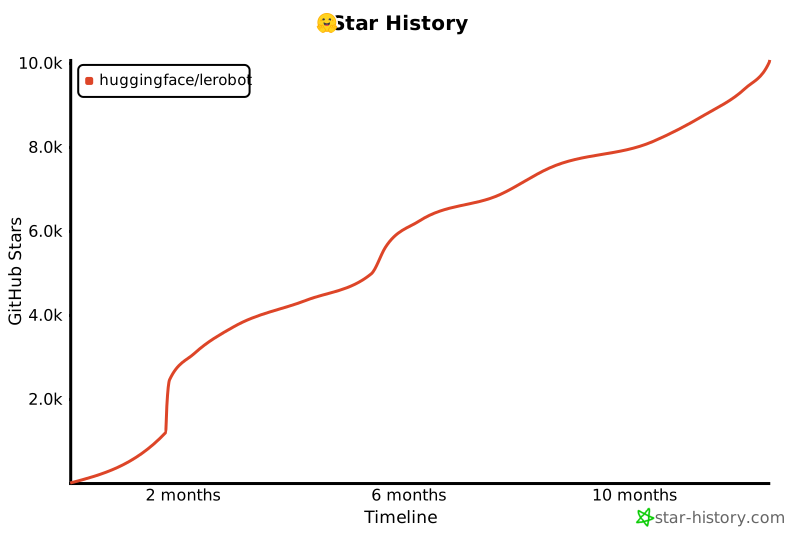](https://star-history.com/#huggingface/lerobot&Timeline)
|
||||
|
||||
271
benchmarks/video/README.md
Normal file
271
benchmarks/video/README.md
Normal file
@@ -0,0 +1,271 @@
|
||||
# Video benchmark
|
||||
|
||||
|
||||
## Questions
|
||||
What is the optimal trade-off between:
|
||||
- maximizing loading time with random access,
|
||||
- minimizing memory space on disk,
|
||||
- maximizing success rate of policies,
|
||||
- compatibility across devices/platforms for decoding videos (e.g. video players, web browsers).
|
||||
|
||||
How to encode videos?
|
||||
- Which video codec (`-vcodec`) to use? h264, h265, AV1?
|
||||
- What pixel format to use (`-pix_fmt`)? `yuv444p` or `yuv420p`?
|
||||
- How much compression (`-crf`)? No compression with `0`, intermediate compression with `25` or extreme with `50+`?
|
||||
- Which frequency to chose for key frames (`-g`)? A key frame every `10` frames?
|
||||
|
||||
How to decode videos?
|
||||
- Which `decoder`? `torchvision`, `torchaudio`, `ffmpegio`, `decord`, or `nvc`?
|
||||
- What scenarios to use for the requesting timestamps during benchmark? (`timestamps_mode`)
|
||||
|
||||
|
||||
## Variables
|
||||
**Image content & size**
|
||||
We don't expect the same optimal settings for a dataset of images from a simulation, or from real-world in an apartment, or in a factory, or outdoor, or with lots of moving objects in the scene, etc. Similarly, loading times might not vary linearly with the image size (resolution).
|
||||
For these reasons, we run this benchmark on four representative datasets:
|
||||
- `lerobot/pusht_image`: (96 x 96 pixels) simulation with simple geometric shapes, fixed camera.
|
||||
- `aliberts/aloha_mobile_shrimp_image`: (480 x 640 pixels) real-world indoor, moving camera.
|
||||
- `aliberts/paris_street`: (720 x 1280 pixels) real-world outdoor, moving camera.
|
||||
- `aliberts/kitchen`: (1080 x 1920 pixels) real-world indoor, fixed camera.
|
||||
|
||||
Note: The datasets used for this benchmark need to be image datasets, not video datasets.
|
||||
|
||||
**Data augmentations**
|
||||
We might revisit this benchmark and find better settings if we train our policies with various data augmentations to make them more robust (e.g. robust to color changes, compression, etc.).
|
||||
|
||||
### Encoding parameters
|
||||
| parameter | values |
|
||||
|-------------|--------------------------------------------------------------|
|
||||
| **vcodec** | `libx264`, `libx265`, `libsvtav1` |
|
||||
| **pix_fmt** | `yuv444p`, `yuv420p` |
|
||||
| **g** | `1`, `2`, `3`, `4`, `5`, `6`, `10`, `15`, `20`, `40`, `None` |
|
||||
| **crf** | `0`, `5`, `10`, `15`, `20`, `25`, `30`, `40`, `50`, `None` |
|
||||
|
||||
Note that `crf` value might be interpreted differently by various video codecs. In other words, the same value used with one codec doesn't necessarily translate into the same compression level with another codec. In fact, the default value (`None`) isn't the same amongst the different video codecs. Importantly, it is also the case for many other ffmpeg arguments like `g` which specifies the frequency of the key frames.
|
||||
|
||||
For a comprehensive list and documentation of these parameters, see the ffmpeg documentation depending on the video codec used:
|
||||
- h264: https://trac.ffmpeg.org/wiki/Encode/H.264
|
||||
- h265: https://trac.ffmpeg.org/wiki/Encode/H.265
|
||||
- AV1: https://trac.ffmpeg.org/wiki/Encode/AV1
|
||||
|
||||
### Decoding parameters
|
||||
**Decoder**
|
||||
We tested two video decoding backends from torchvision:
|
||||
- `pyav` (default)
|
||||
- `video_reader` (requires to build torchvision from source)
|
||||
|
||||
**Requested timestamps**
|
||||
Given the way video decoding works, once a keyframe has been loaded, the decoding of subsequent frames is fast.
|
||||
This of course is affected by the `-g` parameter during encoding, which specifies the frequency of the keyframes. Given our typical use cases in robotics policies which might request a few timestamps in different random places, we want to replicate these use cases with the following scenarios:
|
||||
- `1_frame`: 1 frame,
|
||||
- `2_frames`: 2 consecutive frames (e.g. `[t, t + 1 / fps]`),
|
||||
- `6_frames`: 6 consecutive frames (e.g. `[t + i / fps for i in range(6)]`)
|
||||
|
||||
Note that this differs significantly from a typical use case like watching a movie, in which every frame is loaded sequentially from the beginning to the end and it's acceptable to have big values for `-g`.
|
||||
|
||||
Additionally, because some policies might request single timestamps that are a few frames apart, we also have the following scenario:
|
||||
- `2_frames_4_space`: 2 frames with 4 consecutive frames of spacing in between (e.g `[t, t + 5 / fps]`),
|
||||
|
||||
However, due to how video decoding is implemented with `pyav`, we don't have access to an accurate seek so in practice this scenario is essentially the same as `6_frames` since all 6 frames between `t` and `t + 5 / fps` will be decoded.
|
||||
|
||||
|
||||
## Metrics
|
||||
**Data compression ratio (lower is better)**
|
||||
`video_images_size_ratio` is the ratio of the memory space on disk taken by the encoded video over the memory space taken by the original images. For instance, `video_images_size_ratio=25%` means that the video takes 4 times less memory space on disk compared to the original images.
|
||||
|
||||
**Loading time ratio (lower is better)**
|
||||
`video_images_load_time_ratio` is the ratio of the time it takes to decode frames from the video at a given timestamps over the time it takes to load the exact same original images. Lower is better. For instance, `video_images_load_time_ratio=200%` means that decoding from video is 2 times slower than loading the original images.
|
||||
|
||||
**Average Mean Square Error (lower is better)**
|
||||
`avg_mse` is the average mean square error between each decoded frame and its corresponding original image over all requested timestamps, and also divided by the number of pixels in the image to be comparable when switching to different image sizes.
|
||||
|
||||
**Average Peak Signal to Noise Ratio (higher is better)**
|
||||
`avg_psnr` measures the ratio between the maximum possible power of a signal and the power of corrupting noise that affects the fidelity of its representation. Higher PSNR indicates better quality.
|
||||
|
||||
**Average Structural Similarity Index Measure (higher is better)**
|
||||
`avg_ssim` evaluates the perceived quality of images by comparing luminance, contrast, and structure. SSIM values range from -1 to 1, where 1 indicates perfect similarity.
|
||||
|
||||
One aspect that can't be measured here with those metrics is the compatibility of the encoding across platforms, in particular on web browser, for visualization purposes.
|
||||
h264, h265 and AV1 are all commonly used codecs and should not pose an issue. However, the chroma subsampling (`pix_fmt`) format might affect compatibility:
|
||||
- `yuv420p` is more widely supported across various platforms, including web browsers.
|
||||
- `yuv444p` offers higher color fidelity but might not be supported as broadly.
|
||||
|
||||
|
||||
<!-- **Loss of a pretrained policy (higher is better)** (not available)
|
||||
`loss_pretrained` is the result of evaluating with the selected encoding/decoding settings a policy pretrained on original images. It is easier to understand than `avg_l2_error`.
|
||||
|
||||
**Success rate after retraining (higher is better)** (not available)
|
||||
`success_rate` is the result of training and evaluating a policy with the selected encoding/decoding settings. It is the most difficult metric to get but also the very best. -->
|
||||
|
||||
|
||||
## How the benchmark works
|
||||
The benchmark evaluates both encoding and decoding of video frames on the first episode of each dataset.
|
||||
|
||||
**Encoding:** for each `vcodec` and `pix_fmt` pair, we use a default value for `g` and `crf` upon which we change a single value (either `g` or `crf`) to one of the specified values (we don't test every combination of those as this would be computationally too heavy).
|
||||
This gives a unique set of encoding parameters which is used to encode the episode.
|
||||
|
||||
**Decoding:** Then, for each of those unique encodings, we iterate through every combination of the decoding parameters `backend` and `timestamps_mode`. For each of them, we record the metrics of a number of samples (given by `--num-samples`). This is parallelized for efficiency and the number of processes can be controlled with `--num-workers`. Ideally, it's best to have a `--num-samples` that is divisible by `--num-workers`.
|
||||
|
||||
Intermediate results saved for each `vcodec` and `pix_fmt` combination in csv tables.
|
||||
These are then all concatenated to a single table ready for analysis.
|
||||
|
||||
## Caveats
|
||||
We tried to measure the most impactful parameters for both encoding and decoding. However, for computational reasons we can't test out every combination.
|
||||
|
||||
Additional encoding parameters exist that are not included in this benchmark. In particular:
|
||||
- `-preset` which allows for selecting encoding presets. This represents a collection of options that will provide a certain encoding speed to compression ratio. By leaving this parameter unspecified, it is considered to be `medium` for libx264 and libx265 and `8` for libsvtav1.
|
||||
- `-tune` which allows to optimize the encoding for certain aspects (e.g. film quality, fast decoding, etc.).
|
||||
|
||||
See the documentation mentioned above for more detailed info on these settings and for a more comprehensive list of other parameters.
|
||||
|
||||
Similarly on the decoding side, other decoders exist but are not implemented in our current benchmark. To name a few:
|
||||
- `torchaudio`
|
||||
- `ffmpegio`
|
||||
- `decord`
|
||||
- `nvc`
|
||||
|
||||
Note as well that since we are mostly interested in the performance at decoding time (also because encoding is done only once before uploading a dataset), we did not measure encoding times nor have any metrics regarding encoding.
|
||||
However, besides the necessity to build ffmpeg from source, encoding did not pose any issue and it didn't take a significant amount of time during this benchmark.
|
||||
|
||||
|
||||
## Install
|
||||
Building ffmpeg from source is required to include libx265 and libaom/libsvtav1 (av1) video codecs ([compilation guide](https://trac.ffmpeg.org/wiki/CompilationGuide/Ubuntu)).
|
||||
|
||||
**Note:** While you still need to build torchvision with a conda-installed `ffmpeg<4.3` to use the `video_reader` decoder (as described in [#220](https://github.com/huggingface/lerobot/pull/220)), you also need another version which is custom-built with all the video codecs for encoding. For the script to then use that version, you can prepend the command above with `PATH="$HOME/bin:$PATH"`, which is where ffmpeg should be built.
|
||||
|
||||
|
||||
## Adding a video decoder
|
||||
Right now, we're only benchmarking the two video decoder available with torchvision: `pyav` and `video_reader`.
|
||||
You can easily add a new decoder to benchmark by adding it to this function in the script:
|
||||
```diff
|
||||
def decode_video_frames(
|
||||
video_path: str,
|
||||
timestamps: list[float],
|
||||
tolerance_s: float,
|
||||
backend: str,
|
||||
) -> torch.Tensor:
|
||||
if backend in ["pyav", "video_reader"]:
|
||||
return decode_video_frames_torchvision(
|
||||
video_path, timestamps, tolerance_s, backend
|
||||
)
|
||||
+ elif backend == ["your_decoder"]:
|
||||
+ return your_decoder_function(
|
||||
+ video_path, timestamps, tolerance_s, backend
|
||||
+ )
|
||||
else:
|
||||
raise NotImplementedError(backend)
|
||||
```
|
||||
|
||||
|
||||
## Example
|
||||
For a quick run, you can try these parameters:
|
||||
```bash
|
||||
python benchmark/video/run_video_benchmark.py \
|
||||
--output-dir outputs/video_benchmark \
|
||||
--repo-ids \
|
||||
lerobot/pusht_image \
|
||||
aliberts/aloha_mobile_shrimp_image \
|
||||
--vcodec libx264 libx265 \
|
||||
--pix-fmt yuv444p yuv420p \
|
||||
--g 2 20 None \
|
||||
--crf 10 40 None \
|
||||
--timestamps-modes 1_frame 2_frames \
|
||||
--backends pyav video_reader \
|
||||
--num-samples 5 \
|
||||
--num-workers 5 \
|
||||
--save-frames 0
|
||||
```
|
||||
|
||||
|
||||
## Results
|
||||
|
||||
### Reproduce
|
||||
We ran the benchmark with the following parameters:
|
||||
```bash
|
||||
# h264 and h265 encodings
|
||||
python benchmark/video/run_video_benchmark.py \
|
||||
--output-dir outputs/video_benchmark \
|
||||
--repo-ids \
|
||||
lerobot/pusht_image \
|
||||
aliberts/aloha_mobile_shrimp_image \
|
||||
aliberts/paris_street \
|
||||
aliberts/kitchen \
|
||||
--vcodec libx264 libx265 \
|
||||
--pix-fmt yuv444p yuv420p \
|
||||
--g 1 2 3 4 5 6 10 15 20 40 None \
|
||||
--crf 0 5 10 15 20 25 30 40 50 None \
|
||||
--timestamps-modes 1_frame 2_frames 6_frames \
|
||||
--backends pyav video_reader \
|
||||
--num-samples 50 \
|
||||
--num-workers 5 \
|
||||
--save-frames 1
|
||||
|
||||
# av1 encoding (only compatible with yuv420p and pyav decoder)
|
||||
python benchmark/video/run_video_benchmark.py \
|
||||
--output-dir outputs/video_benchmark \
|
||||
--repo-ids \
|
||||
lerobot/pusht_image \
|
||||
aliberts/aloha_mobile_shrimp_image \
|
||||
aliberts/paris_street \
|
||||
aliberts/kitchen \
|
||||
--vcodec libsvtav1 \
|
||||
--pix-fmt yuv420p \
|
||||
--g 1 2 3 4 5 6 10 15 20 40 None \
|
||||
--crf 0 5 10 15 20 25 30 40 50 None \
|
||||
--timestamps-modes 1_frame 2_frames 6_frames \
|
||||
--backends pyav \
|
||||
--num-samples 50 \
|
||||
--num-workers 5 \
|
||||
--save-frames 1
|
||||
```
|
||||
|
||||
The full results are available [here](https://docs.google.com/spreadsheets/d/1OYJB43Qu8fC26k_OyoMFgGBBKfQRCi4BIuYitQnq3sw/edit?usp=sharing)
|
||||
|
||||
|
||||
### Parameters selected for LeRobotDataset
|
||||
Considering these results, we chose what we think is the best set of encoding parameter:
|
||||
- vcodec: `libsvtav1`
|
||||
- pix-fmt: `yuv420p`
|
||||
- g: `2`
|
||||
- crf: `30`
|
||||
|
||||
Since we're using av1 encoding, we're choosing the `pyav` decoder as `video_reader` does not support it (and `pyav` doesn't require a custom build of `torchvision`).
|
||||
|
||||
### Summary
|
||||
|
||||
These tables show the results for `g=2` and `crf=30`, using `timestamps-modes=6_frames` and `backend=pyav`
|
||||
|
||||
| video_images_size_ratio | vcodec | pix_fmt | | | |
|
||||
|------------------------------------|------------|---------|-----------|-----------|-----------|
|
||||
| | libx264 | | libx265 | | libsvtav1 |
|
||||
| repo_id | yuv420p | yuv444p | yuv420p | yuv444p | yuv420p |
|
||||
| lerobot/pusht_image | **16.97%** | 17.58% | 18.57% | 18.86% | 22.06% |
|
||||
| aliberts/aloha_mobile_shrimp_image | 2.14% | 2.11% | 1.38% | **1.37%** | 5.59% |
|
||||
| aliberts/paris_street | 2.12% | 2.13% | **1.54%** | **1.54%** | 4.43% |
|
||||
| aliberts/kitchen | 1.40% | 1.39% | **1.00%** | **1.00%** | 2.52% |
|
||||
|
||||
| video_images_load_time_ratio | vcodec | pix_fmt | | | |
|
||||
|------------------------------------|---------|---------|----------|---------|-----------|
|
||||
| | libx264 | | libx265 | | libsvtav1 |
|
||||
| repo_id | yuv420p | yuv444p | yuv420p | yuv444p | yuv420p |
|
||||
| lerobot/pusht_image | 6.45 | 5.19 | **1.90** | 2.12 | 2.47 |
|
||||
| aliberts/aloha_mobile_shrimp_image | 11.80 | 7.92 | 0.71 | 0.85 | **0.48** |
|
||||
| aliberts/paris_street | 2.21 | 2.05 | 0.36 | 0.49 | **0.30** |
|
||||
| aliberts/kitchen | 1.46 | 1.46 | 0.28 | 0.51 | **0.26** |
|
||||
|
||||
| | | vcodec | pix_fmt | | | |
|
||||
|------------------------------------|----------|----------|--------------|----------|-----------|--------------|
|
||||
| | | libx264 | | libx265 | | libsvtav1 |
|
||||
| repo_id | metric | yuv420p | yuv444p | yuv420p | yuv444p | yuv420p |
|
||||
| lerobot/pusht_image | avg_mse | 2.90E-04 | **2.03E-04** | 3.13E-04 | 2.29E-04 | 2.19E-04 |
|
||||
| | avg_psnr | 35.44 | 37.07 | 35.49 | **37.30** | 37.20 |
|
||||
| | avg_ssim | 98.28% | **98.85%** | 98.31% | 98.84% | 98.72% |
|
||||
| aliberts/aloha_mobile_shrimp_image | avg_mse | 2.76E-04 | 2.59E-04 | 3.17E-04 | 3.06E-04 | **1.30E-04** |
|
||||
| | avg_psnr | 35.91 | 36.21 | 35.88 | 36.09 | **40.17** |
|
||||
| | avg_ssim | 95.19% | 95.18% | 95.00% | 95.05% | **97.73%** |
|
||||
| aliberts/paris_street | avg_mse | 6.89E-04 | 6.70E-04 | 4.03E-03 | 4.02E-03 | **3.09E-04** |
|
||||
| | avg_psnr | 33.48 | 33.68 | 32.05 | 32.15 | **35.40** |
|
||||
| | avg_ssim | 93.76% | 93.75% | 89.46% | 89.46% | **95.46%** |
|
||||
| aliberts/kitchen | avg_mse | 2.50E-04 | 2.24E-04 | 4.28E-04 | 4.18E-04 | **1.53E-04** |
|
||||
| | avg_psnr | 36.73 | 37.33 | 36.56 | 36.75 | **39.12** |
|
||||
| | avg_ssim | 95.47% | 95.58% | 95.52% | 95.53% | **96.82%** |
|
||||
90
benchmarks/video/capture_camera_feed.py
Normal file
90
benchmarks/video/capture_camera_feed.py
Normal file
@@ -0,0 +1,90 @@
|
||||
#!/usr/bin/env python
|
||||
|
||||
# Copyright 2024 The HuggingFace Inc. team. All rights reserved.
|
||||
#
|
||||
# Licensed under the Apache License, Version 2.0 (the "License");
|
||||
# you may not use this file except in compliance with the License.
|
||||
# You may obtain a copy of the License at
|
||||
#
|
||||
# http://www.apache.org/licenses/LICENSE-2.0
|
||||
#
|
||||
# Unless required by applicable law or agreed to in writing, software
|
||||
# distributed under the License is distributed on an "AS IS" BASIS,
|
||||
# WITHOUT WARRANTIES OR CONDITIONS OF ANY KIND, either express or implied.
|
||||
# See the License for the specific language governing permissions and
|
||||
# limitations under the License.
|
||||
"""Capture video feed from a camera as raw images."""
|
||||
|
||||
import argparse
|
||||
import datetime as dt
|
||||
from pathlib import Path
|
||||
|
||||
import cv2
|
||||
|
||||
|
||||
def display_and_save_video_stream(output_dir: Path, fps: int, width: int, height: int):
|
||||
now = dt.datetime.now()
|
||||
capture_dir = output_dir / f"{now:%Y-%m-%d}" / f"{now:%H-%M-%S}"
|
||||
if not capture_dir.exists():
|
||||
capture_dir.mkdir(parents=True, exist_ok=True)
|
||||
|
||||
# Opens the default webcam
|
||||
cap = cv2.VideoCapture(0)
|
||||
if not cap.isOpened():
|
||||
print("Error: Could not open video stream.")
|
||||
return
|
||||
|
||||
cap.set(cv2.CAP_PROP_FPS, fps)
|
||||
cap.set(cv2.CAP_PROP_FRAME_WIDTH, width)
|
||||
cap.set(cv2.CAP_PROP_FRAME_HEIGHT, height)
|
||||
|
||||
frame_index = 0
|
||||
while True:
|
||||
ret, frame = cap.read()
|
||||
|
||||
if not ret:
|
||||
print("Error: Could not read frame.")
|
||||
break
|
||||
|
||||
cv2.imshow("Video Stream", frame)
|
||||
cv2.imwrite(str(capture_dir / f"frame_{frame_index:06d}.png"), frame)
|
||||
frame_index += 1
|
||||
|
||||
# Break the loop on 'q' key press
|
||||
if cv2.waitKey(1) & 0xFF == ord("q"):
|
||||
break
|
||||
|
||||
# Release the capture and destroy all windows
|
||||
cap.release()
|
||||
cv2.destroyAllWindows()
|
||||
|
||||
|
||||
if __name__ == "__main__":
|
||||
parser = argparse.ArgumentParser()
|
||||
|
||||
parser.add_argument(
|
||||
"--output-dir",
|
||||
type=Path,
|
||||
default=Path("outputs/cam_capture/"),
|
||||
help="Directory where the capture images are written. A subfolder named with the current date & time will be created inside it for each capture.",
|
||||
)
|
||||
parser.add_argument(
|
||||
"--fps",
|
||||
type=int,
|
||||
default=30,
|
||||
help="Frames Per Second of the capture.",
|
||||
)
|
||||
parser.add_argument(
|
||||
"--width",
|
||||
type=int,
|
||||
default=1280,
|
||||
help="Width of the captured images.",
|
||||
)
|
||||
parser.add_argument(
|
||||
"--height",
|
||||
type=int,
|
||||
default=720,
|
||||
help="Height of the captured images.",
|
||||
)
|
||||
args = parser.parse_args()
|
||||
display_and_save_video_stream(**vars(args))
|
||||
490
benchmarks/video/run_video_benchmark.py
Normal file
490
benchmarks/video/run_video_benchmark.py
Normal file
@@ -0,0 +1,490 @@
|
||||
#!/usr/bin/env python
|
||||
|
||||
# Copyright 2024 The HuggingFace Inc. team. All rights reserved.
|
||||
#
|
||||
# Licensed under the Apache License, Version 2.0 (the "License");
|
||||
# you may not use this file except in compliance with the License.
|
||||
# You may obtain a copy of the License at
|
||||
#
|
||||
# http://www.apache.org/licenses/LICENSE-2.0
|
||||
#
|
||||
# Unless required by applicable law or agreed to in writing, software
|
||||
# distributed under the License is distributed on an "AS IS" BASIS,
|
||||
# WITHOUT WARRANTIES OR CONDITIONS OF ANY KIND, either express or implied.
|
||||
# See the License for the specific language governing permissions and
|
||||
# limitations under the License.
|
||||
"""Assess the performance of video decoding in various configurations.
|
||||
|
||||
This script will benchmark different video encoding and decoding parameters.
|
||||
See the provided README.md or run `python benchmark/video/run_video_benchmark.py --help` for usage info.
|
||||
"""
|
||||
|
||||
import argparse
|
||||
import datetime as dt
|
||||
import random
|
||||
import shutil
|
||||
from collections import OrderedDict
|
||||
from concurrent.futures import ThreadPoolExecutor, as_completed
|
||||
from pathlib import Path
|
||||
|
||||
import einops
|
||||
import numpy as np
|
||||
import pandas as pd
|
||||
import PIL
|
||||
import torch
|
||||
from skimage.metrics import mean_squared_error, peak_signal_noise_ratio, structural_similarity
|
||||
from tqdm import tqdm
|
||||
|
||||
from lerobot.common.datasets.lerobot_dataset import LeRobotDataset
|
||||
from lerobot.common.datasets.video_utils import (
|
||||
decode_video_frames_torchvision,
|
||||
encode_video_frames,
|
||||
)
|
||||
from lerobot.common.utils.benchmark import TimeBenchmark
|
||||
|
||||
BASE_ENCODING = OrderedDict(
|
||||
[
|
||||
("vcodec", "libx264"),
|
||||
("pix_fmt", "yuv444p"),
|
||||
("g", 2),
|
||||
("crf", None),
|
||||
# TODO(aliberts): Add fastdecode
|
||||
# ("fastdecode", 0),
|
||||
]
|
||||
)
|
||||
|
||||
|
||||
# TODO(rcadene, aliberts): move to `utils.py` folder when we want to refactor
|
||||
def parse_int_or_none(value) -> int | None:
|
||||
if value.lower() == "none":
|
||||
return None
|
||||
try:
|
||||
return int(value)
|
||||
except ValueError as e:
|
||||
raise argparse.ArgumentTypeError(f"Invalid int or None: {value}") from e
|
||||
|
||||
|
||||
def check_datasets_formats(repo_ids: list) -> None:
|
||||
for repo_id in repo_ids:
|
||||
dataset = LeRobotDataset(repo_id)
|
||||
if len(dataset.meta.video_keys) > 0:
|
||||
raise ValueError(
|
||||
f"Use only image dataset for running this benchmark. Video dataset provided: {repo_id}"
|
||||
)
|
||||
|
||||
|
||||
def get_directory_size(directory: Path) -> int:
|
||||
total_size = 0
|
||||
for item in directory.rglob("*"):
|
||||
if item.is_file():
|
||||
total_size += item.stat().st_size
|
||||
return total_size
|
||||
|
||||
|
||||
def load_original_frames(imgs_dir: Path, timestamps: list[float], fps: int) -> torch.Tensor:
|
||||
frames = []
|
||||
for ts in timestamps:
|
||||
idx = int(ts * fps)
|
||||
frame = PIL.Image.open(imgs_dir / f"frame_{idx:06d}.png")
|
||||
frame = torch.from_numpy(np.array(frame))
|
||||
frame = frame.type(torch.float32) / 255
|
||||
frame = einops.rearrange(frame, "h w c -> c h w")
|
||||
frames.append(frame)
|
||||
return torch.stack(frames)
|
||||
|
||||
|
||||
def save_decoded_frames(
|
||||
imgs_dir: Path, save_dir: Path, frames: torch.Tensor, timestamps: list[float], fps: int
|
||||
) -> None:
|
||||
if save_dir.exists() and len(list(save_dir.glob("frame_*.png"))) == len(timestamps):
|
||||
return
|
||||
|
||||
save_dir.mkdir(parents=True, exist_ok=True)
|
||||
for i, ts in enumerate(timestamps):
|
||||
idx = int(ts * fps)
|
||||
frame_hwc = (frames[i].permute((1, 2, 0)) * 255).type(torch.uint8).cpu().numpy()
|
||||
PIL.Image.fromarray(frame_hwc).save(save_dir / f"frame_{idx:06d}_decoded.png")
|
||||
shutil.copyfile(imgs_dir / f"frame_{idx:06d}.png", save_dir / f"frame_{idx:06d}_original.png")
|
||||
|
||||
|
||||
def save_first_episode(imgs_dir: Path, dataset: LeRobotDataset) -> None:
|
||||
ep_num_images = dataset.episode_data_index["to"][0].item()
|
||||
if imgs_dir.exists() and len(list(imgs_dir.glob("frame_*.png"))) == ep_num_images:
|
||||
return
|
||||
|
||||
imgs_dir.mkdir(parents=True, exist_ok=True)
|
||||
hf_dataset = dataset.hf_dataset.with_format(None)
|
||||
|
||||
# We only save images from the first camera
|
||||
img_keys = [key for key in hf_dataset.features if key.startswith("observation.image")]
|
||||
imgs_dataset = hf_dataset.select_columns(img_keys[0])
|
||||
|
||||
for i, item in enumerate(
|
||||
tqdm(imgs_dataset, desc=f"saving {dataset.repo_id} first episode images", leave=False)
|
||||
):
|
||||
img = item[img_keys[0]]
|
||||
img.save(str(imgs_dir / f"frame_{i:06d}.png"), quality=100)
|
||||
|
||||
if i >= ep_num_images - 1:
|
||||
break
|
||||
|
||||
|
||||
def sample_timestamps(timestamps_mode: str, ep_num_images: int, fps: int) -> list[float]:
|
||||
# Start at 5 to allow for 2_frames_4_space and 6_frames
|
||||
idx = random.randint(5, ep_num_images - 1)
|
||||
match timestamps_mode:
|
||||
case "1_frame":
|
||||
frame_indexes = [idx]
|
||||
case "2_frames":
|
||||
frame_indexes = [idx - 1, idx]
|
||||
case "2_frames_4_space":
|
||||
frame_indexes = [idx - 5, idx]
|
||||
case "6_frames":
|
||||
frame_indexes = [idx - i for i in range(6)][::-1]
|
||||
case _:
|
||||
raise ValueError(timestamps_mode)
|
||||
|
||||
return [idx / fps for idx in frame_indexes]
|
||||
|
||||
|
||||
def decode_video_frames(
|
||||
video_path: str,
|
||||
timestamps: list[float],
|
||||
tolerance_s: float,
|
||||
backend: str,
|
||||
) -> torch.Tensor:
|
||||
if backend in ["pyav", "video_reader"]:
|
||||
return decode_video_frames_torchvision(video_path, timestamps, tolerance_s, backend)
|
||||
else:
|
||||
raise NotImplementedError(backend)
|
||||
|
||||
|
||||
def benchmark_decoding(
|
||||
imgs_dir: Path,
|
||||
video_path: Path,
|
||||
timestamps_mode: str,
|
||||
backend: str,
|
||||
ep_num_images: int,
|
||||
fps: int,
|
||||
num_samples: int = 50,
|
||||
num_workers: int = 4,
|
||||
save_frames: bool = False,
|
||||
) -> dict:
|
||||
def process_sample(sample: int):
|
||||
time_benchmark = TimeBenchmark()
|
||||
timestamps = sample_timestamps(timestamps_mode, ep_num_images, fps)
|
||||
num_frames = len(timestamps)
|
||||
result = {
|
||||
"psnr_values": [],
|
||||
"ssim_values": [],
|
||||
"mse_values": [],
|
||||
}
|
||||
|
||||
with time_benchmark:
|
||||
frames = decode_video_frames(video_path, timestamps=timestamps, tolerance_s=5e-1, backend=backend)
|
||||
result["load_time_video_ms"] = time_benchmark.result_ms / num_frames
|
||||
|
||||
with time_benchmark:
|
||||
original_frames = load_original_frames(imgs_dir, timestamps, fps)
|
||||
result["load_time_images_ms"] = time_benchmark.result_ms / num_frames
|
||||
|
||||
frames_np, original_frames_np = frames.numpy(), original_frames.numpy()
|
||||
for i in range(num_frames):
|
||||
result["mse_values"].append(mean_squared_error(original_frames_np[i], frames_np[i]))
|
||||
result["psnr_values"].append(
|
||||
peak_signal_noise_ratio(original_frames_np[i], frames_np[i], data_range=1.0)
|
||||
)
|
||||
result["ssim_values"].append(
|
||||
structural_similarity(original_frames_np[i], frames_np[i], data_range=1.0, channel_axis=0)
|
||||
)
|
||||
|
||||
if save_frames and sample == 0:
|
||||
save_dir = video_path.with_suffix("") / f"{timestamps_mode}_{backend}"
|
||||
save_decoded_frames(imgs_dir, save_dir, frames, timestamps, fps)
|
||||
|
||||
return result
|
||||
|
||||
load_times_video_ms = []
|
||||
load_times_images_ms = []
|
||||
mse_values = []
|
||||
psnr_values = []
|
||||
ssim_values = []
|
||||
|
||||
# A sample is a single set of decoded frames specified by timestamps_mode (e.g. a single frame, 2 frames, etc.).
|
||||
# For each sample, we record metrics (loading time and quality metrics) which are then averaged over all samples.
|
||||
# As these samples are independent, we run them in parallel threads to speed up the benchmark.
|
||||
with ThreadPoolExecutor(max_workers=num_workers) as executor:
|
||||
futures = [executor.submit(process_sample, i) for i in range(num_samples)]
|
||||
for future in tqdm(as_completed(futures), total=num_samples, desc="samples", leave=False):
|
||||
result = future.result()
|
||||
load_times_video_ms.append(result["load_time_video_ms"])
|
||||
load_times_images_ms.append(result["load_time_images_ms"])
|
||||
psnr_values.extend(result["psnr_values"])
|
||||
ssim_values.extend(result["ssim_values"])
|
||||
mse_values.extend(result["mse_values"])
|
||||
|
||||
avg_load_time_video_ms = float(np.array(load_times_video_ms).mean())
|
||||
avg_load_time_images_ms = float(np.array(load_times_images_ms).mean())
|
||||
video_images_load_time_ratio = avg_load_time_video_ms / avg_load_time_images_ms
|
||||
|
||||
return {
|
||||
"avg_load_time_video_ms": avg_load_time_video_ms,
|
||||
"avg_load_time_images_ms": avg_load_time_images_ms,
|
||||
"video_images_load_time_ratio": video_images_load_time_ratio,
|
||||
"avg_mse": float(np.mean(mse_values)),
|
||||
"avg_psnr": float(np.mean(psnr_values)),
|
||||
"avg_ssim": float(np.mean(ssim_values)),
|
||||
}
|
||||
|
||||
|
||||
def benchmark_encoding_decoding(
|
||||
dataset: LeRobotDataset,
|
||||
video_path: Path,
|
||||
imgs_dir: Path,
|
||||
encoding_cfg: dict,
|
||||
decoding_cfg: dict,
|
||||
num_samples: int,
|
||||
num_workers: int,
|
||||
save_frames: bool,
|
||||
overwrite: bool = False,
|
||||
seed: int = 1337,
|
||||
) -> list[dict]:
|
||||
fps = dataset.fps
|
||||
|
||||
if overwrite or not video_path.is_file():
|
||||
tqdm.write(f"encoding {video_path}")
|
||||
encode_video_frames(
|
||||
imgs_dir=imgs_dir,
|
||||
video_path=video_path,
|
||||
fps=fps,
|
||||
vcodec=encoding_cfg["vcodec"],
|
||||
pix_fmt=encoding_cfg["pix_fmt"],
|
||||
g=encoding_cfg.get("g"),
|
||||
crf=encoding_cfg.get("crf"),
|
||||
# fast_decode=encoding_cfg.get("fastdecode"),
|
||||
overwrite=True,
|
||||
)
|
||||
|
||||
ep_num_images = dataset.episode_data_index["to"][0].item()
|
||||
width, height = tuple(dataset[0][dataset.meta.camera_keys[0]].shape[-2:])
|
||||
num_pixels = width * height
|
||||
video_size_bytes = video_path.stat().st_size
|
||||
images_size_bytes = get_directory_size(imgs_dir)
|
||||
video_images_size_ratio = video_size_bytes / images_size_bytes
|
||||
|
||||
random.seed(seed)
|
||||
benchmark_table = []
|
||||
for timestamps_mode in tqdm(
|
||||
decoding_cfg["timestamps_modes"], desc="decodings (timestamps_modes)", leave=False
|
||||
):
|
||||
for backend in tqdm(decoding_cfg["backends"], desc="decodings (backends)", leave=False):
|
||||
benchmark_row = benchmark_decoding(
|
||||
imgs_dir,
|
||||
video_path,
|
||||
timestamps_mode,
|
||||
backend,
|
||||
ep_num_images,
|
||||
fps,
|
||||
num_samples,
|
||||
num_workers,
|
||||
save_frames,
|
||||
)
|
||||
benchmark_row.update(
|
||||
**{
|
||||
"repo_id": dataset.repo_id,
|
||||
"resolution": f"{width} x {height}",
|
||||
"num_pixels": num_pixels,
|
||||
"video_size_bytes": video_size_bytes,
|
||||
"images_size_bytes": images_size_bytes,
|
||||
"video_images_size_ratio": video_images_size_ratio,
|
||||
"timestamps_mode": timestamps_mode,
|
||||
"backend": backend,
|
||||
},
|
||||
**encoding_cfg,
|
||||
)
|
||||
benchmark_table.append(benchmark_row)
|
||||
|
||||
return benchmark_table
|
||||
|
||||
|
||||
def main(
|
||||
output_dir: Path,
|
||||
repo_ids: list[str],
|
||||
vcodec: list[str],
|
||||
pix_fmt: list[str],
|
||||
g: list[int],
|
||||
crf: list[int],
|
||||
# fastdecode: list[int],
|
||||
timestamps_modes: list[str],
|
||||
backends: list[str],
|
||||
num_samples: int,
|
||||
num_workers: int,
|
||||
save_frames: bool,
|
||||
):
|
||||
check_datasets_formats(repo_ids)
|
||||
encoding_benchmarks = {
|
||||
"g": g,
|
||||
"crf": crf,
|
||||
# "fastdecode": fastdecode,
|
||||
}
|
||||
decoding_benchmarks = {
|
||||
"timestamps_modes": timestamps_modes,
|
||||
"backends": backends,
|
||||
}
|
||||
headers = ["repo_id", "resolution", "num_pixels"]
|
||||
headers += list(BASE_ENCODING.keys())
|
||||
headers += [
|
||||
"timestamps_mode",
|
||||
"backend",
|
||||
"video_size_bytes",
|
||||
"images_size_bytes",
|
||||
"video_images_size_ratio",
|
||||
"avg_load_time_video_ms",
|
||||
"avg_load_time_images_ms",
|
||||
"video_images_load_time_ratio",
|
||||
"avg_mse",
|
||||
"avg_psnr",
|
||||
"avg_ssim",
|
||||
]
|
||||
file_paths = []
|
||||
for video_codec in tqdm(vcodec, desc="encodings (vcodec)"):
|
||||
for pixel_format in tqdm(pix_fmt, desc="encodings (pix_fmt)", leave=False):
|
||||
benchmark_table = []
|
||||
for repo_id in tqdm(repo_ids, desc="encodings (datasets)", leave=False):
|
||||
dataset = LeRobotDataset(repo_id)
|
||||
imgs_dir = output_dir / "images" / dataset.repo_id.replace("/", "_")
|
||||
# We only use the first episode
|
||||
save_first_episode(imgs_dir, dataset)
|
||||
for key, values in tqdm(encoding_benchmarks.items(), desc="encodings (g, crf)", leave=False):
|
||||
for value in tqdm(values, desc=f"encodings ({key})", leave=False):
|
||||
encoding_cfg = BASE_ENCODING.copy()
|
||||
encoding_cfg["vcodec"] = video_codec
|
||||
encoding_cfg["pix_fmt"] = pixel_format
|
||||
encoding_cfg[key] = value
|
||||
args_path = Path("_".join(str(value) for value in encoding_cfg.values()))
|
||||
video_path = output_dir / "videos" / args_path / f"{repo_id.replace('/', '_')}.mp4"
|
||||
benchmark_table += benchmark_encoding_decoding(
|
||||
dataset,
|
||||
video_path,
|
||||
imgs_dir,
|
||||
encoding_cfg,
|
||||
decoding_benchmarks,
|
||||
num_samples,
|
||||
num_workers,
|
||||
save_frames,
|
||||
)
|
||||
|
||||
# Save intermediate results
|
||||
benchmark_df = pd.DataFrame(benchmark_table, columns=headers)
|
||||
now = dt.datetime.now()
|
||||
csv_path = (
|
||||
output_dir
|
||||
/ f"{now:%Y-%m-%d}_{now:%H-%M-%S}_{video_codec}_{pixel_format}_{num_samples}-samples.csv"
|
||||
)
|
||||
benchmark_df.to_csv(csv_path, header=True, index=False)
|
||||
file_paths.append(csv_path)
|
||||
del benchmark_df
|
||||
|
||||
# Concatenate all results
|
||||
df_list = [pd.read_csv(csv_path) for csv_path in file_paths]
|
||||
concatenated_df = pd.concat(df_list, ignore_index=True)
|
||||
concatenated_path = output_dir / f"{now:%Y-%m-%d}_{now:%H-%M-%S}_all_{num_samples}-samples.csv"
|
||||
concatenated_df.to_csv(concatenated_path, header=True, index=False)
|
||||
|
||||
|
||||
if __name__ == "__main__":
|
||||
parser = argparse.ArgumentParser()
|
||||
parser.add_argument(
|
||||
"--output-dir",
|
||||
type=Path,
|
||||
default=Path("outputs/video_benchmark"),
|
||||
help="Directory where the video benchmark outputs are written.",
|
||||
)
|
||||
parser.add_argument(
|
||||
"--repo-ids",
|
||||
type=str,
|
||||
nargs="*",
|
||||
default=[
|
||||
"lerobot/pusht_image",
|
||||
"aliberts/aloha_mobile_shrimp_image",
|
||||
"aliberts/paris_street",
|
||||
"aliberts/kitchen",
|
||||
],
|
||||
help="Datasets repo-ids to test against. First episodes only are used. Must be images.",
|
||||
)
|
||||
parser.add_argument(
|
||||
"--vcodec",
|
||||
type=str,
|
||||
nargs="*",
|
||||
default=["libx264", "libx265", "libsvtav1"],
|
||||
help="Video codecs to be tested",
|
||||
)
|
||||
parser.add_argument(
|
||||
"--pix-fmt",
|
||||
type=str,
|
||||
nargs="*",
|
||||
default=["yuv444p", "yuv420p"],
|
||||
help="Pixel formats (chroma subsampling) to be tested",
|
||||
)
|
||||
parser.add_argument(
|
||||
"--g",
|
||||
type=parse_int_or_none,
|
||||
nargs="*",
|
||||
default=[1, 2, 3, 4, 5, 6, 10, 15, 20, 40, 100, None],
|
||||
help="Group of pictures sizes to be tested.",
|
||||
)
|
||||
parser.add_argument(
|
||||
"--crf",
|
||||
type=parse_int_or_none,
|
||||
nargs="*",
|
||||
default=[0, 5, 10, 15, 20, 25, 30, 40, 50, None],
|
||||
help="Constant rate factors to be tested.",
|
||||
)
|
||||
# parser.add_argument(
|
||||
# "--fastdecode",
|
||||
# type=int,
|
||||
# nargs="*",
|
||||
# default=[0, 1],
|
||||
# help="Use the fastdecode tuning option. 0 disables it. "
|
||||
# "For libx264 and libx265, only 1 is possible. "
|
||||
# "For libsvtav1, 1, 2 or 3 are possible values with a higher number meaning a faster decoding optimization",
|
||||
# )
|
||||
parser.add_argument(
|
||||
"--timestamps-modes",
|
||||
type=str,
|
||||
nargs="*",
|
||||
default=[
|
||||
"1_frame",
|
||||
"2_frames",
|
||||
"2_frames_4_space",
|
||||
"6_frames",
|
||||
],
|
||||
help="Timestamps scenarios to be tested.",
|
||||
)
|
||||
parser.add_argument(
|
||||
"--backends",
|
||||
type=str,
|
||||
nargs="*",
|
||||
default=["pyav", "video_reader"],
|
||||
help="Torchvision decoding backend to be tested.",
|
||||
)
|
||||
parser.add_argument(
|
||||
"--num-samples",
|
||||
type=int,
|
||||
default=50,
|
||||
help="Number of samples for each encoding x decoding config.",
|
||||
)
|
||||
parser.add_argument(
|
||||
"--num-workers",
|
||||
type=int,
|
||||
default=10,
|
||||
help="Number of processes for parallelized sample processing.",
|
||||
)
|
||||
parser.add_argument(
|
||||
"--save-frames",
|
||||
type=int,
|
||||
default=0,
|
||||
help="Whether to save decoded frames or not. Enter a non-zero number for true.",
|
||||
)
|
||||
args = parser.parse_args()
|
||||
main(**vars(args))
|
||||
29
docker/lerobot-cpu/Dockerfile
Normal file
29
docker/lerobot-cpu/Dockerfile
Normal file
@@ -0,0 +1,29 @@
|
||||
# Configure image
|
||||
ARG PYTHON_VERSION=3.10
|
||||
FROM python:${PYTHON_VERSION}-slim
|
||||
|
||||
# Configure environment variables
|
||||
ARG PYTHON_VERSION
|
||||
ENV DEBIAN_FRONTEND=noninteractive
|
||||
ENV MUJOCO_GL="egl"
|
||||
ENV PATH="/opt/venv/bin:$PATH"
|
||||
|
||||
# Install dependencies and set up Python in a single layer
|
||||
RUN apt-get update && apt-get install -y --no-install-recommends \
|
||||
build-essential cmake git \
|
||||
libglib2.0-0 libgl1-mesa-glx libegl1-mesa ffmpeg \
|
||||
speech-dispatcher libgeos-dev \
|
||||
&& ln -s /usr/bin/python${PYTHON_VERSION} /usr/bin/python \
|
||||
&& python -m venv /opt/venv \
|
||||
&& apt-get clean && rm -rf /var/lib/apt/lists/* \
|
||||
&& echo "source /opt/venv/bin/activate" >> /root/.bashrc
|
||||
|
||||
# Clone repository and install LeRobot in a single layer
|
||||
COPY . /lerobot
|
||||
WORKDIR /lerobot
|
||||
RUN /opt/venv/bin/pip install --upgrade --no-cache-dir pip \
|
||||
&& /opt/venv/bin/pip install --no-cache-dir ".[test, aloha, xarm, pusht, dynamixel]" \
|
||||
--extra-index-url https://download.pytorch.org/whl/cpu
|
||||
|
||||
# Execute in bash shell rather than python
|
||||
CMD ["/bin/bash"]
|
||||
68
docker/lerobot-gpu-dev/Dockerfile
Normal file
68
docker/lerobot-gpu-dev/Dockerfile
Normal file
@@ -0,0 +1,68 @@
|
||||
FROM nvidia/cuda:12.2.2-devel-ubuntu22.04
|
||||
|
||||
# Configure image
|
||||
ARG PYTHON_VERSION=3.10
|
||||
ARG DEBIAN_FRONTEND=noninteractive
|
||||
|
||||
# Install apt dependencies
|
||||
RUN apt-get update && apt-get install -y --no-install-recommends \
|
||||
build-essential cmake \
|
||||
git git-lfs openssh-client \
|
||||
nano vim less util-linux tree \
|
||||
htop atop nvtop \
|
||||
sed gawk grep curl wget zip unzip \
|
||||
tcpdump sysstat screen tmux \
|
||||
libglib2.0-0 libgl1-mesa-glx libegl1-mesa \
|
||||
speech-dispatcher portaudio19-dev libgeos-dev \
|
||||
python${PYTHON_VERSION} python${PYTHON_VERSION}-venv \
|
||||
&& apt-get clean && rm -rf /var/lib/apt/lists/*
|
||||
|
||||
# Install ffmpeg build dependencies. See:
|
||||
# https://trac.ffmpeg.org/wiki/CompilationGuide/Ubuntu
|
||||
# TODO(aliberts): create image to build dependencies from source instead
|
||||
RUN apt-get update && apt-get install -y --no-install-recommends \
|
||||
autoconf automake yasm \
|
||||
libass-dev \
|
||||
libfreetype6-dev \
|
||||
libgnutls28-dev \
|
||||
libunistring-dev \
|
||||
libmp3lame-dev \
|
||||
libtool \
|
||||
libvorbis-dev \
|
||||
meson \
|
||||
ninja-build \
|
||||
pkg-config \
|
||||
texinfo \
|
||||
yasm \
|
||||
zlib1g-dev \
|
||||
nasm \
|
||||
libx264-dev \
|
||||
libx265-dev libnuma-dev \
|
||||
libvpx-dev \
|
||||
libfdk-aac-dev \
|
||||
libopus-dev \
|
||||
libsvtav1-dev libsvtav1enc-dev libsvtav1dec-dev \
|
||||
libdav1d-dev
|
||||
|
||||
# Install gh cli tool
|
||||
RUN (type -p wget >/dev/null || (apt update && apt-get install wget -y)) \
|
||||
&& mkdir -p -m 755 /etc/apt/keyrings \
|
||||
&& wget -qO- https://cli.github.com/packages/githubcli-archive-keyring.gpg | tee /etc/apt/keyrings/githubcli-archive-keyring.gpg > /dev/null \
|
||||
&& chmod go+r /etc/apt/keyrings/githubcli-archive-keyring.gpg \
|
||||
&& echo "deb [arch=$(dpkg --print-architecture) signed-by=/etc/apt/keyrings/githubcli-archive-keyring.gpg] https://cli.github.com/packages stable main" | tee /etc/apt/sources.list.d/github-cli.list > /dev/null \
|
||||
&& apt update \
|
||||
&& apt install gh -y \
|
||||
&& apt clean && rm -rf /var/lib/apt/lists/*
|
||||
|
||||
# Setup `python`
|
||||
RUN ln -s /usr/bin/python3 /usr/bin/python
|
||||
|
||||
# Install poetry
|
||||
RUN curl -sSL https://install.python-poetry.org | python -
|
||||
ENV PATH="/root/.local/bin:$PATH"
|
||||
RUN echo 'if [ "$HOME" != "/root" ]; then ln -sf /root/.local/bin/poetry $HOME/.local/bin/poetry; fi' >> /root/.bashrc
|
||||
RUN poetry config virtualenvs.create false
|
||||
RUN poetry config virtualenvs.in-project true
|
||||
|
||||
# Set EGL as the rendering backend for MuJoCo
|
||||
ENV MUJOCO_GL="egl"
|
||||
24
docker/lerobot-gpu/Dockerfile
Normal file
24
docker/lerobot-gpu/Dockerfile
Normal file
@@ -0,0 +1,24 @@
|
||||
FROM nvidia/cuda:12.4.1-base-ubuntu22.04
|
||||
|
||||
# Configure environment variables
|
||||
ARG PYTHON_VERSION=3.10
|
||||
ENV DEBIAN_FRONTEND=noninteractive
|
||||
ENV MUJOCO_GL="egl"
|
||||
ENV PATH="/opt/venv/bin:$PATH"
|
||||
|
||||
# Install dependencies and set up Python in a single layer
|
||||
RUN apt-get update && apt-get install -y --no-install-recommends \
|
||||
build-essential cmake git \
|
||||
libglib2.0-0 libgl1-mesa-glx libegl1-mesa ffmpeg \
|
||||
speech-dispatcher libgeos-dev \
|
||||
python${PYTHON_VERSION}-dev python${PYTHON_VERSION}-venv \
|
||||
&& ln -s /usr/bin/python${PYTHON_VERSION} /usr/bin/python \
|
||||
&& python -m venv /opt/venv \
|
||||
&& apt-get clean && rm -rf /var/lib/apt/lists/* \
|
||||
&& echo "source /opt/venv/bin/activate" >> /root/.bashrc
|
||||
|
||||
# Clone repository and install LeRobot in a single layer
|
||||
COPY . /lerobot
|
||||
WORKDIR /lerobot
|
||||
RUN /opt/venv/bin/pip install --upgrade --no-cache-dir pip \
|
||||
&& /opt/venv/bin/pip install --no-cache-dir ".[test, aloha, xarm, pusht, dynamixel]"
|
||||
@@ -1,23 +0,0 @@
|
||||
name: lerobot
|
||||
dependencies:
|
||||
- python=3.8.16
|
||||
- pytorch::pytorch=1.13.1
|
||||
- pytorch::torchvision=0.14.1
|
||||
- nvidia::cudatoolkit=11.7
|
||||
- anaconda::pip
|
||||
- pip:
|
||||
- cython==0.29.33
|
||||
- mujoco==2.3.2
|
||||
- mujoco-py==2.1.2.14
|
||||
- termcolor
|
||||
- omegaconf
|
||||
- gym==0.21.0
|
||||
- dm-env==1.6
|
||||
- pandas
|
||||
- wandb
|
||||
- moviepy
|
||||
- imageio
|
||||
- gdown
|
||||
# - -e benchmarks/d4rl
|
||||
# TODO: verify this works
|
||||
- git+https://github.com/nicklashansen/simxarm.git@main#egg=simxarm
|
||||
614
examples/10_use_so100.md
Normal file
614
examples/10_use_so100.md
Normal file
@@ -0,0 +1,614 @@
|
||||
# Using the [SO-100](https://github.com/TheRobotStudio/SO-ARM100) with LeRobot
|
||||
|
||||
## Table of Contents
|
||||
|
||||
- [A. Source the parts](#a-source-the-parts)
|
||||
- [B. Install LeRobot](#b-install-lerobot)
|
||||
- [C. Configure the Motors](#c-configure-the-motors)
|
||||
- [D. Step-by-Step Assembly Instructions](#d-step-by-step-assembly-instructions)
|
||||
- [E. Calibrate](#e-calibrate)
|
||||
- [F. Teleoperate](#f-teleoperate)
|
||||
- [G. Record a dataset](#g-record-a-dataset)
|
||||
- [H. Visualize a dataset](#h-visualize-a-dataset)
|
||||
- [I. Replay an episode](#i-replay-an-episode)
|
||||
- [J. Train a policy](#j-train-a-policy)
|
||||
- [K. Evaluate your policy](#k-evaluate-your-policy)
|
||||
- [L. More Information](#l-more-information)
|
||||
|
||||
## A. Source the parts
|
||||
|
||||
Follow this [README](https://github.com/TheRobotStudio/SO-ARM100). It contains the bill of materials, with a link to source the parts, as well as the instructions to 3D print the parts,
|
||||
and advice if it's your first time printing or if you don't own a 3D printer.
|
||||
|
||||
Before assembling, you will first need to configure your motors. To this end, we provide a nice script, so let's first install LeRobot. After configuration, we will also guide you through assembly.
|
||||
|
||||
## B. Install LeRobot
|
||||
|
||||
> [!TIP]
|
||||
> We use the Command Prompt (cmd) quite a lot. If you are not comfortable using the cmd or want to brush up using the command line you can have a look here: [Command line crash course](https://developer.mozilla.org/en-US/docs/Learn_web_development/Getting_started/Environment_setup/Command_line)
|
||||
|
||||
On your computer:
|
||||
|
||||
#### 1. [Install Miniconda](https://docs.anaconda.com/miniconda/install/#quick-command-line-install):
|
||||
|
||||
#### 2. Restart shell
|
||||
Copy paste in your shell: `source ~/.bashrc` or for Mac: `source ~/.bash_profile` or `source ~/.zshrc` if you're using zshell
|
||||
|
||||
#### 3. Create and activate a fresh conda environment for lerobot
|
||||
|
||||
<details>
|
||||
<summary><strong>Video install instructions</strong></summary>
|
||||
|
||||
<video src="https://github.com/user-attachments/assets/17172d3b-3b64-4b80-9cf1-b2b7c5cbd236"></video>
|
||||
|
||||
</details>
|
||||
|
||||
```bash
|
||||
conda create -y -n lerobot python=3.10
|
||||
```
|
||||
|
||||
Then activate your conda environment (do this each time you open a shell to use lerobot!):
|
||||
```bash
|
||||
conda activate lerobot
|
||||
```
|
||||
|
||||
#### 4. Clone LeRobot:
|
||||
```bash
|
||||
git clone https://github.com/huggingface/lerobot.git ~/lerobot
|
||||
```
|
||||
|
||||
#### 5. Install LeRobot with dependencies for the feetech motors:
|
||||
```bash
|
||||
cd ~/lerobot && pip install -e ".[feetech]"
|
||||
```
|
||||
|
||||
*EXTRA: For Linux only (not Mac)*: install extra dependencies for recording datasets:
|
||||
```bash
|
||||
conda install -y -c conda-forge ffmpeg
|
||||
pip uninstall -y opencv-python
|
||||
conda install -y -c conda-forge "opencv>=4.10.0"
|
||||
```
|
||||
Great :hugs:! You are now done installing LeRobot and we can begin assembling the SO100 arms :robot:.
|
||||
Every time you now want to use LeRobot you can go to the `~/lerobot` folder where we installed LeRobot and run one of the commands.
|
||||
|
||||
## C. Configure the motors
|
||||
|
||||
> [!NOTE]
|
||||
> Throughout this tutorial you will find videos on how to do the steps, the full video tutorial can be found here: [assembly video](https://www.youtube.com/watch?v=FioA2oeFZ5I).
|
||||
|
||||
### 1. Find the USB ports associated to each arm
|
||||
|
||||
Designate one bus servo adapter and 6 motors for your leader arm, and similarly the other bus servo adapter and 6 motors for the follower arm. It's convenient to label them and write on each motor if it's for the follower `F` or for the leader `L` and it's ID from 1 to 6 (F1...F6 and L1...L6).
|
||||
|
||||
#### a. Run the script to find port
|
||||
|
||||
<details>
|
||||
<summary><strong>Video finding port</strong></summary>
|
||||
<video src="https://github.com/user-attachments/assets/4a21a14d-2046-4805-93c4-ee97a30ba33f"></video>
|
||||
<video src="https://github.com/user-attachments/assets/1cc3aecf-c16d-4ff9-aec7-8c175afbbce2"></video>
|
||||
</details>
|
||||
|
||||
To find the port for each bus servo adapter, run the utility script:
|
||||
```bash
|
||||
python lerobot/scripts/find_motors_bus_port.py
|
||||
```
|
||||
|
||||
#### b. Example outputs
|
||||
|
||||
Example output when identifying the leader arm's port (e.g., `/dev/tty.usbmodem575E0031751` on Mac, or possibly `/dev/ttyACM0` on Linux):
|
||||
```
|
||||
Finding all available ports for the MotorBus.
|
||||
['/dev/tty.usbmodem575E0032081', '/dev/tty.usbmodem575E0031751']
|
||||
Remove the usb cable from your MotorsBus and press Enter when done.
|
||||
|
||||
[...Disconnect leader arm and press Enter...]
|
||||
|
||||
The port of this MotorsBus is /dev/tty.usbmodem575E0031751
|
||||
Reconnect the usb cable.
|
||||
```
|
||||
Example output when identifying the follower arm's port (e.g., `/dev/tty.usbmodem575E0032081`, or possibly `/dev/ttyACM1` on Linux):
|
||||
```
|
||||
Finding all available ports for the MotorBus.
|
||||
['/dev/tty.usbmodem575E0032081', '/dev/tty.usbmodem575E0031751']
|
||||
Remove the usb cable from your MotorsBus and press Enter when done.
|
||||
|
||||
[...Disconnect follower arm and press Enter...]
|
||||
|
||||
The port of this MotorsBus is /dev/tty.usbmodem575E0032081
|
||||
Reconnect the usb cable.
|
||||
```
|
||||
|
||||
#### c. Troubleshooting
|
||||
On Linux, you might need to give access to the USB ports by running:
|
||||
```bash
|
||||
sudo chmod 666 /dev/ttyACM0
|
||||
sudo chmod 666 /dev/ttyACM1
|
||||
```
|
||||
|
||||
#### d. Update config file
|
||||
|
||||
IMPORTANTLY: Now that you have your ports, update the **port** default values of [`SO100RobotConfig`](../lerobot/common/robot_devices/robots/configs.py). You will find something like:
|
||||
```python
|
||||
@RobotConfig.register_subclass("so100")
|
||||
@dataclass
|
||||
class So100RobotConfig(ManipulatorRobotConfig):
|
||||
calibration_dir: str = ".cache/calibration/so100"
|
||||
# `max_relative_target` limits the magnitude of the relative positional target vector for safety purposes.
|
||||
# Set this to a positive scalar to have the same value for all motors, or a list that is the same length as
|
||||
# the number of motors in your follower arms.
|
||||
max_relative_target: int | None = None
|
||||
|
||||
leader_arms: dict[str, MotorsBusConfig] = field(
|
||||
default_factory=lambda: {
|
||||
"main": FeetechMotorsBusConfig(
|
||||
port="/dev/tty.usbmodem58760431091", <-- UPDATE HERE
|
||||
motors={
|
||||
# name: (index, model)
|
||||
"shoulder_pan": [1, "sts3215"],
|
||||
"shoulder_lift": [2, "sts3215"],
|
||||
"elbow_flex": [3, "sts3215"],
|
||||
"wrist_flex": [4, "sts3215"],
|
||||
"wrist_roll": [5, "sts3215"],
|
||||
"gripper": [6, "sts3215"],
|
||||
},
|
||||
),
|
||||
}
|
||||
)
|
||||
|
||||
follower_arms: dict[str, MotorsBusConfig] = field(
|
||||
default_factory=lambda: {
|
||||
"main": FeetechMotorsBusConfig(
|
||||
port="/dev/tty.usbmodem585A0076891", <-- UPDATE HERE
|
||||
motors={
|
||||
# name: (index, model)
|
||||
"shoulder_pan": [1, "sts3215"],
|
||||
"shoulder_lift": [2, "sts3215"],
|
||||
"elbow_flex": [3, "sts3215"],
|
||||
"wrist_flex": [4, "sts3215"],
|
||||
"wrist_roll": [5, "sts3215"],
|
||||
"gripper": [6, "sts3215"],
|
||||
},
|
||||
),
|
||||
}
|
||||
)
|
||||
```
|
||||
|
||||
### 2. Assembling the Base
|
||||
Let's begin with assembling the follower arm base
|
||||
|
||||
#### a. Set IDs for all 12 motors
|
||||
|
||||
<details>
|
||||
<summary><strong>Video configuring motor</strong></summary>
|
||||
<video src="https://github.com/user-attachments/assets/ef9b3317-2e11-4858-b9d3-f0a02fb48ecf"></video>
|
||||
<video src="https://github.com/user-attachments/assets/f36b5ed5-c803-4ebe-8947-b39278776a0d"></video>
|
||||
</details>
|
||||
|
||||
Plug your first motor F1 and run this script to set its ID to 1. It will also set its present position to 2048, so expect your motor to rotate. Replace the text after --port to the corresponding follower control board port and run this command in cmd:
|
||||
```bash
|
||||
python lerobot/scripts/configure_motor.py \
|
||||
--port /dev/tty.usbmodem58760432961 \
|
||||
--brand feetech \
|
||||
--model sts3215 \
|
||||
--baudrate 1000000 \
|
||||
--ID 1
|
||||
```
|
||||
|
||||
> [!NOTE]
|
||||
> These motors are currently limited. They can take values between 0 and 4096 only, which corresponds to a full turn. They can't turn more than that. 2048 is at the middle of this range, so we can take -2048 steps (180 degrees anticlockwise) and reach the maximum range, or take +2048 steps (180 degrees clockwise) and reach the maximum range. The configuration step also sets the homing offset to 0, so that if you misassembled the arm, you can always update the homing offset to account for a shift up to ± 2048 steps (± 180 degrees).
|
||||
|
||||
Then unplug your motor and plug the second motor and set its ID to 2.
|
||||
```bash
|
||||
python lerobot/scripts/configure_motor.py \
|
||||
--port /dev/tty.usbmodem58760432961 \
|
||||
--brand feetech \
|
||||
--model sts3215 \
|
||||
--baudrate 1000000 \
|
||||
--ID 2
|
||||
```
|
||||
|
||||
Redo the process for all your motors until ID 6. Do the same for the 6 motors of the leader arm.
|
||||
|
||||
|
||||
#### b. Remove the gears of the 6 leader motors
|
||||
|
||||
<details>
|
||||
<summary><strong>Video removing gears</strong></summary>
|
||||
|
||||
<video src="https://github.com/user-attachments/assets/0c95b88c-5b85-413d-ba19-aee2f864f2a7"></video>
|
||||
|
||||
</details>
|
||||
|
||||
|
||||
Follow the video for removing gears. You need to remove the gear for the motors of the leader arm. As a result, you will only use the position encoding of the motor and reduce friction to more easily operate the leader arm.
|
||||
|
||||
## D. Step-by-Step Assembly Instructions
|
||||
|
||||
**Step 1: Clean Parts**
|
||||
- Remove all support material from the 3D-printed parts.
|
||||
---
|
||||
|
||||
### Additional Guidance
|
||||
|
||||
<details>
|
||||
<summary><strong>Video assembling arms</strong></summary>
|
||||
|
||||
<video src="https://github.com/user-attachments/assets/488a39de-0189-4461-9de3-05b015f90cca"></video>
|
||||
|
||||
</details>
|
||||
|
||||
**Note:**
|
||||
This video provides visual guidance for assembling the arms, but it doesn't specify when or how to do the wiring. Inserting the cables beforehand is much easier than doing it afterward. The first arm may take a bit more than 1 hour to assemble, but once you get used to it, you can assemble the second arm in under 1 hour.
|
||||
|
||||
---
|
||||
|
||||
### First Motor
|
||||
|
||||
**Step 2: Insert Wires**
|
||||
- Insert two wires into the first motor.
|
||||
|
||||
<img src="../media/tutorial/img1.jpg" style="height:300px;">
|
||||
|
||||
**Step 3: Install in Base**
|
||||
- Place the first motor into the base.
|
||||
|
||||
<img src="../media/tutorial/img2.jpg" style="height:300px;">
|
||||
|
||||
**Step 4: Secure Motor**
|
||||
- Fasten the motor with 4 screws. Two from the bottom and two from top.
|
||||
|
||||
**Step 5: Attach Motor Holder**
|
||||
- Slide over the first motor holder and fasten it using two screws (one on each side).
|
||||
|
||||
<img src="../media/tutorial/img4.jpg" style="height:300px;">
|
||||
|
||||
**Step 6: Attach Motor Horns**
|
||||
- Install both motor horns, securing the top horn with a screw. Try not to move the motor position when attaching the motor horn, especially for the leader arms, where we removed the gears.
|
||||
|
||||
<img src="../media/tutorial/img5.jpg" style="height:300px;">
|
||||
<details>
|
||||
<summary><strong>Video adding motor horn</strong></summary>
|
||||
<video src="https://github.com/user-attachments/assets/ef3391a4-ad05-4100-b2bd-1699bf86c969"></video>
|
||||
</details>
|
||||
|
||||
**Step 7: Attach Shoulder Part**
|
||||
- Route one wire to the back of the robot and the other to the left or in photo towards you (see photo).
|
||||
- Attach the shoulder part.
|
||||
|
||||
<img src="../media/tutorial/img6.jpg" style="height:300px;">
|
||||
|
||||
**Step 8: Secure Shoulder**
|
||||
- Tighten the shoulder part with 4 screws on top and 4 on the bottom
|
||||
*(access bottom holes by turning the shoulder).*
|
||||
|
||||
---
|
||||
|
||||
### Second Motor Assembly
|
||||
|
||||
**Step 9: Install Motor 2**
|
||||
- Slide the second motor in from the top and link the wire from motor 1 to motor 2.
|
||||
|
||||
<img src="../media/tutorial/img8.jpg" style="height:300px;">
|
||||
|
||||
**Step 10: Attach Shoulder Holder**
|
||||
- Add the shoulder motor holder.
|
||||
- Ensure the wire from motor 1 to motor 2 goes behind the holder while the other wire is routed upward (see photo).
|
||||
- This part can be tight to assemble, you can use a workbench like the image or a similar setup to push the part around the motor.
|
||||
|
||||
<div style="display: flex;">
|
||||
<img src="../media/tutorial/img9.jpg" style="height:250px;">
|
||||
<img src="../media/tutorial/img10.jpg" style="height:250px;">
|
||||
<img src="../media/tutorial/img12.jpg" style="height:250px;">
|
||||
</div>
|
||||
|
||||
**Step 11: Secure Motor 2**
|
||||
- Fasten the second motor with 4 screws.
|
||||
|
||||
**Step 12: Attach Motor Horn**
|
||||
- Attach both motor horns to motor 2, again use the horn screw.
|
||||
|
||||
**Step 13: Attach Base**
|
||||
- Install the base attachment using 2 screws.
|
||||
|
||||
<img src="../media/tutorial/img11.jpg" style="height:300px;">
|
||||
|
||||
**Step 14: Attach Upper Arm**
|
||||
- Attach the upper arm with 4 screws on each side.
|
||||
|
||||
<img src="../media/tutorial/img13.jpg" style="height:300px;">
|
||||
|
||||
---
|
||||
|
||||
### Third Motor Assembly
|
||||
|
||||
**Step 15: Install Motor 3**
|
||||
- Route the motor cable from motor 2 through the cable holder to motor 3, then secure motor 3 with 4 screws.
|
||||
|
||||
**Step 16: Attach Motor Horn**
|
||||
- Attach both motor horns to motor 3 and secure one again with a horn screw.
|
||||
|
||||
<img src="../media/tutorial/img14.jpg" style="height:300px;">
|
||||
|
||||
**Step 17: Attach Forearm**
|
||||
- Connect the forearm to motor 3 using 4 screws on each side.
|
||||
|
||||
<img src="../media/tutorial/img15.jpg" style="height:300px;">
|
||||
|
||||
---
|
||||
|
||||
### Fourth Motor Assembly
|
||||
|
||||
**Step 18: Install Motor 4**
|
||||
- Slide in motor 4, attach the cable from motor 3, and secure the cable in its holder with a screw.
|
||||
|
||||
<div style="display: flex;">
|
||||
<img src="../media/tutorial/img16.jpg" style="height:300px;">
|
||||
<img src="../media/tutorial/img19.jpg" style="height:300px;">
|
||||
</div>
|
||||
|
||||
**Step 19: Attach Motor Holder 4**
|
||||
- Install the fourth motor holder (a tight fit). Ensure one wire is routed upward and the wire from motor 3 is routed downward (see photo).
|
||||
|
||||
<img src="../media/tutorial/img17.jpg" style="height:300px;">
|
||||
|
||||
**Step 20: Secure Motor 4 & Attach Horn**
|
||||
- Fasten motor 4 with 4 screws and attach its motor horns, use for one a horn screw.
|
||||
|
||||
<img src="../media/tutorial/img18.jpg" style="height:300px;">
|
||||
|
||||
---
|
||||
|
||||
### Wrist Assembly
|
||||
|
||||
**Step 21: Install Motor 5**
|
||||
- Insert motor 5 into the wrist holder and secure it with 2 front screws.
|
||||
|
||||
<img src="../media/tutorial/img20.jpg" style="height:300px;">
|
||||
|
||||
**Step 22: Attach Wrist**
|
||||
- Connect the wire from motor 4 to motor 5. And already insert the other wire for the gripper.
|
||||
- Secure the wrist to motor 4 using 4 screws on both sides.
|
||||
|
||||
<img src="../media/tutorial/img22.jpg" style="height:300px;">
|
||||
|
||||
**Step 23: Attach Wrist Horn**
|
||||
- Install only one motor horn on the wrist motor and secure it with a horn screw.
|
||||
|
||||
<img src="../media/tutorial/img23.jpg" style="height:300px;">
|
||||
|
||||
---
|
||||
|
||||
### Follower Configuration
|
||||
|
||||
**Step 24: Attach Gripper**
|
||||
- Attach the gripper to motor 5.
|
||||
|
||||
<img src="../media/tutorial/img24.jpg" style="height:300px;">
|
||||
|
||||
**Step 25: Install Gripper Motor**
|
||||
- Insert the gripper motor, connect the motor wire from motor 5 to motor 6, and secure it with 3 screws on each side.
|
||||
|
||||
<img src="../media/tutorial/img25.jpg" style="height:300px;">
|
||||
|
||||
**Step 26: Attach Gripper Horn & Claw**
|
||||
- Attach the motor horns and again use a horn screw.
|
||||
- Install the gripper claw and secure it with 4 screws on both sides.
|
||||
|
||||
<img src="../media/tutorial/img26.jpg" style="height:300px;">
|
||||
|
||||
**Step 27: Mount Controller**
|
||||
- Attach the motor controller on the back.
|
||||
|
||||
<div style="display: flex;">
|
||||
<img src="../media/tutorial/img27.jpg" style="height:300px;">
|
||||
<img src="../media/tutorial/img28.jpg" style="height:300px;">
|
||||
</div>
|
||||
|
||||
*Assembly complete – proceed to Leader arm assembly.*
|
||||
|
||||
---
|
||||
|
||||
### Leader Configuration
|
||||
|
||||
For the leader configuration, perform **Steps 1–23**. Make sure that you removed the motor gears from the motors.
|
||||
|
||||
**Step 24: Attach Leader Holder**
|
||||
- Mount the leader holder onto the wrist and secure it with a screw.
|
||||
|
||||
<img src="../media/tutorial/img29.jpg" style="height:300px;">
|
||||
|
||||
**Step 25: Attach Handle**
|
||||
- Attach the handle to motor 5 using 4 screws.
|
||||
|
||||
<img src="../media/tutorial/img30.jpg" style="height:300px;">
|
||||
|
||||
**Step 26: Install Gripper Motor**
|
||||
- Insert the gripper motor, secure it with 3 screws on each side, attach a motor horn using a horn screw, and connect the motor wire.
|
||||
|
||||
<img src="../media/tutorial/img31.jpg" style="height:300px;">
|
||||
|
||||
**Step 27: Attach Trigger**
|
||||
- Attach the follower trigger with 4 screws.
|
||||
|
||||
<img src="../media/tutorial/img32.jpg" style="height:300px;">
|
||||
|
||||
**Step 28: Mount Controller**
|
||||
- Attach the motor controller on the back.
|
||||
|
||||
<div style="display: flex;">
|
||||
<img src="../media/tutorial/img27.jpg" style="height:300px;">
|
||||
<img src="../media/tutorial/img28.jpg" style="height:300px;">
|
||||
</div>
|
||||
|
||||
*Assembly complete – proceed to calibration.*
|
||||
|
||||
|
||||
## E. Calibrate
|
||||
|
||||
Next, you'll need to calibrate your SO-100 robot to ensure that the leader and follower arms have the same position values when they are in the same physical position. This calibration is essential because it allows a neural network trained on one SO-100 robot to work on another.
|
||||
|
||||
#### a. Manual calibration of follower arm
|
||||
|
||||
> [!IMPORTANT]
|
||||
> Contrarily to step 6 of the [assembly video](https://youtu.be/FioA2oeFZ5I?t=724) which illustrates the auto calibration, we will actually do manual calibration of follower for now.
|
||||
|
||||
You will need to move the follower arm to these positions sequentially:
|
||||
|
||||
| 1. Zero position | 2. Rotated position | 3. Rest position |
|
||||
| ------------------------------------------------------------------------------------------------------------------------------------------------------------ | --------------------------------------------------------------------------------------------------------------------------------------------------------------------- | ------------------------------------------------------------------------------------------------------------------------------------------------------------ |
|
||||
| <img src="../media/so100/follower_zero.webp?raw=true" alt="SO-100 follower arm zero position" title="SO-100 follower arm zero position" style="width:100%;"> | <img src="../media/so100/follower_rotated.webp?raw=true" alt="SO-100 follower arm rotated position" title="SO-100 follower arm rotated position" style="width:100%;"> | <img src="../media/so100/follower_rest.webp?raw=true" alt="SO-100 follower arm rest position" title="SO-100 follower arm rest position" style="width:100%;"> |
|
||||
|
||||
Make sure both arms are connected and run this script to launch manual calibration:
|
||||
```bash
|
||||
python lerobot/scripts/control_robot.py \
|
||||
--robot.type=so100 \
|
||||
--robot.cameras='{}' \
|
||||
--control.type=calibrate \
|
||||
--control.arms='["main_follower"]'
|
||||
```
|
||||
|
||||
#### b. Manual calibration of leader arm
|
||||
Follow step 6 of the [assembly video](https://youtu.be/FioA2oeFZ5I?t=724) which illustrates the manual calibration. You will need to move the leader arm to these positions sequentially:
|
||||
|
||||
| 1. Zero position | 2. Rotated position | 3. Rest position |
|
||||
| ------------------------------------------------------------------------------------------------------------------------------------------------------ | --------------------------------------------------------------------------------------------------------------------------------------------------------------- | ------------------------------------------------------------------------------------------------------------------------------------------------------ |
|
||||
| <img src="../media/so100/leader_zero.webp?raw=true" alt="SO-100 leader arm zero position" title="SO-100 leader arm zero position" style="width:100%;"> | <img src="../media/so100/leader_rotated.webp?raw=true" alt="SO-100 leader arm rotated position" title="SO-100 leader arm rotated position" style="width:100%;"> | <img src="../media/so100/leader_rest.webp?raw=true" alt="SO-100 leader arm rest position" title="SO-100 leader arm rest position" style="width:100%;"> |
|
||||
|
||||
Run this script to launch manual calibration:
|
||||
```bash
|
||||
python lerobot/scripts/control_robot.py \
|
||||
--robot.type=so100 \
|
||||
--robot.cameras='{}' \
|
||||
--control.type=calibrate \
|
||||
--control.arms='["main_leader"]'
|
||||
```
|
||||
|
||||
## F. Teleoperate
|
||||
|
||||
**Simple teleop**
|
||||
Then you are ready to teleoperate your robot! Run this simple script (it won't connect and display the cameras):
|
||||
```bash
|
||||
python lerobot/scripts/control_robot.py \
|
||||
--robot.type=so100 \
|
||||
--robot.cameras='{}' \
|
||||
--control.type=teleoperate
|
||||
```
|
||||
|
||||
|
||||
#### a. Teleop with displaying cameras
|
||||
Follow [this guide to setup your cameras](https://github.com/huggingface/lerobot/blob/main/examples/7_get_started_with_real_robot.md#c-add-your-cameras-with-opencvcamera). Then you will be able to display the cameras on your computer while you are teleoperating by running the following code. This is useful to prepare your setup before recording your first dataset.
|
||||
```bash
|
||||
python lerobot/scripts/control_robot.py \
|
||||
--robot.type=so100 \
|
||||
--control.type=teleoperate
|
||||
```
|
||||
|
||||
## G. Record a dataset
|
||||
|
||||
Once you're familiar with teleoperation, you can record your first dataset with SO-100.
|
||||
|
||||
If you want to use the Hugging Face hub features for uploading your dataset and you haven't previously done it, make sure you've logged in using a write-access token, which can be generated from the [Hugging Face settings](https://huggingface.co/settings/tokens):
|
||||
```bash
|
||||
huggingface-cli login --token ${HUGGINGFACE_TOKEN} --add-to-git-credential
|
||||
```
|
||||
|
||||
Store your Hugging Face repository name in a variable to run these commands:
|
||||
```bash
|
||||
HF_USER=$(huggingface-cli whoami | head -n 1)
|
||||
echo $HF_USER
|
||||
```
|
||||
|
||||
Record 2 episodes and upload your dataset to the hub:
|
||||
```bash
|
||||
python lerobot/scripts/control_robot.py \
|
||||
--robot.type=so100 \
|
||||
--control.type=record \
|
||||
--control.fps=30 \
|
||||
--control.single_task="Grasp a lego block and put it in the bin." \
|
||||
--control.repo_id=${HF_USER}/so100_test \
|
||||
--control.tags='["so100","tutorial"]' \
|
||||
--control.warmup_time_s=5 \
|
||||
--control.episode_time_s=30 \
|
||||
--control.reset_time_s=30 \
|
||||
--control.num_episodes=2 \
|
||||
--control.push_to_hub=true
|
||||
```
|
||||
|
||||
Note: You can resume recording by adding `--control.resume=true`.
|
||||
|
||||
## H. Visualize a dataset
|
||||
|
||||
If you uploaded your dataset to the hub with `--control.push_to_hub=true`, you can [visualize your dataset online](https://huggingface.co/spaces/lerobot/visualize_dataset) by copy pasting your repo id given by:
|
||||
```bash
|
||||
echo ${HF_USER}/so100_test
|
||||
```
|
||||
|
||||
If you didn't upload with `--control.push_to_hub=false`, you can also visualize it locally with (a window can be opened in the browser `http://127.0.0.1:9090` with the visualization tool):
|
||||
```bash
|
||||
python lerobot/scripts/visualize_dataset_html.py \
|
||||
--repo-id ${HF_USER}/so100_test \
|
||||
--local-files-only 1
|
||||
```
|
||||
|
||||
## I. Replay an episode
|
||||
|
||||
Now try to replay the first episode on your robot:
|
||||
```bash
|
||||
python lerobot/scripts/control_robot.py \
|
||||
--robot.type=so100 \
|
||||
--control.type=replay \
|
||||
--control.fps=30 \
|
||||
--control.repo_id=${HF_USER}/so100_test \
|
||||
--control.episode=0
|
||||
```
|
||||
|
||||
## J. Train a policy
|
||||
|
||||
To train a policy to control your robot, use the [`python lerobot/scripts/train.py`](../lerobot/scripts/train.py) script. A few arguments are required. Here is an example command:
|
||||
```bash
|
||||
python lerobot/scripts/train.py \
|
||||
--dataset.repo_id=${HF_USER}/so100_test \
|
||||
--policy.type=act \
|
||||
--output_dir=outputs/train/act_so100_test \
|
||||
--job_name=act_so100_test \
|
||||
--policy.device=cuda \
|
||||
--wandb.enable=true
|
||||
```
|
||||
|
||||
Let's explain it:
|
||||
1. We provided the dataset as argument with `--dataset.repo_id=${HF_USER}/so100_test`.
|
||||
2. We provided the policy with `policy.type=act`. This loads configurations from [`configuration_act.py`](../lerobot/common/policies/act/configuration_act.py). Importantly, this policy will automatically adapt to the number of motor sates, motor actions and cameras of your robot (e.g. `laptop` and `phone`) which have been saved in your dataset.
|
||||
4. We provided `policy.device=cuda` since we are training on a Nvidia GPU, but you could use `policy.device=mps` to train on Apple silicon.
|
||||
5. We provided `wandb.enable=true` to use [Weights and Biases](https://docs.wandb.ai/quickstart) for visualizing training plots. This is optional but if you use it, make sure you are logged in by running `wandb login`.
|
||||
|
||||
Training should take several hours. You will find checkpoints in `outputs/train/act_so100_test/checkpoints`.
|
||||
|
||||
## K. Evaluate your policy
|
||||
|
||||
You can use the `record` function from [`lerobot/scripts/control_robot.py`](../lerobot/scripts/control_robot.py) but with a policy checkpoint as input. For instance, run this command to record 10 evaluation episodes:
|
||||
```bash
|
||||
python lerobot/scripts/control_robot.py \
|
||||
--robot.type=so100 \
|
||||
--control.type=record \
|
||||
--control.fps=30 \
|
||||
--control.single_task="Grasp a lego block and put it in the bin." \
|
||||
--control.repo_id=${HF_USER}/eval_act_so100_test \
|
||||
--control.tags='["tutorial"]' \
|
||||
--control.warmup_time_s=5 \
|
||||
--control.episode_time_s=30 \
|
||||
--control.reset_time_s=30 \
|
||||
--control.num_episodes=10 \
|
||||
--control.push_to_hub=true \
|
||||
--control.policy.path=outputs/train/act_so100_test/checkpoints/last/pretrained_model
|
||||
```
|
||||
|
||||
As you can see, it's almost the same command as previously used to record your training dataset. Two things changed:
|
||||
1. There is an additional `--control.policy.path` argument which indicates the path to your policy checkpoint with (e.g. `outputs/train/eval_act_so100_test/checkpoints/last/pretrained_model`). You can also use the model repository if you uploaded a model checkpoint to the hub (e.g. `${HF_USER}/act_so100_test`).
|
||||
2. The name of dataset begins by `eval` to reflect that you are running inference (e.g. `${HF_USER}/eval_act_so100_test`).
|
||||
|
||||
## L. More Information
|
||||
|
||||
Follow this [previous tutorial](https://github.com/huggingface/lerobot/blob/main/examples/7_get_started_with_real_robot.md#4-train-a-policy-on-your-data) for a more in-depth tutorial on controlling real robots with LeRobot.
|
||||
|
||||
> [!TIP]
|
||||
> If you have any questions or need help, please reach out on [Discord](https://discord.com/invite/s3KuuzsPFb) in the channel [`#so100-arm`](https://discord.com/channels/1216765309076115607/1237741463832363039).
|
||||
585
examples/11_use_lekiwi.md
Normal file
585
examples/11_use_lekiwi.md
Normal file
@@ -0,0 +1,585 @@
|
||||
# Using the [LeKiwi](https://github.com/SIGRobotics-UIUC/LeKiwi) Robot with LeRobot
|
||||
|
||||
## Table of Contents
|
||||
|
||||
- [A. Source the parts](#a-source-the-parts)
|
||||
- [B. Install software Pi](#b-install-software-on-pi)
|
||||
- [C. Setup LeRobot laptop/pc](#c-install-lerobot-on-laptop)
|
||||
- [D. Assemble the arms](#d-assembly)
|
||||
- [E. Calibrate](#e-calibration)
|
||||
- [F. Teleoperate](#f-teleoperate)
|
||||
- [G. Record a dataset](#g-record-a-dataset)
|
||||
- [H. Visualize a dataset](#h-visualize-a-dataset)
|
||||
- [I. Replay an episode](#i-replay-an-episode)
|
||||
- [J. Train a policy](#j-train-a-policy)
|
||||
- [K. Evaluate your policy](#k-evaluate-your-policy)
|
||||
|
||||
> [!TIP]
|
||||
> If you have any questions or need help, please reach out on [Discord](https://discord.com/invite/s3KuuzsPFb) in the channel [`#mobile-so-100-arm`](https://discord.com/channels/1216765309076115607/1318390825528332371).
|
||||
|
||||
## A. Source the parts
|
||||
|
||||
Follow this [README](https://github.com/SIGRobotics-UIUC/LeKiwi). It contains the bill of materials, with a link to source the parts, as well as the instructions to 3D print the parts, and advice if it's your first time printing or if you don't own a 3D printer.
|
||||
|
||||
Before assembling, you will first need to configure your motors. To this end, we provide a nice script, so let's first install LeRobot. After configuration, we will also guide you through assembly.
|
||||
|
||||
### Wired version
|
||||
If you have the **wired** LeKiwi version you can skip the installation of the Raspberry Pi and setting up SSH. You can also run all commands directly on your PC for both the LeKiwi scripts and the leader arm scripts for teleoperating.
|
||||
|
||||
## B. Install software on Pi
|
||||
Now we have to setup the remote PC that will run on the LeKiwi Robot. This is normally a Raspberry Pi, but can be any PC that can run on 5V and has enough usb ports (2 or more) for the cameras and motor control board.
|
||||
|
||||
### Install OS
|
||||
For setting up the Raspberry Pi and its SD-card see: [Setup PI](https://www.raspberrypi.com/documentation/computers/getting-started.html). Here is explained how to download the [Imager](https://www.raspberrypi.com/software/) to install Raspberry Pi OS or Ubuntu.
|
||||
|
||||
### Setup SSH
|
||||
After setting up your Pi, you should enable and setup [SSH](https://www.raspberrypi.com/news/coding-on-raspberry-pi-remotely-with-visual-studio-code/) (Secure Shell Protocol) so you can login into the Pi from your laptop without requiring a screen, keyboard and mouse in the Pi. A great tutorial on how to do this can be found [here](https://www.raspberrypi.com/documentation/computers/remote-access.html#ssh). Logging into your Pi can be done in your Command Prompt (cmd) or if you use VSCode you can use [this](https://marketplace.visualstudio.com/items?itemName=ms-vscode-remote.remote-ssh) extension.
|
||||
|
||||
### Install LeRobot
|
||||
|
||||
On your Raspberry Pi:
|
||||
|
||||
#### 1. [Install Miniconda](https://docs.anaconda.com/miniconda/install/#quick-command-line-install):
|
||||
|
||||
#### 2. Restart shell
|
||||
Copy paste in your shell: `source ~/.bashrc` or for Mac: `source ~/.bash_profile` or `source ~/.zshrc` if you're using zshell
|
||||
|
||||
#### 3. Create and activate a fresh conda environment for lerobot
|
||||
|
||||
<details>
|
||||
<summary><strong>Video install instructions</strong></summary>
|
||||
|
||||
<video src="https://github.com/user-attachments/assets/17172d3b-3b64-4b80-9cf1-b2b7c5cbd236"></video>
|
||||
|
||||
</details>
|
||||
|
||||
```bash
|
||||
conda create -y -n lerobot python=3.10
|
||||
```
|
||||
|
||||
Then activate your conda environment (do this each time you open a shell to use lerobot!):
|
||||
```bash
|
||||
conda activate lerobot
|
||||
```
|
||||
|
||||
#### 4. Clone LeRobot:
|
||||
```bash
|
||||
git clone https://github.com/huggingface/lerobot.git ~/lerobot
|
||||
```
|
||||
|
||||
#### 5. Install LeRobot with dependencies for the feetech motors:
|
||||
```bash
|
||||
cd ~/lerobot && pip install -e ".[feetech]"
|
||||
```
|
||||
|
||||
## C. Install LeRobot on laptop
|
||||
If you already have install LeRobot on your laptop you can skip this step, otherwise please follow along as we do the same steps we did on the Pi.
|
||||
|
||||
> [!TIP]
|
||||
> We use the Command Prompt (cmd) quite a lot. If you are not comfortable using the cmd or want to brush up using the command line you can have a look here: [Command line crash course](https://developer.mozilla.org/en-US/docs/Learn_web_development/Getting_started/Environment_setup/Command_line)
|
||||
|
||||
On your computer:
|
||||
|
||||
#### 1. [Install Miniconda](https://docs.anaconda.com/miniconda/install/#quick-command-line-install):
|
||||
|
||||
#### 2. Restart shell
|
||||
Copy paste in your shell: `source ~/.bashrc` or for Mac: `source ~/.bash_profile` or `source ~/.zshrc` if you're using zshell
|
||||
|
||||
#### 3. Create and activate a fresh conda environment for lerobot
|
||||
|
||||
<details>
|
||||
<summary><strong>Video install instructions</strong></summary>
|
||||
|
||||
<video src="https://github.com/user-attachments/assets/17172d3b-3b64-4b80-9cf1-b2b7c5cbd236"></video>
|
||||
|
||||
</details>
|
||||
|
||||
```bash
|
||||
conda create -y -n lerobot python=3.10
|
||||
```
|
||||
|
||||
Then activate your conda environment (do this each time you open a shell to use lerobot!):
|
||||
```bash
|
||||
conda activate lerobot
|
||||
```
|
||||
|
||||
#### 4. Clone LeRobot:
|
||||
```bash
|
||||
git clone https://github.com/huggingface/lerobot.git ~/lerobot
|
||||
```
|
||||
|
||||
#### 5. Install LeRobot with dependencies for the feetech motors:
|
||||
```bash
|
||||
cd ~/lerobot && pip install -e ".[feetech]"
|
||||
```
|
||||
|
||||
*EXTRA: For Linux only (not Mac)*: install extra dependencies for recording datasets:
|
||||
```bash
|
||||
conda install -y -c conda-forge ffmpeg
|
||||
pip uninstall -y opencv-python
|
||||
conda install -y -c conda-forge "opencv>=4.10.0"
|
||||
```
|
||||
Great :hugs:! You are now done installing LeRobot and we can begin assembling the SO100 arms and Mobile base :robot:.
|
||||
Every time you now want to use LeRobot you can go to the `~/lerobot` folder where we installed LeRobot and run one of the commands.
|
||||
|
||||
# D. Assembly
|
||||
|
||||
First we will assemble the two SO100 arms. One to attach to the mobile base and one for teleoperation. Then we will assemble the mobile base.
|
||||
|
||||
## SO100 Arms
|
||||
### Configure motors
|
||||
The instructions for configuring the motors can be found [Here](https://github.com/huggingface/lerobot/blob/main/examples/10_use_so100.md#c-configure-the-motors) in step C of the SO100 tutorial. Besides the ID's for the arm motors we also need to set the motor ID's for the mobile base. These needs to be in a specific order to work. Below an image of the motor ID's and motor mounting positions for the mobile base. Note that we only use one Motor Control board on LeKiwi. This means the motor ID's for the wheels are 7, 8 and 9.
|
||||
|
||||
<img src="../media/lekiwi/motor_ids.webp?raw=true" alt="Motor ID's for mobile robot" title="Motor ID's for mobile robot" width="60%">
|
||||
|
||||
### Assemble arms
|
||||
[Assemble arms instruction](https://github.com/huggingface/lerobot/blob/main/examples/10_use_so100.md#d-assemble-the-arms)
|
||||
|
||||
## Mobile base (LeKiwi)
|
||||
[Assemble LeKiwi](https://github.com/SIGRobotics-UIUC/LeKiwi)
|
||||
|
||||
### Update config
|
||||
Both config files on the LeKiwi LeRobot and on the laptop should be the same. First we should find the Ip address of the Raspberry Pi of the mobile manipulator. This is the same Ip address used in SSH. We also need the usb port of the control board of the leader arm on the laptop and the port of the control board on LeKiwi. We can find these ports with the following script.
|
||||
|
||||
#### a. Run the script to find port
|
||||
|
||||
<details>
|
||||
<summary><strong>Video finding port</strong></summary>
|
||||
<video src="https://github.com/user-attachments/assets/4a21a14d-2046-4805-93c4-ee97a30ba33f"></video>
|
||||
<video src="https://github.com/user-attachments/assets/1cc3aecf-c16d-4ff9-aec7-8c175afbbce2"></video>
|
||||
</details>
|
||||
|
||||
To find the port for each bus servo adapter, run the utility script:
|
||||
```bash
|
||||
python lerobot/scripts/find_motors_bus_port.py
|
||||
```
|
||||
|
||||
#### b. Example outputs
|
||||
|
||||
Example output when identifying the leader arm's port (e.g., `/dev/tty.usbmodem575E0031751` on Mac, or possibly `/dev/ttyACM0` on Linux):
|
||||
```
|
||||
Finding all available ports for the MotorBus.
|
||||
['/dev/tty.usbmodem575E0032081', '/dev/tty.usbmodem575E0031751']
|
||||
Remove the usb cable from your DynamixelMotorsBus and press Enter when done.
|
||||
|
||||
[...Disconnect leader arm and press Enter...]
|
||||
|
||||
The port of this DynamixelMotorsBus is /dev/tty.usbmodem575E0031751
|
||||
Reconnect the usb cable.
|
||||
```
|
||||
Example output when identifying the follower arm's port (e.g., `/dev/tty.usbmodem575E0032081`, or possibly `/dev/ttyACM1` on Linux):
|
||||
```
|
||||
Finding all available ports for the MotorBus.
|
||||
['/dev/tty.usbmodem575E0032081', '/dev/tty.usbmodem575E0031751']
|
||||
Remove the usb cable from your DynamixelMotorsBus and press Enter when done.
|
||||
|
||||
[...Disconnect follower arm and press Enter...]
|
||||
|
||||
The port of this DynamixelMotorsBus is /dev/tty.usbmodem575E0032081
|
||||
Reconnect the usb cable.
|
||||
```
|
||||
|
||||
#### c. Troubleshooting
|
||||
On Linux, you might need to give access to the USB ports by running:
|
||||
```bash
|
||||
sudo chmod 666 /dev/ttyACM0
|
||||
sudo chmod 666 /dev/ttyACM1
|
||||
```
|
||||
|
||||
#### d. Update config file
|
||||
|
||||
IMPORTANTLY: Now that you have your ports of leader and follower arm and ip address of the mobile-so100, update the **ip** in Network configuration, **port** in leader_arms and **port** in lekiwi. In the [`LeKiwiRobotConfig`](../lerobot/common/robot_devices/robots/configs.py) file. Where you will find something like:
|
||||
```python
|
||||
@RobotConfig.register_subclass("lekiwi")
|
||||
@dataclass
|
||||
class LeKiwiRobotConfig(RobotConfig):
|
||||
# `max_relative_target` limits the magnitude of the relative positional target vector for safety purposes.
|
||||
# Set this to a positive scalar to have the same value for all motors, or a list that is the same length as
|
||||
# the number of motors in your follower arms.
|
||||
max_relative_target: int | None = None
|
||||
|
||||
# Network Configuration
|
||||
ip: str = "172.17.133.91"
|
||||
port: int = 5555
|
||||
video_port: int = 5556
|
||||
|
||||
cameras: dict[str, CameraConfig] = field(
|
||||
default_factory=lambda: {
|
||||
"mobile": OpenCVCameraConfig(camera_index="/dev/video0", fps=30, width=640, height=480),
|
||||
"mobile2": OpenCVCameraConfig(camera_index="/dev/video2", fps=30, width=640, height=480),
|
||||
}
|
||||
)
|
||||
|
||||
calibration_dir: str = ".cache/calibration/lekiwi"
|
||||
|
||||
leader_arms: dict[str, MotorsBusConfig] = field(
|
||||
default_factory=lambda: {
|
||||
"main": FeetechMotorsBusConfig(
|
||||
port="/dev/tty.usbmodem585A0077581",
|
||||
motors={
|
||||
# name: (index, model)
|
||||
"shoulder_pan": [1, "sts3215"],
|
||||
"shoulder_lift": [2, "sts3215"],
|
||||
"elbow_flex": [3, "sts3215"],
|
||||
"wrist_flex": [4, "sts3215"],
|
||||
"wrist_roll": [5, "sts3215"],
|
||||
"gripper": [6, "sts3215"],
|
||||
},
|
||||
),
|
||||
}
|
||||
)
|
||||
|
||||
follower_arms: dict[str, MotorsBusConfig] = field(
|
||||
default_factory=lambda: {
|
||||
"main": FeetechMotorsBusConfig(
|
||||
port="/dev/ttyACM0",
|
||||
motors={
|
||||
# name: (index, model)
|
||||
"shoulder_pan": [1, "sts3215"],
|
||||
"shoulder_lift": [2, "sts3215"],
|
||||
"elbow_flex": [3, "sts3215"],
|
||||
"wrist_flex": [4, "sts3215"],
|
||||
"wrist_roll": [5, "sts3215"],
|
||||
"gripper": [6, "sts3215"],
|
||||
"left_wheel": (7, "sts3215"),
|
||||
"back_wheel": (8, "sts3215"),
|
||||
"right_wheel": (9, "sts3215"),
|
||||
},
|
||||
),
|
||||
}
|
||||
)
|
||||
|
||||
teleop_keys: dict[str, str] = field(
|
||||
default_factory=lambda: {
|
||||
# Movement
|
||||
"forward": "w",
|
||||
"backward": "s",
|
||||
"left": "a",
|
||||
"right": "d",
|
||||
"rotate_left": "z",
|
||||
"rotate_right": "x",
|
||||
# Speed control
|
||||
"speed_up": "r",
|
||||
"speed_down": "f",
|
||||
# quit teleop
|
||||
"quit": "q",
|
||||
}
|
||||
)
|
||||
|
||||
mock: bool = False
|
||||
```
|
||||
|
||||
## Wired version
|
||||
|
||||
For the wired LeKiwi version your configured IP address should refer to your own laptop (127.0.0.1), because leader arm and LeKiwi are in this case connected to own laptop. Below and example configuration for this wired setup:
|
||||
```python
|
||||
@RobotConfig.register_subclass("lekiwi")
|
||||
@dataclass
|
||||
class LeKiwiRobotConfig(RobotConfig):
|
||||
# `max_relative_target` limits the magnitude of the relative positional target vector for safety purposes.
|
||||
# Set this to a positive scalar to have the same value for all motors, or a list that is the same length as
|
||||
# the number of motors in your follower arms.
|
||||
max_relative_target: int | None = None
|
||||
|
||||
# Network Configuration
|
||||
ip: str = "127.0.0.1"
|
||||
port: int = 5555
|
||||
video_port: int = 5556
|
||||
|
||||
cameras: dict[str, CameraConfig] = field(
|
||||
default_factory=lambda: {
|
||||
"front": OpenCVCameraConfig(
|
||||
camera_index=0, fps=30, width=640, height=480, rotation=90
|
||||
),
|
||||
"wrist": OpenCVCameraConfig(
|
||||
camera_index=1, fps=30, width=640, height=480, rotation=180
|
||||
),
|
||||
}
|
||||
)
|
||||
|
||||
calibration_dir: str = ".cache/calibration/lekiwi"
|
||||
|
||||
leader_arms: dict[str, MotorsBusConfig] = field(
|
||||
default_factory=lambda: {
|
||||
"main": FeetechMotorsBusConfig(
|
||||
port="/dev/tty.usbmodem585A0077581",
|
||||
motors={
|
||||
# name: (index, model)
|
||||
"shoulder_pan": [1, "sts3215"],
|
||||
"shoulder_lift": [2, "sts3215"],
|
||||
"elbow_flex": [3, "sts3215"],
|
||||
"wrist_flex": [4, "sts3215"],
|
||||
"wrist_roll": [5, "sts3215"],
|
||||
"gripper": [6, "sts3215"],
|
||||
},
|
||||
),
|
||||
}
|
||||
)
|
||||
|
||||
follower_arms: dict[str, MotorsBusConfig] = field(
|
||||
default_factory=lambda: {
|
||||
"main": FeetechMotorsBusConfig(
|
||||
port="/dev/tty.usbmodem58760431061",
|
||||
motors={
|
||||
# name: (index, model)
|
||||
"shoulder_pan": [1, "sts3215"],
|
||||
"shoulder_lift": [2, "sts3215"],
|
||||
"elbow_flex": [3, "sts3215"],
|
||||
"wrist_flex": [4, "sts3215"],
|
||||
"wrist_roll": [5, "sts3215"],
|
||||
"gripper": [6, "sts3215"],
|
||||
"left_wheel": (7, "sts3215"),
|
||||
"back_wheel": (8, "sts3215"),
|
||||
"right_wheel": (9, "sts3215"),
|
||||
},
|
||||
),
|
||||
}
|
||||
)
|
||||
|
||||
teleop_keys: dict[str, str] = field(
|
||||
default_factory=lambda: {
|
||||
# Movement
|
||||
"forward": "w",
|
||||
"backward": "s",
|
||||
"left": "a",
|
||||
"right": "d",
|
||||
"rotate_left": "z",
|
||||
"rotate_right": "x",
|
||||
# Speed control
|
||||
"speed_up": "r",
|
||||
"speed_down": "f",
|
||||
# quit teleop
|
||||
"quit": "q",
|
||||
}
|
||||
)
|
||||
|
||||
mock: bool = False
|
||||
```
|
||||
|
||||
# E. Calibration
|
||||
Now we have to calibrate the leader arm and the follower arm. The wheel motors don't have to be calibrated.
|
||||
|
||||
|
||||
### Calibrate follower arm (on mobile base)
|
||||
> [!IMPORTANT]
|
||||
> Contrarily to step 6 of the [assembly video](https://youtu.be/FioA2oeFZ5I?t=724) which illustrates the auto calibration, we will actually do manual calibration of follower for now.
|
||||
|
||||
You will need to move the follower arm to these positions sequentially:
|
||||
|
||||
| 1. Zero position | 2. Rotated position | 3. Rest position |
|
||||
| ----------------------------------------------------------------------------------------------------------------------------------------------------------------- | -------------------------------------------------------------------------------------------------------------------------------------------------------------------------- | ----------------------------------------------------------------------------------------------------------------------------------------------------------------- |
|
||||
| <img src="../media/lekiwi/mobile_calib_zero.webp?raw=true" alt="SO-100 follower arm zero position" title="SO-100 follower arm zero position" style="width:100%;"> | <img src="../media/lekiwi/mobile_calib_rotated.webp?raw=true" alt="SO-100 follower arm rotated position" title="SO-100 follower arm rotated position" style="width:100%;"> | <img src="../media/lekiwi/mobile_calib_rest.webp?raw=true" alt="SO-100 follower arm rest position" title="SO-100 follower arm rest position" style="width:100%;"> |
|
||||
|
||||
Make sure the arm is connected to the Raspberry Pi and run this script (on the Raspberry Pi) to launch manual calibration:
|
||||
```bash
|
||||
python lerobot/scripts/control_robot.py \
|
||||
--robot.type=lekiwi \
|
||||
--robot.cameras='{}' \
|
||||
--control.type=calibrate \
|
||||
--control.arms='["main_follower"]'
|
||||
```
|
||||
|
||||
### Wired version
|
||||
If you have the **wired** LeKiwi version please run all commands including this calibration command on your laptop.
|
||||
|
||||
### Calibrate leader arm
|
||||
Then to calibrate the leader arm (which is attached to the laptop/pc). You will need to move the leader arm to these positions sequentially:
|
||||
|
||||
| 1. Zero position | 2. Rotated position | 3. Rest position |
|
||||
| ------------------------------------------------------------------------------------------------------------------------------------------------------ | --------------------------------------------------------------------------------------------------------------------------------------------------------------- | ------------------------------------------------------------------------------------------------------------------------------------------------------ |
|
||||
| <img src="../media/so100/leader_zero.webp?raw=true" alt="SO-100 leader arm zero position" title="SO-100 leader arm zero position" style="width:100%;"> | <img src="../media/so100/leader_rotated.webp?raw=true" alt="SO-100 leader arm rotated position" title="SO-100 leader arm rotated position" style="width:100%;"> | <img src="../media/so100/leader_rest.webp?raw=true" alt="SO-100 leader arm rest position" title="SO-100 leader arm rest position" style="width:100%;"> |
|
||||
|
||||
Run this script (on your laptop/pc) to launch manual calibration:
|
||||
```bash
|
||||
python lerobot/scripts/control_robot.py \
|
||||
--robot.type=lekiwi \
|
||||
--robot.cameras='{}' \
|
||||
--control.type=calibrate \
|
||||
--control.arms='["main_leader"]'
|
||||
```
|
||||
|
||||
# F. Teleoperate
|
||||
To teleoperate SSH into your Raspberry Pi, and run `conda activate lerobot` and this script:
|
||||
```bash
|
||||
python lerobot/scripts/control_robot.py \
|
||||
--robot.type=lekiwi \
|
||||
--control.type=remote_robot
|
||||
```
|
||||
|
||||
Then on your laptop, also run `conda activate lerobot` and this script:
|
||||
```bash
|
||||
python lerobot/scripts/control_robot.py \
|
||||
--robot.type=lekiwi \
|
||||
--control.type=teleoperate \
|
||||
--control.fps=30
|
||||
```
|
||||
|
||||
You should see on your laptop something like this: ```[INFO] Connected to remote robot at tcp://172.17.133.91:5555 and video stream at tcp://172.17.133.91:5556.``` Now you can move the leader arm and use the keyboard (w,a,s,d) to drive forward, left, backwards, right. And use (z,x) to turn left or turn right. You can use (r,f) to increase and decrease the speed of the mobile robot. There are three speed modes, see the table below:
|
||||
| Speed Mode | Linear Speed (m/s) | Rotation Speed (deg/s) |
|
||||
| ---------- | ------------------ | ---------------------- |
|
||||
| Fast | 0.4 | 90 |
|
||||
| Medium | 0.25 | 60 |
|
||||
| Slow | 0.1 | 30 |
|
||||
|
||||
|
||||
| Key | Action |
|
||||
| --- | -------------- |
|
||||
| W | Move forward |
|
||||
| A | Move left |
|
||||
| S | Move backward |
|
||||
| D | Move right |
|
||||
| Z | Turn left |
|
||||
| X | Turn right |
|
||||
| R | Increase speed |
|
||||
| F | Decrease speed |
|
||||
|
||||
> [!TIP]
|
||||
> If you use a different keyboard you can change the keys for each command in the [`LeKiwiRobotConfig`](../lerobot/common/robot_devices/robots/configs.py).
|
||||
|
||||
### Wired version
|
||||
If you have the **wired** LeKiwi version please run all commands including both these teleoperation commands on your laptop.
|
||||
|
||||
## Troubleshoot communication
|
||||
|
||||
If you are having trouble connecting to the Mobile SO100, follow these steps to diagnose and resolve the issue.
|
||||
|
||||
### 1. Verify IP Address Configuration
|
||||
Make sure that the correct ip for the Pi is set in the configuration file. To check the Raspberry Pi's IP address, run (on the Pi command line):
|
||||
```bash
|
||||
hostname -I
|
||||
```
|
||||
|
||||
### 2. Check if Pi is reachable from laptop/pc
|
||||
Try pinging the Raspberry Pi from your laptop:
|
||||
```bach
|
||||
ping <your_pi_ip_address>
|
||||
```
|
||||
|
||||
If the ping fails:
|
||||
- Ensure the Pi is powered on and connected to the same network.
|
||||
- Check if SSH is enabled on the Pi.
|
||||
|
||||
### 3. Try SSH connection
|
||||
If you can't SSH into the Pi, it might not be properly connected. Use:
|
||||
```bash
|
||||
ssh <your_pi_user_name>@<your_pi_ip_address>
|
||||
```
|
||||
If you get a connection error:
|
||||
- Ensure SSH is enabled on the Pi by running:
|
||||
```bash
|
||||
sudo raspi-config
|
||||
```
|
||||
Then navigate to: **Interfacing Options -> SSH** and enable it.
|
||||
|
||||
### 4. Same config file
|
||||
Make sure the configuration file on both your laptop/pc and the Raspberry Pi is the same.
|
||||
|
||||
# G. Record a dataset
|
||||
Once you're familiar with teleoperation, you can record your first dataset with LeKiwi.
|
||||
|
||||
To start the program on LeKiwi, SSH into your Raspberry Pi, and run `conda activate lerobot` and this script:
|
||||
```bash
|
||||
python lerobot/scripts/control_robot.py \
|
||||
--robot.type=lekiwi \
|
||||
--control.type=remote_robot
|
||||
```
|
||||
|
||||
If you want to use the Hugging Face hub features for uploading your dataset and you haven't previously done it, make sure you've logged in using a write-access token, which can be generated from the [Hugging Face settings](https://huggingface.co/settings/tokens):
|
||||
```bash
|
||||
huggingface-cli login --token ${HUGGINGFACE_TOKEN} --add-to-git-credential
|
||||
```
|
||||
|
||||
Store your Hugging Face repository name in a variable to run these commands:
|
||||
```bash
|
||||
HF_USER=$(huggingface-cli whoami | head -n 1)
|
||||
echo $HF_USER
|
||||
```
|
||||
On your laptop then run this command to record 2 episodes and upload your dataset to the hub:
|
||||
```bash
|
||||
python lerobot/scripts/control_robot.py \
|
||||
--robot.type=lekiwi \
|
||||
--control.type=record \
|
||||
--control.fps=30 \
|
||||
--control.single_task="Grasp a lego block and put it in the bin." \
|
||||
--control.repo_id=${HF_USER}/lekiwi_test \
|
||||
--control.tags='["tutorial"]' \
|
||||
--control.warmup_time_s=5 \
|
||||
--control.episode_time_s=30 \
|
||||
--control.reset_time_s=30 \
|
||||
--control.num_episodes=2 \
|
||||
--control.push_to_hub=true
|
||||
```
|
||||
|
||||
Note: You can resume recording by adding `--control.resume=true`.
|
||||
|
||||
### Wired version
|
||||
If you have the **wired** LeKiwi version please run all commands including both these record dataset commands on your laptop.
|
||||
|
||||
# H. Visualize a dataset
|
||||
|
||||
If you uploaded your dataset to the hub with `--control.push_to_hub=true`, you can [visualize your dataset online](https://huggingface.co/spaces/lerobot/visualize_dataset) by copy pasting your repo id given by:
|
||||
```bash
|
||||
echo ${HF_USER}/lekiwi_test
|
||||
```
|
||||
|
||||
If you didn't upload with `--control.push_to_hub=false`, you can also visualize it locally with (a window can be opened in the browser `http://127.0.0.1:9090` with the visualization tool):
|
||||
```bash
|
||||
python lerobot/scripts/visualize_dataset_html.py \
|
||||
--repo-id ${HF_USER}/lekiwi_test \
|
||||
--local-files-only 1
|
||||
```
|
||||
|
||||
# I. Replay an episode
|
||||
Now try to replay the first episode on your robot:
|
||||
```bash
|
||||
python lerobot/scripts/control_robot.py \
|
||||
--robot.type=lekiwi \
|
||||
--control.type=replay \
|
||||
--control.fps=30 \
|
||||
--control.repo_id=${HF_USER}/lekiwi_test \
|
||||
--control.episode=0
|
||||
```
|
||||
|
||||
## J. Train a policy
|
||||
|
||||
To train a policy to control your robot, use the [`python lerobot/scripts/train.py`](../lerobot/scripts/train.py) script. A few arguments are required. Here is an example command:
|
||||
```bash
|
||||
python lerobot/scripts/train.py \
|
||||
--dataset.repo_id=${HF_USER}/lekiwi_test \
|
||||
--policy.type=act \
|
||||
--output_dir=outputs/train/act_lekiwi_test \
|
||||
--job_name=act_lekiwi_test \
|
||||
--policy.device=cuda \
|
||||
--wandb.enable=true
|
||||
```
|
||||
|
||||
Let's explain it:
|
||||
1. We provided the dataset as argument with `--dataset.repo_id=${HF_USER}/lekiwi_test`.
|
||||
2. We provided the policy with `policy.type=act`. This loads configurations from [`configuration_act.py`](../lerobot/common/policies/act/configuration_act.py). Importantly, this policy will automatically adapt to the number of motor sates, motor actions and cameras of your robot (e.g. `laptop` and `phone`) which have been saved in your dataset.
|
||||
4. We provided `policy.device=cuda` since we are training on a Nvidia GPU, but you could use `policy.device=mps` to train on Apple silicon.
|
||||
5. We provided `wandb.enable=true` to use [Weights and Biases](https://docs.wandb.ai/quickstart) for visualizing training plots. This is optional but if you use it, make sure you are logged in by running `wandb login`.
|
||||
|
||||
Training should take several hours. You will find checkpoints in `outputs/train/act_lekiwi_test/checkpoints`.
|
||||
|
||||
## K. Evaluate your policy
|
||||
|
||||
You can use the `record` function from [`lerobot/scripts/control_robot.py`](../lerobot/scripts/control_robot.py) but with a policy checkpoint as input. For instance, run this command to record 10 evaluation episodes:
|
||||
```bash
|
||||
python lerobot/scripts/control_robot.py \
|
||||
--robot.type=lekiwi \
|
||||
--control.type=record \
|
||||
--control.fps=30 \
|
||||
--control.single_task="Drive to the red block and pick it up" \
|
||||
--control.repo_id=${HF_USER}/eval_act_lekiwi_test \
|
||||
--control.tags='["tutorial"]' \
|
||||
--control.warmup_time_s=5 \
|
||||
--control.episode_time_s=30 \
|
||||
--control.reset_time_s=30 \
|
||||
--control.num_episodes=10 \
|
||||
--control.push_to_hub=true \
|
||||
--control.policy.path=outputs/train/act_lekiwi_test/checkpoints/last/pretrained_model
|
||||
```
|
||||
|
||||
As you can see, it's almost the same command as previously used to record your training dataset. Two things changed:
|
||||
1. There is an additional `--control.policy.path` argument which indicates the path to your policy checkpoint with (e.g. `outputs/train/eval_act_lekiwi_test/checkpoints/last/pretrained_model`). You can also use the model repository if you uploaded a model checkpoint to the hub (e.g. `${HF_USER}/act_lekiwi_test`).
|
||||
2. The name of dataset begins by `eval` to reflect that you are running inference (e.g. `${HF_USER}/eval_act_lekiwi_test`).
|
||||
335
examples/11_use_moss.md
Normal file
335
examples/11_use_moss.md
Normal file
@@ -0,0 +1,335 @@
|
||||
This tutorial explains how to use [Moss v1](https://github.com/jess-moss/moss-robot-arms) with LeRobot.
|
||||
|
||||
## Source the parts
|
||||
|
||||
Follow this [README](https://github.com/jess-moss/moss-robot-arms). It contains the bill of materials with link to source the parts, as well as the instructions to 3D print the parts and advice if it's your first time printing or if you don't own a 3D printer already.
|
||||
|
||||
**Important**: Before assembling, you will first need to configure your motors. To this end, we provide a nice script, so let's first install LeRobot. After configuration, we will also guide you through assembly.
|
||||
|
||||
## Install LeRobot
|
||||
|
||||
On your computer:
|
||||
|
||||
1. [Install Miniconda](https://docs.anaconda.com/miniconda/#quick-command-line-install):
|
||||
```bash
|
||||
mkdir -p ~/miniconda3
|
||||
wget https://repo.anaconda.com/miniconda/Miniconda3-latest-Linux-x86_64.sh -O ~/miniconda3/miniconda.sh
|
||||
bash ~/miniconda3/miniconda.sh -b -u -p ~/miniconda3
|
||||
rm ~/miniconda3/miniconda.sh
|
||||
~/miniconda3/bin/conda init bash
|
||||
```
|
||||
|
||||
2. Restart shell or `source ~/.bashrc`
|
||||
|
||||
3. Create and activate a fresh conda environment for lerobot
|
||||
```bash
|
||||
conda create -y -n lerobot python=3.10 && conda activate lerobot
|
||||
```
|
||||
|
||||
4. Clone LeRobot:
|
||||
```bash
|
||||
git clone https://github.com/huggingface/lerobot.git ~/lerobot
|
||||
```
|
||||
|
||||
5. Install LeRobot with dependencies for the feetech motors:
|
||||
```bash
|
||||
cd ~/lerobot && pip install -e ".[feetech]"
|
||||
```
|
||||
|
||||
For Linux only (not Mac), install extra dependencies for recording datasets:
|
||||
```bash
|
||||
conda install -y -c conda-forge ffmpeg
|
||||
pip uninstall -y opencv-python
|
||||
conda install -y -c conda-forge "opencv>=4.10.0"
|
||||
```
|
||||
|
||||
## Configure the motors
|
||||
|
||||
Follow steps 1 of the [assembly video](https://www.youtube.com/watch?v=DA91NJOtMic) which illustrates the use of our scripts below.
|
||||
|
||||
**Find USB ports associated to your arms**
|
||||
To find the correct ports for each arm, run the utility script twice:
|
||||
```bash
|
||||
python lerobot/scripts/find_motors_bus_port.py
|
||||
```
|
||||
|
||||
Example output when identifying the leader arm's port (e.g., `/dev/tty.usbmodem575E0031751` on Mac, or possibly `/dev/ttyACM0` on Linux):
|
||||
```
|
||||
Finding all available ports for the MotorBus.
|
||||
['/dev/tty.usbmodem575E0032081', '/dev/tty.usbmodem575E0031751']
|
||||
Remove the usb cable from your DynamixelMotorsBus and press Enter when done.
|
||||
|
||||
[...Disconnect leader arm and press Enter...]
|
||||
|
||||
The port of this DynamixelMotorsBus is /dev/tty.usbmodem575E0031751
|
||||
Reconnect the usb cable.
|
||||
```
|
||||
|
||||
Example output when identifying the follower arm's port (e.g., `/dev/tty.usbmodem575E0032081`, or possibly `/dev/ttyACM1` on Linux):
|
||||
```
|
||||
Finding all available ports for the MotorBus.
|
||||
['/dev/tty.usbmodem575E0032081', '/dev/tty.usbmodem575E0031751']
|
||||
Remove the usb cable from your DynamixelMotorsBus and press Enter when done.
|
||||
|
||||
[...Disconnect follower arm and press Enter...]
|
||||
|
||||
The port of this DynamixelMotorsBus is /dev/tty.usbmodem575E0032081
|
||||
Reconnect the usb cable.
|
||||
```
|
||||
|
||||
Troubleshooting: On Linux, you might need to give access to the USB ports by running:
|
||||
```bash
|
||||
sudo chmod 666 /dev/ttyACM0
|
||||
sudo chmod 666 /dev/ttyACM1
|
||||
```
|
||||
|
||||
#### Update config file
|
||||
|
||||
IMPORTANTLY: Now that you have your ports, update the **port** default values of [`MossRobotConfig`](../lerobot/common/robot_devices/robots/configs.py). You will find something like:
|
||||
```python
|
||||
@RobotConfig.register_subclass("moss")
|
||||
@dataclass
|
||||
class MossRobotConfig(ManipulatorRobotConfig):
|
||||
calibration_dir: str = ".cache/calibration/moss"
|
||||
# `max_relative_target` limits the magnitude of the relative positional target vector for safety purposes.
|
||||
# Set this to a positive scalar to have the same value for all motors, or a list that is the same length as
|
||||
# the number of motors in your follower arms.
|
||||
max_relative_target: int | None = None
|
||||
|
||||
leader_arms: dict[str, MotorsBusConfig] = field(
|
||||
default_factory=lambda: {
|
||||
"main": FeetechMotorsBusConfig(
|
||||
port="/dev/tty.usbmodem58760431091", <-- UPDATE HERE
|
||||
motors={
|
||||
# name: (index, model)
|
||||
"shoulder_pan": [1, "sts3215"],
|
||||
"shoulder_lift": [2, "sts3215"],
|
||||
"elbow_flex": [3, "sts3215"],
|
||||
"wrist_flex": [4, "sts3215"],
|
||||
"wrist_roll": [5, "sts3215"],
|
||||
"gripper": [6, "sts3215"],
|
||||
},
|
||||
),
|
||||
}
|
||||
)
|
||||
|
||||
follower_arms: dict[str, MotorsBusConfig] = field(
|
||||
default_factory=lambda: {
|
||||
"main": FeetechMotorsBusConfig(
|
||||
port="/dev/tty.usbmodem585A0076891", <-- UPDATE HERE
|
||||
motors={
|
||||
# name: (index, model)
|
||||
"shoulder_pan": [1, "sts3215"],
|
||||
"shoulder_lift": [2, "sts3215"],
|
||||
"elbow_flex": [3, "sts3215"],
|
||||
"wrist_flex": [4, "sts3215"],
|
||||
"wrist_roll": [5, "sts3215"],
|
||||
"gripper": [6, "sts3215"],
|
||||
},
|
||||
),
|
||||
}
|
||||
)
|
||||
```
|
||||
|
||||
**Configure your motors**
|
||||
Plug your first motor and run this script to set its ID to 1. It will also set its present position to 2048, so expect your motor to rotate:
|
||||
```bash
|
||||
python lerobot/scripts/configure_motor.py \
|
||||
--port /dev/tty.usbmodem58760432961 \
|
||||
--brand feetech \
|
||||
--model sts3215 \
|
||||
--baudrate 1000000 \
|
||||
--ID 1
|
||||
```
|
||||
|
||||
Note: These motors are currently limitated. They can take values between 0 and 4096 only, which corresponds to a full turn. They can't turn more than that. 2048 is at the middle of this range, so we can take -2048 steps (180 degrees anticlockwise) and reach the maximum range, or take +2048 steps (180 degrees clockwise) and reach the maximum range. The configuration step also sets the homing offset to 0, so that if you misassembled the arm, you can always update the homing offset to account for a shift up to ± 2048 steps (± 180 degrees).
|
||||
|
||||
Then unplug your motor and plug the second motor and set its ID to 2.
|
||||
```bash
|
||||
python lerobot/scripts/configure_motor.py \
|
||||
--port /dev/tty.usbmodem58760432961 \
|
||||
--brand feetech \
|
||||
--model sts3215 \
|
||||
--baudrate 1000000 \
|
||||
--ID 2
|
||||
```
|
||||
|
||||
Redo the process for all your motors until ID 6. Do the same for the 6 motors of the leader arm.
|
||||
|
||||
**Remove the gears of the 6 leader motors**
|
||||
Follow step 2 of the [assembly video](https://www.youtube.com/watch?v=DA91NJOtMic). You need to remove the gear for the motors of the leader arm. As a result, you will only use the position encoding of the motor and reduce friction to more easily operate the leader arm.
|
||||
|
||||
**Add motor horn to the motors**
|
||||
Follow step 3 of the [assembly video](https://www.youtube.com/watch?v=DA91NJOtMic). For Moss v1, you need to align the holes on the motor horn to the motor spline to be approximately 3, 6, 9 and 12 o'clock.
|
||||
Try to avoid rotating the motor while doing so to keep position 2048 set during configuration. It is especially tricky for the leader motors as it is more sensible without the gears, but it's ok if it's a bit rotated.
|
||||
|
||||
## Assemble the arms
|
||||
|
||||
Follow step 4 of the [assembly video](https://www.youtube.com/watch?v=DA91NJOtMic). The first arm should take a bit more than 1 hour to assemble, but once you get use to it, you can do it under 1 hour for the second arm.
|
||||
|
||||
## Calibrate
|
||||
|
||||
Next, you'll need to calibrate your Moss v1 robot to ensure that the leader and follower arms have the same position values when they are in the same physical position. This calibration is essential because it allows a neural network trained on one Moss v1 robot to work on another.
|
||||
|
||||
**Manual calibration of follower arm**
|
||||
/!\ Contrarily to step 6 of the [assembly video](https://www.youtube.com/watch?v=DA91NJOtMic) which illustrates the auto calibration, we will actually do manual calibration of follower for now.
|
||||
|
||||
You will need to move the follower arm to these positions sequentially:
|
||||
|
||||
| 1. Zero position | 2. Rotated position | 3. Rest position |
|
||||
| ------------------------------------------------------------------------------------------------------------------------------------------------------------- | ---------------------------------------------------------------------------------------------------------------------------------------------------------------------- | ------------------------------------------------------------------------------------------------------------------------------------------------------------- |
|
||||
| <img src="../media/moss/follower_zero.webp?raw=true" alt="Moss v1 follower arm zero position" title="Moss v1 follower arm zero position" style="width:100%;"> | <img src="../media/moss/follower_rotated.webp?raw=true" alt="Moss v1 follower arm rotated position" title="Moss v1 follower arm rotated position" style="width:100%;"> | <img src="../media/moss/follower_rest.webp?raw=true" alt="Moss v1 follower arm rest position" title="Moss v1 follower arm rest position" style="width:100%;"> |
|
||||
|
||||
Make sure both arms are connected and run this script to launch manual calibration:
|
||||
```bash
|
||||
python lerobot/scripts/control_robot.py \
|
||||
--robot.type=moss \
|
||||
--robot.cameras='{}' \
|
||||
--control.type=calibrate \
|
||||
--control.arms='["main_follower"]'
|
||||
```
|
||||
|
||||
**Manual calibration of leader arm**
|
||||
Follow step 6 of the [assembly video](https://www.youtube.com/watch?v=DA91NJOtMic) which illustrates the manual calibration. You will need to move the leader arm to these positions sequentially:
|
||||
|
||||
| 1. Zero position | 2. Rotated position | 3. Rest position |
|
||||
| ------------------------------------------------------------------------------------------------------------------------------------------------------- | ---------------------------------------------------------------------------------------------------------------------------------------------------------------- | ------------------------------------------------------------------------------------------------------------------------------------------------------- |
|
||||
| <img src="../media/moss/leader_zero.webp?raw=true" alt="Moss v1 leader arm zero position" title="Moss v1 leader arm zero position" style="width:100%;"> | <img src="../media/moss/leader_rotated.webp?raw=true" alt="Moss v1 leader arm rotated position" title="Moss v1 leader arm rotated position" style="width:100%;"> | <img src="../media/moss/leader_rest.webp?raw=true" alt="Moss v1 leader arm rest position" title="Moss v1 leader arm rest position" style="width:100%;"> |
|
||||
|
||||
Run this script to launch manual calibration:
|
||||
```bash
|
||||
python lerobot/scripts/control_robot.py \
|
||||
--robot.type=moss \
|
||||
--robot.cameras='{}' \
|
||||
--control.type=calibrate \
|
||||
--control.arms='["main_leader"]'
|
||||
```
|
||||
|
||||
## Teleoperate
|
||||
|
||||
**Simple teleop**
|
||||
Then you are ready to teleoperate your robot! Run this simple script (it won't connect and display the cameras):
|
||||
```bash
|
||||
python lerobot/scripts/control_robot.py \
|
||||
--robot.type=moss \
|
||||
--robot.cameras='{}' \
|
||||
--control.type=teleoperate
|
||||
```
|
||||
|
||||
|
||||
**Teleop with displaying cameras**
|
||||
Follow [this guide to setup your cameras](https://github.com/huggingface/lerobot/blob/main/examples/7_get_started_with_real_robot.md#c-add-your-cameras-with-opencvcamera). Then you will be able to display the cameras on your computer while you are teleoperating by running the following code. This is useful to prepare your setup before recording your first dataset.
|
||||
```bash
|
||||
python lerobot/scripts/control_robot.py \
|
||||
--robot.type=moss \
|
||||
--control.type=teleoperate
|
||||
```
|
||||
|
||||
## Record a dataset
|
||||
|
||||
Once you're familiar with teleoperation, you can record your first dataset with Moss v1.
|
||||
|
||||
If you want to use the Hugging Face hub features for uploading your dataset and you haven't previously done it, make sure you've logged in using a write-access token, which can be generated from the [Hugging Face settings](https://huggingface.co/settings/tokens):
|
||||
```bash
|
||||
huggingface-cli login --token ${HUGGINGFACE_TOKEN} --add-to-git-credential
|
||||
```
|
||||
|
||||
Store your Hugging Face repository name in a variable to run these commands:
|
||||
```bash
|
||||
HF_USER=$(huggingface-cli whoami | head -n 1)
|
||||
echo $HF_USER
|
||||
```
|
||||
|
||||
Record 2 episodes and upload your dataset to the hub:
|
||||
```bash
|
||||
python lerobot/scripts/control_robot.py \
|
||||
--robot.type=moss \
|
||||
--control.type=record \
|
||||
--control.fps=30 \
|
||||
--control.single_task="Grasp a lego block and put it in the bin." \
|
||||
--control.repo_id=${HF_USER}/moss_test \
|
||||
--control.tags='["moss","tutorial"]' \
|
||||
--control.warmup_time_s=5 \
|
||||
--control.episode_time_s=30 \
|
||||
--control.reset_time_s=30 \
|
||||
--control.num_episodes=2 \
|
||||
--control.push_to_hub=true
|
||||
```
|
||||
|
||||
Note: You can resume recording by adding `--control.resume=true`.
|
||||
|
||||
## Visualize a dataset
|
||||
|
||||
If you uploaded your dataset to the hub with `--control.push_to_hub=true`, you can [visualize your dataset online](https://huggingface.co/spaces/lerobot/visualize_dataset) by copy pasting your repo id given by:
|
||||
```bash
|
||||
echo ${HF_USER}/moss_test
|
||||
```
|
||||
|
||||
If you didn't upload with `--control.push_to_hub=false`, you can also visualize it locally with:
|
||||
```bash
|
||||
python lerobot/scripts/visualize_dataset_html.py \
|
||||
--repo-id ${HF_USER}/moss_test \
|
||||
--local-files-only 1
|
||||
```
|
||||
|
||||
## Replay an episode
|
||||
|
||||
Now try to replay the first episode on your robot:
|
||||
```bash
|
||||
python lerobot/scripts/control_robot.py \
|
||||
--robot.type=moss \
|
||||
--control.type=replay \
|
||||
--control.fps=30 \
|
||||
--control.repo_id=${HF_USER}/moss_test \
|
||||
--control.episode=0
|
||||
```
|
||||
|
||||
## Train a policy
|
||||
|
||||
To train a policy to control your robot, use the [`python lerobot/scripts/train.py`](../lerobot/scripts/train.py) script. A few arguments are required. Here is an example command:
|
||||
```bash
|
||||
python lerobot/scripts/train.py \
|
||||
--dataset.repo_id=${HF_USER}/moss_test \
|
||||
--policy.type=act \
|
||||
--output_dir=outputs/train/act_moss_test \
|
||||
--job_name=act_moss_test \
|
||||
--policy.device=cuda \
|
||||
--wandb.enable=true
|
||||
```
|
||||
|
||||
Let's explain it:
|
||||
1. We provided the dataset as argument with `--dataset.repo_id=${HF_USER}/moss_test`.
|
||||
2. We provided the policy with `policy.type=act`. This loads configurations from [`configuration_act.py`](../lerobot/common/policies/act/configuration_act.py). Importantly, this policy will automatically adapt to the number of motor sates, motor actions and cameras of your robot (e.g. `laptop` and `phone`) which have been saved in your dataset.
|
||||
4. We provided `policy.device=cuda` since we are training on a Nvidia GPU, but you could use `policy.device=mps` to train on Apple silicon.
|
||||
5. We provided `wandb.enable=true` to use [Weights and Biases](https://docs.wandb.ai/quickstart) for visualizing training plots. This is optional but if you use it, make sure you are logged in by running `wandb login`.
|
||||
|
||||
Training should take several hours. You will find checkpoints in `outputs/train/act_moss_test/checkpoints`.
|
||||
|
||||
## Evaluate your policy
|
||||
|
||||
You can use the `record` function from [`lerobot/scripts/control_robot.py`](../lerobot/scripts/control_robot.py) but with a policy checkpoint as input. For instance, run this command to record 10 evaluation episodes:
|
||||
```bash
|
||||
python lerobot/scripts/control_robot.py \
|
||||
--robot.type=moss \
|
||||
--control.type=record \
|
||||
--control.fps=30 \
|
||||
--control.single_task="Grasp a lego block and put it in the bin." \
|
||||
--control.repo_id=${HF_USER}/eval_act_moss_test \
|
||||
--control.tags='["tutorial"]' \
|
||||
--control.warmup_time_s=5 \
|
||||
--control.episode_time_s=30 \
|
||||
--control.reset_time_s=30 \
|
||||
--control.num_episodes=10 \
|
||||
--control.push_to_hub=true \
|
||||
--control.policy.path=outputs/train/act_moss_test/checkpoints/last/pretrained_model
|
||||
```
|
||||
|
||||
As you can see, it's almost the same command as previously used to record your training dataset. Two things changed:
|
||||
1. There is an additional `--control.policy.path` argument which indicates the path to your policy checkpoint with (e.g. `outputs/train/eval_act_moss_test/checkpoints/last/pretrained_model`). You can also use the model repository if you uploaded a model checkpoint to the hub (e.g. `${HF_USER}/act_moss_test`).
|
||||
2. The name of dataset begins by `eval` to reflect that you are running inference (e.g. `${HF_USER}/eval_act_moss_test`).
|
||||
|
||||
## More
|
||||
|
||||
Follow this [previous tutorial](https://github.com/huggingface/lerobot/blob/main/examples/7_get_started_with_real_robot.md#4-train-a-policy-on-your-data) for a more in-depth tutorial on controlling real robots with LeRobot.
|
||||
|
||||
If you have any question or need help, please reach out on Discord in the channel [`#moss-arm`](https://discord.com/channels/1216765309076115607/1275374638985252925).
|
||||
148
examples/1_load_lerobot_dataset.py
Normal file
148
examples/1_load_lerobot_dataset.py
Normal file
@@ -0,0 +1,148 @@
|
||||
# Copyright 2024 The HuggingFace Inc. team. All rights reserved.
|
||||
#
|
||||
# Licensed under the Apache License, Version 2.0 (the "License");
|
||||
# you may not use this file except in compliance with the License.
|
||||
# You may obtain a copy of the License at
|
||||
#
|
||||
# http://www.apache.org/licenses/LICENSE-2.0
|
||||
#
|
||||
# Unless required by applicable law or agreed to in writing, software
|
||||
# distributed under the License is distributed on an "AS IS" BASIS,
|
||||
# WITHOUT WARRANTIES OR CONDITIONS OF ANY KIND, either express or implied.
|
||||
# See the License for the specific language governing permissions and
|
||||
# limitations under the License.
|
||||
|
||||
"""
|
||||
This script demonstrates the use of `LeRobotDataset` class for handling and processing robotic datasets from Hugging Face.
|
||||
It illustrates how to load datasets, manipulate them, and apply transformations suitable for machine learning tasks in PyTorch.
|
||||
|
||||
Features included in this script:
|
||||
- Viewing a dataset's metadata and exploring its properties.
|
||||
- Loading an existing dataset from the hub or a subset of it.
|
||||
- Accessing frames by episode number.
|
||||
- Using advanced dataset features like timestamp-based frame selection.
|
||||
- Demonstrating compatibility with PyTorch DataLoader for batch processing.
|
||||
|
||||
The script ends with examples of how to batch process data using PyTorch's DataLoader.
|
||||
"""
|
||||
|
||||
from pprint import pprint
|
||||
|
||||
import torch
|
||||
from huggingface_hub import HfApi
|
||||
|
||||
import lerobot
|
||||
from lerobot.common.datasets.lerobot_dataset import LeRobotDataset, LeRobotDatasetMetadata
|
||||
|
||||
# We ported a number of existing datasets ourselves, use this to see the list:
|
||||
print("List of available datasets:")
|
||||
pprint(lerobot.available_datasets)
|
||||
|
||||
# You can also browse through the datasets created/ported by the community on the hub using the hub api:
|
||||
hub_api = HfApi()
|
||||
repo_ids = [info.id for info in hub_api.list_datasets(task_categories="robotics", tags=["LeRobot"])]
|
||||
pprint(repo_ids)
|
||||
|
||||
# Or simply explore them in your web browser directly at:
|
||||
# https://huggingface.co/datasets?other=LeRobot
|
||||
|
||||
# Let's take this one for this example
|
||||
repo_id = "lerobot/aloha_mobile_cabinet"
|
||||
# We can have a look and fetch its metadata to know more about it:
|
||||
ds_meta = LeRobotDatasetMetadata(repo_id)
|
||||
|
||||
# By instantiating just this class, you can quickly access useful information about the content and the
|
||||
# structure of the dataset without downloading the actual data yet (only metadata files — which are
|
||||
# lightweight).
|
||||
print(f"Total number of episodes: {ds_meta.total_episodes}")
|
||||
print(f"Average number of frames per episode: {ds_meta.total_frames / ds_meta.total_episodes:.3f}")
|
||||
print(f"Frames per second used during data collection: {ds_meta.fps}")
|
||||
print(f"Robot type: {ds_meta.robot_type}")
|
||||
print(f"keys to access images from cameras: {ds_meta.camera_keys=}\n")
|
||||
|
||||
print("Tasks:")
|
||||
print(ds_meta.tasks)
|
||||
print("Features:")
|
||||
pprint(ds_meta.features)
|
||||
|
||||
# You can also get a short summary by simply printing the object:
|
||||
print(ds_meta)
|
||||
|
||||
# You can then load the actual dataset from the hub.
|
||||
# Either load any subset of episodes:
|
||||
dataset = LeRobotDataset(repo_id, episodes=[0, 10, 11, 23])
|
||||
|
||||
# And see how many frames you have:
|
||||
print(f"Selected episodes: {dataset.episodes}")
|
||||
print(f"Number of episodes selected: {dataset.num_episodes}")
|
||||
print(f"Number of frames selected: {dataset.num_frames}")
|
||||
|
||||
# Or simply load the entire dataset:
|
||||
dataset = LeRobotDataset(repo_id)
|
||||
print(f"Number of episodes selected: {dataset.num_episodes}")
|
||||
print(f"Number of frames selected: {dataset.num_frames}")
|
||||
|
||||
# The previous metadata class is contained in the 'meta' attribute of the dataset:
|
||||
print(dataset.meta)
|
||||
|
||||
# LeRobotDataset actually wraps an underlying Hugging Face dataset
|
||||
# (see https://huggingface.co/docs/datasets for more information).
|
||||
print(dataset.hf_dataset)
|
||||
|
||||
# LeRobot datasets also subclasses PyTorch datasets so you can do everything you know and love from working
|
||||
# with the latter, like iterating through the dataset.
|
||||
# The __getitem__ iterates over the frames of the dataset. Since our datasets are also structured by
|
||||
# episodes, you can access the frame indices of any episode using the episode_data_index. Here, we access
|
||||
# frame indices associated to the first episode:
|
||||
episode_index = 0
|
||||
from_idx = dataset.episode_data_index["from"][episode_index].item()
|
||||
to_idx = dataset.episode_data_index["to"][episode_index].item()
|
||||
|
||||
# Then we grab all the image frames from the first camera:
|
||||
camera_key = dataset.meta.camera_keys[0]
|
||||
frames = [dataset[idx][camera_key] for idx in range(from_idx, to_idx)]
|
||||
|
||||
# The objects returned by the dataset are all torch.Tensors
|
||||
print(type(frames[0]))
|
||||
print(frames[0].shape)
|
||||
|
||||
# Since we're using pytorch, the shape is in pytorch, channel-first convention (c, h, w).
|
||||
# We can compare this shape with the information available for that feature
|
||||
pprint(dataset.features[camera_key])
|
||||
# In particular:
|
||||
print(dataset.features[camera_key]["shape"])
|
||||
# The shape is in (h, w, c) which is a more universal format.
|
||||
|
||||
# For many machine learning applications we need to load the history of past observations or trajectories of
|
||||
# future actions. Our datasets can load previous and future frames for each key/modality, using timestamps
|
||||
# differences with the current loaded frame. For instance:
|
||||
delta_timestamps = {
|
||||
# loads 4 images: 1 second before current frame, 500 ms before, 200 ms before, and current frame
|
||||
camera_key: [-1, -0.5, -0.20, 0],
|
||||
# loads 8 state vectors: 1.5 seconds before, 1 second before, ... 200 ms, 100 ms, and current frame
|
||||
"observation.state": [-1.5, -1, -0.5, -0.20, -0.10, 0],
|
||||
# loads 64 action vectors: current frame, 1 frame in the future, 2 frames, ... 63 frames in the future
|
||||
"action": [t / dataset.fps for t in range(64)],
|
||||
}
|
||||
# Note that in any case, these delta_timestamps values need to be multiples of (1/fps) so that added to any
|
||||
# timestamp, you still get a valid timestamp.
|
||||
|
||||
dataset = LeRobotDataset(repo_id, delta_timestamps=delta_timestamps)
|
||||
print(f"\n{dataset[0][camera_key].shape=}") # (4, c, h, w)
|
||||
print(f"{dataset[0]['observation.state'].shape=}") # (6, c)
|
||||
print(f"{dataset[0]['action'].shape=}\n") # (64, c)
|
||||
|
||||
# Finally, our datasets are fully compatible with PyTorch dataloaders and samplers because they are just
|
||||
# PyTorch datasets.
|
||||
dataloader = torch.utils.data.DataLoader(
|
||||
dataset,
|
||||
num_workers=0,
|
||||
batch_size=32,
|
||||
shuffle=True,
|
||||
)
|
||||
|
||||
for batch in dataloader:
|
||||
print(f"{batch[camera_key].shape=}") # (32, 4, c, h, w)
|
||||
print(f"{batch['observation.state'].shape=}") # (32, 5, c)
|
||||
print(f"{batch['action'].shape=}") # (32, 64, c)
|
||||
break
|
||||
139
examples/2_evaluate_pretrained_policy.py
Normal file
139
examples/2_evaluate_pretrained_policy.py
Normal file
@@ -0,0 +1,139 @@
|
||||
# Copyright 2024 The HuggingFace Inc. team. All rights reserved.
|
||||
#
|
||||
# Licensed under the Apache License, Version 2.0 (the "License");
|
||||
# you may not use this file except in compliance with the License.
|
||||
# You may obtain a copy of the License at
|
||||
#
|
||||
# http://www.apache.org/licenses/LICENSE-2.0
|
||||
#
|
||||
# Unless required by applicable law or agreed to in writing, software
|
||||
# distributed under the License is distributed on an "AS IS" BASIS,
|
||||
# WITHOUT WARRANTIES OR CONDITIONS OF ANY KIND, either express or implied.
|
||||
# See the License for the specific language governing permissions and
|
||||
# limitations under the License.
|
||||
|
||||
"""
|
||||
This scripts demonstrates how to evaluate a pretrained policy from the HuggingFace Hub or from your local
|
||||
training outputs directory. In the latter case, you might want to run examples/3_train_policy.py first.
|
||||
|
||||
It requires the installation of the 'gym_pusht' simulation environment. Install it by running:
|
||||
```bash
|
||||
pip install -e ".[pusht]"`
|
||||
```
|
||||
"""
|
||||
|
||||
from pathlib import Path
|
||||
|
||||
import gym_pusht # noqa: F401
|
||||
import gymnasium as gym
|
||||
import imageio
|
||||
import numpy
|
||||
import torch
|
||||
|
||||
from lerobot.common.policies.diffusion.modeling_diffusion import DiffusionPolicy
|
||||
|
||||
# Create a directory to store the video of the evaluation
|
||||
output_directory = Path("outputs/eval/example_pusht_diffusion")
|
||||
output_directory.mkdir(parents=True, exist_ok=True)
|
||||
|
||||
# Select your device
|
||||
device = "cuda"
|
||||
|
||||
# Provide the [hugging face repo id](https://huggingface.co/lerobot/diffusion_pusht):
|
||||
pretrained_policy_path = "lerobot/diffusion_pusht"
|
||||
# OR a path to a local outputs/train folder.
|
||||
# pretrained_policy_path = Path("outputs/train/example_pusht_diffusion")
|
||||
|
||||
policy = DiffusionPolicy.from_pretrained(pretrained_policy_path)
|
||||
|
||||
# Initialize evaluation environment to render two observation types:
|
||||
# an image of the scene and state/position of the agent. The environment
|
||||
# also automatically stops running after 300 interactions/steps.
|
||||
env = gym.make(
|
||||
"gym_pusht/PushT-v0",
|
||||
obs_type="pixels_agent_pos",
|
||||
max_episode_steps=300,
|
||||
)
|
||||
|
||||
# We can verify that the shapes of the features expected by the policy match the ones from the observations
|
||||
# produced by the environment
|
||||
print(policy.config.input_features)
|
||||
print(env.observation_space)
|
||||
|
||||
# Similarly, we can check that the actions produced by the policy will match the actions expected by the
|
||||
# environment
|
||||
print(policy.config.output_features)
|
||||
print(env.action_space)
|
||||
|
||||
# Reset the policy and environments to prepare for rollout
|
||||
policy.reset()
|
||||
numpy_observation, info = env.reset(seed=42)
|
||||
|
||||
# Prepare to collect every rewards and all the frames of the episode,
|
||||
# from initial state to final state.
|
||||
rewards = []
|
||||
frames = []
|
||||
|
||||
# Render frame of the initial state
|
||||
frames.append(env.render())
|
||||
|
||||
step = 0
|
||||
done = False
|
||||
while not done:
|
||||
# Prepare observation for the policy running in Pytorch
|
||||
state = torch.from_numpy(numpy_observation["agent_pos"])
|
||||
image = torch.from_numpy(numpy_observation["pixels"])
|
||||
|
||||
# Convert to float32 with image from channel first in [0,255]
|
||||
# to channel last in [0,1]
|
||||
state = state.to(torch.float32)
|
||||
image = image.to(torch.float32) / 255
|
||||
image = image.permute(2, 0, 1)
|
||||
|
||||
# Send data tensors from CPU to GPU
|
||||
state = state.to(device, non_blocking=True)
|
||||
image = image.to(device, non_blocking=True)
|
||||
|
||||
# Add extra (empty) batch dimension, required to forward the policy
|
||||
state = state.unsqueeze(0)
|
||||
image = image.unsqueeze(0)
|
||||
|
||||
# Create the policy input dictionary
|
||||
observation = {
|
||||
"observation.state": state,
|
||||
"observation.image": image,
|
||||
}
|
||||
|
||||
# Predict the next action with respect to the current observation
|
||||
with torch.inference_mode():
|
||||
action = policy.select_action(observation)
|
||||
|
||||
# Prepare the action for the environment
|
||||
numpy_action = action.squeeze(0).to("cpu").numpy()
|
||||
|
||||
# Step through the environment and receive a new observation
|
||||
numpy_observation, reward, terminated, truncated, info = env.step(numpy_action)
|
||||
print(f"{step=} {reward=} {terminated=}")
|
||||
|
||||
# Keep track of all the rewards and frames
|
||||
rewards.append(reward)
|
||||
frames.append(env.render())
|
||||
|
||||
# The rollout is considered done when the success state is reach (i.e. terminated is True),
|
||||
# or the maximum number of iterations is reached (i.e. truncated is True)
|
||||
done = terminated | truncated | done
|
||||
step += 1
|
||||
|
||||
if terminated:
|
||||
print("Success!")
|
||||
else:
|
||||
print("Failure!")
|
||||
|
||||
# Get the speed of environment (i.e. its number of frames per second).
|
||||
fps = env.metadata["render_fps"]
|
||||
|
||||
# Encode all frames into a mp4 video.
|
||||
video_path = output_directory / "rollout.mp4"
|
||||
imageio.mimsave(str(video_path), numpy.stack(frames), fps=fps)
|
||||
|
||||
print(f"Video of the evaluation is available in '{video_path}'.")
|
||||
120
examples/3_train_policy.py
Normal file
120
examples/3_train_policy.py
Normal file
@@ -0,0 +1,120 @@
|
||||
# Copyright 2024 The HuggingFace Inc. team. All rights reserved.
|
||||
#
|
||||
# Licensed under the Apache License, Version 2.0 (the "License");
|
||||
# you may not use this file except in compliance with the License.
|
||||
# You may obtain a copy of the License at
|
||||
#
|
||||
# http://www.apache.org/licenses/LICENSE-2.0
|
||||
#
|
||||
# Unless required by applicable law or agreed to in writing, software
|
||||
# distributed under the License is distributed on an "AS IS" BASIS,
|
||||
# WITHOUT WARRANTIES OR CONDITIONS OF ANY KIND, either express or implied.
|
||||
# See the License for the specific language governing permissions and
|
||||
# limitations under the License.
|
||||
|
||||
"""This scripts demonstrates how to train Diffusion Policy on the PushT environment.
|
||||
|
||||
Once you have trained a model with this script, you can try to evaluate it on
|
||||
examples/2_evaluate_pretrained_policy.py
|
||||
"""
|
||||
|
||||
from pathlib import Path
|
||||
|
||||
import torch
|
||||
|
||||
from lerobot.common.datasets.lerobot_dataset import LeRobotDataset, LeRobotDatasetMetadata
|
||||
from lerobot.common.datasets.utils import dataset_to_policy_features
|
||||
from lerobot.common.policies.diffusion.configuration_diffusion import DiffusionConfig
|
||||
from lerobot.common.policies.diffusion.modeling_diffusion import DiffusionPolicy
|
||||
from lerobot.configs.types import FeatureType
|
||||
|
||||
|
||||
def main():
|
||||
# Create a directory to store the training checkpoint.
|
||||
output_directory = Path("outputs/train/example_pusht_diffusion")
|
||||
output_directory.mkdir(parents=True, exist_ok=True)
|
||||
|
||||
# # Select your device
|
||||
device = torch.device("cuda")
|
||||
|
||||
# Number of offline training steps (we'll only do offline training for this example.)
|
||||
# Adjust as you prefer. 5000 steps are needed to get something worth evaluating.
|
||||
training_steps = 5000
|
||||
log_freq = 1
|
||||
|
||||
# When starting from scratch (i.e. not from a pretrained policy), we need to specify 2 things before
|
||||
# creating the policy:
|
||||
# - input/output shapes: to properly size the policy
|
||||
# - dataset stats: for normalization and denormalization of input/outputs
|
||||
dataset_metadata = LeRobotDatasetMetadata("lerobot/pusht")
|
||||
features = dataset_to_policy_features(dataset_metadata.features)
|
||||
output_features = {key: ft for key, ft in features.items() if ft.type is FeatureType.ACTION}
|
||||
input_features = {key: ft for key, ft in features.items() if key not in output_features}
|
||||
|
||||
# Policies are initialized with a configuration class, in this case `DiffusionConfig`. For this example,
|
||||
# we'll just use the defaults and so no arguments other than input/output features need to be passed.
|
||||
cfg = DiffusionConfig(input_features=input_features, output_features=output_features)
|
||||
|
||||
# We can now instantiate our policy with this config and the dataset stats.
|
||||
policy = DiffusionPolicy(cfg, dataset_stats=dataset_metadata.stats)
|
||||
policy.train()
|
||||
policy.to(device)
|
||||
|
||||
# Another policy-dataset interaction is with the delta_timestamps. Each policy expects a given number frames
|
||||
# which can differ for inputs, outputs and rewards (if there are some).
|
||||
delta_timestamps = {
|
||||
"observation.image": [i / dataset_metadata.fps for i in cfg.observation_delta_indices],
|
||||
"observation.state": [i / dataset_metadata.fps for i in cfg.observation_delta_indices],
|
||||
"action": [i / dataset_metadata.fps for i in cfg.action_delta_indices],
|
||||
}
|
||||
|
||||
# In this case with the standard configuration for Diffusion Policy, it is equivalent to this:
|
||||
delta_timestamps = {
|
||||
# Load the previous image and state at -0.1 seconds before current frame,
|
||||
# then load current image and state corresponding to 0.0 second.
|
||||
"observation.image": [-0.1, 0.0],
|
||||
"observation.state": [-0.1, 0.0],
|
||||
# Load the previous action (-0.1), the next action to be executed (0.0),
|
||||
# and 14 future actions with a 0.1 seconds spacing. All these actions will be
|
||||
# used to supervise the policy.
|
||||
"action": [-0.1, 0.0, 0.1, 0.2, 0.3, 0.4, 0.5, 0.6, 0.7, 0.8, 0.9, 1.0, 1.1, 1.2, 1.3, 1.4],
|
||||
}
|
||||
|
||||
# We can then instantiate the dataset with these delta_timestamps configuration.
|
||||
dataset = LeRobotDataset("lerobot/pusht", delta_timestamps=delta_timestamps)
|
||||
|
||||
# Then we create our optimizer and dataloader for offline training.
|
||||
optimizer = torch.optim.Adam(policy.parameters(), lr=1e-4)
|
||||
dataloader = torch.utils.data.DataLoader(
|
||||
dataset,
|
||||
num_workers=4,
|
||||
batch_size=64,
|
||||
shuffle=True,
|
||||
pin_memory=device.type != "cpu",
|
||||
drop_last=True,
|
||||
)
|
||||
|
||||
# Run training loop.
|
||||
step = 0
|
||||
done = False
|
||||
while not done:
|
||||
for batch in dataloader:
|
||||
batch = {k: (v.to(device) if isinstance(v, torch.Tensor) else v) for k, v in batch.items()}
|
||||
loss, _ = policy.forward(batch)
|
||||
loss.backward()
|
||||
optimizer.step()
|
||||
optimizer.zero_grad()
|
||||
|
||||
if step % log_freq == 0:
|
||||
print(f"step: {step} loss: {loss.item():.3f}")
|
||||
step += 1
|
||||
if step >= training_steps:
|
||||
done = True
|
||||
break
|
||||
|
||||
# Save a policy checkpoint.
|
||||
policy.save_pretrained(output_directory)
|
||||
|
||||
|
||||
if __name__ == "__main__":
|
||||
main()
|
||||
274
examples/4_train_policy_with_script.md
Normal file
274
examples/4_train_policy_with_script.md
Normal file
@@ -0,0 +1,274 @@
|
||||
This tutorial will explain the training script, how to use it, and particularly how to configure everything needed for the training run.
|
||||
> **Note:** The following assume you're running these commands on a machine equipped with a cuda GPU. If you don't have one (or if you're using a Mac), you can add `--policy.device=cpu` (`--policy.device=mps` respectively). However, be advised that the code executes much slower on cpu.
|
||||
|
||||
|
||||
## The training script
|
||||
|
||||
LeRobot offers a training script at [`lerobot/scripts/train.py`](../../lerobot/scripts/train.py). At a high level it does the following:
|
||||
|
||||
- Initialize/load a configuration for the following steps using.
|
||||
- Instantiates a dataset.
|
||||
- (Optional) Instantiates a simulation environment corresponding to that dataset.
|
||||
- Instantiates a policy.
|
||||
- Runs a standard training loop with forward pass, backward pass, optimization step, and occasional logging, evaluation (of the policy on the environment), and checkpointing.
|
||||
|
||||
## Overview of the configuration system
|
||||
|
||||
In the training script, the main function `train` expects a `TrainPipelineConfig` object:
|
||||
```python
|
||||
# train.py
|
||||
@parser.wrap()
|
||||
def train(cfg: TrainPipelineConfig):
|
||||
```
|
||||
|
||||
You can inspect the `TrainPipelineConfig` defined in [`lerobot/configs/train.py`](../../lerobot/configs/train.py) (which is heavily commented and meant to be a reference to understand any option)
|
||||
|
||||
When running the script, inputs for the command line are parsed thanks to the `@parser.wrap()` decorator and an instance of this class is automatically generated. Under the hood, this is done with [Draccus](https://github.com/dlwh/draccus) which is a tool dedicated for this purpose. If you're familiar with Hydra, Draccus can similarly load configurations from config files (.json, .yaml) and also override their values through command line inputs. Unlike Hydra, these configurations are pre-defined in the code through dataclasses rather than being defined entirely in config files. This allows for more rigorous serialization/deserialization, typing, and to manipulate configuration as objects directly in the code and not as dictionaries or namespaces (which enables nice features in an IDE such as autocomplete, jump-to-def, etc.)
|
||||
|
||||
Let's have a look at a simplified example. Amongst other attributes, the training config has the following attributes:
|
||||
```python
|
||||
@dataclass
|
||||
class TrainPipelineConfig:
|
||||
dataset: DatasetConfig
|
||||
env: envs.EnvConfig | None = None
|
||||
policy: PreTrainedConfig | None = None
|
||||
```
|
||||
in which `DatasetConfig` for example is defined as such:
|
||||
```python
|
||||
@dataclass
|
||||
class DatasetConfig:
|
||||
repo_id: str
|
||||
episodes: list[int] | None = None
|
||||
video_backend: str = "pyav"
|
||||
```
|
||||
|
||||
This creates a hierarchical relationship where, for example assuming we have a `cfg` instance of `TrainPipelineConfig`, we can access the `repo_id` value with `cfg.dataset.repo_id`.
|
||||
From the command line, we can specify this value with using a very similar syntax `--dataset.repo_id=repo/id`.
|
||||
|
||||
By default, every field takes its default value specified in the dataclass. If a field doesn't have a default value, it needs to be specified either from the command line or from a config file – which path is also given in the command line (more in this below). In the example above, the `dataset` field doesn't have a default value which means it must be specified.
|
||||
|
||||
|
||||
## Specifying values from the CLI
|
||||
|
||||
Let's say that we want to train [Diffusion Policy](../../lerobot/common/policies/diffusion) on the [pusht](https://huggingface.co/datasets/lerobot/pusht) dataset, using the [gym_pusht](https://github.com/huggingface/gym-pusht) environment for evaluation. The command to do so would look like this:
|
||||
```bash
|
||||
python lerobot/scripts/train.py \
|
||||
--dataset.repo_id=lerobot/pusht \
|
||||
--policy.type=diffusion \
|
||||
--env.type=pusht
|
||||
```
|
||||
|
||||
Let's break this down:
|
||||
- To specify the dataset, we just need to specify its `repo_id` on the hub which is the only required argument in the `DatasetConfig`. The rest of the fields have default values and in this case we are fine with those so we can just add the option `--dataset.repo_id=lerobot/pusht`.
|
||||
- To specify the policy, we can just select diffusion policy using `--policy` appended with `.type`. Here, `.type` is a special argument which allows us to select config classes inheriting from `draccus.ChoiceRegistry` and that have been decorated with the `register_subclass()` method. To have a better explanation of this feature, have a look at this [Draccus demo](https://github.com/dlwh/draccus?tab=readme-ov-file#more-flexible-configuration-with-choice-types). In our code, we use this mechanism mainly to select policies, environments, robots, and some other components like optimizers. The policies available to select are located in [lerobot/common/policies](../../lerobot/common/policies)
|
||||
- Similarly, we select the environment with `--env.type=pusht`. The different environment configs are available in [`lerobot/common/envs/configs.py`](../../lerobot/common/envs/configs.py)
|
||||
|
||||
Let's see another example. Let's say you've been training [ACT](../../lerobot/common/policies/act) on [lerobot/aloha_sim_insertion_human](https://huggingface.co/datasets/lerobot/aloha_sim_insertion_human) using the [gym-aloha](https://github.com/huggingface/gym-aloha) environment for evaluation with:
|
||||
```bash
|
||||
python lerobot/scripts/train.py \
|
||||
--policy.type=act \
|
||||
--dataset.repo_id=lerobot/aloha_sim_insertion_human \
|
||||
--env.type=aloha \
|
||||
--output_dir=outputs/train/act_aloha_insertion
|
||||
```
|
||||
> Notice we added `--output_dir` to explicitly tell where to write outputs from this run (checkpoints, training state, configs etc.). This is not mandatory and if you don't specify it, a default directory will be created from the current date and time, env.type and policy.type. This will typically look like `outputs/train/2025-01-24/16-10-05_aloha_act`.
|
||||
|
||||
We now want to train a different policy for aloha on another task. We'll change the dataset and use [lerobot/aloha_sim_transfer_cube_human](https://huggingface.co/datasets/lerobot/aloha_sim_transfer_cube_human) instead. Of course, we also need to change the task of the environment as well to match this other task.
|
||||
Looking at the [`AlohaEnv`](../../lerobot/common/envs/configs.py) config, the task is `"AlohaInsertion-v0"` by default, which corresponds to the task we trained on in the command above. The [gym-aloha](https://github.com/huggingface/gym-aloha?tab=readme-ov-file#description) environment also has the `AlohaTransferCube-v0` task which corresponds to this other task we want to train on. Putting this together, we can train this new policy on this different task using:
|
||||
```bash
|
||||
python lerobot/scripts/train.py \
|
||||
--policy.type=act \
|
||||
--dataset.repo_id=lerobot/aloha_sim_transfer_cube_human \
|
||||
--env.type=aloha \
|
||||
--env.task=AlohaTransferCube-v0 \
|
||||
--output_dir=outputs/train/act_aloha_transfer
|
||||
```
|
||||
|
||||
## Loading from a config file
|
||||
|
||||
Now, let's assume that we want to reproduce the run just above. That run has produced a `train_config.json` file in its checkpoints, which serializes the `TrainPipelineConfig` instance it used:
|
||||
```json
|
||||
{
|
||||
"dataset": {
|
||||
"repo_id": "lerobot/aloha_sim_transfer_cube_human",
|
||||
"episodes": null,
|
||||
...
|
||||
},
|
||||
"env": {
|
||||
"type": "aloha",
|
||||
"task": "AlohaTransferCube-v0",
|
||||
"fps": 50,
|
||||
...
|
||||
},
|
||||
"policy": {
|
||||
"type": "act",
|
||||
"n_obs_steps": 1,
|
||||
...
|
||||
},
|
||||
...
|
||||
}
|
||||
```
|
||||
|
||||
We can then simply load the config values from this file using:
|
||||
```bash
|
||||
python lerobot/scripts/train.py \
|
||||
--config_path=outputs/train/act_aloha_transfer/checkpoints/last/pretrained_model/ \
|
||||
--output_dir=outputs/train/act_aloha_transfer_2
|
||||
```
|
||||
`--config_path` is also a special argument which allows to initialize the config from a local config file. It can point to a directory that contains `train_config.json` or to the config file itself directly.
|
||||
|
||||
Similarly to Hydra, we can still override some parameters in the CLI if we want to, e.g.:
|
||||
```bash
|
||||
python lerobot/scripts/train.py \
|
||||
--config_path=outputs/train/act_aloha_transfer/checkpoints/last/pretrained_model/ \
|
||||
--output_dir=outputs/train/act_aloha_transfer_2
|
||||
--policy.n_action_steps=80
|
||||
```
|
||||
> Note: While `--output_dir` is not required in general, in this case we need to specify it since it will otherwise take the value from the `train_config.json` (which is `outputs/train/act_aloha_transfer`). In order to prevent accidental deletion of previous run checkpoints, we raise an error if you're trying to write in an existing directory. This is not the case when resuming a run, which is what you'll learn next.
|
||||
|
||||
`--config_path` can also accept the repo_id of a repo on the hub that contains a `train_config.json` file, e.g. running:
|
||||
```bash
|
||||
python lerobot/scripts/train.py --config_path=lerobot/diffusion_pusht
|
||||
```
|
||||
will start a training run with the same configuration used for training [lerobot/diffusion_pusht](https://huggingface.co/lerobot/diffusion_pusht)
|
||||
|
||||
|
||||
## Resume training
|
||||
|
||||
Being able to resume a training run is important in case it crashed or aborted for any reason. We'll demonstrate how to that here.
|
||||
|
||||
Let's reuse the command from the previous run and add a few more options:
|
||||
```bash
|
||||
python lerobot/scripts/train.py \
|
||||
--policy.type=act \
|
||||
--dataset.repo_id=lerobot/aloha_sim_transfer_cube_human \
|
||||
--env.type=aloha \
|
||||
--env.task=AlohaTransferCube-v0 \
|
||||
--log_freq=25 \
|
||||
--save_freq=100 \
|
||||
--output_dir=outputs/train/run_resumption
|
||||
```
|
||||
|
||||
Here we've taken care to set up the log frequency and checkpointing frequency to low numbers so we can showcase resumption. You should be able to see some logging and have a first checkpoint within 1 minute (depending on hardware). Wait for the first checkpoint to happen, you should see a line that looks like this in your terminal:
|
||||
```
|
||||
INFO 2025-01-24 16:10:56 ts/train.py:263 Checkpoint policy after step 100
|
||||
```
|
||||
Now let's simulate a crash by killing the process (hit `ctrl`+`c`). We can then simply resume this run from the last checkpoint available with:
|
||||
```bash
|
||||
python lerobot/scripts/train.py \
|
||||
--config_path=outputs/train/run_resumption/checkpoints/last/pretrained_model/ \
|
||||
--resume=true
|
||||
```
|
||||
You should see from the logging that your training picks up from where it left off.
|
||||
|
||||
Another reason for which you might want to resume a run is simply to extend training and add more training steps. The number of training steps is set by the option `--steps`, which is 100 000 by default.
|
||||
You could double the number of steps of the previous run with:
|
||||
```bash
|
||||
python lerobot/scripts/train.py \
|
||||
--config_path=outputs/train/run_resumption/checkpoints/last/pretrained_model/ \
|
||||
--resume=true \
|
||||
--steps=200000
|
||||
```
|
||||
|
||||
## Outputs of a run
|
||||
In the output directory, there will be a folder called `checkpoints` with the following structure:
|
||||
```bash
|
||||
outputs/train/run_resumption/checkpoints
|
||||
├── 000100 # checkpoint_dir for training step 100
|
||||
│ ├── pretrained_model/
|
||||
│ │ ├── config.json # policy config
|
||||
│ │ ├── model.safetensors # policy weights
|
||||
│ │ └── train_config.json # train config
|
||||
│ └── training_state/
|
||||
│ ├── optimizer_param_groups.json # optimizer param groups
|
||||
│ ├── optimizer_state.safetensors # optimizer state
|
||||
│ ├── rng_state.safetensors # rng states
|
||||
│ ├── scheduler_state.json # scheduler state
|
||||
│ └── training_step.json # training step
|
||||
├── 000200
|
||||
└── last -> 000200 # symlink to the last available checkpoint
|
||||
```
|
||||
|
||||
## Fine-tuning a pre-trained policy
|
||||
|
||||
In addition to the features currently in Draccus, we've added a special `.path` argument for the policy, which allows to load a policy as you would with `PreTrainedPolicy.from_pretrained()`. In that case, `path` can be a local directory that contains a checkpoint or a repo_id pointing to a pretrained policy on the hub.
|
||||
|
||||
For example, we could fine-tune a [policy pre-trained on the aloha transfer task](https://huggingface.co/lerobot/act_aloha_sim_transfer_cube_human) on the aloha insertion task. We can achieve this with:
|
||||
```bash
|
||||
python lerobot/scripts/train.py \
|
||||
--policy.path=lerobot/act_aloha_sim_transfer_cube_human \
|
||||
--dataset.repo_id=lerobot/aloha_sim_insertion_human \
|
||||
--env.type=aloha \
|
||||
--env.task=AlohaInsertion-v0
|
||||
```
|
||||
|
||||
When doing so, keep in mind that the features of the fine-tuning dataset would have to match the input/output features of the pretrained policy.
|
||||
|
||||
## Typical logs and metrics
|
||||
|
||||
When you start the training process, you will first see your full configuration being printed in the terminal. You can check it to make sure that you configured your run correctly. The final configuration will also be saved with the checkpoint.
|
||||
|
||||
After that, you will see training log like this one:
|
||||
```
|
||||
INFO 2024-08-14 13:35:12 ts/train.py:192 step:0 smpl:64 ep:1 epch:0.00 loss:1.112 grdn:15.387 lr:2.0e-07 updt_s:1.738 data_s:4.774
|
||||
```
|
||||
or evaluation log:
|
||||
```
|
||||
INFO 2024-08-14 13:38:45 ts/train.py:226 step:100 smpl:6K ep:52 epch:0.25 ∑rwrd:20.693 success:0.0% eval_s:120.266
|
||||
```
|
||||
|
||||
These logs will also be saved in wandb if `wandb.enable` is set to `true`. Here are the meaning of some abbreviations:
|
||||
- `smpl`: number of samples seen during training.
|
||||
- `ep`: number of episodes seen during training. An episode contains multiple samples in a complete manipulation task.
|
||||
- `epch`: number of time all unique samples are seen (epoch).
|
||||
- `grdn`: gradient norm.
|
||||
- `∑rwrd`: compute the sum of rewards in every evaluation episode and then take an average of them.
|
||||
- `success`: average success rate of eval episodes. Reward and success are usually different except for the sparsing reward setting, where reward=1 only when the task is completed successfully.
|
||||
- `eval_s`: time to evaluate the policy in the environment, in second.
|
||||
- `updt_s`: time to update the network parameters, in second.
|
||||
- `data_s`: time to load a batch of data, in second.
|
||||
|
||||
Some metrics are useful for initial performance profiling. For example, if you find the current GPU utilization is low via the `nvidia-smi` command and `data_s` sometimes is too high, you may need to modify batch size or number of dataloading workers to accelerate dataloading. We also recommend [pytorch profiler](https://github.com/huggingface/lerobot?tab=readme-ov-file#improve-your-code-with-profiling) for detailed performance probing.
|
||||
|
||||
## In short
|
||||
|
||||
We'll summarize here the main use cases to remember from this tutorial.
|
||||
|
||||
#### Train a policy from scratch – CLI
|
||||
```bash
|
||||
python lerobot/scripts/train.py \
|
||||
--policy.type=act \ # <- select 'act' policy
|
||||
--env.type=pusht \ # <- select 'pusht' environment
|
||||
--dataset.repo_id=lerobot/pusht # <- train on this dataset
|
||||
```
|
||||
|
||||
#### Train a policy from scratch - config file + CLI
|
||||
```bash
|
||||
python lerobot/scripts/train.py \
|
||||
--config_path=path/to/pretrained_model \ # <- can also be a repo_id
|
||||
--policy.n_action_steps=80 # <- you may still override values
|
||||
```
|
||||
|
||||
#### Resume/continue a training run
|
||||
```bash
|
||||
python lerobot/scripts/train.py \
|
||||
--config_path=checkpoint/pretrained_model/ \
|
||||
--resume=true \
|
||||
--steps=200000 # <- you can change some training parameters
|
||||
```
|
||||
|
||||
#### Fine-tuning
|
||||
```bash
|
||||
python lerobot/scripts/train.py \
|
||||
--policy.path=lerobot/act_aloha_sim_transfer_cube_human \ # <- can also be a local path to a checkpoint
|
||||
--dataset.repo_id=lerobot/aloha_sim_insertion_human \
|
||||
--env.type=aloha \
|
||||
--env.task=AlohaInsertion-v0
|
||||
```
|
||||
|
||||
---
|
||||
|
||||
Now that you know the basics of how to train a policy, you might want to know how to apply this knowledge to actual robots, or how to record your own datasets and train policies on your specific task?
|
||||
If that's the case, head over to the next tutorial [`7_get_started_with_real_robot.md`](./7_get_started_with_real_robot.md).
|
||||
|
||||
Or in the meantime, happy training! 🤗
|
||||
1007
examples/7_get_started_with_real_robot.md
Normal file
1007
examples/7_get_started_with_real_robot.md
Normal file
File diff suppressed because it is too large
Load Diff
161
examples/8_use_stretch.md
Normal file
161
examples/8_use_stretch.md
Normal file
@@ -0,0 +1,161 @@
|
||||
This tutorial explains how to use [Stretch 3](https://hello-robot.com/stretch-3-product) with LeRobot.
|
||||
|
||||
## Setup
|
||||
|
||||
Familiarize yourself with Stretch by following its [tutorials](https://docs.hello-robot.com/0.3/getting_started/hello_robot/) (recommended).
|
||||
|
||||
To use LeRobot on Stretch, 3 options are available:
|
||||
- [tethered setup](https://docs.hello-robot.com/0.3/getting_started/connecting_to_stretch/#tethered-setup)
|
||||
- [untethered setup](https://docs.hello-robot.com/0.3/getting_started/connecting_to_stretch/#untethered-setup)
|
||||
- ssh directly into Stretch (you will first need to install and configure openssh-server on stretch using one of the two above setups)
|
||||
|
||||
|
||||
## Install LeRobot
|
||||
|
||||
On Stretch's CLI, follow these steps:
|
||||
|
||||
1. [Install Miniconda](https://docs.anaconda.com/miniconda/#quick-command-line-install):
|
||||
```bash
|
||||
mkdir -p ~/miniconda3
|
||||
wget https://repo.anaconda.com/miniconda/Miniconda3-latest-Linux-x86_64.sh -O ~/miniconda3/miniconda.sh
|
||||
bash ~/miniconda3/miniconda.sh -b -u -p ~/miniconda3
|
||||
rm ~/miniconda3/miniconda.sh
|
||||
~/miniconda3/bin/conda init bash
|
||||
```
|
||||
|
||||
2. Comment out these lines in `~/.profile` (this can mess up paths used by conda and ~/.local/bin should already be in your PATH)
|
||||
```
|
||||
# set PATH so it includes user's private bin if it exists
|
||||
if [ -d "$HOME/.local/bin" ] ; then
|
||||
PATH="$HOME/.local/bin:$PATH"
|
||||
fi
|
||||
```
|
||||
|
||||
3. Restart shell or `source ~/.bashrc`
|
||||
|
||||
4. Create and activate a fresh conda environment for lerobot
|
||||
```bash
|
||||
conda create -y -n lerobot python=3.10 && conda activate lerobot
|
||||
```
|
||||
|
||||
5. Clone LeRobot:
|
||||
```bash
|
||||
git clone https://github.com/huggingface/lerobot.git ~/lerobot
|
||||
```
|
||||
|
||||
6. Install LeRobot with stretch dependencies:
|
||||
```bash
|
||||
cd ~/lerobot && pip install -e ".[stretch]"
|
||||
```
|
||||
|
||||
> **Note:** If you get this message, you can ignore it: `ERROR: pip's dependency resolver does not currently take into account all the packages that are installed.`
|
||||
|
||||
For Linux only (not Mac), install extra dependencies for recording datasets:
|
||||
```bash
|
||||
conda install -y -c conda-forge ffmpeg
|
||||
pip uninstall -y opencv-python
|
||||
conda install -y -c conda-forge "opencv>=4.10.0"
|
||||
```
|
||||
|
||||
7. Run a [system check](https://docs.hello-robot.com/0.3/getting_started/stretch_hardware_overview/#system-check) to make sure your robot is ready:
|
||||
```bash
|
||||
stretch_system_check.py
|
||||
```
|
||||
|
||||
> **Note:** You may need to free the "robot process" after booting Stretch by running `stretch_free_robot_process.py`. For more info this Stretch's [doc](https://docs.hello-robot.com/0.3/getting_started/stretch_hardware_overview/#turning-off-gamepad-teleoperation).
|
||||
|
||||
You should get something like this:
|
||||
```bash
|
||||
For use with S T R E T C H (R) from Hello Robot Inc.
|
||||
---------------------------------------------------------------------
|
||||
|
||||
Model = Stretch 3
|
||||
Tool = DexWrist 3 w/ Gripper
|
||||
Serial Number = stretch-se3-3054
|
||||
|
||||
---- Checking Hardware ----
|
||||
[Pass] Comms are ready
|
||||
[Pass] Actuators are ready
|
||||
[Warn] Sensors not ready (IMU AZ = -10.19 out of range -10.1 to -9.5)
|
||||
[Pass] Battery voltage is 13.6 V
|
||||
|
||||
---- Checking Software ----
|
||||
[Pass] Ubuntu 22.04 is ready
|
||||
[Pass] All APT pkgs are setup correctly
|
||||
[Pass] Firmware is up-to-date
|
||||
[Pass] Python pkgs are up-to-date
|
||||
[Pass] ROS2 Humble is ready
|
||||
```
|
||||
|
||||
## Teleoperate, record a dataset and run a policy
|
||||
|
||||
**Calibrate (Optional)**
|
||||
Before operating Stretch, you need to [home](https://docs.hello-robot.com/0.3/getting_started/stretch_hardware_overview/#homing) it first. Be mindful about giving Stretch some space as this procedure will move the robot's arm and gripper. Now run this command:
|
||||
```bash
|
||||
python lerobot/scripts/control_robot.py \
|
||||
--robot.type=stretch \
|
||||
--control.type=calibrate
|
||||
```
|
||||
This is equivalent to running `stretch_robot_home.py`
|
||||
|
||||
> **Note:** If you run any of the LeRobot scripts below and Stretch is not properly homed, it will automatically home/calibrate first.
|
||||
|
||||
**Teleoperate**
|
||||
Before trying teleoperation, you need activate the gamepad controller by pressing the middle button. For more info, see Stretch's [doc](https://docs.hello-robot.com/0.3/getting_started/hello_robot/#gamepad-teleoperation).
|
||||
|
||||
Now try out teleoperation (see above documentation to learn about the gamepad controls):
|
||||
```bash
|
||||
python lerobot/scripts/control_robot.py \
|
||||
--robot.type=stretch \
|
||||
--control.type=teleoperate
|
||||
```
|
||||
This is essentially the same as running `stretch_gamepad_teleop.py`
|
||||
|
||||
**Record a dataset**
|
||||
Once you're familiar with the gamepad controls and after a bit of practice, you can try to record your first dataset with Stretch.
|
||||
|
||||
If you want to use the Hugging Face hub features for uploading your dataset and you haven't previously done it, make sure you've logged in using a write-access token, which can be generated from the [Hugging Face settings](https://huggingface.co/settings/tokens):
|
||||
```bash
|
||||
huggingface-cli login --token ${HUGGINGFACE_TOKEN} --add-to-git-credential
|
||||
```
|
||||
|
||||
Store your Hugging Face repository name in a variable to run these commands:
|
||||
```bash
|
||||
HF_USER=$(huggingface-cli whoami | head -n 1)
|
||||
echo $HF_USER
|
||||
```
|
||||
|
||||
Record one episode:
|
||||
```bash
|
||||
python lerobot/scripts/control_robot.py \
|
||||
--robot.type=stretch \
|
||||
--control.type=record \
|
||||
--control.fps=30 \
|
||||
--control.single_task="Grasp a lego block and put it in the bin." \
|
||||
--control.repo_id=${HF_USER}/stretch_test \
|
||||
--control.tags='["tutorial"]' \
|
||||
--control.warmup_time_s=5 \
|
||||
--control.episode_time_s=30 \
|
||||
--control.reset_time_s=30 \
|
||||
--control.num_episodes=2 \
|
||||
--control.push_to_hub=true
|
||||
```
|
||||
|
||||
> **Note:** If you're using ssh to connect to Stretch and run this script, you won't be able to visualize its cameras feed (though they will still be recording). To see the cameras stream, use [tethered](https://docs.hello-robot.com/0.3/getting_started/connecting_to_stretch/#tethered-setup) or [untethered setup](https://docs.hello-robot.com/0.3/getting_started/connecting_to_stretch/#untethered-setup).
|
||||
|
||||
**Replay an episode**
|
||||
Now try to replay this episode (make sure the robot's initial position is the same):
|
||||
```bash
|
||||
python lerobot/scripts/control_robot.py \
|
||||
--robot.type=stretch \
|
||||
--control.type=replay \
|
||||
--control.fps=30 \
|
||||
--control.repo_id=${HF_USER}/stretch_test \
|
||||
--control.episode=0
|
||||
```
|
||||
|
||||
Follow [previous tutorial](https://github.com/huggingface/lerobot/blob/main/examples/7_get_started_with_real_robot.md#4-train-a-policy-on-your-data) to train a policy on your data and run inference on your robot. You will need to adapt the code for Stretch.
|
||||
|
||||
> TODO(rcadene, aliberts): Add already setup environment and policy yaml configuration files
|
||||
|
||||
If you need help, please reach out on Discord in the channel `#stretch3-mobile-arm`.
|
||||
181
examples/9_use_aloha.md
Normal file
181
examples/9_use_aloha.md
Normal file
@@ -0,0 +1,181 @@
|
||||
This tutorial explains how to use [Aloha and Aloha 2 stationary](https://www.trossenrobotics.com/aloha-stationary) with LeRobot.
|
||||
|
||||
## Setup
|
||||
|
||||
Follow the [documentation from Trossen Robotics](https://docs.trossenrobotics.com/aloha_docs/2.0/getting_started/stationary/hardware_setup.html) for setting up the hardware and plugging the 4 arms and 4 cameras to your computer.
|
||||
|
||||
|
||||
## Install LeRobot
|
||||
|
||||
On your computer:
|
||||
|
||||
1. [Install Miniconda](https://docs.anaconda.com/miniconda/#quick-command-line-install):
|
||||
```bash
|
||||
mkdir -p ~/miniconda3
|
||||
wget https://repo.anaconda.com/miniconda/Miniconda3-latest-Linux-x86_64.sh -O ~/miniconda3/miniconda.sh
|
||||
bash ~/miniconda3/miniconda.sh -b -u -p ~/miniconda3
|
||||
rm ~/miniconda3/miniconda.sh
|
||||
~/miniconda3/bin/conda init bash
|
||||
```
|
||||
|
||||
2. Restart shell or `source ~/.bashrc`
|
||||
|
||||
3. Create and activate a fresh conda environment for lerobot
|
||||
```bash
|
||||
conda create -y -n lerobot python=3.10 && conda activate lerobot
|
||||
```
|
||||
|
||||
4. Clone LeRobot:
|
||||
```bash
|
||||
git clone https://github.com/huggingface/lerobot.git ~/lerobot
|
||||
```
|
||||
|
||||
5. Install LeRobot with dependencies for the Aloha motors (dynamixel) and cameras (intelrealsense):
|
||||
```bash
|
||||
cd ~/lerobot && pip install -e ".[dynamixel, intelrealsense]"
|
||||
```
|
||||
|
||||
For Linux only (not Mac), install extra dependencies for recording datasets:
|
||||
```bash
|
||||
conda install -y -c conda-forge ffmpeg
|
||||
pip uninstall -y opencv-python
|
||||
conda install -y -c conda-forge "opencv>=4.10.0"
|
||||
```
|
||||
|
||||
## Teleoperate
|
||||
|
||||
**/!\ FOR SAFETY, READ THIS /!\**
|
||||
Teleoperation consists in manually operating the leader arms to move the follower arms. Importantly:
|
||||
1. Make sure your leader arms are in the same position as the follower arms, so that the follower arms don't move too fast to match the leader arms,
|
||||
2. Our code assumes that your robot has been assembled following Trossen Robotics instructions. This allows us to skip calibration, as we use the pre-defined calibration files in `.cache/calibration/aloha_default`. If you replace a motor, make sure you follow the exact instructions from Trossen Robotics.
|
||||
|
||||
By running the following code, you can start your first **SAFE** teleoperation:
|
||||
```bash
|
||||
python lerobot/scripts/control_robot.py \
|
||||
--robot.type=aloha \
|
||||
--robot.max_relative_target=5 \
|
||||
--control.type=teleoperate
|
||||
```
|
||||
|
||||
By adding `--robot.max_relative_target=5`, we override the default value for `max_relative_target` defined in [`AlohaRobotConfig`](lerobot/common/robot_devices/robots/configs.py). It is expected to be `5` to limit the magnitude of the movement for more safety, but the teleoperation won't be smooth. When you feel confident, you can disable this limit by adding `--robot.max_relative_target=null` to the command line:
|
||||
```bash
|
||||
python lerobot/scripts/control_robot.py \
|
||||
--robot.type=aloha \
|
||||
--robot.max_relative_target=null \
|
||||
--control.type=teleoperate
|
||||
```
|
||||
|
||||
## Record a dataset
|
||||
|
||||
Once you're familiar with teleoperation, you can record your first dataset with Aloha.
|
||||
|
||||
If you want to use the Hugging Face hub features for uploading your dataset and you haven't previously done it, make sure you've logged in using a write-access token, which can be generated from the [Hugging Face settings](https://huggingface.co/settings/tokens):
|
||||
```bash
|
||||
huggingface-cli login --token ${HUGGINGFACE_TOKEN} --add-to-git-credential
|
||||
```
|
||||
|
||||
Store your Hugging Face repository name in a variable to run these commands:
|
||||
```bash
|
||||
HF_USER=$(huggingface-cli whoami | head -n 1)
|
||||
echo $HF_USER
|
||||
```
|
||||
|
||||
Record 2 episodes and upload your dataset to the hub:
|
||||
```bash
|
||||
python lerobot/scripts/control_robot.py \
|
||||
--robot.type=aloha \
|
||||
--robot.max_relative_target=null \
|
||||
--control.type=record \
|
||||
--control.fps=30 \
|
||||
--control.single_task="Grasp a lego block and put it in the bin." \
|
||||
--control.repo_id=${HF_USER}/aloha_test \
|
||||
--control.tags='["tutorial"]' \
|
||||
--control.warmup_time_s=5 \
|
||||
--control.episode_time_s=30 \
|
||||
--control.reset_time_s=30 \
|
||||
--control.num_episodes=2 \
|
||||
--control.push_to_hub=true
|
||||
```
|
||||
|
||||
## Visualize a dataset
|
||||
|
||||
If you uploaded your dataset to the hub with `--control.push_to_hub=true`, you can [visualize your dataset online](https://huggingface.co/spaces/lerobot/visualize_dataset) by copy pasting your repo id given by:
|
||||
```bash
|
||||
echo ${HF_USER}/aloha_test
|
||||
```
|
||||
|
||||
If you didn't upload with `--control.push_to_hub=false`, you can also visualize it locally with:
|
||||
```bash
|
||||
python lerobot/scripts/visualize_dataset_html.py \
|
||||
--repo-id ${HF_USER}/aloha_test
|
||||
```
|
||||
|
||||
## Replay an episode
|
||||
|
||||
**/!\ FOR SAFETY, READ THIS /!\**
|
||||
Replay consists in automatically replaying the sequence of actions (i.e. goal positions for your motors) recorded in a given dataset episode. Make sure the current initial position of your robot is similar to the one in your episode, so that your follower arms don't move too fast to go to the first goal positions. For safety, you might want to add `--robot.max_relative_target=5` to your command line as explained above.
|
||||
|
||||
Now try to replay the first episode on your robot:
|
||||
```bash
|
||||
python lerobot/scripts/control_robot.py \
|
||||
--robot.type=aloha \
|
||||
--robot.max_relative_target=null \
|
||||
--control.type=replay \
|
||||
--control.fps=30 \
|
||||
--control.repo_id=${HF_USER}/aloha_test \
|
||||
--control.episode=0
|
||||
```
|
||||
|
||||
## Train a policy
|
||||
|
||||
To train a policy to control your robot, use the [`python lerobot/scripts/train.py`](../lerobot/scripts/train.py) script. A few arguments are required. Here is an example command:
|
||||
```bash
|
||||
python lerobot/scripts/train.py \
|
||||
--dataset.repo_id=${HF_USER}/aloha_test \
|
||||
--policy.type=act \
|
||||
--output_dir=outputs/train/act_aloha_test \
|
||||
--job_name=act_aloha_test \
|
||||
--policy.device=cuda \
|
||||
--wandb.enable=true
|
||||
```
|
||||
|
||||
Let's explain it:
|
||||
1. We provided the dataset as argument with `--dataset.repo_id=${HF_USER}/aloha_test`.
|
||||
2. We provided the policy with `policy.type=act`. This loads configurations from [`configuration_act.py`](../lerobot/common/policies/act/configuration_act.py). Importantly, this policy will automatically adapt to the number of motor sates, motor actions and cameras of your robot (e.g. `laptop` and `phone`) which have been saved in your dataset.
|
||||
4. We provided `policy.device=cuda` since we are training on a Nvidia GPU, but you could use `policy.device=mps` to train on Apple silicon.
|
||||
5. We provided `wandb.enable=true` to use [Weights and Biases](https://docs.wandb.ai/quickstart) for visualizing training plots. This is optional but if you use it, make sure you are logged in by running `wandb login`.
|
||||
|
||||
For more information on the `train` script see the previous tutorial: [`examples/4_train_policy_with_script.md`](../examples/4_train_policy_with_script.md)
|
||||
|
||||
Training should take several hours. You will find checkpoints in `outputs/train/act_aloha_test/checkpoints`.
|
||||
|
||||
## Evaluate your policy
|
||||
|
||||
You can use the `record` function from [`lerobot/scripts/control_robot.py`](../lerobot/scripts/control_robot.py) but with a policy checkpoint as input. For instance, run this command to record 10 evaluation episodes:
|
||||
```bash
|
||||
python lerobot/scripts/control_robot.py \
|
||||
--robot.type=aloha \
|
||||
--control.type=record \
|
||||
--control.fps=30 \
|
||||
--control.single_task="Grasp a lego block and put it in the bin." \
|
||||
--control.repo_id=${HF_USER}/eval_act_aloha_test \
|
||||
--control.tags='["tutorial"]' \
|
||||
--control.warmup_time_s=5 \
|
||||
--control.episode_time_s=30 \
|
||||
--control.reset_time_s=30 \
|
||||
--control.num_episodes=10 \
|
||||
--control.push_to_hub=true \
|
||||
--control.policy.path=outputs/train/act_aloha_test/checkpoints/last/pretrained_model \
|
||||
--control.num_image_writer_processes=1
|
||||
```
|
||||
|
||||
As you can see, it's almost the same command as previously used to record your training dataset. Two things changed:
|
||||
1. There is an additional `--control.policy.path` argument which indicates the path to your policy checkpoint with (e.g. `outputs/train/eval_act_aloha_test/checkpoints/last/pretrained_model`). You can also use the model repository if you uploaded a model checkpoint to the hub (e.g. `${HF_USER}/act_aloha_test`).
|
||||
2. The name of dataset begins by `eval` to reflect that you are running inference (e.g. `${HF_USER}/eval_act_aloha_test`).
|
||||
3. We use `--control.num_image_writer_processes=1` instead of the default value (`0`). On our computer, using a dedicated process to write images from the 4 cameras on disk allows to reach constant 30 fps during inference. Feel free to explore different values for `--control.num_image_writer_processes`.
|
||||
|
||||
## More
|
||||
|
||||
Follow this [previous tutorial](https://github.com/huggingface/lerobot/blob/main/examples/7_get_started_with_real_robot.md#4-train-a-policy-on-your-data) for a more in-depth explanation.
|
||||
|
||||
If you have any question or need help, please reach out on Discord in the channel `#aloha-arm`.
|
||||
67
examples/advanced/1_add_image_transforms.py
Normal file
67
examples/advanced/1_add_image_transforms.py
Normal file
@@ -0,0 +1,67 @@
|
||||
# Copyright 2024 The HuggingFace Inc. team. All rights reserved.
|
||||
#
|
||||
# Licensed under the Apache License, Version 2.0 (the "License");
|
||||
# you may not use this file except in compliance with the License.
|
||||
# You may obtain a copy of the License at
|
||||
#
|
||||
# http://www.apache.org/licenses/LICENSE-2.0
|
||||
#
|
||||
# Unless required by applicable law or agreed to in writing, software
|
||||
# distributed under the License is distributed on an "AS IS" BASIS,
|
||||
# WITHOUT WARRANTIES OR CONDITIONS OF ANY KIND, either express or implied.
|
||||
# See the License for the specific language governing permissions and
|
||||
# limitations under the License.
|
||||
|
||||
"""
|
||||
This script demonstrates how to use torchvision's image transformation with LeRobotDataset for data
|
||||
augmentation purposes. The transformations are passed to the dataset as an argument upon creation, and
|
||||
transforms are applied to the observation images before they are returned in the dataset's __getitem__.
|
||||
"""
|
||||
|
||||
from pathlib import Path
|
||||
|
||||
from torchvision.transforms import ToPILImage, v2
|
||||
|
||||
from lerobot.common.datasets.lerobot_dataset import LeRobotDataset
|
||||
|
||||
dataset_repo_id = "lerobot/aloha_static_screw_driver"
|
||||
|
||||
# Create a LeRobotDataset with no transformations
|
||||
dataset = LeRobotDataset(dataset_repo_id, episodes=[0])
|
||||
# This is equivalent to `dataset = LeRobotDataset(dataset_repo_id, image_transforms=None)`
|
||||
|
||||
# Get the index of the first observation in the first episode
|
||||
first_idx = dataset.episode_data_index["from"][0].item()
|
||||
|
||||
# Get the frame corresponding to the first camera
|
||||
frame = dataset[first_idx][dataset.meta.camera_keys[0]]
|
||||
|
||||
|
||||
# Define the transformations
|
||||
transforms = v2.Compose(
|
||||
[
|
||||
v2.ColorJitter(brightness=(0.5, 1.5)),
|
||||
v2.ColorJitter(contrast=(0.5, 1.5)),
|
||||
v2.ColorJitter(hue=(-0.1, 0.1)),
|
||||
v2.RandomAdjustSharpness(sharpness_factor=2, p=1),
|
||||
]
|
||||
)
|
||||
|
||||
# Create another LeRobotDataset with the defined transformations
|
||||
transformed_dataset = LeRobotDataset(dataset_repo_id, episodes=[0], image_transforms=transforms)
|
||||
|
||||
# Get a frame from the transformed dataset
|
||||
transformed_frame = transformed_dataset[first_idx][transformed_dataset.meta.camera_keys[0]]
|
||||
|
||||
# Create a directory to store output images
|
||||
output_dir = Path("outputs/image_transforms")
|
||||
output_dir.mkdir(parents=True, exist_ok=True)
|
||||
|
||||
# Save the original frame
|
||||
to_pil = ToPILImage()
|
||||
to_pil(frame).save(output_dir / "original_frame.png", quality=100)
|
||||
print(f"Original frame saved to {output_dir / 'original_frame.png'}.")
|
||||
|
||||
# Save the transformed frame
|
||||
to_pil(transformed_frame).save(output_dir / "transformed_frame.png", quality=100)
|
||||
print(f"Transformed frame saved to {output_dir / 'transformed_frame.png'}.")
|
||||
104
examples/advanced/2_calculate_validation_loss.py
Normal file
104
examples/advanced/2_calculate_validation_loss.py
Normal file
@@ -0,0 +1,104 @@
|
||||
# Copyright 2024 The HuggingFace Inc. team. All rights reserved.
|
||||
#
|
||||
# Licensed under the Apache License, Version 2.0 (the "License");
|
||||
# you may not use this file except in compliance with the License.
|
||||
# You may obtain a copy of the License at
|
||||
#
|
||||
# http://www.apache.org/licenses/LICENSE-2.0
|
||||
#
|
||||
# Unless required by applicable law or agreed to in writing, software
|
||||
# distributed under the License is distributed on an "AS IS" BASIS,
|
||||
# WITHOUT WARRANTIES OR CONDITIONS OF ANY KIND, either express or implied.
|
||||
# See the License for the specific language governing permissions and
|
||||
# limitations under the License.
|
||||
|
||||
"""This script demonstrates how to slice a dataset and calculate the loss on a subset of the data.
|
||||
|
||||
This technique can be useful for debugging and testing purposes, as well as identifying whether a policy
|
||||
is learning effectively.
|
||||
|
||||
Furthermore, relying on validation loss to evaluate performance is generally not considered a good practice,
|
||||
especially in the context of imitation learning. The most reliable approach is to evaluate the policy directly
|
||||
on the target environment, whether that be in simulation or the real world.
|
||||
"""
|
||||
|
||||
import math
|
||||
|
||||
import torch
|
||||
|
||||
from lerobot.common.datasets.lerobot_dataset import LeRobotDataset, LeRobotDatasetMetadata
|
||||
from lerobot.common.policies.diffusion.modeling_diffusion import DiffusionPolicy
|
||||
|
||||
|
||||
def main():
|
||||
device = torch.device("cuda")
|
||||
|
||||
# Download the diffusion policy for pusht environment
|
||||
pretrained_policy_path = "lerobot/diffusion_pusht"
|
||||
# OR uncomment the following to evaluate a policy from the local outputs/train folder.
|
||||
# pretrained_policy_path = Path("outputs/train/example_pusht_diffusion")
|
||||
|
||||
policy = DiffusionPolicy.from_pretrained(pretrained_policy_path)
|
||||
policy.eval()
|
||||
policy.to(device)
|
||||
|
||||
# Set up the dataset.
|
||||
delta_timestamps = {
|
||||
# Load the previous image and state at -0.1 seconds before current frame,
|
||||
# then load current image and state corresponding to 0.0 second.
|
||||
"observation.image": [-0.1, 0.0],
|
||||
"observation.state": [-0.1, 0.0],
|
||||
# Load the previous action (-0.1), the next action to be executed (0.0),
|
||||
# and 14 future actions with a 0.1 seconds spacing. All these actions will be
|
||||
# used to calculate the loss.
|
||||
"action": [-0.1, 0.0, 0.1, 0.2, 0.3, 0.4, 0.5, 0.6, 0.7, 0.8, 0.9, 1.0, 1.1, 1.2, 1.3, 1.4],
|
||||
}
|
||||
|
||||
# Load the last 10% of episodes of the dataset as a validation set.
|
||||
# - Load dataset metadata
|
||||
dataset_metadata = LeRobotDatasetMetadata("lerobot/pusht")
|
||||
# - Calculate train and val episodes
|
||||
total_episodes = dataset_metadata.total_episodes
|
||||
episodes = list(range(dataset_metadata.total_episodes))
|
||||
num_train_episodes = math.floor(total_episodes * 90 / 100)
|
||||
train_episodes = episodes[:num_train_episodes]
|
||||
val_episodes = episodes[num_train_episodes:]
|
||||
print(f"Number of episodes in full dataset: {total_episodes}")
|
||||
print(f"Number of episodes in training dataset (90% subset): {len(train_episodes)}")
|
||||
print(f"Number of episodes in validation dataset (10% subset): {len(val_episodes)}")
|
||||
# - Load train an val datasets
|
||||
train_dataset = LeRobotDataset(
|
||||
"lerobot/pusht", episodes=train_episodes, delta_timestamps=delta_timestamps
|
||||
)
|
||||
val_dataset = LeRobotDataset("lerobot/pusht", episodes=val_episodes, delta_timestamps=delta_timestamps)
|
||||
print(f"Number of frames in training dataset (90% subset): {len(train_dataset)}")
|
||||
print(f"Number of frames in validation dataset (10% subset): {len(val_dataset)}")
|
||||
|
||||
# Create dataloader for evaluation.
|
||||
val_dataloader = torch.utils.data.DataLoader(
|
||||
val_dataset,
|
||||
num_workers=4,
|
||||
batch_size=64,
|
||||
shuffle=False,
|
||||
pin_memory=device != torch.device("cpu"),
|
||||
drop_last=False,
|
||||
)
|
||||
|
||||
# Run validation loop.
|
||||
loss_cumsum = 0
|
||||
n_examples_evaluated = 0
|
||||
for batch in val_dataloader:
|
||||
batch = {k: v.to(device, non_blocking=True) for k, v in batch.items()}
|
||||
loss, _ = policy.forward(batch)
|
||||
|
||||
loss_cumsum += loss.item()
|
||||
n_examples_evaluated += batch["index"].shape[0]
|
||||
|
||||
# Calculate the average loss over the validation set.
|
||||
average_loss = loss_cumsum / n_examples_evaluated
|
||||
|
||||
print(f"Average loss on validation set: {average_loss:.4f}")
|
||||
|
||||
|
||||
if __name__ == "__main__":
|
||||
main()
|
||||
243
examples/port_datasets/pusht_zarr.py
Normal file
243
examples/port_datasets/pusht_zarr.py
Normal file
@@ -0,0 +1,243 @@
|
||||
# Copyright 2024 The HuggingFace Inc. team. All rights reserved.
|
||||
#
|
||||
# Licensed under the Apache License, Version 2.0 (the "License");
|
||||
# you may not use this file except in compliance with the License.
|
||||
# You may obtain a copy of the License at
|
||||
#
|
||||
# http://www.apache.org/licenses/LICENSE-2.0
|
||||
#
|
||||
# Unless required by applicable law or agreed to in writing, software
|
||||
# distributed under the License is distributed on an "AS IS" BASIS,
|
||||
# WITHOUT WARRANTIES OR CONDITIONS OF ANY KIND, either express or implied.
|
||||
# See the License for the specific language governing permissions and
|
||||
# limitations under the License.
|
||||
|
||||
import shutil
|
||||
from pathlib import Path
|
||||
|
||||
import numpy as np
|
||||
from huggingface_hub import HfApi
|
||||
|
||||
from lerobot.common.constants import HF_LEROBOT_HOME
|
||||
from lerobot.common.datasets.lerobot_dataset import CODEBASE_VERSION, LeRobotDataset
|
||||
from lerobot.common.datasets.push_dataset_to_hub._download_raw import download_raw
|
||||
|
||||
PUSHT_TASK = "Push the T-shaped blue block onto the T-shaped green target surface."
|
||||
PUSHT_FEATURES = {
|
||||
"observation.state": {
|
||||
"dtype": "float32",
|
||||
"shape": (2,),
|
||||
"names": {
|
||||
"axes": ["x", "y"],
|
||||
},
|
||||
},
|
||||
"action": {
|
||||
"dtype": "float32",
|
||||
"shape": (2,),
|
||||
"names": {
|
||||
"axes": ["x", "y"],
|
||||
},
|
||||
},
|
||||
"next.reward": {
|
||||
"dtype": "float32",
|
||||
"shape": (1,),
|
||||
"names": None,
|
||||
},
|
||||
"next.success": {
|
||||
"dtype": "bool",
|
||||
"shape": (1,),
|
||||
"names": None,
|
||||
},
|
||||
"observation.environment_state": {
|
||||
"dtype": "float32",
|
||||
"shape": (16,),
|
||||
"names": [
|
||||
"keypoints",
|
||||
],
|
||||
},
|
||||
"observation.image": {
|
||||
"dtype": None,
|
||||
"shape": (3, 96, 96),
|
||||
"names": [
|
||||
"channels",
|
||||
"height",
|
||||
"width",
|
||||
],
|
||||
},
|
||||
}
|
||||
|
||||
|
||||
def build_features(mode: str) -> dict:
|
||||
features = PUSHT_FEATURES
|
||||
if mode == "keypoints":
|
||||
features.pop("observation.image")
|
||||
else:
|
||||
features.pop("observation.environment_state")
|
||||
features["observation.image"]["dtype"] = mode
|
||||
|
||||
return features
|
||||
|
||||
|
||||
def load_raw_dataset(zarr_path: Path):
|
||||
try:
|
||||
from lerobot.common.datasets.push_dataset_to_hub._diffusion_policy_replay_buffer import (
|
||||
ReplayBuffer as DiffusionPolicyReplayBuffer,
|
||||
)
|
||||
except ModuleNotFoundError as e:
|
||||
print("`gym_pusht` is not installed. Please install it with `pip install 'lerobot[gym_pusht]'`")
|
||||
raise e
|
||||
|
||||
zarr_data = DiffusionPolicyReplayBuffer.copy_from_path(zarr_path)
|
||||
return zarr_data
|
||||
|
||||
|
||||
def calculate_coverage(zarr_data):
|
||||
try:
|
||||
import pymunk
|
||||
from gym_pusht.envs.pusht import PushTEnv, pymunk_to_shapely
|
||||
except ModuleNotFoundError as e:
|
||||
print("`gym_pusht` is not installed. Please install it with `pip install 'lerobot[gym_pusht]'`")
|
||||
raise e
|
||||
|
||||
block_pos = zarr_data["state"][:, 2:4]
|
||||
block_angle = zarr_data["state"][:, 4]
|
||||
|
||||
num_frames = len(block_pos)
|
||||
|
||||
coverage = np.zeros((num_frames,), dtype=np.float32)
|
||||
# 8 keypoints with 2 coords each
|
||||
keypoints = np.zeros((num_frames, 16), dtype=np.float32)
|
||||
|
||||
# Set x, y, theta (in radians)
|
||||
goal_pos_angle = np.array([256, 256, np.pi / 4])
|
||||
goal_body = PushTEnv.get_goal_pose_body(goal_pos_angle)
|
||||
|
||||
for i in range(num_frames):
|
||||
space = pymunk.Space()
|
||||
space.gravity = 0, 0
|
||||
space.damping = 0
|
||||
|
||||
# Add walls.
|
||||
walls = [
|
||||
PushTEnv.add_segment(space, (5, 506), (5, 5), 2),
|
||||
PushTEnv.add_segment(space, (5, 5), (506, 5), 2),
|
||||
PushTEnv.add_segment(space, (506, 5), (506, 506), 2),
|
||||
PushTEnv.add_segment(space, (5, 506), (506, 506), 2),
|
||||
]
|
||||
space.add(*walls)
|
||||
|
||||
block_body, block_shapes = PushTEnv.add_tee(space, block_pos[i].tolist(), block_angle[i].item())
|
||||
goal_geom = pymunk_to_shapely(goal_body, block_body.shapes)
|
||||
block_geom = pymunk_to_shapely(block_body, block_body.shapes)
|
||||
intersection_area = goal_geom.intersection(block_geom).area
|
||||
goal_area = goal_geom.area
|
||||
coverage[i] = intersection_area / goal_area
|
||||
keypoints[i] = PushTEnv.get_keypoints(block_shapes).flatten()
|
||||
|
||||
return coverage, keypoints
|
||||
|
||||
|
||||
def calculate_success(coverage: float, success_threshold: float):
|
||||
return coverage > success_threshold
|
||||
|
||||
|
||||
def calculate_reward(coverage: float, success_threshold: float):
|
||||
return np.clip(coverage / success_threshold, 0, 1)
|
||||
|
||||
|
||||
def main(raw_dir: Path, repo_id: str, mode: str = "video", push_to_hub: bool = True):
|
||||
if mode not in ["video", "image", "keypoints"]:
|
||||
raise ValueError(mode)
|
||||
|
||||
if (HF_LEROBOT_HOME / repo_id).exists():
|
||||
shutil.rmtree(HF_LEROBOT_HOME / repo_id)
|
||||
|
||||
if not raw_dir.exists():
|
||||
download_raw(raw_dir, repo_id="lerobot-raw/pusht_raw")
|
||||
|
||||
zarr_data = load_raw_dataset(zarr_path=raw_dir / "pusht_cchi_v7_replay.zarr")
|
||||
|
||||
env_state = zarr_data["state"][:]
|
||||
agent_pos = env_state[:, :2]
|
||||
|
||||
action = zarr_data["action"][:]
|
||||
image = zarr_data["img"] # (b, h, w, c)
|
||||
|
||||
if image.dtype == np.float32 and image.max() == np.float32(255):
|
||||
# HACK: images are loaded as float32 but they actually encode uint8 data
|
||||
image = image.astype(np.uint8)
|
||||
|
||||
episode_data_index = {
|
||||
"from": np.concatenate(([0], zarr_data.meta["episode_ends"][:-1])),
|
||||
"to": zarr_data.meta["episode_ends"],
|
||||
}
|
||||
|
||||
# Calculate success and reward based on the overlapping area
|
||||
# of the T-object and the T-area.
|
||||
coverage, keypoints = calculate_coverage(zarr_data)
|
||||
success = calculate_success(coverage, success_threshold=0.95)
|
||||
reward = calculate_reward(coverage, success_threshold=0.95)
|
||||
|
||||
features = build_features(mode)
|
||||
dataset = LeRobotDataset.create(
|
||||
repo_id=repo_id,
|
||||
fps=10,
|
||||
robot_type="2d pointer",
|
||||
features=features,
|
||||
image_writer_threads=4,
|
||||
)
|
||||
episodes = range(len(episode_data_index["from"]))
|
||||
for ep_idx in episodes:
|
||||
from_idx = episode_data_index["from"][ep_idx]
|
||||
to_idx = episode_data_index["to"][ep_idx]
|
||||
num_frames = to_idx - from_idx
|
||||
|
||||
for frame_idx in range(num_frames):
|
||||
i = from_idx + frame_idx
|
||||
idx = i + (frame_idx < num_frames - 1)
|
||||
frame = {
|
||||
"action": action[i],
|
||||
# Shift reward and success by +1 until the last item of the episode
|
||||
"next.reward": reward[idx : idx + 1],
|
||||
"next.success": success[idx : idx + 1],
|
||||
"task": PUSHT_TASK,
|
||||
}
|
||||
|
||||
frame["observation.state"] = agent_pos[i]
|
||||
|
||||
if mode == "keypoints":
|
||||
frame["observation.environment_state"] = keypoints[i]
|
||||
else:
|
||||
frame["observation.image"] = image[i]
|
||||
|
||||
dataset.add_frame(frame)
|
||||
|
||||
dataset.save_episode()
|
||||
|
||||
if push_to_hub:
|
||||
dataset.push_to_hub()
|
||||
hub_api = HfApi()
|
||||
hub_api.create_tag(repo_id, tag=CODEBASE_VERSION, repo_type="dataset")
|
||||
|
||||
|
||||
if __name__ == "__main__":
|
||||
# To try this script, modify the repo id with your own HuggingFace user (e.g cadene/pusht)
|
||||
repo_id = "lerobot/pusht"
|
||||
|
||||
modes = ["video", "image", "keypoints"]
|
||||
# Uncomment if you want to try with a specific mode
|
||||
# modes = ["video"]
|
||||
# modes = ["image"]
|
||||
# modes = ["keypoints"]
|
||||
|
||||
raw_dir = Path("data/lerobot-raw/pusht_raw")
|
||||
for mode in modes:
|
||||
if mode in ["image", "keypoints"]:
|
||||
repo_id += f"_{mode}"
|
||||
|
||||
# download and load raw dataset, create LeRobotDataset, populate it, push to hub
|
||||
main(raw_dir, repo_id=repo_id, mode=mode)
|
||||
|
||||
# Uncomment if you want to load the local dataset and explore it
|
||||
# dataset = LeRobotDataset(repo_id=repo_id)
|
||||
# breakpoint()
|
||||
@@ -0,0 +1,217 @@
|
||||
#!/usr/bin/env python
|
||||
|
||||
# Copyright 2024 The HuggingFace Inc. team. All rights reserved.
|
||||
#
|
||||
# Licensed under the Apache License, Version 2.0 (the "License");
|
||||
# you may not use this file except in compliance with the License.
|
||||
# You may obtain a copy of the License at
|
||||
#
|
||||
# http://www.apache.org/licenses/LICENSE-2.0
|
||||
#
|
||||
# Unless required by applicable law or agreed to in writing, software
|
||||
# distributed under the License is distributed on an "AS IS" BASIS,
|
||||
# WITHOUT WARRANTIES OR CONDITIONS OF ANY KIND, either express or implied.
|
||||
# See the License for the specific language governing permissions and
|
||||
# limitations under the License.
|
||||
"""
|
||||
This file contains lists of available environments, dataset and policies to reflect the current state of LeRobot library.
|
||||
We do not want to import all the dependencies, but instead we keep it lightweight to ensure fast access to these variables.
|
||||
|
||||
Example:
|
||||
```python
|
||||
import lerobot
|
||||
print(lerobot.available_envs)
|
||||
print(lerobot.available_tasks_per_env)
|
||||
print(lerobot.available_datasets)
|
||||
print(lerobot.available_datasets_per_env)
|
||||
print(lerobot.available_real_world_datasets)
|
||||
print(lerobot.available_policies)
|
||||
print(lerobot.available_policies_per_env)
|
||||
print(lerobot.available_robots)
|
||||
print(lerobot.available_cameras)
|
||||
print(lerobot.available_motors)
|
||||
```
|
||||
|
||||
When implementing a new dataset loadable with LeRobotDataset follow these steps:
|
||||
- Update `available_datasets_per_env` in `lerobot/__init__.py`
|
||||
|
||||
When implementing a new environment (e.g. `gym_aloha`), follow these steps:
|
||||
- Update `available_tasks_per_env` and `available_datasets_per_env` in `lerobot/__init__.py`
|
||||
|
||||
When implementing a new policy class (e.g. `DiffusionPolicy`) follow these steps:
|
||||
- Update `available_policies` and `available_policies_per_env`, in `lerobot/__init__.py`
|
||||
- Set the required `name` class attribute.
|
||||
- Update variables in `tests/test_available.py` by importing your new Policy class
|
||||
"""
|
||||
|
||||
import itertools
|
||||
|
||||
from lerobot.__version__ import __version__ # noqa: F401
|
||||
|
||||
# TODO(rcadene): Improve policies and envs. As of now, an item in `available_policies`
|
||||
# refers to a yaml file AND a modeling name. Same for `available_envs` which refers to
|
||||
# a yaml file AND a environment name. The difference should be more obvious.
|
||||
available_tasks_per_env = {
|
||||
"aloha": [
|
||||
"AlohaInsertion-v0",
|
||||
"AlohaTransferCube-v0",
|
||||
],
|
||||
"pusht": ["PushT-v0"],
|
||||
"xarm": ["XarmLift-v0"],
|
||||
}
|
||||
available_envs = list(available_tasks_per_env.keys())
|
||||
|
||||
available_datasets_per_env = {
|
||||
"aloha": [
|
||||
"lerobot/aloha_sim_insertion_human",
|
||||
"lerobot/aloha_sim_insertion_scripted",
|
||||
"lerobot/aloha_sim_transfer_cube_human",
|
||||
"lerobot/aloha_sim_transfer_cube_scripted",
|
||||
"lerobot/aloha_sim_insertion_human_image",
|
||||
"lerobot/aloha_sim_insertion_scripted_image",
|
||||
"lerobot/aloha_sim_transfer_cube_human_image",
|
||||
"lerobot/aloha_sim_transfer_cube_scripted_image",
|
||||
],
|
||||
# TODO(alexander-soare): Add "lerobot/pusht_keypoints". Right now we can't because this is too tightly
|
||||
# coupled with tests.
|
||||
"pusht": ["lerobot/pusht", "lerobot/pusht_image"],
|
||||
"xarm": [
|
||||
"lerobot/xarm_lift_medium",
|
||||
"lerobot/xarm_lift_medium_replay",
|
||||
"lerobot/xarm_push_medium",
|
||||
"lerobot/xarm_push_medium_replay",
|
||||
"lerobot/xarm_lift_medium_image",
|
||||
"lerobot/xarm_lift_medium_replay_image",
|
||||
"lerobot/xarm_push_medium_image",
|
||||
"lerobot/xarm_push_medium_replay_image",
|
||||
],
|
||||
}
|
||||
|
||||
available_real_world_datasets = [
|
||||
"lerobot/aloha_mobile_cabinet",
|
||||
"lerobot/aloha_mobile_chair",
|
||||
"lerobot/aloha_mobile_elevator",
|
||||
"lerobot/aloha_mobile_shrimp",
|
||||
"lerobot/aloha_mobile_wash_pan",
|
||||
"lerobot/aloha_mobile_wipe_wine",
|
||||
"lerobot/aloha_static_battery",
|
||||
"lerobot/aloha_static_candy",
|
||||
"lerobot/aloha_static_coffee",
|
||||
"lerobot/aloha_static_coffee_new",
|
||||
"lerobot/aloha_static_cups_open",
|
||||
"lerobot/aloha_static_fork_pick_up",
|
||||
"lerobot/aloha_static_pingpong_test",
|
||||
"lerobot/aloha_static_pro_pencil",
|
||||
"lerobot/aloha_static_screw_driver",
|
||||
"lerobot/aloha_static_tape",
|
||||
"lerobot/aloha_static_thread_velcro",
|
||||
"lerobot/aloha_static_towel",
|
||||
"lerobot/aloha_static_vinh_cup",
|
||||
"lerobot/aloha_static_vinh_cup_left",
|
||||
"lerobot/aloha_static_ziploc_slide",
|
||||
"lerobot/umi_cup_in_the_wild",
|
||||
"lerobot/unitreeh1_fold_clothes",
|
||||
"lerobot/unitreeh1_rearrange_objects",
|
||||
"lerobot/unitreeh1_two_robot_greeting",
|
||||
"lerobot/unitreeh1_warehouse",
|
||||
"lerobot/nyu_rot_dataset",
|
||||
"lerobot/utokyo_saytap",
|
||||
"lerobot/imperialcollege_sawyer_wrist_cam",
|
||||
"lerobot/utokyo_xarm_bimanual",
|
||||
"lerobot/tokyo_u_lsmo",
|
||||
"lerobot/utokyo_pr2_opening_fridge",
|
||||
"lerobot/cmu_franka_exploration_dataset",
|
||||
"lerobot/cmu_stretch",
|
||||
"lerobot/asu_table_top",
|
||||
"lerobot/utokyo_pr2_tabletop_manipulation",
|
||||
"lerobot/utokyo_xarm_pick_and_place",
|
||||
"lerobot/ucsd_kitchen_dataset",
|
||||
"lerobot/austin_buds_dataset",
|
||||
"lerobot/dlr_sara_grid_clamp",
|
||||
"lerobot/conq_hose_manipulation",
|
||||
"lerobot/columbia_cairlab_pusht_real",
|
||||
"lerobot/dlr_sara_pour",
|
||||
"lerobot/dlr_edan_shared_control",
|
||||
"lerobot/ucsd_pick_and_place_dataset",
|
||||
"lerobot/berkeley_cable_routing",
|
||||
"lerobot/nyu_franka_play_dataset",
|
||||
"lerobot/austin_sirius_dataset",
|
||||
"lerobot/cmu_play_fusion",
|
||||
"lerobot/berkeley_gnm_sac_son",
|
||||
"lerobot/nyu_door_opening_surprising_effectiveness",
|
||||
"lerobot/berkeley_fanuc_manipulation",
|
||||
"lerobot/jaco_play",
|
||||
"lerobot/viola",
|
||||
"lerobot/kaist_nonprehensile",
|
||||
"lerobot/berkeley_mvp",
|
||||
"lerobot/uiuc_d3field",
|
||||
"lerobot/berkeley_gnm_recon",
|
||||
"lerobot/austin_sailor_dataset",
|
||||
"lerobot/utaustin_mutex",
|
||||
"lerobot/roboturk",
|
||||
"lerobot/stanford_hydra_dataset",
|
||||
"lerobot/berkeley_autolab_ur5",
|
||||
"lerobot/stanford_robocook",
|
||||
"lerobot/toto",
|
||||
"lerobot/fmb",
|
||||
"lerobot/droid_100",
|
||||
"lerobot/berkeley_rpt",
|
||||
"lerobot/stanford_kuka_multimodal_dataset",
|
||||
"lerobot/iamlab_cmu_pickup_insert",
|
||||
"lerobot/taco_play",
|
||||
"lerobot/berkeley_gnm_cory_hall",
|
||||
"lerobot/usc_cloth_sim",
|
||||
]
|
||||
|
||||
available_datasets = sorted(
|
||||
set(itertools.chain(*available_datasets_per_env.values(), available_real_world_datasets))
|
||||
)
|
||||
|
||||
# lists all available policies from `lerobot/common/policies`
|
||||
available_policies = [
|
||||
"act",
|
||||
"diffusion",
|
||||
"tdmpc",
|
||||
"vqbet",
|
||||
]
|
||||
|
||||
# lists all available robots from `lerobot/common/robot_devices/robots`
|
||||
available_robots = [
|
||||
"koch",
|
||||
"koch_bimanual",
|
||||
"aloha",
|
||||
"so100",
|
||||
"moss",
|
||||
]
|
||||
|
||||
# lists all available cameras from `lerobot/common/robot_devices/cameras`
|
||||
available_cameras = [
|
||||
"opencv",
|
||||
"intelrealsense",
|
||||
]
|
||||
|
||||
# lists all available motors from `lerobot/common/robot_devices/motors`
|
||||
available_motors = [
|
||||
"dynamixel",
|
||||
"feetech",
|
||||
]
|
||||
|
||||
# keys and values refer to yaml files
|
||||
available_policies_per_env = {
|
||||
"aloha": ["act"],
|
||||
"pusht": ["diffusion", "vqbet"],
|
||||
"xarm": ["tdmpc"],
|
||||
"koch_real": ["act_koch_real"],
|
||||
"aloha_real": ["act_aloha_real"],
|
||||
}
|
||||
|
||||
env_task_pairs = [(env, task) for env, tasks in available_tasks_per_env.items() for task in tasks]
|
||||
env_dataset_pairs = [
|
||||
(env, dataset) for env, datasets in available_datasets_per_env.items() for dataset in datasets
|
||||
]
|
||||
env_dataset_policy_triplets = [
|
||||
(env, dataset, policy)
|
||||
for env, datasets in available_datasets_per_env.items()
|
||||
for dataset in datasets
|
||||
for policy in available_policies_per_env[env]
|
||||
]
|
||||
|
||||
@@ -1 +1,23 @@
|
||||
__version__ = "0.0.0"
|
||||
#!/usr/bin/env python
|
||||
|
||||
# Copyright 2024 The HuggingFace Inc. team. All rights reserved.
|
||||
#
|
||||
# Licensed under the Apache License, Version 2.0 (the "License");
|
||||
# you may not use this file except in compliance with the License.
|
||||
# You may obtain a copy of the License at
|
||||
#
|
||||
# http://www.apache.org/licenses/LICENSE-2.0
|
||||
#
|
||||
# Unless required by applicable law or agreed to in writing, software
|
||||
# distributed under the License is distributed on an "AS IS" BASIS,
|
||||
# WITHOUT WARRANTIES OR CONDITIONS OF ANY KIND, either express or implied.
|
||||
# See the License for the specific language governing permissions and
|
||||
# limitations under the License.
|
||||
"""To enable `lerobot.__version__`"""
|
||||
|
||||
from importlib.metadata import PackageNotFoundError, version
|
||||
|
||||
try:
|
||||
__version__ = version("lerobot")
|
||||
except PackageNotFoundError:
|
||||
__version__ = "unknown"
|
||||
|
||||
45
lerobot/common/constants.py
Normal file
45
lerobot/common/constants.py
Normal file
@@ -0,0 +1,45 @@
|
||||
# Copyright 2024 The HuggingFace Inc. team. All rights reserved.
|
||||
#
|
||||
# Licensed under the Apache License, Version 2.0 (the "License");
|
||||
# you may not use this file except in compliance with the License.
|
||||
# You may obtain a copy of the License at
|
||||
#
|
||||
# http://www.apache.org/licenses/LICENSE-2.0
|
||||
#
|
||||
# Unless required by applicable law or agreed to in writing, software
|
||||
# distributed under the License is distributed on an "AS IS" BASIS,
|
||||
# WITHOUT WARRANTIES OR CONDITIONS OF ANY KIND, either express or implied.
|
||||
# See the License for the specific language governing permissions and
|
||||
# limitations under the License.
|
||||
# keys
|
||||
import os
|
||||
from pathlib import Path
|
||||
|
||||
from huggingface_hub.constants import HF_HOME
|
||||
|
||||
OBS_ENV = "observation.environment_state"
|
||||
OBS_ROBOT = "observation.state"
|
||||
OBS_IMAGE = "observation.image"
|
||||
OBS_IMAGES = "observation.images"
|
||||
ACTION = "action"
|
||||
|
||||
# files & directories
|
||||
CHECKPOINTS_DIR = "checkpoints"
|
||||
LAST_CHECKPOINT_LINK = "last"
|
||||
PRETRAINED_MODEL_DIR = "pretrained_model"
|
||||
TRAINING_STATE_DIR = "training_state"
|
||||
RNG_STATE = "rng_state.safetensors"
|
||||
TRAINING_STEP = "training_step.json"
|
||||
OPTIMIZER_STATE = "optimizer_state.safetensors"
|
||||
OPTIMIZER_PARAM_GROUPS = "optimizer_param_groups.json"
|
||||
SCHEDULER_STATE = "scheduler_state.json"
|
||||
|
||||
# cache dir
|
||||
default_cache_path = Path(HF_HOME) / "lerobot"
|
||||
HF_LEROBOT_HOME = Path(os.getenv("HF_LEROBOT_HOME", default_cache_path)).expanduser()
|
||||
|
||||
if "LEROBOT_HOME" in os.environ:
|
||||
raise ValueError(
|
||||
f"You have a 'LEROBOT_HOME' environment variable set to '{os.getenv('LEROBOT_HOME')}'.\n"
|
||||
"'LEROBOT_HOME' is deprecated, please use 'HF_LEROBOT_HOME' instead."
|
||||
)
|
||||
68
lerobot/common/datasets/backward_compatibility.py
Normal file
68
lerobot/common/datasets/backward_compatibility.py
Normal file
@@ -0,0 +1,68 @@
|
||||
# Copyright 2024 The HuggingFace Inc. team. All rights reserved.
|
||||
#
|
||||
# Licensed under the Apache License, Version 2.0 (the "License");
|
||||
# you may not use this file except in compliance with the License.
|
||||
# You may obtain a copy of the License at
|
||||
#
|
||||
# http://www.apache.org/licenses/LICENSE-2.0
|
||||
#
|
||||
# Unless required by applicable law or agreed to in writing, software
|
||||
# distributed under the License is distributed on an "AS IS" BASIS,
|
||||
# WITHOUT WARRANTIES OR CONDITIONS OF ANY KIND, either express or implied.
|
||||
# See the License for the specific language governing permissions and
|
||||
# limitations under the License.
|
||||
|
||||
import packaging.version
|
||||
|
||||
V2_MESSAGE = """
|
||||
The dataset you requested ({repo_id}) is in {version} format.
|
||||
|
||||
We introduced a new format since v2.0 which is not backward compatible with v1.x.
|
||||
Please, use our conversion script. Modify the following command with your own task description:
|
||||
```
|
||||
python lerobot/common/datasets/v2/convert_dataset_v1_to_v2.py \\
|
||||
--repo-id {repo_id} \\
|
||||
--single-task "TASK DESCRIPTION." # <---- /!\\ Replace TASK DESCRIPTION /!\\
|
||||
```
|
||||
|
||||
A few examples to replace TASK DESCRIPTION: "Pick up the blue cube and place it into the bin.", "Insert the
|
||||
peg into the socket.", "Slide open the ziploc bag.", "Take the elevator to the 1st floor.", "Open the top
|
||||
cabinet, store the pot inside it then close the cabinet.", "Push the T-shaped block onto the T-shaped
|
||||
target.", "Grab the spray paint on the shelf and place it in the bin on top of the robot dog.", "Fold the
|
||||
sweatshirt.", ...
|
||||
|
||||
If you encounter a problem, contact LeRobot maintainers on [Discord](https://discord.com/invite/s3KuuzsPFb)
|
||||
or open an [issue on GitHub](https://github.com/huggingface/lerobot/issues/new/choose).
|
||||
"""
|
||||
|
||||
V21_MESSAGE = """
|
||||
The dataset you requested ({repo_id}) is in {version} format.
|
||||
While current version of LeRobot is backward-compatible with it, the version of your dataset still uses global
|
||||
stats instead of per-episode stats. Update your dataset stats to the new format using this command:
|
||||
```
|
||||
python lerobot/common/datasets/v21/convert_dataset_v20_to_v21.py --repo-id={repo_id}
|
||||
```
|
||||
|
||||
If you encounter a problem, contact LeRobot maintainers on [Discord](https://discord.com/invite/s3KuuzsPFb)
|
||||
or open an [issue on GitHub](https://github.com/huggingface/lerobot/issues/new/choose).
|
||||
"""
|
||||
|
||||
FUTURE_MESSAGE = """
|
||||
The dataset you requested ({repo_id}) is only available in {version} format.
|
||||
As we cannot ensure forward compatibility with it, please update your current version of lerobot.
|
||||
"""
|
||||
|
||||
|
||||
class CompatibilityError(Exception): ...
|
||||
|
||||
|
||||
class BackwardCompatibilityError(CompatibilityError):
|
||||
def __init__(self, repo_id: str, version: packaging.version.Version):
|
||||
message = V2_MESSAGE.format(repo_id=repo_id, version=version)
|
||||
super().__init__(message)
|
||||
|
||||
|
||||
class ForwardCompatibilityError(CompatibilityError):
|
||||
def __init__(self, repo_id: str, version: packaging.version.Version):
|
||||
message = FUTURE_MESSAGE.format(repo_id=repo_id, version=version)
|
||||
super().__init__(message)
|
||||
27
lerobot/common/datasets/card_template.md
Normal file
27
lerobot/common/datasets/card_template.md
Normal file
@@ -0,0 +1,27 @@
|
||||
---
|
||||
# For reference on dataset card metadata, see the spec: https://github.com/huggingface/hub-docs/blob/main/datasetcard.md?plain=1
|
||||
# Doc / guide: https://huggingface.co/docs/hub/datasets-cards
|
||||
{{ card_data }}
|
||||
---
|
||||
|
||||
This dataset was created using [LeRobot](https://github.com/huggingface/lerobot).
|
||||
|
||||
## Dataset Description
|
||||
|
||||
{{ dataset_description | default("", true) }}
|
||||
|
||||
- **Homepage:** {{ url | default("[More Information Needed]", true)}}
|
||||
- **Paper:** {{ paper | default("[More Information Needed]", true)}}
|
||||
- **License:** {{ license | default("[More Information Needed]", true)}}
|
||||
|
||||
## Dataset Structure
|
||||
|
||||
{{ dataset_structure | default("[More Information Needed]", true)}}
|
||||
|
||||
## Citation
|
||||
|
||||
**BibTeX:**
|
||||
|
||||
```bibtex
|
||||
{{ citation_bibtex | default("[More Information Needed]", true)}}
|
||||
```
|
||||
176
lerobot/common/datasets/compute_stats.py
Normal file
176
lerobot/common/datasets/compute_stats.py
Normal file
@@ -0,0 +1,176 @@
|
||||
#!/usr/bin/env python
|
||||
|
||||
# Copyright 2024 The HuggingFace Inc. team. All rights reserved.
|
||||
#
|
||||
# Licensed under the Apache License, Version 2.0 (the "License");
|
||||
# you may not use this file except in compliance with the License.
|
||||
# You may obtain a copy of the License at
|
||||
#
|
||||
# http://www.apache.org/licenses/LICENSE-2.0
|
||||
#
|
||||
# Unless required by applicable law or agreed to in writing, software
|
||||
# distributed under the License is distributed on an "AS IS" BASIS,
|
||||
# WITHOUT WARRANTIES OR CONDITIONS OF ANY KIND, either express or implied.
|
||||
# See the License for the specific language governing permissions and
|
||||
# limitations under the License.
|
||||
import numpy as np
|
||||
|
||||
from lerobot.common.datasets.utils import load_image_as_numpy
|
||||
|
||||
|
||||
def estimate_num_samples(
|
||||
dataset_len: int, min_num_samples: int = 100, max_num_samples: int = 10_000, power: float = 0.75
|
||||
) -> int:
|
||||
"""Heuristic to estimate the number of samples based on dataset size.
|
||||
The power controls the sample growth relative to dataset size.
|
||||
Lower the power for less number of samples.
|
||||
|
||||
For default arguments, we have:
|
||||
- from 1 to ~500, num_samples=100
|
||||
- at 1000, num_samples=177
|
||||
- at 2000, num_samples=299
|
||||
- at 5000, num_samples=594
|
||||
- at 10000, num_samples=1000
|
||||
- at 20000, num_samples=1681
|
||||
"""
|
||||
if dataset_len < min_num_samples:
|
||||
min_num_samples = dataset_len
|
||||
return max(min_num_samples, min(int(dataset_len**power), max_num_samples))
|
||||
|
||||
|
||||
def sample_indices(data_len: int) -> list[int]:
|
||||
num_samples = estimate_num_samples(data_len)
|
||||
return np.round(np.linspace(0, data_len - 1, num_samples)).astype(int).tolist()
|
||||
|
||||
|
||||
def auto_downsample_height_width(img: np.ndarray, target_size: int = 150, max_size_threshold: int = 300):
|
||||
_, height, width = img.shape
|
||||
|
||||
if max(width, height) < max_size_threshold:
|
||||
# no downsampling needed
|
||||
return img
|
||||
|
||||
downsample_factor = int(width / target_size) if width > height else int(height / target_size)
|
||||
return img[:, ::downsample_factor, ::downsample_factor]
|
||||
|
||||
|
||||
def sample_images(image_paths: list[str]) -> np.ndarray:
|
||||
sampled_indices = sample_indices(len(image_paths))
|
||||
|
||||
images = None
|
||||
for i, idx in enumerate(sampled_indices):
|
||||
path = image_paths[idx]
|
||||
# we load as uint8 to reduce memory usage
|
||||
img = load_image_as_numpy(path, dtype=np.uint8, channel_first=True)
|
||||
img = auto_downsample_height_width(img)
|
||||
|
||||
if images is None:
|
||||
images = np.empty((len(sampled_indices), *img.shape), dtype=np.uint8)
|
||||
|
||||
images[i] = img
|
||||
|
||||
return images
|
||||
|
||||
|
||||
def get_feature_stats(array: np.ndarray, axis: tuple, keepdims: bool) -> dict[str, np.ndarray]:
|
||||
return {
|
||||
"min": np.min(array, axis=axis, keepdims=keepdims),
|
||||
"max": np.max(array, axis=axis, keepdims=keepdims),
|
||||
"mean": np.mean(array, axis=axis, keepdims=keepdims),
|
||||
"std": np.std(array, axis=axis, keepdims=keepdims),
|
||||
"count": np.array([len(array)]),
|
||||
}
|
||||
|
||||
|
||||
def compute_episode_stats(episode_data: dict[str, list[str] | np.ndarray], features: dict) -> dict:
|
||||
ep_stats = {}
|
||||
for key, data in episode_data.items():
|
||||
if features[key]["dtype"] == "string":
|
||||
continue # HACK: we should receive np.arrays of strings
|
||||
elif features[key]["dtype"] in ["image", "video"]:
|
||||
ep_ft_array = sample_images(data) # data is a list of image paths
|
||||
axes_to_reduce = (0, 2, 3) # keep channel dim
|
||||
keepdims = True
|
||||
else:
|
||||
ep_ft_array = data # data is already a np.ndarray
|
||||
axes_to_reduce = 0 # compute stats over the first axis
|
||||
keepdims = data.ndim == 1 # keep as np.array
|
||||
|
||||
ep_stats[key] = get_feature_stats(ep_ft_array, axis=axes_to_reduce, keepdims=keepdims)
|
||||
|
||||
# finally, we normalize and remove batch dim for images
|
||||
if features[key]["dtype"] in ["image", "video"]:
|
||||
ep_stats[key] = {
|
||||
k: v if k == "count" else np.squeeze(v / 255.0, axis=0) for k, v in ep_stats[key].items()
|
||||
}
|
||||
|
||||
return ep_stats
|
||||
|
||||
|
||||
def _assert_type_and_shape(stats_list: list[dict[str, dict]]):
|
||||
for i in range(len(stats_list)):
|
||||
for fkey in stats_list[i]:
|
||||
for k, v in stats_list[i][fkey].items():
|
||||
if not isinstance(v, np.ndarray):
|
||||
raise ValueError(
|
||||
f"Stats must be composed of numpy array, but key '{k}' of feature '{fkey}' is of type '{type(v)}' instead."
|
||||
)
|
||||
if v.ndim == 0:
|
||||
raise ValueError("Number of dimensions must be at least 1, and is 0 instead.")
|
||||
if k == "count" and v.shape != (1,):
|
||||
raise ValueError(f"Shape of 'count' must be (1), but is {v.shape} instead.")
|
||||
if "image" in fkey and k != "count" and v.shape != (3, 1, 1):
|
||||
raise ValueError(f"Shape of '{k}' must be (3,1,1), but is {v.shape} instead.")
|
||||
|
||||
|
||||
def aggregate_feature_stats(stats_ft_list: list[dict[str, dict]]) -> dict[str, dict[str, np.ndarray]]:
|
||||
"""Aggregates stats for a single feature."""
|
||||
means = np.stack([s["mean"] for s in stats_ft_list])
|
||||
variances = np.stack([s["std"] ** 2 for s in stats_ft_list])
|
||||
counts = np.stack([s["count"] for s in stats_ft_list])
|
||||
total_count = counts.sum(axis=0)
|
||||
|
||||
# Prepare weighted mean by matching number of dimensions
|
||||
while counts.ndim < means.ndim:
|
||||
counts = np.expand_dims(counts, axis=-1)
|
||||
|
||||
# Compute the weighted mean
|
||||
weighted_means = means * counts
|
||||
total_mean = weighted_means.sum(axis=0) / total_count
|
||||
|
||||
# Compute the variance using the parallel algorithm
|
||||
delta_means = means - total_mean
|
||||
weighted_variances = (variances + delta_means**2) * counts
|
||||
total_variance = weighted_variances.sum(axis=0) / total_count
|
||||
|
||||
return {
|
||||
"min": np.min(np.stack([s["min"] for s in stats_ft_list]), axis=0),
|
||||
"max": np.max(np.stack([s["max"] for s in stats_ft_list]), axis=0),
|
||||
"mean": total_mean,
|
||||
"std": np.sqrt(total_variance),
|
||||
"count": total_count,
|
||||
}
|
||||
|
||||
|
||||
def aggregate_stats(stats_list: list[dict[str, dict]]) -> dict[str, dict[str, np.ndarray]]:
|
||||
"""Aggregate stats from multiple compute_stats outputs into a single set of stats.
|
||||
|
||||
The final stats will have the union of all data keys from each of the stats dicts.
|
||||
|
||||
For instance:
|
||||
- new_min = min(min_dataset_0, min_dataset_1, ...)
|
||||
- new_max = max(max_dataset_0, max_dataset_1, ...)
|
||||
- new_mean = (mean of all data, weighted by counts)
|
||||
- new_std = (std of all data)
|
||||
"""
|
||||
|
||||
_assert_type_and_shape(stats_list)
|
||||
|
||||
data_keys = {key for stats in stats_list for key in stats}
|
||||
aggregated_stats = {key: {} for key in data_keys}
|
||||
|
||||
for key in data_keys:
|
||||
stats_with_key = [stats[key] for stats in stats_list if key in stats]
|
||||
aggregated_stats[key] = aggregate_feature_stats(stats_with_key)
|
||||
|
||||
return aggregated_stats
|
||||
@@ -1,92 +1,118 @@
|
||||
import os
|
||||
from pathlib import Path
|
||||
#!/usr/bin/env python
|
||||
|
||||
# Copyright 2024 The HuggingFace Inc. team. All rights reserved.
|
||||
#
|
||||
# Licensed under the Apache License, Version 2.0 (the "License");
|
||||
# you may not use this file except in compliance with the License.
|
||||
# You may obtain a copy of the License at
|
||||
#
|
||||
# http://www.apache.org/licenses/LICENSE-2.0
|
||||
#
|
||||
# Unless required by applicable law or agreed to in writing, software
|
||||
# distributed under the License is distributed on an "AS IS" BASIS,
|
||||
# WITHOUT WARRANTIES OR CONDITIONS OF ANY KIND, either express or implied.
|
||||
# See the License for the specific language governing permissions and
|
||||
# limitations under the License.
|
||||
import logging
|
||||
from pprint import pformat
|
||||
|
||||
import torch
|
||||
from torchrl.data.replay_buffers import PrioritizedSliceSampler
|
||||
|
||||
from lerobot.common.datasets.pusht import PushtExperienceReplay
|
||||
from lerobot.common.datasets.simxarm import SimxarmExperienceReplay
|
||||
from lerobot.common.datasets.lerobot_dataset import (
|
||||
LeRobotDataset,
|
||||
LeRobotDatasetMetadata,
|
||||
MultiLeRobotDataset,
|
||||
)
|
||||
from lerobot.common.datasets.transforms import ImageTransforms
|
||||
from lerobot.configs.policies import PreTrainedConfig
|
||||
from lerobot.configs.train import TrainPipelineConfig
|
||||
|
||||
DATA_DIR = Path(os.environ.get("DATA_DIR", "data"))
|
||||
|
||||
# TODO(rcadene): implement
|
||||
|
||||
# dataset_d4rl = D4RLExperienceReplay(
|
||||
# dataset_id="maze2d-umaze-v1",
|
||||
# split_trajs=False,
|
||||
# batch_size=1,
|
||||
# sampler=SamplerWithoutReplacement(drop_last=False),
|
||||
# prefetch=4,
|
||||
# direct_download=True,
|
||||
# )
|
||||
|
||||
# dataset_openx = OpenXExperienceReplay(
|
||||
# "cmu_stretch",
|
||||
# batch_size=1,
|
||||
# num_slices=1,
|
||||
# #download="force",
|
||||
# streaming=False,
|
||||
# root="data",
|
||||
# )
|
||||
IMAGENET_STATS = {
|
||||
"mean": [[[0.485]], [[0.456]], [[0.406]]], # (c,1,1)
|
||||
"std": [[[0.229]], [[0.224]], [[0.225]]], # (c,1,1)
|
||||
}
|
||||
|
||||
|
||||
def make_offline_buffer(cfg, sampler=None):
|
||||
if cfg.policy.balanced_sampling:
|
||||
assert cfg.online_steps > 0
|
||||
batch_size = None
|
||||
pin_memory = False
|
||||
prefetch = None
|
||||
else:
|
||||
assert cfg.online_steps == 0
|
||||
num_slices = cfg.policy.batch_size
|
||||
batch_size = cfg.policy.horizon * num_slices
|
||||
pin_memory = cfg.device == "cuda"
|
||||
prefetch = cfg.prefetch
|
||||
def resolve_delta_timestamps(
|
||||
cfg: PreTrainedConfig, ds_meta: LeRobotDatasetMetadata
|
||||
) -> dict[str, list] | None:
|
||||
"""Resolves delta_timestamps by reading from the 'delta_indices' properties of the PreTrainedConfig.
|
||||
|
||||
overwrite_sampler = sampler is not None
|
||||
Args:
|
||||
cfg (PreTrainedConfig): The PreTrainedConfig to read delta_indices from.
|
||||
ds_meta (LeRobotDatasetMetadata): The dataset from which features and fps are used to build
|
||||
delta_timestamps against.
|
||||
|
||||
if not overwrite_sampler:
|
||||
# TODO(rcadene): move batch_size outside
|
||||
num_traj_per_batch = cfg.policy.batch_size # // cfg.horizon
|
||||
# TODO(rcadene): Sampler outputs a batch_size <= cfg.batch_size.
|
||||
# We would need to add a transform to pad the tensordict to ensure batch_size == cfg.batch_size.
|
||||
sampler = PrioritizedSliceSampler(
|
||||
max_capacity=100_000,
|
||||
alpha=cfg.policy.per_alpha,
|
||||
beta=cfg.policy.per_beta,
|
||||
num_slices=num_traj_per_batch,
|
||||
strict_length=False,
|
||||
Returns:
|
||||
dict[str, list] | None: A dictionary of delta_timestamps, e.g.:
|
||||
{
|
||||
"observation.state": [-0.04, -0.02, 0]
|
||||
"observation.action": [-0.02, 0, 0.02]
|
||||
}
|
||||
returns `None` if the the resulting dict is empty.
|
||||
"""
|
||||
delta_timestamps = {}
|
||||
for key in ds_meta.features:
|
||||
if key == "next.reward" and cfg.reward_delta_indices is not None:
|
||||
delta_timestamps[key] = [i / ds_meta.fps for i in cfg.reward_delta_indices]
|
||||
if key == "action" and cfg.action_delta_indices is not None:
|
||||
delta_timestamps[key] = [i / ds_meta.fps for i in cfg.action_delta_indices]
|
||||
if key.startswith("observation.") and cfg.observation_delta_indices is not None:
|
||||
delta_timestamps[key] = [i / ds_meta.fps for i in cfg.observation_delta_indices]
|
||||
|
||||
if len(delta_timestamps) == 0:
|
||||
delta_timestamps = None
|
||||
|
||||
return delta_timestamps
|
||||
|
||||
|
||||
def make_dataset(cfg: TrainPipelineConfig) -> LeRobotDataset | MultiLeRobotDataset:
|
||||
"""Handles the logic of setting up delta timestamps and image transforms before creating a dataset.
|
||||
|
||||
Args:
|
||||
cfg (TrainPipelineConfig): A TrainPipelineConfig config which contains a DatasetConfig and a PreTrainedConfig.
|
||||
|
||||
Raises:
|
||||
NotImplementedError: The MultiLeRobotDataset is currently deactivated.
|
||||
|
||||
Returns:
|
||||
LeRobotDataset | MultiLeRobotDataset
|
||||
"""
|
||||
image_transforms = (
|
||||
ImageTransforms(cfg.dataset.image_transforms) if cfg.dataset.image_transforms.enable else None
|
||||
)
|
||||
|
||||
if isinstance(cfg.dataset.repo_id, str):
|
||||
ds_meta = LeRobotDatasetMetadata(
|
||||
cfg.dataset.repo_id, root=cfg.dataset.root, revision=cfg.dataset.revision
|
||||
)
|
||||
|
||||
if cfg.env.name == "simxarm":
|
||||
# TODO(rcadene): add PrioritizedSliceSampler inside Simxarm to not have to `sampler.extend(index)` here
|
||||
offline_buffer = SimxarmExperienceReplay(
|
||||
f"xarm_{cfg.env.task}_medium",
|
||||
# download="force",
|
||||
download=True,
|
||||
streaming=False,
|
||||
root=str(DATA_DIR),
|
||||
sampler=sampler,
|
||||
batch_size=batch_size,
|
||||
pin_memory=pin_memory,
|
||||
prefetch=prefetch if isinstance(prefetch, int) else None,
|
||||
)
|
||||
elif cfg.env.name == "pusht":
|
||||
offline_buffer = PushtExperienceReplay(
|
||||
"pusht",
|
||||
streaming=False,
|
||||
root=DATA_DIR,
|
||||
sampler=sampler,
|
||||
batch_size=batch_size,
|
||||
pin_memory=pin_memory,
|
||||
prefetch=prefetch if isinstance(prefetch, int) else None,
|
||||
delta_timestamps = resolve_delta_timestamps(cfg.policy, ds_meta)
|
||||
dataset = LeRobotDataset(
|
||||
cfg.dataset.repo_id,
|
||||
root=cfg.dataset.root,
|
||||
episodes=cfg.dataset.episodes,
|
||||
delta_timestamps=delta_timestamps,
|
||||
image_transforms=image_transforms,
|
||||
revision=cfg.dataset.revision,
|
||||
video_backend=cfg.dataset.video_backend,
|
||||
)
|
||||
else:
|
||||
raise ValueError(cfg.env.name)
|
||||
raise NotImplementedError("The MultiLeRobotDataset isn't supported for now.")
|
||||
dataset = MultiLeRobotDataset(
|
||||
cfg.dataset.repo_id,
|
||||
# TODO(aliberts): add proper support for multi dataset
|
||||
# delta_timestamps=delta_timestamps,
|
||||
image_transforms=image_transforms,
|
||||
video_backend=cfg.dataset.video_backend,
|
||||
)
|
||||
logging.info(
|
||||
"Multiple datasets were provided. Applied the following index mapping to the provided datasets: "
|
||||
f"{pformat(dataset.repo_id_to_index, indent=2)}"
|
||||
)
|
||||
|
||||
if not overwrite_sampler:
|
||||
num_steps = len(offline_buffer)
|
||||
index = torch.arange(0, num_steps, 1)
|
||||
sampler.extend(index)
|
||||
if cfg.dataset.use_imagenet_stats:
|
||||
for key in dataset.meta.camera_keys:
|
||||
for stats_type, stats in IMAGENET_STATS.items():
|
||||
dataset.meta.stats[key][stats_type] = torch.tensor(stats, dtype=torch.float32)
|
||||
|
||||
return offline_buffer
|
||||
return dataset
|
||||
|
||||
178
lerobot/common/datasets/image_writer.py
Normal file
178
lerobot/common/datasets/image_writer.py
Normal file
@@ -0,0 +1,178 @@
|
||||
#!/usr/bin/env python
|
||||
|
||||
# Copyright 2024 The HuggingFace Inc. team. All rights reserved.
|
||||
#
|
||||
# Licensed under the Apache License, Version 2.0 (the "License");
|
||||
# you may not use this file except in compliance with the License.
|
||||
# You may obtain a copy of the License at
|
||||
#
|
||||
# http://www.apache.org/licenses/LICENSE-2.0
|
||||
#
|
||||
# Unless required by applicable law or agreed to in writing, software
|
||||
# distributed under the License is distributed on an "AS IS" BASIS,
|
||||
# WITHOUT WARRANTIES OR CONDITIONS OF ANY KIND, either express or implied.
|
||||
# See the License for the specific language governing permissions and
|
||||
# limitations under the License.
|
||||
import multiprocessing
|
||||
import queue
|
||||
import threading
|
||||
from pathlib import Path
|
||||
|
||||
import numpy as np
|
||||
import PIL.Image
|
||||
import torch
|
||||
|
||||
|
||||
def safe_stop_image_writer(func):
|
||||
def wrapper(*args, **kwargs):
|
||||
try:
|
||||
return func(*args, **kwargs)
|
||||
except Exception as e:
|
||||
dataset = kwargs.get("dataset")
|
||||
image_writer = getattr(dataset, "image_writer", None) if dataset else None
|
||||
if image_writer is not None:
|
||||
print("Waiting for image writer to terminate...")
|
||||
image_writer.stop()
|
||||
raise e
|
||||
|
||||
return wrapper
|
||||
|
||||
|
||||
def image_array_to_pil_image(image_array: np.ndarray, range_check: bool = True) -> PIL.Image.Image:
|
||||
# TODO(aliberts): handle 1 channel and 4 for depth images
|
||||
if image_array.ndim != 3:
|
||||
raise ValueError(f"The array has {image_array.ndim} dimensions, but 3 is expected for an image.")
|
||||
|
||||
if image_array.shape[0] == 3:
|
||||
# Transpose from pytorch convention (C, H, W) to (H, W, C)
|
||||
image_array = image_array.transpose(1, 2, 0)
|
||||
|
||||
elif image_array.shape[-1] != 3:
|
||||
raise NotImplementedError(
|
||||
f"The image has {image_array.shape[-1]} channels, but 3 is required for now."
|
||||
)
|
||||
|
||||
if image_array.dtype != np.uint8:
|
||||
if range_check:
|
||||
max_ = image_array.max().item()
|
||||
min_ = image_array.min().item()
|
||||
if max_ > 1.0 or min_ < 0.0:
|
||||
raise ValueError(
|
||||
"The image data type is float, which requires values in the range [0.0, 1.0]. "
|
||||
f"However, the provided range is [{min_}, {max_}]. Please adjust the range or "
|
||||
"provide a uint8 image with values in the range [0, 255]."
|
||||
)
|
||||
|
||||
image_array = (image_array * 255).astype(np.uint8)
|
||||
|
||||
return PIL.Image.fromarray(image_array)
|
||||
|
||||
|
||||
def write_image(image: np.ndarray | PIL.Image.Image, fpath: Path):
|
||||
try:
|
||||
if isinstance(image, np.ndarray):
|
||||
img = image_array_to_pil_image(image)
|
||||
elif isinstance(image, PIL.Image.Image):
|
||||
img = image
|
||||
else:
|
||||
raise TypeError(f"Unsupported image type: {type(image)}")
|
||||
img.save(fpath)
|
||||
except Exception as e:
|
||||
print(f"Error writing image {fpath}: {e}")
|
||||
|
||||
|
||||
def worker_thread_loop(queue: queue.Queue):
|
||||
while True:
|
||||
item = queue.get()
|
||||
if item is None:
|
||||
queue.task_done()
|
||||
break
|
||||
image_array, fpath = item
|
||||
write_image(image_array, fpath)
|
||||
queue.task_done()
|
||||
|
||||
|
||||
def worker_process(queue: queue.Queue, num_threads: int):
|
||||
threads = []
|
||||
for _ in range(num_threads):
|
||||
t = threading.Thread(target=worker_thread_loop, args=(queue,))
|
||||
t.daemon = True
|
||||
t.start()
|
||||
threads.append(t)
|
||||
for t in threads:
|
||||
t.join()
|
||||
|
||||
|
||||
class AsyncImageWriter:
|
||||
"""
|
||||
This class abstract away the initialisation of processes or/and threads to
|
||||
save images on disk asynchrounously, which is critical to control a robot and record data
|
||||
at a high frame rate.
|
||||
|
||||
When `num_processes=0`, it creates a threads pool of size `num_threads`.
|
||||
When `num_processes>0`, it creates processes pool of size `num_processes`, where each subprocess starts
|
||||
their own threads pool of size `num_threads`.
|
||||
|
||||
The optimal number of processes and threads depends on your computer capabilities.
|
||||
We advise to use 4 threads per camera with 0 processes. If the fps is not stable, try to increase or lower
|
||||
the number of threads. If it is still not stable, try to use 1 subprocess, or more.
|
||||
"""
|
||||
|
||||
def __init__(self, num_processes: int = 0, num_threads: int = 1):
|
||||
self.num_processes = num_processes
|
||||
self.num_threads = num_threads
|
||||
self.queue = None
|
||||
self.threads = []
|
||||
self.processes = []
|
||||
self._stopped = False
|
||||
|
||||
if num_threads <= 0 and num_processes <= 0:
|
||||
raise ValueError("Number of threads and processes must be greater than zero.")
|
||||
|
||||
if self.num_processes == 0:
|
||||
# Use threading
|
||||
self.queue = queue.Queue()
|
||||
for _ in range(self.num_threads):
|
||||
t = threading.Thread(target=worker_thread_loop, args=(self.queue,))
|
||||
t.daemon = True
|
||||
t.start()
|
||||
self.threads.append(t)
|
||||
else:
|
||||
# Use multiprocessing
|
||||
self.queue = multiprocessing.JoinableQueue()
|
||||
for _ in range(self.num_processes):
|
||||
p = multiprocessing.Process(target=worker_process, args=(self.queue, self.num_threads))
|
||||
p.daemon = True
|
||||
p.start()
|
||||
self.processes.append(p)
|
||||
|
||||
def save_image(self, image: torch.Tensor | np.ndarray | PIL.Image.Image, fpath: Path):
|
||||
if isinstance(image, torch.Tensor):
|
||||
# Convert tensor to numpy array to minimize main process time
|
||||
image = image.cpu().numpy()
|
||||
self.queue.put((image, fpath))
|
||||
|
||||
def wait_until_done(self):
|
||||
self.queue.join()
|
||||
|
||||
def stop(self):
|
||||
if self._stopped:
|
||||
return
|
||||
|
||||
if self.num_processes == 0:
|
||||
for _ in self.threads:
|
||||
self.queue.put(None)
|
||||
for t in self.threads:
|
||||
t.join()
|
||||
else:
|
||||
num_nones = self.num_processes * self.num_threads
|
||||
for _ in range(num_nones):
|
||||
self.queue.put(None)
|
||||
for p in self.processes:
|
||||
p.join()
|
||||
if p.is_alive():
|
||||
p.terminate()
|
||||
self.queue.close()
|
||||
self.queue.join_thread()
|
||||
|
||||
self._stopped = True
|
||||
1216
lerobot/common/datasets/lerobot_dataset.py
Normal file
1216
lerobot/common/datasets/lerobot_dataset.py
Normal file
File diff suppressed because it is too large
Load Diff
384
lerobot/common/datasets/online_buffer.py
Normal file
384
lerobot/common/datasets/online_buffer.py
Normal file
@@ -0,0 +1,384 @@
|
||||
#!/usr/bin/env python
|
||||
|
||||
# Copyright 2024 The HuggingFace Inc. team. All rights reserved.
|
||||
#
|
||||
# Licensed under the Apache License, Version 2.0 (the "License");
|
||||
# you may not use this file except in compliance with the License.
|
||||
# You may obtain a copy of the License at
|
||||
#
|
||||
# http://www.apache.org/licenses/LICENSE-2.0
|
||||
#
|
||||
# Unless required by applicable law or agreed to in writing, software
|
||||
# distributed under the License is distributed on an "AS IS" BASIS,
|
||||
# WITHOUT WARRANTIES OR CONDITIONS OF ANY KIND, either express or implied.
|
||||
# See the License for the specific language governing permissions and
|
||||
# limitations under the License.
|
||||
"""An online buffer for the online training loop in train.py
|
||||
|
||||
Note to maintainers: This duplicates some logic from LeRobotDataset and EpisodeAwareSampler. We should
|
||||
consider converging to one approach. Here we have opted to use numpy.memmap to back the data buffer. It's much
|
||||
faster than using HuggingFace Datasets as there's no conversion to an intermediate non-python object. Also it
|
||||
supports in-place slicing and mutation which is very handy for a dynamic buffer.
|
||||
"""
|
||||
|
||||
import os
|
||||
from pathlib import Path
|
||||
from typing import Any
|
||||
|
||||
import numpy as np
|
||||
import torch
|
||||
|
||||
from lerobot.common.datasets.lerobot_dataset import LeRobotDataset
|
||||
|
||||
|
||||
def _make_memmap_safe(**kwargs) -> np.memmap:
|
||||
"""Make a numpy memmap with checks on available disk space first.
|
||||
|
||||
Expected kwargs are: "filename", "dtype" (must by np.dtype), "mode" and "shape"
|
||||
|
||||
For information on dtypes:
|
||||
https://numpy.org/doc/stable/reference/arrays.dtypes.html#arrays-dtypes-constructing
|
||||
"""
|
||||
if kwargs["mode"].startswith("w"):
|
||||
required_space = kwargs["dtype"].itemsize * np.prod(kwargs["shape"]) # bytes
|
||||
stats = os.statvfs(Path(kwargs["filename"]).parent)
|
||||
available_space = stats.f_bavail * stats.f_frsize # bytes
|
||||
if required_space >= available_space * 0.8:
|
||||
raise RuntimeError(
|
||||
f"You're about to take up {required_space} of {available_space} bytes available."
|
||||
)
|
||||
return np.memmap(**kwargs)
|
||||
|
||||
|
||||
class OnlineBuffer(torch.utils.data.Dataset):
|
||||
"""FIFO data buffer for the online training loop in train.py.
|
||||
|
||||
Follows the protocol of LeRobotDataset as much as is required to have it be used by the online training
|
||||
loop in the same way that a LeRobotDataset would be used.
|
||||
|
||||
The underlying data structure will have data inserted in a circular fashion. Always insert after the
|
||||
last index, and when you reach the end, wrap around to the start.
|
||||
|
||||
The data is stored in a numpy memmap.
|
||||
"""
|
||||
|
||||
NEXT_INDEX_KEY = "_next_index"
|
||||
OCCUPANCY_MASK_KEY = "_occupancy_mask"
|
||||
INDEX_KEY = "index"
|
||||
FRAME_INDEX_KEY = "frame_index"
|
||||
EPISODE_INDEX_KEY = "episode_index"
|
||||
TIMESTAMP_KEY = "timestamp"
|
||||
IS_PAD_POSTFIX = "_is_pad"
|
||||
|
||||
def __init__(
|
||||
self,
|
||||
write_dir: str | Path,
|
||||
data_spec: dict[str, Any] | None,
|
||||
buffer_capacity: int | None,
|
||||
fps: float | None = None,
|
||||
delta_timestamps: dict[str, list[float]] | dict[str, np.ndarray] | None = None,
|
||||
):
|
||||
"""
|
||||
The online buffer can be provided from scratch or you can load an existing online buffer by passing
|
||||
a `write_dir` associated with an existing buffer.
|
||||
|
||||
Args:
|
||||
write_dir: Where to keep the numpy memmap files. One memmap file will be stored for each data key.
|
||||
Note that if the files already exist, they are opened in read-write mode (used for training
|
||||
resumption.)
|
||||
data_spec: A mapping from data key to data specification, like {data_key: {"shape": tuple[int],
|
||||
"dtype": np.dtype}}. This should include all the data that you wish to record into the buffer,
|
||||
but note that "index", "frame_index" and "episode_index" are already accounted for by this
|
||||
class, so you don't need to include them.
|
||||
buffer_capacity: How many frames should be stored in the buffer as a maximum. Be aware of your
|
||||
system's available disk space when choosing this.
|
||||
fps: Same as the fps concept in LeRobot dataset. Here it needs to be provided for the
|
||||
delta_timestamps logic. You can pass None if you are not using delta_timestamps.
|
||||
delta_timestamps: Same as the delta_timestamps concept in LeRobotDataset. This is internally
|
||||
converted to dict[str, np.ndarray] for optimization purposes.
|
||||
|
||||
"""
|
||||
self.set_delta_timestamps(delta_timestamps)
|
||||
self._fps = fps
|
||||
# Tolerance in seconds used to discard loaded frames when their timestamps are not close enough from
|
||||
# the requested frames. It is only used when `delta_timestamps` is provided.
|
||||
# minus 1e-4 to account for possible numerical error
|
||||
self.tolerance_s = 1 / self.fps - 1e-4 if fps is not None else None
|
||||
self._buffer_capacity = buffer_capacity
|
||||
data_spec = self._make_data_spec(data_spec, buffer_capacity)
|
||||
Path(write_dir).mkdir(parents=True, exist_ok=True)
|
||||
self._data = {}
|
||||
for k, v in data_spec.items():
|
||||
self._data[k] = _make_memmap_safe(
|
||||
filename=Path(write_dir) / k,
|
||||
dtype=v["dtype"] if v is not None else None,
|
||||
mode="r+" if (Path(write_dir) / k).exists() else "w+",
|
||||
shape=tuple(v["shape"]) if v is not None else None,
|
||||
)
|
||||
|
||||
@property
|
||||
def delta_timestamps(self) -> dict[str, np.ndarray] | None:
|
||||
return self._delta_timestamps
|
||||
|
||||
def set_delta_timestamps(self, value: dict[str, list[float]] | None):
|
||||
"""Set delta_timestamps converting the values to numpy arrays.
|
||||
|
||||
The conversion is for an optimization in the __getitem__. The loop is much slower if the arrays
|
||||
need to be converted into numpy arrays.
|
||||
"""
|
||||
if value is not None:
|
||||
self._delta_timestamps = {k: np.array(v) for k, v in value.items()}
|
||||
else:
|
||||
self._delta_timestamps = None
|
||||
|
||||
def _make_data_spec(self, data_spec: dict[str, Any], buffer_capacity: int) -> dict[str, dict[str, Any]]:
|
||||
"""Makes the data spec for np.memmap."""
|
||||
if any(k.startswith("_") for k in data_spec):
|
||||
raise ValueError(
|
||||
"data_spec keys should not start with '_'. This prefix is reserved for internal logic."
|
||||
)
|
||||
preset_keys = {
|
||||
OnlineBuffer.INDEX_KEY,
|
||||
OnlineBuffer.FRAME_INDEX_KEY,
|
||||
OnlineBuffer.EPISODE_INDEX_KEY,
|
||||
OnlineBuffer.TIMESTAMP_KEY,
|
||||
}
|
||||
if len(intersection := set(data_spec).intersection(preset_keys)) > 0:
|
||||
raise ValueError(
|
||||
f"data_spec should not contain any of {preset_keys} as these are handled internally. "
|
||||
f"The provided data_spec has {intersection}."
|
||||
)
|
||||
complete_data_spec = {
|
||||
# _next_index will be a pointer to the next index that we should start filling from when we add
|
||||
# more data.
|
||||
OnlineBuffer.NEXT_INDEX_KEY: {"dtype": np.dtype("int64"), "shape": ()},
|
||||
# Since the memmap is initialized with all-zeros, this keeps track of which indices are occupied
|
||||
# with real data rather than the dummy initialization.
|
||||
OnlineBuffer.OCCUPANCY_MASK_KEY: {"dtype": np.dtype("?"), "shape": (buffer_capacity,)},
|
||||
OnlineBuffer.INDEX_KEY: {"dtype": np.dtype("int64"), "shape": (buffer_capacity,)},
|
||||
OnlineBuffer.FRAME_INDEX_KEY: {"dtype": np.dtype("int64"), "shape": (buffer_capacity,)},
|
||||
OnlineBuffer.EPISODE_INDEX_KEY: {"dtype": np.dtype("int64"), "shape": (buffer_capacity,)},
|
||||
OnlineBuffer.TIMESTAMP_KEY: {"dtype": np.dtype("float64"), "shape": (buffer_capacity,)},
|
||||
}
|
||||
for k, v in data_spec.items():
|
||||
complete_data_spec[k] = {"dtype": v["dtype"], "shape": (buffer_capacity, *v["shape"])}
|
||||
return complete_data_spec
|
||||
|
||||
def add_data(self, data: dict[str, np.ndarray]):
|
||||
"""Add new data to the buffer, which could potentially mean shifting old data out.
|
||||
|
||||
The new data should contain all the frames (in order) of any number of episodes. The indices should
|
||||
start from 0 (note to the developer: this can easily be generalized). See the `rollout` and
|
||||
`eval_policy` functions in `eval.py` for more information on how the data is constructed.
|
||||
|
||||
Shift the incoming data index and episode_index to continue on from the last frame. Note that this
|
||||
will be done in place!
|
||||
"""
|
||||
if len(missing_keys := (set(self.data_keys).difference(set(data)))) > 0:
|
||||
raise ValueError(f"Missing data keys: {missing_keys}")
|
||||
new_data_length = len(data[self.data_keys[0]])
|
||||
if not all(len(data[k]) == new_data_length for k in self.data_keys):
|
||||
raise ValueError("All data items should have the same length")
|
||||
|
||||
next_index = self._data[OnlineBuffer.NEXT_INDEX_KEY]
|
||||
|
||||
# Sanity check to make sure that the new data indices start from 0.
|
||||
assert data[OnlineBuffer.EPISODE_INDEX_KEY][0].item() == 0
|
||||
assert data[OnlineBuffer.INDEX_KEY][0].item() == 0
|
||||
|
||||
# Shift the incoming indices if necessary.
|
||||
if self.num_frames > 0:
|
||||
last_episode_index = self._data[OnlineBuffer.EPISODE_INDEX_KEY][next_index - 1]
|
||||
last_data_index = self._data[OnlineBuffer.INDEX_KEY][next_index - 1]
|
||||
data[OnlineBuffer.EPISODE_INDEX_KEY] += last_episode_index + 1
|
||||
data[OnlineBuffer.INDEX_KEY] += last_data_index + 1
|
||||
|
||||
# Insert the new data starting from next_index. It may be necessary to wrap around to the start.
|
||||
n_surplus = max(0, new_data_length - (self._buffer_capacity - next_index))
|
||||
for k in self.data_keys:
|
||||
if n_surplus == 0:
|
||||
slc = slice(next_index, next_index + new_data_length)
|
||||
self._data[k][slc] = data[k]
|
||||
self._data[OnlineBuffer.OCCUPANCY_MASK_KEY][slc] = True
|
||||
else:
|
||||
self._data[k][next_index:] = data[k][:-n_surplus]
|
||||
self._data[OnlineBuffer.OCCUPANCY_MASK_KEY][next_index:] = True
|
||||
self._data[k][:n_surplus] = data[k][-n_surplus:]
|
||||
if n_surplus == 0:
|
||||
self._data[OnlineBuffer.NEXT_INDEX_KEY] = next_index + new_data_length
|
||||
else:
|
||||
self._data[OnlineBuffer.NEXT_INDEX_KEY] = n_surplus
|
||||
|
||||
@property
|
||||
def data_keys(self) -> list[str]:
|
||||
keys = set(self._data)
|
||||
keys.remove(OnlineBuffer.OCCUPANCY_MASK_KEY)
|
||||
keys.remove(OnlineBuffer.NEXT_INDEX_KEY)
|
||||
return sorted(keys)
|
||||
|
||||
@property
|
||||
def fps(self) -> float | None:
|
||||
return self._fps
|
||||
|
||||
@property
|
||||
def num_episodes(self) -> int:
|
||||
return len(
|
||||
np.unique(self._data[OnlineBuffer.EPISODE_INDEX_KEY][self._data[OnlineBuffer.OCCUPANCY_MASK_KEY]])
|
||||
)
|
||||
|
||||
@property
|
||||
def num_frames(self) -> int:
|
||||
return np.count_nonzero(self._data[OnlineBuffer.OCCUPANCY_MASK_KEY])
|
||||
|
||||
def __len__(self):
|
||||
return self.num_frames
|
||||
|
||||
def _item_to_tensors(self, item: dict) -> dict:
|
||||
item_ = {}
|
||||
for k, v in item.items():
|
||||
if isinstance(v, torch.Tensor):
|
||||
item_[k] = v
|
||||
elif isinstance(v, np.ndarray):
|
||||
item_[k] = torch.from_numpy(v)
|
||||
else:
|
||||
item_[k] = torch.tensor(v)
|
||||
return item_
|
||||
|
||||
def __getitem__(self, idx: int) -> dict[str, torch.Tensor]:
|
||||
if idx >= len(self) or idx < -len(self):
|
||||
raise IndexError
|
||||
|
||||
item = {k: v[idx] for k, v in self._data.items() if not k.startswith("_")}
|
||||
|
||||
if self.delta_timestamps is None:
|
||||
return self._item_to_tensors(item)
|
||||
|
||||
episode_index = item[OnlineBuffer.EPISODE_INDEX_KEY]
|
||||
current_ts = item[OnlineBuffer.TIMESTAMP_KEY]
|
||||
episode_data_indices = np.where(
|
||||
np.bitwise_and(
|
||||
self._data[OnlineBuffer.EPISODE_INDEX_KEY] == episode_index,
|
||||
self._data[OnlineBuffer.OCCUPANCY_MASK_KEY],
|
||||
)
|
||||
)[0]
|
||||
episode_timestamps = self._data[OnlineBuffer.TIMESTAMP_KEY][episode_data_indices]
|
||||
|
||||
for data_key in self.delta_timestamps:
|
||||
# Note: The logic in this loop is copied from `load_previous_and_future_frames`.
|
||||
# Get timestamps used as query to retrieve data of previous/future frames.
|
||||
query_ts = current_ts + self.delta_timestamps[data_key]
|
||||
|
||||
# Compute distances between each query timestamp and all timestamps of all the frames belonging to
|
||||
# the episode.
|
||||
dist = np.abs(query_ts[:, None] - episode_timestamps[None, :])
|
||||
argmin_ = np.argmin(dist, axis=1)
|
||||
min_ = dist[np.arange(dist.shape[0]), argmin_]
|
||||
|
||||
is_pad = min_ > self.tolerance_s
|
||||
|
||||
# Check violated query timestamps are all outside the episode range.
|
||||
assert (
|
||||
(query_ts[is_pad] < episode_timestamps[0]) | (episode_timestamps[-1] < query_ts[is_pad])
|
||||
).all(), (
|
||||
f"One or several timestamps unexpectedly violate the tolerance ({min_} > {self.tolerance_s=}"
|
||||
") inside the episode range."
|
||||
)
|
||||
|
||||
# Load frames for this data key.
|
||||
item[data_key] = self._data[data_key][episode_data_indices[argmin_]]
|
||||
|
||||
item[f"{data_key}{OnlineBuffer.IS_PAD_POSTFIX}"] = is_pad
|
||||
|
||||
return self._item_to_tensors(item)
|
||||
|
||||
def get_data_by_key(self, key: str) -> torch.Tensor:
|
||||
"""Returns all data for a given data key as a Tensor."""
|
||||
return torch.from_numpy(self._data[key][self._data[OnlineBuffer.OCCUPANCY_MASK_KEY]])
|
||||
|
||||
|
||||
def compute_sampler_weights(
|
||||
offline_dataset: LeRobotDataset,
|
||||
offline_drop_n_last_frames: int = 0,
|
||||
online_dataset: OnlineBuffer | None = None,
|
||||
online_sampling_ratio: float | None = None,
|
||||
online_drop_n_last_frames: int = 0,
|
||||
) -> torch.Tensor:
|
||||
"""Compute the sampling weights for the online training dataloader in train.py.
|
||||
|
||||
Args:
|
||||
offline_dataset: The LeRobotDataset used for offline pre-training.
|
||||
online_drop_n_last_frames: Number of frames to drop from the end of each offline dataset episode.
|
||||
online_dataset: The OnlineBuffer used in online training.
|
||||
online_sampling_ratio: The proportion of data that should be sampled from the online dataset. If an
|
||||
online dataset is provided, this value must also be provided.
|
||||
online_drop_n_first_frames: See `offline_drop_n_last_frames`. This is the same, but for the online
|
||||
dataset.
|
||||
Returns:
|
||||
Tensor of weights for [offline_dataset; online_dataset], normalized to 1.
|
||||
|
||||
Notes to maintainers:
|
||||
- This duplicates some logic from EpisodeAwareSampler. We should consider converging to one approach.
|
||||
- When used with `torch.utils.data.WeightedRandomSampler`, it could completely replace
|
||||
`EpisodeAwareSampler` as the online dataset related arguments are optional. The only missing feature
|
||||
is the ability to turn shuffling off.
|
||||
- Options `drop_first_n_frames` and `episode_indices_to_use` can be added easily. They were not
|
||||
included here to avoid adding complexity.
|
||||
"""
|
||||
if len(offline_dataset) == 0 and (online_dataset is None or len(online_dataset) == 0):
|
||||
raise ValueError("At least one of `offline_dataset` or `online_dataset` should be contain data.")
|
||||
if (online_dataset is None) ^ (online_sampling_ratio is None):
|
||||
raise ValueError(
|
||||
"`online_dataset` and `online_sampling_ratio` must be provided together or not at all."
|
||||
)
|
||||
offline_sampling_ratio = 0 if online_sampling_ratio is None else 1 - online_sampling_ratio
|
||||
|
||||
weights = []
|
||||
|
||||
if len(offline_dataset) > 0:
|
||||
offline_data_mask_indices = []
|
||||
for start_index, end_index in zip(
|
||||
offline_dataset.episode_data_index["from"],
|
||||
offline_dataset.episode_data_index["to"],
|
||||
strict=True,
|
||||
):
|
||||
offline_data_mask_indices.extend(
|
||||
range(start_index.item(), end_index.item() - offline_drop_n_last_frames)
|
||||
)
|
||||
offline_data_mask = torch.zeros(len(offline_dataset), dtype=torch.bool)
|
||||
offline_data_mask[torch.tensor(offline_data_mask_indices)] = True
|
||||
weights.append(
|
||||
torch.full(
|
||||
size=(len(offline_dataset),),
|
||||
fill_value=offline_sampling_ratio / offline_data_mask.sum(),
|
||||
)
|
||||
* offline_data_mask
|
||||
)
|
||||
|
||||
if online_dataset is not None and len(online_dataset) > 0:
|
||||
online_data_mask_indices = []
|
||||
episode_indices = online_dataset.get_data_by_key("episode_index")
|
||||
for episode_idx in torch.unique(episode_indices):
|
||||
where_episode = torch.where(episode_indices == episode_idx)
|
||||
start_index = where_episode[0][0]
|
||||
end_index = where_episode[0][-1] + 1
|
||||
online_data_mask_indices.extend(
|
||||
range(start_index.item(), end_index.item() - online_drop_n_last_frames)
|
||||
)
|
||||
online_data_mask = torch.zeros(len(online_dataset), dtype=torch.bool)
|
||||
online_data_mask[torch.tensor(online_data_mask_indices)] = True
|
||||
weights.append(
|
||||
torch.full(
|
||||
size=(len(online_dataset),),
|
||||
fill_value=online_sampling_ratio / online_data_mask.sum(),
|
||||
)
|
||||
* online_data_mask
|
||||
)
|
||||
|
||||
weights = torch.cat(weights)
|
||||
|
||||
if weights.sum() == 0:
|
||||
weights += 1 / len(weights)
|
||||
else:
|
||||
weights /= weights.sum()
|
||||
|
||||
return weights
|
||||
@@ -0,0 +1,85 @@
|
||||
https://drive.google.com/file/d/1_SOJkgfP5yZyVjMhTt3nwhvyUjcnlI51/view?usp=drive_link
|
||||
https://drive.google.com/file/d/1rmgN8UUzph1qwJnzG1d-uOafodn-gLvb/view?usp=drive_link
|
||||
https://drive.google.com/file/d/1NYQ-XxsBVinB6dUoZmVWweT83367P3i2/view?usp=drive_link
|
||||
https://drive.google.com/file/d/1oAv_j74zxxCJieMG7r5Vl2BeHK1__3s3/view?usp=drive_link
|
||||
https://drive.google.com/file/d/1wFUJQROsrTJt64YRuIeExhFjr2wnK5uu/view?usp=drive_link
|
||||
https://drive.google.com/file/d/1KzL3Tt0Le7jVl58XVRUcmigmXjyiuhbK/view?usp=drive_link
|
||||
https://drive.google.com/file/d/1qy_YBladeHtianSSGtgAPSHtMin7msvf/view?usp=drive_link
|
||||
https://drive.google.com/file/d/1rA_F0V_qL_nyuC_0aBKCisF4-0TIkF2Y/view?usp=drive_link
|
||||
https://drive.google.com/file/d/1hw-8qMpz9VgSt62XoASqNRuPECpCwJQP/view?usp=drive_link
|
||||
https://drive.google.com/file/d/1BpHOl9rKMzdvNGka6js7C0s40hH6vnDA/view?usp=drive_link
|
||||
https://drive.google.com/file/d/1PazhkhiDnJ-OUMyDVDFxEZNKQQqHiNWS/view?usp=drive_link
|
||||
https://drive.google.com/file/d/1lZ665R6ATl57dypxH4dGJ2NSt6XYnbuz/view?usp=drive_link
|
||||
https://drive.google.com/file/d/1V9HzLaf-tlG15wUzT7KrTDCS_z1vi5NV/view?usp=drive_link
|
||||
https://drive.google.com/file/d/1aKauWiXoKqbNwn_2xs4MrmLlaNYlVNmO/view?usp=drive_link
|
||||
https://drive.google.com/file/d/1WVD5DFhriO1YmmOgiVHhacR6HWoTPxav/view?usp=drive_link
|
||||
https://drive.google.com/file/d/1_X43WgeBAsfkhH9EmpyPki8U9joMeAGC/view?usp=drive_link
|
||||
https://drive.google.com/file/d/1t8x0GqWoNKWtnBsB7_D40Z34nL9ak4kf/view?usp=drive_link
|
||||
https://drive.google.com/file/d/15V_f26WaKOXjKnq2T3HRWAmtQUi4lbu2/view?usp=drive_link
|
||||
https://drive.google.com/file/d/11VFIAsiSDsMOBANgrOcZBpKB9AFWnLy7/view?usp=drive_link
|
||||
https://drive.google.com/file/d/1M0NS7vVaxJv3FHnuRYtdwTFYF7We4LxP/view?usp=drive_link
|
||||
https://drive.google.com/file/d/1mR0OItTNqFnVLoczcyKYlm6drAy778lO/view?usp=drive_link
|
||||
https://drive.google.com/file/d/1NbVFWDQAh-z4JJ4D-Zw6Lps9kdvpqh2j/view?usp=drive_link
|
||||
https://drive.google.com/file/d/1JQoZGBzl4W3QG26-n39tefcGN0fDRMbB/view?usp=drive_link
|
||||
https://drive.google.com/file/d/1VBjHl-TvZpncopvasIP5G9gecbB2a5f6/view?usp=drive_link
|
||||
https://drive.google.com/file/d/1VzSf6zaB21nahm7MsPwroXbJ84NIwq0b/view?usp=drive_link
|
||||
https://drive.google.com/file/d/1OtNnfMEydNtZOcivs4k6E_uJSpf8PkGy/view?usp=drive_link
|
||||
https://drive.google.com/file/d/14nVvpvsrFr_03Pa_N7MKzwnRwibOUYM6/view?usp=drive_link
|
||||
https://drive.google.com/file/d/1M8li6duiO2r3lv_9HhF_XJn0oZUIEK5F/view?usp=drive_link
|
||||
https://drive.google.com/file/d/1Cpzea6fO14lxAaNfSBifqoa4ekhCiLD1/view?usp=drive_link
|
||||
https://drive.google.com/file/d/1mbxRTm5vlbsY9UJ0jfjM6j9D7kPJjBpG/view?usp=drive_link
|
||||
https://drive.google.com/file/d/1RXD1i6IfWsHRlCxVmG04h2h5Ycm_WwZN/view?usp=drive_link
|
||||
https://drive.google.com/file/d/1QFqFSwDGOk1BkgGmqgCcc2BRWnJ6R3MA/view?usp=drive_link
|
||||
https://drive.google.com/file/d/1bFqWR8DQM0ZUxxtS2bl-RANQvukeFLzp/view?usp=drive_link
|
||||
https://drive.google.com/file/d/1pR-rH3yNGoyPdD4hJ6-3lXQ-PstBx9du/view?usp=drive_link
|
||||
https://drive.google.com/file/d/107OAwLY-hva9HeQLIK7VCh-ytdDabVjr/view?usp=drive_link
|
||||
https://drive.google.com/file/d/1Tpl08QOaSZ37GTO4awFWSdD8wBR9xdlT/view?usp=drive_link
|
||||
https://drive.google.com/file/d/1MR164AOM-0S1T6RX8xKTV2IHyaCvpqAW/view?usp=drive_link
|
||||
https://drive.google.com/file/d/1_wknJfVnStIhJ82lU_QtcrwahsqYIsr8/view?usp=drive_link
|
||||
https://drive.google.com/file/d/1ZuEktWrbYkTx0l5pj3WiZ2CJrfbDOHNo/view?usp=drive_link
|
||||
https://drive.google.com/file/d/15G_10hkkkq6yxvyI5NGZirlF-RzduR2F/view?usp=drive_link
|
||||
https://drive.google.com/file/d/1DBKxg3ONqh7dhLuX6oh1Yyo2x383V1Hp/view?usp=drive_link
|
||||
https://drive.google.com/file/d/1B5iDBkTUr5vopDddV_fHud18SqAHhauS/view?usp=drive_link
|
||||
https://drive.google.com/file/d/1acwFV0eenRkki1QcjSKH5xqOtys-P3Pr/view?usp=drive_link
|
||||
https://drive.google.com/file/d/1S47BI83xyrh-FKXsvAQqer98Biu_p8XK/view?usp=drive_link
|
||||
https://drive.google.com/file/d/1JL6DmBZl3uyq9dyLfgSqtGF06e7E9JwM/view?usp=drive_link
|
||||
https://drive.google.com/file/d/16WvRS4Kjog8Pxgr0E3sGGnI01YwL9Uql/view?usp=drive_link
|
||||
https://drive.google.com/file/d/12ttGqL33IPWg0-s1SD44rr22M6LiSQBr/view?usp=drive_link
|
||||
https://drive.google.com/file/d/1OyZqqnldTU_DliRbr6x0C4a_iWPwIN7j/view?usp=drive_link
|
||||
https://drive.google.com/file/d/1oYk00IpLnR9fesLfD15Ebe7nVBffEbcS/view?usp=drive_link
|
||||
https://drive.google.com/file/d/1eyE2-MQduCEqCd-5_kl5zsoOEERAzpZD/view?usp=drive_link
|
||||
https://drive.google.com/file/d/1ir1Ya-vO0d97pfvbePlUeuKTTRc0qIMU/view?usp=drive_link
|
||||
https://drive.google.com/file/d/1hOi-JnqlMt47gVnLZHMTqeojyYVErohl/view?usp=drive_link
|
||||
https://drive.google.com/file/d/1NFFw5_PqigQ7xGqsL-MNq2B1r5yAscCf/view?usp=drive_link
|
||||
https://drive.google.com/file/d/1uftq1-Zlh8d2sNLWrlVcKYQUwZTD7o24/view?usp=drive_link
|
||||
https://drive.google.com/file/d/1-ax19dSLPacVgk000T-m3l4flPcg07pM/view?usp=drive_link
|
||||
https://drive.google.com/file/d/126y-lgn86-ZmCz8hooF1THKJGGObw3OB/view?usp=drive_link
|
||||
https://drive.google.com/file/d/1JiDniK0VmDIkk92AbBILb8J2Ba59PWML/view?usp=drive_link
|
||||
https://drive.google.com/file/d/1kr8nPIRljiU0R4J9SMgj80o1FPQxzu9z/view?usp=drive_link
|
||||
https://drive.google.com/file/d/1bbThWRij1pKBh_kFgV8FwK0sXtTHBoLX/view?usp=drive_link
|
||||
https://drive.google.com/file/d/1WenzDW6lxk1xkOFm-OiGFfc0ROskAuKU/view?usp=drive_link
|
||||
https://drive.google.com/file/d/1MiKRzuzUn1yN-k_6kPJJzIGy7dT-nnsD/view?usp=drive_link
|
||||
https://drive.google.com/file/d/17rRg2tcmB-gNhQ0KoZJQmNfyFeoij1jH/view?usp=drive_link
|
||||
https://drive.google.com/file/d/11mokBpvrY3ld6sY5WztREtJ1jgqfQV70/view?usp=drive_link
|
||||
https://drive.google.com/file/d/1Il_6IOx9NDp1bX_KHizJfBwzTufTmn86/view?usp=drive_link
|
||||
https://drive.google.com/file/d/1KswtJGsxJ7eeBDAmNA_aeLjOxcH6MIxa/view?usp=drive_link
|
||||
https://drive.google.com/file/d/1gzMhi5uWu4C3Y6WbQ3L-08V96GxTZrRR/view?usp=drive_link
|
||||
https://drive.google.com/file/d/1nRQFtaBxfUCYc2W90Qibh0kHCt6YQCfc/view?usp=drive_link
|
||||
https://drive.google.com/file/d/1vs-gyW-KheqHbUATwAhA2mmR9GOGw7f_/view?usp=drive_link
|
||||
https://drive.google.com/file/d/1MuxzGOA2fgLaHryq82KkQumtuRJGcUOC/view?usp=drive_link
|
||||
https://drive.google.com/file/d/1IIwxZnGlqrXLUXqG6yMO0r7uhCvhpk9e/view?usp=drive_link
|
||||
https://drive.google.com/file/d/1vE7XPyaFcXP4DtTY5Y9WKIt7zWgmX-Cr/view?usp=drive_link
|
||||
https://drive.google.com/file/d/1j-bIV09gr21RC3-x1N_pK4RPLV3fmWKz/view?usp=drive_link
|
||||
https://drive.google.com/file/d/1t3nW1rD3S-EL0Oymb5U7ZAj5UMkydkln/view?usp=drive_link
|
||||
https://drive.google.com/file/d/14hbfHCdMKtJZ41F9CQReMec2jeRFTOqR/view?usp=drive_link
|
||||
https://drive.google.com/file/d/1x-hUyOSne5BW0AzQ3W6_Pf4g5yXQWi9M/view?usp=drive_link
|
||||
https://drive.google.com/file/d/1sw9JqRg6E-3P84I3ZhzTrJMu0vuiaMmP/view?usp=drive_link
|
||||
https://drive.google.com/file/d/1LuqhQlL4MGZhB_6THmkovRxrlP26BbdC/view?usp=drive_link
|
||||
https://drive.google.com/file/d/15C5K6v_lkjnMSmUvVyqHQKwh2N166e7K/view?usp=drive_link
|
||||
https://drive.google.com/file/d/1ns_9eSsQeeoZ10nlbkLy8tu0GmJFSnkt/view?usp=drive_link
|
||||
https://drive.google.com/file/d/1NpzWJeK6CqjxzjIMYe6aYdX8xGsQwD4o/view?usp=drive_link
|
||||
https://drive.google.com/file/d/1NMLezwufKJ9_8xTc9KQThSzVVD71B9Ui/view?usp=drive_link
|
||||
https://drive.google.com/file/d/1aa71DCUqs6oXlIxX35jgsmsgm-NlDxPV/view?usp=drive_link
|
||||
https://drive.google.com/file/d/1UJzkIZzAL0j-D5YQBnoq7mHvttASy12O/view?usp=drive_link
|
||||
https://drive.google.com/file/d/1nPgx36HIJFb7oI94VbRzWjpPP2GANxzG/view?usp=drive_link
|
||||
https://drive.google.com/file/d/1NovAP-KVJjqcuvWy3d6G4ptGGAIDqcCx/view?usp=drive_link
|
||||
@@ -0,0 +1,55 @@
|
||||
https://drive.google.com/file/d/11M3Ye0r5agMaaicPbVGD0q2Hb3rGklbb/view?usp=drive_link
|
||||
https://drive.google.com/file/d/1-tx7SvYYgSvXCvnf_EI2OVdwK-CkFY6S/view?usp=drive_link
|
||||
https://drive.google.com/file/d/1EWJunmOpMHaU1hE106wwpbkGYcjQXYAF/view?usp=drive_link
|
||||
https://drive.google.com/file/d/1IDn95Z7FSiCckrSENtGV4u3RyFHNQSDY/view?usp=drive_link
|
||||
https://drive.google.com/file/d/1CwzvWj1i7QOtqrZvsCZ6BdZaKNDfpN32/view?usp=drive_link
|
||||
https://drive.google.com/file/d/1HvAvlhm77nAD3Td24QPSeq8lw-Rl_aOh/view?usp=drive_link
|
||||
https://drive.google.com/file/d/1t-suKYOPhXH666RpAYNRp2QU_DOy3AeM/view?usp=drive_link
|
||||
https://drive.google.com/file/d/18xpKgWh7RWyjMN5PkLTOo-AxsAadAuRw/view?usp=drive_link
|
||||
https://drive.google.com/file/d/1oci5Eto-ztv-AQNz8EnwZveBIhxvk-xJ/view?usp=drive_link
|
||||
https://drive.google.com/file/d/1Y-t_4vxdE6NpHO0DLJR8f3mD0Q-Wj5-c/view?usp=drive_link
|
||||
https://drive.google.com/file/d/1lylRqbbbB8bgtpsBWMPACmHJreuKmllv/view?usp=drive_link
|
||||
https://drive.google.com/file/d/1yliSyMig_NXShWfQx6qyW7Ijf2Y5lFK6/view?usp=drive_link
|
||||
https://drive.google.com/file/d/1XXhwJsJbeb7KXAooGvJapnm9bjnGUmxS/view?usp=drive_link
|
||||
https://drive.google.com/file/d/1_xs1f3hW2JArKyvfF7UWubWjyROGTLs6/view?usp=drive_link
|
||||
https://drive.google.com/file/d/1WVEHpr6EqKCZbkHapQSTXJq4xE4SWFT-/view?usp=drive_link
|
||||
https://drive.google.com/file/d/1RqOHv9pEQGvW8NUA7ynffFmG999TL_Az/view?usp=drive_link
|
||||
https://drive.google.com/file/d/1cu5AgD2gh-uA3PFJmzxxzNaF3qOSlYY1/view?usp=drive_link
|
||||
https://drive.google.com/file/d/1SsrXqiPclNrnYToPZ9Uq-k3y0C4qdHT1/view?usp=drive_link
|
||||
https://drive.google.com/file/d/1-J7EXf0vjkLIfSqT8ICEsP6CTjzSLBop/view?usp=drive_link
|
||||
https://drive.google.com/file/d/11O7ewUmoZXfyyKjy_6B5RW4DpjICxqBT/view?usp=drive_link
|
||||
https://drive.google.com/file/d/1iic44kZoCsjNsfAz2cMstZ9-WQvAhblF/view?usp=drive_link
|
||||
https://drive.google.com/file/d/1yLV1lVX-2WnWQldGlnQZ0x7QBuDiVkL3/view?usp=drive_link
|
||||
https://drive.google.com/file/d/1Tybp9ru98TTbGn4eyROpUQwDFuALWXmk/view?usp=drive_link
|
||||
https://drive.google.com/file/d/13E9OTMiipVJByDs5-J19oWwAz7l94LTN/view?usp=drive_link
|
||||
https://drive.google.com/file/d/1EeTpJQdMSliw4JzSMtJ6CyTvVdexjM4M/view?usp=drive_link
|
||||
https://drive.google.com/file/d/1NHyNwoFqzeAu-1_PSpq5JfxaiD_xbpn9/view?usp=drive_link
|
||||
https://drive.google.com/file/d/1fJcS0phDp4xm_FyGaJ5wr9Pe4KqtHaxD/view?usp=drive_link
|
||||
https://drive.google.com/file/d/12AqrLUaewDPEcFRqPZeZFb_TQ0Lfi3At/view?usp=drive_link
|
||||
https://drive.google.com/file/d/1x_hd4Qsq1oJS-aj2t3qM7WbbV7KZj05b/view?usp=drive_link
|
||||
https://drive.google.com/file/d/14OUSUArmsB068hs6BuEIXQhI1Cyz8Sf0/view?usp=drive_link
|
||||
https://drive.google.com/file/d/16zlzh1T5zeUJQnFf382NXkFEKEnDub4O/view?usp=drive_link
|
||||
https://drive.google.com/file/d/1IbDltmN-NEFCNtr1TO4ILxEgQ94rtjWv/view?usp=drive_link
|
||||
https://drive.google.com/file/d/15gmlf8Gx9455pZ1AlqcCSwh3nDPxMzSr/view?usp=drive_link
|
||||
https://drive.google.com/file/d/1qHpRL1oZfIMo_vxnm8qfwQ-7l0BZIVva/view?usp=drive_link
|
||||
https://drive.google.com/file/d/1H1xskIgiFZivkYn23rMzH3xePGOh3VTC/view?usp=drive_link
|
||||
https://drive.google.com/file/d/1avls6Pv0kYiCMNVknbc1zQsgy64MUDMM/view?usp=drive_link
|
||||
https://drive.google.com/file/d/1MmWVgCj5khc8KMIifmt3EzF1o-CtPyyn/view?usp=drive_link
|
||||
https://drive.google.com/file/d/1U0kCc_xqW0WNppf4sbnK14euWKdPZtzB/view?usp=drive_link
|
||||
https://drive.google.com/file/d/16CaEyQscOuhLj23PEGDTL9DeyNkohkMn/view?usp=drive_link
|
||||
https://drive.google.com/file/d/1Iu8uM6UUJ0zW8tvN-9UiOe_4oSNzEutg/view?usp=drive_link
|
||||
https://drive.google.com/file/d/1UImqiBaIxCR-1DNJaZhHqeHhaySOtVIr/view?usp=drive_link
|
||||
https://drive.google.com/file/d/1VpU2V_leIoRIyv_lAvE7eLHBG8DxCTnp/view?usp=drive_link
|
||||
https://drive.google.com/file/d/1_Q8J27OT3Xby7QY6yHvIJauFRWEMxkRm/view?usp=drive_link
|
||||
https://drive.google.com/file/d/1bantmVo1L9Xz4tbiNw_a1UC2Z_HPO1wT/view?usp=drive_link
|
||||
https://drive.google.com/file/d/1IRIXMJMCBDkBjbaHvAlEiBogSvZ1jK_3/view?usp=drive_link
|
||||
https://drive.google.com/file/d/1mAHXKjiFbjwydypW2t5Lv8_H5x6nHegl/view?usp=drive_link
|
||||
https://drive.google.com/file/d/1SfyY796fLrBCMY39OcyuxZafqSCRZPZk/view?usp=drive_link
|
||||
https://drive.google.com/file/d/1X-44sZ8CcfzIskc0dvSx882o1yFhHaZB/view?usp=drive_link
|
||||
https://drive.google.com/file/d/1BOIWCCCk6DLD4Bmvc75ZbbLi9AQm-1ao/view?usp=drive_link
|
||||
https://drive.google.com/file/d/1RuyDtRE1kk76sw-wP8vx5SgLoPF3PA_H/view?usp=drive_link
|
||||
https://drive.google.com/file/d/1c4eoQiBbGuy3CTAQDUSkd84Ponh1roAQ/view?usp=drive_link
|
||||
https://drive.google.com/file/d/19PXB9z4Ljq6dsbf9TqcOrrP5SRbw2Tc_/view?usp=drive_link
|
||||
https://drive.google.com/file/d/1nn1VVZVoIXWdYDozR7XHXE4mPLQG80PQ/view?usp=drive_link
|
||||
https://drive.google.com/file/d/1MBdFGOKPV8GUhwoSsJ_Ky3qAMLM2Bv3K/view?usp=drive_link
|
||||
https://drive.google.com/file/d/1of3k_M-7Nh3I1TndcWedxK4ca9dn8Sc5/view?usp=drive_link
|
||||
@@ -0,0 +1,20 @@
|
||||
https://drive.google.com/file/d/12ctkOAdkCNGN1JLbZb5ww3XTBn2LFpGI/view?usp=drive_link
|
||||
https://drive.google.com/file/d/1G_Vd46_4fq6O64gHHjUbJX5Ld44ZZx0y/view?usp=drive_link
|
||||
https://drive.google.com/file/d/1uKgUy73B3xBogQAOUhfZjO0X5qZGsi2c/view?usp=drive_link
|
||||
https://drive.google.com/file/d/1fu9cIrfI-fE2LhdGUxbx7-8Ci_PF8Ypm/view?usp=drive_link
|
||||
https://drive.google.com/file/d/1Ygk9ZPJzx8xw2A9JF3NHbJ44TqnvSTQR/view?usp=drive_link
|
||||
https://drive.google.com/file/d/18m5xPuccNsEB20WPshm3zhxmXc6k63ED/view?usp=drive_link
|
||||
https://drive.google.com/file/d/1DiqqxC44rriviRQpqogcv0-EB-Y6nr9g/view?usp=drive_link
|
||||
https://drive.google.com/file/d/1qPdaoTVDizJXkfXLioWU7iJ8hqCXSyOQ/view?usp=drive_link
|
||||
https://drive.google.com/file/d/1Fj9kIA_mG7f67WFfACJEaZ7izcHG7vUm/view?usp=drive_link
|
||||
https://drive.google.com/file/d/1WpYehZnI2P7dUdJPfkE-ij1rqCnjZEbB/view?usp=drive_link
|
||||
https://drive.google.com/file/d/1_zwWkT4jPyzB38STWb6whlzsPzXmfA9r/view?usp=drive_link
|
||||
https://drive.google.com/file/d/1U6-J4I_fPlSFFGfhZPxS5_YzKXwXIZYp/view?usp=drive_link
|
||||
https://drive.google.com/file/d/1pRhxxcTfZp5tQo_EScvJUwfc3amiS6Vk/view?usp=drive_link
|
||||
https://drive.google.com/file/d/1lWLntqra83RlYU_gN7Vostnfydf6gutd/view?usp=drive_link
|
||||
https://drive.google.com/file/d/1vIBKo0x-NYEHV1FvRpco1lQMpRdAWAIL/view?usp=drive_link
|
||||
https://drive.google.com/file/d/1pdrLV3JTQou_XH0Aap61Ssf60iVKm1jJ/view?usp=drive_link
|
||||
https://drive.google.com/file/d/1QTsLoQ7SwmKdQHjBGVDaR2uTwfFwtrOf/view?usp=drive_link
|
||||
https://drive.google.com/file/d/1Gytai8M_12J36GY6L_TulEcOC-035jwS/view?usp=drive_link
|
||||
https://drive.google.com/file/d/14LJudNc629NT-i8xreXtzl27ce_DxOFJ/view?usp=drive_link
|
||||
https://drive.google.com/file/d/1sBvPCODbzxGAI0S3lgN5cSG9Go3lRi00/view?usp=drive_link
|
||||
@@ -0,0 +1,18 @@
|
||||
https://drive.google.com/file/d/1MJn9GbC8p9lN4gC9KDMLEkTkP_gGpXj0/view?usp=drive_link
|
||||
https://drive.google.com/file/d/1-4LXgjl7ZCOgp-8GCJmFRD8OeqN5Jf7-/view?usp=drive_link
|
||||
https://drive.google.com/file/d/1Ho06Ce0SPbqU3juaMxNUwAt3zCRLGC8W/view?usp=drive_link
|
||||
https://drive.google.com/file/d/1ivHoj7_7olBSxH-Y8kqXEW7ttITK-45j/view?usp=drive_link
|
||||
https://drive.google.com/file/d/1qjY4hM_IvZ8cq2II_n9MeJbvyeuN4oBP/view?usp=drive_link
|
||||
https://drive.google.com/file/d/1rKVhO_f92-7sw13T8hTVrza3B9oAVgoy/view?usp=drive_link
|
||||
https://drive.google.com/file/d/1pcLPHO8fBkc1-CRa88tyQtEueE4xiXNi/view?usp=drive_link
|
||||
https://drive.google.com/file/d/1Vev_chCsIeEdvQ8poEYNsOJFGy_QU8kZ/view?usp=drive_link
|
||||
https://drive.google.com/file/d/1l5G4zpRkxSLCQjvGPYSN4zfCvVRQuzMz/view?usp=drive_link
|
||||
https://drive.google.com/file/d/14vgthE1eoakXkr2-DRw50E6lAqYOiUuE/view?usp=drive_link
|
||||
https://drive.google.com/file/d/17nPSmKKmgQ2B7zkzWrZYiLM3RBuFod82/view?usp=drive_link
|
||||
https://drive.google.com/file/d/1QcDsxplVvb_ID9BVrihl5FvlC-j7waXi/view?usp=drive_link
|
||||
https://drive.google.com/file/d/18pEejBpI-eEVaWAAjBCyC0vgbX3T1Esj/view?usp=drive_link
|
||||
https://drive.google.com/file/d/1H8eH6_IRODtEFT6WoM77ltR5OoOrqXmI/view?usp=drive_link
|
||||
https://drive.google.com/file/d/1IWlpFRZhoxyG4nS13CWK4leZVk5wbNx4/view?usp=drive_link
|
||||
https://drive.google.com/file/d/1PbZA8_OCGmMLxNP9xbkLRSChniL4uGxl/view?usp=drive_link
|
||||
https://drive.google.com/file/d/1p9XAdmG2f_WeflNO4DIJ_tr1rK6M9B4B/view?usp=drive_link
|
||||
https://drive.google.com/file/d/1nS59Et1cNAvKo3Y4SeSGRuZD5TvBbCF3/view?usp=drive_link
|
||||
@@ -0,0 +1 @@
|
||||
https://drive.google.com/drive/folders/1S8eFg98IaGAIKVZ8QFWG1bx4mHa-O204
|
||||
@@ -0,0 +1,4 @@
|
||||
https://drive.google.com/drive/folders/1tC_g1AJ8lglBLY-fjsQrG6DMBa3Ucp-0
|
||||
https://drive.google.com/file/d/1fG_Yi2MJrFjiUVN3XoiWXLtTxHlwwaDv/view?usp=drive_link
|
||||
https://drive.google.com/file/d/1WX32VWfzzX3Blmd06DRxLwFbMJfVe7P4/view?usp=drive_link
|
||||
https://drive.google.com/file/d/18onsX3vXg3xkFwP5bVUCjdV4n9TRn0C9/view?usp=drive_link
|
||||
@@ -0,0 +1,3 @@
|
||||
https://drive.google.com/drive/folders/1RgyD0JgTX30H4IM5XZn8I3zSV_mr8pyF
|
||||
https://drive.google.com/file/d/18Cudl6nikDtgRolea7je8iF_gGKzynOP/view?usp=drive_link
|
||||
https://drive.google.com/file/d/1C1kZYyROzs-PrLc0SkDgUgMi4-L3lauE/view?usp=drive_link
|
||||
@@ -0,0 +1,3 @@
|
||||
https://drive.google.com/drive/folders/1TsojQQSXtHEoGnqgJ3gmpPQR2DPLtS2N
|
||||
https://drive.google.com/file/d/1wfMSZ24oOh5KR_0aaP3Cnu_c4ZCveduB/view?usp=drive_link
|
||||
https://drive.google.com/file/d/17EuCUWS6uCCr6yyNzpXdcdE-_TTNCKtf/view?usp=drive_link
|
||||
@@ -0,0 +1,3 @@
|
||||
https://drive.google.com/drive/folders/1sc-E4QYW7A0o23m1u2VWNGVq5smAsfCo
|
||||
https://drive.google.com/file/d/18smMymtr8tIxaNUQ61gW6dG50pt3MvGq/view?usp=drive_link
|
||||
https://drive.google.com/file/d/1Nk7l53d9sJoGDBKAOnNrExX5nLacATc6/view?usp=drive_link
|
||||
@@ -0,0 +1,3 @@
|
||||
https://drive.google.com/drive/folders/1aRyoOhQwxhyt1J8XgEig4s6kzaw__LXj
|
||||
https://drive.google.com/file/d/1pnGIOd-E4-rhz2P3VxpknMKRZCoKt6eI/view?usp=drive_link
|
||||
https://drive.google.com/file/d/1GKReZHrXU73NMiC5zKCq_UtqPVtYq8eo/view?usp=drive_link
|
||||
@@ -0,0 +1,2 @@
|
||||
https://drive.google.com/drive/folders/19qS_n7vKgDcPeTMnvDHQ5-n73xEbJz5D
|
||||
https://drive.google.com/file/d/1oC31By0A2bsBeHyUwBdQw1z4ng6yi9Za/view?usp=drive_link
|
||||
@@ -0,0 +1,2 @@
|
||||
https://drive.google.com/drive/folders/1m5rQ6UVH8Q9RQp_6c0CxkQ88-L-ScO7q
|
||||
https://drive.google.com/file/d/1wHz2qcmwcVG0C0CZ9MjQDQcmj4OY9_a3/view?usp=drive_link
|
||||
@@ -0,0 +1,2 @@
|
||||
https://drive.google.com/drive/folders/1seQGay470nGQ-knBI5TjsTr8iL9Qws5q
|
||||
https://drive.google.com/file/d/1T89hSX5U99wLGvGTE7yUBaQPOpyj6Sai/view?usp=drive_link
|
||||
@@ -0,0 +1,2 @@
|
||||
https://drive.google.com/drive/folders/1t3eDc5Rg0DveyRe8oTm6Dia_FYU5mXyf
|
||||
https://drive.google.com/file/d/1TXFaduTakvS0ZWJqKCX-HIvYglum_5CY/view?usp=drive_link
|
||||
@@ -0,0 +1,2 @@
|
||||
https://drive.google.com/drive/folders/1Z9X3DNzd6LS0FFjQemNUMoMA5yk5VQOh
|
||||
https://drive.google.com/file/d/1Wlyc0vTkjXuWB6zbaVOWhEfD7BmPgUV_/view?usp=drive_link
|
||||
@@ -0,0 +1,53 @@
|
||||
https://drive.google.com/drive/folders/1DYgB4ifX4uIid9m9jnC0Zdz8Nf7ZC0fc
|
||||
https://drive.google.com/file/d/1Eb-NRNk_FmVleCbU_Ng5Y4dfcjTKN7Rv/view?usp=drive_link
|
||||
https://drive.google.com/file/d/1dkhjEADakT-44l9jf-nK4x89kr4yG_qb/view?usp=drive_link
|
||||
https://drive.google.com/file/d/14hDhgcZkVqNExGb4tIXpSjMshhqZETch/view?usp=drive_link
|
||||
https://drive.google.com/file/d/1zVMEHpHbuNyP5A_lYU7RPSLB-4V0yfZw/view?usp=drive_link
|
||||
https://drive.google.com/file/d/1JtgDjBvy7FnRpFzrx_foC3quorYQFAR-/view?usp=drive_link
|
||||
https://drive.google.com/file/d/1EHdneB6F-PP0dQlX8qPaXbxmKoBy_YwO/view?usp=drive_link
|
||||
https://drive.google.com/file/d/17Z0jjVBy1OPKREPu77_n_rQzorDiapji/view?usp=drive_link
|
||||
https://drive.google.com/file/d/1F4i23qPJ_qTf5jWjfLo4ARGJChznYWt3/view?usp=drive_link
|
||||
https://drive.google.com/file/d/1kZtXWM3uS0-rLblydBfJ0mMcVnMMXw9w/view?usp=drive_link
|
||||
https://drive.google.com/file/d/1mNODox87xFfY5Z_o5mcLsr8SHb39jDik/view?usp=drive_link
|
||||
https://drive.google.com/file/d/1Ob44VdmEUA93FKDECiRb5Ogz2xQg5IWp/view?usp=drive_link
|
||||
https://drive.google.com/file/d/1fdQLdjj3Cwv33R1wZhfrLz9Del8mqgHb/view?usp=drive_link
|
||||
https://drive.google.com/file/d/1Yu3L3ft21zP__XL8pCfhb788ZleuW1n5/view?usp=drive_link
|
||||
https://drive.google.com/file/d/1ozBBWXVZ9hXDh9ooHUNroHdYm8UDqnhJ/view?usp=drive_link
|
||||
https://drive.google.com/file/d/1o0TGqvfWw_Lunxb5ubKDS21Lr_WC0h75/view?usp=drive_link
|
||||
https://drive.google.com/file/d/1jZnd5eP5L6BH5l98BPN6OnoQx3fu8e9n/view?usp=drive_link
|
||||
https://drive.google.com/file/d/1S5sYbz8wcLYp0V67v13i4PRcBxodn4Hg/view?usp=drive_link
|
||||
https://drive.google.com/file/d/1rFeg_x6ftJYwPtBv34D3h2L2cpDLeR4G/view?usp=drive_link
|
||||
https://drive.google.com/file/d/1GvS3lcm4o6nm_scUk0XxKeVFNmzjucDZ/view?usp=drive_link
|
||||
https://drive.google.com/file/d/1-9i0riphC7NhhDahcQfD1QoBXP5gF90A/view?usp=drive_link
|
||||
https://drive.google.com/file/d/15p_IqGsMbKuvzMS872THAZr-3SBtb1Fr/view?usp=drive_link
|
||||
https://drive.google.com/file/d/1ToyYcBfJL8gbQn0q_59zPLsFmm7dmMJo/view?usp=drive_link
|
||||
https://drive.google.com/file/d/1e_7PNH7CYafE4pAebP7ZdI7XFbmEcy_i/view?usp=drive_link
|
||||
https://drive.google.com/file/d/1JoabvGVsIQdug2xOhUIhetEIyDM91y_Y/view?usp=drive_link
|
||||
https://drive.google.com/file/d/1kOMw1y0lmnVaCjwZICfzCsx6e0Z8MNGR/view?usp=drive_link
|
||||
https://drive.google.com/file/d/16it_wd1JOevUQTK2_CvF_pBACTgpIPgM/view?usp=drive_link
|
||||
https://drive.google.com/file/d/1IRcCj9HnJSfbyMgr5XEERGlEnWeZQwOc/view?usp=drive_link
|
||||
https://drive.google.com/file/d/1Z2dIJfq_S3liGmPN9Rphvkmucnmw7tlb/view?usp=drive_link
|
||||
https://drive.google.com/file/d/1J3NoAjzndGx9yNyaBOJHdNny1epzUoBt/view?usp=drive_link
|
||||
https://drive.google.com/file/d/18nOvxV1k8FSmBrhT4TPo2sKKSZXougyx/view?usp=drive_link
|
||||
https://drive.google.com/file/d/1CT8FxclafFMjSd7gCWVw3VSeryeiF04i/view?usp=drive_link
|
||||
https://drive.google.com/file/d/16M9KVqQMFfSsXfypK0bocFft8Nz3j2Rt/view?usp=drive_link
|
||||
https://drive.google.com/file/d/18QPVkw6bj6HW8LTPrQLWrrUX4R6RcF42/view?usp=drive_link
|
||||
https://drive.google.com/file/d/1hQTVtA5hBTE_StXpJafTZJ3tgt2VQQ_t/view?usp=drive_link
|
||||
https://drive.google.com/file/d/1Dn-d5g69H6EgAWgsFdrcbJKtz7ySsCQ8/view?usp=drive_link
|
||||
https://drive.google.com/file/d/13hMr16483P7ALYv73yMRUN37fJdVQM62/view?usp=drive_link
|
||||
https://drive.google.com/file/d/1848yN3XMN5zJMEgApt6KzrWgfRPfimtv/view?usp=drive_link
|
||||
https://drive.google.com/file/d/1oAD9kSnS0fTgj-CjD4u9VdZ5X67IOIMa/view?usp=drive_link
|
||||
https://drive.google.com/file/d/1ilzIWLCCG5b_KgF5s0wdN2I5-lFNpwC1/view?usp=drive_link
|
||||
https://drive.google.com/file/d/1rjsT2YBjnidxod1s9s-myAYz8boHr-WB/view?usp=drive_link
|
||||
https://drive.google.com/file/d/18Gg48HTub15bd8qzbhiCUufbVy0fbN5G/view?usp=drive_link
|
||||
https://drive.google.com/file/d/1WsSnQSqmMTVSRwrhT1Y-v782My2zcjLm/view?usp=drive_link
|
||||
https://drive.google.com/file/d/1ea9ZCvoyc-xqiFXgeDcA_mOWsw7VUuoi/view?usp=drive_link
|
||||
https://drive.google.com/file/d/1wv1v3-XhPgbNzp62BXbJTDzMPu2tlDUc/view?usp=drive_link
|
||||
https://drive.google.com/file/d/18-ikzt8LoZ83Gi3goKCELs4U4z8hrRoF/view?usp=drive_link
|
||||
https://drive.google.com/file/d/16Bjhp7JNCXkGuLvyNcZowAx3W-Y-15DV/view?usp=drive_link
|
||||
https://drive.google.com/file/d/1Gc-KRI-xwcp1fMR55ugbrLg_5y3SPde-/view?usp=drive_link
|
||||
https://drive.google.com/file/d/1oP72Q386Z4Sy5MMm-t5yNogIe5Van_9k/view?usp=drive_link
|
||||
https://drive.google.com/file/d/112T90eDUDVH-SyOV7UnZl5bscAH2hcfq/view?usp=drive_link
|
||||
https://drive.google.com/file/d/1y-uKOesRRhjgDtFbG_j65f4SGg0v8XDg/view?usp=drive_link
|
||||
https://drive.google.com/file/d/1LOP05OagoI3km-ZKQBrS204A85UVk7Ok/view?usp=drive_link
|
||||
https://drive.google.com/file/d/1QkHQKgasVzWsmdPvkXgGhWyQ84d93_Az/view?usp=drive_link
|
||||
@@ -0,0 +1 @@
|
||||
https://drive.google.com/drive/folders/1Ut2cv6o6Pkfgg46DgwVUM7Z5PkNG8eJ-
|
||||
@@ -0,0 +1 @@
|
||||
https://drive.google.com/drive/folders/1FqxPV0PgvgIu8XFjtvZSPSExuNcxVVAY
|
||||
@@ -0,0 +1,2 @@
|
||||
https://drive.google.com/drive/folders/1SKtG0ct9q0nVdYssJNMWSOjikcXliT58
|
||||
https://drive.google.com/file/d/1nchD21O30B3i3LDoqramo1zgW5YvpJIN/view?usp=drive_link
|
||||
@@ -0,0 +1,2 @@
|
||||
https://drive.google.com/drive/folders/1_4DHf2cma0xsChLQFghwigX6Ukti5-zQ
|
||||
https://drive.google.com/file/d/1_8vS4hDNDgUQY-SmekrNaa7dF67QJYU-/view?usp=drive_link
|
||||
@@ -0,0 +1,2 @@
|
||||
https://drive.google.com/drive/folders/1_4DHf2cma0xsChLQFghwigX6Ukti5-zQ
|
||||
https://drive.google.com/file/d/1_8vS4hDNDgUQY-SmekrNaa7dF67QJYU-/view?usp=drive_link
|
||||
@@ -0,0 +1,2 @@
|
||||
https://drive.google.com/drive/folders/1fAD7vkyTGTFB_nGXIKofCU1U05oE3MFv
|
||||
https://drive.google.com/file/d/1XzyQ2B6LLvcurIonOpEu4nij2qwNWshH/view?usp=drive_link
|
||||
@@ -0,0 +1,53 @@
|
||||
https://drive.google.com/drive/folders/13EQsVsnxT86K20QAoyE_YpsFbQ7fZQdu
|
||||
https://drive.google.com/file/d/1-W_JHghZG65FNTVhw1SXhtQrazdLL3Ue/view?usp=drive_link
|
||||
https://drive.google.com/file/d/1VwRJgdWUo-2nQaNM7Bs77-fsm8iwUxEo/view?usp=drive_link
|
||||
https://drive.google.com/file/d/1wFzGRo5iYA13WLi6IV1ry64RyahQBFio/view?usp=drive_link
|
||||
https://drive.google.com/file/d/1IKtQzQ-n-UTv64hYpReu2R4cqUvmNQqD/view?usp=drive_link
|
||||
https://drive.google.com/file/d/1GicVci9OiuuZZH79i5Mg7AtWod94MzwT/view?usp=drive_link
|
||||
https://drive.google.com/file/d/1JVnIoR7EIQp70T4eAf9RX65JcTrzsjQc/view?usp=drive_link
|
||||
https://drive.google.com/file/d/1W2xr4h23ucjPrc-mBEeqnACsfaImpc0p/view?usp=drive_link
|
||||
https://drive.google.com/file/d/10xj_0V7A07o3uCa7v5omUrTC0YlPW8H3/view?usp=drive_link
|
||||
https://drive.google.com/file/d/1FOc3EMaCy8Mb0_a7PuXLAwKwvxkbKmwU/view?usp=drive_link
|
||||
https://drive.google.com/file/d/143PgDXBcf2GQ0Q07ZPMVMfBgZDd5sLJG/view?usp=drive_link
|
||||
https://drive.google.com/file/d/1pE5Tyj0LlGbGWvUzuhixp86Ibu55Ez3I/view?usp=drive_link
|
||||
https://drive.google.com/file/d/141668b1VzX80ncrVJPzhkoAeIFB4MEK9/view?usp=drive_link
|
||||
https://drive.google.com/file/d/1bw12lo37p1ZvRvErHsll7cEYi2OxscvZ/view?usp=drive_link
|
||||
https://drive.google.com/file/d/1zfnMFvbgBjl6SzYhksbaOzfbwLrCN6tb/view?usp=drive_link
|
||||
https://drive.google.com/file/d/1-GIszA6mUJMaNB-tdh9r9skc77SWA0VX/view?usp=drive_link
|
||||
https://drive.google.com/file/d/1fTB0zWFYU6zh4IIUFT2zX_OkwYqmElwY/view?usp=drive_link
|
||||
https://drive.google.com/file/d/1gPIPNKGmrO9c7gKF7SP0SuUYbIBBq8z1/view?usp=drive_link
|
||||
https://drive.google.com/file/d/12JeJ-dQd5lYyn6PlDOGdE-ChVeiZ-Uv0/view?usp=drive_link
|
||||
https://drive.google.com/file/d/100_20cgCqerU6qoh3TfTbwLy9mlDAFEG/view?usp=drive_link
|
||||
https://drive.google.com/file/d/111oAGJ76ku_pYgbBoIdZAC1_XEQcPI__/view?usp=drive_link
|
||||
https://drive.google.com/file/d/1UhC8L-354ZQ2gblPFGI35EMsVwfpuKa0/view?usp=drive_link
|
||||
https://drive.google.com/file/d/1sIXQSgUR_xdrNtGrL6QGBnkLMKErsIp1/view?usp=drive_link
|
||||
https://drive.google.com/file/d/16Ax77bDSIXnsn4GFL8XYKKT1P6bPpfMd/view?usp=drive_link
|
||||
https://drive.google.com/file/d/1pgRVYwwVIsWq_qsWqZpe1UBzZfF5Fa9D/view?usp=drive_link
|
||||
https://drive.google.com/file/d/1jtimaZkWsY1P5gC2bbS64H_WCUU7HXN2/view?usp=drive_link
|
||||
https://drive.google.com/file/d/1N6Bh02P-RiTEgtx1YH1Db_X3TGpP-X_r/view?usp=drive_link
|
||||
https://drive.google.com/file/d/14Fy8EwJ8d9Vh97Yt1VOvUChSCrfIjBij/view?usp=drive_link
|
||||
https://drive.google.com/file/d/1IRuv42dvIMPuKhcMZmuXaBjJ-lPFOmQd/view?usp=drive_link
|
||||
https://drive.google.com/file/d/16XWzNY2D8ucVVn5geBgsVdhm3ppO4que/view?usp=drive_link
|
||||
https://drive.google.com/file/d/1xsVOoQgthK_L_SDrmq_JvQgUpAvPEAY8/view?usp=drive_link
|
||||
https://drive.google.com/file/d/1bZbw66DyEMvnJnzkdUUNbKjvNKg8KFYM/view?usp=drive_link
|
||||
https://drive.google.com/file/d/1CyTVkdrNGGpouCXr4CfhKbMzE6Ah3oo3/view?usp=drive_link
|
||||
https://drive.google.com/file/d/1hDRyeM-XEDpHXpptbT8LvNnlQUR3PWOh/view?usp=drive_link
|
||||
https://drive.google.com/file/d/1XhHWxbra8Iy5irQZ83IvxwaJqHq9x4s1/view?usp=drive_link
|
||||
https://drive.google.com/file/d/1haZcn6aM1o4JlmP9tJj3x2enrxiPaDSD/view?usp=drive_link
|
||||
https://drive.google.com/file/d/1ypDyuUTbljaBZ34f-t7lj3O_0bRmyX2n/view?usp=drive_link
|
||||
https://drive.google.com/file/d/1ILEEZo_tA9_ChIAprr2mPaNVKZi5vXsO/view?usp=drive_link
|
||||
https://drive.google.com/file/d/1U7nVYFaGE8vVTfLCW33D74xOjDcqfgyJ/view?usp=drive_link
|
||||
https://drive.google.com/file/d/1rZ93_rmCov5SMDxPkfM3qthcRELZrQX6/view?usp=drive_link
|
||||
https://drive.google.com/file/d/1mYO1b_csddtyE3qT6cwLiw-m2w2_1Lxh/view?usp=drive_link
|
||||
https://drive.google.com/file/d/1xz7Q5x2jikY8wJQjMRQpRws6AnfWlHm5/view?usp=drive_link
|
||||
https://drive.google.com/file/d/1OO8GaO-0FrSZRd1kxMYwBmubyiLOWnbl/view?usp=drive_link
|
||||
https://drive.google.com/file/d/1EXn4NVDmf-4_HCy34mYwT-vwK2CFI9ev/view?usp=drive_link
|
||||
https://drive.google.com/file/d/10hH70XhXRL9C5SnAG4toHtfHqfJUJo4H/view?usp=drive_link
|
||||
https://drive.google.com/file/d/18tiBcxea0guUai4lwsXQvt0q2LZ8ZnnJ/view?usp=drive_link
|
||||
https://drive.google.com/file/d/1Q8R8qv37vk5PQ5kQ2ibx6BFLOySD0VpX/view?usp=drive_link
|
||||
https://drive.google.com/file/d/17aNriHzjhdibCyuUjQoMFZqjybJZtggG/view?usp=drive_link
|
||||
https://drive.google.com/file/d/1LVjEYHSdeKm6CotU1QguIeNEPaIaFl_1/view?usp=drive_link
|
||||
https://drive.google.com/file/d/1ufAhE_EkgJ85slg2EW8aW_grOzE_Lmxd/view?usp=drive_link
|
||||
https://drive.google.com/file/d/1wtzLtXrkw9eXRGESTPIOlpl1tInu-b2m/view?usp=drive_link
|
||||
https://drive.google.com/file/d/1Mk5qvVtD_QHwGOUApRq76TUw2T5THu6f/view?usp=drive_link
|
||||
https://drive.google.com/file/d/1y1WQ3hboWVJ68KEYQQ3OhreGuaUpSgwc/view?usp=drive_link
|
||||
@@ -0,0 +1,52 @@
|
||||
https://drive.google.com/drive/folders/1dxWh6YFZUDt6qXIoxgD9bla3CiFjZ11C
|
||||
https://drive.google.com/file/d/1hNBJN00SCAlOl0ZEgm7RRGbAGDjyBs0p/view?usp=drive_link
|
||||
https://drive.google.com/file/d/17He0CVwXGeoMmXg4SHKo-osNn7YPKVL7/view?usp=drive_link
|
||||
https://drive.google.com/file/d/1laNKUVID1x2CV6a2O2WQjwFewKu4lidL/view?usp=drive_link
|
||||
https://drive.google.com/file/d/1pNf36xbZJGRArYLmNAvRj5y6CoqdC6kB/view?usp=drive_link
|
||||
https://drive.google.com/file/d/1_4E1-y3JXk5I0ebycLYM70YDPK9g52gZ/view?usp=drive_link
|
||||
https://drive.google.com/file/d/1PHfzhGPdbolKyOpS3FnR2w7Q8zUlJXSk/view?usp=drive_link
|
||||
https://drive.google.com/file/d/17ls2PPN-Pi3tEuK059cwV2_iDT8aGhOO/view?usp=drive_link
|
||||
https://drive.google.com/file/d/1LWsg6PmCT00Kv_N_slrmcwKmQPGoBT3k/view?usp=drive_link
|
||||
https://drive.google.com/file/d/12LckrchoHTUVH7rxi8J7zD9dA19GXvoW/view?usp=drive_link
|
||||
https://drive.google.com/file/d/1VqrJKjAIkj5gtFXL69grdSeu9CyaqnSw/view?usp=drive_link
|
||||
https://drive.google.com/file/d/1g5rQYDBZvW-kUtYPeyF3qmd53v6k7kXu/view?usp=drive_link
|
||||
https://drive.google.com/file/d/10kUgaSJ0TS7teaG83G3Rf_DG4XGrBt6A/view?usp=drive_link
|
||||
https://drive.google.com/file/d/1je9XmneZQZvTma5adMJICUPDovW3ppei/view?usp=drive_link
|
||||
https://drive.google.com/file/d/1v28r6bedwZGbUPVVTVImXhK-42XdtGfj/view?usp=drive_link
|
||||
https://drive.google.com/file/d/1-TEEx9sGVvzMMaNXYfQMtY2JJ6cvl0dT/view?usp=drive_link
|
||||
https://drive.google.com/file/d/1YdBKdJFP9rJWBUX7qrOYL_gfUA8o6J9M/view?usp=drive_link
|
||||
https://drive.google.com/file/d/1X9vffwQHNUSKLXr2RlYNtbWDIFCIDfdF/view?usp=drive_link
|
||||
https://drive.google.com/file/d/11hqesqa5kvEe5FABUnZRcvmOhR373cYM/view?usp=drive_link
|
||||
https://drive.google.com/file/d/1ltTTECjEcbQPgS3UPRgMzaE2x9n6H7dC/view?usp=drive_link
|
||||
https://drive.google.com/file/d/1Zxqfa29JdwT-bfMpivi6IG2vz34d21dD/view?usp=drive_link
|
||||
https://drive.google.com/file/d/11LQlVxS5hz494dYUJ_PNRPx2NHIJbQns/view?usp=drive_link
|
||||
https://drive.google.com/file/d/1i1JhNtnZpO_E8rAv8gxBP3ZTZRvcvsZi/view?usp=drive_link
|
||||
https://drive.google.com/file/d/11jOXAr2EULUO4Qkm748634lg4UUFho5U/view?usp=drive_link
|
||||
https://drive.google.com/file/d/1rj67wur8DdB_Pipwx24bY43xu4X1eQ5e/view?usp=drive_link
|
||||
https://drive.google.com/file/d/15ZTm6lO6f_JQy_4SNfrOu3iPYn1Ro8mh/view?usp=drive_link
|
||||
https://drive.google.com/file/d/1q4gBtqWPJtCwXEvknGgN0WHGp7Vfn1b9/view?usp=drive_link
|
||||
https://drive.google.com/file/d/1t17keyre47AYqm8GgXiQ7EcvcUkeSiDQ/view?usp=drive_link
|
||||
https://drive.google.com/file/d/1OYUPGxtZgOF86Ng_BEOTXm_XOYpuQPsO/view?usp=drive_link
|
||||
https://drive.google.com/file/d/1cBjbGHi3dwWHtx6r9EQJi0JT_CE3LuHt/view?usp=drive_link
|
||||
https://drive.google.com/file/d/14qaMyF0mcbCB-fCYKNyo5_2NahSC6D5u/view?usp=drive_link
|
||||
https://drive.google.com/file/d/12FgX86eA7Y5co9ULBVK80XMsiKQSs-Ri/view?usp=drive_link
|
||||
https://drive.google.com/file/d/1yvoHWidf-jdBVw6qCCXOFfkVwKj_2hPk/view?usp=drive_link
|
||||
https://drive.google.com/file/d/1a2SugsSDlC8UtUrFzp-_KAwyZckQOvdQ/view?usp=drive_link
|
||||
https://drive.google.com/file/d/1l8pILBFSAosypWJMza2K09Vm7rug9axm/view?usp=drive_link
|
||||
https://drive.google.com/file/d/1hfPQ8dBCk97PnOhq6_MIISm3IEzcOxJG/view?usp=drive_link
|
||||
https://drive.google.com/file/d/1PPAUwlJCFKpms8cqF_k1v2_fCgDBOc3S/view?usp=drive_link
|
||||
https://drive.google.com/file/d/1lVKQZeqFfK3amEmLuFhYLUFQ2eyE8rOW/view?usp=drive_link
|
||||
https://drive.google.com/file/d/1K9iPMLfDowcIFoyzpvgn88dQ6x6kVwNG/view?usp=drive_link
|
||||
https://drive.google.com/file/d/1PNvMqG9tL7QxeLaYBGHiWYR6SYb5iIct/view?usp=drive_link
|
||||
https://drive.google.com/file/d/1xkRtzbvIkUsylx9hrFLGQsJn0h1EYu-5/view?usp=drive_link
|
||||
https://drive.google.com/file/d/1nxMRrJlSayjDIfr5CmHO1NzAw3COhsLi/view?usp=drive_link
|
||||
https://drive.google.com/file/d/1Qs3WEyMGrmagiHIkkFEueWNnJhkUeR1s/view?usp=drive_link
|
||||
https://drive.google.com/file/d/1D-G2_Q0SS3M8zyJbg_XzkF2ANPw1HTuX/view?usp=drive_link
|
||||
https://drive.google.com/file/d/1mdmJsDGO-YtJAOF_yPKl6lq4PJOIbQhT/view?usp=drive_link
|
||||
https://drive.google.com/file/d/11m9bwfop_sPmnQr_8amB6EEsrbAeG_z5/view?usp=drive_link
|
||||
https://drive.google.com/file/d/19tyYt5FMn5kru0g9o2nMJhKPnsDqkIZv/view?usp=drive_link
|
||||
https://drive.google.com/file/d/1XvTpUdsVTZ-vydvdYYmynbma--HfUGSl/view?usp=drive_link
|
||||
https://drive.google.com/file/d/1MO3hFu68J6NohTzr9aB_fY02VA6QSOqj/view?usp=drive_link
|
||||
https://drive.google.com/file/d/1Lh-UjwAk__04YOTWINF_QGVU8SjetVaY/view?usp=drive_link
|
||||
https://drive.google.com/file/d/1jkSOUwZV5GJ7rZlVeErjcu0DBQs8Np0d/view?usp=drive_link
|
||||
https://drive.google.com/file/d/1VIN1eLI-93WrVQwCjsv6XQr353DqqBYA/view?usp=drive_link
|
||||
@@ -0,0 +1,8 @@
|
||||
https://drive.google.com/drive/folders/1EgKar7rWBmTIRmeJYZciSwjZx3uP2mHO
|
||||
https://drive.google.com/file/d/12eYWQO15atK2hBjXhynPJd9MKAj_42pz/view?usp=drive_link
|
||||
https://drive.google.com/file/d/1Ul4oEeICJDjgfYTl4H1uaisTzVYIM6wd/view?usp=drive_link
|
||||
https://drive.google.com/file/d/1WSF-OG8lKSe2wVYCv5D1aJNipxpgddk-/view?usp=drive_link
|
||||
https://drive.google.com/file/d/1_ppD5j5sFh26aWW0JmhLzJMeNB-lCArk/view?usp=drive_link
|
||||
https://drive.google.com/file/d/1WUp846dgWXYhu4oJfhHxiU6YL_7N6s4W/view?usp=drive_link
|
||||
https://drive.google.com/file/d/1HRZNAIoAQw_uYiPwnBvtBioQoqiqoXdA/view?usp=drive_link
|
||||
https://drive.google.com/file/d/1hedGq-QDMnIn8GlXXBC3GiEJ_Y-LTxyt/view?usp=drive_link
|
||||
@@ -0,0 +1,634 @@
|
||||
#!/usr/bin/env python
|
||||
|
||||
# Copyright 2024 The HuggingFace Inc. team. All rights reserved.
|
||||
#
|
||||
# Licensed under the Apache License, Version 2.0 (the "License");
|
||||
# you may not use this file except in compliance with the License.
|
||||
# You may obtain a copy of the License at
|
||||
#
|
||||
# http://www.apache.org/licenses/LICENSE-2.0
|
||||
#
|
||||
# Unless required by applicable law or agreed to in writing, software
|
||||
# distributed under the License is distributed on an "AS IS" BASIS,
|
||||
# WITHOUT WARRANTIES OR CONDITIONS OF ANY KIND, either express or implied.
|
||||
# See the License for the specific language governing permissions and
|
||||
# limitations under the License.
|
||||
"""Helper code for loading PushT dataset from Diffusion Policy (https://diffusion-policy.cs.columbia.edu/)
|
||||
|
||||
Copied from the original Diffusion Policy repository and used in our `download_and_upload_dataset.py` script.
|
||||
"""
|
||||
|
||||
from __future__ import annotations
|
||||
|
||||
import math
|
||||
import numbers
|
||||
import os
|
||||
from functools import cached_property
|
||||
|
||||
import numcodecs
|
||||
import numpy as np
|
||||
import zarr
|
||||
|
||||
|
||||
def check_chunks_compatible(chunks: tuple, shape: tuple):
|
||||
assert len(shape) == len(chunks)
|
||||
for c in chunks:
|
||||
assert isinstance(c, numbers.Integral)
|
||||
assert c > 0
|
||||
|
||||
|
||||
def rechunk_recompress_array(group, name, chunks=None, chunk_length=None, compressor=None, tmp_key="_temp"):
|
||||
old_arr = group[name]
|
||||
if chunks is None:
|
||||
chunks = (chunk_length,) + old_arr.chunks[1:] if chunk_length is not None else old_arr.chunks
|
||||
check_chunks_compatible(chunks, old_arr.shape)
|
||||
|
||||
if compressor is None:
|
||||
compressor = old_arr.compressor
|
||||
|
||||
if (chunks == old_arr.chunks) and (compressor == old_arr.compressor):
|
||||
# no change
|
||||
return old_arr
|
||||
|
||||
# rechunk recompress
|
||||
group.move(name, tmp_key)
|
||||
old_arr = group[tmp_key]
|
||||
n_copied, n_skipped, n_bytes_copied = zarr.copy(
|
||||
source=old_arr,
|
||||
dest=group,
|
||||
name=name,
|
||||
chunks=chunks,
|
||||
compressor=compressor,
|
||||
)
|
||||
del group[tmp_key]
|
||||
arr = group[name]
|
||||
return arr
|
||||
|
||||
|
||||
def get_optimal_chunks(shape, dtype, target_chunk_bytes=2e6, max_chunk_length=None):
|
||||
"""
|
||||
Common shapes
|
||||
T,D
|
||||
T,N,D
|
||||
T,H,W,C
|
||||
T,N,H,W,C
|
||||
"""
|
||||
itemsize = np.dtype(dtype).itemsize
|
||||
# reversed
|
||||
rshape = list(shape[::-1])
|
||||
if max_chunk_length is not None:
|
||||
rshape[-1] = int(max_chunk_length)
|
||||
split_idx = len(shape) - 1
|
||||
for i in range(len(shape) - 1):
|
||||
this_chunk_bytes = itemsize * np.prod(rshape[:i])
|
||||
next_chunk_bytes = itemsize * np.prod(rshape[: i + 1])
|
||||
if this_chunk_bytes <= target_chunk_bytes and next_chunk_bytes > target_chunk_bytes:
|
||||
split_idx = i
|
||||
|
||||
rchunks = rshape[:split_idx]
|
||||
item_chunk_bytes = itemsize * np.prod(rshape[:split_idx])
|
||||
this_max_chunk_length = rshape[split_idx]
|
||||
next_chunk_length = min(this_max_chunk_length, math.ceil(target_chunk_bytes / item_chunk_bytes))
|
||||
rchunks.append(next_chunk_length)
|
||||
len_diff = len(shape) - len(rchunks)
|
||||
rchunks.extend([1] * len_diff)
|
||||
chunks = tuple(rchunks[::-1])
|
||||
# print(np.prod(chunks) * itemsize / target_chunk_bytes)
|
||||
return chunks
|
||||
|
||||
|
||||
class ReplayBuffer:
|
||||
"""
|
||||
Zarr-based temporal datastructure.
|
||||
Assumes first dimension to be time. Only chunk in time dimension.
|
||||
"""
|
||||
|
||||
def __init__(self, root: zarr.Group | dict[str, dict]):
|
||||
"""
|
||||
Dummy constructor. Use copy_from* and create_from* class methods instead.
|
||||
"""
|
||||
assert "data" in root
|
||||
assert "meta" in root
|
||||
assert "episode_ends" in root["meta"]
|
||||
for value in root["data"].values():
|
||||
assert value.shape[0] == root["meta"]["episode_ends"][-1]
|
||||
self.root = root
|
||||
|
||||
# ============= create constructors ===============
|
||||
@classmethod
|
||||
def create_empty_zarr(cls, storage=None, root=None):
|
||||
if root is None:
|
||||
if storage is None:
|
||||
storage = zarr.MemoryStore()
|
||||
root = zarr.group(store=storage)
|
||||
root.require_group("data", overwrite=False)
|
||||
meta = root.require_group("meta", overwrite=False)
|
||||
if "episode_ends" not in meta:
|
||||
meta.zeros("episode_ends", shape=(0,), dtype=np.int64, compressor=None, overwrite=False)
|
||||
return cls(root=root)
|
||||
|
||||
@classmethod
|
||||
def create_empty_numpy(cls):
|
||||
root = {"data": {}, "meta": {"episode_ends": np.zeros((0,), dtype=np.int64)}}
|
||||
return cls(root=root)
|
||||
|
||||
@classmethod
|
||||
def create_from_group(cls, group, **kwargs):
|
||||
if "data" not in group:
|
||||
# create from stratch
|
||||
buffer = cls.create_empty_zarr(root=group, **kwargs)
|
||||
else:
|
||||
# already exist
|
||||
buffer = cls(root=group, **kwargs)
|
||||
return buffer
|
||||
|
||||
@classmethod
|
||||
def create_from_path(cls, zarr_path, mode="r", **kwargs):
|
||||
"""
|
||||
Open a on-disk zarr directly (for dataset larger than memory).
|
||||
Slower.
|
||||
"""
|
||||
group = zarr.open(os.path.expanduser(zarr_path), mode)
|
||||
return cls.create_from_group(group, **kwargs)
|
||||
|
||||
# ============= copy constructors ===============
|
||||
@classmethod
|
||||
def copy_from_store(
|
||||
cls,
|
||||
src_store,
|
||||
store=None,
|
||||
keys=None,
|
||||
chunks: dict[str, tuple] | None = None,
|
||||
compressors: dict | str | numcodecs.abc.Codec | None = None,
|
||||
if_exists="replace",
|
||||
**kwargs,
|
||||
):
|
||||
"""
|
||||
Load to memory.
|
||||
"""
|
||||
src_root = zarr.group(src_store)
|
||||
if chunks is None:
|
||||
chunks = {}
|
||||
if compressors is None:
|
||||
compressors = {}
|
||||
root = None
|
||||
if store is None:
|
||||
# numpy backend
|
||||
meta = {}
|
||||
for key, value in src_root["meta"].items():
|
||||
if len(value.shape) == 0:
|
||||
meta[key] = np.array(value)
|
||||
else:
|
||||
meta[key] = value[:]
|
||||
|
||||
if keys is None:
|
||||
keys = src_root["data"].keys()
|
||||
data = {}
|
||||
for key in keys:
|
||||
arr = src_root["data"][key]
|
||||
data[key] = arr[:]
|
||||
|
||||
root = {"meta": meta, "data": data}
|
||||
else:
|
||||
root = zarr.group(store=store)
|
||||
# copy without recompression
|
||||
n_copied, n_skipped, n_bytes_copied = zarr.copy_store(
|
||||
source=src_store, dest=store, source_path="/meta", dest_path="/meta", if_exists=if_exists
|
||||
)
|
||||
data_group = root.create_group("data", overwrite=True)
|
||||
if keys is None:
|
||||
keys = src_root["data"].keys()
|
||||
for key in keys:
|
||||
value = src_root["data"][key]
|
||||
cks = cls._resolve_array_chunks(chunks=chunks, key=key, array=value)
|
||||
cpr = cls._resolve_array_compressor(compressors=compressors, key=key, array=value)
|
||||
if cks == value.chunks and cpr == value.compressor:
|
||||
# copy without recompression
|
||||
this_path = "/data/" + key
|
||||
n_copied, n_skipped, n_bytes_copied = zarr.copy_store(
|
||||
source=src_store,
|
||||
dest=store,
|
||||
source_path=this_path,
|
||||
dest_path=this_path,
|
||||
if_exists=if_exists,
|
||||
)
|
||||
else:
|
||||
# copy with recompression
|
||||
n_copied, n_skipped, n_bytes_copied = zarr.copy(
|
||||
source=value,
|
||||
dest=data_group,
|
||||
name=key,
|
||||
chunks=cks,
|
||||
compressor=cpr,
|
||||
if_exists=if_exists,
|
||||
)
|
||||
buffer = cls(root=root)
|
||||
return buffer
|
||||
|
||||
@classmethod
|
||||
def copy_from_path(
|
||||
cls,
|
||||
zarr_path,
|
||||
backend=None,
|
||||
store=None,
|
||||
keys=None,
|
||||
chunks: dict[str, tuple] | None = None,
|
||||
compressors: dict | str | numcodecs.abc.Codec | None = None,
|
||||
if_exists="replace",
|
||||
**kwargs,
|
||||
):
|
||||
"""
|
||||
Copy a on-disk zarr to in-memory compressed.
|
||||
Recommended
|
||||
"""
|
||||
if chunks is None:
|
||||
chunks = {}
|
||||
if compressors is None:
|
||||
compressors = {}
|
||||
if backend == "numpy":
|
||||
print("backend argument is deprecated!")
|
||||
store = None
|
||||
group = zarr.open(os.path.expanduser(zarr_path), "r")
|
||||
return cls.copy_from_store(
|
||||
src_store=group.store,
|
||||
store=store,
|
||||
keys=keys,
|
||||
chunks=chunks,
|
||||
compressors=compressors,
|
||||
if_exists=if_exists,
|
||||
**kwargs,
|
||||
)
|
||||
|
||||
# ============= save methods ===============
|
||||
def save_to_store(
|
||||
self,
|
||||
store,
|
||||
chunks: dict[str, tuple] | None = None,
|
||||
compressors: str | numcodecs.abc.Codec | dict | None = None,
|
||||
if_exists="replace",
|
||||
**kwargs,
|
||||
):
|
||||
root = zarr.group(store)
|
||||
if chunks is None:
|
||||
chunks = {}
|
||||
if compressors is None:
|
||||
compressors = {}
|
||||
if self.backend == "zarr":
|
||||
# recompression free copy
|
||||
n_copied, n_skipped, n_bytes_copied = zarr.copy_store(
|
||||
source=self.root.store,
|
||||
dest=store,
|
||||
source_path="/meta",
|
||||
dest_path="/meta",
|
||||
if_exists=if_exists,
|
||||
)
|
||||
else:
|
||||
meta_group = root.create_group("meta", overwrite=True)
|
||||
# save meta, no chunking
|
||||
for key, value in self.root["meta"].items():
|
||||
_ = meta_group.array(name=key, data=value, shape=value.shape, chunks=value.shape)
|
||||
|
||||
# save data, chunk
|
||||
data_group = root.create_group("data", overwrite=True)
|
||||
for key, value in self.root["data"].items():
|
||||
cks = self._resolve_array_chunks(chunks=chunks, key=key, array=value)
|
||||
cpr = self._resolve_array_compressor(compressors=compressors, key=key, array=value)
|
||||
if isinstance(value, zarr.Array):
|
||||
if cks == value.chunks and cpr == value.compressor:
|
||||
# copy without recompression
|
||||
this_path = "/data/" + key
|
||||
n_copied, n_skipped, n_bytes_copied = zarr.copy_store(
|
||||
source=self.root.store,
|
||||
dest=store,
|
||||
source_path=this_path,
|
||||
dest_path=this_path,
|
||||
if_exists=if_exists,
|
||||
)
|
||||
else:
|
||||
# copy with recompression
|
||||
n_copied, n_skipped, n_bytes_copied = zarr.copy(
|
||||
source=value,
|
||||
dest=data_group,
|
||||
name=key,
|
||||
chunks=cks,
|
||||
compressor=cpr,
|
||||
if_exists=if_exists,
|
||||
)
|
||||
else:
|
||||
# numpy
|
||||
_ = data_group.array(name=key, data=value, chunks=cks, compressor=cpr)
|
||||
return store
|
||||
|
||||
def save_to_path(
|
||||
self,
|
||||
zarr_path,
|
||||
chunks: dict[str, tuple] | None = None,
|
||||
compressors: str | numcodecs.abc.Codec | dict | None = None,
|
||||
if_exists="replace",
|
||||
**kwargs,
|
||||
):
|
||||
if chunks is None:
|
||||
chunks = {}
|
||||
if compressors is None:
|
||||
compressors = {}
|
||||
store = zarr.DirectoryStore(os.path.expanduser(zarr_path))
|
||||
return self.save_to_store(
|
||||
store, chunks=chunks, compressors=compressors, if_exists=if_exists, **kwargs
|
||||
)
|
||||
|
||||
@staticmethod
|
||||
def resolve_compressor(compressor="default"):
|
||||
if compressor == "default":
|
||||
compressor = numcodecs.Blosc(cname="lz4", clevel=5, shuffle=numcodecs.Blosc.NOSHUFFLE)
|
||||
elif compressor == "disk":
|
||||
compressor = numcodecs.Blosc("zstd", clevel=5, shuffle=numcodecs.Blosc.BITSHUFFLE)
|
||||
return compressor
|
||||
|
||||
@classmethod
|
||||
def _resolve_array_compressor(cls, compressors: dict | str | numcodecs.abc.Codec, key, array):
|
||||
# allows compressor to be explicitly set to None
|
||||
cpr = "nil"
|
||||
if isinstance(compressors, dict):
|
||||
if key in compressors:
|
||||
cpr = cls.resolve_compressor(compressors[key])
|
||||
elif isinstance(array, zarr.Array):
|
||||
cpr = array.compressor
|
||||
else:
|
||||
cpr = cls.resolve_compressor(compressors)
|
||||
# backup default
|
||||
if cpr == "nil":
|
||||
cpr = cls.resolve_compressor("default")
|
||||
return cpr
|
||||
|
||||
@classmethod
|
||||
def _resolve_array_chunks(cls, chunks: dict | tuple, key, array):
|
||||
cks = None
|
||||
if isinstance(chunks, dict):
|
||||
if key in chunks:
|
||||
cks = chunks[key]
|
||||
elif isinstance(array, zarr.Array):
|
||||
cks = array.chunks
|
||||
elif isinstance(chunks, tuple):
|
||||
cks = chunks
|
||||
else:
|
||||
raise TypeError(f"Unsupported chunks type {type(chunks)}")
|
||||
# backup default
|
||||
if cks is None:
|
||||
cks = get_optimal_chunks(shape=array.shape, dtype=array.dtype)
|
||||
# check
|
||||
check_chunks_compatible(chunks=cks, shape=array.shape)
|
||||
return cks
|
||||
|
||||
# ============= properties =================
|
||||
@cached_property
|
||||
def data(self):
|
||||
return self.root["data"]
|
||||
|
||||
@cached_property
|
||||
def meta(self):
|
||||
return self.root["meta"]
|
||||
|
||||
def update_meta(self, data):
|
||||
# sanitize data
|
||||
np_data = {}
|
||||
for key, value in data.items():
|
||||
if isinstance(value, np.ndarray):
|
||||
np_data[key] = value
|
||||
else:
|
||||
arr = np.array(value)
|
||||
if arr.dtype == object:
|
||||
raise TypeError(f"Invalid value type {type(value)}")
|
||||
np_data[key] = arr
|
||||
|
||||
meta_group = self.meta
|
||||
if self.backend == "zarr":
|
||||
for key, value in np_data.items():
|
||||
_ = meta_group.array(
|
||||
name=key, data=value, shape=value.shape, chunks=value.shape, overwrite=True
|
||||
)
|
||||
else:
|
||||
meta_group.update(np_data)
|
||||
|
||||
return meta_group
|
||||
|
||||
@property
|
||||
def episode_ends(self):
|
||||
return self.meta["episode_ends"]
|
||||
|
||||
def get_episode_idxs(self):
|
||||
import numba
|
||||
|
||||
numba.jit(nopython=True)
|
||||
|
||||
def _get_episode_idxs(episode_ends):
|
||||
result = np.zeros((episode_ends[-1],), dtype=np.int64)
|
||||
for i in range(len(episode_ends)):
|
||||
start = 0
|
||||
if i > 0:
|
||||
start = episode_ends[i - 1]
|
||||
end = episode_ends[i]
|
||||
for idx in range(start, end):
|
||||
result[idx] = i
|
||||
return result
|
||||
|
||||
return _get_episode_idxs(self.episode_ends)
|
||||
|
||||
@property
|
||||
def backend(self):
|
||||
backend = "numpy"
|
||||
if isinstance(self.root, zarr.Group):
|
||||
backend = "zarr"
|
||||
return backend
|
||||
|
||||
# =========== dict-like API ==============
|
||||
def __repr__(self) -> str:
|
||||
if self.backend == "zarr":
|
||||
return str(self.root.tree())
|
||||
else:
|
||||
return super().__repr__()
|
||||
|
||||
def keys(self):
|
||||
return self.data.keys()
|
||||
|
||||
def values(self):
|
||||
return self.data.values()
|
||||
|
||||
def items(self):
|
||||
return self.data.items()
|
||||
|
||||
def __getitem__(self, key):
|
||||
return self.data[key]
|
||||
|
||||
def __contains__(self, key):
|
||||
return key in self.data
|
||||
|
||||
# =========== our API ==============
|
||||
@property
|
||||
def n_steps(self):
|
||||
if len(self.episode_ends) == 0:
|
||||
return 0
|
||||
return self.episode_ends[-1]
|
||||
|
||||
@property
|
||||
def n_episodes(self):
|
||||
return len(self.episode_ends)
|
||||
|
||||
@property
|
||||
def chunk_size(self):
|
||||
if self.backend == "zarr":
|
||||
return next(iter(self.data.arrays()))[-1].chunks[0]
|
||||
return None
|
||||
|
||||
@property
|
||||
def episode_lengths(self):
|
||||
ends = self.episode_ends[:]
|
||||
ends = np.insert(ends, 0, 0)
|
||||
lengths = np.diff(ends)
|
||||
return lengths
|
||||
|
||||
def add_episode(
|
||||
self,
|
||||
data: dict[str, np.ndarray],
|
||||
chunks: dict[str, tuple] | None = None,
|
||||
compressors: str | numcodecs.abc.Codec | dict | None = None,
|
||||
):
|
||||
if chunks is None:
|
||||
chunks = {}
|
||||
if compressors is None:
|
||||
compressors = {}
|
||||
assert len(data) > 0
|
||||
is_zarr = self.backend == "zarr"
|
||||
|
||||
curr_len = self.n_steps
|
||||
episode_length = None
|
||||
for value in data.values():
|
||||
assert len(value.shape) >= 1
|
||||
if episode_length is None:
|
||||
episode_length = len(value)
|
||||
else:
|
||||
assert episode_length == len(value)
|
||||
new_len = curr_len + episode_length
|
||||
|
||||
for key, value in data.items():
|
||||
new_shape = (new_len,) + value.shape[1:]
|
||||
# create array
|
||||
if key not in self.data:
|
||||
if is_zarr:
|
||||
cks = self._resolve_array_chunks(chunks=chunks, key=key, array=value)
|
||||
cpr = self._resolve_array_compressor(compressors=compressors, key=key, array=value)
|
||||
arr = self.data.zeros(
|
||||
name=key, shape=new_shape, chunks=cks, dtype=value.dtype, compressor=cpr
|
||||
)
|
||||
else:
|
||||
# copy data to prevent modify
|
||||
arr = np.zeros(shape=new_shape, dtype=value.dtype)
|
||||
self.data[key] = arr
|
||||
else:
|
||||
arr = self.data[key]
|
||||
assert value.shape[1:] == arr.shape[1:]
|
||||
# same method for both zarr and numpy
|
||||
if is_zarr:
|
||||
arr.resize(new_shape)
|
||||
else:
|
||||
arr.resize(new_shape, refcheck=False)
|
||||
# copy data
|
||||
arr[-value.shape[0] :] = value
|
||||
|
||||
# append to episode ends
|
||||
episode_ends = self.episode_ends
|
||||
if is_zarr:
|
||||
episode_ends.resize(episode_ends.shape[0] + 1)
|
||||
else:
|
||||
episode_ends.resize(episode_ends.shape[0] + 1, refcheck=False)
|
||||
episode_ends[-1] = new_len
|
||||
|
||||
# rechunk
|
||||
if is_zarr and episode_ends.chunks[0] < episode_ends.shape[0]:
|
||||
rechunk_recompress_array(self.meta, "episode_ends", chunk_length=int(episode_ends.shape[0] * 1.5))
|
||||
|
||||
def drop_episode(self):
|
||||
is_zarr = self.backend == "zarr"
|
||||
episode_ends = self.episode_ends[:].copy()
|
||||
assert len(episode_ends) > 0
|
||||
start_idx = 0
|
||||
if len(episode_ends) > 1:
|
||||
start_idx = episode_ends[-2]
|
||||
for value in self.data.values():
|
||||
new_shape = (start_idx,) + value.shape[1:]
|
||||
if is_zarr:
|
||||
value.resize(new_shape)
|
||||
else:
|
||||
value.resize(new_shape, refcheck=False)
|
||||
if is_zarr:
|
||||
self.episode_ends.resize(len(episode_ends) - 1)
|
||||
else:
|
||||
self.episode_ends.resize(len(episode_ends) - 1, refcheck=False)
|
||||
|
||||
def pop_episode(self):
|
||||
assert self.n_episodes > 0
|
||||
episode = self.get_episode(self.n_episodes - 1, copy=True)
|
||||
self.drop_episode()
|
||||
return episode
|
||||
|
||||
def extend(self, data):
|
||||
self.add_episode(data)
|
||||
|
||||
def get_episode(self, idx, copy=False):
|
||||
idx = list(range(len(self.episode_ends)))[idx]
|
||||
start_idx = 0
|
||||
if idx > 0:
|
||||
start_idx = self.episode_ends[idx - 1]
|
||||
end_idx = self.episode_ends[idx]
|
||||
result = self.get_steps_slice(start_idx, end_idx, copy=copy)
|
||||
return result
|
||||
|
||||
def get_episode_slice(self, idx):
|
||||
start_idx = 0
|
||||
if idx > 0:
|
||||
start_idx = self.episode_ends[idx - 1]
|
||||
end_idx = self.episode_ends[idx]
|
||||
return slice(start_idx, end_idx)
|
||||
|
||||
def get_steps_slice(self, start, stop, step=None, copy=False):
|
||||
_slice = slice(start, stop, step)
|
||||
|
||||
result = {}
|
||||
for key, value in self.data.items():
|
||||
x = value[_slice]
|
||||
if copy and isinstance(value, np.ndarray):
|
||||
x = x.copy()
|
||||
result[key] = x
|
||||
return result
|
||||
|
||||
# =========== chunking =============
|
||||
def get_chunks(self) -> dict:
|
||||
assert self.backend == "zarr"
|
||||
chunks = {}
|
||||
for key, value in self.data.items():
|
||||
chunks[key] = value.chunks
|
||||
return chunks
|
||||
|
||||
def set_chunks(self, chunks: dict):
|
||||
assert self.backend == "zarr"
|
||||
for key, value in chunks.items():
|
||||
if key in self.data:
|
||||
arr = self.data[key]
|
||||
if value != arr.chunks:
|
||||
check_chunks_compatible(chunks=value, shape=arr.shape)
|
||||
rechunk_recompress_array(self.data, key, chunks=value)
|
||||
|
||||
def get_compressors(self) -> dict:
|
||||
assert self.backend == "zarr"
|
||||
compressors = {}
|
||||
for key, value in self.data.items():
|
||||
compressors[key] = value.compressor
|
||||
return compressors
|
||||
|
||||
def set_compressors(self, compressors: dict):
|
||||
assert self.backend == "zarr"
|
||||
for key, value in compressors.items():
|
||||
if key in self.data:
|
||||
arr = self.data[key]
|
||||
compressor = self.resolve_compressor(value)
|
||||
if compressor != arr.compressor:
|
||||
rechunk_recompress_array(self.data, key, compressor=compressor)
|
||||
202
lerobot/common/datasets/push_dataset_to_hub/_download_raw.py
Normal file
202
lerobot/common/datasets/push_dataset_to_hub/_download_raw.py
Normal file
@@ -0,0 +1,202 @@
|
||||
#!/usr/bin/env python
|
||||
|
||||
# Copyright 2024 The HuggingFace Inc. team. All rights reserved.
|
||||
#
|
||||
# Licensed under the Apache License, Version 2.0 (the "License");
|
||||
# you may not use this file except in compliance with the License.
|
||||
# You may obtain a copy of the License at
|
||||
#
|
||||
# http://www.apache.org/licenses/LICENSE-2.0
|
||||
#
|
||||
# Unless required by applicable law or agreed to in writing, software
|
||||
# distributed under the License is distributed on an "AS IS" BASIS,
|
||||
# WITHOUT WARRANTIES OR CONDITIONS OF ANY KIND, either express or implied.
|
||||
# See the License for the specific language governing permissions and
|
||||
# limitations under the License.
|
||||
"""
|
||||
This file contains download scripts for raw datasets.
|
||||
|
||||
Example of usage:
|
||||
```
|
||||
python lerobot/common/datasets/push_dataset_to_hub/_download_raw.py \
|
||||
--raw-dir data/lerobot-raw/pusht_raw \
|
||||
--repo-id lerobot-raw/pusht_raw
|
||||
```
|
||||
"""
|
||||
|
||||
import argparse
|
||||
import logging
|
||||
import warnings
|
||||
from pathlib import Path
|
||||
|
||||
from huggingface_hub import snapshot_download
|
||||
|
||||
from lerobot.common.datasets.push_dataset_to_hub.utils import check_repo_id
|
||||
|
||||
# {raw_repo_id: raw_format}
|
||||
AVAILABLE_RAW_REPO_IDS = {
|
||||
"lerobot-raw/aloha_mobile_cabinet_raw": "aloha_hdf5",
|
||||
"lerobot-raw/aloha_mobile_chair_raw": "aloha_hdf5",
|
||||
"lerobot-raw/aloha_mobile_elevator_raw": "aloha_hdf5",
|
||||
"lerobot-raw/aloha_mobile_shrimp_raw": "aloha_hdf5",
|
||||
"lerobot-raw/aloha_mobile_wash_pan_raw": "aloha_hdf5",
|
||||
"lerobot-raw/aloha_mobile_wipe_wine_raw": "aloha_hdf5",
|
||||
"lerobot-raw/aloha_sim_insertion_human_raw": "aloha_hdf5",
|
||||
"lerobot-raw/aloha_sim_insertion_scripted_raw": "aloha_hdf5",
|
||||
"lerobot-raw/aloha_sim_transfer_cube_human_raw": "aloha_hdf5",
|
||||
"lerobot-raw/aloha_sim_transfer_cube_scripted_raw": "aloha_hdf5",
|
||||
"lerobot-raw/aloha_static_battery_raw": "aloha_hdf5",
|
||||
"lerobot-raw/aloha_static_candy_raw": "aloha_hdf5",
|
||||
"lerobot-raw/aloha_static_coffee_new_raw": "aloha_hdf5",
|
||||
"lerobot-raw/aloha_static_coffee_raw": "aloha_hdf5",
|
||||
"lerobot-raw/aloha_static_cups_open_raw": "aloha_hdf5",
|
||||
"lerobot-raw/aloha_static_fork_pick_up_raw": "aloha_hdf5",
|
||||
"lerobot-raw/aloha_static_pingpong_test_raw": "aloha_hdf5",
|
||||
"lerobot-raw/aloha_static_pro_pencil_raw": "aloha_hdf5",
|
||||
"lerobot-raw/aloha_static_screw_driver_raw": "aloha_hdf5",
|
||||
"lerobot-raw/aloha_static_tape_raw": "aloha_hdf5",
|
||||
"lerobot-raw/aloha_static_thread_velcro_raw": "aloha_hdf5",
|
||||
"lerobot-raw/aloha_static_towel_raw": "aloha_hdf5",
|
||||
"lerobot-raw/aloha_static_vinh_cup_left_raw": "aloha_hdf5",
|
||||
"lerobot-raw/aloha_static_vinh_cup_raw": "aloha_hdf5",
|
||||
"lerobot-raw/aloha_static_ziploc_slide_raw": "aloha_hdf5",
|
||||
"lerobot-raw/umi_cup_in_the_wild_raw": "umi_zarr",
|
||||
"lerobot-raw/pusht_raw": "pusht_zarr",
|
||||
"lerobot-raw/unitreeh1_fold_clothes_raw": "aloha_hdf5",
|
||||
"lerobot-raw/unitreeh1_rearrange_objects_raw": "aloha_hdf5",
|
||||
"lerobot-raw/unitreeh1_two_robot_greeting_raw": "aloha_hdf5",
|
||||
"lerobot-raw/unitreeh1_warehouse_raw": "aloha_hdf5",
|
||||
"lerobot-raw/xarm_lift_medium_raw": "xarm_pkl",
|
||||
"lerobot-raw/xarm_lift_medium_replay_raw": "xarm_pkl",
|
||||
"lerobot-raw/xarm_push_medium_raw": "xarm_pkl",
|
||||
"lerobot-raw/xarm_push_medium_replay_raw": "xarm_pkl",
|
||||
"lerobot-raw/fractal20220817_data_raw": "openx_rlds.fractal20220817_data",
|
||||
"lerobot-raw/kuka_raw": "openx_rlds.kuka",
|
||||
"lerobot-raw/bridge_openx_raw": "openx_rlds.bridge_openx",
|
||||
"lerobot-raw/taco_play_raw": "openx_rlds.taco_play",
|
||||
"lerobot-raw/jaco_play_raw": "openx_rlds.jaco_play",
|
||||
"lerobot-raw/berkeley_cable_routing_raw": "openx_rlds.berkeley_cable_routing",
|
||||
"lerobot-raw/roboturk_raw": "openx_rlds.roboturk",
|
||||
"lerobot-raw/nyu_door_opening_surprising_effectiveness_raw": "openx_rlds.nyu_door_opening_surprising_effectiveness",
|
||||
"lerobot-raw/viola_raw": "openx_rlds.viola",
|
||||
"lerobot-raw/berkeley_autolab_ur5_raw": "openx_rlds.berkeley_autolab_ur5",
|
||||
"lerobot-raw/toto_raw": "openx_rlds.toto",
|
||||
"lerobot-raw/language_table_raw": "openx_rlds.language_table",
|
||||
"lerobot-raw/columbia_cairlab_pusht_real_raw": "openx_rlds.columbia_cairlab_pusht_real",
|
||||
"lerobot-raw/stanford_kuka_multimodal_dataset_raw": "openx_rlds.stanford_kuka_multimodal_dataset",
|
||||
"lerobot-raw/nyu_rot_dataset_raw": "openx_rlds.nyu_rot_dataset",
|
||||
"lerobot-raw/io_ai_tech_raw": "openx_rlds.io_ai_tech",
|
||||
"lerobot-raw/stanford_hydra_dataset_raw": "openx_rlds.stanford_hydra_dataset",
|
||||
"lerobot-raw/austin_buds_dataset_raw": "openx_rlds.austin_buds_dataset",
|
||||
"lerobot-raw/nyu_franka_play_dataset_raw": "openx_rlds.nyu_franka_play_dataset",
|
||||
"lerobot-raw/maniskill_dataset_raw": "openx_rlds.maniskill_dataset",
|
||||
"lerobot-raw/furniture_bench_dataset_raw": "openx_rlds.furniture_bench_dataset",
|
||||
"lerobot-raw/cmu_franka_exploration_dataset_raw": "openx_rlds.cmu_franka_exploration_dataset",
|
||||
"lerobot-raw/ucsd_kitchen_dataset_raw": "openx_rlds.ucsd_kitchen_dataset",
|
||||
"lerobot-raw/ucsd_pick_and_place_dataset_raw": "openx_rlds.ucsd_pick_and_place_dataset",
|
||||
"lerobot-raw/spoc_raw": "openx_rlds.spoc",
|
||||
"lerobot-raw/austin_sailor_dataset_raw": "openx_rlds.austin_sailor_dataset",
|
||||
"lerobot-raw/austin_sirius_dataset_raw": "openx_rlds.austin_sirius_dataset",
|
||||
"lerobot-raw/bc_z_raw": "openx_rlds.bc_z",
|
||||
"lerobot-raw/utokyo_pr2_opening_fridge_raw": "openx_rlds.utokyo_pr2_opening_fridge",
|
||||
"lerobot-raw/utokyo_pr2_tabletop_manipulation_raw": "openx_rlds.utokyo_pr2_tabletop_manipulation",
|
||||
"lerobot-raw/utokyo_xarm_pick_and_place_raw": "openx_rlds.utokyo_xarm_pick_and_place",
|
||||
"lerobot-raw/utokyo_xarm_bimanual_raw": "openx_rlds.utokyo_xarm_bimanual",
|
||||
"lerobot-raw/utokyo_saytap_raw": "openx_rlds.utokyo_saytap",
|
||||
"lerobot-raw/robo_net_raw": "openx_rlds.robo_net",
|
||||
"lerobot-raw/robo_set_raw": "openx_rlds.robo_set",
|
||||
"lerobot-raw/berkeley_mvp_raw": "openx_rlds.berkeley_mvp",
|
||||
"lerobot-raw/berkeley_rpt_raw": "openx_rlds.berkeley_rpt",
|
||||
"lerobot-raw/kaist_nonprehensile_raw": "openx_rlds.kaist_nonprehensile",
|
||||
"lerobot-raw/stanford_mask_vit_raw": "openx_rlds.stanford_mask_vit",
|
||||
"lerobot-raw/tokyo_u_lsmo_raw": "openx_rlds.tokyo_u_lsmo",
|
||||
"lerobot-raw/dlr_sara_pour_raw": "openx_rlds.dlr_sara_pour",
|
||||
"lerobot-raw/dlr_sara_grid_clamp_raw": "openx_rlds.dlr_sara_grid_clamp",
|
||||
"lerobot-raw/dlr_edan_shared_control_raw": "openx_rlds.dlr_edan_shared_control",
|
||||
"lerobot-raw/asu_table_top_raw": "openx_rlds.asu_table_top",
|
||||
"lerobot-raw/stanford_robocook_raw": "openx_rlds.stanford_robocook",
|
||||
"lerobot-raw/imperialcollege_sawyer_wrist_cam_raw": "openx_rlds.imperialcollege_sawyer_wrist_cam",
|
||||
"lerobot-raw/iamlab_cmu_pickup_insert_raw": "openx_rlds.iamlab_cmu_pickup_insert",
|
||||
"lerobot-raw/uiuc_d3field_raw": "openx_rlds.uiuc_d3field",
|
||||
"lerobot-raw/utaustin_mutex_raw": "openx_rlds.utaustin_mutex",
|
||||
"lerobot-raw/berkeley_fanuc_manipulation_raw": "openx_rlds.berkeley_fanuc_manipulation",
|
||||
"lerobot-raw/cmu_playing_with_food_raw": "openx_rlds.cmu_playing_with_food",
|
||||
"lerobot-raw/cmu_play_fusion_raw": "openx_rlds.cmu_play_fusion",
|
||||
"lerobot-raw/cmu_stretch_raw": "openx_rlds.cmu_stretch",
|
||||
"lerobot-raw/berkeley_gnm_recon_raw": "openx_rlds.berkeley_gnm_recon",
|
||||
"lerobot-raw/berkeley_gnm_cory_hall_raw": "openx_rlds.berkeley_gnm_cory_hall",
|
||||
"lerobot-raw/berkeley_gnm_sac_son_raw": "openx_rlds.berkeley_gnm_sac_son",
|
||||
"lerobot-raw/droid_raw": "openx_rlds.droid",
|
||||
"lerobot-raw/droid_100_raw": "openx_rlds.droid100",
|
||||
"lerobot-raw/fmb_raw": "openx_rlds.fmb",
|
||||
"lerobot-raw/dobbe_raw": "openx_rlds.dobbe",
|
||||
"lerobot-raw/usc_cloth_sim_raw": "openx_rlds.usc_cloth_sim",
|
||||
"lerobot-raw/plex_robosuite_raw": "openx_rlds.plex_robosuite",
|
||||
"lerobot-raw/conq_hose_manipulation_raw": "openx_rlds.conq_hose_manipulation",
|
||||
"lerobot-raw/vima_raw": "openx_rlds.vima",
|
||||
"lerobot-raw/robot_vqa_raw": "openx_rlds.robot_vqa",
|
||||
"lerobot-raw/mimic_play_raw": "openx_rlds.mimic_play",
|
||||
"lerobot-raw/tidybot_raw": "openx_rlds.tidybot",
|
||||
"lerobot-raw/eth_agent_affordances_raw": "openx_rlds.eth_agent_affordances",
|
||||
}
|
||||
|
||||
|
||||
def download_raw(raw_dir: Path, repo_id: str):
|
||||
check_repo_id(repo_id)
|
||||
user_id, dataset_id = repo_id.split("/")
|
||||
|
||||
if not dataset_id.endswith("_raw"):
|
||||
warnings.warn(
|
||||
f"""`dataset_id` ({dataset_id}) doesn't end with '_raw' (e.g. 'lerobot/pusht_raw'). Following this
|
||||
naming convention by renaming your repository is advised, but not mandatory.""",
|
||||
stacklevel=1,
|
||||
)
|
||||
|
||||
# Send warning if raw_dir isn't well formatted
|
||||
if raw_dir.parts[-2] != user_id or raw_dir.parts[-1] != dataset_id:
|
||||
warnings.warn(
|
||||
f"""`raw_dir` ({raw_dir}) doesn't contain a community or user id `/` the name of the dataset that
|
||||
match the `repo_id` (e.g. 'data/lerobot/pusht_raw'). Following this naming convention is advised,
|
||||
but not mandatory.""",
|
||||
stacklevel=1,
|
||||
)
|
||||
raw_dir.mkdir(parents=True, exist_ok=True)
|
||||
|
||||
logging.info(f"Start downloading from huggingface.co/{user_id} for {dataset_id}")
|
||||
snapshot_download(repo_id, repo_type="dataset", local_dir=raw_dir)
|
||||
logging.info(f"Finish downloading from huggingface.co/{user_id} for {dataset_id}")
|
||||
|
||||
|
||||
def download_all_raw_datasets(data_dir: Path | None = None):
|
||||
if data_dir is None:
|
||||
data_dir = Path("data")
|
||||
for repo_id in AVAILABLE_RAW_REPO_IDS:
|
||||
raw_dir = data_dir / repo_id
|
||||
download_raw(raw_dir, repo_id)
|
||||
|
||||
|
||||
def main():
|
||||
parser = argparse.ArgumentParser(
|
||||
description=f"""A script to download raw datasets from Hugging Face hub to a local directory. Here is a
|
||||
non exhaustive list of available repositories to use in `--repo-id`: {list(AVAILABLE_RAW_REPO_IDS.keys())}""",
|
||||
)
|
||||
|
||||
parser.add_argument(
|
||||
"--raw-dir",
|
||||
type=Path,
|
||||
required=True,
|
||||
help="Directory containing input raw datasets (e.g. `data/aloha_mobile_chair_raw` or `data/pusht_raw).",
|
||||
)
|
||||
parser.add_argument(
|
||||
"--repo-id",
|
||||
type=str,
|
||||
required=True,
|
||||
help="""Repositery identifier on Hugging Face: a community or a user name `/` the name of
|
||||
the dataset (e.g. `lerobot/pusht_raw`, `cadene/aloha_sim_insertion_human_raw`).""",
|
||||
)
|
||||
args = parser.parse_args()
|
||||
download_raw(**vars(args))
|
||||
|
||||
|
||||
if __name__ == "__main__":
|
||||
main()
|
||||
184
lerobot/common/datasets/push_dataset_to_hub/_encode_datasets.py
Normal file
184
lerobot/common/datasets/push_dataset_to_hub/_encode_datasets.py
Normal file
@@ -0,0 +1,184 @@
|
||||
#!/usr/bin/env python
|
||||
|
||||
# Copyright 2024 The HuggingFace Inc. team. All rights reserved.
|
||||
#
|
||||
# Licensed under the Apache License, Version 2.0 (the "License");
|
||||
# you may not use this file except in compliance with the License.
|
||||
# You may obtain a copy of the License at
|
||||
#
|
||||
# http://www.apache.org/licenses/LICENSE-2.0
|
||||
#
|
||||
# Unless required by applicable law or agreed to in writing, software
|
||||
# distributed under the License is distributed on an "AS IS" BASIS,
|
||||
# WITHOUT WARRANTIES OR CONDITIONS OF ANY KIND, either express or implied.
|
||||
# See the License for the specific language governing permissions and
|
||||
# limitations under the License.
|
||||
"""
|
||||
Use this script to batch encode lerobot dataset from their raw format to LeRobotDataset and push their updated
|
||||
version to the hub. Under the hood, this script reuses 'push_dataset_to_hub.py'. It assumes that you already
|
||||
downloaded raw datasets, which you can do with the related '_download_raw.py' script.
|
||||
|
||||
For instance, for codebase_version = 'v1.6', the following command was run, assuming raw datasets from
|
||||
lerobot-raw were downloaded in 'raw/datasets/directory':
|
||||
```bash
|
||||
python lerobot/common/datasets/push_dataset_to_hub/_encode_datasets.py \
|
||||
--raw-dir raw/datasets/directory \
|
||||
--raw-repo-ids lerobot-raw \
|
||||
--local-dir push/datasets/directory \
|
||||
--tests-data-dir tests/data \
|
||||
--push-repo lerobot \
|
||||
--vcodec libsvtav1 \
|
||||
--pix-fmt yuv420p \
|
||||
--g 2 \
|
||||
--crf 30
|
||||
```
|
||||
"""
|
||||
|
||||
import argparse
|
||||
from pathlib import Path
|
||||
|
||||
from lerobot.common.datasets.lerobot_dataset import CODEBASE_VERSION
|
||||
from lerobot.common.datasets.push_dataset_to_hub._download_raw import AVAILABLE_RAW_REPO_IDS
|
||||
from lerobot.common.datasets.push_dataset_to_hub.utils import check_repo_id
|
||||
from lerobot.scripts.push_dataset_to_hub import push_dataset_to_hub
|
||||
|
||||
|
||||
def get_push_repo_id_from_raw(raw_repo_id: str, push_repo: str) -> str:
|
||||
dataset_id_raw = raw_repo_id.split("/")[1]
|
||||
dataset_id = dataset_id_raw.removesuffix("_raw")
|
||||
return f"{push_repo}/{dataset_id}"
|
||||
|
||||
|
||||
def encode_datasets(
|
||||
raw_dir: Path,
|
||||
raw_repo_ids: list[str],
|
||||
push_repo: str,
|
||||
vcodec: str,
|
||||
pix_fmt: str,
|
||||
g: int,
|
||||
crf: int,
|
||||
local_dir: Path | None = None,
|
||||
tests_data_dir: Path | None = None,
|
||||
raw_format: str | None = None,
|
||||
dry_run: bool = False,
|
||||
) -> None:
|
||||
if len(raw_repo_ids) == 1 and raw_repo_ids[0].lower() == "lerobot-raw":
|
||||
raw_repo_ids_format = AVAILABLE_RAW_REPO_IDS
|
||||
else:
|
||||
if raw_format is None:
|
||||
raise ValueError(raw_format)
|
||||
raw_repo_ids_format = {id_: raw_format for id_ in raw_repo_ids}
|
||||
|
||||
for raw_repo_id, repo_raw_format in raw_repo_ids_format.items():
|
||||
check_repo_id(raw_repo_id)
|
||||
dataset_repo_id_push = get_push_repo_id_from_raw(raw_repo_id, push_repo)
|
||||
dataset_raw_dir = raw_dir / raw_repo_id
|
||||
dataset_dir = local_dir / dataset_repo_id_push if local_dir is not None else None
|
||||
encoding = {
|
||||
"vcodec": vcodec,
|
||||
"pix_fmt": pix_fmt,
|
||||
"g": g,
|
||||
"crf": crf,
|
||||
}
|
||||
|
||||
if not (dataset_raw_dir).is_dir():
|
||||
raise NotADirectoryError(dataset_raw_dir)
|
||||
|
||||
if not dry_run:
|
||||
push_dataset_to_hub(
|
||||
dataset_raw_dir,
|
||||
raw_format=repo_raw_format,
|
||||
repo_id=dataset_repo_id_push,
|
||||
local_dir=dataset_dir,
|
||||
resume=True,
|
||||
encoding=encoding,
|
||||
tests_data_dir=tests_data_dir,
|
||||
)
|
||||
else:
|
||||
print(
|
||||
f"DRY RUN: {dataset_raw_dir} --> {dataset_dir} --> {dataset_repo_id_push}@{CODEBASE_VERSION}"
|
||||
)
|
||||
|
||||
|
||||
def main():
|
||||
parser = argparse.ArgumentParser()
|
||||
parser.add_argument(
|
||||
"--raw-dir",
|
||||
type=Path,
|
||||
default=Path("data"),
|
||||
help="Directory where raw datasets are located.",
|
||||
)
|
||||
parser.add_argument(
|
||||
"--raw-repo-ids",
|
||||
type=str,
|
||||
nargs="*",
|
||||
default=["lerobot-raw"],
|
||||
help="""Raw dataset repo ids. if 'lerobot-raw', the keys from `AVAILABLE_RAW_REPO_IDS` will be
|
||||
used and raw datasets will be fetched from the 'lerobot-raw/' repo and pushed with their
|
||||
associated format. It is assumed that each dataset is located at `raw_dir / raw_repo_id` """,
|
||||
)
|
||||
parser.add_argument(
|
||||
"--raw-format",
|
||||
type=str,
|
||||
default=None,
|
||||
help="""Raw format to use for the raw repo-ids. Must be specified if --raw-repo-ids is not
|
||||
'lerobot-raw'""",
|
||||
)
|
||||
parser.add_argument(
|
||||
"--local-dir",
|
||||
type=Path,
|
||||
default=None,
|
||||
help="""When provided, writes the dataset converted to LeRobotDataset format in this directory
|
||||
(e.g. `data/lerobot/aloha_mobile_chair`).""",
|
||||
)
|
||||
parser.add_argument(
|
||||
"--push-repo",
|
||||
type=str,
|
||||
default="lerobot",
|
||||
help="Repo to upload datasets to",
|
||||
)
|
||||
parser.add_argument(
|
||||
"--vcodec",
|
||||
type=str,
|
||||
default="libsvtav1",
|
||||
help="Codec to use for encoding videos",
|
||||
)
|
||||
parser.add_argument(
|
||||
"--pix-fmt",
|
||||
type=str,
|
||||
default="yuv420p",
|
||||
help="Pixel formats (chroma subsampling) to be used for encoding",
|
||||
)
|
||||
parser.add_argument(
|
||||
"--g",
|
||||
type=int,
|
||||
default=2,
|
||||
help="Group of pictures sizes to be used for encoding.",
|
||||
)
|
||||
parser.add_argument(
|
||||
"--crf",
|
||||
type=int,
|
||||
default=30,
|
||||
help="Constant rate factors to be used for encoding.",
|
||||
)
|
||||
parser.add_argument(
|
||||
"--tests-data-dir",
|
||||
type=Path,
|
||||
default=None,
|
||||
help=(
|
||||
"When provided, save tests artifacts into the given directory "
|
||||
"(e.g. `--tests-data-dir tests/data` will save to tests/data/{--repo-id})."
|
||||
),
|
||||
)
|
||||
parser.add_argument(
|
||||
"--dry-run",
|
||||
type=int,
|
||||
default=0,
|
||||
help="If not set to 0, this script won't download or upload anything.",
|
||||
)
|
||||
args = parser.parse_args()
|
||||
encode_datasets(**vars(args))
|
||||
|
||||
|
||||
if __name__ == "__main__":
|
||||
main()
|
||||
@@ -0,0 +1,326 @@
|
||||
#!/usr/bin/env python
|
||||
|
||||
# Copyright 2024 The HuggingFace Inc. team. All rights reserved.
|
||||
#
|
||||
# Licensed under the Apache License, Version 2.0 (the "License");
|
||||
# you may not use this file except in compliance with the License.
|
||||
# You may obtain a copy of the License at
|
||||
#
|
||||
# http://www.apache.org/licenses/LICENSE-2.0
|
||||
#
|
||||
# Unless required by applicable law or agreed to in writing, software
|
||||
# distributed under the License is distributed on an "AS IS" BASIS,
|
||||
# WITHOUT WARRANTIES OR CONDITIONS OF ANY KIND, either express or implied.
|
||||
# See the License for the specific language governing permissions and
|
||||
# limitations under the License.
|
||||
# imagecodecs/numcodecs.py
|
||||
|
||||
# Copyright (c) 2021-2022, Christoph Gohlke
|
||||
# All rights reserved.
|
||||
#
|
||||
# Redistribution and use in source and binary forms, with or without
|
||||
# modification, are permitted provided that the following conditions are met:
|
||||
#
|
||||
# 1. Redistributions of source code must retain the above copyright notice,
|
||||
# this list of conditions and the following disclaimer.
|
||||
#
|
||||
# 2. Redistributions in binary form must reproduce the above copyright notice,
|
||||
# this list of conditions and the following disclaimer in the documentation
|
||||
# and/or other materials provided with the distribution.
|
||||
#
|
||||
# 3. Neither the name of the copyright holder nor the names of its
|
||||
# contributors may be used to endorse or promote products derived from
|
||||
# this software without specific prior written permission.
|
||||
#
|
||||
# THIS SOFTWARE IS PROVIDED BY THE COPYRIGHT HOLDERS AND CONTRIBUTORS "AS IS"
|
||||
# AND ANY EXPRESS OR IMPLIED WARRANTIES, INCLUDING, BUT NOT LIMITED TO, THE
|
||||
# IMPLIED WARRANTIES OF MERCHANTABILITY AND FITNESS FOR A PARTICULAR PURPOSE
|
||||
# ARE DISCLAIMED. IN NO EVENT SHALL THE COPYRIGHT HOLDER OR CONTRIBUTORS BE
|
||||
# LIABLE FOR ANY DIRECT, INDIRECT, INCIDENTAL, SPECIAL, EXEMPLARY, OR
|
||||
# CONSEQUENTIAL DAMAGES (INCLUDING, BUT NOT LIMITED TO, PROCUREMENT OF
|
||||
# SUBSTITUTE GOODS OR SERVICES; LOSS OF USE, DATA, OR PROFITS; OR BUSINESS
|
||||
# INTERRUPTION) HOWEVER CAUSED AND ON ANY THEORY OF LIABILITY, WHETHER IN
|
||||
# CONTRACT, STRICT LIABILITY, OR TORT (INCLUDING NEGLIGENCE OR OTHERWISE)
|
||||
# ARISING IN ANY WAY OUT OF THE USE OF THIS SOFTWARE, EVEN IF ADVISED OF THE
|
||||
# POSSIBILITY OF SUCH DAMAGE.
|
||||
|
||||
# Copied from: https://github.com/real-stanford/universal_manipulation_interface/blob/298776ce251f33b6b3185a98d6e7d1f9ad49168b/diffusion_policy/codecs/imagecodecs_numcodecs.py#L1
|
||||
"""Additional numcodecs implemented using imagecodecs."""
|
||||
|
||||
__version__ = "2022.9.26"
|
||||
|
||||
__all__ = ("register_codecs",)
|
||||
|
||||
import imagecodecs
|
||||
import numpy
|
||||
from numcodecs.abc import Codec
|
||||
from numcodecs.registry import get_codec, register_codec
|
||||
|
||||
# TODO (azouitine): Remove useless codecs
|
||||
|
||||
|
||||
def protective_squeeze(x: numpy.ndarray):
|
||||
"""
|
||||
Squeeze dim only if it's not the last dim.
|
||||
Image dim expected to be *, H, W, C
|
||||
"""
|
||||
img_shape = x.shape[-3:]
|
||||
if len(x.shape) > 3:
|
||||
n_imgs = numpy.prod(x.shape[:-3])
|
||||
if n_imgs > 1:
|
||||
img_shape = (-1,) + img_shape
|
||||
return x.reshape(img_shape)
|
||||
|
||||
|
||||
def get_default_image_compressor(**kwargs):
|
||||
if imagecodecs.JPEGXL:
|
||||
# has JPEGXL
|
||||
this_kwargs = {
|
||||
"effort": 3,
|
||||
"distance": 0.3,
|
||||
# bug in libjxl, invalid codestream for non-lossless
|
||||
# when decoding speed > 1
|
||||
"decodingspeed": 1,
|
||||
}
|
||||
this_kwargs.update(kwargs)
|
||||
return JpegXl(**this_kwargs)
|
||||
else:
|
||||
this_kwargs = {"level": 50}
|
||||
this_kwargs.update(kwargs)
|
||||
return Jpeg2k(**this_kwargs)
|
||||
|
||||
|
||||
class Jpeg2k(Codec):
|
||||
"""JPEG 2000 codec for numcodecs."""
|
||||
|
||||
codec_id = "imagecodecs_jpeg2k"
|
||||
|
||||
def __init__(
|
||||
self,
|
||||
level=None,
|
||||
codecformat=None,
|
||||
colorspace=None,
|
||||
tile=None,
|
||||
reversible=None,
|
||||
bitspersample=None,
|
||||
resolutions=None,
|
||||
numthreads=None,
|
||||
verbose=0,
|
||||
):
|
||||
self.level = level
|
||||
self.codecformat = codecformat
|
||||
self.colorspace = colorspace
|
||||
self.tile = None if tile is None else tuple(tile)
|
||||
self.reversible = reversible
|
||||
self.bitspersample = bitspersample
|
||||
self.resolutions = resolutions
|
||||
self.numthreads = numthreads
|
||||
self.verbose = verbose
|
||||
|
||||
def encode(self, buf):
|
||||
buf = protective_squeeze(numpy.asarray(buf))
|
||||
return imagecodecs.jpeg2k_encode(
|
||||
buf,
|
||||
level=self.level,
|
||||
codecformat=self.codecformat,
|
||||
colorspace=self.colorspace,
|
||||
tile=self.tile,
|
||||
reversible=self.reversible,
|
||||
bitspersample=self.bitspersample,
|
||||
resolutions=self.resolutions,
|
||||
numthreads=self.numthreads,
|
||||
verbose=self.verbose,
|
||||
)
|
||||
|
||||
def decode(self, buf, out=None):
|
||||
return imagecodecs.jpeg2k_decode(buf, verbose=self.verbose, numthreads=self.numthreads, out=out)
|
||||
|
||||
|
||||
class JpegXl(Codec):
|
||||
"""JPEG XL codec for numcodecs."""
|
||||
|
||||
codec_id = "imagecodecs_jpegxl"
|
||||
|
||||
def __init__(
|
||||
self,
|
||||
# encode
|
||||
level=None,
|
||||
effort=None,
|
||||
distance=None,
|
||||
lossless=None,
|
||||
decodingspeed=None,
|
||||
photometric=None,
|
||||
planar=None,
|
||||
usecontainer=None,
|
||||
# decode
|
||||
index=None,
|
||||
keeporientation=None,
|
||||
# both
|
||||
numthreads=None,
|
||||
):
|
||||
"""
|
||||
Return JPEG XL image from numpy array.
|
||||
Float must be in nominal range 0..1.
|
||||
|
||||
Currently L, LA, RGB, RGBA images are supported in contig mode.
|
||||
Extra channels are only supported for grayscale images in planar mode.
|
||||
|
||||
Parameters
|
||||
----------
|
||||
level : Default to None, i.e. not overwriting lossess and decodingspeed options.
|
||||
When < 0: Use lossless compression
|
||||
When in [0,1,2,3,4]: Sets the decoding speed tier for the provided options.
|
||||
Minimum is 0 (slowest to decode, best quality/density), and maximum
|
||||
is 4 (fastest to decode, at the cost of some quality/density).
|
||||
effort : Default to 3.
|
||||
Sets encoder effort/speed level without affecting decoding speed.
|
||||
Valid values are, from faster to slower speed: 1:lightning 2:thunder
|
||||
3:falcon 4:cheetah 5:hare 6:wombat 7:squirrel 8:kitten 9:tortoise.
|
||||
Speed: lightning, thunder, falcon, cheetah, hare, wombat, squirrel, kitten, tortoise
|
||||
control the encoder effort in ascending order.
|
||||
This also affects memory usage: using lower effort will typically reduce memory
|
||||
consumption during encoding.
|
||||
lightning and thunder are fast modes useful for lossless mode (modular).
|
||||
falcon disables all of the following tools.
|
||||
cheetah enables coefficient reordering, context clustering, and heuristics for selecting DCT sizes and quantization steps.
|
||||
hare enables Gaborish filtering, chroma from luma, and an initial estimate of quantization steps.
|
||||
wombat enables error diffusion quantization and full DCT size selection heuristics.
|
||||
squirrel (default) enables dots, patches, and spline detection, and full context clustering.
|
||||
kitten optimizes the adaptive quantization for a psychovisual metric.
|
||||
tortoise enables a more thorough adaptive quantization search.
|
||||
distance : Default to 1.0
|
||||
Sets the distance level for lossy compression: target max butteraugli distance,
|
||||
lower = higher quality. Range: 0 .. 15. 0.0 = mathematically lossless
|
||||
(however, use JxlEncoderSetFrameLossless instead to use true lossless,
|
||||
as setting distance to 0 alone is not the only requirement).
|
||||
1.0 = visually lossless. Recommended range: 0.5 .. 3.0.
|
||||
lossess : Default to False.
|
||||
Use lossess encoding.
|
||||
decodingspeed : Default to 0.
|
||||
Duplicate to level. [0,4]
|
||||
photometric : Return JxlColorSpace value.
|
||||
Default logic is quite complicated but works most of the time.
|
||||
Accepted value:
|
||||
int: [-1,3]
|
||||
str: ['RGB',
|
||||
'WHITEISZERO', 'MINISWHITE',
|
||||
'BLACKISZERO', 'MINISBLACK', 'GRAY',
|
||||
'XYB', 'KNOWN']
|
||||
planar : Enable multi-channel mode.
|
||||
Default to false.
|
||||
usecontainer :
|
||||
Forces the encoder to use the box-based container format (BMFF)
|
||||
even when not necessary.
|
||||
When using JxlEncoderUseBoxes, JxlEncoderStoreJPEGMetadata or
|
||||
JxlEncoderSetCodestreamLevel with level 10, the encoder will
|
||||
automatically also use the container format, it is not necessary
|
||||
to use JxlEncoderUseContainer for those use cases.
|
||||
By default this setting is disabled.
|
||||
index : Selectively decode frames for animation.
|
||||
Default to 0, decode all frames.
|
||||
When set to > 0, decode that frame index only.
|
||||
keeporientation :
|
||||
Enables or disables preserving of as-in-bitstream pixeldata orientation.
|
||||
Some images are encoded with an Orientation tag indicating that the
|
||||
decoder must perform a rotation and/or mirroring to the encoded image data.
|
||||
|
||||
If skip_reorientation is JXL_FALSE (the default): the decoder will apply
|
||||
the transformation from the orientation setting, hence rendering the image
|
||||
according to its specified intent. When producing a JxlBasicInfo, the decoder
|
||||
will always set the orientation field to JXL_ORIENT_IDENTITY (matching the
|
||||
returned pixel data) and also align xsize and ysize so that they correspond
|
||||
to the width and the height of the returned pixel data.
|
||||
|
||||
If skip_reorientation is JXL_TRUE: the decoder will skip applying the
|
||||
transformation from the orientation setting, returning the image in
|
||||
the as-in-bitstream pixeldata orientation. This may be faster to decode
|
||||
since the decoder doesnt have to apply the transformation, but can
|
||||
cause wrong display of the image if the orientation tag is not correctly
|
||||
taken into account by the user.
|
||||
|
||||
By default, this option is disabled, and the returned pixel data is
|
||||
re-oriented according to the images Orientation setting.
|
||||
threads : Default to 1.
|
||||
If <= 0, use all cores.
|
||||
If > 32, clipped to 32.
|
||||
"""
|
||||
|
||||
self.level = level
|
||||
self.effort = effort
|
||||
self.distance = distance
|
||||
self.lossless = bool(lossless)
|
||||
self.decodingspeed = decodingspeed
|
||||
self.photometric = photometric
|
||||
self.planar = planar
|
||||
self.usecontainer = usecontainer
|
||||
self.index = index
|
||||
self.keeporientation = keeporientation
|
||||
self.numthreads = numthreads
|
||||
|
||||
def encode(self, buf):
|
||||
# TODO: only squeeze all but last dim
|
||||
buf = protective_squeeze(numpy.asarray(buf))
|
||||
return imagecodecs.jpegxl_encode(
|
||||
buf,
|
||||
level=self.level,
|
||||
effort=self.effort,
|
||||
distance=self.distance,
|
||||
lossless=self.lossless,
|
||||
decodingspeed=self.decodingspeed,
|
||||
photometric=self.photometric,
|
||||
planar=self.planar,
|
||||
usecontainer=self.usecontainer,
|
||||
numthreads=self.numthreads,
|
||||
)
|
||||
|
||||
def decode(self, buf, out=None):
|
||||
return imagecodecs.jpegxl_decode(
|
||||
buf,
|
||||
index=self.index,
|
||||
keeporientation=self.keeporientation,
|
||||
numthreads=self.numthreads,
|
||||
out=out,
|
||||
)
|
||||
|
||||
|
||||
def _flat(out):
|
||||
"""Return numpy array as contiguous view of bytes if possible."""
|
||||
if out is None:
|
||||
return None
|
||||
view = memoryview(out)
|
||||
if view.readonly or not view.contiguous:
|
||||
return None
|
||||
return view.cast("B")
|
||||
|
||||
|
||||
def register_codecs(codecs=None, force=False, verbose=True):
|
||||
"""Register codecs in this module with numcodecs."""
|
||||
for name, cls in globals().items():
|
||||
if not hasattr(cls, "codec_id") or name == "Codec":
|
||||
continue
|
||||
if codecs is not None and cls.codec_id not in codecs:
|
||||
continue
|
||||
try:
|
||||
try: # noqa: SIM105
|
||||
get_codec({"id": cls.codec_id})
|
||||
except TypeError:
|
||||
# registered, but failed
|
||||
pass
|
||||
except ValueError:
|
||||
# not registered yet
|
||||
pass
|
||||
else:
|
||||
if not force:
|
||||
if verbose:
|
||||
log_warning(f"numcodec {cls.codec_id!r} already registered")
|
||||
continue
|
||||
if verbose:
|
||||
log_warning(f"replacing registered numcodec {cls.codec_id!r}")
|
||||
register_codec(cls)
|
||||
|
||||
|
||||
def log_warning(msg, *args, **kwargs):
|
||||
"""Log message with level WARNING."""
|
||||
import logging
|
||||
|
||||
logging.getLogger(__name__).warning(msg, *args, **kwargs)
|
||||
233
lerobot/common/datasets/push_dataset_to_hub/aloha_hdf5_format.py
Normal file
233
lerobot/common/datasets/push_dataset_to_hub/aloha_hdf5_format.py
Normal file
@@ -0,0 +1,233 @@
|
||||
#!/usr/bin/env python
|
||||
|
||||
# Copyright 2024 The HuggingFace Inc. team. All rights reserved.
|
||||
#
|
||||
# Licensed under the Apache License, Version 2.0 (the "License");
|
||||
# you may not use this file except in compliance with the License.
|
||||
# You may obtain a copy of the License at
|
||||
#
|
||||
# http://www.apache.org/licenses/LICENSE-2.0
|
||||
#
|
||||
# Unless required by applicable law or agreed to in writing, software
|
||||
# distributed under the License is distributed on an "AS IS" BASIS,
|
||||
# WITHOUT WARRANTIES OR CONDITIONS OF ANY KIND, either express or implied.
|
||||
# See the License for the specific language governing permissions and
|
||||
# limitations under the License.
|
||||
"""
|
||||
Contains utilities to process raw data format of HDF5 files like in: https://github.com/tonyzhaozh/act
|
||||
"""
|
||||
|
||||
import gc
|
||||
import shutil
|
||||
from pathlib import Path
|
||||
|
||||
import h5py
|
||||
import numpy as np
|
||||
import torch
|
||||
import tqdm
|
||||
from datasets import Dataset, Features, Image, Sequence, Value
|
||||
from PIL import Image as PILImage
|
||||
|
||||
from lerobot.common.datasets.lerobot_dataset import CODEBASE_VERSION
|
||||
from lerobot.common.datasets.push_dataset_to_hub.utils import (
|
||||
calculate_episode_data_index,
|
||||
concatenate_episodes,
|
||||
get_default_encoding,
|
||||
save_images_concurrently,
|
||||
)
|
||||
from lerobot.common.datasets.utils import (
|
||||
hf_transform_to_torch,
|
||||
)
|
||||
from lerobot.common.datasets.video_utils import VideoFrame, encode_video_frames
|
||||
|
||||
|
||||
def get_cameras(hdf5_data):
|
||||
# ignore depth channel, not currently handled
|
||||
# TODO(rcadene): add depth
|
||||
rgb_cameras = [key for key in hdf5_data["/observations/images"].keys() if "depth" not in key] # noqa: SIM118
|
||||
return rgb_cameras
|
||||
|
||||
|
||||
def check_format(raw_dir) -> bool:
|
||||
# only frames from simulation are uncompressed
|
||||
compressed_images = "sim" not in raw_dir.name
|
||||
|
||||
hdf5_paths = list(raw_dir.glob("episode_*.hdf5"))
|
||||
assert len(hdf5_paths) != 0
|
||||
for hdf5_path in hdf5_paths:
|
||||
with h5py.File(hdf5_path, "r") as data:
|
||||
assert "/action" in data
|
||||
assert "/observations/qpos" in data
|
||||
|
||||
assert data["/action"].ndim == 2
|
||||
assert data["/observations/qpos"].ndim == 2
|
||||
|
||||
num_frames = data["/action"].shape[0]
|
||||
assert num_frames == data["/observations/qpos"].shape[0]
|
||||
|
||||
for camera in get_cameras(data):
|
||||
assert num_frames == data[f"/observations/images/{camera}"].shape[0]
|
||||
|
||||
if compressed_images:
|
||||
assert data[f"/observations/images/{camera}"].ndim == 2
|
||||
else:
|
||||
assert data[f"/observations/images/{camera}"].ndim == 4
|
||||
b, h, w, c = data[f"/observations/images/{camera}"].shape
|
||||
assert c < h and c < w, f"Expect (h,w,c) image format but ({h=},{w=},{c=}) provided."
|
||||
|
||||
|
||||
def load_from_raw(
|
||||
raw_dir: Path,
|
||||
videos_dir: Path,
|
||||
fps: int,
|
||||
video: bool,
|
||||
episodes: list[int] | None = None,
|
||||
encoding: dict | None = None,
|
||||
):
|
||||
# only frames from simulation are uncompressed
|
||||
compressed_images = "sim" not in raw_dir.name
|
||||
|
||||
hdf5_files = sorted(raw_dir.glob("episode_*.hdf5"))
|
||||
num_episodes = len(hdf5_files)
|
||||
|
||||
ep_dicts = []
|
||||
ep_ids = episodes if episodes else range(num_episodes)
|
||||
for ep_idx in tqdm.tqdm(ep_ids):
|
||||
ep_path = hdf5_files[ep_idx]
|
||||
with h5py.File(ep_path, "r") as ep:
|
||||
num_frames = ep["/action"].shape[0]
|
||||
|
||||
# last step of demonstration is considered done
|
||||
done = torch.zeros(num_frames, dtype=torch.bool)
|
||||
done[-1] = True
|
||||
|
||||
state = torch.from_numpy(ep["/observations/qpos"][:])
|
||||
action = torch.from_numpy(ep["/action"][:])
|
||||
if "/observations/qvel" in ep:
|
||||
velocity = torch.from_numpy(ep["/observations/qvel"][:])
|
||||
if "/observations/effort" in ep:
|
||||
effort = torch.from_numpy(ep["/observations/effort"][:])
|
||||
|
||||
ep_dict = {}
|
||||
|
||||
for camera in get_cameras(ep):
|
||||
img_key = f"observation.images.{camera}"
|
||||
|
||||
if compressed_images:
|
||||
import cv2
|
||||
|
||||
# load one compressed image after the other in RAM and uncompress
|
||||
imgs_array = []
|
||||
for data in ep[f"/observations/images/{camera}"]:
|
||||
imgs_array.append(cv2.imdecode(data, 1))
|
||||
imgs_array = np.array(imgs_array)
|
||||
|
||||
else:
|
||||
# load all images in RAM
|
||||
imgs_array = ep[f"/observations/images/{camera}"][:]
|
||||
|
||||
if video:
|
||||
# save png images in temporary directory
|
||||
tmp_imgs_dir = videos_dir / "tmp_images"
|
||||
save_images_concurrently(imgs_array, tmp_imgs_dir)
|
||||
|
||||
# encode images to a mp4 video
|
||||
fname = f"{img_key}_episode_{ep_idx:06d}.mp4"
|
||||
video_path = videos_dir / fname
|
||||
encode_video_frames(tmp_imgs_dir, video_path, fps, **(encoding or {}))
|
||||
|
||||
# clean temporary images directory
|
||||
shutil.rmtree(tmp_imgs_dir)
|
||||
|
||||
# store the reference to the video frame
|
||||
ep_dict[img_key] = [
|
||||
{"path": f"videos/{fname}", "timestamp": i / fps} for i in range(num_frames)
|
||||
]
|
||||
else:
|
||||
ep_dict[img_key] = [PILImage.fromarray(x) for x in imgs_array]
|
||||
|
||||
ep_dict["observation.state"] = state
|
||||
if "/observations/velocity" in ep:
|
||||
ep_dict["observation.velocity"] = velocity
|
||||
if "/observations/effort" in ep:
|
||||
ep_dict["observation.effort"] = effort
|
||||
ep_dict["action"] = action
|
||||
ep_dict["episode_index"] = torch.tensor([ep_idx] * num_frames)
|
||||
ep_dict["frame_index"] = torch.arange(0, num_frames, 1)
|
||||
ep_dict["timestamp"] = torch.arange(0, num_frames, 1) / fps
|
||||
ep_dict["next.done"] = done
|
||||
# TODO(rcadene): add reward and success by computing them in sim
|
||||
|
||||
assert isinstance(ep_idx, int)
|
||||
ep_dicts.append(ep_dict)
|
||||
|
||||
gc.collect()
|
||||
|
||||
data_dict = concatenate_episodes(ep_dicts)
|
||||
|
||||
total_frames = data_dict["frame_index"].shape[0]
|
||||
data_dict["index"] = torch.arange(0, total_frames, 1)
|
||||
return data_dict
|
||||
|
||||
|
||||
def to_hf_dataset(data_dict, video) -> Dataset:
|
||||
features = {}
|
||||
|
||||
keys = [key for key in data_dict if "observation.images." in key]
|
||||
for key in keys:
|
||||
if video:
|
||||
features[key] = VideoFrame()
|
||||
else:
|
||||
features[key] = Image()
|
||||
|
||||
features["observation.state"] = Sequence(
|
||||
length=data_dict["observation.state"].shape[1], feature=Value(dtype="float32", id=None)
|
||||
)
|
||||
if "observation.velocity" in data_dict:
|
||||
features["observation.velocity"] = Sequence(
|
||||
length=data_dict["observation.velocity"].shape[1], feature=Value(dtype="float32", id=None)
|
||||
)
|
||||
if "observation.effort" in data_dict:
|
||||
features["observation.effort"] = Sequence(
|
||||
length=data_dict["observation.effort"].shape[1], feature=Value(dtype="float32", id=None)
|
||||
)
|
||||
features["action"] = Sequence(
|
||||
length=data_dict["action"].shape[1], feature=Value(dtype="float32", id=None)
|
||||
)
|
||||
features["episode_index"] = Value(dtype="int64", id=None)
|
||||
features["frame_index"] = Value(dtype="int64", id=None)
|
||||
features["timestamp"] = Value(dtype="float32", id=None)
|
||||
features["next.done"] = Value(dtype="bool", id=None)
|
||||
features["index"] = Value(dtype="int64", id=None)
|
||||
|
||||
hf_dataset = Dataset.from_dict(data_dict, features=Features(features))
|
||||
hf_dataset.set_transform(hf_transform_to_torch)
|
||||
return hf_dataset
|
||||
|
||||
|
||||
def from_raw_to_lerobot_format(
|
||||
raw_dir: Path,
|
||||
videos_dir: Path,
|
||||
fps: int | None = None,
|
||||
video: bool = True,
|
||||
episodes: list[int] | None = None,
|
||||
encoding: dict | None = None,
|
||||
):
|
||||
# sanity check
|
||||
check_format(raw_dir)
|
||||
|
||||
if fps is None:
|
||||
fps = 50
|
||||
|
||||
data_dict = load_from_raw(raw_dir, videos_dir, fps, video, episodes, encoding)
|
||||
hf_dataset = to_hf_dataset(data_dict, video)
|
||||
episode_data_index = calculate_episode_data_index(hf_dataset)
|
||||
info = {
|
||||
"codebase_version": CODEBASE_VERSION,
|
||||
"fps": fps,
|
||||
"video": video,
|
||||
}
|
||||
if video:
|
||||
info["encoding"] = get_default_encoding()
|
||||
|
||||
return hf_dataset, episode_data_index, info
|
||||
107
lerobot/common/datasets/push_dataset_to_hub/cam_png_format.py
Normal file
107
lerobot/common/datasets/push_dataset_to_hub/cam_png_format.py
Normal file
@@ -0,0 +1,107 @@
|
||||
#!/usr/bin/env python
|
||||
|
||||
# Copyright 2024 The HuggingFace Inc. team. All rights reserved.
|
||||
#
|
||||
# Licensed under the Apache License, Version 2.0 (the "License");
|
||||
# you may not use this file except in compliance with the License.
|
||||
# You may obtain a copy of the License at
|
||||
#
|
||||
# http://www.apache.org/licenses/LICENSE-2.0
|
||||
#
|
||||
# Unless required by applicable law or agreed to in writing, software
|
||||
# distributed under the License is distributed on an "AS IS" BASIS,
|
||||
# WITHOUT WARRANTIES OR CONDITIONS OF ANY KIND, either express or implied.
|
||||
# See the License for the specific language governing permissions and
|
||||
# limitations under the License.
|
||||
"""
|
||||
Contains utilities to process raw data format of png images files recorded with capture_camera_feed.py
|
||||
"""
|
||||
|
||||
from pathlib import Path
|
||||
|
||||
import torch
|
||||
from datasets import Dataset, Features, Image, Value
|
||||
from PIL import Image as PILImage
|
||||
|
||||
from lerobot.common.datasets.lerobot_dataset import CODEBASE_VERSION
|
||||
from lerobot.common.datasets.push_dataset_to_hub.utils import (
|
||||
calculate_episode_data_index,
|
||||
concatenate_episodes,
|
||||
)
|
||||
from lerobot.common.datasets.utils import hf_transform_to_torch
|
||||
from lerobot.common.datasets.video_utils import VideoFrame
|
||||
|
||||
|
||||
def check_format(raw_dir: Path) -> bool:
|
||||
image_paths = list(raw_dir.glob("frame_*.png"))
|
||||
if len(image_paths) == 0:
|
||||
raise ValueError
|
||||
|
||||
|
||||
def load_from_raw(raw_dir: Path, fps: int, episodes: list[int] | None = None):
|
||||
if episodes is not None:
|
||||
# TODO(aliberts): add support for multi-episodes.
|
||||
raise NotImplementedError()
|
||||
|
||||
ep_dict = {}
|
||||
ep_idx = 0
|
||||
|
||||
image_paths = sorted(raw_dir.glob("frame_*.png"))
|
||||
num_frames = len(image_paths)
|
||||
|
||||
ep_dict["observation.image"] = [PILImage.open(x) for x in image_paths]
|
||||
ep_dict["episode_index"] = torch.tensor([ep_idx] * num_frames)
|
||||
ep_dict["frame_index"] = torch.arange(0, num_frames, 1)
|
||||
ep_dict["timestamp"] = torch.arange(0, num_frames, 1) / fps
|
||||
|
||||
ep_dicts = [ep_dict]
|
||||
data_dict = concatenate_episodes(ep_dicts)
|
||||
total_frames = data_dict["frame_index"].shape[0]
|
||||
data_dict["index"] = torch.arange(0, total_frames, 1)
|
||||
return data_dict
|
||||
|
||||
|
||||
def to_hf_dataset(data_dict, video) -> Dataset:
|
||||
features = {}
|
||||
if video:
|
||||
features["observation.image"] = VideoFrame()
|
||||
else:
|
||||
features["observation.image"] = Image()
|
||||
|
||||
features["episode_index"] = Value(dtype="int64", id=None)
|
||||
features["frame_index"] = Value(dtype="int64", id=None)
|
||||
features["timestamp"] = Value(dtype="float32", id=None)
|
||||
features["index"] = Value(dtype="int64", id=None)
|
||||
|
||||
hf_dataset = Dataset.from_dict(data_dict, features=Features(features))
|
||||
hf_dataset.set_transform(hf_transform_to_torch)
|
||||
return hf_dataset
|
||||
|
||||
|
||||
def from_raw_to_lerobot_format(
|
||||
raw_dir: Path,
|
||||
videos_dir: Path,
|
||||
fps: int | None = None,
|
||||
video: bool = True,
|
||||
episodes: list[int] | None = None,
|
||||
encoding: dict | None = None,
|
||||
):
|
||||
if video or episodes or encoding is not None:
|
||||
# TODO(aliberts): support this
|
||||
raise NotImplementedError
|
||||
|
||||
# sanity check
|
||||
check_format(raw_dir)
|
||||
|
||||
if fps is None:
|
||||
fps = 30
|
||||
|
||||
data_dict = load_from_raw(raw_dir, videos_dir, fps, video, episodes)
|
||||
hf_dataset = to_hf_dataset(data_dict, video)
|
||||
episode_data_index = calculate_episode_data_index(hf_dataset)
|
||||
info = {
|
||||
"codebase_version": CODEBASE_VERSION,
|
||||
"fps": fps,
|
||||
"video": video,
|
||||
}
|
||||
return hf_dataset, episode_data_index, info
|
||||
@@ -0,0 +1,233 @@
|
||||
#!/usr/bin/env python
|
||||
|
||||
# Copyright 2024 The HuggingFace Inc. team. All rights reserved.
|
||||
#
|
||||
# Licensed under the Apache License, Version 2.0 (the "License");
|
||||
# you may not use this file except in compliance with the License.
|
||||
# You may obtain a copy of the License at
|
||||
#
|
||||
# http://www.apache.org/licenses/LICENSE-2.0
|
||||
#
|
||||
# Unless required by applicable law or agreed to in writing, software
|
||||
# distributed under the License is distributed on an "AS IS" BASIS,
|
||||
# WITHOUT WARRANTIES OR CONDITIONS OF ANY KIND, either express or implied.
|
||||
# See the License for the specific language governing permissions and
|
||||
# limitations under the License.
|
||||
"""
|
||||
Contains utilities to process raw data format from dora-record
|
||||
"""
|
||||
|
||||
import re
|
||||
import warnings
|
||||
from pathlib import Path
|
||||
|
||||
import pandas as pd
|
||||
import torch
|
||||
from datasets import Dataset, Features, Image, Sequence, Value
|
||||
|
||||
from lerobot.common.datasets.lerobot_dataset import CODEBASE_VERSION
|
||||
from lerobot.common.datasets.push_dataset_to_hub.utils import calculate_episode_data_index
|
||||
from lerobot.common.datasets.utils import (
|
||||
hf_transform_to_torch,
|
||||
)
|
||||
from lerobot.common.datasets.video_utils import VideoFrame
|
||||
|
||||
|
||||
def check_format(raw_dir) -> bool:
|
||||
assert raw_dir.exists()
|
||||
|
||||
leader_file = list(raw_dir.glob("*.parquet"))
|
||||
if len(leader_file) == 0:
|
||||
raise ValueError(f"Missing parquet files in '{raw_dir}'")
|
||||
return True
|
||||
|
||||
|
||||
def load_from_raw(raw_dir: Path, videos_dir: Path, fps: int, video: bool, episodes: list[int] | None = None):
|
||||
# Load data stream that will be used as reference for the timestamps synchronization
|
||||
reference_files = list(raw_dir.glob("observation.images.cam_*.parquet"))
|
||||
if len(reference_files) == 0:
|
||||
raise ValueError(f"Missing reference files for camera, starting with in '{raw_dir}'")
|
||||
# select first camera in alphanumeric order
|
||||
reference_key = sorted(reference_files)[0].stem
|
||||
reference_df = pd.read_parquet(raw_dir / f"{reference_key}.parquet")
|
||||
reference_df = reference_df[["timestamp_utc", reference_key]]
|
||||
|
||||
# Merge all data stream using nearest backward strategy
|
||||
df = reference_df
|
||||
for path in raw_dir.glob("*.parquet"):
|
||||
key = path.stem # action or observation.state or ...
|
||||
if key == reference_key:
|
||||
continue
|
||||
if "failed_episode_index" in key:
|
||||
# TODO(rcadene): add support for removing episodes that are tagged as "failed"
|
||||
continue
|
||||
modality_df = pd.read_parquet(path)
|
||||
modality_df = modality_df[["timestamp_utc", key]]
|
||||
df = pd.merge_asof(
|
||||
df,
|
||||
modality_df,
|
||||
on="timestamp_utc",
|
||||
# "nearest" is the best option over "backward", since the latter can desynchronizes camera timestamps by
|
||||
# matching timestamps that are too far apart, in order to fit the backward constraints. It's not the case for "nearest".
|
||||
# However, note that "nearest" might synchronize the reference camera with other cameras on slightly future timestamps.
|
||||
# are too far apart.
|
||||
direction="nearest",
|
||||
tolerance=pd.Timedelta(f"{1 / fps} seconds"),
|
||||
)
|
||||
# Remove rows with episode_index -1 which indicates data that correspond to in-between episodes
|
||||
df = df[df["episode_index"] != -1]
|
||||
|
||||
image_keys = [key for key in df if "observation.images." in key]
|
||||
|
||||
def get_episode_index(row):
|
||||
episode_index_per_cam = {}
|
||||
for key in image_keys:
|
||||
path = row[key][0]["path"]
|
||||
match = re.search(r"_(\d{6}).mp4", path)
|
||||
if not match:
|
||||
raise ValueError(path)
|
||||
episode_index = int(match.group(1))
|
||||
episode_index_per_cam[key] = episode_index
|
||||
if len(set(episode_index_per_cam.values())) != 1:
|
||||
raise ValueError(
|
||||
f"All cameras are expected to belong to the same episode, but getting {episode_index_per_cam}"
|
||||
)
|
||||
return episode_index
|
||||
|
||||
df["episode_index"] = df.apply(get_episode_index, axis=1)
|
||||
|
||||
# dora only use arrays, so single values are encapsulated into a list
|
||||
df["frame_index"] = df.groupby("episode_index").cumcount()
|
||||
df = df.reset_index()
|
||||
df["index"] = df.index
|
||||
|
||||
# set 'next.done' to True for the last frame of each episode
|
||||
df["next.done"] = False
|
||||
df.loc[df.groupby("episode_index").tail(1).index, "next.done"] = True
|
||||
|
||||
df["timestamp"] = df["timestamp_utc"].map(lambda x: x.timestamp())
|
||||
# each episode starts with timestamp 0 to match the ones from the video
|
||||
df["timestamp"] = df.groupby("episode_index")["timestamp"].transform(lambda x: x - x.iloc[0])
|
||||
|
||||
del df["timestamp_utc"]
|
||||
|
||||
# sanity check
|
||||
has_nan = df.isna().any().any()
|
||||
if has_nan:
|
||||
raise ValueError("Dataset contains Nan values.")
|
||||
|
||||
# sanity check episode indices go from 0 to n-1
|
||||
ep_ids = [ep_idx for ep_idx, _ in df.groupby("episode_index")]
|
||||
expected_ep_ids = list(range(df["episode_index"].max() + 1))
|
||||
if ep_ids != expected_ep_ids:
|
||||
raise ValueError(f"Episodes indices go from {ep_ids} instead of {expected_ep_ids}")
|
||||
|
||||
# Create symlink to raw videos directory (that needs to be absolute not relative)
|
||||
videos_dir.parent.mkdir(parents=True, exist_ok=True)
|
||||
videos_dir.symlink_to((raw_dir / "videos").absolute())
|
||||
|
||||
# sanity check the video paths are well formatted
|
||||
for key in df:
|
||||
if "observation.images." not in key:
|
||||
continue
|
||||
for ep_idx in ep_ids:
|
||||
video_path = videos_dir / f"{key}_episode_{ep_idx:06d}.mp4"
|
||||
if not video_path.exists():
|
||||
raise ValueError(f"Video file not found in {video_path}")
|
||||
|
||||
data_dict = {}
|
||||
for key in df:
|
||||
# is video frame
|
||||
if "observation.images." in key:
|
||||
# we need `[0] because dora only use arrays, so single values are encapsulated into a list.
|
||||
# it is the case for video_frame dictionary = [{"path": ..., "timestamp": ...}]
|
||||
data_dict[key] = [video_frame[0] for video_frame in df[key].values]
|
||||
|
||||
# sanity check the video path is well formatted
|
||||
video_path = videos_dir.parent / data_dict[key][0]["path"]
|
||||
if not video_path.exists():
|
||||
raise ValueError(f"Video file not found in {video_path}")
|
||||
# is number
|
||||
elif df[key].iloc[0].ndim == 0 or df[key].iloc[0].shape[0] == 1:
|
||||
data_dict[key] = torch.from_numpy(df[key].values)
|
||||
# is vector
|
||||
elif df[key].iloc[0].shape[0] > 1:
|
||||
data_dict[key] = torch.stack([torch.from_numpy(x.copy()) for x in df[key].values])
|
||||
else:
|
||||
raise ValueError(key)
|
||||
|
||||
return data_dict
|
||||
|
||||
|
||||
def to_hf_dataset(data_dict, video) -> Dataset:
|
||||
features = {}
|
||||
|
||||
keys = [key for key in data_dict if "observation.images." in key]
|
||||
for key in keys:
|
||||
if video:
|
||||
features[key] = VideoFrame()
|
||||
else:
|
||||
features[key] = Image()
|
||||
|
||||
features["observation.state"] = Sequence(
|
||||
length=data_dict["observation.state"].shape[1], feature=Value(dtype="float32", id=None)
|
||||
)
|
||||
if "observation.velocity" in data_dict:
|
||||
features["observation.velocity"] = Sequence(
|
||||
length=data_dict["observation.velocity"].shape[1], feature=Value(dtype="float32", id=None)
|
||||
)
|
||||
if "observation.effort" in data_dict:
|
||||
features["observation.effort"] = Sequence(
|
||||
length=data_dict["observation.effort"].shape[1], feature=Value(dtype="float32", id=None)
|
||||
)
|
||||
features["action"] = Sequence(
|
||||
length=data_dict["action"].shape[1], feature=Value(dtype="float32", id=None)
|
||||
)
|
||||
features["episode_index"] = Value(dtype="int64", id=None)
|
||||
features["frame_index"] = Value(dtype="int64", id=None)
|
||||
features["timestamp"] = Value(dtype="float32", id=None)
|
||||
features["next.done"] = Value(dtype="bool", id=None)
|
||||
features["index"] = Value(dtype="int64", id=None)
|
||||
|
||||
hf_dataset = Dataset.from_dict(data_dict, features=Features(features))
|
||||
hf_dataset.set_transform(hf_transform_to_torch)
|
||||
return hf_dataset
|
||||
|
||||
|
||||
def from_raw_to_lerobot_format(
|
||||
raw_dir: Path,
|
||||
videos_dir: Path,
|
||||
fps: int | None = None,
|
||||
video: bool = True,
|
||||
episodes: list[int] | None = None,
|
||||
encoding: dict | None = None,
|
||||
):
|
||||
# sanity check
|
||||
check_format(raw_dir)
|
||||
|
||||
if fps is None:
|
||||
fps = 30
|
||||
else:
|
||||
raise NotImplementedError()
|
||||
|
||||
if not video:
|
||||
raise NotImplementedError()
|
||||
|
||||
if encoding is not None:
|
||||
warnings.warn(
|
||||
"Video encoding is currently done outside of LeRobot for the dora_parquet format.",
|
||||
stacklevel=1,
|
||||
)
|
||||
|
||||
data_df = load_from_raw(raw_dir, videos_dir, fps, episodes)
|
||||
hf_dataset = to_hf_dataset(data_df, video)
|
||||
episode_data_index = calculate_episode_data_index(hf_dataset)
|
||||
info = {
|
||||
"codebase_version": CODEBASE_VERSION,
|
||||
"fps": fps,
|
||||
"video": video,
|
||||
}
|
||||
if video:
|
||||
info["encoding"] = "unknown"
|
||||
|
||||
return hf_dataset, episode_data_index, info
|
||||
312
lerobot/common/datasets/push_dataset_to_hub/openx_rlds_format.py
Normal file
312
lerobot/common/datasets/push_dataset_to_hub/openx_rlds_format.py
Normal file
@@ -0,0 +1,312 @@
|
||||
#!/usr/bin/env python
|
||||
|
||||
# Copyright 2024 The HuggingFace Inc. team. All rights reserved.
|
||||
#
|
||||
# Licensed under the Apache License, Version 2.0 (the "License");
|
||||
# you may not use this file except in compliance with the License.
|
||||
# You may obtain a copy of the License at
|
||||
#
|
||||
# http://www.apache.org/licenses/LICENSE-2.0
|
||||
#
|
||||
# Unless required by applicable law or agreed to in writing, software
|
||||
# distributed under the License is distributed on an "AS IS" BASIS,
|
||||
# WITHOUT WARRANTIES OR CONDITIONS OF ANY KIND, either express or implied.
|
||||
# See the License for the specific language governing permissions and
|
||||
# limitations under the License.
|
||||
"""
|
||||
For all datasets in the RLDS format.
|
||||
For https://github.com/google-deepmind/open_x_embodiment (OPENX) datasets.
|
||||
|
||||
NOTE: You need to install tensorflow and tensorflow_datasets before running this script.
|
||||
|
||||
Example:
|
||||
python lerobot/scripts/push_dataset_to_hub.py \
|
||||
--raw-dir /path/to/data/bridge_dataset/1.0.0/ \
|
||||
--repo-id your_hub/sampled_bridge_data_v2 \
|
||||
--raw-format rlds \
|
||||
--episodes 3 4 5 8 9
|
||||
|
||||
Exact dataset fps defined in openx/config.py, obtained from:
|
||||
https://docs.google.com/spreadsheets/d/1rPBD77tk60AEIGZrGSODwyyzs5FgCU9Uz3h-3_t2A9g/edit?gid=0#gid=0&range=R:R
|
||||
"""
|
||||
|
||||
import shutil
|
||||
from pathlib import Path
|
||||
|
||||
import numpy as np
|
||||
import tensorflow as tf
|
||||
import tensorflow_datasets as tfds
|
||||
import torch
|
||||
import tqdm
|
||||
from datasets import Dataset, Features, Image, Sequence, Value
|
||||
from PIL import Image as PILImage
|
||||
|
||||
from lerobot.common.datasets.lerobot_dataset import CODEBASE_VERSION
|
||||
from lerobot.common.datasets.push_dataset_to_hub.utils import (
|
||||
calculate_episode_data_index,
|
||||
concatenate_episodes,
|
||||
get_default_encoding,
|
||||
save_images_concurrently,
|
||||
)
|
||||
from lerobot.common.datasets.utils import (
|
||||
hf_transform_to_torch,
|
||||
)
|
||||
from lerobot.common.datasets.video_utils import VideoFrame, encode_video_frames
|
||||
|
||||
np.set_printoptions(precision=2)
|
||||
|
||||
|
||||
def tf_to_torch(data):
|
||||
return torch.from_numpy(data.numpy())
|
||||
|
||||
|
||||
def tf_img_convert(img):
|
||||
if img.dtype == tf.string:
|
||||
img = tf.io.decode_image(img, expand_animations=False, dtype=tf.uint8)
|
||||
elif img.dtype != tf.uint8:
|
||||
raise ValueError(f"Unsupported image dtype: found with dtype {img.dtype}")
|
||||
return img.numpy()
|
||||
|
||||
|
||||
def _broadcast_metadata_rlds(i: tf.Tensor, traj: dict) -> dict:
|
||||
"""
|
||||
In the RLDS format, each trajectory has some top-level metadata that is explicitly separated out, and a "steps"
|
||||
entry. This function moves the "steps" entry to the top level, broadcasting any metadata to the length of the
|
||||
trajectory. This function also adds the extra metadata fields `_len`, `_traj_index`, and `_frame_index`.
|
||||
|
||||
NOTE: adapted from DLimp library https://github.com/kvablack/dlimp/
|
||||
"""
|
||||
steps = traj.pop("steps")
|
||||
|
||||
traj_len = tf.shape(tf.nest.flatten(steps)[0])[0]
|
||||
|
||||
# broadcast metadata to the length of the trajectory
|
||||
metadata = tf.nest.map_structure(lambda x: tf.repeat(x, traj_len), traj)
|
||||
|
||||
# put steps back in
|
||||
assert "traj_metadata" not in steps
|
||||
traj = {**steps, "traj_metadata": metadata}
|
||||
|
||||
assert "_len" not in traj
|
||||
assert "_traj_index" not in traj
|
||||
assert "_frame_index" not in traj
|
||||
traj["_len"] = tf.repeat(traj_len, traj_len)
|
||||
traj["_traj_index"] = tf.repeat(i, traj_len)
|
||||
traj["_frame_index"] = tf.range(traj_len)
|
||||
|
||||
return traj
|
||||
|
||||
|
||||
def load_from_raw(
|
||||
raw_dir: Path,
|
||||
videos_dir: Path,
|
||||
fps: int,
|
||||
video: bool,
|
||||
episodes: list[int] | None = None,
|
||||
encoding: dict | None = None,
|
||||
):
|
||||
"""
|
||||
Args:
|
||||
raw_dir (Path): _description_
|
||||
videos_dir (Path): _description_
|
||||
fps (int): _description_
|
||||
video (bool): _description_
|
||||
episodes (list[int] | None, optional): _description_. Defaults to None.
|
||||
"""
|
||||
ds_builder = tfds.builder_from_directory(str(raw_dir))
|
||||
dataset = ds_builder.as_dataset(
|
||||
split="all",
|
||||
decoders={"steps": tfds.decode.SkipDecoding()},
|
||||
)
|
||||
|
||||
dataset_info = ds_builder.info
|
||||
print("dataset_info: ", dataset_info)
|
||||
|
||||
ds_length = len(dataset)
|
||||
dataset = dataset.take(ds_length)
|
||||
# "flatten" the dataset as such we can apply trajectory level map() easily
|
||||
# each [obs][key] has a shape of (frame_size, ...)
|
||||
dataset = dataset.enumerate().map(_broadcast_metadata_rlds)
|
||||
|
||||
# we will apply the standardization transform if the dataset_name is provided
|
||||
# if the dataset name is not provided and the goal is to convert any rlds formatted dataset
|
||||
# search for 'image' keys in the observations
|
||||
image_keys = []
|
||||
state_keys = []
|
||||
observation_info = dataset_info.features["steps"]["observation"]
|
||||
for key in observation_info:
|
||||
# check whether the key is for an image or a vector observation
|
||||
if len(observation_info[key].shape) == 3:
|
||||
# only adding uint8 images discards depth images
|
||||
if observation_info[key].dtype == tf.uint8:
|
||||
image_keys.append(key)
|
||||
else:
|
||||
state_keys.append(key)
|
||||
|
||||
lang_key = "language_instruction" if "language_instruction" in dataset.element_spec else None
|
||||
|
||||
print(" - image_keys: ", image_keys)
|
||||
print(" - lang_key: ", lang_key)
|
||||
|
||||
it = iter(dataset)
|
||||
|
||||
ep_dicts = []
|
||||
# Init temp path to save ep_dicts in case of crash
|
||||
tmp_ep_dicts_dir = videos_dir.parent.joinpath("ep_dicts")
|
||||
tmp_ep_dicts_dir.mkdir(parents=True, exist_ok=True)
|
||||
|
||||
# check if ep_dicts have already been saved in /tmp
|
||||
starting_ep_idx = 0
|
||||
saved_ep_dicts = [ep.__str__() for ep in tmp_ep_dicts_dir.iterdir()]
|
||||
if len(saved_ep_dicts) > 0:
|
||||
saved_ep_dicts.sort()
|
||||
# get last ep_idx number
|
||||
starting_ep_idx = int(saved_ep_dicts[-1][-13:-3]) + 1
|
||||
for i in range(starting_ep_idx):
|
||||
episode = next(it)
|
||||
ep_dicts.append(torch.load(saved_ep_dicts[i]))
|
||||
|
||||
# if we user specified episodes, skip the ones not in the list
|
||||
if episodes is not None:
|
||||
if ds_length == 0:
|
||||
raise ValueError("No episodes found.")
|
||||
# convert episodes index to sorted list
|
||||
episodes = sorted(episodes)
|
||||
|
||||
for ep_idx in tqdm.tqdm(range(starting_ep_idx, ds_length)):
|
||||
episode = next(it)
|
||||
|
||||
# if user specified episodes, skip the ones not in the list
|
||||
if episodes is not None:
|
||||
if len(episodes) == 0:
|
||||
break
|
||||
if ep_idx == episodes[0]:
|
||||
# process this episode
|
||||
print(" selecting episode idx: ", ep_idx)
|
||||
episodes.pop(0)
|
||||
else:
|
||||
continue # skip
|
||||
|
||||
num_frames = episode["action"].shape[0]
|
||||
|
||||
ep_dict = {}
|
||||
for key in state_keys:
|
||||
ep_dict[f"observation.{key}"] = tf_to_torch(episode["observation"][key])
|
||||
|
||||
ep_dict["action"] = tf_to_torch(episode["action"])
|
||||
ep_dict["next.reward"] = tf_to_torch(episode["reward"]).float()
|
||||
ep_dict["next.done"] = tf_to_torch(episode["is_last"])
|
||||
ep_dict["is_terminal"] = tf_to_torch(episode["is_terminal"])
|
||||
ep_dict["is_first"] = tf_to_torch(episode["is_first"])
|
||||
ep_dict["discount"] = tf_to_torch(episode["discount"])
|
||||
|
||||
# If lang_key is present, convert the entire tensor at once
|
||||
if lang_key is not None:
|
||||
ep_dict["language_instruction"] = [x.numpy().decode("utf-8") for x in episode[lang_key]]
|
||||
|
||||
ep_dict["timestamp"] = torch.arange(0, num_frames, 1) / fps
|
||||
ep_dict["episode_index"] = torch.tensor([ep_idx] * num_frames)
|
||||
ep_dict["frame_index"] = torch.arange(0, num_frames, 1)
|
||||
|
||||
image_array_dict = {key: [] for key in image_keys}
|
||||
|
||||
for im_key in image_keys:
|
||||
imgs = episode["observation"][im_key]
|
||||
image_array_dict[im_key] = [tf_img_convert(img) for img in imgs]
|
||||
|
||||
# loop through all cameras
|
||||
for im_key in image_keys:
|
||||
img_key = f"observation.images.{im_key}"
|
||||
imgs_array = image_array_dict[im_key]
|
||||
imgs_array = np.array(imgs_array)
|
||||
if video:
|
||||
# save png images in temporary directory
|
||||
tmp_imgs_dir = videos_dir / "tmp_images"
|
||||
save_images_concurrently(imgs_array, tmp_imgs_dir)
|
||||
|
||||
# encode images to a mp4 video
|
||||
fname = f"{img_key}_episode_{ep_idx:06d}.mp4"
|
||||
video_path = videos_dir / fname
|
||||
encode_video_frames(tmp_imgs_dir, video_path, fps, **(encoding or {}))
|
||||
|
||||
# clean temporary images directory
|
||||
shutil.rmtree(tmp_imgs_dir)
|
||||
|
||||
# store the reference to the video frame
|
||||
ep_dict[img_key] = [
|
||||
{"path": f"videos/{fname}", "timestamp": i / fps} for i in range(num_frames)
|
||||
]
|
||||
else:
|
||||
ep_dict[img_key] = [PILImage.fromarray(x) for x in imgs_array]
|
||||
|
||||
path_ep_dict = tmp_ep_dicts_dir.joinpath(
|
||||
"ep_dict_" + "0" * (10 - len(str(ep_idx))) + str(ep_idx) + ".pt"
|
||||
)
|
||||
torch.save(ep_dict, path_ep_dict)
|
||||
|
||||
ep_dicts.append(ep_dict)
|
||||
|
||||
data_dict = concatenate_episodes(ep_dicts)
|
||||
|
||||
total_frames = data_dict["frame_index"].shape[0]
|
||||
data_dict["index"] = torch.arange(0, total_frames, 1)
|
||||
return data_dict
|
||||
|
||||
|
||||
def to_hf_dataset(data_dict, video) -> Dataset:
|
||||
features = {}
|
||||
|
||||
for key in data_dict:
|
||||
# check if vector state obs
|
||||
if key.startswith("observation.") and "observation.images." not in key:
|
||||
features[key] = Sequence(length=data_dict[key].shape[1], feature=Value(dtype="float32", id=None))
|
||||
# check if image obs
|
||||
elif "observation.images." in key:
|
||||
if video:
|
||||
features[key] = VideoFrame()
|
||||
else:
|
||||
features[key] = Image()
|
||||
|
||||
if "language_instruction" in data_dict:
|
||||
features["language_instruction"] = Value(dtype="string", id=None)
|
||||
|
||||
features["action"] = Sequence(
|
||||
length=data_dict["action"].shape[1], feature=Value(dtype="float32", id=None)
|
||||
)
|
||||
|
||||
features["is_terminal"] = Value(dtype="bool", id=None)
|
||||
features["is_first"] = Value(dtype="bool", id=None)
|
||||
features["discount"] = Value(dtype="float32", id=None)
|
||||
|
||||
features["episode_index"] = Value(dtype="int64", id=None)
|
||||
features["frame_index"] = Value(dtype="int64", id=None)
|
||||
features["timestamp"] = Value(dtype="float32", id=None)
|
||||
features["next.reward"] = Value(dtype="float32", id=None)
|
||||
features["next.done"] = Value(dtype="bool", id=None)
|
||||
features["index"] = Value(dtype="int64", id=None)
|
||||
|
||||
hf_dataset = Dataset.from_dict(data_dict, features=Features(features))
|
||||
hf_dataset.set_transform(hf_transform_to_torch)
|
||||
return hf_dataset
|
||||
|
||||
|
||||
def from_raw_to_lerobot_format(
|
||||
raw_dir: Path,
|
||||
videos_dir: Path,
|
||||
fps: int | None = None,
|
||||
video: bool = True,
|
||||
episodes: list[int] | None = None,
|
||||
encoding: dict | None = None,
|
||||
):
|
||||
data_dict = load_from_raw(raw_dir, videos_dir, fps, video, episodes, encoding)
|
||||
hf_dataset = to_hf_dataset(data_dict, video)
|
||||
episode_data_index = calculate_episode_data_index(hf_dataset)
|
||||
info = {
|
||||
"codebase_version": CODEBASE_VERSION,
|
||||
"fps": fps,
|
||||
"video": video,
|
||||
}
|
||||
if video:
|
||||
info["encoding"] = get_default_encoding()
|
||||
|
||||
return hf_dataset, episode_data_index, info
|
||||
275
lerobot/common/datasets/push_dataset_to_hub/pusht_zarr_format.py
Normal file
275
lerobot/common/datasets/push_dataset_to_hub/pusht_zarr_format.py
Normal file
@@ -0,0 +1,275 @@
|
||||
#!/usr/bin/env python
|
||||
|
||||
# Copyright 2024 The HuggingFace Inc. team. All rights reserved.
|
||||
#
|
||||
# Licensed under the Apache License, Version 2.0 (the "License");
|
||||
# you may not use this file except in compliance with the License.
|
||||
# You may obtain a copy of the License at
|
||||
#
|
||||
# http://www.apache.org/licenses/LICENSE-2.0
|
||||
#
|
||||
# Unless required by applicable law or agreed to in writing, software
|
||||
# distributed under the License is distributed on an "AS IS" BASIS,
|
||||
# WITHOUT WARRANTIES OR CONDITIONS OF ANY KIND, either express or implied.
|
||||
# See the License for the specific language governing permissions and
|
||||
# limitations under the License.
|
||||
"""Process zarr files formatted like in: https://github.com/real-stanford/diffusion_policy"""
|
||||
|
||||
import shutil
|
||||
from pathlib import Path
|
||||
|
||||
import numpy as np
|
||||
import torch
|
||||
import tqdm
|
||||
import zarr
|
||||
from datasets import Dataset, Features, Image, Sequence, Value
|
||||
from PIL import Image as PILImage
|
||||
|
||||
from lerobot.common.datasets.lerobot_dataset import CODEBASE_VERSION
|
||||
from lerobot.common.datasets.push_dataset_to_hub.utils import (
|
||||
calculate_episode_data_index,
|
||||
concatenate_episodes,
|
||||
get_default_encoding,
|
||||
save_images_concurrently,
|
||||
)
|
||||
from lerobot.common.datasets.utils import (
|
||||
hf_transform_to_torch,
|
||||
)
|
||||
from lerobot.common.datasets.video_utils import VideoFrame, encode_video_frames
|
||||
|
||||
|
||||
def check_format(raw_dir):
|
||||
zarr_path = raw_dir / "pusht_cchi_v7_replay.zarr"
|
||||
zarr_data = zarr.open(zarr_path, mode="r")
|
||||
|
||||
required_datasets = {
|
||||
"data/action",
|
||||
"data/img",
|
||||
"data/keypoint",
|
||||
"data/n_contacts",
|
||||
"data/state",
|
||||
"meta/episode_ends",
|
||||
}
|
||||
for dataset in required_datasets:
|
||||
assert dataset in zarr_data
|
||||
nb_frames = zarr_data["data/img"].shape[0]
|
||||
|
||||
required_datasets.remove("meta/episode_ends")
|
||||
|
||||
assert all(nb_frames == zarr_data[dataset].shape[0] for dataset in required_datasets)
|
||||
|
||||
|
||||
def load_from_raw(
|
||||
raw_dir: Path,
|
||||
videos_dir: Path,
|
||||
fps: int,
|
||||
video: bool,
|
||||
episodes: list[int] | None = None,
|
||||
keypoints_instead_of_image: bool = False,
|
||||
encoding: dict | None = None,
|
||||
):
|
||||
try:
|
||||
import pymunk
|
||||
from gym_pusht.envs.pusht import PushTEnv, pymunk_to_shapely
|
||||
|
||||
from lerobot.common.datasets.push_dataset_to_hub._diffusion_policy_replay_buffer import (
|
||||
ReplayBuffer as DiffusionPolicyReplayBuffer,
|
||||
)
|
||||
except ModuleNotFoundError as e:
|
||||
print("`gym_pusht` is not installed. Please install it with `pip install 'lerobot[gym_pusht]'`")
|
||||
raise e
|
||||
# as define in gmy-pusht env: https://github.com/huggingface/gym-pusht/blob/e0684ff988d223808c0a9dcfaba9dc4991791370/gym_pusht/envs/pusht.py#L174
|
||||
success_threshold = 0.95 # 95% coverage,
|
||||
|
||||
zarr_path = raw_dir / "pusht_cchi_v7_replay.zarr"
|
||||
zarr_data = DiffusionPolicyReplayBuffer.copy_from_path(zarr_path)
|
||||
|
||||
episode_ids = torch.from_numpy(zarr_data.get_episode_idxs())
|
||||
assert len(
|
||||
{zarr_data[key].shape[0] for key in zarr_data.keys()} # noqa: SIM118
|
||||
), "Some data type dont have the same number of total frames."
|
||||
|
||||
# TODO(rcadene): verify that goal pose is expected to be fixed
|
||||
goal_pos_angle = np.array([256, 256, np.pi / 4]) # x, y, theta (in radians)
|
||||
goal_body = PushTEnv.get_goal_pose_body(goal_pos_angle)
|
||||
|
||||
imgs = torch.from_numpy(zarr_data["img"]) # b h w c
|
||||
states = torch.from_numpy(zarr_data["state"])
|
||||
actions = torch.from_numpy(zarr_data["action"])
|
||||
|
||||
# load data indices from which each episode starts and ends
|
||||
from_ids, to_ids = [], []
|
||||
from_idx = 0
|
||||
for to_idx in zarr_data.meta["episode_ends"]:
|
||||
from_ids.append(from_idx)
|
||||
to_ids.append(to_idx)
|
||||
from_idx = to_idx
|
||||
|
||||
num_episodes = len(from_ids)
|
||||
|
||||
ep_dicts = []
|
||||
ep_ids = episodes if episodes else range(num_episodes)
|
||||
for ep_idx, selected_ep_idx in tqdm.tqdm(enumerate(ep_ids)):
|
||||
from_idx = from_ids[selected_ep_idx]
|
||||
to_idx = to_ids[selected_ep_idx]
|
||||
num_frames = to_idx - from_idx
|
||||
|
||||
# sanity check
|
||||
assert (episode_ids[from_idx:to_idx] == ep_idx).all()
|
||||
|
||||
# get image
|
||||
if not keypoints_instead_of_image:
|
||||
image = imgs[from_idx:to_idx]
|
||||
assert image.min() >= 0.0
|
||||
assert image.max() <= 255.0
|
||||
image = image.type(torch.uint8)
|
||||
|
||||
# get state
|
||||
state = states[from_idx:to_idx]
|
||||
agent_pos = state[:, :2]
|
||||
block_pos = state[:, 2:4]
|
||||
block_angle = state[:, 4]
|
||||
|
||||
# get reward, success, done, and (maybe) keypoints
|
||||
reward = torch.zeros(num_frames)
|
||||
success = torch.zeros(num_frames, dtype=torch.bool)
|
||||
if keypoints_instead_of_image:
|
||||
keypoints = torch.zeros(num_frames, 16) # 8 keypoints each with 2 coords
|
||||
done = torch.zeros(num_frames, dtype=torch.bool)
|
||||
for i in range(num_frames):
|
||||
space = pymunk.Space()
|
||||
space.gravity = 0, 0
|
||||
space.damping = 0
|
||||
|
||||
# Add walls.
|
||||
walls = [
|
||||
PushTEnv.add_segment(space, (5, 506), (5, 5), 2),
|
||||
PushTEnv.add_segment(space, (5, 5), (506, 5), 2),
|
||||
PushTEnv.add_segment(space, (506, 5), (506, 506), 2),
|
||||
PushTEnv.add_segment(space, (5, 506), (506, 506), 2),
|
||||
]
|
||||
space.add(*walls)
|
||||
|
||||
block_body, block_shapes = PushTEnv.add_tee(space, block_pos[i].tolist(), block_angle[i].item())
|
||||
goal_geom = pymunk_to_shapely(goal_body, block_body.shapes)
|
||||
block_geom = pymunk_to_shapely(block_body, block_body.shapes)
|
||||
intersection_area = goal_geom.intersection(block_geom).area
|
||||
goal_area = goal_geom.area
|
||||
coverage = intersection_area / goal_area
|
||||
reward[i] = np.clip(coverage / success_threshold, 0, 1)
|
||||
success[i] = coverage > success_threshold
|
||||
if keypoints_instead_of_image:
|
||||
keypoints[i] = torch.from_numpy(PushTEnv.get_keypoints(block_shapes).flatten())
|
||||
|
||||
# last step of demonstration is considered done
|
||||
done[-1] = True
|
||||
|
||||
ep_dict = {}
|
||||
|
||||
if not keypoints_instead_of_image:
|
||||
imgs_array = [x.numpy() for x in image]
|
||||
img_key = "observation.image"
|
||||
if video:
|
||||
# save png images in temporary directory
|
||||
tmp_imgs_dir = videos_dir / "tmp_images"
|
||||
save_images_concurrently(imgs_array, tmp_imgs_dir)
|
||||
|
||||
# encode images to a mp4 video
|
||||
fname = f"{img_key}_episode_{ep_idx:06d}.mp4"
|
||||
video_path = videos_dir / fname
|
||||
encode_video_frames(tmp_imgs_dir, video_path, fps, **(encoding or {}))
|
||||
|
||||
# clean temporary images directory
|
||||
shutil.rmtree(tmp_imgs_dir)
|
||||
|
||||
# store the reference to the video frame
|
||||
ep_dict[img_key] = [
|
||||
{"path": f"videos/{fname}", "timestamp": i / fps} for i in range(num_frames)
|
||||
]
|
||||
else:
|
||||
ep_dict[img_key] = [PILImage.fromarray(x) for x in imgs_array]
|
||||
|
||||
ep_dict["observation.state"] = agent_pos
|
||||
if keypoints_instead_of_image:
|
||||
ep_dict["observation.environment_state"] = keypoints
|
||||
ep_dict["action"] = actions[from_idx:to_idx]
|
||||
ep_dict["episode_index"] = torch.tensor([ep_idx] * num_frames, dtype=torch.int64)
|
||||
ep_dict["frame_index"] = torch.arange(0, num_frames, 1)
|
||||
ep_dict["timestamp"] = torch.arange(0, num_frames, 1) / fps
|
||||
# ep_dict["next.observation.image"] = image[1:],
|
||||
# ep_dict["next.observation.state"] = agent_pos[1:],
|
||||
# TODO(rcadene)] = verify that reward and done are aligned with image and agent_pos
|
||||
ep_dict["next.reward"] = torch.cat([reward[1:], reward[[-1]]])
|
||||
ep_dict["next.done"] = torch.cat([done[1:], done[[-1]]])
|
||||
ep_dict["next.success"] = torch.cat([success[1:], success[[-1]]])
|
||||
ep_dicts.append(ep_dict)
|
||||
data_dict = concatenate_episodes(ep_dicts)
|
||||
|
||||
total_frames = data_dict["frame_index"].shape[0]
|
||||
data_dict["index"] = torch.arange(0, total_frames, 1)
|
||||
return data_dict
|
||||
|
||||
|
||||
def to_hf_dataset(data_dict, video, keypoints_instead_of_image: bool = False):
|
||||
features = {}
|
||||
|
||||
if not keypoints_instead_of_image:
|
||||
if video:
|
||||
features["observation.image"] = VideoFrame()
|
||||
else:
|
||||
features["observation.image"] = Image()
|
||||
|
||||
features["observation.state"] = Sequence(
|
||||
length=data_dict["observation.state"].shape[1], feature=Value(dtype="float32", id=None)
|
||||
)
|
||||
if keypoints_instead_of_image:
|
||||
features["observation.environment_state"] = Sequence(
|
||||
length=data_dict["observation.environment_state"].shape[1],
|
||||
feature=Value(dtype="float32", id=None),
|
||||
)
|
||||
features["action"] = Sequence(
|
||||
length=data_dict["action"].shape[1], feature=Value(dtype="float32", id=None)
|
||||
)
|
||||
features["episode_index"] = Value(dtype="int64", id=None)
|
||||
features["frame_index"] = Value(dtype="int64", id=None)
|
||||
features["timestamp"] = Value(dtype="float32", id=None)
|
||||
features["next.reward"] = Value(dtype="float32", id=None)
|
||||
features["next.done"] = Value(dtype="bool", id=None)
|
||||
features["next.success"] = Value(dtype="bool", id=None)
|
||||
features["index"] = Value(dtype="int64", id=None)
|
||||
|
||||
hf_dataset = Dataset.from_dict(data_dict, features=Features(features))
|
||||
hf_dataset.set_transform(hf_transform_to_torch)
|
||||
return hf_dataset
|
||||
|
||||
|
||||
def from_raw_to_lerobot_format(
|
||||
raw_dir: Path,
|
||||
videos_dir: Path,
|
||||
fps: int | None = None,
|
||||
video: bool = True,
|
||||
episodes: list[int] | None = None,
|
||||
encoding: dict | None = None,
|
||||
):
|
||||
# Manually change this to True to use keypoints of the T instead of an image observation (but don't merge
|
||||
# with True). Also make sure to use video = 0 in the `push_dataset_to_hub.py` script.
|
||||
keypoints_instead_of_image = False
|
||||
|
||||
# sanity check
|
||||
check_format(raw_dir)
|
||||
|
||||
if fps is None:
|
||||
fps = 10
|
||||
|
||||
data_dict = load_from_raw(raw_dir, videos_dir, fps, video, episodes, keypoints_instead_of_image, encoding)
|
||||
hf_dataset = to_hf_dataset(data_dict, video, keypoints_instead_of_image)
|
||||
episode_data_index = calculate_episode_data_index(hf_dataset)
|
||||
info = {
|
||||
"codebase_version": CODEBASE_VERSION,
|
||||
"fps": fps,
|
||||
"video": video if not keypoints_instead_of_image else 0,
|
||||
}
|
||||
if video:
|
||||
info["encoding"] = get_default_encoding()
|
||||
|
||||
return hf_dataset, episode_data_index, info
|
||||
234
lerobot/common/datasets/push_dataset_to_hub/umi_zarr_format.py
Normal file
234
lerobot/common/datasets/push_dataset_to_hub/umi_zarr_format.py
Normal file
@@ -0,0 +1,234 @@
|
||||
#!/usr/bin/env python
|
||||
|
||||
# Copyright 2024 The HuggingFace Inc. team. All rights reserved.
|
||||
#
|
||||
# Licensed under the Apache License, Version 2.0 (the "License");
|
||||
# you may not use this file except in compliance with the License.
|
||||
# You may obtain a copy of the License at
|
||||
#
|
||||
# http://www.apache.org/licenses/LICENSE-2.0
|
||||
#
|
||||
# Unless required by applicable law or agreed to in writing, software
|
||||
# distributed under the License is distributed on an "AS IS" BASIS,
|
||||
# WITHOUT WARRANTIES OR CONDITIONS OF ANY KIND, either express or implied.
|
||||
# See the License for the specific language governing permissions and
|
||||
# limitations under the License.
|
||||
"""Process UMI (Universal Manipulation Interface) data stored in Zarr format like in: https://github.com/real-stanford/universal_manipulation_interface"""
|
||||
|
||||
import logging
|
||||
import shutil
|
||||
from pathlib import Path
|
||||
|
||||
import torch
|
||||
import tqdm
|
||||
import zarr
|
||||
from datasets import Dataset, Features, Image, Sequence, Value
|
||||
from PIL import Image as PILImage
|
||||
|
||||
from lerobot.common.datasets.lerobot_dataset import CODEBASE_VERSION
|
||||
from lerobot.common.datasets.push_dataset_to_hub._umi_imagecodecs_numcodecs import register_codecs
|
||||
from lerobot.common.datasets.push_dataset_to_hub.utils import (
|
||||
calculate_episode_data_index,
|
||||
concatenate_episodes,
|
||||
get_default_encoding,
|
||||
save_images_concurrently,
|
||||
)
|
||||
from lerobot.common.datasets.utils import (
|
||||
hf_transform_to_torch,
|
||||
)
|
||||
from lerobot.common.datasets.video_utils import VideoFrame, encode_video_frames
|
||||
|
||||
|
||||
def check_format(raw_dir) -> bool:
|
||||
zarr_path = raw_dir / "cup_in_the_wild.zarr"
|
||||
zarr_data = zarr.open(zarr_path, mode="r")
|
||||
|
||||
required_datasets = {
|
||||
"data/robot0_demo_end_pose",
|
||||
"data/robot0_demo_start_pose",
|
||||
"data/robot0_eef_pos",
|
||||
"data/robot0_eef_rot_axis_angle",
|
||||
"data/robot0_gripper_width",
|
||||
"meta/episode_ends",
|
||||
"data/camera0_rgb",
|
||||
}
|
||||
for dataset in required_datasets:
|
||||
if dataset not in zarr_data:
|
||||
return False
|
||||
|
||||
# mandatory to access zarr_data
|
||||
register_codecs()
|
||||
nb_frames = zarr_data["data/camera0_rgb"].shape[0]
|
||||
|
||||
required_datasets.remove("meta/episode_ends")
|
||||
assert all(nb_frames == zarr_data[dataset].shape[0] for dataset in required_datasets)
|
||||
|
||||
|
||||
def load_from_raw(
|
||||
raw_dir: Path,
|
||||
videos_dir: Path,
|
||||
fps: int,
|
||||
video: bool,
|
||||
episodes: list[int] | None = None,
|
||||
encoding: dict | None = None,
|
||||
):
|
||||
zarr_path = raw_dir / "cup_in_the_wild.zarr"
|
||||
zarr_data = zarr.open(zarr_path, mode="r")
|
||||
|
||||
# We process the image data separately because it is too large to fit in memory
|
||||
end_pose = torch.from_numpy(zarr_data["data/robot0_demo_end_pose"][:])
|
||||
start_pos = torch.from_numpy(zarr_data["data/robot0_demo_start_pose"][:])
|
||||
eff_pos = torch.from_numpy(zarr_data["data/robot0_eef_pos"][:])
|
||||
eff_rot_axis_angle = torch.from_numpy(zarr_data["data/robot0_eef_rot_axis_angle"][:])
|
||||
gripper_width = torch.from_numpy(zarr_data["data/robot0_gripper_width"][:])
|
||||
|
||||
states_pos = torch.cat([eff_pos, eff_rot_axis_angle], dim=1)
|
||||
states = torch.cat([states_pos, gripper_width], dim=1)
|
||||
|
||||
episode_ends = zarr_data["meta/episode_ends"][:]
|
||||
num_episodes = episode_ends.shape[0]
|
||||
|
||||
# We convert it in torch tensor later because the jit function does not support torch tensors
|
||||
episode_ends = torch.from_numpy(episode_ends)
|
||||
|
||||
# load data indices from which each episode starts and ends
|
||||
from_ids, to_ids = [], []
|
||||
from_idx = 0
|
||||
for to_idx in episode_ends:
|
||||
from_ids.append(from_idx)
|
||||
to_ids.append(to_idx)
|
||||
from_idx = to_idx
|
||||
|
||||
ep_dicts_dir = videos_dir / "ep_dicts"
|
||||
ep_dicts_dir.mkdir(exist_ok=True, parents=True)
|
||||
ep_dicts = []
|
||||
|
||||
ep_ids = episodes if episodes else range(num_episodes)
|
||||
for ep_idx, selected_ep_idx in tqdm.tqdm(enumerate(ep_ids)):
|
||||
ep_dict_path = ep_dicts_dir / f"{ep_idx}"
|
||||
if not ep_dict_path.is_file():
|
||||
from_idx = from_ids[selected_ep_idx]
|
||||
to_idx = to_ids[selected_ep_idx]
|
||||
num_frames = to_idx - from_idx
|
||||
|
||||
# TODO(rcadene): save temporary images of the episode?
|
||||
|
||||
state = states[from_idx:to_idx]
|
||||
|
||||
ep_dict = {}
|
||||
|
||||
# load 57MB of images in RAM (400x224x224x3 uint8)
|
||||
imgs_array = zarr_data["data/camera0_rgb"][from_idx:to_idx]
|
||||
img_key = "observation.image"
|
||||
if video:
|
||||
fname = f"{img_key}_episode_{ep_idx:06d}.mp4"
|
||||
video_path = videos_dir / fname
|
||||
if not video_path.is_file():
|
||||
# save png images in temporary directory
|
||||
tmp_imgs_dir = videos_dir / "tmp_images"
|
||||
save_images_concurrently(imgs_array, tmp_imgs_dir)
|
||||
|
||||
# encode images to a mp4 video
|
||||
encode_video_frames(tmp_imgs_dir, video_path, fps, **(encoding or {}))
|
||||
|
||||
# clean temporary images directory
|
||||
shutil.rmtree(tmp_imgs_dir)
|
||||
|
||||
# store the reference to the video frame
|
||||
ep_dict[img_key] = [
|
||||
{"path": f"videos/{fname}", "timestamp": i / fps} for i in range(num_frames)
|
||||
]
|
||||
else:
|
||||
ep_dict[img_key] = [PILImage.fromarray(x) for x in imgs_array]
|
||||
|
||||
ep_dict["observation.state"] = state
|
||||
ep_dict["episode_index"] = torch.tensor([ep_idx] * num_frames, dtype=torch.int64)
|
||||
ep_dict["frame_index"] = torch.arange(0, num_frames, 1)
|
||||
ep_dict["timestamp"] = torch.arange(0, num_frames, 1) / fps
|
||||
ep_dict["episode_data_index_from"] = torch.tensor([from_idx] * num_frames)
|
||||
ep_dict["episode_data_index_to"] = torch.tensor([from_idx + num_frames] * num_frames)
|
||||
ep_dict["end_pose"] = end_pose[from_idx:to_idx]
|
||||
ep_dict["start_pos"] = start_pos[from_idx:to_idx]
|
||||
ep_dict["gripper_width"] = gripper_width[from_idx:to_idx]
|
||||
torch.save(ep_dict, ep_dict_path)
|
||||
else:
|
||||
ep_dict = torch.load(ep_dict_path)
|
||||
|
||||
ep_dicts.append(ep_dict)
|
||||
|
||||
data_dict = concatenate_episodes(ep_dicts)
|
||||
|
||||
total_frames = data_dict["frame_index"].shape[0]
|
||||
data_dict["index"] = torch.arange(0, total_frames, 1)
|
||||
return data_dict
|
||||
|
||||
|
||||
def to_hf_dataset(data_dict, video):
|
||||
features = {}
|
||||
|
||||
if video:
|
||||
features["observation.image"] = VideoFrame()
|
||||
else:
|
||||
features["observation.image"] = Image()
|
||||
|
||||
features["observation.state"] = Sequence(
|
||||
length=data_dict["observation.state"].shape[1], feature=Value(dtype="float32", id=None)
|
||||
)
|
||||
features["episode_index"] = Value(dtype="int64", id=None)
|
||||
features["frame_index"] = Value(dtype="int64", id=None)
|
||||
features["timestamp"] = Value(dtype="float32", id=None)
|
||||
features["index"] = Value(dtype="int64", id=None)
|
||||
features["episode_data_index_from"] = Value(dtype="int64", id=None)
|
||||
features["episode_data_index_to"] = Value(dtype="int64", id=None)
|
||||
# `start_pos` and `end_pos` respectively represent the positions of the end-effector
|
||||
# at the beginning and the end of the episode.
|
||||
# `gripper_width` indicates the distance between the grippers, and this value is included
|
||||
# in the state vector, which comprises the concatenation of the end-effector position
|
||||
# and gripper width.
|
||||
features["end_pose"] = Sequence(
|
||||
length=data_dict["end_pose"].shape[1], feature=Value(dtype="float32", id=None)
|
||||
)
|
||||
features["start_pos"] = Sequence(
|
||||
length=data_dict["start_pos"].shape[1], feature=Value(dtype="float32", id=None)
|
||||
)
|
||||
features["gripper_width"] = Sequence(
|
||||
length=data_dict["gripper_width"].shape[1], feature=Value(dtype="float32", id=None)
|
||||
)
|
||||
|
||||
hf_dataset = Dataset.from_dict(data_dict, features=Features(features))
|
||||
hf_dataset.set_transform(hf_transform_to_torch)
|
||||
return hf_dataset
|
||||
|
||||
|
||||
def from_raw_to_lerobot_format(
|
||||
raw_dir: Path,
|
||||
videos_dir: Path,
|
||||
fps: int | None = None,
|
||||
video: bool = True,
|
||||
episodes: list[int] | None = None,
|
||||
encoding: dict | None = None,
|
||||
):
|
||||
# sanity check
|
||||
check_format(raw_dir)
|
||||
|
||||
if fps is None:
|
||||
# For umi cup in the wild: https://arxiv.org/pdf/2402.10329#table.caption.16
|
||||
fps = 10
|
||||
|
||||
if not video:
|
||||
logging.warning(
|
||||
"Generating UMI dataset without `video=True` creates ~150GB on disk and requires ~80GB in RAM."
|
||||
)
|
||||
|
||||
data_dict = load_from_raw(raw_dir, videos_dir, fps, video, episodes, encoding)
|
||||
hf_dataset = to_hf_dataset(data_dict, video)
|
||||
episode_data_index = calculate_episode_data_index(hf_dataset)
|
||||
info = {
|
||||
"codebase_version": CODEBASE_VERSION,
|
||||
"fps": fps,
|
||||
"video": video,
|
||||
}
|
||||
if video:
|
||||
info["encoding"] = get_default_encoding()
|
||||
|
||||
return hf_dataset, episode_data_index, info
|
||||
131
lerobot/common/datasets/push_dataset_to_hub/utils.py
Normal file
131
lerobot/common/datasets/push_dataset_to_hub/utils.py
Normal file
@@ -0,0 +1,131 @@
|
||||
#!/usr/bin/env python
|
||||
|
||||
# Copyright 2024 The HuggingFace Inc. team. All rights reserved.
|
||||
#
|
||||
# Licensed under the Apache License, Version 2.0 (the "License");
|
||||
# you may not use this file except in compliance with the License.
|
||||
# You may obtain a copy of the License at
|
||||
#
|
||||
# http://www.apache.org/licenses/LICENSE-2.0
|
||||
#
|
||||
# Unless required by applicable law or agreed to in writing, software
|
||||
# distributed under the License is distributed on an "AS IS" BASIS,
|
||||
# WITHOUT WARRANTIES OR CONDITIONS OF ANY KIND, either express or implied.
|
||||
# See the License for the specific language governing permissions and
|
||||
# limitations under the License.
|
||||
import inspect
|
||||
from concurrent.futures import ThreadPoolExecutor
|
||||
from pathlib import Path
|
||||
from typing import Dict
|
||||
|
||||
import datasets
|
||||
import numpy
|
||||
import PIL
|
||||
import torch
|
||||
|
||||
from lerobot.common.datasets.video_utils import encode_video_frames
|
||||
|
||||
|
||||
def concatenate_episodes(ep_dicts):
|
||||
data_dict = {}
|
||||
|
||||
keys = ep_dicts[0].keys()
|
||||
for key in keys:
|
||||
if torch.is_tensor(ep_dicts[0][key][0]):
|
||||
data_dict[key] = torch.cat([ep_dict[key] for ep_dict in ep_dicts])
|
||||
else:
|
||||
if key not in data_dict:
|
||||
data_dict[key] = []
|
||||
for ep_dict in ep_dicts:
|
||||
for x in ep_dict[key]:
|
||||
data_dict[key].append(x)
|
||||
|
||||
total_frames = data_dict["frame_index"].shape[0]
|
||||
data_dict["index"] = torch.arange(0, total_frames, 1)
|
||||
return data_dict
|
||||
|
||||
|
||||
def save_images_concurrently(imgs_array: numpy.array, out_dir: Path, max_workers: int = 4):
|
||||
out_dir = Path(out_dir)
|
||||
out_dir.mkdir(parents=True, exist_ok=True)
|
||||
|
||||
def save_image(img_array, i, out_dir):
|
||||
img = PIL.Image.fromarray(img_array)
|
||||
img.save(str(out_dir / f"frame_{i:06d}.png"), quality=100)
|
||||
|
||||
num_images = len(imgs_array)
|
||||
with ThreadPoolExecutor(max_workers=max_workers) as executor:
|
||||
[executor.submit(save_image, imgs_array[i], i, out_dir) for i in range(num_images)]
|
||||
|
||||
|
||||
def get_default_encoding() -> dict:
|
||||
"""Returns the default ffmpeg encoding parameters used by `encode_video_frames`."""
|
||||
signature = inspect.signature(encode_video_frames)
|
||||
return {
|
||||
k: v.default
|
||||
for k, v in signature.parameters.items()
|
||||
if v.default is not inspect.Parameter.empty and k in ["vcodec", "pix_fmt", "g", "crf"]
|
||||
}
|
||||
|
||||
|
||||
def check_repo_id(repo_id: str) -> None:
|
||||
if len(repo_id.split("/")) != 2:
|
||||
raise ValueError(
|
||||
f"""`repo_id` is expected to contain a community or user id `/` the name of the dataset
|
||||
(e.g. 'lerobot/pusht'), but contains '{repo_id}'."""
|
||||
)
|
||||
|
||||
|
||||
# TODO(aliberts): remove
|
||||
def calculate_episode_data_index(hf_dataset: datasets.Dataset) -> Dict[str, torch.Tensor]:
|
||||
"""
|
||||
Calculate episode data index for the provided HuggingFace Dataset. Relies on episode_index column of hf_dataset.
|
||||
|
||||
Parameters:
|
||||
- hf_dataset (datasets.Dataset): A HuggingFace dataset containing the episode index.
|
||||
|
||||
Returns:
|
||||
- episode_data_index: A dictionary containing the data index for each episode. The dictionary has two keys:
|
||||
- "from": A tensor containing the starting index of each episode.
|
||||
- "to": A tensor containing the ending index of each episode.
|
||||
"""
|
||||
episode_data_index = {"from": [], "to": []}
|
||||
|
||||
current_episode = None
|
||||
"""
|
||||
The episode_index is a list of integers, each representing the episode index of the corresponding example.
|
||||
For instance, the following is a valid episode_index:
|
||||
[0, 0, 0, 1, 1, 1, 1, 2, 2, 2, 2, 2]
|
||||
|
||||
Below, we iterate through the episode_index and populate the episode_data_index dictionary with the starting and
|
||||
ending index of each episode. For the episode_index above, the episode_data_index dictionary will look like this:
|
||||
{
|
||||
"from": [0, 3, 7],
|
||||
"to": [3, 7, 12]
|
||||
}
|
||||
"""
|
||||
if len(hf_dataset) == 0:
|
||||
episode_data_index = {
|
||||
"from": torch.tensor([]),
|
||||
"to": torch.tensor([]),
|
||||
}
|
||||
return episode_data_index
|
||||
for idx, episode_idx in enumerate(hf_dataset["episode_index"]):
|
||||
if episode_idx != current_episode:
|
||||
# We encountered a new episode, so we append its starting location to the "from" list
|
||||
episode_data_index["from"].append(idx)
|
||||
# If this is not the first episode, we append the ending location of the previous episode to the "to" list
|
||||
if current_episode is not None:
|
||||
episode_data_index["to"].append(idx)
|
||||
# Let's keep track of the current episode index
|
||||
current_episode = episode_idx
|
||||
else:
|
||||
# We are still in the same episode, so there is nothing for us to do here
|
||||
pass
|
||||
# We have reached the end of the dataset, so we append the ending location of the last episode to the "to" list
|
||||
episode_data_index["to"].append(idx + 1)
|
||||
|
||||
for k in ["from", "to"]:
|
||||
episode_data_index[k] = torch.tensor(episode_data_index[k])
|
||||
|
||||
return episode_data_index
|
||||
200
lerobot/common/datasets/push_dataset_to_hub/xarm_pkl_format.py
Normal file
200
lerobot/common/datasets/push_dataset_to_hub/xarm_pkl_format.py
Normal file
@@ -0,0 +1,200 @@
|
||||
#!/usr/bin/env python
|
||||
|
||||
# Copyright 2024 The HuggingFace Inc. team. All rights reserved.
|
||||
#
|
||||
# Licensed under the Apache License, Version 2.0 (the "License");
|
||||
# you may not use this file except in compliance with the License.
|
||||
# You may obtain a copy of the License at
|
||||
#
|
||||
# http://www.apache.org/licenses/LICENSE-2.0
|
||||
#
|
||||
# Unless required by applicable law or agreed to in writing, software
|
||||
# distributed under the License is distributed on an "AS IS" BASIS,
|
||||
# WITHOUT WARRANTIES OR CONDITIONS OF ANY KIND, either express or implied.
|
||||
# See the License for the specific language governing permissions and
|
||||
# limitations under the License.
|
||||
"""Process pickle files formatted like in: https://github.com/fyhMer/fowm"""
|
||||
|
||||
import pickle
|
||||
import shutil
|
||||
from pathlib import Path
|
||||
|
||||
import einops
|
||||
import torch
|
||||
import tqdm
|
||||
from datasets import Dataset, Features, Image, Sequence, Value
|
||||
from PIL import Image as PILImage
|
||||
|
||||
from lerobot.common.datasets.lerobot_dataset import CODEBASE_VERSION
|
||||
from lerobot.common.datasets.push_dataset_to_hub.utils import (
|
||||
calculate_episode_data_index,
|
||||
concatenate_episodes,
|
||||
get_default_encoding,
|
||||
save_images_concurrently,
|
||||
)
|
||||
from lerobot.common.datasets.utils import (
|
||||
hf_transform_to_torch,
|
||||
)
|
||||
from lerobot.common.datasets.video_utils import VideoFrame, encode_video_frames
|
||||
|
||||
|
||||
def check_format(raw_dir):
|
||||
keys = {"actions", "rewards", "dones"}
|
||||
nested_keys = {"observations": {"rgb", "state"}, "next_observations": {"rgb", "state"}}
|
||||
|
||||
xarm_files = list(raw_dir.glob("*.pkl"))
|
||||
assert len(xarm_files) > 0
|
||||
|
||||
with open(xarm_files[0], "rb") as f:
|
||||
dataset_dict = pickle.load(f)
|
||||
|
||||
assert isinstance(dataset_dict, dict)
|
||||
assert all(k in dataset_dict for k in keys)
|
||||
|
||||
# Check for consistent lengths in nested keys
|
||||
expected_len = len(dataset_dict["actions"])
|
||||
assert all(len(dataset_dict[key]) == expected_len for key in keys if key in dataset_dict)
|
||||
|
||||
for key, subkeys in nested_keys.items():
|
||||
nested_dict = dataset_dict.get(key, {})
|
||||
assert all(len(nested_dict[subkey]) == expected_len for subkey in subkeys if subkey in nested_dict)
|
||||
|
||||
|
||||
def load_from_raw(
|
||||
raw_dir: Path,
|
||||
videos_dir: Path,
|
||||
fps: int,
|
||||
video: bool,
|
||||
episodes: list[int] | None = None,
|
||||
encoding: dict | None = None,
|
||||
):
|
||||
pkl_path = raw_dir / "buffer.pkl"
|
||||
|
||||
with open(pkl_path, "rb") as f:
|
||||
pkl_data = pickle.load(f)
|
||||
|
||||
# load data indices from which each episode starts and ends
|
||||
from_ids, to_ids = [], []
|
||||
from_idx, to_idx = 0, 0
|
||||
for done in pkl_data["dones"]:
|
||||
to_idx += 1
|
||||
if not done:
|
||||
continue
|
||||
from_ids.append(from_idx)
|
||||
to_ids.append(to_idx)
|
||||
from_idx = to_idx
|
||||
|
||||
num_episodes = len(from_ids)
|
||||
|
||||
ep_dicts = []
|
||||
ep_ids = episodes if episodes else range(num_episodes)
|
||||
for ep_idx, selected_ep_idx in tqdm.tqdm(enumerate(ep_ids)):
|
||||
from_idx = from_ids[selected_ep_idx]
|
||||
to_idx = to_ids[selected_ep_idx]
|
||||
num_frames = to_idx - from_idx
|
||||
|
||||
image = torch.tensor(pkl_data["observations"]["rgb"][from_idx:to_idx])
|
||||
image = einops.rearrange(image, "b c h w -> b h w c")
|
||||
state = torch.tensor(pkl_data["observations"]["state"][from_idx:to_idx])
|
||||
action = torch.tensor(pkl_data["actions"][from_idx:to_idx])
|
||||
# TODO(rcadene): we have a missing last frame which is the observation when the env is done
|
||||
# it is critical to have this frame for tdmpc to predict a "done observation/state"
|
||||
# next_image = torch.tensor(pkl_data["next_observations"]["rgb"][from_idx:to_idx])
|
||||
# next_state = torch.tensor(pkl_data["next_observations"]["state"][from_idx:to_idx])
|
||||
next_reward = torch.tensor(pkl_data["rewards"][from_idx:to_idx])
|
||||
next_done = torch.tensor(pkl_data["dones"][from_idx:to_idx])
|
||||
|
||||
ep_dict = {}
|
||||
|
||||
imgs_array = [x.numpy() for x in image]
|
||||
img_key = "observation.image"
|
||||
if video:
|
||||
# save png images in temporary directory
|
||||
tmp_imgs_dir = videos_dir / "tmp_images"
|
||||
save_images_concurrently(imgs_array, tmp_imgs_dir)
|
||||
|
||||
# encode images to a mp4 video
|
||||
fname = f"{img_key}_episode_{ep_idx:06d}.mp4"
|
||||
video_path = videos_dir / fname
|
||||
encode_video_frames(tmp_imgs_dir, video_path, fps, **(encoding or {}))
|
||||
|
||||
# clean temporary images directory
|
||||
shutil.rmtree(tmp_imgs_dir)
|
||||
|
||||
# store the reference to the video frame
|
||||
ep_dict[img_key] = [{"path": f"videos/{fname}", "timestamp": i / fps} for i in range(num_frames)]
|
||||
else:
|
||||
ep_dict[img_key] = [PILImage.fromarray(x) for x in imgs_array]
|
||||
|
||||
ep_dict["observation.state"] = state
|
||||
ep_dict["action"] = action
|
||||
ep_dict["episode_index"] = torch.tensor([ep_idx] * num_frames, dtype=torch.int64)
|
||||
ep_dict["frame_index"] = torch.arange(0, num_frames, 1)
|
||||
ep_dict["timestamp"] = torch.arange(0, num_frames, 1) / fps
|
||||
# ep_dict["next.observation.image"] = next_image
|
||||
# ep_dict["next.observation.state"] = next_state
|
||||
ep_dict["next.reward"] = next_reward
|
||||
ep_dict["next.done"] = next_done
|
||||
ep_dicts.append(ep_dict)
|
||||
|
||||
data_dict = concatenate_episodes(ep_dicts)
|
||||
|
||||
total_frames = data_dict["frame_index"].shape[0]
|
||||
data_dict["index"] = torch.arange(0, total_frames, 1)
|
||||
return data_dict
|
||||
|
||||
|
||||
def to_hf_dataset(data_dict, video):
|
||||
features = {}
|
||||
|
||||
if video:
|
||||
features["observation.image"] = VideoFrame()
|
||||
else:
|
||||
features["observation.image"] = Image()
|
||||
|
||||
features["observation.state"] = Sequence(
|
||||
length=data_dict["observation.state"].shape[1], feature=Value(dtype="float32", id=None)
|
||||
)
|
||||
features["action"] = Sequence(
|
||||
length=data_dict["action"].shape[1], feature=Value(dtype="float32", id=None)
|
||||
)
|
||||
features["episode_index"] = Value(dtype="int64", id=None)
|
||||
features["frame_index"] = Value(dtype="int64", id=None)
|
||||
features["timestamp"] = Value(dtype="float32", id=None)
|
||||
features["next.reward"] = Value(dtype="float32", id=None)
|
||||
features["next.done"] = Value(dtype="bool", id=None)
|
||||
features["index"] = Value(dtype="int64", id=None)
|
||||
# TODO(rcadene): add success
|
||||
# features["next.success"] = Value(dtype='bool', id=None)
|
||||
|
||||
hf_dataset = Dataset.from_dict(data_dict, features=Features(features))
|
||||
hf_dataset.set_transform(hf_transform_to_torch)
|
||||
return hf_dataset
|
||||
|
||||
|
||||
def from_raw_to_lerobot_format(
|
||||
raw_dir: Path,
|
||||
videos_dir: Path,
|
||||
fps: int | None = None,
|
||||
video: bool = True,
|
||||
episodes: list[int] | None = None,
|
||||
encoding: dict | None = None,
|
||||
):
|
||||
# sanity check
|
||||
check_format(raw_dir)
|
||||
|
||||
if fps is None:
|
||||
fps = 15
|
||||
|
||||
data_dict = load_from_raw(raw_dir, videos_dir, fps, video, episodes, encoding)
|
||||
hf_dataset = to_hf_dataset(data_dict, video)
|
||||
episode_data_index = calculate_episode_data_index(hf_dataset)
|
||||
info = {
|
||||
"codebase_version": CODEBASE_VERSION,
|
||||
"fps": fps,
|
||||
"video": video,
|
||||
}
|
||||
if video:
|
||||
info["encoding"] = get_default_encoding()
|
||||
|
||||
return hf_dataset, episode_data_index, info
|
||||
@@ -1,405 +0,0 @@
|
||||
import logging
|
||||
import math
|
||||
import os
|
||||
from pathlib import Path
|
||||
from typing import Callable
|
||||
|
||||
import einops
|
||||
import numpy as np
|
||||
import pygame
|
||||
import pymunk
|
||||
import torch
|
||||
import torchrl
|
||||
import tqdm
|
||||
from tensordict import TensorDict
|
||||
from torchrl.data.datasets.utils import _get_root_dir
|
||||
from torchrl.data.replay_buffers.replay_buffers import TensorDictReplayBuffer
|
||||
from torchrl.data.replay_buffers.samplers import Sampler
|
||||
from torchrl.data.replay_buffers.storages import TensorStorage, _collate_id
|
||||
from torchrl.data.replay_buffers.writers import ImmutableDatasetWriter, Writer
|
||||
|
||||
from diffusion_policy.common.replay_buffer import ReplayBuffer as DiffusionPolicyReplayBuffer
|
||||
from diffusion_policy.env.pusht.pusht_env import pymunk_to_shapely
|
||||
from lerobot.common.datasets.utils import download_and_extract_zip
|
||||
from lerobot.common.envs.transforms import NormalizeTransform
|
||||
|
||||
# as define in env
|
||||
SUCCESS_THRESHOLD = 0.95 # 95% coverage,
|
||||
|
||||
DEFAULT_TEE_MASK = pymunk.ShapeFilter.ALL_MASKS()
|
||||
PUSHT_URL = "https://diffusion-policy.cs.columbia.edu/data/training/pusht.zip"
|
||||
PUSHT_ZARR = Path("pusht/pusht_cchi_v7_replay.zarr")
|
||||
|
||||
|
||||
def get_goal_pose_body(pose):
|
||||
mass = 1
|
||||
inertia = pymunk.moment_for_box(mass, (50, 100))
|
||||
body = pymunk.Body(mass, inertia)
|
||||
# preserving the legacy assignment order for compatibility
|
||||
# the order here doesn't matter somehow, maybe because CoM is aligned with body origin
|
||||
body.position = pose[:2].tolist()
|
||||
body.angle = pose[2]
|
||||
return body
|
||||
|
||||
|
||||
def add_segment(space, a, b, radius):
|
||||
shape = pymunk.Segment(space.static_body, a, b, radius)
|
||||
shape.color = pygame.Color("LightGray") # https://htmlcolorcodes.com/color-names
|
||||
return shape
|
||||
|
||||
|
||||
def add_tee(
|
||||
space,
|
||||
position,
|
||||
angle,
|
||||
scale=30,
|
||||
color="LightSlateGray",
|
||||
mask=DEFAULT_TEE_MASK,
|
||||
):
|
||||
mass = 1
|
||||
length = 4
|
||||
vertices1 = [
|
||||
(-length * scale / 2, scale),
|
||||
(length * scale / 2, scale),
|
||||
(length * scale / 2, 0),
|
||||
(-length * scale / 2, 0),
|
||||
]
|
||||
inertia1 = pymunk.moment_for_poly(mass, vertices=vertices1)
|
||||
vertices2 = [
|
||||
(-scale / 2, scale),
|
||||
(-scale / 2, length * scale),
|
||||
(scale / 2, length * scale),
|
||||
(scale / 2, scale),
|
||||
]
|
||||
inertia2 = pymunk.moment_for_poly(mass, vertices=vertices1)
|
||||
body = pymunk.Body(mass, inertia1 + inertia2)
|
||||
shape1 = pymunk.Poly(body, vertices1)
|
||||
shape2 = pymunk.Poly(body, vertices2)
|
||||
shape1.color = pygame.Color(color)
|
||||
shape2.color = pygame.Color(color)
|
||||
shape1.filter = pymunk.ShapeFilter(mask=mask)
|
||||
shape2.filter = pymunk.ShapeFilter(mask=mask)
|
||||
body.center_of_gravity = (shape1.center_of_gravity + shape2.center_of_gravity) / 2
|
||||
body.position = position
|
||||
body.angle = angle
|
||||
body.friction = 1
|
||||
space.add(body, shape1, shape2)
|
||||
return body
|
||||
|
||||
|
||||
class PushtExperienceReplay(TensorDictReplayBuffer):
|
||||
def __init__(
|
||||
self,
|
||||
dataset_id: str,
|
||||
batch_size: int = None,
|
||||
*,
|
||||
shuffle: bool = True,
|
||||
num_slices: int = None,
|
||||
slice_len: int = None,
|
||||
pad: float = None,
|
||||
replacement: bool = None,
|
||||
streaming: bool = False,
|
||||
root: Path = None,
|
||||
sampler: Sampler = None,
|
||||
writer: Writer = None,
|
||||
collate_fn: Callable = None,
|
||||
pin_memory: bool = False,
|
||||
prefetch: int = None,
|
||||
transform: "torchrl.envs.Transform" = None, # noqa: F821
|
||||
split_trajs: bool = False,
|
||||
strict_length: bool = True,
|
||||
):
|
||||
if streaming:
|
||||
raise NotImplementedError
|
||||
self.streaming = streaming
|
||||
self.dataset_id = dataset_id
|
||||
self.split_trajs = split_trajs
|
||||
self.shuffle = shuffle
|
||||
self.num_slices = num_slices
|
||||
self.slice_len = slice_len
|
||||
self.pad = pad
|
||||
|
||||
self.strict_length = strict_length
|
||||
if (self.num_slices is not None) and (self.slice_len is not None):
|
||||
raise ValueError("num_slices or slice_len can be not None, but not both.")
|
||||
if split_trajs:
|
||||
raise NotImplementedError
|
||||
|
||||
if root is None:
|
||||
root = _get_root_dir("pusht")
|
||||
os.makedirs(root, exist_ok=True)
|
||||
|
||||
self.root = root
|
||||
if not self._is_downloaded():
|
||||
storage = self._download_and_preproc()
|
||||
else:
|
||||
storage = TensorStorage(TensorDict.load_memmap(self.root / dataset_id))
|
||||
|
||||
stats = self._compute_or_load_stats(storage)
|
||||
transform = NormalizeTransform(
|
||||
stats,
|
||||
in_keys=[
|
||||
# TODO(rcadene): imagenet normalization is applied inside diffusion policy
|
||||
# We need to automate this for tdmpc and others
|
||||
# ("observation", "image"),
|
||||
("observation", "state"),
|
||||
# TODO(rcadene): for tdmpc, we might want next image and state
|
||||
# ("next", "observation", "image"),
|
||||
# ("next", "observation", "state"),
|
||||
("action"),
|
||||
],
|
||||
mode="min_max",
|
||||
)
|
||||
|
||||
# TODO(rcadene): make normalization strategy configurable between mean_std, min_max, manual_min_max, min_max_from_spec
|
||||
transform.stats["observation", "state", "min"] = torch.tensor(
|
||||
[13.456424, 32.938293], dtype=torch.float32
|
||||
)
|
||||
transform.stats["observation", "state", "max"] = torch.tensor(
|
||||
[496.14618, 510.9579], dtype=torch.float32
|
||||
)
|
||||
transform.stats["action", "min"] = torch.tensor([12.0, 25.0], dtype=torch.float32)
|
||||
transform.stats["action", "max"] = torch.tensor([511.0, 511.0], dtype=torch.float32)
|
||||
|
||||
if writer is None:
|
||||
writer = ImmutableDatasetWriter()
|
||||
if collate_fn is None:
|
||||
collate_fn = _collate_id
|
||||
|
||||
super().__init__(
|
||||
storage=storage,
|
||||
sampler=sampler,
|
||||
writer=writer,
|
||||
collate_fn=collate_fn,
|
||||
pin_memory=pin_memory,
|
||||
prefetch=prefetch,
|
||||
batch_size=batch_size,
|
||||
transform=transform,
|
||||
)
|
||||
|
||||
@property
|
||||
def num_samples(self) -> int:
|
||||
return len(self)
|
||||
|
||||
@property
|
||||
def num_episodes(self) -> int:
|
||||
return len(self._storage._storage["episode"].unique())
|
||||
|
||||
@property
|
||||
def data_path_root(self) -> Path:
|
||||
return None if self.streaming else self.root / self.dataset_id
|
||||
|
||||
def _is_downloaded(self) -> bool:
|
||||
return self.data_path_root.is_dir()
|
||||
|
||||
def _download_and_preproc(self):
|
||||
# download
|
||||
raw_dir = self.root / "raw"
|
||||
zarr_path = (raw_dir / PUSHT_ZARR).resolve()
|
||||
if not zarr_path.is_dir():
|
||||
raw_dir.mkdir(parents=True, exist_ok=True)
|
||||
download_and_extract_zip(PUSHT_URL, raw_dir)
|
||||
|
||||
# load
|
||||
dataset_dict = DiffusionPolicyReplayBuffer.copy_from_path(
|
||||
zarr_path
|
||||
) # , keys=['img', 'state', 'action'])
|
||||
|
||||
episode_ids = torch.from_numpy(dataset_dict.get_episode_idxs())
|
||||
num_episodes = dataset_dict.meta["episode_ends"].shape[0]
|
||||
total_frames = dataset_dict["action"].shape[0]
|
||||
assert len(
|
||||
{dataset_dict[key].shape[0] for key in dataset_dict.keys()} # noqa: SIM118
|
||||
), "Some data type dont have the same number of total frames."
|
||||
|
||||
# TODO: verify that goal pose is expected to be fixed
|
||||
goal_pos_angle = np.array([256, 256, np.pi / 4]) # x, y, theta (in radians)
|
||||
goal_body = get_goal_pose_body(goal_pos_angle)
|
||||
|
||||
imgs = torch.from_numpy(dataset_dict["img"])
|
||||
imgs = einops.rearrange(imgs, "b h w c -> b c h w")
|
||||
states = torch.from_numpy(dataset_dict["state"])
|
||||
actions = torch.from_numpy(dataset_dict["action"])
|
||||
|
||||
idx0 = 0
|
||||
idxtd = 0
|
||||
for episode_id in tqdm.tqdm(range(num_episodes)):
|
||||
idx1 = dataset_dict.meta["episode_ends"][episode_id]
|
||||
|
||||
num_frames = idx1 - idx0
|
||||
|
||||
assert (episode_ids[idx0:idx1] == episode_id).all()
|
||||
|
||||
image = imgs[idx0:idx1]
|
||||
|
||||
state = states[idx0:idx1]
|
||||
agent_pos = state[:, :2]
|
||||
block_pos = state[:, 2:4]
|
||||
block_angle = state[:, 4]
|
||||
|
||||
reward = torch.zeros(num_frames, 1)
|
||||
success = torch.zeros(num_frames, 1, dtype=torch.bool)
|
||||
done = torch.zeros(num_frames, 1, dtype=torch.bool)
|
||||
for i in range(num_frames):
|
||||
space = pymunk.Space()
|
||||
space.gravity = 0, 0
|
||||
space.damping = 0
|
||||
|
||||
# Add walls.
|
||||
walls = [
|
||||
add_segment(space, (5, 506), (5, 5), 2),
|
||||
add_segment(space, (5, 5), (506, 5), 2),
|
||||
add_segment(space, (506, 5), (506, 506), 2),
|
||||
add_segment(space, (5, 506), (506, 506), 2),
|
||||
]
|
||||
space.add(*walls)
|
||||
|
||||
block_body = add_tee(space, block_pos[i].tolist(), block_angle[i].item())
|
||||
goal_geom = pymunk_to_shapely(goal_body, block_body.shapes)
|
||||
block_geom = pymunk_to_shapely(block_body, block_body.shapes)
|
||||
intersection_area = goal_geom.intersection(block_geom).area
|
||||
goal_area = goal_geom.area
|
||||
coverage = intersection_area / goal_area
|
||||
reward[i] = np.clip(coverage / SUCCESS_THRESHOLD, 0, 1)
|
||||
success[i] = coverage > SUCCESS_THRESHOLD
|
||||
|
||||
# last step of demonstration is considered done
|
||||
done[-1] = True
|
||||
|
||||
print("before " + """episode = TensorDict(""")
|
||||
episode = TensorDict(
|
||||
{
|
||||
("observation", "image"): image[:-1],
|
||||
("observation", "state"): agent_pos[:-1],
|
||||
"action": actions[idx0:idx1][:-1],
|
||||
"episode": episode_ids[idx0:idx1][:-1],
|
||||
"frame_id": torch.arange(0, num_frames - 1, 1),
|
||||
("next", "observation", "image"): image[1:],
|
||||
("next", "observation", "state"): agent_pos[1:],
|
||||
# TODO: verify that reward and done are aligned with image and agent_pos
|
||||
("next", "reward"): reward[1:],
|
||||
("next", "done"): done[1:],
|
||||
("next", "success"): success[1:],
|
||||
},
|
||||
batch_size=num_frames - 1,
|
||||
)
|
||||
|
||||
if episode_id == 0:
|
||||
# hack to initialize tensordict data structure to store episodes
|
||||
td_data = episode[0].expand(total_frames).memmap_like(self.root / self.dataset_id)
|
||||
|
||||
td_data[idxtd : idxtd + len(episode)] = episode
|
||||
|
||||
idx0 = idx1
|
||||
idxtd = idxtd + len(episode)
|
||||
|
||||
return TensorStorage(td_data.lock_())
|
||||
|
||||
def _compute_stats(self, storage, num_batch=100, batch_size=32):
|
||||
rb = TensorDictReplayBuffer(
|
||||
storage=storage,
|
||||
batch_size=batch_size,
|
||||
prefetch=True,
|
||||
)
|
||||
batch = rb.sample()
|
||||
|
||||
image_channels = batch["observation", "image"].shape[1]
|
||||
image_mean = torch.zeros(image_channels)
|
||||
image_std = torch.zeros(image_channels)
|
||||
image_max = torch.tensor([-math.inf] * image_channels)
|
||||
image_min = torch.tensor([math.inf] * image_channels)
|
||||
|
||||
state_channels = batch["observation", "state"].shape[1]
|
||||
state_mean = torch.zeros(state_channels)
|
||||
state_std = torch.zeros(state_channels)
|
||||
state_max = torch.tensor([-math.inf] * state_channels)
|
||||
state_min = torch.tensor([math.inf] * state_channels)
|
||||
|
||||
action_channels = batch["action"].shape[1]
|
||||
action_mean = torch.zeros(action_channels)
|
||||
action_std = torch.zeros(action_channels)
|
||||
action_max = torch.tensor([-math.inf] * action_channels)
|
||||
action_min = torch.tensor([math.inf] * action_channels)
|
||||
|
||||
for _ in tqdm.tqdm(range(num_batch)):
|
||||
image_mean += einops.reduce(batch["observation", "image"], "b c h w -> c", "mean")
|
||||
state_mean += einops.reduce(batch["observation", "state"], "b c -> c", "mean")
|
||||
action_mean += einops.reduce(batch["action"], "b c -> c", "mean")
|
||||
|
||||
b_image_max = einops.reduce(batch["observation", "image"], "b c h w -> c", "max")
|
||||
b_image_min = einops.reduce(batch["observation", "image"], "b c h w -> c", "min")
|
||||
b_state_max = einops.reduce(batch["observation", "state"], "b c -> c", "max")
|
||||
b_state_min = einops.reduce(batch["observation", "state"], "b c -> c", "min")
|
||||
b_action_max = einops.reduce(batch["action"], "b c -> c", "max")
|
||||
b_action_min = einops.reduce(batch["action"], "b c -> c", "min")
|
||||
image_max = torch.maximum(image_max, b_image_max)
|
||||
image_min = torch.maximum(image_min, b_image_min)
|
||||
state_max = torch.maximum(state_max, b_state_max)
|
||||
state_min = torch.maximum(state_min, b_state_min)
|
||||
action_max = torch.maximum(action_max, b_action_max)
|
||||
action_min = torch.maximum(action_min, b_action_min)
|
||||
|
||||
batch = rb.sample()
|
||||
|
||||
image_mean /= num_batch
|
||||
state_mean /= num_batch
|
||||
action_mean /= num_batch
|
||||
|
||||
for i in tqdm.tqdm(range(num_batch)):
|
||||
b_image_mean = einops.reduce(batch["observation", "image"], "b c h w -> c", "mean")
|
||||
b_state_mean = einops.reduce(batch["observation", "state"], "b c -> c", "mean")
|
||||
b_action_mean = einops.reduce(batch["action"], "b c -> c", "mean")
|
||||
image_std += (b_image_mean - image_mean) ** 2
|
||||
state_std += (b_state_mean - state_mean) ** 2
|
||||
action_std += (b_action_mean - action_mean) ** 2
|
||||
|
||||
b_image_max = einops.reduce(batch["observation", "image"], "b c h w -> c", "max")
|
||||
b_image_min = einops.reduce(batch["observation", "image"], "b c h w -> c", "min")
|
||||
b_state_max = einops.reduce(batch["observation", "state"], "b c -> c", "max")
|
||||
b_state_min = einops.reduce(batch["observation", "state"], "b c -> c", "min")
|
||||
b_action_max = einops.reduce(batch["action"], "b c -> c", "max")
|
||||
b_action_min = einops.reduce(batch["action"], "b c -> c", "min")
|
||||
image_max = torch.maximum(image_max, b_image_max)
|
||||
image_min = torch.maximum(image_min, b_image_min)
|
||||
state_max = torch.maximum(state_max, b_state_max)
|
||||
state_min = torch.maximum(state_min, b_state_min)
|
||||
action_max = torch.maximum(action_max, b_action_max)
|
||||
action_min = torch.maximum(action_min, b_action_min)
|
||||
|
||||
if i < num_batch - 1:
|
||||
batch = rb.sample()
|
||||
|
||||
image_std = torch.sqrt(image_std / num_batch)
|
||||
state_std = torch.sqrt(state_std / num_batch)
|
||||
action_std = torch.sqrt(action_std / num_batch)
|
||||
|
||||
stats = TensorDict(
|
||||
{
|
||||
("observation", "image", "mean"): image_mean[None, :, None, None],
|
||||
("observation", "image", "std"): image_std[None, :, None, None],
|
||||
("observation", "image", "max"): image_max[None, :, None, None],
|
||||
("observation", "image", "min"): image_min[None, :, None, None],
|
||||
("observation", "state", "mean"): state_mean[None, :],
|
||||
("observation", "state", "std"): state_std[None, :],
|
||||
("observation", "state", "max"): state_max[None, :],
|
||||
("observation", "state", "min"): state_min[None, :],
|
||||
("action", "mean"): action_mean[None, :],
|
||||
("action", "std"): action_std[None, :],
|
||||
("action", "max"): action_max[None, :],
|
||||
("action", "min"): action_min[None, :],
|
||||
},
|
||||
batch_size=[],
|
||||
)
|
||||
stats["next", "observation", "image"] = stats["observation", "image"]
|
||||
stats["next", "observation", "state"] = stats["observation", "state"]
|
||||
return stats
|
||||
|
||||
def _compute_or_load_stats(self, storage) -> TensorDict:
|
||||
stats_path = self.root / self.dataset_id / "stats.pth"
|
||||
if stats_path.exists():
|
||||
stats = torch.load(stats_path)
|
||||
else:
|
||||
logging.info(f"compute_stats and save to {stats_path}")
|
||||
stats = self._compute_stats(storage)
|
||||
torch.save(stats, stats_path)
|
||||
return stats
|
||||
61
lerobot/common/datasets/sampler.py
Normal file
61
lerobot/common/datasets/sampler.py
Normal file
@@ -0,0 +1,61 @@
|
||||
#!/usr/bin/env python
|
||||
|
||||
# Copyright 2024 The HuggingFace Inc. team. All rights reserved.
|
||||
#
|
||||
# Licensed under the Apache License, Version 2.0 (the "License");
|
||||
# you may not use this file except in compliance with the License.
|
||||
# You may obtain a copy of the License at
|
||||
#
|
||||
# http://www.apache.org/licenses/LICENSE-2.0
|
||||
#
|
||||
# Unless required by applicable law or agreed to in writing, software
|
||||
# distributed under the License is distributed on an "AS IS" BASIS,
|
||||
# WITHOUT WARRANTIES OR CONDITIONS OF ANY KIND, either express or implied.
|
||||
# See the License for the specific language governing permissions and
|
||||
# limitations under the License.
|
||||
from typing import Iterator, Union
|
||||
|
||||
import torch
|
||||
|
||||
|
||||
class EpisodeAwareSampler:
|
||||
def __init__(
|
||||
self,
|
||||
episode_data_index: dict,
|
||||
episode_indices_to_use: Union[list, None] = None,
|
||||
drop_n_first_frames: int = 0,
|
||||
drop_n_last_frames: int = 0,
|
||||
shuffle: bool = False,
|
||||
):
|
||||
"""Sampler that optionally incorporates episode boundary information.
|
||||
|
||||
Args:
|
||||
episode_data_index: Dictionary with keys 'from' and 'to' containing the start and end indices of each episode.
|
||||
episode_indices_to_use: List of episode indices to use. If None, all episodes are used.
|
||||
Assumes that episodes are indexed from 0 to N-1.
|
||||
drop_n_first_frames: Number of frames to drop from the start of each episode.
|
||||
drop_n_last_frames: Number of frames to drop from the end of each episode.
|
||||
shuffle: Whether to shuffle the indices.
|
||||
"""
|
||||
indices = []
|
||||
for episode_idx, (start_index, end_index) in enumerate(
|
||||
zip(episode_data_index["from"], episode_data_index["to"], strict=True)
|
||||
):
|
||||
if episode_indices_to_use is None or episode_idx in episode_indices_to_use:
|
||||
indices.extend(
|
||||
range(start_index.item() + drop_n_first_frames, end_index.item() - drop_n_last_frames)
|
||||
)
|
||||
|
||||
self.indices = indices
|
||||
self.shuffle = shuffle
|
||||
|
||||
def __iter__(self) -> Iterator[int]:
|
||||
if self.shuffle:
|
||||
for i in torch.randperm(len(self.indices)):
|
||||
yield self.indices[i]
|
||||
else:
|
||||
for i in self.indices:
|
||||
yield i
|
||||
|
||||
def __len__(self) -> int:
|
||||
return len(self.indices)
|
||||
@@ -1,182 +0,0 @@
|
||||
import os
|
||||
import pickle
|
||||
from pathlib import Path
|
||||
from typing import Callable
|
||||
|
||||
import torch
|
||||
import torchrl
|
||||
import tqdm
|
||||
from tensordict import TensorDict
|
||||
from torchrl.data.datasets.utils import _get_root_dir
|
||||
from torchrl.data.replay_buffers.replay_buffers import TensorDictReplayBuffer
|
||||
from torchrl.data.replay_buffers.samplers import (
|
||||
Sampler,
|
||||
SliceSampler,
|
||||
SliceSamplerWithoutReplacement,
|
||||
)
|
||||
from torchrl.data.replay_buffers.storages import TensorStorage, _collate_id
|
||||
from torchrl.data.replay_buffers.writers import ImmutableDatasetWriter, Writer
|
||||
|
||||
|
||||
class SimxarmExperienceReplay(TensorDictReplayBuffer):
|
||||
available_datasets = [
|
||||
"xarm_lift_medium",
|
||||
]
|
||||
|
||||
def __init__(
|
||||
self,
|
||||
dataset_id,
|
||||
batch_size: int = None,
|
||||
*,
|
||||
shuffle: bool = True,
|
||||
num_slices: int = None,
|
||||
slice_len: int = None,
|
||||
pad: float = None,
|
||||
replacement: bool = None,
|
||||
streaming: bool = False,
|
||||
root: Path = None,
|
||||
download: bool = False,
|
||||
sampler: Sampler = None,
|
||||
writer: Writer = None,
|
||||
collate_fn: Callable = None,
|
||||
pin_memory: bool = False,
|
||||
prefetch: int = None,
|
||||
transform: "torchrl.envs.Transform" = None, # noqa-F821
|
||||
split_trajs: bool = False,
|
||||
strict_length: bool = True,
|
||||
):
|
||||
self.download = download
|
||||
if streaming:
|
||||
raise NotImplementedError
|
||||
self.streaming = streaming
|
||||
self.dataset_id = dataset_id
|
||||
self.split_trajs = split_trajs
|
||||
self.shuffle = shuffle
|
||||
self.num_slices = num_slices
|
||||
self.slice_len = slice_len
|
||||
self.pad = pad
|
||||
|
||||
self.strict_length = strict_length
|
||||
if (self.num_slices is not None) and (self.slice_len is not None):
|
||||
raise ValueError("num_slices or slice_len can be not None, but not both.")
|
||||
if split_trajs:
|
||||
raise NotImplementedError
|
||||
|
||||
if root is None:
|
||||
root = _get_root_dir("simxarm")
|
||||
os.makedirs(root, exist_ok=True)
|
||||
self.root = Path(root)
|
||||
if self.download == "force" or (self.download and not self._is_downloaded()):
|
||||
storage = self._download_and_preproc()
|
||||
else:
|
||||
storage = TensorStorage(TensorDict.load_memmap(self.root / dataset_id))
|
||||
|
||||
if num_slices is not None or slice_len is not None:
|
||||
if sampler is not None:
|
||||
raise ValueError("`num_slices` and `slice_len` are exclusive with the `sampler` argument.")
|
||||
|
||||
if replacement:
|
||||
if not self.shuffle:
|
||||
raise RuntimeError("shuffle=False can only be used when replacement=False.")
|
||||
sampler = SliceSampler(
|
||||
num_slices=num_slices,
|
||||
slice_len=slice_len,
|
||||
strict_length=strict_length,
|
||||
)
|
||||
else:
|
||||
sampler = SliceSamplerWithoutReplacement(
|
||||
num_slices=num_slices,
|
||||
slice_len=slice_len,
|
||||
strict_length=strict_length,
|
||||
shuffle=self.shuffle,
|
||||
)
|
||||
|
||||
if writer is None:
|
||||
writer = ImmutableDatasetWriter()
|
||||
if collate_fn is None:
|
||||
collate_fn = _collate_id
|
||||
|
||||
super().__init__(
|
||||
storage=storage,
|
||||
sampler=sampler,
|
||||
writer=writer,
|
||||
collate_fn=collate_fn,
|
||||
pin_memory=pin_memory,
|
||||
prefetch=prefetch,
|
||||
batch_size=batch_size,
|
||||
transform=transform,
|
||||
)
|
||||
|
||||
@property
|
||||
def num_samples(self):
|
||||
return len(self)
|
||||
|
||||
@property
|
||||
def num_episodes(self):
|
||||
return len(self._storage._storage["episode"].unique())
|
||||
|
||||
@property
|
||||
def data_path_root(self):
|
||||
if self.streaming:
|
||||
return None
|
||||
return self.root / self.dataset_id
|
||||
|
||||
def _is_downloaded(self):
|
||||
return os.path.exists(self.data_path_root)
|
||||
|
||||
def _download_and_preproc(self):
|
||||
# download
|
||||
# TODO(rcadene)
|
||||
|
||||
# load
|
||||
dataset_dir = Path("data") / self.dataset_id
|
||||
dataset_path = dataset_dir / "buffer.pkl"
|
||||
print(f"Using offline dataset '{dataset_path}'")
|
||||
with open(dataset_path, "rb") as f:
|
||||
dataset_dict = pickle.load(f)
|
||||
|
||||
total_frames = dataset_dict["actions"].shape[0]
|
||||
|
||||
idx0 = 0
|
||||
idx1 = 0
|
||||
episode_id = 0
|
||||
for i in tqdm.tqdm(range(total_frames)):
|
||||
idx1 += 1
|
||||
|
||||
if not dataset_dict["dones"][i]:
|
||||
continue
|
||||
|
||||
num_frames = idx1 - idx0
|
||||
|
||||
image = torch.tensor(dataset_dict["observations"]["rgb"][idx0:idx1])
|
||||
state = torch.tensor(dataset_dict["observations"]["state"][idx0:idx1])
|
||||
next_image = torch.tensor(dataset_dict["next_observations"]["rgb"][idx0:idx1])
|
||||
next_state = torch.tensor(dataset_dict["next_observations"]["state"][idx0:idx1])
|
||||
next_reward = torch.tensor(dataset_dict["rewards"][idx0:idx1])
|
||||
next_done = torch.tensor(dataset_dict["dones"][idx0:idx1])
|
||||
|
||||
episode = TensorDict(
|
||||
{
|
||||
("observation", "image"): image,
|
||||
("observation", "state"): state,
|
||||
"action": torch.tensor(dataset_dict["actions"][idx0:idx1]),
|
||||
"episode": torch.tensor([episode_id] * num_frames, dtype=torch.int),
|
||||
"frame_id": torch.arange(0, num_frames, 1),
|
||||
("next", "observation", "image"): next_image,
|
||||
("next", "observation", "state"): next_state,
|
||||
("next", "observation", "reward"): next_reward,
|
||||
("next", "observation", "done"): next_done,
|
||||
},
|
||||
batch_size=num_frames,
|
||||
)
|
||||
|
||||
if episode_id == 0:
|
||||
# hack to initialize tensordict data structure to store episodes
|
||||
td_data = episode[0].expand(total_frames).memmap_like(self.root / self.dataset_id)
|
||||
|
||||
td_data[idx0:idx1] = episode
|
||||
|
||||
episode_id += 1
|
||||
idx0 = idx1
|
||||
|
||||
return TensorStorage(td_data.lock_())
|
||||
249
lerobot/common/datasets/transforms.py
Normal file
249
lerobot/common/datasets/transforms.py
Normal file
@@ -0,0 +1,249 @@
|
||||
#!/usr/bin/env python
|
||||
|
||||
# Copyright 2024 The HuggingFace Inc. team. All rights reserved.
|
||||
#
|
||||
# Licensed under the Apache License, Version 2.0 (the "License");
|
||||
# you may not use this file except in compliance with the License.
|
||||
# You may obtain a copy of the License at
|
||||
#
|
||||
# http://www.apache.org/licenses/LICENSE-2.0
|
||||
#
|
||||
# Unless required by applicable law or agreed to in writing, software
|
||||
# distributed under the License is distributed on an "AS IS" BASIS,
|
||||
# WITHOUT WARRANTIES OR CONDITIONS OF ANY KIND, either express or implied.
|
||||
# See the License for the specific language governing permissions and
|
||||
# limitations under the License.
|
||||
import collections
|
||||
from dataclasses import dataclass, field
|
||||
from typing import Any, Callable, Sequence
|
||||
|
||||
import torch
|
||||
from torchvision.transforms import v2
|
||||
from torchvision.transforms.v2 import Transform
|
||||
from torchvision.transforms.v2 import functional as F # noqa: N812
|
||||
|
||||
|
||||
class RandomSubsetApply(Transform):
|
||||
"""Apply a random subset of N transformations from a list of transformations.
|
||||
|
||||
Args:
|
||||
transforms: list of transformations.
|
||||
p: represents the multinomial probabilities (with no replacement) used for sampling the transform.
|
||||
If the sum of the weights is not 1, they will be normalized. If ``None`` (default), all transforms
|
||||
have the same probability.
|
||||
n_subset: number of transformations to apply. If ``None``, all transforms are applied.
|
||||
Must be in [1, len(transforms)].
|
||||
random_order: apply transformations in a random order.
|
||||
"""
|
||||
|
||||
def __init__(
|
||||
self,
|
||||
transforms: Sequence[Callable],
|
||||
p: list[float] | None = None,
|
||||
n_subset: int | None = None,
|
||||
random_order: bool = False,
|
||||
) -> None:
|
||||
super().__init__()
|
||||
if not isinstance(transforms, Sequence):
|
||||
raise TypeError("Argument transforms should be a sequence of callables")
|
||||
if p is None:
|
||||
p = [1] * len(transforms)
|
||||
elif len(p) != len(transforms):
|
||||
raise ValueError(
|
||||
f"Length of p doesn't match the number of transforms: {len(p)} != {len(transforms)}"
|
||||
)
|
||||
|
||||
if n_subset is None:
|
||||
n_subset = len(transforms)
|
||||
elif not isinstance(n_subset, int):
|
||||
raise TypeError("n_subset should be an int or None")
|
||||
elif not (1 <= n_subset <= len(transforms)):
|
||||
raise ValueError(f"n_subset should be in the interval [1, {len(transforms)}]")
|
||||
|
||||
self.transforms = transforms
|
||||
total = sum(p)
|
||||
self.p = [prob / total for prob in p]
|
||||
self.n_subset = n_subset
|
||||
self.random_order = random_order
|
||||
|
||||
self.selected_transforms = None
|
||||
|
||||
def forward(self, *inputs: Any) -> Any:
|
||||
needs_unpacking = len(inputs) > 1
|
||||
|
||||
selected_indices = torch.multinomial(torch.tensor(self.p), self.n_subset)
|
||||
if not self.random_order:
|
||||
selected_indices = selected_indices.sort().values
|
||||
|
||||
self.selected_transforms = [self.transforms[i] for i in selected_indices]
|
||||
|
||||
for transform in self.selected_transforms:
|
||||
outputs = transform(*inputs)
|
||||
inputs = outputs if needs_unpacking else (outputs,)
|
||||
|
||||
return outputs
|
||||
|
||||
def extra_repr(self) -> str:
|
||||
return (
|
||||
f"transforms={self.transforms}, "
|
||||
f"p={self.p}, "
|
||||
f"n_subset={self.n_subset}, "
|
||||
f"random_order={self.random_order}"
|
||||
)
|
||||
|
||||
|
||||
class SharpnessJitter(Transform):
|
||||
"""Randomly change the sharpness of an image or video.
|
||||
|
||||
Similar to a v2.RandomAdjustSharpness with p=1 and a sharpness_factor sampled randomly.
|
||||
While v2.RandomAdjustSharpness applies — with a given probability — a fixed sharpness_factor to an image,
|
||||
SharpnessJitter applies a random sharpness_factor each time. This is to have a more diverse set of
|
||||
augmentations as a result.
|
||||
|
||||
A sharpness_factor of 0 gives a blurred image, 1 gives the original image while 2 increases the sharpness
|
||||
by a factor of 2.
|
||||
|
||||
If the input is a :class:`torch.Tensor`,
|
||||
it is expected to have [..., 1 or 3, H, W] shape, where ... means an arbitrary number of leading dimensions.
|
||||
|
||||
Args:
|
||||
sharpness: How much to jitter sharpness. sharpness_factor is chosen uniformly from
|
||||
[max(0, 1 - sharpness), 1 + sharpness] or the given
|
||||
[min, max]. Should be non negative numbers.
|
||||
"""
|
||||
|
||||
def __init__(self, sharpness: float | Sequence[float]) -> None:
|
||||
super().__init__()
|
||||
self.sharpness = self._check_input(sharpness)
|
||||
|
||||
def _check_input(self, sharpness):
|
||||
if isinstance(sharpness, (int, float)):
|
||||
if sharpness < 0:
|
||||
raise ValueError("If sharpness is a single number, it must be non negative.")
|
||||
sharpness = [1.0 - sharpness, 1.0 + sharpness]
|
||||
sharpness[0] = max(sharpness[0], 0.0)
|
||||
elif isinstance(sharpness, collections.abc.Sequence) and len(sharpness) == 2:
|
||||
sharpness = [float(v) for v in sharpness]
|
||||
else:
|
||||
raise TypeError(f"{sharpness=} should be a single number or a sequence with length 2.")
|
||||
|
||||
if not 0.0 <= sharpness[0] <= sharpness[1]:
|
||||
raise ValueError(f"sharpnesss values should be between (0., inf), but got {sharpness}.")
|
||||
|
||||
return float(sharpness[0]), float(sharpness[1])
|
||||
|
||||
def make_params(self, flat_inputs: list[Any]) -> dict[str, Any]:
|
||||
sharpness_factor = torch.empty(1).uniform_(self.sharpness[0], self.sharpness[1]).item()
|
||||
return {"sharpness_factor": sharpness_factor}
|
||||
|
||||
def transform(self, inpt: Any, params: dict[str, Any]) -> Any:
|
||||
sharpness_factor = params["sharpness_factor"]
|
||||
return self._call_kernel(F.adjust_sharpness, inpt, sharpness_factor=sharpness_factor)
|
||||
|
||||
|
||||
@dataclass
|
||||
class ImageTransformConfig:
|
||||
"""
|
||||
For each transform, the following parameters are available:
|
||||
weight: This represents the multinomial probability (with no replacement)
|
||||
used for sampling the transform. If the sum of the weights is not 1,
|
||||
they will be normalized.
|
||||
type: The name of the class used. This is either a class available under torchvision.transforms.v2 or a
|
||||
custom transform defined here.
|
||||
kwargs: Lower & upper bound respectively used for sampling the transform's parameter
|
||||
(following uniform distribution) when it's applied.
|
||||
"""
|
||||
|
||||
weight: float = 1.0
|
||||
type: str = "Identity"
|
||||
kwargs: dict[str, Any] = field(default_factory=dict)
|
||||
|
||||
|
||||
@dataclass
|
||||
class ImageTransformsConfig:
|
||||
"""
|
||||
These transforms are all using standard torchvision.transforms.v2
|
||||
You can find out how these transformations affect images here:
|
||||
https://pytorch.org/vision/0.18/auto_examples/transforms/plot_transforms_illustrations.html
|
||||
We use a custom RandomSubsetApply container to sample them.
|
||||
"""
|
||||
|
||||
# Set this flag to `true` to enable transforms during training
|
||||
enable: bool = False
|
||||
# This is the maximum number of transforms (sampled from these below) that will be applied to each frame.
|
||||
# It's an integer in the interval [1, number_of_available_transforms].
|
||||
max_num_transforms: int = 3
|
||||
# By default, transforms are applied in Torchvision's suggested order (shown below).
|
||||
# Set this to True to apply them in a random order.
|
||||
random_order: bool = False
|
||||
tfs: dict[str, ImageTransformConfig] = field(
|
||||
default_factory=lambda: {
|
||||
"brightness": ImageTransformConfig(
|
||||
weight=1.0,
|
||||
type="ColorJitter",
|
||||
kwargs={"brightness": (0.8, 1.2)},
|
||||
),
|
||||
"contrast": ImageTransformConfig(
|
||||
weight=1.0,
|
||||
type="ColorJitter",
|
||||
kwargs={"contrast": (0.8, 1.2)},
|
||||
),
|
||||
"saturation": ImageTransformConfig(
|
||||
weight=1.0,
|
||||
type="ColorJitter",
|
||||
kwargs={"saturation": (0.5, 1.5)},
|
||||
),
|
||||
"hue": ImageTransformConfig(
|
||||
weight=1.0,
|
||||
type="ColorJitter",
|
||||
kwargs={"hue": (-0.05, 0.05)},
|
||||
),
|
||||
"sharpness": ImageTransformConfig(
|
||||
weight=1.0,
|
||||
type="SharpnessJitter",
|
||||
kwargs={"sharpness": (0.5, 1.5)},
|
||||
),
|
||||
}
|
||||
)
|
||||
|
||||
|
||||
def make_transform_from_config(cfg: ImageTransformConfig):
|
||||
if cfg.type == "Identity":
|
||||
return v2.Identity(**cfg.kwargs)
|
||||
elif cfg.type == "ColorJitter":
|
||||
return v2.ColorJitter(**cfg.kwargs)
|
||||
elif cfg.type == "SharpnessJitter":
|
||||
return SharpnessJitter(**cfg.kwargs)
|
||||
else:
|
||||
raise ValueError(f"Transform '{cfg.type}' is not valid.")
|
||||
|
||||
|
||||
class ImageTransforms(Transform):
|
||||
"""A class to compose image transforms based on configuration."""
|
||||
|
||||
def __init__(self, cfg: ImageTransformsConfig) -> None:
|
||||
super().__init__()
|
||||
self._cfg = cfg
|
||||
|
||||
self.weights = []
|
||||
self.transforms = {}
|
||||
for tf_name, tf_cfg in cfg.tfs.items():
|
||||
if tf_cfg.weight <= 0.0:
|
||||
continue
|
||||
|
||||
self.transforms[tf_name] = make_transform_from_config(tf_cfg)
|
||||
self.weights.append(tf_cfg.weight)
|
||||
|
||||
n_subset = min(len(self.transforms), cfg.max_num_transforms)
|
||||
if n_subset == 0 or not cfg.enable:
|
||||
self.tf = v2.Identity()
|
||||
else:
|
||||
self.tf = RandomSubsetApply(
|
||||
transforms=list(self.transforms.values()),
|
||||
p=self.weights,
|
||||
n_subset=n_subset,
|
||||
random_order=cfg.random_order,
|
||||
)
|
||||
|
||||
def forward(self, *inputs: Any) -> Any:
|
||||
return self.tf(*inputs)
|
||||
@@ -1,30 +1,813 @@
|
||||
import io
|
||||
import zipfile
|
||||
#!/usr/bin/env python
|
||||
|
||||
# Copyright 2024 The HuggingFace Inc. team. All rights reserved.
|
||||
#
|
||||
# Licensed under the Apache License, Version 2.0 (the "License");
|
||||
# you may not use this file except in compliance with the License.
|
||||
# You may obtain a copy of the License at
|
||||
#
|
||||
# http://www.apache.org/licenses/LICENSE-2.0
|
||||
#
|
||||
# Unless required by applicable law or agreed to in writing, software
|
||||
# distributed under the License is distributed on an "AS IS" BASIS,
|
||||
# WITHOUT WARRANTIES OR CONDITIONS OF ANY KIND, either express or implied.
|
||||
# See the License for the specific language governing permissions and
|
||||
# limitations under the License.
|
||||
import contextlib
|
||||
import importlib.resources
|
||||
import json
|
||||
import logging
|
||||
from collections.abc import Iterator
|
||||
from itertools import accumulate
|
||||
from pathlib import Path
|
||||
from pprint import pformat
|
||||
from types import SimpleNamespace
|
||||
from typing import Any
|
||||
|
||||
import requests
|
||||
import tqdm
|
||||
import datasets
|
||||
import jsonlines
|
||||
import numpy as np
|
||||
import packaging.version
|
||||
import torch
|
||||
from datasets.table import embed_table_storage
|
||||
from huggingface_hub import DatasetCard, DatasetCardData, HfApi
|
||||
from huggingface_hub.errors import RevisionNotFoundError
|
||||
from PIL import Image as PILImage
|
||||
from torchvision import transforms
|
||||
|
||||
from lerobot.common.datasets.backward_compatibility import (
|
||||
V21_MESSAGE,
|
||||
BackwardCompatibilityError,
|
||||
ForwardCompatibilityError,
|
||||
)
|
||||
from lerobot.common.robot_devices.robots.utils import Robot
|
||||
from lerobot.common.utils.utils import is_valid_numpy_dtype_string
|
||||
from lerobot.configs.types import DictLike, FeatureType, PolicyFeature
|
||||
|
||||
DEFAULT_CHUNK_SIZE = 1000 # Max number of episodes per chunk
|
||||
|
||||
INFO_PATH = "meta/info.json"
|
||||
EPISODES_PATH = "meta/episodes.jsonl"
|
||||
STATS_PATH = "meta/stats.json"
|
||||
EPISODES_STATS_PATH = "meta/episodes_stats.jsonl"
|
||||
TASKS_PATH = "meta/tasks.jsonl"
|
||||
|
||||
DEFAULT_VIDEO_PATH = "videos/chunk-{episode_chunk:03d}/{video_key}/episode_{episode_index:06d}.mp4"
|
||||
DEFAULT_PARQUET_PATH = "data/chunk-{episode_chunk:03d}/episode_{episode_index:06d}.parquet"
|
||||
DEFAULT_IMAGE_PATH = "images/{image_key}/episode_{episode_index:06d}/frame_{frame_index:06d}.png"
|
||||
|
||||
DATASET_CARD_TEMPLATE = """
|
||||
---
|
||||
# Metadata will go there
|
||||
---
|
||||
This dataset was created using [LeRobot](https://github.com/huggingface/lerobot).
|
||||
|
||||
## {}
|
||||
|
||||
"""
|
||||
|
||||
DEFAULT_FEATURES = {
|
||||
"timestamp": {"dtype": "float32", "shape": (1,), "names": None},
|
||||
"frame_index": {"dtype": "int64", "shape": (1,), "names": None},
|
||||
"episode_index": {"dtype": "int64", "shape": (1,), "names": None},
|
||||
"index": {"dtype": "int64", "shape": (1,), "names": None},
|
||||
"task_index": {"dtype": "int64", "shape": (1,), "names": None},
|
||||
}
|
||||
|
||||
|
||||
def download_and_extract_zip(url: str, destination_folder: Path) -> bool:
|
||||
print(f"downloading from {url}")
|
||||
response = requests.get(url, stream=True)
|
||||
if response.status_code == 200:
|
||||
total_size = int(response.headers.get("content-length", 0))
|
||||
progress_bar = tqdm.tqdm(total=total_size, unit="B", unit_scale=True)
|
||||
def flatten_dict(d: dict, parent_key: str = "", sep: str = "/") -> dict:
|
||||
"""Flatten a nested dictionary structure by collapsing nested keys into one key with a separator.
|
||||
|
||||
zip_file = io.BytesIO()
|
||||
for chunk in response.iter_content(chunk_size=1024):
|
||||
if chunk:
|
||||
zip_file.write(chunk)
|
||||
progress_bar.update(len(chunk))
|
||||
For example:
|
||||
```
|
||||
>>> dct = {"a": {"b": 1, "c": {"d": 2}}, "e": 3}`
|
||||
>>> print(flatten_dict(dct))
|
||||
{"a/b": 1, "a/c/d": 2, "e": 3}
|
||||
"""
|
||||
items = []
|
||||
for k, v in d.items():
|
||||
new_key = f"{parent_key}{sep}{k}" if parent_key else k
|
||||
if isinstance(v, dict):
|
||||
items.extend(flatten_dict(v, new_key, sep=sep).items())
|
||||
else:
|
||||
items.append((new_key, v))
|
||||
return dict(items)
|
||||
|
||||
progress_bar.close()
|
||||
|
||||
zip_file.seek(0)
|
||||
def unflatten_dict(d: dict, sep: str = "/") -> dict:
|
||||
outdict = {}
|
||||
for key, value in d.items():
|
||||
parts = key.split(sep)
|
||||
d = outdict
|
||||
for part in parts[:-1]:
|
||||
if part not in d:
|
||||
d[part] = {}
|
||||
d = d[part]
|
||||
d[parts[-1]] = value
|
||||
return outdict
|
||||
|
||||
with zipfile.ZipFile(zip_file, "r") as zip_ref:
|
||||
zip_ref.extractall(destination_folder)
|
||||
|
||||
def get_nested_item(obj: DictLike, flattened_key: str, sep: str = "/") -> Any:
|
||||
split_keys = flattened_key.split(sep)
|
||||
getter = obj[split_keys[0]]
|
||||
if len(split_keys) == 1:
|
||||
return getter
|
||||
|
||||
for key in split_keys[1:]:
|
||||
getter = getter[key]
|
||||
|
||||
return getter
|
||||
|
||||
|
||||
def serialize_dict(stats: dict[str, torch.Tensor | np.ndarray | dict]) -> dict:
|
||||
serialized_dict = {}
|
||||
for key, value in flatten_dict(stats).items():
|
||||
if isinstance(value, (torch.Tensor, np.ndarray)):
|
||||
serialized_dict[key] = value.tolist()
|
||||
elif isinstance(value, np.generic):
|
||||
serialized_dict[key] = value.item()
|
||||
elif isinstance(value, (int, float)):
|
||||
serialized_dict[key] = value
|
||||
else:
|
||||
raise NotImplementedError(f"The value '{value}' of type '{type(value)}' is not supported.")
|
||||
return unflatten_dict(serialized_dict)
|
||||
|
||||
|
||||
def embed_images(dataset: datasets.Dataset) -> datasets.Dataset:
|
||||
# Embed image bytes into the table before saving to parquet
|
||||
format = dataset.format
|
||||
dataset = dataset.with_format("arrow")
|
||||
dataset = dataset.map(embed_table_storage, batched=False)
|
||||
dataset = dataset.with_format(**format)
|
||||
return dataset
|
||||
|
||||
|
||||
def load_json(fpath: Path) -> Any:
|
||||
with open(fpath) as f:
|
||||
return json.load(f)
|
||||
|
||||
|
||||
def write_json(data: dict, fpath: Path) -> None:
|
||||
fpath.parent.mkdir(exist_ok=True, parents=True)
|
||||
with open(fpath, "w") as f:
|
||||
json.dump(data, f, indent=4, ensure_ascii=False)
|
||||
|
||||
|
||||
def load_jsonlines(fpath: Path) -> list[Any]:
|
||||
with jsonlines.open(fpath, "r") as reader:
|
||||
return list(reader)
|
||||
|
||||
|
||||
def write_jsonlines(data: dict, fpath: Path) -> None:
|
||||
fpath.parent.mkdir(exist_ok=True, parents=True)
|
||||
with jsonlines.open(fpath, "w") as writer:
|
||||
writer.write_all(data)
|
||||
|
||||
|
||||
def append_jsonlines(data: dict, fpath: Path) -> None:
|
||||
fpath.parent.mkdir(exist_ok=True, parents=True)
|
||||
with jsonlines.open(fpath, "a") as writer:
|
||||
writer.write(data)
|
||||
|
||||
|
||||
def write_info(info: dict, local_dir: Path):
|
||||
write_json(info, local_dir / INFO_PATH)
|
||||
|
||||
|
||||
def load_info(local_dir: Path) -> dict:
|
||||
info = load_json(local_dir / INFO_PATH)
|
||||
for ft in info["features"].values():
|
||||
ft["shape"] = tuple(ft["shape"])
|
||||
return info
|
||||
|
||||
|
||||
def write_stats(stats: dict, local_dir: Path):
|
||||
serialized_stats = serialize_dict(stats)
|
||||
write_json(serialized_stats, local_dir / STATS_PATH)
|
||||
|
||||
|
||||
def cast_stats_to_numpy(stats) -> dict[str, dict[str, np.ndarray]]:
|
||||
stats = {key: np.array(value) for key, value in flatten_dict(stats).items()}
|
||||
return unflatten_dict(stats)
|
||||
|
||||
|
||||
def load_stats(local_dir: Path) -> dict[str, dict[str, np.ndarray]]:
|
||||
if not (local_dir / STATS_PATH).exists():
|
||||
return None
|
||||
stats = load_json(local_dir / STATS_PATH)
|
||||
return cast_stats_to_numpy(stats)
|
||||
|
||||
|
||||
def write_task(task_index: int, task: dict, local_dir: Path):
|
||||
task_dict = {
|
||||
"task_index": task_index,
|
||||
"task": task,
|
||||
}
|
||||
append_jsonlines(task_dict, local_dir / TASKS_PATH)
|
||||
|
||||
|
||||
def load_tasks(local_dir: Path) -> tuple[dict, dict]:
|
||||
tasks = load_jsonlines(local_dir / TASKS_PATH)
|
||||
tasks = {item["task_index"]: item["task"] for item in sorted(tasks, key=lambda x: x["task_index"])}
|
||||
task_to_task_index = {task: task_index for task_index, task in tasks.items()}
|
||||
return tasks, task_to_task_index
|
||||
|
||||
|
||||
def write_episode(episode: dict, local_dir: Path):
|
||||
append_jsonlines(episode, local_dir / EPISODES_PATH)
|
||||
|
||||
|
||||
def load_episodes(local_dir: Path) -> dict:
|
||||
episodes = load_jsonlines(local_dir / EPISODES_PATH)
|
||||
return {item["episode_index"]: item for item in sorted(episodes, key=lambda x: x["episode_index"])}
|
||||
|
||||
|
||||
def write_episode_stats(episode_index: int, episode_stats: dict, local_dir: Path):
|
||||
# We wrap episode_stats in a dictionary since `episode_stats["episode_index"]`
|
||||
# is a dictionary of stats and not an integer.
|
||||
episode_stats = {"episode_index": episode_index, "stats": serialize_dict(episode_stats)}
|
||||
append_jsonlines(episode_stats, local_dir / EPISODES_STATS_PATH)
|
||||
|
||||
|
||||
def load_episodes_stats(local_dir: Path) -> dict:
|
||||
episodes_stats = load_jsonlines(local_dir / EPISODES_STATS_PATH)
|
||||
return {
|
||||
item["episode_index"]: cast_stats_to_numpy(item["stats"])
|
||||
for item in sorted(episodes_stats, key=lambda x: x["episode_index"])
|
||||
}
|
||||
|
||||
|
||||
def backward_compatible_episodes_stats(
|
||||
stats: dict[str, dict[str, np.ndarray]], episodes: list[int]
|
||||
) -> dict[str, dict[str, np.ndarray]]:
|
||||
return {ep_idx: stats for ep_idx in episodes}
|
||||
|
||||
|
||||
def load_image_as_numpy(
|
||||
fpath: str | Path, dtype: np.dtype = np.float32, channel_first: bool = True
|
||||
) -> np.ndarray:
|
||||
img = PILImage.open(fpath).convert("RGB")
|
||||
img_array = np.array(img, dtype=dtype)
|
||||
if channel_first: # (H, W, C) -> (C, H, W)
|
||||
img_array = np.transpose(img_array, (2, 0, 1))
|
||||
if np.issubdtype(dtype, np.floating):
|
||||
img_array /= 255.0
|
||||
return img_array
|
||||
|
||||
|
||||
def hf_transform_to_torch(items_dict: dict[torch.Tensor | None]):
|
||||
"""Get a transform function that convert items from Hugging Face dataset (pyarrow)
|
||||
to torch tensors. Importantly, images are converted from PIL, which corresponds to
|
||||
a channel last representation (h w c) of uint8 type, to a torch image representation
|
||||
with channel first (c h w) of float32 type in range [0,1].
|
||||
"""
|
||||
for key in items_dict:
|
||||
first_item = items_dict[key][0]
|
||||
if isinstance(first_item, PILImage.Image):
|
||||
to_tensor = transforms.ToTensor()
|
||||
items_dict[key] = [to_tensor(img) for img in items_dict[key]]
|
||||
elif first_item is None:
|
||||
pass
|
||||
else:
|
||||
items_dict[key] = [x if isinstance(x, str) else torch.tensor(x) for x in items_dict[key]]
|
||||
return items_dict
|
||||
|
||||
|
||||
def is_valid_version(version: str) -> bool:
|
||||
try:
|
||||
packaging.version.parse(version)
|
||||
return True
|
||||
else:
|
||||
except packaging.version.InvalidVersion:
|
||||
return False
|
||||
|
||||
|
||||
def check_version_compatibility(
|
||||
repo_id: str,
|
||||
version_to_check: str | packaging.version.Version,
|
||||
current_version: str | packaging.version.Version,
|
||||
enforce_breaking_major: bool = True,
|
||||
) -> None:
|
||||
v_check = (
|
||||
packaging.version.parse(version_to_check)
|
||||
if not isinstance(version_to_check, packaging.version.Version)
|
||||
else version_to_check
|
||||
)
|
||||
v_current = (
|
||||
packaging.version.parse(current_version)
|
||||
if not isinstance(current_version, packaging.version.Version)
|
||||
else current_version
|
||||
)
|
||||
if v_check.major < v_current.major and enforce_breaking_major:
|
||||
raise BackwardCompatibilityError(repo_id, v_check)
|
||||
elif v_check.minor < v_current.minor:
|
||||
logging.warning(V21_MESSAGE.format(repo_id=repo_id, version=v_check))
|
||||
|
||||
|
||||
def get_repo_versions(repo_id: str) -> list[packaging.version.Version]:
|
||||
"""Returns available valid versions (branches and tags) on given repo."""
|
||||
api = HfApi()
|
||||
repo_refs = api.list_repo_refs(repo_id, repo_type="dataset")
|
||||
repo_refs = [b.name for b in repo_refs.branches + repo_refs.tags]
|
||||
repo_versions = []
|
||||
for ref in repo_refs:
|
||||
with contextlib.suppress(packaging.version.InvalidVersion):
|
||||
repo_versions.append(packaging.version.parse(ref))
|
||||
|
||||
return repo_versions
|
||||
|
||||
|
||||
def get_safe_version(repo_id: str, version: str | packaging.version.Version) -> str:
|
||||
"""
|
||||
Returns the version if available on repo or the latest compatible one.
|
||||
Otherwise, will throw a `CompatibilityError`.
|
||||
"""
|
||||
target_version = (
|
||||
packaging.version.parse(version) if not isinstance(version, packaging.version.Version) else version
|
||||
)
|
||||
hub_versions = get_repo_versions(repo_id)
|
||||
|
||||
if not hub_versions:
|
||||
raise RevisionNotFoundError(
|
||||
f"""Your dataset must be tagged with a codebase version.
|
||||
Assuming _version_ is the codebase_version value in the info.json, you can run this:
|
||||
```python
|
||||
from huggingface_hub import HfApi
|
||||
|
||||
hub_api = HfApi()
|
||||
hub_api.create_tag("{repo_id}", tag="_version_", repo_type="dataset")
|
||||
```
|
||||
"""
|
||||
)
|
||||
|
||||
if target_version in hub_versions:
|
||||
return f"v{target_version}"
|
||||
|
||||
compatibles = [
|
||||
v for v in hub_versions if v.major == target_version.major and v.minor <= target_version.minor
|
||||
]
|
||||
if compatibles:
|
||||
return_version = max(compatibles)
|
||||
if return_version < target_version:
|
||||
logging.warning(f"Revision {version} for {repo_id} not found, using version v{return_version}")
|
||||
return f"v{return_version}"
|
||||
|
||||
lower_major = [v for v in hub_versions if v.major < target_version.major]
|
||||
if lower_major:
|
||||
raise BackwardCompatibilityError(repo_id, max(lower_major))
|
||||
|
||||
upper_versions = [v for v in hub_versions if v > target_version]
|
||||
assert len(upper_versions) > 0
|
||||
raise ForwardCompatibilityError(repo_id, min(upper_versions))
|
||||
|
||||
|
||||
def get_hf_features_from_features(features: dict) -> datasets.Features:
|
||||
hf_features = {}
|
||||
for key, ft in features.items():
|
||||
if ft["dtype"] == "video":
|
||||
continue
|
||||
elif ft["dtype"] == "image":
|
||||
hf_features[key] = datasets.Image()
|
||||
elif ft["shape"] == (1,):
|
||||
hf_features[key] = datasets.Value(dtype=ft["dtype"])
|
||||
elif len(ft["shape"]) == 1:
|
||||
hf_features[key] = datasets.Sequence(
|
||||
length=ft["shape"][0], feature=datasets.Value(dtype=ft["dtype"])
|
||||
)
|
||||
elif len(ft["shape"]) == 2:
|
||||
hf_features[key] = datasets.Array2D(shape=ft["shape"], dtype=ft["dtype"])
|
||||
elif len(ft["shape"]) == 3:
|
||||
hf_features[key] = datasets.Array3D(shape=ft["shape"], dtype=ft["dtype"])
|
||||
elif len(ft["shape"]) == 4:
|
||||
hf_features[key] = datasets.Array4D(shape=ft["shape"], dtype=ft["dtype"])
|
||||
elif len(ft["shape"]) == 5:
|
||||
hf_features[key] = datasets.Array5D(shape=ft["shape"], dtype=ft["dtype"])
|
||||
else:
|
||||
raise ValueError(f"Corresponding feature is not valid: {ft}")
|
||||
|
||||
return datasets.Features(hf_features)
|
||||
|
||||
|
||||
def get_features_from_robot(robot: Robot, use_videos: bool = True) -> dict:
|
||||
camera_ft = {}
|
||||
if robot.cameras:
|
||||
camera_ft = {
|
||||
key: {"dtype": "video" if use_videos else "image", **ft}
|
||||
for key, ft in robot.camera_features.items()
|
||||
}
|
||||
return {**robot.motor_features, **camera_ft, **DEFAULT_FEATURES}
|
||||
|
||||
|
||||
def dataset_to_policy_features(features: dict[str, dict]) -> dict[str, PolicyFeature]:
|
||||
# TODO(aliberts): Implement "type" in dataset features and simplify this
|
||||
policy_features = {}
|
||||
for key, ft in features.items():
|
||||
shape = ft["shape"]
|
||||
if ft["dtype"] in ["image", "video"]:
|
||||
type = FeatureType.VISUAL
|
||||
if len(shape) != 3:
|
||||
raise ValueError(f"Number of dimensions of {key} != 3 (shape={shape})")
|
||||
|
||||
names = ft["names"]
|
||||
# Backward compatibility for "channel" which is an error introduced in LeRobotDataset v2.0 for ported datasets.
|
||||
if names[2] in ["channel", "channels"]: # (h, w, c) -> (c, h, w)
|
||||
shape = (shape[2], shape[0], shape[1])
|
||||
elif key == "observation.environment_state":
|
||||
type = FeatureType.ENV
|
||||
elif key.startswith("observation"):
|
||||
type = FeatureType.STATE
|
||||
elif key == "action":
|
||||
type = FeatureType.ACTION
|
||||
else:
|
||||
continue
|
||||
|
||||
policy_features[key] = PolicyFeature(
|
||||
type=type,
|
||||
shape=shape,
|
||||
)
|
||||
|
||||
return policy_features
|
||||
|
||||
|
||||
def create_empty_dataset_info(
|
||||
codebase_version: str,
|
||||
fps: int,
|
||||
robot_type: str,
|
||||
features: dict,
|
||||
use_videos: bool,
|
||||
) -> dict:
|
||||
return {
|
||||
"codebase_version": codebase_version,
|
||||
"robot_type": robot_type,
|
||||
"total_episodes": 0,
|
||||
"total_frames": 0,
|
||||
"total_tasks": 0,
|
||||
"total_videos": 0,
|
||||
"total_chunks": 0,
|
||||
"chunks_size": DEFAULT_CHUNK_SIZE,
|
||||
"fps": fps,
|
||||
"splits": {},
|
||||
"data_path": DEFAULT_PARQUET_PATH,
|
||||
"video_path": DEFAULT_VIDEO_PATH if use_videos else None,
|
||||
"features": features,
|
||||
}
|
||||
|
||||
|
||||
def get_episode_data_index(
|
||||
episode_dicts: dict[dict], episodes: list[int] | None = None
|
||||
) -> dict[str, torch.Tensor]:
|
||||
episode_lengths = {ep_idx: ep_dict["length"] for ep_idx, ep_dict in episode_dicts.items()}
|
||||
if episodes is not None:
|
||||
episode_lengths = {ep_idx: episode_lengths[ep_idx] for ep_idx in episodes}
|
||||
|
||||
cumulative_lengths = list(accumulate(episode_lengths.values()))
|
||||
return {
|
||||
"from": torch.LongTensor([0] + cumulative_lengths[:-1]),
|
||||
"to": torch.LongTensor(cumulative_lengths),
|
||||
}
|
||||
|
||||
|
||||
def check_timestamps_sync(
|
||||
timestamps: np.ndarray,
|
||||
episode_indices: np.ndarray,
|
||||
episode_data_index: dict[str, np.ndarray],
|
||||
fps: int,
|
||||
tolerance_s: float,
|
||||
raise_value_error: bool = True,
|
||||
) -> bool:
|
||||
"""
|
||||
This check is to make sure that each timestamp is separated from the next by (1/fps) +/- tolerance
|
||||
to account for possible numerical error.
|
||||
|
||||
Args:
|
||||
timestamps (np.ndarray): Array of timestamps in seconds.
|
||||
episode_indices (np.ndarray): Array indicating the episode index for each timestamp.
|
||||
episode_data_index (dict[str, np.ndarray]): A dictionary that includes 'to',
|
||||
which identifies indices for the end of each episode.
|
||||
fps (int): Frames per second. Used to check the expected difference between consecutive timestamps.
|
||||
tolerance_s (float): Allowed deviation from the expected (1/fps) difference.
|
||||
raise_value_error (bool): Whether to raise a ValueError if the check fails.
|
||||
|
||||
Returns:
|
||||
bool: True if all checked timestamp differences lie within tolerance, False otherwise.
|
||||
|
||||
Raises:
|
||||
ValueError: If the check fails and `raise_value_error` is True.
|
||||
"""
|
||||
if timestamps.shape != episode_indices.shape:
|
||||
raise ValueError(
|
||||
"timestamps and episode_indices should have the same shape. "
|
||||
f"Found {timestamps.shape=} and {episode_indices.shape=}."
|
||||
)
|
||||
|
||||
# Consecutive differences
|
||||
diffs = np.diff(timestamps)
|
||||
within_tolerance = np.abs(diffs - (1.0 / fps)) <= tolerance_s
|
||||
|
||||
# Mask to ignore differences at the boundaries between episodes
|
||||
mask = np.ones(len(diffs), dtype=bool)
|
||||
ignored_diffs = episode_data_index["to"][:-1] - 1 # indices at the end of each episode
|
||||
mask[ignored_diffs] = False
|
||||
filtered_within_tolerance = within_tolerance[mask]
|
||||
|
||||
# Check if all remaining diffs are within tolerance
|
||||
if not np.all(filtered_within_tolerance):
|
||||
# Track original indices before masking
|
||||
original_indices = np.arange(len(diffs))
|
||||
filtered_indices = original_indices[mask]
|
||||
outside_tolerance_filtered_indices = np.nonzero(~filtered_within_tolerance)[0]
|
||||
outside_tolerance_indices = filtered_indices[outside_tolerance_filtered_indices]
|
||||
|
||||
outside_tolerances = []
|
||||
for idx in outside_tolerance_indices:
|
||||
entry = {
|
||||
"timestamps": [timestamps[idx], timestamps[idx + 1]],
|
||||
"diff": diffs[idx],
|
||||
"episode_index": episode_indices[idx].item()
|
||||
if hasattr(episode_indices[idx], "item")
|
||||
else episode_indices[idx],
|
||||
}
|
||||
outside_tolerances.append(entry)
|
||||
|
||||
if raise_value_error:
|
||||
raise ValueError(
|
||||
f"""One or several timestamps unexpectedly violate the tolerance inside episode range.
|
||||
This might be due to synchronization issues during data collection.
|
||||
\n{pformat(outside_tolerances)}"""
|
||||
)
|
||||
return False
|
||||
|
||||
return True
|
||||
|
||||
|
||||
def check_delta_timestamps(
|
||||
delta_timestamps: dict[str, list[float]], fps: int, tolerance_s: float, raise_value_error: bool = True
|
||||
) -> bool:
|
||||
"""This will check if all the values in delta_timestamps are multiples of 1/fps +/- tolerance.
|
||||
This is to ensure that these delta_timestamps added to any timestamp from a dataset will themselves be
|
||||
actual timestamps from the dataset.
|
||||
"""
|
||||
outside_tolerance = {}
|
||||
for key, delta_ts in delta_timestamps.items():
|
||||
within_tolerance = [abs(ts * fps - round(ts * fps)) / fps <= tolerance_s for ts in delta_ts]
|
||||
if not all(within_tolerance):
|
||||
outside_tolerance[key] = [
|
||||
ts for ts, is_within in zip(delta_ts, within_tolerance, strict=True) if not is_within
|
||||
]
|
||||
|
||||
if len(outside_tolerance) > 0:
|
||||
if raise_value_error:
|
||||
raise ValueError(
|
||||
f"""
|
||||
The following delta_timestamps are found outside of tolerance range.
|
||||
Please make sure they are multiples of 1/{fps} +/- tolerance and adjust
|
||||
their values accordingly.
|
||||
\n{pformat(outside_tolerance)}
|
||||
"""
|
||||
)
|
||||
return False
|
||||
|
||||
return True
|
||||
|
||||
|
||||
def get_delta_indices(delta_timestamps: dict[str, list[float]], fps: int) -> dict[str, list[int]]:
|
||||
delta_indices = {}
|
||||
for key, delta_ts in delta_timestamps.items():
|
||||
delta_indices[key] = [round(d * fps) for d in delta_ts]
|
||||
|
||||
return delta_indices
|
||||
|
||||
|
||||
def cycle(iterable):
|
||||
"""The equivalent of itertools.cycle, but safe for Pytorch dataloaders.
|
||||
|
||||
See https://github.com/pytorch/pytorch/issues/23900 for information on why itertools.cycle is not safe.
|
||||
"""
|
||||
iterator = iter(iterable)
|
||||
while True:
|
||||
try:
|
||||
yield next(iterator)
|
||||
except StopIteration:
|
||||
iterator = iter(iterable)
|
||||
|
||||
|
||||
def create_branch(repo_id, *, branch: str, repo_type: str | None = None) -> None:
|
||||
"""Create a branch on a existing Hugging Face repo. Delete the branch if it already
|
||||
exists before creating it.
|
||||
"""
|
||||
api = HfApi()
|
||||
|
||||
branches = api.list_repo_refs(repo_id, repo_type=repo_type).branches
|
||||
refs = [branch.ref for branch in branches]
|
||||
ref = f"refs/heads/{branch}"
|
||||
if ref in refs:
|
||||
api.delete_branch(repo_id, repo_type=repo_type, branch=branch)
|
||||
|
||||
api.create_branch(repo_id, repo_type=repo_type, branch=branch)
|
||||
|
||||
|
||||
def create_lerobot_dataset_card(
|
||||
tags: list | None = None,
|
||||
dataset_info: dict | None = None,
|
||||
**kwargs,
|
||||
) -> DatasetCard:
|
||||
"""
|
||||
Keyword arguments will be used to replace values in ./lerobot/common/datasets/card_template.md.
|
||||
Note: If specified, license must be one of https://huggingface.co/docs/hub/repositories-licenses.
|
||||
"""
|
||||
card_tags = ["LeRobot"]
|
||||
|
||||
if tags:
|
||||
card_tags += tags
|
||||
if dataset_info:
|
||||
dataset_structure = "[meta/info.json](meta/info.json):\n"
|
||||
dataset_structure += f"```json\n{json.dumps(dataset_info, indent=4)}\n```\n"
|
||||
kwargs = {**kwargs, "dataset_structure": dataset_structure}
|
||||
card_data = DatasetCardData(
|
||||
license=kwargs.get("license"),
|
||||
tags=card_tags,
|
||||
task_categories=["robotics"],
|
||||
configs=[
|
||||
{
|
||||
"config_name": "default",
|
||||
"data_files": "data/*/*.parquet",
|
||||
}
|
||||
],
|
||||
)
|
||||
|
||||
card_template = (importlib.resources.files("lerobot.common.datasets") / "card_template.md").read_text()
|
||||
|
||||
return DatasetCard.from_template(
|
||||
card_data=card_data,
|
||||
template_str=card_template,
|
||||
**kwargs,
|
||||
)
|
||||
|
||||
|
||||
class IterableNamespace(SimpleNamespace):
|
||||
"""
|
||||
A namespace object that supports both dictionary-like iteration and dot notation access.
|
||||
Automatically converts nested dictionaries into IterableNamespaces.
|
||||
|
||||
This class extends SimpleNamespace to provide:
|
||||
- Dictionary-style iteration over keys
|
||||
- Access to items via both dot notation (obj.key) and brackets (obj["key"])
|
||||
- Dictionary-like methods: items(), keys(), values()
|
||||
- Recursive conversion of nested dictionaries
|
||||
|
||||
Args:
|
||||
dictionary: Optional dictionary to initialize the namespace
|
||||
**kwargs: Additional keyword arguments passed to SimpleNamespace
|
||||
|
||||
Examples:
|
||||
>>> data = {"name": "Alice", "details": {"age": 25}}
|
||||
>>> ns = IterableNamespace(data)
|
||||
>>> ns.name
|
||||
'Alice'
|
||||
>>> ns.details.age
|
||||
25
|
||||
>>> list(ns.keys())
|
||||
['name', 'details']
|
||||
>>> for key, value in ns.items():
|
||||
... print(f"{key}: {value}")
|
||||
name: Alice
|
||||
details: IterableNamespace(age=25)
|
||||
"""
|
||||
|
||||
def __init__(self, dictionary: dict[str, Any] = None, **kwargs):
|
||||
super().__init__(**kwargs)
|
||||
if dictionary is not None:
|
||||
for key, value in dictionary.items():
|
||||
if isinstance(value, dict):
|
||||
setattr(self, key, IterableNamespace(value))
|
||||
else:
|
||||
setattr(self, key, value)
|
||||
|
||||
def __iter__(self) -> Iterator[str]:
|
||||
return iter(vars(self))
|
||||
|
||||
def __getitem__(self, key: str) -> Any:
|
||||
return vars(self)[key]
|
||||
|
||||
def items(self):
|
||||
return vars(self).items()
|
||||
|
||||
def values(self):
|
||||
return vars(self).values()
|
||||
|
||||
def keys(self):
|
||||
return vars(self).keys()
|
||||
|
||||
|
||||
def validate_frame(frame: dict, features: dict):
|
||||
optional_features = {"timestamp"}
|
||||
expected_features = (set(features) - set(DEFAULT_FEATURES.keys())) | {"task"}
|
||||
actual_features = set(frame.keys())
|
||||
|
||||
error_message = validate_features_presence(actual_features, expected_features, optional_features)
|
||||
|
||||
if "task" in frame:
|
||||
error_message += validate_feature_string("task", frame["task"])
|
||||
|
||||
common_features = actual_features & (expected_features | optional_features)
|
||||
for name in common_features - {"task"}:
|
||||
error_message += validate_feature_dtype_and_shape(name, features[name], frame[name])
|
||||
|
||||
if error_message:
|
||||
raise ValueError(error_message)
|
||||
|
||||
|
||||
def validate_features_presence(
|
||||
actual_features: set[str], expected_features: set[str], optional_features: set[str]
|
||||
):
|
||||
error_message = ""
|
||||
missing_features = expected_features - actual_features
|
||||
extra_features = actual_features - (expected_features | optional_features)
|
||||
|
||||
if missing_features or extra_features:
|
||||
error_message += "Feature mismatch in `frame` dictionary:\n"
|
||||
if missing_features:
|
||||
error_message += f"Missing features: {missing_features}\n"
|
||||
if extra_features:
|
||||
error_message += f"Extra features: {extra_features}\n"
|
||||
|
||||
return error_message
|
||||
|
||||
|
||||
def validate_feature_dtype_and_shape(name: str, feature: dict, value: np.ndarray | PILImage.Image | str):
|
||||
expected_dtype = feature["dtype"]
|
||||
expected_shape = feature["shape"]
|
||||
if is_valid_numpy_dtype_string(expected_dtype):
|
||||
return validate_feature_numpy_array(name, expected_dtype, expected_shape, value)
|
||||
elif expected_dtype in ["image", "video"]:
|
||||
return validate_feature_image_or_video(name, expected_shape, value)
|
||||
elif expected_dtype == "string":
|
||||
return validate_feature_string(name, value)
|
||||
else:
|
||||
raise NotImplementedError(f"The feature dtype '{expected_dtype}' is not implemented yet.")
|
||||
|
||||
|
||||
def validate_feature_numpy_array(
|
||||
name: str, expected_dtype: str, expected_shape: list[int], value: np.ndarray
|
||||
):
|
||||
error_message = ""
|
||||
if isinstance(value, np.ndarray):
|
||||
actual_dtype = value.dtype
|
||||
actual_shape = value.shape
|
||||
|
||||
if actual_dtype != np.dtype(expected_dtype):
|
||||
error_message += f"The feature '{name}' of dtype '{actual_dtype}' is not of the expected dtype '{expected_dtype}'.\n"
|
||||
|
||||
if actual_shape != expected_shape:
|
||||
error_message += f"The feature '{name}' of shape '{actual_shape}' does not have the expected shape '{expected_shape}'.\n"
|
||||
else:
|
||||
error_message += f"The feature '{name}' is not a 'np.ndarray'. Expected type is '{expected_dtype}', but type '{type(value)}' provided instead.\n"
|
||||
|
||||
return error_message
|
||||
|
||||
|
||||
def validate_feature_image_or_video(name: str, expected_shape: list[str], value: np.ndarray | PILImage.Image):
|
||||
# Note: The check of pixels range ([0,1] for float and [0,255] for uint8) is done by the image writer threads.
|
||||
error_message = ""
|
||||
if isinstance(value, np.ndarray):
|
||||
actual_shape = value.shape
|
||||
c, h, w = expected_shape
|
||||
if len(actual_shape) != 3 or (actual_shape != (c, h, w) and actual_shape != (h, w, c)):
|
||||
error_message += f"The feature '{name}' of shape '{actual_shape}' does not have the expected shape '{(c, h, w)}' or '{(h, w, c)}'.\n"
|
||||
elif isinstance(value, PILImage.Image):
|
||||
pass
|
||||
else:
|
||||
error_message += f"The feature '{name}' is expected to be of type 'PIL.Image' or 'np.ndarray' channel first or channel last, but type '{type(value)}' provided instead.\n"
|
||||
|
||||
return error_message
|
||||
|
||||
|
||||
def validate_feature_string(name: str, value: str):
|
||||
if not isinstance(value, str):
|
||||
return f"The feature '{name}' is expected to be of type 'str', but type '{type(value)}' provided instead.\n"
|
||||
return ""
|
||||
|
||||
|
||||
def validate_episode_buffer(episode_buffer: dict, total_episodes: int, features: dict):
|
||||
if "size" not in episode_buffer:
|
||||
raise ValueError("size key not found in episode_buffer")
|
||||
|
||||
if "task" not in episode_buffer:
|
||||
raise ValueError("task key not found in episode_buffer")
|
||||
|
||||
if episode_buffer["episode_index"] != total_episodes:
|
||||
# TODO(aliberts): Add option to use existing episode_index
|
||||
raise NotImplementedError(
|
||||
"You might have manually provided the episode_buffer with an episode_index that doesn't "
|
||||
"match the total number of episodes already in the dataset. This is not supported for now."
|
||||
)
|
||||
|
||||
if episode_buffer["size"] == 0:
|
||||
raise ValueError("You must add one or several frames with `add_frame` before calling `add_episode`.")
|
||||
|
||||
buffer_keys = set(episode_buffer.keys()) - {"task", "size"}
|
||||
if not buffer_keys == set(features):
|
||||
raise ValueError(
|
||||
f"Features from `episode_buffer` don't match the ones in `features`."
|
||||
f"In episode_buffer not in features: {buffer_keys - set(features)}"
|
||||
f"In features not in episode_buffer: {set(features) - buffer_keys}"
|
||||
)
|
||||
|
||||
884
lerobot/common/datasets/v2/batch_convert_dataset_v1_to_v2.py
Normal file
884
lerobot/common/datasets/v2/batch_convert_dataset_v1_to_v2.py
Normal file
@@ -0,0 +1,884 @@
|
||||
#!/usr/bin/env python
|
||||
|
||||
# Copyright 2024 The HuggingFace Inc. team. All rights reserved.
|
||||
#
|
||||
# Licensed under the Apache License, Version 2.0 (the "License");
|
||||
# you may not use this file except in compliance with the License.
|
||||
# You may obtain a copy of the License at
|
||||
#
|
||||
# http://www.apache.org/licenses/LICENSE-2.0
|
||||
#
|
||||
# Unless required by applicable law or agreed to in writing, software
|
||||
# distributed under the License is distributed on an "AS IS" BASIS,
|
||||
# WITHOUT WARRANTIES OR CONDITIONS OF ANY KIND, either express or implied.
|
||||
# See the License for the specific language governing permissions and
|
||||
# limitations under the License.
|
||||
|
||||
"""
|
||||
This script is for internal use to convert all datasets under the 'lerobot' hub user account to v2.
|
||||
|
||||
Note: Since the original Aloha datasets don't use shadow motors, you need to comment those out in
|
||||
lerobot/configs/robot/aloha.yaml before running this script.
|
||||
"""
|
||||
|
||||
import traceback
|
||||
from pathlib import Path
|
||||
from textwrap import dedent
|
||||
|
||||
from lerobot import available_datasets
|
||||
from lerobot.common.datasets.v2.convert_dataset_v1_to_v2 import convert_dataset
|
||||
from lerobot.common.robot_devices.robots.configs import AlohaRobotConfig
|
||||
|
||||
LOCAL_DIR = Path("data/")
|
||||
|
||||
# spellchecker:off
|
||||
ALOHA_MOBILE_INFO = {
|
||||
"robot_config": AlohaRobotConfig(),
|
||||
"license": "mit",
|
||||
"url": "https://mobile-aloha.github.io/",
|
||||
"paper": "https://arxiv.org/abs/2401.02117",
|
||||
"citation_bibtex": dedent(r"""
|
||||
@inproceedings{fu2024mobile,
|
||||
author = {Fu, Zipeng and Zhao, Tony Z. and Finn, Chelsea},
|
||||
title = {Mobile ALOHA: Learning Bimanual Mobile Manipulation with Low-Cost Whole-Body Teleoperation},
|
||||
booktitle = {arXiv},
|
||||
year = {2024},
|
||||
}""").lstrip(),
|
||||
}
|
||||
ALOHA_STATIC_INFO = {
|
||||
"robot_config": AlohaRobotConfig(),
|
||||
"license": "mit",
|
||||
"url": "https://tonyzhaozh.github.io/aloha/",
|
||||
"paper": "https://arxiv.org/abs/2304.13705",
|
||||
"citation_bibtex": dedent(r"""
|
||||
@article{Zhao2023LearningFB,
|
||||
title={Learning Fine-Grained Bimanual Manipulation with Low-Cost Hardware},
|
||||
author={Tony Zhao and Vikash Kumar and Sergey Levine and Chelsea Finn},
|
||||
journal={RSS},
|
||||
year={2023},
|
||||
volume={abs/2304.13705},
|
||||
url={https://arxiv.org/abs/2304.13705}
|
||||
}""").lstrip(),
|
||||
}
|
||||
PUSHT_INFO = {
|
||||
"license": "mit",
|
||||
"url": "https://diffusion-policy.cs.columbia.edu/",
|
||||
"paper": "https://arxiv.org/abs/2303.04137v5",
|
||||
"citation_bibtex": dedent(r"""
|
||||
@article{chi2024diffusionpolicy,
|
||||
author = {Cheng Chi and Zhenjia Xu and Siyuan Feng and Eric Cousineau and Yilun Du and Benjamin Burchfiel and Russ Tedrake and Shuran Song},
|
||||
title ={Diffusion Policy: Visuomotor Policy Learning via Action Diffusion},
|
||||
journal = {The International Journal of Robotics Research},
|
||||
year = {2024},
|
||||
}""").lstrip(),
|
||||
}
|
||||
XARM_INFO = {
|
||||
"license": "mit",
|
||||
"url": "https://www.nicklashansen.com/td-mpc/",
|
||||
"paper": "https://arxiv.org/abs/2203.04955",
|
||||
"citation_bibtex": dedent(r"""
|
||||
@inproceedings{Hansen2022tdmpc,
|
||||
title={Temporal Difference Learning for Model Predictive Control},
|
||||
author={Nicklas Hansen and Xiaolong Wang and Hao Su},
|
||||
booktitle={ICML},
|
||||
year={2022}
|
||||
}
|
||||
"""),
|
||||
}
|
||||
UNITREEH_INFO = {
|
||||
"license": "apache-2.0",
|
||||
}
|
||||
|
||||
DATASETS = {
|
||||
"aloha_mobile_cabinet": {
|
||||
"single_task": "Open the top cabinet, store the pot inside it then close the cabinet.",
|
||||
**ALOHA_MOBILE_INFO,
|
||||
},
|
||||
"aloha_mobile_chair": {
|
||||
"single_task": "Push the chairs in front of the desk to place them against it.",
|
||||
**ALOHA_MOBILE_INFO,
|
||||
},
|
||||
"aloha_mobile_elevator": {
|
||||
"single_task": "Take the elevator to the 1st floor.",
|
||||
**ALOHA_MOBILE_INFO,
|
||||
},
|
||||
"aloha_mobile_shrimp": {
|
||||
"single_task": "Sauté the raw shrimp on both sides, then serve it in the bowl.",
|
||||
**ALOHA_MOBILE_INFO,
|
||||
},
|
||||
"aloha_mobile_wash_pan": {
|
||||
"single_task": "Pick up the pan, rinse it in the sink and then place it in the drying rack.",
|
||||
**ALOHA_MOBILE_INFO,
|
||||
},
|
||||
"aloha_mobile_wipe_wine": {
|
||||
"single_task": "Pick up the wet cloth on the faucet and use it to clean the spilled wine on the table and underneath the glass.",
|
||||
**ALOHA_MOBILE_INFO,
|
||||
},
|
||||
"aloha_static_battery": {
|
||||
"single_task": "Place the battery into the slot of the remote controller.",
|
||||
**ALOHA_STATIC_INFO,
|
||||
},
|
||||
"aloha_static_candy": {"single_task": "Pick up the candy and unwrap it.", **ALOHA_STATIC_INFO},
|
||||
"aloha_static_coffee": {
|
||||
"single_task": "Place the coffee capsule inside the capsule container, then place the cup onto the center of the cup tray, then push the 'Hot Water' and 'Travel Mug' buttons.",
|
||||
**ALOHA_STATIC_INFO,
|
||||
},
|
||||
"aloha_static_coffee_new": {
|
||||
"single_task": "Place the coffee capsule inside the capsule container, then place the cup onto the center of the cup tray.",
|
||||
**ALOHA_STATIC_INFO,
|
||||
},
|
||||
"aloha_static_cups_open": {
|
||||
"single_task": "Pick up the plastic cup and open its lid.",
|
||||
**ALOHA_STATIC_INFO,
|
||||
},
|
||||
"aloha_static_fork_pick_up": {
|
||||
"single_task": "Pick up the fork and place it on the plate.",
|
||||
**ALOHA_STATIC_INFO,
|
||||
},
|
||||
"aloha_static_pingpong_test": {
|
||||
"single_task": "Transfer one of the two balls in the right glass into the left glass, then transfer it back to the right glass.",
|
||||
**ALOHA_STATIC_INFO,
|
||||
},
|
||||
"aloha_static_pro_pencil": {
|
||||
"single_task": "Pick up the pencil with the right arm, hand it over to the left arm then place it back onto the table.",
|
||||
**ALOHA_STATIC_INFO,
|
||||
},
|
||||
"aloha_static_screw_driver": {
|
||||
"single_task": "Pick up the screwdriver with the right arm, hand it over to the left arm then place it into the cup.",
|
||||
**ALOHA_STATIC_INFO,
|
||||
},
|
||||
"aloha_static_tape": {
|
||||
"single_task": "Cut a small piece of tape from the tape dispenser then place it on the cardboard box's edge.",
|
||||
**ALOHA_STATIC_INFO,
|
||||
},
|
||||
"aloha_static_thread_velcro": {
|
||||
"single_task": "Pick up the velcro cable tie with the left arm, then insert the end of the velcro tie into the other end's loop with the right arm.",
|
||||
**ALOHA_STATIC_INFO,
|
||||
},
|
||||
"aloha_static_towel": {
|
||||
"single_task": "Pick up a piece of paper towel and place it on the spilled liquid.",
|
||||
**ALOHA_STATIC_INFO,
|
||||
},
|
||||
"aloha_static_vinh_cup": {
|
||||
"single_task": "Pick up the plastic cup with the right arm, then pop its lid open with the left arm.",
|
||||
**ALOHA_STATIC_INFO,
|
||||
},
|
||||
"aloha_static_vinh_cup_left": {
|
||||
"single_task": "Pick up the plastic cup with the left arm, then pop its lid open with the right arm.",
|
||||
**ALOHA_STATIC_INFO,
|
||||
},
|
||||
"aloha_static_ziploc_slide": {"single_task": "Slide open the ziploc bag.", **ALOHA_STATIC_INFO},
|
||||
"aloha_sim_insertion_scripted": {"single_task": "Insert the peg into the socket.", **ALOHA_STATIC_INFO},
|
||||
"aloha_sim_insertion_scripted_image": {
|
||||
"single_task": "Insert the peg into the socket.",
|
||||
**ALOHA_STATIC_INFO,
|
||||
},
|
||||
"aloha_sim_insertion_human": {"single_task": "Insert the peg into the socket.", **ALOHA_STATIC_INFO},
|
||||
"aloha_sim_insertion_human_image": {
|
||||
"single_task": "Insert the peg into the socket.",
|
||||
**ALOHA_STATIC_INFO,
|
||||
},
|
||||
"aloha_sim_transfer_cube_scripted": {
|
||||
"single_task": "Pick up the cube with the right arm and transfer it to the left arm.",
|
||||
**ALOHA_STATIC_INFO,
|
||||
},
|
||||
"aloha_sim_transfer_cube_scripted_image": {
|
||||
"single_task": "Pick up the cube with the right arm and transfer it to the left arm.",
|
||||
**ALOHA_STATIC_INFO,
|
||||
},
|
||||
"aloha_sim_transfer_cube_human": {
|
||||
"single_task": "Pick up the cube with the right arm and transfer it to the left arm.",
|
||||
**ALOHA_STATIC_INFO,
|
||||
},
|
||||
"aloha_sim_transfer_cube_human_image": {
|
||||
"single_task": "Pick up the cube with the right arm and transfer it to the left arm.",
|
||||
**ALOHA_STATIC_INFO,
|
||||
},
|
||||
"pusht": {"single_task": "Push the T-shaped block onto the T-shaped target.", **PUSHT_INFO},
|
||||
"pusht_image": {"single_task": "Push the T-shaped block onto the T-shaped target.", **PUSHT_INFO},
|
||||
"unitreeh1_fold_clothes": {"single_task": "Fold the sweatshirt.", **UNITREEH_INFO},
|
||||
"unitreeh1_rearrange_objects": {"single_task": "Put the object into the bin.", **UNITREEH_INFO},
|
||||
"unitreeh1_two_robot_greeting": {
|
||||
"single_task": "Greet the other robot with a high five.",
|
||||
**UNITREEH_INFO,
|
||||
},
|
||||
"unitreeh1_warehouse": {
|
||||
"single_task": "Grab the spray paint on the shelf and place it in the bin on top of the robot dog.",
|
||||
**UNITREEH_INFO,
|
||||
},
|
||||
"xarm_lift_medium": {"single_task": "Pick up the cube and lift it.", **XARM_INFO},
|
||||
"xarm_lift_medium_image": {"single_task": "Pick up the cube and lift it.", **XARM_INFO},
|
||||
"xarm_lift_medium_replay": {"single_task": "Pick up the cube and lift it.", **XARM_INFO},
|
||||
"xarm_lift_medium_replay_image": {"single_task": "Pick up the cube and lift it.", **XARM_INFO},
|
||||
"xarm_push_medium": {"single_task": "Push the cube onto the target.", **XARM_INFO},
|
||||
"xarm_push_medium_image": {"single_task": "Push the cube onto the target.", **XARM_INFO},
|
||||
"xarm_push_medium_replay": {"single_task": "Push the cube onto the target.", **XARM_INFO},
|
||||
"xarm_push_medium_replay_image": {"single_task": "Push the cube onto the target.", **XARM_INFO},
|
||||
"umi_cup_in_the_wild": {
|
||||
"single_task": "Put the cup on the plate.",
|
||||
"license": "apache-2.0",
|
||||
},
|
||||
"asu_table_top": {
|
||||
"tasks_col": "language_instruction",
|
||||
"license": "mit",
|
||||
"paper": "https://link.springer.com/article/10.1007/s10514-023-10129-1",
|
||||
"citation_bibtex": dedent(r"""
|
||||
@inproceedings{zhou2023modularity,
|
||||
title={Modularity through Attention: Efficient Training and Transfer of Language-Conditioned Policies for Robot Manipulation},
|
||||
author={Zhou, Yifan and Sonawani, Shubham and Phielipp, Mariano and Stepputtis, Simon and Amor, Heni},
|
||||
booktitle={Conference on Robot Learning},
|
||||
pages={1684--1695},
|
||||
year={2023},
|
||||
organization={PMLR}
|
||||
}
|
||||
@article{zhou2023learning,
|
||||
title={Learning modular language-conditioned robot policies through attention},
|
||||
author={Zhou, Yifan and Sonawani, Shubham and Phielipp, Mariano and Ben Amor, Heni and Stepputtis, Simon},
|
||||
journal={Autonomous Robots},
|
||||
pages={1--21},
|
||||
year={2023},
|
||||
publisher={Springer}
|
||||
}""").lstrip(),
|
||||
},
|
||||
"austin_buds_dataset": {
|
||||
"tasks_col": "language_instruction",
|
||||
"license": "mit",
|
||||
"url": "https://ut-austin-rpl.github.io/BUDS-website/",
|
||||
"paper": "https://arxiv.org/abs/2109.13841",
|
||||
"citation_bibtex": dedent(r"""
|
||||
@article{zhu2022bottom,
|
||||
title={Bottom-Up Skill Discovery From Unsegmented Demonstrations for Long-Horizon Robot Manipulation},
|
||||
author={Zhu, Yifeng and Stone, Peter and Zhu, Yuke},
|
||||
journal={IEEE Robotics and Automation Letters},
|
||||
volume={7},
|
||||
number={2},
|
||||
pages={4126--4133},
|
||||
year={2022},
|
||||
publisher={IEEE}
|
||||
}""").lstrip(),
|
||||
},
|
||||
"austin_sailor_dataset": {
|
||||
"tasks_col": "language_instruction",
|
||||
"license": "mit",
|
||||
"url": "https://ut-austin-rpl.github.io/sailor/",
|
||||
"paper": "https://arxiv.org/abs/2210.11435",
|
||||
"citation_bibtex": dedent(r"""
|
||||
@inproceedings{nasiriany2022sailor,
|
||||
title={Learning and Retrieval from Prior Data for Skill-based Imitation Learning},
|
||||
author={Soroush Nasiriany and Tian Gao and Ajay Mandlekar and Yuke Zhu},
|
||||
booktitle={Conference on Robot Learning (CoRL)},
|
||||
year={2022}
|
||||
}""").lstrip(),
|
||||
},
|
||||
"austin_sirius_dataset": {
|
||||
"tasks_col": "language_instruction",
|
||||
"license": "mit",
|
||||
"url": "https://ut-austin-rpl.github.io/sirius/",
|
||||
"paper": "https://arxiv.org/abs/2211.08416",
|
||||
"citation_bibtex": dedent(r"""
|
||||
@inproceedings{liu2022robot,
|
||||
title = {Robot Learning on the Job: Human-in-the-Loop Autonomy and Learning During Deployment},
|
||||
author = {Huihan Liu and Soroush Nasiriany and Lance Zhang and Zhiyao Bao and Yuke Zhu},
|
||||
booktitle = {Robotics: Science and Systems (RSS)},
|
||||
year = {2023}
|
||||
}""").lstrip(),
|
||||
},
|
||||
"berkeley_autolab_ur5": {
|
||||
"tasks_col": "language_instruction",
|
||||
"license": "cc-by-4.0",
|
||||
"url": "https://sites.google.com/view/berkeley-ur5/home",
|
||||
"citation_bibtex": dedent(r"""
|
||||
@misc{BerkeleyUR5Website,
|
||||
title = {Berkeley {UR5} Demonstration Dataset},
|
||||
author = {Lawrence Yunliang Chen and Simeon Adebola and Ken Goldberg},
|
||||
howpublished = {https://sites.google.com/view/berkeley-ur5/home},
|
||||
}""").lstrip(),
|
||||
},
|
||||
"berkeley_cable_routing": {
|
||||
"tasks_col": "language_instruction",
|
||||
"license": "cc-by-4.0",
|
||||
"url": "https://sites.google.com/view/cablerouting/home",
|
||||
"paper": "https://arxiv.org/abs/2307.08927",
|
||||
"citation_bibtex": dedent(r"""
|
||||
@article{luo2023multistage,
|
||||
author = {Jianlan Luo and Charles Xu and Xinyang Geng and Gilbert Feng and Kuan Fang and Liam Tan and Stefan Schaal and Sergey Levine},
|
||||
title = {Multi-Stage Cable Routing through Hierarchical Imitation Learning},
|
||||
journal = {arXiv pre-print},
|
||||
year = {2023},
|
||||
url = {https://arxiv.org/abs/2307.08927},
|
||||
}""").lstrip(),
|
||||
},
|
||||
"berkeley_fanuc_manipulation": {
|
||||
"tasks_col": "language_instruction",
|
||||
"license": "mit",
|
||||
"url": "https://sites.google.com/berkeley.edu/fanuc-manipulation",
|
||||
"citation_bibtex": dedent(r"""
|
||||
@article{fanuc_manipulation2023,
|
||||
title={Fanuc Manipulation: A Dataset for Learning-based Manipulation with FANUC Mate 200iD Robot},
|
||||
author={Zhu, Xinghao and Tian, Ran and Xu, Chenfeng and Ding, Mingyu and Zhan, Wei and Tomizuka, Masayoshi},
|
||||
year={2023},
|
||||
}""").lstrip(),
|
||||
},
|
||||
"berkeley_gnm_cory_hall": {
|
||||
"tasks_col": "language_instruction",
|
||||
"license": "mit",
|
||||
"paper": "https://arxiv.org/abs/1709.10489",
|
||||
"citation_bibtex": dedent(r"""
|
||||
@inproceedings{kahn2018self,
|
||||
title={Self-supervised deep reinforcement learning with generalized computation graphs for robot navigation},
|
||||
author={Kahn, Gregory and Villaflor, Adam and Ding, Bosen and Abbeel, Pieter and Levine, Sergey},
|
||||
booktitle={2018 IEEE international conference on robotics and automation (ICRA)},
|
||||
pages={5129--5136},
|
||||
year={2018},
|
||||
organization={IEEE}
|
||||
}""").lstrip(),
|
||||
},
|
||||
"berkeley_gnm_recon": {
|
||||
"tasks_col": "language_instruction",
|
||||
"license": "mit",
|
||||
"url": "https://sites.google.com/view/recon-robot",
|
||||
"paper": "https://arxiv.org/abs/2104.05859",
|
||||
"citation_bibtex": dedent(r"""
|
||||
@inproceedings{shah2021rapid,
|
||||
title={Rapid Exploration for Open-World Navigation with Latent Goal Models},
|
||||
author={Dhruv Shah and Benjamin Eysenbach and Nicholas Rhinehart and Sergey Levine},
|
||||
booktitle={5th Annual Conference on Robot Learning },
|
||||
year={2021},
|
||||
url={https://openreview.net/forum?id=d_SWJhyKfVw}
|
||||
}""").lstrip(),
|
||||
},
|
||||
"berkeley_gnm_sac_son": {
|
||||
"tasks_col": "language_instruction",
|
||||
"license": "mit",
|
||||
"url": "https://sites.google.com/view/SACSoN-review",
|
||||
"paper": "https://arxiv.org/abs/2306.01874",
|
||||
"citation_bibtex": dedent(r"""
|
||||
@article{hirose2023sacson,
|
||||
title={SACSoN: Scalable Autonomous Data Collection for Social Navigation},
|
||||
author={Hirose, Noriaki and Shah, Dhruv and Sridhar, Ajay and Levine, Sergey},
|
||||
journal={arXiv preprint arXiv:2306.01874},
|
||||
year={2023}
|
||||
}""").lstrip(),
|
||||
},
|
||||
"berkeley_mvp": {
|
||||
"tasks_col": "language_instruction",
|
||||
"license": "mit",
|
||||
"paper": "https://arxiv.org/abs/2203.06173",
|
||||
"citation_bibtex": dedent(r"""
|
||||
@InProceedings{Radosavovic2022,
|
||||
title = {Real-World Robot Learning with Masked Visual Pre-training},
|
||||
author = {Ilija Radosavovic and Tete Xiao and Stephen James and Pieter Abbeel and Jitendra Malik and Trevor Darrell},
|
||||
booktitle = {CoRL},
|
||||
year = {2022}
|
||||
}""").lstrip(),
|
||||
},
|
||||
"berkeley_rpt": {
|
||||
"tasks_col": "language_instruction",
|
||||
"license": "mit",
|
||||
"paper": "https://arxiv.org/abs/2306.10007",
|
||||
"citation_bibtex": dedent(r"""
|
||||
@article{Radosavovic2023,
|
||||
title={Robot Learning with Sensorimotor Pre-training},
|
||||
author={Ilija Radosavovic and Baifeng Shi and Letian Fu and Ken Goldberg and Trevor Darrell and Jitendra Malik},
|
||||
year={2023},
|
||||
journal={arXiv:2306.10007}
|
||||
}""").lstrip(),
|
||||
},
|
||||
"cmu_franka_exploration_dataset": {
|
||||
"tasks_col": "language_instruction",
|
||||
"license": "mit",
|
||||
"url": "https://human-world-model.github.io/",
|
||||
"paper": "https://arxiv.org/abs/2308.10901",
|
||||
"citation_bibtex": dedent(r"""
|
||||
@inproceedings{mendonca2023structured,
|
||||
title={Structured World Models from Human Videos},
|
||||
author={Mendonca, Russell and Bahl, Shikhar and Pathak, Deepak},
|
||||
journal={RSS},
|
||||
year={2023}
|
||||
}""").lstrip(),
|
||||
},
|
||||
"cmu_play_fusion": {
|
||||
"tasks_col": "language_instruction",
|
||||
"license": "mit",
|
||||
"url": "https://play-fusion.github.io/",
|
||||
"paper": "https://arxiv.org/abs/2312.04549",
|
||||
"citation_bibtex": dedent(r"""
|
||||
@inproceedings{chen2023playfusion,
|
||||
title={PlayFusion: Skill Acquisition via Diffusion from Language-Annotated Play},
|
||||
author={Chen, Lili and Bahl, Shikhar and Pathak, Deepak},
|
||||
booktitle={CoRL},
|
||||
year={2023}
|
||||
}""").lstrip(),
|
||||
},
|
||||
"cmu_stretch": {
|
||||
"tasks_col": "language_instruction",
|
||||
"license": "mit",
|
||||
"url": "https://robo-affordances.github.io/",
|
||||
"paper": "https://arxiv.org/abs/2304.08488",
|
||||
"citation_bibtex": dedent(r"""
|
||||
@inproceedings{bahl2023affordances,
|
||||
title={Affordances from Human Videos as a Versatile Representation for Robotics},
|
||||
author={Bahl, Shikhar and Mendonca, Russell and Chen, Lili and Jain, Unnat and Pathak, Deepak},
|
||||
booktitle={CVPR},
|
||||
year={2023}
|
||||
}
|
||||
@article{mendonca2023structured,
|
||||
title={Structured World Models from Human Videos},
|
||||
author={Mendonca, Russell and Bahl, Shikhar and Pathak, Deepak},
|
||||
journal={CoRL},
|
||||
year={2023}
|
||||
}""").lstrip(),
|
||||
},
|
||||
"columbia_cairlab_pusht_real": {
|
||||
"tasks_col": "language_instruction",
|
||||
"license": "mit",
|
||||
"url": "https://diffusion-policy.cs.columbia.edu/",
|
||||
"paper": "https://arxiv.org/abs/2303.04137v5",
|
||||
"citation_bibtex": dedent(r"""
|
||||
@inproceedings{chi2023diffusionpolicy,
|
||||
title={Diffusion Policy: Visuomotor Policy Learning via Action Diffusion},
|
||||
author={Chi, Cheng and Feng, Siyuan and Du, Yilun and Xu, Zhenjia and Cousineau, Eric and Burchfiel, Benjamin and Song, Shuran},
|
||||
booktitle={Proceedings of Robotics: Science and Systems (RSS)},
|
||||
year={2023}
|
||||
}""").lstrip(),
|
||||
},
|
||||
"conq_hose_manipulation": {
|
||||
"tasks_col": "language_instruction",
|
||||
"license": "mit",
|
||||
"url": "https://sites.google.com/view/conq-hose-manipulation-dataset/home",
|
||||
"citation_bibtex": dedent(r"""
|
||||
@misc{ConqHoseManipData,
|
||||
author={Peter Mitrano and Dmitry Berenson},
|
||||
title={Conq Hose Manipulation Dataset, v1.15.0},
|
||||
year={2024},
|
||||
howpublished={https://sites.google.com/view/conq-hose-manipulation-dataset}
|
||||
}""").lstrip(),
|
||||
},
|
||||
"dlr_edan_shared_control": {
|
||||
"tasks_col": "language_instruction",
|
||||
"license": "mit",
|
||||
"paper": "https://ieeexplore.ieee.org/document/9341156",
|
||||
"citation_bibtex": dedent(r"""
|
||||
@inproceedings{vogel_edan_2020,
|
||||
title = {EDAN - an EMG-Controlled Daily Assistant to Help People with Physical Disabilities},
|
||||
language = {en},
|
||||
booktitle = {2020 {IEEE}/{RSJ} {International} {Conference} on {Intelligent} {Robots} and {Systems} ({IROS})},
|
||||
author = {Vogel, Jörn and Hagengruber, Annette and Iskandar, Maged and Quere, Gabriel and Leipscher, Ulrike and Bustamante, Samuel and Dietrich, Alexander and Hoeppner, Hannes and Leidner, Daniel and Albu-Schäffer, Alin},
|
||||
year = {2020}
|
||||
}
|
||||
@inproceedings{quere_shared_2020,
|
||||
address = {Paris, France},
|
||||
title = {Shared {Control} {Templates} for {Assistive} {Robotics}},
|
||||
language = {en},
|
||||
booktitle = {2020 {IEEE} {International} {Conference} on {Robotics} and {Automation} ({ICRA})},
|
||||
author = {Quere, Gabriel and Hagengruber, Annette and Iskandar, Maged and Bustamante, Samuel and Leidner, Daniel and Stulp, Freek and Vogel, Joern},
|
||||
year = {2020},
|
||||
pages = {7},
|
||||
}""").lstrip(),
|
||||
},
|
||||
"dlr_sara_grid_clamp": {
|
||||
"tasks_col": "language_instruction",
|
||||
"license": "mit",
|
||||
"paper": "https://www.researchsquare.com/article/rs-3289569/v1",
|
||||
"citation_bibtex": dedent(r"""
|
||||
@article{padalkar2023guided,
|
||||
title={A guided reinforcement learning approach using shared control templates for learning manipulation skills in the real world},
|
||||
author={Padalkar, Abhishek and Quere, Gabriel and Raffin, Antonin and Silv{\'e}rio, Jo{\~a}o and Stulp, Freek},
|
||||
journal={Research square preprint rs-3289569/v1},
|
||||
year={2023}
|
||||
}""").lstrip(),
|
||||
},
|
||||
"dlr_sara_pour": {
|
||||
"tasks_col": "language_instruction",
|
||||
"license": "mit",
|
||||
"paper": "https://elib.dlr.de/193739/1/padalkar2023rlsct.pdf",
|
||||
"citation_bibtex": dedent(r"""
|
||||
@inproceedings{padalkar2023guiding,
|
||||
title={Guiding Reinforcement Learning with Shared Control Templates},
|
||||
author={Padalkar, Abhishek and Quere, Gabriel and Steinmetz, Franz and Raffin, Antonin and Nieuwenhuisen, Matthias and Silv{\'e}rio, Jo{\~a}o and Stulp, Freek},
|
||||
booktitle={40th IEEE International Conference on Robotics and Automation, ICRA 2023},
|
||||
year={2023},
|
||||
organization={IEEE}
|
||||
}""").lstrip(),
|
||||
},
|
||||
"droid_100": {
|
||||
"tasks_col": "language_instruction",
|
||||
"license": "mit",
|
||||
"url": "https://droid-dataset.github.io/",
|
||||
"paper": "https://arxiv.org/abs/2403.12945",
|
||||
"citation_bibtex": dedent(r"""
|
||||
@article{khazatsky2024droid,
|
||||
title = {DROID: A Large-Scale In-The-Wild Robot Manipulation Dataset},
|
||||
author = {Alexander Khazatsky and Karl Pertsch and Suraj Nair and Ashwin Balakrishna and Sudeep Dasari and Siddharth Karamcheti and Soroush Nasiriany and Mohan Kumar Srirama and Lawrence Yunliang Chen and Kirsty Ellis and Peter David Fagan and Joey Hejna and Masha Itkina and Marion Lepert and Yecheng Jason Ma and Patrick Tree Miller and Jimmy Wu and Suneel Belkhale and Shivin Dass and Huy Ha and Arhan Jain and Abraham Lee and Youngwoon Lee and Marius Memmel and Sungjae Park and Ilija Radosavovic and Kaiyuan Wang and Albert Zhan and Kevin Black and Cheng Chi and Kyle Beltran Hatch and Shan Lin and Jingpei Lu and Jean Mercat and Abdul Rehman and Pannag R Sanketi and Archit Sharma and Cody Simpson and Quan Vuong and Homer Rich Walke and Blake Wulfe and Ted Xiao and Jonathan Heewon Yang and Arefeh Yavary and Tony Z. Zhao and Christopher Agia and Rohan Baijal and Mateo Guaman Castro and Daphne Chen and Qiuyu Chen and Trinity Chung and Jaimyn Drake and Ethan Paul Foster and Jensen Gao and David Antonio Herrera and Minho Heo and Kyle Hsu and Jiaheng Hu and Donovon Jackson and Charlotte Le and Yunshuang Li and Kevin Lin and Roy Lin and Zehan Ma and Abhiram Maddukuri and Suvir Mirchandani and Daniel Morton and Tony Nguyen and Abigail O'Neill and Rosario Scalise and Derick Seale and Victor Son and Stephen Tian and Emi Tran and Andrew E. Wang and Yilin Wu and Annie Xie and Jingyun Yang and Patrick Yin and Yunchu Zhang and Osbert Bastani and Glen Berseth and Jeannette Bohg and Ken Goldberg and Abhinav Gupta and Abhishek Gupta and Dinesh Jayaraman and Joseph J Lim and Jitendra Malik and Roberto Martín-Martín and Subramanian Ramamoorthy and Dorsa Sadigh and Shuran Song and Jiajun Wu and Michael C. Yip and Yuke Zhu and Thomas Kollar and Sergey Levine and Chelsea Finn},
|
||||
year = {2024},
|
||||
}""").lstrip(),
|
||||
},
|
||||
"fmb": {
|
||||
"tasks_col": "language_instruction",
|
||||
"license": "cc-by-4.0",
|
||||
"url": "https://functional-manipulation-benchmark.github.io/",
|
||||
"paper": "https://arxiv.org/abs/2401.08553",
|
||||
"citation_bibtex": dedent(r"""
|
||||
@article{luo2024fmb,
|
||||
title={FMB: a Functional Manipulation Benchmark for Generalizable Robotic Learning},
|
||||
author={Luo, Jianlan and Xu, Charles and Liu, Fangchen and Tan, Liam and Lin, Zipeng and Wu, Jeffrey and Abbeel, Pieter and Levine, Sergey},
|
||||
journal={arXiv preprint arXiv:2401.08553},
|
||||
year={2024}
|
||||
}""").lstrip(),
|
||||
},
|
||||
"iamlab_cmu_pickup_insert": {
|
||||
"tasks_col": "language_instruction",
|
||||
"license": "mit",
|
||||
"url": "https://openreview.net/forum?id=WuBv9-IGDUA",
|
||||
"paper": "https://arxiv.org/abs/2401.14502",
|
||||
"citation_bibtex": dedent(r"""
|
||||
@inproceedings{saxena2023multiresolution,
|
||||
title={Multi-Resolution Sensing for Real-Time Control with Vision-Language Models},
|
||||
author={Saumya Saxena and Mohit Sharma and Oliver Kroemer},
|
||||
booktitle={7th Annual Conference on Robot Learning},
|
||||
year={2023},
|
||||
url={https://openreview.net/forum?id=WuBv9-IGDUA}
|
||||
}""").lstrip(),
|
||||
},
|
||||
"imperialcollege_sawyer_wrist_cam": {
|
||||
"tasks_col": "language_instruction",
|
||||
"license": "mit",
|
||||
},
|
||||
"jaco_play": {
|
||||
"tasks_col": "language_instruction",
|
||||
"license": "cc-by-4.0",
|
||||
"url": "https://github.com/clvrai/clvr_jaco_play_dataset",
|
||||
"citation_bibtex": dedent(r"""
|
||||
@software{dass2023jacoplay,
|
||||
author = {Dass, Shivin and Yapeter, Jullian and Zhang, Jesse and Zhang, Jiahui
|
||||
and Pertsch, Karl and Nikolaidis, Stefanos and Lim, Joseph J.},
|
||||
title = {CLVR Jaco Play Dataset},
|
||||
url = {https://github.com/clvrai/clvr_jaco_play_dataset},
|
||||
version = {1.0.0},
|
||||
year = {2023}
|
||||
}""").lstrip(),
|
||||
},
|
||||
"kaist_nonprehensile": {
|
||||
"tasks_col": "language_instruction",
|
||||
"license": "cc-by-4.0",
|
||||
"url": "https://github.com/JaeHyung-Kim/rlds_dataset_builder",
|
||||
"citation_bibtex": dedent(r"""
|
||||
@article{kimpre,
|
||||
title={Pre-and post-contact policy decomposition for non-prehensile manipulation with zero-shot sim-to-real transfer},
|
||||
author={Kim, Minchan and Han, Junhyek and Kim, Jaehyung and Kim, Beomjoon},
|
||||
booktitle={2023 IEEE/RSJ International Conference on Intelligent Robots and Systems (IROS)},
|
||||
year={2023},
|
||||
organization={IEEE}
|
||||
}""").lstrip(),
|
||||
},
|
||||
"nyu_door_opening_surprising_effectiveness": {
|
||||
"tasks_col": "language_instruction",
|
||||
"license": "mit",
|
||||
"url": "https://jyopari.github.io/VINN/",
|
||||
"paper": "https://arxiv.org/abs/2112.01511",
|
||||
"citation_bibtex": dedent(r"""
|
||||
@misc{pari2021surprising,
|
||||
title={The Surprising Effectiveness of Representation Learning for Visual Imitation},
|
||||
author={Jyothish Pari and Nur Muhammad Shafiullah and Sridhar Pandian Arunachalam and Lerrel Pinto},
|
||||
year={2021},
|
||||
eprint={2112.01511},
|
||||
archivePrefix={arXiv},
|
||||
primaryClass={cs.RO}
|
||||
}""").lstrip(),
|
||||
},
|
||||
"nyu_franka_play_dataset": {
|
||||
"tasks_col": "language_instruction",
|
||||
"license": "mit",
|
||||
"url": "https://play-to-policy.github.io/",
|
||||
"paper": "https://arxiv.org/abs/2210.10047",
|
||||
"citation_bibtex": dedent(r"""
|
||||
@article{cui2022play,
|
||||
title = {From Play to Policy: Conditional Behavior Generation from Uncurated Robot Data},
|
||||
author = {Cui, Zichen Jeff and Wang, Yibin and Shafiullah, Nur Muhammad Mahi and Pinto, Lerrel},
|
||||
journal = {arXiv preprint arXiv:2210.10047},
|
||||
year = {2022}
|
||||
}""").lstrip(),
|
||||
},
|
||||
"nyu_rot_dataset": {
|
||||
"tasks_col": "language_instruction",
|
||||
"license": "mit",
|
||||
"url": "https://rot-robot.github.io/",
|
||||
"paper": "https://arxiv.org/abs/2206.15469",
|
||||
"citation_bibtex": dedent(r"""
|
||||
@inproceedings{haldar2023watch,
|
||||
title={Watch and match: Supercharging imitation with regularized optimal transport},
|
||||
author={Haldar, Siddhant and Mathur, Vaibhav and Yarats, Denis and Pinto, Lerrel},
|
||||
booktitle={Conference on Robot Learning},
|
||||
pages={32--43},
|
||||
year={2023},
|
||||
organization={PMLR}
|
||||
}""").lstrip(),
|
||||
},
|
||||
"roboturk": {
|
||||
"tasks_col": "language_instruction",
|
||||
"license": "mit",
|
||||
"url": "https://roboturk.stanford.edu/dataset_real.html",
|
||||
"paper": "PAPER",
|
||||
"citation_bibtex": dedent(r"""
|
||||
@inproceedings{mandlekar2019scaling,
|
||||
title={Scaling robot supervision to hundreds of hours with roboturk: Robotic manipulation dataset through human reasoning and dexterity},
|
||||
author={Mandlekar, Ajay and Booher, Jonathan and Spero, Max and Tung, Albert and Gupta, Anchit and Zhu, Yuke and Garg, Animesh and Savarese, Silvio and Fei-Fei, Li},
|
||||
booktitle={2019 IEEE/RSJ International Conference on Intelligent Robots and Systems (IROS)},
|
||||
pages={1048--1055},
|
||||
year={2019},
|
||||
organization={IEEE}
|
||||
}""").lstrip(),
|
||||
},
|
||||
"stanford_hydra_dataset": {
|
||||
"tasks_col": "language_instruction",
|
||||
"license": "mit",
|
||||
"url": "https://sites.google.com/view/hydra-il-2023",
|
||||
"paper": "https://arxiv.org/abs/2306.17237",
|
||||
"citation_bibtex": dedent(r"""
|
||||
@article{belkhale2023hydra,
|
||||
title={HYDRA: Hybrid Robot Actions for Imitation Learning},
|
||||
author={Belkhale, Suneel and Cui, Yuchen and Sadigh, Dorsa},
|
||||
journal={arxiv},
|
||||
year={2023}
|
||||
}""").lstrip(),
|
||||
},
|
||||
"stanford_kuka_multimodal_dataset": {
|
||||
"tasks_col": "language_instruction",
|
||||
"license": "mit",
|
||||
"url": "https://sites.google.com/view/visionandtouch",
|
||||
"paper": "https://arxiv.org/abs/1810.10191",
|
||||
"citation_bibtex": dedent(r"""
|
||||
@inproceedings{lee2019icra,
|
||||
title={Making sense of vision and touch: Self-supervised learning of multimodal representations for contact-rich tasks},
|
||||
author={Lee, Michelle A and Zhu, Yuke and Srinivasan, Krishnan and Shah, Parth and Savarese, Silvio and Fei-Fei, Li and Garg, Animesh and Bohg, Jeannette},
|
||||
booktitle={2019 IEEE International Conference on Robotics and Automation (ICRA)},
|
||||
year={2019},
|
||||
url={https://arxiv.org/abs/1810.10191}
|
||||
}""").lstrip(),
|
||||
},
|
||||
"stanford_robocook": {
|
||||
"tasks_col": "language_instruction",
|
||||
"license": "mit",
|
||||
"url": "https://hshi74.github.io/robocook/",
|
||||
"paper": "https://arxiv.org/abs/2306.14447",
|
||||
"citation_bibtex": dedent(r"""
|
||||
@article{shi2023robocook,
|
||||
title={RoboCook: Long-Horizon Elasto-Plastic Object Manipulation with Diverse Tools},
|
||||
author={Shi, Haochen and Xu, Huazhe and Clarke, Samuel and Li, Yunzhu and Wu, Jiajun},
|
||||
journal={arXiv preprint arXiv:2306.14447},
|
||||
year={2023}
|
||||
}""").lstrip(),
|
||||
},
|
||||
"taco_play": {
|
||||
"tasks_col": "language_instruction",
|
||||
"license": "cc-by-4.0",
|
||||
"url": "https://www.kaggle.com/datasets/oiermees/taco-robot",
|
||||
"paper": "https://arxiv.org/abs/2209.08959, https://arxiv.org/abs/2210.01911",
|
||||
"citation_bibtex": dedent(r"""
|
||||
@inproceedings{rosete2022tacorl,
|
||||
author = {Erick Rosete-Beas and Oier Mees and Gabriel Kalweit and Joschka Boedecker and Wolfram Burgard},
|
||||
title = {Latent Plans for Task Agnostic Offline Reinforcement Learning},
|
||||
journal = {Proceedings of the 6th Conference on Robot Learning (CoRL)},
|
||||
year = {2022}
|
||||
}
|
||||
@inproceedings{mees23hulc2,
|
||||
title={Grounding Language with Visual Affordances over Unstructured Data},
|
||||
author={Oier Mees and Jessica Borja-Diaz and Wolfram Burgard},
|
||||
booktitle = {Proceedings of the IEEE International Conference on Robotics and Automation (ICRA)},
|
||||
year={2023},
|
||||
address = {London, UK}
|
||||
}""").lstrip(),
|
||||
},
|
||||
"tokyo_u_lsmo": {
|
||||
"tasks_col": "language_instruction",
|
||||
"license": "mit",
|
||||
"url": "URL",
|
||||
"paper": "https://arxiv.org/abs/2107.05842",
|
||||
"citation_bibtex": dedent(r"""
|
||||
@Article{Osa22,
|
||||
author = {Takayuki Osa},
|
||||
journal = {The International Journal of Robotics Research},
|
||||
title = {Motion Planning by Learning the Solution Manifold in Trajectory Optimization},
|
||||
year = {2022},
|
||||
number = {3},
|
||||
pages = {291--311},
|
||||
volume = {41},
|
||||
}""").lstrip(),
|
||||
},
|
||||
"toto": {
|
||||
"tasks_col": "language_instruction",
|
||||
"license": "mit",
|
||||
"url": "https://toto-benchmark.org/",
|
||||
"paper": "https://arxiv.org/abs/2306.00942",
|
||||
"citation_bibtex": dedent(r"""
|
||||
@inproceedings{zhou2023train,
|
||||
author={Zhou, Gaoyue and Dean, Victoria and Srirama, Mohan Kumar and Rajeswaran, Aravind and Pari, Jyothish and Hatch, Kyle and Jain, Aryan and Yu, Tianhe and Abbeel, Pieter and Pinto, Lerrel and Finn, Chelsea and Gupta, Abhinav},
|
||||
booktitle={2023 IEEE International Conference on Robotics and Automation (ICRA)},
|
||||
title={Train Offline, Test Online: A Real Robot Learning Benchmark},
|
||||
year={2023},
|
||||
}""").lstrip(),
|
||||
},
|
||||
"ucsd_kitchen_dataset": {
|
||||
"tasks_col": "language_instruction",
|
||||
"license": "mit",
|
||||
"citation_bibtex": dedent(r"""
|
||||
@ARTICLE{ucsd_kitchens,
|
||||
author = {Ge Yan, Kris Wu, and Xiaolong Wang},
|
||||
title = {{ucsd kitchens Dataset}},
|
||||
year = {2023},
|
||||
month = {August}
|
||||
}""").lstrip(),
|
||||
},
|
||||
"ucsd_pick_and_place_dataset": {
|
||||
"tasks_col": "language_instruction",
|
||||
"license": "mit",
|
||||
"url": "https://owmcorl.github.io/#",
|
||||
"paper": "https://arxiv.org/abs/2310.16029",
|
||||
"citation_bibtex": dedent(r"""
|
||||
@preprint{Feng2023Finetuning,
|
||||
title={Finetuning Offline World Models in the Real World},
|
||||
author={Yunhai Feng, Nicklas Hansen, Ziyan Xiong, Chandramouli Rajagopalan, Xiaolong Wang},
|
||||
year={2023}
|
||||
}""").lstrip(),
|
||||
},
|
||||
"uiuc_d3field": {
|
||||
"tasks_col": "language_instruction",
|
||||
"license": "mit",
|
||||
"url": "https://robopil.github.io/d3fields/",
|
||||
"paper": "https://arxiv.org/abs/2309.16118",
|
||||
"citation_bibtex": dedent(r"""
|
||||
@article{wang2023d3field,
|
||||
title={D^3Field: Dynamic 3D Descriptor Fields for Generalizable Robotic Manipulation},
|
||||
author={Wang, Yixuan and Li, Zhuoran and Zhang, Mingtong and Driggs-Campbell, Katherine and Wu, Jiajun and Fei-Fei, Li and Li, Yunzhu},
|
||||
journal={arXiv preprint arXiv:},
|
||||
year={2023},
|
||||
}""").lstrip(),
|
||||
},
|
||||
"usc_cloth_sim": {
|
||||
"tasks_col": "language_instruction",
|
||||
"license": "mit",
|
||||
"url": "https://uscresl.github.io/dmfd/",
|
||||
"paper": "https://arxiv.org/abs/2207.10148",
|
||||
"citation_bibtex": dedent(r"""
|
||||
@article{salhotra2022dmfd,
|
||||
author={Salhotra, Gautam and Liu, I-Chun Arthur and Dominguez-Kuhne, Marcus and Sukhatme, Gaurav S.},
|
||||
journal={IEEE Robotics and Automation Letters},
|
||||
title={Learning Deformable Object Manipulation From Expert Demonstrations},
|
||||
year={2022},
|
||||
volume={7},
|
||||
number={4},
|
||||
pages={8775-8782},
|
||||
doi={10.1109/LRA.2022.3187843}
|
||||
}""").lstrip(),
|
||||
},
|
||||
"utaustin_mutex": {
|
||||
"tasks_col": "language_instruction",
|
||||
"license": "mit",
|
||||
"url": "https://ut-austin-rpl.github.io/MUTEX/",
|
||||
"paper": "https://arxiv.org/abs/2309.14320",
|
||||
"citation_bibtex": dedent(r"""
|
||||
@inproceedings{shah2023mutex,
|
||||
title={{MUTEX}: Learning Unified Policies from Multimodal Task Specifications},
|
||||
author={Rutav Shah and Roberto Mart{\'\i}n-Mart{\'\i}n and Yuke Zhu},
|
||||
booktitle={7th Annual Conference on Robot Learning},
|
||||
year={2023},
|
||||
url={https://openreview.net/forum?id=PwqiqaaEzJ}
|
||||
}""").lstrip(),
|
||||
},
|
||||
"utokyo_pr2_opening_fridge": {
|
||||
"tasks_col": "language_instruction",
|
||||
"license": "mit",
|
||||
"citation_bibtex": dedent(r"""
|
||||
@misc{oh2023pr2utokyodatasets,
|
||||
author={Jihoon Oh and Naoaki Kanazawa and Kento Kawaharazuka},
|
||||
title={X-Embodiment U-Tokyo PR2 Datasets},
|
||||
year={2023},
|
||||
url={https://github.com/ojh6404/rlds_dataset_builder},
|
||||
}""").lstrip(),
|
||||
},
|
||||
"utokyo_pr2_tabletop_manipulation": {
|
||||
"tasks_col": "language_instruction",
|
||||
"license": "mit",
|
||||
"citation_bibtex": dedent(r"""
|
||||
@misc{oh2023pr2utokyodatasets,
|
||||
author={Jihoon Oh and Naoaki Kanazawa and Kento Kawaharazuka},
|
||||
title={X-Embodiment U-Tokyo PR2 Datasets},
|
||||
year={2023},
|
||||
url={https://github.com/ojh6404/rlds_dataset_builder},
|
||||
}""").lstrip(),
|
||||
},
|
||||
"utokyo_saytap": {
|
||||
"tasks_col": "language_instruction",
|
||||
"license": "mit",
|
||||
"url": "https://saytap.github.io/",
|
||||
"paper": "https://arxiv.org/abs/2306.07580",
|
||||
"citation_bibtex": dedent(r"""
|
||||
@article{saytap2023,
|
||||
author = {Yujin Tang and Wenhao Yu and Jie Tan and Heiga Zen and Aleksandra Faust and
|
||||
Tatsuya Harada},
|
||||
title = {SayTap: Language to Quadrupedal Locomotion},
|
||||
eprint = {arXiv:2306.07580},
|
||||
url = {https://saytap.github.io},
|
||||
note = {https://saytap.github.io},
|
||||
year = {2023}
|
||||
}""").lstrip(),
|
||||
},
|
||||
"utokyo_xarm_bimanual": {
|
||||
"tasks_col": "language_instruction",
|
||||
"license": "cc-by-4.0",
|
||||
"citation_bibtex": dedent(r"""
|
||||
@misc{matsushima2023weblab,
|
||||
title={Weblab xArm Dataset},
|
||||
author={Tatsuya Matsushima and Hiroki Furuta and Yusuke Iwasawa and Yutaka Matsuo},
|
||||
year={2023},
|
||||
}""").lstrip(),
|
||||
},
|
||||
"utokyo_xarm_pick_and_place": {
|
||||
"tasks_col": "language_instruction",
|
||||
"license": "cc-by-4.0",
|
||||
"citation_bibtex": dedent(r"""
|
||||
@misc{matsushima2023weblab,
|
||||
title={Weblab xArm Dataset},
|
||||
author={Tatsuya Matsushima and Hiroki Furuta and Yusuke Iwasawa and Yutaka Matsuo},
|
||||
year={2023},
|
||||
}""").lstrip(),
|
||||
},
|
||||
"viola": {
|
||||
"tasks_col": "language_instruction",
|
||||
"license": "mit",
|
||||
"url": "https://ut-austin-rpl.github.io/VIOLA/",
|
||||
"paper": "https://arxiv.org/abs/2210.11339",
|
||||
"citation_bibtex": dedent(r"""
|
||||
@article{zhu2022viola,
|
||||
title={VIOLA: Imitation Learning for Vision-Based Manipulation with Object Proposal Priors},
|
||||
author={Zhu, Yifeng and Joshi, Abhishek and Stone, Peter and Zhu, Yuke},
|
||||
journal={6th Annual Conference on Robot Learning (CoRL)},
|
||||
year={2022}
|
||||
}""").lstrip(),
|
||||
},
|
||||
}
|
||||
# spellchecker:on
|
||||
|
||||
|
||||
def batch_convert():
|
||||
status = {}
|
||||
logfile = LOCAL_DIR / "conversion_log.txt"
|
||||
assert set(DATASETS) == {id_.split("/")[1] for id_ in available_datasets}
|
||||
for num, (name, kwargs) in enumerate(DATASETS.items()):
|
||||
repo_id = f"lerobot/{name}"
|
||||
print(f"\nConverting {repo_id} ({num}/{len(DATASETS)})")
|
||||
print("---------------------------------------------------------")
|
||||
try:
|
||||
convert_dataset(repo_id, LOCAL_DIR, **kwargs)
|
||||
status = f"{repo_id}: success."
|
||||
with open(logfile, "a") as file:
|
||||
file.write(status + "\n")
|
||||
except Exception:
|
||||
status = f"{repo_id}: failed\n {traceback.format_exc()}"
|
||||
with open(logfile, "a") as file:
|
||||
file.write(status + "\n")
|
||||
continue
|
||||
|
||||
|
||||
if __name__ == "__main__":
|
||||
batch_convert()
|
||||
664
lerobot/common/datasets/v2/convert_dataset_v1_to_v2.py
Normal file
664
lerobot/common/datasets/v2/convert_dataset_v1_to_v2.py
Normal file
@@ -0,0 +1,664 @@
|
||||
#!/usr/bin/env python
|
||||
|
||||
# Copyright 2024 The HuggingFace Inc. team. All rights reserved.
|
||||
#
|
||||
# Licensed under the Apache License, Version 2.0 (the "License");
|
||||
# you may not use this file except in compliance with the License.
|
||||
# You may obtain a copy of the License at
|
||||
#
|
||||
# http://www.apache.org/licenses/LICENSE-2.0
|
||||
#
|
||||
# Unless required by applicable law or agreed to in writing, software
|
||||
# distributed under the License is distributed on an "AS IS" BASIS,
|
||||
# WITHOUT WARRANTIES OR CONDITIONS OF ANY KIND, either express or implied.
|
||||
# See the License for the specific language governing permissions and
|
||||
# limitations under the License.
|
||||
|
||||
"""
|
||||
This script will help you convert any LeRobot dataset already pushed to the hub from codebase version 1.6 to
|
||||
2.0. You will be required to provide the 'tasks', which is a short but accurate description in plain English
|
||||
for each of the task performed in the dataset. This will allow to easily train models with task-conditioning.
|
||||
|
||||
We support 3 different scenarios for these tasks (see instructions below):
|
||||
1. Single task dataset: all episodes of your dataset have the same single task.
|
||||
2. Single task episodes: the episodes of your dataset each contain a single task but they can differ from
|
||||
one episode to the next.
|
||||
3. Multi task episodes: episodes of your dataset may each contain several different tasks.
|
||||
|
||||
|
||||
Can you can also provide a robot config .yaml file (not mandatory) to this script via the option
|
||||
'--robot-config' so that it writes information about the robot (robot type, motors names) this dataset was
|
||||
recorded with. For now, only Aloha/Koch type robots are supported with this option.
|
||||
|
||||
|
||||
# 1. Single task dataset
|
||||
If your dataset contains a single task, you can simply provide it directly via the CLI with the
|
||||
'--single-task' option.
|
||||
|
||||
Examples:
|
||||
|
||||
```bash
|
||||
python lerobot/common/datasets/v2/convert_dataset_v1_to_v2.py \
|
||||
--repo-id lerobot/aloha_sim_insertion_human_image \
|
||||
--single-task "Insert the peg into the socket." \
|
||||
--robot-config lerobot/configs/robot/aloha.yaml \
|
||||
--local-dir data
|
||||
```
|
||||
|
||||
```bash
|
||||
python lerobot/common/datasets/v2/convert_dataset_v1_to_v2.py \
|
||||
--repo-id aliberts/koch_tutorial \
|
||||
--single-task "Pick the Lego block and drop it in the box on the right." \
|
||||
--robot-config lerobot/configs/robot/koch.yaml \
|
||||
--local-dir data
|
||||
```
|
||||
|
||||
|
||||
# 2. Single task episodes
|
||||
If your dataset is a multi-task dataset, you have two options to provide the tasks to this script:
|
||||
|
||||
- If your dataset already contains a language instruction column in its parquet file, you can simply provide
|
||||
this column's name with the '--tasks-col' arg.
|
||||
|
||||
Example:
|
||||
|
||||
```bash
|
||||
python lerobot/common/datasets/v2/convert_dataset_v1_to_v2.py \
|
||||
--repo-id lerobot/stanford_kuka_multimodal_dataset \
|
||||
--tasks-col "language_instruction" \
|
||||
--local-dir data
|
||||
```
|
||||
|
||||
- If your dataset doesn't contain a language instruction, you should provide the path to a .json file with the
|
||||
'--tasks-path' arg. This file should have the following structure where keys correspond to each
|
||||
episode_index in the dataset, and values are the language instruction for that episode.
|
||||
|
||||
Example:
|
||||
|
||||
```json
|
||||
{
|
||||
"0": "Do something",
|
||||
"1": "Do something else",
|
||||
"2": "Do something",
|
||||
"3": "Go there",
|
||||
...
|
||||
}
|
||||
```
|
||||
|
||||
# 3. Multi task episodes
|
||||
If you have multiple tasks per episodes, your dataset should contain a language instruction column in its
|
||||
parquet file, and you must provide this column's name with the '--tasks-col' arg.
|
||||
|
||||
Example:
|
||||
|
||||
```bash
|
||||
python lerobot/common/datasets/v2/convert_dataset_v1_to_v2.py \
|
||||
--repo-id lerobot/stanford_kuka_multimodal_dataset \
|
||||
--tasks-col "language_instruction" \
|
||||
--local-dir data
|
||||
```
|
||||
"""
|
||||
|
||||
import argparse
|
||||
import contextlib
|
||||
import filecmp
|
||||
import json
|
||||
import logging
|
||||
import math
|
||||
import shutil
|
||||
import subprocess
|
||||
import tempfile
|
||||
from pathlib import Path
|
||||
|
||||
import datasets
|
||||
import pyarrow.compute as pc
|
||||
import pyarrow.parquet as pq
|
||||
import torch
|
||||
from datasets import Dataset
|
||||
from huggingface_hub import HfApi
|
||||
from huggingface_hub.errors import EntryNotFoundError, HfHubHTTPError
|
||||
from safetensors.torch import load_file
|
||||
|
||||
from lerobot.common.datasets.utils import (
|
||||
DEFAULT_CHUNK_SIZE,
|
||||
DEFAULT_PARQUET_PATH,
|
||||
DEFAULT_VIDEO_PATH,
|
||||
EPISODES_PATH,
|
||||
INFO_PATH,
|
||||
STATS_PATH,
|
||||
TASKS_PATH,
|
||||
create_branch,
|
||||
create_lerobot_dataset_card,
|
||||
flatten_dict,
|
||||
get_safe_version,
|
||||
load_json,
|
||||
unflatten_dict,
|
||||
write_json,
|
||||
write_jsonlines,
|
||||
)
|
||||
from lerobot.common.datasets.video_utils import (
|
||||
VideoFrame, # noqa: F401
|
||||
get_image_pixel_channels,
|
||||
get_video_info,
|
||||
)
|
||||
from lerobot.common.robot_devices.robots.configs import RobotConfig
|
||||
from lerobot.common.robot_devices.robots.utils import make_robot_config
|
||||
|
||||
V16 = "v1.6"
|
||||
V20 = "v2.0"
|
||||
|
||||
GITATTRIBUTES_REF = "aliberts/gitattributes_reference"
|
||||
V1_VIDEO_FILE = "{video_key}_episode_{episode_index:06d}.mp4"
|
||||
V1_INFO_PATH = "meta_data/info.json"
|
||||
V1_STATS_PATH = "meta_data/stats.safetensors"
|
||||
|
||||
|
||||
def parse_robot_config(robot_cfg: RobotConfig) -> tuple[str, dict]:
|
||||
if robot_cfg.type in ["aloha", "koch"]:
|
||||
state_names = [
|
||||
f"{arm}_{motor}" if len(robot_cfg.follower_arms) > 1 else motor
|
||||
for arm in robot_cfg.follower_arms
|
||||
for motor in robot_cfg.follower_arms[arm].motors
|
||||
]
|
||||
action_names = [
|
||||
# f"{arm}_{motor}" for arm in ["left", "right"] for motor in robot_cfg["leader_arms"][arm]["motors"]
|
||||
f"{arm}_{motor}" if len(robot_cfg.leader_arms) > 1 else motor
|
||||
for arm in robot_cfg.leader_arms
|
||||
for motor in robot_cfg.leader_arms[arm].motors
|
||||
]
|
||||
# elif robot_cfg["robot_type"] == "stretch3": TODO
|
||||
else:
|
||||
raise NotImplementedError(
|
||||
"Please provide robot_config={'robot_type': ..., 'names': ...} directly to convert_dataset()."
|
||||
)
|
||||
|
||||
return {
|
||||
"robot_type": robot_cfg.type,
|
||||
"names": {
|
||||
"observation.state": state_names,
|
||||
"observation.effort": state_names,
|
||||
"action": action_names,
|
||||
},
|
||||
}
|
||||
|
||||
|
||||
def convert_stats_to_json(v1_dir: Path, v2_dir: Path) -> None:
|
||||
safetensor_path = v1_dir / V1_STATS_PATH
|
||||
stats = load_file(safetensor_path)
|
||||
serialized_stats = {key: value.tolist() for key, value in stats.items()}
|
||||
serialized_stats = unflatten_dict(serialized_stats)
|
||||
|
||||
json_path = v2_dir / STATS_PATH
|
||||
json_path.parent.mkdir(exist_ok=True, parents=True)
|
||||
with open(json_path, "w") as f:
|
||||
json.dump(serialized_stats, f, indent=4)
|
||||
|
||||
# Sanity check
|
||||
with open(json_path) as f:
|
||||
stats_json = json.load(f)
|
||||
|
||||
stats_json = flatten_dict(stats_json)
|
||||
stats_json = {key: torch.tensor(value) for key, value in stats_json.items()}
|
||||
for key in stats:
|
||||
torch.testing.assert_close(stats_json[key], stats[key])
|
||||
|
||||
|
||||
def get_features_from_hf_dataset(
|
||||
dataset: Dataset, robot_config: RobotConfig | None = None
|
||||
) -> dict[str, list]:
|
||||
robot_config = parse_robot_config(robot_config)
|
||||
features = {}
|
||||
for key, ft in dataset.features.items():
|
||||
if isinstance(ft, datasets.Value):
|
||||
dtype = ft.dtype
|
||||
shape = (1,)
|
||||
names = None
|
||||
if isinstance(ft, datasets.Sequence):
|
||||
assert isinstance(ft.feature, datasets.Value)
|
||||
dtype = ft.feature.dtype
|
||||
shape = (ft.length,)
|
||||
motor_names = (
|
||||
robot_config["names"][key] if robot_config else [f"motor_{i}" for i in range(ft.length)]
|
||||
)
|
||||
assert len(motor_names) == shape[0]
|
||||
names = {"motors": motor_names}
|
||||
elif isinstance(ft, datasets.Image):
|
||||
dtype = "image"
|
||||
image = dataset[0][key] # Assuming first row
|
||||
channels = get_image_pixel_channels(image)
|
||||
shape = (image.height, image.width, channels)
|
||||
names = ["height", "width", "channels"]
|
||||
elif ft._type == "VideoFrame":
|
||||
dtype = "video"
|
||||
shape = None # Add shape later
|
||||
names = ["height", "width", "channels"]
|
||||
|
||||
features[key] = {
|
||||
"dtype": dtype,
|
||||
"shape": shape,
|
||||
"names": names,
|
||||
}
|
||||
|
||||
return features
|
||||
|
||||
|
||||
def add_task_index_by_episodes(dataset: Dataset, tasks_by_episodes: dict) -> tuple[Dataset, list[str]]:
|
||||
df = dataset.to_pandas()
|
||||
tasks = list(set(tasks_by_episodes.values()))
|
||||
tasks_to_task_index = {task: task_idx for task_idx, task in enumerate(tasks)}
|
||||
episodes_to_task_index = {ep_idx: tasks_to_task_index[task] for ep_idx, task in tasks_by_episodes.items()}
|
||||
df["task_index"] = df["episode_index"].map(episodes_to_task_index).astype(int)
|
||||
|
||||
features = dataset.features
|
||||
features["task_index"] = datasets.Value(dtype="int64")
|
||||
dataset = Dataset.from_pandas(df, features=features, split="train")
|
||||
return dataset, tasks
|
||||
|
||||
|
||||
def add_task_index_from_tasks_col(
|
||||
dataset: Dataset, tasks_col: str
|
||||
) -> tuple[Dataset, dict[str, list[str]], list[str]]:
|
||||
df = dataset.to_pandas()
|
||||
|
||||
# HACK: This is to clean some of the instructions in our version of Open X datasets
|
||||
prefix_to_clean = "tf.Tensor(b'"
|
||||
suffix_to_clean = "', shape=(), dtype=string)"
|
||||
df[tasks_col] = df[tasks_col].str.removeprefix(prefix_to_clean).str.removesuffix(suffix_to_clean)
|
||||
|
||||
# Create task_index col
|
||||
tasks_by_episode = df.groupby("episode_index")[tasks_col].unique().apply(lambda x: x.tolist()).to_dict()
|
||||
tasks = df[tasks_col].unique().tolist()
|
||||
tasks_to_task_index = {task: idx for idx, task in enumerate(tasks)}
|
||||
df["task_index"] = df[tasks_col].map(tasks_to_task_index).astype(int)
|
||||
|
||||
# Build the dataset back from df
|
||||
features = dataset.features
|
||||
features["task_index"] = datasets.Value(dtype="int64")
|
||||
dataset = Dataset.from_pandas(df, features=features, split="train")
|
||||
dataset = dataset.remove_columns(tasks_col)
|
||||
|
||||
return dataset, tasks, tasks_by_episode
|
||||
|
||||
|
||||
def split_parquet_by_episodes(
|
||||
dataset: Dataset,
|
||||
total_episodes: int,
|
||||
total_chunks: int,
|
||||
output_dir: Path,
|
||||
) -> list:
|
||||
table = dataset.data.table
|
||||
episode_lengths = []
|
||||
for ep_chunk in range(total_chunks):
|
||||
ep_chunk_start = DEFAULT_CHUNK_SIZE * ep_chunk
|
||||
ep_chunk_end = min(DEFAULT_CHUNK_SIZE * (ep_chunk + 1), total_episodes)
|
||||
chunk_dir = "/".join(DEFAULT_PARQUET_PATH.split("/")[:-1]).format(episode_chunk=ep_chunk)
|
||||
(output_dir / chunk_dir).mkdir(parents=True, exist_ok=True)
|
||||
for ep_idx in range(ep_chunk_start, ep_chunk_end):
|
||||
ep_table = table.filter(pc.equal(table["episode_index"], ep_idx))
|
||||
episode_lengths.insert(ep_idx, len(ep_table))
|
||||
output_file = output_dir / DEFAULT_PARQUET_PATH.format(
|
||||
episode_chunk=ep_chunk, episode_index=ep_idx
|
||||
)
|
||||
pq.write_table(ep_table, output_file)
|
||||
|
||||
return episode_lengths
|
||||
|
||||
|
||||
def move_videos(
|
||||
repo_id: str,
|
||||
video_keys: list[str],
|
||||
total_episodes: int,
|
||||
total_chunks: int,
|
||||
work_dir: Path,
|
||||
clean_gittatributes: Path,
|
||||
branch: str = "main",
|
||||
) -> None:
|
||||
"""
|
||||
HACK: Since HfApi() doesn't provide a way to move files directly in a repo, this function will run git
|
||||
commands to fetch git lfs video files references to move them into subdirectories without having to
|
||||
actually download them.
|
||||
"""
|
||||
_lfs_clone(repo_id, work_dir, branch)
|
||||
|
||||
videos_moved = False
|
||||
video_files = [str(f.relative_to(work_dir)) for f in work_dir.glob("videos*/*.mp4")]
|
||||
if len(video_files) == 0:
|
||||
video_files = [str(f.relative_to(work_dir)) for f in work_dir.glob("videos*/*/*/*.mp4")]
|
||||
videos_moved = True # Videos have already been moved
|
||||
|
||||
assert len(video_files) == total_episodes * len(video_keys)
|
||||
|
||||
lfs_untracked_videos = _get_lfs_untracked_videos(work_dir, video_files)
|
||||
|
||||
current_gittatributes = work_dir / ".gitattributes"
|
||||
if not filecmp.cmp(current_gittatributes, clean_gittatributes, shallow=False):
|
||||
fix_gitattributes(work_dir, current_gittatributes, clean_gittatributes)
|
||||
|
||||
if lfs_untracked_videos:
|
||||
fix_lfs_video_files_tracking(work_dir, video_files)
|
||||
|
||||
if videos_moved:
|
||||
return
|
||||
|
||||
video_dirs = sorted(work_dir.glob("videos*/"))
|
||||
for ep_chunk in range(total_chunks):
|
||||
ep_chunk_start = DEFAULT_CHUNK_SIZE * ep_chunk
|
||||
ep_chunk_end = min(DEFAULT_CHUNK_SIZE * (ep_chunk + 1), total_episodes)
|
||||
for vid_key in video_keys:
|
||||
chunk_dir = "/".join(DEFAULT_VIDEO_PATH.split("/")[:-1]).format(
|
||||
episode_chunk=ep_chunk, video_key=vid_key
|
||||
)
|
||||
(work_dir / chunk_dir).mkdir(parents=True, exist_ok=True)
|
||||
|
||||
for ep_idx in range(ep_chunk_start, ep_chunk_end):
|
||||
target_path = DEFAULT_VIDEO_PATH.format(
|
||||
episode_chunk=ep_chunk, video_key=vid_key, episode_index=ep_idx
|
||||
)
|
||||
video_file = V1_VIDEO_FILE.format(video_key=vid_key, episode_index=ep_idx)
|
||||
if len(video_dirs) == 1:
|
||||
video_path = video_dirs[0] / video_file
|
||||
else:
|
||||
for dir in video_dirs:
|
||||
if (dir / video_file).is_file():
|
||||
video_path = dir / video_file
|
||||
break
|
||||
|
||||
video_path.rename(work_dir / target_path)
|
||||
|
||||
commit_message = "Move video files into chunk subdirectories"
|
||||
subprocess.run(["git", "add", "."], cwd=work_dir, check=True)
|
||||
subprocess.run(["git", "commit", "-m", commit_message], cwd=work_dir, check=True)
|
||||
subprocess.run(["git", "push"], cwd=work_dir, check=True)
|
||||
|
||||
|
||||
def fix_lfs_video_files_tracking(work_dir: Path, lfs_untracked_videos: list[str]) -> None:
|
||||
"""
|
||||
HACK: This function fixes the tracking by git lfs which was not properly set on some repos. In that case,
|
||||
there's no other option than to download the actual files and reupload them with lfs tracking.
|
||||
"""
|
||||
for i in range(0, len(lfs_untracked_videos), 100):
|
||||
files = lfs_untracked_videos[i : i + 100]
|
||||
try:
|
||||
subprocess.run(["git", "rm", "--cached", *files], cwd=work_dir, capture_output=True, check=True)
|
||||
except subprocess.CalledProcessError as e:
|
||||
print("git rm --cached ERROR:")
|
||||
print(e.stderr)
|
||||
subprocess.run(["git", "add", *files], cwd=work_dir, check=True)
|
||||
|
||||
commit_message = "Track video files with git lfs"
|
||||
subprocess.run(["git", "commit", "-m", commit_message], cwd=work_dir, check=True)
|
||||
subprocess.run(["git", "push"], cwd=work_dir, check=True)
|
||||
|
||||
|
||||
def fix_gitattributes(work_dir: Path, current_gittatributes: Path, clean_gittatributes: Path) -> None:
|
||||
shutil.copyfile(clean_gittatributes, current_gittatributes)
|
||||
subprocess.run(["git", "add", ".gitattributes"], cwd=work_dir, check=True)
|
||||
subprocess.run(["git", "commit", "-m", "Fix .gitattributes"], cwd=work_dir, check=True)
|
||||
subprocess.run(["git", "push"], cwd=work_dir, check=True)
|
||||
|
||||
|
||||
def _lfs_clone(repo_id: str, work_dir: Path, branch: str) -> None:
|
||||
subprocess.run(["git", "lfs", "install"], cwd=work_dir, check=True)
|
||||
repo_url = f"https://huggingface.co/datasets/{repo_id}"
|
||||
env = {"GIT_LFS_SKIP_SMUDGE": "1"} # Prevent downloading LFS files
|
||||
subprocess.run(
|
||||
["git", "clone", "--branch", branch, "--single-branch", "--depth", "1", repo_url, str(work_dir)],
|
||||
check=True,
|
||||
env=env,
|
||||
)
|
||||
|
||||
|
||||
def _get_lfs_untracked_videos(work_dir: Path, video_files: list[str]) -> list[str]:
|
||||
lfs_tracked_files = subprocess.run(
|
||||
["git", "lfs", "ls-files", "-n"], cwd=work_dir, capture_output=True, text=True, check=True
|
||||
)
|
||||
lfs_tracked_files = set(lfs_tracked_files.stdout.splitlines())
|
||||
return [f for f in video_files if f not in lfs_tracked_files]
|
||||
|
||||
|
||||
def get_videos_info(repo_id: str, local_dir: Path, video_keys: list[str], branch: str) -> dict:
|
||||
# Assumes first episode
|
||||
video_files = [
|
||||
DEFAULT_VIDEO_PATH.format(episode_chunk=0, video_key=vid_key, episode_index=0)
|
||||
for vid_key in video_keys
|
||||
]
|
||||
hub_api = HfApi()
|
||||
hub_api.snapshot_download(
|
||||
repo_id=repo_id, repo_type="dataset", local_dir=local_dir, revision=branch, allow_patterns=video_files
|
||||
)
|
||||
videos_info_dict = {}
|
||||
for vid_key, vid_path in zip(video_keys, video_files, strict=True):
|
||||
videos_info_dict[vid_key] = get_video_info(local_dir / vid_path)
|
||||
|
||||
return videos_info_dict
|
||||
|
||||
|
||||
def convert_dataset(
|
||||
repo_id: str,
|
||||
local_dir: Path,
|
||||
single_task: str | None = None,
|
||||
tasks_path: Path | None = None,
|
||||
tasks_col: Path | None = None,
|
||||
robot_config: RobotConfig | None = None,
|
||||
test_branch: str | None = None,
|
||||
**card_kwargs,
|
||||
):
|
||||
v1 = get_safe_version(repo_id, V16)
|
||||
v1x_dir = local_dir / V16 / repo_id
|
||||
v20_dir = local_dir / V20 / repo_id
|
||||
v1x_dir.mkdir(parents=True, exist_ok=True)
|
||||
v20_dir.mkdir(parents=True, exist_ok=True)
|
||||
|
||||
hub_api = HfApi()
|
||||
hub_api.snapshot_download(
|
||||
repo_id=repo_id, repo_type="dataset", revision=v1, local_dir=v1x_dir, ignore_patterns="videos*/"
|
||||
)
|
||||
branch = "main"
|
||||
if test_branch:
|
||||
branch = test_branch
|
||||
create_branch(repo_id=repo_id, branch=test_branch, repo_type="dataset")
|
||||
|
||||
metadata_v1 = load_json(v1x_dir / V1_INFO_PATH)
|
||||
dataset = datasets.load_dataset("parquet", data_dir=v1x_dir / "data", split="train")
|
||||
features = get_features_from_hf_dataset(dataset, robot_config)
|
||||
video_keys = [key for key, ft in features.items() if ft["dtype"] == "video"]
|
||||
|
||||
if single_task and "language_instruction" in dataset.column_names:
|
||||
logging.warning(
|
||||
"'single_task' provided but 'language_instruction' tasks_col found. Using 'language_instruction'.",
|
||||
)
|
||||
single_task = None
|
||||
tasks_col = "language_instruction"
|
||||
|
||||
# Episodes & chunks
|
||||
episode_indices = sorted(dataset.unique("episode_index"))
|
||||
total_episodes = len(episode_indices)
|
||||
assert episode_indices == list(range(total_episodes))
|
||||
total_videos = total_episodes * len(video_keys)
|
||||
total_chunks = total_episodes // DEFAULT_CHUNK_SIZE
|
||||
if total_episodes % DEFAULT_CHUNK_SIZE != 0:
|
||||
total_chunks += 1
|
||||
|
||||
# Tasks
|
||||
if single_task:
|
||||
tasks_by_episodes = {ep_idx: single_task for ep_idx in episode_indices}
|
||||
dataset, tasks = add_task_index_by_episodes(dataset, tasks_by_episodes)
|
||||
tasks_by_episodes = {ep_idx: [task] for ep_idx, task in tasks_by_episodes.items()}
|
||||
elif tasks_path:
|
||||
tasks_by_episodes = load_json(tasks_path)
|
||||
tasks_by_episodes = {int(ep_idx): task for ep_idx, task in tasks_by_episodes.items()}
|
||||
dataset, tasks = add_task_index_by_episodes(dataset, tasks_by_episodes)
|
||||
tasks_by_episodes = {ep_idx: [task] for ep_idx, task in tasks_by_episodes.items()}
|
||||
elif tasks_col:
|
||||
dataset, tasks, tasks_by_episodes = add_task_index_from_tasks_col(dataset, tasks_col)
|
||||
else:
|
||||
raise ValueError
|
||||
|
||||
assert set(tasks) == {task for ep_tasks in tasks_by_episodes.values() for task in ep_tasks}
|
||||
tasks = [{"task_index": task_idx, "task": task} for task_idx, task in enumerate(tasks)]
|
||||
write_jsonlines(tasks, v20_dir / TASKS_PATH)
|
||||
features["task_index"] = {
|
||||
"dtype": "int64",
|
||||
"shape": (1,),
|
||||
"names": None,
|
||||
}
|
||||
|
||||
# Videos
|
||||
if video_keys:
|
||||
assert metadata_v1.get("video", False)
|
||||
dataset = dataset.remove_columns(video_keys)
|
||||
clean_gitattr = Path(
|
||||
hub_api.hf_hub_download(
|
||||
repo_id=GITATTRIBUTES_REF, repo_type="dataset", local_dir=local_dir, filename=".gitattributes"
|
||||
)
|
||||
).absolute()
|
||||
with tempfile.TemporaryDirectory() as tmp_video_dir:
|
||||
move_videos(
|
||||
repo_id, video_keys, total_episodes, total_chunks, Path(tmp_video_dir), clean_gitattr, branch
|
||||
)
|
||||
videos_info = get_videos_info(repo_id, v1x_dir, video_keys=video_keys, branch=branch)
|
||||
for key in video_keys:
|
||||
features[key]["shape"] = (
|
||||
videos_info[key].pop("video.height"),
|
||||
videos_info[key].pop("video.width"),
|
||||
videos_info[key].pop("video.channels"),
|
||||
)
|
||||
features[key]["video_info"] = videos_info[key]
|
||||
assert math.isclose(videos_info[key]["video.fps"], metadata_v1["fps"], rel_tol=1e-3)
|
||||
if "encoding" in metadata_v1:
|
||||
assert videos_info[key]["video.pix_fmt"] == metadata_v1["encoding"]["pix_fmt"]
|
||||
else:
|
||||
assert metadata_v1.get("video", 0) == 0
|
||||
videos_info = None
|
||||
|
||||
# Split data into 1 parquet file by episode
|
||||
episode_lengths = split_parquet_by_episodes(dataset, total_episodes, total_chunks, v20_dir)
|
||||
|
||||
if robot_config is not None:
|
||||
robot_type = robot_config.type
|
||||
repo_tags = [robot_type]
|
||||
else:
|
||||
robot_type = "unknown"
|
||||
repo_tags = None
|
||||
|
||||
# Episodes
|
||||
episodes = [
|
||||
{"episode_index": ep_idx, "tasks": tasks_by_episodes[ep_idx], "length": episode_lengths[ep_idx]}
|
||||
for ep_idx in episode_indices
|
||||
]
|
||||
write_jsonlines(episodes, v20_dir / EPISODES_PATH)
|
||||
|
||||
# Assemble metadata v2.0
|
||||
metadata_v2_0 = {
|
||||
"codebase_version": V20,
|
||||
"robot_type": robot_type,
|
||||
"total_episodes": total_episodes,
|
||||
"total_frames": len(dataset),
|
||||
"total_tasks": len(tasks),
|
||||
"total_videos": total_videos,
|
||||
"total_chunks": total_chunks,
|
||||
"chunks_size": DEFAULT_CHUNK_SIZE,
|
||||
"fps": metadata_v1["fps"],
|
||||
"splits": {"train": f"0:{total_episodes}"},
|
||||
"data_path": DEFAULT_PARQUET_PATH,
|
||||
"video_path": DEFAULT_VIDEO_PATH if video_keys else None,
|
||||
"features": features,
|
||||
}
|
||||
write_json(metadata_v2_0, v20_dir / INFO_PATH)
|
||||
convert_stats_to_json(v1x_dir, v20_dir)
|
||||
card = create_lerobot_dataset_card(tags=repo_tags, dataset_info=metadata_v2_0, **card_kwargs)
|
||||
|
||||
with contextlib.suppress(EntryNotFoundError, HfHubHTTPError):
|
||||
hub_api.delete_folder(repo_id=repo_id, path_in_repo="data", repo_type="dataset", revision=branch)
|
||||
|
||||
with contextlib.suppress(EntryNotFoundError, HfHubHTTPError):
|
||||
hub_api.delete_folder(repo_id=repo_id, path_in_repo="meta_data", repo_type="dataset", revision=branch)
|
||||
|
||||
with contextlib.suppress(EntryNotFoundError, HfHubHTTPError):
|
||||
hub_api.delete_folder(repo_id=repo_id, path_in_repo="meta", repo_type="dataset", revision=branch)
|
||||
|
||||
hub_api.upload_folder(
|
||||
repo_id=repo_id,
|
||||
path_in_repo="data",
|
||||
folder_path=v20_dir / "data",
|
||||
repo_type="dataset",
|
||||
revision=branch,
|
||||
)
|
||||
hub_api.upload_folder(
|
||||
repo_id=repo_id,
|
||||
path_in_repo="meta",
|
||||
folder_path=v20_dir / "meta",
|
||||
repo_type="dataset",
|
||||
revision=branch,
|
||||
)
|
||||
|
||||
card.push_to_hub(repo_id=repo_id, repo_type="dataset", revision=branch)
|
||||
|
||||
if not test_branch:
|
||||
create_branch(repo_id=repo_id, branch=V20, repo_type="dataset")
|
||||
|
||||
|
||||
def main():
|
||||
parser = argparse.ArgumentParser()
|
||||
task_args = parser.add_mutually_exclusive_group(required=True)
|
||||
|
||||
parser.add_argument(
|
||||
"--repo-id",
|
||||
type=str,
|
||||
required=True,
|
||||
help="Repository identifier on Hugging Face: a community or a user name `/` the name of the dataset (e.g. `lerobot/pusht`, `cadene/aloha_sim_insertion_human`).",
|
||||
)
|
||||
task_args.add_argument(
|
||||
"--single-task",
|
||||
type=str,
|
||||
help="A short but accurate description of the single task performed in the dataset.",
|
||||
)
|
||||
task_args.add_argument(
|
||||
"--tasks-col",
|
||||
type=str,
|
||||
help="The name of the column containing language instructions",
|
||||
)
|
||||
task_args.add_argument(
|
||||
"--tasks-path",
|
||||
type=Path,
|
||||
help="The path to a .json file containing one language instruction for each episode_index",
|
||||
)
|
||||
parser.add_argument(
|
||||
"--robot",
|
||||
type=str,
|
||||
default=None,
|
||||
help="Robot config used for the dataset during conversion (e.g. 'koch', 'aloha', 'so100', etc.)",
|
||||
)
|
||||
parser.add_argument(
|
||||
"--local-dir",
|
||||
type=Path,
|
||||
default=None,
|
||||
help="Local directory to store the dataset during conversion. Defaults to /tmp/lerobot_dataset_v2",
|
||||
)
|
||||
parser.add_argument(
|
||||
"--license",
|
||||
type=str,
|
||||
default="apache-2.0",
|
||||
help="Repo license. Must be one of https://huggingface.co/docs/hub/repositories-licenses. Defaults to mit.",
|
||||
)
|
||||
parser.add_argument(
|
||||
"--test-branch",
|
||||
type=str,
|
||||
default=None,
|
||||
help="Repo branch to test your conversion first (e.g. 'v2.0.test')",
|
||||
)
|
||||
|
||||
args = parser.parse_args()
|
||||
if not args.local_dir:
|
||||
args.local_dir = Path("/tmp/lerobot_dataset_v2")
|
||||
|
||||
if args.robot is not None:
|
||||
robot_config = make_robot_config(args.robot)
|
||||
|
||||
del args.robot
|
||||
|
||||
convert_dataset(**vars(args), robot_config=robot_config)
|
||||
|
||||
|
||||
if __name__ == "__main__":
|
||||
main()
|
||||
87
lerobot/common/datasets/v21/_remove_language_instruction.py
Normal file
87
lerobot/common/datasets/v21/_remove_language_instruction.py
Normal file
@@ -0,0 +1,87 @@
|
||||
# Copyright 2024 The HuggingFace Inc. team. All rights reserved.
|
||||
#
|
||||
# Licensed under the Apache License, Version 2.0 (the "License");
|
||||
# you may not use this file except in compliance with the License.
|
||||
# You may obtain a copy of the License at
|
||||
#
|
||||
# http://www.apache.org/licenses/LICENSE-2.0
|
||||
#
|
||||
# Unless required by applicable law or agreed to in writing, software
|
||||
# distributed under the License is distributed on an "AS IS" BASIS,
|
||||
# WITHOUT WARRANTIES OR CONDITIONS OF ANY KIND, either express or implied.
|
||||
# See the License for the specific language governing permissions and
|
||||
# limitations under the License.
|
||||
|
||||
import logging
|
||||
import traceback
|
||||
from pathlib import Path
|
||||
|
||||
from datasets import get_dataset_config_info
|
||||
from huggingface_hub import HfApi
|
||||
|
||||
from lerobot import available_datasets
|
||||
from lerobot.common.datasets.lerobot_dataset import LeRobotDatasetMetadata
|
||||
from lerobot.common.datasets.utils import INFO_PATH, write_info
|
||||
from lerobot.common.datasets.v21.convert_dataset_v20_to_v21 import V20, SuppressWarnings
|
||||
|
||||
LOCAL_DIR = Path("data/")
|
||||
|
||||
hub_api = HfApi()
|
||||
|
||||
|
||||
def fix_dataset(repo_id: str) -> str:
|
||||
if not hub_api.revision_exists(repo_id, V20, repo_type="dataset"):
|
||||
return f"{repo_id}: skipped (not in {V20})."
|
||||
|
||||
dataset_info = get_dataset_config_info(repo_id, "default")
|
||||
with SuppressWarnings():
|
||||
lerobot_metadata = LeRobotDatasetMetadata(repo_id, revision=V20, force_cache_sync=True)
|
||||
|
||||
meta_features = {key for key, ft in lerobot_metadata.features.items() if ft["dtype"] != "video"}
|
||||
parquet_features = set(dataset_info.features)
|
||||
|
||||
diff_parquet_meta = parquet_features - meta_features
|
||||
diff_meta_parquet = meta_features - parquet_features
|
||||
|
||||
if diff_parquet_meta:
|
||||
raise ValueError(f"In parquet not in info.json: {parquet_features - meta_features}")
|
||||
|
||||
if not diff_meta_parquet:
|
||||
return f"{repo_id}: skipped (no diff)"
|
||||
|
||||
if diff_meta_parquet:
|
||||
logging.warning(f"In info.json not in parquet: {meta_features - parquet_features}")
|
||||
assert diff_meta_parquet == {"language_instruction"}
|
||||
lerobot_metadata.features.pop("language_instruction")
|
||||
write_info(lerobot_metadata.info, lerobot_metadata.root)
|
||||
commit_info = hub_api.upload_file(
|
||||
path_or_fileobj=lerobot_metadata.root / INFO_PATH,
|
||||
path_in_repo=INFO_PATH,
|
||||
repo_id=repo_id,
|
||||
repo_type="dataset",
|
||||
revision=V20,
|
||||
commit_message="Remove 'language_instruction'",
|
||||
create_pr=True,
|
||||
)
|
||||
return f"{repo_id}: success - PR: {commit_info.pr_url}"
|
||||
|
||||
|
||||
def batch_fix():
|
||||
status = {}
|
||||
LOCAL_DIR.mkdir(parents=True, exist_ok=True)
|
||||
logfile = LOCAL_DIR / "fix_features_v20.txt"
|
||||
for num, repo_id in enumerate(available_datasets):
|
||||
print(f"\nConverting {repo_id} ({num}/{len(available_datasets)})")
|
||||
print("---------------------------------------------------------")
|
||||
try:
|
||||
status = fix_dataset(repo_id)
|
||||
except Exception:
|
||||
status = f"{repo_id}: failed\n {traceback.format_exc()}"
|
||||
|
||||
logging.info(status)
|
||||
with open(logfile, "a") as file:
|
||||
file.write(status + "\n")
|
||||
|
||||
|
||||
if __name__ == "__main__":
|
||||
batch_fix()
|
||||
@@ -0,0 +1,54 @@
|
||||
#!/usr/bin/env python
|
||||
|
||||
# Copyright 2024 The HuggingFace Inc. team. All rights reserved.
|
||||
#
|
||||
# Licensed under the Apache License, Version 2.0 (the "License");
|
||||
# you may not use this file except in compliance with the License.
|
||||
# You may obtain a copy of the License at
|
||||
#
|
||||
# http://www.apache.org/licenses/LICENSE-2.0
|
||||
#
|
||||
# Unless required by applicable law or agreed to in writing, software
|
||||
# distributed under the License is distributed on an "AS IS" BASIS,
|
||||
# WITHOUT WARRANTIES OR CONDITIONS OF ANY KIND, either express or implied.
|
||||
# See the License for the specific language governing permissions and
|
||||
# limitations under the License.
|
||||
|
||||
"""
|
||||
This script is for internal use to convert all datasets under the 'lerobot' hub user account to v2.1.
|
||||
"""
|
||||
|
||||
import traceback
|
||||
from pathlib import Path
|
||||
|
||||
from huggingface_hub import HfApi
|
||||
|
||||
from lerobot import available_datasets
|
||||
from lerobot.common.datasets.v21.convert_dataset_v20_to_v21 import V21, convert_dataset
|
||||
|
||||
LOCAL_DIR = Path("data/")
|
||||
|
||||
|
||||
def batch_convert():
|
||||
status = {}
|
||||
LOCAL_DIR.mkdir(parents=True, exist_ok=True)
|
||||
logfile = LOCAL_DIR / "conversion_log_v21.txt"
|
||||
hub_api = HfApi()
|
||||
for num, repo_id in enumerate(available_datasets):
|
||||
print(f"\nConverting {repo_id} ({num}/{len(available_datasets)})")
|
||||
print("---------------------------------------------------------")
|
||||
try:
|
||||
if hub_api.revision_exists(repo_id, V21, repo_type="dataset"):
|
||||
status = f"{repo_id}: success (already in {V21})."
|
||||
else:
|
||||
convert_dataset(repo_id)
|
||||
status = f"{repo_id}: success."
|
||||
except Exception:
|
||||
status = f"{repo_id}: failed\n {traceback.format_exc()}"
|
||||
|
||||
with open(logfile, "a") as file:
|
||||
file.write(status + "\n")
|
||||
|
||||
|
||||
if __name__ == "__main__":
|
||||
batch_convert()
|
||||
114
lerobot/common/datasets/v21/convert_dataset_v20_to_v21.py
Normal file
114
lerobot/common/datasets/v21/convert_dataset_v20_to_v21.py
Normal file
@@ -0,0 +1,114 @@
|
||||
# Copyright 2024 The HuggingFace Inc. team. All rights reserved.
|
||||
#
|
||||
# Licensed under the Apache License, Version 2.0 (the "License");
|
||||
# you may not use this file except in compliance with the License.
|
||||
# You may obtain a copy of the License at
|
||||
#
|
||||
# http://www.apache.org/licenses/LICENSE-2.0
|
||||
#
|
||||
# Unless required by applicable law or agreed to in writing, software
|
||||
# distributed under the License is distributed on an "AS IS" BASIS,
|
||||
# WITHOUT WARRANTIES OR CONDITIONS OF ANY KIND, either express or implied.
|
||||
# See the License for the specific language governing permissions and
|
||||
# limitations under the License.
|
||||
|
||||
"""
|
||||
This script will help you convert any LeRobot dataset already pushed to the hub from codebase version 2.0 to
|
||||
2.1. It will:
|
||||
|
||||
- Generate per-episodes stats and writes them in `episodes_stats.jsonl`
|
||||
- Check consistency between these new stats and the old ones.
|
||||
- Remove the deprecated `stats.json`.
|
||||
- Update codebase_version in `info.json`.
|
||||
- Push this new version to the hub on the 'main' branch and tags it with "v2.1".
|
||||
|
||||
Usage:
|
||||
|
||||
```bash
|
||||
python lerobot/common/datasets/v21/convert_dataset_v20_to_v21.py \
|
||||
--repo-id=aliberts/koch_tutorial
|
||||
```
|
||||
|
||||
"""
|
||||
|
||||
import argparse
|
||||
import logging
|
||||
|
||||
from huggingface_hub import HfApi
|
||||
|
||||
from lerobot.common.datasets.lerobot_dataset import CODEBASE_VERSION, LeRobotDataset
|
||||
from lerobot.common.datasets.utils import EPISODES_STATS_PATH, STATS_PATH, load_stats, write_info
|
||||
from lerobot.common.datasets.v21.convert_stats import check_aggregate_stats, convert_stats
|
||||
|
||||
V20 = "v2.0"
|
||||
V21 = "v2.1"
|
||||
|
||||
|
||||
class SuppressWarnings:
|
||||
def __enter__(self):
|
||||
self.previous_level = logging.getLogger().getEffectiveLevel()
|
||||
logging.getLogger().setLevel(logging.ERROR)
|
||||
|
||||
def __exit__(self, exc_type, exc_val, exc_tb):
|
||||
logging.getLogger().setLevel(self.previous_level)
|
||||
|
||||
|
||||
def convert_dataset(
|
||||
repo_id: str,
|
||||
branch: str | None = None,
|
||||
num_workers: int = 4,
|
||||
):
|
||||
with SuppressWarnings():
|
||||
dataset = LeRobotDataset(repo_id, revision=V20, force_cache_sync=True)
|
||||
|
||||
if (dataset.root / EPISODES_STATS_PATH).is_file():
|
||||
(dataset.root / EPISODES_STATS_PATH).unlink()
|
||||
|
||||
convert_stats(dataset, num_workers=num_workers)
|
||||
ref_stats = load_stats(dataset.root)
|
||||
check_aggregate_stats(dataset, ref_stats)
|
||||
|
||||
dataset.meta.info["codebase_version"] = CODEBASE_VERSION
|
||||
write_info(dataset.meta.info, dataset.root)
|
||||
|
||||
dataset.push_to_hub(branch=branch, tag_version=False, allow_patterns="meta/")
|
||||
|
||||
# delete old stats.json file
|
||||
if (dataset.root / STATS_PATH).is_file:
|
||||
(dataset.root / STATS_PATH).unlink()
|
||||
|
||||
hub_api = HfApi()
|
||||
if hub_api.file_exists(
|
||||
repo_id=dataset.repo_id, filename=STATS_PATH, revision=branch, repo_type="dataset"
|
||||
):
|
||||
hub_api.delete_file(
|
||||
path_in_repo=STATS_PATH, repo_id=dataset.repo_id, revision=branch, repo_type="dataset"
|
||||
)
|
||||
|
||||
hub_api.create_tag(repo_id, tag=CODEBASE_VERSION, revision=branch, repo_type="dataset")
|
||||
|
||||
|
||||
if __name__ == "__main__":
|
||||
parser = argparse.ArgumentParser()
|
||||
parser.add_argument(
|
||||
"--repo-id",
|
||||
type=str,
|
||||
required=True,
|
||||
help="Repository identifier on Hugging Face: a community or a user name `/` the name of the dataset "
|
||||
"(e.g. `lerobot/pusht`, `cadene/aloha_sim_insertion_human`).",
|
||||
)
|
||||
parser.add_argument(
|
||||
"--branch",
|
||||
type=str,
|
||||
default=None,
|
||||
help="Repo branch to push your dataset. Defaults to the main branch.",
|
||||
)
|
||||
parser.add_argument(
|
||||
"--num-workers",
|
||||
type=int,
|
||||
default=4,
|
||||
help="Number of workers for parallelizing stats compute. Defaults to 4.",
|
||||
)
|
||||
|
||||
args = parser.parse_args()
|
||||
convert_dataset(**vars(args))
|
||||
Some files were not shown because too many files have changed in this diff Show More
Reference in New Issue
Block a user